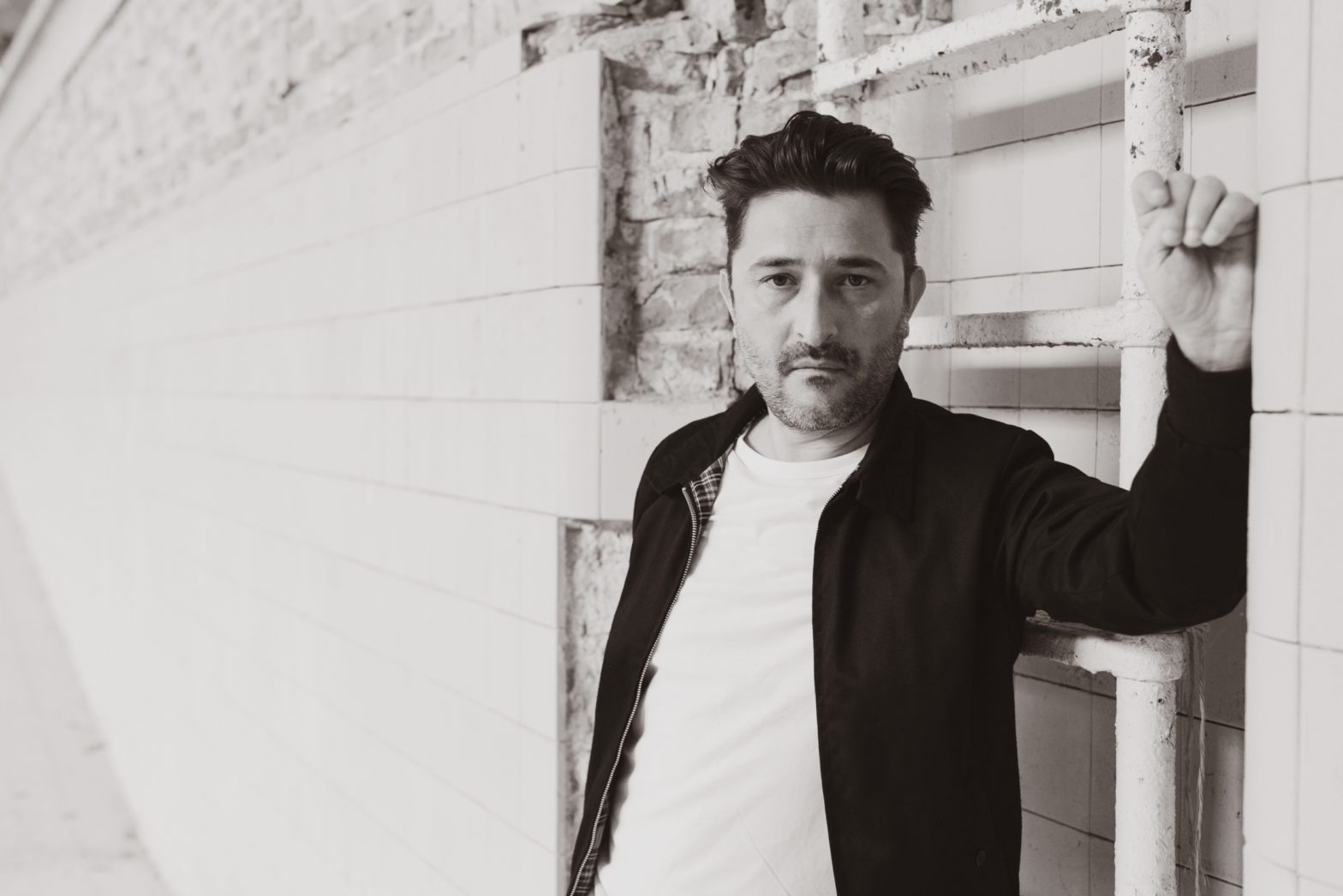
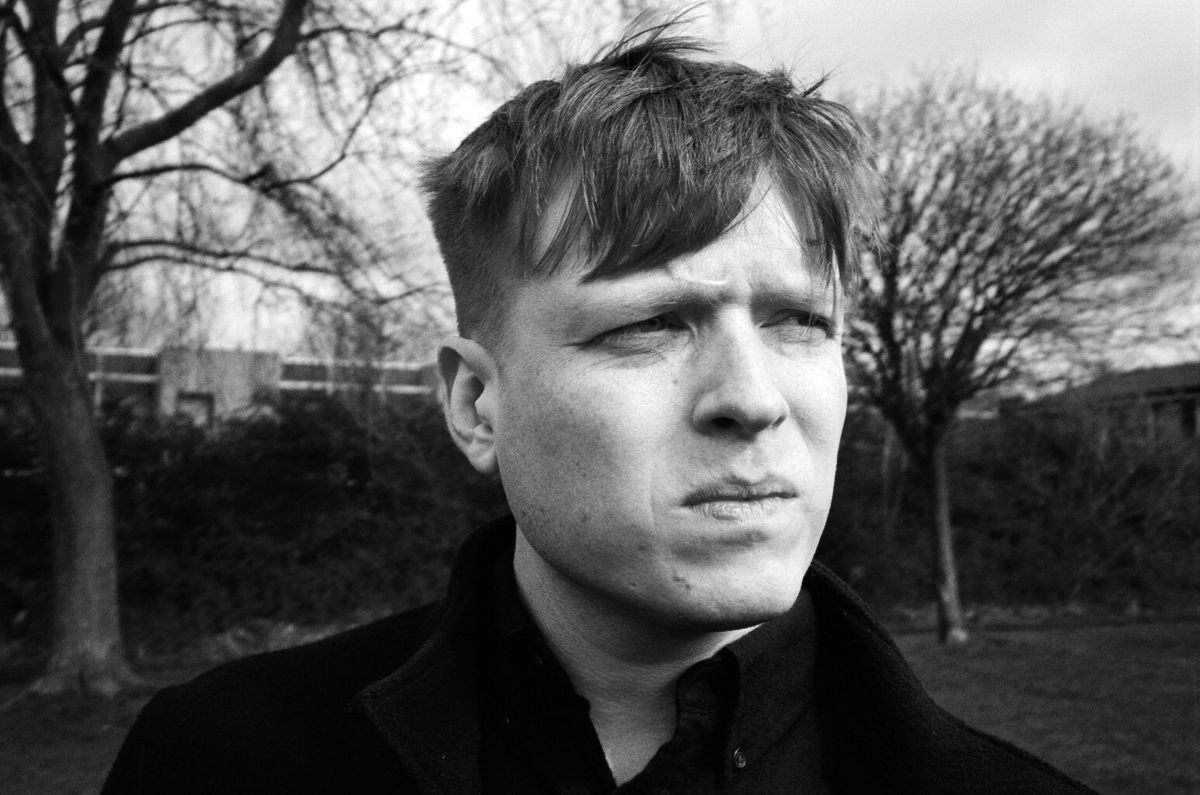
Harm Coolen and Merijn Scholte Albers began making music together in 2010, after hooking up to make a music video for a friend’s band project. “We found out we were all into producing electronic music,” they recall. “Since filmmaking is such a hassle, we started producing in the living room for fun.” The aim was to make indie-rock songs on a laptop but a synth-pop aesthetic quickly developed, captured perfectly on their 2013 EP debut, Half Age, released via Atomnation. Over six tracks, plus a David Douglas remix, the Dutch duo blended Albers’ love for trip-hop and Coolen’s for house and jazz into an alluring style all of their own.
It didn’t take long for the mighty Kompakt to come calling, inviting the duo onto the label with Easier, a four-track prelude to a self-titled debut album, which eventually arrived in 2016. Scoring an 8.0 score from Pitchfork and a staple on end-of-year best-of lists, the album brought Coolen and Albers much attention off the back of which they began touring the live set across the world, producing electronics but performing on stage like a band, with several multi-instrumentalist colleagues. Only more recently did the duo return, this time with a new album that saw them break their pop-mellow, nostalgia-friendly facet further out in the open, returning to a place where “everything felt spontaneous, new, and exciting,” they explain.
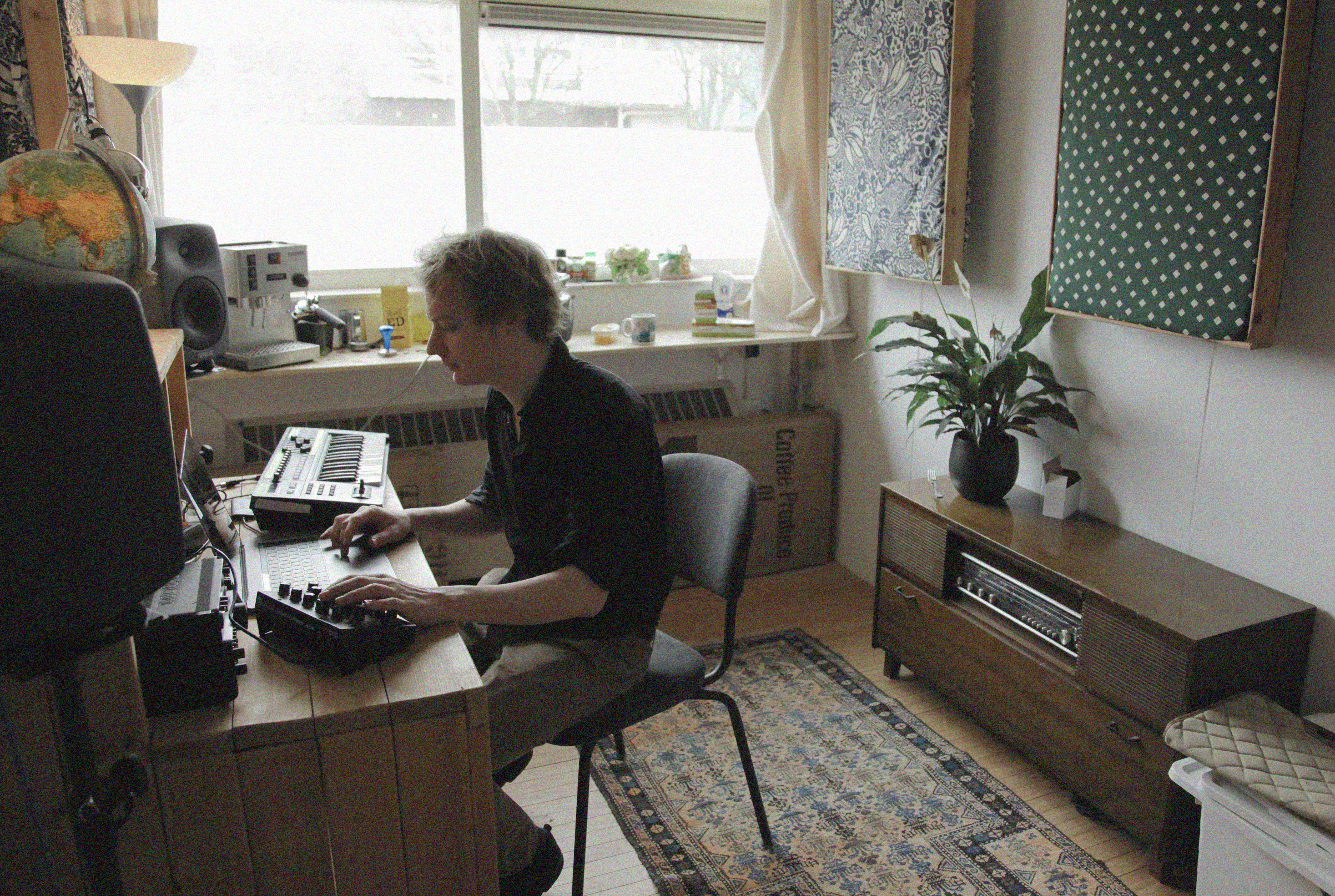
The album, available now, stemmed from a whole new working process—more playful and unpredictable—which saw them switch from “guitars lying around to piano, onto our own synths, and the most cheap quirky toys synths you can imagine.” To learn more about these changing processes, XLR8R chatted to the duo one day in their Amsterdam studio, eager to learn more.
Where exactly is this studio, and what’s the centrepoint of it all?
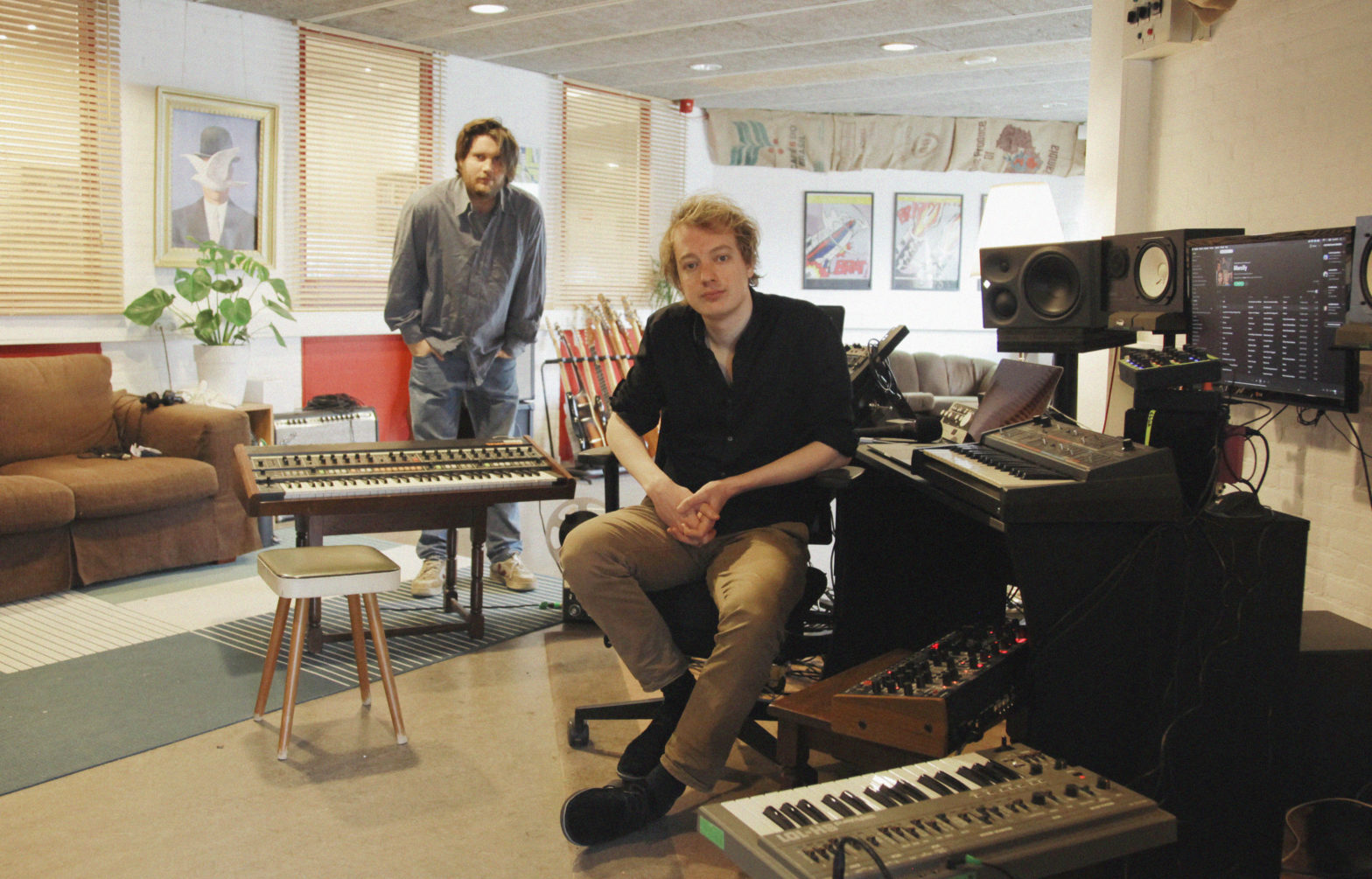
It’s in the north of Amsterdam. 15 minutes cycling after the pond in the centre. It may sound boring but the computer is very much the centre of it all. Although we get our sources from recording synthesizers, bass guitars, vocals, or anything that pops up, the computer is the most important writing tool for us. For cutting every recording into pieces, pitching an acoustic bass two octaves up, for example. So it wouldn’t be right if we didn’t mention the computer and so that’s what we’ve started off with. The studio itself is always changing and expanding. We’re trying to find the right balance between new instruments and focusing on what we already have.
How did you find this particular space, and what do you like/not like about it?
Our friend told us about this place and now we share it with him; we have it for four days a week. The best thing is that it has daylight which is not easy in Amsterdam. Lots of music-devoted places are basements, and in these we would become depressed very quickly. The worst thing is that every Tuesday evening a super funny, old-school fanfare band plays in the room next to ours. When they give people extra lessons they use the lobby which results in false flutes coming through the walls. We always cry a little when that happens! And on the square next to the studio they’ve built a garden play area recently. Now kids are playing soccer and screaming more and more. It’s sad. But with the second room we can escape a bit from these noises. Overall, we like it that the studio is sort of connected to the real world [laughs].
How good are you at keeping the space tidy?
We share it with somebody else so we are obliged to keep it clean. I’m afraid the other person finds us on the messy side though. But it kinda works for us to be forced to clean up a bit. We would love to connect a bit more and have a drum kit and some mics set up all the time. So I think we do need a space we can use full-time, but for now it’s OK, plus we do have the advantage of having random instruments lying around, which we can borrow.
“An essential taste shift in this album was perhaps that we moved to a more sonically perfect analog synth sound. It has a more serious vibe to it. So these more toy-like instruments became a nice contrast to the powerful thick sounds.”
I understand that you brought in a whole new set of gear for this new release. Can you talk me through this?
We don’t want to totally change our whole sound but we find it really important to experiment with it because creating sound is more or less what we do best, I guess. We fell in love with this cheap toy-ish synth, the Korg 707. A studio-mate bought it once for €30 and it became the most used instrument on the record. Ideas came out every time we touched it. It only had presets but some of them were really great and it was not like anything we had worked with before so it gave us a lot of energy to create. It made “Silence on the Wall,” and the same for “Doesn’t do Anything.” An essential taste shift in this album was perhaps that we moved to a more sonically perfect analog synth sound. It has a more serious vibe to it. So these more toy-like instruments became a nice contrast to the powerful thick sounds.
Also, we had never really played guitar on tracks but with new amps and pedals it sounded way better than anything we had tried before, and that’s what you can hear on the track “The Weight,” for example. We also wanted to have more organ sounds in the track so a Hammond felt like a necessary addition, and you can hear it in “Heaven, Listen,” where it is really the backbone of the track. Without it, it’s a way more classic-sounding club track but now it feels a little more our own.
What are the other key synthesisers you’re using?
Besides this Korg, we used a Roland SH101. We couldn’t find our thing in the beginning but after some time we discovered the noise LFO which can generate a beautiful distortion. We also used it for bass in some tracks because of the harmonically round bass. Besides the Juno 106, which is our all-time favorite, we used the Juno 6 for the first time, too. We still didn’t find many ways to use it but with the arpeggiator we came to this “brassy” sound, which you can hear in “Roll Together,” for example.
We tend to try more than 10 synths for one melody, just to scan what works and to learn the qualities of each instrument. Slowly we learn to use them in a way that feels original to us because with all those classic synths you’re not the first one using it. It’s very subjective but we hope to make music that feels original. Sometimes it can be fun to recognize a certain synth but generally we like when you have no idea where the sound comes from. With melodies it’s super interesting to hear when a sound somehow makes sense, giving the feeling that you want to hear it again and again. The same melody with different sounds can suddenly be super boring. Or more serious or funny, etc.
Are you sequencing the synth melodies with MIDI and then trying them out on each synth or playing everything by hand?
Melodies or chord ideas are often first played by hand and recorded with audio and MIDI. Once we have the MIDI we sequence them indeed. Both hands to shape the sound.
How much have you changed your setup over the course of your career?
We are a bit too lazy to sell synths, and we also think: who knows in the future? And we don’t buy that much actually. It can actually be a distraction from making new ideas, although we do recognise that the right gear can open up a totally new spectrum. But the paradox is that this can also happen if you spend more hours with the same synths you already have. So I guess we are a bit conservative on this matter; we’re expanding our studio enough to allow enough time with each synth before rolling into a new one.
With the previous album, we were limited because we didn’t have a lot of budget. Most of the sounds came from the Juno 106, Korg ms20 mini, and a Korg Trident. In the last three years, we’ve slowly bought new instruments, new software, and combined this with all the instruments from studio-mates here, in this adult playground.
What do you look for in the gear that you do acquire?
We need a mixture because what we need changes throughout the recording process. To begin with, we need something that has character and is fast because we want to keep the creative juices flowing while making the first sketches. Then, when we’ve chosen the demos we want to finish, we want synths or tools that have way more options, just to make it a little more rich sounding. We love lo-fi sounds but in the end we try to make all these lo-fi ideas sound like a hi-fi production. We don’t know if we succeeded, but I’m happy how it sounds now.
So you are essentially using these new synths to layer with and complement the original synth lines?
Not necessarily. A big part of making it more hi-fi is just EQing, getting rid of too much low end or giving it presence. Sometimes we record the same synthesizer again with a cleaner sound but that hardly works out. The lo-fi sound is so connected to the composition that replacing it often gives that melody or drum part a completely different function, which often results in a dull idea. So it often comes down to reshaping with EQs, pitching it, recording it loudly through tape, or composing other elements around it that sound more hi-fi.
You speak in the press release about how the new album came from “this place again where everything felt spontaneous, new, and exciting.” What do you mean by this?
We almost didn’t critique at all while making the first demos. That destroys everything—that whole creative vibe you can feel when making the first steps of an idea. With our previous work, we felt like we were talking about a certain sound too long and the whole positive feeling of creating something new was gone before we even knew it. Luckily we’ve learned from it and there was so much more positivity in the studio with this album. I think you can hear that on certain tracks; they have a laid-back kind of style, a little more playful. The previous record has a bit of a darker sound spectrum, perhaps. This album feels less serious and more colorful.
Why do you think this happened now?
We felt more inspired than before. I would say having more experience can definitely help; we had more head space for concept and style rather than making a track that you want to hear over and over again. But other people would also say the naivety is helpful, too. We’re not really sure.
Earlier, you mentioned “first demos.” What does this mean to you?
Demos are just an unfinished version of the track. We would never fully record a demo again. It starts with an idea and from that idea we keep on working, which comes down to editing, adding new elements to it, and throwing stuff away. So I guess we don’t mean to say “demo” in the classical sense where there is just an idea or guideline to record everything again in a different way.
How does a demo become a finished track?
Sometimes it’s a big fight. For a lot of songs, we have more than five completely different versions. Now and then the finished song still looks like the original, but more often than not it changes into a totally different concept.
You’ll never be able to recreate that spirit of the first moment. So the next day we’re afraid to change big things and we start to focus on small details. It’s lovely when you can make a whole track in one phase but the reality is that we continue mixing and composing for a long time. We can change anything up to the very last moment. Replacing the beat, getting rid of the beat, changing chords, coming up with a new ending. We keep on searching for the track that we want to listen to again and again.
How easy is it to determine when you’ve got the finished version?
It’s important that we feel happy with it for a long time. Not just one week. We have to spend hours at the end listening to it while mixing. And we’re still emotional mixers; if we don’t feel it anymore there’s nothing to work with.
It sounds to me that there are two clear stages to your production: the writing and the finishing. How does your mindset for these different stages differ?
That’s trust. Funny, because we’ve never seen this so clearly until you said it. While finishing you’re judging—is this actually worth putting out? Or how does it fit in the album, what did we make anyway? In contrast, the writing is trying to be as naive as possible; no judging, just seeing what happens, layering, playing, recording, often without a clear concept in mind. The finishing part is more conceptual and rational, and certainly more conscious.
How does the writing phase begin?
It’s hard to give a straight answer because it really does depend on the track. Sometimes it starts with a certain sound that strikes, sometimes a beat. What was new with this album was starting songs from jamming. We’ve never done this before. Also inviting bandmates to come over and play a bit. We have hours of recordings and sometimes only that one little fragment can lead to a track. It’s always puzzling and exciting to see what happens.
Can you give an example?
We were closing the studio one day when Merijn played the Korg 707 FM synth. There was a weird delay on it in the computer and the preset was random. After playing one chord, we immediately felt that this could be a track. So we recorded it quickly and that formed the idea of “Silence On The Wall.”
Another example is the drums of “Someday.” We had a track with a synth-white-noise-percussion rhythm and asked the drummer to play along, to see if we could use that somehow. We recorded for three days and played all kinds of stuff. But we were not satisfied with the sound of the room. We had so many drums but it was hard to many ideas from them. One little loop made on that synth percussion track struck us really, so we took that, distorted it in tons of different ways, and made “Someday” with it. That synth percussion was on a demo that we didn’t release. We took it out and used it for “Are You Even Real.” It’s almost the same pattern if you listen closely, but they sound extremely different.
Are you recording all these jams and cutting the bits out that you like, or do you do it on the fly and then recreate the melody?
We try not to re-record as much as possible. Sometimes you have to but it’s so difficult to remake something that you did that is super nice but not recorded well. So we hope to have a high enough recording standard to use it in the track. For example, with “Doesn’t Do Anything”: it came up after jamming for two hours but there was a lot of bleed in the microphone from the piano and speakers. And the lyrics we’re not complete. It took more than 1000 takes to get back a little of that vibe from that first take. We even asked five other singers to try it. Just before the deadline we came to an approach that made us happy again. Beating a demo-take is a horrible process!
At what point do the vocals normally come in?
Sometimes they come in later, but sometimes the track starts with a vocal idea. It’s an organic process, but we’ve never made an instrumental for a vocal line; it’s a coincidence if it works. We write back and forth so we never really know which direction the track will go. We can start really experimental and can end full sugar pop on the track, or the other way around.
Are you always both working in the studio together or is it sometimes just one of you working on the material?
While making ideas—the demos—we work mostly together. Many of the ideas start at one of our places at home and than we continue together in the studio. In finishing / mix mode, we tend to work separately. Nerding in detail can be a bit intense together in a room and if we split we keep a fresh ear. Some demos are made almost entirely at home, but that happened on the first EPs more than with this LP. The demo from “Who’s Running Who” was made by Merijn at his place. But Harm made the first sketches of “Roll Together,” for example. All other tracks were made with us both together in the room, from the start till the end of the track, I guess.
As producers, what do you perceive to be your strengths and weaknesses?
Interesting question! Our knowledge of recording could certainly be better. We don’t know that much about microphones and position.
Our strengths could be that we are really flexible with ideas. If we have a nice element but hate the track, at some point we will make something from scratch with that particular element because we’re good at identifying it. Everything in the track must be a striking sound, we think, no layers that are just good enough; it’s quite easy to make something that kind of works but it’s way harder to make something you really get fond of at that moment. Often a new, even small, element gets a prominent place in the mix. Then 100 hours later we bring it to the background, still loving it but realizing it’s not about that thing. So I guess we really fight for every detail to be something that we genuinely like.
What are the most important lessons you’ve learned when it comes to production?
How important reference is; how fast you can’t trust your ears anymore; how important it is to get the source right. And the feeling our ears got better by learning from others and tweaking for hundreds of hours. It’s really cool to find out you actually can train you hearing and that is very encouraging to know if you get stuck. That you can get better at it by doing it or training it.
It’s interesting that you wanted to write indie songs, because your music is very song-focused. How do you satisfy yourselves as songwriters while operating in an electronic world?
I guess in the end it’s that in between thing we really like. It somehow connects these worlds together. Also live, after a few “songs” we’re done with it and come into more repetitive stuff. The contrast between it is what we like. We play with a five-person band nowadays, playing songs but also doing more psychedelic/trippy jams; those two genres go very well together somehow, for us. And we still do the duo show as well because we can’t let go of the more electronic-based music. It’s perfect to do both and a little bit in between at the same time.
How does your studio setup compare to your live performance?
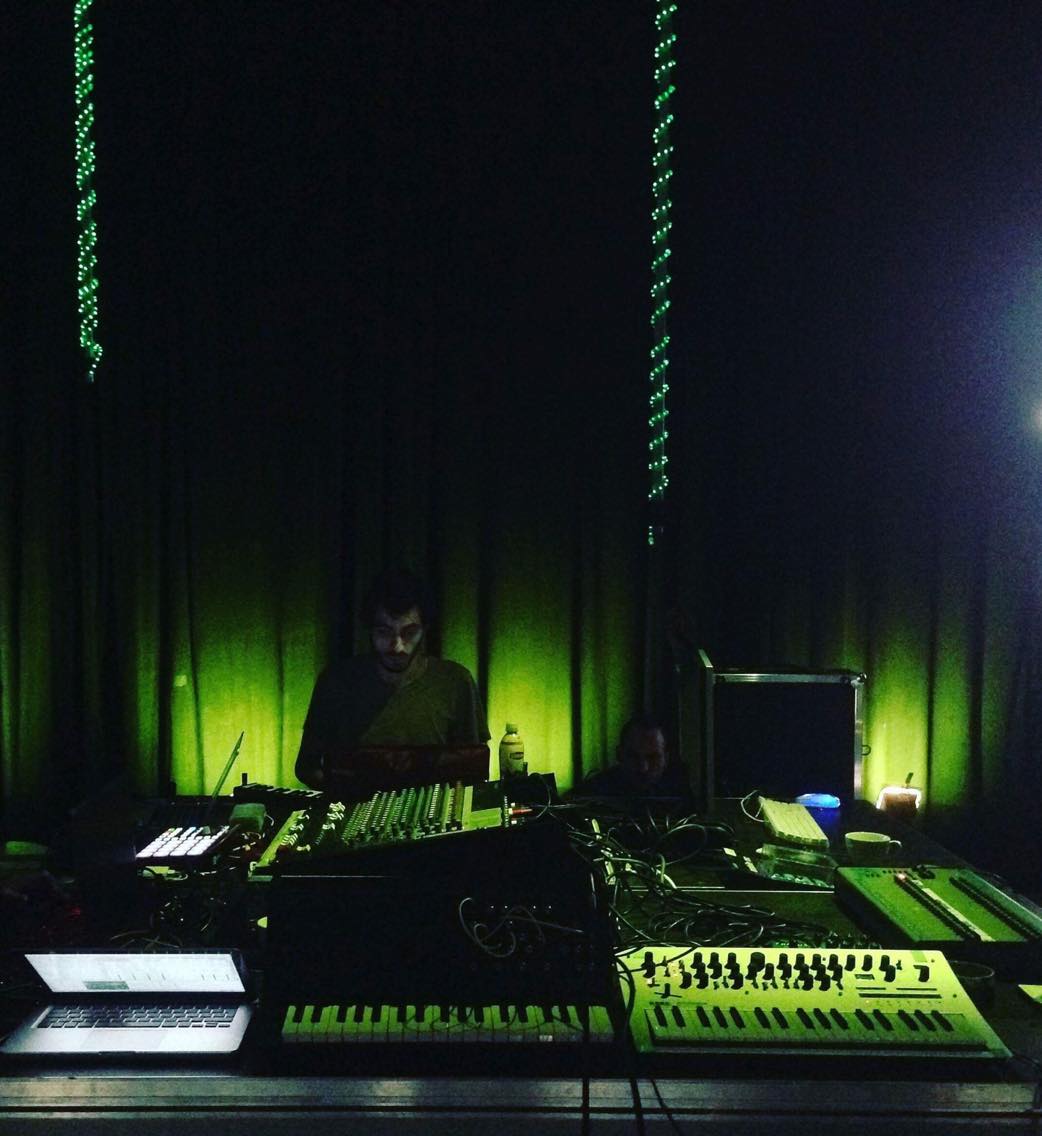
When we play as a band we play with five people on stage. The drummer alternates his acoustic drums with samples so we play more direct and processed sounds as well. With the setup we have right now we feel that we finally found the balance between the heavily-processed studio sounds and the sounds coming from acoustics on stage. We sampled all our synths so we can play every sound that we used on the record. We like the variety of direct and minimalistic sounds with more rough and acoustic sounds . In the end performing live is a totally different world and on top of that it all has to fit in a few cases to fly with as well. But with some analog synths combined with all the sampled sounds we think we found a nice way of translating the music into live dynamics. We don’t want to sound exactly the same as the record but it’s nice to find the best of both worlds.