Hot on the heels of its latest record from label head L-Vis 1990, London’s Night Slugs is dropping That Mystic, a new EP from NYC’s Kingdom. The five-song release showcases Kingdom’s love for pulsing house grooves punctuated by off-kilter percussion and plenty of chopped and/or pitch-shifted R&B vocal snippets. It’s heady dance music, to be sure, but it’s also well suited for folks who excitedly track the latest jams on BET’s 106 & Park. The EP comes out next week, but you can listen to the first three tracks here on XLR8R.com.
The XLR8R Music Player requires Adobe Flash Player version 9 or later. Click here to install.
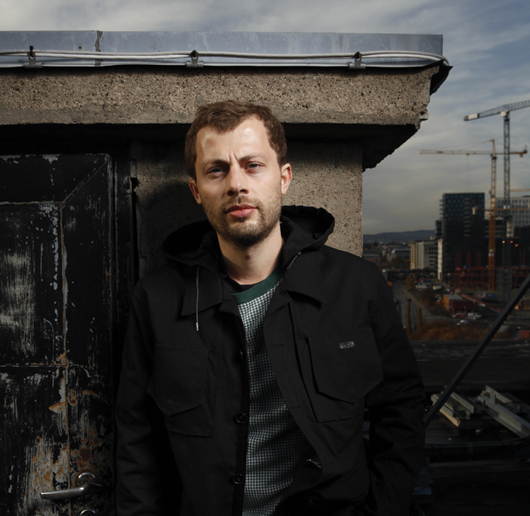
Oslo-based space-disco producer Joachim Dyrdahl has made a name for himself as Diskjokke with releases on Prins Thomas’ Full Pupp label as well as Get Physical sub-label Kindish. A classically trained violinist and math whiz, Dyrdahl’s approach to beat-making is best described as holistic, incorporating influences that range from country music to early Italo. Dyrdahl’s second full-length on Smalltown Supersound, En Fin Tid, shows off his dynamism, with ambient moments and white noise as present as the slick disco bass and synth arpeggiations his sound is known for. Below, Dyrdahl gives us a few tips on how to achieve the best reverb and delay, two sonic effects that are indispensable to his cosmic productions.
Record and bounce processed sounds with reverb Set up the sound you want to use—let’s say a cymbal hit—in a separate track. Add a fantastic reverb to this track, and bounce it as a solo sound with a long reverb time and the dry/wet ratio of your choice. Then import the bounced sound into your project and use it as you wish. Reverse it, chop it, and pitch-shift the parts differently. Use just the reverb and not the signal itself (works better with sounds that have no tail in itself, like a reversed snare or tom), add effects to it, or use it as a substitute for the original track and save tons of CPU capacity.
Play with your dry/wet ratio Say you want to add a percussion loop to a track, but it stands out too much or does not sound quite the same as the rest, and you’ve given up on EQing it to fit. Slowly fade the loop in all wet so that all you really hear is some sort of rumble, similar to a party next door. Then when this sound is loud enough to get attention, you completely remove the reverb on the first beat of the bar and the party has moved into your room. Another good way to bring out elements of the track is to slowly (say, over 16 bars) go from dry to wet and then cut or fade the signal.
“1987”
Alter volume and panning This tip is based on having really, really long delay time on a single sound (like a single conga hit). You could also use a more complex signal, but that quickly gets messy. In Cubase, you open the automation track below the actual track and start fiddling. You can play the signal in itself with volume low and then increase the volume of the track as the tune plays along. This enables you to let the sound of the delay go on forever with even a cheap delay device. Then duplicate the track, move the signal in the new track a bit, pan the original track to the left and the new track to the right. By automating the volume up and down, these two delays (or more, if you like) will work together and create a cool effect.
Change your feedback and delay time By automating/altering these two parameters in your delay box at the same time, you will make the original signal come alive in a very distinct way. I prefer to use this effect on synth lead sounds and vocals, like in my remix of Ost & Kjex’s “Boston Food Strangler,” which then gets more character. Try turning feedback to the max while decreasing the delay time or the opposite. You should consider adding a compressor to the track, as the result could be surprisingly loud and weird here.
Add real reverb If you have access to a place with good natural reverb, you should bring your gear there, record whatever needs reverb, and put that into your production to add uniqueness. In the stairs that lead to my studio we have fantastic “hall” reverb, so I use that space to record percussion, like claps, shaker, and tambourine. I first record the dry sound in my studio, then I go out into the stairs where I put one microphone near the source and one further up the stairs. Here I record on two tracks, and this gives me the opportunity to mix the three recorded sounds in the project in the same way that you use the dry/wet knob on your studio reverb. This method can be expanded with more microphones, and the recordings will make a great foundation for using all the techniques and tips above.
You wouldn’t think there’s a price to be paid for releasing a widely loved, breakout album, but it’s true. Anyone and everyone wants to (and will) remix its songs for far too long after its release, to the point of nausea-inducing repetition that’s enough to almost make you dislike the original music. It’s certainly happened to the UK’s The xx, who’ve suffered through their fair share of remix clunkers, but we’re happy to let this new take on the band’s “Crystalized” tune slide by without too much chagrin. The funky disco-house producer behind the remix, fellow Brit Jamie Jones, hooked up The xx’s trademark boy/girl vocal duet with a thick dance groove and bouncing bassline that nicely suit the pair’s mellow cooing. Jones’ minimal production mirrors the aesthetic of the original “Crystalized,” and ends up overshadowing all of the other interpretations of the song we’ve heard over the past year.
Last month, Belgian space-disco outfit Aeroplaneannounced that one of its two members would be going his separate way, leaving the project a solo affair. It was unexpected since Aeroplane’s debut full-length album, We Can’t Fly, had just been slated for release on Wall of Sound, but now that the dust has settled a bit, remaining member Vito De Luca shared more in an interview about why the break-up happened, what we can expect from his forthcoming album, and a particularly awesome story about him throwing up on Air’s equipment at the Sonar festival. Over on Juno Plus, De Luca explained what set the stage for the split, saying, “Well, I wrote all the songs on the album and I played all the instruments… so I’m the studio guy. Steph was taking care of a lot of other things—important things—but it came to the [point where] I was alone in the studio and I realised, this is not ‘our’ band as it’s supposed to be.” You can read the whole interview and check out clips from Aeroplane’s upcoming full-length record here. (via Resident Advisor)
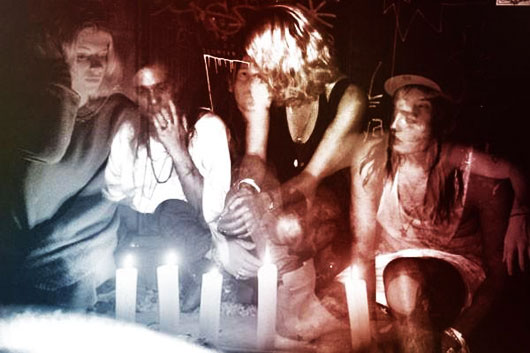
If this track wasn’t labeled as a remix, we would’ve immediately assumed that we were being treated to a brand-new original from our favorite spun-out drag trio, Salem (pictured above). But even though we do know this is a supposed ‘reworking’ of “Hologram” by These New Puritans, we can’t seem to find anything connecting that original track to this new one. It’s sort of like the band said, “Hey Salem, we love your work! Would you guys be into remixing one of our songs?” and Salem agreed but forgot to do it by the deadline, so instead just gave them an unreleased song they’d been sitting on and called it a remix. Don’t get us wrong, though; we’re not complaining. Salem’s ‘remix’ of “Hologram” finds all of the outfit’s hallmarks intact: synthetic vocal melodies, ominous synth tones, crunk beats, and that irreplaceable, pitched-down slur. Keep it coming, guys.
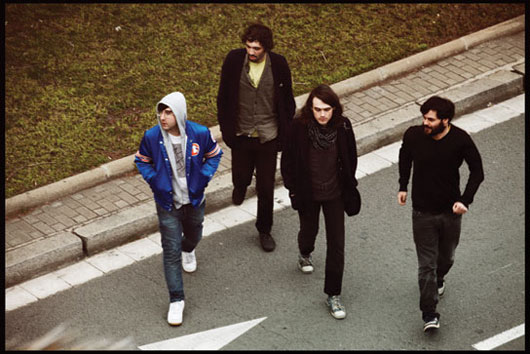
Barcelona’s Balearic-flavored dance-pop outfit (and former XLR8Rcover stars) Delorean is now a month and a half from the release of its wonderful Subiza album, and have has been busy touring the world sharing the good word (and tunes) with all who will listen. Now, the quartet is ready to do it all over again, and this time they’ll have their latest single in tow. The Real Love EP is available now on limited 12″ and digital download through Delorean’s label, True Panther, and features remixes of the track from The Field, Deadboy, Arp, and others, along with a radio edit of the original song. You can check out the single’s artwork, stream its seven tracks, and peruse Delorean’s upcoming tour dates with Lemonade below.
XLR8R Couldn't find the embed function for type: "soundcloud" and source: "<embed allowscriptaccess="always" height="225" src="http://player.soundcloud.com/player.swf?url=http%3A%2F%2Fsoundcloud.com%2Fmatadorrecs%2Fsets%2Fdelorean-real-love" type="application/x-shockwave-flash" width="100%">".
Sun Aug 29 – Jelly NYC Thu Sept 2 – Casbah – San Diego, CA — with Cold Cave & Abe Vigoda Sat, Sept 4 – FYF Fest – Los Angeles, CA Sun, Sept 5 – Bumbershoot – Seattle, WA Fri Nov 5 – Hailey’s – Denton, TX * Mon Nov 8 – Rhythm Room – Phoenix, AZ * Wed Nov 10 – GAMH – San Francisco, CA * Sat Nov 13 – Biltmore Cabaret – Vancouver, BC * Tue Nov 16 – 7th St. Entry – Minneapolis, MN * Wed Nov 17 – Lincoln Hall – Chicago, IL * Thu Nov 18 – Mod Club – Toronto, ON * Fri Nov 19 – Le Belmont – Montreal, QC * Sat Nov 20 – Middle East Downstairs – Cambridge, MA * Mon Nov 22 – First Unitarian Church – Philadelphia, PA * Tue Nov 23 – Rock and Roll Hotel – Washington, DC *
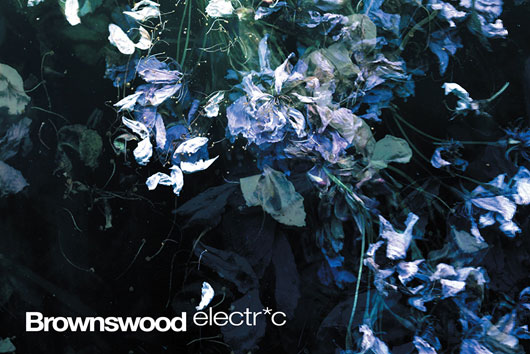
Off the recently released Brownswood Electr*c compilation, “Blad” is an old-school-sounding piece of soulful beat work from the UK’s Letherette. The producers utilize what appears to be no more than two—maybe three—sample sources to flesh out the slow-grooving funk of their exclusive track for Electr*c, as each guitar strum, bass pluck, horn stab, drum hit, and vocal utterance chopped up and sequenced into “Blad” sounds as cohesive and complimentary as if it had all been performed live in one room, and not on an MPC. Letherette’s impeccably crafted tune is just a small taste of the eclectic mix of beat-heavy music to be heard on the excellent compilation from Gilles Peterson’s Brownswood label.
A couple months after its inaugural podcast from UK DJ/producer Melé, Mixpak FM dropped its second DJ mix of the series, this time from Washington, DC’s Nadastrom. The duo of Dave Nada and Matt Nordstrom hooked up an excellent playlist filled with Nada’s burgeoning moombahton style, bits of cumbia flavor, some dancehall riddims, and a little house and electro whatnot peppered in for good measure. You can stream or download Mixpak FM 002: Nadastromhere, and check out the track list below.
DJ Negro – “Andres Landero vs The Roockie” Munchi – “Vamo A Darle Slow” (Toma Essa Porra VIP) Congorock ft. Mr Lexx – “Babylon” (Nadastrom’s Ugly Edit) Classixx Ft Jeppe – “I’ll Get You” (Steve1der Rudebwoy Remix) Dre Skull ft. Vybz Kartel – “Yuh Love” (Nadastrom’s Bookshelf Blend) T-Pain ft. Lil Wayne – “I Can’t Believe It” (Emynd Bookshelf Blend) Delorean – “Stay Close” (Dave Nada Moombahton Remix) Vybz Kartel FT Popcaan – “Clarks” (Kenny Meez & Gregg Nyce Mash Up) B.O.B ft. Bruno Mars – “Nothing On You” (Kenny Meez & Gregg Nyce Mash Up) Old Money – “Buena Mah Muva” (Starks & Nacey Remix) Sabo – “Club Cultura” Doc Adam – “Tried By Sex Sax” (Moombahton Edit) Graffiti 6 – “Annie You Reset! Me” (A-Mac Moombahton Edit) DJ Apt One vs Josh Wink – “Higher State of Moombahton” Sabo – “Jesus Moombahton” Dave Nada – “Oye Mami” Dave Nada- “Drop Buddy Gyal” Sonido Rampage – “Boy” Sonido Rampage Y Nader – “If You Leave” Munchi – “La Tipa” Munchi – “I Love C.D.L.C.” Skinny Friedman – “Block Rockin” LA Riots – “Bombah” (Dave Nada Boombahton Remix) Rampage & Nader – “Gave You Love” (Starks & Nacey V6 Remix) Sam Tiba – “Barbie Weed” Mele – “Bombay” (Nadastrom Remix) King Tubby – “Rude Boy Dub” Mad Professor – “Kunta Kinte Dub” Rhythm & Sound ft. Love Joy – “Best Friend” Jahdan Blakkamoore – “The General” Bird Peterson – “Zutopong” (Nadastrom Dub)
For only one day in September, the We Like Music Festival will take over parts of downtown Detroit for an explosive celebration of forward-thinking music and art. The unusually brief music festival just announced the lineup of artists and performers that will push their wares from within one of two venues. During the day at The Old Miami, DJs and producers James T. Cotton, Kyle Hall (pictured above), Leo 123, Kevin Reynolds, Deadlines, nospectacle (XLR8R contributor Walter Wasacz), and A.M. Architect will be handling the soundsystem duties, and Jimmy Edgar, Eliot Lipp, and Kraddy (formerly of The Glitch Mob) will be the night’s performers at The Magic Stick. The We Like Music Festival kicks off September 18 at 2 p.m.
This remix of “Sun,” from Danish house producers Kenton Slash Demon, comes from Alan Abrahams (a.k.a. Portable a.k.a. Bodycode), who transforms the bouncing original production into a soulful techno track more than twice its initial length. Portable’s entrancingly epic composition and its accompanying forefather, are both part of the Sun EP, which is the first installment of Kenton Slash Demon’s trilogy of releases entitled The Schwarzschild Solution. The first release drops July 26 via Tartelet, with the subsequent EPs, Matter and Daemon, following in the months ahead. If the quality of original tunes an remixers follow suit with this offering, we’re sure to have a solid set of tracks on our hands when the Danish duo’s triptych is finished next January.