You’re a talented producer. You released a fresh album last month—your most personal record yet—to rave reviews, and did a 3,000-word interview with a glossy magazine. Time to respond to all those promoters asking you to come and DJ at their new club night. But there are none. Instead they’re booking DJ Likes, who looks like a model and has 100k followers on Instagram. Pissed off, you head to Twitter to vent. Top post: a clip of DJ Likes and a crowd going wild. Sound on. DJ Likes is playing your tune. Great! That should mean a royalty fee coming your way. But the club has no records of what was played there that night, or any night, and you get nothing. DJ Likes gets another thousand followers, signs a sponsorship deal with Supreme, and is booked to play 10 festivals in the summer. 389 people bought your album on vinyl, 440 bought the CD, and 1,009 downloaded it, making you $241. You also made $133 in streaming revenue. Your brother-in-law asks if you’ll DJ his sister’s wedding.
The music industry is failing musicians. According to the most recent figures, the average fee received by an artist every time a song of theirs is streamed sits at $0.00735 on Apple Music, $0.00437 on Spotify, and $0.00069 on YouTube. As this continues, fewer artists will survive, making music less diverse and innovation scarce. Electronic musicians are particularly vulnerable. While rock and pop artists earn from touring even when streaming revenues are low, few producers can rely on bookings alone, and are rarely compensated when their music is played by other DJs. XLR8R’s Sam Davies looks into what needs to be done, talking to some of the people who know best.
As an electronic music producer, how do you make money? 01: physical sales, a now ancient source of income which, though vinyl popularity has risen in recent years, represents just 6% of album listens in contemporary electronic music. 02: digital downloads, hit extremely hard by the advent of streaming, now making up around 16% of track and album listens combined. 03: streaming, which makes up about 79% of listening, but returns measly fees to all but the biggest artists. You’re also due royalty payments every time someone else profits from playing your music, including in clubs, but few clubs keep records of what DJs play and fees almost never reach producers. So without performing yourself you can’t really make a living, and social media is making even that less dependable.
Diminishing Streaming Royalties
Signing to a record label used to be a surefire way for an artist to increase their fortunes. But while global popstars rake it in from the huge bespoke deals signed between major labels and Spotify, signing to an independent now offers hardly any return. Sam Barker—a.k.a Barker, once of Barker & Baumecker and head of record label Leisure System—tells me that artists can’t expect much when signing to his label. “Really what we offer is not financial,” he says. “It’s more just ‘do you wanna put a record out on a sort-of established label?’ The expectation is that you might break even.”
Whereas Bandcamp and Discogs revolve around label pages, Spotify confines the label to a copyright footnote at the bottom of a window, and offers no easy way of exploring a label’s discography. “I don’t use Spotify,” Barker says. “But as far as I know they really don’t give the label much attention.” Hoping a better alternative would show up, Leisure System initially kept its catalog off the streaming platform.
Then in 2015 they finally gave in, hoping Spotify would at least bring their artists to a wider audience. Within a year the label had lost two thirds of its reliable income as vinyl sales and digital downloads plummeted, and Barker is even sceptical that their artists were brought any recognition from the move. “I would say only a small percentage of listeners even look at what track is playing,” he sighs. “People just put on the playlist that matches their mood.”
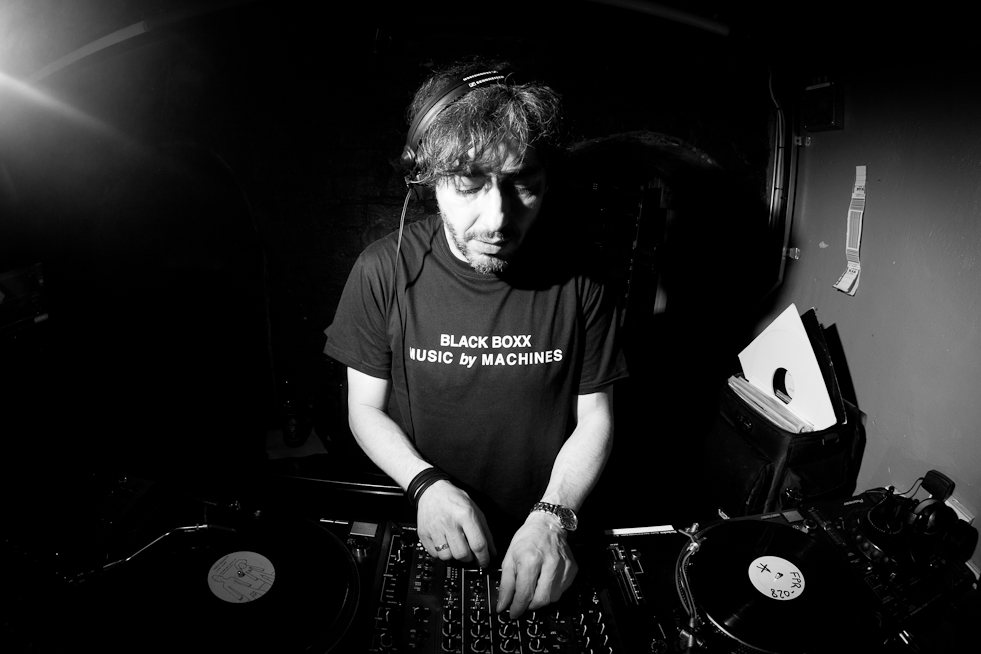
 Sam Barker (a.k.a Barker) explains that artists cannot rely on releases for income.
 Public Performance Income
One of last year’s most popular records—particularly on the dancefloor—was Barker’s Debiasing, which was picked up by DJs ranging from Objekt to Joris Voorn. In theory, every time a track is played to a crowd of paying customers the artist who made it is entitled to a royalty fee, taken from lump sums paid by clubs and festivals to Performing Rights Organizations like BMI or ASCAP (in the US), PRS (in the UK) and GEMA (in Germany). But in practice most clubs have no idea what’s being played each night, and their only strategy for finding out is asking DJs to write down their setlist once they’ve finished playing. “Think how ridiculous that is, asking a DJ to put pen to paper after their set and remember what they’ve played,” Barker says. “I bet it happens once out of 50 that an artist is properly credited.”
Theoretical copyright rulings also apply to DJ mixes on YouTube and Soundcloud, but in practice it’s rare for anyone other than a major label to receive a fee for a track being played. A spokesperson from Soundcloud tells me that only artists posting original tracks can currently make money through the platform, but that Soundcloud’s recently announced partnership with Dubset is aimed at monetizing original material being used in remixes and, eventually, DJ sets. Right now most artists whose tracks are played in an online mix have to content themselves with the exposure.
The Instagram DJ
Barker hoped the exposure Debiasing brought him might encourage clubs to book him for gigs, but noticed little discernible change, raising another issue: the Instagram DJ. Whereas in the past artists could rely on gigging during the media hype surrounding a release, now it’s those with the biggest social media presence who get the most attention from booking agents. An online following can be grown or even bought without the need for music to back it up. “With Instagram and Twitter and Facebook, content can be a nice picture or a video of your last gig or something,” Barker says.
These issues—producers not being paid when their songs are played, posers being booked ahead of artists—chime with a certain DJ-scepticism that is popping up increasingly in the Twitter rhetoric of disgruntled musicians. And the anger is now flying in several directions, with DJs themselves, music writers, and the whole damn system under scrutiny.
One of the most compelling voices in the DJ debate is Mat Dryhurst—musician, teacher, and collaborator/husband to experimental composer Holly Herndon. Dryhurst argues that the DJ is essentially a fan who gets paid for their music taste, rearranging other people’s work and earning vastly more than the artists they’re playing. Barker concurs: “DJs are the new celebrities. Rather than people being excited about the music and the people making it, they’re waxing lyrical about DJs blending eclectic mixes of this and that or whatever.”
The glorification of DJs is now threatening the livelihood of the artists whose material they’re using.
The glorification of DJs is now threatening the livelihood of the artists whose material they’re using. So who’s to blame? For one, it seems almost narcissistic for someone to play another person’s music, soak up endless adoration, and reap untold rewards without even making their setlists known. For another: I know spinners often seem worthy of worship, but should so many media outlets be devoting quite so many words to DJs, entire essays diving deep into the many ways to play one song after another, analysing the use of a crossfader like it’s splitting the atom, often at the expense of those who are making the music?
And social media teams posting clips of “[enter DJ name] causing carnage” at Dekmantel—or wherever—while the name of the track they’re playing is nowhere to be seen: it’s the music that’s causing that carnage; the DJ is merely delivering it. If you get a birthday card through the letterbox signed by your nan with a 50 quid cheque inside, you don’t ring the postman to say thanks do you?
Of course, there’s more to it than that. The DJ has a crucial role in music, and the power to bring entirely new meanings to beloved tracks. Many of the best DJs guard their tracklists for fear that lesser spinners might copy their choices—as Craig Richards once said, there are only so many times you can ask Jeff Mills for his track IDs. And whether producers like it or not, DJing is art: it’s “making music with music,” as Derrick May puts it in Universal Techno.
In fact, rearranging other people’s work is one of the foundations of electronic music—that’s what sampling is. Without sampling there would be no “Strings of Life,” no Moby, no drum & bass. There’d be no Demdike Stare, who along with many other artists have blurred the line between producing and DJing beyond perception. But people aren’t annoyed with Demdike. People are annoyed with what are becoming known as career DJs, DJs who play music for their own gain and without offering any support to the people who made it, the label who released it, or the scene from which it was born. (For some this means DJs who have never released a record or run a label.)
Yet none of this would be a problem if everyone was getting paid. And encouragingly both Barker and Dryhurst are working on solutions, solutions that don’t require the publicising of track IDs, that will allow anyone and everyone to wax lyrical about crossfaders, and that will mean producers are delighted to hear someone else using their work.
 Mat Dryhurst is working on several technologies to ensure producers are being paid for their work.
 Solutions: Public Performance
Barker enthuses about BMAT, a music identification service whose devices—basically Shazam-style boxes—he is trying to have installed in several clubs in Berlin. Vice President of BMAT’s Venues team Liz Muirhead tells me the devices are already being used in 600 venues worldwide, including Barcelona’s Razzmatazz and Apollo. The boxes are installed at no cost to the clubs and are specifically designed to recognise track “fingerprints” even when a DJ has altered pitch and speed. Muirhead says they are also working on solutions for online mixes. For a track to be identified it needs to be in BMAT’s database, to which musicians and labels can upload music for free. So far 60 million tracks have been uploaded. Other similar services are in operation too—like Yacast, in use at Tresor—and Dryhurst mentions his own project, also centred on fairer deals for artists being played by DJs.
He won’t go into detail yet, but another idea both he and Barker mention is a system whereby DJs pay producers a premium price—say $100—for the exclusive rights to a track. Under the current system producers are expected to be thrilled when a DJ plays their music: apart from the compliment, it’s presumed to drive sales. But how many dancers know what they’re hearing? And sales and streams don’t really pay. It’s an exposure economy and, by many accounts, a false economy. What Barker and Dryhurst suggest would mean DJs can only play music if they’ve bought the rights to do so, creating a sort of nouveau white-labelism where spinners compete with each other for the best music and the benefit to the scene they’re appropriating is self-evident.
It’s time artist attribution and compensation became a legal requirement, wherever they’re being played.
Some might argue this incentivises producers to make unadventurous, DJ-friendly music, which there’s already more than enough of. But total experimentalism—refusing the norms of any format—has always been the riskiest method of creation, even if it might produce some of the most enduring work. Artists have been incentivised to be radio-friendly for decades; now they’re incentivised to be Spotify-friendly—and they’re the ones making all the money. Why is being played in a club any different to being played on the radio? It’s time artist attribution and compensation became a legal requirement, wherever they’re being played.
Solutions: Streaming
That looks hopeful, but the streaming problem remains. Dryhurst enthuses about what he calls “sovereign ecosystems” as a way to share music. In practice this might mean communities of artists and record labels coming together, offering their music to listeners on their own terms.
My first thought is Bandcamp, a music site through which hundreds of thousands of artists and record labels can sell music digitally and physically. Fans can stream tracks for free on their computer or the mobile app, but are prompted to buy albums after listening a few times. Bandcamp’s business model ensures that between 80 and 85% of money spent on the site goes directly to the artist, with roughly 15% kept as revenue (iTunes, by comparison, take 30%). Since it was founded in 2007 fans have paid $360 million to artists through Bandcamp—a figure that seems to rise daily.
“The thing that’s encouraging about Bandcamp is that people use it not because it’s a great shopping experience but because they know that it pays the artist and the label the most amount of money,” Barker says. “It’s an ethical choice that people are making to buy stuff there. Bandcamp is sort of the Fair Trade of the music world.”
Bandcamp’s success indicates a goodwill among music fans, a sign that people still like music enough to spend money on it. But goodwill only gets you so far; Fair Trade hasn’t eradicated unjust working conditions, and probably never will.
Streaming services purporting to offer fairer deals to artists are popping up more and more. Among them is Choon, a streaming site set up by British trance DJ Gareth Emery. It’s powered by the Ethereum blockchain and allows users to listen to music for free, currently offering nearly 40,000 tracks by around 11,000 artists, who can earn NOTES—the site’s own cryptocurrency—through the platform every time one of their songs is played. This revenue, of which 80% is promised to the artist, is currently being paid by Choon itself, though it plans to incorporate either advertising or a subscription service when 50,000 artists have signed up. Right now NOTES are untradeable, meaning their real-world value is impossible to gauge. The platform, who were unreachable for comment, is still in a state of roseate possibility: their pledge is enticing and their website slick, but their success will only be measurable once artists are being paid real money.
Another streaming option is Resonate. You may not have heard of it, but Resonate is a Berlin-based streaming startup followed on Twitter by Avalon Emerson, Lee Gamble, Object Blue, Lobster Theremin, Hyperdub, PAN, and loads of other musically relevant people. It professes to pay artists roughly 2.5 times more per stream than Spotify and charges users not by subscription but with a pay-as-you-go system that they call “stream2own”: the first stream costs the listener 0.002 credits, the second costs 0.004, then 0.008; the price doubles with each listen until the ninth listen, when the listener pays 0.512 credits, amounting to a total spend of 1.022, and then the song is theirs to be played whenever they like at no further cost. Resonate estimates that listening to two hours of music a day (roughly Spotify’s quoted average) with a few repeat listens would cost around US$4 a month. And while artists need 107 Spotify streams of a single song to make as much money as an iTunes download, with Resonate they need just nine.
Much of Resonate’s recent funding came from a US$1 million investment made last March by RChain, a blockchain protocol and cooperative that was recently declared “functionally bankrupt” by stakeholders. After some disputes between the two cooperatives, RChain pulled its funding and in September Resonate was forced to cut the majority of its staff. CEO Peter Harris assures me Resonate is ongoing, but it seems the RChain controversy was damaging, and several members of Berlin’s music community—once energised by Resonate’s promise of a brighter future—have since distanced themselves from the project.
 Avalon Emerson started Buy Music Club with friends late last year. Photo by Joseph Kadow
But there’s still reason for hope. In December last year, Berlin-based producer Avalon Emerson and friends—Louis Center, Ignatius Gilfedder, Georgia Hansford, and Elissa Stolman—started Buy Music Club. Beginning with a list of her own, Emerson shared her favourite music of the year using embedded Bandcamp tracks, offering clear “buy release” links next to each one. She was inspired to make the site after seeing End of Year lists all over Twitter—and artists complaining how little money Spotify was making for them. Many artists and fans have now made lists, as have several DJs, who can use the site to offer buy links to all the tracks they’ve played in a set, as Emerson did for her performance at Mutek festival last November.
Barker tells me he noticed a spike in the number of people buying Leisure System music after BMC started. Emerson and the BMC team wouldn’t comment when I reached out, but a glance through their Twitter activity suggests there are more ideas in the pipeline. Considering the minds endorsing the project—Barker, Dryhurst, and a range of others included—BMC is at least encouraging.
A Vision of the Future
The answer to the industry’s problems might be BMC, it might be Choon, it might be Resonate. So far none provide a perfect solution, but each represents a small part of a community striving, innovating for change. That community, with Berlin as its base and Dryhurst as its figurehead, is the foremost reason to be optimistic about the future of music. (It’s not just music either: see a recently published interview with Tom Krell (a.k.a How To Dress Well) in which Dryhurst lists several initiatives in Berlin’s bubbling counterculture.)
“If the original indies had been quite as reverent of ideas and artists 30 years older than them as many are today, I doubt any of the stuff we enjoy from that period would have happened at all,” Dryhurst says.
Much of the criticism of contemporary music’s obsession with old styles focuses on sound. But implicit in every ‘90s rave rehash is a celebration of the prevalent ideology of the era, that of independence in music. And that’s fair enough: the ‘90s were great—suddenly anyone could release music and even just listening to it felt like sticking up two fingers to the establishment. It’s not that the past wasn’t good; it’s that the past has gone on too long. Independent music has reached its logical conclusion. As Dryhurst puts it, “at some point you have to kill your idols.”
That doesn’t have to mean rejecting the next EP you hear that sounds like the ‘90s (though that may come in time); it means rejecting the distribution protocols which were put in place in the ‘90s, protocols which have since been hijacked by corporations like Spotify and Google. Skee Mask took to Twitter recently to say his next release would not be on Spotify. Not everyone can afford to take such a step, but the better and more abundant the alternatives become, the more artists will consider it.
One day services like BMC, Resonate, and Choon might compete with one another. Competition, as it did between indie labels in the ‘90s, drives innovation, prompting artists to make harder, faster, weirder sounds. As communities form, uniting artists, labels, DJs and fans around particular identities, new genres might even be created. Until then, let’s take encouragement from initiatives like BMAT and BMC, and keep working for other solutions. In the original independent spirit: if the system isn’t fit for us, we’ll make our own system.
This is the second article in a series celebrating independence in music. You can read the first here.
To accompany this feature, we’ve compiled a Buy Music Club playlist, featuring the artists in the text. Stream here.