Artist Tips: Massimiliano Pagliara

Massimiliano Pagliara was born in Tricase (Lecce) in the deep south of Italy. Already as a child he listened to diverse types of music: rap, classical, reggae, dub, and ’60s rock & roll. Coming from this small village, he and his friends created a small musical world for themselves, spending a lot of time each day playing records in his basement and at private parties.

Upon moving to Milan in 1997,  Pagliara—commonly known as Massi— embarked on an academic career and eventually earned his diploma in theatre, dance, and choreography at the Civica Scuola di Teatro Paolo Grassi in 2001. While discovering the fashionable and alternative club scene of the city, his imagination was captured by experimental electronic music such as Aphex Twin, Boards Of Canada, Autechre, and Mira Calix. It was only natural that these avant-garde sounds found their way into Massi’s original body of production work.

After finishing school, Massi ventured to Berlin where he continued his studies in contemporary dance, but also dived into the city’s explosive techno nightlife. His interest in electronic music found its peak in 2003 when he finally began to pursue DJing; he’s been spinning records ever since and has secured a residency at Berghain/Panorama Bar, the place where it all started.  

As a producer, Massi’s album debut, Focus For Infinity, arrived in 2011 via Live At Robert Johnson, followed by his sophomore LP, With One Another, in 2014. He debuted on the Berghain-affiliated Ostgut Ton with the Time And Again EP, and continues sharing a stream of EPs, remixes, and singles that encompass eclectic mix of house, disco, electro, and techno.  Most recently, he released his third full-length solo album, Feel Live, and started a new label, Funnuvojere, with a four-track EP by Mancunian James Booth. 

Not all artists can maintain such quality with such quantity, but Massi does it with aplomb. To learn more about the secrets behind it, we dialled him in to learn more about his processes. He decided to talk about Setting the parameters for successful music making. 

Warm up your Body and Mind

I have learned with time that listening carefully to myself in the special early hours of the day is much better/healthier than getting overwhelmed by social media and outside-world information. When you first open your eyes, you shouldn’t look at your phone as the very first thing you do (Tip: keep your phone as far as possible from the bed and/or turn it off at night). Checking messages, emails, and notifications adds so much to your freshly awoken mind that might actually be dangerous and could have a bad impact on the rest of your day. Give yourself some time and start to find—and eventually set—your own focus. This is key for a successful and productive day in the studio.

As a former dancer, I am used to getting up early and exercising. I’ve always been an early bird, but definitely through those intense years of training, while at my dance school, this became even more accentuated. This is something that I still do, and it comes naturally to me. I love getting up early and I do love those early hours in the morning, when everything feels quiet and you start gradually moving into the new day. My body and my soul are particularly sensitive and receptive at this time, so I try to be very careful with things as to not overload myself too much before I have even put my feet on the ground.

After some breakfast, if the weather is nice, try to workout outdoors. The combination of light, fresh air, and movement activates your brain and body and allows you to feel new energies and strength. If the weather isn’t nice, workout at home—it’s the movement that’s most important. I feel stronger and at the same time more relaxed; I make space in my head, and this helps me to make music.  

Warm Up Your Ears

After I complete my morning rituals and preparations for the day, I like to listen to some music that, to me, feels like a nice ear-massage or a warm cuddle. Brian Eno and Laaraji are two good examples for this kind of moment, as well as some minimalist gurus such as Philip Glass, Steve Reich (Music for 18 Musicians has been my most used morning meditation soundtrack), and Terry Riley. All of this will help you find a nice calm, balance, and focus, which you can then bring with you into the studio.

Choose the Right Environment

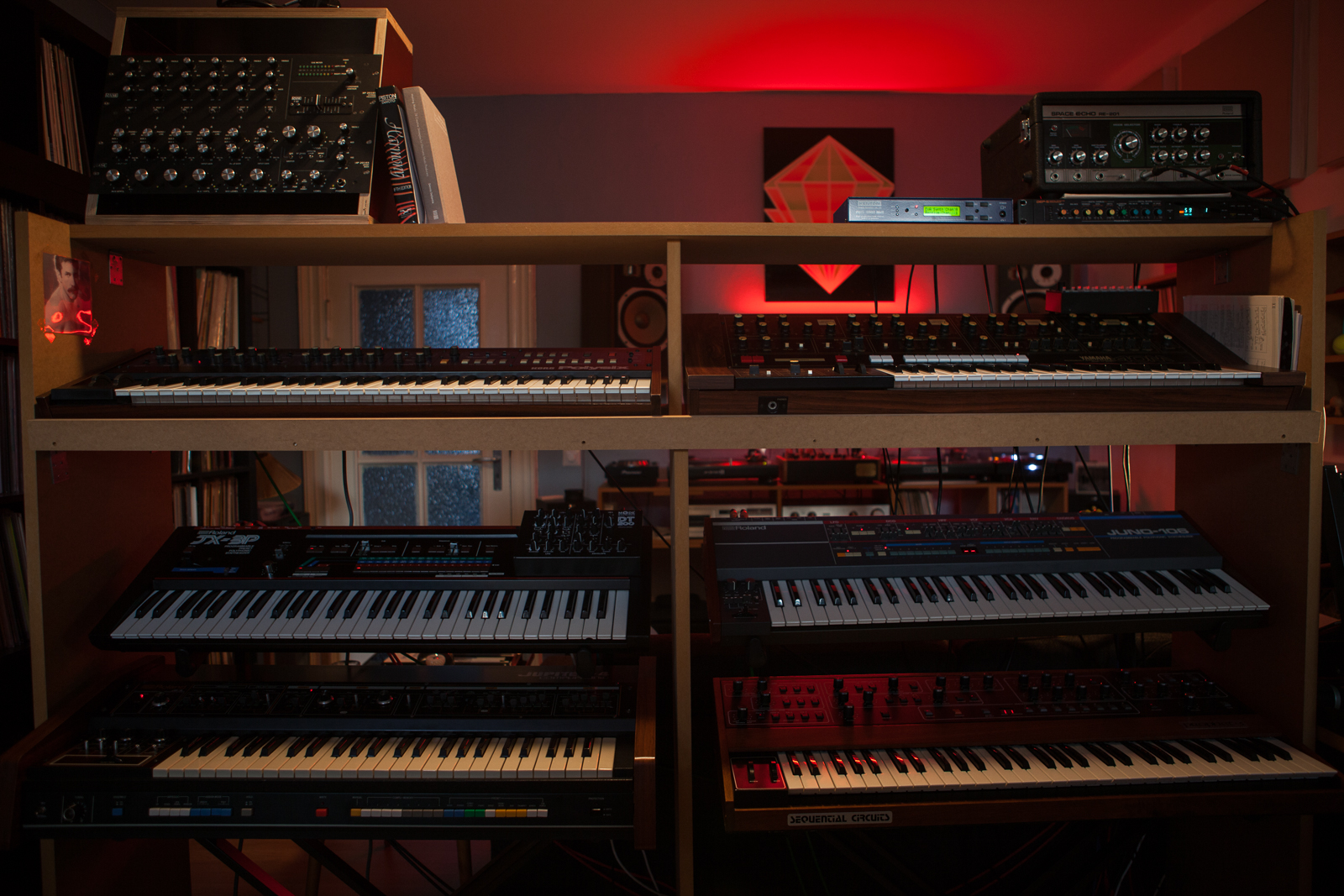
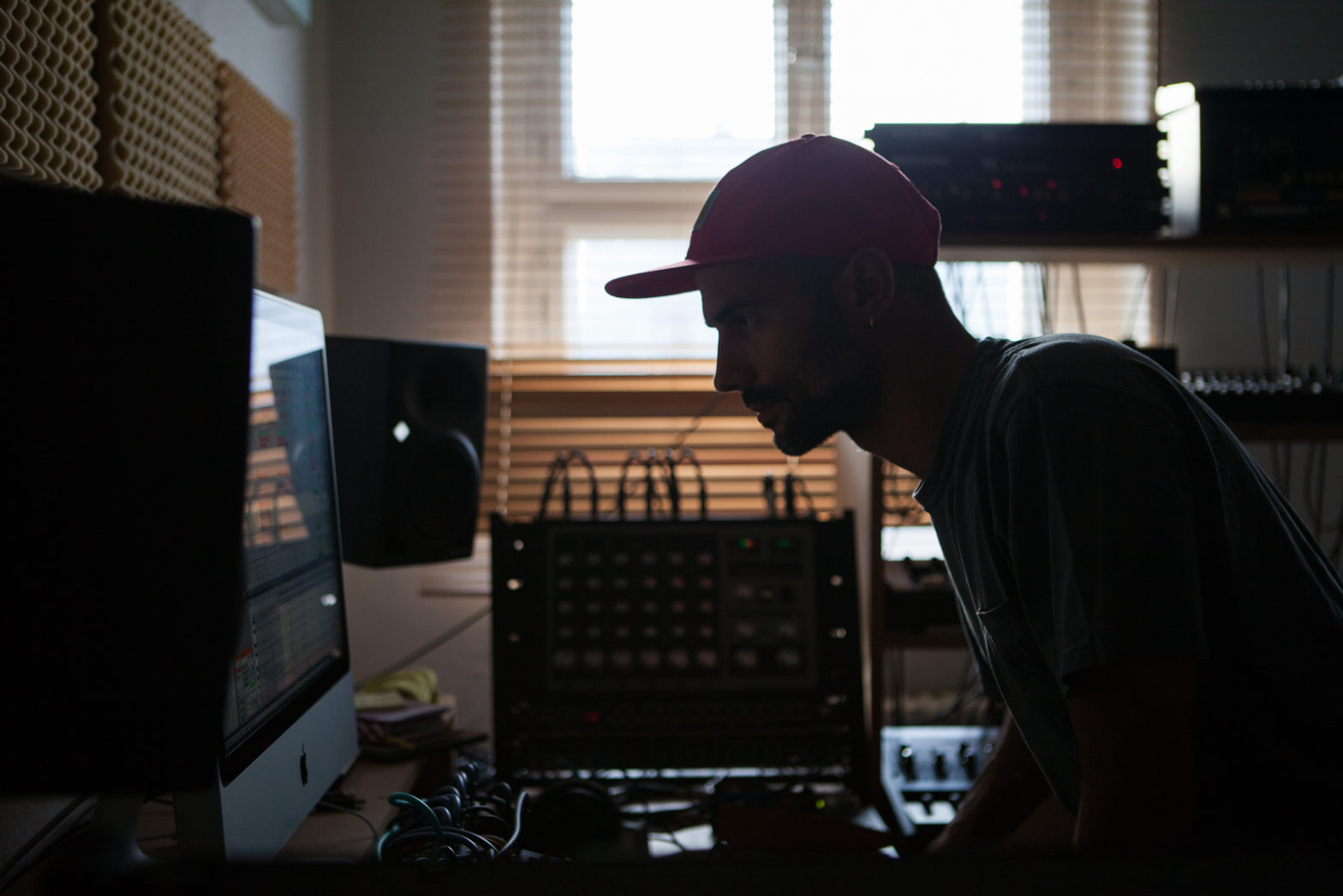
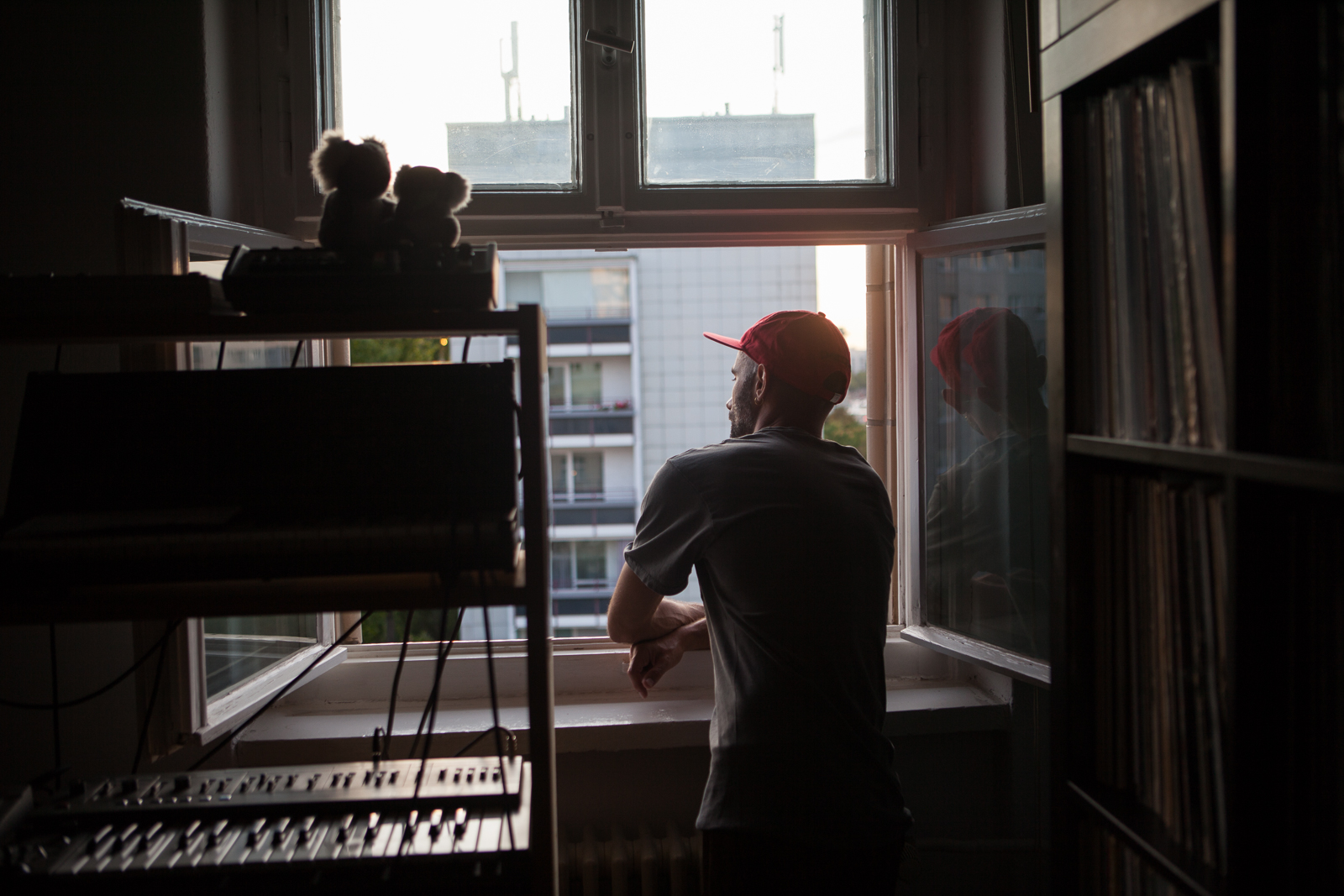
My studio is located in the same place where I also live, in Berlin. I feel very lucky as to have been able to do that for so many years now—it’s been that way since I started with music production, back in 2006. I can have my studio at home, make some noise, be super cozy, even in my pyjamas, and my neighbours are cool with it.  My entire discography has been made in this same building for the past 13 years, and I have only moved once, within the same building, same floor, just into a bigger apartment.

Some people need to leave the house and go to their “office” to work, and they can actually only work if they do so, which is totally understandable. But music is such an intimate and  personal experience, and so for me, being able to do this in the same space where I also live, feels just right and amazing. The living and working always go together. I sometimes wonder if my music would sound different if I went to a proper music studio/office. Find where you feel comfortable and stick to it. 
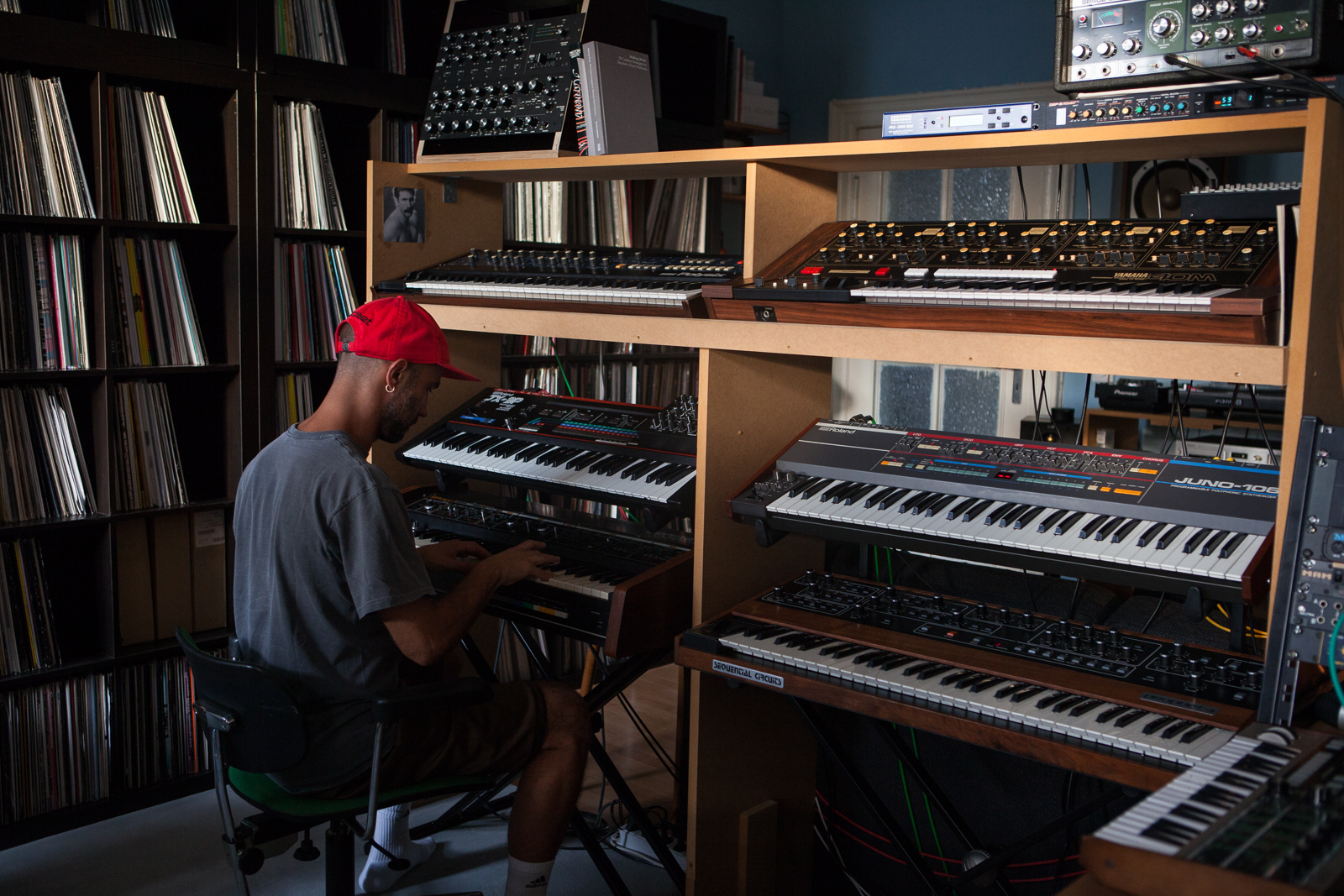
Massi's Berlin studio. 

Use Movement to Inspire Musical Ideas

I’ve always preferred working with machines and hardware because of the tactile experience which is connected to it. I think this comes from when I was a dancer: my body was the instrument which I had to learn how to use first and then be able to move in a space to a certain kind of rhythm or timing, and repeat certain choreographed movements or patterns. This same kind of physical and tactile experience is something which I can relate to my passion for making music. I need to have real and simple things which I can touch or play, that help me create new musical ideas. I need to feel and do things through my body. This is different from person to person, and something that you should keep in mind. 

Learn to Use Your Chosen Tools

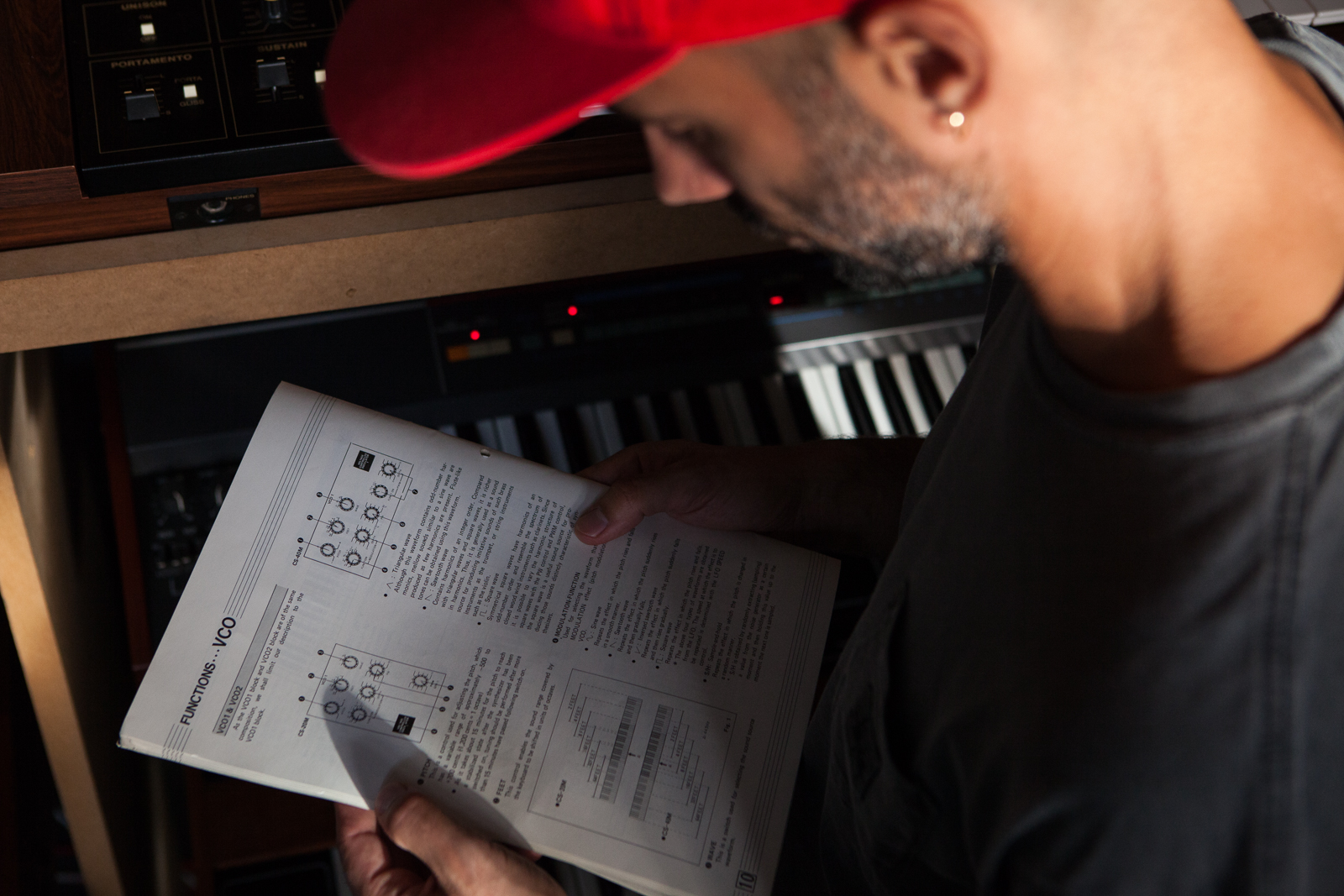
I’ve had to take some time to learn each of my instruments. I am quite methodical, so I downloaded all the manuals, printed them out and always had them by my side. I also watched many tutorials on Youtube (so much respect and gratitude for everyone who took the time to demonstrate how to use certain machines online. Thank you!)

And I still do that from time to time, but this is what so many people forget. I feel like it’s important to refresh your mind about certain features that each machine has and that makes it special. Actually whenever I start reading manuals again, I feel inspired and more confident and suddenly some new cool stuff happens again. Never stop learning, and making the effort to learn. 
Always Finish What You Start

The beginning of my learning process was a very exciting time, very experimental and I still remember those first jam sessions, where I basically learned new things just from doing. Sometimes this would not make that much sense and I would feel somewhat frustrated and lost, but I think the secret here is to keep going and especially finish each track you’ve started working on. Even if in the end you are not going to use it, you should always try and complete each track you make, as if you are going to release it, because you will learn a lot along the way. I still finish everything that I start. Always. It doesn’t matter if this takes one day or one week or one month. I have to finish each track/song I do. That’s for me the real job and accomplishment. 

Learn the Fundamentals of Music

It’s important to be patient and to spend time learning. One thing that really helped me a lot was taking piano lessons from another friend, Alessandro Tartari. I needed to start from the very beginning as I had literally never played a keyboard before. I had no idea about harmony, tonality, chords, key changes, and all of those things. My parents really wanted me to play the piano when I was a child but I always wanted to be a dancer. We never came to an agreement and so I ended up doing neither. Sometimes I regret not listening to my parents and I wonder if I would have been able to play Satie, Chopin, and lots of other complex stuff by now. But it’s never good to force anything and it’s also never too late to start something new. I started music production when I was 28, and even though I can’t play Chopin or Satie, I now understand one of the most essential things about music, which is harmony and this allows me to express myself via sound.

Learning chord progressions and the theory of which notes go well together has definitely opened many new doors, and I finally understand what is going on in a lot of the dance music that has deeply inspired me, such as disco, italo, and Chicago house. Often it’s just a basic chord progression, going from the root note to a third and then to a fifth, or something along those lines. A simple trick like a key change, can bring some tension and excitement into a song/track and takes the arrangement to another dimension. 

I did this a lot in the beginning. My first EPs, like Transmissions Florales on Balihu Records (my very first vinyl release in 2008) and Sensation 9, released by Rush Hour in 2009, are much about key changes. I was putting what I was learning at the time into action.

Don’t Be Afraid to Ask Your Friends

Sometimes the help you need is right in front of you. When I first started producing, I didn’t really have a clue about anything. I hardly knew what an analogue synth was and what you could do with it. Fortunately, I have some wonderful friends in Berlin who showed me things, such as Daniel Wang who taught me about analogue synths and subtractive synthesis, Jules Etienne who introduced me to the world of DAWs—most specifically Ableton Live—and my other dear friend Snax who showed me some great stuff about chords and soloing. 

You can always learn from your friends. People are there to help. If you don’t know something, ask questions; you’ll be able to pick up things far more quickly with some support and advice. (And don’t forget to help others too!) 
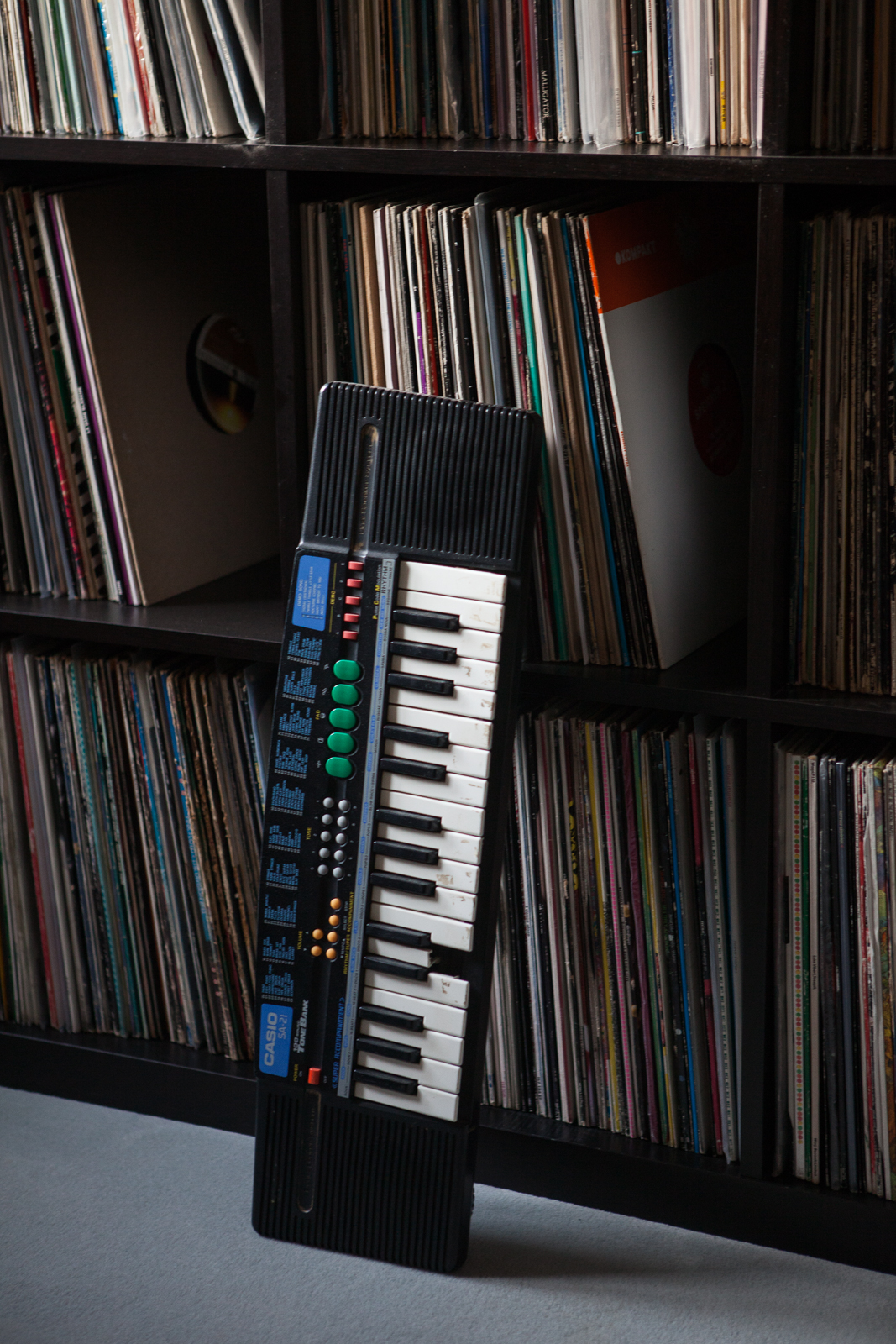
Casio SA-21 keyboard. 

Look for Sounds in Unexpected Places 

When I was a teenager, I got a little Casio SA-21 keyboard—see photo above—as a gift from my sister and I remember being quite disappointed. I never played it and just left it in the box. Many years later, my nephews discovered this little toy and had fun with it. A couple of years ago, when I was visiting my parents during the summer, my youngest nephew turned up with it and wanted to do a little jam session with me. I was like: wait a minute, where did this thing come from? I had completely forgotten about it.

It definitely had some signs of use: my cute little nephews obviously hadn’t taken that much care, but once I turned it on I was so blown away and I couldn’t stop playing with it. Pulse-code modulation at its best! Beautiful early ‘90s deep house sounds from a little plastic toy.

I had to steal that keyboard from my nephew and bring it back to my studio in Berlin where I then made a whole new song from it. It’s called “Ukulele Groove” on my Connection Lost EP series, released by Uncanny Valley in 2016.
Actively Listen to the Music that Inspires You

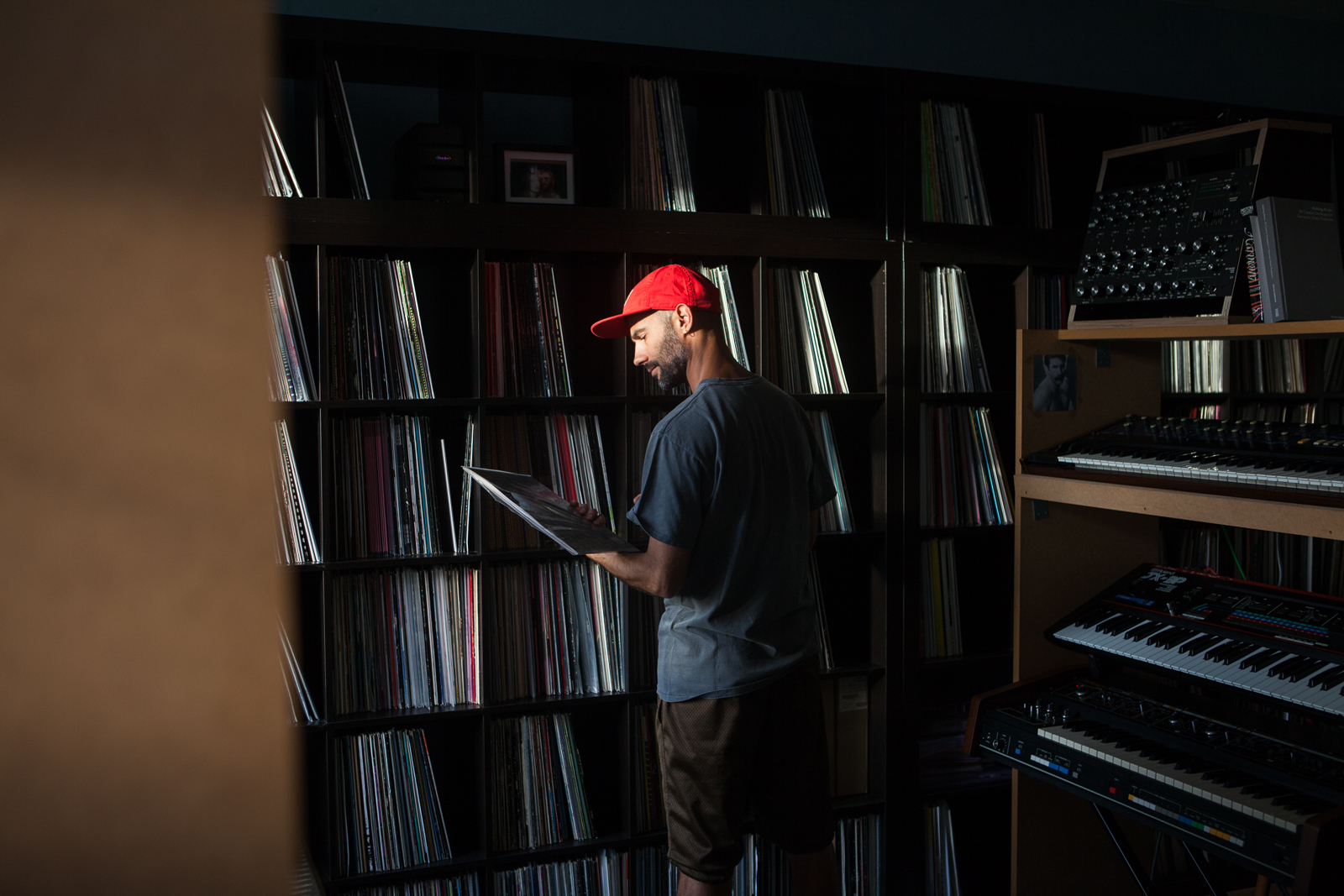
It’s so easy to overlook the importance of listening to new music to inspire you. But to really listen to an album or a track, you need to do so very carefully and not skip quickly through it. When I listen to something that I like, I listen to it on repeat and in full length for a few days at least, sometimes weeks or even months. 

There is so much music out there and to find the time to listen to everything is impossible. But I feel everyone can find some music which is special for a specific moment or mood. When I find something I like, I like to write down some notes; for example I might try to outline some technical things that I hear, mixing as well as arrangement tricks and details, certain types of sounds that maybe I’ve never made myself. If I don’t know the artist yet, I also like to do some research about them and the label this record came out on. This will spark new ideas for me, and develop me as an artist. I also think that listening carefully to other music is a good exercise prior to making/working on a new track.

Organise your Studio

Another thing that has helped me a lot in the studio, workflow-wise, is to have everything patched and routed. I have a few different mixers and a couple of audio as well as MIDI patchbays and everything is ready to go. I can press play in Ableton Live, and for instance, all my drum machines start running. It is not always super tight but I kind of like that. And if it’s totally off, I don’t mind moving things around in Ableton Live later on anyway.

I feel it is important to have a certain kind of devotion and dedication in the studio. Creating the most comfortable space according to your own needs, it is essential and can affect your performance and creativity. Creativity needs a still mind and this requires organization. Create a new atmosphere for example by changing the lights, or adding some plants or anything that inspires to see new results. 

Set Limitations

This year was very interesting because I discovered some new ways of working on music. I relocated for three months to Los Angeles when I was working on my new album, Feel Live, via Live At Robert Johnson. Obviously, I couldn’t take my whole studio with me to LA, where I was staying in a friend’s guest room. My new studio comprised of a nice desk, my laptop with Ableton Live, Ableton Push, a BabyFace Audio Interface, a Dave Smith Tetra, a Waldorf Pulse 2, a Roland VP-3, an Eventide Space Factor. Then in LA I got a MACKIE VLZ-PRO 1604 mixer and a pair of KRK monitors.

At first it was somewhat weird and it definitely took me some time to adjust, but I then appreciated and discovered that working with limitations can actually be very useful. With this same spirit, I set myself the limitation of using only one machine per track. The track “Feel Live” was made entirely with my Roland JX-3P, or in “Properties Of A Distance” I used only my Korg Polysix. This way, I felt I was really getting to know my machines better than ever, as I tried to pull everything out of them.

Also, while in LA, I worked a lot more with Ableton Push. I love making beats with that step sequencer, it really is fun! But I also used it for my external synth devices to play some melodies, bass and chords. I am used to playing keyboards and so normally I need to visualise the black and white keys, in order to know what I am playing. With Push I felt a little disoriented at first, but I eventually came up with some interesting new melodic content which I probably wouldn’t have been able to do otherwise. It felt more creative and the track on the album called “Fare Spazio” is programmed and performed entirely with Ableton Push.

I have also been doing lots of editing, up in the sky, on numerous flights. I used to see other people doing this on the plane and wonder how they could do it. Well, it is totally possible, I actually quite love it now and it’s definitely also a nice way to kill time. Again, the limitation of space and gear has helped me to be focused and get lots of stuff done. 
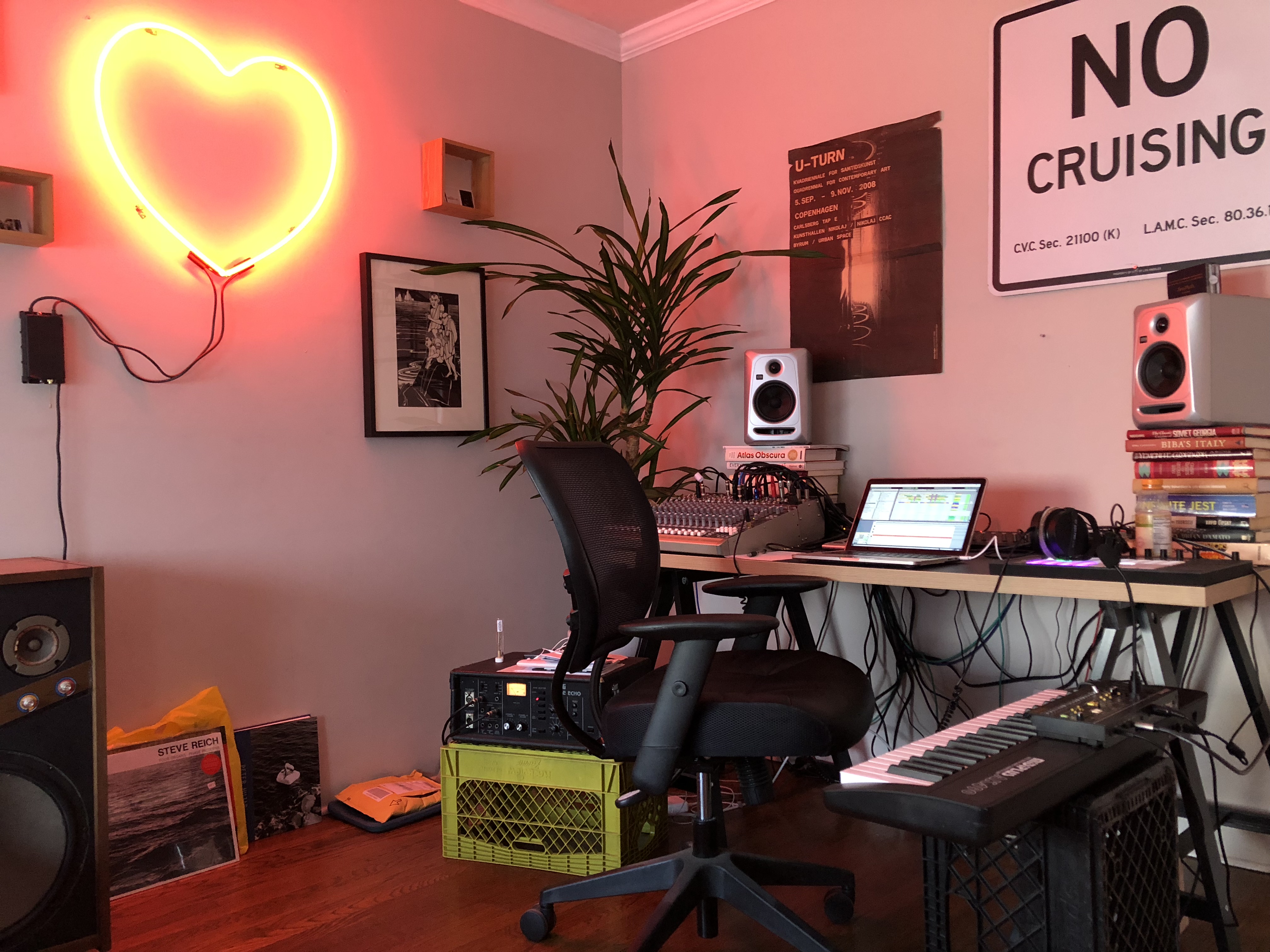
Massi's temporary LA studio. 

Change your Listening Environment

I think an important thing to do is to check your tunes on as many different sound systems as possible. Sometimes I feel like when I have been working for a long time on a new track, sitting at the same desk, in the same spot, with the same speakers, it kind of gets too “bi-dimensional.” Moving around, changing listening position and set-ups awakens my ears again and I start to notice things that I wasn’t able to hear anymore.

Sometimes I also really like to leave the house and go to the park for a walk, and listen to what I have been working on through my iPhone and write down notes. A new environment can activate and stimulate your attention and concentration again. It is also very important to take some distance from a tune that you have been listening to for too long, to be able to tell if things are still missing or need to be improved.

Photos by Robin Kirchne except Los Angeles studio by Massimiliano Pagliara.
Rrose and Charlemagne Palestine to Release Collaborative Piano LP

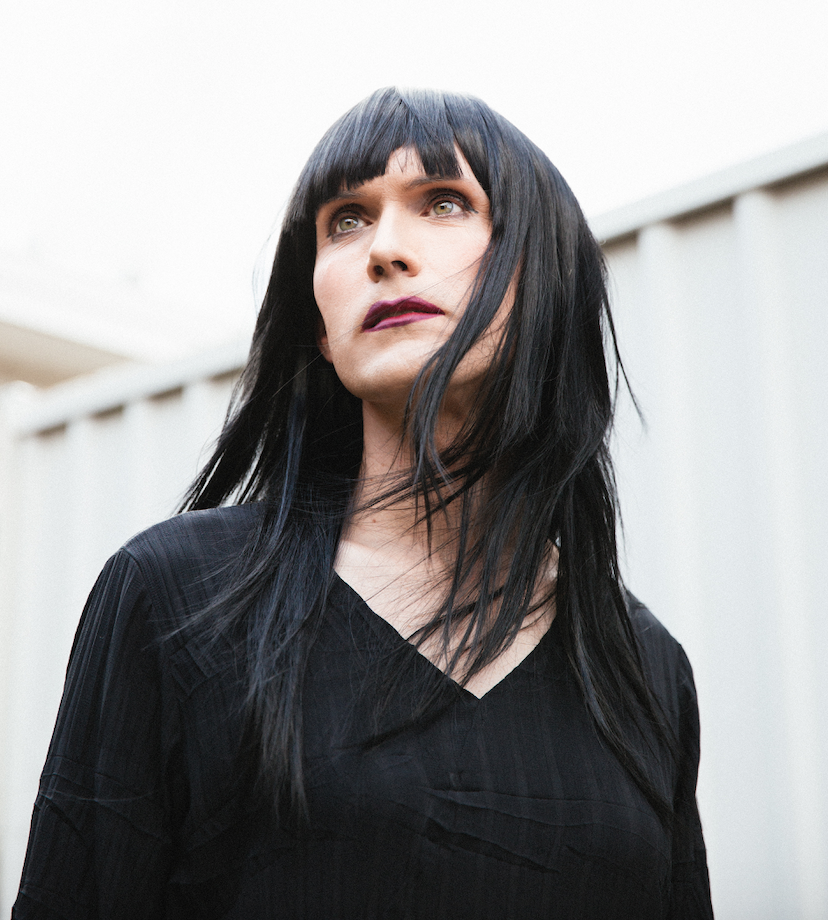
Rrose has collaborated with Charlemagne Palestine on a new piano LP, out on April 25 via Rrose’s Eaux label.

The Goldennn Meeenn + Sheenn is a rework of Palestine’s 1976 long piece “The Golden Mean,” originally performed on two pianos. 

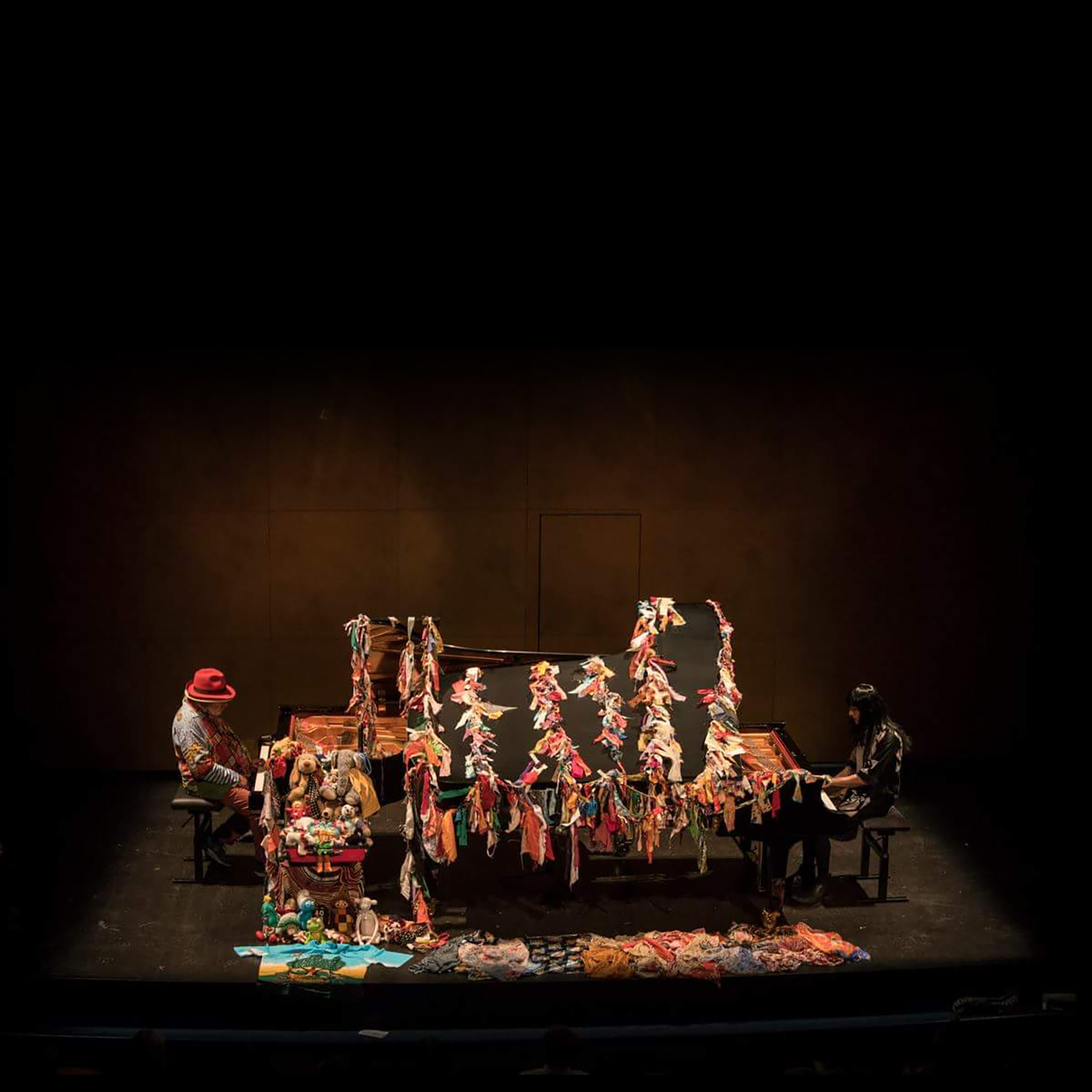
Palestine and Rrose first joined forces a decade ago, when Rrose was studying at Mills College. Rrose was inspired to play Palestine’s “Strumming Music” in the grand wooden halls of the Mills Student Union, and wrote to Palestine enquiring about a score. Palestine answered that there was no official score, instead exuberantly inviting Rrose to study with him in Belgium, at his home. Then, in 2018, the Festival Variations in Nantes commissioned Palestine to perform “The Golden Mean,” reworking the piece for two pianists, and Palestine chose Rrose to join him in this new rendition of the work. Together, they performed “The Golden Mean,” reborn as “The Goldennn Meeenn + Sheeenn,” onstage at the main opera house in Nantes. 

The concept of the ‘golden mean’ goes back to the roots of mathematics, and ancient Greek philosophy. It is an important work in the Palestine mythos, embodying his total immersion in the power of the interval. “It’s probably his most systematic work… a step-by-step journey through the intervals of the octave,” says Rrose. “When we rehearsed it, we were noticing how each interval is like a universe of its own—with its own history, emotions, and sonic qualities all mixed up together. Every time you move from one interval to the next, it feels like moving into another world.”

This recording is beautifully recorded, with mastering by Rashad Becker of Dubplates and Mastering, and feels “expansive, radiant, and hypnotic, opening new ears to its enduring mystery,” we’re told. 

“Do not focus your attention on the notes being played, but on the ocean of overtones swimming, suspended, overhead, brushing against one another, kissing one another, melting into one another.— Rrose

Tracklisting

CD + digital

01. The Goldennn Meeenn + Sheeenn

Vinyl (edited)

A. The Goldennn Meeenn + Sheeenn (part 1)

B. The Goldennn Meeenn + Sheeenn (part 2)

The Goldennn Meeenn + Sheenn lands April 25, with a teaser below. 

Premiere: Hear a Deep and Textural Techno Cut by Samuli Kemppi

Early next month, Parabel will release its second VA, Omniform II.

Omniform II will be Parabel’s first release of the year and follows on from 2017’s Omniform I, which featured tracks from Patrick Siech, Petter B, Nima Khak, and Benjamin Mull. On Omniform II, the label has enlisted Dino Sabatini, Patrick Siech, Samuli Kemppi, and Ritus, a new project from Ray Kajioka and Eddie Hale, who deliver four deep and textural techno cuts. From the noise-filled opening track by Siech to the aquatic grooves of Ritus’ “A8,” Omniform II is a masterclass in heady dancefloor techno.

In support of the release, Parabel has offered up a full stream of “Sirens,” Samuli Kemppi’s textural contribution, available to stream via the player below.

You can pre-order the EP here.

SXM Festival: Welcome Back

Hurricane Irma lasted from August 30 until September 13, 2017.  Stretching over 650 miles from east to west, and with wind speeds exceeding 185 miles per hour (nearly 300 km/h), it left a trail of devastation throughout the Caribbean islands and the American Southeast, flooding major cities including Jacksonville, Florida, Charleston, and South Carolina. It held over seven-trillion watts of energy—twice as much as all bombs used in World War II—and was so powerful that earthquake seismometers recorded it. Among these places worst hit was Saint Martin, a 39-square-mile island shared by France and the Netherlands. Irma hit around 8 am on September 6, killing 14 people and destroying 70% of the infrastructure on the Dutch side of the island, and around 90% of the French side. Houses were turned to ruins, and lives destroyed. It was the most powerful Atlantic hurricane in recorded history.

Also affected, though not on the island, were Driss Skali and Julian Prince, two best friends and the Montreal-based founders of SXM Festival, an annual event that’s taken place on the island since 2016—and a benchmark of sorts when it comes to destination festivals. After Irma wiped out almost all the island infrastructure and drastically limited the flights in and out St Martin, Skali and Prince canceled the 2018 edition and focused their attention on helping the island recover, using their foundation, Two Bunch Palms, as a vehicle for raising funds. As they prepare for the upcoming third edition, an emotional event given the devastation of the past two years, Skali and Prince took some time out to reflect on their work and the island’s road to recovery.

It’s set to be quite an emotional return for SXM Festival, after Hurricane Irma. How are things shaping up?

We’re feeling pretty ready. When the festival was canceled, we focused our efforts on raising funds for the island’s recovery which is not something we’re experienced in, and we’ve been looking forward to getting back to organizing the festival. We’ve been feeling great since the preparations for this year’s edition began because we’re back to doing what we love. It’s going to be an emotional event. Everything is beginning to fall into place now.

Talk to me about how you’ve been helping the island in its recovery via your foundation, Two Bunch Palms.

We set up that foundation before the second edition of SXM Festival. We’ve always wanted to be close to the local community—it’s a music festival but also a cultural event. The island’s population is only around 80,000 so everyone is connected and you cannot be successful without the support of those on the island, many of whom work at and attend the festival. Besides that, our goal has always been to give back. Obviously, everyone benefits from SXM: it brings thousands of people to the island who spend, so there is an economic impact, but that’s not enough. So since the first year, we’ve been focused on giving something back to the island. We began by giving beach towels to the kids, and we’ve also fixed some of the basketball courts because it’s a popular sport. When the hurricane hit, it was immediately clear that there wasn’t going to be a festival in 2018 and so we used that foundation to be able to raise some funds, and since then we’ve thrown a kids party, cleaned up beaches, planted palm trees, bought sports gear for schools, among other bits. We raised US$55,000 through donations and also pulled on a lot of strings to go a lot further, like using a bulldozer to clean the beaches. The hurricane really just enabled us to get more funds to do more things.

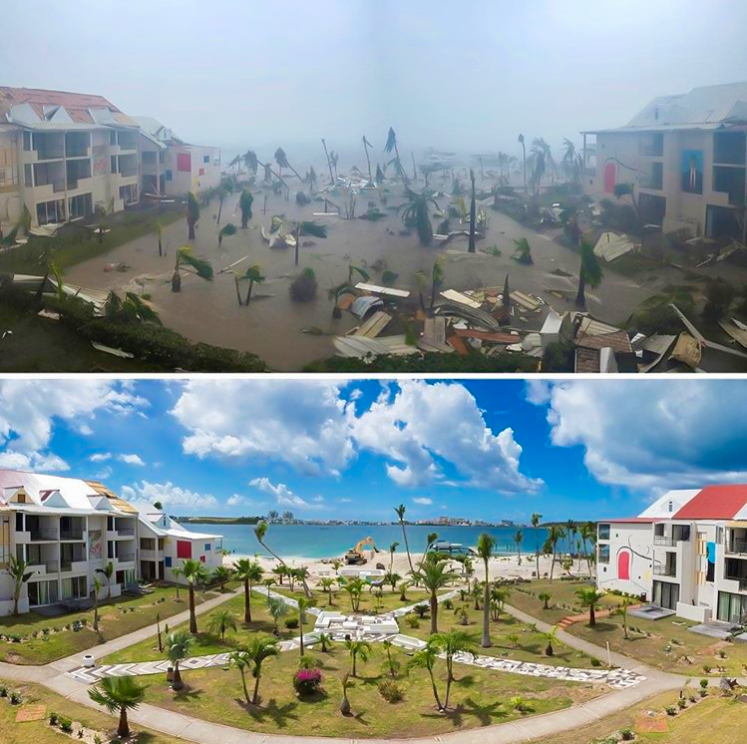
Sint Maarten, the Dutch part of Saint Martin Island, on September 6, 2017 by Netherlands Ministry of Defence / Reuters

French Collectivity of Saint Martin, after the passage of Hurricane Irma, on September 6, 2017 by Lionel Chamoiseau / AFP / Getty

What is the state of the island now—how is it looking?

Most of tourists spots have now been fixed. It doesn’t look damaged but it does look a little depressed. There hasn’t been a lot of tourism down there and so a lot of businesses have been forced to close, so there are lots of empty commercial spaces—but it’s certainly not demolished. The businesses that were successful have reopened because they had the money to do so. This includes the restaurants and the beach clubs, and some of these have decided to open with a new look and new branding. The island has also been cleaned up extensively, and the rainy October season was more intense than usual so it’s all green and lush. The island has this feel of new right now and give it another year and we will be back to where we were before the hurricane. I can assure you that by 2020, we will be at one hundred and twenty percent of where we were before the hurricane infrastructure wise and economy wise.

A photo comparison of the island. 

How have the past 18 months changed SXM’s objectives and your outlook as hosts? 

The experience has only strengthened our resolve to create an even more special event. We have a deeper appreciation for life; it was a hell of a reality check. We are pouring that humbly into what we do and we look forward to sharing it with everyone. It has been a long time coming. This is the year of the Phoenix.

How will this year’s event reflect this? 

Many of the DJs have said they’d like to give back when they are there so we will be announcing soon that they will be attending schools, teaching the children, and giving classes on sustainability and motivation. We’re also offering festival attendees the opportunity to contribute, and there will more information announced soon; it will a lot more than a party. We want to encourage people to do something constructive with their trips. Running alongside the festival will also be doet, a weekend of voluntary work, that people can sign up for. It was also in our plan to contribute culturally to the island, meaning it will be a very unique experience for all those who attend.

It feels like this year’s event will also serve as a time of celebration to draw a close to a difficult 18 months. 

It’s true. Everything is a lesson in life and every disaster brings opportunity. It’s been a year of work for us and yes, a comeback is always a nice story. We’re finally back to life!

The locals have been very welcoming of SXM. What’s the secret to forming this connection? 

Yes, we’ve always been supported, although in the first year the locals didn’t really understand the DNA of the event because they’d never hosted an international electronic music festival. Now that they have experienced it, they are supportive of what we do and are excited for the festival to come back. The first year, we had 10 percent local attendance and this doubled on the second edition, and I think this year that 30 percent of those in attendance will come from the local area. The island is half Dutch and half French so the population is full of people who went to Paris or Amsterdam to study but returned to live by the beach, and there are lots of Latinos and Africans, too. I think this multiculturalism is what makes the island so open to these sorts of events.

You’ve booked some great artists this year. What do you look for?

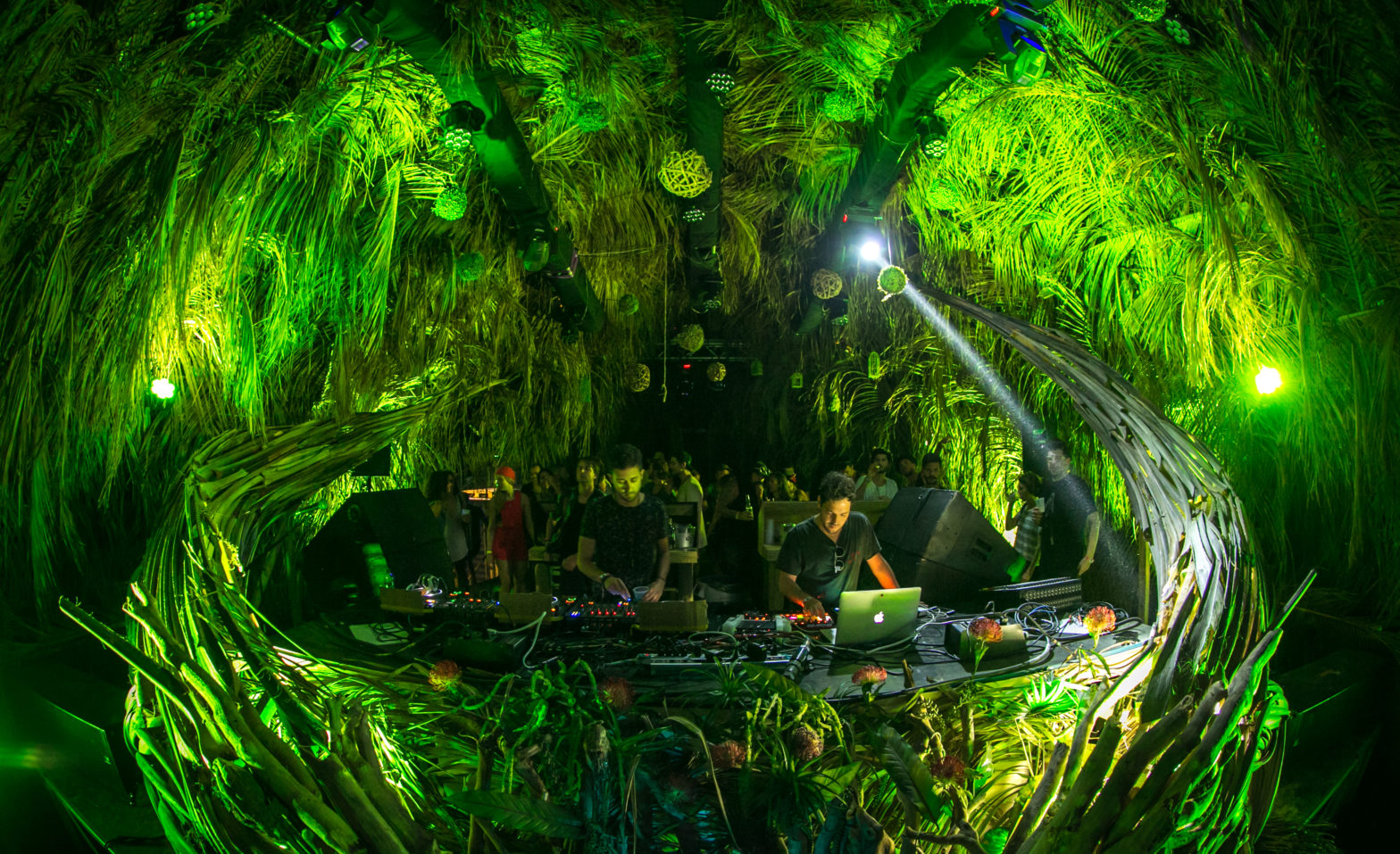
We have the main area which has two stages, and then we have beach clubs and one-off small stages and venues around the island. We play the music we like, and the way we select is that we try to have different types: we have Romanian techno, deep house, minimal, dreamy house. We make sure that when the festival runs there’s always different music playing on different stages so people can choose what they listen to. We go to a lot of music events around the world and then we always pick DJs that are established, and we also like to have DJs that are a rarity—like Zip and Ricardo Villalobos. We also try to have music that fits with the beach vibe, and then during the night, we do more techno stuff—like harder and darker stuff.

Subscribe to XLR8Rplus for a Free Ticket to Rhadoo in Los Angeles

ReSolute/Dialogue event in Los Angeles

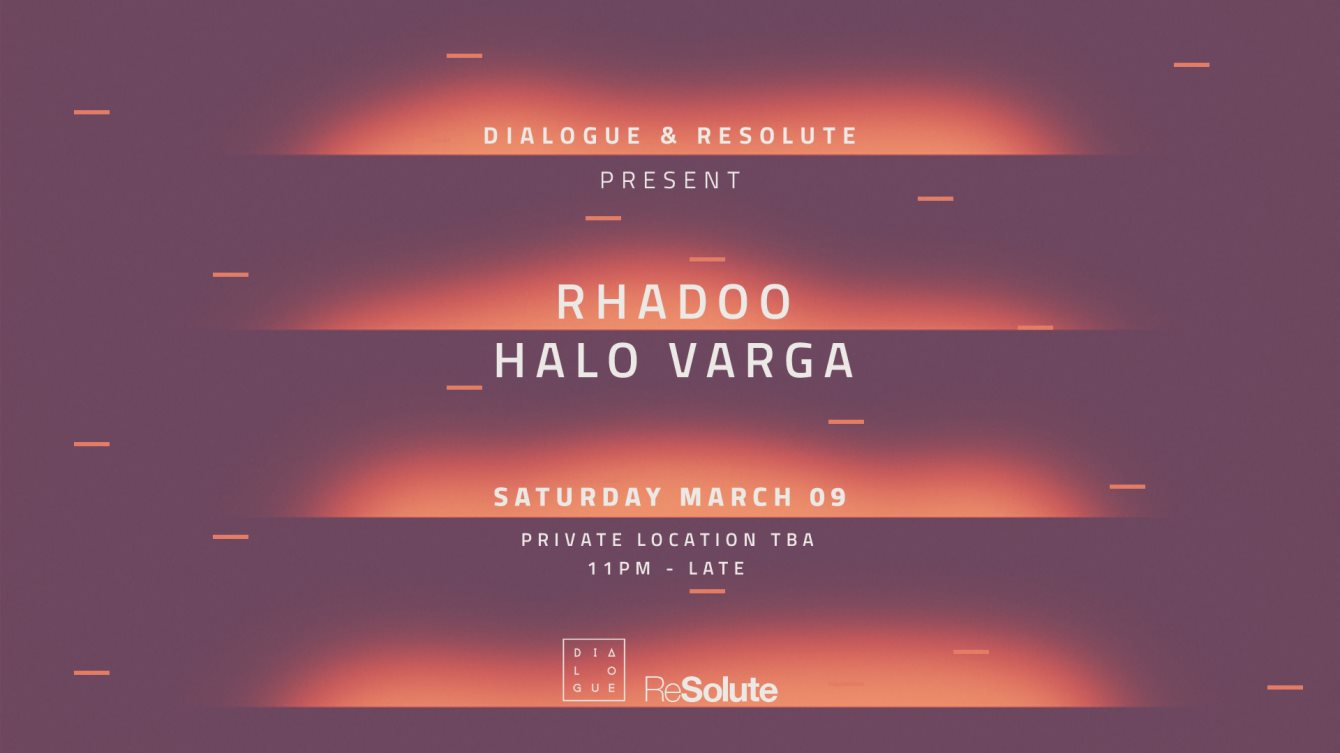
XLR8R is offering XLR8R+ subscribers free passes to the upcoming ReSolute and Dialogue event in Los Angeles. The party takes place on February 23 with Rhadoo and Halo Varga both playing extended sets.

As one of the key figures to come out of the Romanian minimal house and techno scene, Rhadoo needs little introduction. His [a:rpia:r] imprint has produced some of the most sought after records in these realms. He’s one of those artists who impresses not just with his selections but by making new combinations out of those recordings, finding beauty by blending two and often three tracks together. He’s best when given an extended set time, so this is sure to be good. 

Halo Varga has been releasing music since 1999, and is one of electronic music’s unsung heroes.

As a token of appreciation for the support, we are offering current subscribers of XLR8R+ and those who sign up before the event a limited amount of free guestlist passes.

For those who haven’t yet, SUBSCRIBE HERE and email your full name, subscription confirmation page, and “Dialogue x ReSolute” as the subject line to [email protected] to claim your event pass. For those current subscribers, simply email your full name and “Dialogue x ReSolute” as the subject. 

Due to limited availability, passes will be offered on a strictly first-come, first served basis. Subscribers are eligible for one pass only. 

You can find more information on XLR8Rplus, the offer, and the event below. The eighth and current edition of XLR8R+ is here, with subscription details here

Rhadoo

 Offer ends 10 p.m. PDT, Saturday, March 9.

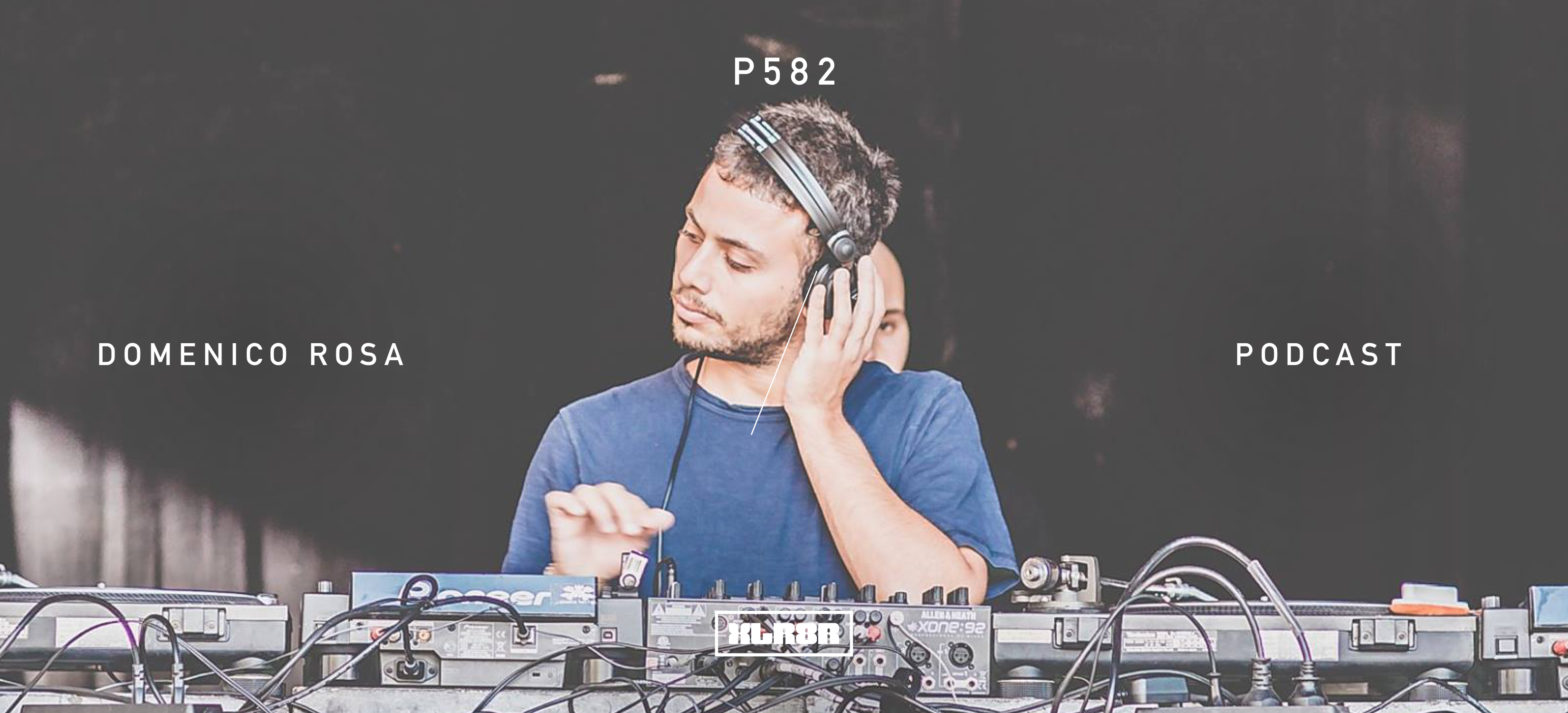
Podcast 582: Domenico Rosa

Domenico Rosa originates from Benevento, a city located in the South East portion of Italy. He began collecting records aged 15 after discovering some local collectives and DJs, and took the decision to teach himself to mix records using the two turntables he had recently purchased. It became clear that he wished to devote himself to electronic music and so enrolment at a local Sound Engineering course served as a stepping stone into the world of production. After years of experimentation, he started Imprints Records in 2011 together with Riccardo Buccirossi (a.k.a Riccardo), a London-based producer also originating from Benevento. The aim was to reproduce and release the sorts of records they’d been listening to for so many years. 

The label’s success opened the door to bookings around Italy and throughout Europe. Up first was Shades Of Swing, a three-track EP from Rosa himself, and there have since been appearances from 100 Hz, Markus Sommer, Riccardo, and more. Rosa’s sound, much like the label’s, is playful and groovy, rooted in the old-school sitting within a minimal framework. He adopts a similar aesthetic with his DJing: known to be a real digger with a penchant for slick groove and warm melodies, his sets are filled with tracks you’re unlikely to have heard and will probably never hear again. His podcast is a testament to this: barring the few track names he’s revealed, do you recognize any of the music? 

In celebration of his new label, Propersound Records, Rosa offered to compile a podcast for our series. It’s much less club-ready than what you’ll normally hear from him; focus, instead, is on “warm and emotional sounds.” It’ll certainly make you dance, but we’ve found ourselves kicking back to it too. 

What have you been up to recently? 

Recently I’ve been busy between my gigs and starting my new record label, Propersound Records. I’ve spent the last few months traveling around Europe, Africa, and Australia, having the pleasure of playing places that I’ve never been to before.

When and where was this mix recorded?

The mix was recorded at the beginning of February at my own studio in Benevento, Italy, where I finally found some free time to focus on this mix.

Is there a particular theme or idea behind it?

This podcast is made up mostly of a selection of tracks for listening to outside of a club. The main feature of this mix is not the beat, but the warm and emotional sounds.

How did you choose the tracks that you included?

I’ve spent lots of time at my place digging in my collection. I could have played other tracks on this mix, but I thought that this selection is more suited to this kind of journey.

What’s next on the horizon? 

Two remixes on the way to be out for 2019. One will be out soon and it’s done for my old friends at Kommuna in Barcelona. I’ve also got another remix that will be out around the end of the year for Albion Records, a label from the UK. I also have one track that will be out really soon on a various artist compilation for a new record label called Ovnie Records, based in Madrid.

Due to issues regarding the GDPR, EU readers can download the podcast here

Tracklisting

01. Betrieb “Strandperle” (Klang Elektronik)

02. Undisclosed

03. Undisclosed

04. The Bionaut (Eat Raw)

05. Undisclosed

06. Jeremiah “Only Dubbin’ On My 808 (Grow!)

07. Undisclosed

08. Undisclosed

09.  Animated “Skelectro” (Dust 2 Dust Records)

10. Undisclosed

11. Undisclosed

12. East Island “Sir York Is Where” (Down Load Music)

13. Undisclosed

14. Undisclosed

15. Undisclosed

16. Undisclosed

17. Undisclosed

18. Undisclosed

19. 2K4S, NDSOMEWARE ‎”E2E02″ ( end2end )

Aphex Twin’s Rephlex Affiliate Bogdan Raczynski to Release Unheard 18-Track Collection via Warp’s Disciples

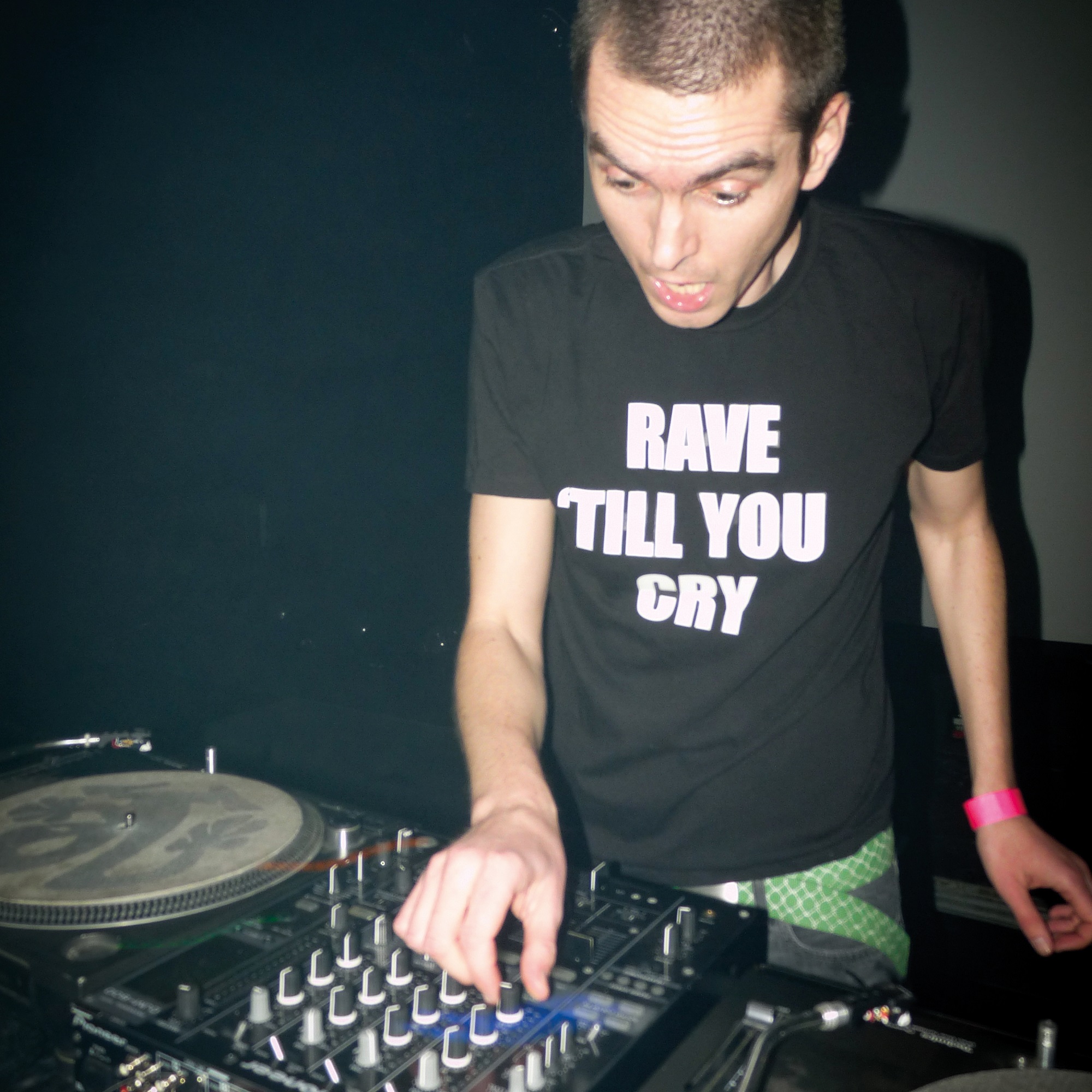
Aphex Twin’s Rephlex affiliate Bogdan Raczynski will release an unheard collection of tracks and versions via Warp’s Disciples on April 5, titled Rave ‘Till You Cry.

Raczynski arrived on the scene in 1999, rumoured to have been discovered by Aphex Twin whilst sleeping rough in Tokyo. He released three albums in quick succession that year alone, and a steady stream of records followed. He’s since collaborated with ​Björk​ and remixed Autechre for Warp’s ​10+3 compilation, but things have been quiet since the release of his last studio album, ​Alright!, which surfaced in 2007.

Rave ‘Till You Cry​ signals a return across 18 tracks selected and sequenced by Disciples. Across four sides of vinyl, we’re told that the joyous sugar-rush tunes of classic ’90s Nintendo games meet drill-like breaks, ambient drone, and slabs of bit-crushed noise. We understand that it also showcases a more introspective side to the Bogdan sound. 

“Much like the recent resurgence of Digital Hardcore’s Christoph De Babalon and the off-kilter time signature of recent records by Demdike Stare and Rian Treanor, Bogdan Raczynski’s return is a timely reminder of the menace and beauty contained within irregular rhythm science,” the label explains. 

Disciples, a Warp-affiliated label, launched last year with some archival recordings from Black Lodge. 

Tracklisting, Digital

01: 156 s2n 

02: 134 32iii 

03: 318 22t7 

04: 220 s3d 

05: 329 15h 

06: 220 s1c 

07: 307 33m15 

08: 332 23t422 

09: 309 14ae2 

10: 213 213r

11: 220 s2c

12: 356 34h12 

13: 306 24n812 

14: 306 41dr 

15: 210 31c22 

16: 220 s5d

17: 355 44ir

18: 204 fr

Rave ‘Till You Cry LP lands April 5, with “134 32iii” and an album teaser streaming below. 

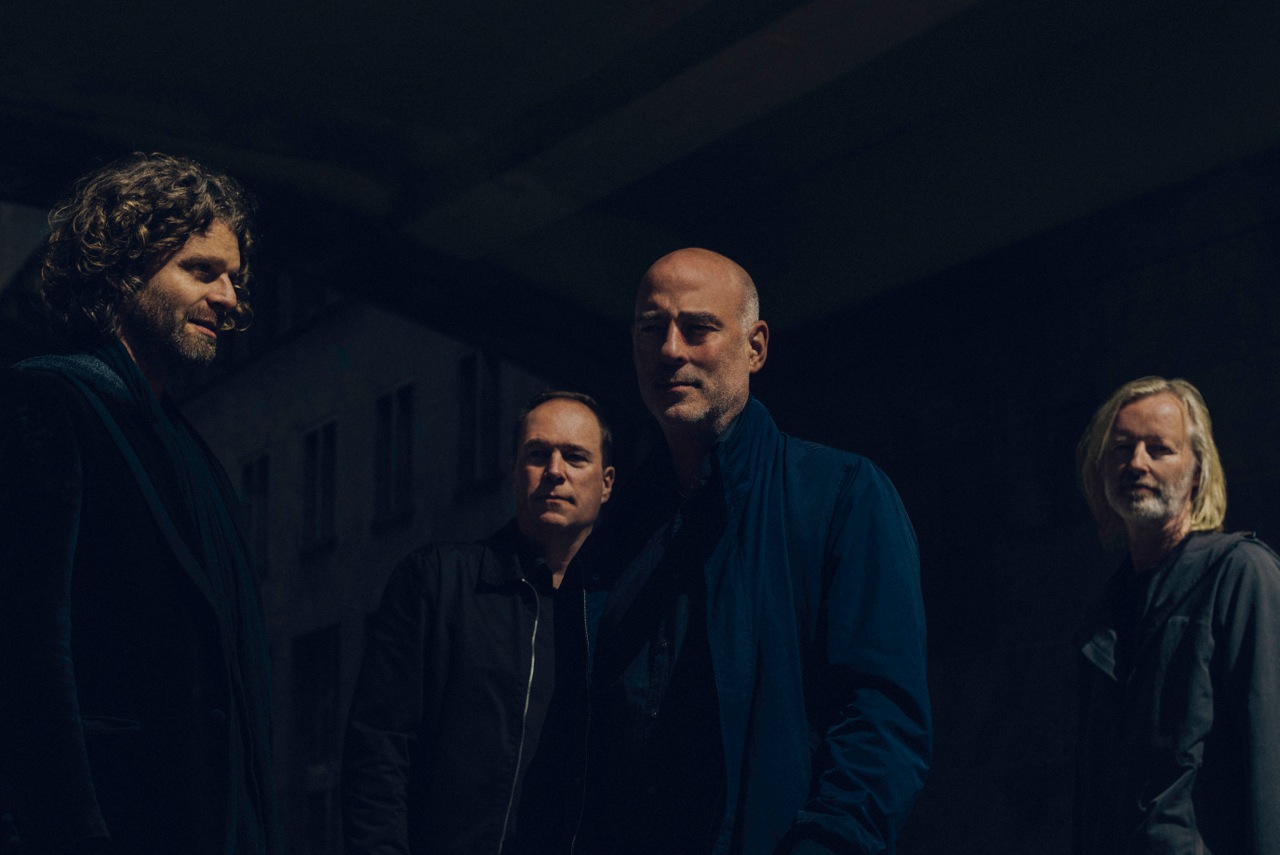
Jan Bang, Erik Honoré, Eivind Aarset, and Samuel Rohrer Collaborate as Dark Star Safari

Photo: Camille Blake 

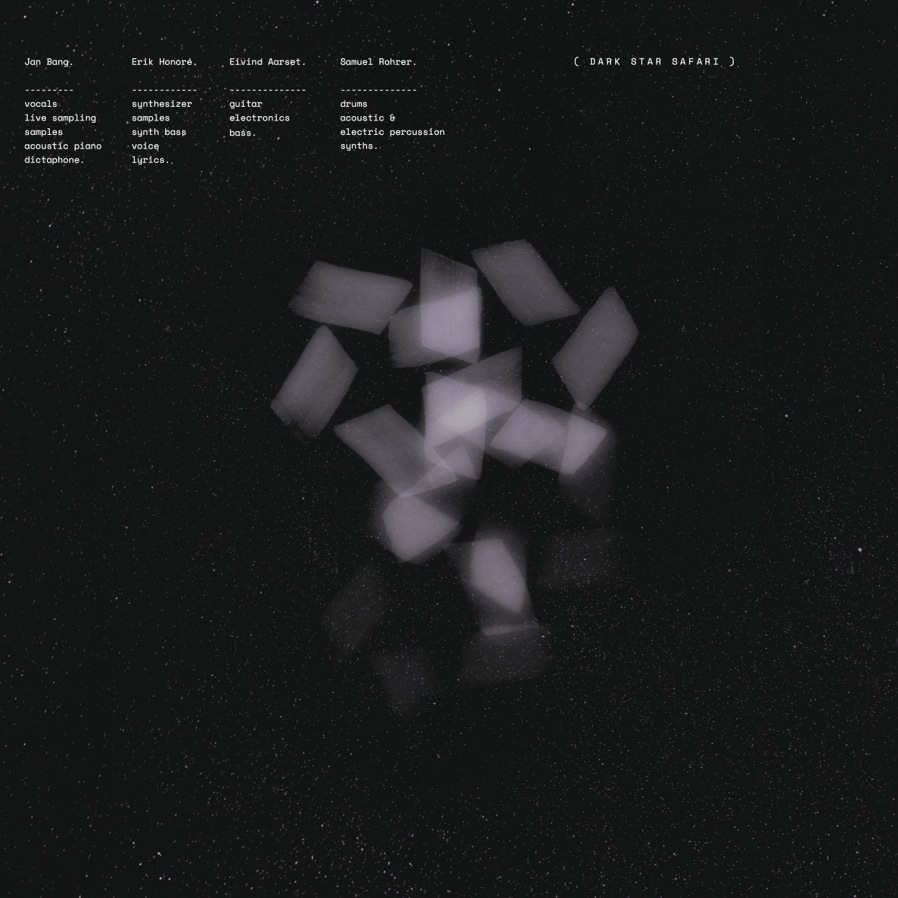
Dark Star Safari—a newly formed band project featuring Jan Bang, Erik Honoré, Eivind Aarset, and Samuel Rohrer—will present their recording debut, an evocative self-titled song-driven album. 

The album stems from what the group describes as a two-stage process, at the centre of which lies an organic freedom that enables the music “to fill itself in,” to be self-actualizing via the musicians.

It began with an improvisation session initiated by Rohrer, who invited Bang and Aarset to the Candy Bomber studio in Berlin. The session was run by sound engineer Ingo Krauss, who worked in the famous Conny Plank studio, and its recording and mixing employed sophisticated use of vintage analogue equipment alongside cutting edge digital processes. This meeting opened the door for something larger to emerge, and drove all four artists to attentively examine and manipulate the material in order to discover what it had to offer. 

During this second phase, Bang, while meditating upon the possibilities of the improvised material, felt an urge to give additional colour to it by singing. So he stepped into the role of vocalist, a role he had not pursued since the early days of his musical career. He sent the results to Honoré, who penned the lyrics and composed two additional songs, “Mordechai” and “Fault Line,” to complete the project. 

We’re told that the songs conjure shadows of memory, clouds of dreaming, and silhouettes of foreboding through the album’s layered, textured fabrics and Bang’s delivery of Honoré’s lyrics.

Rohrer, a multi-faceted percussionist and producer who forms part of Ambiq, contributed an XLR8R podcast which can be streamed here. 

Tracklisting

01 Labyrinthine

02. Resilient Star 

03. Family Gospel

04. Child of Folly

05. Thoughts and Prayers

06. Mordechai (A Prophecy)

07. November’s Child 

08. White Rose 

09. Your Fathers’ Names

10. Fault Line

Dark Star Safari LP lands May 10 via Arjunamusic with an album trailer below. 

Cover by Ian Anderson, The Designers Republic

Grouper’s Liz Harris Surprise Releases Double Album as Nivhek

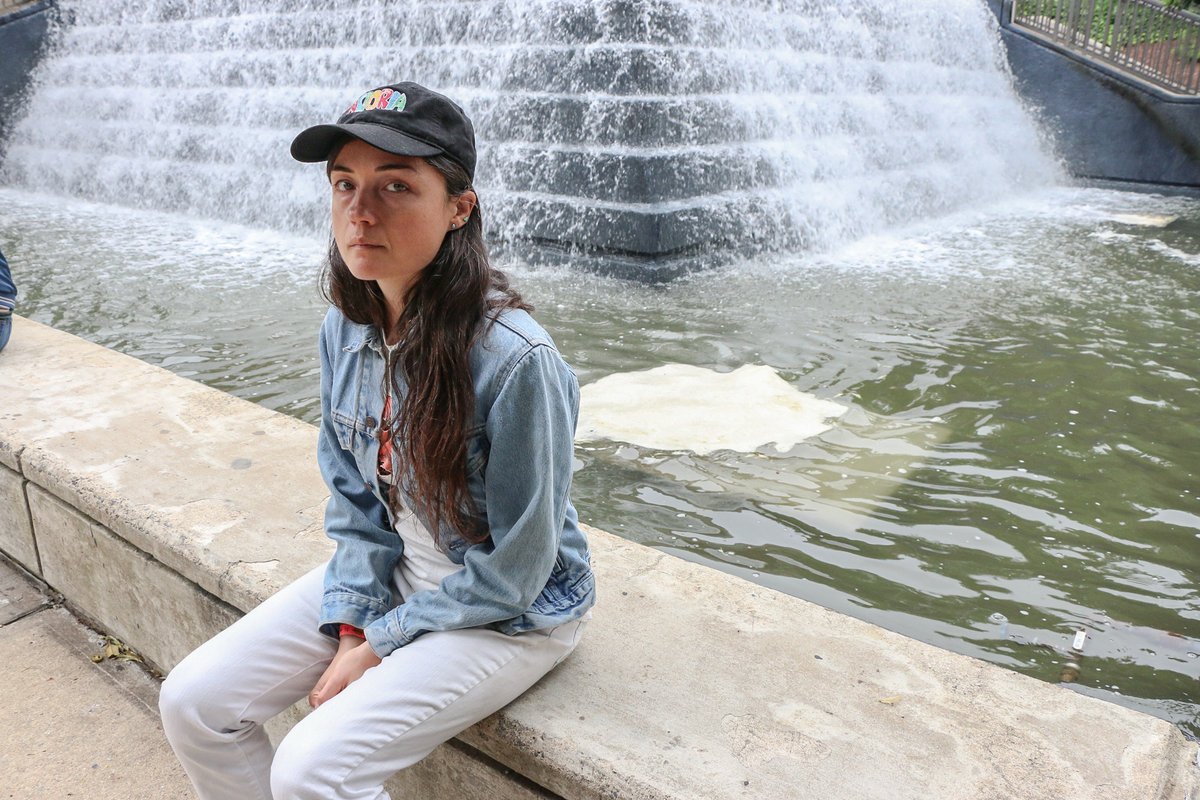
Liz Harris, the multidisciplinary artist behind Grouper, has dropped a surprise double album as Nivhek. 

After its own death / Walking in a spiral towards the house arrived earlier this month on Harris’ Yellow Electric imprint. It sees her perform ambient and minimal soundscapes that are largely devoid of vocals, using Mellotron, guitar, field recordings, tapes, and broken FX pedals. Recording sessions were held in Azores, Portugal and Murmansk, Russia, with additional tracking at Harris’ home in Astoria, Oregon. Inspiration has been attributed to the late experimental filmmaker Paul Clipson’s 2014 work Hypnosis Display, and we understand that it takes on a different tone than any of her past solo albums or collaborations. 

The project follows her 2018 album as Grouper, Grid Of Points.

The 2LP version of After its own death / Walking in a spiral towards the house has quickly sold out on Bandcamp, with the digital version available to stream and purchase here. Listen to “After its own death: Side B” below. 

Tracklisting

01. After its own death: Side A

02. After its own death: Side B

03. Walking in a spiral towards the house: Side C 

04. Walking in a spiral towards the house: Side D 

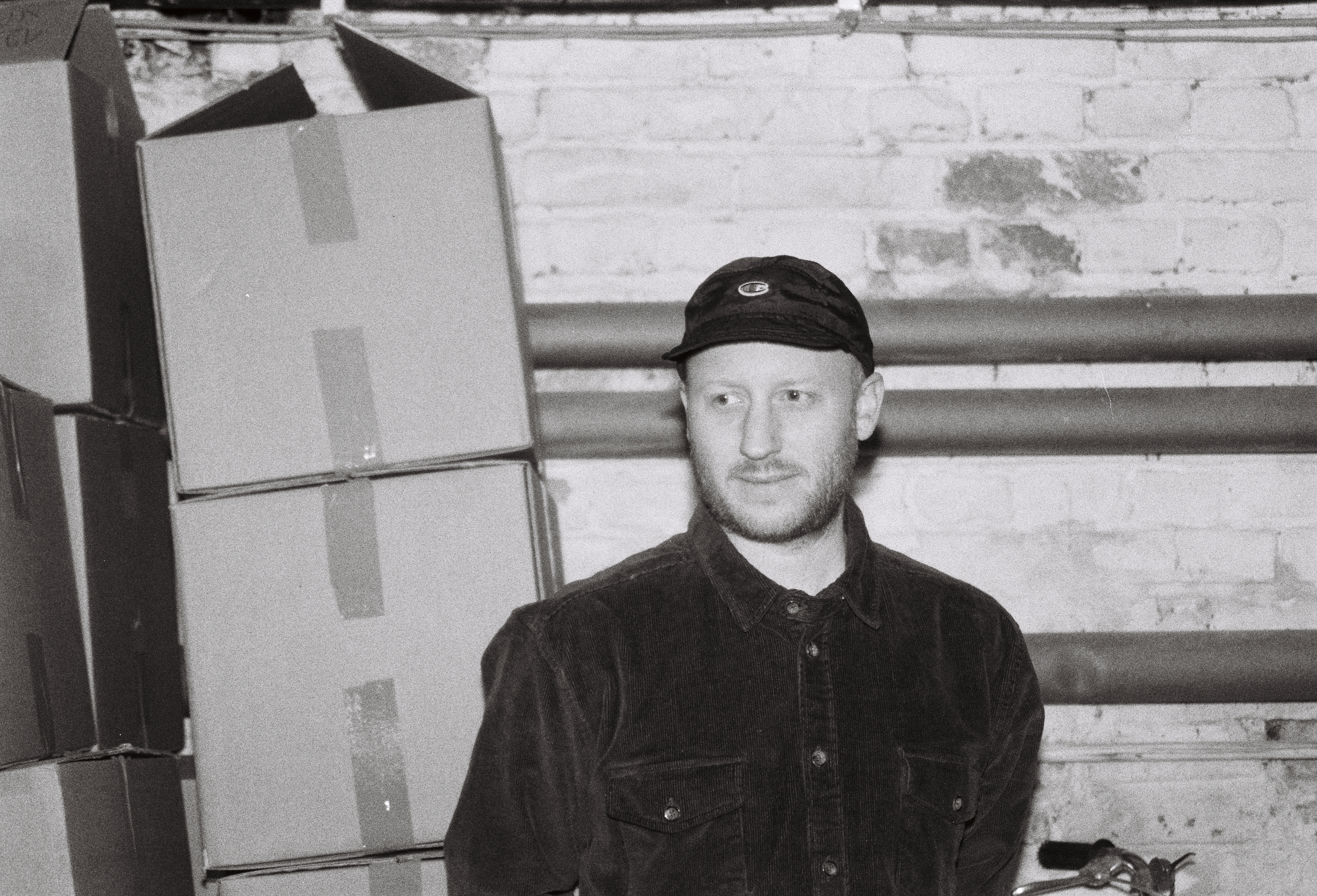
Johannes Albert Reveals Darker Side on Sophomore Album

Photo:  Dirk Puchta

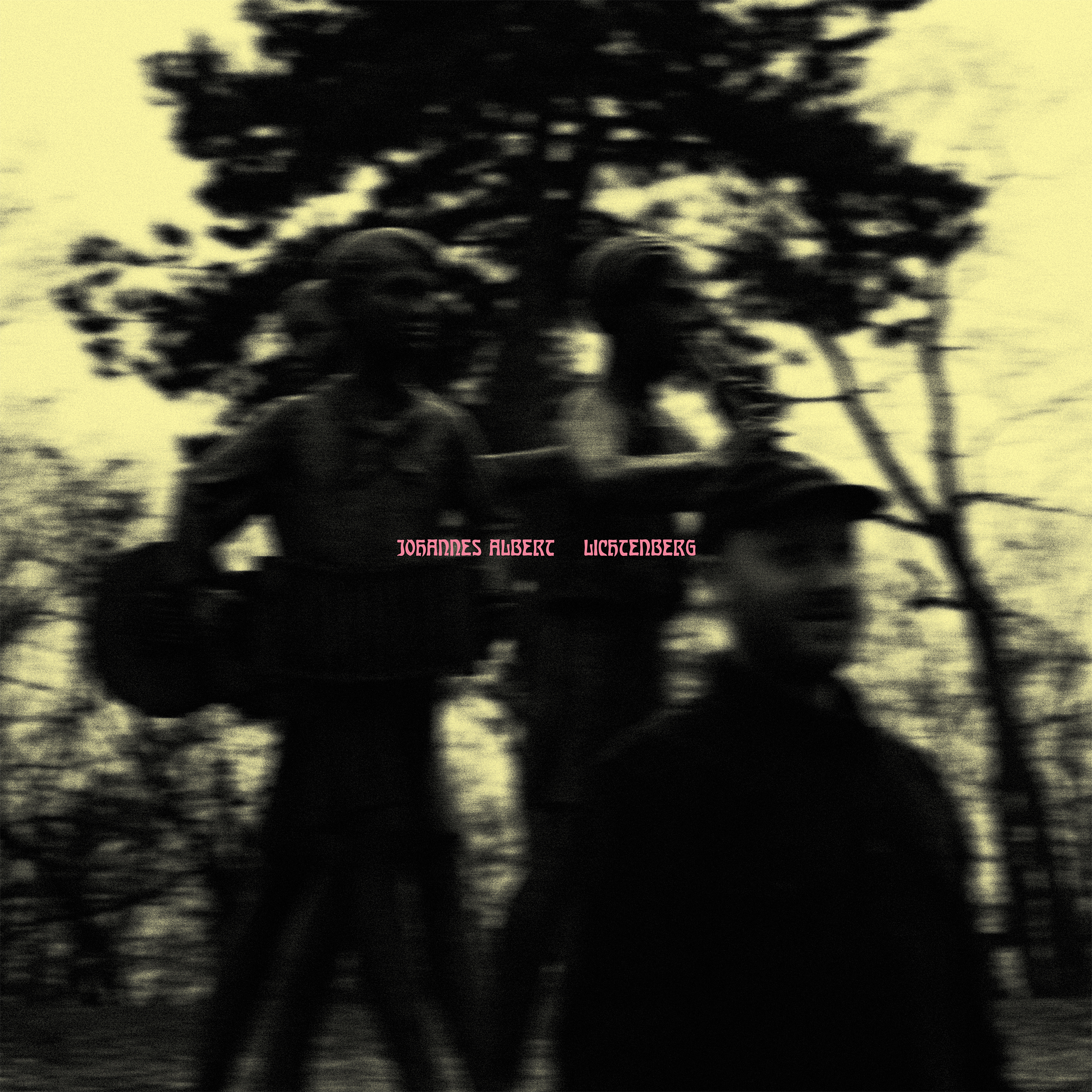
Johannes Albert will release his sophomore album, Lichtenberg, via Frank Music next month. 

The Renate resident is  known for his busy DJ schedule, but has released a bunch of EPs since 2010 mostly through his own labels Frank Music and Fine. His debut album, Hotel Novalis, arrived in 2013. 

We’re told that Lichtenberg has hints of EBM and new wave that cross house rhythms, seeing the Berlin producer heading down a whole different and darker path. At its centre are ancient drum machines and synthesizers, and it features renowned photographer Gundula Schulze Eldowy, who lends her voice, Iron Curtis, and Moritz Heppner (a.k.a Monosoul). 

There will also be an album release party at Renate with Albert taking over the whole club and curating the night himself, March 23. Details will come soon. 

Tracklisting

01.  Phony Emotions

02.  Hooligan 

03.  Copper Bolt 

04.  Milieu feat. Gundula Schulze Eldowy

05.  Wing House 

06.  Built-In Acceptance feat. Iron Curtis 

07.  Chestnut Poetry 

08.  Dong Xuan 

09.  Whirring In Distance 

10.  Cell feat. Moritz Heppner

Lichtenberg LP lands March 15, with teaser below. 

Page 265 of 3781
1 263 264 265 266 267 3,781