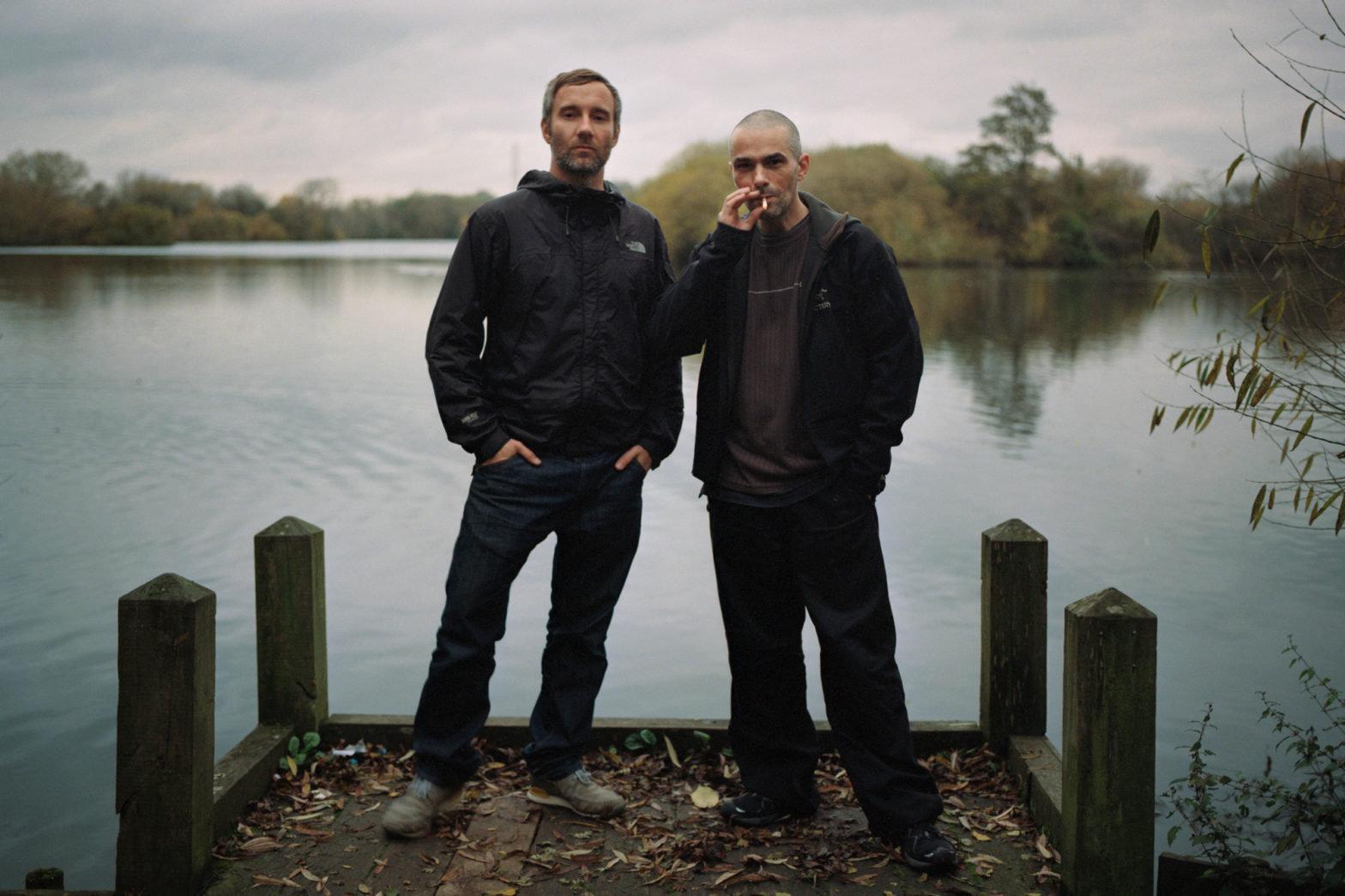
Autechre have taken part in the Adult Swim Singles series, releasing the 11+-minute track “sinistrail sentinel” this month.
Rob Brown and Sean Booth of Autechre bring their patented sound to the spaciously powerful piece, with an experimental mixture of menacing tones and heavy percussion riddled throughout.
“sinistrail sentinel” is the 17th Adult Swim single of 2018, and follows the duo’s 12LP boxset NTS Sessions 1-4, released on Warp Records earlier this year.
Interactive website with “sinistrail sentinel” stream can be experienced through Adult Swim.
Scott Monteith (a.k.a Deadbeat) has shared a six-track EP dedicated to Portugal’s Waking Life Festival.
Waking Life is the Canadian producer’s first full release since July’s Wail Ball & Cry EP, though he did release an album earlier this year and more recently contributed a track to XLR8R‘s XLR8Rplus series, which you can buy and stream here.
Monteith explains that the EP is dedicated to the festival of the same name which he thinks is the “best in the world currently.”
“The title has a more personal meaning for me as well though as being two kids deep and a full time Dad with the youngest has resulted in me getting up at 4 in the morning the last many weeks and working until 7 as it’s the only quiet time I have to myself these days.”— Deadbeat
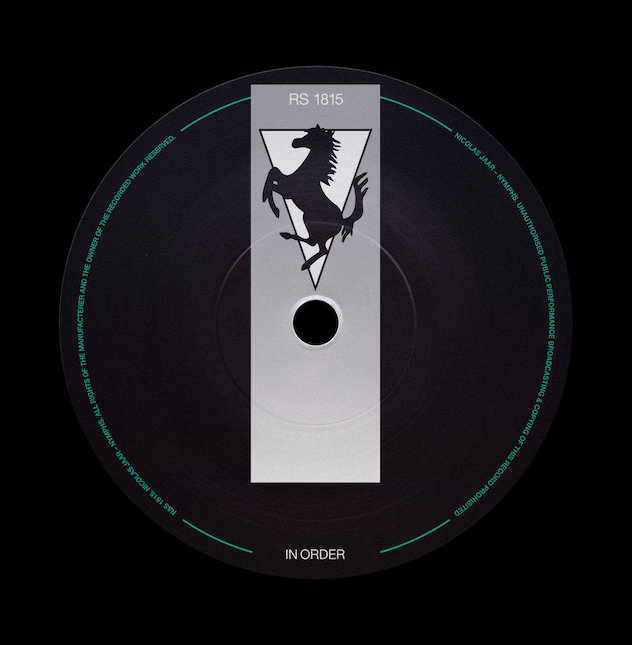
Nicolas Jaar will return to his archives for 3LP collection Nymphs, scheduled for December 21 release with R&S Records.
The collection brings together music from the EPs Don’t Break My Love (a.k.a Nymphs I), Nymphs II, and Nymphs III, recorded between 2011 and 2015 and released via Jaar’s Other People label. The release also includes standalone tracks “Fight (Nymphs IV),” released on R&S in 2016, and “Took Me Out,” previously shared online as part of Jaar’s Boiler Room set. The Nymphs collection will now be available on vinyl for the first time.
Nicolas Jaar will return to his archives for 3LP collection Nymphs, scheduled for December 21 release with R&S Records.
The collection brings together music from the EPs Don’t Break My Love (a.k.a Nymphs I), Nymphs II, and Nymphs III, recorded between 2011 and 2015 and released via Jaar’s Other People label. The release also includes standalone tracks “Fight (Nymphs IV),” released on R&S in 2016, and “Took Me Out,” previously shared online as part of Jaar’s Boiler Room set. The Nymphs collection will now be available on vinyl for the first time.
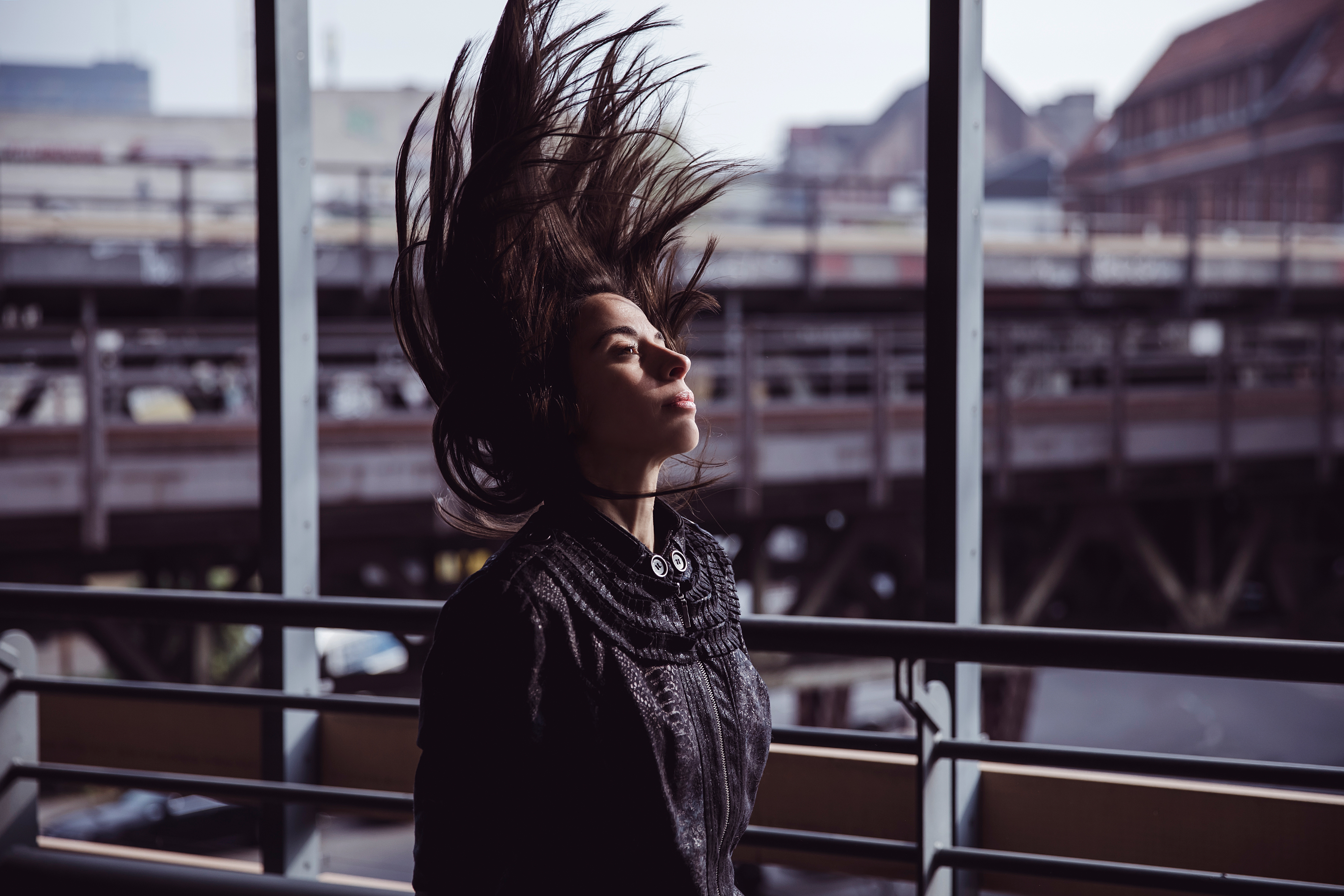
Maayan Nidam released her first album in six years last month. Titled Sea Of Thee, and available now via Perlon, the release was the result of an extremely creative two-week period, itself sparked by the end of a romantic relationship. In a rare media engagement, Nidam invited William Ralston to sit down with her to hear the deeply moving tale behind her latest work and the drastic life changes it has inspired.
Wrapped up warm in a long, camel coloured coat, Maayan Nidam arrives to meet me at one of her favourite cafes in Kreuzberg, Berlin. She strolls along with her hands tucked deep in her pockets and employs a baseball cap and some reflective aviator sunglasses to mask her face from the sun; her pristine pink Adidas trainers are the exception to an otherwise understated wintery outfit. Once settled in the shade, she removes her accessories to expose her newly straightened jet black hair and a pretty smile, borne from nerves, one would assume. We begin with a light conversation about Sea of Thee, her third full-length effort, her first on Perlon, and order a large coffee and a pot of Moringa tea for me and her respectively. It’s a light-hearted and necessary exchange, the prelude to a deeply moving story that she wishes to divulge. While the hypnotic techno aesthetic of her latest release might be what we’ve come to expect from Nidam, it is also emblematic of her significant transformation.
Evidence for such is plentiful. On a professional level, Nidam has joined Yoyaku, the Paris-based booking agency, and has since found herself playing out more, as a DJ but also a live act, especially at more techno-orientated events, two long-standing objectives. It has taken some time for promoters in these circles to familiarise themselves with her deeper, darker aesthetic, and also for her to fine-tune her live act, but she’s now seeing a return on her investment. She’s also started her bi-monthly Hellium night at Renate and will soon relocate it to Tresor; meanwhile, plans are in place to start a label of the same name. On a personal level, however, these changes are more subtle. Nidam, an intensely guarded individual, keeps news close to her chest, especially that of a more personal nature, speaking only with a select few with whom she feels comfortable; besides her booker, Tracy Bakala, and a handful of friends, she confides in her two sisters and her parents, who reside on the outskirts of Tel Aviv, Israel, the place of Nidam’s birth. In our conversations, however, it’s clear that something is different: though as softly-spoken and make-up-free as always, she’s energetic and fresh-faced, smiley and easy-going despite the challenging subject-matter; by and large, she appears more at ease with herself than I’ve seen her before.
2017 represented a significant speed-bump on Nidam’s road to contentment. It began with an extended break in Vietnam where she played the opening edition of Epizode festival, but by Spring a disharmony in her romantic relationship had started to shake her foundations, causing her professional unsettlement and personal discontent to bleed into one another. Questions over her sound, still in transition, became louder, as did those surrounding her live set; progress was being made but it was slower than she had anticipated, and communication with her partner, who had long been uniquely privy to these doubts, was breaking down, compounded by their respective travel commitments. Her partner decided to end the relationship in July. “My world turned upside down overnight,” Nidam recalls. “Everything was different and I was alone and that was it.”
A feeling of shock gave way to a deep depression. Rather than welcoming the support of her friends and family, who were reluctant to push in the knowledge that she would reach out if she was ready, Nidam disconnected from society even further, honoring bookings but minimizing new ones, while socializing little. She hoped that the sadness would soon come to pass; trips to New York for a Get Perlonized showcase and to Ibiza for gig, supported by her sisters, who flew over at late notice from Los Angeles and Tel Aviv respectively, only delayed the inevitable. By August, back in Berlin, she was finding it hard to get out of bed never mind leave her home and the enduring comfort of her cats, Salty and Schmitz. Mental anguish also brought with it various physical pains for which she resorted to high strength weed edibles. “It was small on the surface but there were lots of emotions and I had a lot of self doubt as a person,” she recalls. She felt “inadequate” in her late 30s “in such a dark situation and alone.”
Winter brought with it more darkness. But Nidam forced herself to leave her house, recognizing that she had to move forward and break the solitude. She began reconnecting with friends—dinner, drinks—but, terrified of being in the studio alone, she found any excuse to avoid it. So she was more than happy to accept a dinner invitation, but suggested that afterwards her two friends accompany her to the studio, to “hold her hand.” Later that night, with her friends behind her, Nidam reacquainted herself with her machines. “I started the engine,” she explains, and she didn’t turn it off for two weeks. In what she labels an “extremely creative time,” Nidam found herself drawn to her studio, sometimes even sleeping there, playing the guitar, writing songs, and making “little techno tunes” all alone, oblivious to the outside world. “Everything was off and I had nothing to hold on to except for the studio,” she recalls. “I really didn’t have a plan but I felt like something really wild was happening and I really wanted to just let it take me wherever it needed to take me because I was completely lost.” She explains that “music just kept on coming out.”
These periods of extreme creativity are not common. Although studio time plays a large role in her life, her motivation to spend prolonged periods there, making music and just experimenting, often wanes without an impending and important deadline. It is for this reason that her releases have been infrequent; she hasn’t shared a substantial body of new material since 2012’s New Moon, which itself was more a compilation of unreleased works produced over an extended period rather than anything with a clear underlying concept. Moreover, 2009’s Nightlong, a commission from Powershovel Audio to interpret old songs, was in part driven by the expectations of the Japanese label. Nidam says that she has experienced periods of heightened creativity before but that this was the first time she had felt like it’s not her “leading the way.”
The experience she describes is one of disconnect between herself and the person making the music. “Maybe it was like this higher self that was still there, like a part of my consciousness that was still taking care to make sure I was alright, giving me a guiding hand,” she explains. In terms of melodies and arrangements, she recalls that they sounded like her in a “parallel universe”; meanwhile, the lyrics—including those on the album opener, “Dust and Dirt”—only really made sense to her several months after she’d recorded them. Instead of judging the music, she tried to accommodate it by adapting her studio setup accordingly. She returned home after two weeks, exhausted, with the creativity subsiding. Even now, when she hears the music, she doesn’t recognize who made it.
Nidam didn’t return to those recordings until late December. She began the editing process in her second studio, located in the small backroom of her apartment, her mood as low as her expectations. She explains how the music felt like a “mirror” of her “abstract emotions,” something that reviews of the record have picked up on. She spent Christmas Day with some friends in Berlin, indulging accordingly, and the following morning, having ran out of things to listen to, she played the recordings out for the first time and realized that she liked them. Early in the new year, she packaged 10 tracks up and sent them to Thomas Franzmann (a.k.a Zip) who replied with a selection and a proposed tracklisting for an album. “He understood the story better than I did,” Nidam explains, “and he tells it better with eight tracks than 10.”
That creative release inspired a drastic change of tack in Nidam’s life. She recalls how a vivid realization, like “someone tapping me on the shoulder,” that she was “daydreaming while driving” led her to take things into her own hands. The music gave her strength to fix her life, to start work on the depressive episode; to have “one last try at being happy,” she adds. Although she doesn’t say it explicitly, it becomes clear just how riddled with hopelessness this period was. As with any true artist, self-doubt has always been a part of Nidam’s life, but her fondness for the fruits of her two-week staycation replenished her self-worth. On a deeper level, play-back of the album communicated a message that she should trust in “just getting out of the comfort zone and doing something wild,” she recalls. She decided to apply this to her life outside of the studio by getting out of the “frame that is holding me back,” she says.
Nidam returned home intent on finding a solution. She’d been researching methods for curing the body, of overcoming her physical and mental anguish, for several months but it wasn’t until now that she had been really invested in the endeavor. She realized that the problem she had was not so much with the issues themselves but with her relationship with them. Quoting a passage she read in a book, she says, “…if you don’t change the way you perceive the problem, it will keep on being a problem.”
Her early research suggested that she had chronic inflammation that affects the mood, more common than one may think, and so she undertook a 10-day water only-fast, aiming to disrupt her system and cleanse the mind and body. She sought to let go of her disappointment, anger, and frustration to which the ego was attaching.
Among her areas of interest were indigenous medications and micro-dosing. She began reading studies and books on LSD and psilocybin, the psychedelic compound found in magic mushrooms; until the mid-1960s, when the Nixon administration shut it down, research had illustrated that psilocybin can offer a cognitive tool for combatting depression and addiction. It’s only over the past decade that research has continued and Nidam found herself enthralled with these findings. Noted writers and journalists on addiction, mental health, and spirituality, among them David A. Kessler, Sam Harris, Michael Pollen, Johann Hari, and Rupert Spira became reference points for her explorations. Meanwhile, Robin Sharma’s quote “the mind is a wonderful servant but a terrible master” became her foundation.
The first step was to disrupt her stagnant thinking patterns, “the self-absorbed, self-judging, self-hatred-infused thoughts,” she says. Removal of cigarettes and, more notably, alcohol, on which she had never been too far from dependent, was a great way of breaking free: barring one hiccup, Nidam hasn’t had a drink since Christmas day 2017, a remarkable achievement given the industry’s widespread encouragement of intoxication. While the commitment exacerbated problems to begin with, bringing dark recollections to the surface and removing her numbing agent, it’s now having a tremendous affect on her physical and mental health; long-gone is the fatigue that has plagued her existence. She looks happy and light, and those who know her tell me that she’s “more welcoming” and “open to ideas.” Our exchanges reveal something similar; she’s much more easy-going than I can recall.
In many ways, sobriety is emblematic of her work, a daily reminder of her commitment to the cause; but, more importantly, it offers her clarity of mind, self-awareness, and self-control, all fundamental when it comes to training the brain to pursue positive thinking patterns. The example she uses is as follows: at a gig, she can either focus on the drunk person at the front, fooling around, which makes her feel too old or inadequate; or she can focus on the fans at the front, many of whom have travelled a long way to see her play, which make her feel strong, fortunate, and free to experiment with the abstract records she keeps in her record bag for those occasions when she feels comfortable. Inebriation makes her vulnerable to negative self-thought that draws her focus to the former and, worse still, reinforces these pathways.
By and large, Nidam also stays away from narcotics. The only caveat is her research into “Amazonian medicines” that has been invaluable in managing her depression because such mind-altering substances offer a “new experience” and a “feeling of wonder” that combat the self-absorption around which her condition orbits.
It’s a practice that Nidam describes as “dissolving the ego.” Research dictates that sufferers have a tendency to wallow in self-destructive thoughts because the brain doesn’t allow them to perceive much else; in essence, the ego attaches itself to negative thought patterns, trapping the sufferer in a race to the bottom. Psilocybin offers a profound connection, breaking “your addiction to yourself,” says researcher Bill Richardson, and, in doing so, one’s addiction to the ego. It does this by weakening the mechanism that controls how much information comes into the brain, opening the gates for more stimuli, negative and positive. While the former brings more pain, it has allowed Nidam to see the pain of others, bringing her out of her self-absorbed patterns; and the latter helps to lift the spirit. The challenge comes with focusing on these positive thoughts, hence the importance of being healthy and sober. As a result, she finds herself “surrounded by love” that until now her condition had rendered her oblivious. “I believe all that love from around me was there but I just didn’t see it,” she says. Regular meditation allows Nidam to preserve and amplify these breakthrough moments.
It goes without saying that such adjustments haven’t come easily. Nidam began touring heavily again at the start of this year, and initially struggled with the expectations of others, many of whom assumed she wanted to drink as normal. Nowadays, as people learn about her steps, it’s becoming easier for her to stick to them, though it remains a work in progress. Anxiety attacks still come and go—perhaps a natural part of being a vulnerable and self-critical female in a sociable world—but Nidam recognizes that this is her mind adapting to sobriety. “Beforehand, when I felt uncomfortable, I would have a drink to relax but now I have nothing but my breath to calm me down,” she says, “but I am learning how to manage them [attacks].” Moreover, sobriety makes her feel self-conscious because she doesn’t want people to think she is judging them because they’re drinking, but she has to constantly remind herself that she cannot afford to make compromises to make others feel more comfortable about their habits. Instead of shrinking to fit the expectations of promoters and fans, she’ll drink coffee or green tea, and return to the hotel when she feels tired.
At home, however, the cloud is lifting. It’s not been easy for her to socialize because the Berlin lifestyle, and being surrounded by musicians, brings with it ample temptation and it can be hard to feel involved at events without a drink in her hand. Close friends Vera Heindel and Fatima Camara have been supportive in this sense, inviting Nidam out for tea or walks, distanced somewhat from Club der Visionaere and Panorama Bar, her jaunts of life prior. She’s also trained herself to enjoy hanging out sober at parties, enjoying the conversations and trying to be similarly uninhibited without alcohol or drugs. Meanwhile, she spends her extra hours, once reserved for recovery, sleeping, learning German, making films, or jamming away in the studio, where she says she’s getting more enjoyment than ever before because she is no longer so limited by time. In doing so, she has more freedom to experiment, to try new things, and this inspires a higher level of creativity than before.
It’s been nearly three years since I first met Nidam in the Bikini Waxx record store. Back then, all that time ago, I was struck by many things, among them a masked fragility that became more exposed as our relationship grew; as she let me in. One morning, as I stumbled out of Kater Blau, I recall her sending me a private Soundcloud link to a delightful techno track that she had produced in 2013 during a comparable period of anguish that also stemmed from a relationship gone sour. Its title, “Forever Present,” was drawn from Nidam’s intentions: struggling mentally, she’d began to focus on mindfulness, on drawing her attention to the present moment rather than the pain of the past. It was this period that inspired her to strengthen her meditation and yoga practice, part of a routine that also includes swimming and eating well. Nidam perceives See Of Thee as the full stop to the period since then, and included “Forever Present” as a symbol of this sentiment. It precedes the album closer to mark it as the destination, or the underlying objective.
I’ve been as close as anybody during these periods, watching Nidam seek answers, learning, journaling, researching, and figuring out what’s best for her at different times, all in the aim of contentment, of being mindful, of making her life more meaningful. For much of this time, it’s been missing; while there have certainly been the “ups”—a booking request, a holiday, a romantic evening stroll—it’s hard to escape the feeling that there has always been a transience clouding these moments of bliss. Often this would manifest itself in various behavioral traits that Nidam herself tried to understand, a darkness perhaps.
And it’s perhaps stretching the truth to say that Nidam has now found it, that it’s going to be all rosy from here, but often life requires that we go deep inside ourselves to grow, to take one step backwards to go two forwards—and by all accounts Nidam has just done this. “Finding this new connection to life has made me feel like I am not alone,” she says. “It’s like life is holding me and taking care of me.”
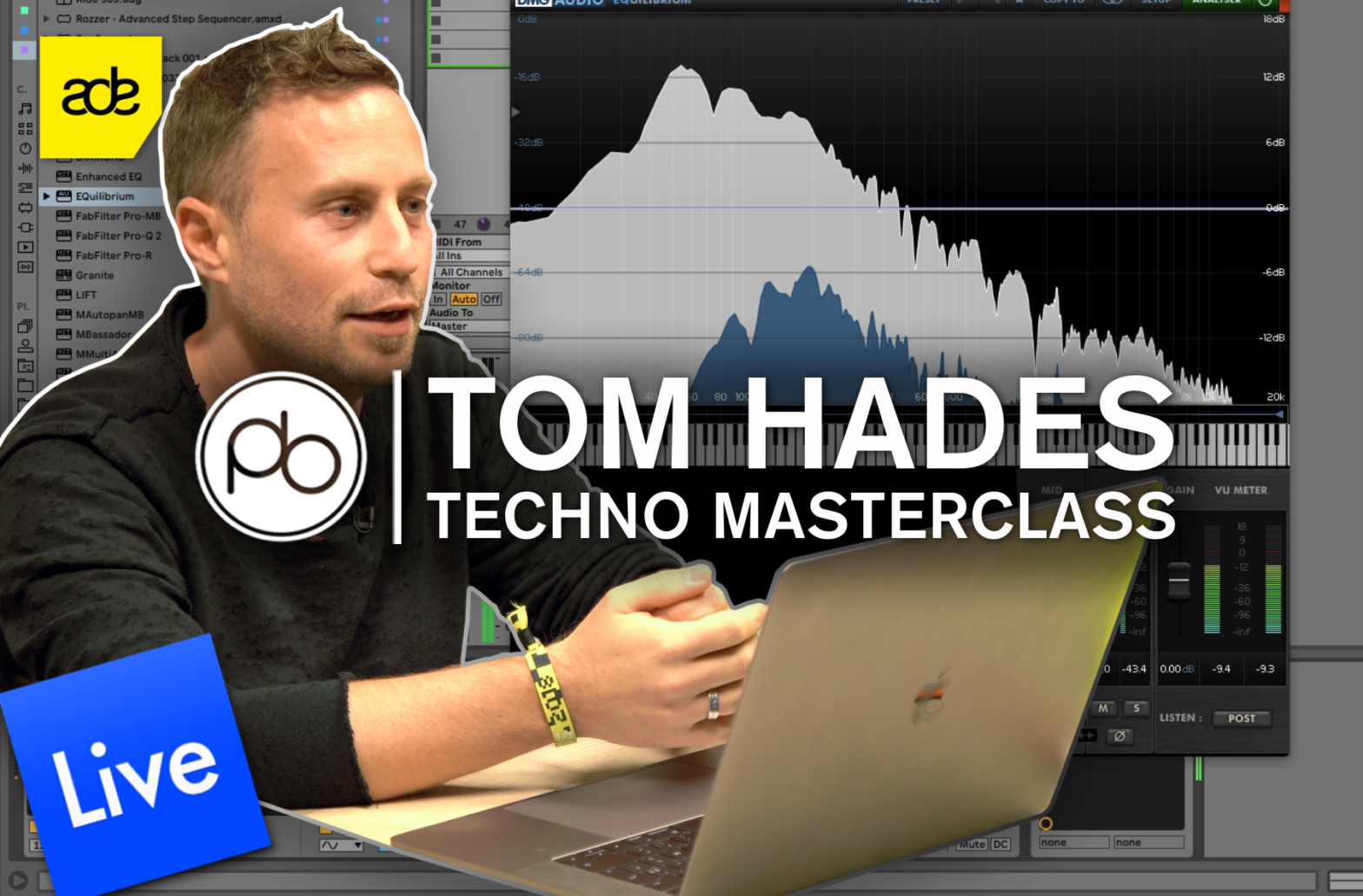
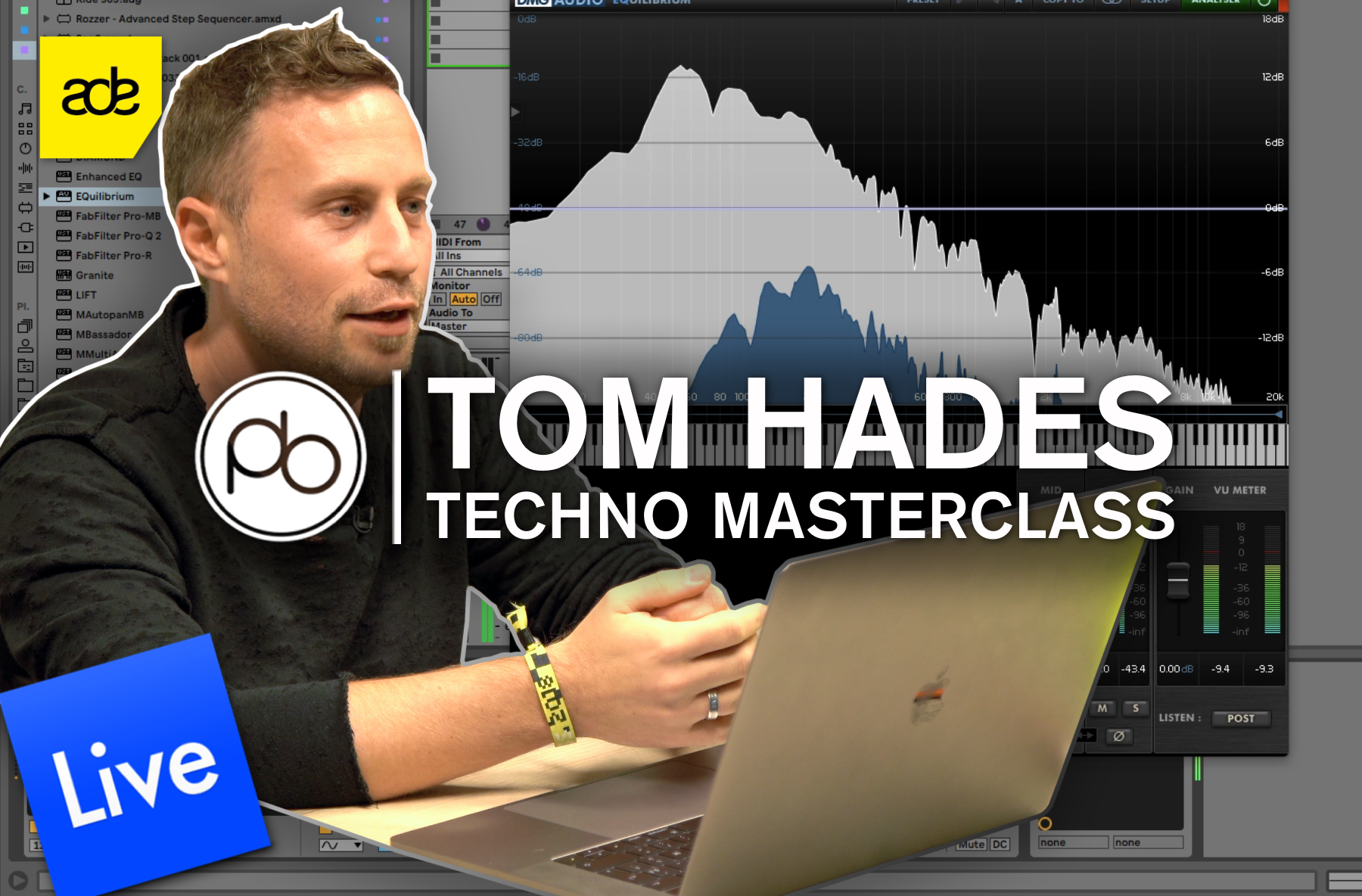
Point Blank has released a new techno masterclass video featuring Belgian producer Tom Hades.
The masterclass went down at this year’s ADE festival in Amsterdam, with Hades demonstrating how he makes a track from scratch in Ableton Live. In the video, Hades runs through his processes, which focus on a range of Ableton racks—which he unfolds and explains—and various plugins, including those from Max4Live and Native Instruments, among others. He also details how to create evolving atmospheres, polyrhythms, and wall-shaking kicks.
You can watch the video in full via the player below, with more on Point Blank and its various production and DJ courses, both online at at schools, here.
Later this week, Fur Coat will return to their Oddity imprint with their latest EP, The Sequel.
The Sequel will close out the year for Fur Coat, following solo outings on Nicole Moudaber’s MOOD imprint, Joseph Capriati’s Redimension, and Watergate Records. Comprised of five tracks, The Sequel features four originals and a remix from Rekids label head Radio Slave. On their originals, Fur Coat show their range and diversity in club-based styles, ranging from weighty, heads-down grooves (“Stargazing,” “Quantum”) to more pensive and atmospheric synth outings (“Orbital”) and dense, dark IDM (“Plaid”), the latter of which Radio Slave twists into a breaks-led rave throwback for his “9118 Remix.”
Ahead of the release on December 14, you can stream “Plaid” in full via the player below, with the full EP available to pre-order here.
Aphex Twin has added new material to his iconic Warp Records album Drukqs, with retooled versions of “Mangle 11” and “Avril 14th” placed at the end of the LP.
“Mangle 11,” the only “new” track, is a speed-altered rework of “Mangle 11 (Circuit Bent V.I.P. Mix),” with the original appearing on the Rephlex compilation from 2003, Rephlexions! An Album Of Braindance! The reworks include two modifications of Drukqs‘ somber piano piece “Avril 14th,” designated by “Half Speed Alternative Version [Re-Recorded 2009 Nagra]” and “Reversed Music Not Audio [Re-Recorded 2009 Nagra].”
Originally released in 2001, Drukqs is Richard D. James’ fifth studio album.
The new tracks can be streamed and purchased at the Aphex Twin store here.
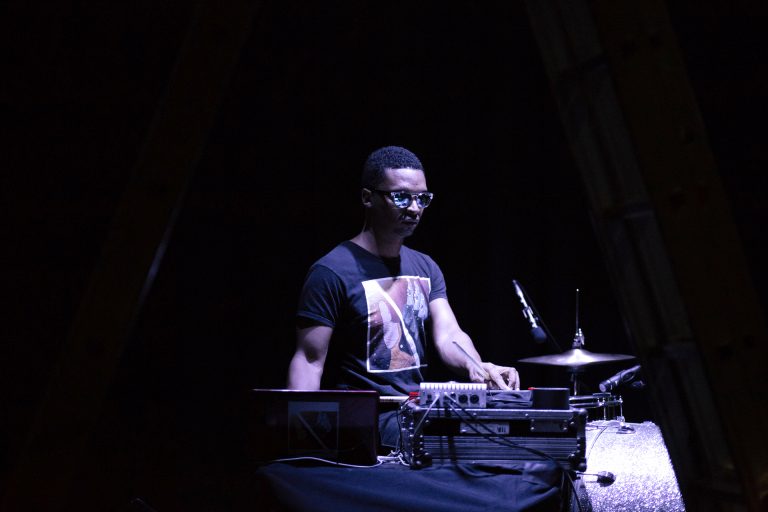
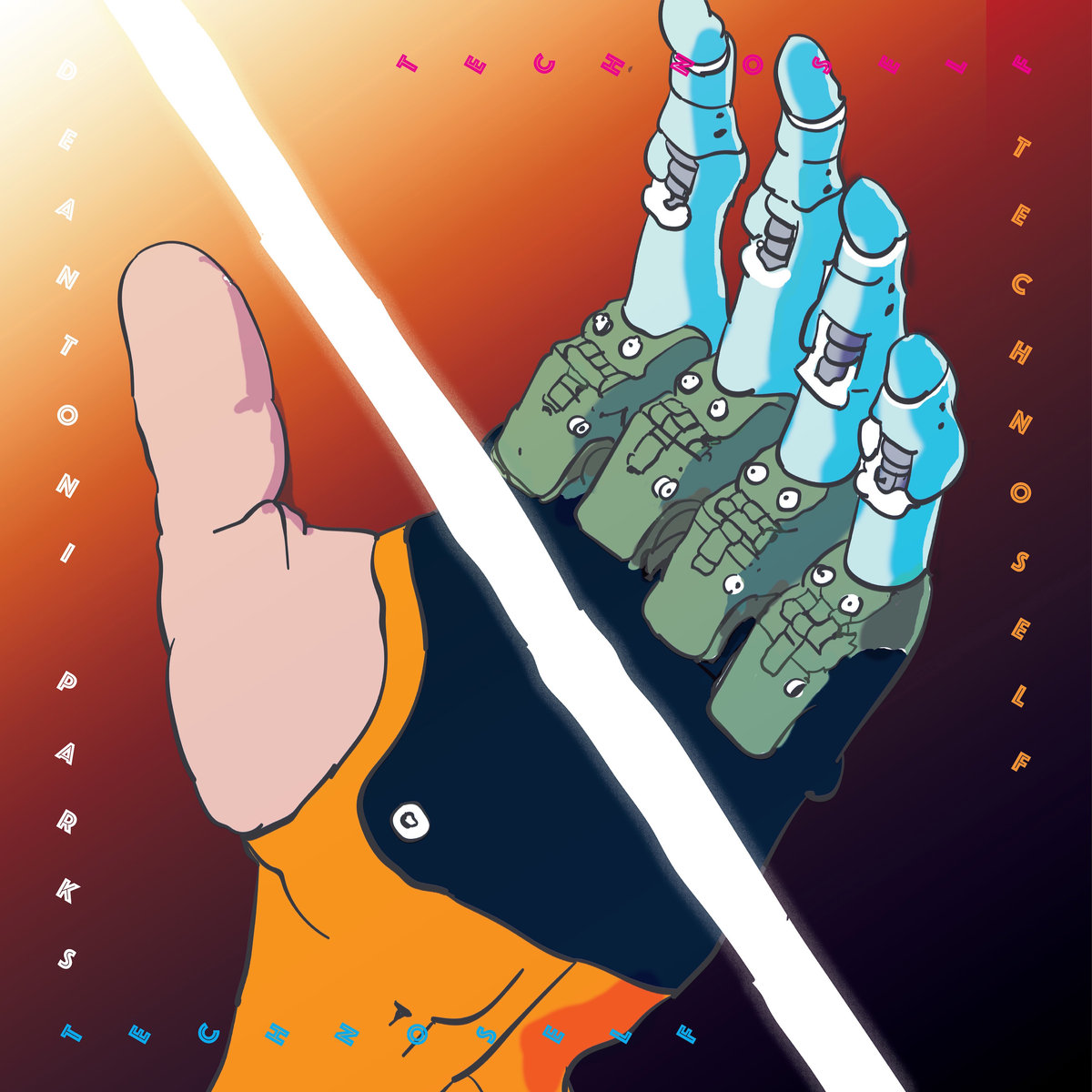
Recorded live in one take with Parks simultaneously playing drums and triggering samples with an AKAI MPK Mini, Homo Deus was captured in Manhattan, NY on February 13, 2018. Its title is sourced from Israeli author Yuval Noah Harari’s book Homo Deus: A Brief History of Tomorrow. Included in the description of the album is the following quote from the book: “The mental renovations of the first cognitive revolution gave homo sapiens access to the intersubjective realm and turned them into the rulers of the planet; a second cognitive revolution might give homo deus access to unimaginable new realms and make them lords of the galaxy.”
The LP follows 2016’s self-release WALLY, and is digital-only. The bundle of the digital download and limited edition silk-screened shirts of the Homo Deus artwork are available as a Bandcamp exclusive, with ordering options here.
Deantoni Parks is an American new wave/avant-garde/experimental drummer, songwriter, film director, actor, and record producer. He is the founder, producer, and drummer of the New York band KUDU, and one-half of the writing duo Dark Angels with producer and keyboardist Nick Kasper, also a member of KUDU.
Kasper Bjørke‘s latest album project is nothing like the Danish producer has shared before. Unlike his previous albums After Forever, Fool, Standing on Top of Utopia, and just about everything in his now extensive discography, The Fifty Eleven Project is an entirely ambient concept album, dreamy and dreamlike, darkly beautiful but ultimately empowering, intended as an interpretation of his emotional state during the five years of regular checkups following a shock cancer diagnosis in November 2011. He describes the project as a “therapeutic way of processing the diagnosis, the constant fear of relapse, and the light in being healed.”
As Bjørke recalls, much of the pain he suffered was psychological, stemming from the tests, consultations, and periods waiting for results. He developed severe anxiety and insomnia, to the extent that it was “far worse” than the actual cancer diagnosis and the operation. Ambient music became a tremendous source of calm, a way of quieting the voices in his head: “I found myself with a deep connection to instrumental compositions, much more than music from any other music genre, “he recalls. “As a matter of fact, music with vocals and beat driven tracks was actually causing me more stress.”
Eager to sonically document his experiences, and also with a view to providing material for others struggling similarly, Bjørke and his musician friends began writing The Fifty Eleven Project, named after “50 11,” the department that cared for him until October 16, 2016, the day he left hospital for the last time after five long years of regular CT scans, X-rays, and blood samples. “I wanted to document the gamut of feelings—both light and dark—using these long instrumental compositions as the narrative, and the track titles as a chronological guideline,” he explains. The album chronicles a journey from discovery of the tumour, to the operation and frequent examinations; from feeling a beacon of love and light in the birth of his son (in the same hospital), to finally leaving that waiting room for the last time.” He released it via Kompakt on October 19 to mark the second anniversary of getting the all-clear.
Intent on speaking more about his experiences and the healing power of music, a source of great reprieve during these difficult times, Bjørke penned the following essay.
Imagine calmly falling asleep in your bed and then, out of nowhere, it feels like an invisible force starts banging you on the head with a baseball bat, and white light flashes rapidly before your eyes, like a strobe, while your heart is pounding and the blood racing in your veins. It feels like you are having a heart attack and you are about to die. That is what it felt like for me having my first severe anxiety attack one night around three and a half years ago, in the comfort of my own bed, with my girlfriend sound asleep next to me.
After that, it came to a point where I needed to take prescription sleeping pills from my doctor to fall asleep. I was so afraid that I would get another attack and that created a vicious cycle of not being able to sleep without the pills, which made me start looking for other ways to calm myself down. I tried listening to meditation podcasts instead but, unfortunately, they didn’t really work for me. I would get annoyed with the narrator’s voice or the generic custom-made background music.
My only respite came in the shape of ambient music. If I listened to an ambient album that I knew already, set to “repeat” mode, I slept like a baby through the night. It felt like a revelation to let my ears and mind be swept into these soothing pads and melodies—and for the first time in a long time, I felt rested and calm.
The first album that helped me sleep was the Ambient 1 / Music For Airports by Brian Eno. Somehow those subtle compositions completely wiped away my anxiety and rewired my brain to focus just on the music and not think of any stressful thoughts. I felt like I was floating out of time, and completely calm and surrounded by a feeling of being safe and well, something that I had not felt in a long time. So, in the following period of time, the cure for my insomnia and nightly anxiety attacks was listening to carefully selected ambient music and focusing on my breathing. My remaining sleeping pills ended up in the trash can. The music became a refuge for my brain and, as it turned out, helped make my anxiety disappear completely over time.
Ambient as a music genre might resemble elevator muzak to some—and in its most generic, customized Spotify playlist form, it certainly is. But ambient also encomasses powerful, amazing compositions, especially when mixed with orchestral elements. Pioneers in their field, like Brian Eno, Ólafur Arnalds, Nils Frahm, Steve Reich, Max Richter, Johann Johannsson, Cliff Martinez, Bing & Ruth, Alva Noto, Alexandre Desplat, Wolfgang Voigt, Ryuichi Sakamoto etc. are all artists that have inspired me for many years.
I now found myself in a deep connection with instrumental ambient compositions, much more than music from any other music genre. As a matter of fact, music with vocals and beat-driven tracks was actually causing me more stress. In ambient music, often there is no tempo, no beat; which makes you lose the feeling of space and time. The repetitiveness of ambient music also gives it a meditative strength that is often reinforced, the longer the music is repeated. An example could be the simple piano line in the Johann Johannsson masterpiece “Flight From The City,” a composition that has touched me in ways that music rarely does.
Being diagnosed with cancer came as a huge shock. It came during some intense weeks of touring and preparing to play my first DJ gig ever at Fabric’s Room 1 in London, November 2011. The cancer was discovered by coincidence after a routine check-up at my doctor who sent me on to a ultrasound scan that revealed a tumour.
I didn’t feel sick at all—and that somehow made it even more scary. What if I had not gone to that check-up? The radiologist that performed the ultrasound was friendly and calm once he showed me the tumour on the screen and told me that he could not tell me what the tumor was. But I somehow knew it was cancer, even when I called my step sister, who is a doctor and who told me that it could be a cyst of some sort. And I could hear in her voice that she knew as well. The weeks after are somehow blurry. I tried to keep myself together—also for my girlfriend, who was obviously sad and scared. So I decided that I would just continue with my DJ gigs until the operation date and live my life as normally as possible. I booked an extra ticket for my girlfriend to go with me to London for my gig at Fabric but I don’t remember much, other than I felt like I was never really there and that I should have cancelled.
I was lucky in the sense that I avoided chemotherapy and radiation treatment. Because the tumour was in its early stage, a single operation was enough to remove the cancer. After the operation, I had to go through five years of frequent CT scanning blood tests, and X-Rays. There was almost no direct physical pain left a few months after the operation but I struggled a lot with the psychological effects of all those tests and doctors consultations, not to mention the periods in between, waiting for the test results. In that period, anxiety started to creep up on me. It’s not something that happened in one incident; rather, it slowly took over my mindset and made me feel restless and worried during the day. I would feel a pain in a muscle or it hurt when I coughed and that would make me think that it was the cancer that had spread to my brain, my stomach or lungs.
I could still function and work in my studio, answer emails, meet friends and be a good father to my son. It was at night when I had to sleep, when my mind and body finally was able to sleep, when my body finally was able to relax that I could no longer control my thoughts and then the anxiety became physical and I would have these attacks that made me develop insomnia. So, for me personally, anxiety turned out to be far worse than the actual cancer diagnosis and the operation. The fear of relapse was always in the back of my mind and I think that made me worry so much that my brain developed anxiety. In that same period, it became clear to me that I needed to process what I was going through creatively. I wanted to document my experiences and the idea for an album project started to take shape.
Since ambient was the music genre I was connecting with on a personal level, I decided to try to tell my own story about dealing with cancer and anxiety through long ambient, instrumental compositions. I also decided to involve a few musician friends, who master their classical instruments, in ways that I felt could help me interpret the emotional rollercoaster that I had been and still was going through, via the stories that I told them before and during the recording sessions.
Each composition on The Fifty Eleven Project is created to reflect on and interpret a certain feeling or location during those five years, from the tumour diagnosis to the CT scanner, the waiting room experience, the last day of getting the final results—but also the period after, contemplating on what I had been through, acceptance of my experiences with both cancer and anxiety—and moving past it. I decided to name each composition with titles that reflected those certain points of my progress as a sort of guided timeline. An example is “Paramount”, one of the last compositions on the album that tries to describe the feeling of light and hope. Because without hope, all is lost. This becomes very clear after you have been diagnosed with cancer. You start to think about what truly matters in your life, which is love and having someone close to you—and also your hopes for your own future and the future of your loved ones.
During and after the process of recording the album, I used some of the demos, which were still work in progress at the time, to fall asleep to myself. I was still battling anxiety, especially at night, and the demos made me contemplate and process my experiences in ways that therapy sessions weren’t able to. In that sense, it became very healing and therapeutic to record and listen to The Fifty Eleven Project album, which I named after the department at the hospital, where I was going for consultations and test results during those five years from 2011-2016.
By the time I finished producing The Fifty Eleven Project album, I felt a form of relief that I hadn’t even felt a year earlier, when I was walking out the hospital doors for the last time on October 16, 2016. Because the anxiety didn’t stop just because the tests were over and I had the final results. On the contrary, I realized that no one was looking after me anymore and now the cancer could potentially come back without being discovered. However, after the album was done, I had a real sense of being cured—and I haven’t had any anxiety relapses since. So it turned out that the year of working on the album and listening to the music over and over again had somehow relieved my anxiety. I find that remarkable and hopefully something that others can benefit from—both by listening to my album but certainly also other music that will make you feel comfortable and relaxed.
With more than 600 music therapists in the UK and Cancer Treatment Centres all across America providing music therapy sessions, it is a fact that music can help alleviate emotional, physical, and social stresses caused by cancer, or to boost your mood and help you through cancer treatment and recovery.
A study published by the Official Journal of the American Society for Radiation Oncology evaluates the impact of music therapy on anxiety in cancer patients undergoing simulation for radiation therapy. The trial measures a multilevel music therapy intervention using both live and pre-recorded music to treat state anxiety and distress, and strongly suggests that music treatment can significantly reduce both in this cohort.
39 patients received a consultation with a music therapist, during which music of the patients’ choice was played during simulation was selected. 39 other patients did not receive the music therapy consultation and did not hear pre-recorded music during simulation. The 39 patients who were exposed to music therapy reported significantly lower anxiety and distress during the procedure. The study concludes that incorporating culturally centered individualized music therapy may be an effective intervention to reduce stressors.
The researchers also suggest that further studies needs to be made, to learn more about the effects of music as therapy. I can only encourage this and find it remarkable that we as humans can be relieved of unwanted anxiety and stress, simply by listening to music.
It is quite a unique feeling for me, after having produced mainly extrovert club music with the purpose of making people dance for so many years, to start working within a different music genre that connects to other emotions that can make listeners relax and even fall asleep. People have told me after listening to the album that they have connected deeply to certain compositions, some have even started to cry in the process. I find that extremely rewarding; to know that people are making use of the music, reflecting on the compositions and putting them into perspective of their own lives. I am excited and hopeful for what the future holds when it comes to music as a healing power.