Artist Tips: Legowelt

Danny Wolfers boasts more aliases than many producers do releases.  His vast musical output also spans various different genres—ranging from dense and foresty techno to whizzing electro, deeper electronic, and stuff for which there isn’t even a name yet—all the while remaining captivating without ever conforming to the usual trends. It’s an exceedingly rich and varied body of sonic material. 

Wolfers emerged in the early ’90s and after hearing Unit Moebius on the radio. This interest sparked his now long-standing associations with the Dutch West Coast scene and Bunker family, where he began working alongside musical mentors such as I-f and Melvin White. His Pimpshifter, a six-track debut album, arrived on Bunker in 1998—and he’s since returned with a slew of other Legowelt releases on the Dutch imprint; while he’s shared other material—as Catnip (with Luke Eargoggle), The Chicago Shags (with Orgue Electronique), Gladio, Smackos, Smackulator (with Speculator), Squadra Blanco, Salamandos, Raheem Hershel, Venom 18, among others—via the likes of Clone, L.I.E.S., and Dekmantel. 

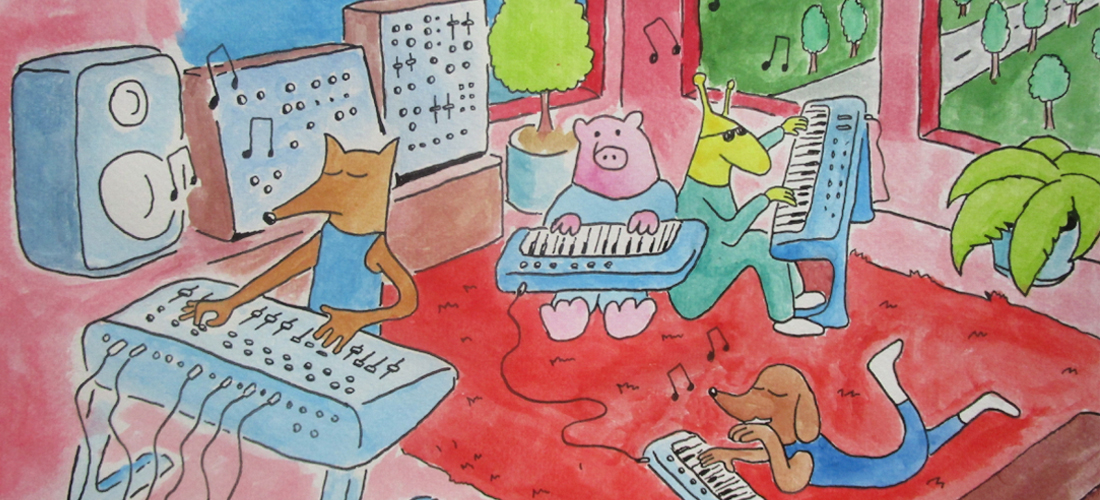
Naturally, Wolfers has also kick-started his own label, Nightwind Records—a convenient, modern day home for his musical experimentation. Founded in 2014, the label has since amassed a healthy discography, all coming from Wolfers himself, most recently a cassette version of the Loch Ness video game soundtrack originally released in 2012 on the Legowelt website. Each release comes with one of Wolfers’ animated artworks, like the one he’s drawn above to accompany this feature. 

A foundation for this work is Wolfers’ unfaltering devotion to hardware—old and new. You don’t have to look too hard for video tours of his studio, and Wolfers is hardly reluctant to support other like-minded artists. His personal site hosts a wealth of sample packs, plug-ins, and information. In line we this, we asked Wolfers to delve a little bit deeper to discuss some of the key, lesser-known tips behind his work, and this is what he submitted. 

These are just some random tips. Everyone works differently so they might not be of any use for you but for some they might open some new creative doors.
 Speaking generally, be dauntless—ignore the true complexities of what you are doing. You don’t have to understand everything; don’t be intimidated by the vastness and complicated nature of the studio-sphere. Go with a gut feeling on all this!

Inspirational Psychological Brain Hack Tips

:

Making music should not be a drudgery chore. It should be a fun intoxicating meditative experience that cultivates your being in many positive ways. But sometimes you run on empty and you don’t have any inspiration, so here are some small tips that might help. 

Silent Record Player: 

If you have difficulty finishing tracks, have a record player with a record playing without sound in your studio while you produce/mix down tracks. Somehow the visual cue of seeing a record running while working on your own music supports your creative flow; you trick your mind into thinking that your unfinished track is seen as a finished record in action. This might give you just the push you need to finish that track. I sometimes do this when I need to mix down or master an album and need some inducement. You probably can do it with a cassette tape too, but maybe not with a CD player.

Reversing the Keyboard:

If you are in a creative malaise behind a synth, try reversing the keyboard. Just flip it so you are facing the backside, it’s a bit more difficult to play but just try it, you might be surprised on how different and more exotic your melodies will begin to sound. I guess that’s because you kind of flipped your brain; your right hand will play the side the left hand normally plays and vice versa, making your mind inverted. I bet it works with a drum machine too. 


Mix Music Production with Cooking: 

Cook and make music at the same time—not in a multitasking way, but in between.
 Start with the normal introductory studio rituals: turn everything on, check if everything works, program some sounds, get into the zone—and after 10 or 20 minutes go to the kitchen and start cooking. 

Cooking is fundamentally a creative process and will trigger lots of creative neurons and pathways in the brain that you can transpose to the studio process. Finish your cooking and put whatever you made in the fridge for later—or eat it while making music—and go back to the studio. 
Your brain will continue the creative flow it picked up from the cooking activity regardless of whether or not you are sitting behind your gear. For your brain, the synth is a frying pan. Your sounds are the ingredients, the effects of different spices etc. You might see how much easier it is to make music now! Of course, not everyone has their studio at home but maybe it works with a microwave too? 

Now, let’s continue with some more in-depth technical tips…
In-Depth Technical Tips: 

EQ as Part of the Synthesis Process:

See equalizers as part of the sound synthesis—away with the prudent conservative “If it’s not necessary don’t use the EQ’ attitude!” EQ shapes your sound like a sculptor shapes his or her material. Chip away or add frequencies to your liking and go into adventurous territories beyond just chipping, emphasizing sounds from a totally new angle.

Also, get old EQ boxes, Hi-fi graphic equalizers, guitar EQ pedals, weird dusty parametric filters, put graphical EQ VSTs on all your DAW tracks, use the mid-sweep EQ on your mixing board (more on that later). These are all options. 

Here is an interesting EQ trick that works well on “harsh” sounding material that has too many irritating high and mid-high frequencies: first, use a lowpass filter with a pleasant slope to cut out the higher frequencies—not too muffled, just so it doesn’t sound harsh anymore. Then use a graphic or whatever EQ to boost the high frequencies again—the new boosted high-frequency range will only be a “softened” sketch of what once was, a ghostly but more pleasant sounding reminder of the once harsh high frequencies. This is perfect for creating a more lo-fi or fuzzy tape-like sound that is sympathetic to the listener’s brain.

Envision Your Mixer as an Instrument:

Even if you work in the box, it is nice to have an analog mixer—it doesn’t really matter what goes in there; multiple outputs of your VST’s or real synths, it’s all the same to me. They can be all mixed and shaped by your hands using the mixer in an exciting interactive way.

Steer well clear of digital hardware mixers. Nothing is more mind-numbingly boring than working on something like a Yamaha 01 or Behringer X32. It’s like being on acid in a sterile office photocopying room with locked doors. I would recommend a mixer with mid-sweep EQs as this will give you more interesting EQ possibilities to play with.

Learn from dub reggae—the pure foundation of more “out there” studio / electronic music where the mixer itself took centre stage. Envision and play the mixer as an instrument—go crazy with the FX auxiliaries, sweep the EQ, fade tracks in and out manually while recording/playing.

Also, don’t be shy about changing the effects-AUX knobs during the recording. Connect lots of delay/reverb/phasers/filters, and whatever effects to the AUXs and turn those AUX knobs on the channels on different sounds continuously while recording—adding emphasis on certain parts and creating a feeling of dimensional space.

Use the mixer channels’ mid-sweep EQ as a filter, keep sweeping it throughout the whole track when you are recording—you can do that very subtly and slowly, so that the listener barely notices it—but it will give a certain animated life and spatial depth to the track (Like in Smackos “A Vampire Goes West”) or you can go full out and create intense filter effects like in this legendary scene of a 1990s Dutch gabber documentary with Patrick van Kerckhoven. 

Route the AUX-effect return audio back on a normal channel (not in the special dedicated AUX-return input—which most of the time doesn’t have EQ possibilities). Now you can EQ/filter the wet effects themselves, too. And feedback the channel by adding the same Aux effects for classic dub style feedback effects. But watch your ears (and speakers)!

Sample your Own Synths: 

When you don’t feel inspired to make a track but just want to play around with your synths or create new sounds just do that—and record the sounds to make your own sample library for later use.

Press record on your DAW, Audacity, or whatever you use and start making sounds on your synth. Play one-shot notes, melodies, chords, pads, weird effects, freak out with the controls—record it all; there is no right or wrong, so just keep on recording. Once you’ve recorded a bunch of sounds, let’s say 20 minutes worth of it, stop the recording and save the file. Go through the recording and cut the sounds you like into individual samples—give them cool names and save them in a fresh folder. If you do this a few times you will have a great sample library with your own unique signature sample material.

Next time you make a track, open up a sampler in your DAW or turn on your hardware sampler and start loading them with your own samples. You might be pleasantly surprised by the fresh new inspiration this will give you.

A cool thing to do is to play “a melody with a sampled melody”: get a sample of where you play a melody, set the release of the sample a bit longer/higher, and play a new melody with that. You will get interesting dynamic polyrhythmic spaced out sounds—don’t worry about timing and shit like that because there is always a way you can make it sound good. 

Another fun thing to do is to record the sounds first on cassette tape instead of a DAW and then record that tape into the computer. This procedure will add magnetic noise to the samples and creates rather charming artefacts when played in the sampler, especially at different keys/pitches.
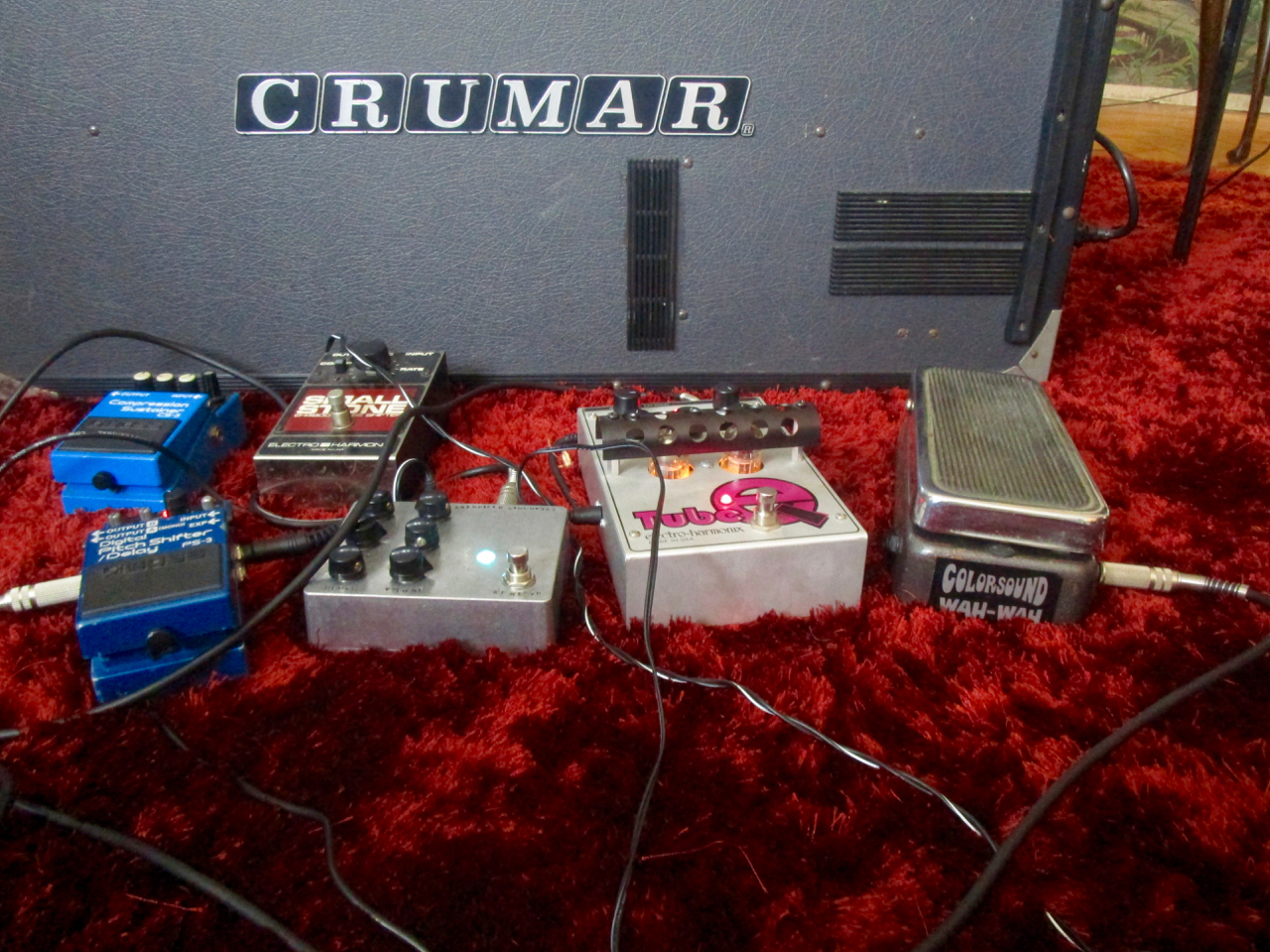
Use Guitar Effect Pedals on Synthesizers:

Old guitar effect pedals are (often) cheap and fun additions to make synths and keyboards sound more interesting. Instruments you are bored with are given a second life just by attaching some pedals. So forage your local pawn shop or trade your rock guitar buddy a bag of crack for some pedals and there we go.

A Wah-wah pedal is a great exotic sounding filter. Put a Wah-wah pedal on strings and you have instant haunting, velvet, mind-piercing atmosphere reminding of classic Italian or Dutch string keyboards. Or put it over a monophonic portamento’d lead synth to get instant funky JB’s blow-your-head-type leads. 

A Vibrato pedal is basically an extra LFO you can use to modulate the pitch of your synth sound—freeing up the synth’s internal LFO to modulate the filter, pitch, or VCA instead.

A Tremolo pedal that has a square-like wave and deep modulation can create interesting staccato arpeggio-like effects, which can time your synth to play to an exact “forced” rhythm, making it easier to play with your hands if you’re not good at that.

A Compressor pedal (like the Boss CS, for example) makes a drum machine sound like instant smacked-out Ron Hardy house.

A Pitch Shifter or Harmonizer pedal can change a boring one-oscillator synth or keyboard into a succulent machine of harmonic splendour. Make intervals or chords by setting the pitch shift at five or seven notes up or down and put the dry/wet mix halfway. 

Combine guitar pedals to make even more exotic effects, the interaction between different effects can create very unexpected results. Try putting an EQ pedal or even a delay before a compressor or Wah-wah pedal and you have a whole new spectrum of sound to play with.

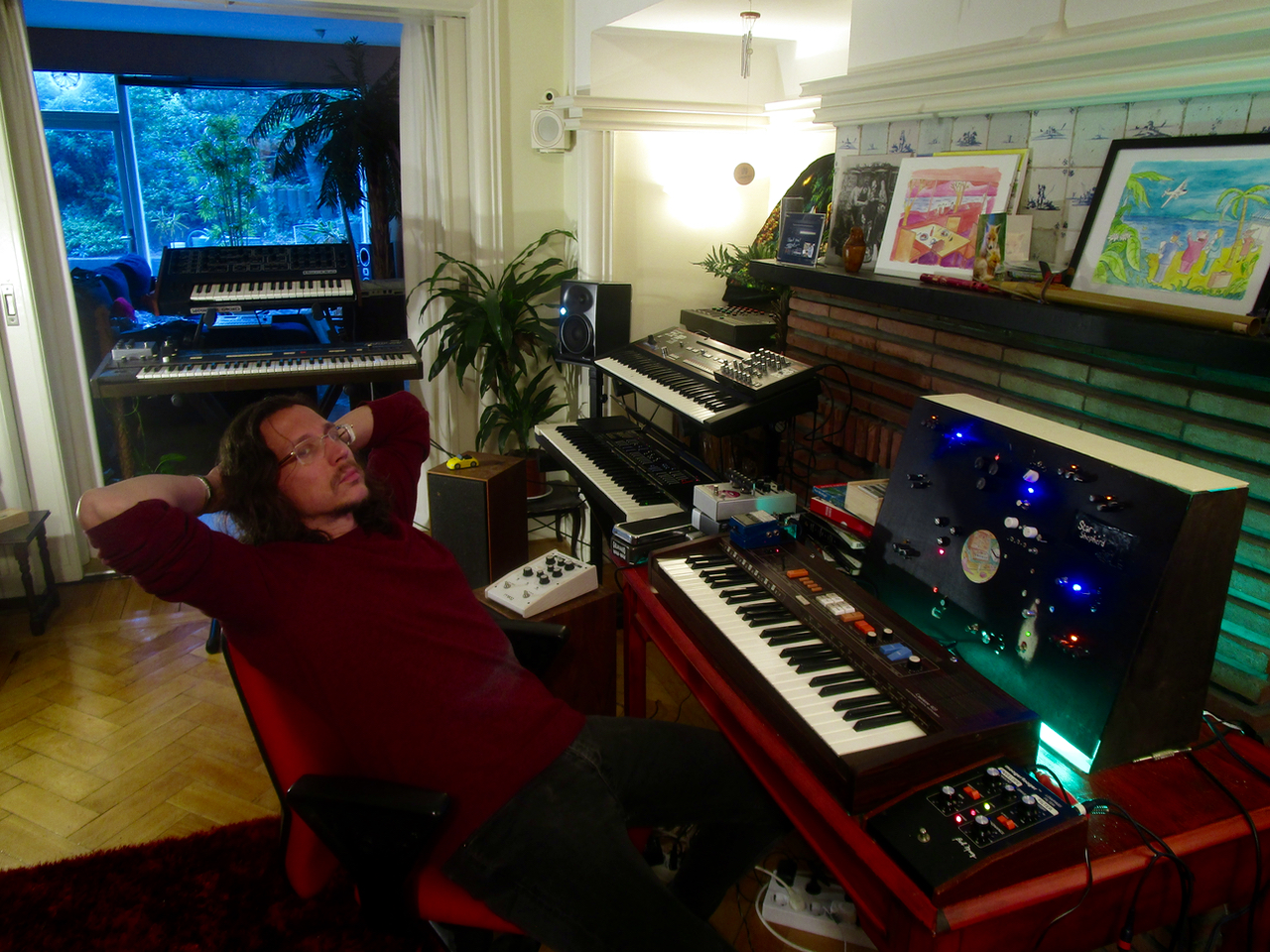
It’s also fun to build your own synth out of old guitar pedals, they are easy to modify, circuit bend, and do all kinds of crazy experimental stuff with. Put them all in a new giant case and use some crappy thrift store keyboard as a sound source. The Star Shepherd synth I built/bent is just that, made out of a Casio 403 and around 12 old guitar pedals. 
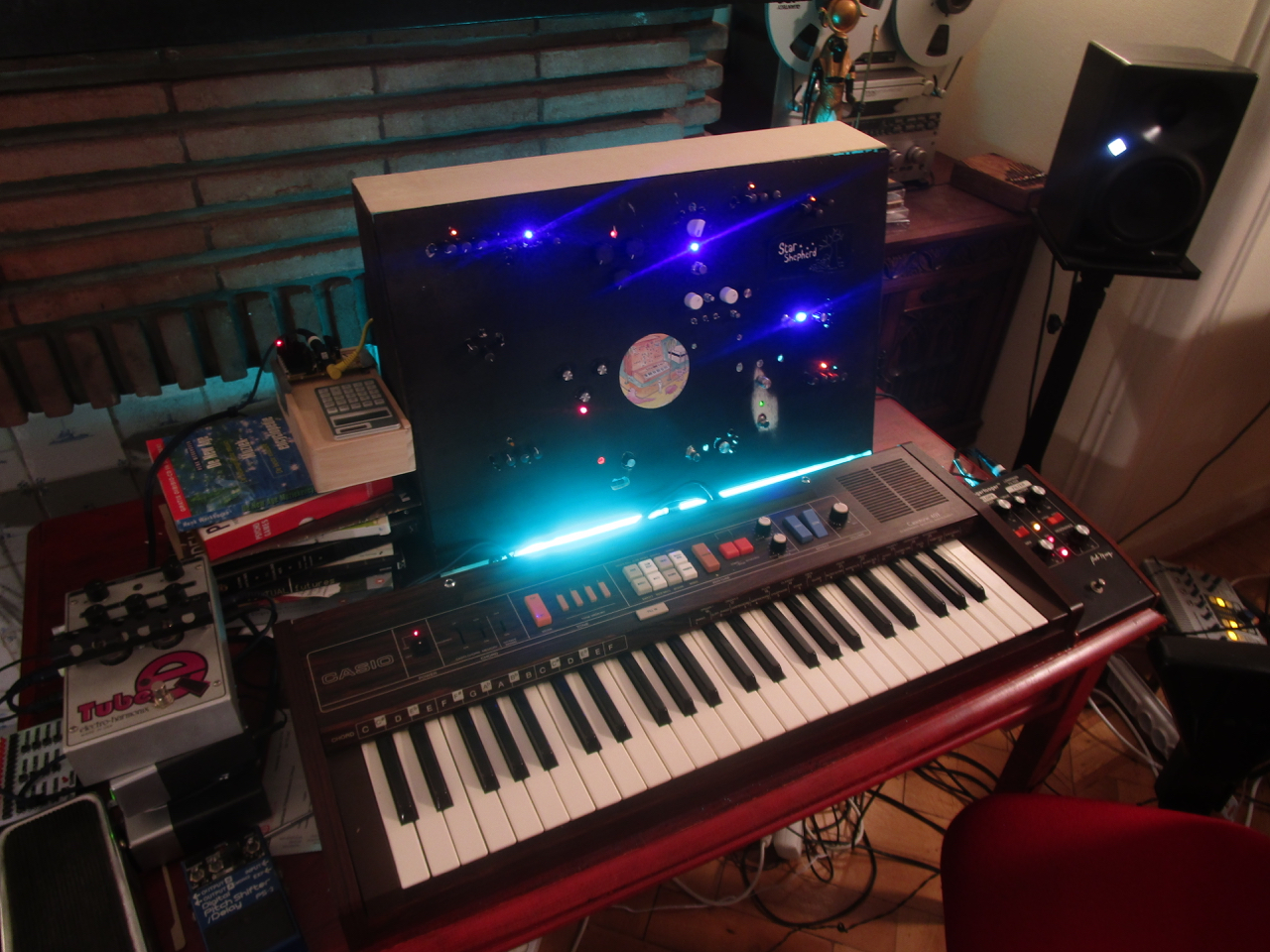
Star Shepherd synth

On Remixing: 

Remixing can be a looming chore, a menial task. It doesn’t matter if the track you have to remix is boring, uninspiring, or the best track ever, sometimes it just doesn’t work—or it doesn’t make sense in the first place why you have to remix it in the greater scheme of things. Your remix will just sound like uninspired drab whatever you try. But you have to send it anyway because there is a deadline, so here is a tip to make it a bit more worthwhile:

In your sequencer, open an old project you were once working on, a project that you forgot about, never finished, or maybe even one that is finished but that you still think you can use something. And if it doesn’t need anything, just throw something out so it needs something again.

In that project, import some elements from the track you have to remix, hustle it about, cut some unnecessary stuff and, hey ho, there is your remix. Sometimes you will be surprised how the remix material can be the finishing touch for that track or vice versa.

Artwork submitted by Danny Wolfers.

Matthew Dear Announces New Album, Shares Single

Matthew Dear has announced Bunny, his first album in six year.

The LP will drop via Ghostly International on October 12, following recent outings under his Audion alias and a DJ-Kicks mix. The album announcement was preceded by two singles released in 2017, “Modafinil Blues” and “Bad Ones”, the latter of which features Tegan and Sara, who also join dear on another cut on the 14-track album. According to the press release, “Bunny is a dual vision of avant-pop; an artistic reckoning from a 21st-century polymath; persona splintered, paradox paraphrased, a riddle rendered.” 

On the album name, Dear states: “Why Bunny? Fundamentally, I love the way the word looks and sounds. I love the way it rolls off the mind and onto the tongue. It’s a funny thing too. Bunnies are cute. Bunnies are weird. They’re soft. They’re sexy. They’re lucky. They wildly procreate. They trick hunters, but get tricked by turtles. They lead you down holes. They adorn the headboards of children’s beds, lined up meticulously just as mom did when she was your age. Bunnies are seemingly with us from birth, and probably skitter past on our way out the big door. ‘Viste al conejito papá?’ ‘Sí, fue una buena sopa!’ Good one pops.”

You can find the latest two singles below, along with the tracklisting.

Tracklisting:

01. Bunny’s Dream
02. Calling
03. Can You Rush Them
04. Echo
05. Modafinil Blues
06. What You Don’t Know
07. Horses feat. Tegan And Sara
08. Moving Man
09. Bunny’s Interlude
10. Duke of Dens
11. Electricity
12. Kiss Me Forever
13. Bad Ones feat. Tegan And Sara
14. Before I Go 

Arnaud Rebotini “Flowers For Algernon” (Billy Turner’s Purple Iris Mix)

Later this week, OFF Recordings will release the new EP from legendary French producer Arnaud Rebotini.

Most known in techno-circles for his work with his band Blackstrobe and his recent soundtrack contribution to the 120 Beats Per Minute documentary, Rebotini’s latest solo EP, titled Flowers For Algernon, finds him in fine form presenting four machine-driven techno cuts. Alongside the originals, OFF Recordings enlisted a remix from Drumcode affiliate Billy Turner, who turns his hand to the EP’s title track, refitting it with a deeper emotional vibe.

In support of the release, the label has offered up a bonus mix from Billy as today’s XLR8R download. Titled the Purple Iris Mix, the track is a intoxicating rework, going further down the rabbit hole for a heads-down six-and-a-half minute run.

You can download the Purple Iris Mix below, with the EP available for pre-order here.

Due to temporary issues regarding the GDPR, EU readers can download the track here.

Podcast 554: Tutu

Those who attended Barcelona’s Primavera Sound festival will perhaps be familiar with Tutu, the alias of Gemma Planell. The rising Spanish artist performed one of the standout sets of a four-day event blessed with some of electronic music’s most established and forward-thinking names—churning out “dancefloor jams, with a stunning set of experimental rave, techno, bass, and grime, all meticulously mixed,” writes Daniel Cole in his review. “The DJ’s three-CDJ set managed to mix up beatless post-rave sounds with daring Autechre-like techno, off-beat kicks, along with contemporary grime. The dedication to craft, diversity in styles, and playful mixing techniques left the crowd in a space between awe and foot-tapping grooves.” He described it as one of the best mixes he’s heard all year. 

Planell has been performing under the Tutu pseudonym for a number of years. She opts to stay out of the spotlight by shying away from media attention; interest in her is founded upon a handful of online mixes and her club or festival performances—the rest is just word of mouth. 

Her sets are intense and adrenaline-filled with a sound that’s hard to classify; you’re like to hear bass house, cosmic trance, abstract grime, schizophrenic tribalism, acid techno, and just about everything else. The singular common denominator is that they evidence the exquisite musical taste and personality of the orchestrator behind them. “My sets usually do the talking for me,” Planell says. At this point, there isn’t too much more to be said. You can download Planell’s Primavera Sound set in full via the WeTransfer button below.

Very little is known about you. What’s your backstory?

I prefer to remain away from the spotlight. My sets usually do the talking for me. 

Talk to me about your entry into DJing. How did you get here? 

It was 13 years ago, my partner in crime at that time was a DJ, so I naturally got into this whole thing. From there on I followed my own path and my sets evolved in a very organic way, inspired by friends and colleagues in Barcelona and abroad. 

How long have you been performing as Tutu—and when did the project originate? 

Ever since I started DJing, but it really took off about two years ago.

How did you learn to DJ?

As I mentioned before, it was all through Mario G. Quelart, my partner at the time. He showed me the technical side of it, then, later on, I started to apply my own ideas, partly borrowed from my other passion, photography. It’s been quite a long journey and my sound and approach have definitely evolved a lot. 

Do you produce too? 

Yes, for some time now. My production helps me to get deeper into my idea of storytelling; I use all sorts of intimate sounds to explore my idea of energy on the dance floor. At first, I used to craft my own sound pieces as collages within my DJ sets, but now I mostly consider them independent tracks. 

Where and how do you dig for your music? 

I get new stuff through friends, Twitter, labels I love, and by checking out sets from my favourite DJs. As for my own sounds and field recordings, I record them while hiking, running, and standing still in lost spots, rare places, exploring new sites and feelings, listening and observing others around me, being in different situations and landscapes filled with energy.

What do you look for in a record? 

I look for a meaningful experience, and it needs to make me move. 

Do you remember your set at PS 2018 being particularly memorable? 

Yes, it was absolutely memorable for me.

What made it better than your other sets? 

I felt full of energy after a long winter, and having the chance to share it with the crowd around me was a total blast. I could feel the energy from the audience coming back to me—that’s why the set is titled KABOOM! 

Can you name some of the key tracks in the set? 

Yes, all of them are important tracks to me but this is a selection: 

EVOL “Ten Canisters Of Pressurized Tetrafluoroethane Over Three Weeks (B)” 

Christian Di Vito “Submerged Wind” 

Jesse Osborne-Lanthier “Mi©rochipped”

Pan Daijing “Plate Of Order”

Sound Pellegrino Thermal Team “Activate” (A Capella Version) 

Amnesia Scanner “AS Brieth” (feat. Colin Self)

Dale Cornish  “Clap, Isolate” 

Oswald Berthold, Chris Brown, Anders Dahl, Joe Gilmore, Fredrik Olofsson, Tim Perkis, Roc Jiménez de Cisneros, Peter Worth “Rara Avis  (A)”

What’s the benefit of using three channels? Do you always use this setup? 

It gives me the freedom I need to express myself. I tried other setups before so I could introduce additional sounds in my sets, but I needed better control so I decided to include the third CDJ last year. I’m more comfortable with my current setup and I also feel more creative freedom to add new dimensions to my sets. I’m always open to evolve, learn and grow, so let’s see what’s next : )

Due to temporary issues regarding the GDPR, EU readers can download the mix here.

Leifur James Reveals Debut Album via Night Time Stories

Leifur James will release his debut album in October through Late Night Tales’ artist label Night Time Stories.  

A Louder Silence is the London-based producer and multi-instrumentalist’s first proper release; his two earlier singles feature on the record. We’re told that the album is both spacious and thought-provoking, energetic yet restrained, brimming with nuanced electronic instrumentals, dubby synths, and jazz breaks—creating an array of rich textures, complemented occasionally by James’ own soulful vocals.

While James’ early unreleased work was singularly electronic, A Louder Silence focuses on analog synths and warm acoustic instruments, all played by his own hand. It’s the product of a two-year spell in James’ home studio, with additional live drums recorded with Jim Macrae at London’s Old Paradise Audio.

James’ rich musical influences are laced through the release. Encouraged by his mother, a classically trained pianist, he learned to play the cello and developed a deep understanding of rhythm and melody that informs his approach to writing electronic music. James plays the piano he grew up listening to in “Mumma Don’t Tell” and samples an indefinable percussive element to drive forward “Suns Of Gold.” “Night and Day” sees cello plucks and long melodic strokes interlink with a grooving synth line. He also field records the Moroccan sea in “Red Sea.” Inspiration stems from the experimentation of modern day electronic producers, fused with the jazz, classical, blues, and soul music that soundtracked his youth.

Central to the album is the idea of space. James recalls the early advice of his uncle, a jazz guitarist, who features on “Uncle Blue”:“I remember him saying to me: ‘What goes in comes out,’” James says. “Every detail should be a worthy detail; sometimes nothing is better than something.” Moments of blissful, structured intensity are juxtaposed with stillness and near silence—dark and light; loud and quiet. This also forms the foundation for the album title: A Louder Silence reflects the dichotomy of finding pockets of stillness in a noisy world.

Launched in 2013, Night Time Stories is Late Night Tales’ sister label for original artist releases. 

Tracklisting:

01. Alpine

02. Time

03. Suns Of Gold

04. Argonaut

05. Mumma Don’t Tell

06. Uncle Blue

07. Night And Day

08. Salaninam

09. Red Sea

10. Osho

A Louder Silence will arrive on October 5, with “Argonaut” streaming in full via the player below. 

Photo: Alex Kozobolis

Daniel Brandt Dives Deeper into the Dance World on New Erased Tapes LP

Daniel Brandt, co-founder of Brandt Brauer Frick, is set to release his second solo album via Erased Tapes on October 12, called Channels. The new record follows the release of the London and Berlin-based producer’s solo debut Eternal Something from 2017.

We’re told that the seven-track LP weaves through chord-driven techno, orchestral flourishes, rich electronic textures, and hints of dark cinematic pop. 

Following on from Eternal Something, which captured a contemplative kind of isolationism, with Channels, Brandt set out to create an album that “captures the essence of minimalism while lending it to a more playful context.” After performing and recording Steve Reich’s Six Pianos in a group of six, Brandt began regularly composing long meditations on the piano, something that “permeates the sound of the new record,” we’re told. 

Ahead of the release, Brandt has shared lead track “Flamingo,” which synthesizes the measured pacing of Detroit techno with an orchestral background. As with all of the tracks on Channels, “Flamingo” began life as a sketch with very basic instrumentation, before taking it into the studio to rehearse with his band members, giving the album a “live and visceral sound that sets it apart from his debut,” the label explains. 

It was a great experience to do it this way as I have always wanted to have the chance to try out something in a live setting before recording it in the studio and not the other way round. The actual typical rock band recording style that I never had the chance to do before.“— Brandt

Tracklisting

01. Flamingo

02. Sailboats III

03. Cherry Dream

04. Daze

05. Ltd

06. Channels

07. Twentynine Palms

Channels LP will arrive on October 12, with “Flamingo” streaming in full via the player below. 

Aphex Twin Shares New Video and EP Details

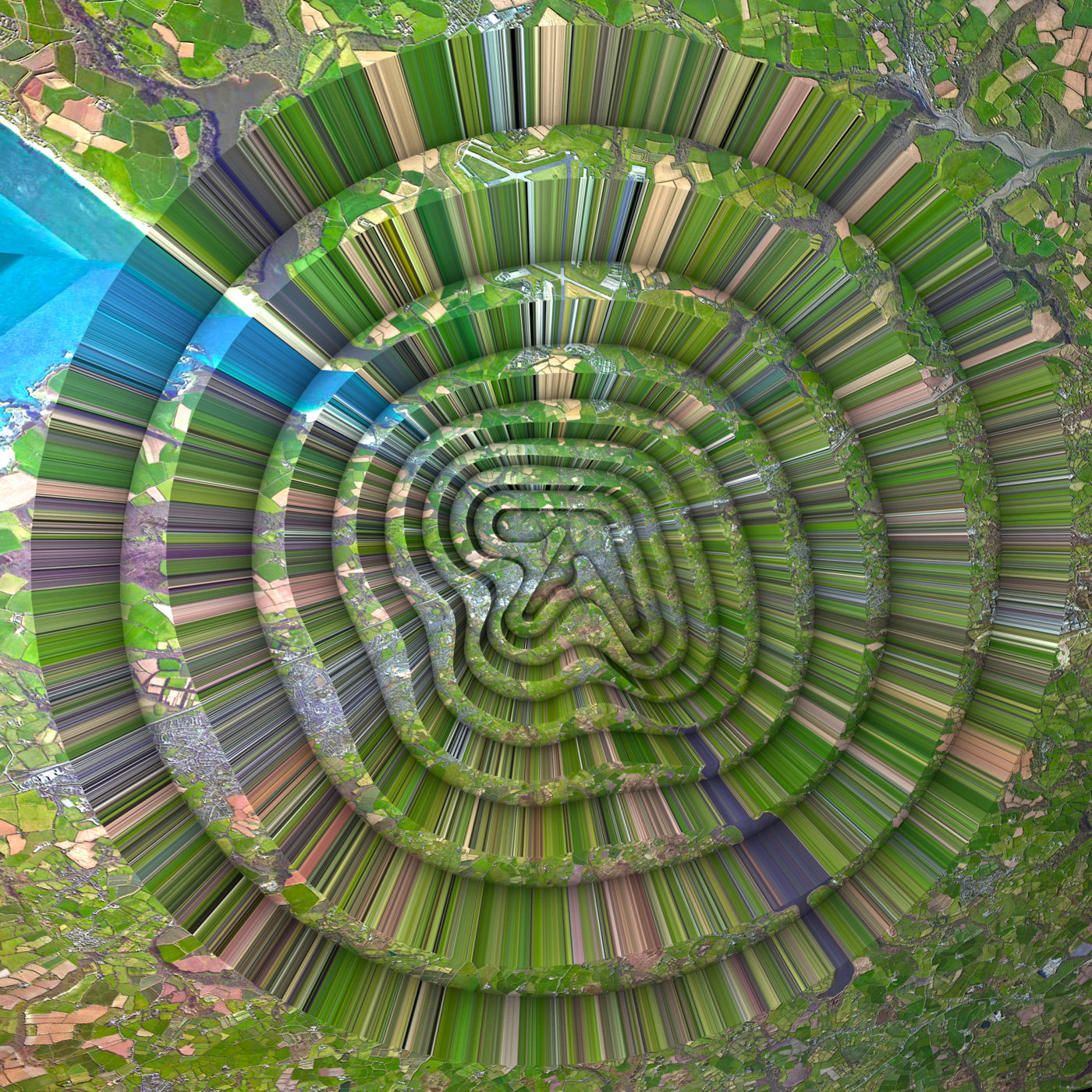
Aphex Twin has shared the video for “T69 Collapse,” taken from his upcoming Collapse EP, scheduled for September 14 release via Warp Records

“T69 Collapse” was supposed to premiere on Monday night during Adult Swim, but the video was scrapped because it did not pass the Harding test, meaning it was unsafe for epileptic and photosensitive viewers. As a result, Aphex Twin shared the video via his Twitter account alongside the album art and release date, linking to a website that confirmed the EP’s tracklisting and formats. 

The announcement arrives after mysterious Aphex Twin logos appeared in London, Turin, Los Angeles, New York City, and Tokyo. 

Tracklisting 

01. T69 collapse 

02. 1st 44 

03. MT1 t29r2 

04. abundance10edit[2 R8’s, FZ20m & a 909] 

05. pthex 

Collapse EP will be available on limited edition vinyl, regular vinyl, CD, cassette, and digital formats on September 14, with “T69 Collapse,” streaming in full via the player below. 

Video by Weirdcore

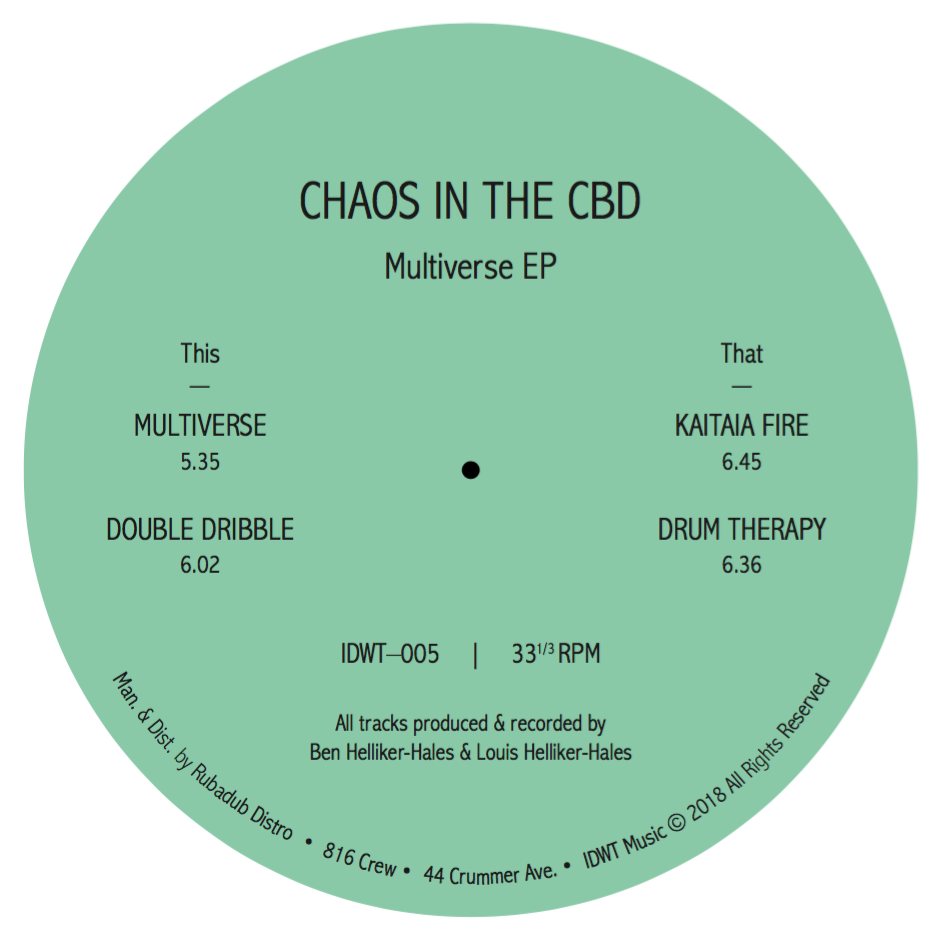
Chaos In The CBD Return with New EP, ‘Multiverse’

Chaos In The CBD will release a new EP later this month, titled Multiverse.

New Zealand brothers Ben and Louis Helliker-Hales have been producing and DJing informed house under the name Chaos In The CBD for over eight years. Their relocation to London in 2012 brought with it a string of well-received records before they found more acclaim with stellar EPs for London labels Church and Rhythm Section International. Having released on Mule Musiq in 2016, they returned to their own In Dust We Trust last year and have been silent on a production front ever since. 

Multiverse will be the second release on In Dust We Trust this year, following Jon Sable & Huerta’s Housework / Alishan Forest Railway 12″

“‘Multiverse’” is a word used to describe an infinite group of disparate universes including the ones currently inhabited by humans. A myriad of realms that sit side by side, undetected by our senses, surround us at any given moment. The multiverse theory was first confirmed by tracking leakage of electromagnetic waves filtering from one dimension into the next. When these waves were transposed to fit into frequencies audible by the human ear, the recordings were studied by a team of scientists, who found that they contained rhythmic elements that resembled a speech pattern of an alien language.

Tracklisting 

01. Multiverse

02. Double Dribble

03. Kaitaia Fire

04. Drum Therapy

Multiverse will arrive on August 30, with full streams available below. 

The Svens “Outer Heaven (Parts I, II, III)”

Last week, Carly Foxx‘s Love Story Recordings released Strange Affairs, the new EP from Parisian duo The Svens.

The new EP follows their Odeon EP on Joe Goddard’s Greco-Roman imprint with a gorgeous collection of expansive electronics, ranging from spectral dub (“Outer Heaven”) to emotive electronica (“Orsay”), dreamy beats (“Maria Michelle”), and moody club outings (“Strange Affairs”). 

Alongside the transfixing originals, Love Story has enlisted a set of remixes from Deepchild and rising London producer Kells, both of whom turn in stellar interpretations of varying intensity.

In support of the release, the label has offered up “Outer Heavens (Part I, II, III),” a beautifully ambitious 16-minute track, as today’s XLR8R download, available via WeTransfer below.

You can pick up the track below, with the full EP here.

Due to temporary issues regarding the GDPR, EU readers can download the track here.

Premiere: Hear a Dynamic Remix From Príncipe Trio Blacksea Não Maya

On August 17, Naim Records will release La Saboteuse Remixed, a remix package of Yazz Ahmed‘s highly acclaimed 2017 album, La Saboteuse.

Ahmed, a British-Bahraini composer and trumpet player, is at the forefront of a current jazz resurgence in London, pushing a sound that mixes psychedelic Arabic jazz with electronic elements and production aesthetics. Her latest release, La Saboteuse Remixed, invites remixes of her work from a range of equally stylistic worldly producers, from Italian DJ Khalab to Portuguese trio Blacksea Não Maya and London’s Hector Plimmer. Each remix melds the artist’s signature with Ahmed’s inspired work, completing an engrossing package of music.

In support of the release, the label has offered up a full stream Blacksea Não Maya’s remix, a three-and-a-half minute ride through dynamic grooves and club-ready bass. You can stream the track in full below, with the release available for pre-order here.

Page 338 of 3781
1 336 337 338 339 340 3,781