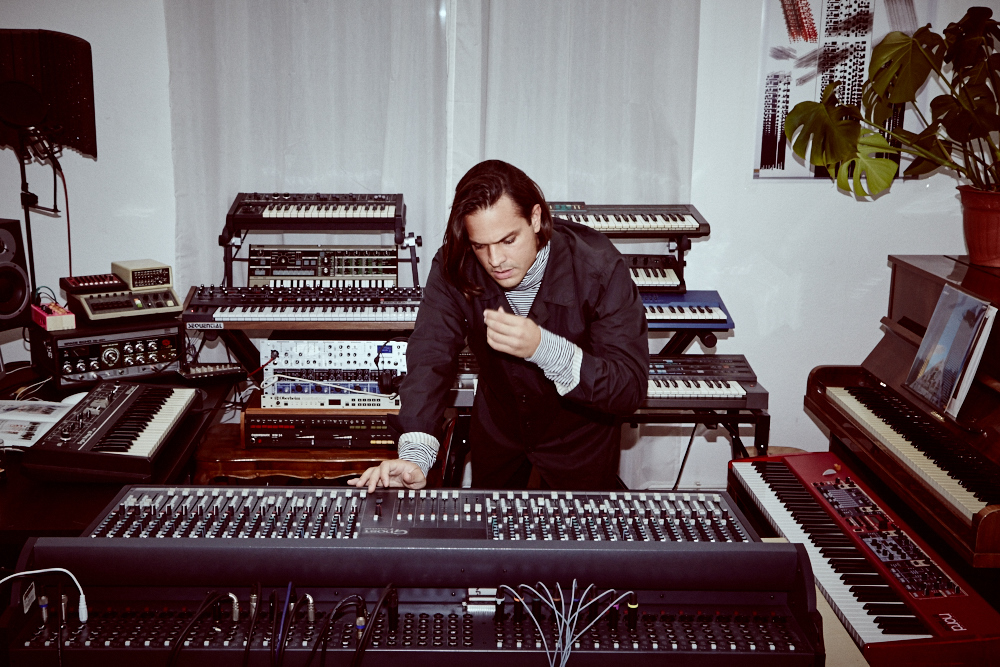
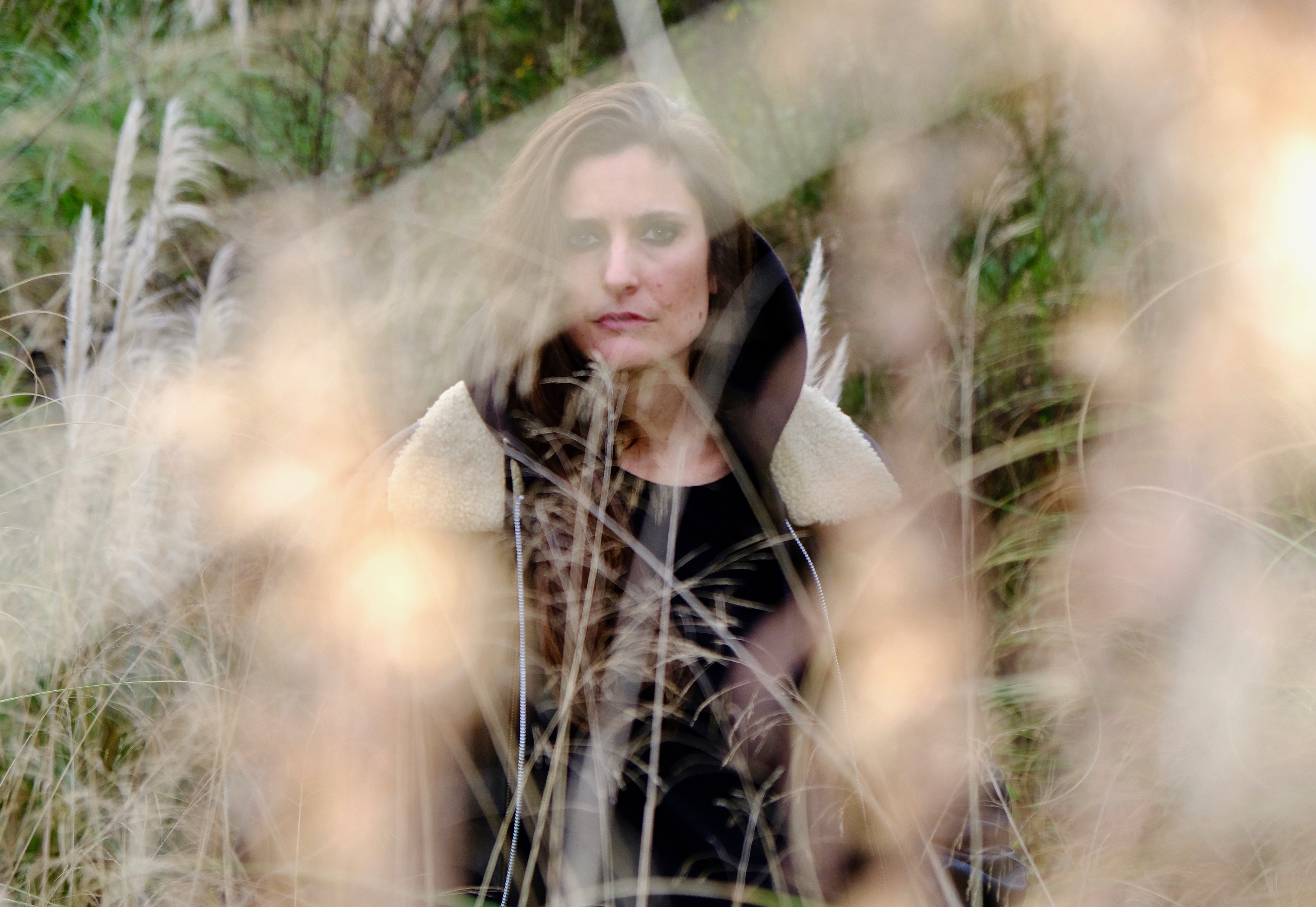
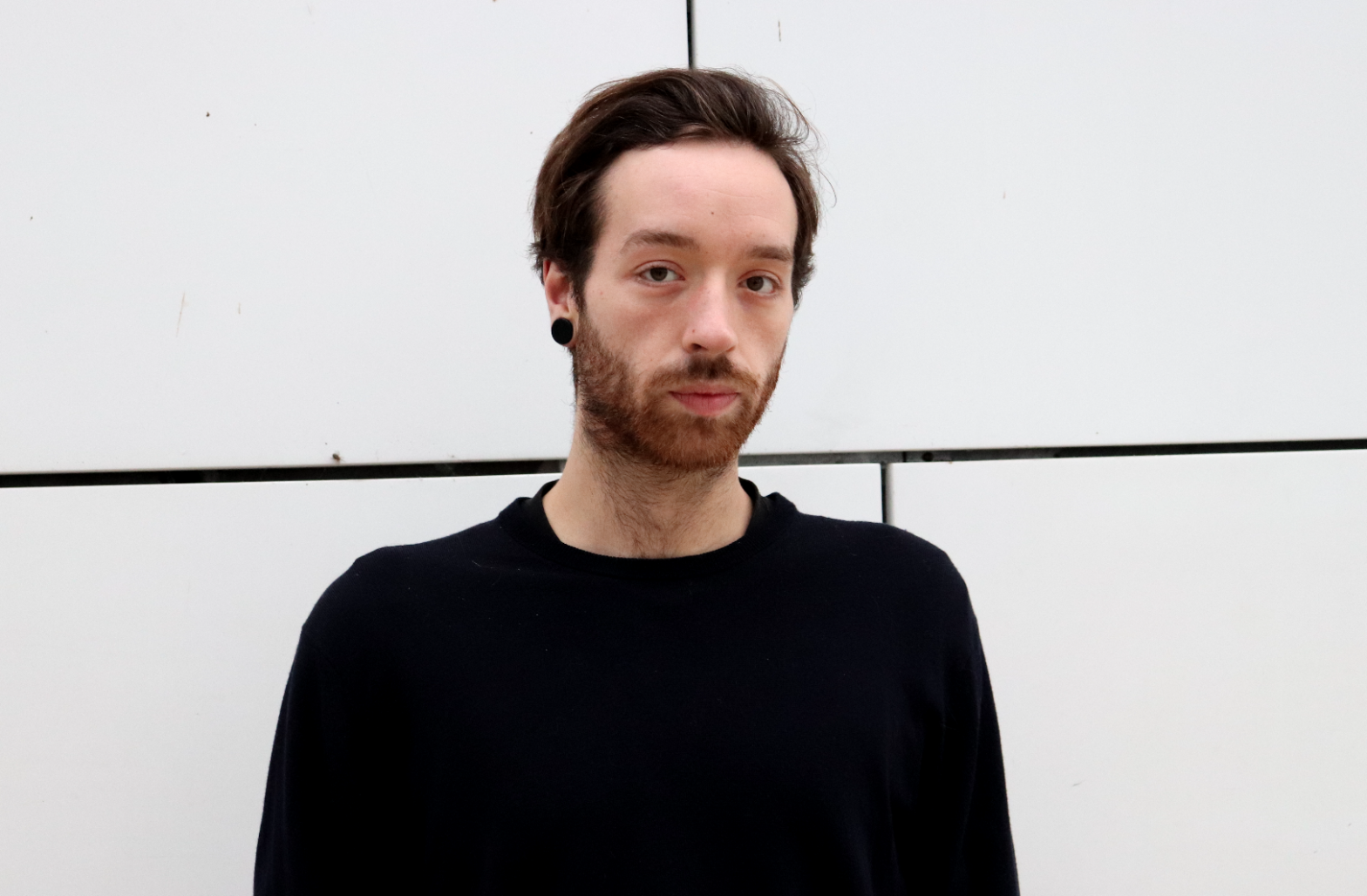
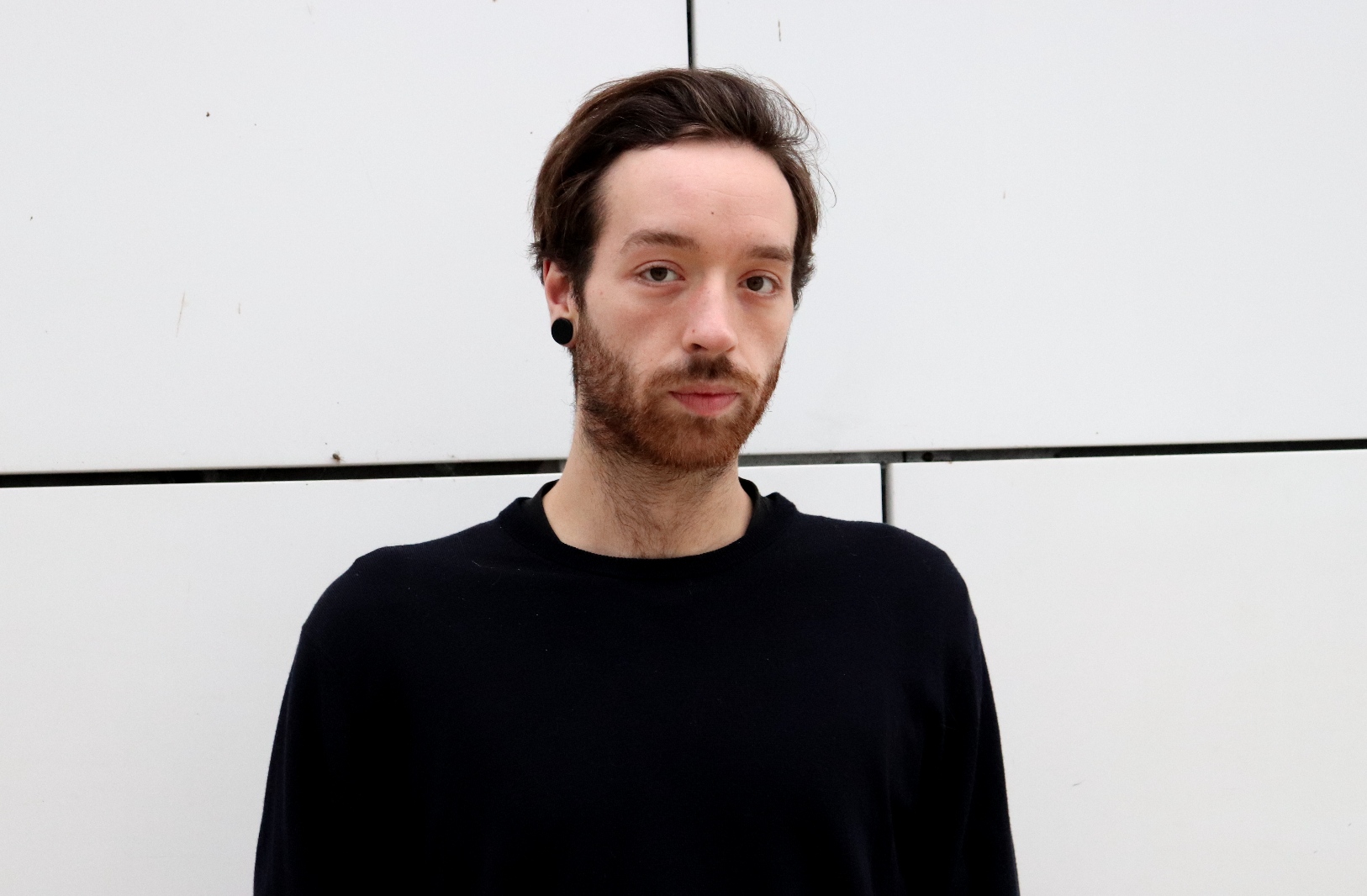
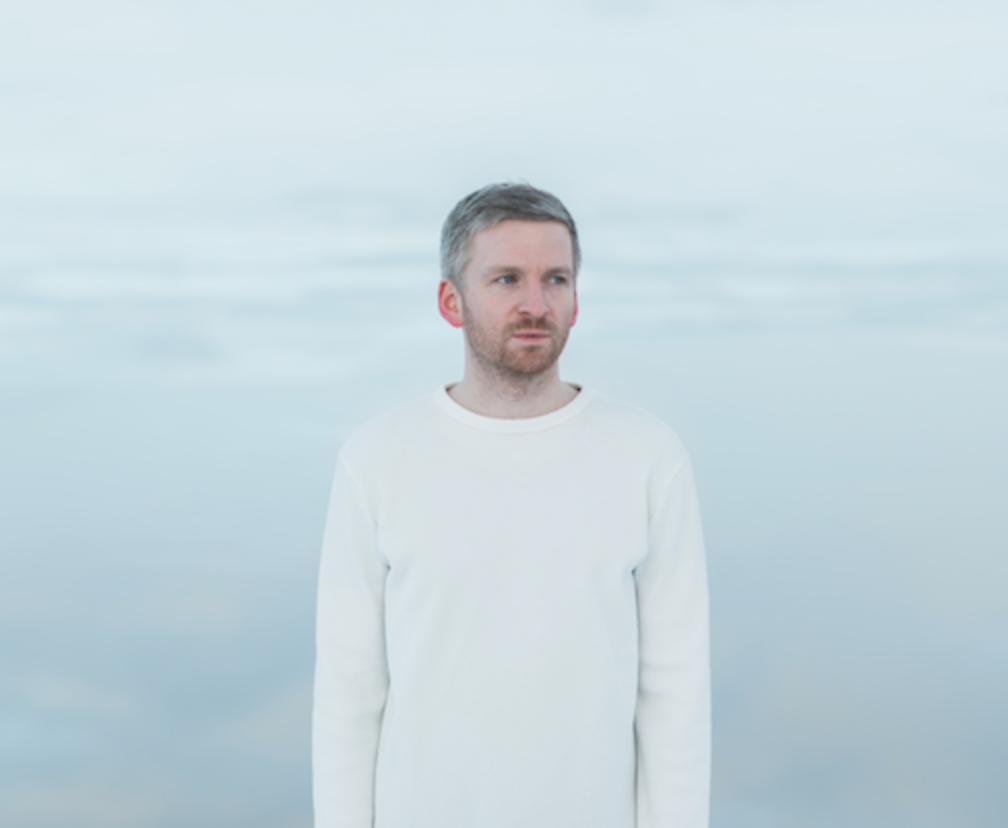
North Sea Navigator is a Bristol-based composer, musician, recording artist, soon set to release haunting solo album The Memory Clears the Space for What’s Needed via Blurred Recordings. The album features guest vocalists Nadine Gingell (Lady Nade) and Jo Mary Butler, as well as guest spoken-word artist Joe Shire, with remixes coming from by Benoît Pioulard, Thought Forms, Antoni Maiovvi, Frequent Traveller, TAO, Luke Sanger, Mountain Range, among others.
In support of the release, and following the release of new single “The Rend,” the label and artist have shared the TAO remix, which itself will land alongside reworks from Luke Sanger and S Thomas. Grab it now via the WeTransfer button below.
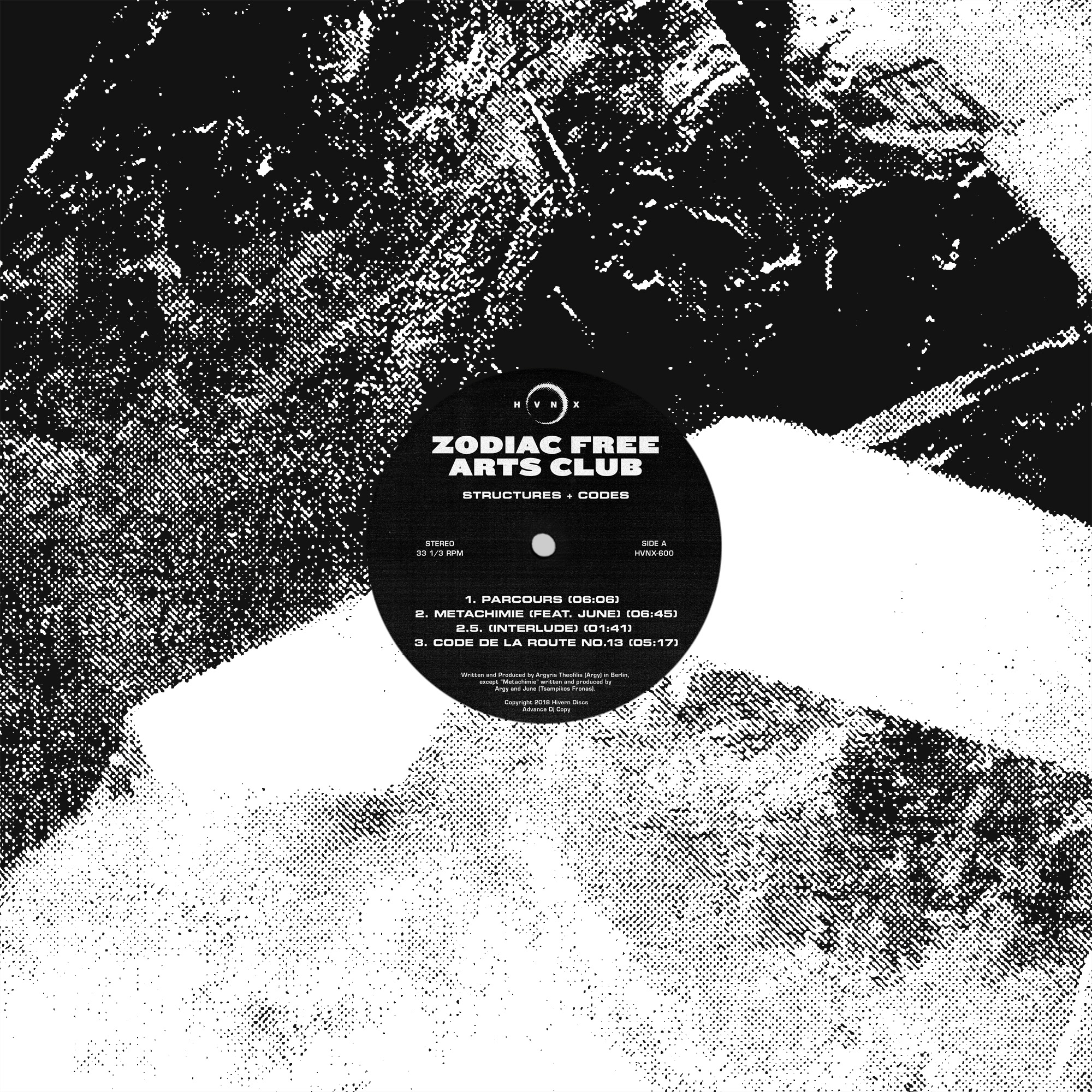
Zodiac Free Arts Club is the Krautrock/Kosmische tribute side project of the Greek producer Argy, and the release is only the project’s second output, following debut album Floating World, which landed via Permanent Vacation in 2011. The mini-album draws inspiration from the work of the painter Constantin Xenakis, reflecting his vision after several meetings in Paris and Athens since 2012. Each track corresponds to a painting by Xenakis, translating its intricate shapes and patterns into compositions filled with elliptic arpeggios, repetitive drum machines, and esoteric melodies.
Hivern Discs, the imprint co-founded by John Talabot, started HVNX in 2016 as a sub-label for vinyl conceptual EPs and mini-albums featuring the most experimental music spectrum of the label’s direction. Previous releases have come from the likes of Inga Mauer and Simon Haydo.
“Constantin Xenakis’ work possesses exactly what I really love about intelligent electronic music. It’s stylishly repetitive, coded, mechanical but, at the same time, very organic and playful.” — Zodiac Free Arts Club
Tracklisting
A1. Parcours A2. Metachimie (feat. June) A3. (Interlude) A4. Code de la route no 13 B1. Constat d’accident B2. Commandements HGG B3. Défilé 16 B4. Bleu M B5. Croisement
Structure + Codes will land on May 25, with “Code de la route no 13” streaming in full below.
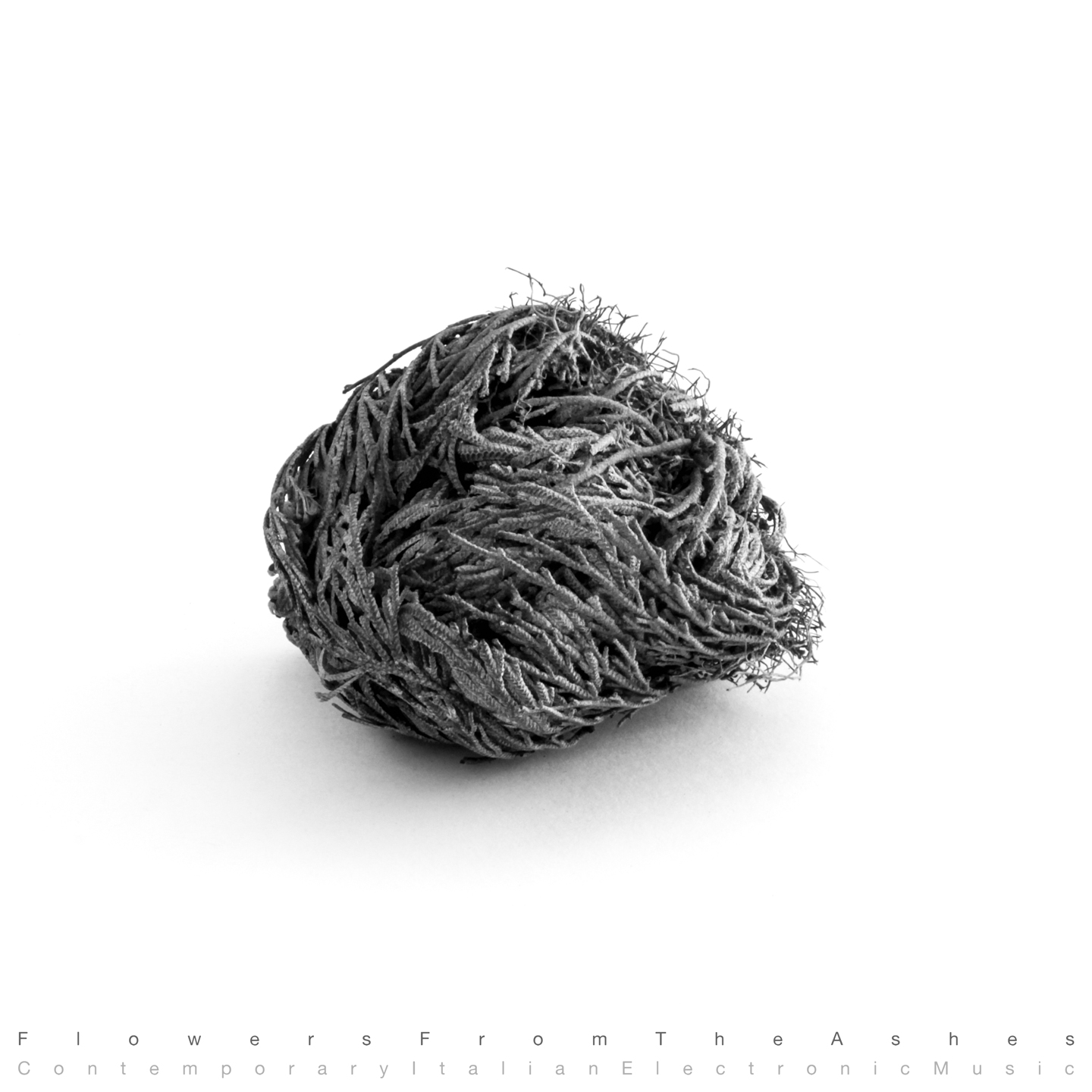
Later this week, Stroboscopic Artefacts will release its latest multi-artist project, Flowers From The Ashes: Contemporary Italian Electronic Music.
As the name suggests, the new VA focuses on music from Italian artists—although, many of the artists currently reside outside of their native Italy—all who contribute to paint a captivating portrait of a shared musical lineage. Label head Lucy’s curation on the LP is impressive, with a noticeable cohesion running throughout the 10 tracks, which range from Silvia Kastel’s spacey ambient to Marco Shuttle eerie atmospheres and the warped Modular lines of Caterina Barbieri.
Flowers From The Ashes: Contemporary Italian Electronic Music will be available on April 13 on vinyl (2 x 12″), CD, and digitally, and can be pre-ordered here. Ahead of the release, Stroboscopic Artefacts has shared a full stream of Marco Shuttle’s track, available via the player below.
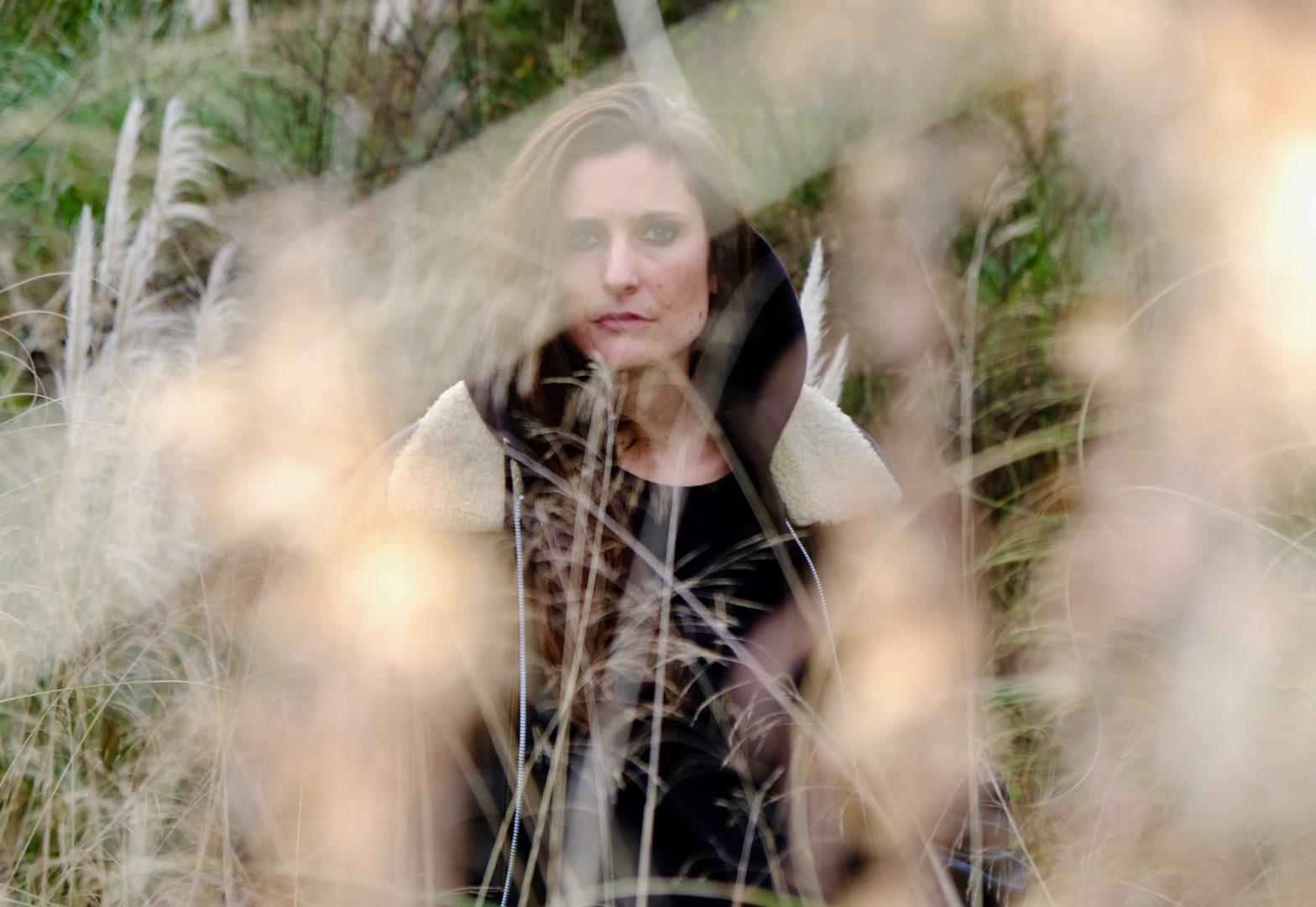
OKKRE is the new personal project of Uge Pañeda, a composer, DJ, and producer previously known for her work with as part of LCC (previously LasCasiCasiotone). After a couple of releases on Editions Mego, last year they released a second album, Bastet, which was world-premiered at Sónar Festival and has since been performed at other festivals like Atonal Berlin and Mutek Mexico.
Okkre is said to represent “the immersion in a creative process based on the coexistence of her different personalities and musical sensibilities.” She’s soon set to perform Arkhé, featuring 40 minutes of unreleased music structured in four acts, based on the representation of the four essential elements through sound, light, and color.The performance will be premiered a Gijon’s L.E.V Festival, taking place from April 26 to 29, and ahead of the show, she’s compiled a 60-minute mix which can be downloaded via the WeTransfer button below.
What have you been up to recently?
Recently, I was in Morocco doing field recordings for a new project with the best company. It was a great trip. During the previous months, I composed the score for a dance performance piece: “Épica,” directed by Aimar Pérez Galí. It was premiered at Sónar Festival and the soundtrack was later released on Modern Obscure Music. Now, we’ re touring.
At the same time, I’ve been playing with my band, LCC, and the visual artist Pedro Maia. We are presenting our last album from Editions Mego, titled Bastet. So far we’ve played in festivals like Sónar, Berlin Atonal, and Mutek Mexico; I fell in love in that country, and hope to come back soon.
It’s been a really good time.
When and where was the mix recorded?
This week in my house in Gijón.
How did you select the records you wanted to include?
I only knew that the first song should be new in my life, and the last should be a special song that has been accompanied my whole life, like my mom’s favourite opera. The rest of the tracks are just connected to me, my label Editions Mego, some friends and colleague that I love their work, or I’ve included them because they have the intentions and tempos that I was looking for the mix.
You’re soon set to debut Arkhé—but what can you tell us about it?
It is a new piece, 40 minutes of unpublished and unreleased music. It has a classical inspiration regarding the structure and concept and features four acts that represent four fundamental elements through color and sound. I based it on Heraclitus’ theory because he’s my favourite philosopher and we share the energy and intensity of the fire like the original element, ARKHÉ.
Sonically speaking, how does Okkre differ from your other work?
The soul is the same. But the project is born because I want to explore the different sensibilities that live inside me, without a pre-established script because I know I’m very polarized. So, that means I can get closer to more extreme sounds, more raw, more sustained patterns, maybe using other frequencies that I like them for some strange reason.
Can we soon expect some Okkre releases?
It will be released for sure, but not immediately, because I understand the project is like a process. I’m constantly changing and evolving, and I’m not sure how I want to share the releases, via an LP, several EPs or both—or maybe there will be other ideas.
Tracklisting:
01. Coucou Chloé “The Letter” 02. Second Woman “I EP” 03. Eomac “Transmutation, Redemption, Forgiveness” 04. M.E.S.H “Nemorum Incola” 05. Roly Porter “In Flight” 06. Dasha Rush “Ocean Shy” 07. Beatrice Dillon “Curl” 08. NPVR “Twin Cases” 09. Louise Bourgeois – “Just put in on and I find my rhythm I” (No Trespassing – Directed by Nigel Finch) 10. Jung An Tagen “20:03 How is that possible?” 11. Akkord – Typeface – Louise Bourgeois – “Just put in on and I find my rhythm II” 12. Emptyset “Descent” 13. Tzusing “Shame” 14. SØS Gunver Ryberg, Aïsha Devi, Rrose, Paula Temple “DR2-1” 15. Plaster “Quasar” 16. IVVVO “Good, Bad, Baby, Horny” 17. Louise Bourgeois – “Just put in on and I find my rhythm III” 18. Franco Corelli “Nessun Dorma” (Aria, Turandot Ópera, Giacomo Puccini)
L.E.V 2018 takes place from April 26 to 29 in Gijon, Spain, with more information available here.
Setaoc Mass will return to his SK_eleven imprint with a new EP, titled Solid Void.
Solid Void will be the Manchester-born, Berlin-based artist’s sixth release on SK_eleven following from the Reframe which came in December. His other work has landed on Len Faki‘s Figure.
We’re told that the British producer plays to his strengths and delivers four tracks “rich in depth, texture, and hypnotism.”
BAFTA-winning artist, composer, musician, and producer Ólafur Arnalds has unveiled a gorgeous new track, titled “re:member,” featuring his new software, Stratus, which “transforms the humble piano into a unique new instrument.”
Besides the Stratus Pianos, the track features a string quartet, synths, electronics, and drums. It flows from beautiful piano chords through to shimmering string harmonies, and into a thrilling electronic finale. The beats were co-produced by Bngrboy, with the track being released alongside a brand new music video.
The music video, which was shot by Icelandic director Thora Hilmarsdottir, provides a new insight into the music. Of the video, Ólafur says, “The video touches on elements of masculinity and how men communicate their feelings. But also the hope and joy we can find in each other when we manage to connect with each other or something that we share.”
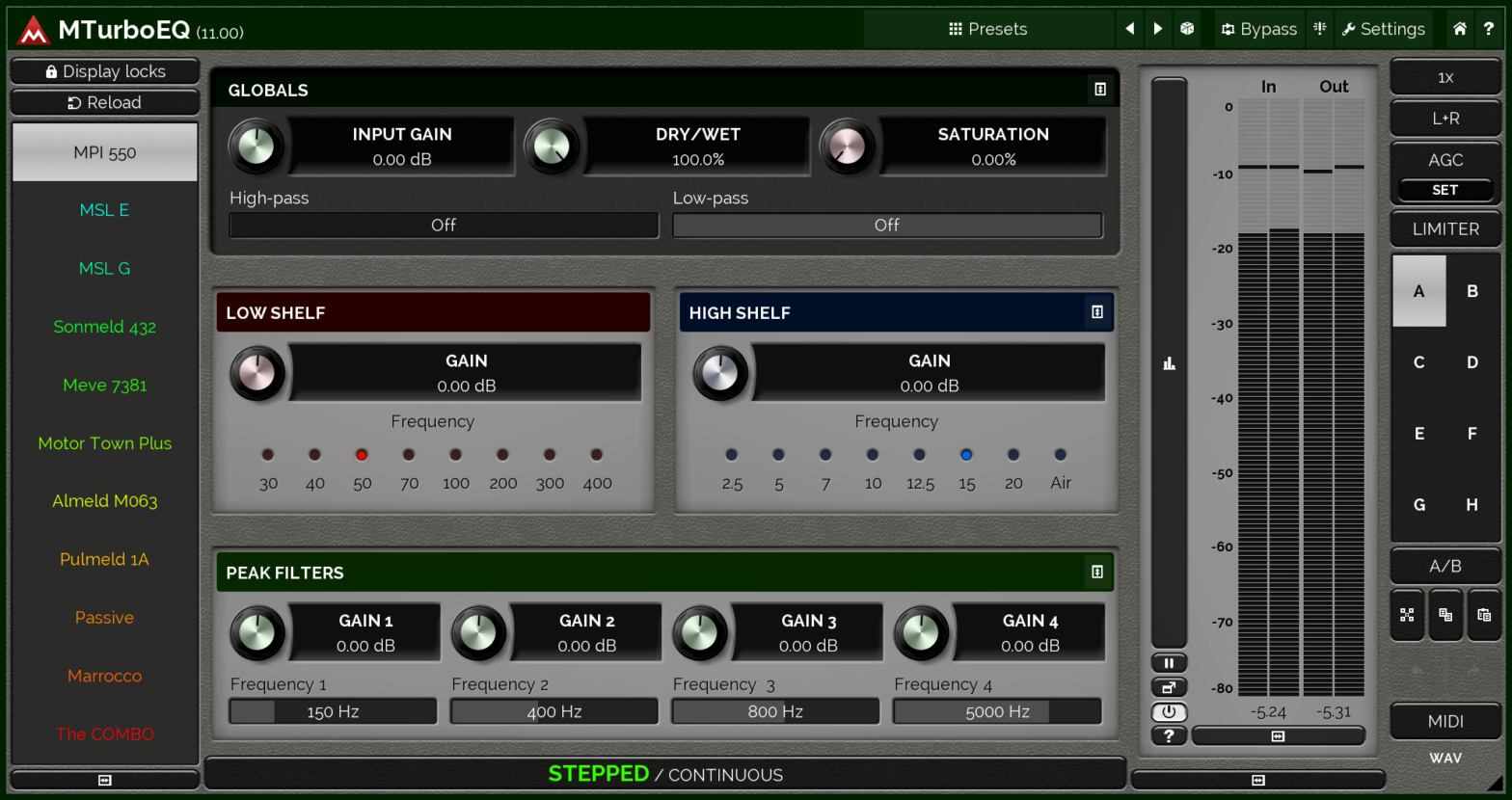
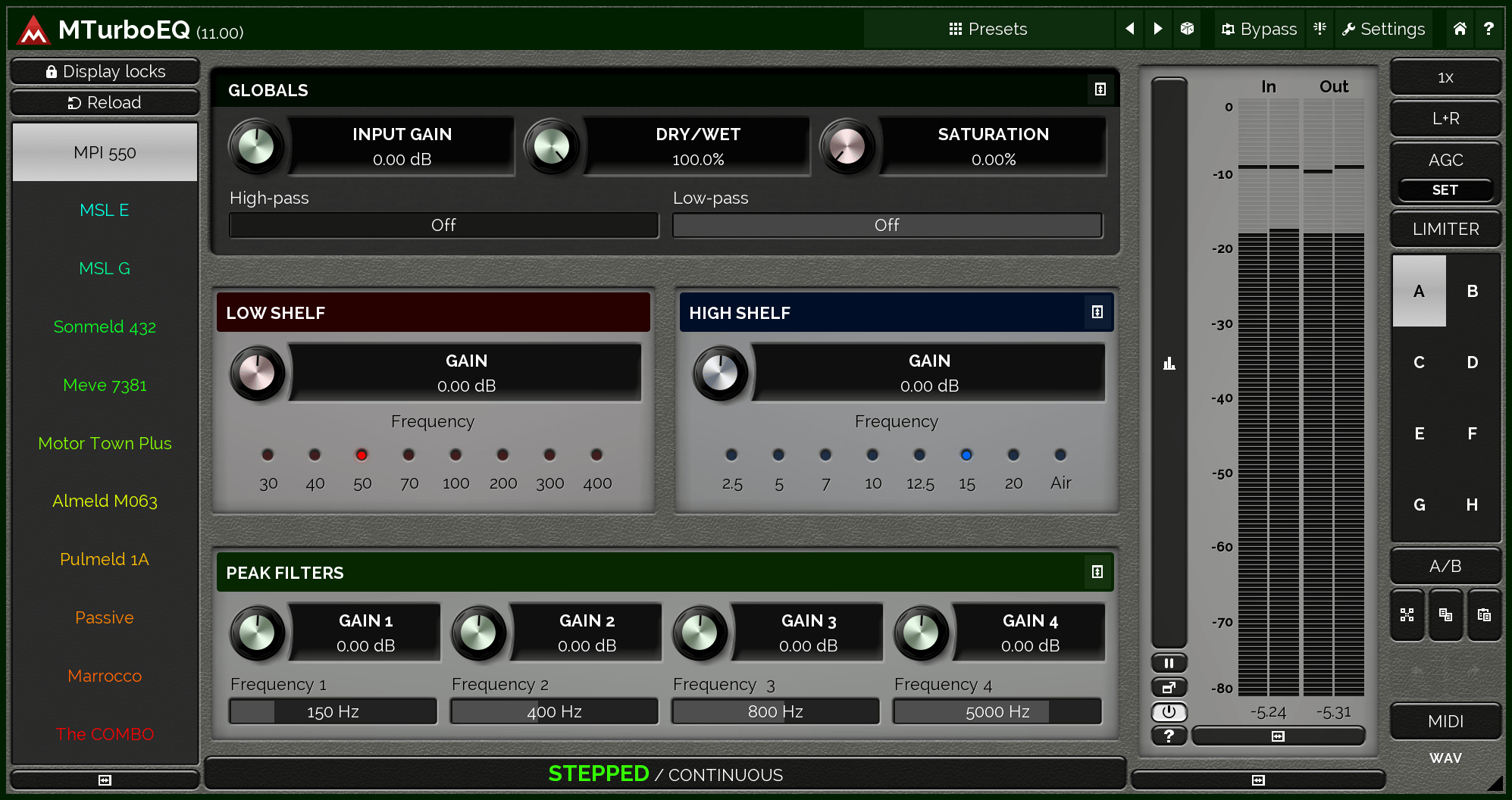
Coming on the heels of its MTurbo series of compression and reverb plugins, MeldaProduction’s MTurboEQ aims to provide the same flexibility as its effects forebears. Once again, the primary focus here is on its range: MTurboEQ includes software reproductions of a variety of classic hardware equalizers, and Melda’s approach is once again to globalize the front panels, allowing users to learn and employ essentially the same user interface and features for all of them.
For nearly all of the included algorithms, users get access to low and high-shelf filters, four peak filters, saturation, dry/wet controls, and automatic gain compensation. There’s support for mono and stereo signals, as well as mid/side encoding for stereo field processing, separate left and right channels, and up to eight channels of surround audio.
We spoke with Melda founder and software designer Vojtech Meluzin about his approach to the EQ—both as a designer and as a user, and about what he’s learned in bringing nearly a dozen classic analog EQs under a single, unified (digital) roof.
What did you try to bring to the world of EQ with this plugin that hasn’t been done before? What sets it apart?
The idea behind MTurboEQ is to put all of the famous EQs into a single interface and to simplify and generalize the GUI for a faster and easier workflow. There’s not much magic in EQs, really—companies often try to exploit the fact that users don’t know that, and sell them overpriced EQs, one by one, with complicated workflows that look like the hardware (which only makes things harder to use). The only “drawback” is that MTurboEQ doesn’t look like the original hardware—which, in our opinion, would just be stupid anyway.
What’s something you think most people don’t understand about the process and art of EQing?
I think most people don’t understand how to use an EQ. With all the possibilities it can be too complex for most people, which is why they tend to use the analog EQs. They are just easier to use—they usually only have a few knobs and not too many options, making it easier to choose the final one—just not necessarily the best one. But if you need stuff done quickly…
The mojo of the analog EQs isn’t in some magic behind them. It’s just that the designers of these super expensive and limited devices needed to use what they had—namely, all the limitations of analog components—and build something that works for most cases well enough. So they designed the EQ curves and frequency/gain interactions nicely. The “stepped” user interface (jumps by 1dB etc) is also useful since, for humans, it’s really hard to compare, say, +10dB and +11dB if the gain control is set to +10.3dB. But in the end, there’s no magic there—it’s about workflow. And if you take the analog EQ/simulation, you can get good results quickly.
A fully featured parametric (and ideally dynamic) EQ can get you much more, but with that power comes responsibility—it’s easy to fuck things up, or spend a week tweaking a single EQ that way.
One thing I think needs to be avoided is using presets. Beginners often search for tutorials, which tell you “use this EQ, and use these settings for vocals.” That’s just stupid—don’t do that. You can use it to learn how to EQ, but every signal is different, and every song context is different; eventually, EQs are actually quite easy to use, but you first need to train your ears, and that’s the work not many are willing to do.
It’s interesting that this software makes use of the GPU (Graphics Processing Unit)—is that something specific to your approach? Or is this kind of processing generally quite GPU-friendly?
MTurboEQ uses GPU acceleration for visualization only. Normally, apps and plugins use the OS services to perform drawing. These are usually pretty advanced, and as such are often performed in software, which of course takes power from the CPU (Central Processing Unit), which we want for audio processing. Instead, we use GPU directly for rendering the graphics, which is especially advantageous since there’s often quite a lot of visualization.
Using GPU for audio processing is also possible, but rarely advantageous because there’s a rather large latency when transferring the data to the GPU and back. And while the actual GPU processors have way more cores than traditional CPUs, individual cores are rather slow. It just doesn’t fit with audio processing concepts, which are generally sequential.
In analyzing old EQ modules, which ones really stood out as having the best, most intuitive designs?
I can’t really say which is best—they just sound different, and we designed the generalized GUI (Graphical User interface) so all of them are easy to use. We made it work in the generalized GUI as well, so the “tricks” people learned over the decades—like turning one knob right and the other left at the same time, for instance — are now available as a simple control, so nobody really needs to know these tricks and can just follow their ears.
The worst originals, though, would be the passive ones, in my opinion. No surprise there—it’s rather difficult to design passive electronic components, which can do little more than just remove some frequencies and lower the volume.
Do you personally prefer using the “stepped” or continuous approach to EQing?
Actually, when it comes to EQing, I like the stepped approach. While it’s a tiny bit limiting, the 1dB doesn’t do enough to mess things up, and it’s much easier for humans to hear the difference and make a final choice on which way to go.
What’s your general approach to EQing? How long do you spend EQing parts in an average production?
I mostly use MAutoDynamicEQ for individual tracks—when you know what you want, you just use the parametric EQ. But I use MTurboEQ on the master, mainly because of the low and high shelves. For quick treatment using shelves and high-pass, when used on individual tracks, I’m usually not so meticulous—under a minute per track, I’d say. I don’t like to “overdo it”—after some time, it only gets worse and worse.
Following the release of the Audio Track 5 EP and live performances at the Strelka Institute (Moscow), Barbican Centre, and Tate Tanks (London), Darren Cunningham (a.k.a Actress) and the London Contemporary Orchestra (LCO) are to release a full album of their collaboration on Ninja Tune, titled LAGEOS.
Originally performed at the Barbican in February 2016, the project was curated by Boiler Room and LCO with support from Arts Council England and Ninja Tune. The music created a synergy between both live electronic and acoustic components, not just in the harmonies but in the way the traditional instruments were spliced into new hybrid instruments. As part of the process, Actress and LCO augmented traditional piano and created sounds from objects as varied as temple bowls and plastic bags.
For the album, LCO recorded the individual instrumental parts as stems at Spitfire Studio then sent to Actress to manipulate. LCO also went on to reinterpret Actress classics “Hubble” and “N.E.W,” among others from his catalogue.
“In many ways, the collaboration is about exploring an ambiguity of sound that sits between electronic and acoustic spaces; something that we’re aiming to push further as part of the live shows,” says the LCO’s Hugh Brunt of the collaboration. “For much of the set, we look to realise as close as possible the timbres and colours of Actress’ electronics through acoustic means (which he, in turn, responds to); something of a physicalisation of those synthesised or sampled sounds. That has involved utilising various accessories: plastic bags (for white noise or to emulate an EQ���d hi-hat); keys; Blu-Tack (to dampen the piano’s upper strings); milk frothers on harp strings, etc.”
A live show is scheduled to take place at the Barbican Centre on May 26.
MDRNTY Cruise has finalized its lineup and announced a stage hosted by HYTE.
Joining the previously announced lineup, which included Ricardo Villalobos, Apollonia, Andrey Pushkarev, Audiofly, and SIT, will be Cassy, Chaim, Ilario Alicante, Marco Faraone, Pan-Pot, and Alan Fitzpatrick. HYTE will also be hosting a stage with Matthias Tanzmann, Guti (Live), Yaya, and Martin Buttrich playing.
Taking place June 10 to 13 throughout the Mediterranean, MDRNTY will this year feature performances across 24-hour programming. Ticket options offer all-inclusive packages that include: cabin accommodation, unlimited dining, unlimited drinks (non-premium), 24-hour access to dancefloors, and four-part payment plans. The cruise also promises pop-up events, artistic and technological shows, film and documentary screenings, exhibitions of contemporary art, yoga, and more.
Sound and Rhonda INTL have announced the lineups for their 2018 Coachella parties.
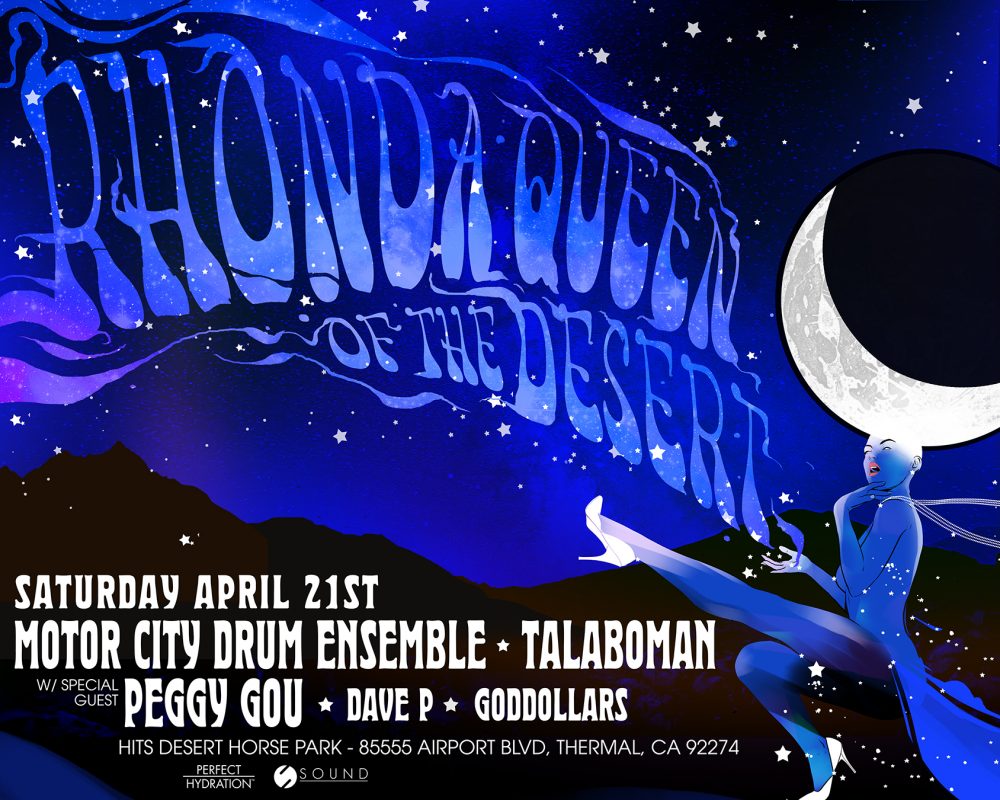
First up, on Friday, April 13, Sound and Rhonda will host a rare back-to-back set from Paradise boss Jamie Jones and South Africa’s Black Coffee, with Ellum founder Maceo Plex playing alongside Pachanga Boys and Jackmaster the following night. The following weekend will see the return of the popular Rhonda Queen of the Desert party, which will feature Motor City Drum Ensemble, Talaboman, Peggy Gou, Dave P, and GODDOLLARS.
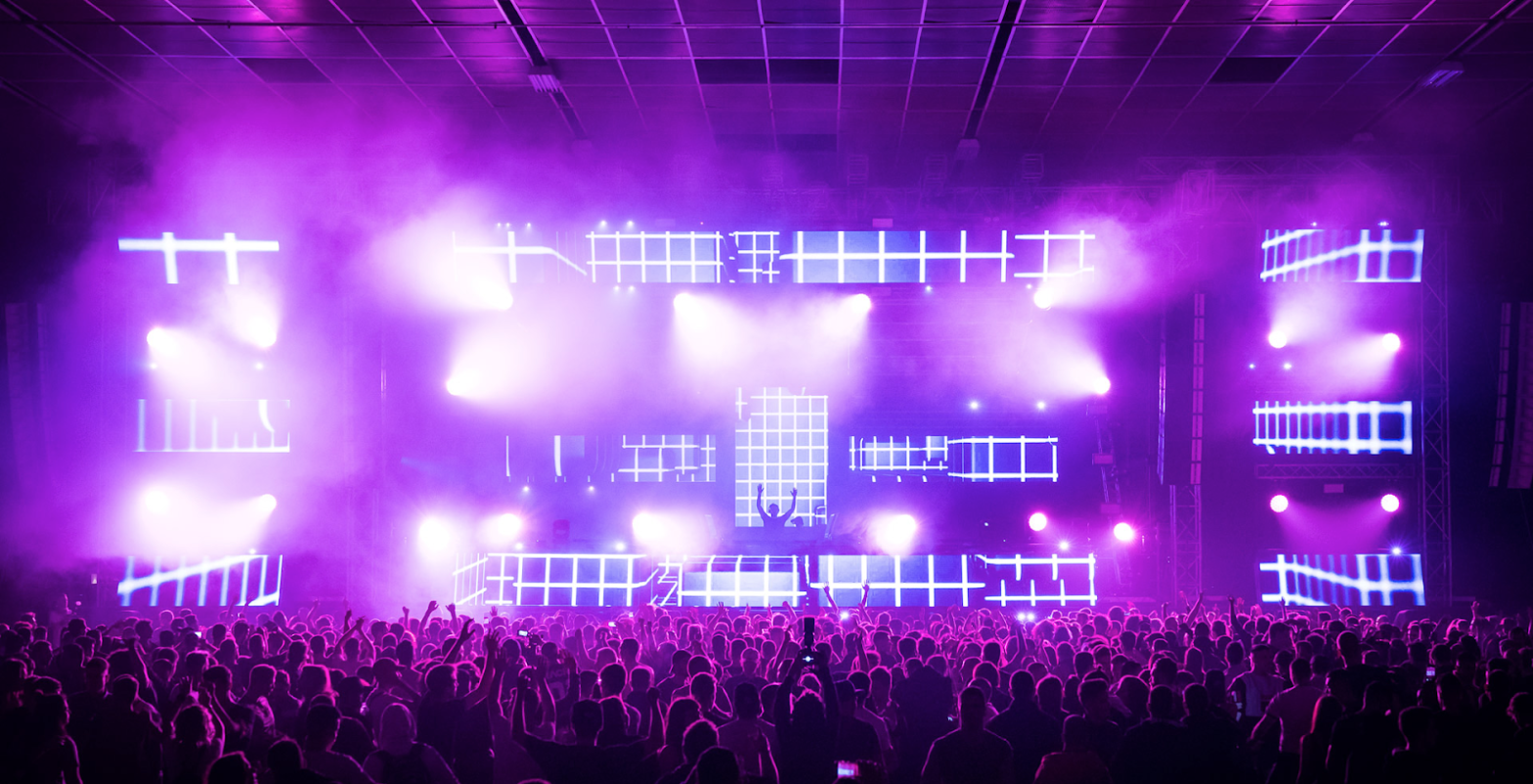
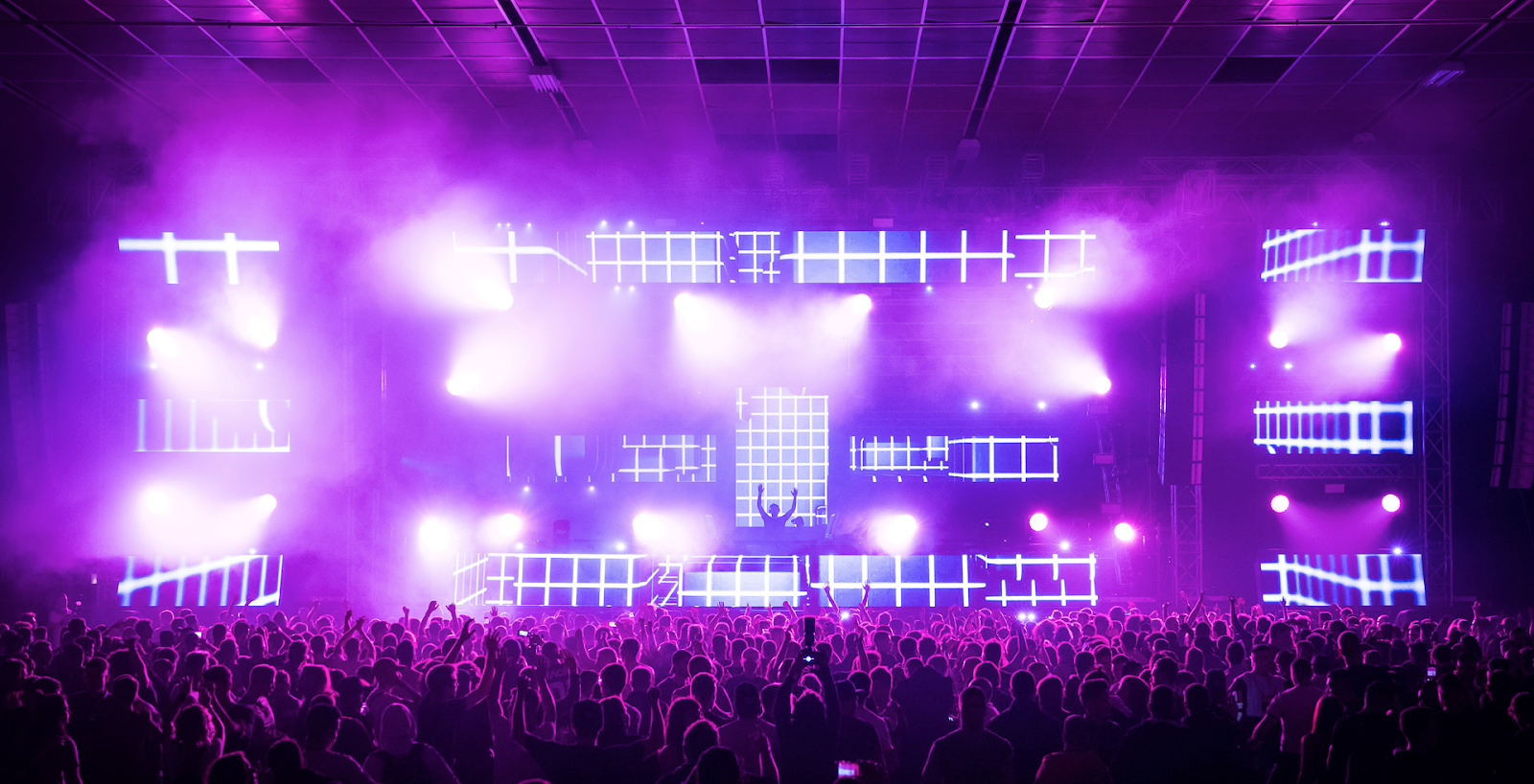
All of the parties will be taking place at HITS horse racing facility in Thermal, California, an indoor-outdoor multi-room space with immersive production from Framework and SJ Lighting, and acoustics by Sonic Labs.
You can find more details and tickets to all events here.