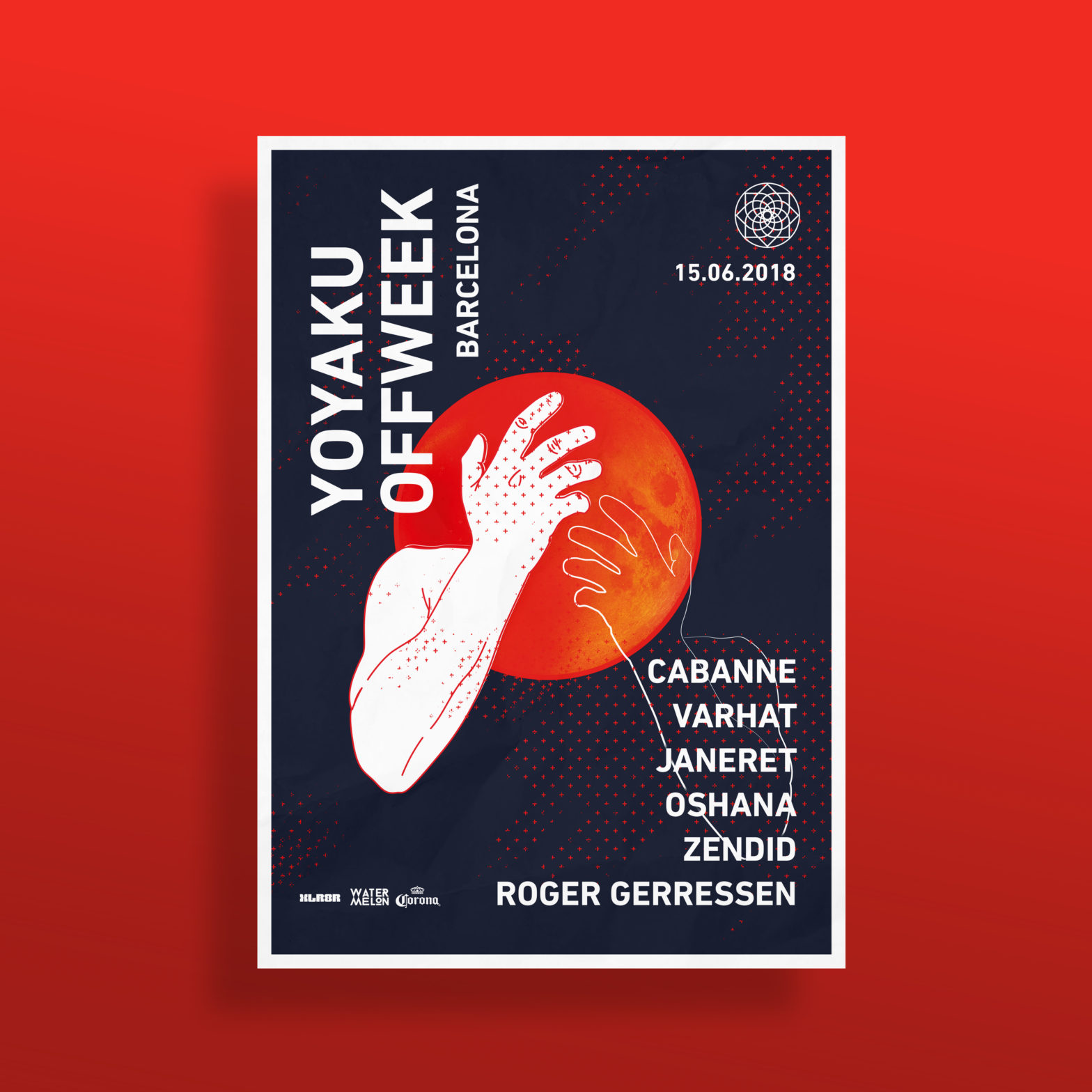
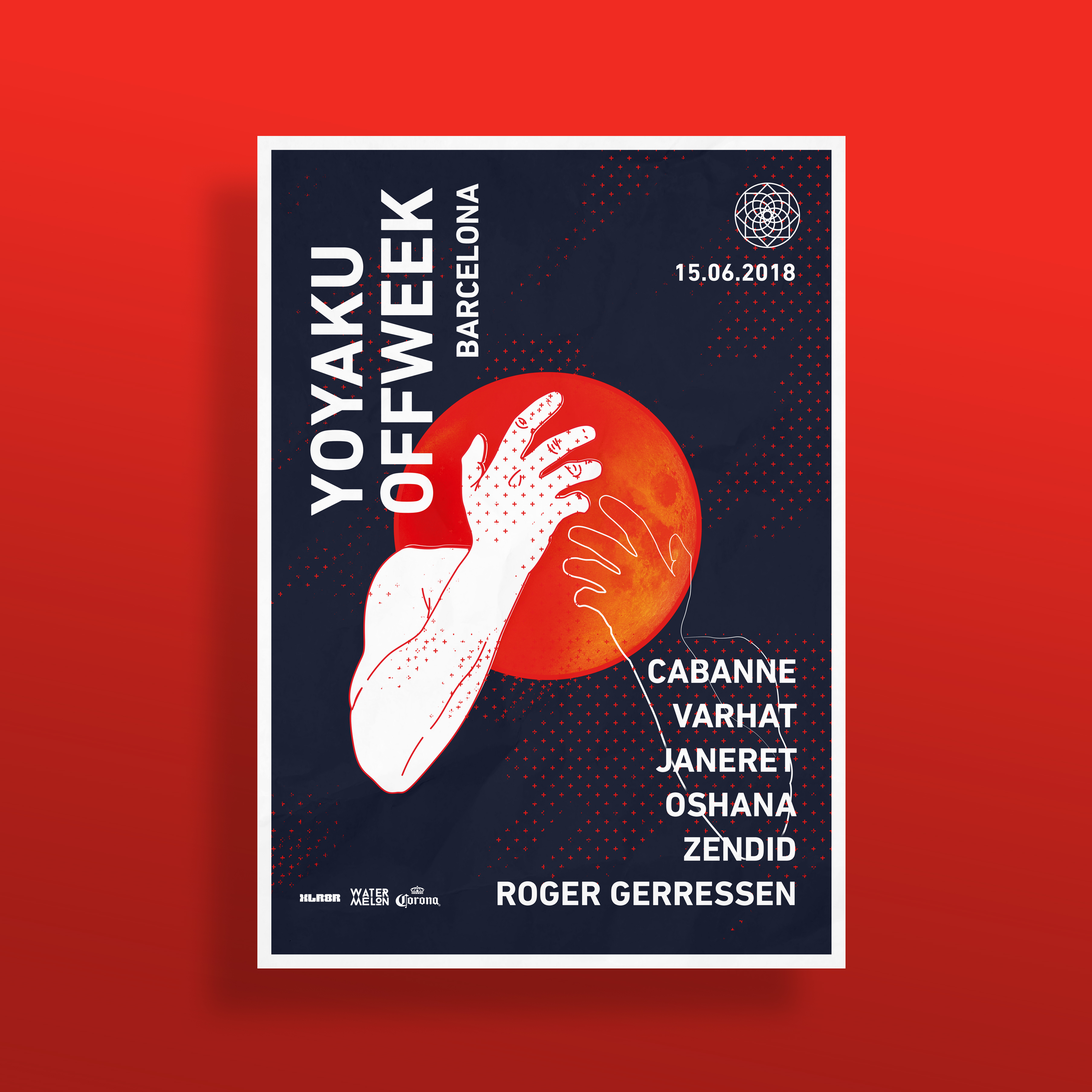
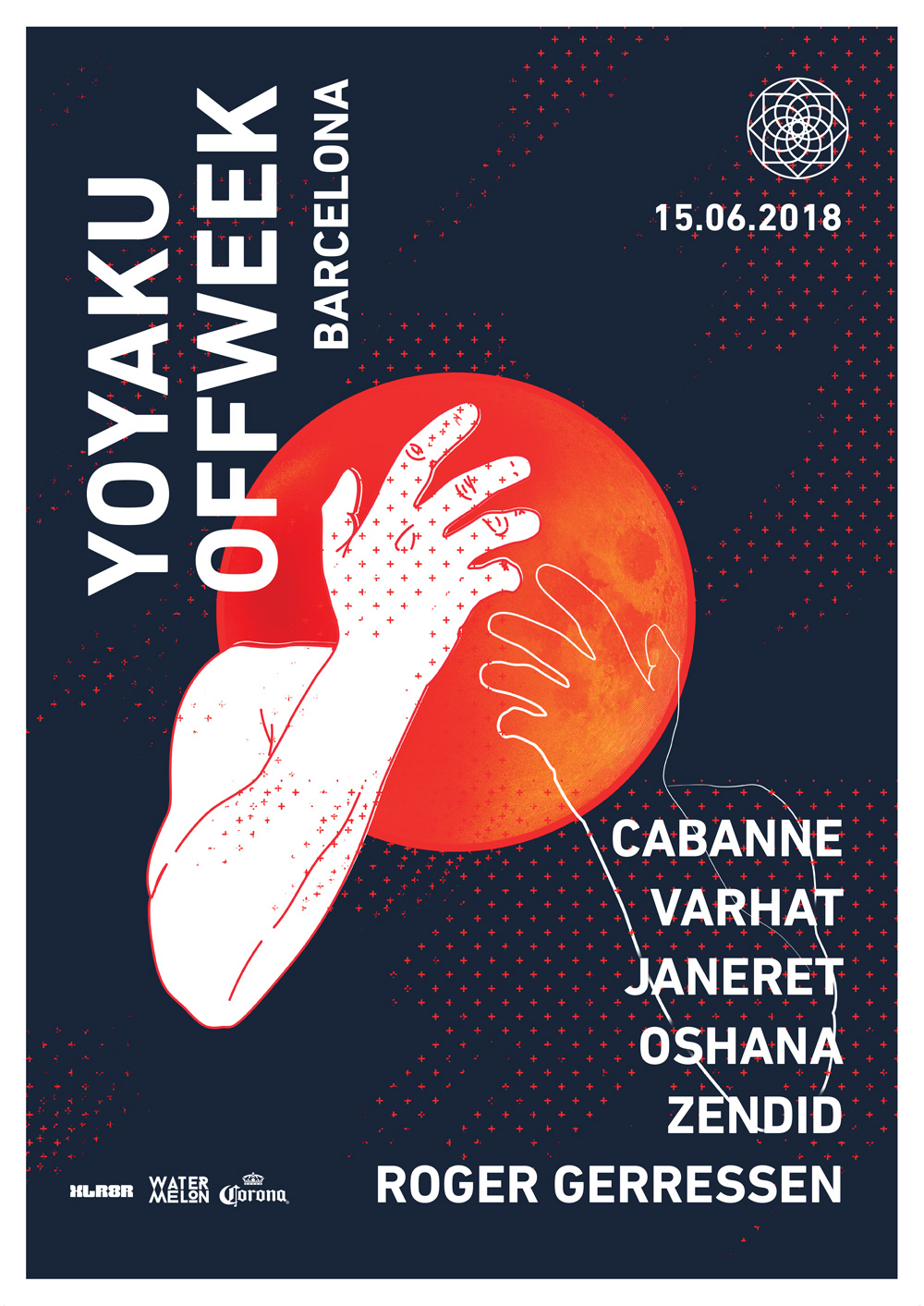
XLR8R and Yoyaku, the Paris-based label, distributor, and artist agency will co-host an event in Barcelona this coming June—as part of Off-Week 2018.
Scheduled to perform are Cabanne, Varhat, Janeret, Zendid, Oshana, Roger Gerressen, all members of the Yoyaku roster. It will be a 12-hour party from 3 pm until 3 am and a nice outdoor and indoor venue, the details of which will be disclosed soon.
As with many of the Yoyaku events, there will be some special, limited edition releases exclusively available on the evening, all forming part of the YYK Showcase series.
The event will take place on June 15 in Barcelona, with more information available here.
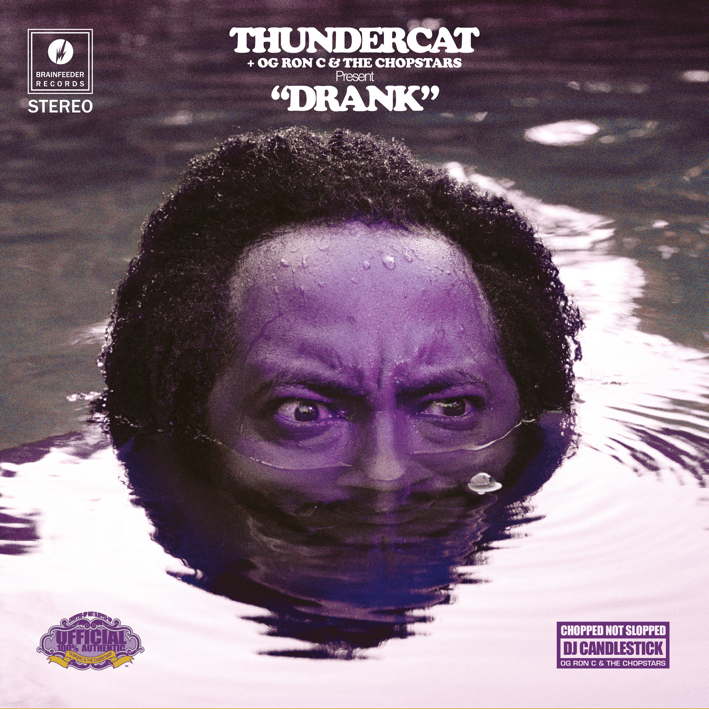
Flying Lotus‘ Brainfeeder will present a special “chopped not slopped” mix of Thundercat’s album Drunk (2017) by DJ Candlestick and OG Ron C of legendary Houston DJ collective The Chopstars.
Slowed down and chopped up, the mix has been fittingly re-titled “Drank.” It appeared online last year as an unofficial homage to the virtuoso bassist, songwriter, and producer’s third album and received hearty approval from Thundercat, who proclaimed: “If you got Drunk it’s only right that you get Drank. I feel like they go together”—inciting Brainfeeder to make a vinyl format appropriately doused in purple.
Thundercat released Drunk, his third album, in February 2017 to a strong reception. Across its 23 tracks, the Grammy-winning singer/bassist invited his friends Kendrick Lamar, Pharrell, Michael McDonald, Kenny Loggins, Wiz Khalifa, Kamasi Washington and Brainfeeder mastermind Flying Lotus to join him on his musical journey.
The Chopstars were established by OG Ron C, a veteran of southern rap who co-founded the illustrious Texas-based independent record label Swishahouse Records alongside Michael “5000” Watts in 1997, releasing records by Mike Jones, Paul Wall, Slim Thug, and Chamillionaire. These albums would often be accompanied by mixes that were slowed down, scratched and juggled by DJs or “chopped and screwed”—a musical style originated and popularised by Houston’s DJ Screw (1971-2000). Paying homage to the legacy of DJ Screw, OG Ron C founded The Chopstars, recruited DJs Hollygrove, Slim K, Mike G (Odd Future), and Candlestick, and released remixed versions of hip-hop and R&B records by Drake, Kendrick Lamar, Lil’ Yachty, and 2 Chainz, coining the terms “chopnotslop” and “chopped not slopped”—a reference to other DJs’ sloppily executed mixtapes.
“I’ve always been a fan of chopping up creative music,” explains DJ Candlestick. “A lot of people don’t know we chop up rock and alternative music. We believe in chopping up everything just like DJ Screw’s dream: “chopping up the world.”
Describing the Chopnotslop version of Thundercat’s Drunk, Candlestick continues: “We are fans of this type of music and especially Thundercat and Flying Lotus. With these type of projects, OG Ron C and I usually vibe out and do what we do best. ‘Drank’ gives you a perfect musical high. It’s also a project that all types of people can vibe to—smooth, chill and entertaining.”
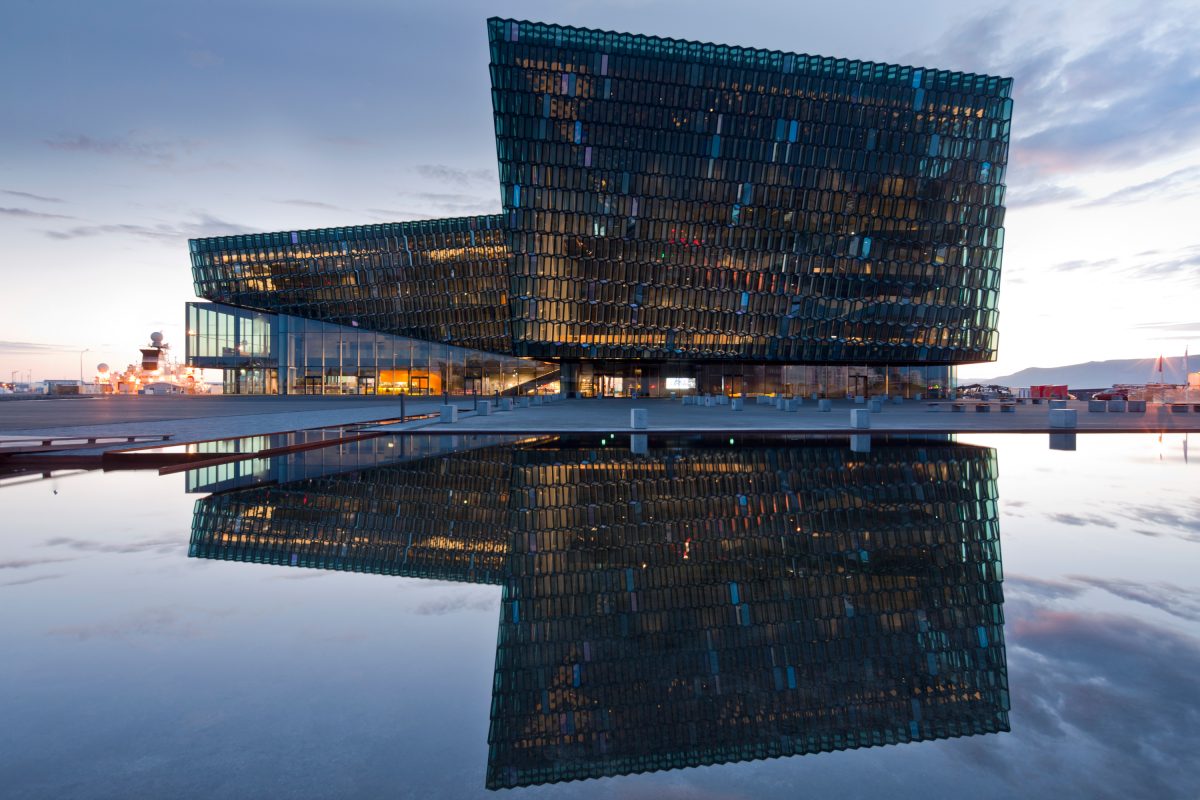
Sónar Reykjavik has announced the final names for its 2018 edition.
Taking place March 16 to March 17, this year’s edition will feature previously announced artists including Underworld, Danny Brown, Bjarki, Denis Sulta, Nadia Rose, Varg, and Ben Frost, alongside new additions TroyBoi, Null + Void (a.k.a. Kurt Uenala), Reykjavik-based band GusGus, who will play an exclusive live show to celebrate their new album, and one-half of Kiasmos Janus Rasmussen. Rounding off the final artist announcement is a host of Icelandic artists, including electro pop band Sykur, R&B artist BRÍET, Shades of Reykjavik member Elli Grill, and rap duo Cyber.
You can find the full lineup, program, and ticket options here.
Over the last four years, Belgian artist Charlotte de Witte has enjoyed a meteoric rise through the ranks of the techno landscape. From the release of her first EP under her given name, 2015’s Weltschmerz on Turbo Recordings—before that she released a handful of outings as Raving George—Witte’s enigmatic presence and stark, monolithic sound has flowed throughout the scene in seemingly relentless fashion. Within the stark atmospheres and brain-melting rhythms of her music is an alluring quality that has seen Witte go on to release a further eight EPS on respected labels such as Sleaze Records, OFF Recordings, MARY GO WILD BLACK, and the recently relaunched NovaMute—there’s also an EP on the way on Saura next month.
On the DJ front, Witte’s career strides are even more impressive; look at the last 12 months, for example, and you’ll see performances logged at Awakenings, Junction2, Tomorrowland, Boiler Room, and Printworks, amongst many more. Earlier this week, Witte also added arguably the biggest DJ accolade to her resume with an Essential Mix for BBC Radio One, furthering her status as one of techno’s most promising artists. Furious and intense, the two-hour mix lands ahead of a US tour that will feature stops in San Diego, Boston, Denver, and Washington, among others. Ahead of the approaching tour, we asked Witte to answer our 20 questions about her history, 2017, her reading habits, and just about everything in between.
Charlotte de Witte will be performing alongside Honey Dijon, Sasha, Tiga, Lee Burridge, Amelie Lens, Mark Knight, Alan Fitzpatrick, and Patrice Baumel at CRSSD Festival, which takes place March 4-5 in San Diego. You can grab tickets to CRSSD here.
1. Describe your surroundings right now.
I’m sitting on a plane from Brussels to Munich. It’s Friday evening so I’m playing my first gig tonight in Augsburg in Germany. Tomorrow I’m playing two gigs (one in Bochum and one in Osnabruck) and on Sunday I’m playing in Hamburg. It’s actually a coincidence that I’m only playing in Germany this weekend.
2. How was 2017 for you musically and personally?
It was a very intense year—safe to say things got very much out of hand! I got to travel the world which is something I always dreamed of doing. Even as a kid, I was always curious and eager to explore other cultures and meet people from all over the world. Being able to experience this, combined with playing music, is a wonderful thing. I got to know myself on many levels this year. I learned a lot by travelling alone and coping with fatigue but I’ve never lived life as much as I have in 2017.
3. Do you remember the first record you purchased?
The first CD I ever bought was one from Eiffel 65 as a kid. The first vinyl I ever bought was Bonkers from Dizzee Rascal. Yup, I came a long way! Haha!
4. Your first EP as Raving George in 2013 has a very mature sound—how long had you been producing before releasing it?
I remember I started Djing in 2010 and producing about two or three years later so I think that’s actually the year I started producing. I was 20 years old. The first steps of producing were very hard for me. It didn’t come naturally at all so, in the beginning, I had some friends who helped me out with the basics. They taught me the first steps of making something actually sound good and club proof but I always kind of knew how I wanted my music to be like so I guess that had a big impact on my first releases.
5. You used the name Raving George to avoid the stereotypes of being a female DJ and producer—how has it been since the change?
After DJing for six years, it became pretty obvious to most people that I actually was a woman, not a man. So the name started to lose its purpose. Music became something very serious to me. It became my full-time job and sort of my goal in life. Things got more serious. I found my way in life and I grew up. I didn’t feel the need to hide behind a male alter ego anymore. This is who I am; I am a woman, playing and producing music, and I’m bloody well proud of it too.
6. After a popular, breakout hit like “You’re Mine,” was it a hard decision for you to use your given name?
Not at all. I wanted to make a track like “You’re Mine” because I felt genuinely interested in producing other music as well and not only the club stuff. I didn’t want to limit myself or put myself in a box because that is what people might expect of me. I still don’t, but I do realise that it’s a very human thing to do to categorise people. It’s easier for promoters to book you on a techno line up if you play and produce only techno. It makes more sense and gets confusing if you start producing other tracks as well (under the same name). So dropping my old name and going full-on techno was a logical decision in my head.
7. Your productions under your given name have a much harder, heavier edge to them—are these sounds more true to you and was this a conscious decision to shift towards harder sounds?
They are more true to my underground self. And at least for the moment, that’s truly a place where I can find happiness. Producing that kind of music and especially playing in clubs truly gives me a feeling of satisfaction I wouldn’t like to miss.
8. Although you play dark shades of techno, you always look happy and content—what is it about darker music that connects with you in this way?
This question seems to return quite a lot in interviews but it’s something that’s quite hard to explain. I feel more attracted to darker, melancholic music because it creates more emotions and makes me live the moment. Just having a good time is not always enough for me and that is what attracts me so much in music that’s not necessarily happy. It makes me think about the music and therefore reaches a deeper level.
9. When starting music, do you have a regular production routine?
It really depends from moment to moment but I usually just start with creating a low-end loop. Depending on the mood or inspirations found, I might add vocals first or synths. I wish I could tell you a much more interesting process but I guess a lot of people work that way.
10. What are some of your all-time favourite non-club releases?
Hm. I love Ry X, James Blake, Dillon, Lera Lynn, Leonard Cohen, The Beatles… Also reggae music is something I often listen to in moments of stress while doing my accounting or while sitting in traffic. It eases my mind.
11. How did the connection with NovaMute happen?
I got in touch with Daniel Miller through my publisher about one year ago. I went to London to meet him in person and after that things took off in the usual way. I sent him some music, he told me which tracks he liked and we set a release date. It all happened very spontaneously. Now, whenever we’re in the same town (for instance in Amsterdam during ADE) we meet for coffee and have a little chat.
12. You started exploring the Ghent nightlife around 16 years old—do you remember your first club experience? Can you describe it?
My first underground club experience was indeed in 2009 / 2010. There was this club in Ghent called Make Up Club, located in a dungeon in the city centre, where I first fell in love with electro music. People used to dress up there, wear colourful feathers and glasses that kind of represented the rave culture from back in the days. Unfortunately, that club has been closed for years now.
13. You said in a recent Mixmag interview that you had never even touched CDJs before your first gig and that it was really bad—how long did it take you to get the hang of DJing?
I don’t know how long exactly, but I do remember it was very long. I could be lucky and have a couple of good transitions during a set, but it actually took me quite a while (like almost a year or something) to play a flawless set. It took me even longer to actually stop freaking out about it too.
14. Did you have a noticeable breakthrough moment or was it more of a slow build?
My first breakthrough was in 2011 when I won a DJ contest curated by Studio Brussel and Tomorrowland. It gave me a spot on one of their stages and turned me into a Studio Brussel resident. Years later, I got my own show on Studio Brussel and my own stage on Tomorrowland. The second breakthrough or life-changing moment was when I changed my artist name from Raving George to Charlotte de Witte. It wasn’t only a big step mentally, for me, but I have the feeling that ever since promoters also started to take me more seriously. Especially with this kind of music.
15. Tell us one thing people don’t know about you.
I hate balsamic vinegar.
16. What’s the best piece of advice you have been given?
Hard to pick out just one but one of my closest friends, Nima, is like my personal guru. He knows what it’s like to have a life like this and he understands how the business works and the people within it. Every time we chat I end up saying, “You’re right again, Nima, as always.” Shout to you buddy!
17. How do you stay sane on tour?
I try not to drink too much and sleep as much as I can. People think that DJs have a massive rock ‘n’ roll life but if you would see me on tour people would think I’m rather boring! Of course, I have nights where I do stay for a long while, especially when I have friends around, but most of the times I try to stay responsible. I learned the hard way that sometimes, you have to listen to your body.
Makeness, real name Kyle Molleson, will soon release his debut album, Loud Patterns, coming out April 6 on Secretly Canadian.
Loud Patterns is noticeably indebted to house and techno; there are 4/4 rhythms, and a no-nonsense directness that harks back to the Detroit pioneers. Channeling avant-garde experimentalism and an outsider’s interest in pop, Molleson embraces the distance between those two poles.
The album arrives after a series of releases that have established his particular, in-between approach to dance-minded music. He put out two EPs on Manchester-based imprint Handsome Dad, a one-off single with Adult Jazz, and self-released Temple Works EP; Whities also released a limited-edition white label of a Minor Science dub of one of his tracks.
Along with today’s announcement, Makeness is sharing a video for his new single, “Stepping Out Of Sync.”
“”Stepping Out Of Sync,” for me is about losing a little bit of a grip on reality,” says Kyle. “There’s a big nod to the world of pop music in the track and I wanted to reflect that in the video too. Joshua and Felix, who directed the video, came up with this great time splicing technique using a custom three-camera rig. The idea was to use the technique as a character in the video to add a sense of detachment from reality and subtly invert the upbeat aspect of the music. I had also been talking to my friend Maddie who is a brilliant dancer about working on some choreography for the video. These aspects seemed to come together perfectly when Joshua and Felix started sending ideas across. I think the video really captures the range of emotions that exist in the track, it’s upbeat and positive aspect alongside a layer of dissonance and confusion that lies under the surface.”
Tracklisting
01. Loud Patterns 02. Fire Behind The 2 Louis 03. Who Am I To Follow Love 04. Stepping Out Of Sync 05. Gold Star 06. The Bass Rock 07. Day Old Death 08. Rough Moss 09. Our Embrace 10. 14 Drops 11. Motorcycle Idling
Loud Patterns will land on April 6 via Secretly Canadian.
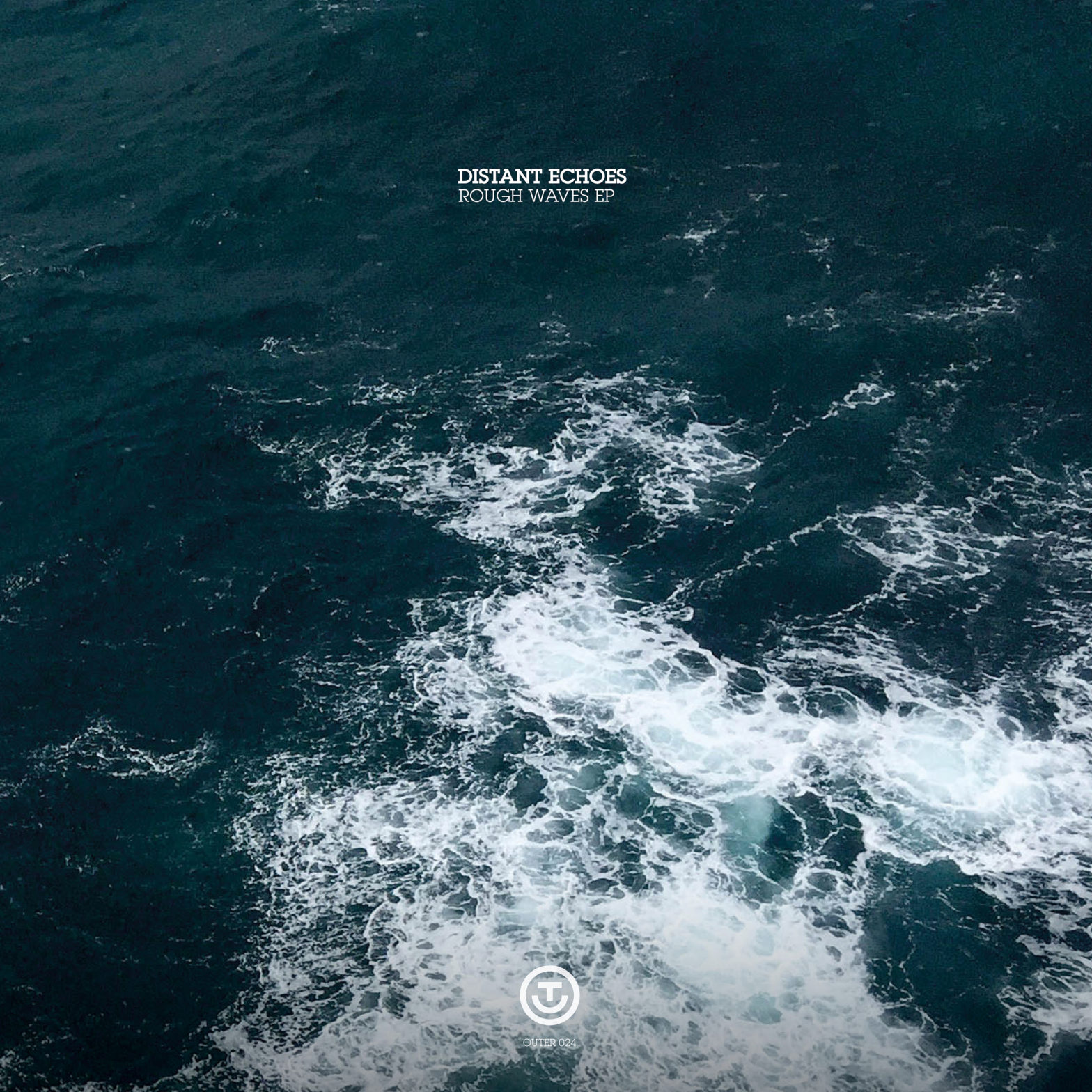
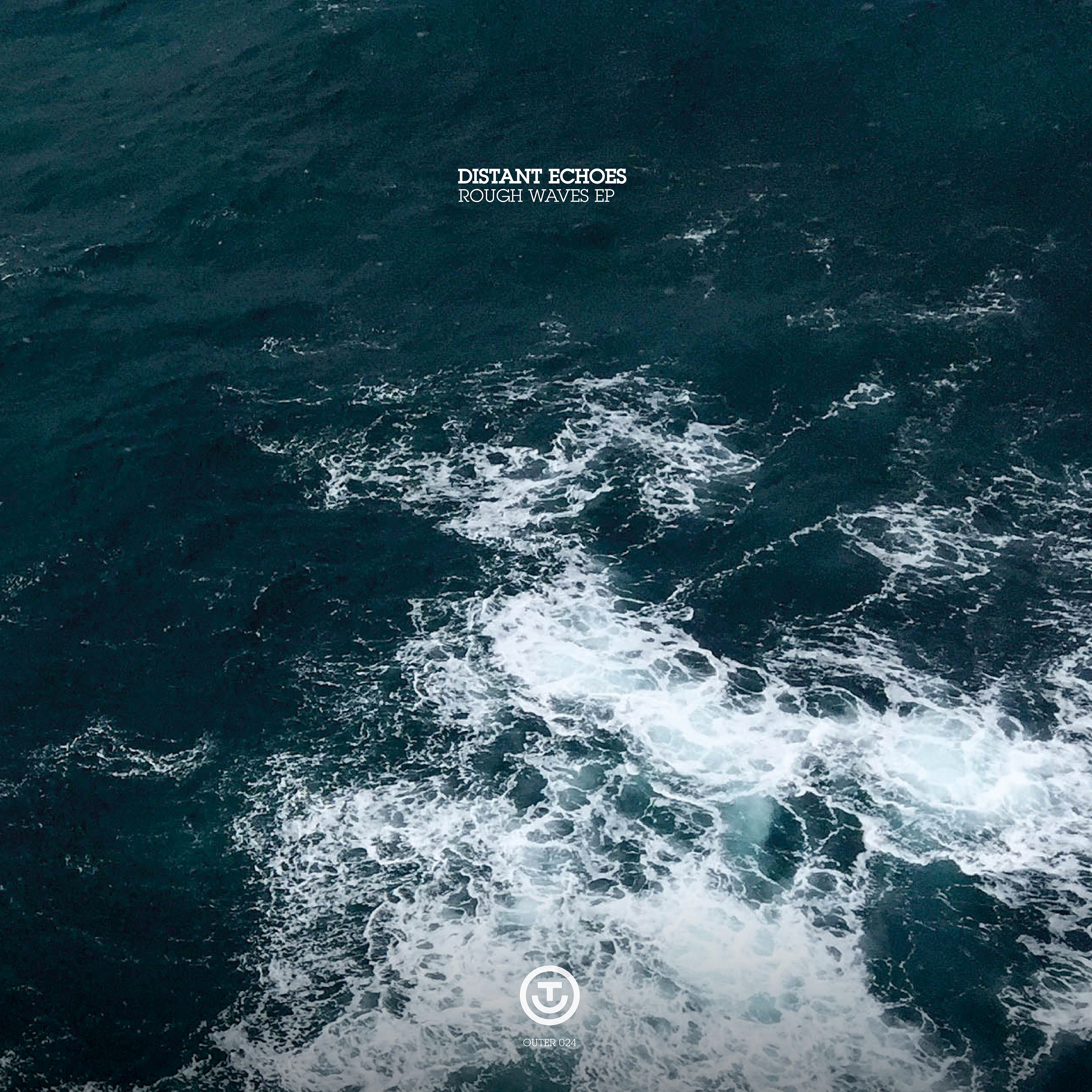
Italian techno producer Distant Echoes will present his first EP of the new year, Rough Waves, a four-track pack out on the Berlin-based, Southern-Italy born Out-ER label.
Distant Echoes has been building a name in the last few years since he debuted on the Dystopian label in 2014 and toured all around the world, yet, he’s been producing and playing electronic/house/techno music for almost two decades. As Out-ER co-founder, he previously released music before the beginning of his bond with Dystopian. In the last years, while Distant Echoes has mostly focused on releasing on Dystopian, Out-ER has indeed expanded its range of collaborations worldwide, by putting out music from Juan Atkins, Orlando Voorn, Terrence Dixon and more.
Distant Echoes now readies the first instalment on his own label with his newest moniker, showcasing his typical sound: deep, intense grooves, and gloomy soundscapes crafted with exceptional productional accuracy. “Rough Waves” is to be released on vinyl and digital at the end of February.
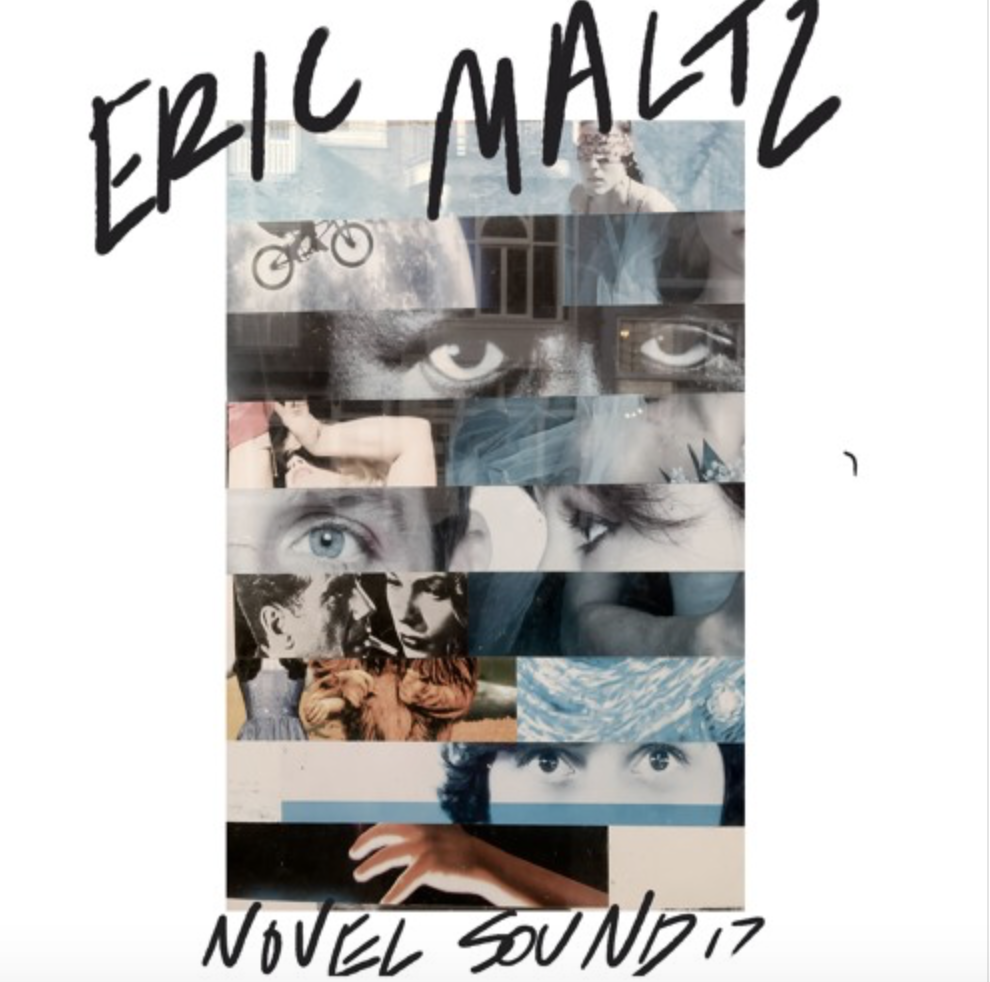
Levon Vincent‘s Novel Sound label has released two new Eric Maltz videos, both questioning sex and identity.
At the end of last year, Eric Maltz made his debut on Novel Sound, marking the first time an artist other than Vincent got to release on the label. The pair are longtime friends who have been working together at Halycon Records‘ original Brooklyn location and helping each other out when times as musicians got rough.
Now, Maltz produced two videos for the tracks “Symphony At Dawn” and “Time” that tackle the manipulation of individuals by society, tricking women and men into believing self-damaging stereotypes that are forced upon them. Questioning sex and identity, the videos are meant “to stretch minds and tear down walls in our heads that have been existing for way too long.”
You can stream the video for “Symphony At Dawn” via the player above, with the video for “Time” streaming in full below.
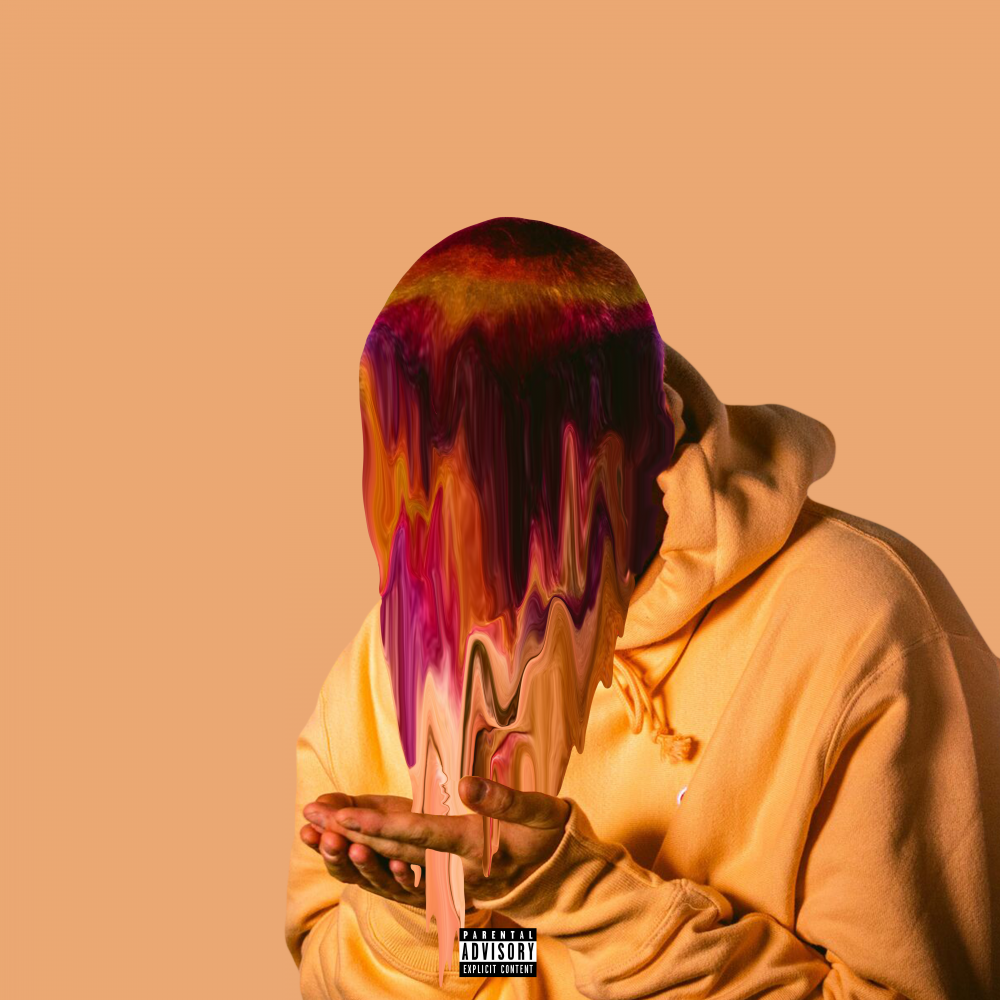
The album, Slush, sits within the LA beat scene Day has recently made his home, with 10 tracks that provide a surrealist view into his life and, more precisely, the home in Portland he left behind for LA. Day first connected with the LA beat community around a year and a half ago after submitting his music for a Low End Theory Beat Invitational; needless to say, his music resonated with the crew, most notably DJ Nobody, who invited Day to play the club night in May 2016. The album was then produced in the time since, with its tracks gliding between delicate beats and psychedelic lullabies.
In support of the release, which drops on digital and vinyl on February 23, Alpha Pup has offered up shimmering album track “Melt” as today’s XLR8R download, available via WeTransfer below.
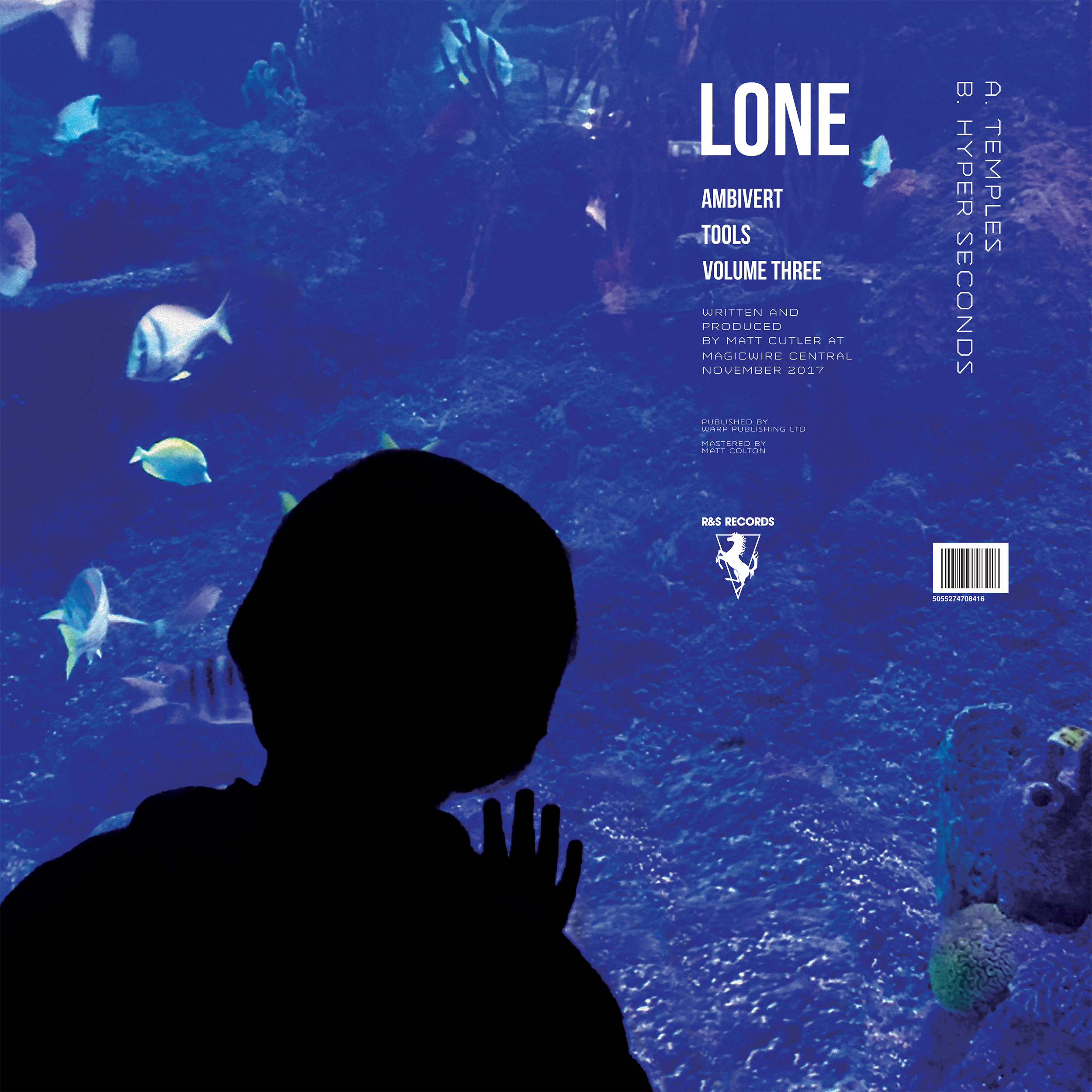
Matt Cutler (a.k.a Lone) has shared a new track from Ambivert Tools Vol. Three, the third EP and last instalment in his ongoing series of hypnotic 4/4 excursions on R&S.
2017 saw the first two strong instalments of Lone’s Ambivert Tools series—breezy atmospheric house, stacked with ‘floor-ready tracks, inspired by his Magic Wire imprint. It also saw him present an inspired instalment for the venerable DJ Kicks series. “Hyper Seconds” once again displays Cutler’s ability to channel the grooves of classic US house with a deep rhythm track and glistening gated arpeggios contrast perfectly for a rugged peak time bliss out.
Tracklisting
A. Temples B. Hyper Seconds
Ambivert Tools Vol. Three will land on February 23, with “Hyper Seconds” streaming in full below.
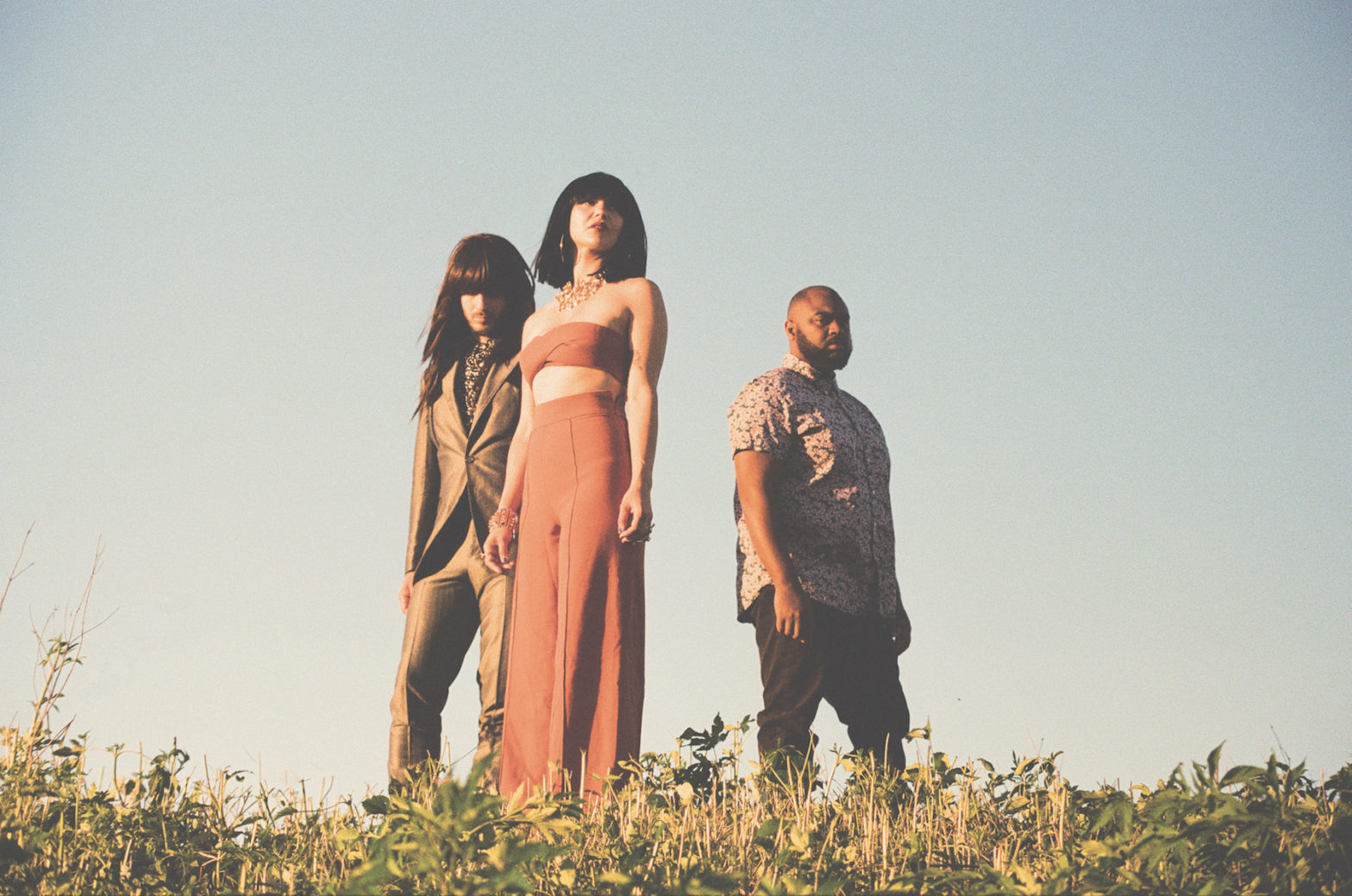
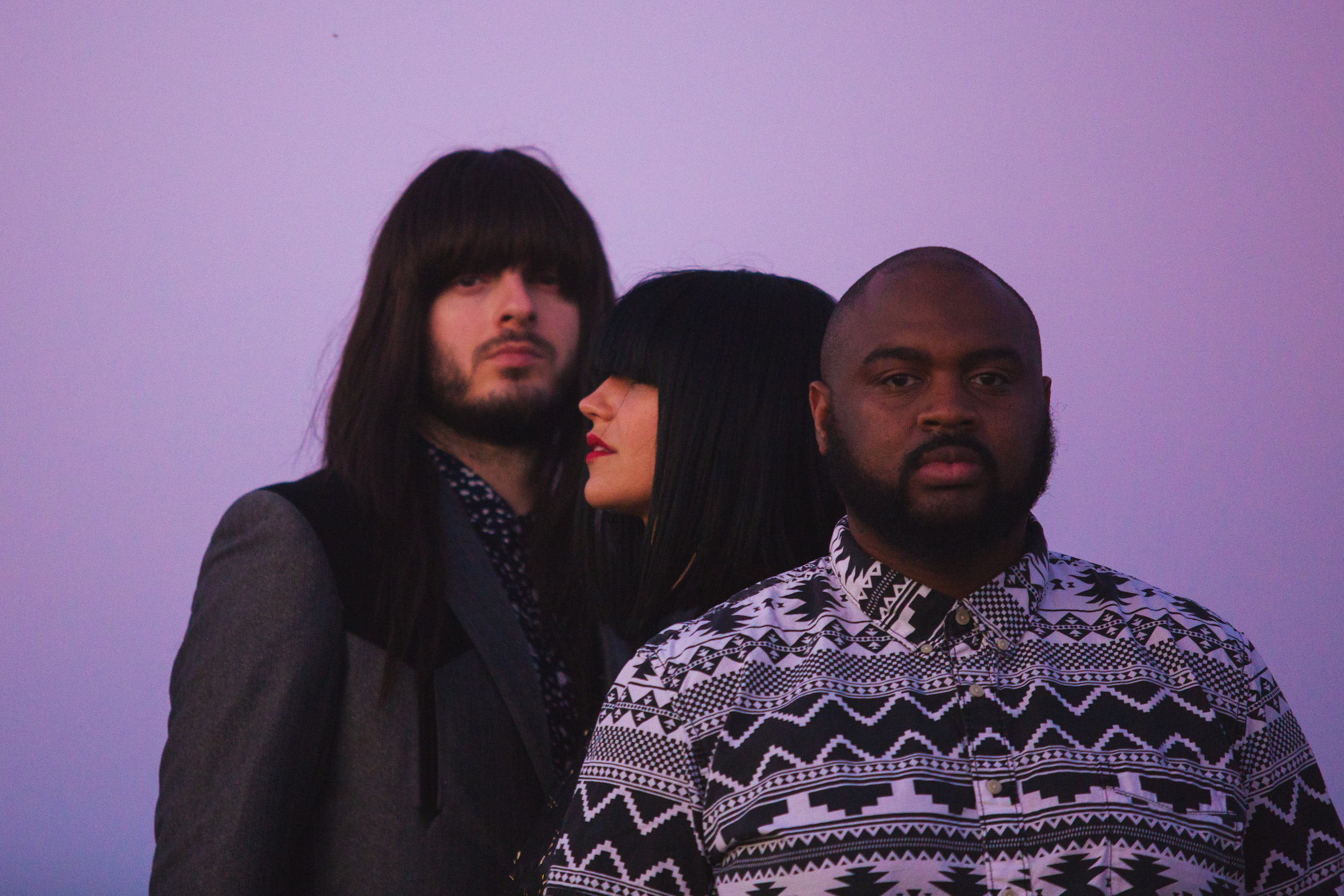
Chances are many of you may already have heard of Khruangbin. The predominately instrumental Texan-born trio, formed of Laura Lee, Mark Speer, and Donald “DJ” Johnson, have made quite a name for themselves over recent years, acknowledged for their unmistakable Thai-influenced, bass-heavy, psychedelic outpourings. It’s impossible not to like them.
The adventures started around eight years ago. Laura Lee, a Math teacher turned bass player, began experimenting with the instrument after meeting Mark, who has been a guitarist by trade since the mid-’90s. “He showed me the music I should listen to in order to play bass,” Lee explains. “I feel that Khruangbin is still me learning how to play!” Recognising a natural aptitude, and also helping a friend out, Mark invited Lee on tour with his band, who happened to be supporting Bonobo on a series of North America gigs, thus sparking Lee’s desire to pursue a career as a bass player. The first step was to start a band, so they set out to find a drummer, who turned out to be Donald “DJ” Johnson, a friend of Mark’s from a local Church band. Khruangbin was born.
Together they gathered in a local barn in Burton, Texas, and began jamming away, with little direction or sonic intention. A self-titled and self-released 7″ landed in 2010, aimed to help them find gigs, followed soon by เครื่องบิน, before 2014’s A Calf Born In Winter, the title track of which was included in Bonobo’s 2013 Late Night Tales. It was a breakthrough moment—a platform upon which they’ve gone on to release several EPs and two albums, the latest of which arrived only last month and takes inspiration not just from South East Asia but similarly under-discovered funk and soul of the Mediterranean and the Middle East, particularly Iran.
Set to embark on a world tour, beginning with the UK, and still riding the wave of another sumptuous album, Khruangbin feels like a name on everyone’s lips right now. To learn more about where they’ve come from and where they’re going, XLR8R arranged to speak with the trio, in what is their most detailed interview to date.
So there are three of you in the band. What are your respective backgrounds?
LL: I didn’t start playing bass until just before we started Khruangbin. I always tell people that it’s never too late. I was a Math teacher for a long time, and I have a nerdy affinity for numbers and patterns, so perhaps that’s why it suits me. So for me, Khruangbin is the vehicle for me learning how to play.
MS: I’ve been playing guitar and music in a more general sense ever since I was 12 years old. I took piano lessons as a kid, and then knew I wanted to be in a band. Initially, I wanted to play drums, which was my earliest love, and then it’s all grown from there. I’ve been working as a guitarist since the mid-’90s, mostly in a bunch of wide-ranging bands, for which there is a big scene in Houston. It’s hard to bust out of this region, artistically speaking. As strong as the scene is, it can also be limiting.
DJ: I started playing drums when I was three years old. My Mom would have me play along to Barry White records on my tiny drum kit. My drumsticks were the little cardboard things that come off the hangers because they were quieter. Then, I started playing at Church when I was about 10 and concert percussion in an all-state band. Yeah, that’s pretty much where I started.
What was it that brought you together? Did you all share a similar love for similar music?
LL: Mark and DJ played at a gospel Church in Houston for a decade together, and they’d hang out post-rehearsals for burgers at a local pub. After I met Mark years later, I crashed one of their post-rehearsal hangs and never stopped. We’d play darts and usually talk about music, so we formed a friendship based on a similar love of music and being together.
“Since nobody knew who we were, we showed up to the club and nobody recognised us. That was the first time anybody had seen Khruangbin.”
Do all of you originate from Houston, Texas?
MS: That’s correct, yes. The band was started in Burton, Texas; we never played any Khruangbin music outside of the barn in Burton, until our very first show. Since nobody knew who we were, we showed up to the club and nobody recognised us. That was the first time anybody had seen Khruangbin.
When was the band’s first ever show? What was it like?
DJ: Fitzgerald’s, in 2011. It was extremely hot!
LL: It was for Robert Ellis’ record release, opening up for him. Local crowd. Pretty sure everyone was like, “Who the hell are these guys?”
Laura, you said you only started bass just before Khruangbin. Did you learn bass specifically for the project?
LL: No. Mark and I became best friends, and I started playing his bass every time we hung out. Mark loves encouraging people to play music, saw my interest, and he led me down a path to be the player I’ve become. He’d give me records to learn bass to. He actually bought me the bass I still currently play as a graduation present. Shortly after, I went through a fit of insomnia, and I am not the sort of person to sit back and do nothing—so I used my time to learn how to play. Mark ended up landing a tour gig with Yppah, opening up for Bonobo on a North American tour. They needed a bass player and Mark thought I could do it. I was teaching Math at the time, and I came home from school and would practice every single day. I got the gig, quit my job, and went on tour. At the end of the tour, I said to Mark: “This is what I want to do every day. Can we start a band?”
So did Khruangbin start straight after this moment?
LL: Immediately.
And how did DJ become involved?
MS: I met DJ at Church. He plays the organ in a Church band and I was there playing the guitar, in a band. That’s how we met. We were hanging out pretty much every Tuesday after rehearsals and just talking about music and life. And soon after I met Laura, she started coming to post-rehearsal dinner. We all became friends: we just started hanging out and we decided to start a band.
And then came Khruangbin. Your first release came in 2010, but were you practising a long time before this?
LL: Not really. We started the band in late 2010 and I had it in my head that we needed to have music on wax before we played our first show. So we did. That 7″ is super early days for Khruangbin.
Where does the name Khruangbin originate from? What’s the story behind it?
LL: It means “Airplane” in Thai. Mark and I were in a total Thai obsession at the time. I’d been cooking my way through a Thai cookbook. Mark would play Thai cassettes while I cooked, and I got a bootleg copy of Rosetta Stone: Thai. Khruangbin was one of the first words you learn in the program. It was fun to say, so I started saying it all the time… and when we finally needed a word to name the band, there it was.
What do you remember of the first jam session? What was it like?
MS: I remember that I had a little Arabic Casio keyboard set up through a delay pedal. I was playing the drums and Laura Lee was playing bass. It was the middle of the summer in Texas. It was super hot. I pressed record and got the entire day of us playing.
Sonically speaking, were you trying to replicate any sound or style, or was it just a free for all?
LL: Mark was just playing the drums as he wanted, which he really enjoyed because he rarely gets to play them. I was still such a new player. So, I was just fiddling around playing shapes and noises that felt and sounded good to me.
How clear was the vision the band and its sound aesthetic?
LL: There was no plan. Initially, we just set out playing around in a barn.
MS: I actually wanted to be the drummer, because I never got to play drums in a band. We recorded all the stuff and I chopped it all up and played the guitar over it. I was playing in so many groups at the time that used a ton of pedals, and for this one, I didn’t want to use any pedals; I wanted to do it raw and that be it. I wanted to just see what happens.
So how did you go back to the guitar?
MS: It happened quickly. I have too much of a signature to write those parts and have someone else play them.
What did these early experiments sound like? How close were they to what you’re doing today?
MS: Yes. We actually released some of the first stuff we ever made, on a self-titled 7”. It was some the first music we ever made. The first song on the 7″ is also on The Universe Smiles Upon You, our first album and it’s called “August Twelve.” The version on the 7” is just a really early version of that song. It still sounds quite similar but the late one is a lot more refined. I think we’re a lot tighter now.
LL: I think that 7″ sounds really naive but in a really lovely way.
You first released in 2010. Why did you decide to self-release rather than push to labels?
LL: I don’t think we really thought about it. We’d never even played a show. And we’re from Houston. It’s not a city known for having music labels. I just wanted to get our music onto a piece of wax. I didn’t think about anything else.
Were you confident at this stage?
LL: I was confident that I liked the music. That’s all I really know. I was terrified the first show we played, I still am. But I always knew I loved what we were making.
How did you get the track on Bonobo’s Late Night Tales?
LL: It was a big moment. We’d been on tour together and we followed each other on Instagram. I moved to London and I took a picture of where my new place was in London, and he messaged me and asked me what I was doing there. We had tea and I gave him a CD of some of our new material, and he put it in his Late Night Tales. Amazing.
That led to A Calf Born In Winter, your first release on an external label.
LL: It was really the first contact the world had had with Khruangbin. It’s funny because I didn’t really know what Late Night Tales was before it happened. I told Mark when Bonobo messaged me, and he told me that it was amazing.
MS: I thought we were very lucky. I really didn’t expect anything to come of our early work. I really wanted to be involved in a release like that.
And talk to me about the period after this appearance on Bonobo’s Late Night Tales. Did things progress from there very naturally? What happened next?
LL: Late Night Tales approached us about signing to them, we did, and released a single and a couple of EPs building up to the release of The Universe Smiles Upon You.
Were you surprised at the success of the debut LP?
MS: Yes.
The sound aesthetic of Khruangbin is interesting. Do you all share an interest in psych-rock and Thai music?
LL: I think the music that brought us all together was actually probably R&B-based. We all grew up with different music, but we definitely have a pool of music that speaks to all of us. And talking about it between us makes that like stronger. I think we all love of music that takes you somewhere. Like gospel. It’s not psychedelic according to genre but it does take you somewhere—like psych rock does. Transportive music.
It’s funny that you put three in a room and this is the music that you make. It’s hardly a common style.
MS: It is strange. I think it’s just a sum of its parts. When I was 20 years old, I was into dance music but I wanted to know what the DJs and the electronic musicians in my city were doing. I spent a lot of time hanging out with them, learning how to dig for music. At the same time, I’m playing in some of these bands and some of the innovators were making their own tracks, with DJ equipment; they were pulling a lot from prog-rock at the time. We didn’t call it psych rock at the time. These were the most psychedelic jazz-funk albums.
“It helped, in a way, that Mark was playing drums, an instrument that he wasn’t playing all the time; and I was learning how to play bass. We never set out to be anything. It was simpler than that: they’re gonna play drums and guitar; I am gonna play bass, and we’ll see what happens.”
LL: We really bonded over The Electric Prunes in our early hangout days. But in truth, there was no intention to produce this sound. Only after we had made it did we think about what we were making and realize that influences had affected it. I think as an artist, you have to be playful and not always try to sound like anything in particular. It helped, in a way, that Mark was playing drums, an instrument that he wasn’t playing all the time; and I was learning how to play bass. We never set out to be anything. It was simpler than that: they’re gonna play drums and guitar; I am gonna play bass, and we’ll see what happens.
How does it work with recording nowadays—especially when you were based in London, Laura?
LL: I was in London, and then I moved to LA in 2017—and so did Mark. It doesn’t matter where you are really; all recording is done at the barn. We’re always together when on tour or recording. The drums, the bass, and the guitar are all recorded at the same time, live in a room. The Universe Smiles Upon You was recorded when I was living in London, and I had a nine-five job. I had only a one-week gap and it was during that time that I flew back to Texas to record the album. I said to everyone that if the album didn’t really do much then OK, we made an album; if it doesn’t then I am all in. Fortunately, it worked out.
So you quit your job?
LL: Yeah. Not immediately, but I did. It’s the second time I’ve quit a job to go on tour. This time for the Father John Misty tour in Europe. I quit because we were going to be on tour for several weeks and I couldn’t take much time off. I was working for Wieden+Kennedy at the time. I told them that I was tempted to ask for unpaid leave for a sense of security, but that in truth, I’d hoped that I’d leave for tour and just keep touring. They were the kind of people I could be frank about that sort of thing with. And they said the best advice they could give me was to remove any sort of safety net and go for it…it’s turned out okay.
How long did the second album take to record?
MS: The actual recording process—the drums, bass, guitar, and vocals—took a week. But then we spent months, on and off, mixing and adding some further instrumentation. We had scraps floating around from other periods of studio time and on the road, and we do sometimes go back to these, but we didn’t have anything pieced together until that week of studio time. It’s quite manic.
How do you start making a track?
LL: We still have the same process as we’ve always had. We either take a drum loop or a break, which Mark gives me, and then I’ll make a bassline. Mark will chop it up and give me the bits that he really likes, and then he’ll create some kind of pattern and play guitar off it. We’ll use that as the framework for the song. We’ll show this to DJ who will then record his version of what Mark and I sketched. If it then seems to want vocals then we put whatever else on there.
MS: It’s a very precise process because we don’t have a lot of time.
It’s also a quicker process than I thought.
LL: It is. I think there’s something to be said for writing and just putting it out. I grew up listening to The Beatles, and they put out music constantly. You can spend too much time on music. And there’s something to be said for getting it out fresh.
Were your intentions for the second album different to the first one?
MS: We didn’t really want to do anything different. People like what we’re doing…so why don’t we just do more of that? We don’t need to reinvent the wheel. The box we’re in is pretty sweet so we didn’t need to do anything really different.
LL: I think there was pressure with both releases. With the first album, we had a lot of pressure to put vocals on all (or most) of the songs. Then when it came down to it, we rebelled against that pressure and added them only where we saw fit. I think the same thing happened here: we felt our own pressure to make an album different and better than the first, and then we went into this kind of zone where these external pressures stop mattering and you just do what comes out.
How do you find the touring part of being in a band? How does it compare to going to the studio?
LL: There is no comparison. DJ always quotes Erykah Badu saying something like “In the studio, you capture a moment. Live, you create one.” They’re both equally amazing.
Do you think carefully about where you’re going as a band?
LL: I think we take care to make sure that we’re all happy. That’s the important thing.