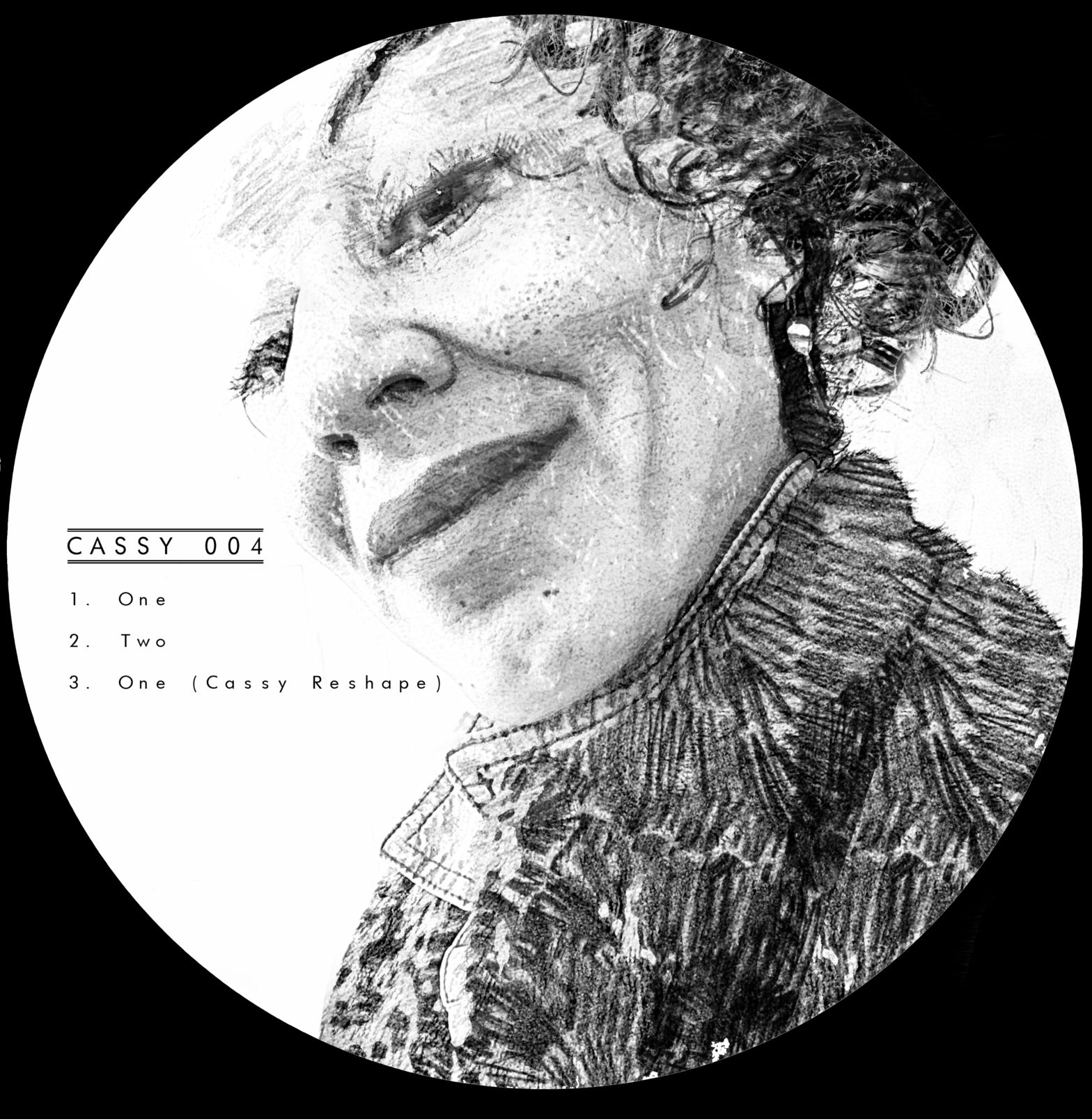
Cassy is set to release a new EP, titled Cassy 004.
Just over a year ago Cassy embarked on her largest and most personal project yet, her debut solo album Donna, released via AUS Music. Since then, she has put out a string of remixes on Powerplant, Turbo, Echoe, and Watergate, plus a track on Muna’s latest VA. Throughout this period, Cassy has also been in the studio working on new material, the first of which is Cassy 004’.
As the title infers, Cassy is reawakening her self-titled imprint she created in 2006, and has had three previous releases until now. With no plan or set schedule, the remit was simply to release her own records, when the time is right, and the quality is high. The music has always reflected the quirkier side to Cassy’s club tastes.
Leiik are a South London-based duo made up of Amy Spencer and Avi Barath, two artists who have been garnering hype in the electronic music world for their particular brand of mesmerizing electronics. The singles they have released so far pair melancholic chords and atmospheres with soaring vocals for a hypnotic blend of sonic noir.
Their latest single, “Realise,” will be released via squareglass on August 11, paired with a beat-driven rework by regular collaborator Junk Son. For his remix, Junk Son takes the floaty, subtle original and refits it with a rhythmic framework, with the vocal work of Spencer interspersed between searing synth lines and slicing percussion.
You can pick up Junk Son’s remix via WeTransfer below, with “Realise” dropping via squareglass later this month.
For their latest profile film, digital-media house Convicts spent time with DJ and producer Lauren Flax to chat about NYC, a booze and Facebook-free life, resisting the current administration, and the intricate technicality of growing up in Detroit’s DJ scene.
Lauren Flax is a Bushwick-based artist with a long list of solo releases and remixes under her belt for and alongside artists such as Sia, Kim Ann Foxman, Romy XX, and Tricky. Flax also heads up the trip-hop band CREEP with Lauren Dillard and their label offshoot CREEP INTL.
You can watch the film in full via the player above, with the full interview and article available here.
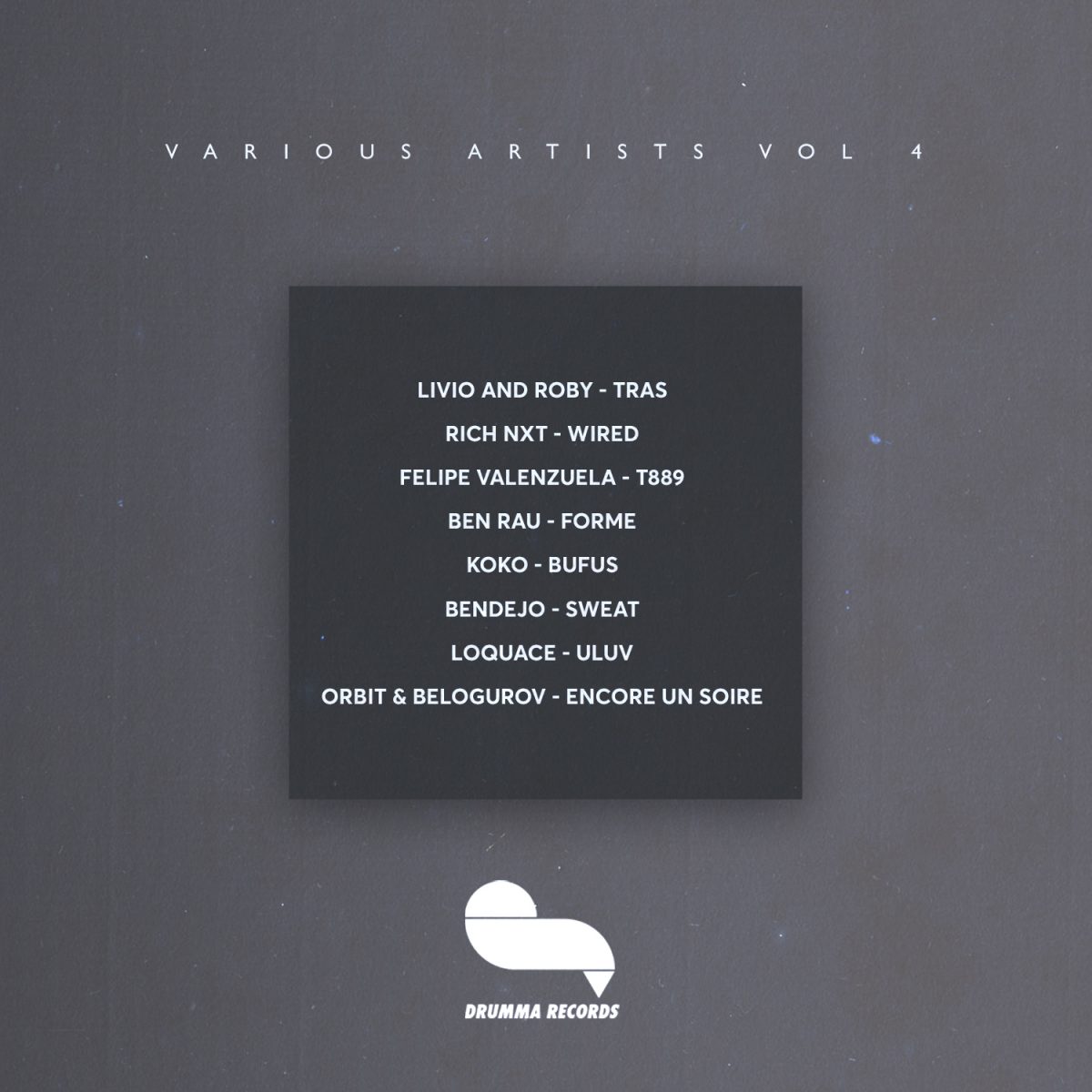
Later this month, Drumma Records will release their fourth various artist EP, Drumma Society Vol. 4.
The various artist compilation has become a yearly staple for Drumma, bringing a solid list of artists together to celebrate the sound of the label. This year, Drumma have enlisted Livio & Roby, Rich NXT, Loquace, Orbit & Belogurov, Bendejo, Koko, Ben Rau, and Felipe Valenzuela for a diverse set of cuts that range from warm-up grooves to trippy after-hours outings.
Drumma Society Vol. 4 will drop as a Beatport exclusive on the August 18, with a global release on September 1.
Reworks Festival is set to return for its 13th edition this year from September 13 to 17, turning Thessaloniki into a meeting point for music lovers from all over the world.
On the lineup this year are Paul Kalkbrenner, Berlin’s great talent who is set to return to the annual event after four years. Aleksi Perala, the Finish DJ, will also play and will be joined by the likes of Ata Kak, the mysterious phenomenon from Ghana known for his energetic shows. New entries for this year are Bicep, who, as part of their first live tour, will perform at Reworks just days after the release of their first album. These names will play alongside the likes of Dixon, Ben Klock, Recondite, Motor City Drum Ensemble, and Hauschka.
The current lineup is as follows, with more names set to be announced:
Paul Kalkbrenner Solomun Dixon Ben Klock Recondite Hauschka Motor City Drum Ensemble Adriatique Bicep Aleksi Perala Tijana T Pablo Valentino AND.ID Ata Kak G-Ha Trikk Ison Cayetano Hammer Tendts Flooder Senka Nino Santos & Lightem Bazel ArKI Yodashe Giganta Andreas Athineos
This year’s edition takes place from September 13 – 17 in Thessaloniki, Greece, with more information available here.
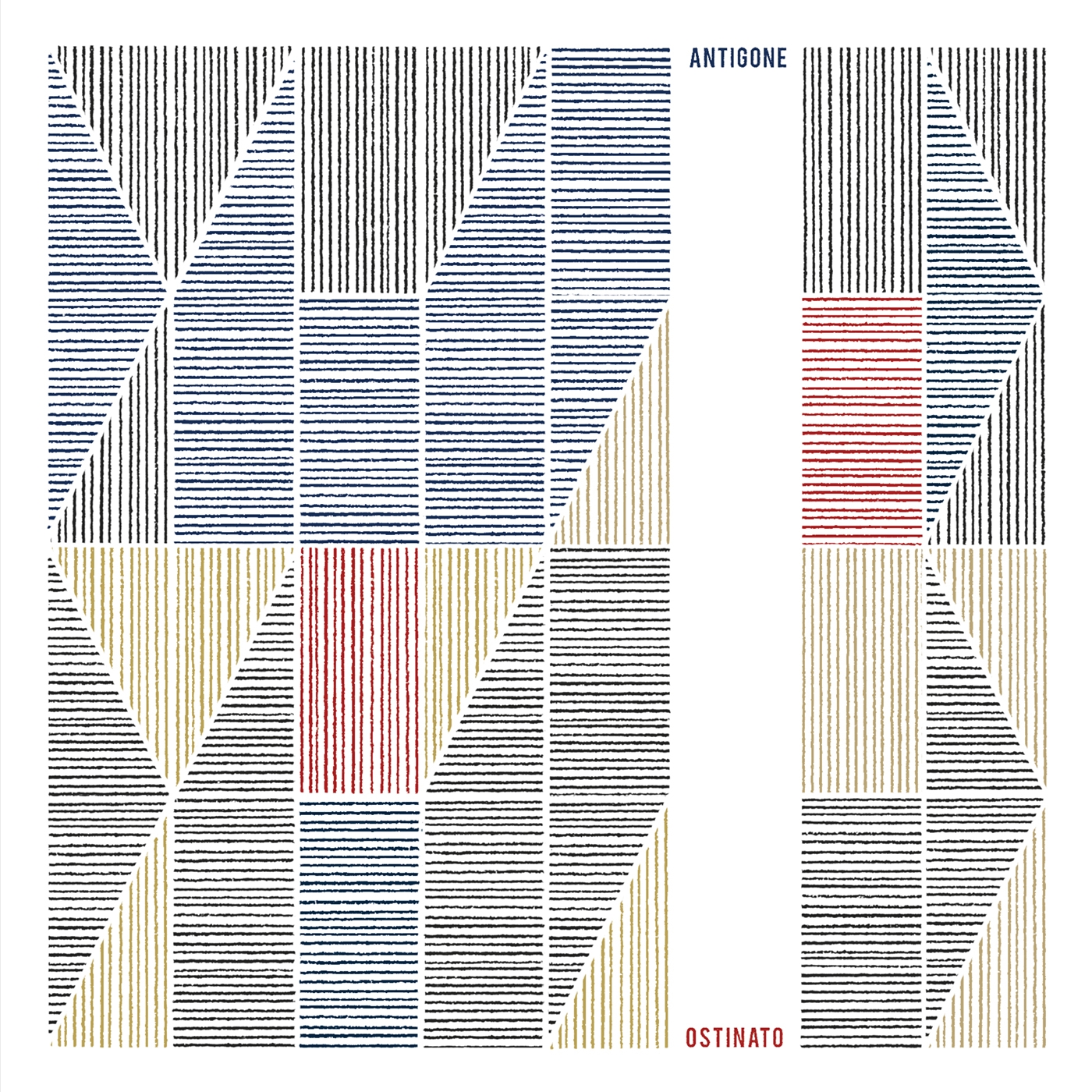
Antonin Jeanson (a.k.a Antigone) will release a new EP on Token, titled Ostinato.
Ostinato, a two-tracker, will be the French DJ-producer’s fourth EP on Kriz’ Gent-based label, following on from his 2015 breakout Cantor Dust and last year’s Time Enough At Last and Saudade. It will be his first record of 2017, drawing its name from the musical term for a repeating motif or phrase.
And the record adheres to its title on both sides. “The tracks play with layering techniques, gradually building a spectrum of sound around their respective persistent motifs,” the label explains. “Antigone shifts these insistent base elements, allowing them the foreground before masking within a blend of carefully processed and organic-sounding details.”
Andrei Rusu and Florentin Tudor’s Khidja project (pronounced “Khadeeja”) started in the 10th grade, in the backyard of their German High School. They found the name “Khidja” by stumbling upon an old record by the legendary band Mandrill, which included a track with that same name. If you listen to Mandrill’s “Khidja,” you will find yourself embarking on an adventure where genres intertwine, Latin meets prog and funk meets jazz. This fusion of styles is “what Khidja is all about,” they say, and over time their sound is continuously changing and transforming—jumping from era to era and genre to genre.
While collecting and absorbing music from all over the world for many years they eventually found interest in the roots of their home country. Romania was under Turkish occupation around 1500AD and the Ottoman Empire left its mark with a lot of its musical influences becoming deeply rooted in the local culture. You’ll hear it in traditional “lautareasca” music and in the omnipresent “gypsy music,” too. Khidja’s sound was also inspired by this, the local Bucharest scene and the various Turkish disco influences they heard a few years back when Turkish DJs like Baris K started promoting this sound. It all went into a mix of middle-eastern electronic music with a nod towards organic sounds and synthesizers combined with cult instruments like setar, ney or saz, and grungy guitars that are reminiscent of the Krautrock era.
Exciting things are from the duo today. Their music has been released via Hivern Discs, Malka Tuti, and [Emotional] Especial, while they’re DJing with increasing frequency. “Imagine all the elements that described their sound in the past, enforced by more electronics and more drums,” they say of the sets.”Part of the production stays true to the middle-eastern vibe they focused on in the past and part of it explores new areas closer to house, techno, new wave and industrial.” In more private, intimate parties their focus turns to showing off rare gems—diggers’ delights, spreading across all genres of music, from soundtracks to exotica and industrial and rare disco.
And that brings us to their set today.
When and where was the mix recorded?
The mix was done in Ableton at the studio, we didn’t have where to go to record it on players.
Could you tell us about the idea behind it?
We tried to give you a bit of everything that can happen during a night out with Khidja, mostly about moving around and letting that freak out.
How did you choose the records in it?
It was some of our favorite stuff that we played at parties during the last month or so, some digging discoveries, some unreleased tracks, and some classics.
How does the mix compare to one of your club mixes?
It’s much more dynamic live; we try to look at the crowd as much as we can, at home it’s tougher to not get carried away and fall into a hole.
What have you got planned for 2017?
Earlier in 2017, our EP Impossible Holliday was released on John Talabot’s label Hivern. In between this EP and our next single Microb that just came out on Malka Tuti, we kept very busy with remixing. One that we are very proud of is already out on Lurid Music, and another one that we are also very proud of is coming out in August on Dark Entries. As for the rest of 2017, we plan on working with some amazing musicians for our next EPs on Malka Tuti and another cool label that’s been around since the ’80s, while finishing different remixes.
Khidja performed alongside Blawan, Hunee, Mike Servito at this year’s Dancity Festival, a tremendous event in Foligno, a two-hour train ride outside of Rome into the hills of Umbria. More information can be found here. They are also soon set to perform at this year’s Atlas Electronic Music & Arts Festival in Morocco, with more information available here.
September 4 will see the launch of The O MATO Experience in the depths of the Brazilian rainforest.
The festival is said to provide 10 days of “musical diversity, adventurous tours, and activities, and interesting workshops about local traditions” together with 150 like minded people.
The venue is Brazil’s Cheiro do Mato, situated 200 km north east from Manaus, the capital of the Brazilian Amazon. It is surrounded by dense jungle, white beachy riverbanks, and the Anavilhanas National Park, a labyrinth of hundreds of floating islands and channels.
The current lineup for this year’s debut edition is as follows, with more set to be announced soon:
SIT, short for Sideways Invisibility Theory, is the collaborative project of the Bucharest-based pair under which they produce, DJ, and play or play live. This particular recording is a DJ mix recorded at Sunwaves Festival and is exactly what you’d expect from the pair: sharp production after sharp production, all blended together to create a magical and hypnotizing journey.
For more information on Cristi Cons, read our feature here.
Joey Negro is the most well-known pseudonym of Dave Lee—a DJ, producer, and one of dance music’s most prolific remixers. Under a plethora of other monikers including Akabu, Doug Willis, The Sunburst Band, Sessomatto, and Z Factor, Lee was one of the first artists to incorporate disco samples in house music when he began his production career in 1988. Today, he remains widely regarded as one of the most credible and in-demand artists on the global scene.
Intrinsically linked with the birth of disco house in the UK, Dave Lee set up the dance music division of Rough Trade, Demix, and through this experience and with other leading house labels led to establishing his own imprint Republic Records in 1988.
Joey Negro, as an entity, was born in 1990 with the release of Do It Believe It on US cult house label Nu Groove. The track was a breakthrough success and was followed by Do What You Feel, which was released on his second label and successor to Republic, Z Records. “Do What You Feel” eventually crossed from a club hit to a top 40 pop hit. Another Top 40 track followed with “Love Fantasy” and an album Universe of Love soon after that. But this was just the start: throughout the ’90s and millennia, a continual stream of Joey Negro remixes and releases then surfaced, with artists such as Diana Ross, Kelly Rowland, and Empire of the Sun getting the JN touch. It’s difficult to think of too many more prolific remixers active today.
Having recently dropped Produced With Love, his first LP in over 20 years, Lee offered to delve into this wealth of experience to advise producers on both the technical and non-technical aspects of remix commissions.
Motivation
The first question you have to ask yourself is why are you doing the remix: because you love the song, because it’s good for profile, because you like the original version but feel it’s missing something you can add? Don’t just say yes out of reflex: doing a remix can be a lot of work, so make sure you really want to do it and that you think you can turn out something worthwhile that everyone will be happy with.
“In my experience, labels just want a big mix that will sell and get played by loads of DJs, and heighten the profile of the release or artist.”
Clarity
Make sure you and whoever you’re doing it for are on the same page as to what they are expecting from you. Do they expect you to use the whole song, or are they ok with a little snippet? I always ask them: what’s the last thing I did that you liked? This will tell you a lot, as they might not even be able to name anything. I still get people asking for something like “Make A Move On Me.” You don’t want to spend ages on something that was never going to be what they wanted. If you’re not on in sync direction-wise, it’s best you know that and do something more like the label wants if you think that’s acceptable—or you can just not bother at all. In my experience, labels just want a big mix that will sell and get played by loads of DJs, and heighten the profile of the release or artist.
Timeframe
I would personally never take on a mix that needs to be delivered next week. I like to have enough time to do it properly. If things aren’t sounding right then you need time to leave and come back with a clearer approach. I also don’t want to label breathing down my neck if I’m late.
Parts
Before you agree to do the mix, clarify what parts the label has. Sometimes they have literally nothing other than a copy of the record; on other occasions they might have the vocals but none of the musical stuff, which means you’ll have to recreate all that if you want to use it, which can be a big job. So best you go into it with your eyes open: sometimes they won’t mention such things until later once you’ve committed to doing it.
Clarify the Deal
Make sure you clarify the deal upfront. There’s nothing wrong with asking how much you’ll be paid and when. Whatever you agree I normally ask for 50% of the fee upfront, which is the industry standard and usually possible. So do your best to get it without being too pushy. Who knows what might happen with the act, the label, the guy who’s commissioning the mix etc? If that’s the case it’s a little conciliation to have at least had some money for the work you put in.
Terms
When you’re discussing terms, ask that you can use your mix free of charge once on a compilation of your own material six months or more after the release. Not everyone will agree but many indies are cool about this; realistically it’s not likely they’ll be missing out on much money and if they aren’t paying you much then it’s a little perk they can throw in.
Reference
It’s always a good idea to refer to the original. If I’m doing a disco type remix I keep the original on a spare track in the session and compare my mix to it at various points. You might find they had a nicer reverb on the vocals or mixed something much quieter/louder/wetter. You don’t want to copy that version, but it’s good to make sure you’ve used all the best parts and there isn’t anything obviously better about it that’s missing from your one.
Vocals
Make sure you’ve got the vocals properly in time. I’ve had remixes back which have got the vocals in completely different places within the bar/beat. As the original producer/writer, it just sounds wrong and is an instant negative. Again, refer to the original for this sort of thing, unless your remix is mind blowing and the original a non-starter the label will probably make you change it anyway. If the backing vocals have lots of harmonies try and get them separated so you can choose which of the harmonies to use or not. Harmonies can really restrict which chords you can use and dictate the mood of the song. It’s better to give yourself as many options as possible.
“I never let the label hear a rough mix as either they are disappointed, or they love it and play it too much so that the final versions sounds wrong to them.”
Don’t Rush
Don’t do the remix is one or two sessions and send it to the label. Live with it, play it out a few times and on different systems like your car, check you’ve got it about right sonically and arrangement wise before you let them hear it. I never let the label hear a rough mix as either they are disappointed, or they love it and play it too much so that the final versions sounds wrong to them. It’s also easy to think things you’re involved with are better than they are, so be critical. Don’t just listen loud on big speakers. Listen quietly and give it a rest for a week or two, so you can go back to it with fresh ears
Sampling
If the main musical body of the song is a sample I would normally replay the bass on a subby bass sound. That way you have much more control of the bottom end. Otherwise, you’re EQ-ing bass into the sample which can often sound messy. Though if you do go that route, I’d put it on a separate track in mono and low pass it and have it underneath the main sample. I’d also copy the sample onto a few extra tracks, maybe pick out a guitar lick and treat it differently with filter, phaser etc. Try putting the sample in a sampler and playing it down an octave to see if anything interesting happens. Also cutting the sample up into beats, playing it back in differently, reversing it, changing the start point. Not all of it will work but you might find something that sounds good. Stutter Edit is a plug-in that works well for stuff like this and sometimes on vocals too. Good for inspiration.
See It Through
If you get stuck, don’t call the label and say that you want to bail on doing the mix. It’s not the sort of honesty they will appreciate and to a degree, it’s a bit unprofessional leaving them in the lurch at the last minute having to find another person to do something you might have agreed to a while ago. If you keep at it, you will break through the barrier and finish the mix. Best thing is to work on something else and come back to it. Sometimes starting again is a good idea.
Commit
If you are taking on remix work you’ve got to give it one hundred per cent. That means using all your best ideas and sounds, that’s the deal. If you want to save your best ideas for you own music then maybe don’t do any remixes. Remixes can really help someone get noticed. There have been a few cases over the years where the remix was a completely new track and vastly superior to the original and it made a non-starter a massive club or even pop hit. In those cases, the remixer should really have got a royalty and some of the publishing. However, that doesn’t happen very often. If it does become enormous they’ll probably need your help for radio edits and stuff like that, at which point you can renegotiate. Even if you only ever get your fee, it will have helped your profile no end.