The LP is the duo’s first album since 2012’s Tracer—though the name indicates that is is more of a direct follow-up to their 2010 record, 7AM. According to the label, 8AM is their “most introspective and abstracted work so far.”
Tracklisting
01. Glare 02. Crash Soft 03. Telepaths 04. We Out 05. It Was Already Light Out 06. Where I Went 07. All Of The Time 08. Star-rise 09. Don’t 10. Seeds feat. Khalif Jones 11. En Route 12. Wet Eyes And Exhilaration
8AM is scheduled for March 24 release via Planet Mu, with “Star Rise” streamable in full below.
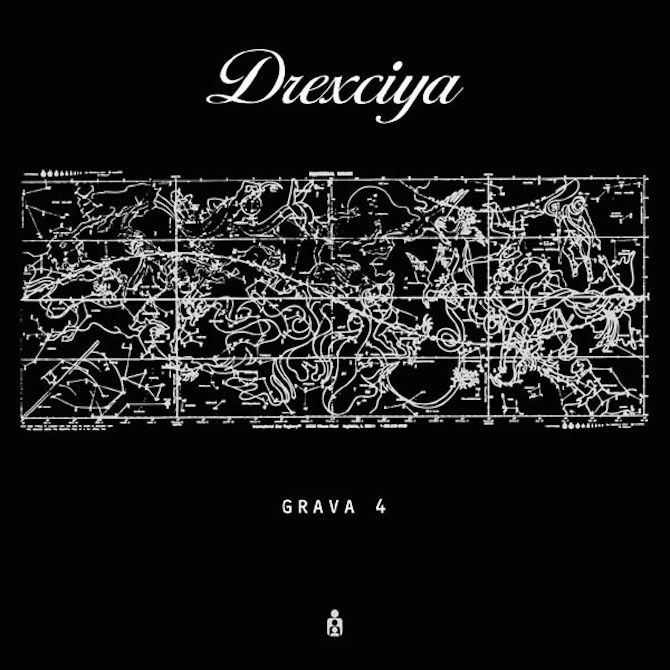
The album was James Stinson and Gerald Donald’s final full-length together as Drexciya. Originally released in 2002 via Clone, Grava 4 was focussed on the theme of celestial travel, coming complete with a sleeve that mapped out distant planets. It arrived after a flurry of LPs under various guises (including The Other People Place and Transllusion), known as the Storm series.
This year, the electro album will be repressed by the Dutch imprint, as the next part of its Aqualung series.
Grava 4 will be reissued later this year. Pre-order it at the Clone store.
Tracklisting:
01. Cascading Celestial Giants 02. Powers Of The Deep 03. Drexciyen Starchamber 04. Gravity Waves 05. Drexciyen R.E.S.T. Principle 06. Hightech Nomads 07. 700 Million Lightyears From Earth 08. Astronomical Guidepost
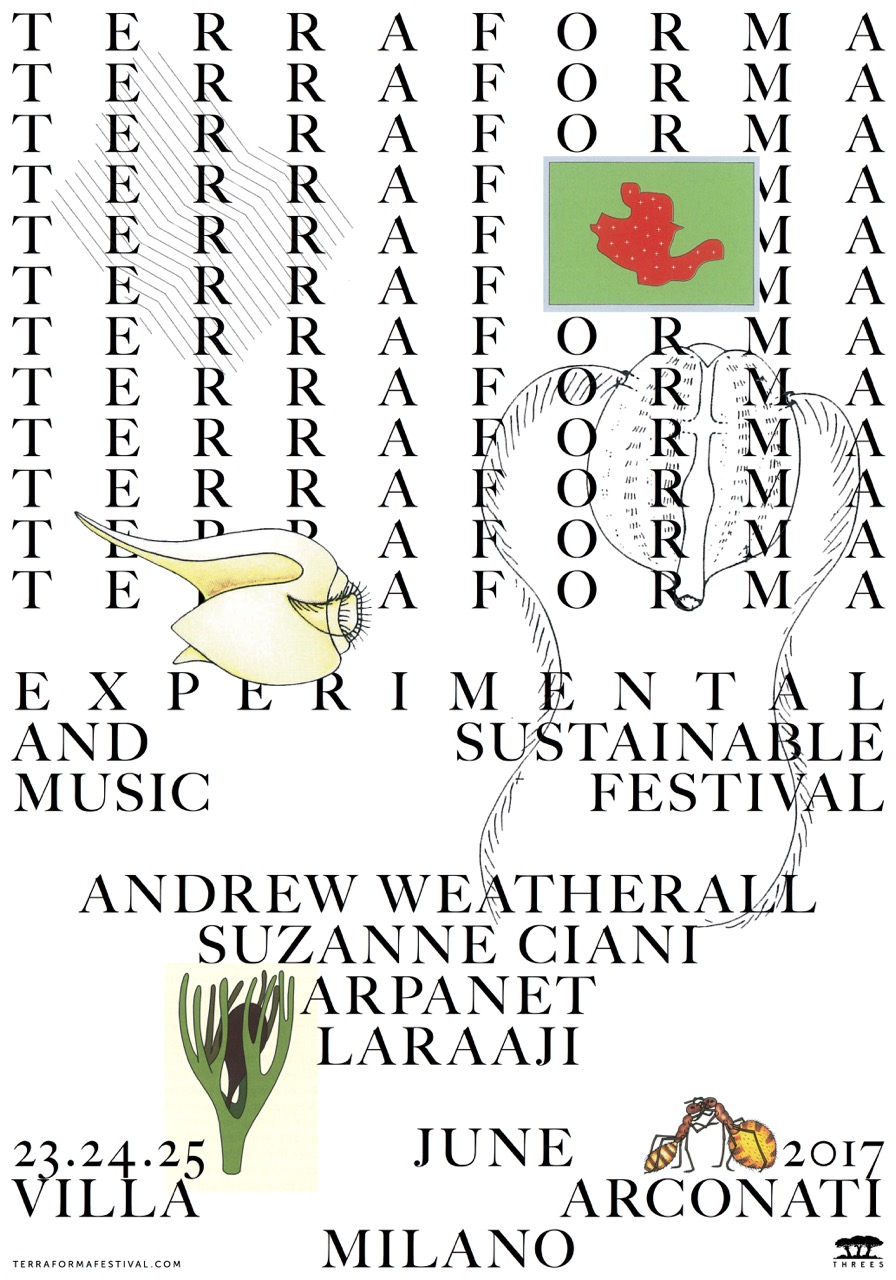
Terraforma Festival, the international music festival dedicated to artistic experimentation and environmental sustainability, has announced the first round of artists for its fourth edition this upcoming 23—24—25 of June 2017 in the woodlands of Villa Arconati, Milan.
Terraforma has remained one of the few festivals that distinguishes itself for it’s intimate and authentic atmosphere, taking pride in its quality acts and concept as well as the outstanding location in the gardens of this beautiful Italian Villa from the 17th century.
In the last three years, the festival has hosted artists including Charlemagne Palestine, Biosphere, Primitive Art, Miles Whittaker & Andy Stott, Mark Fell, Senyawa, Atom TM and Tobias, Flanger, Burnt Friedman, Charles Cohen, Robert Lippok, Gea Brown, Bee Mask. In addition to this, Donato Dozzy has been performing every year as a different project, and same for Rabih Beaini (a.k.a Morphosis)—together with Adrian Sherwood, Beatrice Dillon, Lee Gamble, Helena Hauff, Paquita Gordon, Mark Ernests, Marco Shuttle, and Convextion.
The first four acts have now been confirmed for 2017, namely Andrew Weatherall; the pianist and composer Suzanne Ciani; Arpanet, a project of the Detroitian Gerald Donald (Drexciya, Dopplereffekt); and the master of ambient music, Laaraji. There will also be an artist residency by Francesco Cavaliere.
First round tickets of €70 have now sold out; early bird tickets can be purchased here for €80 that includes three-day festival access and camping.
In advance of the June event, a video recap of last year’s edition is streamable below.
XLR8R Couldn't find the embed function for type: "vimeo" and source: "<iframe src="https://player.vimeo.com/video/198815120" width="640" height="360" frameborder="0" allowfullscreen="allowfullscreen"></iframe>".
This weekend marks four years down for Output, the popular club in Brooklyn which is already widely considered the best legal venue for electronic music in all of New York City. To celebrate, Output organizers have again proved their booking strengths by locking in a stellar cast of heavyweight artists to play their booming sound system throughout the weekend. On Friday night, the main room will feature a takeover from Tuskeegee founder Seth Troxler and label mainstay Phil Moffa, while Frank & Tony from Scissors & Thread and Willie Graff are among the selectors playing in The Panther Room. And on Saturday, the French house icon Laurent Garnier will play all night in Output, while Panther Room sounds will be curated by DJ Three, Ray Zuniga, and the up-and-coming ReSolute resident Orazio Rispo. For more information and tickets to Output’s anniversary, click here.
On Friday night in Los Angeles, Into The Woods Recordings will return with another special warehouse shindig following their last party with Luke Hess. This weekend’s edition will feature a headlining set from the Toronto-based Dekmantel contributor Basic Soul Unit, who has also released material on Ostgut Ton, Creme Organization, and more. Molly, the rising selector who is resident at the legendary Rex Club in Paris, will also grace the decks at the party, making this a must-see for fans of pure deep house and techno. Tickets and more info can be found here.
On Saturday night in San Diego, Clique Movement returns for their first event of 2017, taking place at The Hole In The Wall near Liberty Station. For this edition promoters have recruited two Muting Noise contributors, Halo Varga and Paulo. The two minimal producers will be joined by Clique residents Bruno da Mata and Leo Marmentini. More information and tickets available here.
This weekend marks four years down for Output, the popular club in Brooklyn which is already widely considered the best legal venue for electronic music in all of New York City. To celebrate, Output organizers have again proved their booking strengths by locking in a stellar cast of heavyweight artists to play their booming sound system throughout the weekend. On Friday night, the main room will feature a takeover from Tuskeegee founder Seth Troxler and label mainstay Phil Moffa, while Frank & Tony from Scissors & Thread and Willie Graff are among the selectors playing in The Panther Room. And on Saturday, the French house icon Laurent Garnier will play all night in Output, while Panther Room sounds will be curated by DJ Three, Ray Zuniga, and the up-and-coming ReSolute resident Orazio Rispo. For more information and tickets to Output’s anniversary, click here.
On Friday night in Los Angeles, Into The Woods Recordings will return with another special warehouse shindig following their last party with Luke Hess. This weekend’s edition will feature a headlining set from the Toronto-based Dekmantel contributor Basic Soul Unit, who has also released material on Ostgut Ton, Creme Organization, and more. Molly, the rising selector who is resident at the legendary Rex Club in Paris, will also grace the decks at the party, making this a must-see for fans of pure deep house and techno. Tickets and more info can be found here.
On Saturday night in San Diego, Clique Movement returns for their first event of 2017, taking place at The Hole In The Wall near Liberty Station. For this edition promoters have recruited two Muting Noise contributors, Halo Varga and Paulo. The two minimal producers will be joined by Clique residents Bruno da Mata and Leo Marmentini. More information and tickets available here.
Last year, Point Blank filmed producer, DJ, and Point Blank graduate Sanaya Ardershir (a.k.a Sandunes) for an Ableton Live track masterclass in Pune, India.
In the masterclass, Ardershir gives insight into her creative process with a deconstruction of “Crystal Pink,” the single from her latest album, Downstream. Ardershir runs through her conceptual, creative, and technical approach to putting tracks together, as well as covering sound design, arrangement, mixing, mastering, hardware, plugins, and how they all apply to her working process.
You can watch the masterclass in full via the video below, with more on Point Blank and its course here.
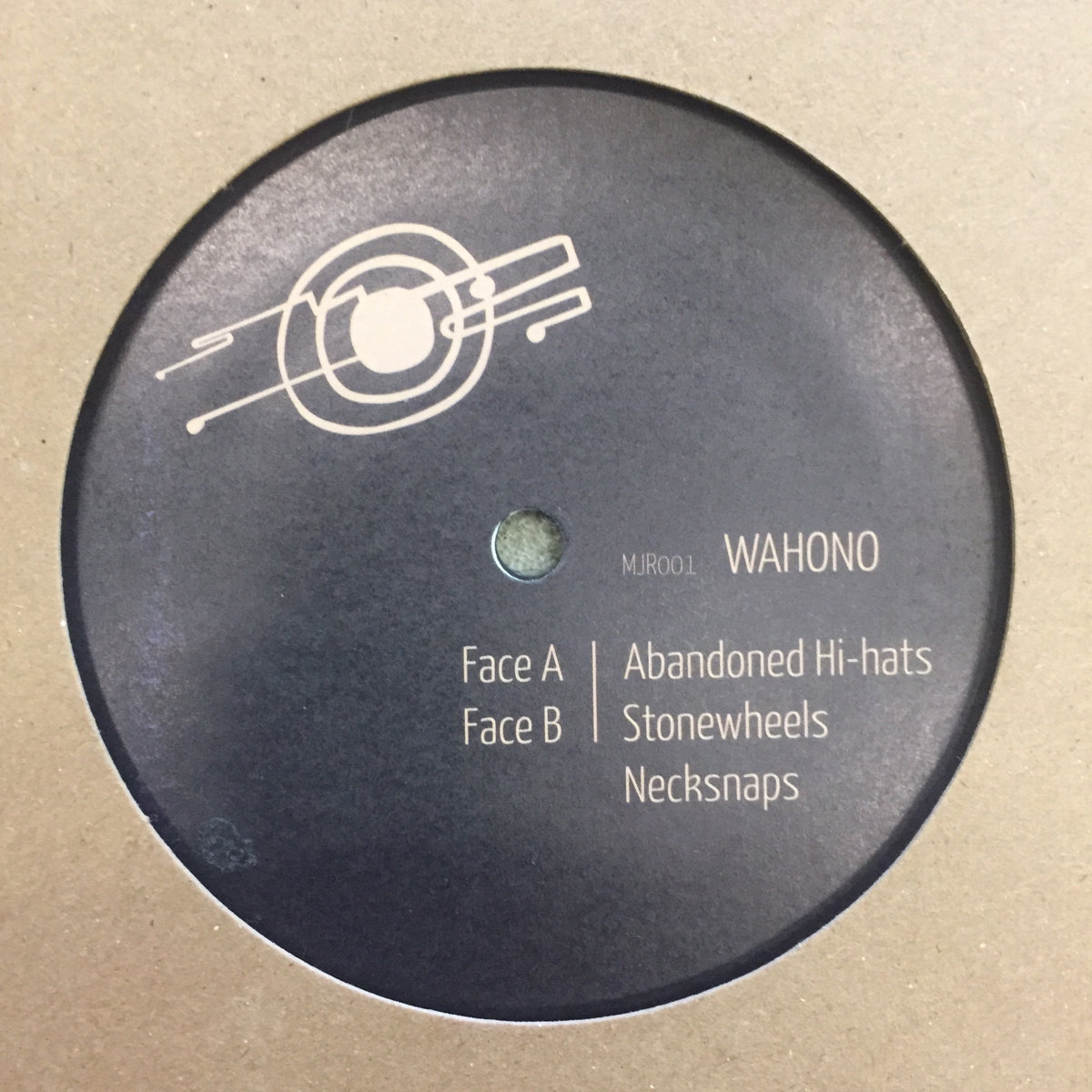
On February 1, Mike Bloom will launch Maddjazz Recordings with a new EP from Harsya Wahono (a.k.a. Wahono), a music producer and DJ from Jakarta, Indonesia.
Bloom and Wahono met as a result of Wahono stumbling across Bloom’s track “Lush” on XLR8R‘s downloads section. In the piece, Bloom stated he was starting a label and Wahono sent a handful of tracks to Bloom via SoundCloud, one of which became the title track for the forthcoming EP, Abandoned Hi-Hats.
The vinyl-only EP features three cuts that explore “deconstructed rhythmic relationships, dissociative harmonic perceptions, and textural composition” in intricately arranged cuts that defy genre conventions.
Abandoned Hi-Hats will be available on February 1 and can be pre-ordered via the Maddjazz Bandcamp page, with the title track streaming in full below.
Tomorrow, January 27, Phantasy will present a new album from Brazilian artist Babe, Terror titled Ancient M’ocean.
Limited to 300 physical copies, Ancient M’ocean comes packed inside a comic conceptualized and produced by Babe, Terror himself and beautifully illustrated by Michael Crook. The comic and music chronicle a sci-fi romance that takes place in a world adjacent and just out of reach of our own, it’s a small part of “a community of souls… an incorruptible interconnection that binds us together as a whole.”
The music on Ancient M’ocean is beautifully foreign, fragments of sound that, like the concept itself, seems to exist in an out-of-reach realm of wonderment. When devoured as a whole package, the release gives an intriguing glimpse into Babe, Terror’s endlessly creative world.
Ahead of tomorrow’s release, you can stream the video (produced and directed by Mario Cascardo) for album cut “Allureon” (Parts ll & lll).
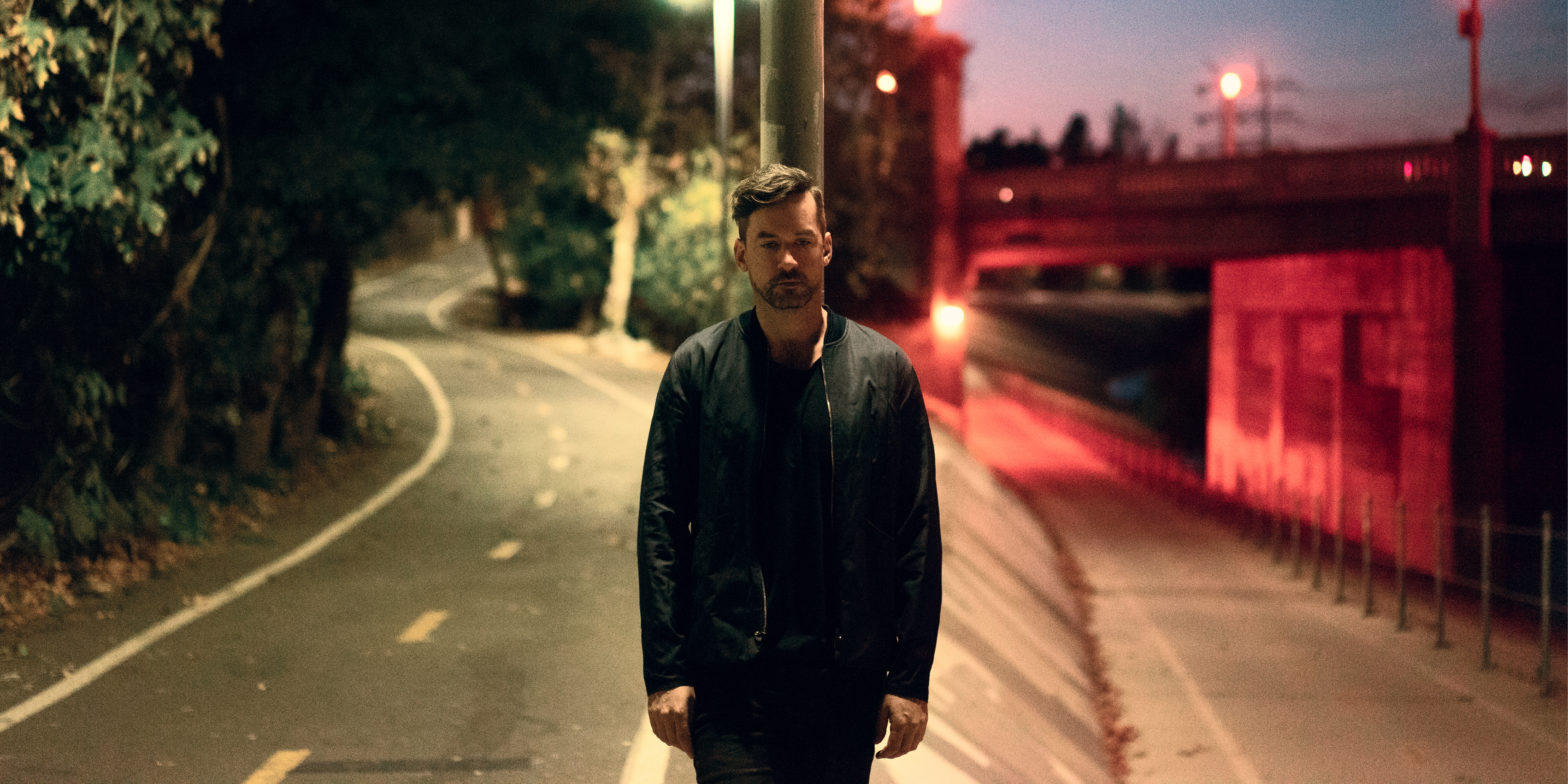
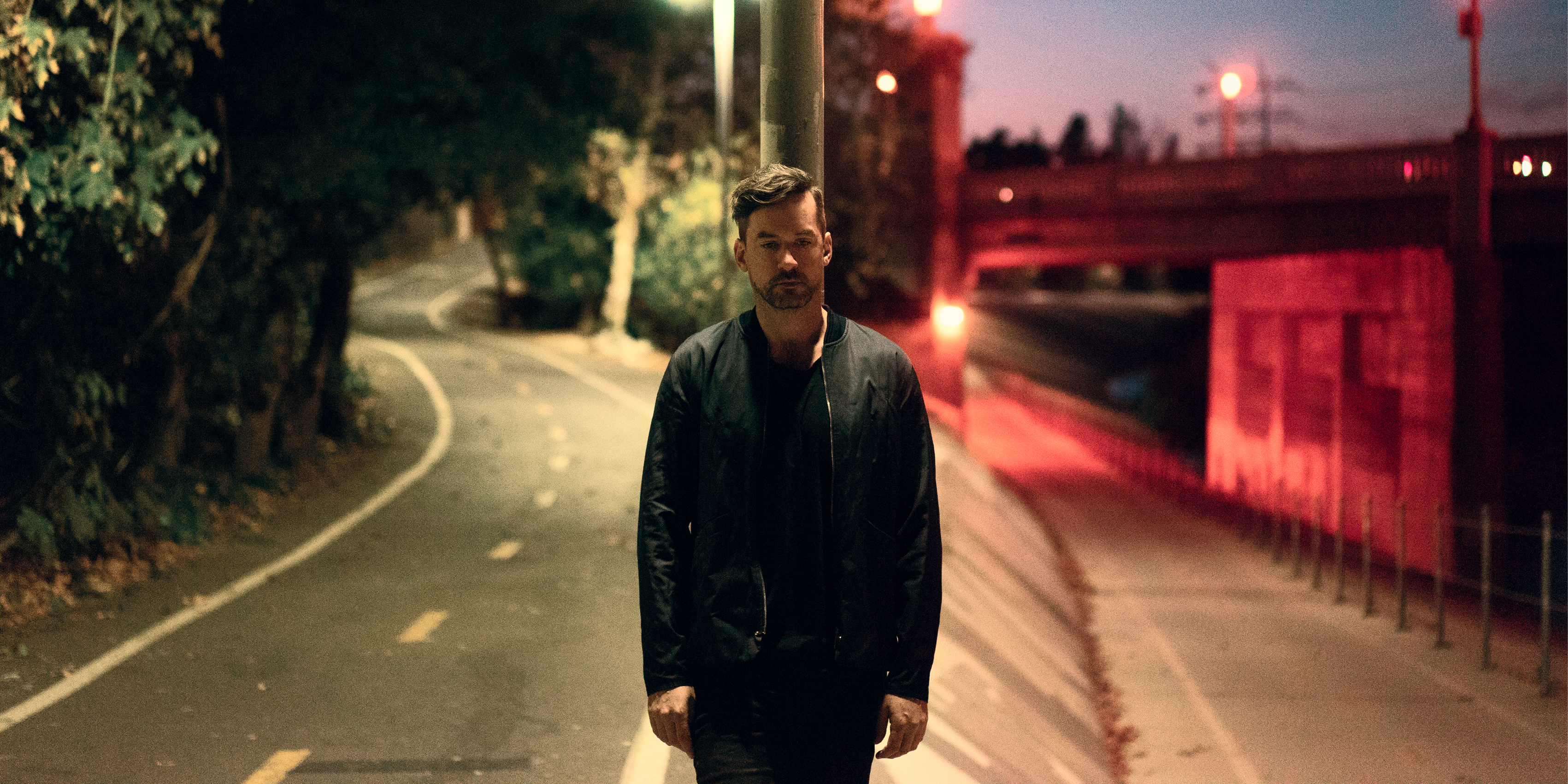
Since the release of his acclaimed Black Sands album, Simon Green (a.k.a. Bonobo) has ridden a somewhat meteoric rise to the upper echelons of electronic music. This rise can mostly be contributed to his emotive, cinematic style and deft production artistry; it’s enticing pop music in the truest sense.
Although his stocks have risen considerably since Black Sands, Green’s music has maintained a logical stylistic progression rather than tipping too far over into the mainstream—listen to Black Sands, The North Borders, and his latest, Migration, for case in point; ironically, this linear progression is something Green’s latest album has drawn criticism for. Whichever way you look at it, however, Green’s consistency is never in question.
Filled with serene beauty and a slight dose of melancholia, Migration—released January 13 on label home Ninja Tune—is Green’s most sophisticated work yet, it’s a dreamlike collection of cuts that stir emotions and, at times, move the body. Like The North Borders before it, Migration features guest spots from a host of talented vocalists, this time Nick Murphy (a.k.a. Chet Faker), Hundred Waters’ Nicole Miglis, Rhye, and Innov Gnawa. As Bruce Tantum stated in his review of the album, it’s “an intricate, fine-tuned return to form, one that both soothes and thrills.”
With Migration now out in the world, XLR8R paid a visit to Green’s studio in Los Angeles to peel back the layers of the album and get the inside word on some of the techniques that led to its creation.
Offset Sample Start Positions
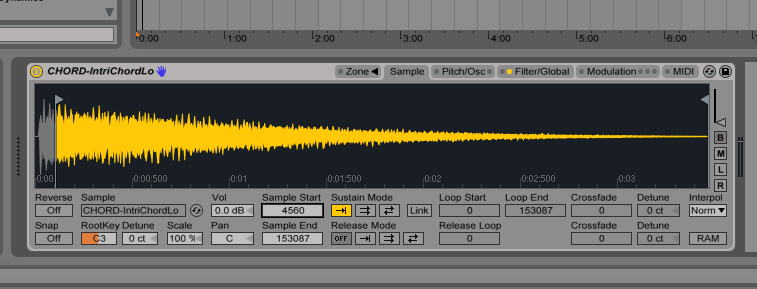
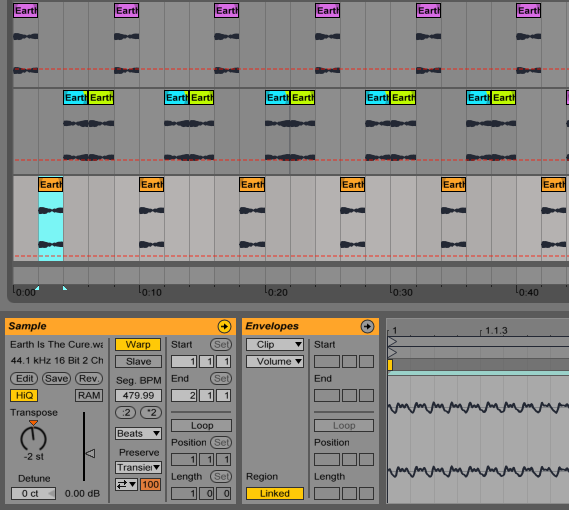
Offsetting the sample position every time the sample hits will create more random movement in short samples. One of the techniques that I first started with was offsetting the sample start position with an LFO. So if you had a hi-hat you wanted to have more movement, or if you wanted more of a glitch feel in a sample, put a Random LFO on the sample start field of the sample in Sampler—this means that every time the sample hits, the start point will shift to a random point on the sample to begin its playback. I started doing it on hi-hats but I realized you can do it on nearly anything and it gives much better variation and a more human feel to your loops. Once you start to dial in the controls of the LFO, you can really create some subtle yet interesting rhythms and movements.
CLICK PHOTO TO ENLARGE AND ENTER GALLERY
Follow Actions
Another way to create interesting ideas is to use follow actions. I would basically start with two channels: on one I would have a chopped up Rhodes with a bunch of different clips, and each clip would be a different note. I would set follow actions so that the clip would loop for five bars and then play a random clip from that channel next, which would then do the same. Then on the second channel, I would do the same thing but make the clips only loop for three bars. That way both channels are looping and changing randomly and going on indefinitely. You can select all the clips and change the follow actions for all the clips at once. So when I did this, I would create five minute renders of these melodic loops. I did three sections and bounced them out and then used it as something to improvise off. So I had John Hopkins come in and improvise to these sets of five-minute loops I had created. What I really like about this is how you have an Ableton algorithm and a pianist jamming and interacting with one another. This idea formed the basis of the title track of Migration.
PaulStretch
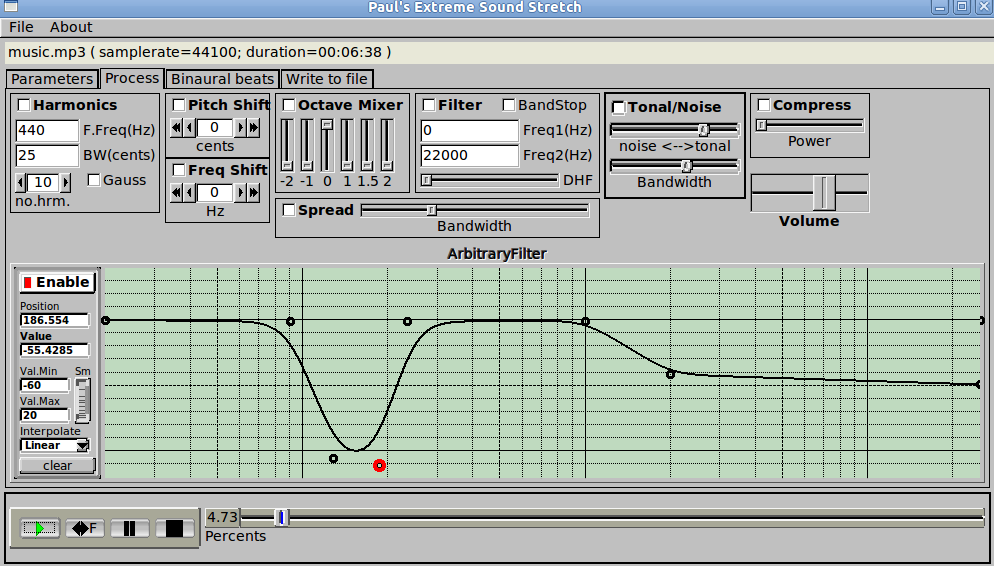
PaulStretch is a really out-there, standalone audio stretching engine. So with “Second Sun,” I took a portion of what I was working on and took it into PaulStretch and then bring it back into the track to sit low in the mix as a drone version of itself. It gives the track a good base and a haunting texture to it. I use the PaulStretch audio as a sound bed to further build the track from. It’s also a great tool to start your sets with, a palate cleanser for the dancefloor. Throw your first track into PaulStretch and it can be used to create a nice opening build up.
Effects Chains
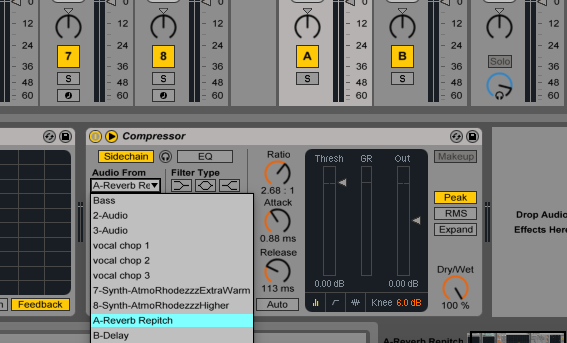
I’ve got a few return effects chains that I have built for my live set. One is a pitched, harmonic reverb chain. I start with a reverb, then the reverb goes into a driver, then a re-pitcher, and then I compress the whole thing to itself. So at the end of the chain, have a sidechain compressor and sidechain it to itself. So what happens is that the note or element will be allowed through clean for a split second before the reverb hits and comes back on itself.
Making Patches out of Found Sound
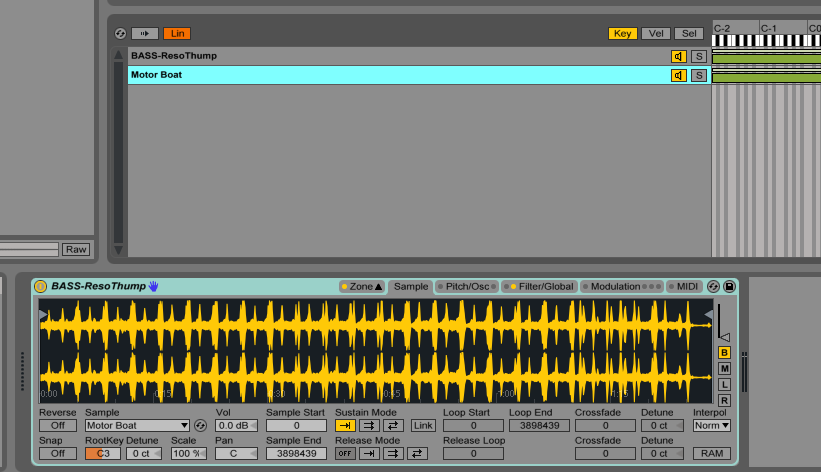
I record a lot of stuff on my phone when I’m out and about and regularly use the recordings in my tracks. For example, I was in New Orleans on one of those fan boats and noticed the really interesting texture and sound it was making. I recorded the fan and then layered it in a sampler to be the basis of a synth patch. It gives a nice alien-like sound and is an easy way to give your synth patches personality.
Vocal Treatments, Chops, and Edits
This is basically an exercise in layering. I always work with audio on the arrange page and with vocals, I like to chop up lines and take the syllables from different parts of the vocal line to create something a little more interesting. I normally start by messing around with one loop and see where it takes you. Pitch the chops up and down to create an interesting musicality to the loop. Keep building layers that work off each other in a call and answer.
Effects on Bass
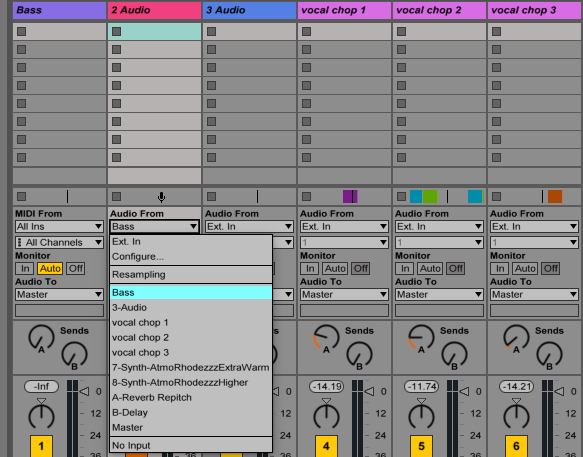
I often use a return channel to get some shape out of the bass. It’s a good way to split the frequencies of the bass so that the sub bass is clean and in mono and the higher end of the bass sound can be filtered off—have it on an audio channel and that’s where you can use effects. So start with your bass vst on one channel and then create an audio channel next to it with the Audio From input coming in from the bass vst channel. So on the audio channel roll off all the sub bass with a filter and you can then apply effects, automate the effects, and generally mess around with the bass without muddying the subs—you still have the body of the bass present but also a really interesting top end. You can use this effect on any sound with a low-end, or any sound in general—it’s a good way to split frequencies and effect just one aspect of a sound.