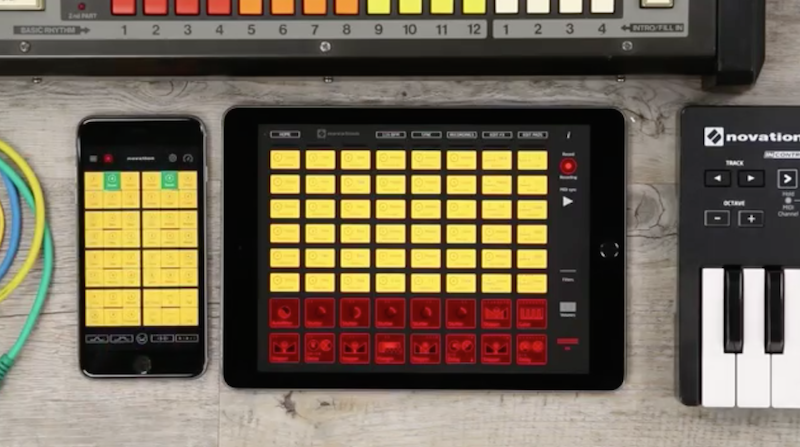
Launchpad—the innovative loop-based music software for iPhones & iPads—has been given a sizable facelift with the addition of numerous in-app features. As an intuitive mobile adaptation of their popular MIDI controllers of the same name, the app enables users of all skill levels to intuitively mix, create, and edit tracks. With increased tempo control, dedicated Ableton Link support, and an added ability to sync external hardware, the new updates further cement the app as one of the most competent on the market for mobile devices.
Update features: -New real-time stretch audio engine – Change tempo while playing -Ableton Link support – Jam in sync with your other apps, devices or laptop -New tempo control – Show tempo with inc & dec, tap tempo and reset -Updated effects – Now adapt intelligently as the tempo changes -Share more easily – With ‘Open in’ to easily export your recordings -A free update for all iPhone and iPad users
Other recent updates include: -MIDI Sync Output – Sync external hardware using MIDI -AudioShare Support – Import audio from the popular app -Full view mode – Use both the mixer and pads at the same time -Over 100 Soundpacks – Now available in the soundpack store -Ninja Tune x Launchpad – Access to Artist Series Soundpacks -Various bug updates
For the past seven years Kornél Kovács has been DJing worldwide as one third of Stockholm’s Studio Barnhus alongside Axel Boman and Petter Nordkvist. The label and DJ trio is spearheading a new era of fearless Swedish off-centre dance music.
Anticipation for Kovács’ debut album has been growing following recent releases like 2014’s “Szikra,” last year’s “Pantalón” on Glasgow’s Numbers imprint, and then “Space Jam” on Smallville Records.
On The Bells, Kovács pops open his trunk full of sounds nicked from the lost and found bins of nightclubs all over the world. The record was completed in an intense two-week session with Kovács’ great friend and great studio engineer Matt Karmil in the cold winter of 2016.
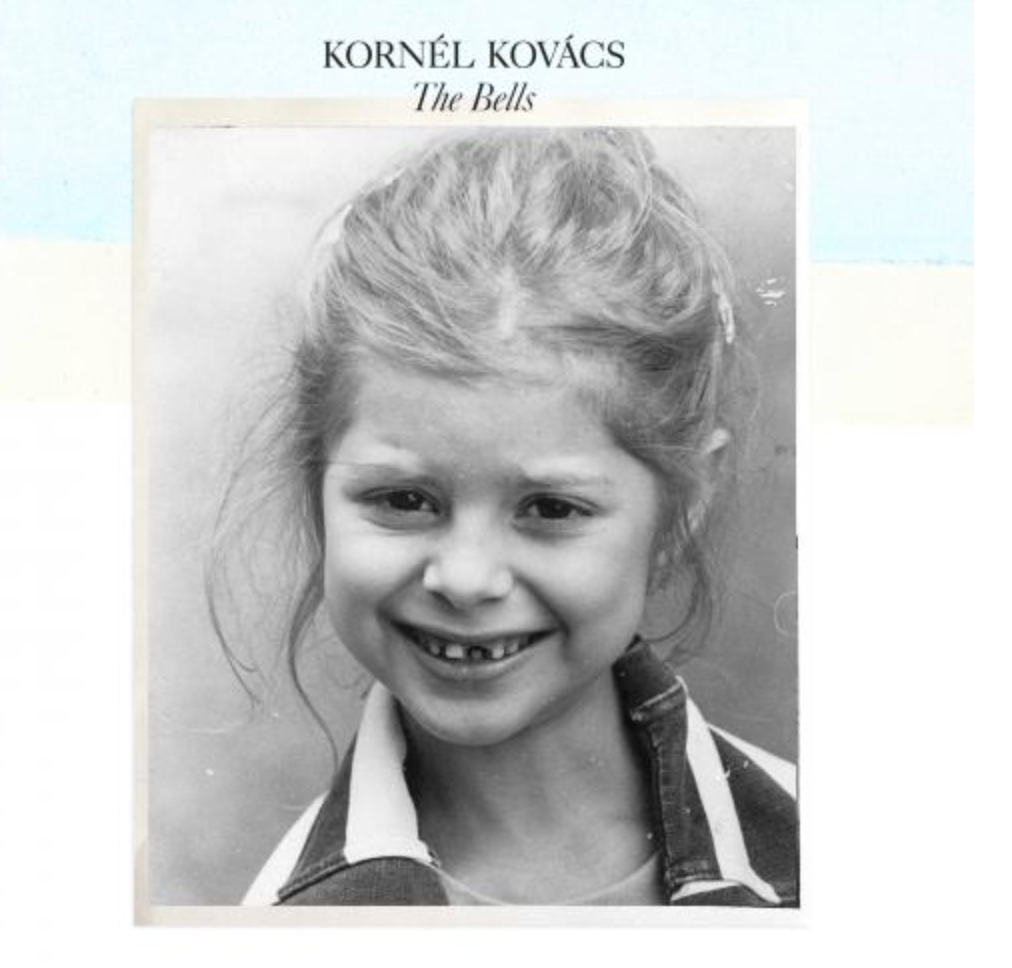
Another close friend, artist Malin Gabriella Nordin, has created the album artwork together with her brother Jonas. The girl on the front cover is Kornél’s sister Dora.
Prompted directly by Kovács to give his report on the record, Studio Barnhus label boss Axel Boman had the following to say:
“Kornél’s bells will echo far beyond the nervous and trend sensitive ”dance” genre that our label sometimes is associated with, and into pop history. It’s one of our best, most innovative and creative releases to date, and the fact that one of my best friends has managed to do this on the label we share together makes me so proud that I want to cry. The Bells is the reason I dreamed of starting a label in the first place.”
Tracklisting:
A1. Szikra Intro A2. BB A3. Dollar Club B1. Gex B2. Josey’s Tune B3. Dance… While The Record Spins C1. Szív Utca C2. The Bells D1. Pop D2. Urszusz
Kornél Kovács releases The Bells on Studio Barnhus on August 26, 2016. The album can be pre-ordered here on LP or CD.
Ahead of the release, “BB” can be streamed in full below.
Launching an event series in the heart of the German capital Berlin, spiritual home of Europe’s house and techno scene, can be as foolish as it is daring. Crack the local area, however, and you can reap the rewards of what the city’s vibrant atmosphere has to offer. One such party that has managed it in recent times is The Gathering: over the past couple of years, the organizers have taken over a former brewery, a warehouse complex, a former coin press and a railway repair station, playing host to the likes of Binh, Nicolas Lutz, Andrey Pushkarev and Cristi Cons.
What’s bolder than just launching a party? Following it up with a record label. The collective’s first release is set to drop this August, with two of their residents taking care of the tunes: Fabe & Tolga Top (accompanied by remixes from DJ Honesty and Diego Krause). The four-tracker promises the kind of sounds you might expect to hear them spinning: tight, minimal house jams, drawing on anything from UK garage to electro-type influences.
Ahead of the release, we’ve been lucky enough to be gifted a free download from one half of the duo, Fabe. Originally from Mannheim, the producer has dropped records on the likes of La Pena, Infuse and his own Salty Nuts to date. Today’s track is an unreleased cut put together last summer, entitled “Prontido Neu.” Bouncy breaks and shuffling hats skip under light synths across the 9 minute jam. It’s a cut that sounds like it could have come straight out of ’90s UK—a summery number that serves as the perfect introduction to a producer who looks like he has a lot to offer in the not too distant future.
“Prontido Neu” is available to download below via WeTransfer. You can check out samples from Fabe & Tolga Top’s forthcoming EP over at The Gathering’s Soundcloud.
I have never harboured much affection for London’s electronic music festivals. It sounds like a sweeping generalisation, criticising a plethora of largely successful events based solely on their location, but allow me to elaborate. I’ve had some of my finest musical experiences in the city, but the majority of these have occurred at a club rather than in one of the several parks or fields scattered across the city. There are several reasons for this, but it mostly comes down to three recurring themes: poor sound, short set times, and juvenile crowds. Having seen the lineup for this year’s Found Festival, which was perhaps one of the most well-curated I’ve seen in London for some time, I was optimistic upon my arrival in Brixton—but what I found was yet another event that fell at all the same hurdles.
Firstly, sound: as far as I am aware, a restriction of 92-94 decibels was strictly implemented for the entire duration of the day (i.e. from 11am – 9pm). One can only assume that this was down to the residential nature of the surrounding areas or to minimize the sound leakage from one tent to another. If it was the latter then it was ineffective nonetheless!
Independent of reasoning, however, it’s difficult to enjoy an electronic music event when the sound quality is so poor. Limitations of 92-94 decibels may work in an intimate indoor club environment where there are four stacks of speakers tightly enveloping the dancefloor, but it leaves much to be desired when there are only two sets positioned at the front pumping out music to an entire 3,000 capacity tent.
The result is a below-average musical experience for all, barring perhaps those few at the front who absorb all the sound. Admittedly the experience was slightly better during during the later sets on the Main Stage, but it was nothing short of terrible elsewhere. This was particularly noticeable on the Art of Dark stage where artists like Binh, Mara Trax (Maayan Nidam & Vera) and Petre Inspirescu all played in one of the largest tents of the event—a crazy decision in its own right. The sound was thin throughout the day, meaning that it was impossible to hear or appreciate the intricacies of their selections. Festivals such as Found should always seek the necessary permissions to ensure they can provide good sound before green-lighting anything.
Set times at festivals is something that interests me. The vast majority of electronic music festivals today employ the same system: DJs are limited to short slots, normally around two hours, though sometimes even less. Most sets at Found ranged from 60-90 minutes. On the face of it this is understandable: most festival crowds are different to club audiences in that they want to wander around and see a variety of artists rather than see a warm up and then a DJ play all through the night. Shorter set times also means more artists on the lineup, which inevitably appeals to wider audience. But as well intended as this may be, does it really work in practice? Does it really lead to a more enjoyable festival experience?
From my side, no. It may appeal to certain people in attendance—but it’s likely that many of these people are at one of their first music events and so want to dip in and out of sets. But for music fans, those who appreciate a good DJ set—and seemingly, based on the lineup, those who Found should appeal to—know that artists need time to express themselves behind the decks and so want lengthier set times. Is it really possible to see the best of Petre Inspirescu or Lucy in two hours? By adopting such rigorous measures Found is never going to really satisfy either audience.
And that leads us nicely onto my third point: the crowd at Found was young. I question whether I’ve seen so many football shirts in a field that doesn’t have two goals at either end. It wasn’t necessarily that they were rowdy or causing any harm, but having 19-year-old teenage girls screaming or filming on their iPhones is hardly conducive to a good atmosphere when watching some of the world’s finest artists ply their trade. Returning to my previous point above, this is an issue that seems especially evident in London, and one for which there is no immediately obvious solution.
If there is one, however, it is good music—and this is one thing that the festival must be given tremendous amounts of credit for.
It’s just a shame you couldn’t really hear much of it.
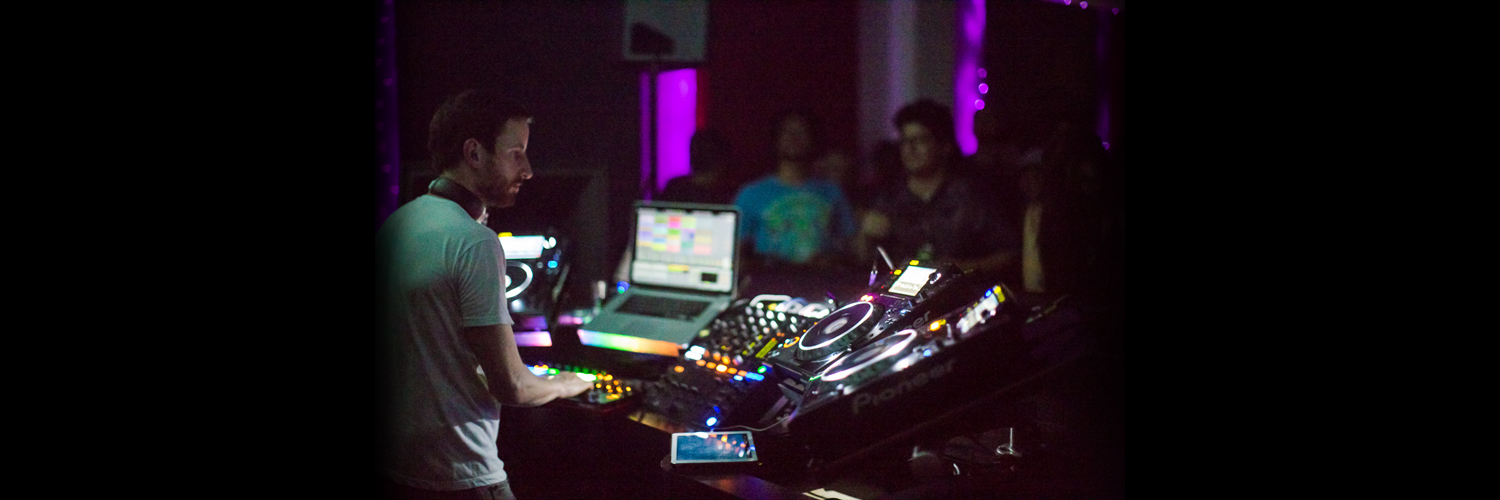
UK artist Claus Voigtmann has operated on the fringes of house music for quite some time now. You won’t find his name on any oversized billboards, or playing for any oversized mainstream clubs, but we’re sure that’s the way he wants it. He works with a refined-yet-playful ethos, which is then channeled into the sophisticated, groove-led tunes he makes and plays. To those in the know, he is a wildly gifted producer, DJ, designer, architect, and label head—a true talent of the underground.
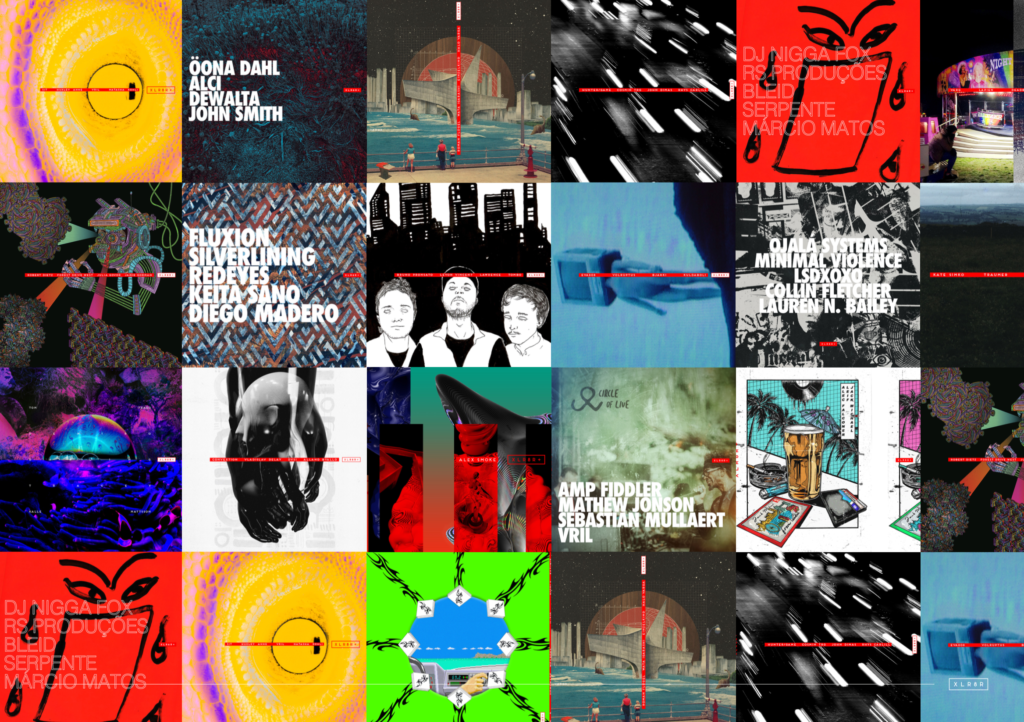
Since debuting on the production front in 2013, Voigtmann’s records have since landed on some of the scene’s most sought after imprints, including Hello?Repeat, Assemble Music, Yumé and, most recently, Toi.Toi.Musik, the label arm of Voigtmann’s conceptual underground London-based party. Now approaching its third release—which will land courtesy of collective member Audio Werner—Toi.Toi’s notoriety is steadily growing via regular showcases at Fabric, Rex Club, Fuse, Closer, Club Der Visionaere, and Off-Week, where it will evidently celebrate six years in existence at the annual event in Barcelona.
Toi.Toi’s influence on the scene shouldn’t be overlooked either: the party has been responsible for shining a light on rising talents such as Nicolas Lutz and Andrew James Gustav, while also reigniting the flame on ’90s artists like Steve O’Sullivan. And while Toi.Toi releases music from more established artists and friends, its new sub-label, Subsequent, looks to bring upcoming talents to the fold. So far, Subsequent’s two releases—from Barbir/Nicola Kazimir, and SHKN/TOY, respectively—have sold out, and the third is on its way and looking like it will do the same.
As we approach both Toi.Toi and Subsequent’s third releases, Toi.Toi’s six-year anniversary, and Voigtmann’s 10-gig tour through South America, we thought it was well overdue that we invited underground house’s renaissance man to contribute to our podcast series.
When and where was the mix recorded? I have constructed a booth which is invisibly suspended from the ceiling in my living room.
I have no sound restrictions and my collection sits behind me waiting to be played.
What equipment did you record the mix on? The mix was recorded on my two lovely turntables and two borrowed CDJs. I then took the recording by the hand and walked it down to my studio. There I ran it through a tape emulation to master it.
Did you have a specific idea/mood that you wanted to express? I do not record many mixes—and I had the idea of a proper techno mix lurking in the back of my head for a while now. I tried to achieve a classy stripped-back mix with high emotional content—rough elegance, you know. You be the judge if that worked out!
How did you select the specific tracks that you wanted to include? The main ingredients for this mix are: some old and new techno, an unreleased upcoming Subsequent, an unreleased track of mine, and one bottle of good red wine.
I had a certain story in mind that I wanted to tell. Starting from nothing and building up, not just wildly obscure tracks thrown together.
How did you approach this mix in comparison to a regular DJ set? Like I mentioned above, recording a podcast for me is telling a story—this is why I am not so keen on doing so many; it’s a musical statement, and not just a “mix.” The listener needs to be guided into a story, hence why it needs to be carefully crafted and thought through as a concept. Whereas a regular DJ set takes the input of the crowd in a dialog with them, the moment and the energy of the room is at play. Recording a mix by yourself becomes a very abstract concept.
You’re about the embark on a 10-gig tour through South America. How are you feeling about that? South America is a very special place, it’s my third tour there but I feel this time we, as a collective (Toi.Toi.Musik), have managed to establish links with like-minded people riding on our music and philosophy. Our scene is very much driven by vinyl lovers and this is something that is so difficult in South America, as vinyl culture is dead there and those that buy vinyl from overseas via post get charged 70% of the cost as import tax. However, the music guided us to this new generation of promoters over there who are also DJs and music lovers. So, in every country I go there now, it is the most pleasurable experience one can have as a DJ—it’s not just “another gig, in and out”; they are experiences in a region which is so warm and rich musically.
Toi Toi is just about to celebrate its sixth anniversary. This is a big milestone. How do you reflect on that time, and what plans do you have for the party and label going forward? Toi.Toi was born out of a shared love for this music by myself and Isis. Everything we do is very organic. If you told us that in six years time we would have a party, an agency, and two labels, we probably would have laughed, but our passion is very strong and organically brought us to where we are. Out of that passion, we tend to become perfectionists for the sake of acquiring the purest artistic and cultural form in what we do. We are actually going where the music and exchange take us. The six years event is a celebration of that and that only. It’s the music and the quality we believe in, with people and artists that are so meaningful to us—a good mixture of old and new artists. And like this we tend to continue, it is to a point that it’s no longer a choice, it makes us who we are and without that, as individuals, we have no identity.
What are the intentions behind Subsequent and what can we expect over the next few months? Subsequent is a platform that shies away from mass culture—it’s a platform for the new generation of producers. It’s the turn of generations. I get sent incredible music by super young guys. Mind blowing sometimes. The label artwork and music direction have a slightly dystopian take on things, and musically I collect tracks that are broken or about to break—I like this tension..
Krystal Klear, the London-based DJ-producer, label-head, and photographer, has shared details surrounding his forthcoming record, which is scheduled for July 10 via the artist’s own Cold Tonic Records. Since launching Cold Tonic as a lighthearted photographic diary in 2012, Krystal Klear has grown his brand into a prime musical platform that showcases the work of friends, new talent, and the artist himself.
Cold Tonic’s latest release aims to be a continuation of the label’s widely lauded premiere record TONIC001, which featured the popular track ‘Squad pt.1.” Already garnering support from the likes of Gerd Janson, Benji B, Paul Woolford, DJ Qu, and more, Krystal Klear has taken the foundation of the initial ‘Squad’ and extended it into a nine-minute long summer anthem complete with captivating percussion and a loungey, euphoric feel. The flip side of the record will host the musical debut of New Zealand-based production duo Sandboards with “Nothing But A Freak,” which cleverly melds shaky drums, wistful chords, and a spoken-word narrative into an uplifting gem of a track.
In preparation of the upcoming release, Krystal Klear has shared an exclusive stream of the record’s title track. You can hear “Squad pt.2” in the player below.
To hear more of Krystal Klear’s work, check out his 2012 podcast for XLR8R by going here.
BE-AT.TV, one of the world’s leading platforms for streaming underground music performances, has announced plans to host a live broadcast of the last season of Carl Cox’s iconic Music Is Revolution party series at Space Ibiza. The stream, which will be aired every Tuesday all night long throughout the summer until the closing on September 20th, will allow Carl Cox fans from around the globe to experience the 15th and final series of sets from house and techno’s most recognizable figure.
The stream is set to encompass both rooms of the Ibiza institution Space (which is also in its final year), and aside from its primary focus on Carl Cox himself, BE-AT.TV will also film performances from several other acts on the stacked Music Is Revolution lineup, including Chris Liebing, Dubfire, Kerri Chandler, Josh Wink, Nina Kraviz, Matthias Tanzmann, and many more.
You can see the full lineup for Carl Cox’s final residency at Space Ibiza below.
[row]
[column size=’1/3′]Carl Cox Luciano Chris Liebing John Digweed Nic Fanciulli Sasha Adam Beyer b2b Ida Engberg Joseph Capriati Dubfire Nicole Moudaber Pan-Pot Kerri Chandler Loco Dice[/column]
[column size=’1/3′]Carl Craig Nina Kraviz Marco Carola Matthias Tanzmann Joris Voorn Josh Wink Monika Kruse Marco Bailey Danny Tenaglia Francois K Masters At Work Yousef Kölsch[/column]
[column size=’1/3′]Tania Vulcano Cirez D Guy J James Lavelle Cirez D Carlo Lio Julio Bashmore Catz N Dogz Davide Squillace Hot Since 82 Deetron tINI DJ Sneak[/column]
San Fransico DJ and producer JP Soul is set to release his debut LP, Party On, on June 27.
JP Soul has been a long-time stalwart of the underground SF scene, playing regularly at some of the Bay Area’s most notorious parties and clubs including Sunset Campout, Monarch, and The Top/Underground, among many others. His label, Roam Recordings—which will release Party On—has housed records from the likes of Tone of Arc, Tronik Youth, Pezzner, and Wolf + Lamb.
In the last two years, JP Soul has released no less than eight releases, the latest of which is his bumping long-player Party On. Spread across nine tracks, Party On is a collection of gritty, synth-heavy, and party-ready cuts that aim straight for the dancefloor. You’ll find raw, swinging grooves, acidic stylings, and all manner of synth workouts—it’s an accomplished album of club cuts from a veteran of one the USA’s hotbeds.
Ahead of the June 27 Beatport release, you can stream the album’s title cut in full via the player above.
Having fallen victim to large amounts criticism due to its unprecedented licensing deal with Universal Music Group, which has resulted in an abundance of takedowns that are frustrating DJ’s and producers who rely heavily on the platform, SoundCloud has found themselves looking for more capital. The streaming platform’s new subscription service and strict copyright laws have alienated a huge number of content creators who have taken to social media and online forums to express their severe dissatisfaction with what was once the web’s most beloved destinations for music.
We have just learned that Twitter, which originally planned on buying SoundCloud two years ago but ended up walking away from the $1 billion sell-off deal, has invested $70 Million in the online streaming service.
Although SoundCloud reps have not yet commented on this report, Twitter CEO Jack Dorsey confirmed that his company does in fact own stake in SoundCloud after saying: “Earlier this year we made an investment in SoundCloud through Twitter Ventures to help support some of our efforts with creators,” he said. “They’ve been great partners of ours over the years and their community-supported approach mirrors ours in many ways.”
All photos by: Doriane Ray. Click a photo for gallery viewing.
To say that the past 10 years have been kind to Max Cooper would be an understatement. With three honors on Resident Advisor’s list of best live acts in the past four years, an impressive debut album in Human(2014)—that managed to rein in tropes of techno, ambient, and IDM—and even a stint in academia that culminated in a computational biology doctorate, success has been Cooper’s game since deciding to pursue music full-time. In retrospect of his impressive resume, the UK-based DJ-producer looks to expand his brand with a more-is-more attitude in all façets of presentation.
Cooper’s achievements have been on XLR8R’s radar for years now, so when we were recently invited to attend his performance in Los Angeles, we jumped at the opportunity to check out Cooper for ourselves.
The event was hosted by rising underground promoter Subtract Music, which is spearheaded by LA-based DJ Anton Tumas and his perfectly tuned Danley Sound System. Subtract has built a solid reputation over the past year with various warehouse parties in the LA area and gatherings on the Long Beach Pier. With a series of successful events under their belt, featuring the likes of Sebastian Mullaert (a.k.a. Minilogue), DJ Tennis, and Bedouin, it comes as no surprise that they looked to tap Cooper for their latest venture. Subtract was able to find the ideal venue for the occasion: a converted industrial warehouse/loft in West LA that held 200 people, at the most. The intimacy of the setting not only allowed the Danley system to reach its optimal levels, but it also fostered a sense of community and sophistication not always found at underground parties in Los Angeles. We applaud Subtract for continuing to enhance the underground scene with excellent bookings, sound, and vibes.
As for Cooper’s performance, results were mixed. His revamped set is a highly ambitious undertaking. To start, there’s the set’s staggering five-hour run time (6+ hours on other dates of his North American tour). Extended, night-long DJ sets have been an LA institution for decades, but in watching Cooper constantly clutch his headphones, not once relinquishing the decks for even a brief rest over the course of 5 hours, his skill, endurance, and commitment to his craft stood out.
Musically, we were amazed at the range he displayed in his track selections. Throughout the course of the evening, driving techno thumpers melded with near-ambient tracks, only to be mangled at a moment’s notice by the abrupt entry of distorted jungle breaks or quick outbursts of abrasive noise. The crowd went wild when melodic, ethereal soundscapes were quickly blended into heavy tech-house beats, but at other times they seemed dumbstruck and confused by the fusion of sounds—perhaps an indication of their desire for a more continuous, foundational groove.
The visuals of the performance, which were provided by Subtract’s Michael Strauss, were stunning and synced perfectly with the mishmash of beats emanating from the Danley system. With swirling geometric shapes, psychedelic dreamscapes, and clouds of visualized data that pulsed in sync with kicks, the backdrop was a force to be reckoned with.
Altogether, the set was dramatic and absorbing; and despite the sometimes erratic track selections, Cooper displayed a musical dexterity and prowess only seen from top-notch electronic performers.