Each Sunfall ticket purchase will be a joint ticket—permitting entry to the daytime event, as well as a night session of choice. The full line-ups for these nighttime events will be revealed later this week, though it has already been announced that Benji B, Dimensions Festival, Phonox, Outlook Festival and Metalheadz are amongst eight of the main organisers for said parties.
You can buy tickets from the festival site, or head to their Facebook for more info
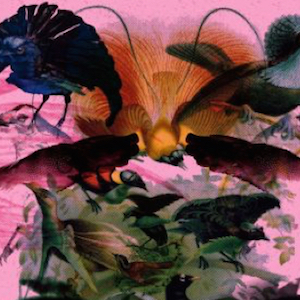
Leon Vynehall will debut on Running Back in the coming months with a new LP, Rojus. The English producer and former XLR8Rpodcast contributor was reportedly inspired by the discovery of a book with the same name (which translates as “paradise”) in Vilnius, Lithuania’s Contemporary Art Center. “The word and striking cover of the book stuck in my mind,” he says. “A few days after returning home, I turned on to a National Geographic documentary named Designed to Dance, explaining the courtship rituals of birds of paradise. As I watched, I jokingly began drawing similarities between these birds’ attempts to captivate and impress the opposite sex with dance, and the way strangers try to attract one another in clubs and interact on the dance floor. This gave me the idea of creating a record of functional club music, sequenced as if it were a club night, from doors to closing, using samples of these birds of paradise and their habitat. Thus, Rojus.”
No previews or an official release date have been shared as of yet, but the complete tracklist for the double-pack can be found below. (via Resident Advisor)
01. Beyond This 02. Saxony 03. Beau Sovereign 04. Paradisea 05. Wahness 06. Blush 07. Kiburu’s 08. … There Is You
Aminov caught the attention of Sonar Kollektiv with the release of Aanbreken’s brilliant Verge EP, which was released in 2014. For Moment, Aminov is operating in a solo capacity—albeit with a host of world class vocalists including Pete Josef, fellow Aanbreken member Gala Ga, Darlina, and Vasilia Moroz—presenting five pop-infused tracks of haunting beauty, all bookended by Aminov’s smokey-and-warm production.
Along with the EP announcement, Aminov has offered up the evocative video—directed by Lado Kvataniya, with Andrey Maica acting as DOP—for lead track “One Lone Survivor (Feat. Pete Josef)”. Centered on a young boy’s journey through a desolate, apocalyptic Russia, the video is a perfect accompaniment to the beautifully produced track.
You can watch the video for “One Lone Survivor (Feat. Pete Josef)” in the player above, with the EP available for preorder here.
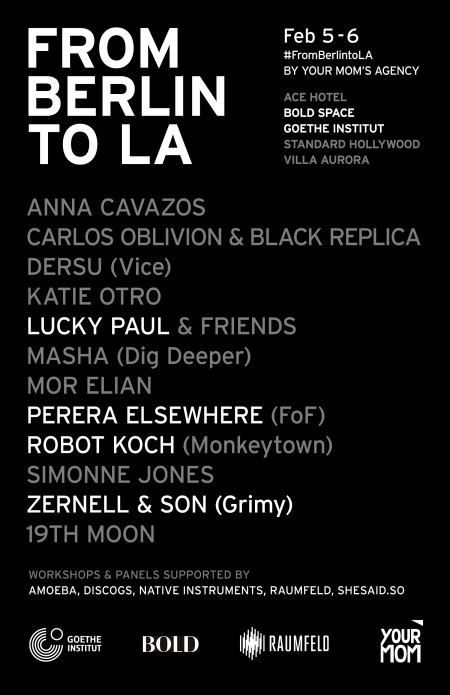
Initiated by Your Mom’s Agency, From Berlin to LA is a two-day event that will host a number of workshops and shows around various locations in Los Angeles such as The Ace Hotel, Bold Space DTLA, the Goethe-Institut LA, and The Standard Downtown.
With the goal of drawing comparison between these two cultural hubs of electronic music, musicians and music enthusiasts alike will gather to enjoy the various performances, classes, panels, and exchange ideas surrounding music culture. The festival portion of event will feature Monkeytown artist Robot Koch, Kim Anh, Lucky Paul, and a plethora of other unique artists who share a love and connection with these two cities. In addition to featuring panels from industry leaders such as Native Instruments, Amoeba Records, and Discogs, XLR8R and she.said.so will also host a gathering at 8pm on February 6 at Bold Space DTLA to discuss the connections between the LA and Berlin scene.
The list of artists performing for this two day event are as follows:
-Anna Cavazos (NYC/LA/Berlin): producer, DJ, vocalist -Carlos Oblivion & Black Replica (Detroit/Berlin/LA): producers, DJ, vocalist -Dersu (Berlin/LA, Vice): DJ, producer -Katie Otro (LA/Berlin/Ibiza): DJ, producer Kim Anh (LA, Yowsah): DJ, producer, singer-songwriter Lucky Paul (Auckland/Berlin/LA): producer Masha (LA, Dig Deeper): LA scene rep, DJ Mor Elian (Tel Aviv/LA/Berlin, Prime Numbers): DJ, producer Perera Elsewhere (London/Berlin, LA label FoF): singer-songwriter, producer, DJ Robot Koch (Berlin/LA, Monkeytown): producer, composer Simonne Jones (LA/Berlin): singer-songwriter, producer Zernell & Son (LA, Grimy): DJ, vinyl expert 19th Moon (Berlin/LA): producer, singer-songwriter
You can view the entire workshop program below and be sure to RSVP by going the events page on Facebook here.
Program:
• Friday 02.05 in LA • Schedule & RSVP HERE 2pm: workshops at the Goethe-Institut with Native Instruments (intro to Stems), Carlos Oblivion (digital production with Native and sampling), Lucky Paul (synthesizer customization) and Anna Cavazos (digital vocal production/treatment) – workshops include short panel and Q&As. 7pm: Pre-show with Carlos Oblivion & Black Replica, plus short concert of 19th Moon, followed by Berlin: Symphony of a Great City (Berlin: Die Sinfonie der Grosstadt, by Walther Ruttmann 1927) projection with live improvisation by Lucky Paul & Friends at the Goethe-Institut auditorium. 10pm: after show with Robot Koch live PA, and DJ sets by Anna Cavazos, Katie Otro and Mor Elian at The Standard, Hollywood.
• Saturday 02.06 in LA • Schedule & RSVP HERE 2pm: workshops at the Goethe-Institut with Perera Elsewhere (digital production for teens & young adults), Zernell & Son (crate-digging supported by Discogs & Amoeba, DJing with vinyl long demo/dance floor for kids & teens), Katie Otro (producing with Native for teens & adults in Spanish) – this is a family afternoon, children from 8 to 18 are welcome. 8pm: gathering at the Bold Space DTLA, across the Ace Hotel, with panel about visions of the Berlin scene from LA hosted by shesaid.so & XLR8R. 10pm: club night Yowsah! at the Ace Hotel DTLA hosted by Kim Anh with DJ sets by Perera Elsewhere, Masha and Dersu feat 19th Moon live vox.
If there’s one thing that we’ve learned over our many years of going to outdoor festivals, it’s that you should never head toward the party before scoping out the weather report. Of course, lessons are often forgotten—and when we last went to Montreal’s annual Igloofest in 2012, we neglected to consult the weather gods before jetting north. And were we ever sorry, as the temperature was approximately a billion degrees below zero (okay, -14° Fahrenheit, but close enough) and we were woefully unprepared for the glacial sting . Still, the annual four-weekend, 12-night throwdown was a mind-blowing adventure, with thousands upon thousands of party people packing the Old Port’s Jacques-Cartier Pier for the likes of Ellen Allien, Chris Liebing, Nina Kraviz, Joy Orbison and Ben UFO.
When we learned we’d be attending the third weekend of this year’s installment, which sees Igloofest celebrating its tenth anniversary, we did remember to check the forecast—and we were relieved to see that the temperatures would be hovering around (and even a bit above) the freezing mark, which is balmy by Montreal standards. But you know what? We missed the cold; we missed the snow; we missed the crunch of inches-thick ice beneath our feet. Most of all, we missed the us-against-the-elements vibe that the extreme weather engendered—Montrealers are a hearty bunch, and the determination to have a stone-cold blast in the face of frosty adversity was inspiring.
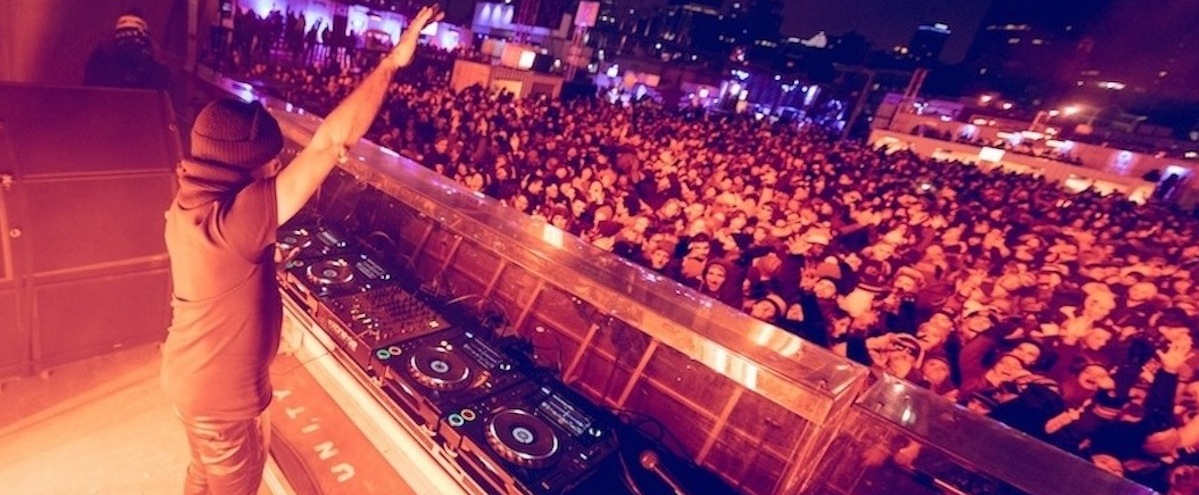
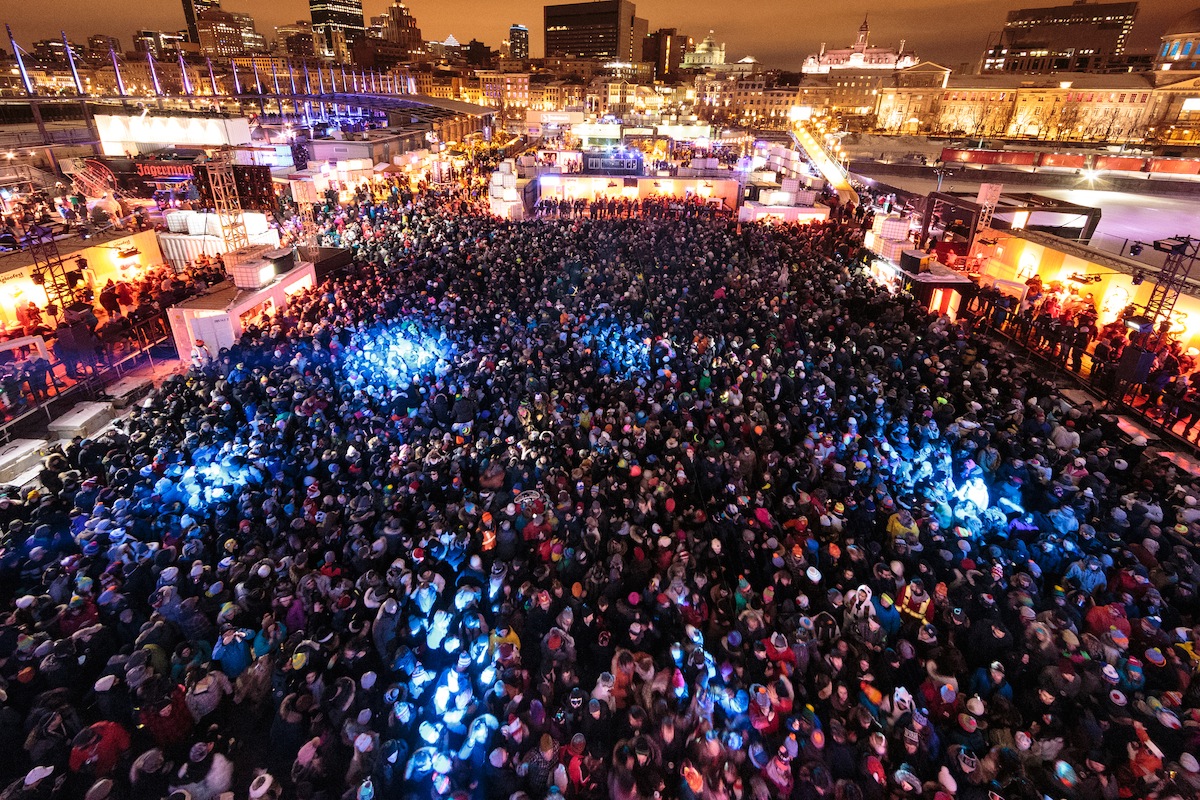
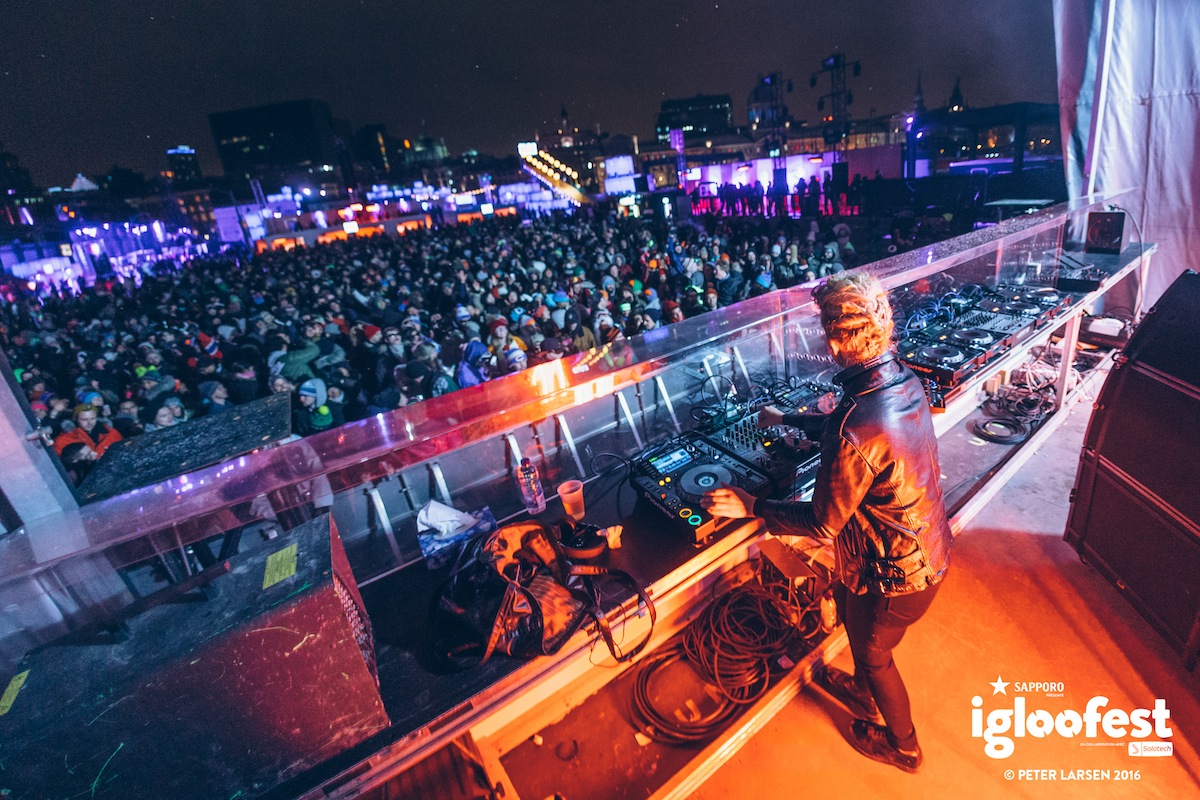
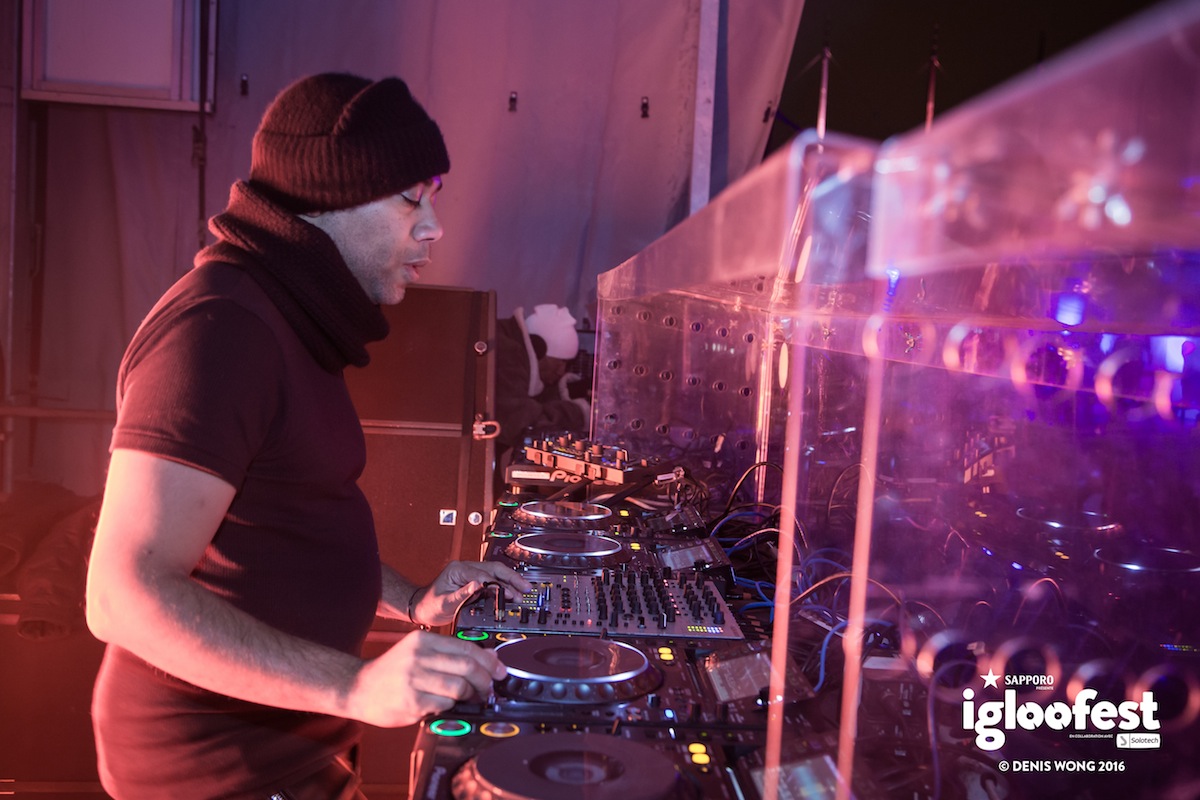
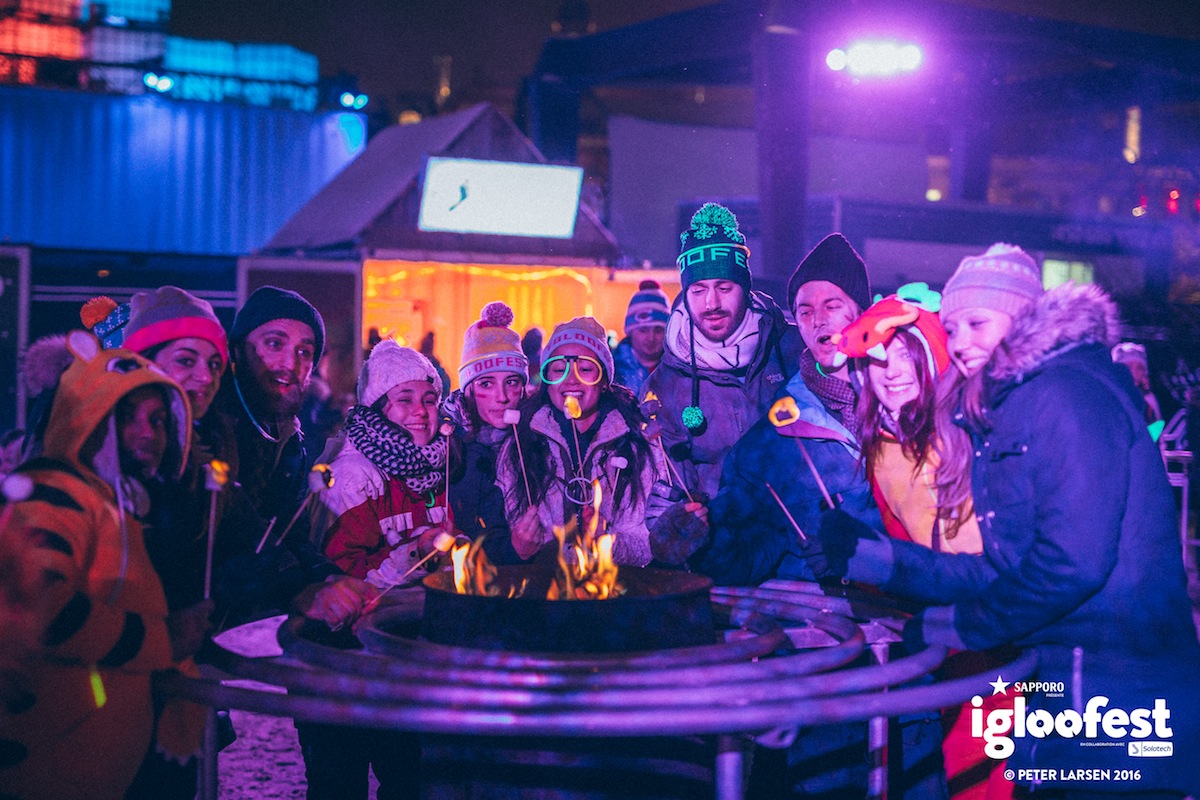
Despite that, our visit to Igloofest 2016, currently in the midst of its final weekend, proved to be another exhilarating experience. There’s the DJs and the music, of course (more on that below)—but the fun of Igloofest goes way beyond that. Besides the DJs playing on two full-scale stages, the installations, the flashy-flashy lights (some of the VJs were amazing), the ice slide, the bars (quite a few cans of Sapporo and shots of Jägermeister were consumed by this writer, all in the name of research) and the rest, there’s the crowd itself. First of all, it’s massive: In its 2007 debut, the fest had 4,000 attendees; by the time of our chilly 2012 visit, it was up to 70,000; the record, set in 2014, was 85,000. And this year? Well, through three weekends, Igloofest was up to 60,500—not to jinx it, but a new record is within reach.
The sheer size of the crowds may be impressive—and there are few sights more remarkable than 10,000 or so kids moving in unison to a steely Carl Craig set, as we saw on Friday night—but so is the the crowd’s rather, well, eccentric style sense. True, some of the fashion weirdness may be inspired by the weekends’ various Iglooswag themes—”Furry Madness,” “Igloobling,””Neon” and “Beach Party”—with the grand prize winner netting a trip for two to Jamaica. . But still, the finery definitely added to the sheer surrealness of the whole affair.
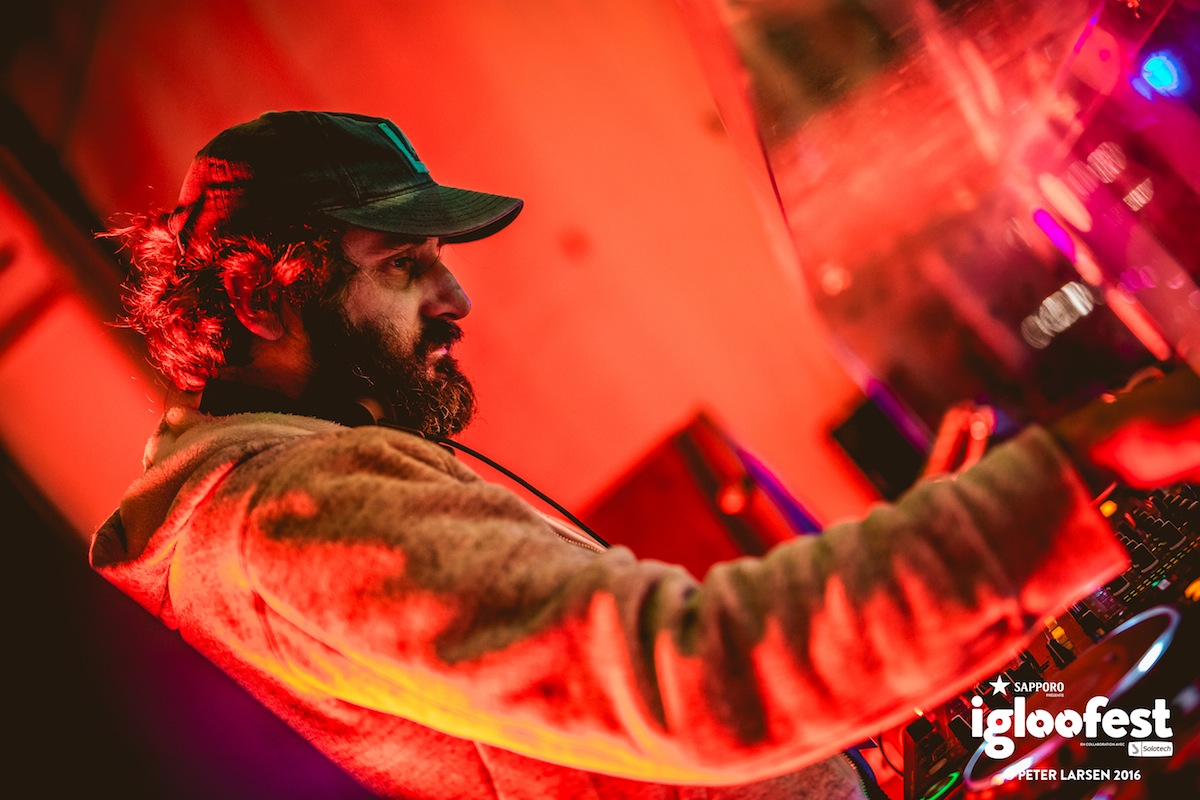
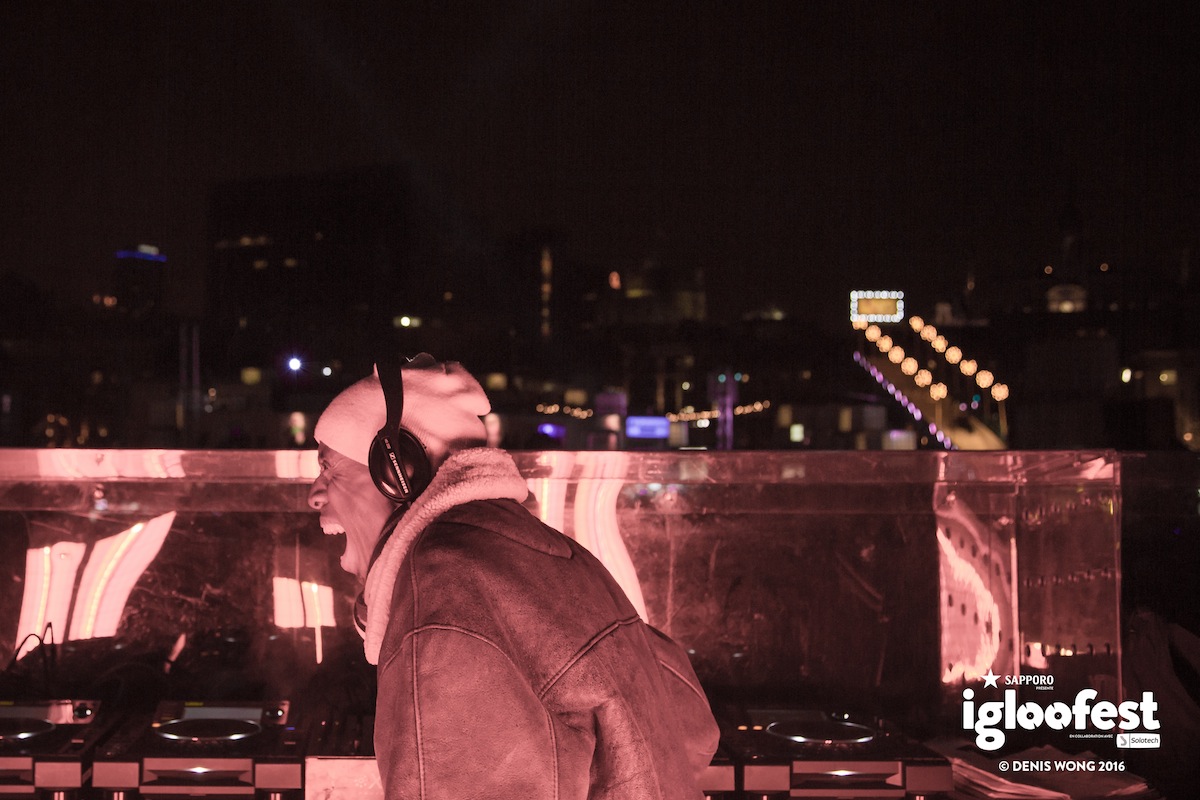
Of course, for many of us, it’s the music that matters—and as usual at Igloofest, this year has seen an array of DJs and artists that cuts a large swathe though the house-and-techno spectrum, with big names joined by many of Montreal’s best in-town talent. (The devotion that both Igloofest puts towards supporting the local scene is among the event’s defining attributes.) From the refined musings of Bonobo, La Fleur, and Montreal’s own DJ Mini, through the house and techno classicism of Kim Ann Foxman and Carl Craig (who split a set with Detroit DJing legend Al Ester), to the populist likes of Brodinski and Sébastien Léger, not to mention last night’sevening with the 50 Weapons crew—the fest aims its sights toward a wide range of dance-music demographics. It’s not an easy balancing act, but judging by the smiles we saw on pretty much everyone’s faces, Igloofest pulls it off. (By the way, if you’re still on the fence about the final two nights, Tale of Us, Michael Mayer and Swindle will be among those holding court.) XLR8R caught up with some of Weekend Three’s sound merchants immediately following their sets—some were exhausted, some were exhilarated, and all were happy as hell to have had the chance to play at Igloofest.
Mr. Oizo This is my first wintertime festival, ever. I usually play during the summer—festivals in Europe and a little bit in LA and New York. I really don’t play all the time, though—I just like to do the things that seem like it will be special. And Igloofest is special. It’s amazing! It’s incredible! I love it! [laughs] The energy was incredible. Since I don’t do this every weekend, I still get excited when I play at something like this. I mean, I have a normal life—I’m doing movies, I’m with my family—so doing something like Igloofest is still a big thing for me.
Do you ever get tired of people asking you about “Flat Beat”? Ha! That was a long time ago! I’ve done a little bit since then. [laughs] But I’m super-happy about it, of course. It’s what all musicians are trying to have—if you have one song that you are remembered for, that is enough. At least I have that. We sold three million copies of that song. It’s everywhere! In 20 years, you’ll be finding it in flea markets.
DJ Mini I first played at Igloofest ten years ago, so this is kind of like a loop in time. Back then it was a way smaller production, but it was really, really fun. I actually organized and planned tonight’s set a little bit more than usual, to an extent that I’ve never considered doing before! But I definitely had some room to play around. I did take risks—there was a part of my set that was all about hypnosis. I didn’t necessarily think that people would move during that part—I expected them to just be there and wait for the next moment that it comes up again—and that’s what happened! So I was really happy about that. They were really listening, and they were really feeling. That’s something I don’t think I would have tried ten years ago.
I think Igloofest adds to the democratization of Montreal’s scene. It’s not so much about the exact style of music. Not everybody comes to Igloofest for a specific DJ; they come for the event, they come for the space that is provided for them, they come for the installations and the interaction. And then they are exposed to all kinds of music! And Igloofest helps us deal with the crazy winters here—it helps us focus on something besides the shitty weather. [laughs]
Nymra & Sofisticated Sofisticated: Tonight was great. We are so lucky about the weather—whenever we play outside, it is always so beautiful. And tonight it is only minus one [Celsius], so we are very happy. It is not really cold…and it is not raining.
Nymra: Igloofest is all about cranking it a little more. Even though it is not so cold out today, it is still winter, and you have to play pretty active music. You don’t want to be to…groovy, I guess. It’s not really that kind of party. We played a little bit more on a techno side tonight, with plenty of bass and beats.
Still, there was plenty of subtlety in your set, it sounded like. It certainly wasn’t jackhammer music. Nymra: No, we don’t like jackhammer.
Sofisticated: But we do like Jack Daniels!
Nymra: It’s pretty rare to have a city with events like Igloofest and Piknic. They could easily forget about people like us, and just say, “hey, we can just get all the biggest people.” But they never forget about the locals. There is something really special about that.
Sofisticated: There’s a lot more room for locals to play in Montreal, compared to a lot of other cities. DJs from out of town always say, “You are lucky people! You have places to play!”
Nymra: I think Berlin is the only place that can compare. I always like to say that Montreal is a little Berlin. You can really feel the local sound here.
Heidi I am originally from Canada, from Windsor. It can be cold there, but I’ve lived in London for the past 15 years. The weather there isn’t great, but it doesn’t usually get very cold in the winter; when I left there yesterday, it was sunny and warm, actually. I’m not used to winter, basically! So even though it’s not that cold, I’m still kind of cold.
Did you find you were playing differently due to the cold? I don’t know if it was because of the temperature, but that set I just played was completely different than what I usually do. I’m not sure what just happened! [laughs] I hadn’t played for quite a few weeks, and as soon as I got onstage, all the sights and sounds were a bit overwhelming. A lot of my senses were all being punished at once; everything seemed really bright and really loud. And then there’s this thing that I’m wearing, a pink Mongolian freakin’ fur coat. It’s very pimp daddy, but it kept getting up in my face! I was smart enough to bring my biker jacket with me, because I knew the pink thing was going to keep getting stuck in my lipstick. And it was catching on all the equipment.
And on your hands? [Post-set, Heidi is sporting shiny black gloves.] I wore these for Carl [Craig], because I know he likes a little PVC. [laughs] I’m joking, by the way! Oh, and my nose was running—all I wanted to do was wipe my nose, but there were guys with video cameras on my all the time. I was just hoping I wasn’t dripping on the mixer.
Despite all that, you did great and the crowd loved you. The crowd here is hilarious! I was watching some of them, and they were all fucking nuts. Of course, they are Canadian—Canadians are all bonkers. Give ‘em a party outside in the middle of winter, and they’ll come.
Carl Craig and Al Ester Al, this is your first Igloofest, right? Ester: It’s my first time in Montreal! It’s a beautiful city. But Igloofest is great; the crowd is very receptive. I could really see and feel the feedback from the crowd. They were feeling what I was feeling, I think. I’ve been playing for 30-plus years, and I can tell you that that doesn’t happen all the time.
Have you ever played outside in the winter before? Ester: Just one other time, in Detroit. It was at a beer garden. This was much better! But judging from those two times, I think I play a little differently in the cold. Without the coat and the gloves and the hat and the scarf, it’s a lot more visual; I get a lot looser, I guess. I wouldn’t say that that inhibited me, though; after a while, I just stopped thinking about it and found my groove.
You’ve been playing with Carl fairly regularly lately, right? Ester: Yes, I have been playing some with Carl, and it’s been an honor. When he and I met at the Music Institute years ago, we became friends really quickly. I’m a DJ, but Carl’s a producer—and he’s such a good producer that his career took off more than mine over had. I mean, I have no records out at all, and when Carl calls me in to do gigs that matter, like this one…it’s just really cool.
Have you ever thought about producing? Ester: before he died, Frankie Knuckles told me, “Al, you’re a good DJ. If you want to take it to the next level, you’re gonna have to step it up production-wise.” But all my friends in Detroit, anyone who knows me, knows I don’t have the patience for production. But I will do it eventually. I have to do it to take it to the next level.
[Craig strides into the room.]
Craig: Jesus Christ, the production question again?!? [laughs] You know, the last time I was at here at Igloofest—I was with Stacey Pullen that time—it was so cold. This is nothing, this time around. But playing after this guy, Al, it was still pretty tough. I had to keep up with him, which is not easy! I’ve known Al for a long time, and he’s always been an incredible DJ. He’s one of the unsung guys, even though he’s been around for so long. It’s a beautiful Detroit Love thing to be able to bring him here. When I come on after all, my job—all I can do, really—is to put everything into perspective.
Ester: I actually think we’re very compatible, musically. Our sounds compliment each other. It kind of flowed. And coming on after Heidi…she’s the one who set the tone, really.
Craig: Heidi’s thing is kind of acid house; Al’s thing is more housey; and then I did my techno thing. Hopefully that was a good way to end things tonight.
Ester: Oh, it definitely was.
Sébastien Léger Sébastien, I have to tell you—I still have my 12-inch of “Hyptotized.” Wow. You know, that’s the only vocal track that I ever produced.
We didn’t hear a single vocal track in your set tonight, did we? You are right! I actually don’t usually like vocals very much. But I did play a lot of different sounds in my set, I think. I get pretty bored if I play the same kind of thing for too long. Of course, I know that people like to have some kind of same groove over and over, because of…I don’t know, magic potion? [laughs] But I like to have a lot a lot of versatility in my music—house, techno, old, new, minimal grooves, whatever. That is surprising for people, apparently!
It is actually a bit unusual nowadays. But it definitely adds an element of surprise to a set, and keeps the crowd on its toes. That is the idea. And it makes them move a little more, I think. The last time I played here, it was minus- 20, so they really had to move, just to stay warm. They were jumping! But this time they moved, too, even though it quite as cold—so I guess I was doing okay. Igloofest is crazy. Where else could you get this amount of people, four weekends in a row, no matter what the weather is like! I mean, I would stay home, no matter who was playing—even if Michael Jackson came back or something. People in Montreal are crazy. I have to say, I’m not the kind of guy who gets super-excited before a show. I’m like, whatever. But when I know I am playing Igloofest, I’m saying, “Oh my god, I’m playing Igloofest!”
Highly successful collaborative project Moderat (a.k.a. Apparat and Modeselektor) has today shared a new single from its highly anticipated third full-length, III, completing the artists’ LP trilogy.
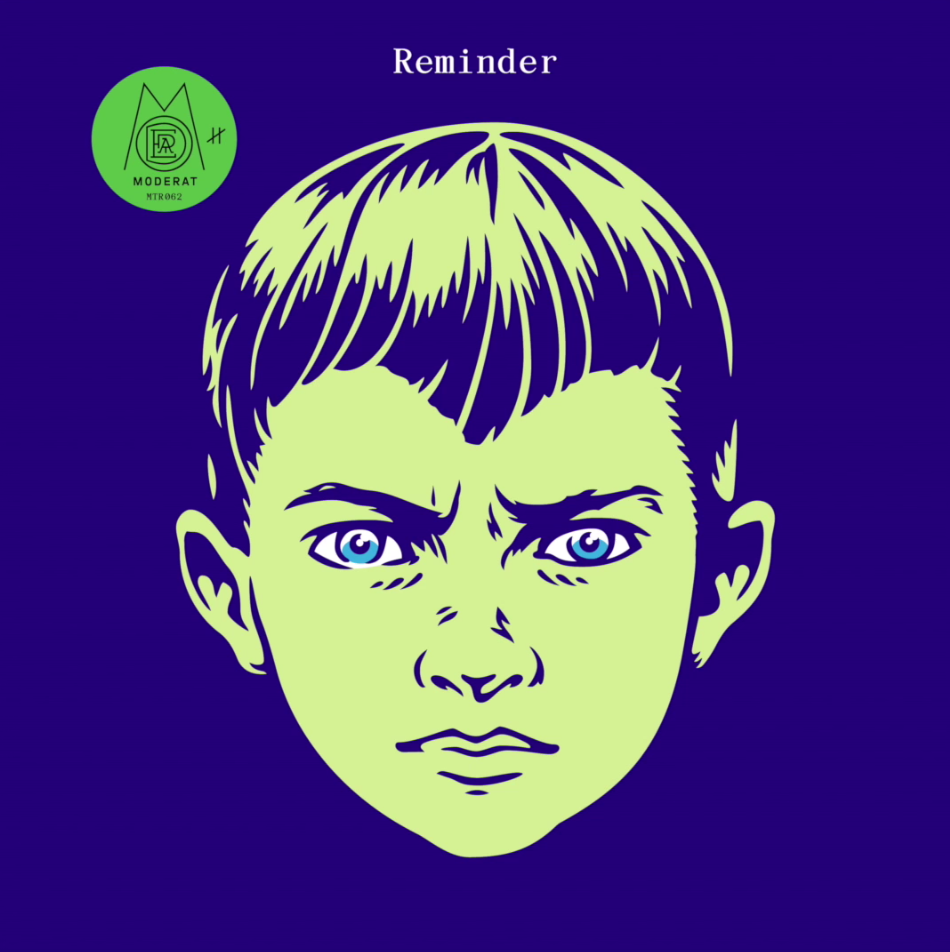
III precedes 2013’s II and 2009’s Moderat—the first two instalments in the trilogy. The upcoming LP will be co-released via both Mute and Monkeytown Records in April. Ahead of the album, Moderat will release the Reminder EP, which is scheduled for February 19, 2016.
You can stream the EP’s title track in the player above.
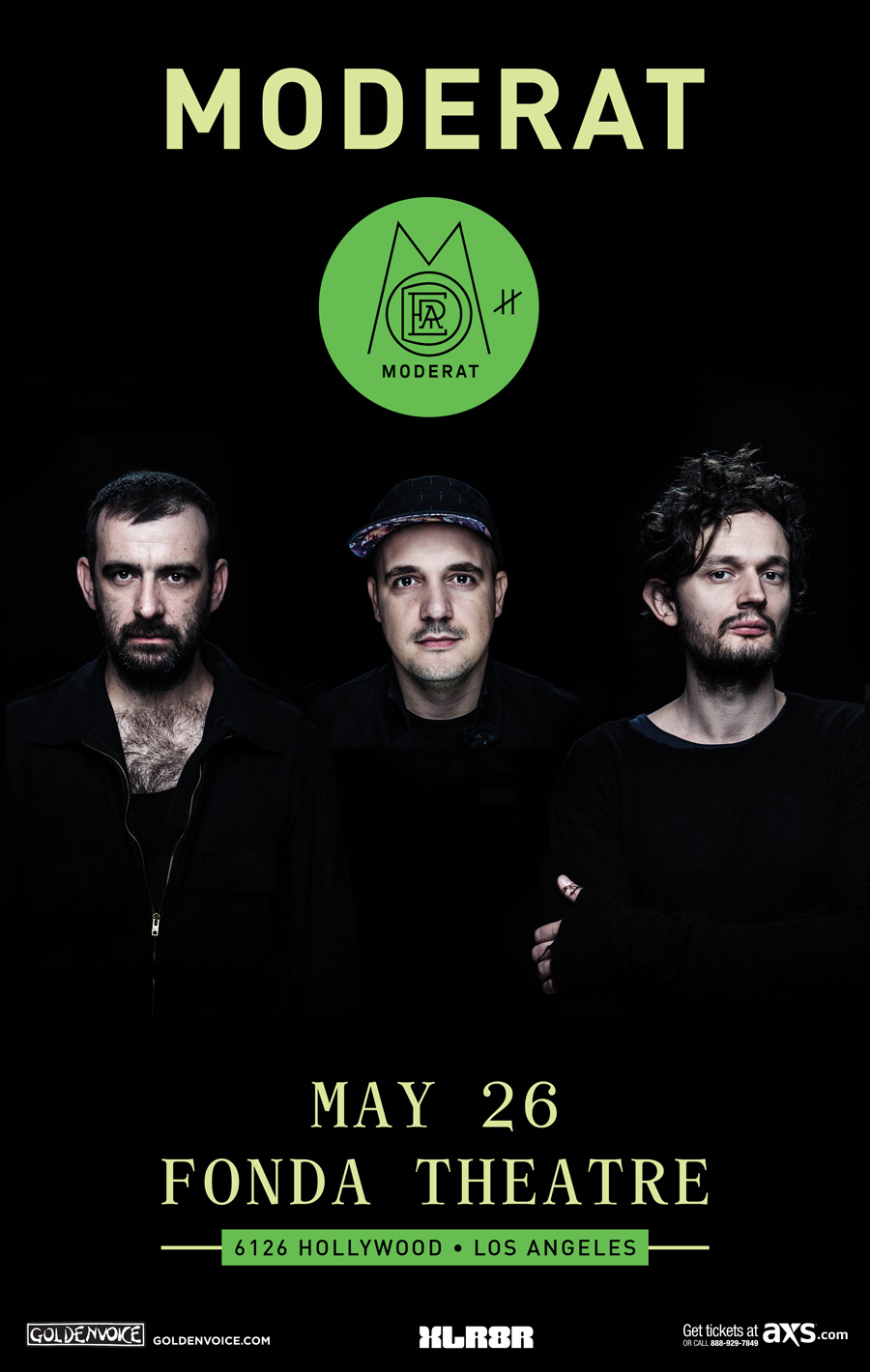
XLR8R x Goldenvoice are pleased to announce that we will be hosting the trio at the Fonda Theatre in Hollywood during their North American Tour on May 26.
You can grab your tickets to this show by going here.
In celebration of its 20th anniversary, German record label raster-noton will present, in collaboration with ZKM, the “White Circle,” an acoustic architectural space designed as an audio-visual installation.
The German label, founded by Frank Bretschneider, Olaf Bender (a.k.a Byetone) and Carsten Nicolai (a.k.a Alva Noto) in 1996, has a been a seminal figure in the development of glitch and sound-design oriented electronic dance music for around two decades now.
“White Circle” was especially conceptualized for the ZKM museum’s “sound dome” and will feature four of the imprint’s mainstay artists: Alva Noto, Byetone, Frank Bretschneider and Kangding Ray, who will all be contributing their own original compositions to the installation.
The exhibition will further see performances by the three Raster-Noton artists, Kyoka, Frank Bretschneider and Kangding Ray, to produce a multi-channel sound work for the immersive 4DSOUND system.
The installation will be presented for the first time by the label, in Karlsruhe, Germany, on March 11, 2016.
For their fourth outing, Dutch imprint Leyla Records has recruited Mike Jefford (a.k.a. Positive Centre), who will release Nonharmonic Beautifault later this month.
Active since 2013, Positive Centre has so far had releases on Lucy’s Stroboscopic Artefacts and Sigha’s Our Circula Sound (including 2014’s full length, In Silent Series). For his next release on Leyla Records, Jefford offers four noisy techno tracks (and two loops), which the label describes as representing “a shift in Positive Centre’s work, that aims beyond the delicate ambience into harder and darker sound territories.”
You can pre-order Nonharmonic Beautifault from the Leyla Records Bandcamp site. Check out snippets from the EP below.
Masaaki Yoshida (a.k.a Anchorsong) recently released his sophomore LP titled Ceremonial on the Brighton-based music label, Tru Thoughts. Currently living in London, Yoshida follows up his Mawa EP on BBE with a warm, rhythmic, and uplifting album that is heavily influenced by music that came out of Africa in the seventies. Yoshida found the album Vodoun Effect by Orchestre Poly-Rythmo at his local record shop and the sound took hold of him, ending up a heavy influence in the formation of his sound.
The Japanese producer has kindly offered up the closing track from his most recent Ceremonial LP, “Ceremony,” as today’s XLR8R download. The track, which closely resembles the album title and happens to be the artist’s oldest production on the LP, started life as one of the sonic experiments that inspired the whole adventure—fittingly ending up as the final stitch tying together the project. With a buoyant and jovial attitude, the track utilizes catchy guitar riffs and gleaming percussion while widening significantly when introducing moments of dramatic violin arrangements.
You can download/stream the Anchorsong track “Ceremony” below.
Be sure to check out more from Anchorsong by visiting his SoundCloud page here.
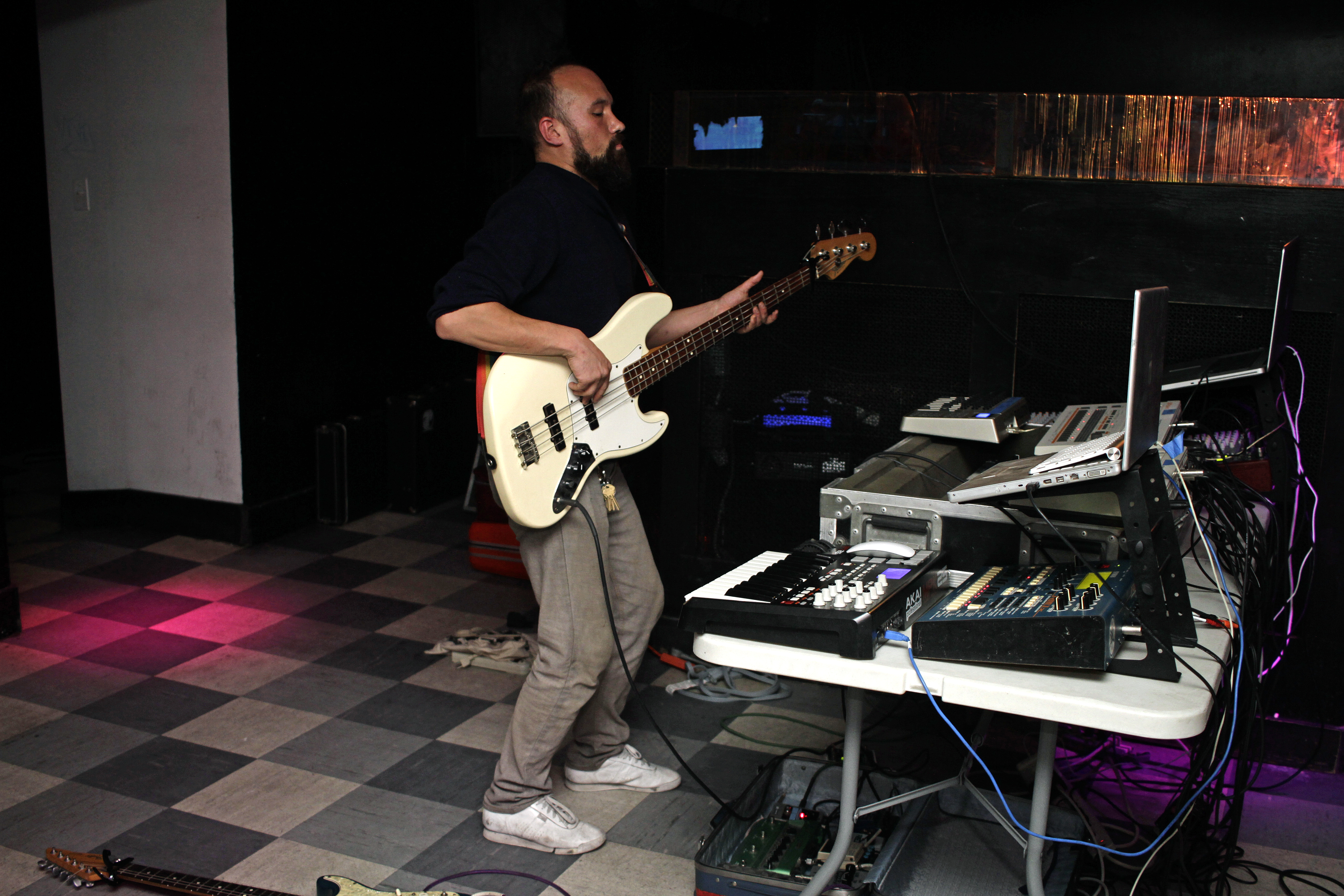
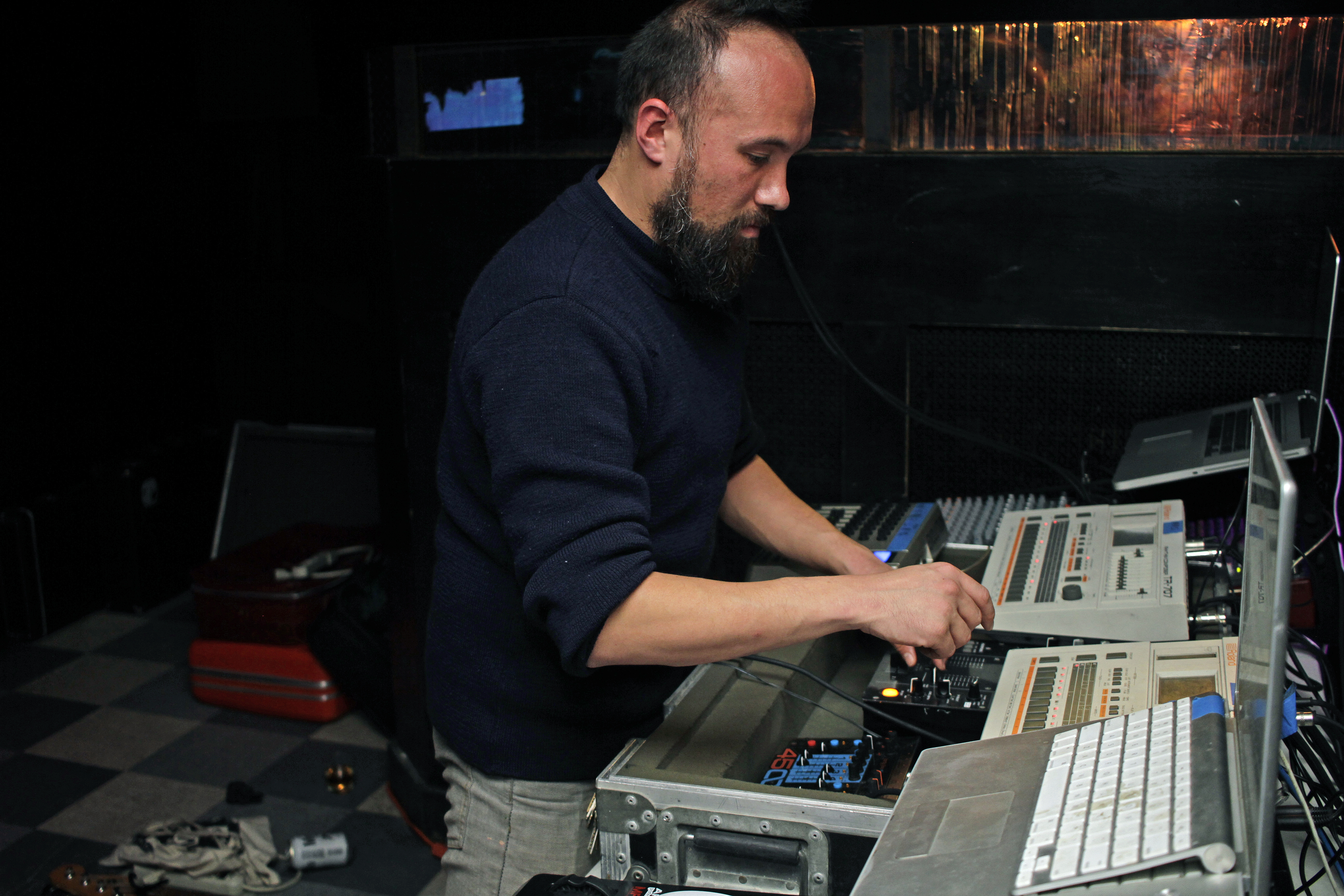
Mark Hurst (a.k.a A Pleasure) divides his time between waiting tables and making music. While the former does not sound especially conducive to a successful career in the latter, it’s possible that we would not be introducing you to Hurst if it were not for his work at his local Brooklyn sushi restaurant. Although he has been making music for several years, uploading it onto his personal SoundCloud account, his only releases stem from a chance meeting with Nicolas Jaar, who signed Hurst to his Other People imprint after discovering him when dining out before his infamous Boiler Room show in 2013.
The latest product of this longstanding relationship is Jream House, Hurst’s blissful debut full-length that is equally—if not more—spiritual and emotionally provocative as his debut EP on the imprint, dated March 2014. The press release explains that the album was recorded using a process of “numerical transposition” in which names of composers and groups are converted into drum patterns. To learn more about the inspirations behind it, including these intricate production techniques and his relationship with Other People, XLR8R visited Hurst in his analog-heavy home studio just last week.
How long have you been playing music, and what are your earliest musical memories? I guess I’ve been making music since I was at least 13 or 14—since I was a kid. The first album I ever bought was Björk’s Debut, which came out in 1993 and I bought the tape. When I came home, I wasn’t allowed to listen to it because my brother made me listen to all The Sugarcubes’ albums first. He was about ten years older than me, and would tell me when I pronounced Björk wrong. I guess my brother would do that with everything over the years—to make sure I knew something about it beforehand, and listen to the older stuff first. As I got older and got into high school, it just became a habit. I was always asking questions! I was learning bass, and I joined my high school jazz band, where I would always get in trouble for playing all this noisy stuff. The instructor would be like, “Whatever you do, don’t ever play that free-jazz shit ever again.” And then I would ask “What’s free jazz?” Around that time, I was playing in punk and hardcore bands too.
So even at school you had this passion for music? I remember that my class instructor gave the option that I could either take the final—which was this music-theory test—or write my own composition, which I chose. When it came time to hand something in, all I had was all these things to be improvised, for which I drew a series of Venn diagrams. My teacher brought out this old computer that was covered in dust in the closet of the music room. I can’t even remember the name of the program that I used—it was some meaty composition software. He told me I was the only student he’s ever had that has been interested in something like that, and to use the computer to make my composition. I spent months in a basement with this old Apple computer, which I guess you can consider to be my first electronic-music piece. I was so interested in studying that stuff, yet the other counterpoint for music in my life was playing in punk bands—it didn’t really meet up. It took a long time for both kind of worlds to collide.
The earlier stuff you uploaded to your Soundcloud is very different from what you are producing now. When did you actually start producing? That is certainly true. I’d been making music for a long time before I started uploading tracks to SoundCloud in 2010. For a long period of time, before I actually started working on music, I was taking care of my family who had fallen ill—my Dad had brain cancer, and my Mom suffered from a variety of health disorders. During that period, the music I could do was limited. I was just doing slowed-down re-edits, and strange atmospheric, ambient pieces. It was one of those things where making stuff like that was more of a mental exercise. I think that what really changed was that as I was getting my hands on more electronic equipment that I could use, as opposed to just sitting on the computer, and it started to change the music that I was making. I would always have a guitar, bass, piano around, but I felt limited to a huge desktop with electronic music. I’ve had a sampler for over a decade, but it was able to manifest in a different way when I started to collect more equipment.
Is it quite an elaborate hardware setup that you have now? That’s correct. It is a very elaborate setup. Within New York, I’ve been known to have really large live sets! I use a variety of samples and things like bowed cymbals, and contact microphones to create various synth-sounding effects. I love the electro-acoustic work with contact mics—I often tape up a contact mic to a drum cymbal, and bow it with a violin bow while running it through a variety of pedals to create different sounds, often emulating a synth.
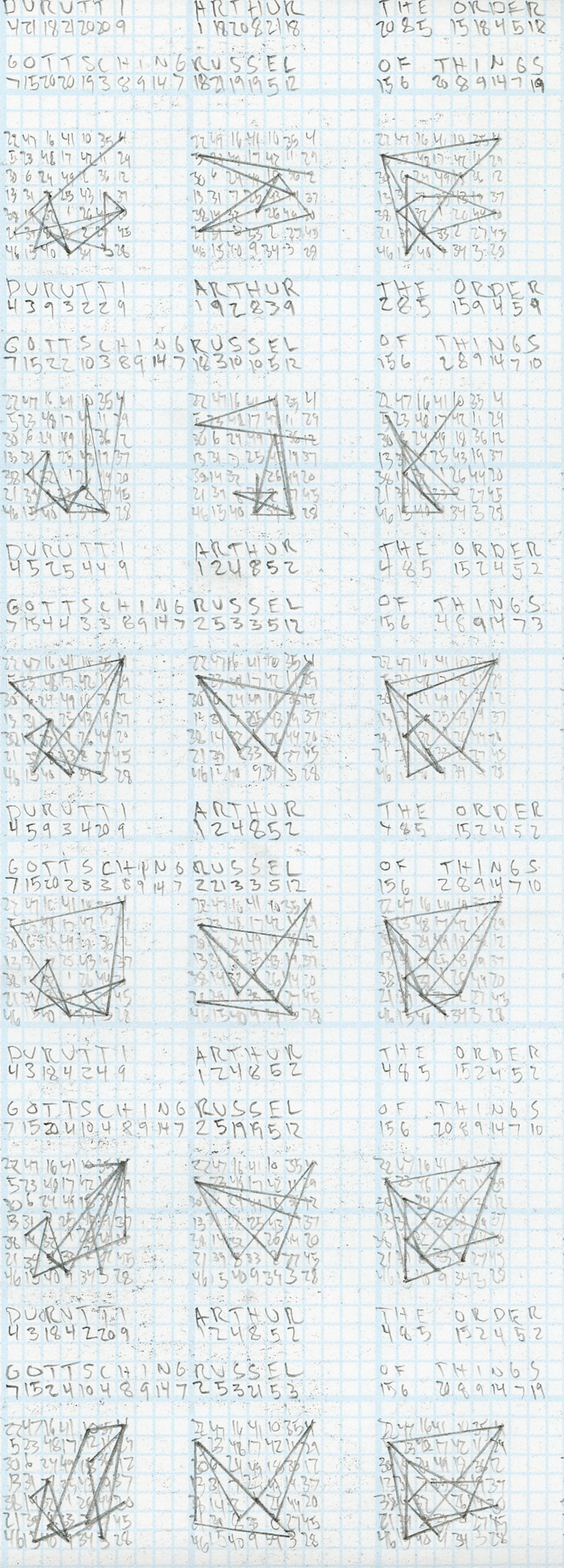
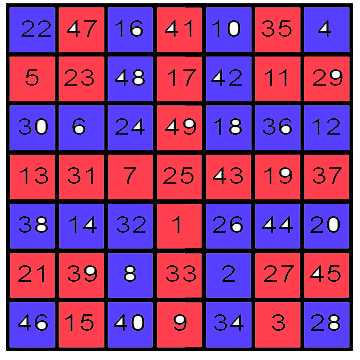
The press release for your new album says that you “convert the names of some of your favorite bands and composers into drum patterns.” Can you just describe exactly what you mean by this in greater detail? I use the Magic Square of Venus to program the TR-707. My intentions are not really occult-based, rather just formulaic—I have been an avid reader of the occult since my youth, but never had really thought of bridging the two together as a musical practice. Normally you would put forth a desire into the Magic Square of Venus, whether it be a phrase or someone’s name, but here I place the names of things I love and see what numeric values I receive, then I use that data to program on the 707. Each letter in the word or name corresponds to a number in the alphabet. When programming on a drum machine, there are the numbers 1-16 as steps for programming beats. I just use this method to come up with those numbers. I always go through this kind of number mashing in my head when I am playing live.
The music you are producing now is very atmospheric, almost spiritual. Is the sound that you have now something that you have always envisioned in your head, or has been a constant case of trial and error? It’s funny—I think it’s actually been a constant struggle of trial and error. The problem that I always run into even today, is that a lot of electronic equipment or gear does not really work the way I want it to!
You can definitely hear techno and electro in your new album—but it is also quite removed from the dancefloor. To what extent was dance music an influence in your music? I do listen to a lot of dance music, but my new album is not a dance record. Well, it’s not a dance record, but it’s also not not a dance record. People think, “Oh you are playing guitar so its like rock?,” but obviously my work is removed from the notion of what rock and roll is. There is this thing that Manuel Göttsching says poignantly in the past: “This combination of doing something that is improvised on the spot and doing something that is composed and minimal.” I am really into a lot of avant-garde and minimal composition, and the fact is that, structurally speaking, a lot of these songs are much like dance music. I’ve always seen the two as the same. I never posted it online, but I had a mix that was nothing but Steve Reich and Kerri Chandler. Those two things are totally equivocal in my brain—there is a song Kerri does called “Six Pianos,” which is an ode to Steve Reich’s “Six Marimbas.” It’s my favorite Chandler track by a long shot. Anyway, there has always been a relationship between the two, and I’ve always looked at them the same. It’s not that I look at it as dance music, but rather a form of avant-garde composition.
Where does your name, A Pleasure, stem from? It’s kind of hilarious—the first time I played in New York around 2010, I had thought about calling myself A Burden, because I had so much gear with me. I was talking to my friends about it, and I kind of liked it, because aesthetically it was similar to Burial. As I thought about it more, it just seemed so negative. I was talking to my co-worker, and off-the-cuff I just said, “I want to be called something like “A Pleasure.”” She started laughing and told me it was a great idea! I thought to myself, “Oh God, she doesn’t have the best judgment.” I always imagined I would change it when I thought of something better, but it has just stuck.
How did your relationship with Nicolas Jaar and his Other People label come about? So, for the past five years I’ve been a full-time waiter at a restaurant here, and I was Nicolas Jaar’s waiter—no joke! It was right as he was doing his Boiler Room set at the Market Hotel a couple of years ago. I ended up being there that night. I was working in the restaurant, and it was slow during lunch, so I could play whatever music I wanted. I was playing parts of this EP that I had recorded in my bedroom, and Nico was eating his lunch. I didn’t even really recognize him. Eventually, I asked him if I could get him anything else and he wanted to know what we were listening to. I told him it was me, and asked if he wanted another drink. He said that it couldn’t be me, and that it was a re-edit—so I told him I performed it live using a TR-707, and playing piano at the same time, before asking if he did want another drink. As it happens, he really liked it, and he said that if I was able to get off work, I should come hang out with him at Boiler Room because he wanted to talk some more. That’s the story—it’s like a joke, the New York dream of getting discovered, but that is actually what happened!
So is that the same music that has now been released on the label? No, it wasn’t. When I met him, I had basically just started the process of the record that has come out now. I wanted to record something new, rather than something I had already done. Nico was cool with that because I knew that, while working on this record, I would be going through these other songs that wouldn’t end up on the actual album. You could say that some of the songs that made it onto the album were a work in progress prior to me meeting Nico. I had come up with this numerical transposition in drum programming system just before I met him—maybe only a few months before.
So how long did the album actually take to produce? It took just over a year. I had a few set-backs—My father went into the hospital when I started, and I had suffered post-concussive disorder after being attacked late at night. I was distracted, could not concentrate, and suffered issues with temporary memory loss, forgetting something from just a few minutes ago. Drawing and writing things down in a notebook became very helpful—I started from my notebook first, by drawing Sigil patterns using the 7 X 7 Magic Square of Venus.
How much input did Nicolas have in the end? He was great! I would be sending him tracks through email, even when they were not finished—but I had pretty much free reign. I think “Durutti Gottsching” was originally about 17 minutes, and Nico was the one who stepped in to say that we could get it down to 12! He could also tell that I had been holding back on stuff, because I thought it was too personal, or that it was not going to fit right. On the track “Grace,” one of the samples I used is actually from the medical equipment that my father was attached to in the hospital. I recorded all these sounds that I didn’t even know what to do with, and I just had these files sitting around on my computer. It was a way for me to deal with everything. I think that there is always this subtext in my music that is extremely personal. It was really great was communicating with Nico about that—he told me that if you feel emotionally reserved, and held back from a track like that, then that is exactly why you should share it. He was right!
Let’s talk about the song titles—do they all have a special meaning? Yeah, even as far back as the Extended Play EP—on that record, the first track is called “Endurance.” When you are making Sigil patterns, it sort of becomes a mental mantra, or a way to obtain something you desire in life. Always working really hard, never stopping, and also realizing that at any given moment it can all just go away. On Jream House, all the names refernce things too. “Slow Channel” is a homage to both Basic Channel, and to the band Slowdive, with the track falling somewhere between those two major influences, while “The Order of Things” is a reference to Michel Foucault.
What’s the story with the album’s name, Jream House? It’s a reference to a few different things—first is the La Monte Young installation referred to as “Dream House,” which I was finally able to go when I moved to New York. It’s basically just speakers that blast a particular tone throughout the room, and as you move around the room, you end up hearing different tones. It’s a meditative experience. When I was taking care of my family at the time, I would come up to New York frequently and stay with some friends. A habit I picked up from a lot of people I know is was that we would name our houses. My friends dubbed their apartment “Jream House,”with a “J.” At the time, which is roughly around the time I started on SoundCloud, I was posting the slowed down re-edits. So for me, coming to New York was much more about escaping the trauma at home in Philly, and it was a place I knew I could always come to and relax, and put that stuff aside. The name of the record was something that felt appropriate. I decided on the name many years ago.
When was album finished, and how did you know? That’s a really interesting question, because I guess you never really know. I had made at least 50 tracks. There were some that at the end I would just scrap, though maybe there would be a couple of ideas that I would hold onto. As I was making more and more music, I was making more mixes of things. I think a lot of it was trying to imagine a sort of balanced accomplishment from one song to the end, of what I think a record should flow like. That became the deciding factor—from the beginning having an idea of what it sounds like, and taking it to the end of the album. That was the part that was interesting to me. It would probably make more sense if I were to draw a graph. I constantly think of synesthesia. I’m not just thinking of music as a sound, but also as a shape. For me, the album has its own shape. I’ve always known it would have its own specific form and shape. I knew the songs were done when they fit inside that form and shape.
You obviously have a very emotional connection with the music. Do you find music production to be a very cathartic process? Oh gosh, yes. I think that if it were not so cathartic, then I would not be doing it! That idea really manifests itself in a way when performing it live. That is the main thing that has really changed. I remember going down and basically producing a track in a traditional method—laying down beats in Reason, and then going through a sample pack of all these different synths I have. There was something about doing it that way which was so inorganic, that I didn’t even feel like I was doing anything. Once I started to do things completely live, that transformed things. I’ve gone through so many different iterations of music, and so that must have started about a decade ago. Before that, I was using Nintendos! I got them at garage sales for really cheap, and I remember there was a game called “Mario Paint” in the ’90s, which had a sequencer that you could program, with synths and drums on it. I used that for my beats, and I would load up different Nintendo games that had different beats and patterns that I had already made. The irony is that using stuff like that made it so quick and easy to use different forms of hardware. At its peak, I think I was bringing maybe ten Nintendos out, and using the whole lot! Also the Game Boy camera had a small sequencer and a waveform editor which was great. I’ve been threatening that one day I will do an all Nintendo set! It’s been a long time since I have done that.
What have you got planned now? Are you traveling with a live set? Yeah. I think I’m going to have to find a way to make my setup a bit smaller for the further I get away from New York. It’s a large setup with a lot of equipment, and it’s always rotating. Even with a lot of the songs on the record, there is a lot of improvisation that goes into it. It’s one of those things that if I were just doing it on a laptop, I would be limited, whereas when I am doing things live, I can kind of change it up. The part for me that is really spiritual is that I do get into a trancelike state. Sometime I’ll get a tap on the shoulder to tell me I need to finish up! It’s so improvised in that sense, that it forces me to deconstruct my own songs and not really think about them entirely, but thinking about them sectionally. You do that when you DJ. It’s a place I wanted to get to for years. When I DJed in college, I quit DJing because I want to have the same perspective and methodology as a DJ but have that exist within a live performance. It just took me almost ten years how that actually manifests.