
In Conversation: Greg Wilson

Dennis Kane is one half of the Siren duo (with Metro Area‘s Darshan Jesrani) and the man behind the Disques Sinthomme and Ghost Town labels. He’s back to chew the fat with dance music’s movers and shakers, with the U.K.’s longtime electro-funk iconoclast Greg Wison serving as this month’s subject.

December 6 1975: A young man of 15 with a mobile DJ set-up arrives at a local New Brighton nightspot, the Chelsea Ranch, and begins the first of many residencies—the first public performance of a long and storied career. We are, of course, talking about Greg Wilson—edit king, electro-funk spokesperson, remixer, label head, intellect, essayist and most importantly, a thoroughly engaging DJ.

 Photo: Elspeth Moore

Greg’s career is a storied and well documented one, from his early days at Wigan Pier and the Manchester club Legend, to his moving to the Haçienda—all the while championing an electro sound coming out of NYC that had a new approach to production and a raw street vibe. Greg also pioneered mixing records in the U.K., and began showcasing his technique on Piccadilly Radio and Mike Shaft’s T.C.O.B. (Taking Care of Business) show, as well as being the first DJ to mix live on British television. At this time, Greg put out the first U.K. re-edit, (Paul Haig’s “Heaven Sent”), toured with a young Norman Cook (a.k.a. Fatboy Slim), and established himself as a major force in the his country’s dance scene.

Then at the age of 23, Greg walked away from DJing, choosing to focus on production work and managing a Manchester breakdance crew. He co-wrote and produced the seminal UK Electro album; eventually resettling in London, he began to manage and produce the Manchester group Ruthless Rap Assassins as well as a sister band Kiss AMC. In 1994 Greg compiled the Classic Electro Mastercuts LP.

Greg started the website Electrofunkroots in 2003, documenting the ’80s era and covering the impact of electro sounds; that same year, he made his proper return to DJing. With a new audience pool available, and seeing the music he spent so much time championing gaining in popularity, Greg’s career found a new context to flourish in. His Credit to the Edit compilations have had a huge impact on contemporary dance culture. Greg now tours extensively, runs his Super Weird Substance label, writes, lectures, blogs, and produces…he is a very busy man. Several years back he guested on my podcast—the only all-spoken episode we ever did. Along with Liquid Liquid frontman Sal Principato, we talked for hours, specifically about the early ’80s in NYC, disagreed on some things, broke for for dinner, hen we resumed the conversation on the phone and spoke from midnight until six in the morning. What impressed me then about Greg was his ability to argue points—his obvious depth of knowledge—but also his lack of ego and incessant curiosity. He asked me more pointed questions about music than any young person I have met had, and he was willing to answer any I posed for him with great enthusiasm.

I was very excited to get the chance to chat with Greg again; what follows is boiled down from several hours worth of conversation.

Hey Greg, I wanted to ask right off—you grew up seeing mobile DJs from an early age. [Greg’s parents owned a pub, and wedding receptions and parties would be held in a party room.] What was the effect of being exposed to the social component of music so early on?
In hindsight, it gave me discernment, to both eye and ear, as to what a good DJ could be, what his impact could be on a crowd. I saw a great number of DJs—some good, some not so good—and you could feel what happened when one read the crowd properly and brought an emotional intensity. Then, for years, I fell asleep hearing songs being played through the floorboards—I think some of that got into my head through osmosis. [laughs] Years later I would recognize songs I didn’t know that I knew from that time.

When you started playing after experiencing this, what were the components of your sensibility as you started out?
Well, soul and funk, the black American sound, were huge for me. Ohio Players, James Brown, Kool and the Gang—this was the original disco music before it was named so as a genre. This was the music you danced to. I loved pop and rock music as well, but my brother and sister had great soul and funk records, so I had a very strong foundation in that. The other thing I wanted to say, going back to your earlier question: What stood out at this time was the concept of programming a set, building from song to song; then, there wasn’t mixing or any technical flourishes It was programming, which I still think is the most important aspect of DJing. I think DJs in the late ’70s and ’80s were very good at reading crowds and constructing the arc of a set. Perhaps they had to be because mixing hadn’t really come into play yet.

What I find admirable was how you transitioned from playing funk and soul, to really absorbing newer music and championing what you would refer to as “electro-funk” sounds.
It seemed very natural to me. I realized that perhaps some of what I was introducing was rubbing some people the wrong way.…

Sorry to interrupt, but why do you think people objected to these new sounds?
Well it’s sort of an age-old status-quo thing—people wanted to hold on to a certain sound that they perceived as “authentic.” And these are people who have a lot invested in a scene, so here I come playing these new records, which I see connected naturally, but they see it as electronic sounding and perhaps a threat to what they have. I just saw how the younger black kids absorbed the music immediately, and I wanted to play to them. I’m sure it wasn’t much different than what was happening in other cities as well.

“I remember someone saying to me, ‘You are leading these kids astray, playing this stuff.'”

In New York, electro became the sound of the street, and you could feel hip-hop coming on, especially after “Planet Rock.”
Yeah, it was where the edge was, and young kids always have their antenna out for new forms—or at least they did at that time. People like Afrika Bambaataa and Kool Herc were playing a really generous mix of things, it wasn’t regimented. New York seemed so good at pulling together diverse sounds; it took the U.K.much longer. From a distance, I was truly fascinated at what was happening in NYC.

So how do you make the case for these sounds in ’82, ’83?
Well, songs like Tee Scott’s “Tee’s Happy” and “Time” by Stone became significant; they were new sounding, but also had a strong connection to songs that had preceded them. “You’re the One for Me” by D-Train was absolutely massive. In retrospect it doesn’t sound so radical because it influenced so much, but that was an incredibly impactful tune. Then another Prelude tune, “On a Journey” by Electrik Funk, really went further—I played the dub side and that’s when that term electro-funk started getting used.

This is also a time when B-boys and breaking start really becoming a thing unto themselves.
Well, in the U.K., songs like “The Wildstyle” by Time Zone and “Pac Jam” by Jonzun Crew, became bigger breaking jams than, say, “It’s Just Begun”. This was a significant shift, and really a new paradigm was establishing itself. I remember someone saying to me, “You are leading these kids astray, playing this stuff.” [laughs] Well, first of all, you don’t lead these kids—these kids are the leaders. I was thrilled to play for them.

Shortly after this period, you stop playing; did you move to London immediately?
I was managing Broken Glass, a breakdance crew, and I was still in Liverpool. In Thatcher’s England, it was a hard time to survive there. The city took a huge hit economically and people started to depopulate, not unlike what would happen to Detroit in the States. Later, I went to London, managing the Rap Assassins. I was back and forth between Manchester and London at that time.

In ’92, ’93, you did some DJing in conjunction with the release of the Classic Electro Mastercuts LP—but what got you back into playing full-time again?
The Internet really changed things…getting a computer, and seeing this scene that I didn’t feel was really documented properly still attracting interest. I started Electrofunkroots.co.uk, and began bringing my archives into that, and finding an online community. Soon after, people started asking me if I would begin playing again. I could sense a revival or interest in edit culture and dub versions of songs.

“I did see the re-edit as a way to open a door, and share a huge part of my interests and contemporize the history.”

Well, for sure that stripped-down sound—the stuff Arthur Russell and Nicky Siano had done, a lot of the dub sides of Prelude jams, the raw sounds of ESG, or a band like Atmosfear all became strong influences on the dance music of the early 2000s
Yes, and the connection between that and electro-funk was an area that fascinated me. I’m still learning about how these forms influenced each other. It was real underground culture, as opposed to the more commercial disco stuff that gained popularity.

With the interest in re-edits, did you see that as an opportunity to turn people on to the music you had been so engaged with?
I was pretty detached at the time. I saw the influence of people like Danny Krivit and Ron Hardy on edit culture, things like Black Cock, and the work Dave Lee was doing. I remember going to Electric Chair and Low Life parties, and hearing edits and seeing it work—it was inspiring witnessing this serious enjoyment. I could sense a new context emerging, and it enabled me to edit myself back into the scene. [laughs] Suddenly a lot of the work I had done in the past was making sense. I saw the re-edit as a way to open a door, and share a huge part of my interests and contemporize the history.

What originally got you into doing edits? Were they motivated by your work as a DJ?
Originally I was doing it for the labels to kind of showcase my ideas, and to see if I could get remix and production work. The record companies were so far behind what was happening in the clubs, they had a very staid perspective—and also there was this bizarre prejudice that only American DJs did remix and edit work.

Doing edits in the studio and cutting tape is very different than sitting at a laptop.
Yes, and the method was to work quickly and use the faders, try to get the freshness and richness quickly, and not worry too much about small mistakes or micro imperfections. I think in the digital era, you can over sanitize and groom things a bit too much; you have to be on guard against that.

With Super Weird Substance, there seems to be a focus on a live sound.
Yes. We wanted vocals and songs; we want that live swing and a strong topline.There isn’t really a shortage of decent groove tracks or loop-based work, but we are trying to go in another direction., and there isn’t really a shortage of decent groove tracks or loop-based work, but we are trying to go in another direction. Even if you listen to those early electro tracks like “Thanks to You” by Sinnamon, it’s a very complex drum mix and it has a live vibe. It relates to the vibrancy of good funk and boogie as well—there is a richness there, and I want to go down that road.


Five Greg Wilson Jams.

Like many of the artists in this series, Greg’s discography is pretty overwhelming. You can spend a very nice YouTube or Discogs evening going through his varied offerings. Below, I select five of my favorites.

1. Greg Wilson “I Was a Teenage DJ Pt. 1” Greg Wilson (Reactivate)
A nice chop-up of a KC & the Sunshine Band jam, some K-Billy’s Super Sounds of the ’70s voiceover, plus some Dimples D for good measure—what?! Pure fire and enjoyment from Greg right here.


2. Social Disco Club & Maia “The Way You Move” (Greg Wilson remix) (Bear Funk)
Greg takes this lovely song by Humberto Matias and gives it the pimped-out deluxe treatment. The pacing is really amazing; you feel like the lyrics are coming to life. This song set the tone for many a dance floor…a truly elegant groove.

” width=”100%” height=”400″ frameborder=”0″ allowfullscreen=”allowfullscreen”>


3. Yello “Lost Again” (Greg Wilson edit) (Tirk)|
One of my favorite jams by these Swiss gurus gets a great extension and delicate rework from Greg. He emphasizes all of the tracks strongest elements. Strange, elegiac, forward thinking electronica here, it sounds amazing on a proper system.


4. Sheila & B. Devotion “Spacer” (Greg Wilson edit)
Some German/Italo disco, produced by Chic’s Nile Rodgers and Bernard Edwards. Greg trims some of the cheese, reduces the vocal parts, and brings out the piano and guitar parts—he deftly makes it more floor friendly and brings the Chic goodness to the forefront.


5. Talking Heads “Psycho Killer” (Greg Wilson edit)
David Byrne starts the film Stop Making Sense by playing a guitar/boombox/drum-machine version of this song, it’s dramatic and haunting, and it was a song Greg thought about editing for years—and as soon as a DVD was made of the film, he did just that. The edit is really a great take on Byrne’s iconic performance, complete with looped crowd noise.

Dusky, Kidnap Kid, and Kenny Glasgow Head Up New Years Eve at Twelve 31

Taking place at the Hollywood Palladium this New Years Eve, the Insomniac event Twelve 31 aims to start off 2016 in Southern California by hosting a solid lineup of house music aces that are bound to usher in the new year with a new and exciting sounds. Going from 8pm until 5am, the list of talent includes London luminary Dusky, the ever-advancing local Los Angeles DJ/producer Jon Charnis, award-wining artist Kidnap Kid, ghetto house specialist Shiba San, and a very special B2B set from Tiga and Kenny Glasgow.

You can now buy your tickets via XLR8R.

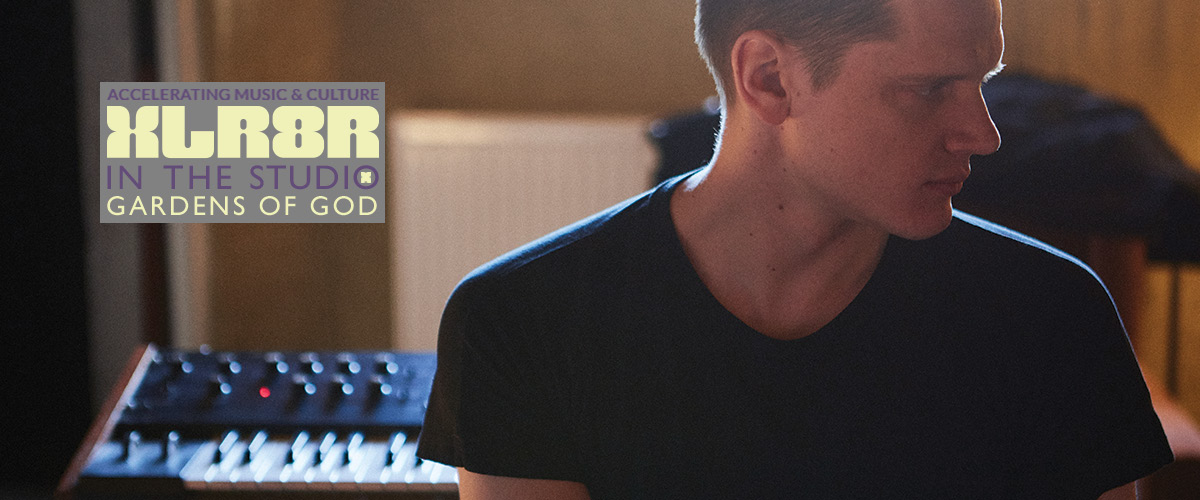
In the Studio: Gardens Of God

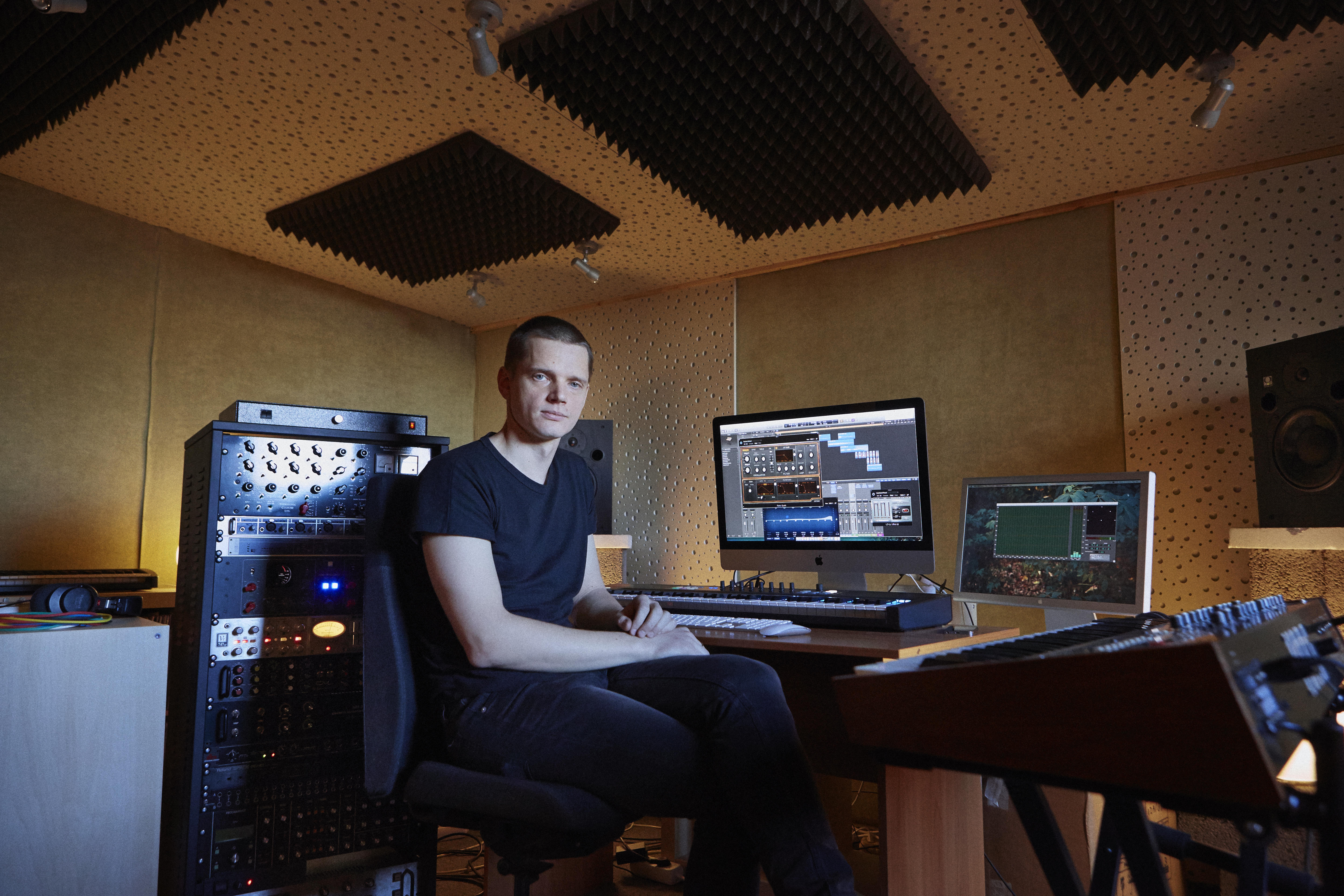
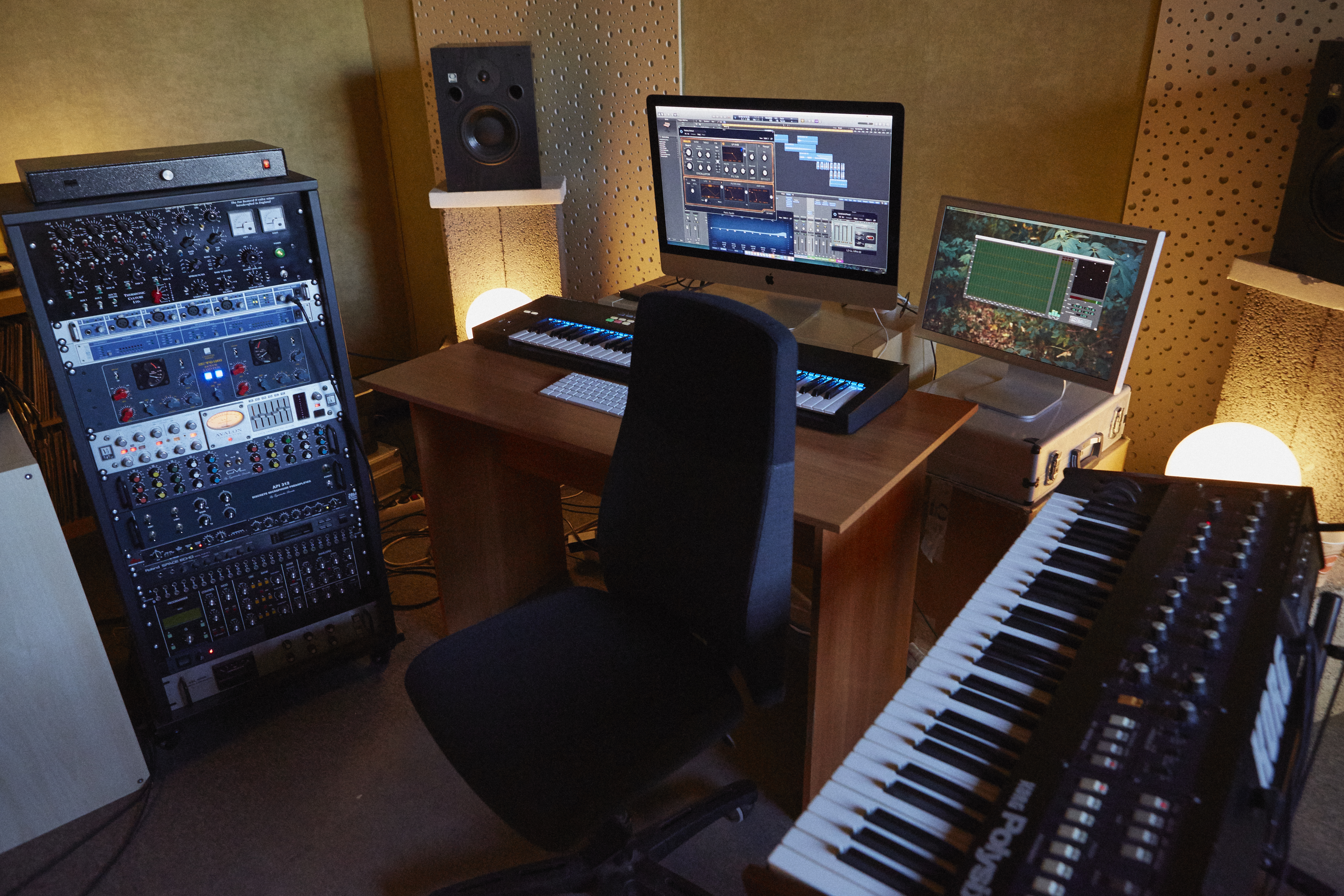
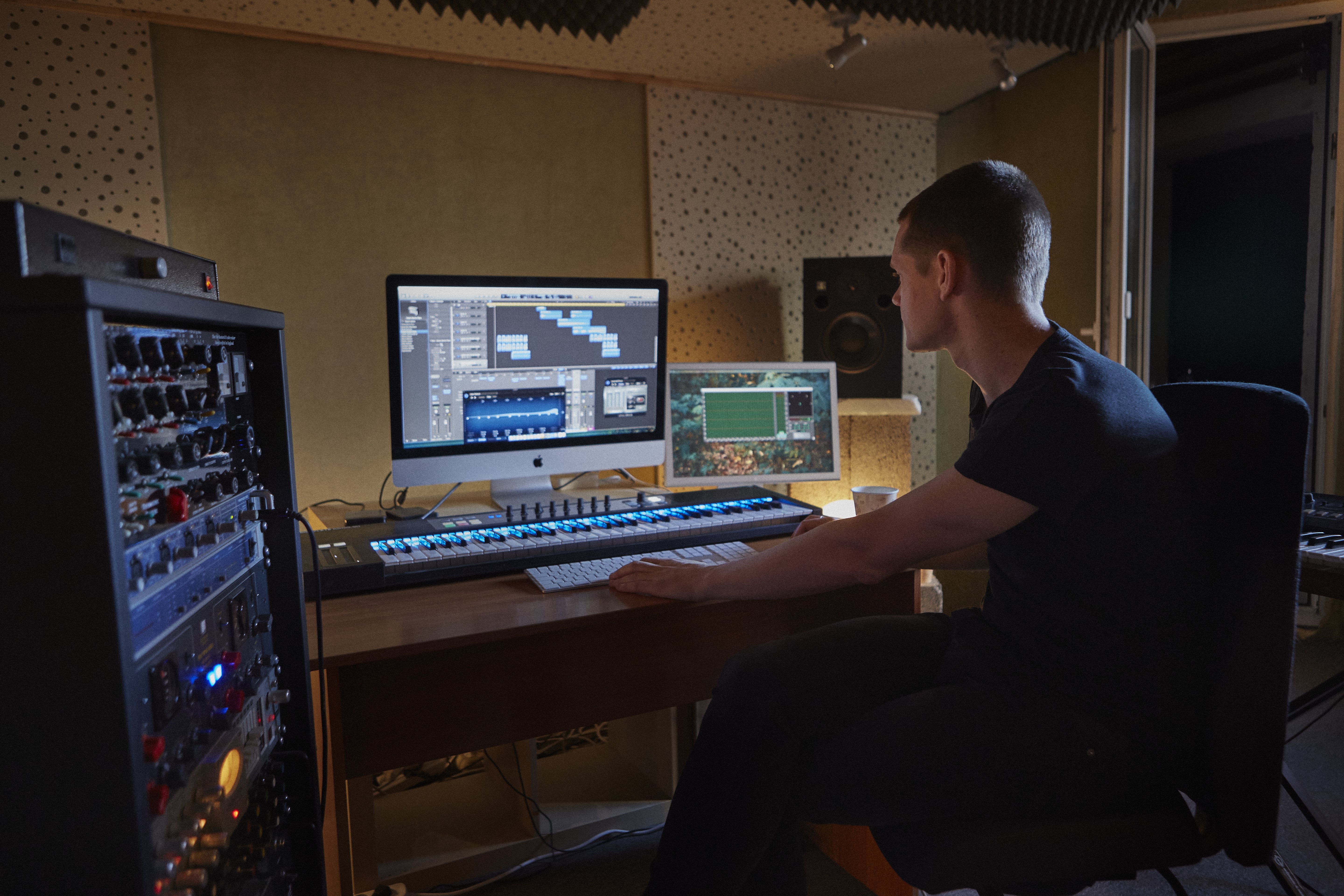
It’s been a good few years for Mindaugas Lapinskis. The producer, who nowadays operates under his Gardens of God moniker, has been making music for television and radio for over 12 years—but it wasn’t until early 2014 that he completed his first EP, a techno-heavy release laced with his trademark sinister synth line that subsequently caught the attention of Maceo Plex’s Ellum Audio imprint. Following this success, Gardens of God has since gone on to release four more acclaimed EPs, the latest of which, Montana, landed just last month on Ellum. To find out more about his production processes and inspirations, XLR8R visited Lapinskis in his Lithuanian studio.

How long have you been in this studio?
About six years. Before that, I was in another studio a few blocks away, which was much smaller, and there were neighbors upstairs—which is always going to be a problem, of course!

This studio seems very warm and homey. Is there a certain thing that you look for?
Well, I spend a lot of time here, so it needs to be cozy. It’s like home! When I’m super tired, I take a nap for 15 or 20 minutes. In my old studio we had really bright white lights, but that made it feel very cold. It felt like it was something from a magazine.

Do you manage to switch off from producing when you leave the studio?
No, I can’t switch off. Now when I’m traveling a lot, I try to create melodies in my head, and then I write it in my computer—just so that I don’t forget. It’s always repeating in my head. If I had my studio at home, I wouldn’t be able to just sit down and cook. I’d have to be in the studio if I had ideas, and I don’t think that my family would be happy!

Do you treat your studio work like a nine-to-five job, or is it just when the urge hits you?
I start about nine in the morning because I have kids, so I take them to kindergarten, and I head to the studio after. When I’m working hard, I might finish very late, but I try to get back for about seven.

It must be frustrating when an idea comes into your head when you aren’t in the studio.
Yeah, but I have my laptop. So I will repeat those melodies, and start to record them when I am out of the studio. But I cannot produce on a laptop. It wouldn’t be possible. I cannot hear that well because it’s not very clean. I might use it to make some sketches, but that’s all.


In terms of making the music, how much of what you do is analog as compared to digital?

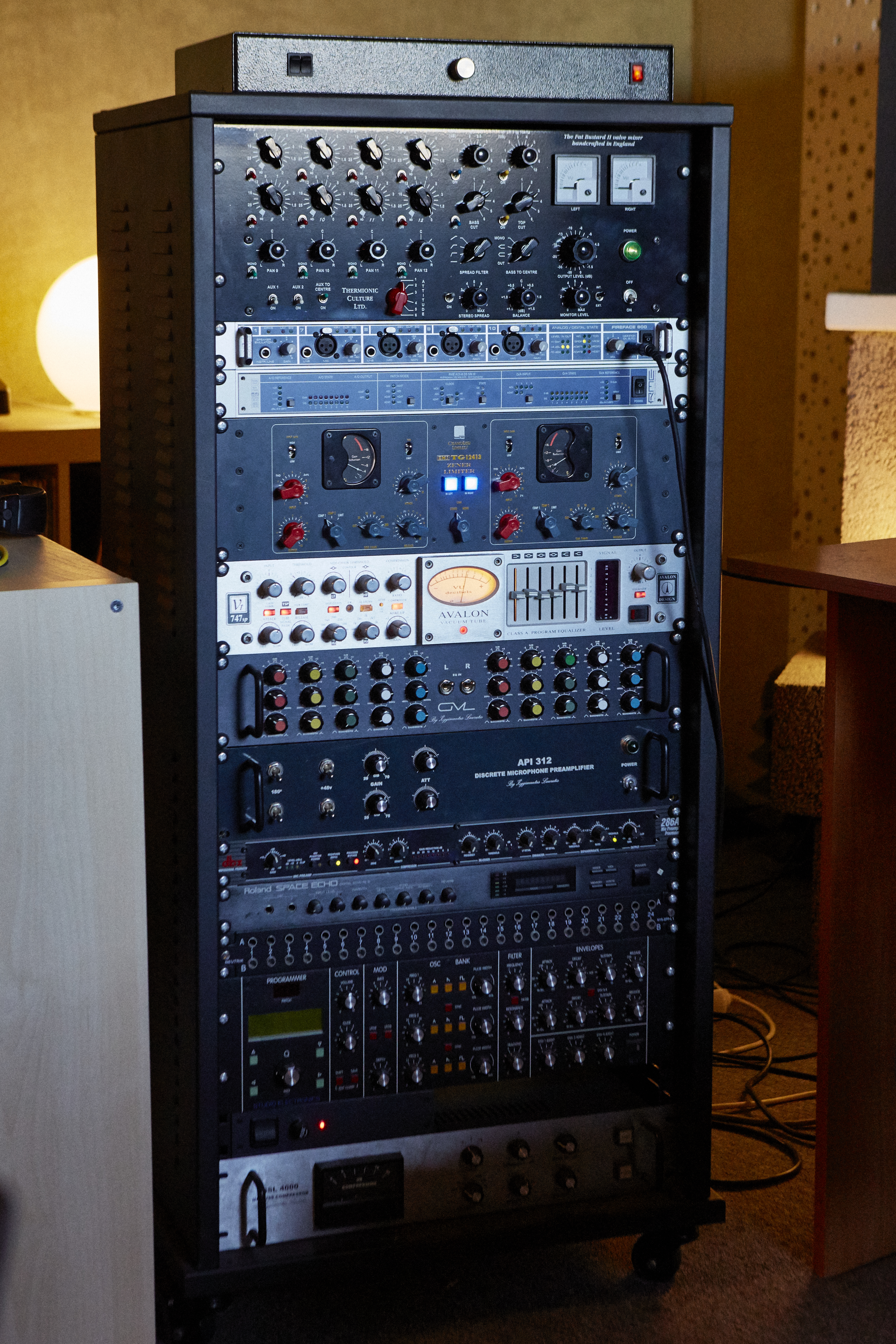
It depends. Sometimes it can be absolutely inside the box, and others I want to experiment and do crazy thing, like recording a synth and running it through compressors and EQs. Other times, I might take a sample and record it through a microphone preamp. I’m always searching for crazy, interesting sounds. If it’s digital, I love to run it through an analog compressor.

But the source of the sound changes?
Yes. I couldn’t say that I only use this or that synth. I use a lot of different things. I love this FXpansion synth, and I use it quite a lot. I’m trying to do stuff with Korgs too. It’s not only one thing or the other.

Why do you use Logic over Ableton?
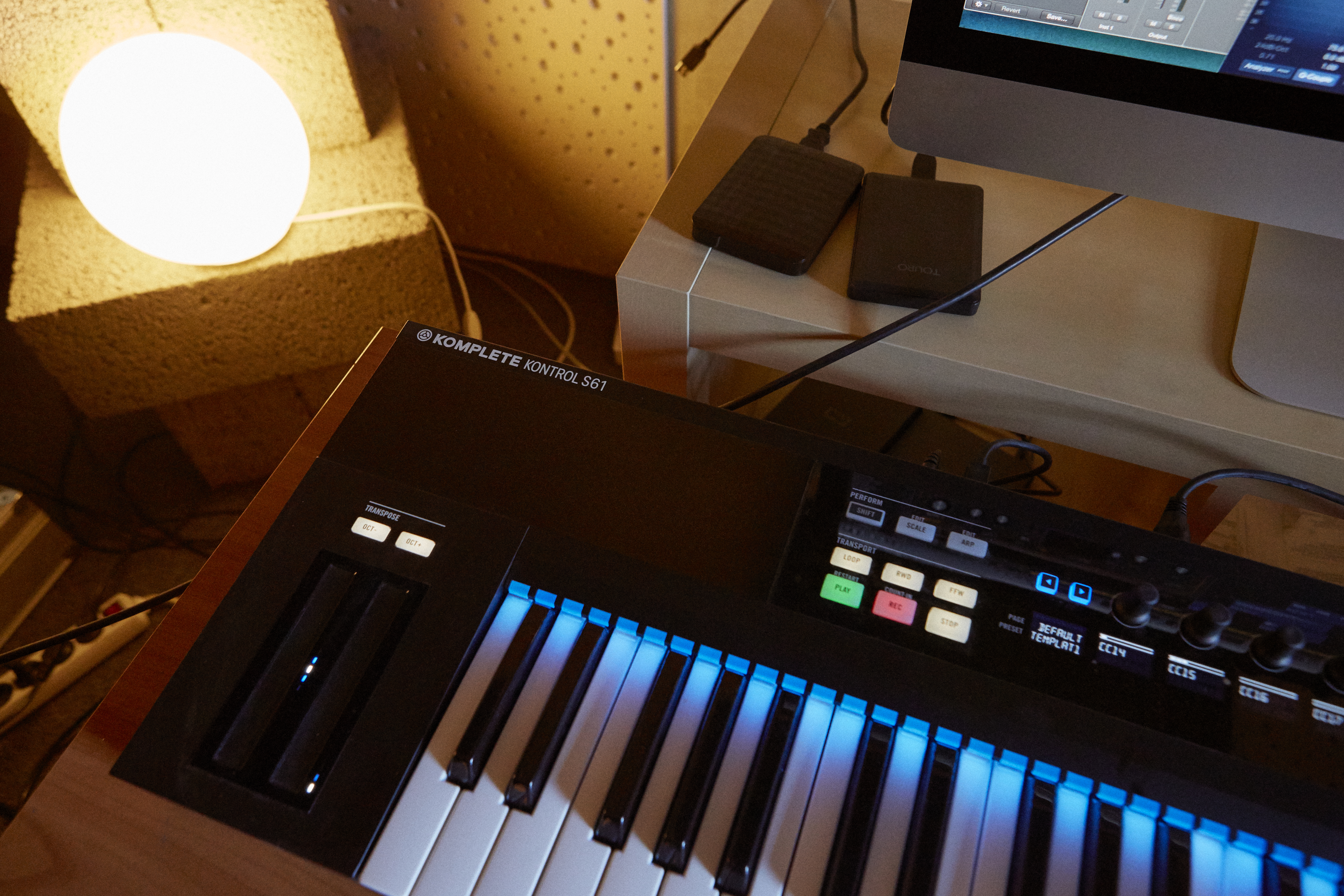
I started doing everything with Logic 13 years ago. I started with it just because Cubase was a bit more complicated, and I liked to work with MIDI—to play my own melodies and everything. Logic was very good for that…it had very good MIDI. I don’t really know. There’s not much point in moving between platforms, because Logic, Cubase and Ableton all sound good. Some years ago, some were not as good. Now they are all professional.

You’ve obviously got quite a lot of analog gear now. What was the last piece of equipment that you acquired for the studio?
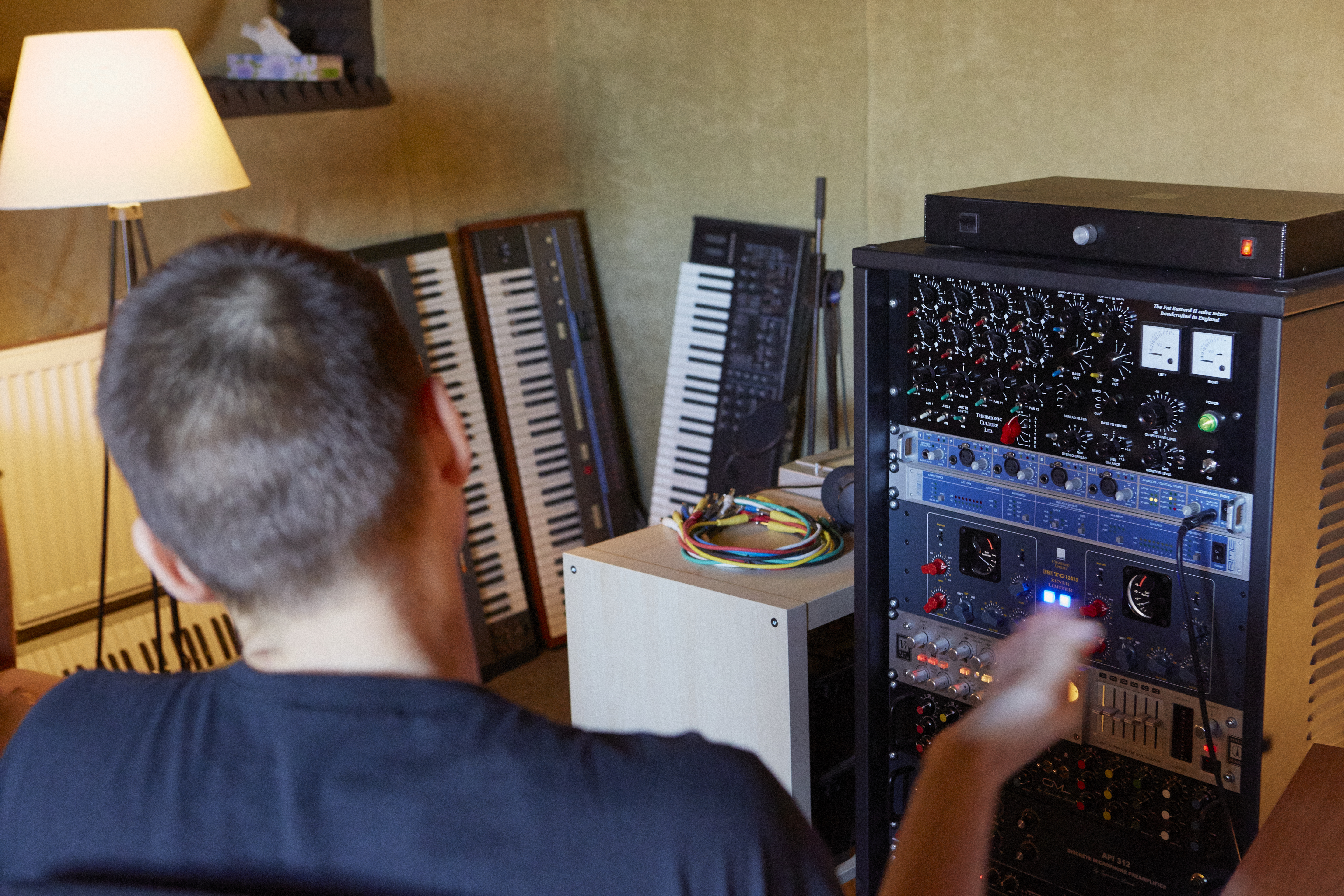
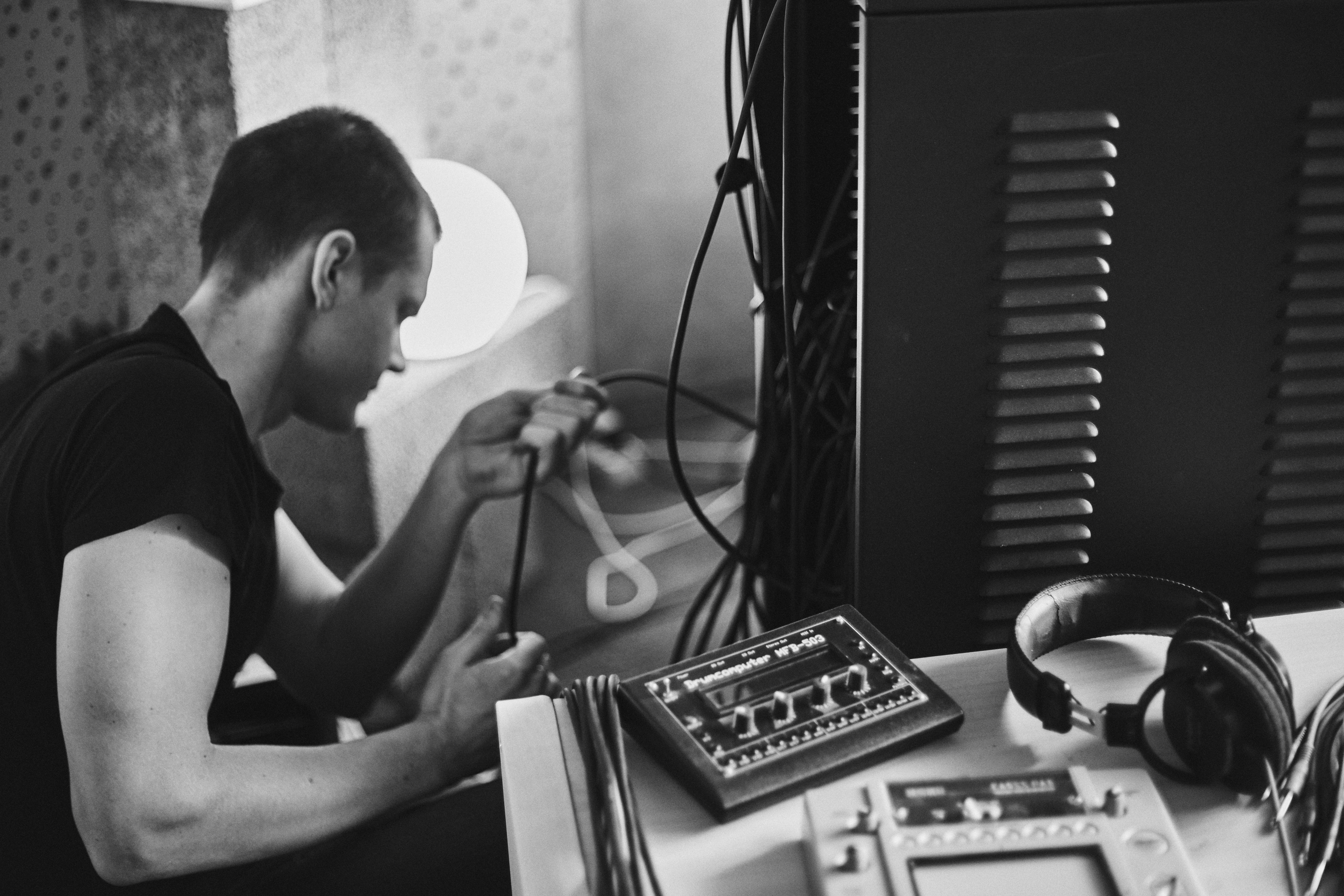
Thermionic Culture—the Fat Bustard II. I’m actually not using it so much yet, because it needs to be wired. I have inputs and outputs, but when I want to use certain things with the EQ, I need to reconnect everything—it’s a lot of effort. That’s why I bought this patchbay, to reconnect it here.

Is there any piece of equipment that you would like to acquire, or are you happy with your current setup?
I would really like to buy some reel-to-reels. I just took my upright piano from the parent’s house, from my childhood. Now I’m trying to record with it. It’s without keys at the moment, preparing to get refurbished. So, in the meantime, I’m trying to touch some strings and record that. I would need some good microphones for that. That’s the next step. I also want better monitors.

What are you using now?
I’ve got Questeds, and they’re lovely. They are almost flat, but I want bigger and flatter ones. I want to make custom ones. I need these. I need many things—I want a good mixing desk, nothing too big, maybe an SSL Matrix. One day! I’d like to connect all the compressors, EQs and that stuff into one thing, which means that I wouldn’t have to reconnect all the time.

Producers are like kids: They love their toys.

Were your initial productions all digital?
Yeah, the beginning was only computer, without any gear. Then I started to know some DSP Engines, like Scope and a few others, TC Electronic. I bought my first TC Electronic Finalizer, which was for mastering. Maybe now, looking back, the sound quality hasn’t changed that much. You can do pretty much the same with plug-ins, but you actually touch that, and feel it. I love that! I became obsessed with analog gear, and I was buying and selling all the time to find the right stuff.

Do you feel you’re slowly shifting back to digital production processes now?
Yeah. You can do almost everything with plug-ins. You can do analog for color. Sometimes people ask what I used for certain tracks, what equipment I used—and I have to say, “None! It’s purely digital!” I know some tricks that can make it sound more analog. You can add that color, sure. I love to run digital synths through analog compressors, or EQs. When I use digital synths, I mostly run it through the Chandler compressor, or the Avalon, to make it sound warmer. Maybe a kid could play with some paper stuff, but loves cars or dolls. Producers are like kids: They love their toys.

You mention adding warmth and color. Is this something you’re very conscious of?
Yeah, synths can maybe too clean and bright otherwise. When you run it through the Avalon, it gets a bit noisier, and crunchier. If you run it through Chandler, it isn’t as colorful, but it does become analog sounding. Even if you aren’t compressing, there’s a THD function that you can run through, and it sounds different.

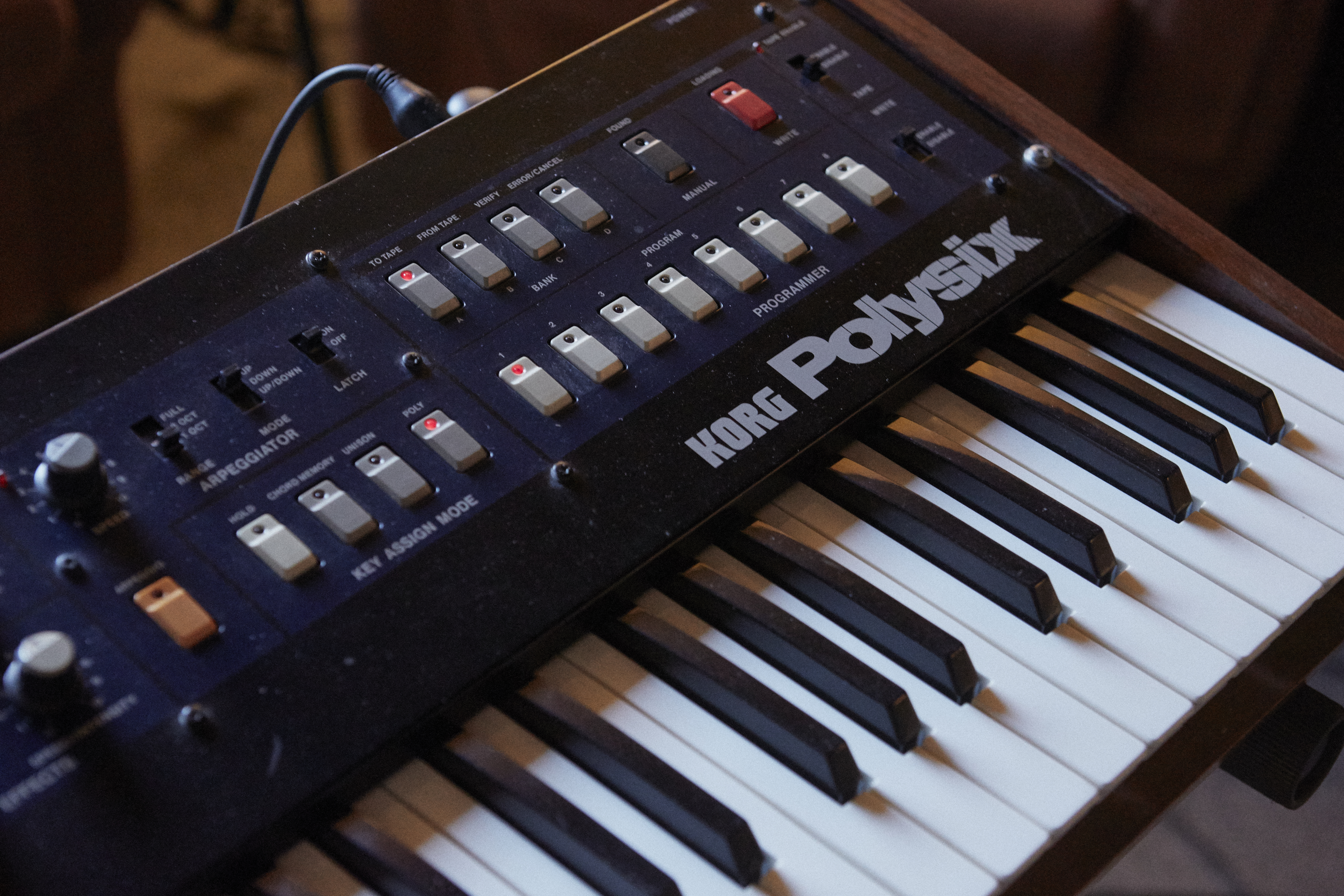
There’s a sinister synth line that goes through the majority of your work. Is that the PolySix or a plug-in?
No. I think most of what you can hear in my tracks, is Logic’s Retro Synth. I love it, maybe because I know it well. I know every knob perfectly. It’s very flexible, and you can do different things with it!

“I think that the biggest problem with a lot of gear for young producers, is that they might use too much— that’s not a good thing.”

We spoke to a producer last week who said that he consciously limits himself to one piece of equipment, and that when his gear breaks, it actually inspires creativity. Can you relate?
Yes. With the new EP, I limited myself to the Korg PolySix synth. When you don’t have too much equipment, sometimes that’s better. It’s limitation, and you find new ways to do something, just with the gear that you have. It means that you do something different, but with the same things. That’s why I would like to sell stuff that I don’t use so much, in order to do something new. I think that the biggest problem with a lot of gear for young producers, is that they might use too much— that’s not a good thing. You should start with something simple, and do everything with that. You can buy other stuff later. I know that Retro Synth from Logic very well. It’s very simple, but you can do very interesting stuff with it.

“My sound has got harder and darker, so I need things to make the sound warmer. It’s about balance.”

So does the contents of your studio evolves regularly?
Yes, that’s important to keep my ideas fresh. For an artist, every new thing is good. Not because it changes the sound, but because it can inspire. In the past two or three years, I’ve changed quite a lot. Only the Avalon and Chandler have really stuck around. I like buying and using equipment that makes things warmer and softer. My sound has got harder and darker, so I need things to make the sound warmer. It’s about balance—I like to mix those things. But I don’t think that the equipment is what changes the sound—it’s what is in your head.

When you come in here, do you find most tracks are conceptualized in your head already? Or is it mostly jamming?
Mostly jamming, yeah. Nowadays I am starting to think about melodies more. I repeat it in my head, and then try to construct some songs in my head. Then I get back into the studio, and try to make it. Sometimes it might not be similar to my original thought, but sometimes it works.

“Are We?” was the first techno track you made. You haven’t used vocals since— is that a conscious decision?
When I’m playing as a DJ, I see that techno works better in a club, and people are dancing. For listening, vocal tracks are easier to keep in your mind, and connect too. Actually, now, I’m working on vocal tracks. “Are We?” wasn’t really a vocal track—it was an instrumental, with vocals, but right now I am doing proper vocal tracks.

Do you feel you are able to do what you want to do in the studio, or do you get frustrated?
I’m not happy with all the music I’ve done, but I’m trying to do better. I can hear what it should sound like, but I cannot quite get it yet.

Do you look back at your first EP and spot mistakes?
Yes. I don’t think I would do the same thing again, but it was still very good. A few days ago, I listened to the EP, because I’m not playing it so much anymore. It sounds good—it’s produced well. It could be better. It’s like when you’re a little child—you make small mistakes, but it is beautiful on the other hand.

Is creativity something that has come and gone over your career, or have you always just felt like you could go into the studio and work?
Well, I used to work in TV, and with pop music and all that. I had to do some work during the days, and there was no time for finding inspiration. You just had to do it, that was it. It taught me to sit in a studio, and work no matter what.

Even now, when you don’t have these deadlines, do you still find that you sit in the studio and fight through periods of production block?
Yeah. I’m doing it all the time. I’m making quite a lot of tracks too—not all of them are completed and released. The releases are only about 20 or 30 percent of what I actually make.


When you are making these tracks, do you have lots that you are chipping away at, or do you just work on one at a time?

I’m always working on a number of tracks. Some I take to the end and some I stop. Basically I start new things when I see that a track isn’t working.

At what point is that cut-off? Do you have a time frame in your mind?
No, there is no time frame. I started making “Montana” in February, and I finished it in June. I was just sitting there and trying to do stuff, because I had an idea. In the meantime, I was going touring and stuff. I believed in that track though, because it was sounding good, and I liked the idea.

That is quite a long time. Do they always take a while to mature in your head?
I’m trying to make tracks as fast as possible, basically, because if you are working on them too long, it gets boring. You become less excited, and stop liking parts of it. If you do it in a few days, it’s fresh, and the ideas are more interesting. You just have to leave it for mixing then.

Before you decide to release a track, do you try them on the dancefloor?
Yeah. Even for the sound—sometimes it might sound good in the studio, but need changing for clubs—because it is club music after all.

What are your thoughts on sampling?
Yeah, I use it in the background quite a lot, because it gives color, and sets a special mood. I’m not a big sampler of main parts, or stuff that would be the basis of the music.


You’ve said that your first EP was inspired by a “village blown by the sea”—is there a similar inspiration behind all the tracks?

Maybe. Everything inspires us. It shouldn’t be like, “This inspired me to write that.” Sometimes it’s just a sequence of news and then you express yourself because of that. It’s not just one and only thing that inspires you.

Well, for “Montana,” and the other more recent tracks, can you look back and think of a feeling that inspired you? 
With “Montana” I was touring in South America, and I started it on my laptop. It was the first time that I decided to do something with my laptop. Here was winter, and it was summer there—I was laying on the beach, drinking juice, and thinking about everything here. You can hear it here in the track. It’s pretty dark and cold, but still has something cozy and warm.

How long do EPs take to come together? Did you produce the tracks pretty closely together?
Yeah, “Montana” came first, and then I made the others in a pretty short time. It was straight after “Montana,” but I played them for a few months too, trying them out in clubs. They both changed quite a bit from the first idea, to the final versions. I tried “Montana” first at Off Sonar, in Barcelona. Maceo came to me to ask what it was, and a few days later he was playing in Poble Espanyol, and he asked me to come give him my USB. He wanted that track, and I gave him that.

How do you know when a track is finished?
You just know! When you feel that it sounds good, and you are comfortable with it. When you show someone, and you feel proud of it, rather than worrying about it—then it’s done.

Have you thought about an album?
Yeah, I think that I could probably make an album next year, but I don’t want to rush anything. Now is a good time to make it. I’ve been free from gigs for a few weeks, and been sitting in the studio making tracks. There’s quite a lot of tracks and ideas that are ready. I want to make it one thing, with one mood.

Like a conceptual album? Yeah, that’s hard.
I want to do that to show my flexibility. I’d like to do some tracks with a piano, some ballads, some dance tracks, but to keep them in one mood—a Gardens Of God sound.

All photos: Visvaldas Morkevicius

Flying Lotus to Perform in San Fransisco on NYE

DJ Dials, Blasthaus, and 1015 Folsom have teamed up to bring an A-list team of musicians and electronic producers to the bay area for the upcoming New Year’s celebrations. The headliners for this extraordinary event consists of lionized producer Clams Casino, world class bass player Thundercat, upcoming south-east London producer TroyBoi and the indisputable electronic maestro Flying Lotus. With a total of five rooms, the show will see a huge amount of local support from artists like An-Ten-Nae, Eric Allen, Nicoluminous, Tigerfresh, and many more. An uppermost display of established and looming talent, this event is bound to be one of the most sought after events of the New Year.

You can now purchase your tickets via XLR8R.

Kllo Welcomed to the Ghostly International Family.

Ghostly International announced today that the latest signing to its family are cousins Chloe Kaul and Simon Lam, who make up the Melbourne-based duo Kllo. Citing their music as “electronic pop music with UK garage influences” or sounding “somewhere in between Jacques Greene and Little Dragon” in an interview with Kit and Ace, Kaul and Lam broke onto the scene in 2014 with their debut EP, Cusp, on Australian label Dot Dash Recordings. Garnering a great deal of attention and interest since this first release, Kaul and Lam have teamed up with the world renowned music label Ghostly International and are scheduled for a release in the new year.

You can watch a music video from the duo in the video below and check out what else Kllo have to offer by visiting the young duo’s Soundcloud page here.

Apollonia, Shaun Reeves, and M.A.N.D.Y. Added to SXMusic Festival

SXMusic Festival has announced a stunning lineup of second-wave acts for their inaugural event taking place in Saint Martin, Caribbean from March 9-13 2016.

During each day and night of the festival, parties will take place at several carefully selected venues on the island and DJs will be given complete musical freedom to put on the musical program they desire, all while being lusciously delivered to the ears via multiple state-of-the-art Void Sound Systems. The second wave of artists includes Rumors boss Guy Gerber, French trio Apollonia, Maceo Plex, Visionquest’s Shaun Reeves and Ryan Crosson, My Favourite Robot, H.O.S.H, Behrouz, Bedouin, AudioFly, Danny Daze, Get Physical’s M.A.N.D.Y., and No 19 artists Maher Daniel and Nitin.

Artists and attendees are encouraged to stay for the whole week, creating a friendly, community vibe where DJs mix with fans in a holiday atmosphere.

Check out this video teaser to get a feel for the tropical and intimate nature of SXMusic Festival:

For tickets and travel information, please visit the SXMusic Festival website.

Second wave line-up of artists:

Adriatique
Apollonia
Audiofly
Bedouin
Behrouz
Blond:ish
Danny Daze
DJ Tennis
Dubfire
Francesca Lombardo
Guy Gerber
H.O.S.H
Jamie Jones
Kenny Glasgow
Lauren Lane
Lee Burridge
M.A.N.D.Y
Maceo Plex
Maher Daniel
My Favorite Robot
Nitin
Odd Parents
Patrick Topping
Psychemagik
Ryan Crosson
Shall Ocin
Shaun Reeves
Thugfucker

XLR8R’s Best of 2015: Gear

Electronic music-making has never been a more accessible pursuit, and 2015 saw a number of fantastic pieces of hardware and software releases. From iOS apps to MIDI controllers and beat machines, here’s some of the best 2015 had to offer.

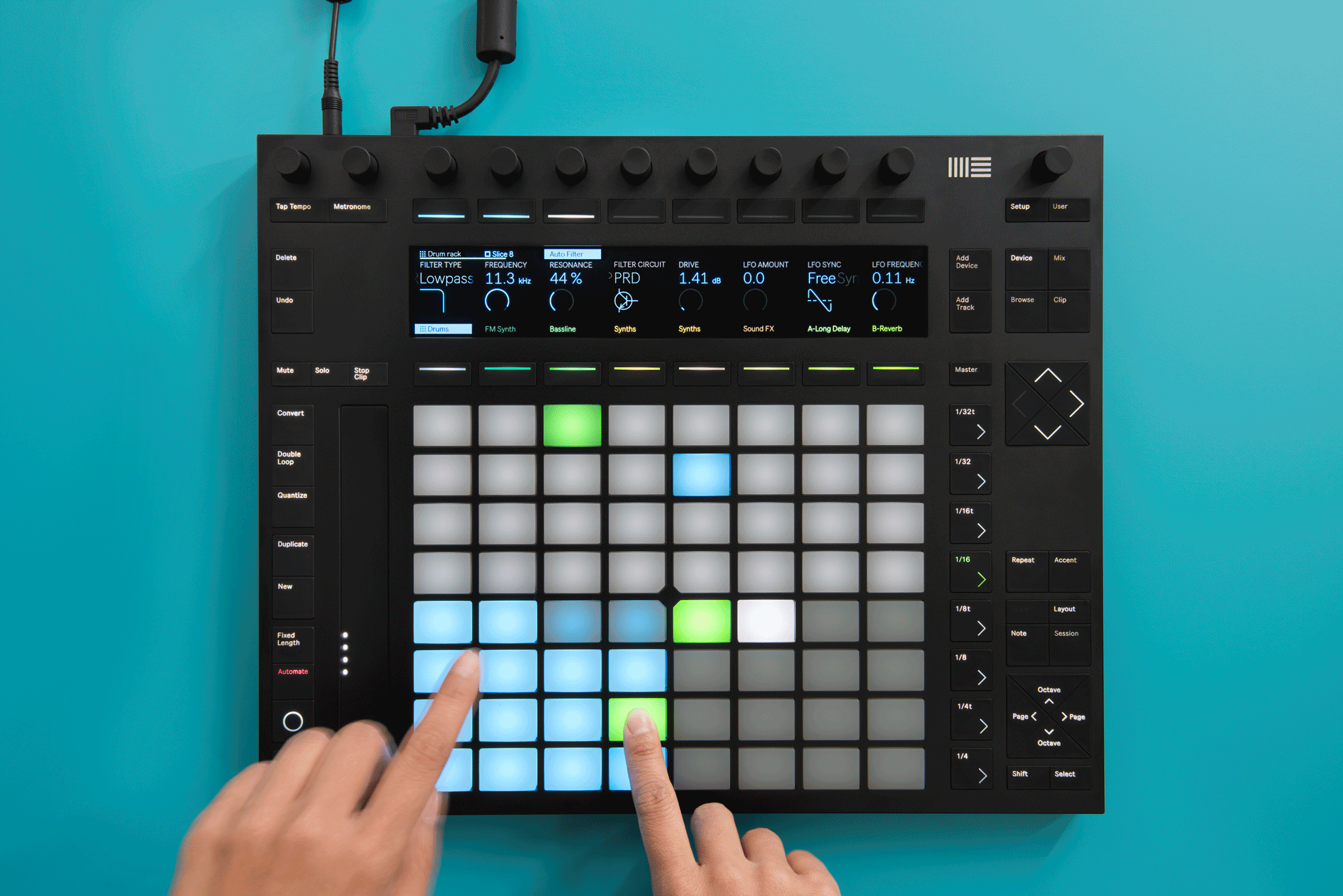
Ableton Push 2
The new de facto controller for Ableton Live, Push 2 refines the original into an even sleeker, more comprehensive package for Live’s Session View workflow. Conceived and produced entirely by Ableton (the original Push hardware was a collaboration with Akai), the Push 2 sports a colorful new screen to control the software’s many parameters with its touch-sensitive encoders. There’s a fully overhauled Simpler and sampling workflow, improved pad feel, and plenty more. Oh, and if you own the original Push and want to upgrade, you can return it to Ableton for a 30 percent discount on Push 2—returned units will be given to music-education projects for young people.

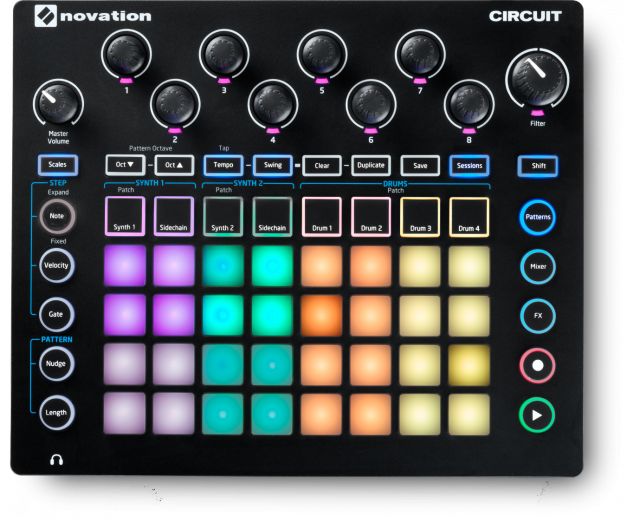
Novation Circuit
A portable beat station roughly the size of an iPad, the Circuit is packed full of polysynths, drums, effects, and sequencing capabilities. There are limitations, certainly, but these limitations often serve as a creative inspiration, allowing for a certain level of focus and play that’s difficult to achieve with the blank slate of a DAW. The Circuit is capable of far more than its size and price imply; both as a production sketchpad and a live beat-oriented performance device, it’s simply loads of fun (and it even runs on 6 AA batteries, so grab a pack of rechargables while you’re at it).


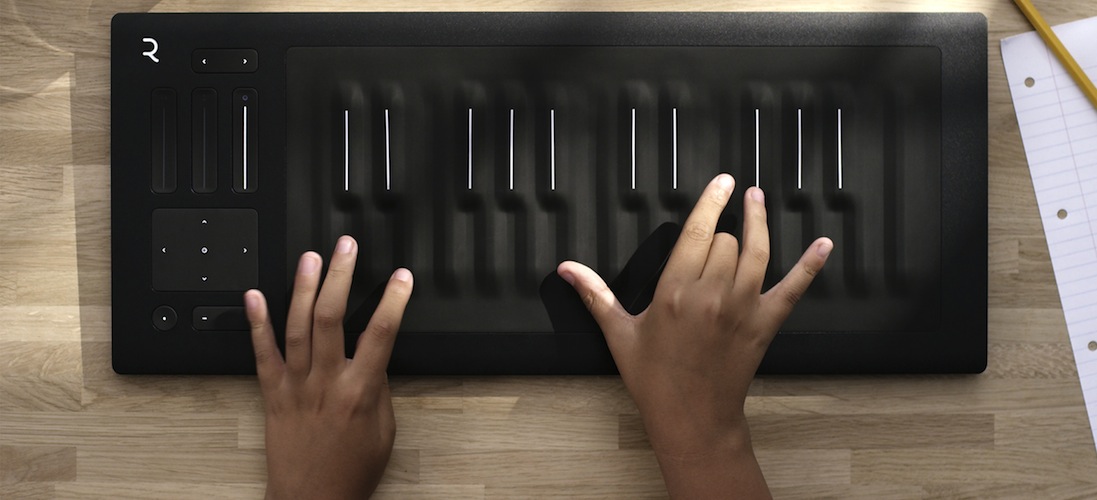
ROLI Seaboard Rise
Perhaps the most exciting release of the year, the Seaboard Rise is a bold reimagining of the traditional keyboard in a portable, beautiful, and relatively affordable package. As well as using the surface of the keyboard to trigger notes, the Rise enables gestural commands along the length of its keys as your fingers drag up and down the surface, as well as vibrato effects by moving between them, aftertouch, and note pressure. The Rise feels like a truly 211st-century instrument, and one that brings with it great potential for experimentation and expression.


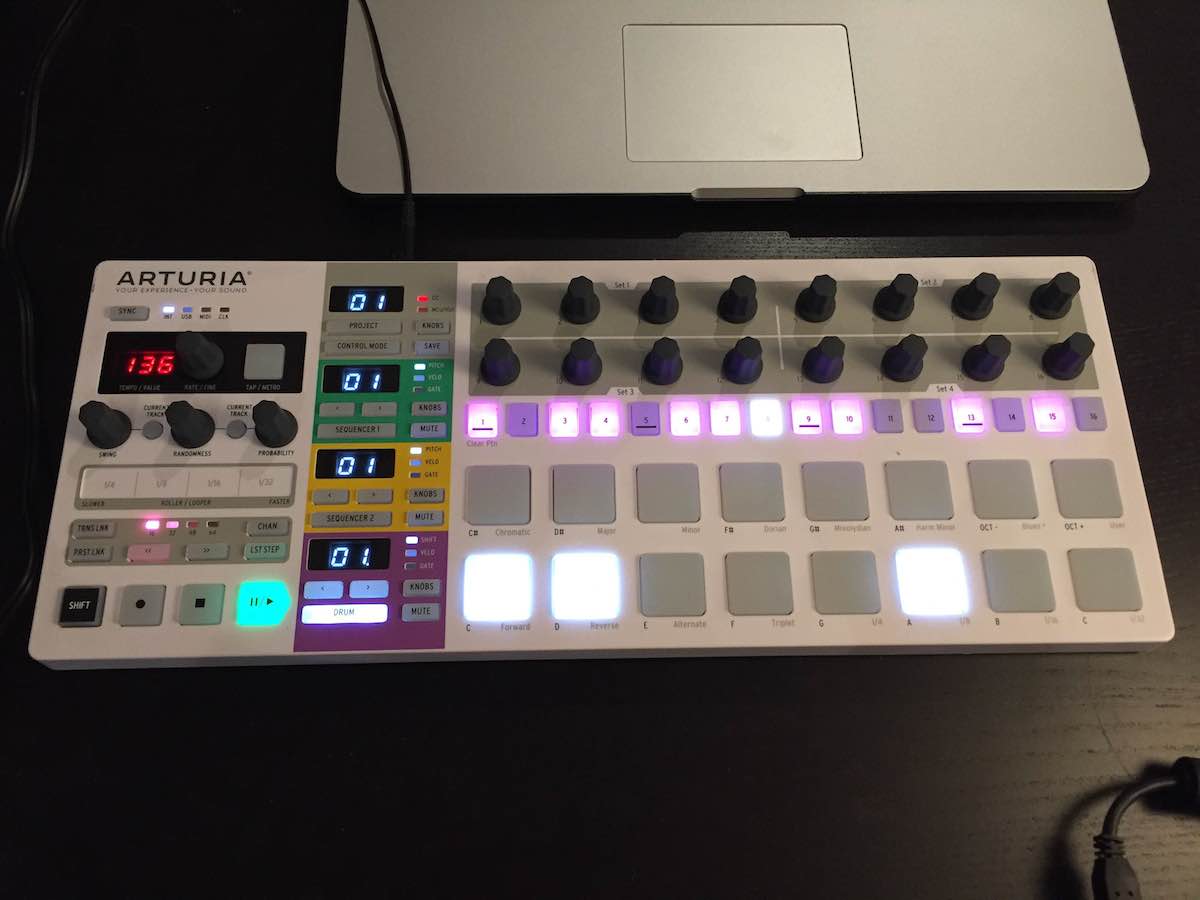
Arturia BeatStep Pro
The second time is quite often a charm, and the BeatStep Pro is no exception. It features three independent step sequencers, each of which is programmed with 16 velocity-sensitive pads (with aftertouch), 16 step buttons, and 16 rotary knobs. With MIDI over USB, 5-pin DIN MIDI (for connecting to older MIDI hardware) or CV/Gate with eight CV outputs (for even older hardware), you can connect this sequencer to nearly any piece of professional electronic music-making kit, making the BeatStep 2 an excellent way to get you the heck away from that computer screen (once in awhile, anyway).


Apps of Steel
Another year full of great music production apps, 2015 was highlighted by releases including Alexandernaut’s Fugue Machine multi-playhead sequencer, Native Instruments’ iMaschine 2 digital groovebox, and Korg’s iM1 and iDS-10 synthesizers. Fugue Machine and iMaschine 2, in particular, are pretty much essential if you’ve got an iOS device to run them on—these incredibly powerful music-making tools can be had for a tenner apiece.

 iMaschine 2

Deantoni Parks: “For me, rhythm is the study of time.”

Whereas many producers are using software to mimic the sounds of live instruments, Deantoni Parks is using live instrumentation to mimic the sounds of something that was created on a computer. With a half-analog/half-MIDI drum-and-keyboard setup, Parks creates compositions that fuses his futuristic sensibility with the improvisation of his jazz background (he serves as a part-time faculty member at the Berklee College of Music and the Stanford Jazz Workshop). Although he’s mostly played in groups—including BOOTS, Bosnian Rainbows, Flying Lotus, John Cale, the Mars Volta, and Sade—his new album Technoself, out now on Leaving/Stone’s Throw Records, marks Park’s first solo effort. The album’s opening and closing tracks were recorded at live sessions, emphasizing the fact that the entire album uses no overdubs, and is played 100 percent live.

How did your current setup come to be?
It initially came from seeing Kenwood Dennard use the half-MIDI, half-live setup. I’ve been playing drums for so long, and they’re great and dynamic, but those sampled sounds and production methods inspired me so much, and I just wanted to integrate the keyboard to give me a palette. I’m familiar with piano, and the MIDI-controller side, and they’re great percussive instruments, so to have the “war drum” live kit still there—the hi-hat, the snare, the bass drum—accompany those samples was exactly what I was looking for.

Can you talk about the process of how you go about your live shows versus recording in the studio?
It’s the same process. Going into it, I don’t know exactly what I’m going to play. I sit down with some palettes and all the elements I want, with a vague idea of the rhythmic structure and tempo and loose base style.

Did the Technoself idea grow out of the live setup?
Yes, Technoself is directly an effect of the live setup; they’re kind of synonymous. I refer to the setup as a method, because it just crosses so many walls that I needed to be crossed. The live setup directly affects the way the record sounds because everything is recorded live with no overdubs. So the final product, what you’re hearing on the record, is just what it sounded like live.

How are you managing to get all the sounds that you want out of such a bare-bones kit?
Adding the MIDI controller really helped solve that problem. I had to drop a stick and that was the hardest part, but you gain so many opportunities with the samples. I feel like this is something I couldn’t have done ten years ago. I think the timing of it is perfect, because I had no where else to go, not that I’ll never work with bands again, I’m just over the concept. Especially when it comes to composition and arrangement, it’s too much compromising. When you’re in that moment, in your own ensemble, you’re arranging it by the moment. Everything is tight, it’s together, it’s amazing. That’s how I like writing—you get thing done more quickly, the software is made so that things get done quicker. For me, this is my way of climbing that technological tree and speeding ahead to make things happen quicker and get better results.

What is it that the live setup has allowed you to accomplish that you couldn’t with more traditional production methods?
The live setup is me mimicking the engineer—mimicking the ability to cut-and-paste in weird places. So that’s a great thing that I can mimic on the spot. The sample part is more mimicking the sequencer or getting that loop going, and that’s what I’m imitating. I’ll bring in those elements, and then I’ll add the layer of tonality to find where these sounds clash with actual notes, and then build a composition from there.

It sounds like you are trying to get to the point where your drumming sounds like something that could have only been programmed by a computer.
There’s so much improvisation, that I wanted pieces that sounded like they were something done in post-production, and it comes that way because of the tightness of the sampling. It’s sort of the illusion of making it tight to the point of it could have been programmed. Obviously the drums I’ll make sound like amazing live drums. But some of the best programmers have always sampled those kinds of drums—the real drums—and make them sound amazingly tight and structured.

I want the feeling of having a drink before a set…very loose, just hanging out. But then you sit down to perform, and it’s like those old jazz musicians—that’s how I want to feel. I’m just gonna create right now, and they’re gonna love whatever I create on the spot.

Have you always had an interest in the combination of live drums and sampled sounds?
I always programmed music when I was very young, I always had that interest. When I started making the first sequences, older family members who knew the early electronic records would say, “That sounds like a Cybotron song!” or “That sounds like Kraftwerk!” And I was like, “Who are these people?” So I’ve always been on my own slow incline as far as composition, writing, performing regiment.

That sampling of human voices on the record, in a way, implies all of us in the Technoself idea.
As far as sampling a sound, the voice is probably the best sound to sample. The orchestra is in your voice. Bass percussion, and highs—even when you’re breathing, those sounds are just so cool Under magnification and made loud, those sounds are incredible, even if it’s just someone hiccuping. I wanted to have that represented on this record.

There are points in the music where the digital and analog are getting along well, and other points where they feel like they’re fighting to be heard.
Yes, absolutely. I love pure electronic records that have no acoustic sounds on them, but when you take those sounds of those records, and you layer them with a live kit—a war kit, big bass drum, big marching snare, forceful drums—it becomes something futuristic, and something that’s 100 years old. They do fight, but when they get along…that’s kind of what I’m living for right now.

“I think that’s why people like music so much—it makes them feel like they have a little bit of control of time.”

Can you talk about your own philosophy of rhythm?
For me, rhythm is the study of time. I look at myself as a person who studies time. It’s a horology type of thing. Time is such a strange concept that nobody understands, so its sort of like trying to create a structure of time, or mimicking something with a set pattern. It’s carving out these time pieces. I think that’s why people like music so much—it makes them feel like they have a little bit of control of time, which none of us do. It’s like knitting or something.

It’s interesting how the study of time comes out on a record that combines the hundred-year-old war-drum sounds with such a futuristic concept.
Ideas don’t happen as quickly as I would like; this, I just kind of landed upon. But I’ve been looking for this sound, internally, for a long time, almost 12 or 13 years. It just didn’t hit me until now. This concept of war drums and samples of my favorite recordings…the whole thing is a study.

Most of the music you’ve done in the past has been performing with groups, and it’s interesting that an idea like Technoself came from your first solo project. Can you talk about the dynamics of working in a group versus working by yourself, and how that helped evolve the idea?
I’ve had tremendous experiences with groups and ensembles. I’ve worked hard to be a team player—so naturally I’ve always wanted to go to the opposite end, and see what I could create on my own. And that is really the center of this whole thing. The idea of Technoself is the group being yourself, and looking at your body as all these different members. For me it’s looking at those components, and realizing that I can be my own ensemble.

Could you talk about some of the ideological influences versus the sonic influences?
Hearing [J Dilla’s] Donuts—the freedom in the way that he samples, as compared to most of the other modern day programmers—really inspired me. I think J Dilla paralyzed the production game with that record; it was so free and just wasn’t contrived at all. I wanted to make a record that can exist after Donuts, because I don’t know how many records that can. Also, working closely with John Cale really had a major effect on me and kinda made me free up and think about things differently. So it’s a direct result of those things together.

What was it like to work with Cale?
He’s more of an influence on this record than anyone. I’m doing this with the kind of attitude that I could only get if I had the respect of John. Wherever I would go, I always came back to John, he was always there. John is just such a force of ideas and curiosity. He gave me confidence in my work, and you need that confidence to be great. I’ve always had these things on the inside, but he helped me externalize.

What’s Sade like?
It’s weird because they’ve been a band for so long. They don’t have outside people come in. I worked with Stuart Matthewman, their guitarist, for a while. He was a supporter of my music, and was trying to introduce me to Sade for years, but it never happened. I thought he was just being nice—and then finally an opportunity came up when she did the Solider of Love album; they were playing the album’s title track on David Letterman’s show. Coming in, I had no clue what to expect from Sade herself. The music we were doing was unbelievably simple and easy, I thought we were gonna run it once. No. We rehearsed that song over and over again. We were rehearsing that simple pop song—everyone plays the same thing every time, but she was being so knit-picky. And I loved it.

Pete Tong Announces Essential Mix Live Series in the States

Pete Tong has steered BBC Radio 1’s weekly Essential Mix for the past 20 years, and now, he’s announced the launch of an eponymous live series, which will kick off in Los Angeles next month. “The Essential Mix has always been about championing what’s new and next,” says Tong. “So much has happened to electronic music in America in the last five years, and much of that change has been born out of LA, and the community of artists and industry professionals that live here.”

Richie Hawtin has been confirmed for the first event, which takes place at LA’s Exchange Club on January 22 with support from Lee K and Tong himself. Details of future events have yet to be released. Hawtin recently spoke with XLR8R about his upcoming LP; more on that here. (via Resident Advisor)

Alex from Tokyo: “I wanted an outlet where I can really express myself, as fully as possible.”

Photo: Neil Aline

For a man who has played a critical role in the development of the international clubbing scene since the early ’90s, serving as a vital sonic conduit between Europe and the Far East (and later, America), Alex Prat has a curiously low-key profile. It’s not because the Prat, better known as Alex from Tokyo, isn’t a talented producer: As a member of Tokyo Black Star with Isao Kumano, he’s spent the past decade crafting warm, tightly-focused analog house, much of it for the Innervisions label. It’s certainly isn’t because he’s not a great DJ: Anyone who’s caught him at any of his many worldwide gigs can tell you that he not only possesses an impressive knowledge of a wide swathe of dance music past and present, but also knows what to do with that knowledge, and has an obvious joy when working his magic behind the decks. No, the reason that Prat, born in France but raised in Tokyo (hence the nom de musique), has remained a bit under-the-radar is simple: He’s simply a subdued, easygoing kind of guy, not the type to go in for cheap and easy self-promotion.

His profile might be about to change, though, as he’s finally launched his own label, World Famous; the imprint’s debut release, Tokyo Black Star’s richly acidic Edo Express EP, hit the shops last month. XLR8R recently caught up with Prat in New York, a city he’s called home for the past decade, to find out about his beginnings, Tokyo Black Star, World Famous and more.

You’ve been around for a while, so it’s a bit surprising that it’s taken you until now to have a label.
I know! I’ve been involved in music since…well, it’s hard to give an exact date.

How did you get started along this path?
I eased into it, starting as a teenager in Tokyo when I began to DJ. I moved back to Paris in ’91 to go to university, and I meet pretty much everyone who was in that little Parisian house-and-techno scene.

This was a bit before the French house scene really took off, right?
Definitely—it was still pretty small. But I started DJing in Paris with my two great friends, DJ Deep and DJ Gregory. We had a little unit called A Deep Groove—“A” for Alex, “Deep” for Deep and “Groove” for Gregory. We had a show on Radio FG, which was a gay station in Paris, and the first one to promote electronic music.

When did that show run?
From around ’93 to ’95. We were pretty much the only ones playing this mixture of New York–inspired house and garage, mixed in with a lot of different things; we had a pretty distinctive sound for the time. But in ’95, I I went back to Japan to finish my studies, and that when I would say that I really started my professional career.

How so?
I started working in a record store called Mr. Bongo. The original Mr. Bongo was in London, but in they opened a Mr. Bongo store in Shibuya in ’95. While I was working in the shop, mostly taking care of underground European dance music, especially house music, I was also starting to play professionally around Tokyo as a DJ. At the same time, I was becoming a kind of coordinator between Japan and different labels and artists, especially in Paris but also elsewhere.

You were the connection between East and West.
Something like that. I was helping to organize parties, making record deal…that kind of thing. I was slowly getting deeper into the scene. I stopped worked at Mr. Bongo around 2000.

What were you doing after that?
I was focusing more on my own projects. I was starting to travel a bit outside of Japan as a DJ.

Didn’t Tokyo Black Star start up around then as well?
Exactly. Tokyo Black Star really started around 2000, but even in ’98, I had done a couple of little remix projects with my partner Isao. But we weren’t calling ourselves Tokyo Black Star yet, just as Alex from Tokyo and Isao K. I was also part of this project on Yellow Productions called Bossa Très… Jazz. I basically coordinated the Japanese side of that, and we did a remix for that project. I was starting to get more of an international…thing going on, I guess. Then, around 2000, there was this partner of Kerri Chandler who was living in Japan, and he started a label called Bass Mental. He had liked what we had done in the past, and asked if we would do a remix for the label—which we did, and he really liked it. And while we were celebrating about that, somehow the name Tokyo Black Star came up. And that’s when we started as Tokyo Black Star.

But still, that was 15 years ago—why so long for a label?
Well, I had always dreamed about it, especially since I had been helping out with other record labels. For instance, I represented Laurent Garnier’s label, F Communications. All that was happening though the ’90s, which were like my formative years. And all my DJ friends were starting labels, too. But at the same time, I didn’t really feel ready; I was being cautious. Then, in the early 2000s, I did a couple of CD compilations for an independent label in Tokyo called Flavour of Sound. Through that compilations series, in 2003, I decided to release a vinyl on a sublabel, which I actually called World Famous.

What was that record?
The A-side was this kind of lost Japanese deep-house classic that came out in the second half of the ’90s from a friend of mine named Dan K. He doesn’t produce anymore, but he had made this really beautiful track called “Melancholic Dub.” It was a beautiful track, but the pressing it first came out on wasn’t that great. So I decided to remaster it and rerelease it, and on the B-side we had a Tokyo Black Star remix of an artist called Black Ark; he sounded a little bit like Sting, actually. So that was actually the first World Famous release. I was already spending a lot of time in New York, and I decided to get the mastering done at Frankford/Wayne.

Herb Powers‘s place!
That’s right. That was the first step of releasing music on my own label.

That would explain why the Edo Express EP is World Famous 002.
Yes! Anyway, it did take me a while to find my own path with the label.

But it’s certainly not like you haven’t been busy, anyway.
I had been mainly focusing on the music…on production. And it was very much about DJing, too. But like I said, a label was always in my head—and in the past couple of years, the idea was coming up more and more inside me. And finally the moment has come where I felt comfortably enough to do it.

Until this latest EP, Tokyo Black Star had been a bit quiet for a while. Was there any reason for the hiatus?
After the album [Black Ships] came out in 2009, we met some audiophiles in Tokyo and started to collaborate with them. In the summer of 2010, we all started an audio brand called Phonon; I represent the brand outside Japan from here in New York. And that’s been keep us pretty busy, as you can imagine that launching a new company would. But we started it purely out of passion, so even though it’s been challenging, it’s been really interesting, and we’ve been getting great feedback from the pro-audio and DJ worlds. It’s like a whole other Tokyo Black Star project, especially with the SMB-02 headphones; they’re kind of a Tokyo Black Star creation.

You guys had a lot of input with their development?
Yeah, we conceptualized them. Isao is a sound engineer, and over the years he’s been acting more and more as a mastering engineer. He is the engineer behind Phonon, really; he’s the one tuning the sound.

He’s really helped define the overall Tokyo Black Star sound itself, right?
Definitely. Our sound comes from his studio. The studio is customized by him; he even makes his own cables, for instance. It’s a very unique place, and our sound comes from his set up. That’s true of the Phonon sound as well; it’s really an extension of the Tokyo Black Star sound and spirit.

 Tokyo Black Star

Tokyo Black Star now has a third official member, correct?
Yes! His name is Kenichi Takagi. We’ve been working with him pretty much since when our first Innervisions release came out—which is almost exactly ten years. He’s a very talented multi-instrumentalist, a real musician. And a real equipment nerd! He’s a huge fan of Yellow Magic Orchestra, and he has almost all of the same gear they had. [laughs] He totally knows how to recreate that YMO sound—but he’s very versatile, too; he can do pretty much anything. He’s been around helping us for so long—and after the week-long session we had making this record, really immersing ourselves in it, it seemed natural to bring him officially into the family.

As is often the case with Tokyo Black Star, the cover features some great artwork.
That’s from Tomokazu Matsuyama, a great Japanese artist who’s been based in New York for a while. We met through some common friends, and he’s actually be doing our visuals for quite a bit now, since early on in our adventures with Innervisions. He’s another part of the Tokyo Black Star family, and even after this long break, it seemed natural to bring him back. I think we share a similar sensibility, though he expresses his through brushes and colors. It’s like a meeting of East and West, with Japanese roots mixed in with New York pop art and street art.

What’s next, for both the label and Tokyo Black Star?
The second World Famous release will be in February; it’s a collaboration between Bing Ji Ling, who’s based here in New York, and myself. We made a track together in his East Village studio, and the release will be that original track along with a Tokyo Black Star remix. Then, on the B-side, there will be this really nice, acoustic cover version he did of Lil Louis’s “Club Lonely,” which I love, along with a Tokyo Black Star version—just like a club edit. It’s something completely different, but with a Tokyo Black Star edge to it. And then the third release will be in the springtime—it’s a 40-minute track.

Wow!
Yeah, it’s almost like an album, a soundtrack that we created with six different sections within it. And then we’ll just see what’s going to happen! We have lots of music that’s half done that we would like to finish up, and we’d also like to release music from other people around the world. I’d really like to release music from Japanese artists who might not be that well known, so we can showcase them and introduce them to the world. And I hope to be doing a lot more collaborating as myself, as Alex From Tokyo, with all kinds of musicians. I wanted an outlet where I can really express myself, as fully as possible, while connecting all those cities that I’m connected to.

Between all that, your DJ schedule and Phonon, it sounds like you won’t be getting much sleep in 2016.
That might be true. [laughs] But I love it—being busy is what keeps me excited.

Top photo: Neil Aline

Page 938 of 3781
1 936 937 938 939 940 3,781