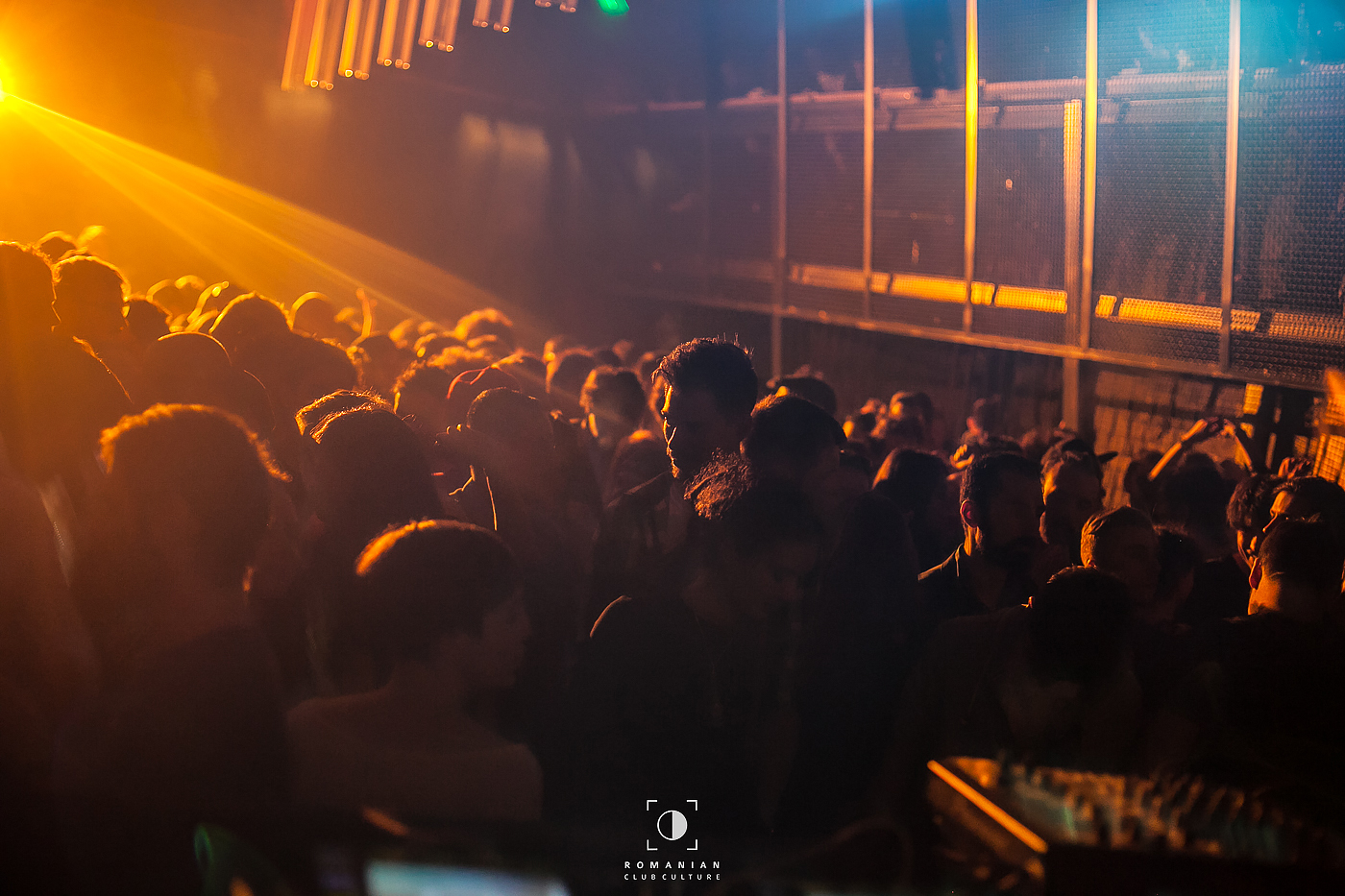
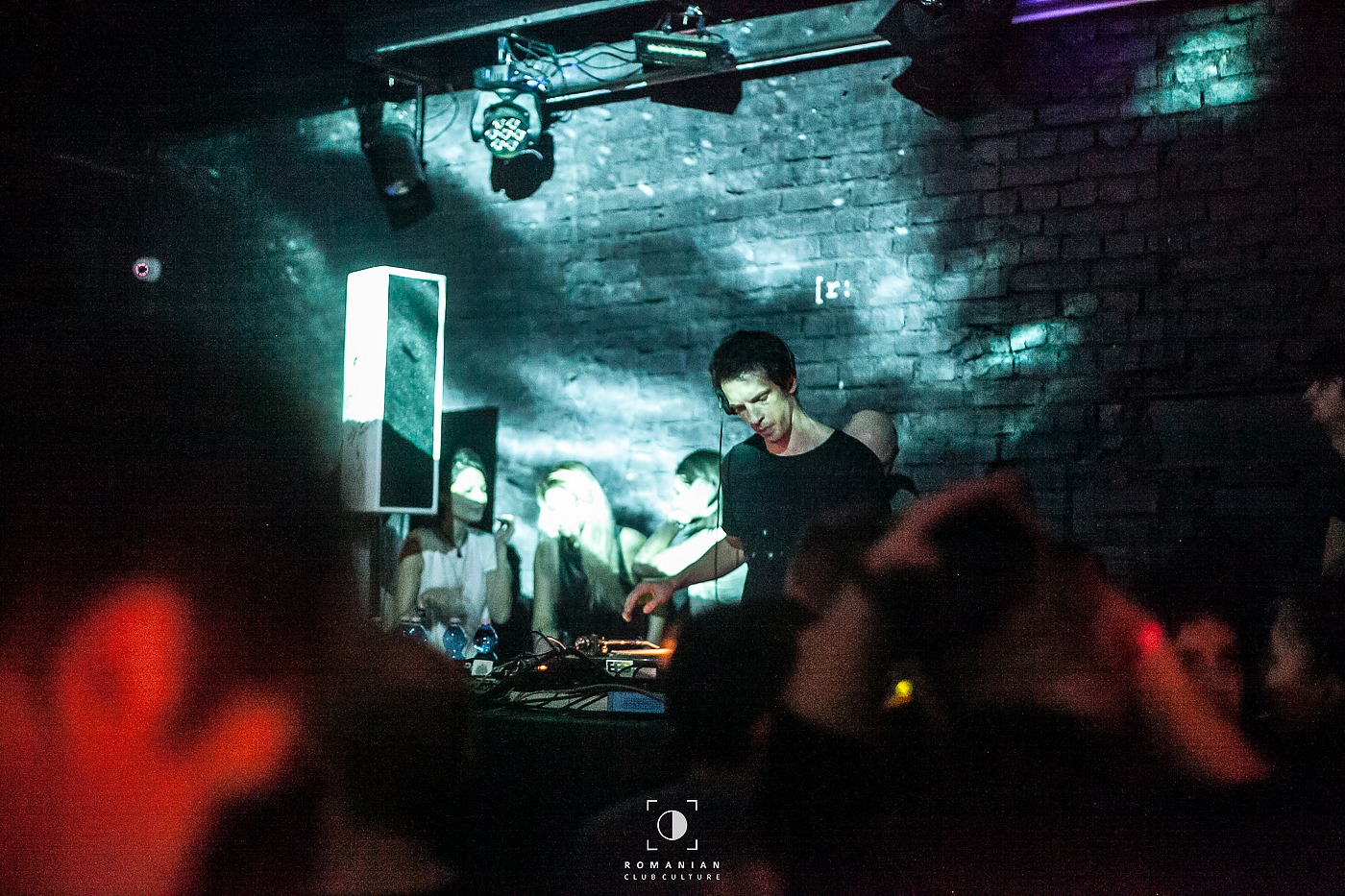
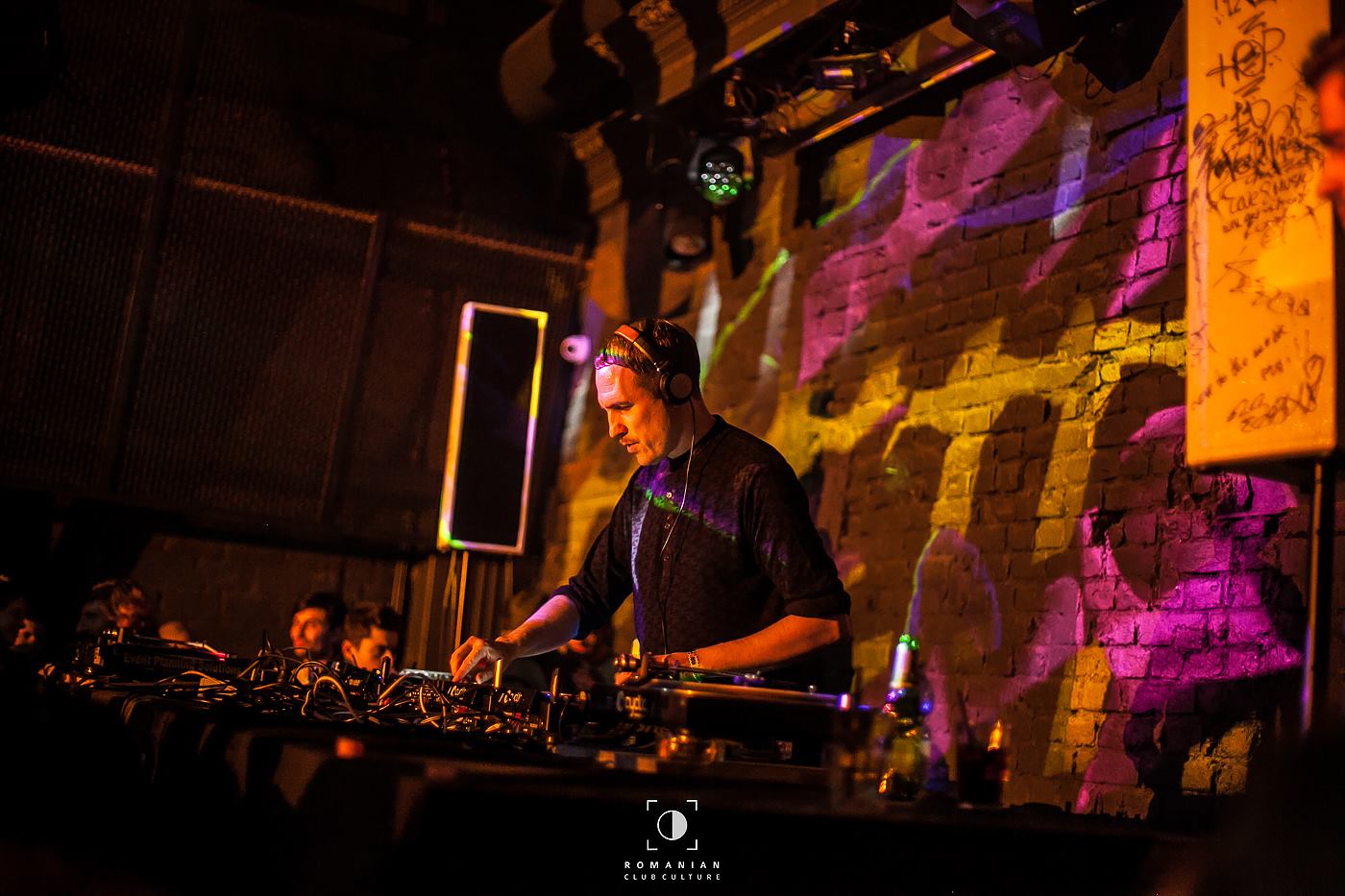
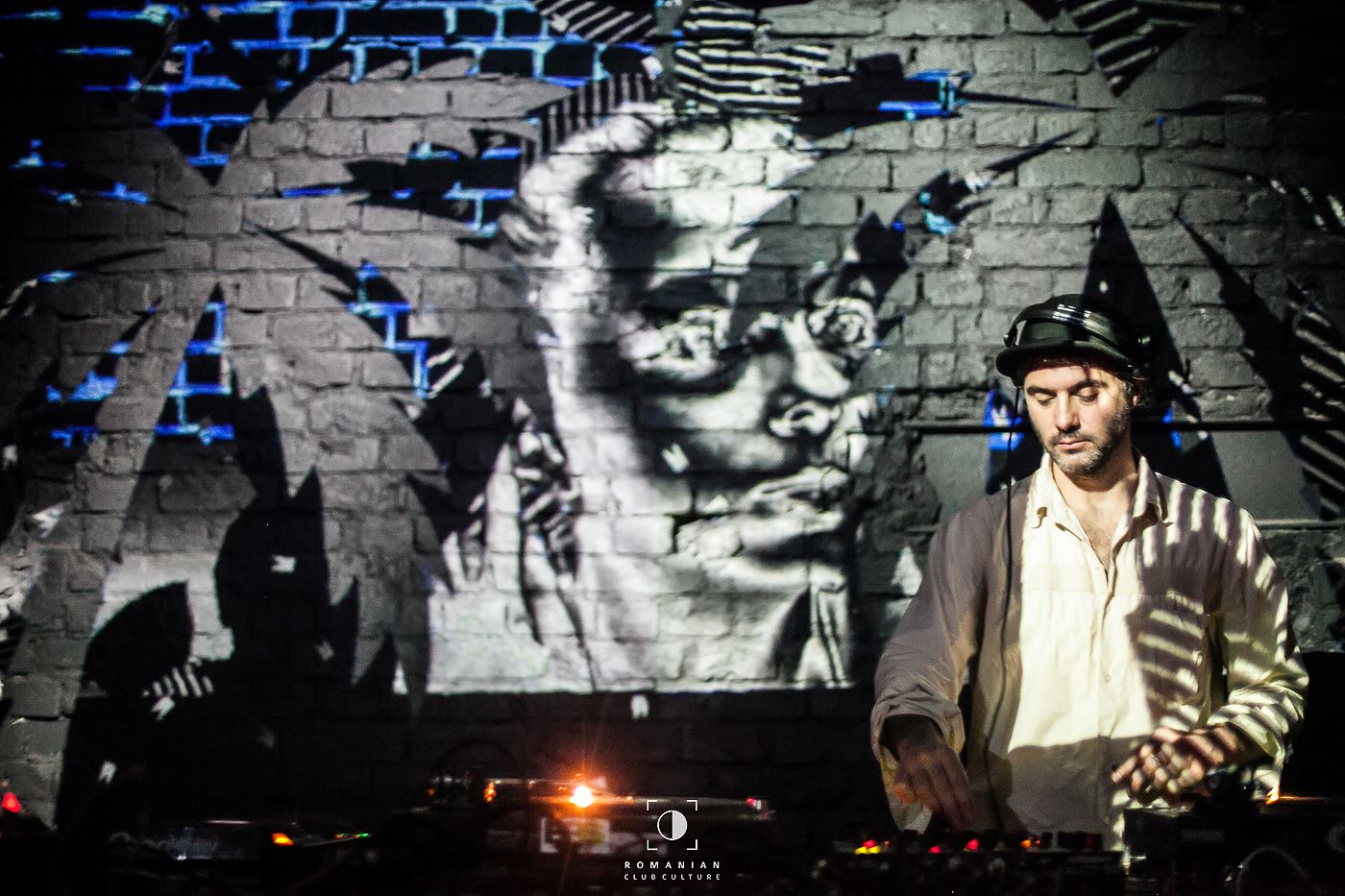
2015 was the year of Cristi Tudorache, better known as Melodie. The latest in a long line of Romanians to grace the electronic music world with his productions, he has set himself apart from most of his fellow countrymen by developing a sound that favors a slightly fleshier approach to house, as opposed to the stripped back minimal churned out by many of those in the scene over the past few years. After a decade of quiet, assiduous practice, working away on his productions until he could be certain they were ready to go public, Melodie has enjoyed a year in which he was fast-tracked into the limelight on the back of a couple of highly acclaimed EPs. It was no coincidence that he was garnering the support of some of the local scene’s biggest players (a hotbed of talent that Will Ralston recently covered in detail for us), with a release on Raresh’s Metereze imprint, as well as being a staple in the DJ sets of many others, Romanian or otherwise.
Today’s free download is “Dimension X,” a track that captures the essence of this winning formula: With a subtle bassline pervading its restrained percussion, it is a gentle builder that would play a powerful tool when deployed at the right time. It is a nod towards the fact that he is set to continue his hot streak into 2016, and that there is plenty more to be expected from one of this year’s breakthrough artists. For more information on Tudorache, check out this informative feature that Resident Advisor put out about him earlier this year. Also, make sure to head to his Soundcloud page for more tracks, as well as DJ mixes too.
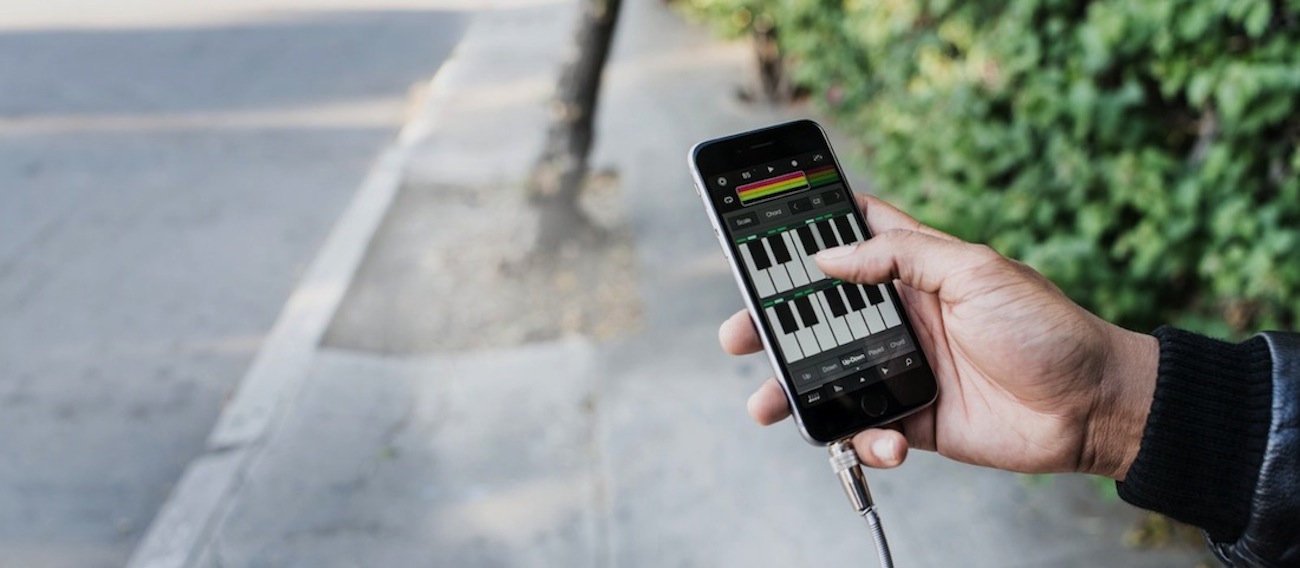
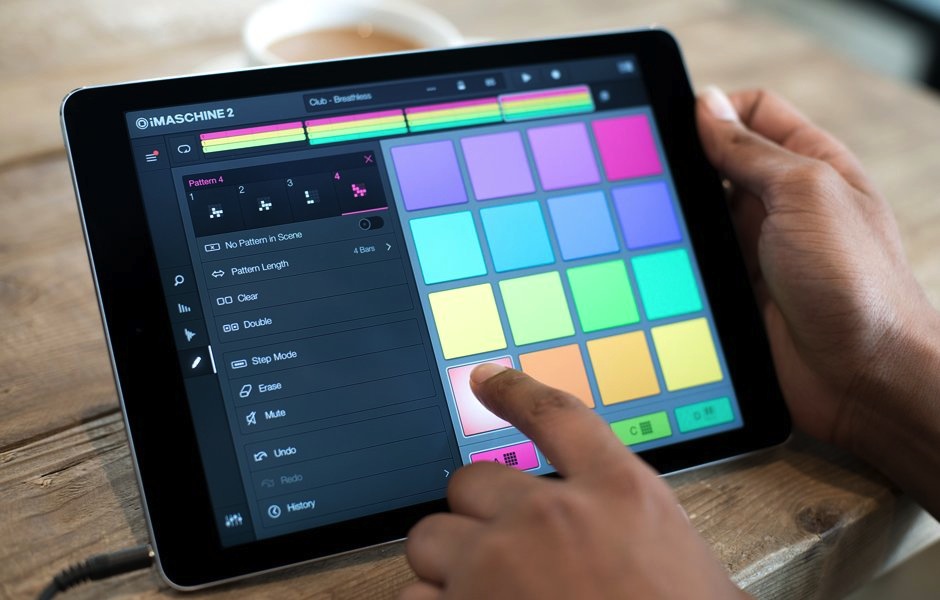
Since its initial release in 2009, the Maschine hardware has found its home in many a music production studio, thanks largely to its clean, intuitive interface, excellent pads and deep sound library. Just launched on the iOS App Store, iMaschine 2 effectively translates this experience to a touchscreen format, and is Native Instruments’ most powerful iOS release to date.
iMaschine 2 brings with it a surprisingly impressive lineup of features found on desktop, including a brand new Step Mode, with step-sequencing of each pad; a new Arranger for putting together proper track arrangements; and scale, chord, and arpeggiator functionality, all which are incredibly fun to play on a touchscreen. There’s even 3D Touch controls, provided you’ve got a new iPhone: Select “3D” in the Note Repeat function, and the rate changes depending on how hard you press your finger against the screen. To boot, you can grab the set you’re working out on your phone, chuck it into Maschine in your studio, and be ready to go in a matter of minutes.
We spoke with the driving design force behind iMaschine 2, Native Instruments senior product designer Scott Hobbs, about his team’s work on the app.
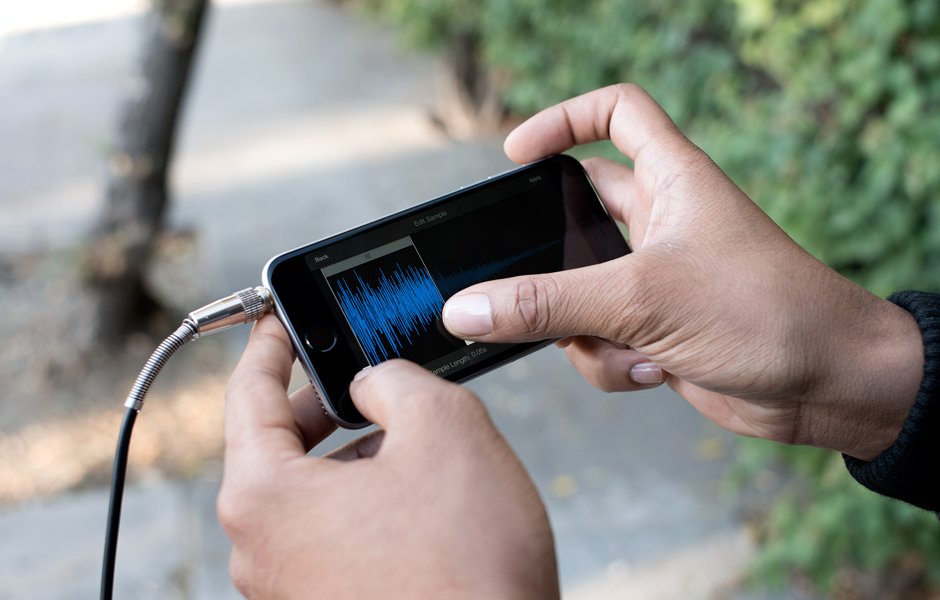
Maschine has become a studio staple, largely due to its crisp workflow and controls. Was this the core of what you were trying to preserve with iMaschine 2? Absolutely. These qualities are central to the Maschine hardware concept, and are also essential for iMaschine 2. What’s specific to iMaschine 2, however, are the different environments and contexts producers will use it in, and we had to design with this in mind. When a producer wants to record a sample on the move, for instance, or quickly capture a track idea, iMaschine 2 needs to allow the user to achieve that with as little friction as possible. While we aimed to deliver much deeper functionality with iMaschine 2, adding complexity to the interface and workflow was not an option—that was the challenge.
“We wanted to empower users with the ability to make more than quick loops—to allow them to create full tracks no matter where they are.”
How did you approach the project? Was this considered a more-or-less complete reboot of the original iMaschine? Reboot is a great phrase. iMaschine 1 was a successful app, and served well as a sketchpad, but we knew we could take it further. Since the original release in 2011, mobile devices have become more integrated with our lives, and are fast becoming go-to tools for producers. We wanted to empower users with the ability to make more than quick loops—to allow them to create full tracks no matter where they are. Over the years, we’ve had a lot of feedback in terms of how people were using the product, and how people wanted to use it. We were listening.
What was the trickiest thing about bringing the essential Maschine experience to iOS? The most complex design work is distilling deep features into something lightweight and quick to use, but still powerful. Take Step Mode, for example: it’s relatively simple in comparison to Maschine, but it offers the same core functionality. Every feature option that was excused was done so with careful consideration, and comprehensive usability study. We prototyped several different designs with varying degrees of complexity, and tested these out with users. We continued to refine the concept until the interface was easy to learn, and allowed the users to capture their musical ideas efficiently.
What’s a small detail in iMaschine 2 you’re particularly proud of? Well, it’s not a small detail by any means, but I’m proud of our 3D Touch integration. iPhone 6S users can take advantage of the pad shortcuts, and skip menus almost entirely when making beats. This really helps producers stay focused on the music. We also implemented pressure-sensitive note repeat—this is functionality and an interaction that was previously only possible with hardware interfaces. 3D Note Repeat has 2 modes: A fixed rate mode (1/8, 1/16, etc), where the pressure on the pad controls velocity, and a second where the velocity is fixed, and the rate is variable, via pressure on the pad. 3D Touch really pushes iMaschine to a new level.
In your estimation, what are the aspects of the touch interface that have been holding it back from becoming a primary platform for music production, and perhaps even replacing the standard desktop workflows? Technologies like 3D Touch feel like steps in the right direction…. Touchscreens are fantastic interfaces—they’ve opened up new paradigms in how we interact with software. They fuse traditional software and hardware interfaces with incredible versatility. That said, for music tools, they lack tactility and haptic feedback. Many producers inherently want to have physical control over the tools they’re using—clicking a button, moving a physical fader, feeling the feedback from a set of keys.
3D Touch is definitely a step towards fulfilling this need, and an exciting innovation. I believe that touch devices will continue to deliver more advantages over traditional interfaces—and for some users in the future, these will outweigh the benefits of having a desktop computer and multiple pieces of hardware. As touch technology evolves, as screens become larger and devices more powerful, software interfaces will cater to more demanding needs, and touch-based computing will undoubtedly become more central in creators toolkits. It’s just a matter of time.
What are some of your favorite hidden features in iMaschine 2? They wouldn’t be features if they were hidden! We really wanted to make every aspect of iMaschine 2 as discoverable, intuitive and useful as possible, so there really shouldn’t be anything hidden from you. What is currently hidden behind NI doors, however, are some of my favorite features.
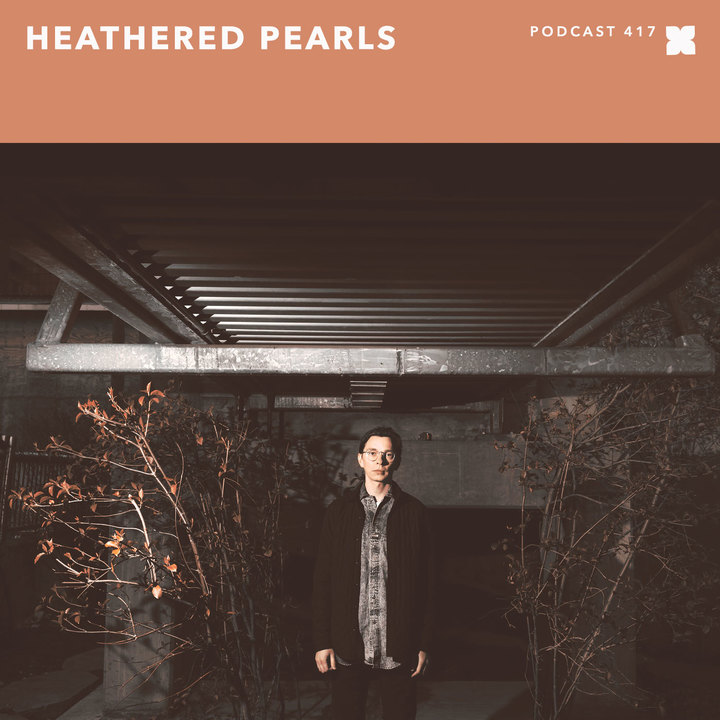
Jakub Alexander, better known as Heathered Pearls, has described the sound of his debut album, 2012’s Loyal, as “indirect, huge, heavy, slow ocean waves off in the distance at night.” The second album from the Ghostly International recording artist, this past summer’s Body Complex, adds a bit more muscle to the template—but still, the LP’s sublime and beatific tracks seem tentatively hover around the edge of the dancefloor, rather than jump feet-first into the action. But don’t be fooled, because Alexander is a techno-and-house man to the core, as anyone who’s caught his DJ sets can attest; our latest podcast sees the Brooklyn-based artist in full club-set mode, with tracks from Xamiga, Benjamin Damage and the almighty Robert Hood among those making the cut. The result is still plenty gorgeous, as is pretty much anything with the Heathered Pearls name attached to it. But it’s also made for dancing—and that’s the way Alexander likes it, as he explains below.
Those who know you only through your recorded output might be surprised by how dancefloor-friendly this set is. Is the mix indicative of what you would play in a club? I can see why people might be surprised, that but most of my actual DJ mixes have been mainly techno. Ambient music came in later in my life.My second album, Body Complex, sort of does the job of bridging what I have done recently and what I am building towards—which is exploring straight techno. The first records I ever bought in the ’90s were hard-techno and tribal techno records—I still love those to death, and its always been what I buy and hunt for. I feel ten times more comfortable playing techno tracks in front of people over my ambient live show. Don’t get me wrong—I love both equally wholeheartedly. But when I play what I always refer to as “body music, a.k.a. dance music—like the tracks in this mix—I can go for hours. As for my ambient show, I can handle about an hour of the most attractive hypnotic swells before it becomes an endurance issue, only because of the lush heaviness in it. The tracks I picked here are melodically appealing groovers, where the intricate details are more colorful than just straight jacking—or than going into the house or acid realm. I got a little weird with it by clustering more melodies than your regular techno set, but I think this is what you can expect from my DJ sets. I usually go heavy on the looper—especially when finding the meat and potatoes of a track ,and riding that as long as possible if the crowd is feeling it. I learned that early on from Matthew Dear and Ryan Elliott.
What was your methodology for constructing this set—vinyl, CDJs, Ableton, Traktor, something else? And did you do much pre-planning, or was it more of a go-with-the-flow kind of affair? I use a four-channel Traktor-like program, and looper/pedals. I always go with the flow—but pick what I want to bookend the mix with.
What’s coming up for Heathered Pearls in 2016? I’m working on a speedier techno EP, and also a hybrid live show that ramps out of ambience into a DJ set—it seems to be the most honest sequence I can present to a crowd of what I enjoying sharing, and of what people will positively remember.
‘Tis the season for mistletoe, egg nog, and sitting by the fireside getting cozy with your significant other. In short, it’s kissing season! For those who like to get all lovey-dovey to an electronic soundtrack, we have a special holiday treat: a roundup of smooch-worthy tracks, thoughtfully compiled by Camea. Now in the midst of a short U.S. tour with dates in LA, New York, Denver and D.C., the DJ-producer’s career path has followed an winding but ever-upward arc, one that started in in Seattle in the late ’90s and continued on to New York for much of the ’00s, where she began to garner attention through for her techno/tech-house musings as a DJ, producer and coleader of Clink Recordings. But it was a 2007 relocation to Berlin (where else?) that sealed the deal—following the move, she’s recorded for such standout labels as M_nus, My Favorite Robot, Plus 8 and Get Physical, and since 2011 has been a core member of Ellen Allien’s BPitch Control cadre, all the while fashioning the kind of music that’s both brimming with emotion and perfect for late-night dancefloor shenanigans. And speaking of those shenanigans, scroll down for Camea’s Five Techno Make-Out Tracks.
1. Cryptik “Radiance” (Figure Music) Johannes Heil is a regular in my DJ playlists as well as on Len Faki’s label Figure, and I love his euphoric, left-field techno alias Cryptic. He’s only done a few releases under this name, but I hope to see a lot more in the future. Ironically cataloged at release number 69, his “Radiance” from this past summer is a great date night soundtrack—and is my current top make-out techno pick.
2. Benjamin Damage “Pulse Width” (50 Weapons) Take it from a lady: If you want to impress someone with your home vibes on date night, then play Benjamin Damage’s new album Obsidian (side-note recommendation: with Toumbac Scented Candles from A.P.C and a bottle of quality red—I’m really giving you all of the guns, now so get on it). I don’t need to say much more than that—the entire collection on this LP is a stunning piece of poetic techno, and if you don’t get a smooch for playing it then you have bad breath. Brush next time.
3. Abstract Division “Metropolis” (Function Remix) (Dynamic Reflection) So, I have a plane-crash playlist on my iPhone. I know that must sound morbid, but I’m a John Cusack Say Anything–type romantic, and if I’m going down then I want to be prepared for an epic last moment. That being said, I don’t think this would be possible without a Function track somewhere in the mix. Dave’s music is passionate and utopian, much like his personality, and can turn any crazed Berghain techno floor into a heavy petting zoo. This remix of Abstract Division on Dynamic Reflection was one of my favorites from him this year.
4. Baby Ford “Gravy Train” (Perlon) My apologies to the electronic-music community, but “minimal’” will have a place in my heart forever. Good analog minimal, not Beatport minimal. Maybe you had to be there, maybe you didn’t, but anyone that ever hung out in Berlin at Bar 25 or Club Der Visionaere ten years ago and sat alongside the river through many moon and sun rises, has probably had an after-hours make-out moment to a Baby Ford or Soul Capsule track. Baby Ford is my #1 after-after-after-hour make out choice forever.
5. Camea “Moonwalk Away” (Locked Groove Remix) (BPitch Control) This is a vinyl-only remix that Locked Groove did for me in 2014 on BPitch Control, as a follow up to my “Neverwhere” single. I love romantic, arty techno—and LG is the king of classy, wine-and-cheese epics. The gorgeous strings in this track were recorded in Belgium, and this mix is still on regular play on my rainy day, “let’s-just-stay-in” playlist.
Hong Kong native Steven Tang (aka Obsolete Music Technology) saw his humble beginnings in electronic music after migrating to Chicago in the early ’80s, where he discovered house music for the first time through his friends, and where he spent many of his weekends recording mixes off Chicago’s radio airwaves. As his addiction for the genre grew, Tang began collecting the latest cuts of the day from stores like Imports Etc. and Loop Records. His ever expanding record collection is what eventually lead Tang to buy his first pair of Gemini decks to teach himself the art of DJing. In the ’90s Tang studied Radio Broadcasting at Chicago’s Columbia College and started playing at local events, small clubs, and house parties, while working towards establishing his own studio to work on original productions. His debut EP, Windy City, released on his own Emphasis Recordings imprint in 1998, garnered the attention of Ewan Jensen (Red Ember Records/Moods & Grooves). Two years later Tang contributed to Red Ember’s Deepsounds Vol 1 compilation with a track titled “Visions Far Away.”
Tang has performed at festival’s like the Detroit Electronic Music Festival (DEMF) and has produced for labels like Aesthetic Audio, Dolly, and Smallville. He has also featured on a variety of compilation projects and remix releases for Dial and Secretsundaze, among others.
Honoring his Chicago roots, Tang delivers us with an immense house track offered as an exclusive download on XLR8R.
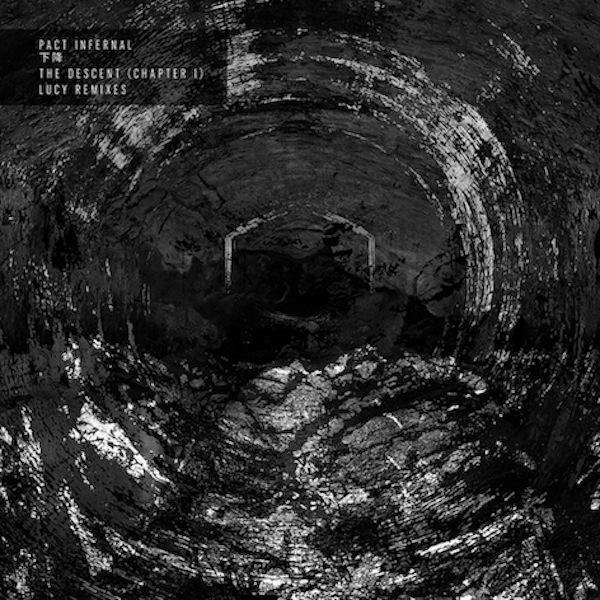
Back in March, Pact Infernal debuted on experimental sublabel Samurai Horo with a brooding, downbeat four-tracker, The Descent (Chapter 1). It wasn’t long before Stroboscopic Artefacts label head Luca Mortellaro, a.k.a. Lucy, picked it up and personally offered to rework the EP into his own stylistic interpretations. Distilled into two separate remixes, Lucy presents a towering twenty-five minute expedition into the supernatural unconsciousness. He re-invigorates the original work with a masterful touch, translating many traits of the original with effective ease, while also managing to create something entirely self-sufficient and artistically individual.
On the A-side, the Cosmic Remix transports the listener through a shimmering portal of windswept sound design and spluttering synth textures. Its cyclical reelings are carried forward by a steady bass drum which continues almost unabated for the full thirteen minutes, while the trundling patter of hi-hats accent the off-beats. Tracks of such length cam struggle to maintain interest, but here, one is transfixed by its hypnotic trajectory. Lucy holds down the tension throughout, subtly building things up through the layering of percussion and overhead drones that later engulf the canvas; at key points, Lucy deftly strips down the textures only to re-enter the vortex shortly after, escalating with each iteration. The clatter of cosmic dross, more noticeable during the breakdowns, rumbles like distant thunder and points us to Lucy’s innate ability for timbre and arrangement. Entering just around the halfway mark, effervescent synth textures underpin the descending harmonic progression, vacillating under the flowing digital currents. Simultaneously a club weapon and a metaphysical odyssey in its own right, the version delivers on all fronts.
On the flip is Lucy’s Subterranean Remix. Decidedly more lax, yet still retaining a similar austerity to the A-side, it draws more strongly on Pact Infernal’s stark, overcast aesthetic; moreover one can really hear Samurai Horo’s stylistic hallmarks of darkly, atmospheric soundscapes and ambling rhythmic structures. The energy here is more inward, yet just as brilliant in its expression. While the mix entertains the same treatment of structure and arrangement, the sound palette is distinctly different. An eeriness looms over the track—long-arching notes pierce through the fog of pads and percussion, while intermittent squeaks and underlying resonances contribute to its spine-chilling ambience.
Lucy’s attention to both form and detail is consistently impressive, and these two remixes particularly show the way he manages to synthesize material into a breathing, organic whole, one that evolves as the track progresses. Pact Infernal’s original may contain more variety, but the depth and vision in Lucy’s work is undeniable; the two remixes, in fact, contrast and complement each other perfectly. A purveyor of altered sonic states, Lucy once again brings us something that is equal parts uncompromising and hypnotic.
These are trying times in the Romanian capital, Bucharest. In the wake of the horrific fire at the city’s Colectiv Club at the end of October that killed 60 and eventually led to the resignation of Prime Minister Victor Ponta and his government, that much would have been obvious to anyone who’d been paying attention to the news. What further brought it home for me, however, was a text message from a colleague as I landed in Bucharest a few hours before the start of Interval 100, a new, much-heralded event that was to take place across two of the city’s best-known clubs over an unbroken 100 hours.
“Have you seen the announcement?? Guesthouse down!”
One of Interval’s two venues had been shut down just hours before Interval was due to start, a situation that would be close to unimaginable in a city running on a normal footing. The Emergency Situations Institute (ISU), a state body that has been in existence for some time, decided to lay down some down new fire-safety requirements for clubs and other venues in the city that seem as draconian as they are chaotically enforced. Its officials had conducted a random inspection on Club Guesthouse and decreed that it be shut despite (we were told) a raft of measures having been taken by its owners to ensure that it remained open. This was by no means the first trouble Interval had run into in the four weeks since the fire at Colectiv: The festival was originally to take place at the clubs Guesthouse and FORM, but FORM was closed down almost immediately after the Colectiv fire. Two other clubs–Control and Eden–then stepped in, taking the venues to three, but Eden had also to drop out a couple of weeks later, leaving just Control and Guesthouse.
The ensuing hours brought a frantic, and ultimately fruitless, search for a replacement venue for Guesthouse, followed by an equally frantic restructuring of a schedule that was now to unfold in just one venue. It was clear that some big hitters were going to have to drop out to avert a financial catastrophe, and Nina Kraviz, Jackmaster, Ben UFO, Tessela, Mano Le Tough, and Levon Vincent were among those gone as the full bill was slashed from 100 artists to 65. A revised schedule was posted with impressive speed on the festival’s Facebook page, along with a statement, a full reading of which vividly communicates the hopelessness of the situation Interval found itself in.
“When this happened on Friday, we decided to head to our favorite falafel place to talk it over,” one of the main organizers told me a couple of days later, her shock still palpable. “But when we got there we found that the ISU had just shut it down too. So we went to our second-choice falafel place across the street, and it had been closed down as well.” While I can’t comment on fire-safety provision at Interval’s favorite falafel places, the shattered resignation with which this was delivered spoke volumes about what the organizers had been grappling with in the past days and weeks.
It was clear that Interval had been extraordinarily unlucky with the timing of an event that had clearly been in the planning for years. The big question, as we headed into the club for the first time on Friday night, was what could be salvaged.
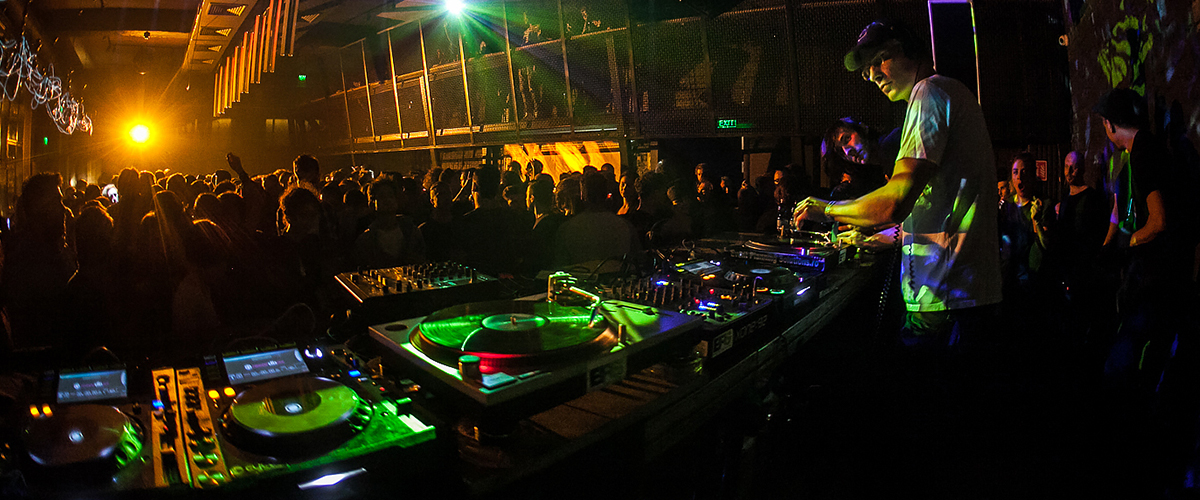
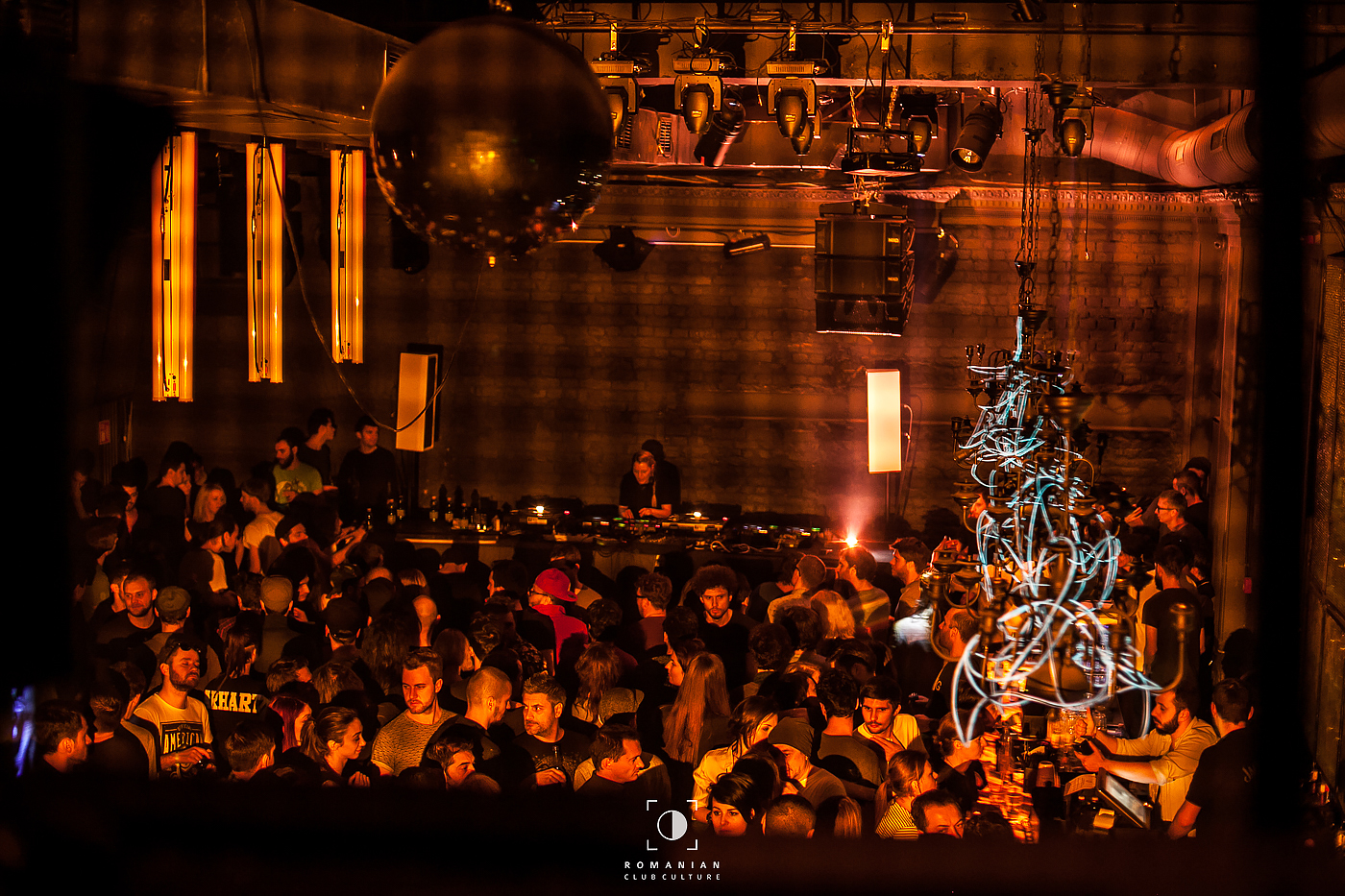
A first note of reassurance came on discovering that Club Control, Interval’s one remaining venue, was an excellent space for clubbing. Its 500-capacity main room (Control) has a large, open dancefloor; a cool, corridor-like mezzanine running around two of its four walls, and consistently great sound. Its second room (Front Control) is split up the middle, with a small but not insignificant dancing area on one side and an area of seating on the other. The mood was somber and shell-shocked when I first arrived, but things soon began to hot up as midnight ticked by. Dipping into Steve Rachmad‘s melodic techno in the main room proved periodically rewarding, but it was a pounding, euphoric set from Kowton in Front Control that really blew away the cobwebs, signposting two things: Interval was actually going ahead; and that it might be pretty great after all.
Supreme sets from Cabanne and Margaret Dygas got the party going on Saturday evening. A healthy smattering of local artists gave Interval a solid Romanian base throughout, but Raresh, Petre Inspirescu, and Rhadoo, the three DJ-producers who comprise RPR Soundsystem, unquestionably provided the local scene’s most triumphant moments. These guys are royalty in Bucharest, and they all played to packed crowds in Control. My pick was Raresh on Sunday evening, but Inspirescu, his excellent new LP all ready to drop, also impressed over five languorous hours on Monday evening.
As the weekend wore on, I increasingly fell back on Front Control’s intimacy and less-fervent focus on 4/4 beats. Standouts there were legion, but Studio Barnhus co-founder Kornél Kovacs‘ set early on Monday morning particularly sticks in the mind. His mix of big rave synths and equally big house pianos with recent Studio Barnhus cuts (Matt Karmil’s Fleetwood Mac-sampling “Moment” among them) acted as a perfect pressure valve for the dark delights of Francois X‘s techno and DVS1‘s superb set next door. Baba Stiltz and Mr Tophat & Art Alfie followed with one of the weekend’s many impromptu back-to-back sets (or back-to-back-to-back in this case), while Hunee worked similarly joyous magic in the same room 24 hours later up against a rather bored-looking Recondite in Control. Hunee’s glorious taste in disco elicited some of the most frenzied dancing I saw all weekend, and his late airing of Laurent Garnier’s “The Man With The Red Face” improbably managed to elevate the mood even further.
With most well-programmed electronic music festivals, clashing set times are what makes you miss some banner acts. With Interval and its unbroken 100-hour schedule, it was the human requirement for sleep that did it. The event stretched over five full nights, with smaller acts generally scheduled from mid-morning into mid-afternoon to allow people to rest. Even given that, however, everyone I was with at Interval had at least one night on which they had to admit defeat and turn in early, no matter who was playing. I lasted until after Hunee’s set in the early hours of Tuesday morning before indulging in a relatively early bedtime, missing Âme and Marcel Dettmann but waking up ten hours later with a smile on my face. It was frequently remarked upon during Interval that despite the overwhelmingly happy atmosphere in Control, hardly anyone was obviously high. Interval’s running time had the potential to be taken as an ill-advised challenge, but nobody I saw treated it that way, and the event was all the better for it.
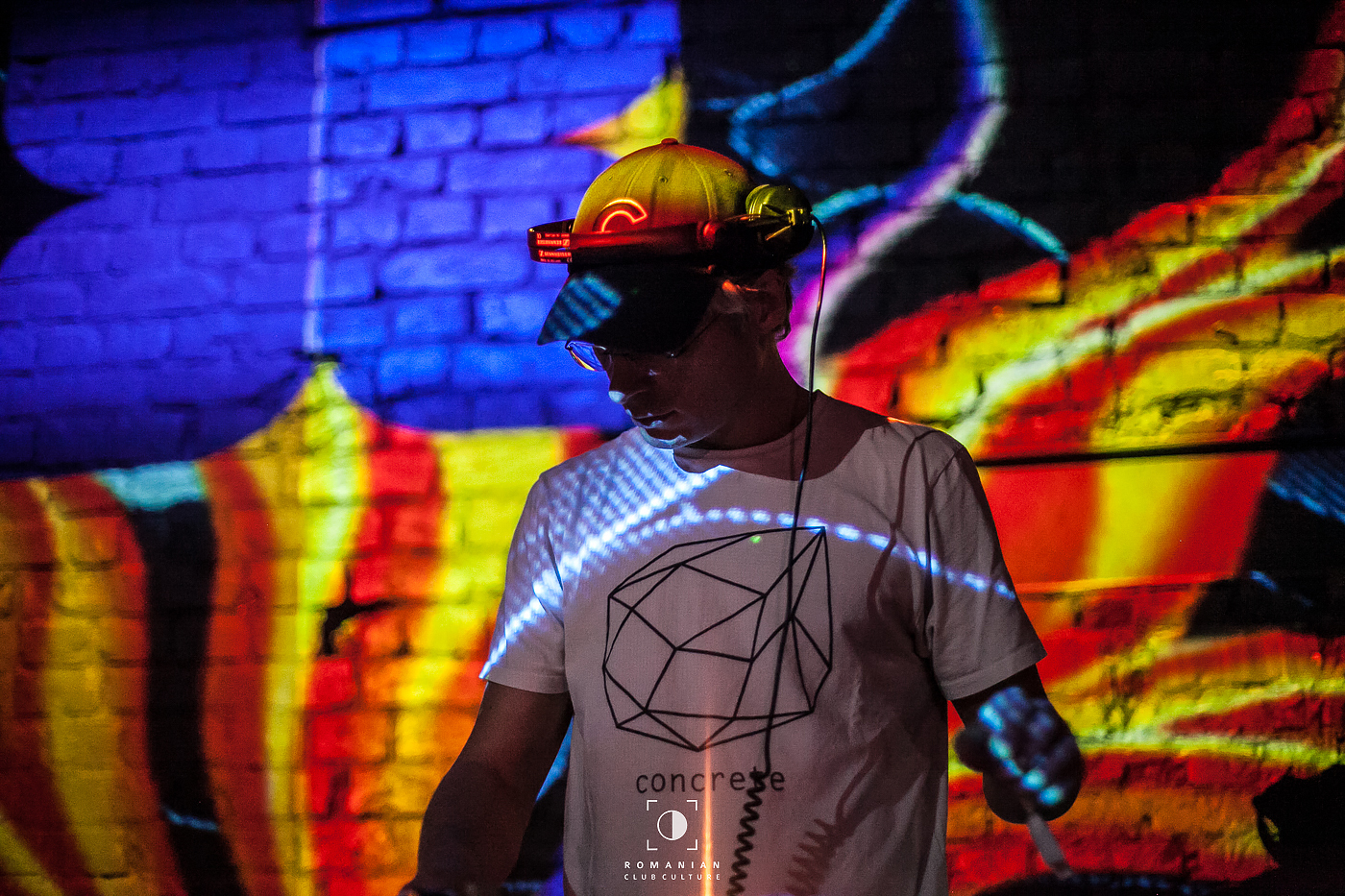
The final night of Interval passed in a demob-happy haze. I don’t think I was alone in feeling like I had undergone some kind of techno aversion therapy after nearly 100 hours of 4/4 thump, so I largely body-swerved Rhadoo’s closing set in favour of Captain Midnight in Front Control. Captain Midnight are also known as Blisi and Herne, the duo behind Interval. If the extraordinary strain of the previous few days had got to them, they didn’t show it, with DJ Deeon‘s “Freak Like Me” and Aphex Twin‘s “Heliosphan” standouts in an unremittingly fun set that also saw them indulge in the weekend’s final unscheduled back-to-back-to-back action with recent Dekmantel signing Central. As proceedings edged towards 4am on Wednesday and hour 101 (the next morning I learned that Interval’s final note sounded at 7am, 104 hours in), I headed for bed. What the future holds for Interval after this troubled beginning remains to be seen. Its organizers can take great pride, however, in the fact that they managed to hold it together and pull off an excellent event in the most trying circumstances imaginable.
XLR8R is pleased to announce a partnership with CTM Berlin for its 17th edition, which takes place between January 29 and February 7, 2016. As usual, the festival will happen in various venues across the German capital and will host several workshops and talks, in addition to the music shows.
For this next edition, CTM’s theme will be “New Geographies” and will be co-curated by Lebanese-born producer and DJ Rabih Beaini (a.k.a. Morphosis). As stated by a press release: “CTM 2016 New Geographies examines today’s rapidly collapsing borders and emerging new hybrid topographies, as well as the tensions and essentialist backlashes that arise as a response to these changes…CTM 2016 mixes these diverse viewpoints into a program and more, with the aim to offer a sonic framework for today’s seemingly fervent times of crisis.”
To bring closure to this widely anticipated event, CTM Festival and Red Bull Music Academy have teamed up for the second year in a row to present an exciting lineup for the events closing/after-hours party at both Watergate and Astra. Announced as the headliner for this closing event is UK native and one of the years most talked about artists Floating Points. You can view the rest of the closing concert’s lineup below.
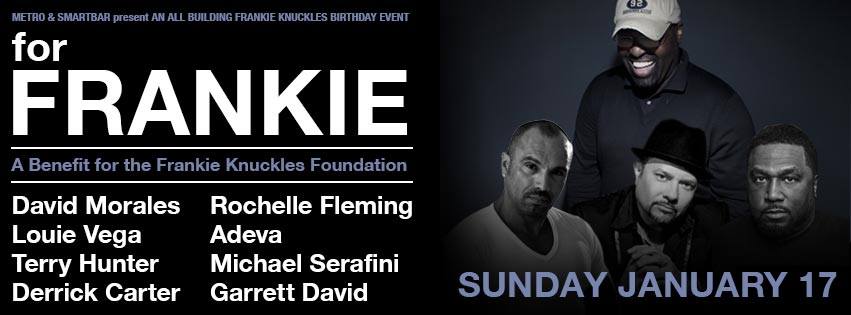
The late, illustrious music icon Frankie Knuckles is one of the many reasons why Chicago is hailed as one of the house music capitals of the world. With this legend’s passing in March of 2014, the non-profit organization The Frankie Knuckles Foundation was established, the aim of which is “dedicated to the advancement of Frankie Knuckles’ mission as the global ambassador of house music through media, conservation and public events continuing and supporting the causes he advocated.”
Having had an extremely close and long term relationship with Smartbar, one of Chicago’s most prized venues, it seems wholly appropriate that The Frankie Knuckles Foundation, Metro, and Smartbar have teamed up to present a night of music that is dedicated to this worthy cause. The event, which is set to take place on January 17, will see performances from David Morales, Louie Vega, Terry Hunter, Derrick Carter, Rochelle Fleming, Adeva, Michael Serafini and Garrett David.
London based DJ and producer Laurence Matthew Blake (a.k.a. Citizenn) first arrived on the scene with a release via Kerri Chandler‘s MadTech imprint and only a year later was hailed by DJ Magazine as the Best Breakthrough DJ of 2013. Originally starting off his career as a music video director and working with the likes of AlunaGeorge and Little Boots, Blake’s affinity towards house music began to take precedent and people began to take notice of his outstanding DJ sets. Now an internationally renowned artist with releases on Crosstown Rebels, 20:20 Vision, MadTech, and Love Fever Records, Citizenn’s notoriety continues to grow in a big way.
Having released his debut album, Human Interface, earlier this year via Crosstown Rebels, Citizenn is set to drop a remix EP for the LP’s finale, “Lady (feat. Aisha),” a tune which he acknowledges as being “one of my most important tracks.” The release will see remixes from wAFF, Francisco Allendes, Sidney Charles & Santé, and last but not least the New Jersey house hero himself Kerri Chandler. Ahead of the release, which will be available on January 22, you can grab a free download of the track “Safe Words” below. The song introduces itself with clenching drum arrangement and withdrawn vocal samples before gliding into a massive dance tune that is riddled with a heavy acid-house vibe. You can download the track in the player below and be sure to check out more from Citizenn by visiting his Soundcloud page here.