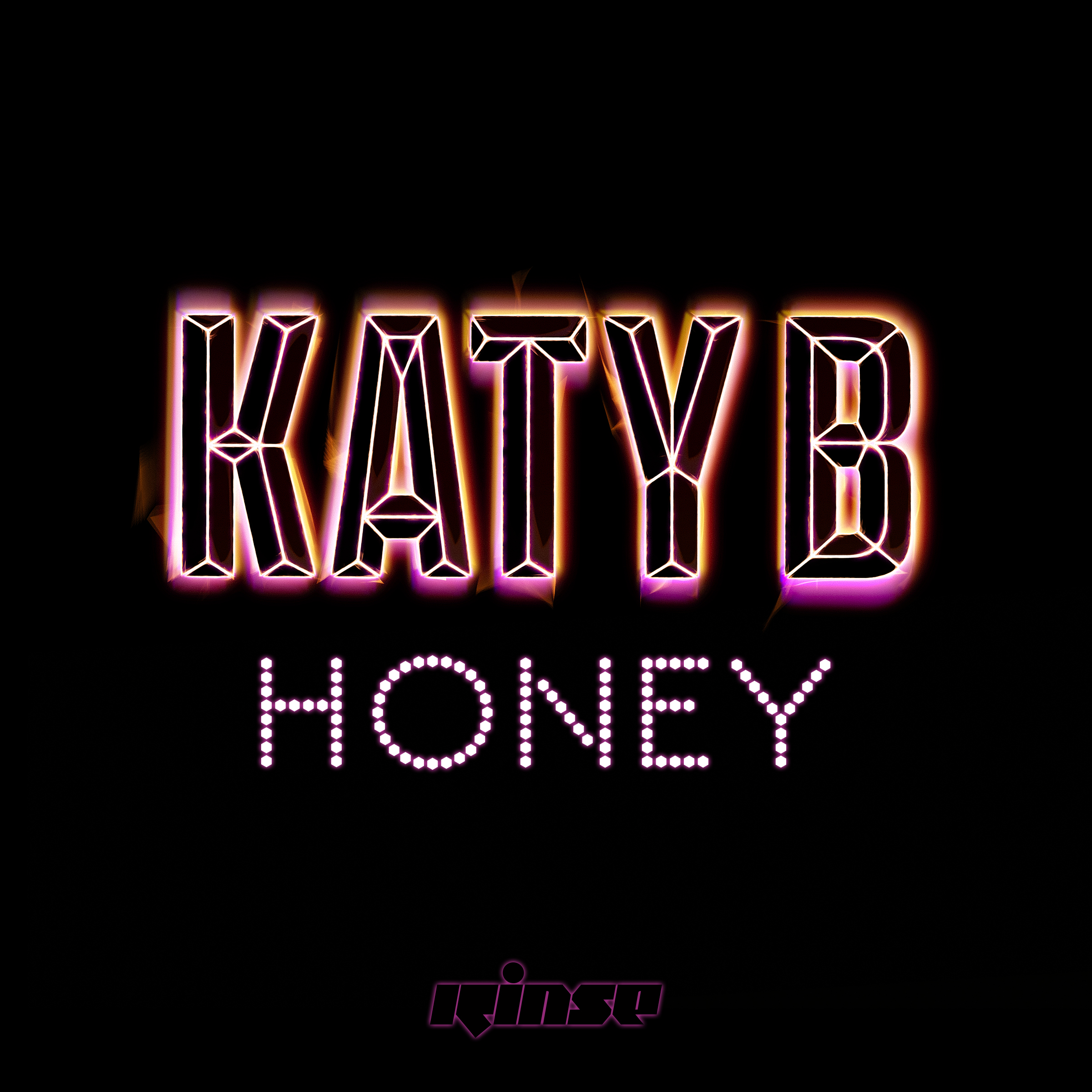
To kick off a new collaboration series named Honey, prized British songstress Katy B has teamed up with two of the UK’s most lauded producers Floating Points and Four Tet. The track in question, “Calm Down,” is a ricocheting garage tune with moments of large string orchestration that attend to Katy B’s vocals in stately fashion. Very few details are still known about the project other then the fact that we will be hearing more from Katy B in the new year.
Alongside Honey, Katy announces her biggest London show to date, taking place at Brixton Academy on May 14. Tickets are available for pre-sale on Monday December 14.
You can stream “Calm Down” in the player below and be sure to check out more from Katy B by visiting her Soundcloud page here.
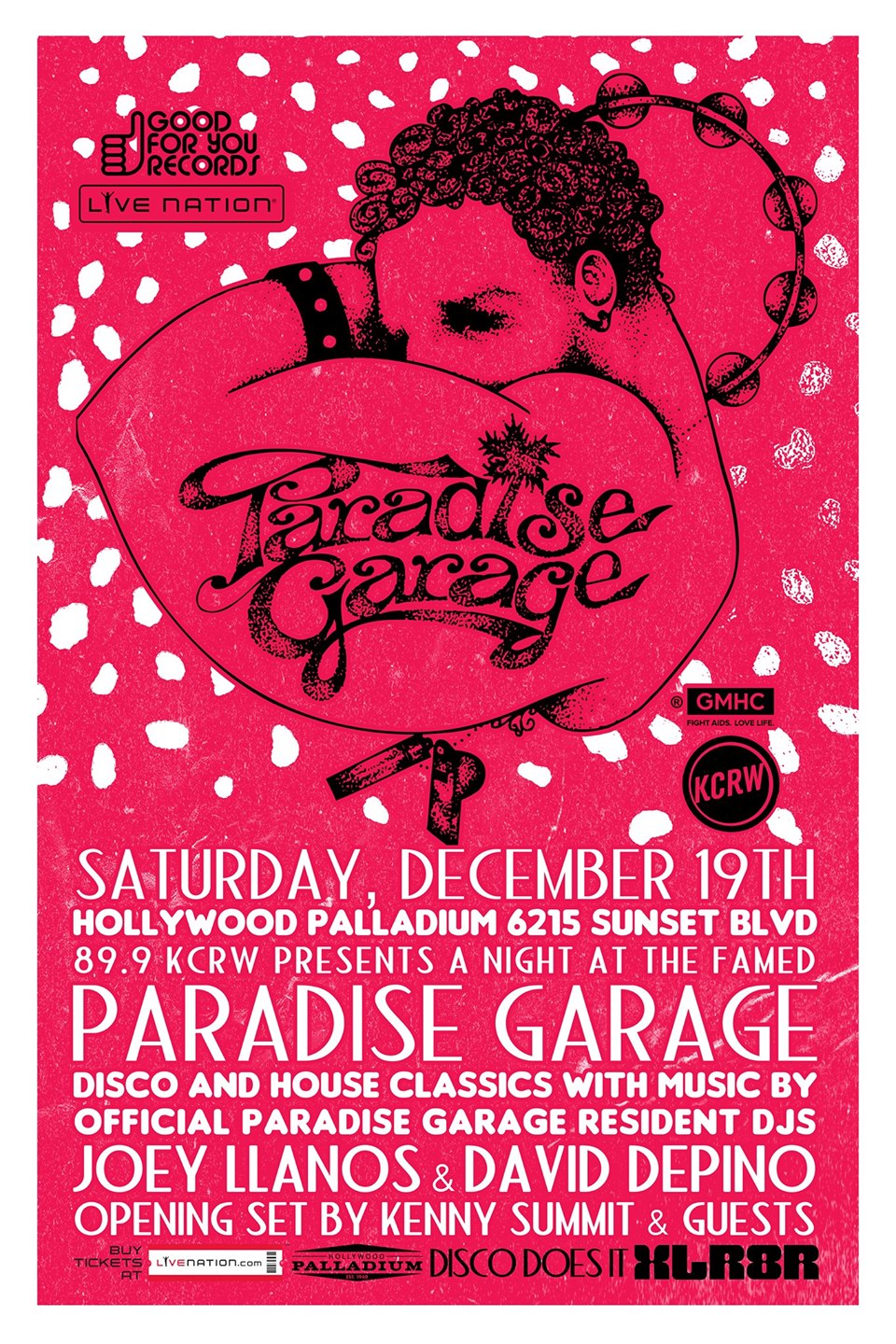
Featuring music by original Paradise Garage resident DJs Joey Llanos, David Depino, Kenny Summit, and secret guests. This very special event is to raise awareness for the GMHC through the up coming Paradise Garage: Inspirations 12″ compilation that will be released in 2016 on Good For You Records.
To show its love for the Los Angeles community this weekend, XLR8R is giving away a pair of tickets to A Night at Paradise Garage, taking place at The Palladium in Hollywood on Saturday, December 19. For your chance to win, give us a follow on Instagram and enter your full name and email information below. XLR8R will choose one winner that will be contacted on Thursday, December 17 via the email provided. Terms and Conditions apply.
Pre-sale tickets and more information for Paradise Garage can be found by clicking here.
Click on our badge to follow XLR8R_Official on Instagram.
[mc4wp_form id=”111897″]
[infobox]
Terms and Conditions:
The promoter is, Paradise Garage and agent, XLR8R.com whose registered office is at 837 Traction Ave #304, Los Angeles, CA 90013, USA.2. Employees of Paradise Garage, The Palladium / XLR8R.com or their family members or anyone helping to set up the competition shall not be permitted to enter the competition.
There is no entry fee and no purchase necessary to enter this competition.
Closing date for entry will be Thursday, December 17 2015 at 11:59AM (PST). After this date the no further entries to the competition will be permitted.
No responsibility can be accepted for entries not received for whatever reason.
The rules of the competition and the prize for each winner are as follows: Only 1 entry per email address accepted Must be 18 years of age or older to enter Prize is for 2 tickets to A Night at Paradise Garage at The Palladium Hollywood.
The promoter reserves the right to cancel or amend the competition and these terms and conditions without notice in the event of a catastrophe, war, civil or military disturbance, act of God or any actual or anticipated breach of any applicable law or regulation or any other event outside of the promoter’s control. Any changes to the competition will be notified to entrants as soon as possible by the promoter.
The promoter is not responsible for inaccurate prize details supplied to any entrant by any third party connected with this competition.
No cash alternative to the prizes will be offered. The prizes are not transferable. Prizes are subject to availability and we reserve the right to substitute any prize with another of equivalent value without giving notice.
Winners will be chosen at random from all valid entries received and verified by Promoter and or its agents.
The winner will be notified by email within 8 hours of the closing date. If the winner cannot be contacted or do not claim the prize within 1 day of notification, we reserve the right to withdraw the prize from the winner and pick a replacement winner.
The promoter will notify the winner when and where the prize can be collected.
The promoter’s decision in respect of all matters to do with the competition will be final and no correspondence will be entered into.
By entering this competition, an entrant is indicating his/her agreement to be bound by these terms and conditions.
The competition and these terms and conditions will be governed by English law and any disputes will be subject to the exclusive jurisdiction of the courts of US.
The winner agrees to the use of his/her name in any publicity material. Any personal data relating to the winner or any other entrants will be used solely in accordance with current US data protection legislation and will not be disclosed to a third party without the entrant’s prior consent.
Entries into the competition will automatically opt-in email for XLR8R.com weekly email newsletter, The Lowdown. User may unsubscribe at anytime.
Entry into the competition will be deemed as acceptance of these terms and conditions.
This promotion is in no way sponsored, endorsed or administered by, or associated with, Facebook, Twitter or any other Social Network. You are providing your information to XLR8R.com and not to any other party. The information provided will be used in conjunction with the following Privacy Policy found at https://xlr8r.com/legal.
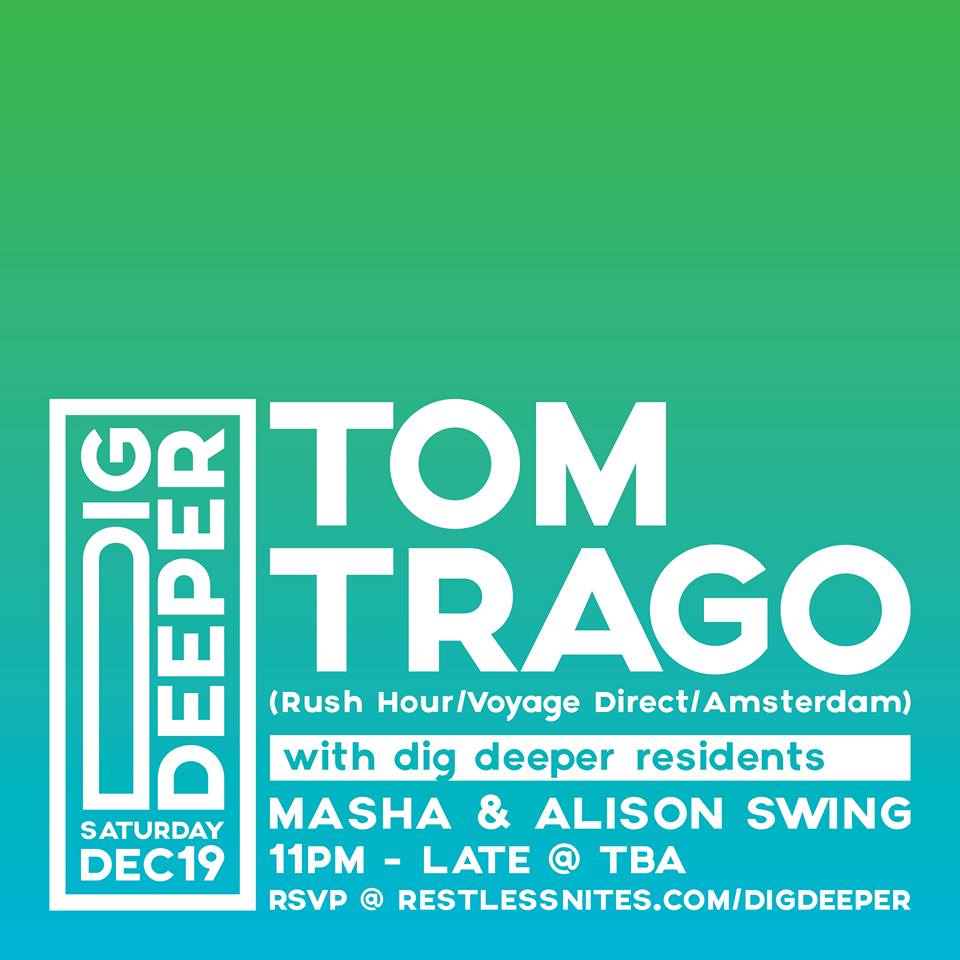
With an undisputed dedication to his craft, Tom Trago has gone from spinning at local coffee shops around his hometown of Amsterdam into an international house and techno stalwart. With well over thirty releases under his belt, Trago has become a staple of the prime Amsterdam record label Rush Hour Recordings, while consistently receiving praise for his remarkably stylish sound and alert mixing skills.
Having been in operation for a little over a year, the Los Angeles party series Dig Deeper has brought in a large number of high quality acts such as The Black Madonna, Heidi Lawden, Mister Saturday Night, LONE, and many others. Residents and founders MASHA and Alison Swing have made a big impression on the Los Angeles underground scene in a very short amount of time and it seems only appropriate that they end their final party of the year by bringing in this electronic heavyweight.
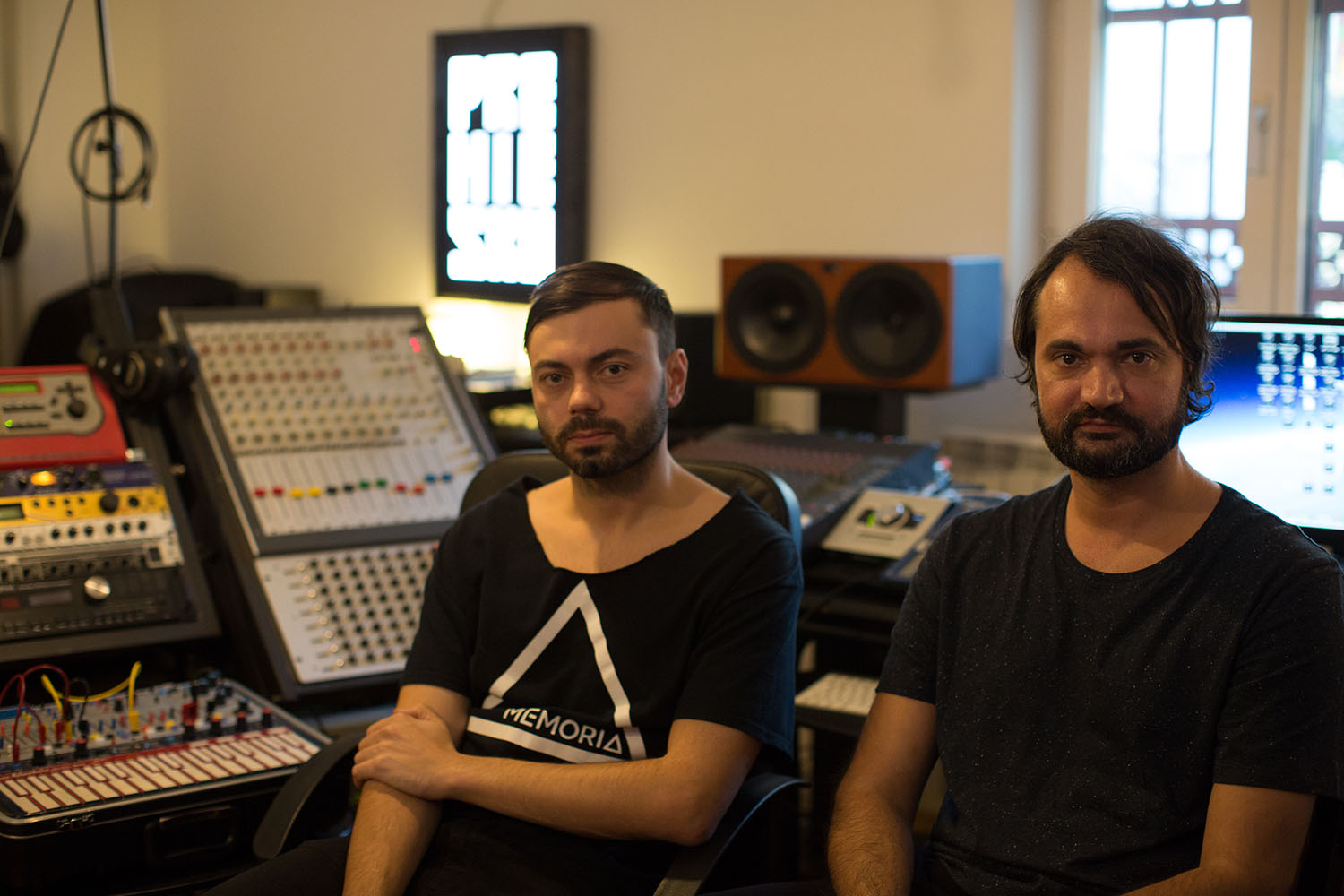
It’s just past 4 am on Thursday morning in Bucharest, Romania. Adrian Niculae, the artist better known as Priku, is in the DJ booth carefully selecting his array of music, shifting seamlessly between vinyl, CDJ and back again. The energy is high and the lights are low, but there is a stark contrast to the generic club scene anywhere else in the world. A continuous stream of avant-garde visuals plays across the two large screens on stage. The music is subtle and ethereal, laced with delicate intricacies over a minimalist baseline. The attitude of the people, too, is different. They don’t speak and jump around; they enjoy the music within themselves, as if wired directly into the beat. It is an intensely intimate and personal experience.
There’s a certain aura that surrounds the music coming out of Romania. The scene, something that has been in existence since the Mission parties at turn of the century, has long been acknowledged as a breeding ground for fine DJ and producer talent, firstly through the likes of DJ Vasile and Rosario Internullo and now with a new wave of accomplished artists, including Melodie, Alexandra, Priku, Kozo and many more. Positioned at the front of this movement are Petre Inspirescu, Rhadoo and Raresh, collectively known as RPR Soundsystem, the illustrious trio whose international success, and that of their [a :rpia:r] imprint, has shone a light onto a world that for so long was positioned in the shadows. The result is today’s blossoming but elusive music scene, the output of which is steadily shifting from the peripheries and gaining a stronger international recognition than ever before. Following the first edition of Interval festival, a landmark event in the capital that the organizers confess could not have taken place in prior years, XLR8R traveled to Bucharest to take a peek behind the curtain and learn more about what makes the beautiful Romanian scene so unique.
The first step in this exploration is a discussion of the music. “The Romanian sound” is term that’s being thrown around a lot these days. Stepping onto Bucharest soil for the first time, it was a common phrase among the entire XLR8R team. For long periods, the country has been associated with this groovy, hypnotic and loopy techno, advocated and exported by the RPR trio and their close collection of acclaimed local DJ-producers. A simple YouTube search of their names will reveal a plethora of videos that evidence this so-called sound—but dig deeper, and you’ll discover a pool of local artists who have not yet gained international acclaim, and you’ll find that the term becomes so diluted that it appears little more than a myth conceived by those who have not yet explored the variety on offer. Suggesting that Barac, Cristi Cons, Vlad Caia, Cezar and all the others are pushing an identical sound would be akin to writing that Ben Klock, Marcel Dettmann and Answer Code Request are all playing the same brand of Berlin techno. “There are many different styles of Romanian music, and it’s unique to each single DJ and producer,” say Livio & Roby. Rhadoo, for example, has some releases that are 100-percent techno, while Petre Inspirescu has a discography that spans from ambient to classical, as showcased on his latest LP on Mule Musiq. Melodie, on the other hand, sits much closer to the house genre, and there are anomalies too: the hard techno of Cosmin TRG, for example. Listen to these artists’ sets or delve into their back catalogs, and the diversity becomes clear.
Still, it is hard to deny that there is a thread, however tenuous, that runs through these artists’ work. This is something that even they affirm, but capturing this elusive denominator is an unenviable task. Having spent some time in the Bucharest nightclubs—including Guesthouse, Club Control and Eden—there is alluring but subtle groove through each track played out, and the music rolls continuously on a linear narrative. The mixing is so seamless that it creates a hypnotic stupor that lifts you. If you listen to an [a :rpia:r] set from beginning to end, you will hear everything—from acid house to more traditional techno—but “you can always hear the beats underneath, or that perfect loop,” Livio & Roby say. “Perhaps this common thing is a state—or a flow. Nothing is too obvious; nothing is too much in your face.” Not every track played in these sets is necessarily produced by a Romanian, but this groove seems to be as common an ingredient as any. In this sense, it’s more of a style than a sound.
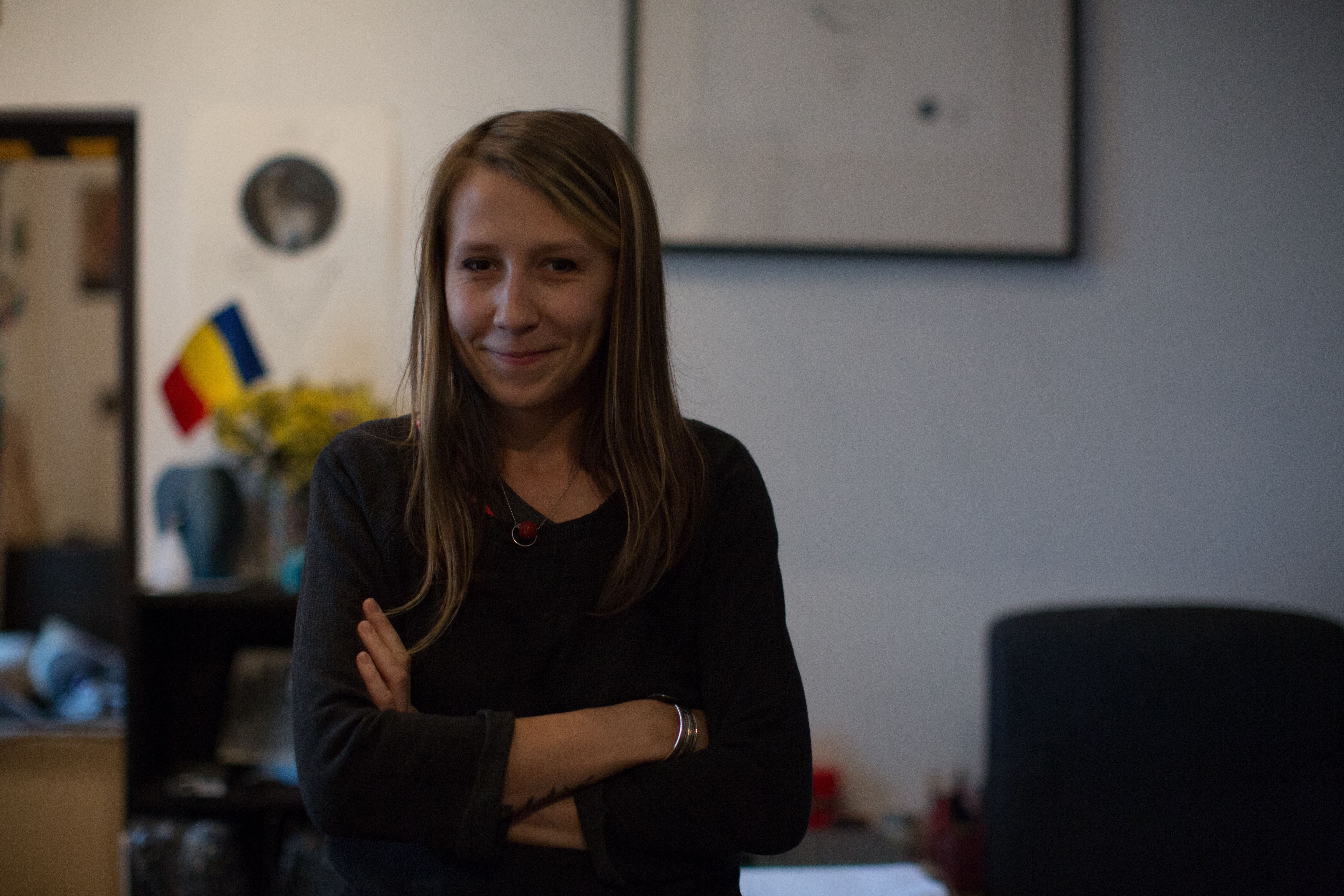
Fundamental in the growth of this style are the crowds and the country’s liberal licensing laws. “These are the most important factors,” says Irina Bako, one of the founders of Interval. Parties, she says, go on for such a long time that DJs are not forced to compress everything into just two hours. The culture is born from small after-parties and club schedules are often divided into three sections: “warm up,” “main” and “after-hours.” Romanian nightclubs have long had entirely unrestricted opening hours, meaning that it is common for events to stretch from Friday afternoon until well into Monday, or even Tuesday afternoon. “If you have got a full club, then you can keep it open until eight or nine in the morning, 12 even, whatever,” Priku says. “In different countries, you can’t do that, even if you want to.” Weekday gathering are similarly open-ended. On the Thursday afternoon of our stay, an after-party was just kicking off at Club Guesthouse, a former after-hours hangout, following Priku’s 5pm finish. These opening hours do not lend themselves to short sets laced with quick-fire moments of infinite euphoria, rather they give artists time to build up slowly and then maintain a steady state of flow. A poor transition or track selection will break the spell. “It’s not about moments or big drops,” Livio & Roby say. “It’s all about continuing the journey.”
The crowd’s role is essential. When XLR8R spoke with Audiofly earlier year, Luca Saporito and Anthony Middleton mentioned that the patience of the Romanian club-goers had strongly influenced their output, something to which Livio & Roby elude. “The whole sound is rather complex, but the crowd is used to it and listen for long periods,” they say. Romanian people have a “completely different way of reacting,” Irina Bako explains. “They are very introverted, and they just experience the music within themselves without showing anything,” she continues. “They want 14 hours of flowing music instead of a short set with lots of highs and lows.”
All this has informed Romanian productions. “The unique thing about our tracks is that they are designed specifically for DJ sets,” Vlad Caia explains. “They’re supposed to create an infinite groove for an infinite party.” This happens on two levels of particular note. First, duration: At around seven or eight minutes, Romanian productions tend to be somewhat long—and this is no mere coincidence. Head to see one of the Romanians play and you’ll notice that the mixing process is more drawn out. Instead of transitioning quickly from track A to B, Romanian DJs tend to focus on longer form mixing, and specifically, the relationship that the records create together. Given they do this without the use of software, it’s likely are some of the most technically proficient in the world. In our conversations, Priku explains that the best moment is the magic that is created when two, or more, tracks are blending together. “That’s what moves me,” he explains. “The special moment is when you to combine something from one track with something of another track.” In order for this extended mix to happen, tracks must be long. “It’s about getting a moment when you mix two tracks together, that gives it a different shape,” Livio & Roby explain. “We take care to make sure that the tracks are long enough to mix them right.” Secondly, care is taken during a track’s arrangement to facilitate this process, and ensure that the transition is as smooth as possible.
Central to any good Romanian party are the visuals. It’s another aspect of the all-around experience that must be witnessed to be properly appreciated. Lighting and visuals have become a part of almost any musical performance, be it a techno night at Berghain/Panorama Bar, or a classical show in an opera house—but those associated with the Romanian scene are extremely advanced, tailored to the mesmerizing nature of the music. It’s not uncommon for the bigger parties to have nine projectors operating at once. “Romanian clubbing is an introspective experience, so we need to give people something else to look at besides just the people dancing,” explains Simina Banulescu, one-half of Tiptoe, an acclaimed visual artist duo based in Bucharest. “Watching the visuals can help them escape because there is another element through which they can retreat.” Those visuals, she says, are a support—or an “extra dimension”—for people to enjoy the music. “It’s like going to a theater, when you want all your senses to be activated.” VJs will sit beside the artist and construct a live, immersive and three-dimensional narrative, one that progressively unfolds in tune with the music. For this reason, it is far different to a preprepared, repetitive projection that acts as little more than a distraction. RPR Soundsystem regularly collaborates and travel with Cote and Dreamrec, two veteran VJs, the latter of whom is also closely associated with Rhadoo.
There hasn’t always been so much focus on Romanian artists. The expansion of social media and the sharing of new music has inevitably increased the number of eyes and ears on the scene, a fact exemplified by the Melodie’s growing profile over recent months. Though typically subtle and beautifully minimal, his output sits a tad closer to classic house than to the micro version flaunted by so many of his peers, but there is no denying that Facebook and Twitter have facilitated his artistic progress. Unlike many of his of compatriots, excluding in particular Barac and Livio & Roby, the availability of a couple of his productions on digital platforms has been another considerable support.
On the subject of Livio & Roby, their influence looms large. Ever since their 2005 formation, the duo of Robert Precup and Silviu Sandu has been one of the scene’s most recognized proponents and lauded exports. Instead of adhering to the [a :rpia:r] formula, they have chosen their own path, touring heavily and releasing on a string of international labels, including One Records, Vakant and Loco Dice’s Desolat. Given their global presence and sound—a unique, yet more house-driven take on this Romanian style—it’s no surprise that discovery of their work is often just the start of a wider exploration.
Romania’s entry into the European Union, a decision taken in 2007, has also been a driving factor. Not only has the freedom to travel increased the flow of new ideas and inspirations into and out of the country, the resultant upturn in economic fortunes has created a steady platform on which arts and music can really begin to thrive.
But perhaps the biggest components are the development of the RPR sound and a gradual change of peoples’ demands. The origins of [a :rpia:r] can be traced back to 2006 when Raresh, Petre Inspiresu and Rhadoo decided to launch their own imprint to support their musical productions. At the time, all three were managed by promoter Catalin Ghinea, the co-owner of Sunwaves Festival and the founder of Sunrise Booking Agency. Over time, the [a :rpia:r] project has grown to become much more than your regular imprint—aided in part by Ricardo Villalobos, a long time patron of their work. Rumor has it that the relationship began when Raresh supported Villalobos at a Bucharest show and then flourished when the latter invited them all to join him in Ibiza. While many of their peers with whom they originally shared flyer space—including Luciano, Marco Carola, and Richie Hawtin—shifted to explore other more commercially viable soundscapes, the trio has steadily evolved their minimal sound to the mature and refined point for which they are ambassadors today. “The sound has developed and it is better than a couple of years ago,” Vlad Caia says. ” Now people are noticing that.” To compliment this, there is a growing sense that people are looking for something new.
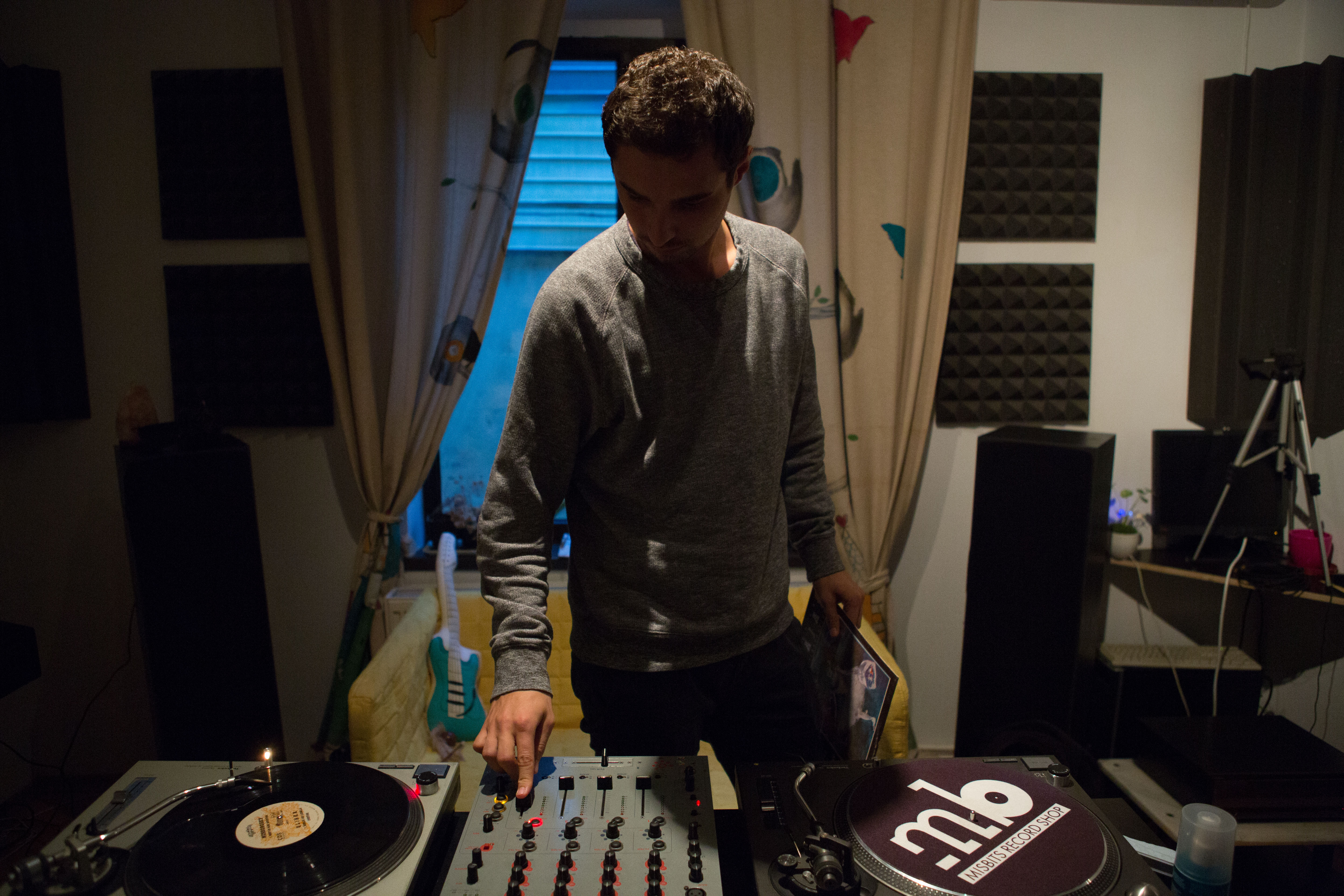
For a distinguished scene with such credibility, it must be noted that its size is remarkably small. It’s easy to forget that this is a scene still very much in maturation, perhaps even infancy. Rhadoo, an artist who is widely considered to be a leading pioneer of the first generation, continues to play regularly today; and when you consider that established artists like Raresh, Barac, Priku, Kozo are all considered to be the second generation, it becomes clear just how primitive it is. Melodie, perhaps the latest on the production line to find acclaim, could be squeezed into the same category. The close-knit community of artists and music lovers has lately been supported by Misbits, a modest record store located in the living room of founder Ioana Parlog, a recognized DJ in her own right. Mad Piano, a secondary source of all things vinyl, popped up just earlier this year. The representation of artists is controlled by just two local agencies: Sunrise and Ourown, the second of which also operates as worldwide distributor for a select few Romania labels, including [a :rpia:r], Raresh’s Metereze and Catren.
Clubs play a vital role in protecting the local music community. As mentioned before, their long hours are conducive to this particular style—but they also play an essential role in supporting lesser-known Romanian talent by booking them over foreign spinner with an established international presence. “If you are a good local DJ then you are going to have your time,” Vlad Caia explains. “There are so many good parties just with local DJs, which isn’t seen in other countries.” The locals take a great pride in their music and the club’s undertaking provides an invaluable platform for local artists to develop. There is a close community of national purists who are really passionate about this Romanian style, and will indulge in nothing else. Speaking to them will leave you with no shortage of stories of mainline DJs —including Dixon and Nina Kraviz—playing to small crowds in the country’s capital. It’s no mistake that the international tent at Sunwaves is bigger than that for the Romanians. In Bucharest, these artists are generally shared between Kristal (for the more commercial artists) and Control, which hosts those who still remain underground. The appeal of these foreign artists continues to grow as the locals develop their musical educations, partly down to the internet and the expansion of Sunwaves and Interval. In this sense, the Romanian scene as a whole comprises three distinct and divided mini-scenes.
It is a sad truth that the unfortunate events of October 30 are also likely to have serious consequences. It’s difficult to anticipate the long-term consequences of the Colectiv nightclub fire and the tragic death of 60 people, but it is likely that we will see a crack down on the lax licensing laws. Eden, a popular hangout, has already been permanently shut down for not meeting certain safety requirements, and the temporary closure of Club Guesthouse, a focal point of the city’s nightlife, on the day of the Interval festival set a distressing marker for anyone involved in the local music. If opening hours are heavily restricted, serious questions will arise about the continuing prominence of the current scene.
As for output, there are some doubts over just how well the Romanian style will travel; the style is not for everyone. “I don’t think it’s ever going to explode because it’s not a mainstream type of music,” Priku says. During one conversation in Panorama Bar just a few weeks ago, one person referred to it as “the music that goes nowhere,” and there are countless other people who fail to be enchanted by its wizardry. Part of this may well be down to the sound systems: the intricacies of the minimal sound can only be appreciated on high-quality speakers. According to Melodie, this is something that has actually stunted to scene’s growth. “Everyone in Romania uses Funktion-One. It is a necessity,” he says. But in this day and age, where people are spoon-fed information and expect nothing less than instant gratification, perhaps there is only limited room for a musical art form that makes you work for anything close to euphoria. Perhaps the Romanian style is for the more mature ear, and only those who explore enough will ever come to appreciate to it.
This accessibility, it seems, will always be a stumbling block. Romanian music doesn’t find you; you have to find it. “Only the people who go to the parties can listen to the music,” says Vlad Caia. Barring the rare release on an international label, releases are normally rolled out with little, if any promotion and interviews with anyone involved in the scene are not easy to come by. Younger artists are strongly encouraged to release on vinyl only. As a result, it is challenging to find digital recordings of these productions—other than on YouTube, which hosts a number of low-quality illegal rips. Podcasts or mixes are similarly scarce as well—“It’s almost impossible to persuade one of these artists to record and publish their sets,” Irina Bako says—in part because they feel that this the magic of this Romanian style is not something that can be properly experienced outside of a club, absent of the proper sound system or visuals. This is certainly justifiable. Even finding a vinyl copy of the music is notoriously problematic: pressings are limited, and repressing is closely monitored. To this day, there are still only around 300 copies of the first [a :rpia:r] releases floating around.
Leaving Bucharest left us with plenty on which to ponder. It’s our instinct to assume that it’s everyone’s intention for it to grow. That, for most artists, is their ambition: finding success on a global scale. But for those involved in the Romanian scene, it feels different. It’s internal. It’s organic. It’s delightfully pure. Artists care only about what is happening on home soil. There is a clear hierarchy, and it all starts with those at the top. As artists go, they are about as elusive as any. While their support does not stretch beyond their compatriots, their attitude—the evasion of media activity, the insistence on presenting their music on vinyl only, the monopolization of distribution and artist representation—is motivated by a desire to protect the scene and prevent it from becoming polluted by outsiders. Rhadoo spoke in a 2013 Fabric interview about a yearning to create a sense of close community in music “where we could share ideas, music and work together without competition.” Critics, of course, could argue that by doing so, they risk stunting the growth of these future generations. “There are no trends here—we just want to make good music. That’s it,” Priku says. Perhaps that really is enough. It’s a strange thought, but it is convention only that tells us that it has to be anything else.
All pictures (except the one of trio Raresh, Rhadoo, and Pedro): Rhys Carlill
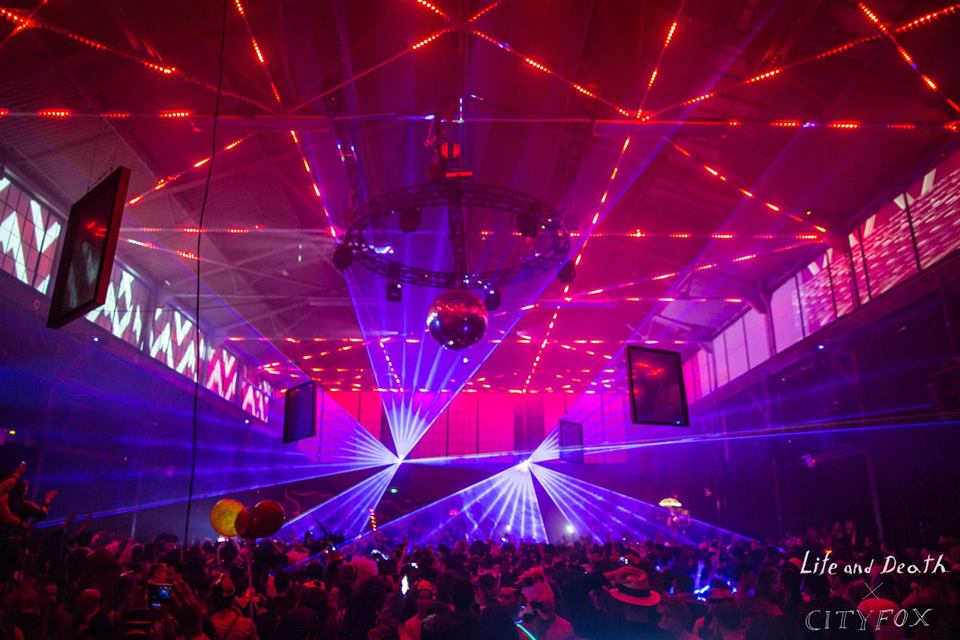
The Cityfox organization sprang to life in 2006 in Zurich, Switzerland, originally in response to the shuttering of the beloved, still-missed nitery known as Dachkantine; the crew simply wanted to have a space to toss parties, which is as pure a motivation as they come. A subsidiary label, also called Cityfox, kicked off in 2009, releasing techno-tinged house from the likes of Lee Curtiss, Digitaline, Gregorythme and Lee Jones, and bringing the gang a decent amount of attention from outside their hometown. But it was in the early days of this decade—when Cityfox started bringing their brand of groove-based, chugging electronics to New York City via a continuing series of warehouse parties and outdoor hoedowns—that people in the U.S. really took notice. Nowadays—at least for fans of production-heavy, large-scale, all-night dance-music fiestas—Cityfox Experience events, tossed in conjunction with the folks at Listed Productions, are among the most anticipated events on the NYC clubbing schedule, with the likes of Dixon, Lee Burridge, Âme, Solomun and Apollonia joining in on the action. And Cityfox’s growth spurt hasn’t ended yet—plans to broaden its scope even further began in October, when the crew traveled cross-country to host its premiere LA bash.
But with expansion comes the inevitable growing pains. Cityfox suffered an agonizing kick to the ribs this past Halloween, when a party scheduled to take place in an postindustrial area of Greenpoint, Brooklyn—at the old Nuhart Plastics building, not far from the notoriously polluted Newton Creek—was shut down at the eleventh hour (11:45 pm, to be precise) by the city. Officials claimed that Cityfox submitted an “inaccurate and incomplete permit application,” further stating that “the event was shut down due to flammable chemicals being hidden behind flammable curtains,” among other alleged infractions. Cityfox responded with a statement responding to, and refuting, those claims, and has offered refunds—however, the damage had already been done in the form of thousands of none-too-happy revelers. But you can’t keep a good shindig down, and now the gang is ready to make amends this Saturday, December 12 when they’ll be coming back in a big way, heading to 1260 Atlantic Avenue in Brooklyn for a date with Martin Buttrich, M.A.N.D.Y., Thugfucker, Bedouin, Frank & Tony, Stojan, Patlac, Dubtribe Sound System and lots more. We caught up with Billy Bildstein, cofounder and creative director of Cityfox, to find out more.
“I think the most important mission we have is to never get bored by what we do, or to bore our audience. And have fun.”
Many of us in the States first knew about Cityfox as a label, not as a event-production and promotion crew. How would you describe the Cityfox label’s musical ethos? Does that ethos hold true of both the label and the parties? And how active is the label nowadays? Yes, the label is still active! Actually we have some really exciting projects coming up—new EPs by Adriatique, Bedouin and a really exciting package with originals by the very talented and mysterious Atelier Francesco, with remixes by Fabio Giannelli and Martin Buttrich, just to name a few. It did get a bit quiet around the label, since we’ve had to focus all our energy and time into our events. But to get back to your question, our ethos is quite simple: “We need to like the music. The music has to tell a story. We want to work with people and artists we like and we feel comfortable with.” We began our label with the same ethos; we released our first EP’ in 2009, produced by close friends like Lee Curtiss, Digitaline, Gregorythme and Lee Jones. Our “family” has gotten bigger since then, and our musical styles varied a lot, from techno to deep house—there is not really a box I would put our label in. This would just limit ourselves, and we are open to explore and continue our musical journey. Same with our parties and events—we always try to push the envelope, create something new, challenge ourselves and surprise our guests or listeners when it comes down to our music label. I think the most important mission we have is to never get bored by what we do, or to bore our audience. And have fun.
What were those early parties in Zurich like? Were they a bit smaller scale than what you are doing nowadays? Yes, pretty much. We had the same basic idea—transforming an empty canvas, like a warehouse or any type of building or outdoor location into a full-on sensory and immersive experience for one night. Obviously, the size was smaller. We started with a couple hundred people for our first event in 2006; most of them were actually our personal friends. We started Cityfox mainly for them and ourselves, to fill a gap after our favorite club had to close its doors. That place was a second home and institution for all of us, and suddenly we didn’t know what to do with our weekends. We became pretty big rather fast, though. Our second installment, also in 2006, already reached 1000-people capacity, and ever since we never had less than that attending a Cityfox event. This was huge number for Zurich back then. The ingredients were pretty much the same than today: a great sound system, showcasing the biggest talent or exciting newcomers, a very high-end production, attention to every detail, and most importantly, seeing our guests as the center of the attention. Everything is created to deliver a great experience and good times.
How did you make the decision to start doing the Cityfox Experience in North America—and why New York City? Were you confident that you had the ability to do this, or were there ever moments when you asked, “What have we gotten ourselves into?” The very first contact with New York was our event at the Marcy Hotel, when the Wolf + Lamb guys invited us to do a label showcase in 2010. Gadi and Zev [of Wolf + Lamb] started their music label around the same time as we did, and we exchanged a lot of music back then. And we had the same friends—the Visionquest crew. That first party was a lot of fun. A while later, Taimur and Fahad from Blkmarket invited us for another label showcase, and that was when we definitely fell in love with New York, Brooklyn and its music scene. The reaction to our show was amazing; we got such a positive and emotional feedback that we just felt purely good about it. I guess that was the foundation for it, but the real decision came when we lost an opportunity to build a new nightclub in Zurich in 2012, (after we closed our first club in 2011), after working on it for almost one and half years. We decided to change our strategy and leave Zurich to explore something new something much bigger. It didn’t take us long to decide to move our center to NYC, which was the best decision we ever made. Also, Gunita [Nagpaul] from Listed played a good role in supporting us and bringing us to North America, with showcases in different cities. When we started Cityfox NY in late 2012, we were confident to be able to contribute something to the scene, to show a different approach to dance music events.
We put all our heart and energy into it from the very beginning—but yes, to answer the question, we thought many times “what have we gotten ourselves into?” From the outside, it’s hard to see how tough it can be to organize such events. it’s start with the almost impossible mission to find spaces, dealing with landlords…the permitting process can be very complex—and that’s all even before production starts. We spend hundreds of hours to scout for locations and thousands of hours to build these experiences. Often we have to fix buildings, bring them up to code, make them safe. All for just one night. But I still can say, and I say it very proudly, it is totally worth it. Sometimes it means pain, emotionally and physically, but the joy and positive feelings are stronger. The joy of creating something special and making people happy is what drives us, and is what motivates us to do it again, and again, and again.
Can you explain a bit about Cityfox’s relationship with Listed? As mentioned before, Gunita from Listed organized quite a few label showcases with us in cities like Miami during WMC and San Francisco. She introduced us as a record label to many people in North America. Actually, I believe the story how Gunita discovered us is that Lee Burridge told her to have an eye on us. Lee played almost all our records back then and was a big fan of the label. Gunita’s cousin Simar [Singh] came on board at Listed, and both supported us since the beginning of our New York City–North America adventure, playing the main role in promotion, marketing and strategy. Gunita also brings in a great taste of music and experience in booking artists—which we always debate for hours—to put the right mix and line-ups together. Simar is a wizard when it comes down to all aspects of promotion and communication. They are great, and we wouldn’t be where we are without them. I’m really happy to have them on board.
How are you dealing with the cancellation of the Halloween event? What were the repercussions? To be honest, it has been tough for us. Seeing all the negative press, which is based on a lot of false facts or assumptions, was not a great feeling. Obviously we asked ourselves if we did something fundamentally wrong. We clearly see our mistake in underestimating the emotional connection the community in the area of the event location had with the history of the building. But that said, we made a hundred percent sure that the building was safe for our guests, like we always do. Again, in the first couple days of such a production, we normally spend hundreds of hours of fixing floors—like holes or trip hazards for example—installing up to 80 emergency lights and exit signs, making sure we provide egress paths, installing stairs, opening walls up and installing new doors if needed, bringing everything up to building codes which are essential to get a TPA [temporary public assembly] permit. We do everything a hundred percent legal, by the books—and never had a single issue before Halloween. There was absolutely no unsafe situation; we would not bring our guests or our workers in such a situation. The officially released Department of Buildings inspection report proves that there was no violation. The question of why we got shut down, I can not answer—but assumptions can be made.
We are dealing with it the best way we can, and we will continue to give all our heart and energy into this project, providing the best—and safe—experience for our guests. We have to move on, move forward. We learn from our mistake, we will dig deeper into the histories of buildings we chose for our events, we will find out and respect if there are any concerns about those buildings or locations.
The repercussions are that we probably lost the trust of many people and followers, guests and fans. This is the worst feeling, since we’ve built this relationship and trust over the last couple years with blood, sweat and tears. People traveled from all over the globe to attend the Halloween show, and we could not provide the experience we prepared and planned. We built something amazing—it was probably our best production up to that date. It is hard to accept, we deeply want to apologize for it, and we want to ensure everybody that we’ll make up for it with what we do best—creating the best possible events. We have many exciting things planned for the future and we hope that we can win these people and their trust back.
“We are Cityfoxes—we always come back.”
Why did you choose to continue with this December event, a mere one and a half months following the Halloween closure? The Halloween cancellation was clearly a big hit we had to take, emotionally and also financially But giving up is not our style. We had quite a few setback in the past, often behind the scenes. It always made us stronger at the end, partly because it is important to learn from mistakes—but also holding together in tough times, as a team, company and family, can motivate in a very positive way. It is a confirmation that we can go through such situations and show strength. But we also need to do this event for our guests, for the artists involved and for the New York dance-music scene in general. Not doing this event, which has been planned and booked for months, would be the wrong decision for all of us. We are Cityfoxes—we always come back.
We are preparing an amazing production for this Saturday, with four rooms of music, several chill-out areas, delicious drinks and food…and a special effect which will turn heads around, literally. The lineup is stellar. We’ve already released the location, to give everybody enough time to check on it and prepare. We will make sure, as always, that this will be a great and safe experience.
Leipzig label Moon Harbour is currently celebrating its 15 year anniversary with a huge list of shows all over the world and an exclusive gear giveaway here on XLR8R.
Continuing with the celebratory spirit of the anniversary, Moon Harbour has also released a video that was shot in Barcelona last year during the #15MoonHarbour kick-off event at Pacha. The film features label-boss, Matthias Tanzmann, Luna City Express, Dan Drastic, Sven Tasnadi, and Marco Faraone all chatting about their releases on the imprint.
To join in on the celebration, XLR8R is giving away a pair of special-edition Moon Harbour headphones made in association with Beyerdynamic. To win, enter your email below. XLR8R will choose a winner on Monday, December 21 and the winner will be contacted via the email provided. Terms and conditions apply.
[mc4wp_form id=”111875″]
To catch any of the Moon Harbour artists on tour, view the flyer below.
[infobox]
Terms and Conditions:
The promoter is, Moon Harbour, Beyerdynamic, and agent, XLR8R.com whose registered office is at 837 Traction Ave #304, Los Angeles, CA 90013, USA.2. Employees of Moon Harbour, Beyerdynamic, XLR8R.com or their family members or anyone helping to set up the competition shall not be permitted to enter the competition.
There is no entry fee and no purchase necessary to enter this competition.
Closing date for entry will be Sunday, December 20th 2015 at 11:59PM (PST). After this date the no further entries to the competition will be permitted.
No responsibility can be accepted for entries not received for whatever reason.
The rules of the competition and the prize for each winner are as follows: Only 1 entry per email address accepted Must be 18 years of age or older to enter Prize is for (1) pair of Beyerdynamic Moon Harbour Headphones.
The promoter reserves the right to cancel or amend the competition and these terms and conditions without notice in the event of a catastrophe, war, civil or military disturbance, act of God or any actual or anticipated breach of any applicable law or regulation or any other event outside of the promoter’s control. Any changes to the competition will be notified to entrants as soon as possible by the promoter.
The promoter is not responsible for inaccurate prize details supplied to any entrant by any third party connected with this competition.
No cash alternative to the prizes will be offered. The prizes are not transferable. Prizes are subject to availability and we reserve the right to substitute any prize with another of equivalent value without giving notice.
Winners will be chosen at random from all valid entries received and verified by Promoter and or its agents.
The winner will be notified by email within 8 hours of the closing date. If the winner cannot be contacted or do not claim the prize within 1 day of notification, we reserve the right to withdraw the prize from the winner and pick a replacement winner.
The promoter will notify the winner when and where the prize can be collected.
The promoter’s decision in respect of all matters to do with the competition will be final and no correspondence will be entered into.
By entering this competition, an entrant is indicating his/her agreement to be bound by these terms and conditions.
The competition and these terms and conditions will be governed by English law and any disputes will be subject to the exclusive jurisdiction of the courts of US.
The winner agrees to the use of his/her name in any publicity material. Any personal data relating to the winner or any other entrants will be used solely in accordance with current US data protection legislation and will not be disclosed to a third party without the entrant’s prior consent.
Entries into the competition will automatically opt-in email for XLR8R.com weekly email newsletter, The Lowdown. User may unsubscribe at anytime.
Entry into the competition will be deemed as acceptance of these terms and conditions.
This promotion is in no way sponsored, endorsed or administered by, or associated with, Facebook, Twitter or any other Social Network. You are providing your information to XLR8R.com and not to any other party. The information provided will be used in conjunction with the following Privacy Policy found at https://xlr8r.com/legal.
The Power Vacuum label is known for pushing experiments with techno, electro and acid sounds, with releases this year by the likes of Cylob, Scalameriya and VSK. For their next release, they are taking things in a new direction, via a collaboration between label boss Kruton and Brooklyn-based rapper Sensational. The tracks are based around material that Smee recorded as Kruton about 15 years ago, which finally reached completion with Sensational’s vocals.
The EP will be available as a five-track vinyl (which you can pre-order at Juno), or a six track digital download Check out a documentary on Sensational below to learn more about the rapper.
Operating since 1990, independent record label Ninja Tune has played a critical and perceptible role in the advancement of electronic music worldwide. Founded by Matt Black and Jonathan More—who together make up the pioneering hip-hop/electro duo Coldcut—Ninja Tune has developed into a global music force that is responsible for some of the most championed releases of the past two decades.
Celebrating its twenty-fifth anniversary this year, Ninja Tune embarked on a prolonged celebration of this quarter-century benchmark by hosting shows in Los Angeles, Amsterdam, London, and New York City. Having covered its 20th anniversary extensively back in 2010, Ninja Tune graciously invited XLR8R to check out the one-off warehouse party in Los Angeles on November 21.
Alas, the fact a lineup like that would be taking place at an undisclosed location with that many people seemed almost too good to be true. Unfortunately for the event, a number of difficulties befell the LA Ninja Tune contingency only two days before the event and the original venue for the evening canceled on them. In addition to this, Eamon Harkin was unable to make his flight and the astronomical lineup was burning less bright than before. The concerns were many but Ninja Tune managed to relocate the show to The Globe Theater in Downtown Los Angeles with the unfortunate caveat that the event would run from 7 pm – 12 pm rather than the aforementioned 10pm – Late.
This sudden change in schedule made it impossible for us to get there on time to see an opening set from LA local Sage Caswell, and put us in a position to only catch the last ten minutes of Sepalcure. The night was off to a rough start to say the least…
Most of the frustrations and disappointments with the beginning of the night were very much short lived. Leon Vynehall came out of the box with an amalgam of static, funk-laden house jams that picked up movement in a wild and conspicuous ways. Getting deeper into his set, the sound became more guttural and heavy-handed, setting the stage for what was to come with Jon Hopkins. To end the set, Vynehall jumped into tracks from his latest releases, including the classic “Butterflies,” which received a noticeable reaction from the crowd.
The transition between sets was as speedy as they come. With no time to spare, Hopkins jumped in to deliver a sinister performance. The emoted hiss and crepitating ambiance of Hopkins’ signatory noise filled the room and off we went, cemented in the sound of Hopkins favorites such as “Open Eye Signal” and “Breathe This Air” while simultaneously being sucked into the accompanying visual spectacle coming from the Brainfeeder family’s very own Dr. Strangeloop. The background aesthetics seamlessly twisted between a huge number of creative realms, perfectly accompanied by Hopkins’ grand showmanship on stage in what was a most excellent performance.
It was around this time that Bonobo began to take the stage and a wild majority of the audience made it obvious that they were primarily there for him. A huge roar of excitement emanated from the crowd at every mention of his work and he kicked off the set off with “Kiara,” a sure enough way to get things moving in an immediate fashion. Despite a rocky first transition, he was back on the rails in no time, mixing a hustle of various tribal, cosmic, and wired tunes with his own lauded tracks. One highlight was his blend of Kerri Chandler’s remix of Nina Simone’s “See Line Woman” and James Blakes “Limit To Your Love.”
The show ended in a widespread demonstration of gratitude, despite the disappointment in the time change, and people hurried out the door in search of the after-party—which remained relatively hidden from the mobs of anxious party goers. We thankfully received directions to the supposed after-party but had no guarantee of what we would find when we got there.
Arriving around 2am to the secret location, we were met by an empty street and a shadowy figure posted up next to a van. The man stepped out of the shadows and approached us to hand us a card letting us know that we were at the right place, but that the actual venue location could be found almost a mile away. When we eventually made it to our final destination, we found the warehouse packed to perfection. Within minutes we spotted Adult Swim celebrity Eric Andre partying in the crowd, with Bonobo going b2b with Lyon Vynehall in a groovy yet vehement set of heavy dance tunes such as Jack J’s “Thirstin” and Joy Orbison and Boddika’s “& Fate.” The Ninja Tune crew had managed to turn the night into a thriving success despite all the previous misfortune, which in turn speaks volumes of the organization’s determination and character. The party went late just like as promised, and we triumphantly danced into the early morning hours in celebration of the label and it’s 25 years of vibrance.
A second installment (Part II) of the Ninja Tune 25th anniversary series is set to take place on December 11 at the Masonic Lodge in Los Angeles with a performance from The Bug feat. Earth & Liz Harris of Grouper. This show will thus conclude a string of successful commemoration concerts for a label that is bound to live on and further blossom into a unyielding force of music that is known around the world.
Romania’s lulian Cuculea (a.k.a. Ada Kaleh) will drop his debut full-length album, Dene Descris, on December 15 via the producer’s own Ada Kaleh Romania imprint.
Following on from much lauded releases on labels such as The Rabbit Hole and Third Wave Black, Cuculea’s debut LP is a highly anticipated outing, with its tracks already popping up in the sets of RPR Soundsystem, Barac, Cezar, and Priku, as well as a handful of other key house selectors. As is expected, it’s an adventurous and affecting release, presenting eight otherworldly slices of electronics, all bookended by Cuculea’s avant-garde grooves and magnetic, rolling rhythms.
Dene Descris will be released in two parts, with part one landing on December 15. Included in that first release will be haunting opener “Pangea,” the endlessly spiralling “Regăsire,” the warm and organic “Noapte albastră,” and “Detașare (partea intâi),” a sliky slice of expressive deepness.
Ahead of the December 15 release, you can stream “Noapte albastră” in full below, along with the album’s tracklisting.
Following on from the successful launch of its events section in the first half of 2015, XLR8R is proud to announce that it’s opening up its ticketing platform to select events and promoters. This new ticketing platform gives promoters and events increased exposure to the millions of readers who visit the site, and enables promoters to start selling tickets directly to their customers through XLR8R.
Our ticketing platform includes:
– Simple and modern user experience. – Tiered ticket options with flexible allotments and individual sale start and end dates. – The ability to email and export your attending list to .csv for night of show. – Checkout process powered by Paypal. – Promoter settlement via Paypal or ACH within five business days. – Increased visibility on your events.
Promoters from all over the world are encouraged to create an XLR8R account and start listing their events by clicking on the Events tab in the navigation menu followed by “submit event.” Account holders can then create events and promoter profiles while logged into their account. In order to sell tickets promoters should email [email protected] and an admin will activate the account holder for ticketing.