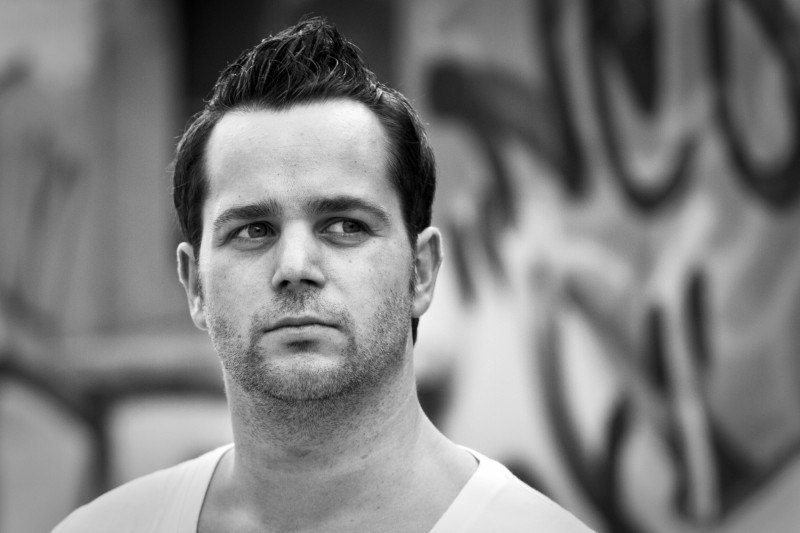
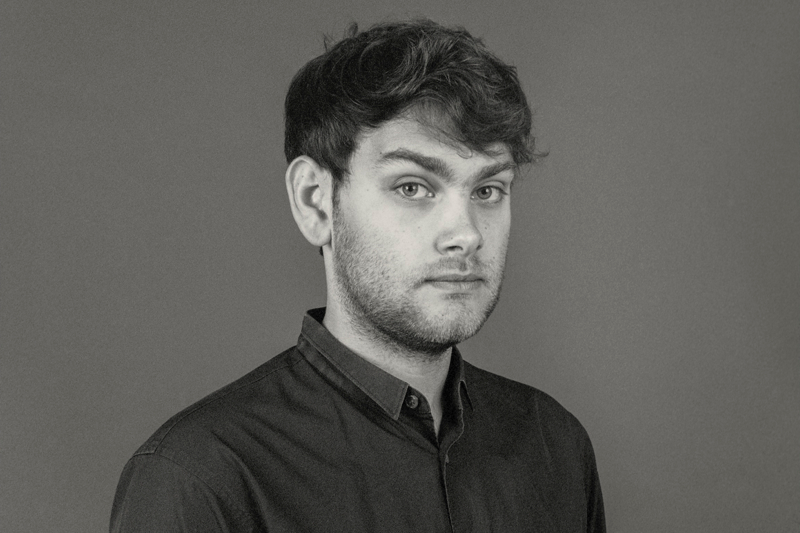
Following a series of releases on other imprints, Berlin-based producer Alex Niggemann returns to his own imprint AEON Audio with the Divergent EP.
Niggemann is known for a sound that straddles both house and techno, and has previously released on labels including Poker Flat, Watergate and Last Night On Earth. He launched AEON in 2013, on which he has put out three releases previously, amongst a host of others by an ever-increasing artist roster. Divergent is composed of two tracks, which, according to the label, are characterized by a “melodic, deep techno” sound.
The EP will be available digitally, on November 6.
You can also check out a video for Abaton, one of Niggemann’s previous EPs, by clicking on the player below.
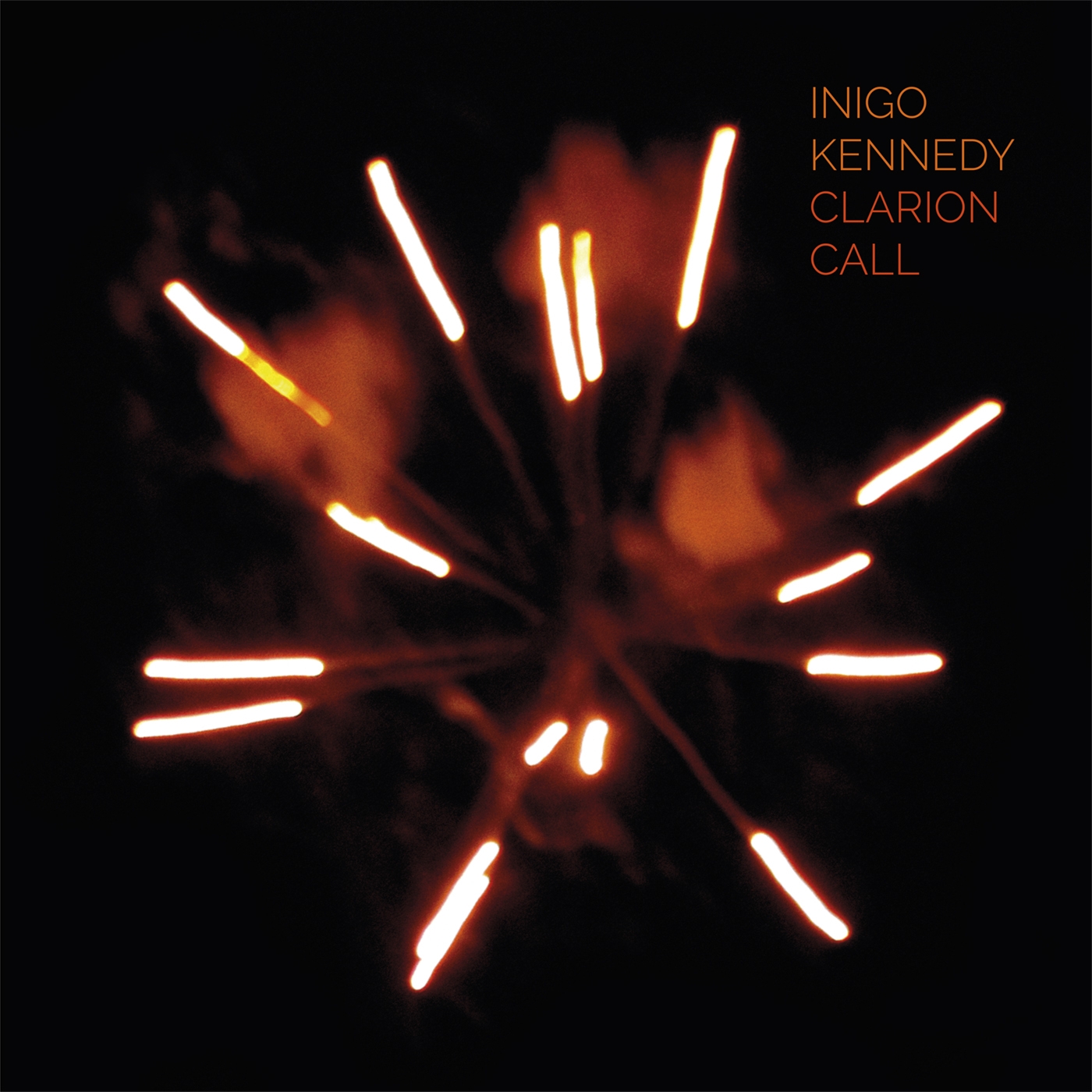
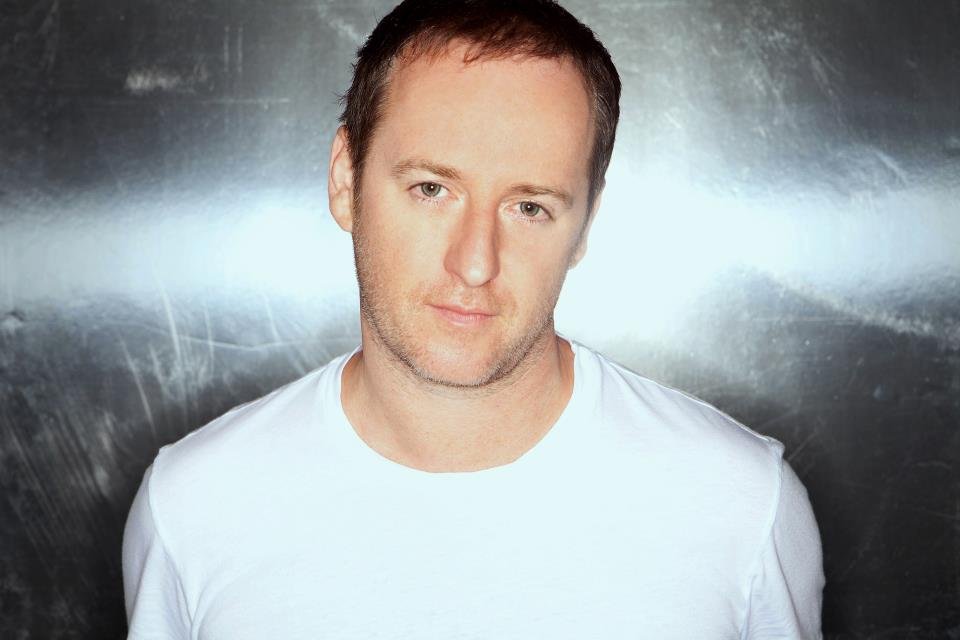
UK based DJ and producer Inigo Kennedy is set to release Clarion Call on November 20, his first new material since 2014’s Vaudeville LP, also released via Token.
Inigo was the first artist to release on the Belgian imprint, and has regularly used it as an outlet for his material since its inception in 2007. Kennedy has enjoyed a lengthy career as a techno producer, approaching almost two decades now, with releases on labels like Semantica Records as well as his own imprint, Asymmetric.
According to the label, the EP covers wide sonic ground, and has “sorrowful depth and technical power in equal measure.”
The EP is to be made available on both digital and vinyl formats and will be available for purchase on November 20, with snippets of the EP going online very soon. We had a small chat with Inigo about his latest release and here is what he had to say.
So this is your first solo material since your album Vaudeville which was a huge milestone for you. You have been playing many gigs around the world, what helped you prepare for this EP?
It’s quite an exhausting juggling act these days between the music, the traveling and family life. Simply making sure to find time to get into the right creative zone is not easy at all! In a way the recently released remixes of “Requiem” from Vaudeville helped to draw a line under that milestone and it gave me some space to think about this next step too. The amazing feedback from Vaudeville also helped I think as it gives me and the label a bit more room to maneuver in some ways.
Does the title Clarion Call have any significance to you?
I think it’s quite an evocative phrase and it just popped into my head one day. Most likely half asleep on a flight from a gig! The way the title track kind of eases its way in and then lifts off with its melodic chimes is something like a call to action – emotionally or energetically – and it really seems to have that effect when I’ve been playing it out this year. That’s great to see and feel!
The way you toy with various textures really brings each track to life. How do you find this balance between hard and soft?
It seems to come naturally to me. I find it quite difficult to be purely percussive for example and there is almost always a melancholic and emotional element to the music I produce and play. In part that’s a thread from the kind of music I grew up listening to and exploring but is simply a reflection of how I like to express myself too. I think the juxtaposition of that melancholic and emotional side with the harder elements is a *really* potent thing. The way I make music really helps achieve this too – I don’t design tracks for hours on end but I aim for a much looser structure that I can perform with which means I am always reacting in the moment when I hit the record button. To an extent that’s something mirrored in the way I DJ too.
Wapping is probably not the first choice for weekend frolics, unless you’re looking for a historic docklands tour or two halves of shandy at a dusty boozer. The Hydra, however, seem to be looking to change this. Taken from Greek mythology, its name translates as the ‘beast with many heads,’ an apt title for an event series so diverse. Over the next month, their schedule covers everyone from early-hour Berliners Ben Klock and Nick Höppner to the sugar-dusted house musings of Derrick Carter and Julio Bashmore.
Their most recent booking, Ben UFO and Joy Orbison, have arguably been just as expansive in their exploits. The pair have cut their teeth on everything from late ’00s dubstep to various revisions of dub, jungle, house, techno and so on. Admittedly, booking them as individuals may not be the most groundbreaking of moves, considering they have both been regular fixtures on the London club circuit for some time now—but Saturday, October 17 offered the rare opportunity to hear both artists play back to back, all night long. Their selections are well in sync by now, having shared plenty of flyer-space together in the past.
Upon returning to Studio Spaces for the first time in a while, it was nice to see that they’ve opened up a new entrance to the club, alleviating the threat of a 6am logjam of sweat-drenched Hessle pilgrims at the end of the night. Also, the venue seems to have also addressed the feverish temperatures that have been problematic before (although queuing for the toilet still took about as long as it did for me to get my deposit back from my last flat). Stepping into the venue’s lofty warehouse setting, we were greeted by a selection of docile electronics, echoing dub and bumping, low-slung hip-hop in the first half hour, banishing any doubts that the pair might have lost their eclectic tastes.
You felt as if you could have been listening in on an afternoon mix between the two at home, happily cutting between styles without worrying to much about settling into one style too readily. Initially, this felt somewhat disjointed—but as as the loose-hipped groove of Joe‘s “MB” boomed between the brick pillars, things began to take shape. Following a healthy dose of jacked up 4/4, it was nice to hear the mix peppered with plenty of tracks from the usual Hessle Audio cohort, with Objekt‘s “Unglued” or Pangaea‘s “Hex” sounding as formidable as you might expect on the Hydra’s bespoke Funktion-One soundsystem.
Recently, someone took the liberty of posting Ben UFO’s 2010 mix cassette for The Trilogy Tapes online. The mix provides a good example of the diversity of styles covered over the night, meandering between everything from itchy garage shufflers, crumpled fax-machine house and testosterone pumped grime. Ben UFO and Joy O’s ability to traverse these without descending into some sort of weird dance-music medley feels like something to be treasured, and all the more so for the effortlessness with which they do it. Holding a room in this way is no easy feat—and the value of pairing two acts who’ve honed their craft as much as these two should not be underestimated.
Augmented 7th is electronic producer Ash Walker‘s highly anticipated and sprawling debut album, to be released via creative collective imprint Deep Heads on November 6. Augmented 7th follows on from Walker’s debut EP, Agnostic—which was also released via Deep Heads earlier this year—and is an eclectic mix of downtempo, dub, and trip-hop, with jazz-tinged flourishes throughout. In support of the release, XLR8R has been gifted a remix of Ash Walker & Zeb Samuels’ cut “Lost Cranium” by LA-based act Alphabets Heaven, who rework the original into a sunshine-filled slice of organic beats. With slight elements of dub, the track unfolds beautifully across its four-minute run time filled with detailed, atmospheric field recordings, subtle beats, and undeniable good vibes. The Alphabets Heaven remix of “Lost Cranium” can be grabbed for free below, with Augmented 7th available for preorder here.
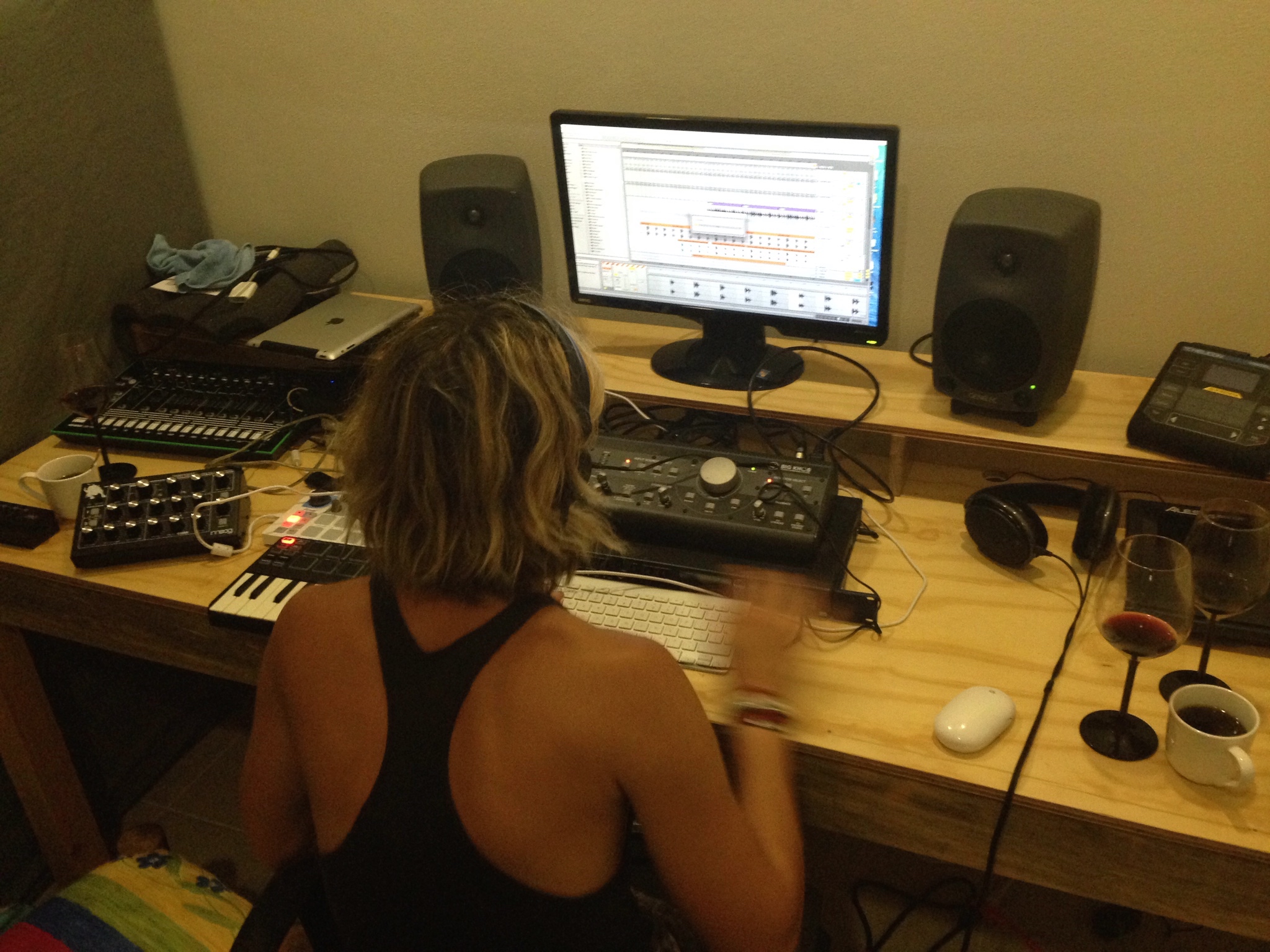
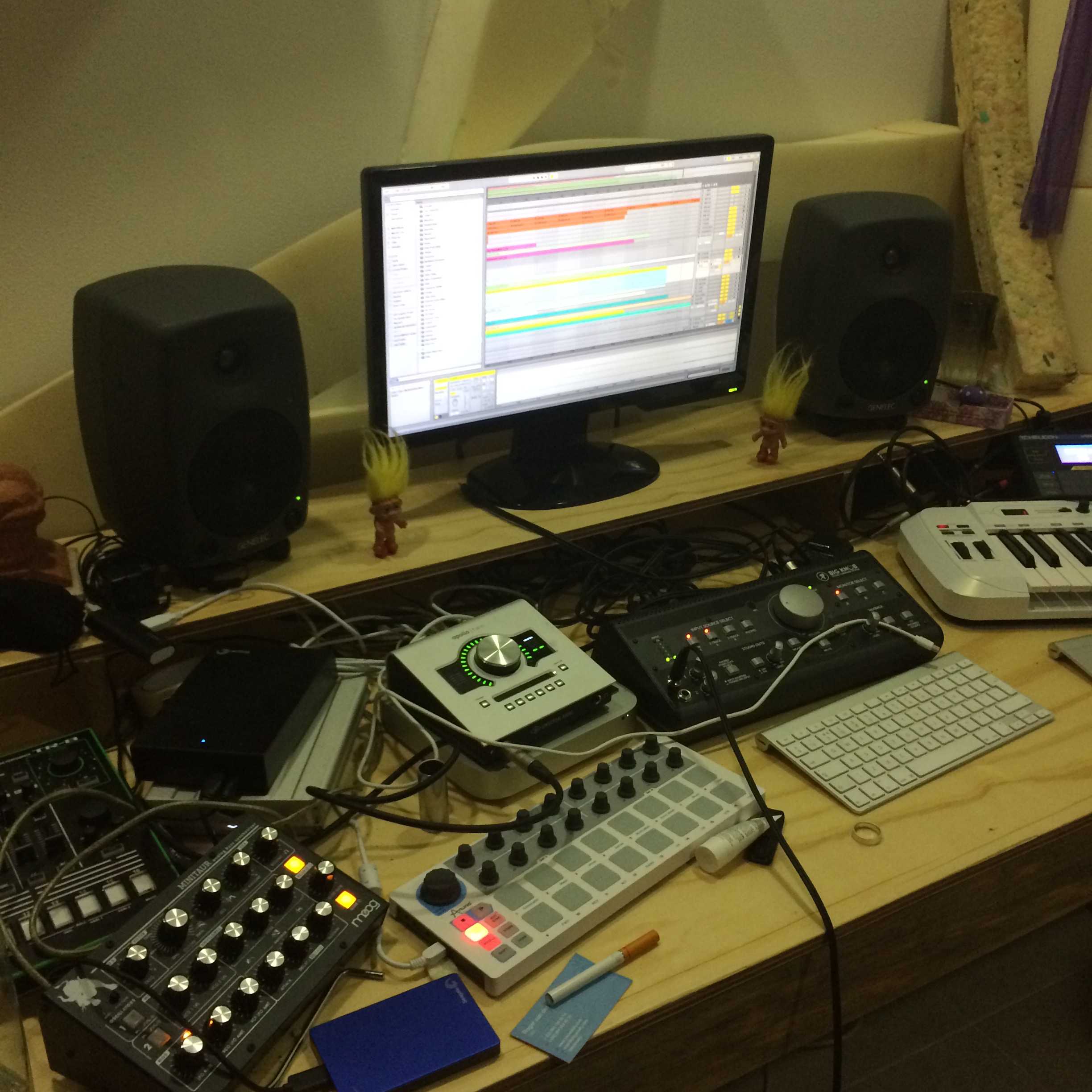
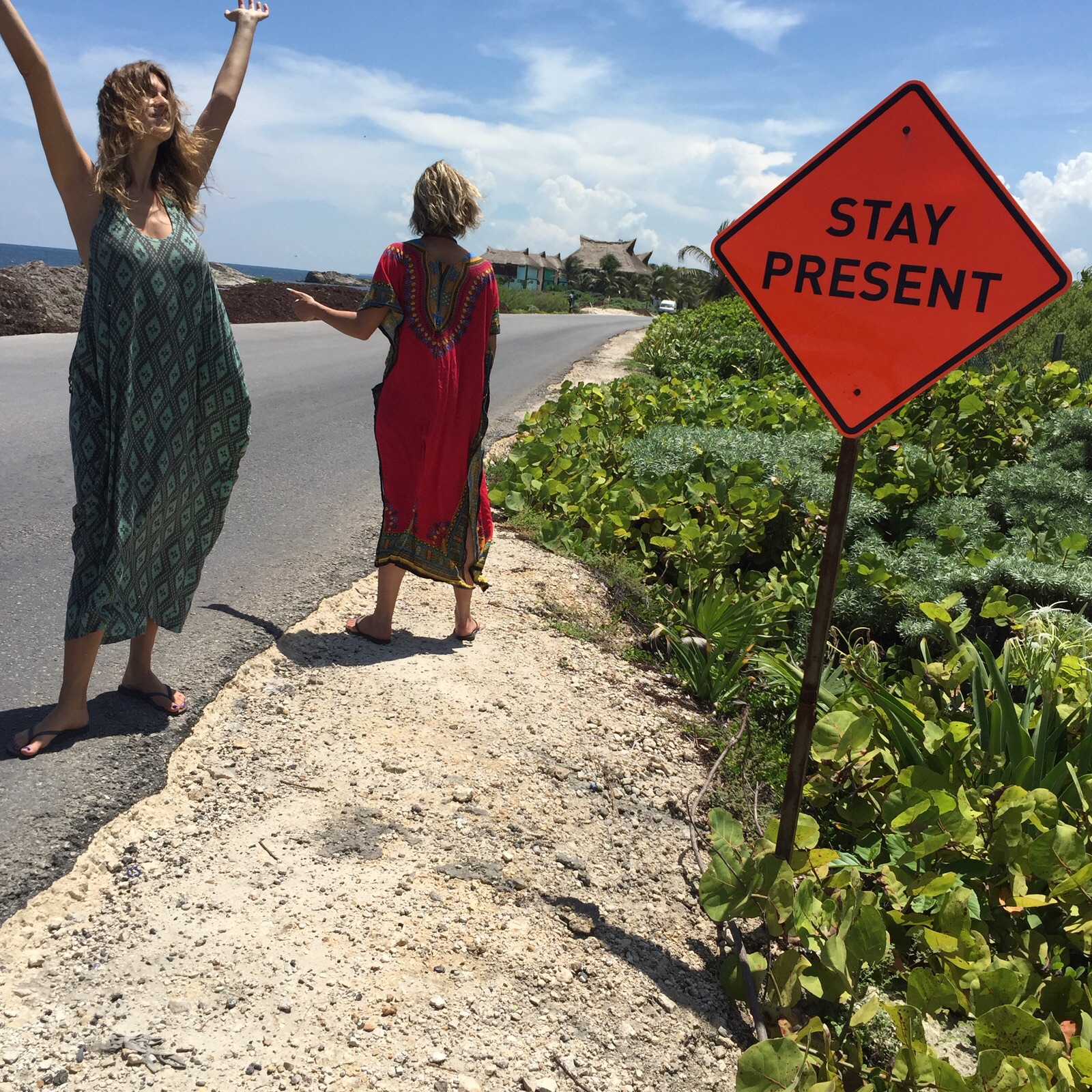
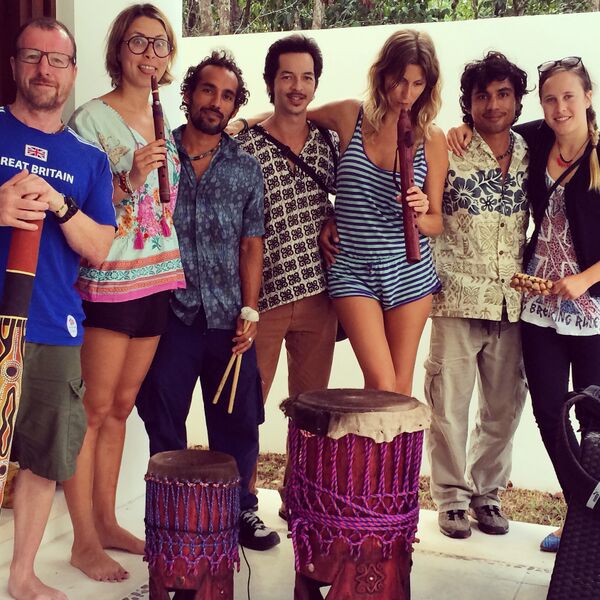
It’s been a long time coming, but Vivie Ann Bakos and Anstascia D’elene have released their debut full length, entitled Welcome to the Present. The pair’s Blond:ish project, formed when the two met in Montreal in 2008, has grown into one of the leading lights of the modern electronic-music scene, acclaimed for the eclectic nature of its DJ sets and lauded for a growing collection of EPs on labels including Rebirth, Kompakt and Get Physical. But even for the most open-minded of fans, Welcome to the Present will come as a surprise, as the duo step away from their previous dancefloor-oriented works to explore more psychedelic and hypnotic soundscapes, clearly influenced by their surroundings in their makeshift studio nestled within the Tulum ruins. Enthused to elaborate on their wide-ranging inspirations and immersive production processes, Bakos and D’elene—who are playing Halloween’s Minimal Effort bash in LA alongside Agoria, Hunter/Game, Anja Schneider and others—sat with XLR8R to reveal more.
This is your debut album—how are you feeling about it? D’elene: Overwhelmed. And excited.
Bakos: Definitely overwhelmed—but it’s a new experience and that’s how you grow as a person. The whole album has been a crazy journey. Its not like you just make the tracks and its finished. There is a whole array of things that go around it—and we got pretty deep when we went to India, so it gave us a chance to reflect. An album is a lot more than just making some tracks and putting them out.
You’ve been producing music for over five years—but did now just feel like the right time to present an LP? D’elene: Yes. Kompakt has been asking us to make an album over the last two years. Last year was not right, so this year we decided to just dive in head-first because we had a lot to express and so much inside of us that we wanted to tell a story. And then halfway through the album, Kompakt contacted us and asked to hear a few of the tracks.
Bakos: But we had been living in the jungle for two months we were a bit off the grid. We just ended up sending the twelve tracks that we had.
And what was the response? Bakos: They didn’t respond for two weeks! Usually they write us back in a couple of hours so when we didn’t hear from them for so long, you can imagine what we were thinking!
D’elene: Finally they replied and said “Sorry girls—we have been traveling, and we finally had a listen and are completely in love with this album. It’s amazing and nothing like we have ever heard before.” So that was a huge moment of relief and euphoria.
How long did it take to produce those 12 tracks? D’elene: We pretty much had 12 tracks done in our makeshift studio in Tulum by the end of February—so about a month and a half. But then you take a break from listening to them over and over again, and then you go back into them and make little adjustments which takes the same amount of time. We were touring at the same time as doing this so that was really challenging. After that comes the mixing process and figuring out the album artwork —and what you want the message to be behind the music. We feel like we just finished yesterday!
There are only 11 tracks on the album. Why did you decide to cut one? Bakos: We sent the label 12 and they decided to cut one. Usually when someone makes an album they make like 20 to 30 tracks or even more. Booka Shade once told me that they made 72 tracks for one album and they cut it down to 12. We wanted to do 13 actually.
“That human element is really important for our music. I work so much better when we have a live element; it gives me more inspiration for the track.”
How do you begin producing a track? Do you have a sketch in your mind before heading into the studio or is it pretty much just jamming? Bakos: Well, the way we did it was through Ableton. We usually work separately at first just to get something going. We recorded a lot of artists in Tulum and South America and stuff so you go through those samples and begin to warp them a bit and play them with a kick or a synth underneath and it starts to build a vibe. Thats how we started most of the tracks. That human element is really important for our music. I work so much better when we have a live element; it gives me more inspiration for the track.
Sonically speaking, the album is very hypnotic—even psychedelic at times. It’s different than your previous work—but was that a conscious decision when you went into the studio? Bakos: Everyone has their own opinion about what it is—and there is a psychedelic aspect, for sure. But even though it sounds like a cliché, we just went with what we felt natural. That is why we took the two months off so we had no outside distractions. We really wanted to just be honest to ourselves with what we were making.
D’elene: It was completely organic. We just knew that this was the vibe that we wanted to put out, but we never knew exactly what was going to come out of it. Whenever we say we want to do something, usually the opposite happens—so we decided not to say “this is what it is going to sound like” because otherwise it would have sounded like drum & bass or something! We just decided to just go with it.
But did you want the album to be removed from the dancefloor? Bakos: Yeah, I think so. We never thought of doing a dance album. We wanted to have a little bit more of a dance element to it, and not just completely ambient tracks—but it was always going to be a big, mixed journey throughout. It’s an inner and outer journey, and we wanted to make something you can listen to on the beach and the car while you are doing yoga, while you are meditating—or just hanging out at an after-party.
D’elene: We always wanted it to be more than just a rave album.
Do you think you will return to the dancefloor with your future releases? Bakos: Definitely—we are just trying to bridge these two worlds without alienating anyone. We don’t want to be stereotyped so we are always trying to weave our way through different genres.
You recorded around the ancient Mayan ruins. In what way did that impact the sound of the album? Bakos: We were really influenced by the vibe of Tulum. It’s an amazing place. At around 4pm on the beach, when the sunset is on its way, you start talking to your friends and people figure out what is going on in the evening by word of mouth. Once the word spreads, you go out all night and it eventually turns into what we call 94-bpm raves. It’s slower music with really nice indigenous sounds—its just like techno but slowed down. I think that that sound really influenced us because everyone is still dancing and having an amazing type—but not in a raving type of way. It is a totally different angle, because when the music is at 94 bpm, you are actually listening to the space between the notes so you can absorb what the music is actually saying. It’s as if I am talking really fast and you can’t even understand what I am saying. So if you slow it down, you actually have a second to understand what is going on.
Bakos: Yes. we didn’t have any DJ gigs because we took the time off just to do music because that’s how you get deep.
D’elene: It was a really nice house in the middle of the jungle—nothing that drastic. We rented it for a month and a half ,and had a good routine going. We would wake up, drink some coconuts and some fruit juice, go to the beach and eat some tacos. It was all about balance. After we had had a bit of sun and done some yoga, we broke out the wine bottles and smoked a bit of weed before hitting the studio. It was like that everyday— so from about 1pm until about midnight, we would just be making music. It was like this for a month and a half.
You’ve recorded your last two Kompakt EPs in the jungle as well. Why do you guys find it necessary to go there? D’elene: Because it’s so inspiring! In Berlin you can’t just go to the beach or the jungle in the morning and get that relaxed feeling or creative energy that you strive for. Living in London for four years, it also gets pretty depressing. Its always grey and rainy—so how are you supposed to get inspired? Everything happened organically; we heard amazing musicians on the beach and met a German family of five that made music and ended up recording with us. We did a lot of field recording, and that was just the most amazing thing!
Bakos: In the Mayan Rivier, there are over 300 kilometers of underground river systems, so they create all these caves called cenotes. They have really amazing acoustics so we would record a lot of stuff like that.
D’elene: You don’t get stuff like that in London or Berlin. Everyone has their preferences, but just not for us at the moment. If we are making techno, we will make it in Berlin—a place where you can actually feel that vibe.
Bakos: Basically, we are a product of our environment.
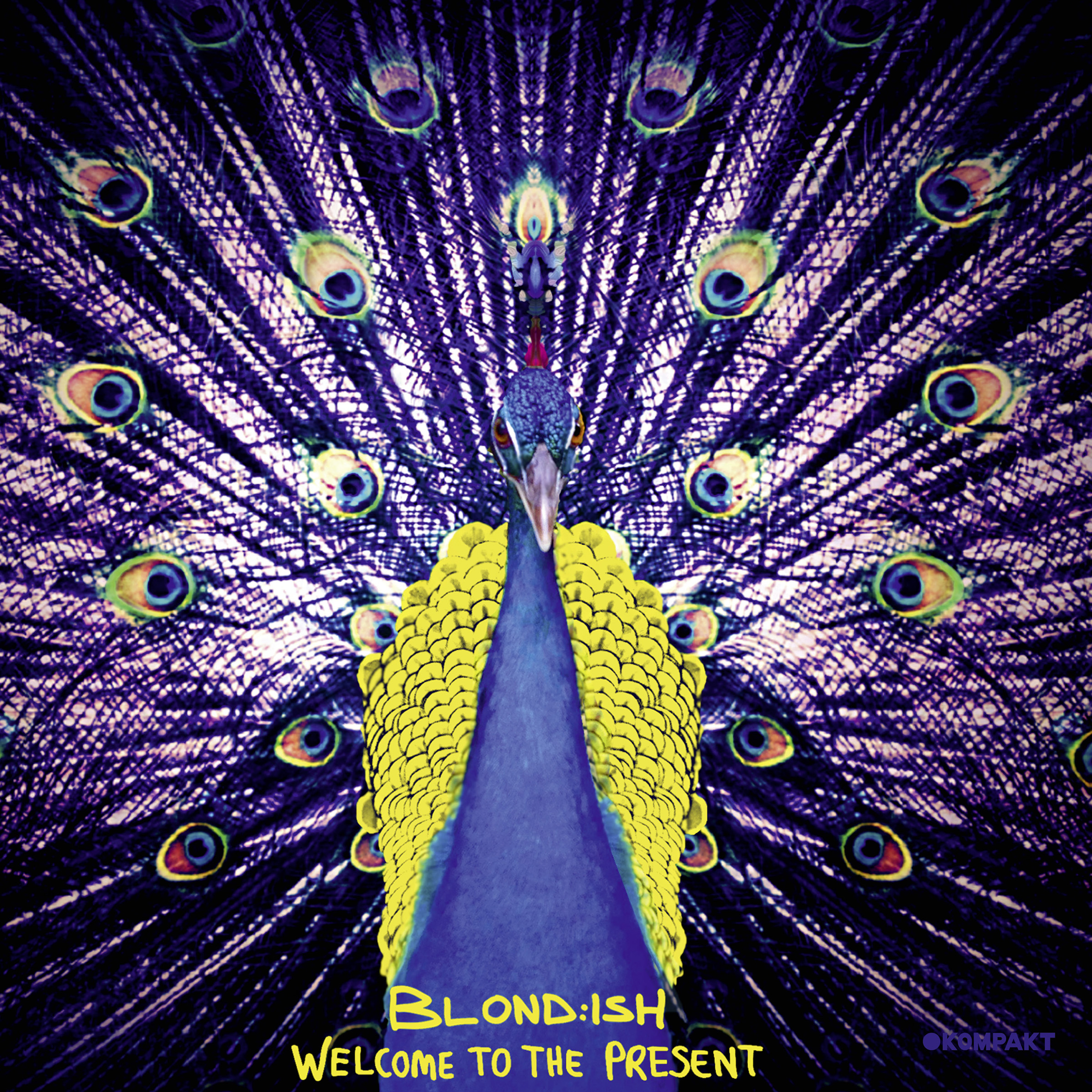
Is there any story behind the peacock on the artwork? Bakos: We thought a lot about the track titles, album name and the album artwork—because those are the three things that symbolize what we want to express with the album.
D’elene: In Tulum, our friend has a hotel, and the owner’s wife bought him a peacock for his birthday. His name is Phoenix. He lives on the beach and is just the happiest bird ever! One of our friends rented a room at the hotel with an open air bathroom and shower in it, and every morning at 8am Phoenix would climb over the roof into the bathroom and stare at himself in the mirror, showing off his beautiful feathers for about 30 minutes. We just love him and his attitude. He is very symbolic of our time in Tulum recording the album, because when you decide to show your true colors, that’s when you really shine.
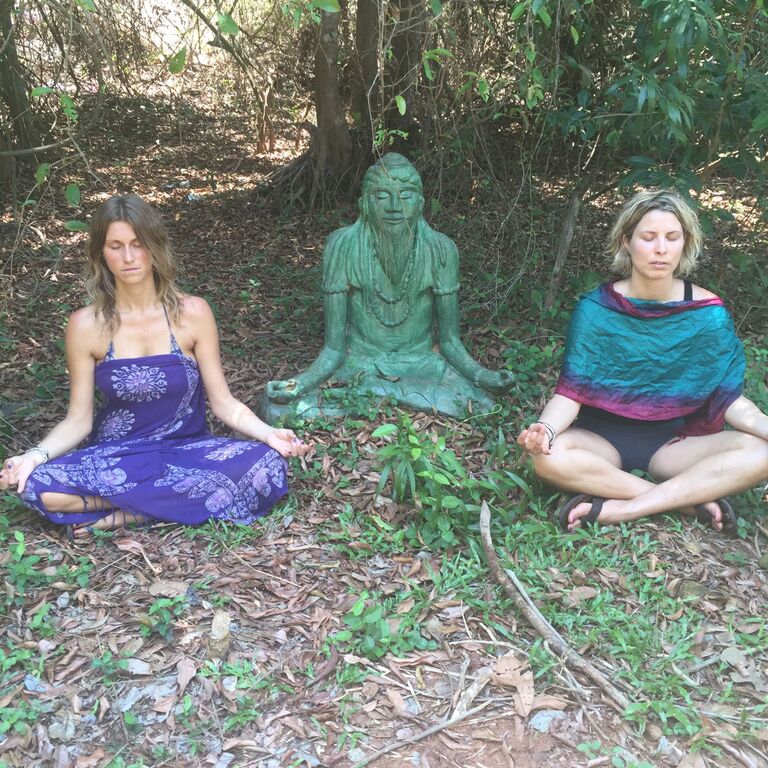
And the album name, Welcome to the Present. What’s the meaning? Bakos: After we had finished the album, we had this tour of India and decided to take two weeks off to go explore, meditate, do lots of yoga and immerse ourselves in the country because we know that we would have the time there to be away from our phones and social media. When you meditate and get closer to nature, I think this opens the creative mind—at least it did for us.
D’elene: We were not really drinking or doing anything else. It was very pure and we had a lot of clarity.
Bakos: During this time, we were having a lot of discussions about spirals and wormholes. When I was meditating, I would always see this infinite thing that continued going forward but I didn’t know what it was. Someone told me that it’s the “black spot,” or the feeling you get when the sun goes over the horizon. We were finding this in all sorts of different situations and we kept coming back to the same point. What it means is that you have no judgements, no ego—no nothing. It is the here and now in the present time. Right at that second.
D’elene: You are not thinking about the past nor thinking about the future, because a lot of human suffering comes from either being anxious—which is worried about the future—or depressed, which means you are worried about the past. That is where problems arise from. If you are meditating and completely focused on the present moment, nothing else matters and you are one with the universe. We wanted to bring this message to our audience. While we are certainly not the first people to be saying this, we are just expressing it in a different way; we wanted to say it through music. The title is basically trying to encompass what we are going through in our journey of awareness and remind people that the present is where people should try to live more often.
You’ve spoken previously about the reasons behind each track name—but do you perceive their to be a story to the album, and what’s the reason for ending the album with Alan Watts’ “It Starts Now” speech? Bakos: It’s just our personal opinion, but the album is meant as a concept. It starts somewhere, it takes you somewhere and then there is a conclusion at the end—but not a conclusion where you think to yourself, that’s the end. It is a conclusion to the album, but actually a gateway for you to explore more about something else for your inner work or whatever you want to do. We ended with the Alan Watts speech because he is one of the greatest philosophers to us. He brings Eastern practices to the West in a “one plus one” type of way where we understand and we don’t just think it is like hoopla spiritual shit.
D’elene: t is an ironic kind of thing and it just ended up happening that the name of the Alan Watts speech that we use in the song is called “It Starts Now.” It is fitting for the theme of the album.
If you two had a story with the album, did you think quite a lot about the tracklisting? D’elene: Not really. I ended up picking it randomly on the plane in like five minutes and it ended up being pretty accurate. It worked. It happened naturally and then we switched one or two around but that’s about it.
When did you know the album was finished? At what point do you say, ‘Wow, yeah—I am happy with that”? D’elene: As an artist, and I’m sure as every artist would agree, you don’t really ever feel like your work is finished. Personally, I am very persistent and picky and you constantly have doubts sometimes. It is very very difficult to finish a track, so for 11 of them, it was challenging to let go. Sometimes you just have to let it go because you have to move on to the mixing phase, and then once you do that you can’t go back and change your lead line…and then you have to change your whole mix. It is a process of just learning to let go.
Fort Romeau launches a new label next month with a split 12″ from himself and Panorama Bar resident Nick Höppner. The label, called Cin Cin, is a collaborative project with Ali Tillett, who runs the party and booking agency Warm in London. The inaugural record, Untitled, is slated to drop on November 17 and is the first in a series of splits on the label. Stream Fort Romeau’s A-side opener below, where the EP’s complete tracklist has also been included. (via Resident Advisor)
A1 Fort Romeau – Untitled A2 Fort Romeau – Diana B1 Nick Höppner – Splicing Hues B2 Nick Höppner – Stay
Anthony Naples returns to his own Proibito label on December 8 with a new EP, Smacks. The New York producer’s debut full-length, Body Pill, was released on Four Tet’s Text imprint back in February. But, as Resident Advisor reports, while that record dealt in more exploratory sonics, this latest effort sees Naples returning to the dancefloor. Find a complete tracklist below, where B-side cut “Bonobo” is also streaming in full.
Recently taking a break from a consistently massive touring schedule to relocate from London to Los Angeles to work on film score, progressive-house legend and Last Night On Earth label boss, Sasha, has stepped up to the decks to deliver the latest issue of Resident Advisor‘s weekly podcast series.
The mix is already gathering plenty of attention from Sasha’s long time loyal following of progressive house fans, with the mix boasting tracks from Jacques Greene, Kenton Slash Demon, and a Four Tet remix of the Chvrches track, “Leave a Trace.” When speaking with RA about the ideas behind the mix, Sasha explained he “Wanted to do something for Resident Advisor that wasn’t necessarily a collection of music I would play out, but more like something I’d listen to for inspiration when I’m working on music.” Sasha is now spending time in Los Angeles while he lays the foundation for a transition into film score, while also secretly preparing for the creation of his next album that is due out in 2016.
Download the latest RA Podcast from Sasha by visiting the Resident Advisor website, and read the entire article about the mix by clicking here.
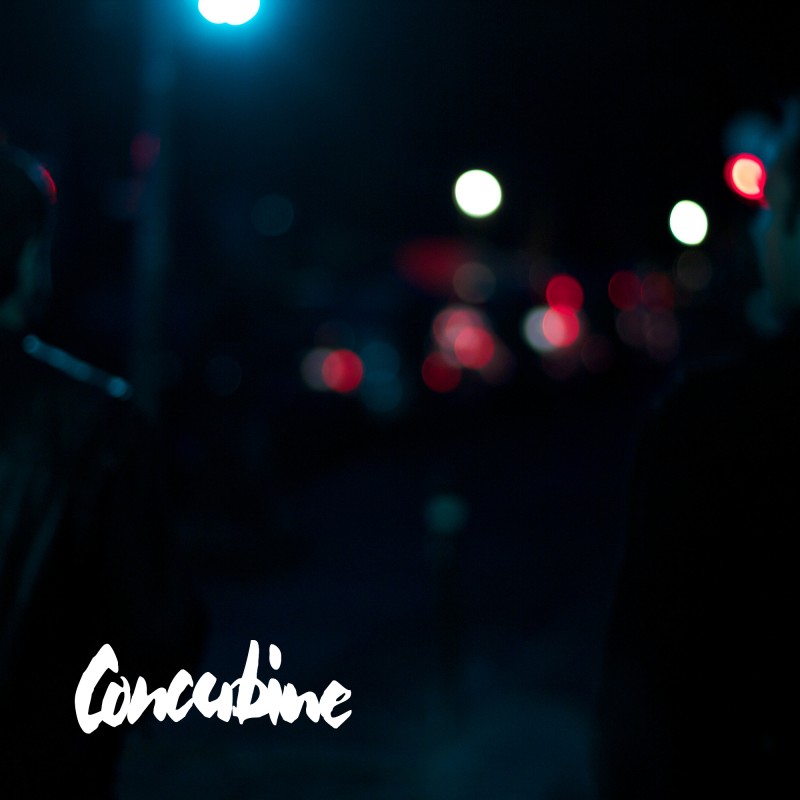
Canadian underground producer Noah Pred has built himself a stellar reputation in America and Europe following a string of acclaimed releases on labels including Immigrant, Tongut, and Sentient Sound. But Pred is not only a relentless producer: He is also an experienced collaborator, and just recently he has teamed up with Rick Bull (a.k.a. Deepchild) for a genre-defying LP under the Concubine moniker. The album includes 11 tracks that range anywhere from Detroit electro to space noise and everything in between.
Today, the duo is offering up a keyless dub version of the track “Luxend” that has never been heard before. This exclusive interpretation has the keys stripped back and additional drum patterns sewn into the mix.
You can pick up the entire album right now by visiting their website, and you can also check out a video for the original version of the track by clicking on the Vimeo player.
Download the keyless dub version of the track “Luxend” by clicking the download button on the media player below.
Due to issues regarding the GDPR, EU readers can download the track here.
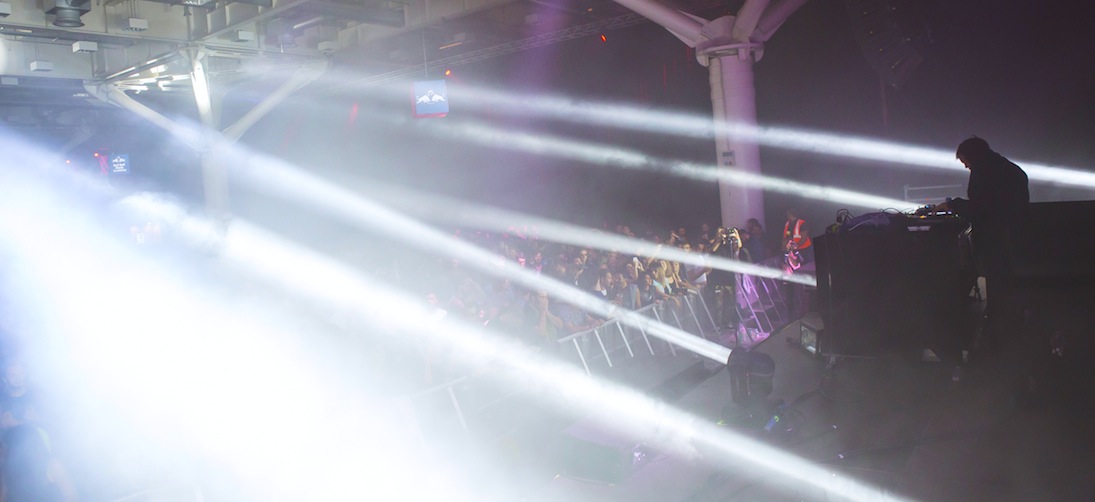
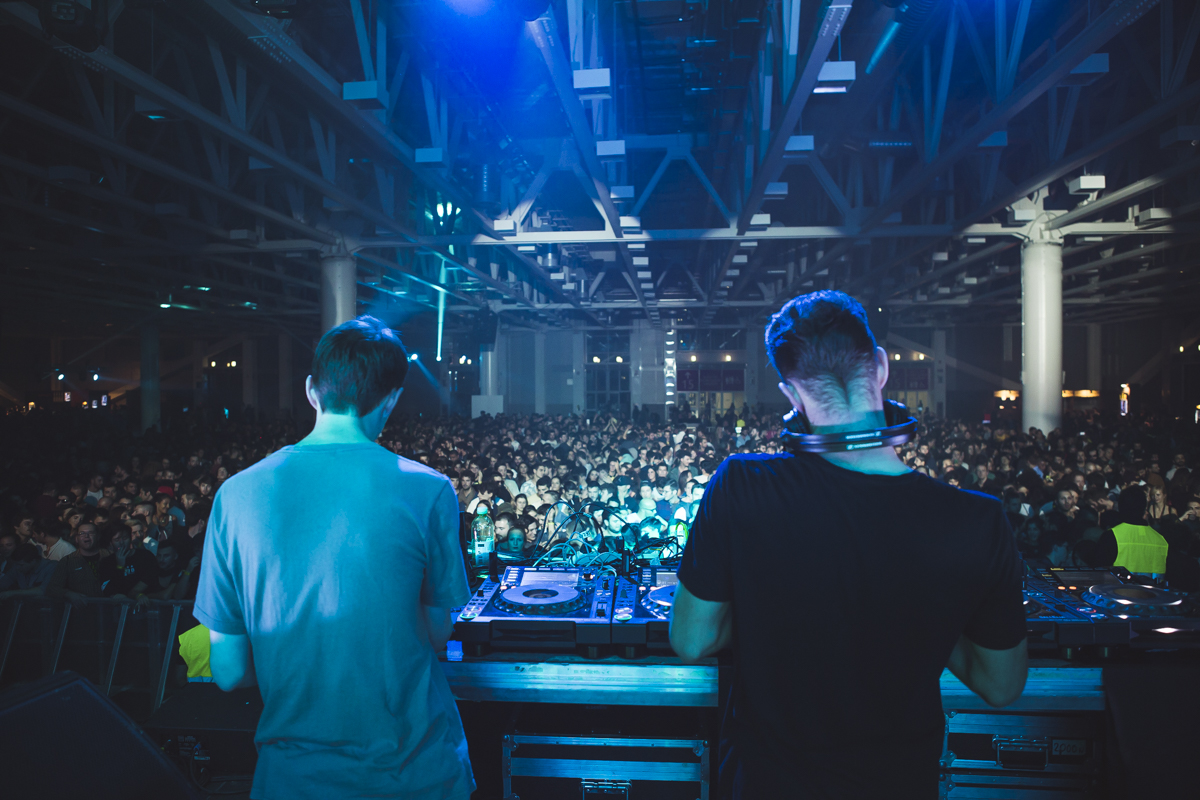
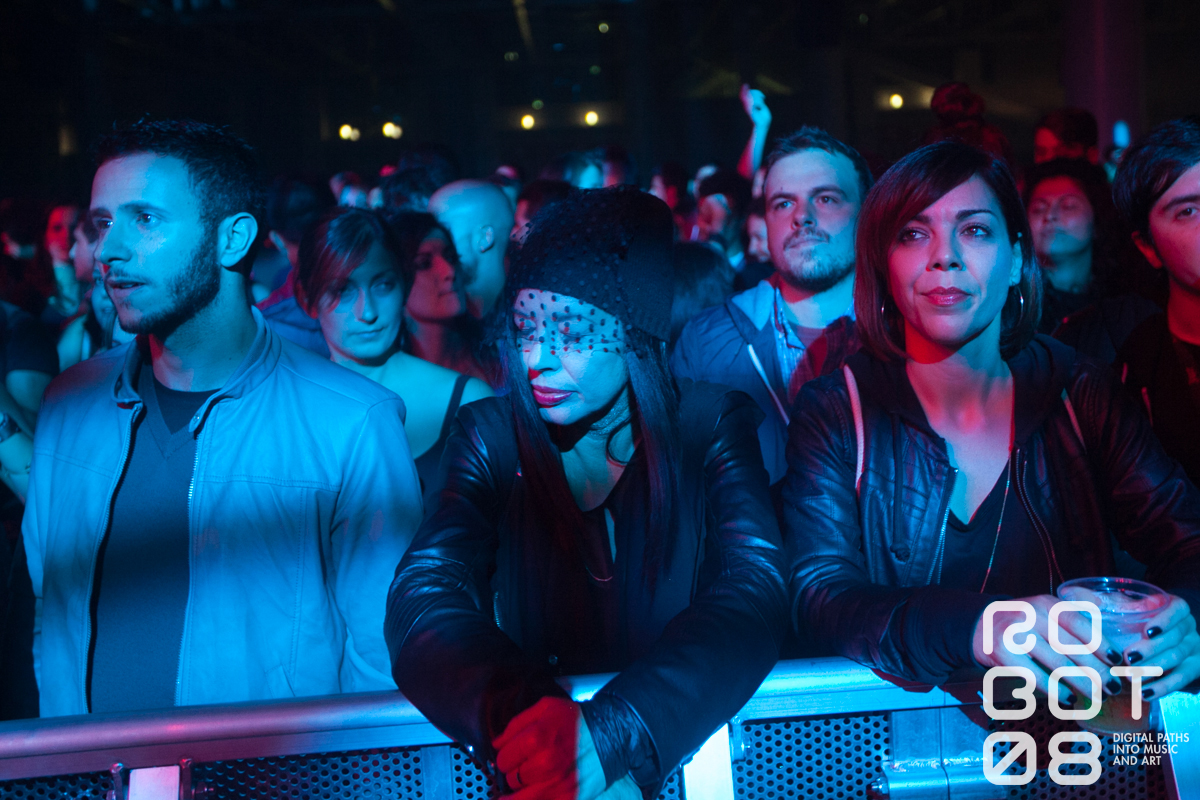
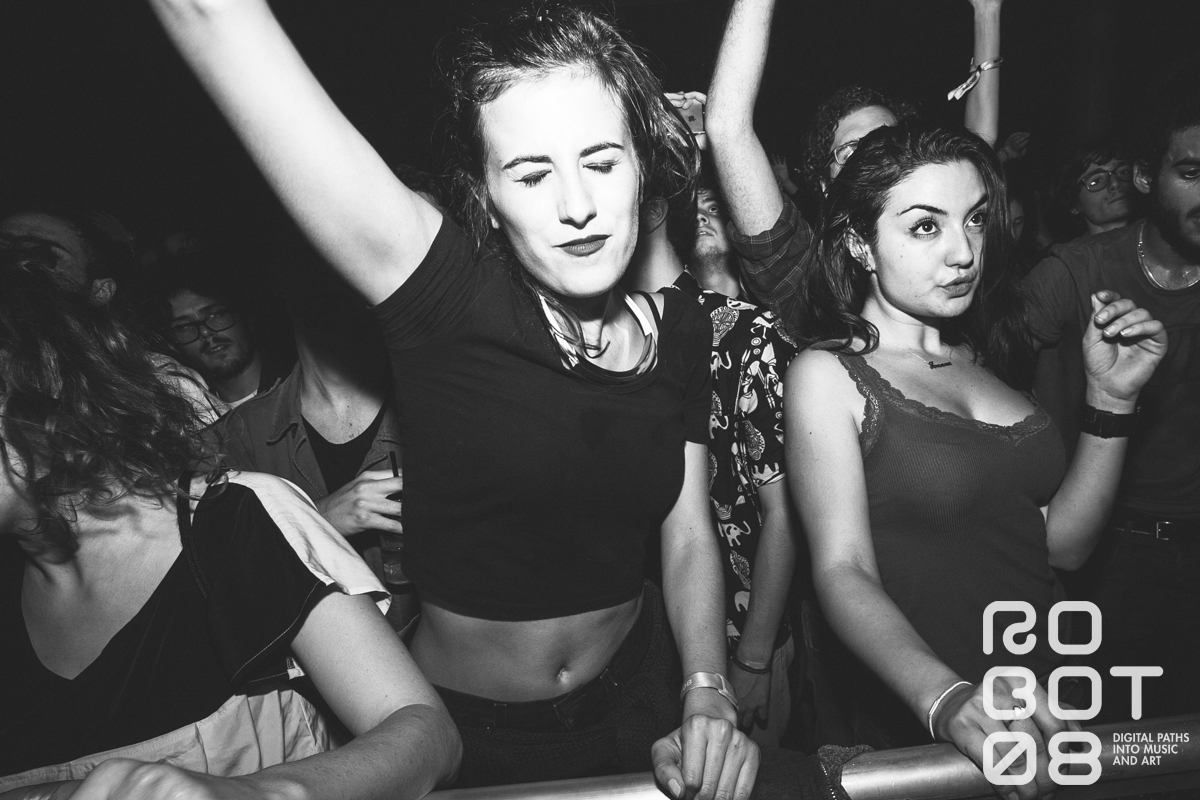
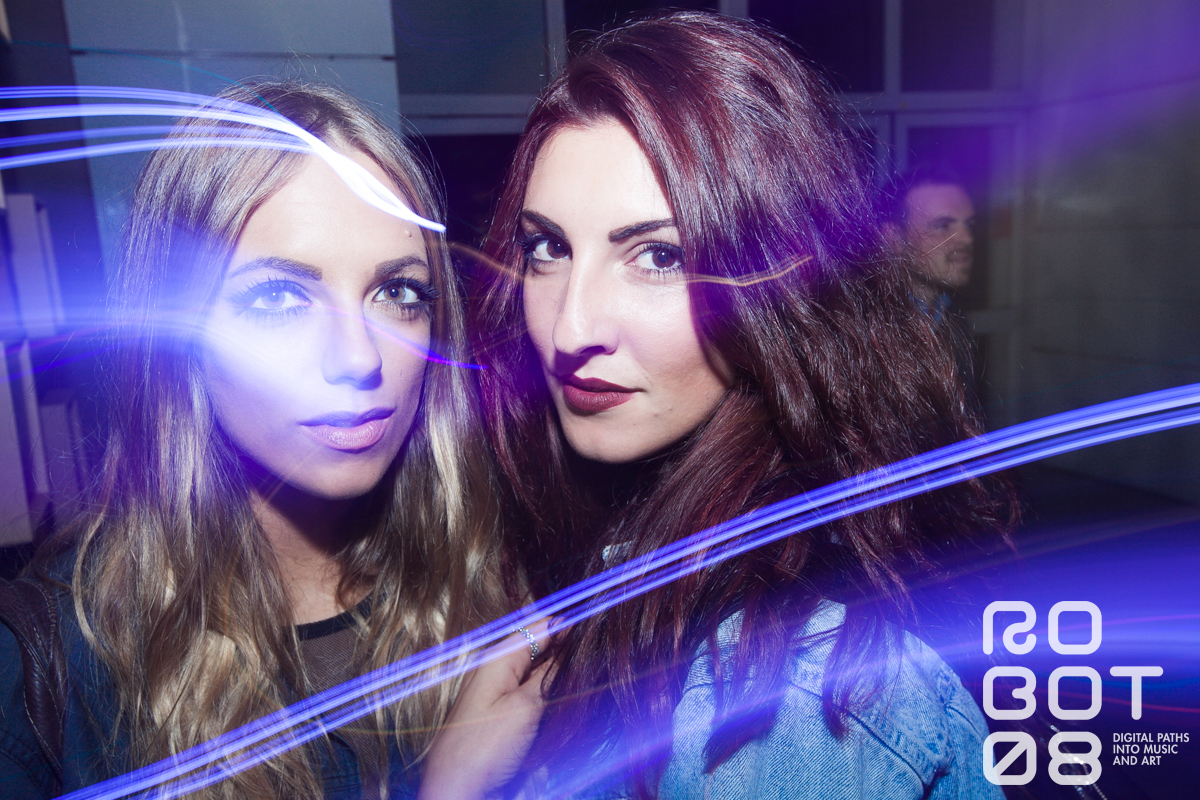
In what has become a tradition we’re in no hurry to see the end of, XLR8R recently headed for Bologna in north-eastern Italy for the eighth edition of roBOt Festival. Running as ever over three early October days, roBOt has grown markedly in the three years since we first went, with the second half of each night’s bill (11pm to 6am) now taking place at a gigantic, Sonar-like convention center called the Bologna Fiere, in contrast to the slightly ragtag out-of-town clubs that the festival were still using as recently as 2013. The space used at the Fiere had more than doubled from last year too, and capacity had risen to around 8,000 per night. roBOt isn’t anywhere near the same scale as Sonar yet, but with the move to the Fiere, guests of the stature and profile of Ben UFO, Squarepusher, John Talabot and Tiga peppering the bill, and a Buenos Aires edition already under its belt last December, it’s easy to see direction the organisers want roBOt to take in the long term.
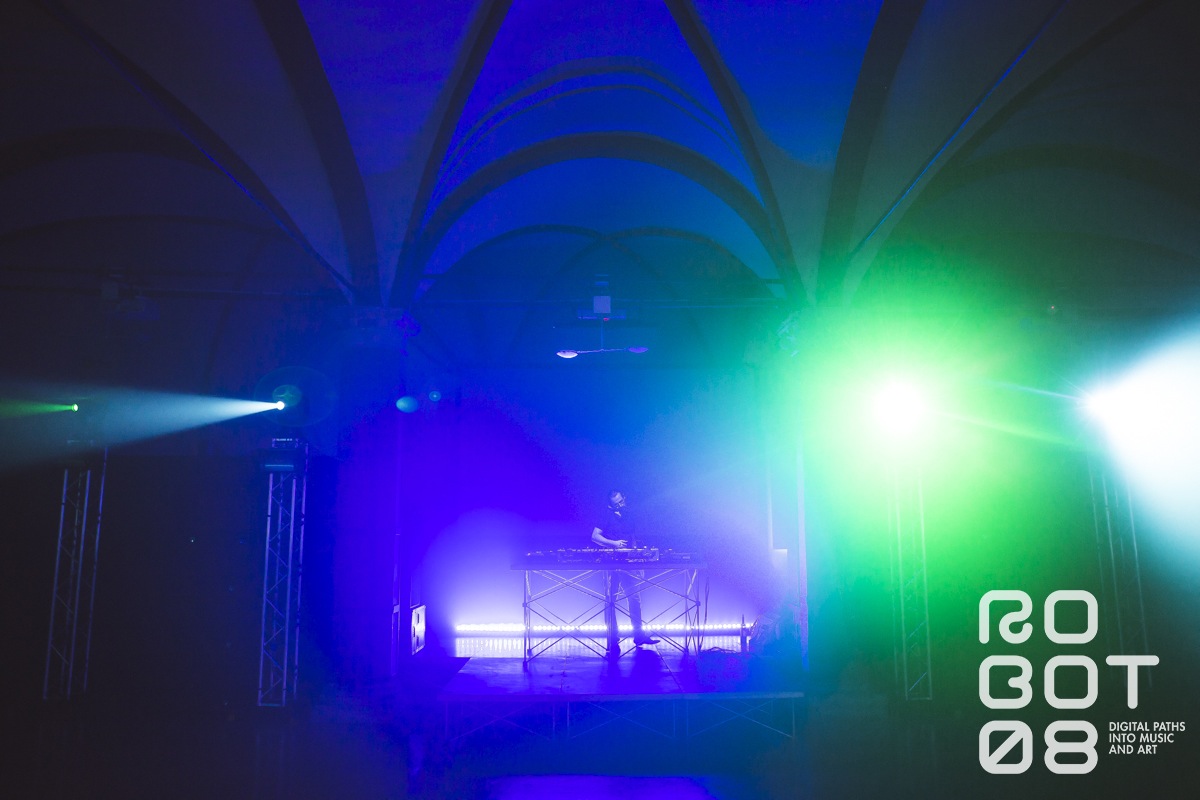
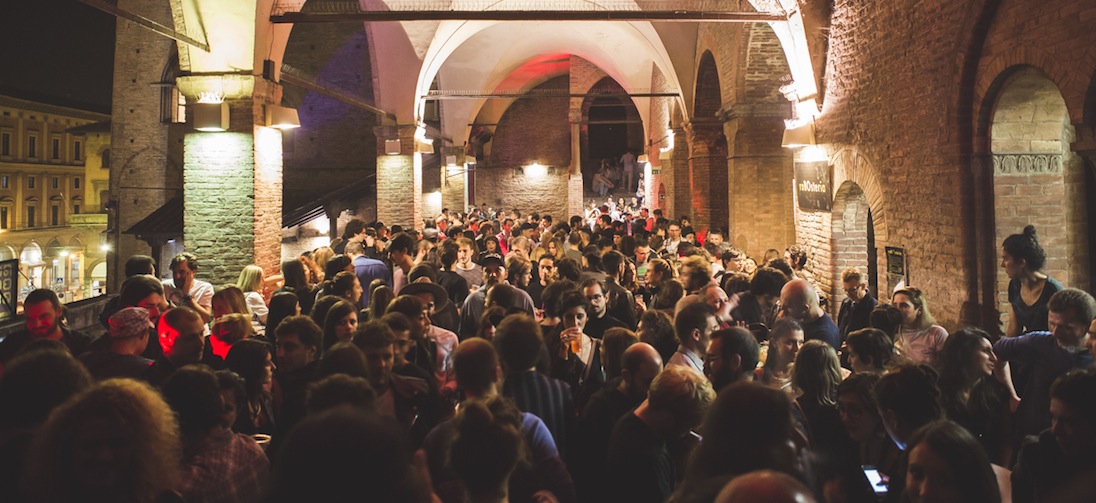
The early part of each evening’s activities as usual took place at the beautiful, 11th-century Palazzo Re Enzo on the city’s central square. A far smaller venue than the Fiere, the Palazzo can be a place to go for a gentle introduction to the evening (food, bean bags, and low-key art installations and musical oddities can all be found there), or something more muscular (Powell and Philipp Gorbachev’s sets were as lively as anything over the weekend). We took in both of these sides of roBOt and plenty more over a weekend that was as enjoyable as any we’ve spent there. The festival turned up just as many new, abiding impressions as ever, and we have gathered together seven of these below.
The dark recesses of the Palazzo Re Enzo will always turn up something interesting if you look hard enough. No matter how big roBOt becomes in the future, it is to be hoped that it doesn’t ever outgrow Palazzo Re Enzo, the sumptuous setting for its activities from early evening until around 1am. The structure (the oldest building in Bologna, no less) is of course extraordinary, and its main Sala Re Enzo hall a stunning venue in which to watch music. Its nooks and crannies are where a lot of roBOt’s more unique experiences are to be found, however, and that was again the case this year. Lena Willikens‘ bleakly atmospheric live soundtracking of the 1933 Hiroshi Shimizu film Japanese Girls At The Harbor in the Salone del Podesta area of the venue was certainly the most striking example of this that we happened upon this year.
Aside from that and, the other little bits and pieces of film and live art that we saw, stumbling straight from the airport into Chevel‘s abstract techno in the lesser-visited Sala Degli Atti side-room, and taking in sections of Resident Advisor’s excellent program (featuring Clap! Clap! and Prefuse 73 among others) in Salone del Podesta on the final night, were also among the festival’s top fringe treats. The Palazzo is a rewarding place to wander around anyway—indeed, the place isn’t actually open to the public at any other time of the year—and even more so when there’s something so intriguing waiting for you around the next corner.
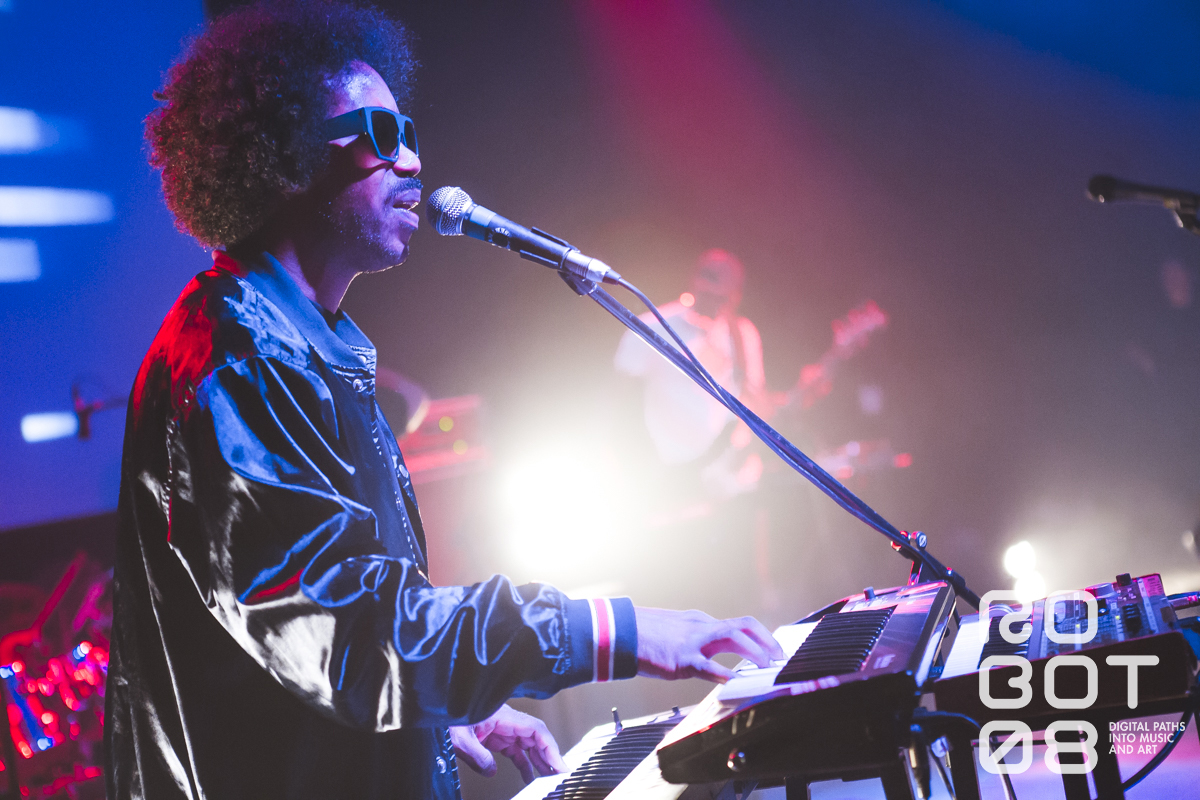
Koreless’s live set was a major highlight. We’ve seen Lewis Roberts‘ live show a couple of times over the last few months, and it’s always an immersive, cinematic experience. A relatively early slot (10pm) in the salubrious environs of the Sala Re Enzo was natural fit for his largely ambient show, even if he did have to follow the rush of Powell’s noise onslaught. Very much a visual as well as audio experience, Roberts ran through a good deal of unreleased material during a mesmeric hour, all the while controlling the show’s strobes from a strange contraption that looked like a miniature mixing desk with the top half of a decade-old laptop inexpertly grafted onto the top. The reverberating, subs-heavy “Love” and the inevitable strobe-flashing bliss-out of “Sun” were standout moments, but really Koreless’s current live show is something to be enjoyed as a glorious single piece, and a rapt crowd in the Palazzo duly did just that.
roBOt’s Outdoor Stage may need to be re-thought. The expansion of roBOt’s capacity at the Fiere meant the addition of a third stage, the Outdoor Stage, in the central area separating the RBMA and Main Stages. The first of the two nights at Fiere was warm and dry, and the Outdoor Stage an attractive option on which we enjoyed Lena Willikens and Powell, both of whom were playing their second sets of the evening having previously played at the Palazzo. Saturday night was a different story, however, with a downturn in the temperature and intermittent rain making it somewhere to go only if you really had to. This knocked out WSR and Prostitutes as potential options, though a scarf-and-jacket-clad Helena Hauff did manage to tempt us out into the sparsely populated crowd for a while. We would undoubtedly have lingered for longer if it hadn’t been for the cold, though. Northern Italy in October is frequently delightful, weather-wise, but it’s probably too unreliable to have a significantly sized outdoor area be part of roBOt’s long-term plans.
The RBMA Stage was very often the place to be at the Fiere. Red Bull Music Academy has a stage at the vast majority of the European electronic music festivals worth bothering with these days—and boy, do they make it difficult to object to that trend. With Lee Gamble and Sherwood & Pinch having been among the Friday highlights, Saturday’s RBMA bill was more mouthwatering still, with Dâm-Funk and Nathan Fake putting in early sets that were excellent if a little sparsely attended, due to the two-hour overlap between finishing time at the Palazzo and starting time at the Fiere. Things really got going when John Talabot hit his stride (Henrik Schwarz’s remix of Emmanuel Jal’s “Kuar” may have been the precise moment), and the momentum carried through as a packed crowd enjoyed the heavy artillery of Clark‘s live show. Most were carried off to the Main Stage for the last couple of hours for Daphni and Floating Points‘ closing set, but RBMA’s Stage as usual held the attention more than any other over the course of the weekend.
Ben UFO and Jackmaster’s taste in Italian music had everyone smiling Ben UFO and Jackmaster‘s b2b set on Friday night at the Fiere was just the parade of bangers that you’d expect, but there was one moment that seemed to stick out in everyone’s head. That moment was when they dropped Koto’s insanely catchy 1980s Italo/space-synth hit “Jabda,” The combination of what is by any measure an irresistible earworm and a knowing wink towards a very specific corner of Italian culture had the huge Main Stage crowd reduced to a grinning frenzy. Also, it may have been our imaginations, but at least one or two locals around us appeared to be recreating the bizarre dancing of the karate suit-clad frontman in the song’s exquisitely cheesy video. Ten out of ten for both arcane popular culture knowledge and self-deprecating physical comedy if you were, guys.
Sometimes roBOt’s heaviest sounds were its most enthralling. Nothing about roBOt’s settings or atmosphere evokes the threatening clank of heavy industry, but on several occasions the most bleak, pounding sounds of the festival were also the most memorable. Diagonal label boss Powell‘s grinding, ultra-noisy live show at the Palazzo was matched in intensity by the sounds explored during his DJ set a few hours later at the Fiere. Clark’s blistering live AV show did all sorts of damage at the RBMA Stage on the final night, and if you wanted you could go straight from that to the Outdoor Stage and subject yourself to the jackhammer delights of Helena Hauff’s thumping techno set. We’ve all luxuriated in the perverse pleasure of bleak sounds in equally bleak surroundings, but sometimes there’s just as much to enjoy in hearing them in a setting more suited to a night at the opera.
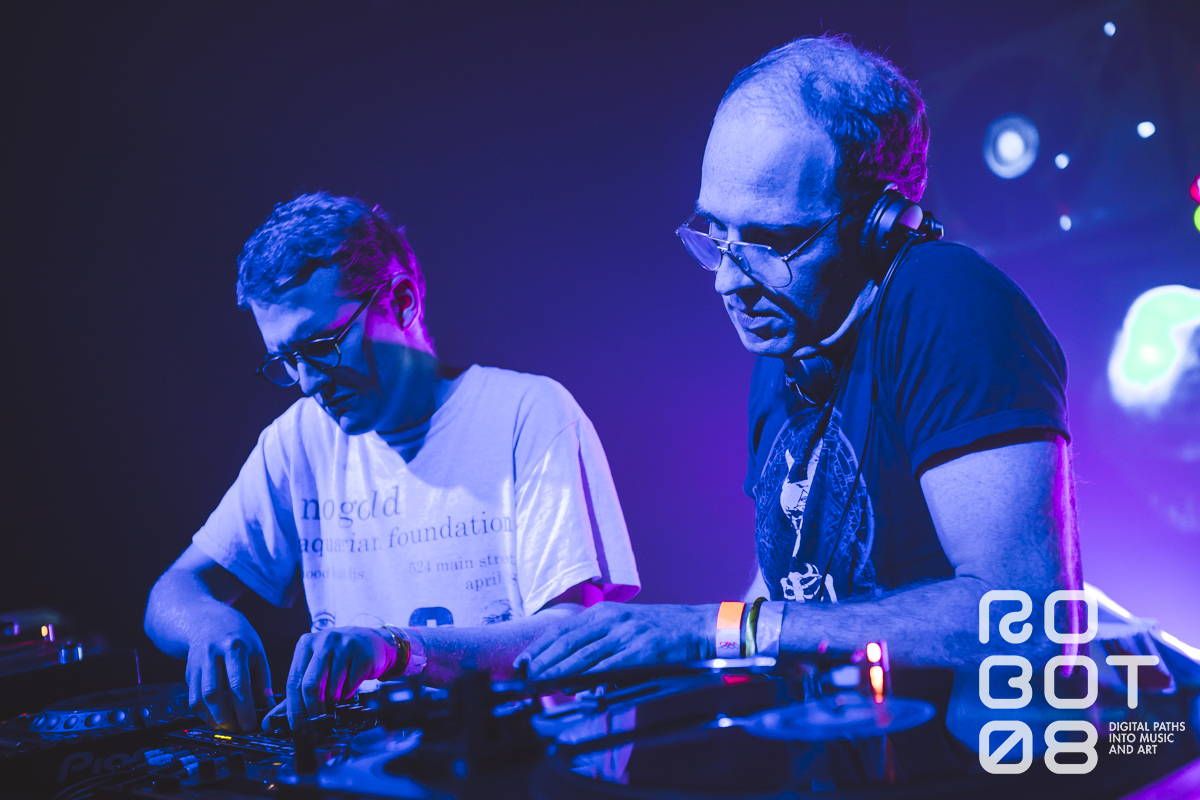
Daphni and Floating Points are just as great when they’re not mining their disco collections. The last time we saw Dan Snaith and Sam Shepherd go back to back, they spent six hours delving into their seemingly endless collections of top-drawer disco and soul. Shepherd’s recent solo sets have been along much the same lines, but he and Snaith went for much trackier territory for the bulk of their show at roBOt, with the euphoria of Four Tet’s remix of Eric Prydz’ “Opus” topping off a long run of relatively grainy techno and house. That’s not to say there wasn’t room for some of what we were expecting—Mr G’s “Hope Reprize” of “The Struggle Of My People by Mike Grant, and the soul classic “I Can Deal With That” by Dee Edwards were received with their usual fervor—but the pair’s show generally confounded expectations. A timing change meant Daphni and Floating Points closed out the festival’s Main Stage on the last night instead of the originally scheduled Trentemøller. Without wishing to denigrate Trentemøller, it’s anyone’s guess why Snaith and Shepherd weren’t scheduled to close the festival in the first place, but they stepped up in fine fashion, finishing the eighth edition of roBOt on just the right note.