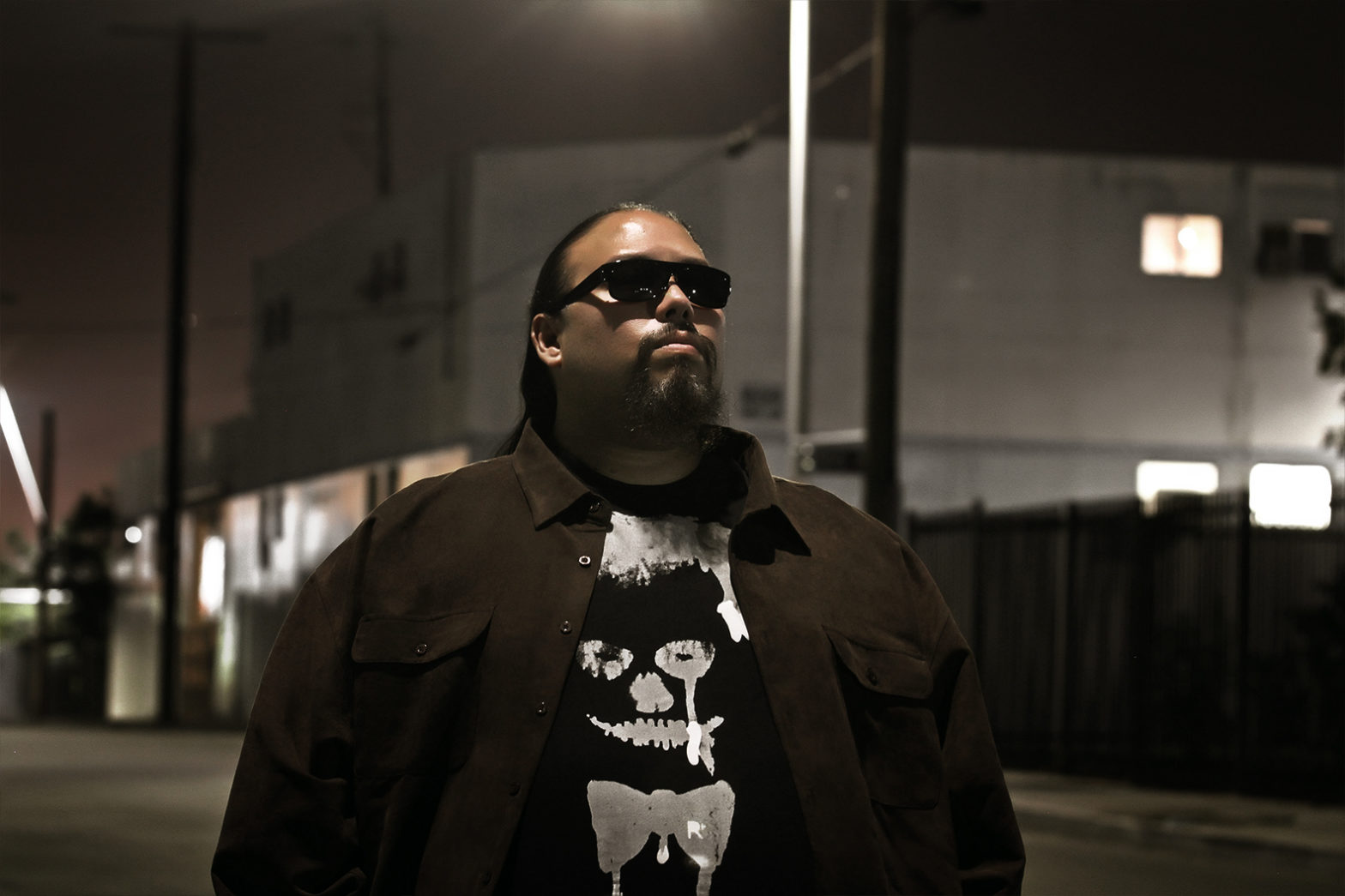
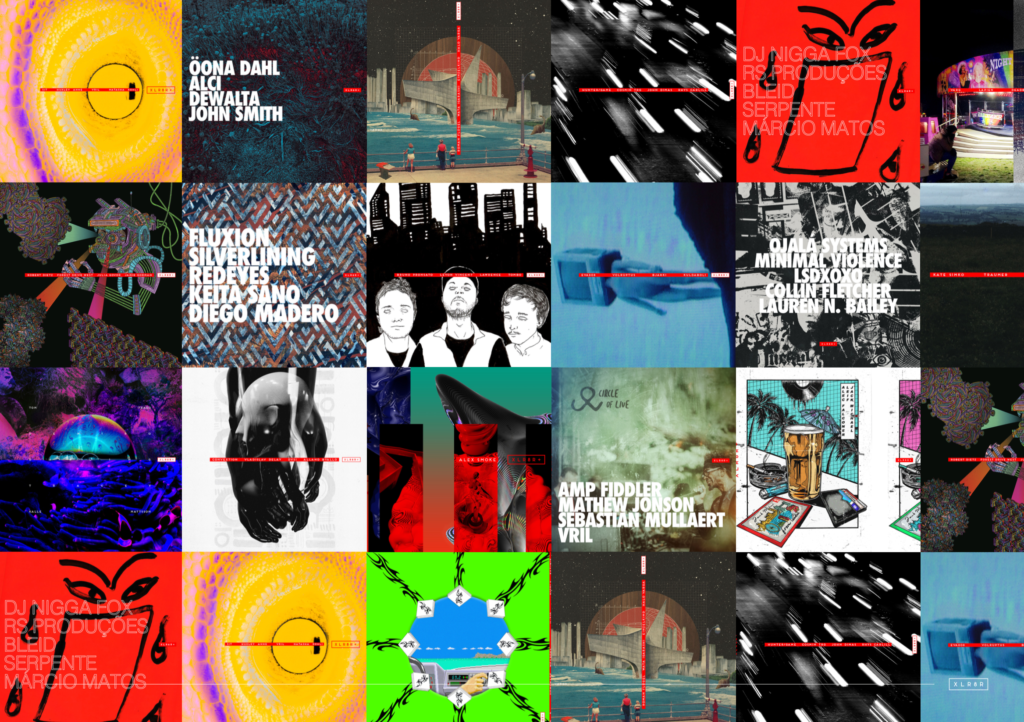
Hailing from California, XL Middleton’s sound keeps in line with a style of west coast rap and g-funk that is so closely associated with the greater Los Angeles region. Starting his career as a hip-hop producer, Middleton’s sound eventually morphed into a melodic, funk-laden musical format in the mid-2000’s that amassed an impressive following in the US, Europe, and Japan. The album Tap Water,which will be XL Middleton’s first full-length LP, draws a link between 80’s boogie funk and 90’s g-funk in a relatable and energetic manner. Being a seasoned musician, you can witness XL Middleton live on stage ripping it up on his keytar or regaling the crowd with his vocoder, bringing a spirit and sound to the forefront that artists like DâM-FunK, Sweater Funk, and Middleton have popularized as the modern funk movement.
You can stream the track “Exception to the Rule” from XL Middleton’s upcoming Tap Water LP below. If you are thirsty for more funk, be sure to visit his Soundcloud page by going here.
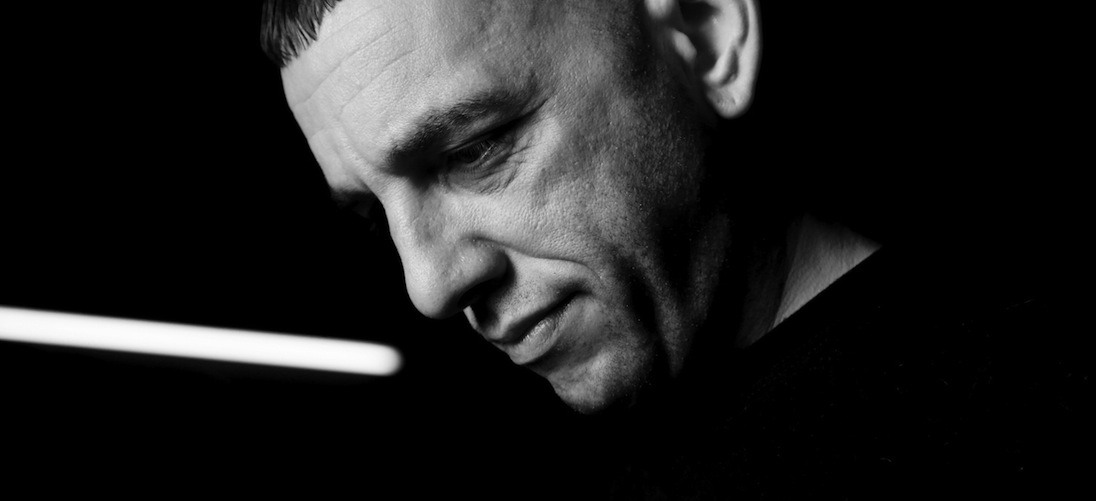
By now, most techno fans—actually, make that most electronic-music fans—should be intimately familiar with the broad strokes of Adam X’s life story. But just in case, here it is, in simplified form: Growing up in a pre-gentrified Brooklyn with his sibling Frank, the man born Adam Mitchell got into graffiti at a young age in the early ’80s, then music via such quintessential drum-machine tracks as C-Bank’s “One More Shot” and Strafe’s “Set It Off.” By 1990, he and brother Frank, by now known as Frankie Bones, opened New York’s (and possibly America’s) first all-techno record shop Groove Records, later to be known as Sonic Groove; Heather Heart soon became a part-owner of the shop. The Storm Rave gatherings soon followed, with Mitchell, Bones, Heart and their cohorts playing the kind of hard-as-nails techno that came to definite the NYC scene. In fact, they, along with Joey Beltram, Lenny Dee and a handful of others, more or less muscled that scene into existence—no easy feat in what was then a electro-, hip-hop– and house-oriented town.
In 1995, Mitchell launched the still-active Sonic Groove label, providing an outlet for not only his own productions, but those of Bones, Reade Truth, Neil Landstrumm, Kevin Saunderson, Miss Dinky, Blake Baxter and many others. Flash forward a dozen years, and the siren call of Berlin beckoned; our hero continued working as Adam X, but added some new sonic sobriquets to his resume. There’s Traversable Wormhole, of course, focusing on moody, industrial-tinged and conceptually rigorous electronics; a handful of secret projects that he’s reluctant to discuss (“I don’t even know what you’re talking about” is his response when asked about them); and, beginning in 2012, ADMX-71, a moniker Mitch reserves for atmospheric material that’s more geared for headphones than dancefloors.
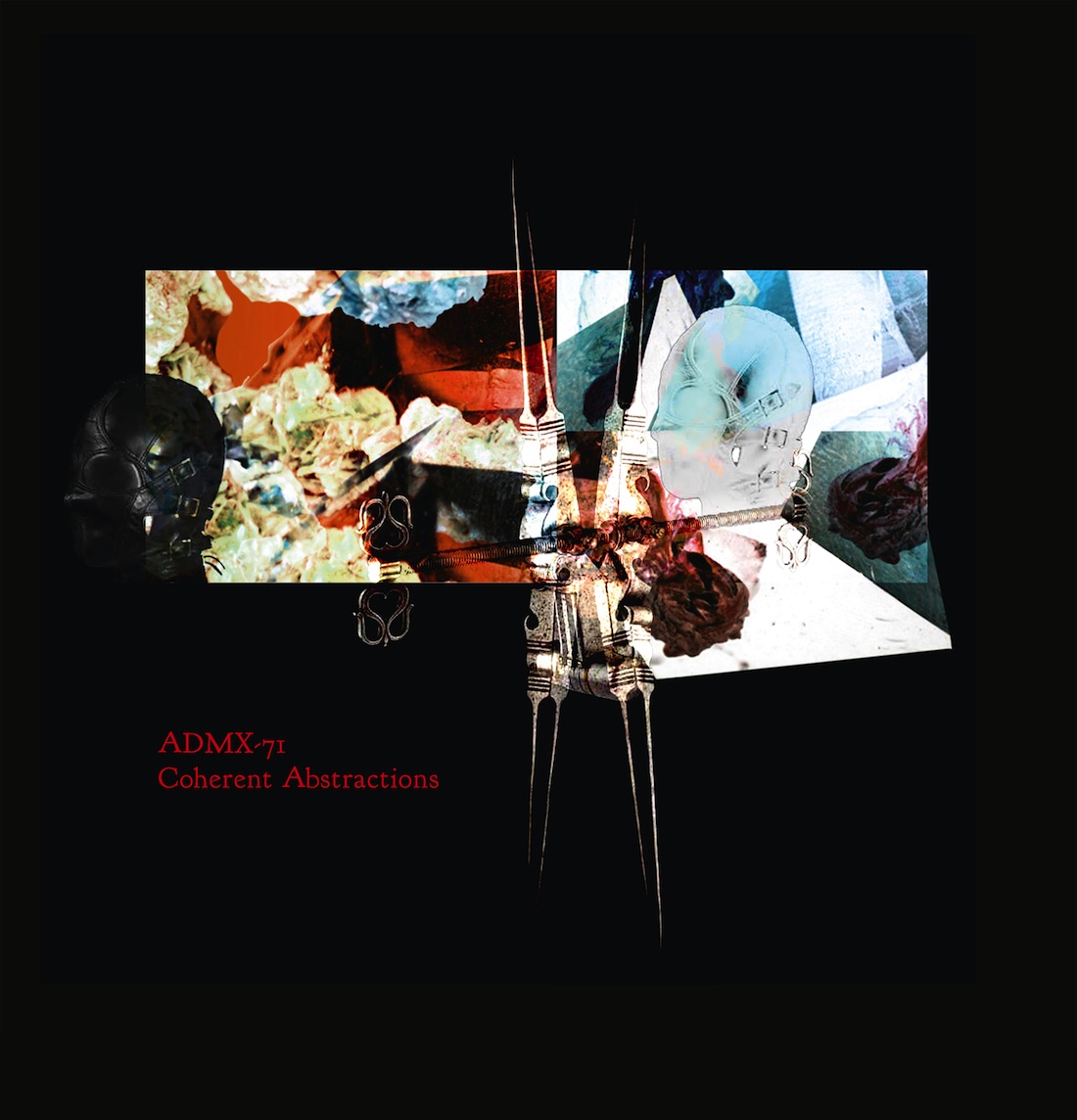
But that biography, as compelling as it is, omits a salient fact: The man is capable of conjuring up compelling sounds that’s equal parts seduction and dread; at its best, his music can be spine-tingling, soul-stirring and downright fierce. You get all of that and more on the latest ADMX-71 dispatch, Coherent Abstractions, released on Ron Morelli‘s L.I.E.S. label. It’s a sublimely immersive, contemplative LP—at times bleak and almost apocalyptic, but with rays of beauty and something approaching optimism occasionally breaking the darkness. The album has a timeless feel, as if it could have been made 15 years ago…or 15 years in the future. As Mitchell says, in his typically no-nonsense way, “In techno, you’re only as good as your last record—and your last record is only good for around three weeks. But this kind of stuff is different, I think. It’ll be around for a while.” He’s right—it is different, both spaciously cinematic and intensely intimate. And in its own occasionally dark-hued way, it’s also fabulously beautiful.
This is now the second ADMX-71 release on L.I.E.S. How did you first hook up with the label and Ron Morelli? I don’t really know Ron at all from back in the day. Marcos Cabral used to work at Sonic Groove back around 2002, knew him, and I met Ron once back then at Marcos’s place. But when L.I.E.S. started, I didn’t know that this was the same guy; Ron actually had to tell me later, “You know, we met before.” Anyway, the way this happened was that Anthony Parasole did this rooftop party at Output a couple of summers ago, and he had Ron and me play with him It was like an old-school ’80s block-party kind of thing; we played all old-school stuff like electro, freestyle, some disco, a little bit of house, and even some hip-hop. It was great, and we really bonded. Ron was still living in New York, managing A1 Records, and I was getting rid of some records, like 2,000 of them. Ron took the whole batch of them, and so we connected even more. We connected on all cylinders—we’re both old-school New Yorkers, you know? We both have the same aesthetic, this whole realism thing. There’s no faking the funk with Ron.
And it was that personal connection to lead you to release on L.I.E.S.?
Well, he’s really clear on his objectives, and he’s clear about what he doesn’t like and who he doesn’t like. He’s kind of like me in that aspect. So, yeah. It’s a perfect match, and it really fits. Ron isn’t originally from the ’90s techno scene; he was more involved in a punk, NYC Hardcore background. But I like that; coming up in New York, I had a lot of friends that were into New York City hardcore, like Agnostic Front and Bad Brains and all that. I wasn’t really into that myself when I was coming up, but its given Ron a real DIY aesthetic that I like.
He was probably going to those shows at about the same time that you were helping to create the New York techno scene. Yeah, I was like 19 back then, which was kind of the average age. The music was so new, and the people that were coming up were pretty young, too. People like Derrick May and Juan Atkins were a little older, but if you look at people like Richie Hawtin, Joey Beltram, acid-techno guys like Thomas Heckmann, even Aphex Twin—we’re all in the same age group. We were all young. Nowadays, it’s different—it takes a while to come up through the scene to the point where you are playing at things like the Bunker in New York, or at Berghain, or Output, or wherever. But back then, there was scene to come up through, so we had an opening.
“The dark vibes in my music definitely come from growing up in New York back then. Just roaming around subway tunnels, painting trains…this was a very cavernous, underground world that my friends and me were living in, you know?”
New York City was a far grittier in those early days, which probably had a huge effect on the kind of music you’ve made and played throughout your career. Yeah, that’s definitely true. The dark vibes in my music definitely come from growing up in New York back then. Just roaming around subway tunnels, painting trains…this was a very cavernous, underground world that my friends and me were living in, you know? It was amazing—but it was dangerous. Going to places like the South Bronx, it looked completely devastated, like Berlin in 1945. My father was murdered in 1985. This all has an effect on me, and it had an effect on the music I was into. There’s also futurism in my music…but to me, futurism is also kind of bleak. [laughs] When you look at what the future has in store, it doesn’t look too utopian. In my eyes, it’s more dystopic than utopic; society sure hasn’t been getting any happier.
So you consider your music to be dystopian? Actually, I think it’s just realistic for the times. It’s the soundtrack for the moment, in a way. I mean, I read a lot about politics and current events and global affairs, and the music that I make reflects what’s going on in the world.
Someone reviewed your previous ADMX-71 album, Second System, as being “foreboding, dark and hopeless.” I’m not sure if you would agree with that—but do you feel there’s any truth to that assessment regarding the new LP? I wouldn’t say that’s true of all the tracks. If you listen to the new album, one track that has a really special meaning to me is the last track, “MGM_41-85.” That track was basically written on the 25th anniversary of my father’s murder—and I wrote it in a dark room, with a candle burning in his memory. It’s not a dark piece of music; it’s melancholic and self-reflective. And there are others that aren’t necessarily dark, like “Mystical Ascent,” which is a dub-techno–meets-industrial kind of track; that one is also reflective. I don’t always write dark music, and you’ll find all kinds of elements in there. I mean, I also like space travel—that’s why I named my other project Traversable Wormhole. I think there are elements of that on this album, too, like on “Virtuality Continuum.” They’re just a little more downtempo.
Do you think people overemphasize the darkness in your songs? Maybe. I’m not writing music for horror movies, you know? [laughs] Well, maybe something more dark and sci-fi, likeEscape from New York.
Have you ever thought about doing film soundtracks? A lot of your music is quite cinematic. I would love to. I think that’s what ADMX is about—it’s the soundtracks for the movies in my head. But I think the director would probably try to tell me what to do a little bit too much, and I don’t want to deal with that. But one of my biggest influences, really, is John Carpenter; I grew up watching movies like Escape from New York, They Live, The Fog, Halloween…those soundtracks are amazing. I mean, the music from Assault on Precinct 13 has been ripped off so many times over the years, in industrial, techno, house, whatever. He’s had a huge influence on all my music.
For a lot of people, the first time they hear you play anything remotely like this kind of music was that PS1 Warm Up set in 2006. You really surprised a lot of people, who were probably expecting a straight-up techno set. Man, that was a great gig—one of the top ten that I’ve ever played. That was at a time when minimal techno was massive. But the thing I did that day, that mix of industrial, electronic body music and techno…no one was really doing that with exception of Terence Fixmer and Thomas Heckmann in the beginning of millennium when I first started fusing industrial and EBM with techno. But other the me no one was really pushing that sound in the U.S.A., and to be able to go to that party, where there were thousands of normal people—I hate to say “normal” people, so let’s say people not normally listening to hard techno music—and be able to make those people dance was really special. At the end of the gig, Function was there, and he was so blown away by what I did and how the people reacted, that he was totally shook up. My State of Limbo album came out on Rustblade in 2008, and a lot of the music from that set was later released on that album. It was a special day.
It was pretty soon after State of Limbo that you started recording as Traversable Wormhole and ADMX-71, right? Yeah, I felt I had to split the projects up a bit. I needed a way to do more experimental stuff. I listen to a lot of that music at home—stuff like Monolake and Biosphere. I wanted to do an album that fit in with the likes of that, and maybe play gigs with artists like that. I actually did a little bit with Traversable Wormhole—I played at MUTEK, for instance—but that was still a little more dancefloor-oriented. I wanted to go a step further; I wanted to mix some of the vibe of Traversable Wormhole, but with a more downtempo, experimental feel. Which is what I’ve been doing with this project.
You’ll still be sticking with your techno side, I assume? Of course! I really do like experimenting with making the kind of music where you don’t have to think about the confines of the dancefloor, and I still love making dancefloor-techno tracks, too. I DJ, and I need to make music to play! I have a lot of ideas, and I don’t want to be just constricted with one thing. And ADMX gives me the freedom to do that. The music doesn’t have to be any particular kind of genre style—If I have an idea I will experiment and see where it goes.
So you couldn’t really put a genre label on ADMX-71? No…it’s really just music not meant to be played in a club. I could open a set with it, but it’s more for driving in the mountains or through the forest, or flying in a plane looking out the window at the night sky and the stars above.
It’s a really great-sounding album, too; it’s kind of heavy but with a lot of clarity and detail. Are you using a lot of hardware? It’s funny—people always think that that I use a lot of hardware, but everything is out of my laptop. Two monitors and my laptop, and two MIDI controllers that I use to play keys with or twiddle knobs to control parameters. I use Ableton and a lot of analog plug-ins. But I have worked in a lot of very big studios at times, and I know how to make things sound analog when I want it to sound analog, and I know how to make things sound digital when I want it to sound digital. I have fooled a lot of people who love to debate the analog-versus-hardware thing!
French-house is a genre that has always been near and dear to the heart of many club-goers, and eventually this unique sound would find its way into many different types of house music. I can still remember the first time I was introduced to producers like Étienne de Crécy or Cassius, who would go on to shape the all encompassing sound by which aspiring producers would later create derivatives of the French-house genre like filter-house, French touch, and new French. Now you can find producers who have been influenced by this sound all over the world from Porto to Los Angeles, and that is exactly where we find ourselves with our latest download from California producer, Auriént. With a strong appreciation for disco and Chicago house music, Auriént has created a fresh but familiar sound with it’s latest EP, Nu Phrench out today on van Drumpt. This new release includes the original version of the title track along with a remix by LeSabra, and a remix Portugal producer, Snowman. While there’s an underlying taste of French touch to Auriént‘s music, he colors outside the lines between nu disco and vocal house as well. The Snowball remix takes a more speedy approach to the original while also layering in filtered synths that push the track in new directions. The plucking bass line and robotic vocals make for a finished track that Kavinsky would probably listen to in his car on the way to a film set.
You can find out more about Aurient by visiting the van Drumpt website, and you grab the Snowman remix of the title track by clicking on the media player below.
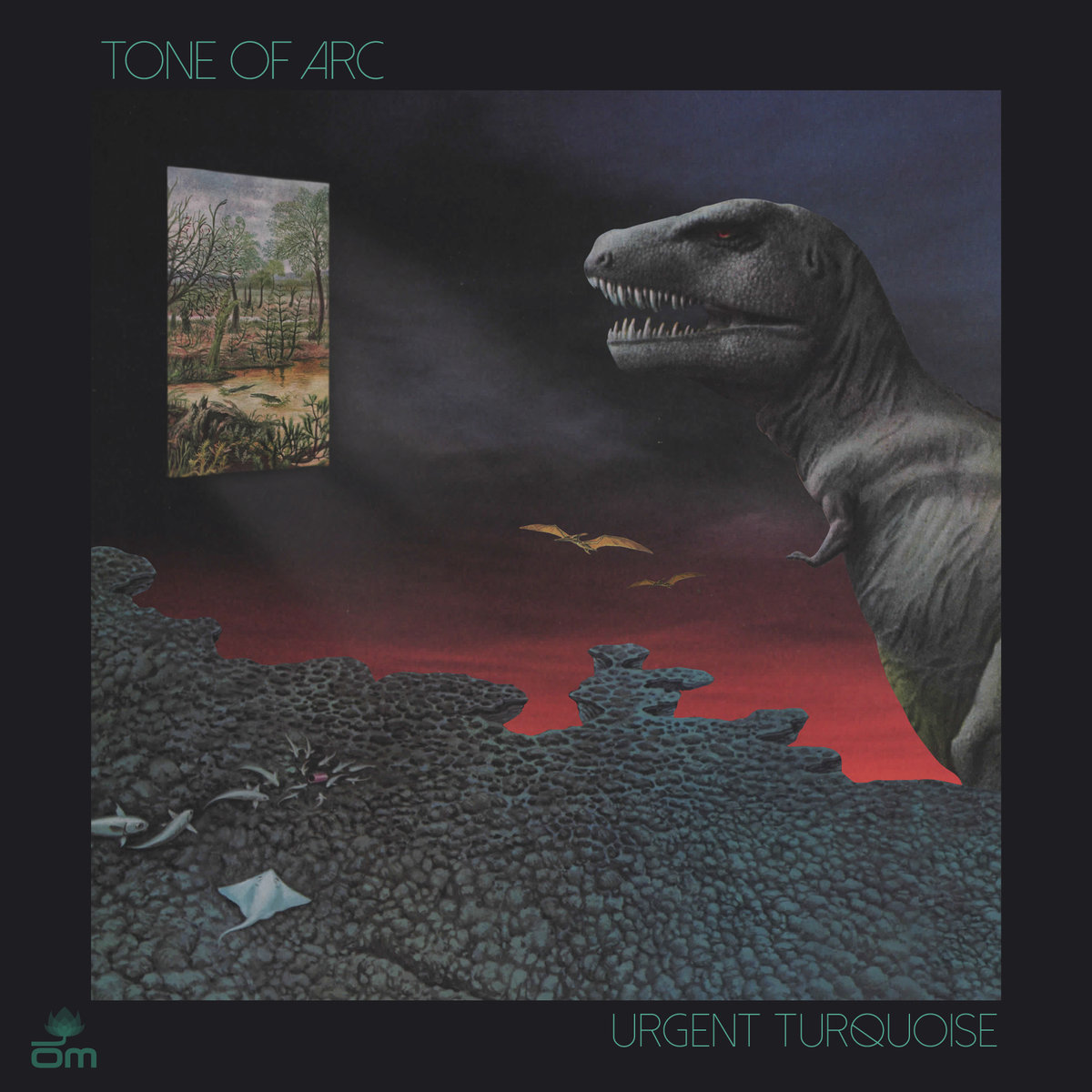
Let’s be clear: Urgent Turquoise, the second full-length from San Fran’s Tone of Arc, isn’t geared toward those folks who focus with laser-like precision on music’s myriad, ever-mutating microgenres. The San Fran duo of multi-instrumentalist Derrick Boyd and vocalist Zoe Presnick (partners in life as well as the studio) aren’t attempting to please fans of bubblegum bass, deep filthstep, skweee, chapstep , nor any other hyperspecific music format.
Instead, the target audience for Urgent Turquoise—and, in today’s fragmented sonic landscape, this runs the risk of sounding quaint—is one that simply wants to spend some time with intriguingly arranged, slightly unhinged, and ultimately pleasurable tunes, with fretting too much about style. The duo is basically aiming toward what those first hominids who discovered that banging bones on rocks in a rhythmic manner was kind of cool were probably shooting for—the never-ending quest to turn life into a richer experience. Or, as Boyd and Presnick put it in their slightly more mystical way: “Music is the auditory manifestation and colors of your soul as it bends, blends and manipulates around you through you and by you to support our spirit’s growth. To enhance life is the ultimate goal and there is no better way to do so than playing and making music.”
The result is something of a sonic variety pack, with a slightly otherworldly vibe serving as the unifying factor. Lead cut “Practical Particles” opens with some bluesy guitar, with tribal percussion and an emotive, wistful melody sending us off to points unknown; “Chromatic Flight” weds a gentle groove to a playfully plucked melody, upping the funk factor in its second half via growling analog bass and chanted vocals; and the bleepy “Galavant,”with its jagged edges and ominous vocals, is both a little bit menacing and a whole lot goofy. Elsewhere, “Roxy’s Young Blood” blankets its twangy guitar, eerie keys and Presnick’s yearning vocals under swathes of reverb, a martial rhythm and insistent, two-note bassline supplying its propulsive force, while “Baboon Baby,” with its rubbery bottom end, marimbas, spoken-word lover-man interlude and stripped-down arrangement, is an alternate-universe take on ’60s AM-radio gold. Even the songs that at first seem to own the most to tradition—like “Alice in a Can,” which begins as something of a ’70s-era prog-rock ballad—takes enough weird twists and turns to keep things interesting.
Perhaps best of all are a pair of cuts that Boyd and Presnick have borrowed from a couple of bands that, we might assume, are among Tone of Arc’s inspirations: “Chant No.1” hews fairly close to the Spandau Ballet original (which is good, because it’s an sterling groove to start with), and their version of Portishead’s “The Rip,” which serves as Urgent Turquoise’s closer, trades the plaintive Beth Gibbons vocals of the Portishead version for a majestic, sublimely heartfelt duet. It’s a beautiful finish to a fine set of song—and while this album won’t be for everyone, those who listen with an open mind will find much to love.
When the theme of the Krakow, Poland edition of “exploratory-music” fest Unsound was announced as “Surprise,” it started a wildfire of speculation regarding who would play, as well as just how the festival would embrace that theme. Considering that festival passes sold out only ten minutes after being available to the general public, that point became moot—and eventually, slowly but surely, the festival began to give notice as to that would play, one of them being David Tibet’s Current 93. Then, things got a bit weird, as Unsound was falsely accused of having Satanic ties and was forced to move multiple shows from churches throughout Krakow. Considering this happened right before the festival started, it might’ve been the most intriguing bit of publicity the festival has ever had in the long run—and in the midst of the weirdness, the fest, which ran from October 10 though the 18th, delivered, keeping things thoroughly surprising without being ironic. With the taste of the false allegations still lingering, Unsound just continued to push the theme, continuously finding way to entice its audiences.
With events taking place in museums, abandoned cosmetic factories, former communist hotels, and warehouses, the festival has always had a thorough understanding into why venues matter in terms of lineup presentation. However, when the only way one could find out who was playing was a quick blurb on the Facebook pages a mere few minutes before the set started, one understood that this was uncharted territory that uncharted waters for both consumer and curator. But with Sunday’s opening party bringing the likes of Paula Temple and Rabih Beaini, the tone was set in an instant.
Whether it was Prurient showing up at Manggha (Krakow’s contemporary Japanese art museum), Pole stopping by for an impressive set at the Engineering Museum, or a guerilla karaoke session for fans, artists and staff, Unsound was abuzz all week. However, two specific instances really showed the appeal of this decade-plus festival, with Richie Hawtin playing Room 2 at Hotel Forum on Saturday, and a supposed Burial set on Thursday at Wieliczka Salt Mine. While the former was a terrific surprise on an already-stacked layer cake of dance goodness, the latter in this case caused somewhat of a social-media ruckus, as audience members going from lukewarm over the idea of a set of all Burial tracks being played in the dark with no one visible on the stage, to freaking out because that set contained unreleased material. Within 30 minutes, the buzz was deafening, as the audience wondered if it was actually Burial playing. Hyperdub has come out and said that he didn’t show up, and Kode9 (who played a surprise set on Friday’s edition of Hotel Forum) must’ve filled in for him, the speculation lingered—at least until the brutally beautiful set from King Midas Sound and Fennesz that followed.
The latter half of Unsound was based around three consecutive nights at Hotel Forum featuring acts that provided more of the surprise factor: Andy Stott played a set of almost entirely unreleased material, Untold turned back the clock by playing his dubsteppy classics, and UniiQU3 dropped Fetty Wap’s “My Way” at 5:07 am. Kode9’s thrilling surprise set at Room 2 came at the same time as a Friday performance in Room 1 by German composer Marcus Schmickler, whose audiovisual performance subverted expectations of a peak-time crowd and left attendees stunned; there was no massive sonic payoff, but the tenacity of his performance left most people flabbergasted. Meanwhile, Zenker Brothers played a rare live set at 3:30 am in Room 1, where they seamlessly weaved between rugged breaks, hard kicks and smooth melodies—while RP Boo was crushing it at Room 2 with a jovial set of footwork and juke bombs. The constant chaos of going in-between rooms added to the excitement—no matter where one went, it was going to be good.
Thursday’s Room 1 lineup reflected the many vivid directions of techno, with sets from Holly Herndon, Powell and Lorenzo Senni, Surgeon and Starlight, and DJ Nobu, setting the bar for for the rest of the week. Gary, Indiana’s Jlin debuted her live set on Saturday to audience acclaim in Room 1, while Galcher Lustwerk provided smooth, chunky house vibes in Room 2. Next, Brooklyn’s Aurora Halal crushed the floor with a unique blend of live techno and electro, feeding into a vibe of unanimous excitement that held steady until Xosar came on and played a set that bordered on “death-metal-madness techno,” in the words of a sweaty passerby who had just walked out of the room. The biggest divide was hearing attendees argue about DJ Bone in Room 1, in contrast to Hawtin in Room 2. In truth, they both were great, but Bone hit harder, with fury seething out of every track in his arsenal. Hawtin, played a Plastikman-oriented set, starting off with a lengthy intro that paid off with a strong drop that segued into a deep set of wide-arrayed techno.
Then Sunday came and went in a flash, as the Black Madonna, DJ Nigga Fox, Eltron John and Philip Sherburne all delivered unique, memorable sets at the closing party that left people wondering why they didn’t come to the festival sooner. With those Satanic claims wholly unfounded and and with that potentially risky theme in tow, Unsound again stood out from the pack as an institution that emboldens creativity from the artists that play, and encourages its attendees to take it in with an open mind. That’s something that very few festivals do, and it’s something we’ll be glad to get back to next year, whatever the theme. Let’s just hope a church or two can be a bit more accommodating next time.
Co-founder and head of the UK label Night Slugs, James Connolly (aka L-Vis 1990) has most recently teamed up with Jimmy Edgar’s Ultramajic imprint to put out his latest EP, System Preferences. Releasing under his Dance System moniker, the style strays from what one would expect off an L-Vis 1990 track and delves into a radically futuristic, bare bones sound that hints towards a connection with underground Chicago House scene. The music keeps in line with Ultramajic’s elastic and boisterous aesthetic while the label has acted as a vehicle for Connolly to explore new sonic territory and venture down new paths in his multifaceted musical career.
You can stream the full EP below and purchase the release by going here.
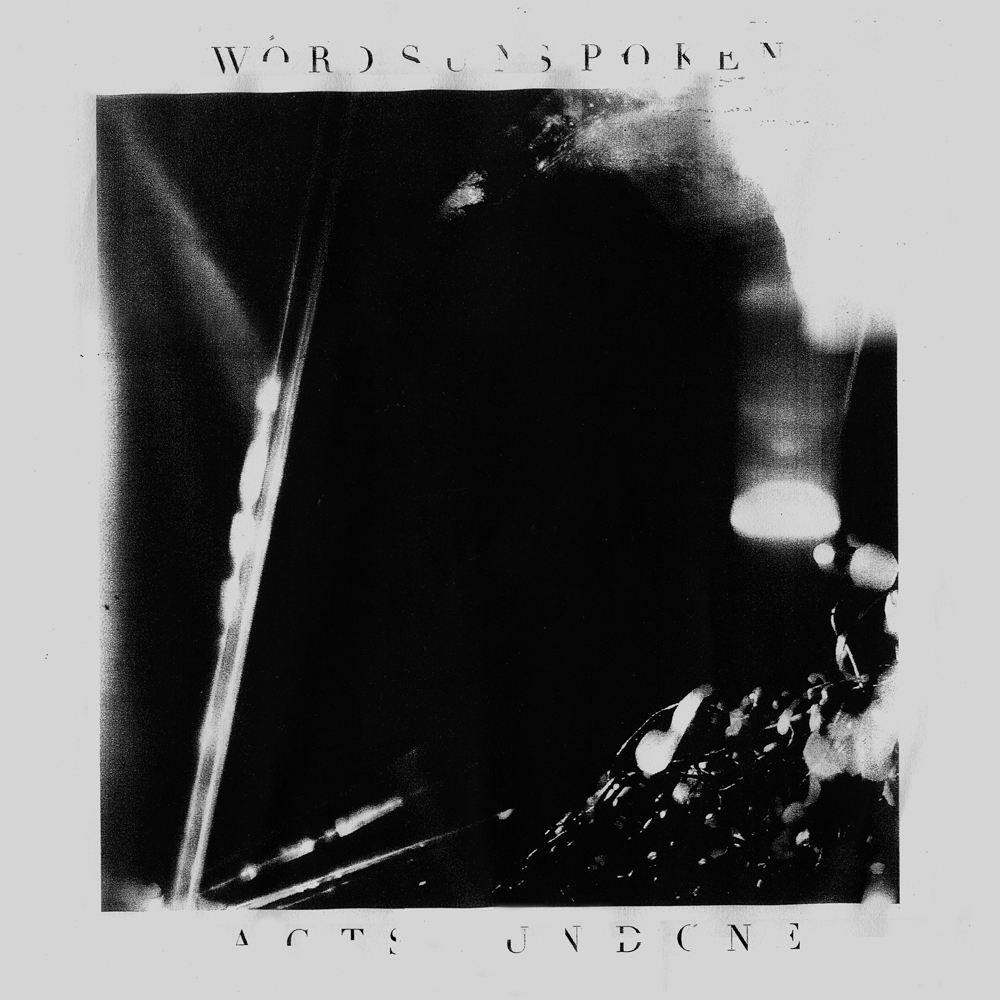
Francesco Leali and Thomas Feriero are confident about their new album, Words Unspoken, Acts Undone. They’re less certain how everyone else will respond to it. It’s bold, ambitious, meticulously designed and unlike anything they’ve made before. The press release cites “early Warp style bass, U.K. jungle and Downwards-influenced dub techno” as references, although in truth it’s beholden to none of these things. It’s a stand-alone body of work that’s been unriveted from the club, then loosely tacked back into place again, with performance and improvisation at its core. It makes for a radical and wonderful listen, nuanced with surprises—especially for those better acquainted with the pair known separately as Clockwork and Avatism.
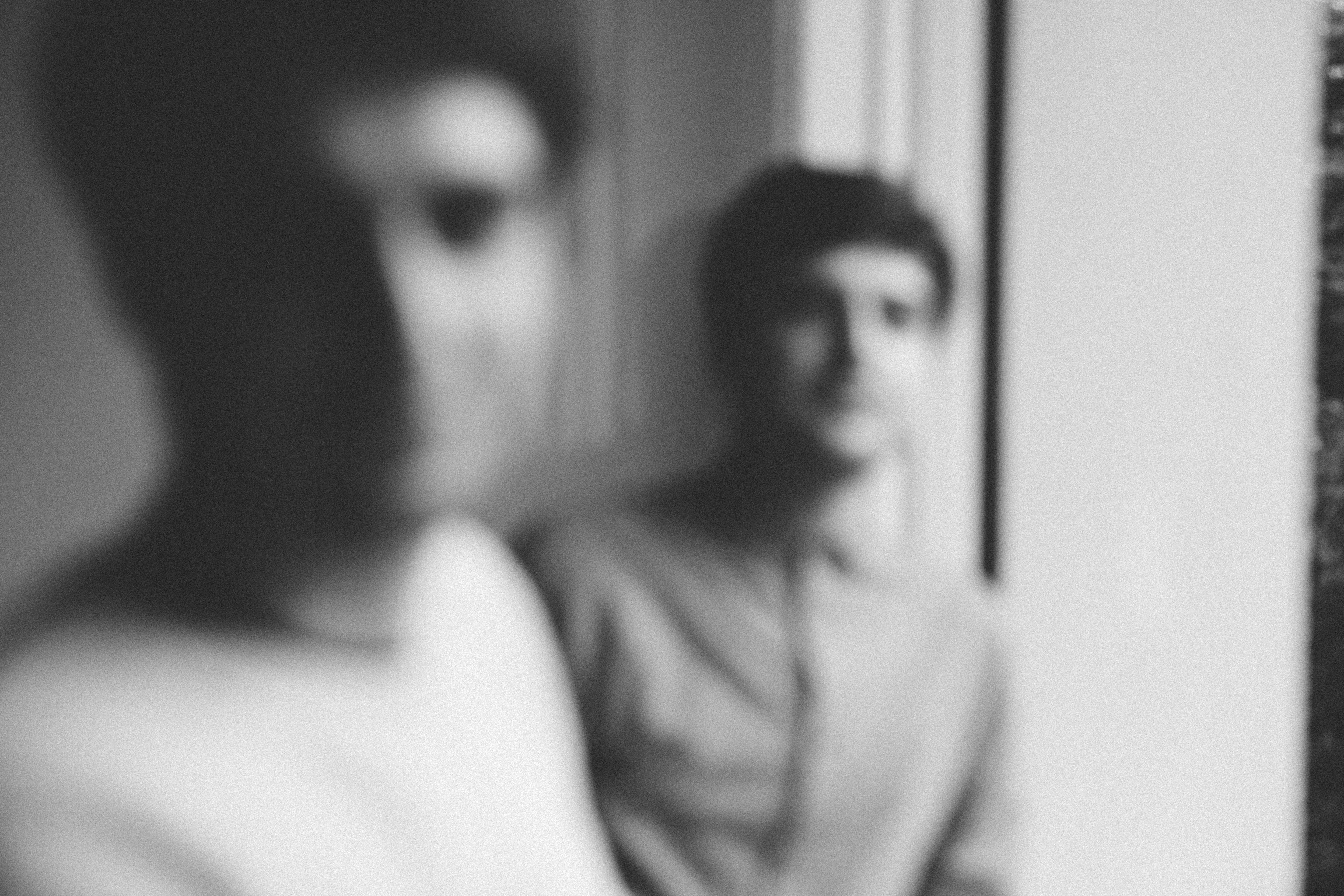
Despite being an acronym of Leali and Feriero’s solo aliases, CW/A is a deliberate departure from both. After living and working side-by-side in London, the U.S.and Berlin, these two childhood friends from Milan finally came together in 2013. Feeling pigeonholed in a scene that never fully sat right with either of them, CW/A was the breakout they’d been pining for. And since setting up Parachute Records with Manfredi Romano (a.k.a. DJ Tennis) they’ve set their full musical range loose. Aside from the tough techno sound showcased on Day Of Riddance, there’s been soundtrack and ambient works from both under different pseudonyms on Void Transcripts, one of two compilations released this summer. And things are about to get weirder for Parachute. They mention disco, punk and a girl with a guitar; a polar-opposite move from what we’ve seen from the label so far—but it’s all part of the same liberated ethos Leali and Feriero have been pursuing together as CW/A. With their first fully-formed opus set to drop, we decided to try to get to the bottom of it all.
Describe the situation that led up to the creation of CW/A. Thomas Feriero: When we started making music, we were just trying to make music. We weren’t trying to make deep house or techno or anything. It was around the time deep house was popular so we started getting bookings for that. In Berlin we kind of got lost in it and felt like we had to keep doing that. Then we realized we don’t come from that; we listen to all sorts of stuff. We didn’t want to start completely new, but have a platform to do whatever we want.
Francesco Leali: We started making music because it was something we were both interested in—I had studied music, Thomas had studied music—and we ended up in this scene that at a certain point we didn’t feel comfortable in. We decided we didn’t want to be pinpointed as DJs or live acts that only play house music or make club music. We thought we had to amplify our horizons, and this is how the CW/A project came around.
When was the moment you decided to work together on music? Feriero: It started when Francesco was invited to play Sónar festival in 2013. It was part of his album tour. They asked for him live. He’d never played live before and I was playing live at the time, so he asked me to join him and Federico for this show.
Leali: Planning it took us months.
Feriero: For me, it was the first time playing live with someone else. It was so much fun. We did that one-off show and were thinking that we enjoyed it so much, we have some time, we should try it again. We’d both done our albums and took a break from music, so when we came back we had all these different ideas that didn’t really fit. Because we wanted to do them together and play them live, we thought to do a separate project—even though it’s still linked to our our past in the name, which is stupid. Our agent picked it. [laughs]
It’s not the most imaginative. Feriero: And it’s really confusing. So it kind of just happened and now we’re stuck with it.
Leali: Because we didn’t want to cause any more confusion.
Feriero: The Sonar show was just called Clockwork featuring Avatism, because they wanted him, to be honest. Then after that we had a few tracks and a Watergate gig pinned down. The Watergate show was for Vakant, a label I used to release on, which is based in Berlin. But the next record to come out [on Vakant] would be as CW/A, called Conducting The Method.
Leali: That was the first official CW/A release.
What can you tell us about this record? Feriero: Before Conducting The Method we’d made ten tracks; we almost had an album. So we just took some extracts and made that first record. They just came out a bit more minimal in structure because we weren’t trying to make songs; we were making things to play live. Day Of Riddance on Parachute came from the same sessions as well. We have a third EP, too, which is a bit more complicated because it never came out. It’s called Endings and was supposed to be released on M_Rec but unfortunately Max_M passed away.
Did you know Max_M personally? Leali: We were good friend with him, although we met him in person in Milan not that long ago. We immediately bonded over a lot of stuff that wasn’t necessarily music-related. He was an amazing person to hangout with. His passing happened in no time.
Feriero: He did the second EP on our label, Parachute, with Wrong Assessment, and then he asked us for an EP on his label.
How did Parachute Records come about? Leali: Fredi, DJ Tennis, invited me to Berlin to help out with his album. We came up with a name and decided the first release would be B.O.A.T.S. Remixes from Deadbeat and Answer Code Request. When we decided to release the CW/A Day Of Riddance EP with Lucy and Dario Zenker, we decided we wanted Thomas to jump in.
We didn’t want it to be a techno label or house label but have the same thinking process as CW/A, more individual. We decided to take the example of labels like XL and Houndstooth, TriAngle, Diagonal. That’s when we started looking into more risky stuff and eclectic artists, people who weren’t even making electronic music until a while ago. The release that’s coming out after the album is from an artist called Bop, which is kind of rock, metal, artsy…
Feriero: …disco.
Leali: We have the hardest time writing press releases.
“When people hear the CW/A album and they don’t know if it’s techno or breakbeat, that makes me happy.”
Feriero: It’s really hard to describe and I think that’s a good thing. When people hear the CW/A album and they don’t know if it’s techno or breakbeat, that makes me happy. We don’t listen to just techno; we don’t listen to just breakbeat or jungle. We like it that way. Then after Bop, we have this girl from Berlin who’s just playing guitar and bass and sings on top.
The first couple of Parachute records were pretty banging techno. Feriero: Yes, the first three were techno. I don’t wanna brag about changing the direction, but I had nothing to do with them. [laughs] The original idea was to keep it techno. If you look at the back catalog as it is, it looks like we’re trying to make a harder, banging techno label. But the next four releases we have planned are the exact opposite.
What are the dynamics like between you two in the studio? Do you have specific roles? Leali: I’d say we have roles. We work well together, which is the opposite of the partnership with Federico; we didn’t need each other to do Clockwork whereas with CW/A we need each other. We have two qualities that compensate one another, we teach each other things and keep on teaching each other things.
Thomas is a great sound engineer and a great producer. And I’ve played music for longer than I’ve made music, so these two things come in handy when we’re making the music we’re trying to make now. We play more instruments and we mix stuff in a more professional way. CW/A wouldn’t be possible if I weren’t working with Thomas, and it would sound totally different if we were doing it with other people.
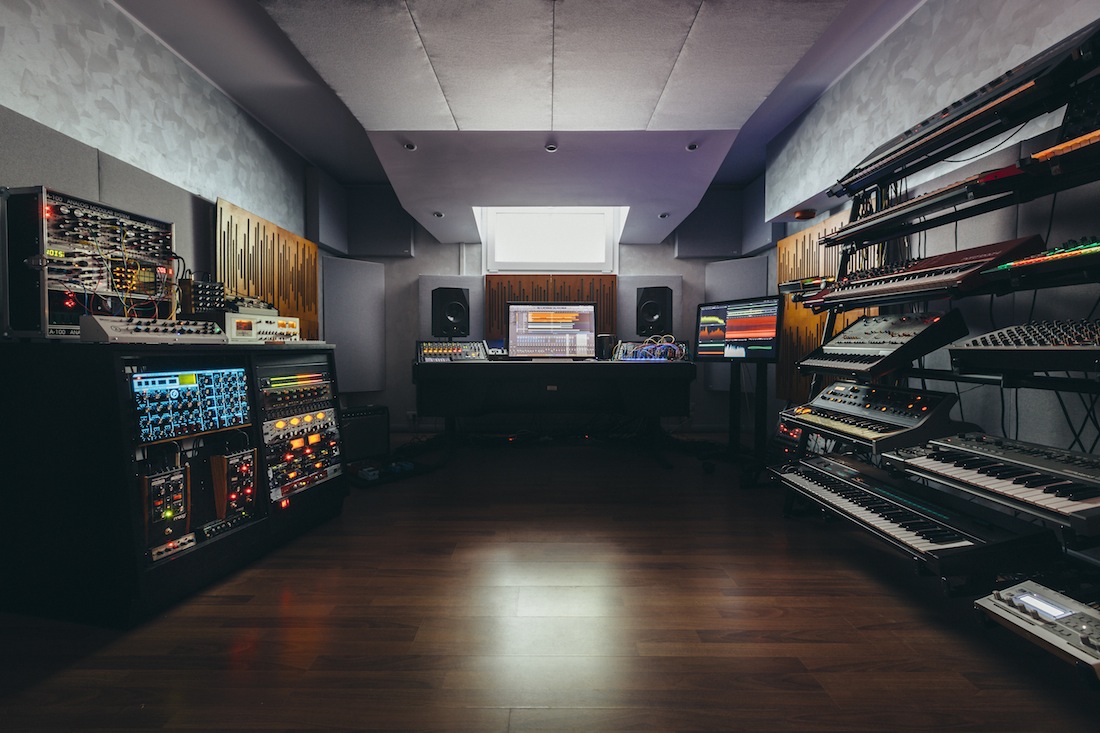
What is your current studio like? Feriero: We’ve been working on this studio for two years; Italian workers, it took ages. We’re finally moved in and now we have a proper control room for the first time, a mastering-grade listening room. Before we were working in bedrooms, living rooms. First off it’s made us a lot more confident; we know what we’re hearing is exactly what the sound is. It’s definitely been a paradigm shift. Studio-wise we have all sorts of things.
Do you have an integral CW/A piece of gear? Feriero: We get that a lot and it’s always hard to answer. For the album, the main thing was to try and use everything we had.
Leali: We wanted to use stuff differently rather than the way it should be used.
Feriero: For example, for my album [Adamant on Vakant] I was sticking to what worked. But for this album we were trying everything: Sampling and then just using synths we’d never used; we got into modular set ups, which we’d never done before. It really opened up to a lot of ideas.
When did you start working on Words Unspoken, Acts Undone? It sounds like it’s been in the making ever since CW/A was born. Feriero: When we were working on Conducting The Method we made some things that didn’t fit. Once we had two or three of these, we decided to start working on the album on the side, without any rush. Then we took some older material from another project that never got released. That left us with six tracks that we really liked. I can’t remember which six tracks we eventually put on the album, but that’s where we started.
We wanted it to have a bigger statement to differentiate it from our previous work.The EPs hint at that, but it’s not that much material to work with. An album has more weight. So once we had enough tracks we decided to make an album to have more freedom, to be able to play more freely live. Once the album is out people will know what to expect when they come to a show.
“We get a lot of people who are like, ‘Wow, you guys are making this?’ And we get the occasional guy who comes up and says, “I prefer what you guys were doing solo—this is too extreme.’”
Have you encountered backlash at CW/A shows then, on account of your solo histories? Feriero: We get a lot of people who are like, “Wow, you guys are making this?” And we get the occasional guy who comes up and says, “I prefer what you guys were doing solo—this is too extreme.” I’m confident, even if our agent worries about us when he hears someone say they prefer our old stuff. We’re confident when clubs like Fabric and Concrete are investing in us. That means we’re doing something right. To be honest I’d rather have the interest of people who are into the music and really passionate about it.
What’s the biggest change you’ve noticed about performing now as CW/A? Feriero: I always felt like people were listening, waiting for my mistakes before. I remember when I was playing shows in my first year, everyone wanted to come see me live—not because they were interested in what I was playing, they just wanted to see me fuck up or something. We have a lot more freedom the way we play now. I think it’s a lot more satisfying. If there are less people in the room I couldn’t care less.
Leali: It’s not a usual live for the music we’re doing, so people are interested in that rather than coming to see how pristine or close to the EPs the show gets. We’re playing this stuff live and there’s a lot of improvisation going on. We can play a two hour live now but we like to keep it to an hour, hour and a half because…
Feriero: We’re exhausted by the end.
Leali: I played Panorama Bar for eight hours and I was more exhausted after a CW/A live set because from the first to the last you’re busy every second.
How do you feel about the way Words Unspoken, Acts Undone has turned out? Leali: I am personally quite happy. I’m happy about the end result, but I am also happy that I did it with Thomas. It’s not something I might have gone through by myself. I’m happy how it came out independently of how it’s going to be received, because I really don’t think everybody’s going to like it. The point of this project was to showcase that we can make other stuff. And this is more.…
Feriero: More natural.
Leali: We’re not trying to please a record label owner, or manager, or booker.
Feriero: It was really inspiring and a completely different experience for me. We’re happy and proud of what we did because it’s what we wanted. And I’m confident it will do well.
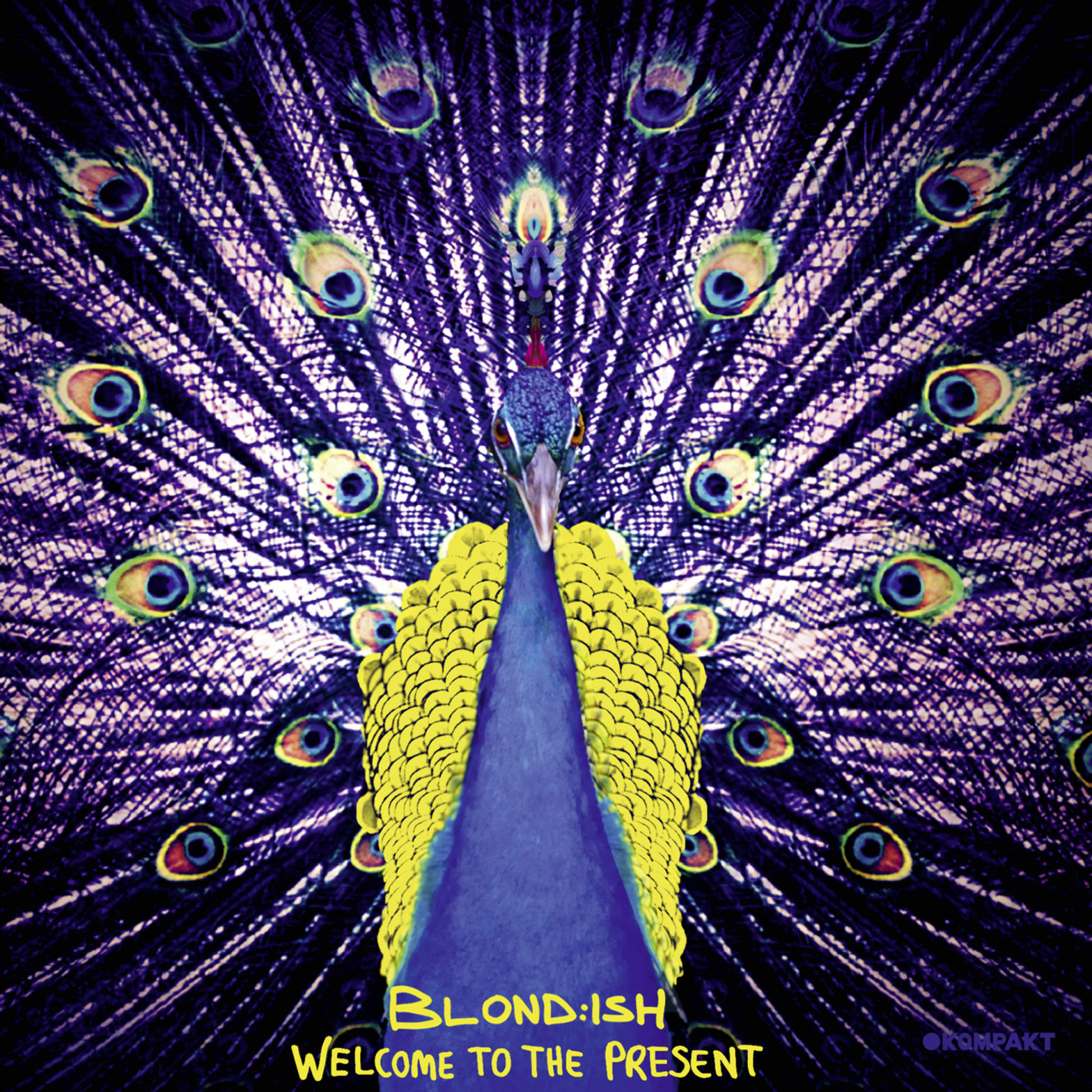
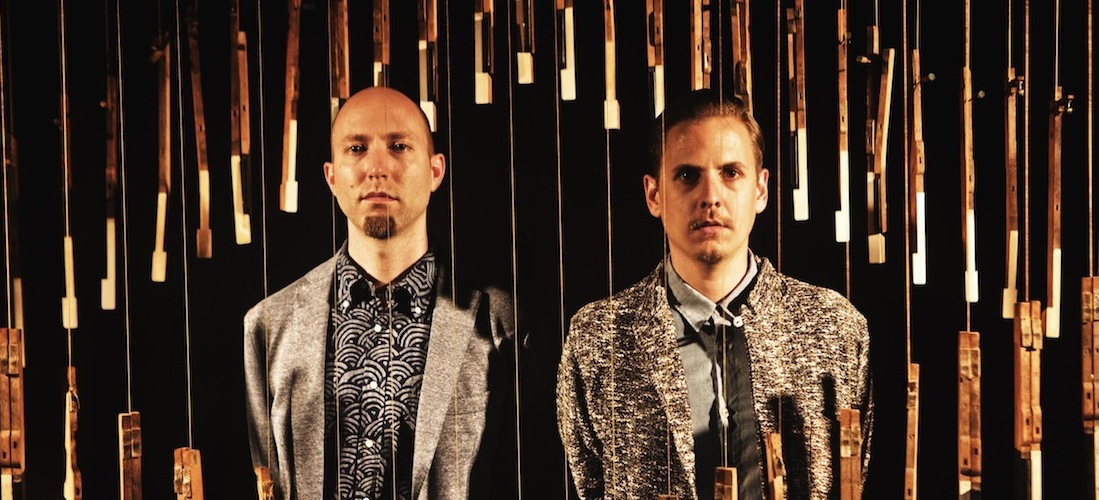
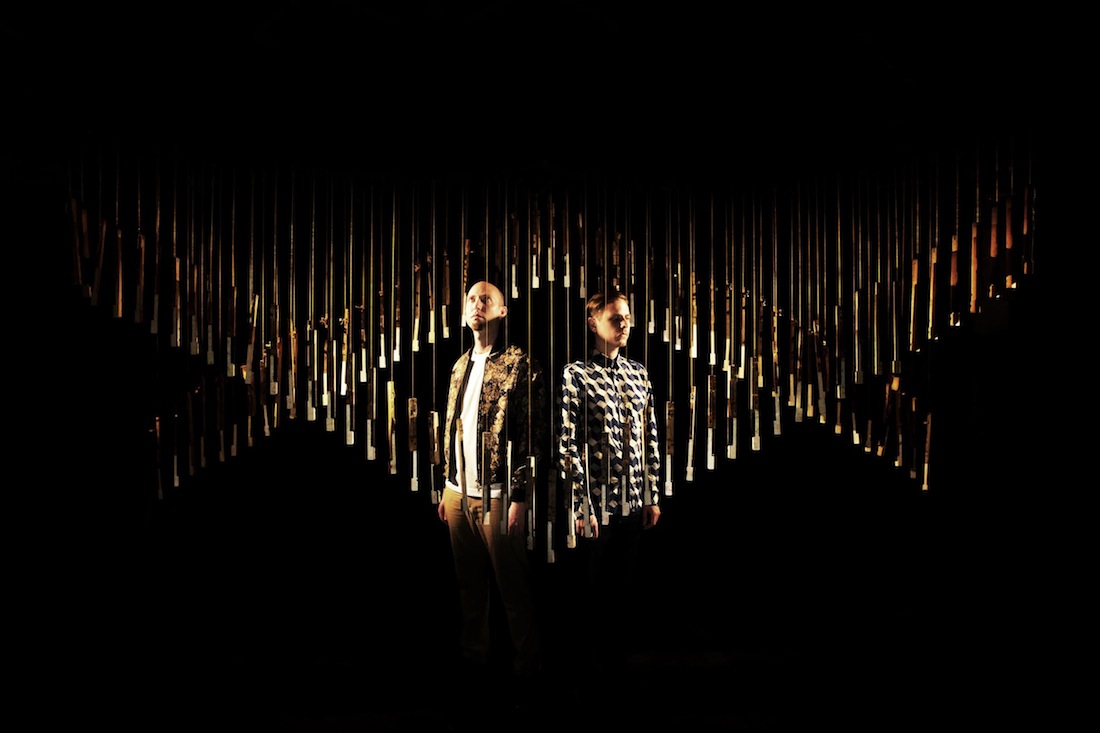
After having established their rule over the 12-inch format and turning your run-of-the-mill dance EP into a miniature opera in its own right, Blond:ish were bound to come up with a debut full-length at some point—but even so, Welcome to the Present drops as a major surprise.
Flexing the psychedelic and spiritual influences that already informed their Lovers in Limbo, Inward Visions and Wunderkammer EPs, this new material presents itself not so much as the collection of DJ-ready peak-time bangers that some would’ve expected, but as what we admiringly would call a total trip. It sees the duo embark on a universal journey, departing from the club comfort zone and exploring the deeper shades of world electronica from within. Here, each track is part of a bigger story, accomplishing its role in a vibrant mix of electronic moods, field recordings, traditional instruments and polyglot vocals.
To mark the its release today, Welcome to the Present can be streamed in full below.
Rhythmic UK producer and Red Bull Music Academy graduate Andy Donnelly (a.k.a. Kloke) has returned from the shimmering depths of his 2014 breakout EP Sea Levels, to deliver a brand new 12” on the New York-based imprint, Styles Upon Styles. P.H.O.N.E.is the name of Kloke‘s latest offering on S.U.S., and the release comes with three tracks that includes two original productions and a b-side remix of the title track by Hieroglyphic Being.
Available for today’s download on XLR8R is an unreleased remix of the track “Rhythm 1” by a mysterious producer named Malcolm. Other than his ties to the label, little is known of Malcolm, which only adds to the cryptic air that surrounds the track. The track begins with an ominous swell of synth lines that are followed up by a mix of tribal percussion and ethereal groans found throughout the entirety of track. A ritualistic foundation is quickly formed by the clicks and clacks of the indigenous sounds before coming together and speeding up to a tempo that if played in the right mind-state, could likely conjure up a spirit from the past.
Kloke’s P.H.O.N.E. EP is available right now on limited 12″ vinyl and various digital formats over on the Style Upon Styles Bandcamp page.
“We’re constantly trying to make something as popular as Taylor Swift, and we feel we really may have nailed it with this one,” says Will Horrocks, one half of London electronic-music polymaths LV. “It’s all a cynical ploy; it’s just very badly executed,” adds his production partner Simon Williams. Their delivery may be dry, but LV’s music is anything but; the pair might pepper their conversation with humorous asides, their sound is serious. Luckily, the group’s detailed, vivid beats are nothing like the aforementioned pop singer (apologies all you Taylor Swift fans out there). Instead, they’ve assiduously assembled a body of work that would make most devotees of left-field dance stop in their tracks.
Whether it’s the fidgety two-step funk of their debut album Routes for trusted U.K. imprint Keysound—made with spoken word poet and MC Josh Idehen—or Sebenza for Hyperdub, which saw them dump pixelated splashes of bright sonic pigments on kwaito house and collaborate with South African rappers like Okmalumkoolkat, theirs has been the path less trodden. Their latest, this time for BBC Radio 6 Music tastemaker and renowned globetrotter Gilles Peterson’s Brownswood label, is called Ancient Mechanisms—and it’s another departure. This time around, they’ve hooked up with respected Armenian pianist Tigran Hamasyan, a successful jazz musician who appears on five of the album’s 14 tracks.
If that sounds like they’ve self-consciously diverted down the jazz aisle, the truth is more nuanced; “Hammers and Roses,” for instance finds lush melodic piano passages doing battle with bumping garage beats and psychedelic warps of backwards synth, while “Jump and Reach” a portly, frenzied slab of broken house with laser bleeps serrating distorted, grooving jazz keys. Williams and Horrocks themselves are certainly wary of the jazz tag, though they use their sense of humor to disarm any barbs. “Neither of us go in for listening to one particular kind of music,” Williams states. “We like to listen to really banging club tunes, and also tunes that are out-there jazz odysseys. Depending on what kind of mood you’re in.”
“You mean out-there jazz odysseys aren’t banging club tunes?” Horrocks deadpans. “Well yeah, they can be,” Williams ponders. “You’re so proscribed,” the former jokes, before getting serious again. “There’s a lot of electronic music in general that, once you starting bringing a jazzy element into it, it can be a bit on the flaccid side. There’s a lot of music I enjoy that gets described as jazzy, but I always thought it was a bit of a poisoned chalice, as it tends to mean a bit vapid. From that point of view we wanted to go with somebody who shared our understanding of what jazz music is. And I think Gilles certainly has that in terms of his attitude towards it, which is kind of more punky than it is smooth jazz.”
It’s an experimental edge that Hamasyan brings to the project, though his virtuosity is scattered economically over Ancient Mechanisms, rather than being overbearing. He linked with LV after the three were brought together to do a live session for Peterson’s radio show. It worked; the decision was made to extend the collaboration, and Brownswood was a natural home for the record. With all of the musicians having a broad-minded approach, they found their contributions gelled well. “One of the reasons [Hamasyan’s] so successful in the jazz world is that he doesn’t sound like a traditional jazz pianist,” Horrocks believes. “He’s got elements of his playing that come from the Armenian angle, although I would hesitate to fully ascribe him to that, because he’s more than the sum of his cultural heritage. But that’s one of the reasons for his phenomenal success, that he’s quite unusual in how he builds melodies and chord structures.
“If you put some of his playing through a guitar-amp emulator,” Horrocks continues, “it sounds like serious rocky stuff as well. He’s definitely into some pretty out-there guitar-based stuff, so a lot of the arpeggios do owe a little bit…I guess in the way that super-technical rock music owes a bit to classical playing, he’s got that common root.”
Finding a new collaborator wasn’t the only change in the recording of the duo’s latest record. Leaving London behind, and departing for Belgium and remote Morocco, they became fascinated by the sound of the piano and obsessed over its multiple resonating frequencies. Heading to a piano museum in the town of Ruiselede in Flanders to record the quirks of its extraordinary collection yielded spectacular results—and also the album’s title.
Getting into the nature of the sound and the idea of the piano as a machine, they were struck by the evergreen quality of this most enduring device. “When we first got there, we went round with Tigran trying out all the different pianos,” Williams remembers. “They had a ludicrous number of incredible 20th-century, beautiful pianos from all different places—Germany, France. The difference in the sound from one to the other was pretty striking, and it took us a little while to settle on which had the best sound for what we wanted to do. Even in a case like that when you’ve got 20, 30 pianos…there’s a huge amount of variation, and it’s interesting to get into and to focus in on specific sounds for pianos and what you like about them and don’t like about them, and then recreate them in the recording process.”
“When we’ve recorded pianos in previous situations, we’ve normally had somebody to do it for us,” Horrocks says. “But for this one we took a load of mikes, a laptop and a couple of soundcards out to this place. We had to make it up a bit as we went along. We’d done a reasonable amount of research and we have got experience recording stuff, but through having to physically clamber around inside pianos, you realize that the piano sound you normally think is an archetypal piano sound is just one element of how it comes together.”
“No two pianos are the same, and crawling around inside of them and miking them up with contact mikes, you do get a rich universe of noise which is much denser and more interesting than just the Logic sample piano.”
They discovered that sound quality wasn’t necessarily the most appealing aspect of a piano either—but instead it could be the environment in which it sits, and even its individual character or life. “We started to appreciate the sound of different sorts of pianos and how they differ from one another,” Horrocks says. “And also things that are not classically great-sounding pianos started to appeal to us as well. There was a piano in Morocco in a place where we were recording, it was quite a specific-sounding piano because of the room it was in, the place it was in, the life it had lived up to that point. You start to see how each of these things are their own. No two pianos are the same, and crawling around inside of them and miking them up with contact mikes, you do get a rich universe of noise which is much denser and more interesting than just the Logic sample piano.”
This travel yielded other sounds beyond the musical too, as Horrocks and Williams became intent on capturing the aural quality of their immediate surroundings. They wandered the streets of Brussels looking for percussive and background noises they could use as found sounds to add a backdrop to Ancient Mechanisms—something which imparts no end of atmosphere. The shivery, elegiac feel of “Detent,” for instance, with its background rustle of street sounds, encourages the listener to pull their coat closer. “You just do things differently when you’re out of that studio environment,” Horrocks says. “There’s a lot of sounds on there that we recorded, found-sound style, walking around hitting things around Brussels. Those sounds, you’re not gonna get ’em if you sit in your studio the whole time. As much as anything else it’s freshening things up, and exposing yourself to different environments naturally creates a different sound.”
It’s LV’s restless curiosity that drives them to something new each time out. Being into all kinds of music, they’ve no desire to repeat themselves, and aren’t bound by a typical club DJ’s need to have ammunition for their set constructed from the same materials over and over. “I don’t want to be that guy who says ‘I never make the same record twice’,” Horrocks says carefully. “I try not to, but you do occasionally make similar sorts of music. But we’re definitely not wanting to bore ourselves by feeling like we’re just doing the same thing over and over again. Whether that is imposing a structural rule of how you’re going to make something, or finding new collaborators, even moving your studio from one physical location to another, it shakes things up a bit. Not that making music is boring, but life is more interesting if you do different things.
“Also I know that a lot of people who do make the same music over and over are driven by a need to just have fodder for DJ sets. And because we get booked in a variety of different sorts of environments and places to DJ, we get away with playing less of a constricted range, which feeds into being able to make whatever sort of thing we really want. Instead of thinking, ‘Shit, I’ve got to make everything at 125 because that’s what I play’.”
Four albums deep, LV has already achieved a hell of a lot—and the next step is a more ambitious one into the live domain, attempting to recreate Ancient Mechanisms live. And after that? Horrocks has a plan, even if it’s not to be entirely believed. “On a very basic level we’ve never been No.1 in the album charts for eight solid weeks, so we keep having to do something different in the vain hope that the next album will be the one that catapults us into massive financial success.”