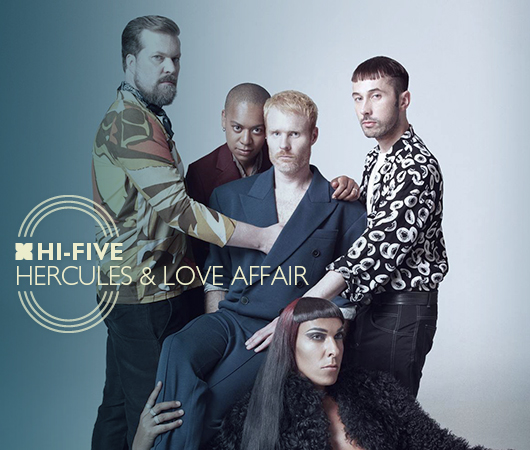
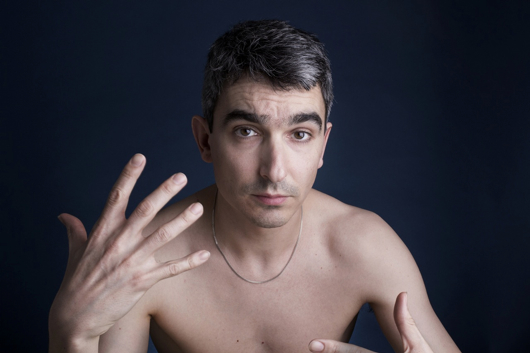
Hercules & Love Affair‘s self-titled debut was essentially declared a contemporary classic upon its arrival in 2008, and the group’s subsequent albums, Blue Songs and the freshly released The Feast of the Broken Heart, have entrenched the ever-evolving outfit as one of the last true bastions of New York’s resolutely eclectic ’90s club scene. From the beginning, Hercules & Love Affair has flown the flag for rave-pop and disco-tinged house, but the latest album finds the group exploring what founder Andy Butler describes as “fiery, rough, tough, and ragged” sounds, adding, “I didn’t want polite, I wanted aggressive.” Given that, his contribution to our Hi-Five series is far less surprising than one might assume. Instead of disco darlings and dancefloor divas, Butler has elected to mine some darker musical territory, and has come up with a rather idiosyncratic selection of industrial/new beat live-performance clips from the depths of YouTube.
Front 242 “Controversy Between”
This track was on the original tracklist for my !K7 compilation that came out in 2012, a more melodic version of the Front 242 that came later. Geography [Front 242’s debut album] was a like a tougher Kraftwerk at time. I have a lot of respect for them.
Meat Beat Manifesto “Live in Nighttown 1989”
Meat Beat Manifesto was a huge influence on me. My first piece of vinyl that I was playing out was Helter Skelter, with a song I did not know the significance of on the b-side called “Radio Babylon.” On the front cover of the 12″ was a picture of Jack [Dangers] and Marcus, the group’s dancer, who is interviewed in this clip. This collaboration of modern dance/ballet and dance music has inspired me to this day, most recently this year with the [Hercules & Love Affair] video for “I Tried to Talk to You.”
Liaisons Dangereuses “Los Niños del Parque”
The first time I heard this track was in a DJ set from Mark Farina I had recorded on a cassette tape from 1994 or something. That was my first clue that it was a Chi-town classic. Little did I know at the time that Mark Farina originally started as an industrial DJ in Chicago.
Psychic TV “Black”
Genesis P-Orridge as a musical and artistic figure has definitely had a big impact on me personally as an artist. My first exposure to Genesis’ ethos came through participants in a short-lived [collective] called TOPY [Thee Temple ov Psychick Youth], who were the most extreme and rebellious of the “club kids” I knew. Subversion was the way. This clip is a highly danceable Psychic TV moment, along the lines of the Sugardog productions at the time, which I was a fan of as a teenager.
Consolidated “America Number One”
Of course, I had to include my friend and longtime bandmate/co-producer Mark Pistel’s project Consolidated in this list. They were seriously political, and at a time when I was just coming out of the closet, seeing their music videos on MTV talking about equality and tolerance was really what I needed. Their scathing criticisms of America and late-stage capitalism kind of dictated my political leanings for life. Their sampling techniques were major too.
“Front End” is one of 10 tracks which will appear on System Fork, the upcoming album from Application, a new project launched by Martin and Richard Dust of UK outfit The Black Dog. Eschewing the usual production process of studio experimentation, for Application’s tracks, the two artists have chosen to methodically plan out every detail of its productions before ever beginning to put them together. In the case of “Front End,” the resulting composition is a precise electronic excursion, one where hiss-laden hats and snappy snares give an industrial edge to the tune’s sci-fi synth work and steady low-end pulse. The full System Fork LP will debut the Application project when it lands on June 30 via the Dust Science outpost.
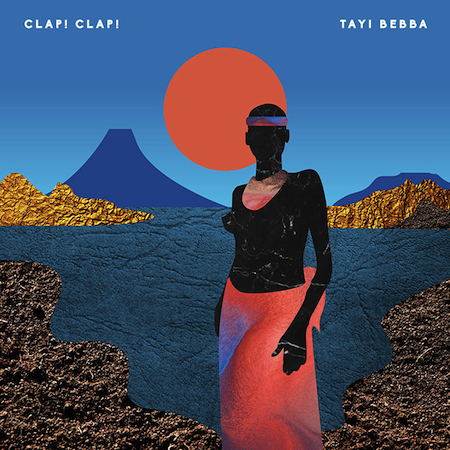
Clap! Clap!, the project of Cristiano Crisci (a.k.a. Digi G’Alessio), has announced his return to Bristol-based imprint Black Acre with his debut album Tayi Bebba, and shared a stream of LP cut “The Rainstick Fable.” According to the press release, Tayi Bebba was conceptualized as a tour of an imagined island, with each track representing a place, event, or ritual. The Italian producer mixes field recordings and found sound with precise drum programming, drawing from footwork and hip-hop as well as samples from across the African continent. The LP, which comes complete with an island map and mythology behind each track, follows from February’s Tambacounda EP, and is slated for official release on September 8. In the meantime, “The Rainstick Fable” can be streamed below, where a tracklist has also been posted.
01) The Holy Cave 02) Ashiko 03) The Rainstick Fable 04) Kwasi The Sorcerer 05) Black Smokes, Bad Signs 06) Conqueror (action / assault / conquest) 07) Conqueror (consequences / memories) 08) Conqueror (remorse / withdrawn) 09) Burbuka 10) Sahkii (Xirhuu) 11) Sahkii’s Elevation feat. DJ Khalab 12) Kwasi’s Storm (kyanumj) (tape dub) 13) Universal Modulator (kujhmak) 14) Sahkii’s Knowledge 15) Universal Modulator (ujmubuam) 16) Sailing In The Seas of Wood 17) Kuj Yato
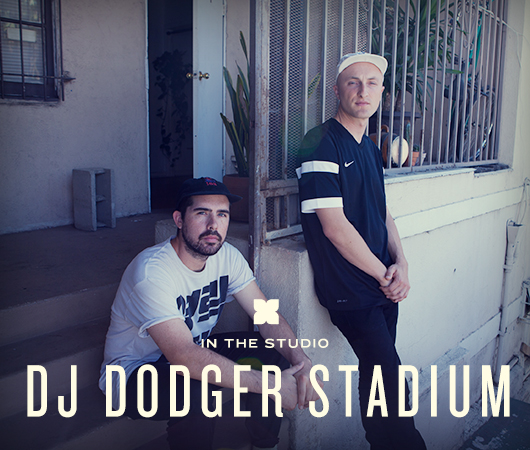
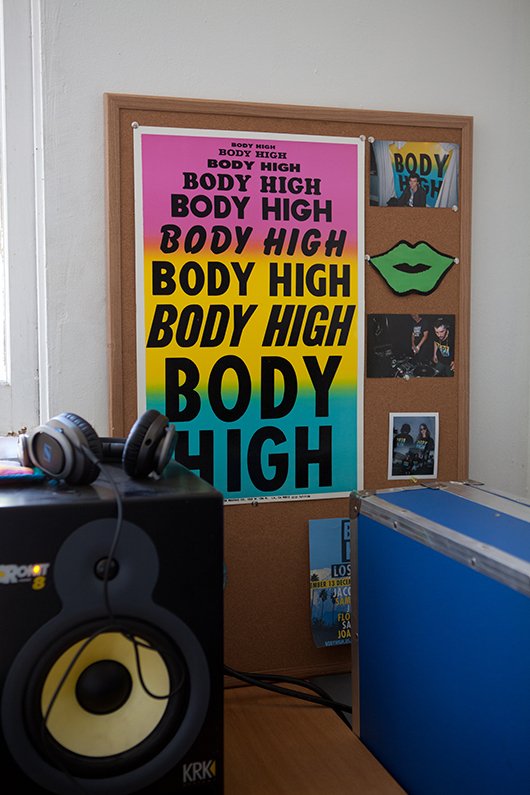
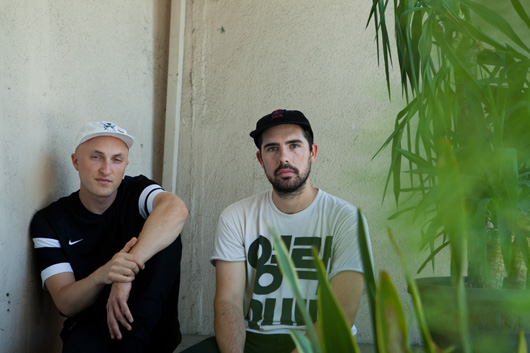
“Lately I’ve been singing love songs by myself” echoes the vocal loop on “Love Songs,” the melancholy lead single from DJ Dodger Stadium’s debut album, Friend of Mine. Fueled by heartbreak and a strong love/hate relationship with LA, the house/techno duo consisting of Jerome LOL and Samo Sound Boy (a.k.a. Jerome Potter and Sam Griesemer) has channeled these feelings into 10 carefully ordered dancefloor tracks. The two kicked off their Body High record label with a DJ Dodger Stadium EP back in 2011, but during the years that have followed, Jerome LOL and Samo Sound Boy have largely focused on polishing their label’s sound and aesthetic while maintaining prolific solo careers.
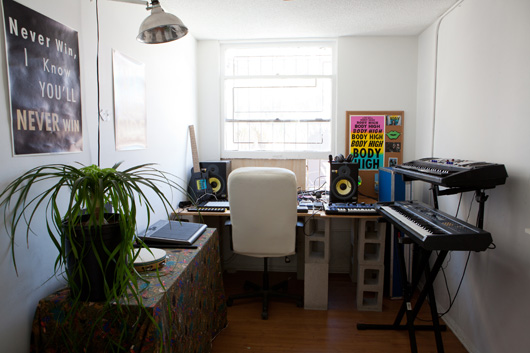
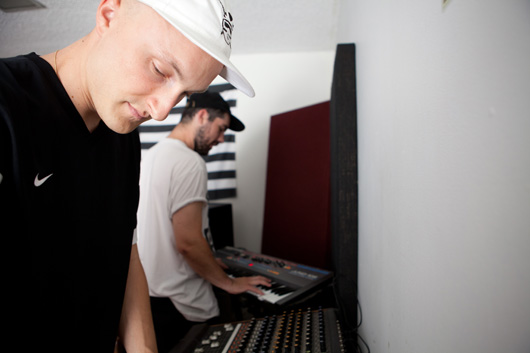
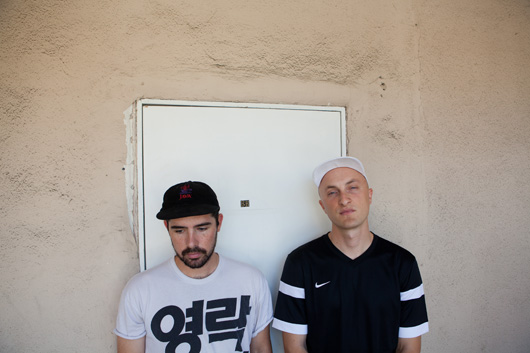
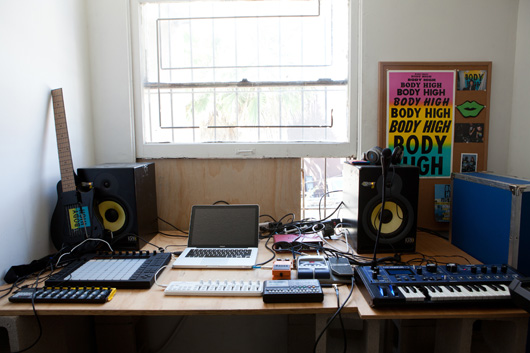
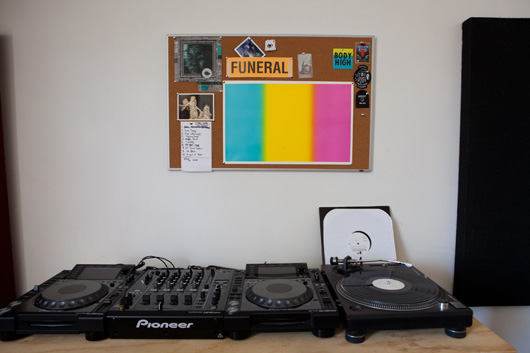
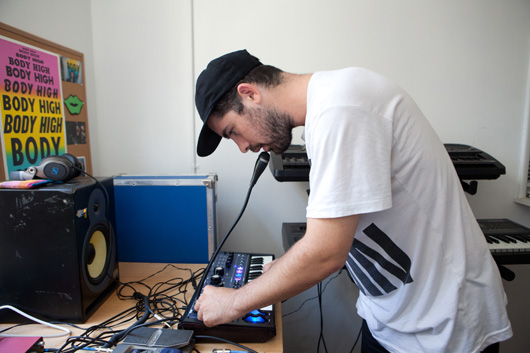
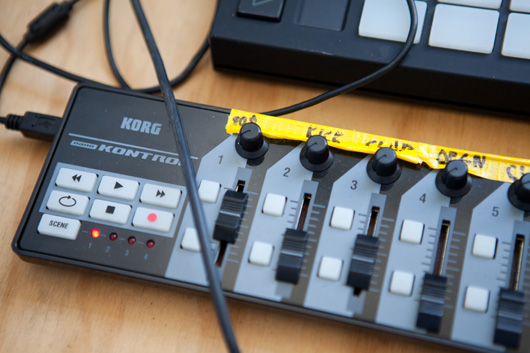
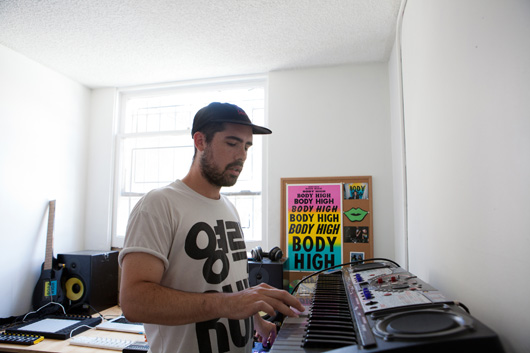
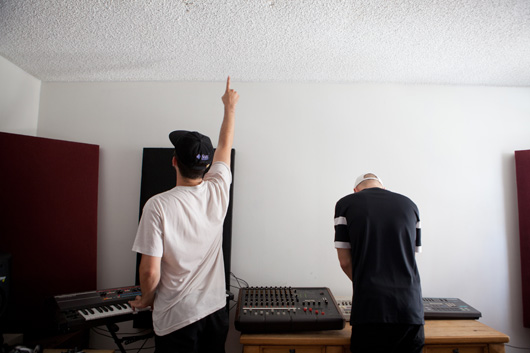
However, the return of DJ Dodger Stadium was always in the cards, and now, the duo is back with Friend of Mine, which officially drops on July 8. The record marks the first time that either Potter or Griesemer has been involved in a full-length, and it’s also the first official album in the Body High catalog. As such, Friend of Mine is effectively the label’s biggest project to date, and its creation wouldn’t have been possible without Body High’s headquarters in the middle of Los Angeles’ landmark MacArthur Park neighborhood. The two producers converted an old doctor’s office into their studio, which also features a separate room for their in-house graphic designer. This is where Friend of Mine was created, along with almost every previous Body High release from both Potter and Griesemer. Earlier this month, we were able to catch up with the men behind DJ Dodger Stadium for a walk through their studio, along with a discussion covering everything from their growing obsession with all things analog to the creative process behind their new LP.
How long have you guys been using this space? Does the entire Body High crew share this space or is it mainly just the two of you? Sam Griesemer: We’ve been using it for about two years now and yeah, the entire crew shares it. The main people who are usually here are Jerome and I, along with Max [Martin], who does all our design stuff. Joaquin [Bartra], our label manager, is here a lot too. A lot of people come in and out of here too, like Floyd Campbell comes here often to work on music and when friends are in town, they’ll come by and check it out.
Is this your first studio space outside of your own homes? What were your first set-ups like when you first moved into this space? SG: Yeah, this is the first proper studio for both Jerome and I outside of our apartments. Jerome Potter: Once you have a space outside of your own apartment, you kind of get in the habit of buying more and more gear to make music with—you’re a lot less limited. When I first got my studio room, it was only my laptop and monitors, which felt so bare and empty. Having a space to call my own really made me try new things, build an ideal set-up and develop an identity for the studio in a sense.
Do you guys feel that having a studio separate from your own home affects the creative process of your music? SG: Oh yeah, so much. I think this place in particular is special because it’s walking distance from our homes. Being able to walk here is the best thing ever and it’s always really interesting to have that 15 minutes just out on the street to take in the neighborhood and see and hear what’s going on—that short period of time spent between home and the studio is very influential. This part of town is also unique and this place isn’t actually a music studio—it used to be a doctor’s office and we converted it. Next door to us is a church and a bunch of abandoned buildings; it’s pretty weird, but definitely provides a certain energy. JP: When you’re producing from your bedroom, you could be in your boxers while also watching TV, so when you separate the studio from that environment, you treat it more like a job and you’re more deliberate with what you do. You make the most of your time spent in the studio when you don’t also live in the same place. I’m focused when I’m here and so is Sam; we get to hear what each other is working on and we’re in constant communication.
Did you guys have any criteria for an ideal space when you were initially searching for a studio, or were you open to whatever? You could totally live in this spot, it feels like a home… SG: Location and price were the first things in mind. Although when I was handed the keys to the place from the owner, he told me, “There are two things you can’t do here. Sleep here or cook meth!” [laughs]
Talk a bit about the sound treatment you had to do to get this place dialed in. SG: Well, we got these panels installed throughout the studio to improve how everything sounds. Our friend Marc [Glasser] (a.k.a. Dubbel Dutch) had a similar thing done to his place and was spending some time in LA, so he helped us build the panels and figure out where exactly they needed to be. It really helped.
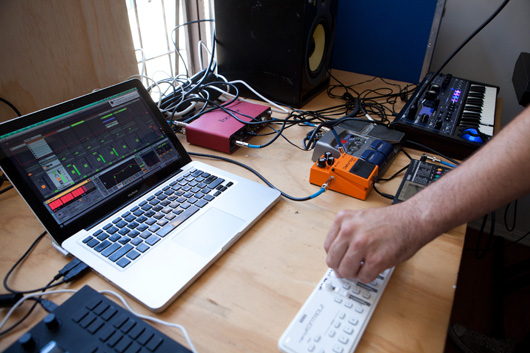
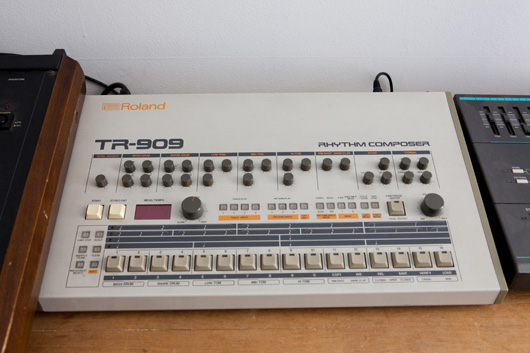
What DAWs are you working with individually and together as DJ Dodger Stadium? SG: I’m a Logic user. JP: I’ve been using Ableton since 2007 and the new version is really great. I use the Push software a lot now, which I think is amazing. It’s changed my entire workflow. We used Push a lot together on this Dodger Stadium LP, especially for programming drums with our 909. Push was a big sequencing tool after recording on this record.
If the two of you use different software for your solo work, how do you combine when working together for DJ Dodger Stadium? JP: For this album, we ran everything into one computer using Ableton. SG: A lot of times, we would record stuff through Logic and then bounce the tracks into Ableton to assemble them. JP: We used bits and pieces of both programs on almost every song. But for the most part, we were recording hardware into the programs anyway, using our synths and other analog pieces we’ve acquired over time.
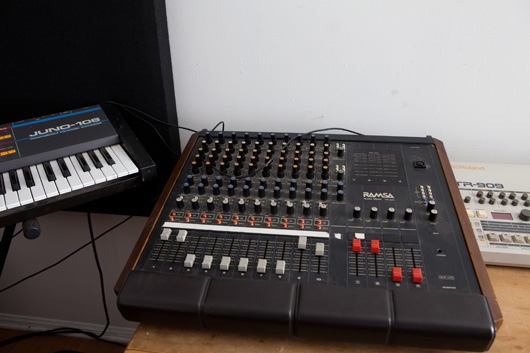
And all of your outboard gear is being run through this vintage mixer, which seems to be the centerpiece of the studio. SG: Yeah, our friend’s dad found it at a garage sale and gave it to me, and I didn’t know what to do with it for a long time. But I think getting this mixer played a huge role in making me more interested in buying gear and figuring out more ways to make use of it. We run everything through it. JP: It sounds amazing, you can really push stuff with it—the EQs are awesome. It gives everything some extra warmth. SG: With just this mixer and the 909, you can really go wild and come up with some insane sounds. Everything started to make a lot more sense once this mixer enabled us to start adding more gear, it really helped make the production process much more efficient and fun. It feels more natural this way and Jerome knows I’m not that tight with computers. [laughs]
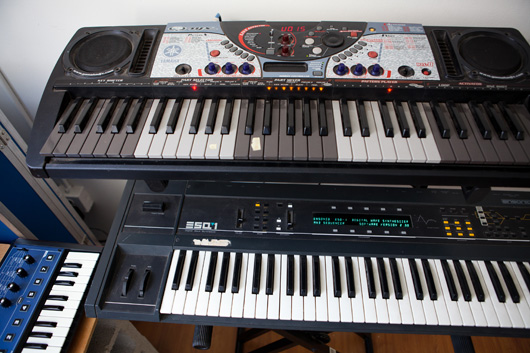
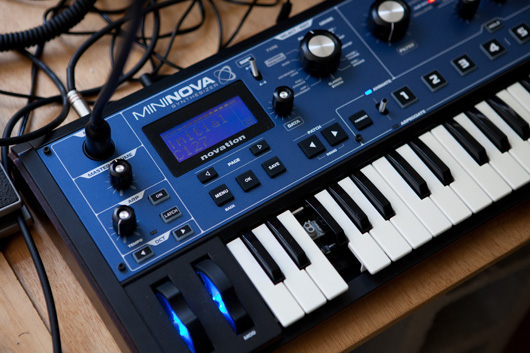
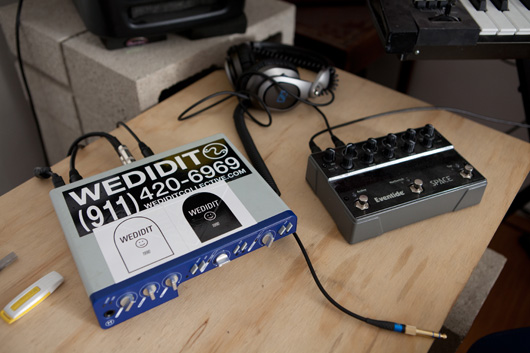
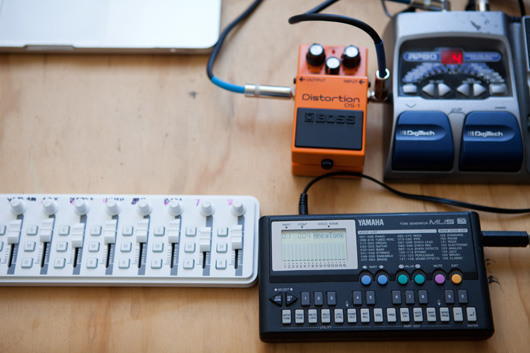
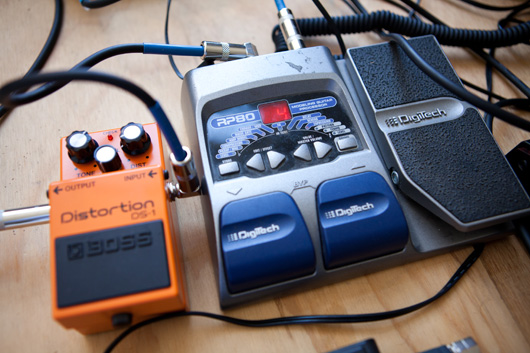
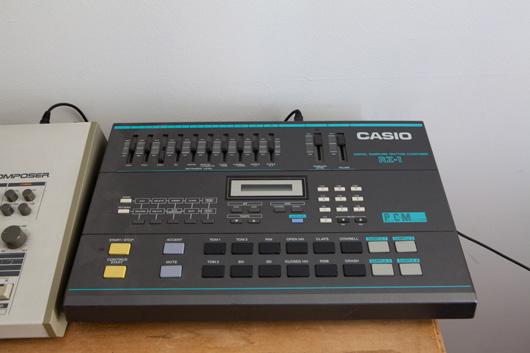
It sounds like using as much gear as possible without relying too hard on two separate DAWs made it easier to work together on the record. JP: Exactly, we each did a lot of different things on this record too. For instance, I have this old Yamaha synth that I’ve had forever, and it’s not very good by an audio head’s standards, but I don’t really believe in that—I think you can work with anything. We made a lot of cool sounds with that. SG: Definitely. It’s funny too because three things from this studio all came from really amazing Craigslist come ups. JP: There was one dude in the Valley that hooked us up with the Juno, the DX7, and the ESQ. SG: And we got the 909 from this older guy who basically had it sitting around collecting dust. He used to make weird, sci-fi-sounding beats and cut us a really crazy deal on it—super cheap. It worked out well for us. And the Casio RZ-1 is actually being lent to us by our friend Harvard Bass… it’s actually been sitting here for a while, but he can have it back whenever he wants! Our Eventide box is basically the only thing we actually bought new, which we purchased at Guitar Center. That thing is so powerful and totally crucial for our productions.
On the new record, did you play and record the synths loosely by hand, or were they hooked up through MIDI? JP: We did both. At one point, we actually had the Juno hooked up through MIDI and used Ableton Push, and Sam was tweaking the knobs while I was playing the keys, which was a cool mix of everything. And sometimes we recorded straight-up audio from the synths too. SG: Even with some of the more complex synth parts where we were using MIDI, we still ended up recording it back into Live and adjusted all the sounds with the gear. It was a pretty cool way to collaborate that we couldn’t have done alone. JP: Yeah, we didn’t even know some of these methods were even possible until we sat down together and figured it out—you can’t just play the keys and then go back and tweak everything like we did live together. It was really cool.
Compared to your solo work, did any particular pieces of the studio get more attention than others on the DJ Dodger Stadium record? SG: I’d say so. The 909 definitely got the most use though; it’s the backbone of almost every song on the record. JP: Apart from weird loops and drum sounds from the Yamaha, the 909 handled the main drums on every song. When you work alone, you spend a lot of time deciding if something’s right, but together, the process was very quick and natural in regards to picking out sounds. It seemed best to keep it simple.
Were you guys together for the entire duration of writing and recording? JP: Yeah, there weren’t any moments where we’d take tracks home to work on them alone. We literally did everything next to each other at the same time. It was all done entirely in this studio.
You never had sketches from home that you’d bring to the studio to work on together? JP: Not produced sketches, just ideas we thought of that we’d discuss in the studio before making music. Of course we would think about the album on our own time, but we never actually made anything alone.
Would you say that the album tracks were conceptualized prior to writing and recording, or are a lot of these a result of spontaneous jamming and random ideas? JP: Once we figured out the sound and vibe of the album, we kind of knew which direction to take this. SG: We did “Love Songs” first, and I think that set the tone and feel for the rest of the record. It came naturally as a surprise, but once we had that track done, it became clear what we wanted out of this album. Another thing that’s kind of interesting is that there are 10 tracks on the album and we made 11, so there was only one song that we didn’t feel was a right fit. There wasn’t any second-guessing and we didn’t make like 60 demos or anything—we knew what we wanted, but that’s not to say it was easy or super quick. It was directed for sure.
You guys were going for a cohesive record that flows like an album, rather than a compilation of random tracks. JP: Right. It’s definitely a story and what I like most about the album is that we’ve created our own space. It’s a thing of its own and has a specific soundtrack to the whole vibe we envisioned. I’m happy we accomplished that. SG: We knew after our first EP that we wanted to do an album next, but we needed our own label to do it, since we wanted it to be entirely our own world. This record couldn’t fit anywhere else, so we spent the last three years building our aesthetic and the team of people we work with. We couldn’t have done this album without laying the groundwork for the label and the studio. We felt clear and focused after knowing this record would be for Body High. JP: We weren’t making an album for anyone else but ourselves.
Timing was everything in this case. JP: Yeah, we had to wait for the right time, not only for the label, but also for our own careers and personal lives too. People probably thought the first DJ Dodger Stadium EP was a one-off thing, but we knew it was going to be something. It just wasn’t like “in 2014 we’re making an album” was a plan we set. I think the beauty of the whole project is how nothing felt forced or overly articulated.
Did you guys make one track at a time, or were there several in the works simultaneously? JP: There were a lot in the works at the same time. It started with “Love Songs,” and then we wrote three more sequentially based on that first track. We started a bunch of tracks after that and didn’t finish them until later because we had all this energy and knew we had to keep moving forward.
You guys have been working together for years at this point. Would you say that you each have set roles in the studio? JP: Both of us always know what we want our sound to be without even talking about it. It’s not really a matter of defined roles; it’s more about open discussion and evaluating what each of us wants on a record. That’s why one song didn’t make the album, because we felt there wasn’t a point in pushing something that wasn’t working right away. We were also working on our solo stuff during the time of creating the DJ Dodger Stadium album, so we also had that release to do other things. SG: I think once a dynamic or flow is established between two people in the studio, everything kind of happens on its own and you don’t need to make any rules or stick to certain roles. When things get moving and you’re feeding off each other’s energy, it makes you more confident. JP: Creating an entire album, especially one with an ambitious plot like ours, is a tough thing to undertake alone. I would be second-guessing myself so much if we didn’t do it together.
Since you guys are using a lot of hardware, would you say that the unpredictability of the gear led to some surprises that made it onto the album? SG: Definitely! There are a lot of subtleties, tons of little textures and synth lines that came from jamming and figuring out various pieces of gear. The inclusion of gear gave everything that loose, natural feel that we wanted, and we’d often be surprised by the results in a positive way. And it would be hard to get the same results in a studio where we’d have to pay $400 per hour because we’d be against the clock trying to force it out.
Did a few jam sessions during the learning curve inspire new song ideas? SG: I think that’s just the beauty of using gear. So many things just happen when you don’t really know what you’re doing yet, and so many cool things come from mistakes that I guess aren’t really always mistakes. You just turn it on, start recording, and let it go. JP: Yeah, and then find the best parts later. Learning on the fly is the way to go.
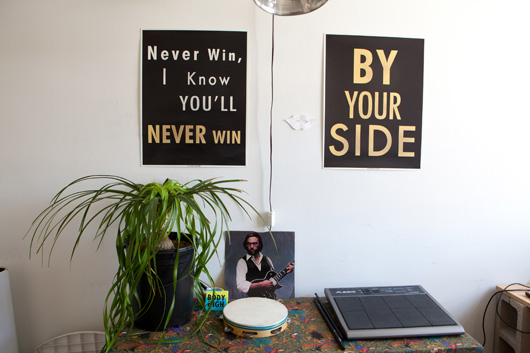
Did any tracks in particular off the album come up as a jam session surprise? SG: Well, like we said, we did 10 tracks but there was one we weren’t pleased with, but we still wanted a total of 10. So we did one more track in the end, which is called “By Your Side.” When we were starting that one, we felt exhausted from writing… JP: We were already doing the mixdowns of other tracks at that point, getting excited to have everything wrapped up and moving on to the mastering phase. SG: We thought finishing the last song would be like pulling teeth because of these factors. But we ended up jamming over it and got into the groove again, and it ended up being one of our favorite tracks. That track was a real challenge, but we turned on the Juno and stumbled upon the right sounds that made us feel like it was complete. Jerome ended up writing a synth line on the second half of “By Your Side,” which is my favorite part of the track. JP: It was literally the last thing we wrote for the album, and in terms of songwriting, I feel that it’s the standout piece.
So after “By Your Side” was wrapped up, you knew the album was complete. Did you guys do the mixing and mastering yourselves after that? SG: We mixed everything ourselves. We did the initial mixes here at the studio, but then we took the files to other people’s spots to hear it on other systems. We did two or three days at a friend’s studio in West LA. JP: But we still wanted to maintain a particular sound throughout all the tracks, so that was kept in mind during the mixing process. It’s more of a mental thing though, because it’s really healthy to get out of the space where you wrote and recorded everything and hear it all somewhere else. Sometimes it’s great to mix somewhere you’re not totally familiar with. SG: Always go to as many places as possible to test your music during the mixing phase. Go to a friend’s studio and listen in your car too. Even if we had a half-million-dollar studio, we’d still be doing it like this. JP: I wouldn’t even want a million dollar studio, I like this one! [laughs] SG: In the end, we came back here with notes and finished the mixes in our spot. After that, we sent out our mixes to Precise in London for mastering.
Did you guys have any go-to plug-ins for polishing the mixes off prior to mastering? JP: We tend to keep it pretty bare. We don’t really touch the master chain, and do all of our EQing as we go. We’re constantly listening back as we go, so we don’t save that stuff ’till the very end. Obviously there are things to tweak at the end, but there’s not a one-stop solution for it. SG: We’re really happy with the mastering job Precise did. They brought out a lot of beautiful sounds in the tracks. JP: Precise understands what we’re going for and what we want. They are familiar with the Body High sound, but we definitely gave them specific notes for DJ Dodger Stadium and they got it.
If you could add literally anything to the studio to improve the workflow or just simply own for fun, what would you get? SG: Well, if money wasn’t a thing, then I would get an ARP 2600 semi-modular synth. That’s like my dream piece. I also want to start my own modular kit, but I think that might ruin my life. [laughs] JP: Marble floors and maybe an infinity pool! Nah, I’m pretty happy with what we have. We’re really lucky. It’s fun to work with what you have and just figure things out. The best advice I can give is to just work with what you got. It doesn’t matter if it’s a hundred-dollar keyboard, if you have it, just use it. We’re using Rokit 8s in here for monitors and they’re great and didn’t cost $10,000.
Are you guys are going to be playing live sets as DJ Dodger Stadium soon? SG: We have two shows in July, with more dates to follow after.
Will that be your studio experience brought to the club, or something a little different? SG: It’ll be a little different… JP: We’re going to keep this one a surprise. But it will be gear-based. No screens or computers. It’ll be a fun and different way of hearing the record.
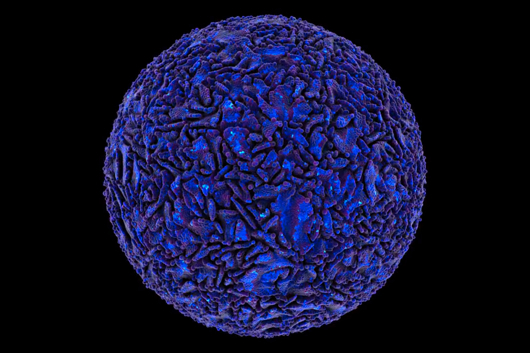
Pulled from Max Cooper‘s debut LP, Human (released earlier this year via the FIELDS imprint), a new video has surfaced for the London producer’s “Seething” production. For the densely textured track’s visual accompaniment, Cooper has enlisted visual scientist Andy Lomas, who distorts and manipulates visual works that originated from his Cellular Forms project, which strives for “digital simulation of a simplified biological model of morphogenesis, with three-dimensional structures generated out of interconnected particles to represent cells.” The resulting video brings to life an intoxicatingly array of hyper-detailed structures, which grow and pulse in accordance with the music. The full video for Max Cooper’s “Seething” can be watched below.
XLR8R Couldn't find the embed function for type: "vimeo" and source: "<iframe src="//player.vimeo.com/video/98435385?title=0&byline=0&portrait=0" width="530" height="298" frameborder="0" webkitallowfullscreen="" mozallowfullscreen="" allowfullscreen=""></iframe>".
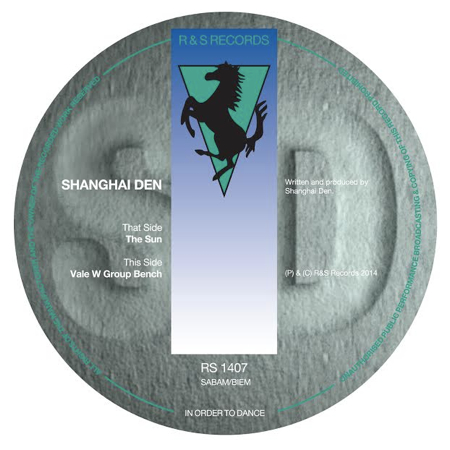
Late last week, R&S announced an upcoming 12″ from Shanghai Den, streaming the effort’s a-side cut, “The Sun,” in the process. Now, the flipside to the producer’s debut solo outing is available to hear in full. Still an artist for whom few details have been disclosed, Shanghai Den’s “Valé W. Group Bench” is a somewhat unconventional production, pairing a swing band sample with ghostly chords, which are further enhanced by the tune’s lop-sided rhythmic bounce and active filter work.
Set to appear via R&S on July 1, the b-side to Shanghai Den’s forthcoming “The Sun” b/w “Valé W. Group Bench” 12″ can be streamed in full below.
Following the release of his Awake LP via Ghostly in March, Tycho—who recently penned an Artist Tips feature for our Gear section—and his live band have announced plans for an extensive tour which will take the project around the world for most of the summer and fall. Beginning later this month, Tycho will start a string of dates which will see the band playing live across the globe from late June to late October. The tour will be preceded by a Boiler Room session with the San Francisco-based outfit, which will air at 4 pm PDT tomorrow, June 26.
In addition to the announcement of Tycho’s upcoming live dates, a new remix of album cut “Awake” has arrived from fellow Ghostly affiliate Com Truise, who also recently penned an Artist Tips feature for us. Out now, Truise’s synth-strewn remix can be heard in full below, where the full list of Tycho’s upcoming tour dates has also been included.
Jun 29th – Electric Forest, Rothbury MI Jul 5th – Wanderlust, Snowmass Village CO Jul 18th – Festival Internacional de Benicássim, Benicássim, Spain Jul 20th – Latitude Festival, Suffolk, United Kingdom Jul 22nd – Gorilla, Manchester, United Kingdom Jul 23rd – Button Factory, Dublin, Ireland Jul 25th – Radar Festival, Padua, Italy Jul 26th – Siren Festival, Vasto, Italy Jul 31st – Crystal Ballroom, Portland OR # Aug 1st – Neptune, Seattle WA # Aug 3rd – Wanderlust, Whistler, Canada Aug 9th – Outside Lands, San Francisco CA Aug 16th – Ceremonia, Mexico, Mexico City Aug 23rd – FYF Festival, Los Angeles CA Sep 16th – The Knitting Factory, Reno NV # Sep 17th – The Depot, Salt Lake City UT # Sep 20th – Emo’s, Austin TX # Sep 22nd – Granada Theater, Dallas TX # Sep 24th – Orange Peel, Asheville, NC # Sep 25th – Cannery Ballroom, Nashville TN # Sep 26th – MidPoint Music Festival, Cincinnati OH Sep 27th – Pygmalion Music Festival, Champaign-Urbana IL ^ Sep 29th – Royale, Boston MA # Oct 1st – Terminal 5, New York NY # Oct 3rd – The Forum, London, United Kingdom # Oct 4th – The Art School, Glasgow, United Kingdom # Oct 5th – Stylus, Leeds, United Kingdom # Oct 6th – Trinity Centre, Bristol, United Kingdom # Oct 8th – La Gaìté Lyrique, Paris, France # Oct 9th – VK Club, Brussels, Belgium # Oct 10th – Melkweg Old Room, Amsterdam, Netherlands # Oct 11th – Uebel & Gefährlich, Hamburg, Germany # Oct 12th – Gebäude 9, Cologne, Germany # Oct 14th – C-Club, Berlin, Germany # Oct 15th – Basen, Warsaw, Poland # Oct 16th – The Roxy, Prague, Czech Republic # Oct 17th – WUK, Vienna, Austria # Oct 18th – A38, Budapest, Hungary # Oct 20th – Estragon, Bologna, Italy # Oct 24-26th – Life is Beautiful Festival, Las Vegas NV # w/ Christopher Willits ^ w/ CHVRCHES
Having commissioned an impressive list of producers to reimagine his tracks over the years, UK artist Maps has gathered a selection of the best (and somewhat hard to find) reworks for Maps Realigned, a forthcoming collection set to appear via Mute in August. Among the artists featured will be Andy Stott (pictured above), whose take on Maps’ “I Heard Them Say” appeared early on in John Talbot’s excellent DJ-Kicks mix album from last year. In addition, reworks from The Field, Paul Woolford, Fantastic Mr. Fox, M83, and Oliver Huntemann are also set to be included in the collection, which spans work commissioned across three separate studio albums from the Maps project.
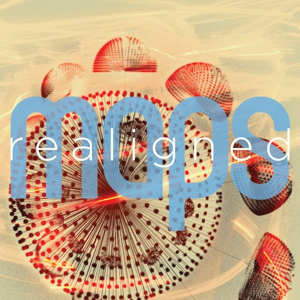
Maps Realigned will see its official release on August 19. In the meantime, the record’s artwork and tracklist has been included below, while M83’s remix of “To the Sky” can be streamed in full here.
01 To The Sky (M83 Remix) 02 I Heard Them Say (Maps Remix) 03 It Will Find You (Mock & Toof Remix) 04 Built To Last (Free School Remix) ** 05 Let Go Of The Fear (Oliver Huntemann Dub) 06 I Dream Of Crystal (Steve Lawler Remix) 07 Love Will Come (Paul Woolford Anti-Gravity Club Mix) 08 Die Happy, Die Smiling (Maxime Dangles Club Mix) 09 You Don’t Know Her Name (The Field Remix) 10 A.M.A. (Eule Remix) ** 11 Don’t Fear (Fantastic Mr. Fox Remix) 12 I Heard Them Say (Andy Stott Remix)
NYC-via-Montreal producer/DJ Jacques Greene was invited to preside over the decks for the first half of Tim Sweeney’s Beats in Space radio show last night. Now, Greene’s 70-plus-minute session for the WNYU program is available to stream and download in full. Coming on the heels of the producer’s recentPhantom Vibrate EP for LuckyMe, Greene begins his set with a cut from label mate Claude Speeed (who announced his upcoming debut LP earlier this week) before moving on to include cuts from Moodymann, DJ Dodger Stadium, and even including a track Aphex Twin’s recently discovered lost LP as Caustic Window.
Greene’s full set for Beats in Space can be streamed below, where the session’s full tracklist is also included. Those in search of a download of the mix can head here to grab it.
01 Claude Speeed – Tiger Woods – LuckyMe 02 Blanc 1 – It’s All Over – Hivern 03 Pablo – Roxy – Lack 04 Jacques Greene – No Excuse (Fort Romeau Remix) – LuckyMe Records 05 DJ Dodger Stadium – Love Songs – Body High 06 Chateau Flight – Discobole (Pepe Bradock Remix) – Versatile 07 Moodymann feat Charlotte OC – Hangover – KDJ 08 Petrichor – Nukumori – Soma 09 Jacques Greene – Untitled – Unreleased 10 Michael & Mattis – Hoes Before Bros – Hivern 11 Jacques Greene – Night Tracking (Area Forty One Remix) – LuckyMe 12 Mikeq & DJ Sliink – Werk’d It – Fade To Mind 13 Dorian Concept – Draft Culture 14 We Can Do It! – Der Geist In Der Muschel – We Can Do It! 15 Caustic Window – Airflow – Rephlex 16 Vaghe Stelle – 4th Hope – Gang Of Ducks 17 Deadboy – Return – Numbers 18 Qrion – Sink
Koyote‘s “No Desillusion Baby” serves as the closing cut to SND.PE VOL.03: Raw Club Material, the new compilation from Parisian label Sound Pellegrino. Built around a slightly swung drum machine rhythm, Koyote’s production indulges in an array of analog synth tones, which slither around the track’s rattling percussion. Steadily, the French beatmaker adds new layers of buzzing keys, which move even more loosely around jacking snares and kicks until, just before things get too out on control, Koyote eventually brings the focus back to the the track’s original groove.