Review: UP Festival 2019

Ask some electronic music fans across Europe for their favorite festivals of 2018, and it’s likely that Prague’s UP Festival will have quite a few votes. Not only is there the backdrop, a picturesque city brimming with history and culture, but the lineup, too: well-curated, if not particularly innovative, it brought some of the finest names in stripped-back house and techno (speaking broadly), many of them for the first time. It felt a little like Club der Visionaere on the road, with a support network of some straight-up techno names. In the after-math, word spread of the inaugural event’s success, backed up with videos of that Barac set and Villalobos’ first appearance in the Czech Republic. Expectations are always tempered for a first editions, but this only made last year’s UP more memorable.

Any teething problems that should have arisen were saved for the second year. I arrived in Prague full of excitement, ready to see some great music (although there could have been more diversity), eat some delicious food, and explore a city that I hadn’t had the pleasure of visiting before, but circumstances, some of which were beyond the organisers’ control, precluded much of this.

Before I begin with the main event, which took place on the Saturday and Sunday, I’ll talk about the pre-festival activities, running from Wednesday to Friday. It all began with some seminars, on which Maayan Nidam and Dana Ruh spoke, although I wasn’t able to attend. I heard positive reports, and, unlike at so many music events, they were well-attended, with 30 or so locals arriving to check out the duo’s musings on battling depression and managing disappointment in touring artists respectively.

Credit must be given to the event for running these, supporting the local scene which has long been bereft of anything of this nature in the realm of electronic music. Local artists and aspiring music industry professionals, of which there are many in Prague, can learn a lot from the likes of Ruh and Nidam, both of whom boast a wealth of experience when it comes to life as a DJ-producer. A festival’s footprint should always transcend the hazy memories of the morning after, and these programmes provide tremendous value for burgeoning music communities.

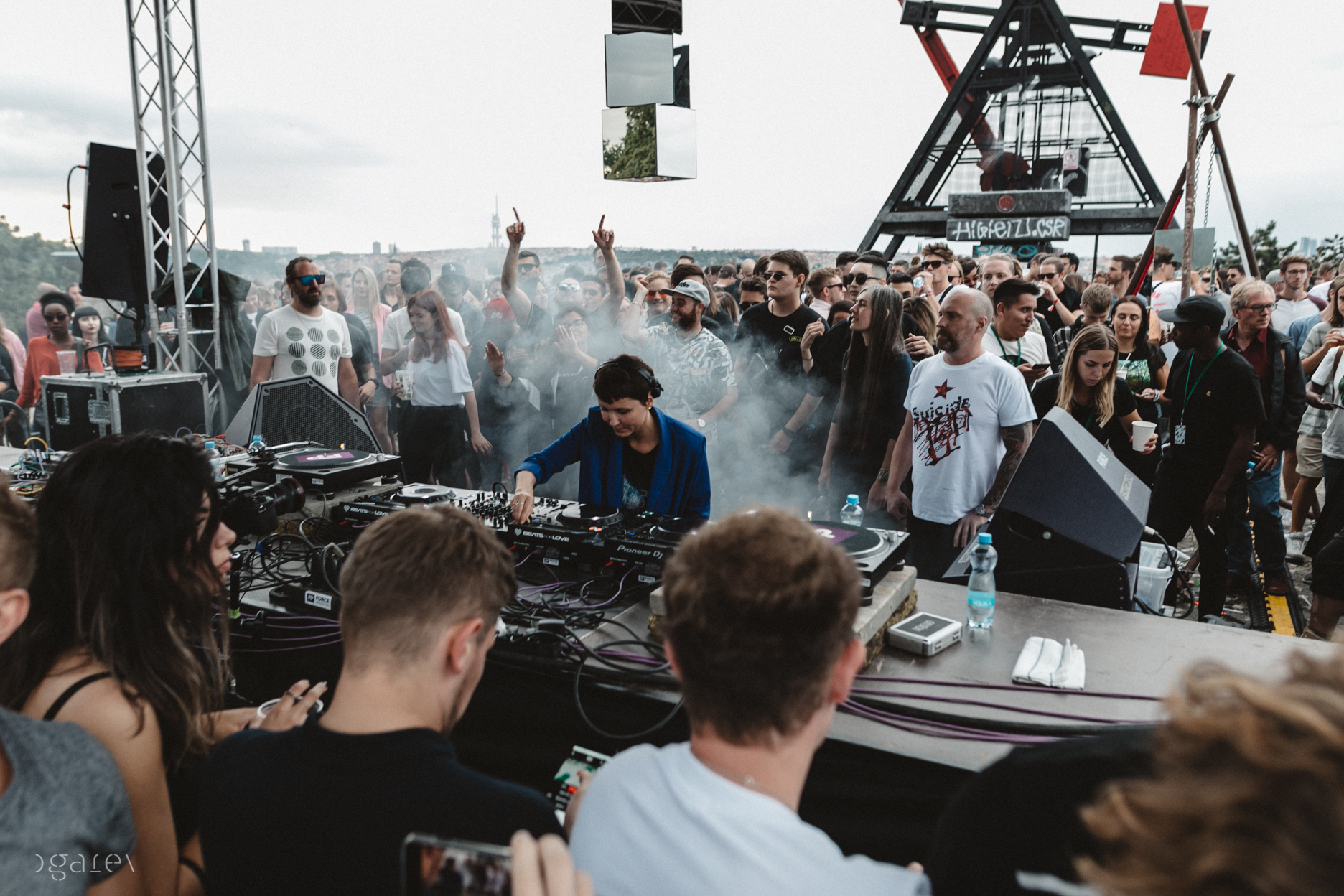
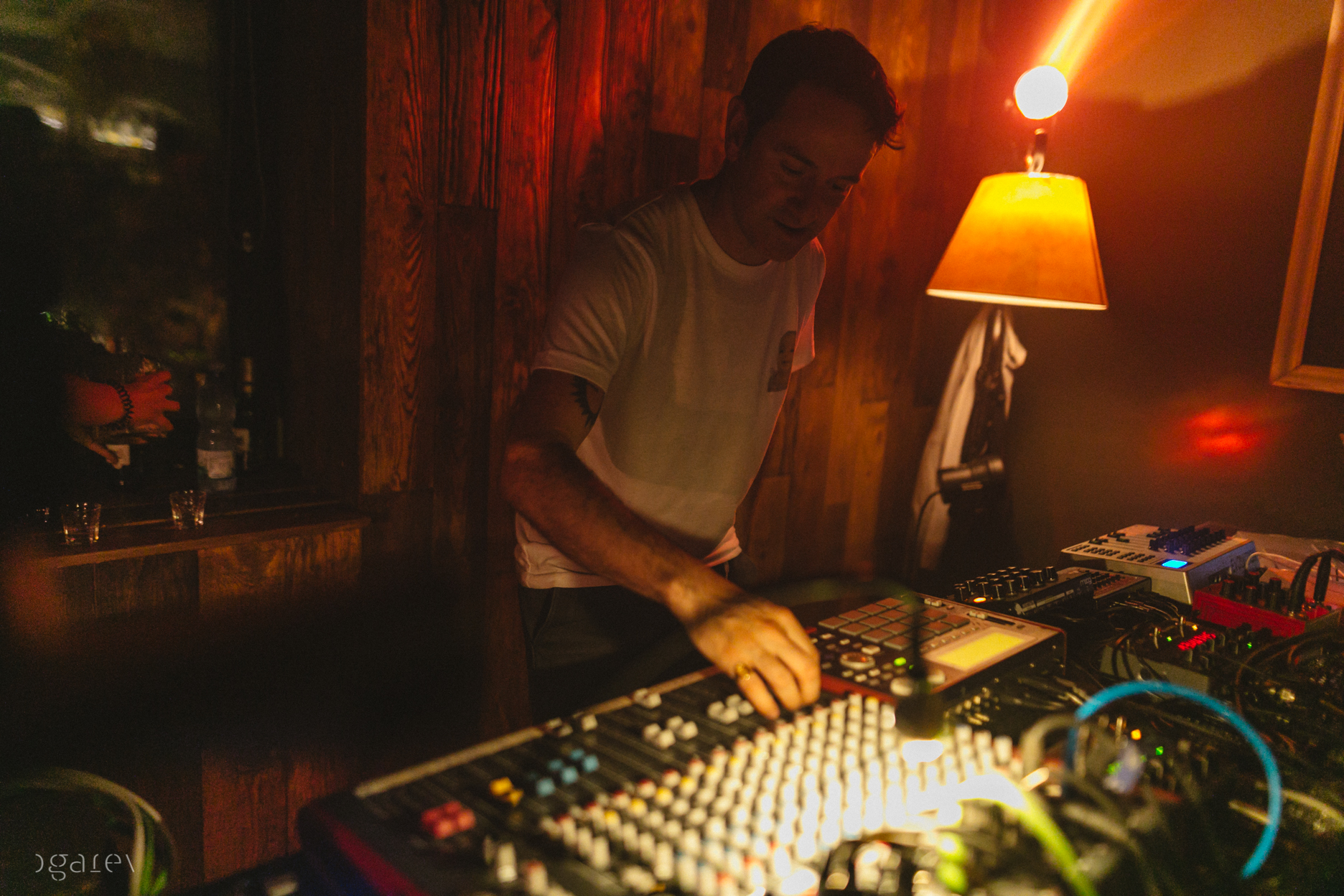
Magda at Boiler Room / Photo: Anton Ogarev

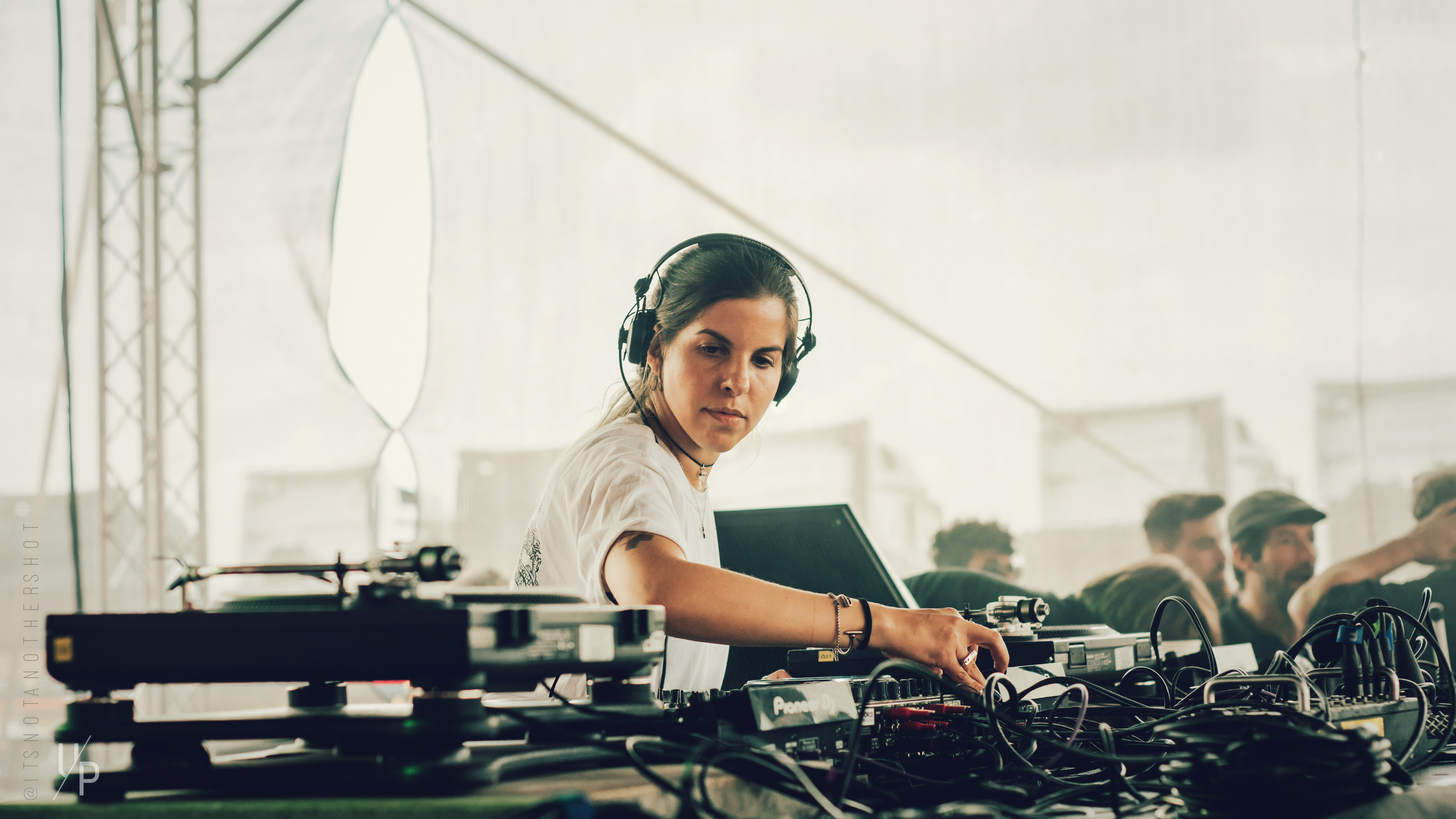
Photo: Anton Ogarev

The local support continued the next day, with a Boiler Room session atop Letná hill, overlooking the city’s main sights. It was a memorable venue and free to attend, which gave the locals a chance to see the Andrew James Gustav and Magda perform for an hour each, joined by rising local artists Silhouette and Windowlickerz (live). I landed too late to catch the latter two, but Gustav and Magda, sure-fire musical delights, impressed in what felt like a curtain-raiser to this year’s UP. Headliner James Ruskin, undoubtedly a skilled producer and curator, dampened the mood with set of drab techno that felt like he’d just left the kick-drum on loop (a strange addition to the lineup, apparently driven by Boiler Room’s insistence on a straight-up techno act), but this strangely seemed to resonate with an audience dominated by locals.

The event finished finished at 10pm, and was followed by another at Vlkova26 with some local DJs, which I didn’t attend. On Friday, I heard there was a tour of an art gallery, but it certainly wasn’t communicated widely, and it felt strange that so little was programmed until around 4pm. I’m aware that the main event took place over the weekend only, but by hosting the workshops and the Boiler Room earlier in the week, it felt like the festival itself had already started, only for momentum to be lost by this period of limbo that could have been filled with more workshops, a recommended tour around Prague, or something to bring those in attendance together.

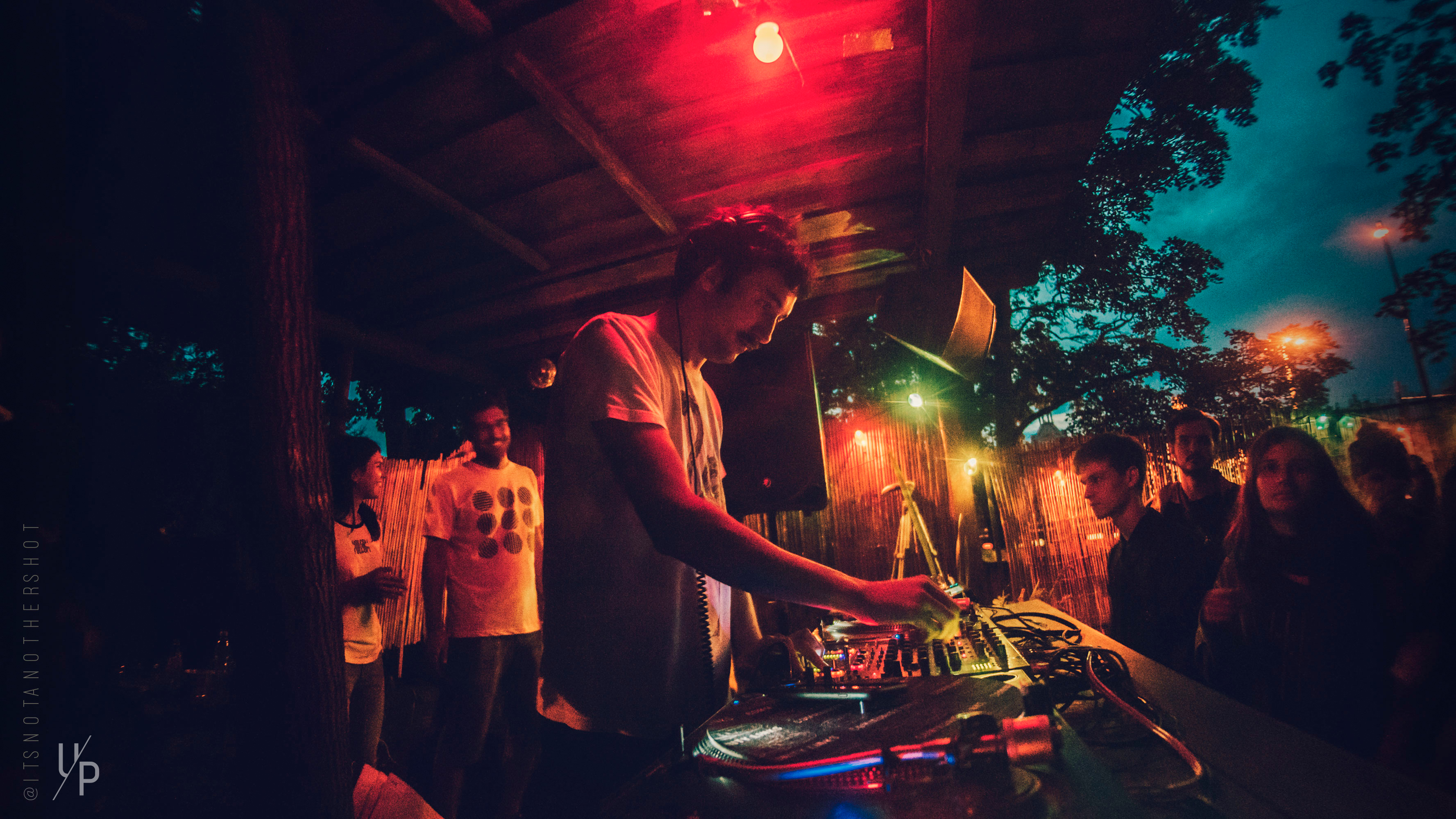
Clovis at Wildt / Photo: ItsNotAnotherShot

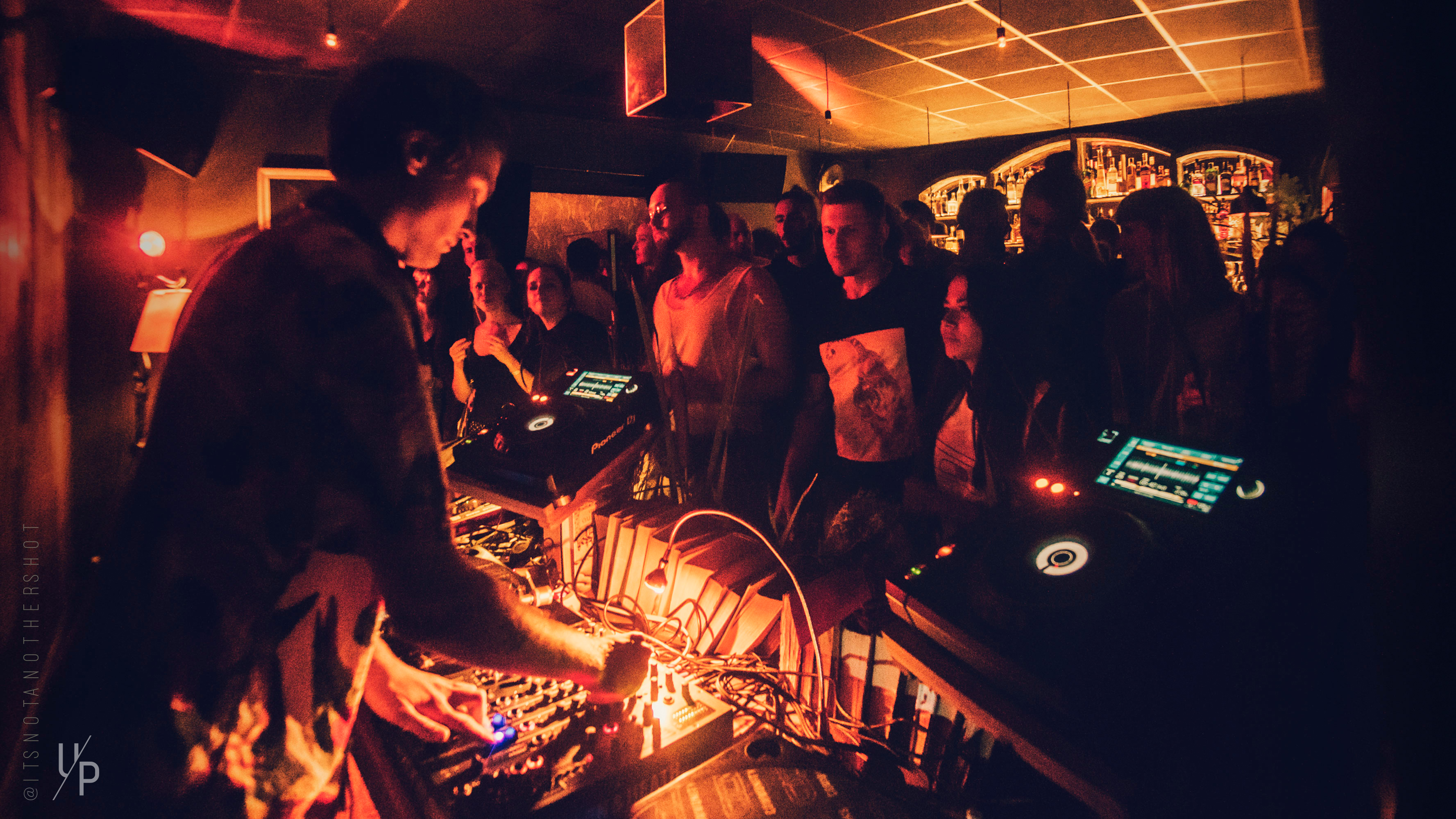
Kirill Astra at Wildt / Photo: ItsNotAnotherShot

Nonetheless, the Friday night was fun, hosted at Wildt Bar, close to the hotel where most people were staying. It’s an intimate space with an outdoor garden where Clovis played. Later that night, the party went indoors, and this is when the festival felt like it began. Local DJ Kirill Astra, a resident of Wildt, performed first, maintaining a high energy by chopping between tracks; not once did it feel like he let a track play out, which actually became frustrating after an hour or so. It seemed to go down well with everyone else, the majority of whom stayed to watch The Mole’s live set.

I’ve long admired The Mole’s productions, but this was the first time I’d see him play live, pairing a heap of analog gear with a turntable. Not only does the Canadian have one of the finest aliases, but his live show must sit up there to; mixing sexy, soulful vocals with a deep and rolling bassline, he delivered one of the sets of the weekend, keeping the at-once-thinning crowd moving from start to finish. Clovis returned to the decks after, but I swerved to get the rest for the main event, which was fast incoming.

The Mole (Live) at Wildt 

Much of my excitement about UP stemmed from the venue, which I’d heard was really a beautiful green park complemented by pleasant decorations. That particular venue was not available this year, because of noise complaints from 2018, but I was expecting something similar for two reasons: Prague is not short of a park, and the theme for this 2019 edition was Harmony in Nature.

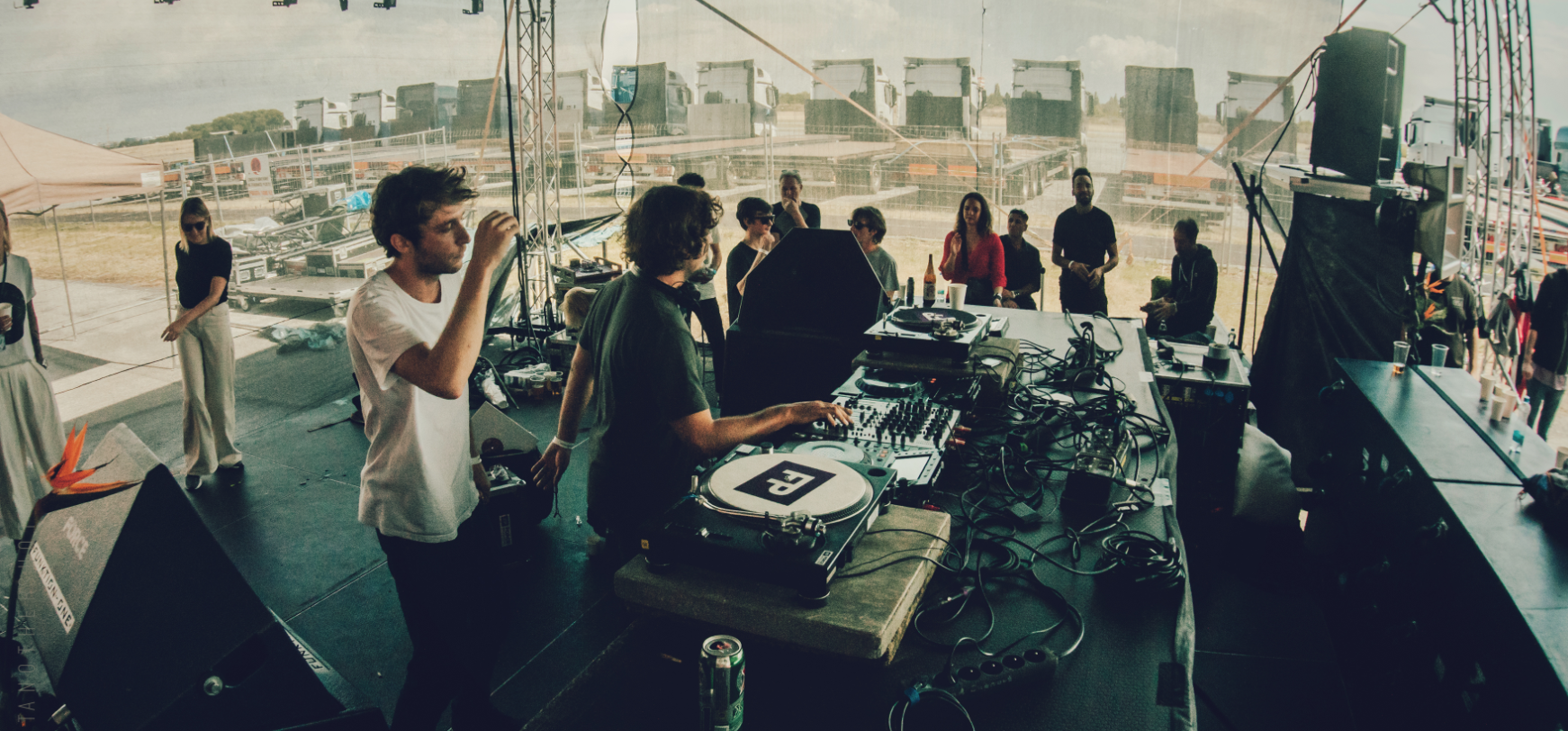
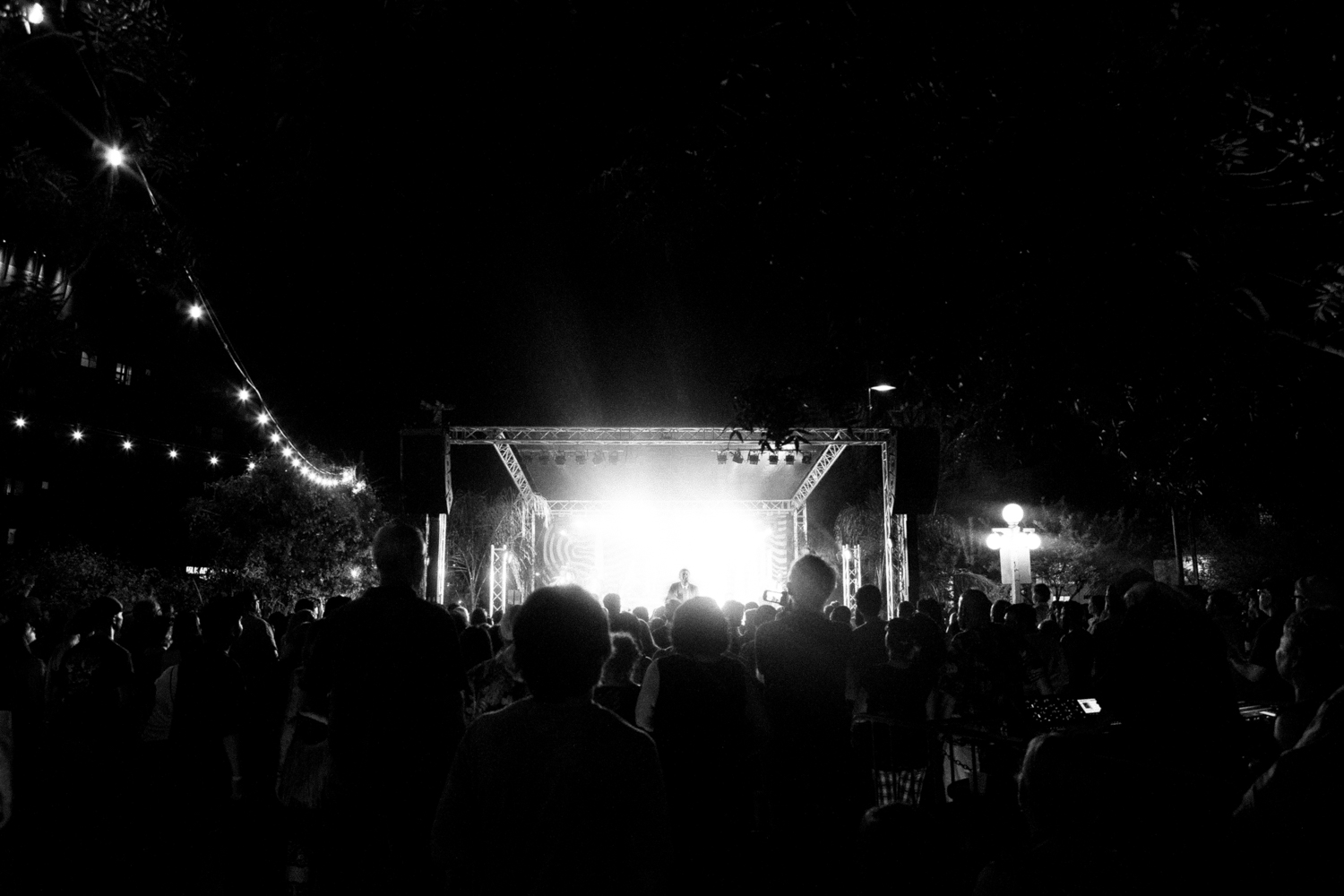
Unfortunately, the second of my arrival, this felt like a prank: I don’t wish to criticise unnecessarily, but the site can be best described as a car park, located 15 minutes drive from the main hotel, on the outskirts of the city. It wasn’t harmonious and there certainly wasn’t any nature, aside from the rather sad-looking imported plants behind the main stage. Instead of trees and shrubbery, there were lorries and Škoda cars. My understanding is that the crew behind the event had paid for the space to be decorated and the contractor hadn’t delivered, but converting this venue into one fit for a first-class festival feels like a fool’s errand. Granted, the weather, a murky grey with intermittent showers, didn’t do the organisers any favours, but this was an oversight not beyond their control.

I think my frustration was also added to by the fact that I’ve had the pleasure of visiting such brilliant events in the past. I look at Europe’s leading electronic music events—Dekmantel, Houghton, Waking Life, etc.—and they all pay tremendous attention to the setting; it’s about so much more than music, which is invariably well-curated and programmed. It’s beyond me why anyone would think that throwing an event in a car-park like this is acceptable; more thought and effort is required if UP is to meet the standards required of a successful festival, destination or otherwise.

The music on the Saturday was good, especially Dorian Paic, who played on the UP Stage, and then Cristi Cons & DeWalta, who played the XLR8R stage to a reasonably full crowd, even though the rest of the site was almost entirely empty. The music was never going to be stand-out because the sense of frustration still lingered, but the DJs certainly delivered.

Adding to organisers’ woes was Ricardo Villalobos’ absence. Despite a strong lineup, I sensed that many people were anticipating the Chilean’s set, more so after 2018’s show, but his flight was delayed, and he couldn’t get his bags off the plane in time to make it worthwhile for him to drive down.

Reshuffling the programming, the organisers closed the XLR8R stage and moved everyone to the UP Stage, where Archie Hamilton was performing a high-energy set of groovy house. It was the most festival-moment of the festival, as the crowd applauded each track, and were apparently saddened to see him sign off. Maayan Nidam closed the stage by playing live; it was excellent, although wrongly scheduled: Nidam’s work is intelligent and non-conformist, and not really one to move the expectant masses, even more so after the four-to-the-floor selections of Hamilton. That being said, it was among the best music we’d heard up to that point.

Playing later in the evening, from 2-4am inside the industrial warehouse space, was Marcel Dettmann, but I went home because I wanted to be awake for Sonja Moonear, who was scheduled for 10am, primarily because she was already booked and this was the only time she could play (which begs the question why the organisers didn’t book someone else who could actually perform according to their scheduling).

I can’t really think of too many situations where you’d have Moonear playing in front of so few people. It’s a real shame and felt a little bit surreal, like you were expecting a whole heap of people to turn up suddenly, as if they’d mistakenly Uber-ed to the wrong address. Moonear also had to play digital because the sound technician had not accurately levelled the table. It didn’t really matter in the end, but it added to the feeling that someone in production hadn’t done their job.

It’s easy to place this down to the weather, which again wasn’t great, but I think a lot of it was down to programming. Starting Moonear at 10, with a small gap between that at the end of the evening session, makes little sense. You either keep the event going or give people enough time to really break, but a small gap of a few hours means another limbo. It’s not fun to wait around in a car park for two hours, especially one so bare of amenities.

Zendid and Jessica Diaz closed out the stage, which was the only one going because there weren’t enough people to fill two, or even one really. Andrew James Gustav was supposed to play, but he was pushed back to the after-party, brought forward to 6pm from 10pm, two hours after Zendid’s end.

I didn’t attend the after-party, but I heard it was actually the best part of the festival. Hosted another one of Prague’s intimate club spaces, music came from Margaret Dygas, Lamache, John Dimas, Dana Ruh, and Digby, who was the standout. It was still going when I left the hotel for my flight, at 9am on Monday.

Jessica Diaz / Photo: ItsNotAnotherShot

UP 2019 may not have been the most memorable of festivals, certainly not for the right reasons, but it’s important to look at the bigger picture.

2018 was an undeniable success, and highlighted the eligibility of Prague for an annual electronic music event. It’s only three hours from Berlin and easily accessible from almost all of Europe, not to mention that it’s extremely affordable and a must-see city on its own.

In an increasingly saturated festival market, those which do succeed need not only to do all things well, but also to have something different, a unique selling point, if you will. UP, with its connections in Prague, is certainly well-positioned to be the leader in this market, but it needs to get the foundations right; finding a generic space and booking some DJs just doesn’t cut it anymore. That being said, if the organisers do put the thought in, then there’s no reason why it cannot flourish.

Perlon Welcomes Chris Korda for Album Made Entirely of Complex Polymeter

Next on Perlon is an album from Chris Korda, titled Akoko Ajeji

Akoko Ajeji is likely the only album in the world written entirely in complex polymeter, meaning that each track uses multiple prime meters simultaneously. 

As Korda explains: “Each instrumental part is written in a different meter, and consequently the instruments shift phase or ‘slip’ relative to each other. For example, the kick pattern could be in 4/4, the organ part in 5/4, the hi-hat in 7/4, and so on.” It required that Korda rewrite her MIDI sequencer to compose the album, “because commercial sequencers and DAWs simply can’t handle complex polymeter.” The result is an intricate but non-random pattern of interference. 

The technique is said to be as radical in its way as the pitch sets of atonal music were in the 1920s. It’s a new approach to music composition, and a new type of algorithmic music, which Korda now fuses with the traditions of techno and jazz.

Akoko Ajeji means “Strange Time” in Yoruba, the chosen language for the track titles because “it has evocative and beautiful words for trance, music, and dancing.” 

Korda is a musician, software developer, and leader of the Church of Euthanasia, a Massachusetts-based organization that advocates “halting the overpopulation of the Earth by its four pillars of suicide, abortion, cannibalism, and sodomy.” She’s previously released on Kevorkian Records and International Deejay Gigolo Records. 

The album follows a two-tracker from Tofu Productions on Perlon, and in its support, Korda will perform Akoko Ajeji live at Panorama Bar on August 2, joined by Zip, Maayan Nidam, Sammy Dee, and Akufen.

Akoko Ajeji LP lands September 6 on vinyl. Pre-order it here

Tracklisting

A1. Vizyon 

A2. Asiri 

A3. Iyika 

B1. Ala Aye 

B2. Awose 

B3. Ra Bayi 

C1. Ra Mi 

C2. Egungun 

D1. Dek Sep Bluso 

D2. Fazo Kanto 

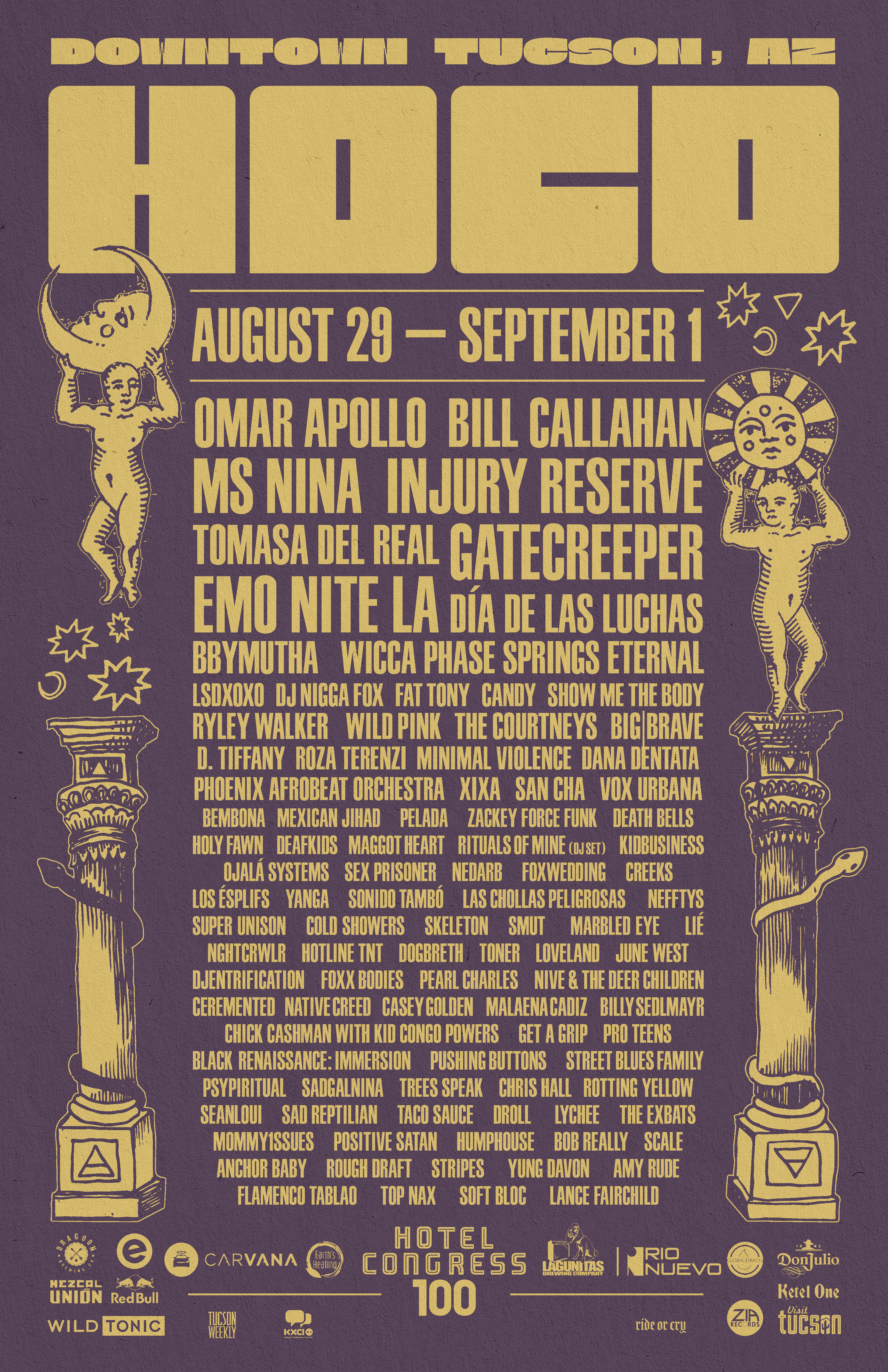
LSDXOXO, Minimal Violence, and Roza Terenzi to Play HOCO Fest

HOCO Fest has finalized its 2019 plans.

Taking place in Tucson, Arizona, over Labor Day weekend (August 29-September 1), HOCO Fest promises to combine “tastemaking musical acts, Tucson’s best venues, and attractions, and the vibrant, inspiring spirit of the desert community.” The three-day festival will go down across more than 15 spaces in Downtown Tucson, with community panels, holistic workshops, regional vendors, a daytime pool party, desert explorations, and much more planned.

Musically, the festival will host performances from artists such as DJ Nigga Fox, LSDXOXO, D. Tiffany, Roza Terenzi, Mexican Jihad, Pelada, Ms Nina, Tomasa del Real, Bembona, Minimal Violence, Injury Reserve, Omar Apollo, Dana Dentata, Wicca Phase Springs Eternal, Nedarb, Fat Tony, Phoenix Afrobeat Orchestra, XIXA, San Cha, Bill Callahan, Ryley Walker, Gatecreeper, Show Me The Body, Candy, Bbymutha, Emo Nite LA, BIG|BRAVE, Zackey Force Funk, Día De Las Luchas, and many more.

This week, the festival also announced its featured visual artist of 2019, Maxwell Lukas Mijnlieff Gay (aka Mylkweed), who will have art showcased throughout HOCO Fest’s 15 venues and all across Downtown Tucson.

You can find tickets and more information here.

Dub, Stripped-Back House, and Drum & Bass on the Latest XLR8R+

This month’s XLR8R+ presents a varied offering with tracks by Fluxion, Silverlining, and Redeyes, plus a sample pack from Keita Sano and artwork by Diego Madero.

Fluxion kicks off this month’s edition with an upbeat slice of dub techno drawn from his love of movie soundtracks. Silverlining’s contribution, “Kewakagroove,” a rare digital outing from the UK producer, is a typically stripped-back house groover perfect for summer dancefloors. Finally, we present the first remix to land on XLR8R+, a sun-drenched liquid drum & bass rework of FD’s “This is Now” by Redeyes.

Complimenting the tracks this month is a two-part MPC sample pack from Keita Sano, which features beats and grooves from his MPC1000 and MPC2000XL. We’ve also included an Artist Tips with Silverlining on how to get inject your productions with groove.

As always, mastering by Kamran Sadeghi.

You can subscribe to XLR8R+ here, and subscribers can download the package here. You can stream snippets of XLR8R+013 below, where you can also find information on the entire package contents and a preview of the zine.

This month’s package features:

* Three exclusive, previously unreleased tracks from Fluxion, Silverlining, and Redeyes.

* Two-part MPC sample pack by Keita Sano.

* 16-page PDF zine with information on the artists, tracks, and sample pack, and an Artist Tips feature with Silverlining.

* Wallpaper artwork for both desktop and phone by Diego Madero.

* Private 50-track streaming playlist.


Subscribe to XLR8R+ for a Free Ticket to Hide & Seek Festival

XLR8R is offering XLR8R+ subscribers free passes to the upcoming edition of Hide & Seek Festival taking place in Capesthorne Hall, just outside Manchester, on Saturday, August 31, 2019.

The new music and arts festival is set in 100 acres of picturesque Cheshire countryside, and features a lineup that includes Dan Shake, Francesco del Garda, Ingi Visions, Jamie 3:26 and Jeremy Underground, Josh Baker, Margaret Dygas, Mathew Jonson (live), Nicolas Lutz, Praslea, Spokenn, Voigtmann, Shonky, with more to be announced closer to the date.

The event is hosted across a number of stages set amongst three lakes and gardens with a big focus on artistic installations and audio-visual production. It’s curated by the well-established Manchester collective You&Me.

We’ve partnered with Hide & Seek to offer XLR8R+ subscribers a select amount of free guestlist passes.

For those who haven’t yet, SUBSCRIBE HERE and email your full name, subscription confirmation page, and “Hide & Seek” to [email protected] to claim your free event pass.

For those current subscribers, simply email your full name and “Hide & Seek” as the email subject.

The 13th edition of XLR8R+ is here, featuring tracks from Fluxion, Silverlining, and Redeyes, plus a sample pack from Keita Sano. Check it out below. 

Manchester Label Sferic Welcomes Perila for Debut Album of Sonic Erotica

Sferic Records has released the debut album of Perila.

Born in St. Petersburg, Russia and based in Berlin, Alexandra Zakharenko (a.k.a Perila) cut her teeth as in-house designer and programmer at the recently defunct Berlin Community Radio (BCR) before co-founding the Russian online station radio.syg.ma, which hosted one of her early productions on the SYGMATURE compilation in spring 2019. Zakharenko is also founder of WET (Weird Erotic Tension), an online community exploring ideas of sonic sexuality in podcasts mixing spoken-word, poetry, ASMR, and field recordings.

Irer Dent stems directly from two WET podcasts. It revolves around readings of an erotic novel and a collection of poems by Nat Marcus and Inger Wold Lund, set to absorbingly hypnagogic backdrops and accompanied by seductive instrumental works.

On “Nat’s Poems,” the voice of Nat Marcus regales a poetic account of Berlin nightlife woven with classic house lyrics from Rosie Gaines and Mr. White over 12 minutes of tumescent sub-bass and pads. Where sensuality is implied on that piece, it’s more explicit in the LP’s other vocal piece, “Sweat,” which revolves around Inger Wold Lund recounting a dream about suppressed sexual desire in a hushed and unaffected manner amid a shimmering forcefield of spectral energy and meridian birdsong. Both pieces are complemented by subtle originals, including”Mouth Full of Tahini” and the warm endorphin flush of “Message From Another Table.” 

The album is sferic’s fourth release, following albums from Space Afrika and Jake Muir. 

Irer Dent LP is out now, with clips below. 

Tracklisting

A1. Natʼs Poems (with Nat Marcus) 

A2. Mouth Full Of Tahini

B1. Sweat (with Inger Wold Lund) 

B2. XY Object Of Desire


B3. Message From Another Table

Digital Bonus: Wet

Jan Wagner “Nummer G” (Nitam Hinterhausmix)

Nitam‘s remix of Jan Wagner‘s “Nummer G” is the first instalment of Wagner’s Nummern Remixes, coming soon with a slew of new interpretations of songs lifted from his debut LP, Nummern.

Nummern landed last year courtesy of Klangbad/Quiet Love Records. Those of you who heard the originals will be surprised to hear his deep and sub-aquatic sonic contemplations fully transformed, in this case into a sophisticated yet playful Berlin-style techno joint. 

Nitam regularly releases on Ostgut and Innervisions. 

Ahead of the release, grab Nitam’s rework of “Nummer G” in full via the WeTransfer button below, or here for EU readers due to GDPR restrictions. 

Real Talk: Agoria

Earlier this year, Agoria (a.k.a Sebastien Devaud) released Drift, his first album in eight years, and something unlike he’s shared before. Across 10 tracks, the French artist explored a novel musical approach; it’s described as an expression of freedom through music, and a bridge that links territories, all the while creating new frontiers and inventing new codes. It includes collaborations with Phoebe Killdeer, Nicolas Becker (Hollywood sound designer who worked on the Oscar-winning movie “Gravity”), Sacha Rudy (an 18-year-old boy from Paris), STS (the golden voice of L.A.), NOEMIE, for her first track ever, and French hero Jacques. 

The album arrives on the back of a 20-year career, beginning with a series of 12”s on Pias Recordings, which were followed by his debut album, Blossom, a year later. Since then, Agoria has released three more long-players, The Green Armchair (2006), the soundtrack to Go Fast (2008), and Impermanence (2011), all of which showcase his skills in creating deep, stripped-back, melodic techno tracks. Through his labels, Infiné and Sapiens, and releases, which have also appeared on Innervisions, Kompakt, and Hotflush, Agoria likes to challenge his listeners, creating music that refuses to conform to contemporary expectations and labels. 

The backdrop for Drift is a musical landscape that Agoria feels is becoming static. To elaborate on these ideas, and to better explain the inspiration behind the album, Agoria penned an essay for XLR8R’s Real Talk series. 

We live in a world filled with music. Headphones, mobile devices, smart speakers, hotels, subways, airports—we are listening to more music than ever before. But to what, and to whom, are we listening? 

Increasingly, streaming is the musical consumption medium of choice, and these platforms and their mechanized suggestions provide us with an unmatched treasure trove of musical knowledge, not to mention an opportunity to discover new work from artists that we would never have previously found. 

But this also means that our listening habits are increasingly being tracked and then shaped by artificial intelligence, as scary as this may sound. As a result, more and more music is being consigned to boxes or playlist themes, and so the flip side to “discovery” is that we’re being given more of what ticks the same boxes as what we’ve been listening to; more of what we like; or at least more of what the algorithm thinks we like. Is this really discovery at all? 

While some artists win—mainly those who conform to genres—those who fail to conform, whose work is not easy to define or pigeonhole, lose out, because their music is not being presented to new listeners; it’s simply not being discovered. 

This is already having severe consequences on our wider musical landscape: in a fight to survive, some artists are making music with the sole intent of being picked up by an algorithm or playlist rather than because it’s innovative or interesting. Creativity and innovation are in danger of being supplanted by conformity, and new ideas lost to monotony. What we’re seeing is homogenization. 

“…if today’s barometer for success is only quantified in the black and white data of streaming numbers, we risk losing the magical artists that exist in the grey, and music will become dry and, well, boring.”

Artists inherently don’t fit in one box. They need and should want to push boundaries and refute definition; and those who refuse to be codified are typically the most rewarding and exciting. Whether its Nicolas Becker’s sound installations for Philippe Parreno, the provocative poise of Arca, or the precocious interpretations of the 18-year-old composer Zer0, we rely on artists like these to push music forward; to present new ideas away from the norm; to blur the line between the boxes. Following a formula and producing a certain sound or style may yield sought-after streaming numbers, but it comes at a considerable cost; if today’s barometer for success is only quantified in the black and white data of streaming numbers, we risk losing the magical artists that exist in the grey, and music will become dry and, well, boring. 

It’s often been said that music would be killed by machines, by the synths and keyboards of electronic music, but electronic music has actually enriched the musical landscape. However, machines are now posing a threat in a very different sense, and so now we must do something about it before it’s too late. 

We need to create an environment or infrastructure that supports these artists. As listeners, we must ensure that they are supported; and as artists, we must continue to fight to make music that challenges; to resist the temptation to make music that abides by formulas. An album might seem indulgent in today’s world, but we have a duty to produce bodies of work that aren’t aimed squarely at certain playlists, but tell stories and ask questions. The music community will be considerably worse off without these bodies of work. 

The good news is that it’s not too late. So as an audience, we have to exercise our power and not allow our listening habits to be lulled by repetition. Remind yourself that we don’t want music to become boring; we don’t want our ears to be filled with the Spotify-friendly drab that’s becoming so common. 

“Curation is a human quality that must not be overlooked in the algorithmic age.”

None of this is to say that playlists are the enemy, for they too can be thoughtful and provocative. Much like an eclectic DJ mix, a well-curated playlist can stitch together tracks that don’t appear to belong together and ask questions of its audience. But as listeners we must be wary of simply allowing our music to be programmed by mood or genre; two hours can easily pass without realizing whether two tracks or 20 have been heard. Streaming platforms have a vested interest in plays, and time spent streaming, but they also hold huge curatorial power. We must not be lazy, unconscious listeners, and we must not allow curators to encourage lazy listening. There are humans on both sides of the machine and we must behave as such. Curation is a human quality that must not be overlooked in the algorithmic age.

Exploration and discovery have always been a thrill for music lovers. Whether it was visiting the record store or hearing an amazing new track on your Discover playlist, it is a magical feeling to hear something that grabs hold of you and worms its way inside your head. But today, if we are only listening to what we are being served, does this still count as exploration? If we only hear tracks programmed to match our likes, what are we losing? When I worked at a radio station in my teens, my friends and I tried to find, share, and discover the most obscure records that refused to fit in any boxes. It was not always the song you wanted to hear at that moment, it wasn’t always easy listening, but it made you listen, and you learned as much from a song you hated as one you loved. Listening was not disposable; it was essential and educational, and we must fight to uphold these values today.

I encourage listeners to take advantage of the algorithm, to allow music that fits your taste to be served up to you. But I also suggest that we consciously continue seeking out moments of human curation. Explore a second-hand store bin or market for vinyl that just looks interesting; ask your local record store owner for his or her recommendations; listen to an alternative radio station for a few hours; and spend money going to shows to hear something new and different. All of these will reaffirm how wonderful musical discovery, your own musical discovery, can really be, while nourishing the wider musical landscape. 

The musical opportunity that the algorithm affords us is almost limitless. It can be a tremendous force for good, but only if we use it correctly. If we simply allow our listening habits to be programmed and defined by data, we, in turn, require our artists to conform and risk losing the idiosyncrasy, the challenge, and the humanity of great music. That’s a playlist I never want to listen to.

A human brain requires only 20 watts to fire all its synapses, a computer requires over 20,000,000 watts to yield the same computing power. Whose algorithm do you want to listen to?

Drift LP is available now via Sapiens/Virgin Recordings.

Novation Will Give a Live Demo on How to Map the SL MkIII With Hardware

Today, July 18, Novation will give a live demo on how to map the SL MkIII keyboard controller to external gear.

The SL MkIII controllers, which come in both 49 and 61-key versions, are equipped with USB, MIDI in, out, and thru, two CV/gate and Mod outputs, three pedal inputs, and an analog clock out, making them perfect for controlling external hardware—they are also fully integrated with Ableton Live natively and any major DAW with the InControl software.

Novation’s latest Beats and Bytes episode, going live today at 4 p.m. PST, will demonstrate how to map the keyboard to external equipment. 

You can watch the livestream on Novation’s YouTube channel, with the livestream schedule below.

Check out the schedule below:

(0:00 – 5:00) – Introduction to SL MkIII + Components

(5:00 – 10:00) – Explanation of Components

(10:00 – 15:00) – Mapping Hardware

(15:00 – 20:00) – Mapping Software

(20:00 – 25:00) – Q&A

Mayan Warrior to Host Party in Los Angeles This Weekend

This Saturday, July 20, Mayan Warrior will host a fundraiser event at the El Pueblo Historical Monument.

Following its debut last year, the Mexico City-based Burning Man staple will return to LA with the full art-car experience and sets from the Mayan Warrior residents and “very special guests.” This year will feature over three areas for attendees to explore, including the main stage (Mayan Warrior), a wellness area, and a huge vendor market for burning man-related products. 

As was the case last year, all proceeds will go towards funding the project at Burning Man, including the collective of artists, craftsmen, photographers, designers, technologists, and architects involved in the production.

Tickets to the event can be found here.

Page 215 of 3781
1 213 214 215 216 217 3,781