Cornelius Announces Digital Release of Remastered Classic 2002 Album ‘Point’

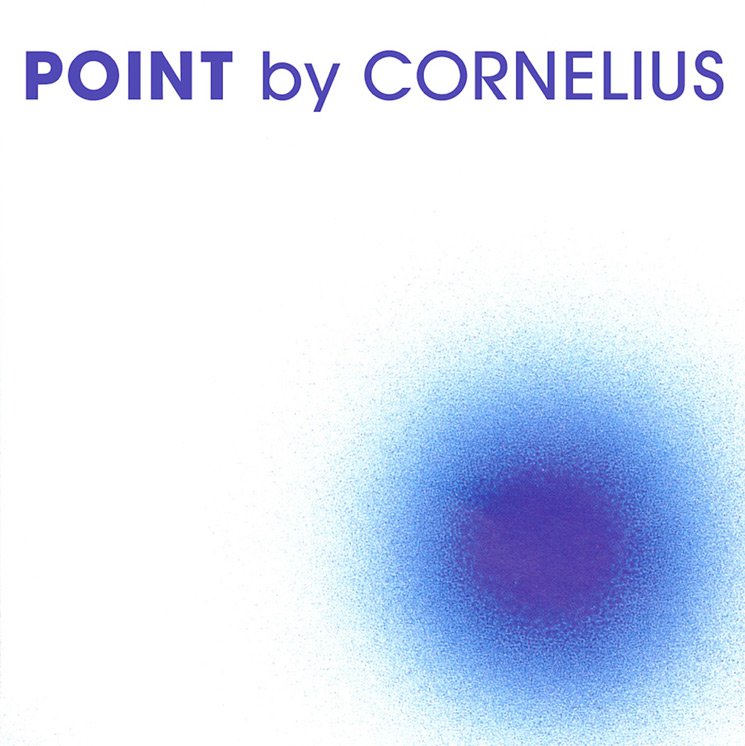
Following the 2016 reissue of Fantasma, Japanese artist Cornelius has announced the remastered release of Point.  

Originally released on Matador Records in 2002, Point was seen as a departure from the sample-heavy production style of Fantasma to a fluid and organic aesthetic. Whether looping the sound of splashing water to create a rhythm track for “Drop,” or accenting bird calls to highlight silence, the album was a watershed in sonic exploration in indie music.

This remastered version also includes original B-sides featuring remixes by Kings of Convenience, Matthew Herbert, and Yann Tomita. The album will be released digitally on July 31, with a CD/LP release coming in the fall. 

Cornelius made his name in the ’90s with the cult album Fantasma (1997), which mixed the ’60s harmonies of The Beach Boys with krautrock and French pop, and a late-’90s sample-heavy production. He has since released Point (2002), Sensuous (2008), and most recently Mellow Waves (2017).  

Cornelius will perform Point in full, beginning with a leg of dates on the West Coast of the US and Canada in September.

9/24—Echoplex—Los Angeles, CA

9/27—The Fillmore—San Francisco, CA

9/29—Revolution Hall—Portland, OR

9/30—The Crocodile—Seattle, WA

10/2—The Imperial—Vancouver, WA

German Label Analog Africa Celebrates ’70s Northern Brazilian Music with 19-Track Compilation

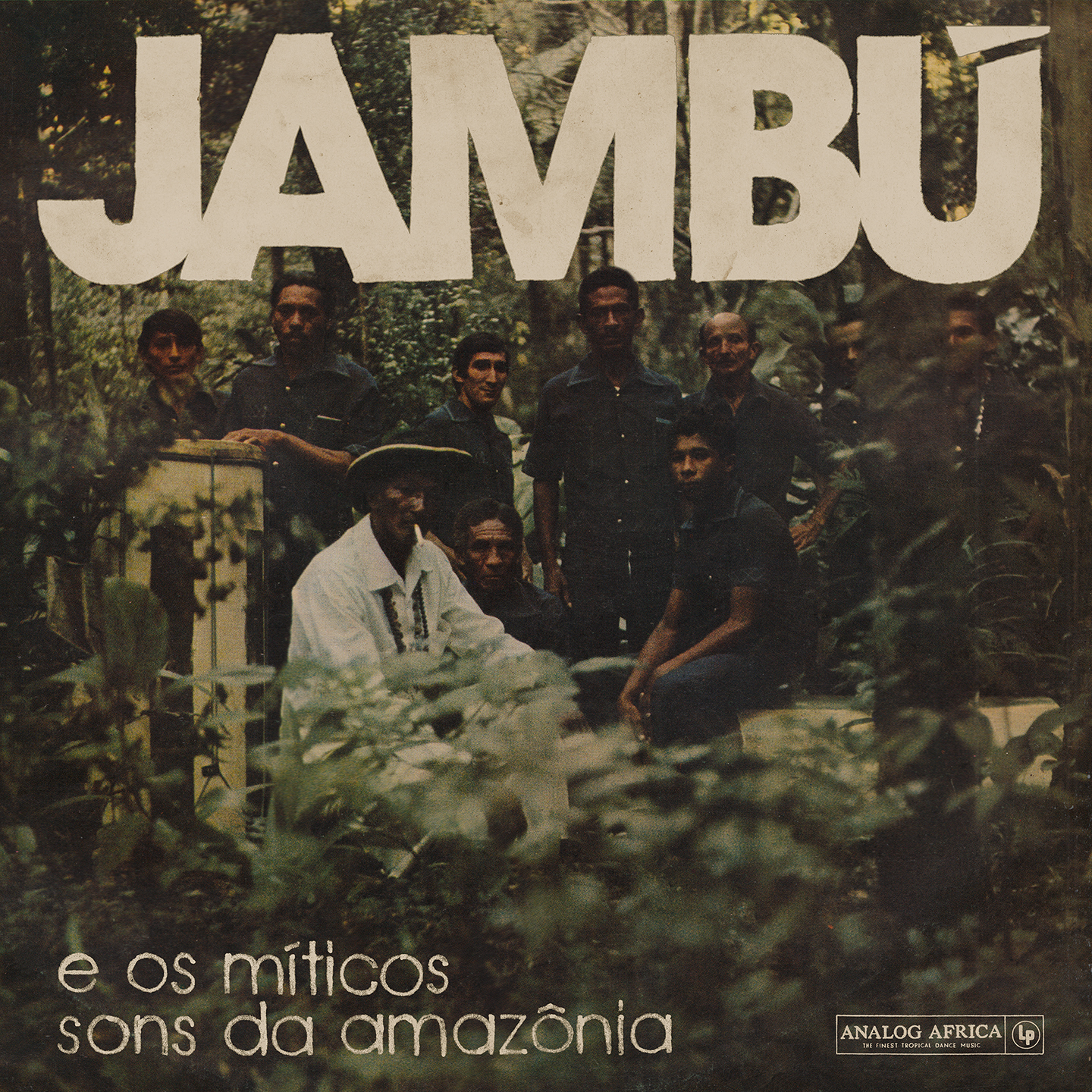
German label Analog Africa will release Jambú e Os Míticos Sons Da Amazônia, a various artist compilation of music recorded during the ’70s in the northern Brazilian city of Belém. 

Belém, in the state of Pará, has long been a hotbed of culture and musical innovation. Enveloped by the Amazonian forest and overlooking the vastness of the Atlantic ocean, Belém consists of a diverse culture as vibrant and broad as the Amazon itself. Amerindians, Europeans, Africans, and the myriad combinations between these people would mingle and pioneer musical genres such as carimbó, samba-ee-cacete, siriá, bois-bumbás, and bambiá. 

Jambú e Os Míticos Sons Da Amazônia features 19 tracks hand-selected by DJs, producers, and music archivists Samy Ben Redjeb and Carlos Xavier. 

The music across the release began to gain footing across Brazilian borders in the ’70s with the advent of the Rauland Belém Som Ltd. company. The operation served as a radio station, recording studio, and music label with a deep roster of popular artists, allowing their music to thrive in recorded and marketed form. 

Analog Africa adds: “The history of Jambú e Os Míticos Sons Da Amazônia is the history of an entire city in its full glory. With bustling nightclubs providing the best sound systems and erotic live shows, gossip about the whereabouts of legendary bands, singers turned into movie stars, supreme craftiness, and the creativity of a class of musicians that didn’t hesitate to take a gamble, Jambú is an exhilarating, cinematic ride into the beauty and heart of what makes Pará’s little corner of the Amazon tick.” 

Jambú e Os Míticos Sons Da Amazônia releases on June 21 across 2LP, CD, and digital formats via Analog Africa. The CD version comes with a 44-page booklet, with the 2LP pressing containing a 24-page version of the same liner notes and photos. 

Pre-order here, and stream A Misturada’s “Os Muiraquitãns” below. 

Tracklisting

01. (Introdução) “Rosvaldo Ja Chegou?”

02. Pinduca “Vamos Farrear”

03. Os Muiraquitãns “A Misturada”

04. Os Quentes de Terra Alta “Praia Do Algodoal”

05. Pinduca “Pai Xangô”

06. Janjão “Meu Barquinho”

07. Messias Holanda “O Galo Canta, O Macaco Assovia”

08. Vieira e Seu Conjunto “Lambada Da Baleia”

09. Verequete e O Conjunto Uirapurú “Mambo Assanhado”

10. O Conjunto De Orlando Pereira “Carimbó Para Yemanjá”

11. Pinduca “Coco Da Bahia”

12. Messias Holanda “Carimbó Da Pimenta”

13. Verequete e O Conjunto Uirapurú “Da Garrafa uma pinga”

14. O Conjunto De Orlando Pereira “Maruda”

15. Magalhães e Sua Guitarra “Xangô”

16. Vieira e Seu Conjunto “Melô Do Bode”

17. Grupo da Pesada “Võa Andorinha”

18. Grupo da Pesada “Lundun Da Yaya”

19. Mestre Cupijó e Seu Ritmo “Despedida”

Bubblin’ Up: YPY

YPY is a project by multi-instrumentalist and composer Koshiro Hino. The Osaka-based artist began his career in 2010 as a band musician in Talking Dead Goats “45, and he remains involved in minimalist instrumental outfit Goat and hardcore-induced band Bonanzas. Drawn by the fun of experimenting in electronics, he launched YPY in 2014. After self-releasing music via his own birdFriend label, his first EP, Visions, surfaced via Berlin’s Nous Disques in 2015, followed by his debut full-length, Zurhyrethm, in June, before his second, 2020, through Where To Now?

Hino’s band experience is evident across his solo output, particularly in his approach to rhythm and percussion, as is his Japanese heritage. He discovered electronic music through Osaka’s lively experimental music scene in his youth, but as with so many of his peers the opportunities to access clubs were limited by fueihō, an adult entertainment law that required that venues meet size restrictions if customers were to dance. Authorities generally didn’t act on the “no dancing” part of the law until around 2010 but these strict crackdowns forced many venues to close. It remained this way until 2016 when the law was revised. “I think that perhaps the fact that many clubs were forced to close due to fueihō crackdown, and thus not having much access to the actual club scene, made us approach electronic music differently,” Hino explains. 

Hino recently returned with his third solo album as YPY, Be A Little More Selfish. The output encompasses a wide variety of styles, again with a particular focus on percussive elements, from dancefloor-friendly techno and house to headier and noisier experimental excursions. It’s a captivating listen that draws heavily on YPY’s band instincts.

In support of the release, we connected with Hino to learn more about the state of Japanese electronic music and his YPY project, in particular how it has been shaped by his background in bands. In support of the interview, YPY also prepared an exclusive Bubblin’ Up studio mix, available to download here

What’s the state of the Japanese club scene now? 

Things are gradually getting better. The major fueihō (dance-ban law) crackdown in the city kept young people away from clubs for a long time, and also 3.11, the Tohoku earthquake, and the Fukushima nuclear disaster made many international artists reluctant to come to Japan. This is particularly bad because these events have had to rely on international big names to draw enough of an audience. These factors really affected the scene, but in recent years I feel like more local parties have been emerging, and there is more of a connection between the younger generation and nightlife. In the building where I have my studio, there’s a new club called Daphnia opening this month, so I’m optimistic about things to come.

How substantial has Japan’s legal reform regarding fueihō been on the Japanese electronic music landscape? 

The amended set of laws now allows some clubs to operate late-night, but only if they meet certain criteria, such as being located in a commercial district and holding minimum dimensions—but this actually prevented many small independent clubs from being able to gain a business license to operate after midnight. After the reform, the long running Club Hachi in Tokyo got busted for violation of the new law, and Forestlimit had to stop hosting club nights, so there have been many negative impacts. Osaka didn’t experience anything drastic as far as I know but the general impression is that nobody is totally comfortable running independent clubs in the country. So I don’t feel like the reform has actually helped anyone too much. And I don’t really see either a positive or negative influence of the reform on the electronic music scene or artists. But that’s just my personal perception.

“I think that perhaps the fact that many clubs were forced to close due to fueihō crackdown, and thus not having much access to the actual club scene, made us approach electronic music differently.”

The law only changed in 2015, meaning that it can’t have been easy for you to have experienced electronic music in the club setting growing up. What impact has this had on the Japanese scene? 

When the enforcement of the fueihō really started with the first raid of Club Noon, I was much more involved in the band scene, so I don’t really feel like I have enough insight to really talk about it. What I can speak from my perspective is that in retrospect this was the period that many of the younger generation of Japanese music producers such as Foodman and Keita Sano began reaching out to an international audience to have their music heard, although I am not sure if there are any correlations. Of course, some Japanese artists had released on international labels in the past but I know a lot of other people never really considered that as a realistic option before. Seeing unestablished artists making their international debut regardless of their “career” in Japan, and getting recognition, was refreshing, and I think many more people were encouraged to follow that path.

Also, what I do know is that those two producers in particular seem to have developed unique electronic music without having much experience of being in clubs. The same could be said about my production, and many others. I think that perhaps the fact that many clubs were forced to close due to the fueihō crackdown, and thus not having much access to the actual club scene, made us approach electronic music differently.  

So do you see a big contrast between Japanese techno and European techno, for example? 

Yes. I see techno as a type of music that’s very tied into the space. I’m kind of stating the obvious, but how it resonates, and how it fits the space seems to be particularly important with techno. I believe Europe has a longer experience and deeper understanding of club culture in general, so that people know how to make it “work” in that environment. I think you need to be quite imaginative to produce techno because you need to be able to imagine how it will sound in the club setting, but since there are not that many influential clubs exist in Japan, it’s probably harder for us to imagine that while making it. However, not knowing or ignoring what you know, or don’t know, can also be an advantage. Because your creativity is not restricted by the functionality of the music, which can lead to building a completely unique style, and I think you find some fine examples of that among Japanese artists.

Do you consider yourself to be a beneficiary of this ignorance?

Since I try to learn and reflect what I learn on things I do, I don’t think I have much of that benefit. However, as a record label owner, I am constantly looking for artists who do.

Can you name me some of these artists, and their works that you feel represent this different approach?

For example, Yximalloo whom I’ve included in my mix. Germany’s Kompakt released his LP entitled WANTED without knowing who made it. He has various different approaches depending on the song, and is also probably trying new methods everyday. However, I am very much attracted to his uniqueness; you can immediately tell it’s Yximalloo’s work even on the first listen. A duo called Shimetta Inu from Sapporo are very special too. 

Your approach to music is also different because your career began with two band projects, Bonanzas and Talking Dead Goats “45. How has this impacted your approach to electronic music?  

I think my band experience has influenced pretty much everything I do in electronic music. For example, when I acquired my first sampler, I played it on the guitar and bass amp instead of a mixer. When I played on normal speakers, via a mixer, I felt uncomfortable because the sound was too clean. I thought you were supposed to treat synth or sampler sounds on an amp like you do with the guitar. FYI, the title track from my first album, Zurhyrethm, was made with live recordings of the sounds coming out of the amps. I only realised later that the sound quality is much better if you just line record it via mixer, but I think the use of guitar/bass amp was actually quite effective for my early period when I didn’t quite know how to make the sound I wanted otherwise. I also think the band experience helped me in how I approach and manage live performances, and also how I compose. There are many such positive influences. 

How did Bonanzas and Talking Dead Goats “45. evolve into Goat and YPY? 

To be honest, Talking Dead Goats “45 is my past that I’m not particularly proud of, but it all started there and everything I’ve done since can be traced back to it. I used to put all my interests and desires in one project, Talking Dead Goats “45, and I basically failed. But then I realised I can express myself in multiple projects, so Bonanzas emerged as a way for me to incorporate guitar solo improvisations, an essence of hardcore, but with a focus on a percussive and noisy approach. Then this led me to invite a saxophone player from Talking Dead Goats “45, and together we became Goat. YPY came about even after that, and it’s the most free-form. It’s a project that I can just throw in everything I want to experiment with, and record in my bedroom on my own.

Why the need to stray from the band format?  

I can only speak for my take on electronic music, but for me it’s the speed and the fun. It’s really great that you can put together your ideas so fast in an audible form. I’m always super buzzing when making electronic tunes.

What’s the music scene like in Osaka? 

Up until the beginning of 2000, it had a vibrant noise/avant-garde scene. I was very much involved both as a member of the audience and as a performer, and I had some incredible experiences, but it feels like that energy has faded out a bit recently. There are a few artists and labels I find outstanding but not so many. Maybe I’m just caught up too much with my own stuff and haven’t been able to pay attention to others though.

Which artists and labels are impressing you? 

One of the acts I respect most in Osaka is Nanaentai (a.k.a Dinarudum.) They are a drum/percussion duo, and I really admire their excessively stoic attitude towards their music. I also discuss the methodology of composition with them sometimes, so they don’t just inspire me but actually affect the way I compose my music. 

Without exaggeration, Em Records is such a respectable record label. I came across the label about 10 years ago, and got heavily with the works of Roland P Young, Wicked Witch, Yoshi Wada, and Matsuo Ohno. I had no idea it was based in Osaka at that time, and finding that out was really enlightening because I didn’t know too many Japanese labels that released this type of music internationally back then. And they don’t just reissue forgotten gems but also release current music simultaneously. I think that’s remarkable.

Can you make a career as an electronic artist in Japan? 

The infrastructure is definitely not sufficient. China currently seems to be experiencing a big boom with electronic music with many new clubs opening up, and lots of artists coming in from Europe and beyond. These artists will play in Tokyo if they ever come through Japan, but it’s often the case that smaller cities simply cannot afford to invite them to play. I really don’t know too many clubs outside of Tokyo with enough money. But I don’t think artists are so limited by geographical boundaries anymore; the current Japanese electronic music is not so detached from the rest of the world and so you don’t really require an infrastructure to be a musician. I think the important thing is to keep doing what you want to do, and a career might follow just as a result of it. In that sense, I think it probably is possible to build a career here.

What’s the most important thing you’ve learned in your artistic development so far? 

I’m still constantly exploring the way I produce music, so I can’t describe clearly, but if there’s anything I always keep in mind it’s to question everything. Try doing exactly the opposite of what’s considered standard, then you will get interesting results. I spoke about this in my interview with Juno before, but to give an example, I didn’t use MIDI sync in my first YPY album. With Goat, we use the melody instruments—guitar and saxophone—as percussion in the composition instead. When something starts to become a style of my own, then I start questioning that too.

Where did you learn this non-conformist attitude? 

From people like EYE and Seiichi Yamamoto of the Boredoms, who both approached music in so many different ways. And performances by artists like Christian Marclay and Yoshihide Otomo. These made me think, “Oh it’s actually ok to go this far,” and this has liberated me on multiple occasions.

“I get much more excitement by setting restraints or limits, and this excitement usually gives me the drive to make music. I can’t actually make good music without having this sense of excitement.”

You’ve also spoken about the power in restraint. Can you tell us more about this? 

If you keep making music with an anything goes approach, you start to lose excitement. I get much more excitement by setting restraints or limits, and this excitement usually gives me the drive to make music. I can’t actually make good music without having this sense of excitement.

In the case of bands, the setting of strong rules, flexible yet specific kinds, takes up most of the composition process. These rules can be things like: ways to compose and play or selection of instruments. If you fail to set the appropriate rules at the beginning, the rest starts to fall apart at some point, but when you have them working, you just naturally come up with many ideas and everything falls into the right places. Working in a limited framework generates more wild ideas, and leads to special sounds. To give a simple illustration: when you feel like you want to add another percussive element to your song, you could add a new sound by playing an existing instrument differently rather than adding a new instrument.

How does this translate to your electronic music production? 

Recently, I’ve been trying to apply the rhythm rules of the band works to YPY, and conversely applying what I did with YPY to my band music. I always struggle with the balance between the complexity and simplicity of the rhythms, but I think having the experience of band’s compositions is an advantage.

What’s the story with birdFriend? What do you look for when it comes to signing artists to the label? 

I was initially intending to release the works of undiscovered talents I encountered around me, but as my network of people grew my perspective on the label also expanded. I just simply put out the music I find interesting at the time, but I tend to be drawn to interesting experimentations. I think I can announce a 7″ release soon. From then on, I’m hoping to release more vinyl. 

Do you distribute your music to select artists when you’ve finished it? 

With this album, I gave out to people like Jane Fitz, Jon K, DJ Nobu, and Compuma. But not always.

What would you consider to be “success” in music? 

To have an environment where I can make music freely without the stress of making a living.

Photos: Dai Fujimura

Be A Little More Selfish LP is available now, with order here

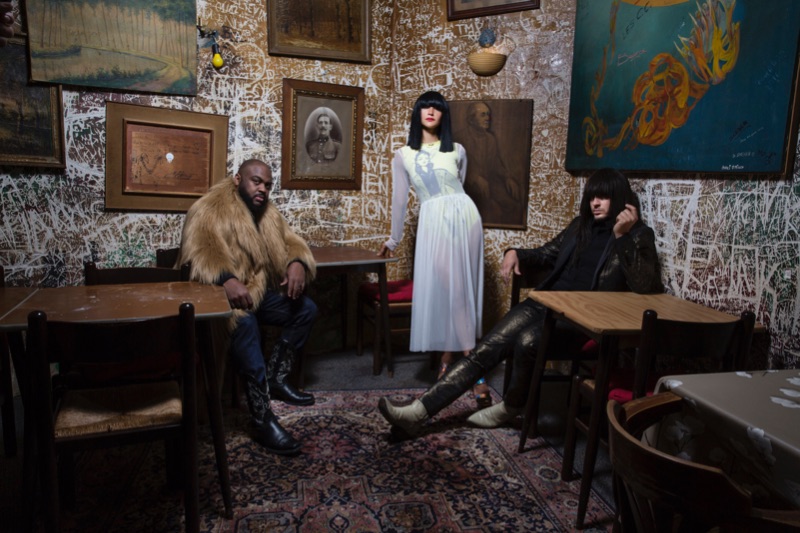
Khruangbin Announce ‘Hasta El Cielo,’ Dub Version of ‘Con Todo El Mundo’ LP

Photo: Andrew Cotterill

Texan trio Khruangbin will release Hasta El Cielo, a dub version of their second album, Con Todo El Mundo, on July 12 via Dead Oceans/Night Time Stories. The full album has been processed anew, and comes with two bonus dubs by Jamaican producer Scientist. 

The band’s exotic, spacious, psychedelic funk aligns with the dub treatment well, and their fans won’t find this a surprising release. Dubs of tracks from their first album, The Universe Smiles Upon You, appeared  for Record Store Day 2016. 

“For us, dub has always felt like a prayer. Spacious, meditative, able to transport the listener to another realm. The first dub albums we listened to were records mixed by Scientist featuring the music of the Roots Radics. Laura Lee learned to play bass by listening to ‘Scientist Wins the World Cup.’ His unique mixing style, with the emphasis on space and texture, creates the feeling of frozen time; it was hugely influential to us as a band. To be able to work alongside Scientist, a legend in the history of dub, is an honor. This is our dub version of ‘Con Todo El Mundo.’— Khruangbin

Formed of Laura Lee on bass, Mark Speer on guitar, and Donald “DJ” Johnson on drums, Khruangbin’s sounds are infused with classic soul, dub, and psychedelia. Since the release of Con Todo El Mundo, they have continued their almost non-stop approach to touring, playing over 130 dates in 2018 alone, most of them selling out well in advance. 

Tracklisting

01. With All The World 

02. Sisters & Brothers

03. Mary Always

04. Four of Five

05. How I Love

06. Sunny’s Vision

07. A La Sala

08. The Red Book

09. Order of Operations

10. Hasta El Cielo

11. Rules—Scientist Dub (Bonus Track)

12. Cómo Te Quiero—Scientist Dub (Bonus Track)

Hasta El Cielo LP lands July 12, with “Mary Always” streaming in full below, and album pre-order here


Tommo & Jonno “Efficacy” [Havantepe Emax Potentiation]

Receptor Theory is the seventh release on Verdant Recordings and the first of several scheduled for 2019. The EP sets tracks from Berlin’s Sirko Muller with Ornate Music’s Jonno & Tommo on each side, plus remixes from Verdant favourites RV800 and Havantepe, last seen together on the 2017 Aura EP.  

The original Affinity and Efficacy tracks are assured yet subtle, dub-inflected grooves, but they’re treated radically when reinterpreted. The RV800 reshape of “Affinity” moulds it into peak-time tech house territory with a playful 303 bassline. Havantepe changes up “Efficacy” with devastating effect; the remix is a moody breakbeat slow burn with a creeping and growling 303 bassline. 

Verdant is managed and curated by Andy Green. This latest release is the first of 2019, coming this month. In support of the release, we’re offering up Havantepe’s rework of “Efficacy,” available to download now via the WeTransfer button below, or here for EU readers due to GDPR restrictions. 

Tracklisting 

A1. Affinity

A2. Affinity [RV800 Bmax Hyperbole]

B1. Efficacy

B2. Efficacy [Havantepe Emax Potentiation]

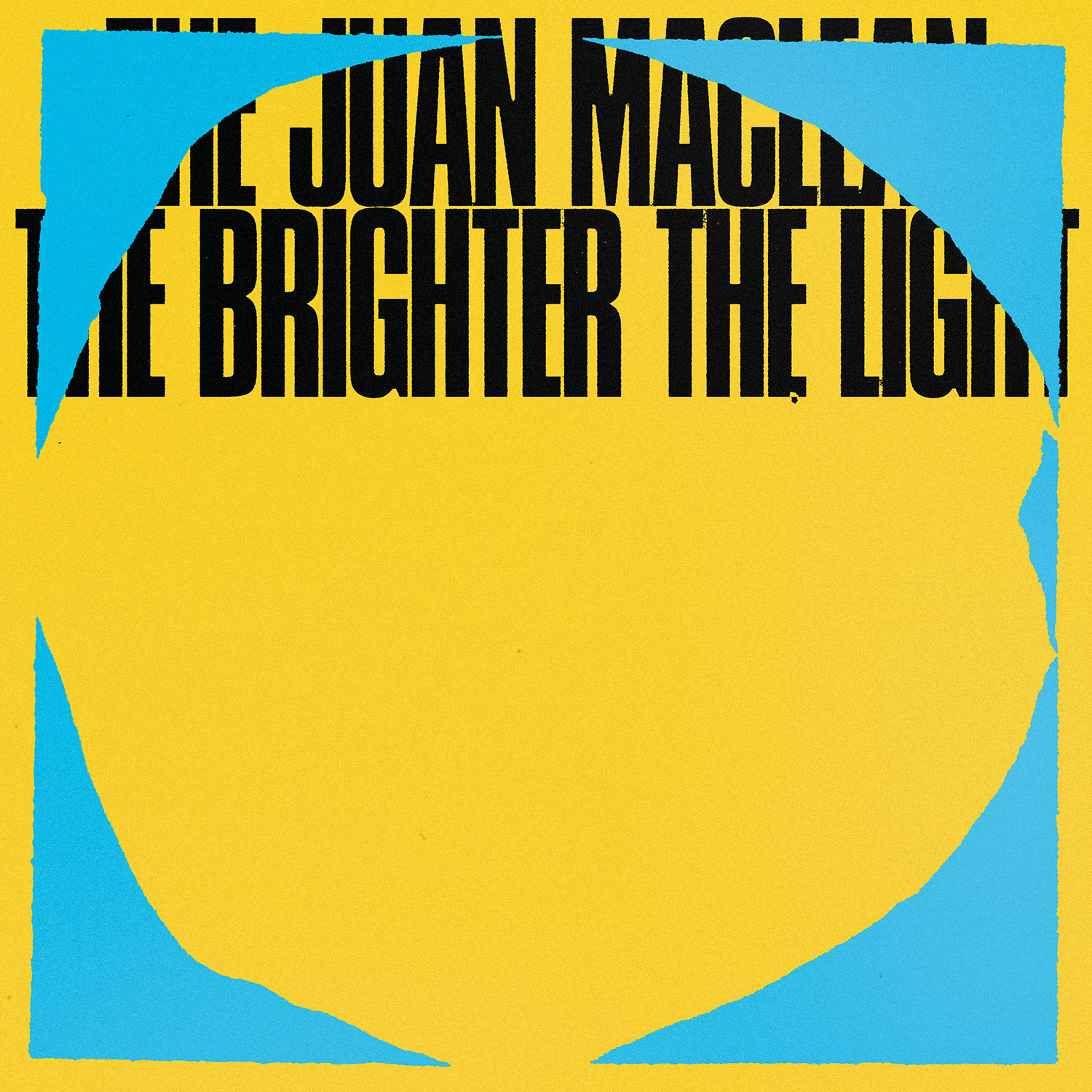
The Juan Maclean Return to DFA with Compilation LP of 12″ Singles

Brooklyn duo The Juan Maclean will return to DFA with The Brighter The Light, a compilation LP of 12″ singles they’ve amassed over the past six years—re-edited, re-mastered, and ready for those who may have missed the tracks the first time around.

The nine-track album focuses on  singles from the past six years, from the dub house sway of 2013’s “You Are My Destiny” to the high-energy stomp of this May’s “Zone Non Linear,” and it features two never-before-released tracks, “Quiet Magician” and “Pressure Danger.” Deep house rhythms, sparkling synths, and a certain spaciousness are emphasized in place of the motion melancholy disco of recent full-lengths. 

Juan Maclean is a DJ-producer and a mainstay of the New York club scene. Vocalist Nancy Whang is his longtime collaborator, best known as a founding member of LCD Soundsystem and a busy touring DJ. Together, the two artists have released an extensive catalogue of 12” singles and full-length albums for DFA. The proper follow-up studio album will follow in 2020.  

Tracklisting

01. What Do You Feel Free About?

02. Zone Non Linear

03. You Are My Destiny

04. Get Down (With My Love)

05. Feel Like Movin’

06. Quiet Magician

07. Pressure Danger

08. Can You Ever Really Know Somebody

09. The Brighter The Light

The Brighter The Light LP lands on September 20, with “Get Down (With My Love)” streaming in full below. 

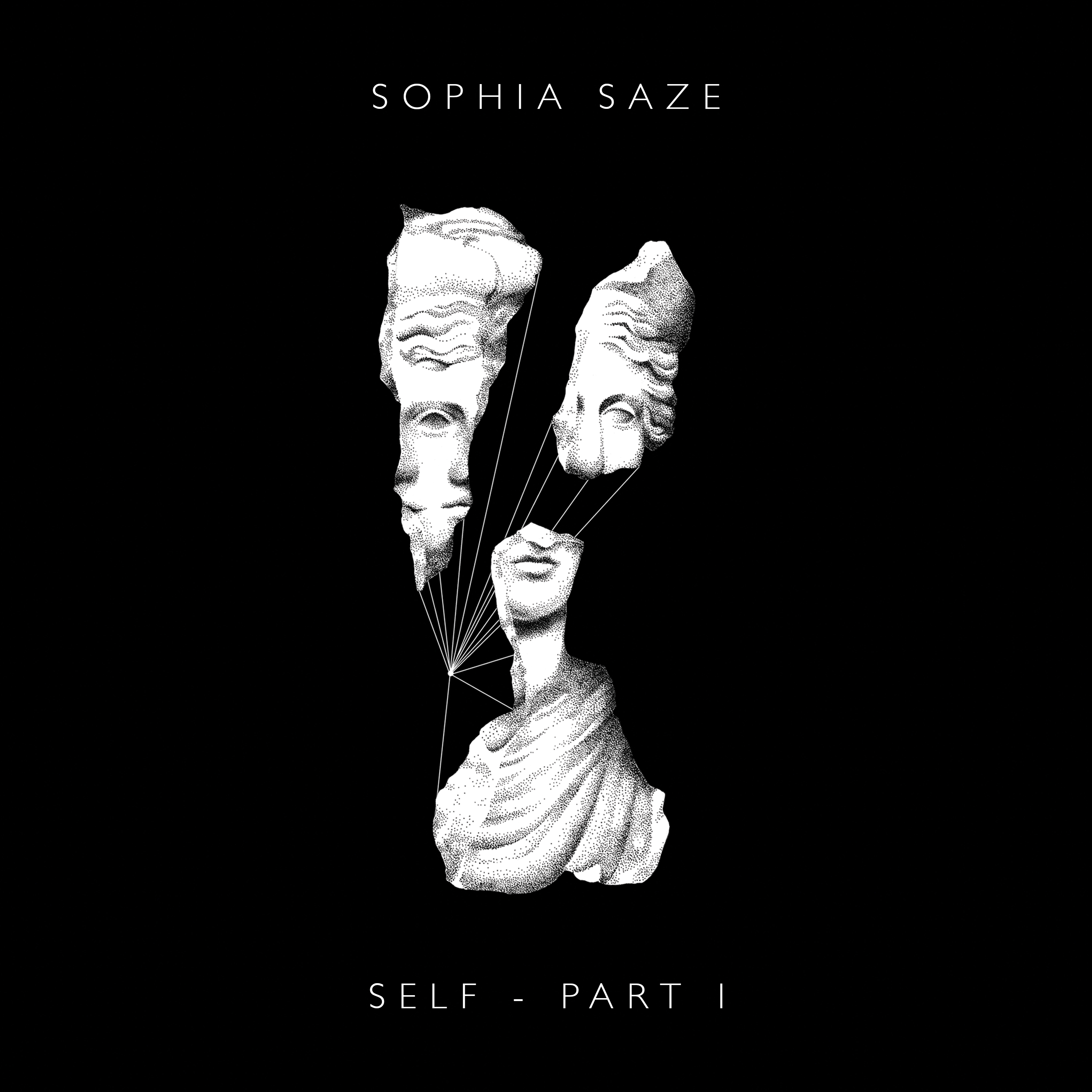
Premiere: Hear a Spooky, Sample-Heavy Track from Sophia Saze’s Kingdoms Debut

As announced, Georgian artist Sophia Saze will release her debut two-part album, Self, on Francis Harris’ Kingdoms imprint, with the first part dropping on cassette this June.

Self is described as a reflection of Saze’s struggles throughout life, and a memoir of the many different places she’s lived, including Georgia, Russia, USA, France, and Canada. Contrasting to her recent productions, which are geared more towards the dancefloor, her debut long-player is downtempo and features a medley of musical influences, released as a concept album on cassette.

The album draws the analogy of analog to modern day digital culture whilst also taking a stance against perfection, by integrating the distance crackle of Saze’s machines and the intentional off-beat piano notes in minor. Part One was conceived during a sleepless yet inspired 48-hour studio session. Processed field recordings accompany samples from her childhood, such as Soviet cartoons and intimate VHS recordings of her family. 

Born in Tbilisi, Saze is the daughter of political refugees who has spent her life living in numerous different countries before eventually finding home in Brooklyn, New York. Finding it difficult to find her own identity due to living a nomadic lifestyle, she became entangled with electronic music before becoming a key player within New York’s nightlife scene and launching her Dusk & Haze imprint in 2017.

Self LP (Part One) drops on Kingdoms on June 14, with the second part following on July 12. Ahead of the release, you can stream A2 “Bare” in full via the player below, with pre-order here


Tracklisting:

01. / A1. Salome (სალომე) 

02. / A2. Bare

03. / A3. Tsminda (წმინდა) 04. / A4. Punches

05. / A5. Howl

06. / B1. Flower

07. / B2. Orbits

08. / B3. Volk (волк) 09. / B4. De Dios 10. / B5. Torn

11. / B6. Safe

12. / B7. Kera (კერა) 13. / B8. Mirror Mirror 14. / B9. Aliens

Podcast 597: Experimental Housewife

Evelyn Marie Malinowski (a.k.a Experimental Housewife)—or “ExHouse” as she’s better known—is a San Francisco-based DJ, producer, label owner, percussionist, and professor. Experience serving as either a drummer or keyboardist for various post-rock and experimental projects has shaped her into a multifarious and cross-disciplinary creative force. She began DJing aged just 12, and has since become an inspired curator whose approach is genre-defiant but driving, each thoughtfully curated set replete with rhythmic energy.  

As a producer, Malinowski chooses unconventional pathways to make hypnotic music. Her records are markedly repetitive and droned out. Something always feels a little off, but the results are rejuvenating, forward-thinking pieces of nostalgic electronica. Her debut full-length album, Place Writer, released on Jacktone in late 2016, is a strong demonstration of Malinowski’s drowned out ambience. She’s also released experimental and dancefloor-focused music on her own Perfect Location, ANTIME Berlin, and Schmer, and has contributed to multiple compilations and collaborative efforts. 

Malinowski applies her natural knack for collecting, compiling, layering, and mapping to broader environments as an academic. She is a scholar of English Philology specializing in Virginia Woolf and Modernity Studies, and she bears proficiency in Germanistik, Queer Shakespeare, and Sound Studies. She has taught and lectured on these same subjects.

Her XLR8R podcast was recorded late last month and is centred around one record: Underworld “Jumbo” (Rob Rives & François K. Main Dish), the opener incidentally. It reflects on San Francisco’s “deep blue sky” vibes and late ’90s electronic music heritage, all the while looking forward with optimism as to where we’re going as a species. As with all ExHouse sets, it’s full of soothing pads and dreamy distortion, further proof that things can sound good while being mixed genre and mixed era. 

What have you been up to recently?

It’s been an active year. I have been writing a lot of new music and making exciting alliances with communities new to me. I’m still busy with managing my temporary record label project, Perfect Location, and gigging often. I’m also working on my dissertation.

12 is an early age to begin playing records. How did you find your way into DJing? 

I was a very energetic, positive child with a lot of imagination, and I think that dance music, especially ’90s club hits with big beats and house flavor, revved my hyper mind while giving it a home. Strangely, I have always had a knack for organizing, compiling, and categorizing. Apart from seeing synth gear and DJ equipment as ultra-cool when I was a kid (I have always liked gear and tools as well), I started making mixtapes before I knew mixers even existed. 

What were the first records that you bought? 

Best question ever! I’m proud to say that Sasha’s Xpander EP, LSG’s Shecan, Bedrock Foundations, and Pat Foosheen’s Forest of Azure/Invisible Landscape were among my very first record purchases! Also lots of random Hooj Choons releases, like Cygnus X, Solar Stone, Tilt, and others. There’s more, of course: I also had a lot of 16B, Lexicon Avenue, Futureshock, Sister Bliss, and James Holden at the time, a perfect mixture of trance and progressive house. Some of the game changers for me back then were Cass & Slide “Diablo” or “Opera,” a lot of the Van Bellen remixes, and Deep C feat. Randall Jones “The One.” I still love these tracks so much.

How does your career in education influence your career as a musician?

It’s nerdy but I definitely see my DJ sets as educational, and I likewise treat my lectures as sets. I prepare and organize, and sometimes feel nervous, but I rely on my collection to pave the way for the message or thesis. 

Sure, all listeners learn something from DJs by way of waiting to see what the DJ plays, holding out to see whether the DJ can construct an arc, and also sussing out the presence of technical skills; however, I assign much more potential to DJing than that. A DJ interacts with an audience both as a whole and individualistically: while you may be moving as a group on the dancefloor, you are still having an intimate, anti-group thinking experience with the set, so long as the DJ can resist making the set about themselves. I can’t think of anything else in modern ritual that has the power to move a group and simultaneously hold space for the individual. DJs should show the ability to respond to and work with the ranging knowledge and availability an audience has, just like how a good educator should take the time and energy to spotlight every student’s unique strength, for a classroom is populated by students with ranging knowledge on the course subject as well as their personal street smarts. 

And while both a DJ set and a lecture are considerably hierarchical in function, because all attention is on them, they are both performances during which an audience gives the DJ or lecturer voice, and, to some extent, trust. I believe in using those opportunities to produce fodder that inspires and connects, not noise that takes attention away from one’s own journey. No matter what, the DJ must demonstrate their mastery over the art, just as a professor must demonstrate mastery over their subject.

When and where was the mix recorded?

In my home studio right before Detroit festivities, late May 2019. Just for this season and occasion.

How did you select the records that you included?

As always, I build my sets around one or two tracks I feel strongly about including. From there I find the rest of the stepping stones and make sure there is a comprehensive and enjoyable arc. In this case, I knew I had to include the opening track, the remix of “Jumbo,” in order to represent San Francisco deep blue sky vibes. The first time I ever heard “Jumbo” was in Oakland off of Golf Links Rd., 1999. Been loving it ever since. I definitely wanted to feature a variety of new and old favorites.

Is there an overarching concept or theme surrounding it?

San Francisco deep blue sky vibes and late ’90s electronic music heritage combined with realistic optimism about where we’re going from here as a species. Soothing pads and dreamy distortion are favorites of mine, and I think they are handy in dealing with contrasts and grey areas. In this case, they say something about how difficult it is to give space to vulnerable emotions when everything is so cute and beautiful all the time. It’s like feeling sad that you can’t be sad, a symptom of living in sunny California. There’s a clear turning point and departure though in the middle of the mix that I feel is quite important as well, where things sort of drop off and get ugly, but there’s something driving things forward. 

How does it compare to one of your club sets?

At parties, I tend to take my time a bit more, if given enough time, and I get more testy, like I’ll play pop remixes or old anthems mashed up with really serious industrial techno and cheeky stuff like that. I like to sneak into all kinds of zones, but my references are a little less concealed. And I always consider the audience and meet them wherever they’re at. 

What’s next on your horizon?

I’m looking forward to my summertime gigs, and I’m wrapping up the last Perfect Location 12″ release, featuring myself, gayphextwin, Roche, BLEIE, and Loren Steele. It will be sent to the plant soon. My crew, Run The Length Of Your Wildness, is about to release its second vinyl compilation sponsored by LA label Hobo Camp. I should have a mini-album done soon for Last Faith Studio.

Due to issues regarding the GDPR, EU readers can download the podcast here.

Tracklisting: 

Editor note: Items with the slash indicate mashed up, three- or four-way mixes)

01. Underworld “Jumbo (Rob Rives & François K. Main Dish)” [JBO]

02. Sage Caswell “All of Gardens” [Spring Theory]

03. DJ Sodeyama “Miles Pt. 2” [трип]

04. Unknown Artist “∂ Partial 001” (Eye Deep Leez) / Emmanuel “Improve” [Arts Collective]

05. Dilated Pupils “Remi Style” [DP Beats]

06. Deepchord presents Echospace “BCN Dub” [Modern Love]

07. King Of Spin “Lifestyles (Part 2)” [Ronster]

08. Private Press “Into The Circle” [Oblique Music]

09. Randomer & Cadans “Anchor (Len Faki Hardspace Mix)” [LF RMX]

10. Qnete “Gaze” [shtum]

11. Raw Silver “Neoprene Jacket” (Speaker Footage) / ALEKS “Cloud City” [Unreleased]

12. Daniela La Luz “Tomorrow Won” [Housewax]

13. Urulu “Meteroid” [These Things Take Time]

14. The Wamdue Kids “Echoes & Instruments” [Sounds.]

Keita Sano Arrives on Tokyo’s Love Hotel with Collection of Summer Studio Jams

Keita Sano will debut on Tokyo’s Love Hotel with a collection of tracks titled intro Keita Sano Spring Summer Collection. 

Love Hotel explains that for Sano music is like keeping a diary and that his mood is reflected in the styles of tracks that he makes, whether it’s an MPC-sampled house track, synth-heavy acid madness, or gruelling techno. All these tracks were written between 2014 and 2018, and they’re all better suited for the summer. There will be an Autumn Winter collection released later in the year which features darker sounds and more techno-focused tracks. 

Sano is part of Japan’s new wave of music producers. The Okayama resident has been weaving his way through house, techno, and electronica releases displaying an affinity to old school processes and vintage gear. His work can be found on Mister Saturday Night, 1080p, Lower Parts, Row, Strictly Groove Recordings, Enother Blessing, Holic Trax, and Spring Theory.

Tracklisting

01. Intro Keita Sano ft. Julian Konsent 

02. PIGS MAN 

03. Bought His Sea

04. SOUTH SIDE MORNING

05. CRSS FRM LNDN

06. And Backwards

07. ANU WON NSE MI

intro Keita Sano Spring Summer Collection arrives on June 19, pre-order over at Bandcamp and clips below. 

Johannesburg Afro-Jazz Collective SPAZA Locks in Fully Improvised Album Debut

Photo: Rethabile Ts’eiso-Phakisi

Johannesburg collective SPAZA will release their self-titled debut album on June 21 via local label Mushroom Hour Half Hour

SPAZA is a band with no permanent personnel, with each lineup assembled for the purpose of recording one-off improvised or workshopped material. For this initial salvo, SPAZA was put together from a group of musicians with individual and collective links to Johannesburg’s jazz, afro-funk, and experimental electro scenes, namely Nosisi Ngakane (vocals, effects), Ariel Zamonsky (upright bass), Siya Makuzeni (vocals, effects, trombone), Gontse Makhene (percussion, vocals), João Orecchia (synthesizers, electronics), and Waldo Alexander (electric violin w/ effects pedal). 

The group recorded the album at the Spaza Gallery in Troyeville, Johannesburg, live in one take during the autumn of 2015. It’s said to evoke a spirit of independence, the propensity for spontaneity, and a coming together of like minds. 

The album’s title is named after South Africa’s thousands of informal neighborhood stores. “Spaza” has come to signify an entrepreneurial spirit, especially in the country’s black townships where economic barriers to business ownership mean that only a few can attain the status of formal business ownership. In the country’s socio-political context, spazas, usually operating out of converted garages, shacks, or repurposed shipping containers, are also contested territories, and sites of often fatal bloodshed where financially disenfranchised South Africans routinely mete out their frustrations. However, spazas are also colourful, often styled and designed by each owner. They become the nerve centres of social activity in the communities and are often stocked with an array of iconic South African brands and products, many of which are referenced in the album’s track names. 

SPAZA LP comes pressed on 180gram vinyl and also digitally. Ahead of its June 21 release, pre-order is available here, with the first two singles streaming below.

Tracklisting

01. Magwinya, Mangola neWhite Liver

02. Sunlight, Glycerine, 2 loose draws

03. Five Rand Airtime nama-eveready: 4000 degrees 

04. Tigerbalm Nobuhlebakho [interlude]

05. Ice Squinchies: Waiting for you 

06. Invocations [interlude]

07. Stametta Spuit: Invocations

Page 226 of 3781
1 224 225 226 227 228 3,781