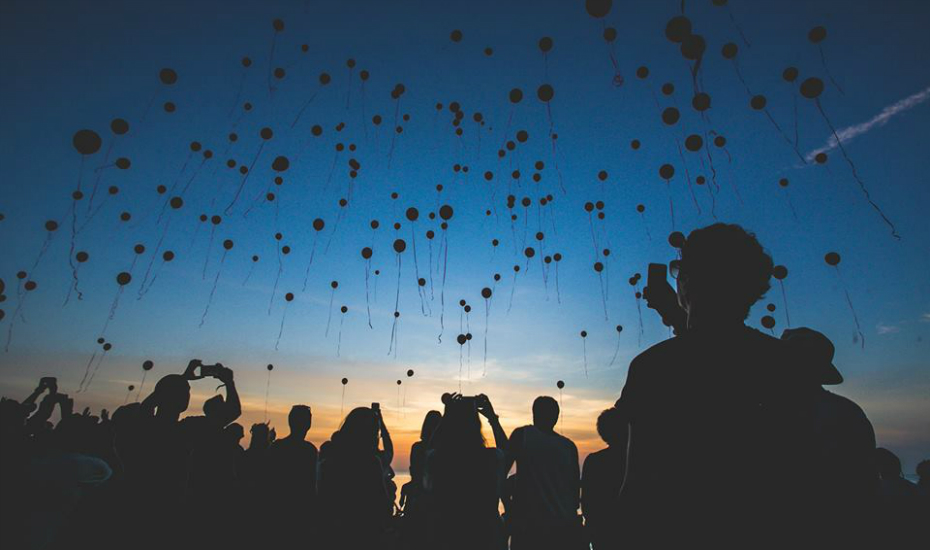
Vietnam’s Epizode festival has announced the first names for the upcoming fourth edition, taking place on the island of Phú Quốc from December 27, 2019 to January 7, 2020.
Anja Schneider will be making her debut, and she will be joined by Apollonia, who return after their Boiler Room set last year. Epizode⁴ will also welcome Craig Richards, Nicolas Lutz, Guti, Diynamic’s Lehar, and rising Swiss artist Lilly Palmer. Loco Dice, Ricardo Villalobos, wAFF, and William Djoko are also included in these first names. The full list can be viewed below.
Epizode is a carefully curated 11-day cultural extravaganza organized by Moscow-based holding company Sagrado Corp. Their active portfolio includes managing all event venues and entertainment projects in Moscow, co-organizing the cultural program of the international Expo in Astana, and coordinating the tours of numerous DJs and musicians in Moscow.
The festival kicks off after Christmas and ploughs through New Year. Over the last three editions, the festival has featured some of the biggest electronic music headliners alongside some of the most prolific talents in Asia. In 2019, attendance rates doubled from previous years, with more than 10,000 people from 79 countries.
More information on the event can be found here, alongside tickets.
Silences is the latest collaboration of James Green and Nick Dawson, who will together release their debut self-titled EP via Courier Sound. The recordings were made in a single day in February 2019 at Bearhug Studio utilising a broad variety of objects, microphones, and instruments, and everything was improvised. It’s intended as the first step of an ongoing project exploring downbeat ambience.
In support of the EP, our July 8, we’re offering a Wil Bolton remix of “Chem Trails Over Southend Pier,” a serene and peaceful piece of downbeat bliss, as one of today’s free downloads. It’s available now via the WeTransfer button below, or here for EU readers due to temporary GDPR restrictions.
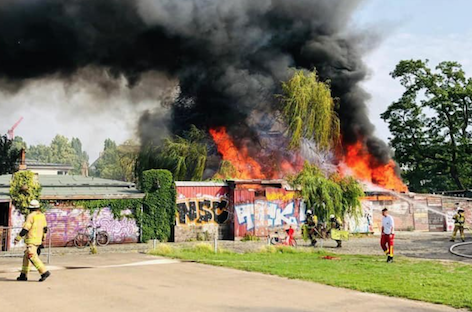
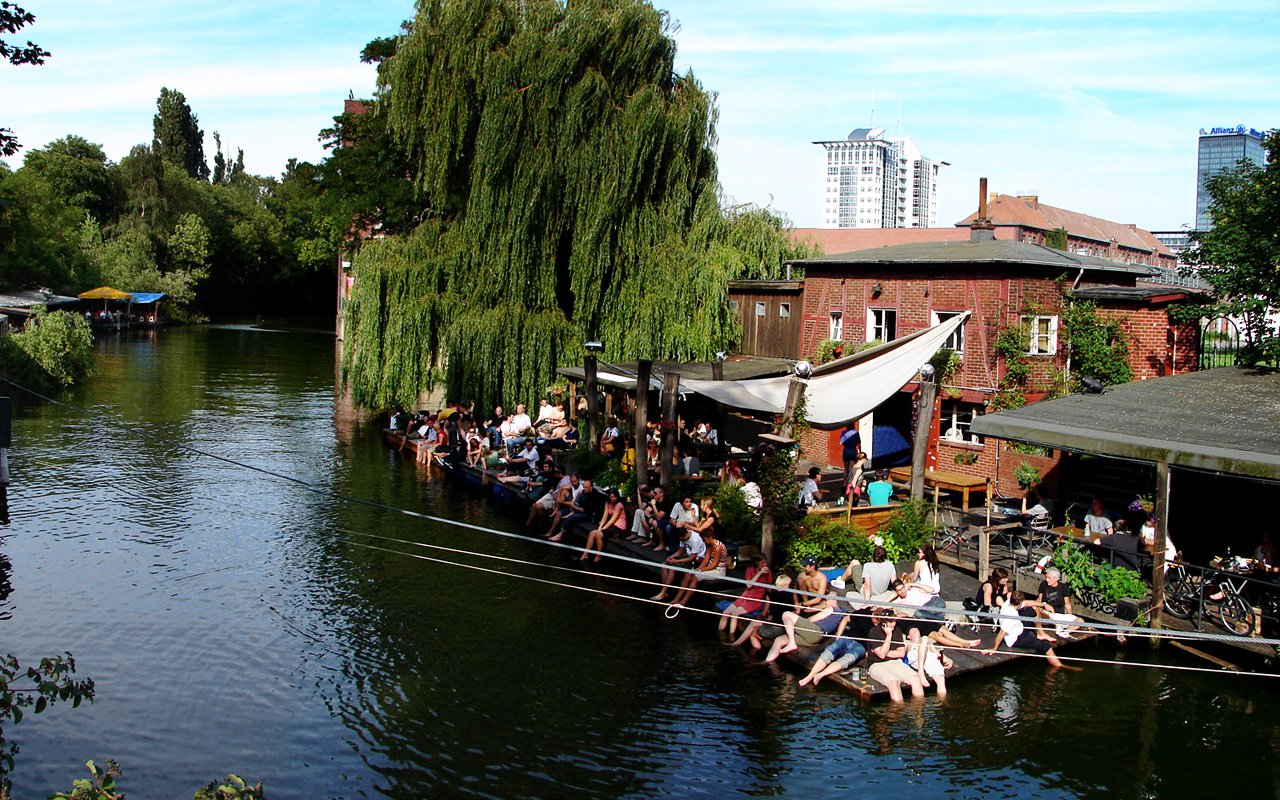
A fire broke out at Berlin’s Club der Visionaere this morning, leaving the popular canal-side venue “burned out almost completely” and “slightly injuring” three people, according to the city’s fire department.
Local firefighters were called to the venue in the early hours of Saturday morning local time, and they were successful in their attempts to stop the fire from spreading to a nearby gas station. The cause is not yet confirmed.
The popular Kreuzberg venue is one of the German capital’s most renowned nightspots, hosting parties all throughout the summer with a focus on minimal-leaning beats. Friday night’s party featured Perlon affiliate James Dean Brown plus some DJs from Tokyo.
Despite fears for the worst, club owner Gregor Kraemer has confirmed that the damage is not as bad as originally feared, and that it extends only to the outside decking area. He hopes to reopen soon, and until then parties will be hosted at nearby Hoppetosse, starting Sunday.
Albania was closed off to tourism for much of the 20th century because of a brutal communist regime, but it’s now becoming a popular holiday destination. A key driver for this has been music, with a number of new events popping up to attract visitors from Europe and beyond. Last year Kala festival brought the likes of Peggy Gou, Moodymann, and Jayda G to the idyllic surroundings of Dhërmi Beach, and this year it was Unum’s turn to debut, bringing more of a minimal house and techno groove with the likes of Zip, Raresh, and Sonja Moonear, plus mainstream headliners such as Joseph Capriati and Luciano—and with them a flock of electronic music fans.
We arrived at the capital Tirana’s airport on Thursday afternoon, and after a quick one-hour transfer we had arrived at our beachside hotel—a complex surrounded by pine trees and with towering mountains as its backdrop. There were also restaurants, gardens, and multiple pools. The whole complex was reserved for tourists travelling to Unum, but some opted for Air BnBs. The first night saw some local DJ talent performing in the courtyard. It was an easy introduction that put us all in a good mood for the main event.
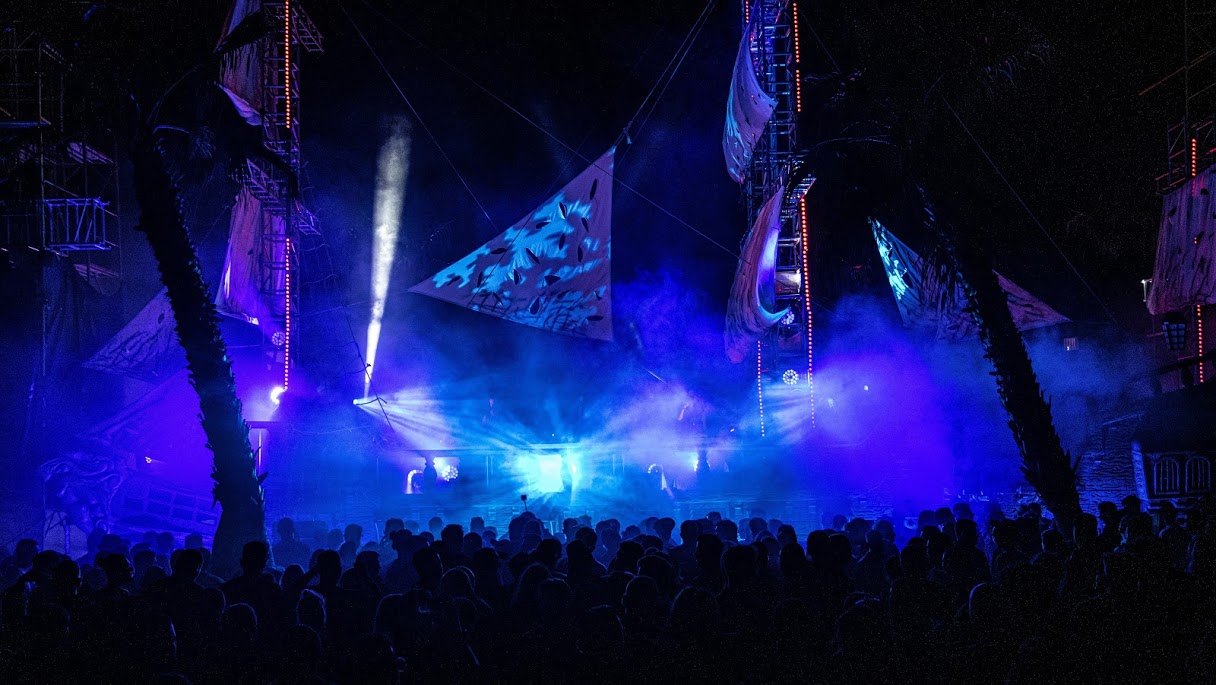
The Saturday began early, and access was easy, with no queues or anything of the sort. The music was divided between three stages: the Main Stage—in effect a large pirate ship, with the DJ on top of the deck in the middle—the Pine Stage, and Beach Stage, each getting progressively smaller. My eyes were firmly set on Pine, with its focus on groove and a lineup that included Sonja Moonear, Raresh, Digby, Dyed Soundorom, Margaret Dygas, and those in their orbit. Naturally, Main leant towards the bigger names—think Luciano, Joseph Capriati—but was bizarrely only open on Friday and Saturday nights, starting at 8pm.

The Beach Stage, meanwhile, was focused on the daytime, closing at 8pm, although organisers were kind enough to extend the curfew on the final evening. The likes of Traumer, Cesar Merveille, and Enzo Siraguza all looked a little out of place on a lineup of lesser-known names, most of which had come from Albania and nearby states such as Turkey and Greece. This all meant that there were no real clashes, which is so common at other events—Dekmantel springs to mind, with its stellar bookings and large daytime site—but it also meant that almost all my time was spent on one stage, Pine, the only venue where the music didn’t stop for the duration of the festival.
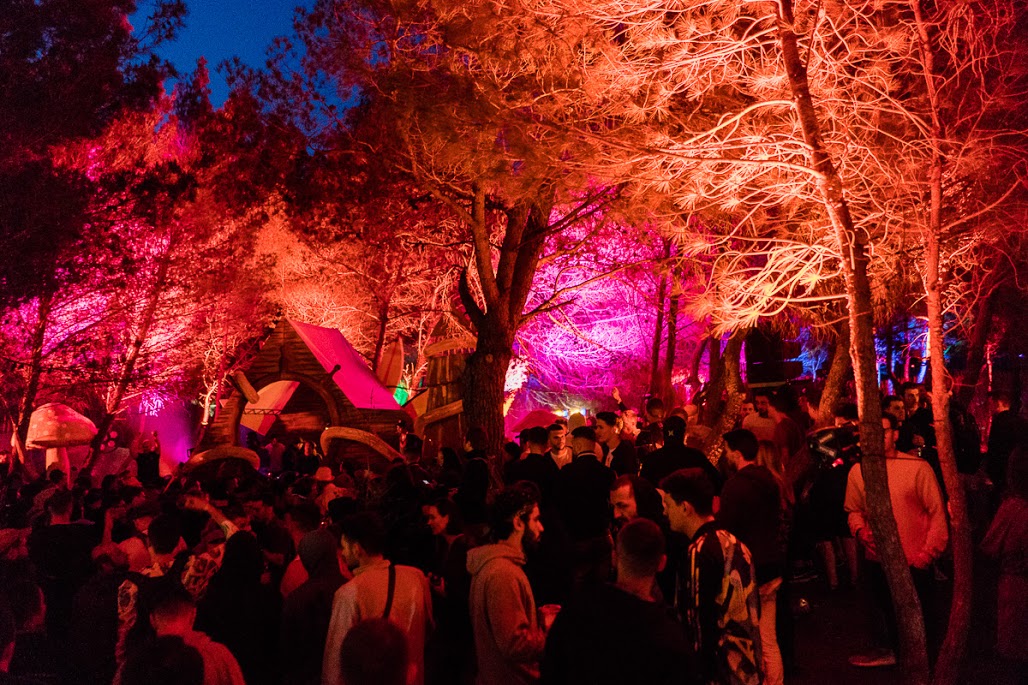
The first day was disappointing. Pine and Beach were both under way, and we spent some time at the former, found through a discreet little opening in the woods lit up by a trippy wooden structure, much like some of the stages at Gottwood, but the music wasn’t really catching my ears. Attending the smaller stages at festivals is often a good way to discover new talents but the crowds were sparse and the music was too heavy for the chilled out daytime vibe. These hours are an important part of any music event, especially so when the sun is shining, and the scheduling and booking could have been given more consideration. It felt like the event only really came to life at night. It wasn’t until Shaun Reeves’ evening set, the opening of the Main Stage, that it felt like the festival really began.
But the Visionquest man’s set meant this was all forgotten come evening. The wooden ship came to life and provided a dramatic backdrop for a set of warped techno and house cuts. The system was also impressive; even if you weren’t up close the bass still reverberated through you, seemingly wherever you stood.
After two hours, around 10 pm, we made our way over to Pine, which was now lit up by orange bulbs set up in the forest canopy. A slight lowering—a ditch of sorts—in the middle center facing the decks felt made for a dancefloor. We caught the end of Cap, and then up stepped Praslea for what turned out to be a slightly underwhelming two hours; I say this because the Romanian always delivers, but his apparent determination to go harder meant that he lost the subtleties that make you want to move. In contrast, Dyed Soundorom turned in one of the sets of the event. Joseph Capriati was closing at Main but Soundorom’s house classics, such as Boo Williams’ “Make Some Noise,” were too good to miss. We stayed there until the sun came up, and then moved over to Margaret Dygas at 7 a.m.
Does Dygas ever disappoint? Not in my books. The Perlon mainstay delivered another genre-jumping masterclass, mixing breaks with garage, house, and techno. I’ve always felt that Dygas’ intricate cuts sound best in an intimate setting and the early morning at the Pine proved my point. It was one of the highlights of the event, with the stage nicely bustling, but not yet too busy. As people arrived, however, and the crowd spread, it became apparent that the sound was only really good if you were on the dancefloor; anywhere else, where you had to be at the busier times, and you couldn’t really hear the high-end—even more important when you’re listening to DJs such as Dygas, Raresh, and Sonja Moonear, all of whom favor subtlety.
Saturday began with Traumer and Cesar Merveille at the Beach Stage, little more than a white gazebo on the beach. This was actually one of the best stages, certainly the only one really fitting for the day, and perfect for chilling with a couple of drinks and listening to some tunes. Traumer and Cesar Merveille were the only two who got the mood anywhere near right, but the draw of Digby over at Pine dragged me away after just one of their three hours. The Flash as a Rat head kept me there until 8 p.m., conveniently as the Main Stage was opening up for sunset and the Game Over crew, an Ibiza-based night that has built up quite a reputation over the years. Resident DJs Jamie Mannion and Adam Chappel did not disappoint with their blend of house and minimal rollers.
The real highlight of Saturday, however, came later with Raresh. The Romanian, whose housier selections just sound so much better when he’s without Rhadoo and Petre Inspirescu, drew the biggest crowd of the whole event. His set was typically filled with upbeat groove; I didn’t pick up too many outside of The African Dream’s 1994 classic “All The Same Family” and Romar’s “007” from Bucharest- based label Atipic. It was a classy performance from one of the best. Up next was Ion Ludwig for three hours of live jams, and Petre Inspirescu, who laid down his minimal rollers as only he knows how; scheduling his lighter groove for sunrise was a smart move.
In the midst of all this, I did catch some of the Main Stage, where Luciano, a DJ I’ve not seen for a good few years, played a mixture of European style tech-house. It was enjoyable but the music as a whole was too “big room.”
You have to sleep at some point and my natural needs required that I miss Vera B2B Laylla Dane and also DeWalta B2B Mike Shannon. But after a well-needed rest, I headed back for the end of Ferro and the start of Sonja Moonear, who was another highlight of the festival, although by this point it had started to rain heavily. The Pine Stage’s woodland clearing setting provided no cover so makeshift gazebos were used as canopies, meaning that everyone was vying for the same spot which led to a pretty congested and disjointed dancefloor. Ricardo Villalobos then played with Franco Cinelli, and was on good form despite the troubles overhead. He dropped Michael Nyman’s “Memorial” to really dramatic effect.
By 6 a.m., the rain had become so heavy that the festival was shut down. This was a bit deflating, partly because everyone had been in such good spirits but also because Craig Richard and Zip were still scheduled to play. With fingers crossed, we headed back to the hotel and waited for the rain to stop, only to be told that Zip was going to play in the basement club of our hotel complex. We made our way down to see the Perlon head spin some records to a crowd of no more than 200 people. Needless to say, it was a typically brilliant set, and the intimacy of the setting and the aforementioned weather problems made it that little bit more memorable.
I left Albania with a smile on my face, having had a fun-filled few days with some very good sets. Unum did many things well, especially for a first edition. The production and setting were exemplary, and the music too, although the scheduling and the bookings could be improved; perhaps a little too much focus was on formulaic, big names (although arguably necessary to spread the word of the event) and there’s a screaming need for diversity. If you look at the bigger picture, Unum has taken a big step in putting Albania on the map when it comes to electronic music events, and it feels like the organizers had at least one eye on supporting music in the region—even providing discounted tickets for locals. This will in turn help local talent to develop, and it also opens the door for future editions, which will continue to support the local economy. With some little modifications, Unum could become one of the next go-to summer festivals.
Photos by olirileyphotography / jukeboxpr and Valeriu Catalineanu at Unum Festival
Reynier Hooft van Huijsduijnen, better known as Deniro, is one of the Netherlands’ many highly skilled but little-known musical talents. Born in 1985, he was raised in The Hague but suffered with various problems of a personal nature. Much to the detriment of his education, music became a necessary way of occupying the mind. “I wanted to make music all the time and so I didn’t complete any of my work,” he says. “I had no motivation at all.”
Deniro found his way into music through his friend Thomas Martojo, a member of Dekmantel Soundsystem. Together they toured the Netherlands, exploring the nation’s clubs and festivals, and Deniro quickly realised that it was the melodic side of techno that resonated with him most. He began experimenting with production in high school, firstly on Fruity Loops, but soon upgraded to more professional gear, a necessary upgrade to satisfy what became an addiction.
In 2012, aged 27, he released his EP debut on Amsterdam’s Tape Records, the label he co-runs alongside Berend Kirch and Jeroen Kok. Upbeat and sultry, with precise and sparing use of melody and rhythm, it was deeply rooted in timeless Detroit soul music, a modern take on the ‘90s techno that had been occupying his mind for so long. Two more EPs followed on Tape soon thereafter, one in 2014 and one in ’15, catching the attention of Hunee, ROD, Steve Rachmad, and Nina Kraviz to name a few. The latter released Deniro’s Organezized on her Trip imprint in 2015.
Now 33, music continues to occupy Deniro’s life. He remains heavily involved in Tape Records, still a small but acclaimed electronic music label distributed by Clone, and he DJs across Europe with much more frequency than his profile suggests. You’ll find him on the bill of many of the continent’s top events this summer, often half-way down in reasonably small font. While many of his peers, Tom Trago included, have become recognized names among the global electronic music community, Deniro is known by few, a secret of sorts among those in the know. You may not know his music, but there’s every chance you’ve heard it.
Deniro recently contributed a track to XLR8R+, which is available for download now alongside previously unreleased tracks from Tom Trago, Darling, and Tracey, PLUS an exclusive sample pack from Trago himself. Deniro’s contribution is a melodic slice of home-listening bliss, made in 2016. You can download it here by subscribing now.
Editor note: A version of this article appeared in the zine, an accompaniment to the music as part of XLR8R+012, available now.
You first released in 2012, but how did you find your way into electronic music?
I think it was around 2002 when I went to my first techno parties. I must have been 17. I started with all the cheesy music, just like everybody else. I went to check DJs every weekend with some friends. Then with Discogs and Soulseek as tools, we checked everything and developed our taste.
Who is “we?”
It started with one of my friends at the time, Thomas Martojo from Dekmantel Soundsystem, who is still a good friend. He was going to parties and told me about this experience, and then I went with him to another party in our hometown. From that moment we were hooked on this music. We went to parties all over the country to check all these new sounds.
How did you connect with music more generally?
My father was quite a good guitar player when he was young, but my mother forced him to stop playing with his band and take a normal job for grown ups. He later told me that my mother was right. He listened mostly to ‘60s and ‘70s guitar-driven music like Frank Zappa and The Rolling Stones. I remember that I always had to listen to this when we were together driving in the car. I’m grateful he taught me that I shouldn’t listen to Queen, Phil Collins, Fleetwood Mac, and the more cheesy bands. He taught me mostly ‘70s guitar bands. And about good guitar players like Eric Clapton and [Frank] Zappa.
What appealed to you about the techno parties?
First of all, the music. And for me it was also a way to escape the daily struggles and just think about nothing. All I was focused on was learning new music. I also liked the vibe, and meeting people who were also interested in this kind of music.
“I had already found my passion and that was at home behind my drum machines.”
You say escaping your daily struggles. Did you have a difficult childhood?
I was born and raised in The Hague, and my parents divorced when I was four. I grew up with my mother. I have two little half-sisters who are from my father and his second wife. Later on in my childhood my father got sick with a brain tumor, which was very heavy for me. Especially because the relationship with my mother was not so good at the time. I was also still going to school then. The only thing I really enjoyed then was making music and discovering new music. My father passed away when I was 17.
Do you think this drove you into party culture?
Totally. It was an escape from reality. I discovered a deep passion for music, and I just wanted to make more music every day. Because of that, I let the normal teenage life, like having to go to school, slip.
How did music impact your studies?
After finishing high school in The Hague, I studied Economics in Rotterdam, Sociology in Amsterdam, and then Media & Entertainment back in The Hague, but it was a complete disaster. I wanted to make music all the time and so I didn’t complete any of the studies. I had no motivation to go to school at all. I had already found my passion and that was at home behind my drum machines. My mother didn’t think there was a future with this ‘’hobby of mine’’ and didn’t agree with my choices. That’s really why there was tension at home between me and my mother in the first place.
Is there a record or an artist that inspired you to make music?
I think an important moment was the moment I bought the Steve Rachmad In The Mix CD. It was around 2003. That was exactly the techno I liked and I wanted to make. All the tracks had a kind of freshness and groove that was appealing, and they fit perfectly with each other. Not only raw drums but also beautiful sounds and melodies.
How did you learn the ropes of production?
I downloaded Fruity Loops just to play around with it. I was downloading lots of cheap-sounding samples and I was making really bad and funny cheesy songs. I thought it was good at that time, but that was only because I was too enthusiastic about it. I was proud that I made something all by myself. I would be really ashamed if anybody heard it now. After a while, I got Ableton and had money to buy some analog gear. I was making music and reading stuff on Fora to learn about making music everyday. It became like an addiction.
Where does the name Deniro come from?
Some friends called me Deniro. When I made my first track I still needed an artist name. Because Reynier Hooft van Huijsduijnen is a bit too long. Robert Deniro is also a cool guy!
Your sparing use of melody and rhythm has drawn comparisons to Detroit soul music. How accurate is this reference?
I do like hypnotizing monotone tunes, but the real deal for me are the songs with nice melodies. Like all the Derrick May stuff or Juan Atkins work. It’s nice to make tunes for the club but I also want to make music that is nice to listen to at home.
Given your appreciation for ‘90s sounds, what do you think of the global state of techno today?
Techno has become too mainstream. As a result, there is way more music to discover than before. It’s also easier and cheaper to produce music. You only need a laptop and you can release it on your own Bandcamp label. A consequence of this is that there is much more not-so-good sounding techno and you have to dig a little deeper to find the good stuff.
“Even the bad producers had some bangers in the ‘90s. I just feel like there is some warmth and groove missing in most techno music nowadays.”
Which contemporary producers are inspiring you at the moment?
That’s a difficult question. I’m sure there is a lot of good music being released at this moment, and I’ve been buying lots of new music lately to play in my DJ sets; but if I need inspiration for my own productions, I’ll still go listen back to the stuff that was made in the ‘90s. Even the bad producers had some bangers in the ‘90s. I just feel like there is some warmth and groove missing in most techno music nowadays. In house music it’s different, but maybe that’s obviously because house music without warmth and groove is not real house music.
How do you capture this warmth in your own productions?
Because I use the same analog machines to make tracks. I want my music to evoke an emotion in the people that listen to it. For example, with my more melodic tracks it can be happiness and a feeling of comfort. My more loopy techno tracks can bring energy to somebody on the dancefloor. My main goal with producing music is to share this good feeling that music can give with my audience.
What are the central pieces of your studio?
My first synth was the Dave Smith Poly-Evolver. You can do all kinds of crazy modifications with that synth but I just didn’t like the sound and sold it after a while. It just wasn’t what I was looking for. Then I started to buy the gear my heroes like Steve Rachmad and Robert Hood were using, so I bought lots of older gear. Discovering and collecting gear became something of an addiction.
The gear I use the most now is the Roland TR-909 and the SH-101. If all my gear got stolen I would buy these two pieces back right away. For chords and pads and stuff, I use many different synths like the Roland JP-X8 and the Oberheim Matrix 1000. I’m sharing my studio with Interstellar Funk now so I can use his gear also. My favorite synth of his I use is the Roland Jupiter 4. I use it on almost every track I make now.
How did you first connect with Tom Trago?
I can’t remember exactly, but I think we met for the first time after one of the first Dekmantel parties in Amsterdam around 2010. We have a lot of the same mutual friends. I liked him instantly when I heard him playing at one of the first Dekmantel parties, but I liked him even more after his Live at the BBQ record. That track is beautiful. He always finds the right chords and melodies. I’m proud to be a member of his agency.
You tend to keep a lower profile, despite a comparable number of releases. What are your thoughts on self-promotion as an artist?
It’s not really my intention to keep a low profile. I don’t need to be that underrated DJ who is only known by the connoisseurs. I’m just not that good at self-promotion, although I think I’m slowly getting better at it. I’m thinking a bit longer now about what I post on my socials, and I’m posting some pictures now and then. I do this more now because I understand that it’s nice to get to know the person behind the music. I also like to communicate with other artists who you would normally not see or meet in real life.
Do you find it frustrating that it’s not always the most talented artists who rise to the top?
Not really, because I never expected to make a living from DJing in the first place, so I am a happy person now I can. Of course, I want to grow and would like to have a full schedule, but I’m patient and have confidence in the future. Maybe because there are many untalented DJs at the top, it’s more easy for a talented DJ to rise.
Your release on Trip was a big moment. How did Nina [Kraviz] discover you?
I found out she played my track “Atavism” a lot, and so when she walked by at Dekmantel festival some years ago I thought I’d be a big guy and introduce myself to her. It was a bit awkward because my mind wasn’t sharp anymore and talking English became very difficult. But she was very nice to me and told me to send over some tracks.
I thought my tracks were not good enough so I didn’t send her tracks right away. When she asked me again a couple of weeks later I sent her a couple of tracks. She did like them and released two: “Organezized” and “Dumanson.”
What would “success” be for you?
Success for me would be that when I look at my Discogs profile in 10 years I’ll see five pages of records that I’m still proud of; and success for me as a DJ would be that I make people dance at all the big festivals and venues in the world. In the end, it would also mean that in daily like I don’t have to worry about which stuff I can put in my basket in the grocery store!
The next release on Bristol label Mint Tea is Metamaterial, a various artist compilation featuring tracks from El Choop, Ornamental, OddNipp, label head Boulderhead, and Komartsov. These artists span Russia, UK, and the Netherlands. The release (which starts new series “MTUSB”) will be a limited edition run of custom USBs loaded with music videos and artwork.
“An entity, shielded in radio silence, hurtles past Earth’s orbit releasing an umber of data fragments,” the label explains. “Data fragments have been encoded in a human perceivable format intended for inter-dimensional communication with the beings of the vessel as it continues to search for sentient life.” Across eight tracks, we can expect acid, deep house, electro, house, techno, and experimental.
The quality across the release is high, and in its support we are streaming Boulderhead’s “Ionic Bonding” in full via the player below. The UK producer’s only previous release came in March on NV020, another V/A via Czech Republic’s Neo Violence.
Past Palms is a New York-based producer of lo-fi music. Blending lush ambient soundscapes, warm nature samples, and distorted, bass-heavy beats, the music aims to encapsulate the feeling of surrounding yourself with an oasis of tropical houseplants while living in a grey, nature-less city.
Each track on the Past Palms EP is inspired by nature. “II. Kentia” is even named after his favorite plant, the Kentia Palm. It starts off warm and relaxing, but it builds to a chaotic climax with harsh distortion and intense clipping. “It’s the sonic interpretation of what it feels like when you’re watering this paradisiacal palm tree, but then you look out the window and see grey desolate buildings and factories with no sign of nature anywhere,” he says.
“I wanted to express how it feels to watch the morning sun fall across gorgeous palm tree fronds while an ambulance or giant truck blares outside, and all that can be seen from the window is grey and concrete—no green anywhere. I used bright harp samples and field recordings of nature to create a lush and peaceful atmosphere, then brought in bass-heavy drums and distorted vocals to embody the brashness of the city. I love both elements and how they coexist, just as the nature we bring into our homes coexists with the often-desolate cities we live in. Past Palms, for me, is an attempt to reflect the feeling of trying to connect with nature in a nature-less place.” — Past Palms
The dreamy EP drops on Friday, June 21, and in support of its we’re sharing “II. Kentia” in full via the WeTransfer button below, or here for EU readers due to GDPR restrictions.
Today, Novation will demo its new Summit synthesizer for the latest Beats and Bytes livestream.
The recently announced Summit is a two-part, 16-voice, and 61-key polyphonic synthesizer with dual filters, extended front panel controls, audio input, and the same five-octave keyboard introduced with the SL MkIII MIDI controller. Further features include the digital New Oxford Oscillator, three of which are employed by every one of its 16 voices, and the oscillators are hosted on an FPGA (Field Programmable Gate Array) chip, which helps generate authentic analog waveforms at incredibly high resolution (24MHz) and facilitates FM and wavetable synthesis.
You can watch the livestream on Novation’s YouTube channel, with the livestream schedule below.
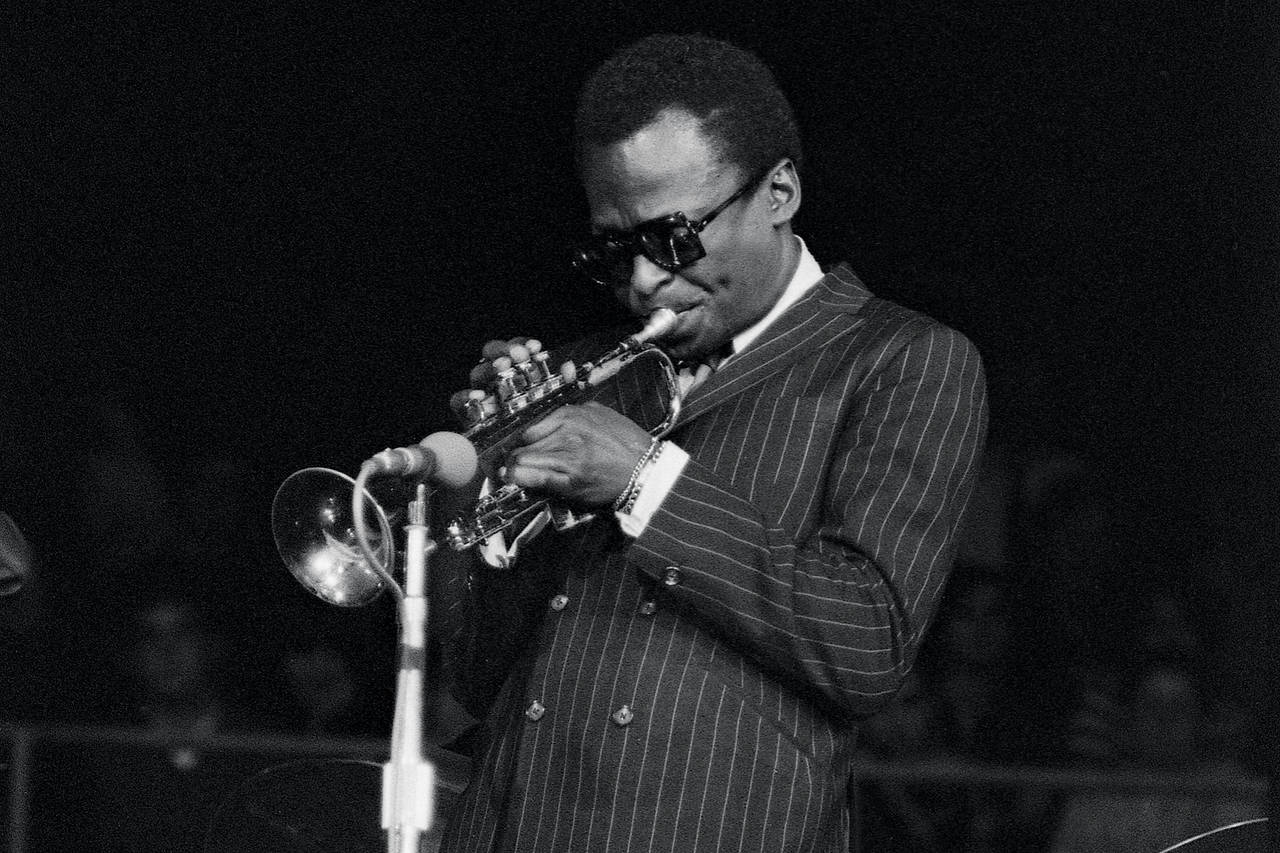
Miles Davis‘ long lost Rubberband album will finally be released in September.
In October of 1985, after leaving Columbia Records to join Warner Bros. Records, Davis began recording Rubberband at Los Angeles’ Ameraycan Studios with producers Randy Hall and Zane Giles. The musical direction he was taking during the sessions marked a radical departure, with the inclusion of funk and soul grooves as well as plans to feature powerhouse vocalists Al Jarreau and Chaka Khan. The album was eventually shelved, and Davis went on to record Tutu, leaving the Rubberband songs unheard and untouched for over 30 years.
The famed trumpeter’s fans finally got a taste of the album last year with the release of a four-track Rubberband EP for Record Store Day. Rhino/Warner Records will now bring the entire 11-track album on September 6 on CD, LP, and digitally.
Finished by the original producers Hall and Giles, and Davis’ nephew Vince Wilburn Jr., who played the drums on the original sessions for the album in 1985-86, the album also features newly recorded vocals from US singers Lalah Hathaway (daughter of soul legend Donny Hathaway) and the 12-time Grammy-nominated Ledisi.
Davis, who plays both trumpet and keyboards on the album, was joined in the studio by keyboardists Adam Holzman, Neil Larsen, and Wayne Linsey, percussionist Steve Reid, saxophonist Glen Burris, and Vince Wilburn, Jr. on drums. The sessions were engineered by Grammy-winner Reggie Dozier.
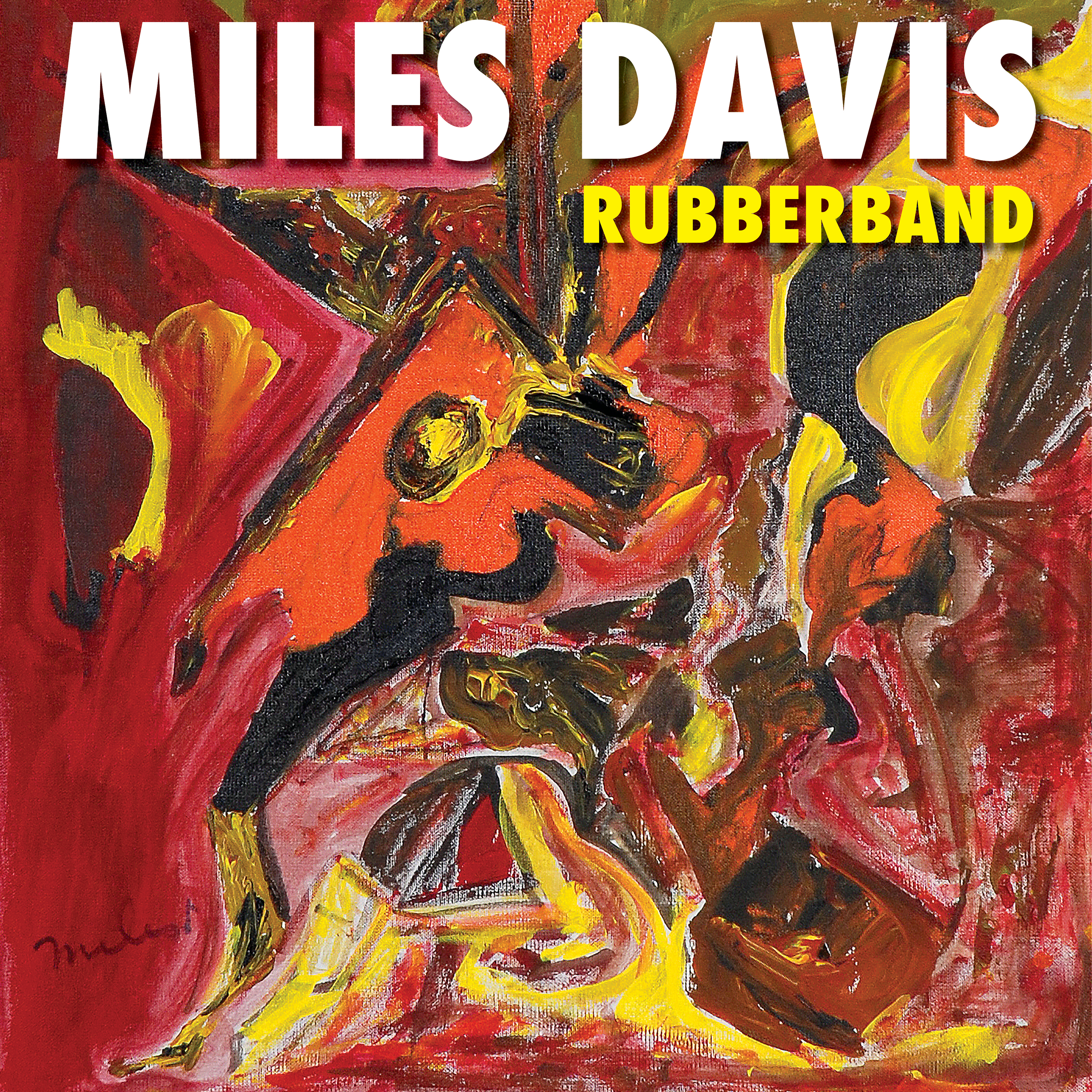
Rubberband includes linear notes from George Cole, writer of “The Last Miles,” and features an original painting by Miles Davis as the cover art.
Tracklisting
01. Rubberband of Life feat. Ledisi
02. This Is It
03. Paradise
04. So Emotional feat. Lalah Hathaway
05. Give It Up
06. Maze
07. Carnival Time
08. I Love What We Make Together feat. Randy Hall
09. See I See
10. Echoes In Time/The Wrinkle
11. Rubberband
Rubberband LP lands September 6 via Rhino/Warner Records, with opener “Rubberband” of Life feat. Ledisi streaming here.
XLR8R is offering XLR8R+ subscribers free passes to the upcoming edition of UP Festival, taking place in Prague from Saturday, July 13 to Monday, July 15, 2019.
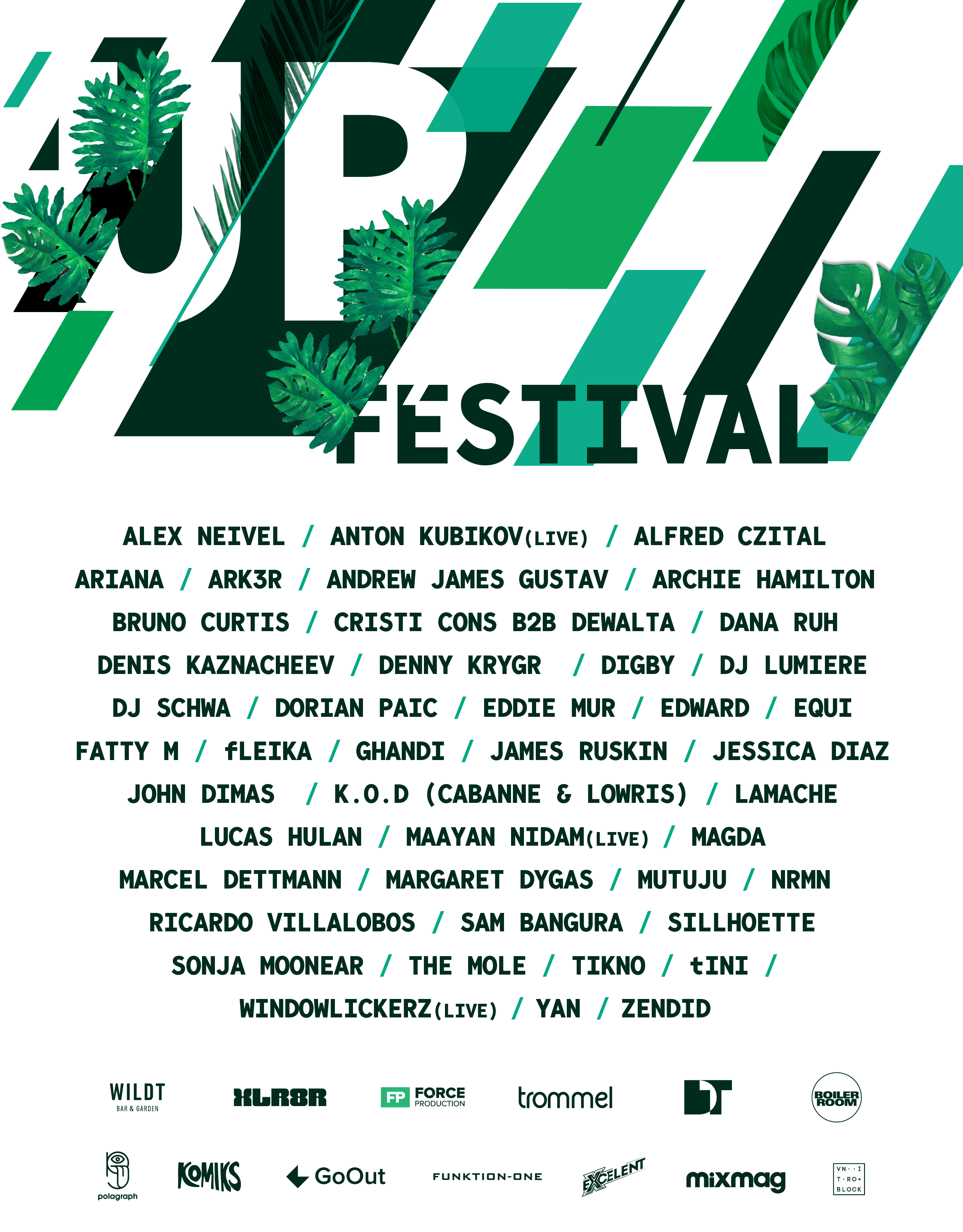
Last year’s inaugural edition of UP was a great success, and it returns next month with a number of new names. On the bill are Andrew James Gustav, Archie Hamilton, Bruno Curtis, Cristi Cons B2B DeWalta, Dana Ruh, Jessica Diaz, John Dimas, K.O.D. (Cabanne & Lowris), Lamache, Maayan Nidam (live), Marcel Dettmann, Margaret Dygas, Ricardo Villalobos, Sam Bangura, Sonja Moonear, Zendid, and more.
Beginning on Wednesday, July 10, the festival will host a seminar on electronic music, followed on Thursday, July 11 with a Boiler Room session. The next day, on Friday, July 12, there will be a chill-out session at Vnitroblock, a creative space for designers.
The actual festival begins on Saturday, July 13. XLR8R will be hosting a stage during the day alongside UP Festival, and in the evening the Komiks stage will be open. Closing on Sunday, the UP Festival stage and XLR8R will both host a little matinée programme, after which there will be an after-party, details to come soon.
This year’s edition is themed around Harmony in Nature, and the stages will be located in a forest where art will be celebrated as the main component.
We’ve partnered with UP to offer subscribers of XLR8R+ a limited amount of free guestlist passes to the event. The face value of tickets is €50, so this is an offer not to be missed.
For those who haven’t yet, SUBSCRIBE HERE and email your full name, subscription confirmation page, and “UP Festival” to [email protected] to claim your free event pass. For those current subscribers, simply email your full name and “UP Festival.”
The 12th edition of XLR8R+ is here, a Dutch special curated by Tom Trago and featuring tracks from Deniro, Tracey, and Darling. Listen to the snippets below.