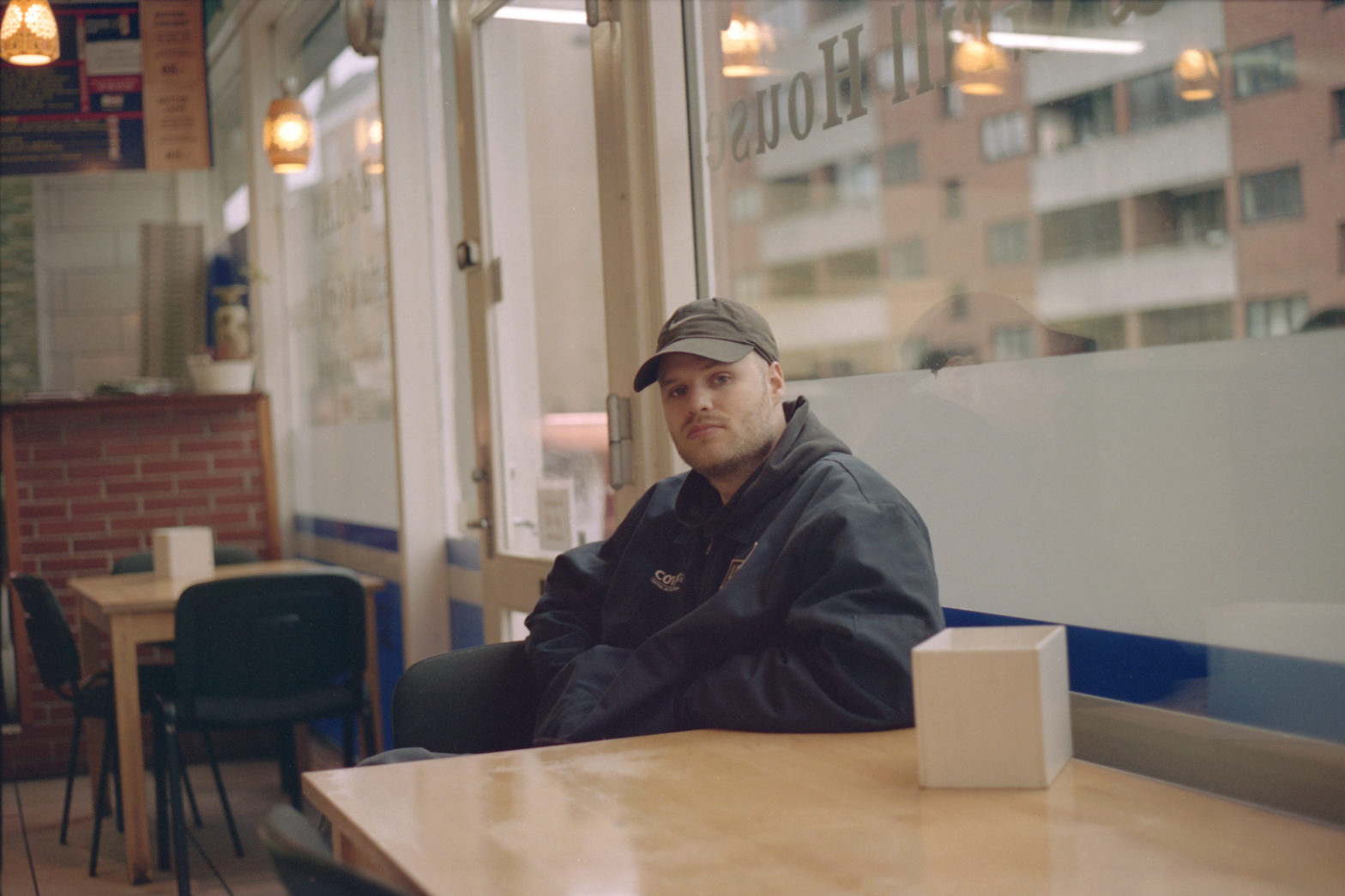
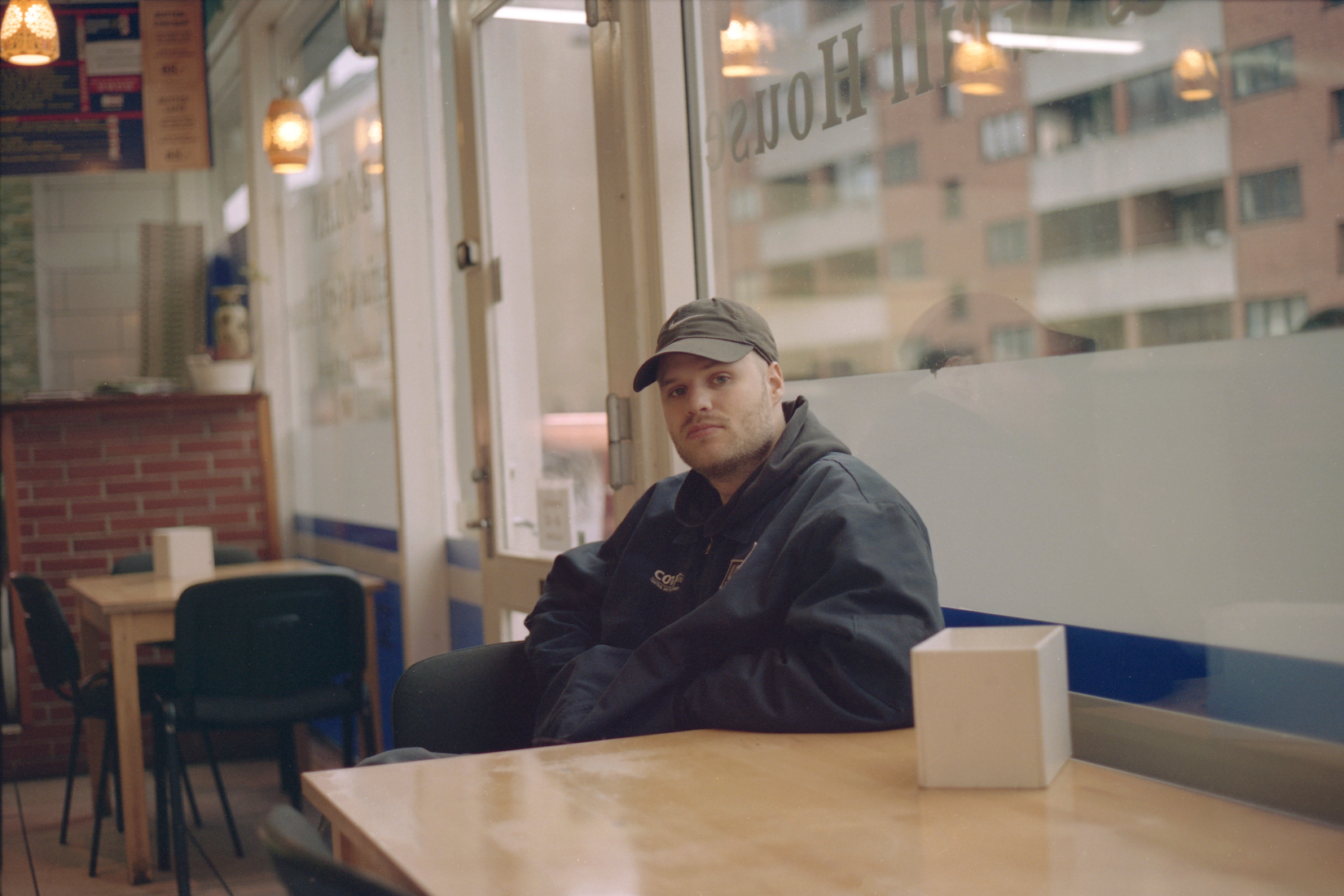
Marott is a Danish producer, DJ, and label owner. He’s previously released three EPs, the latest coming last year on Seilscheibenpfeiler. Together with close friend Alfredo92, he launched the community-based label Axces earlier this year.
With his Forever Mix EP, we’re told that Marott offers a 14-minute musical expedition through the slower-paced “Drømmen om Ø (Forever Mix ‘19)” and a personal take on his hometown’s accelerated euphoria with the floor-crushing “Sky Dreams.”
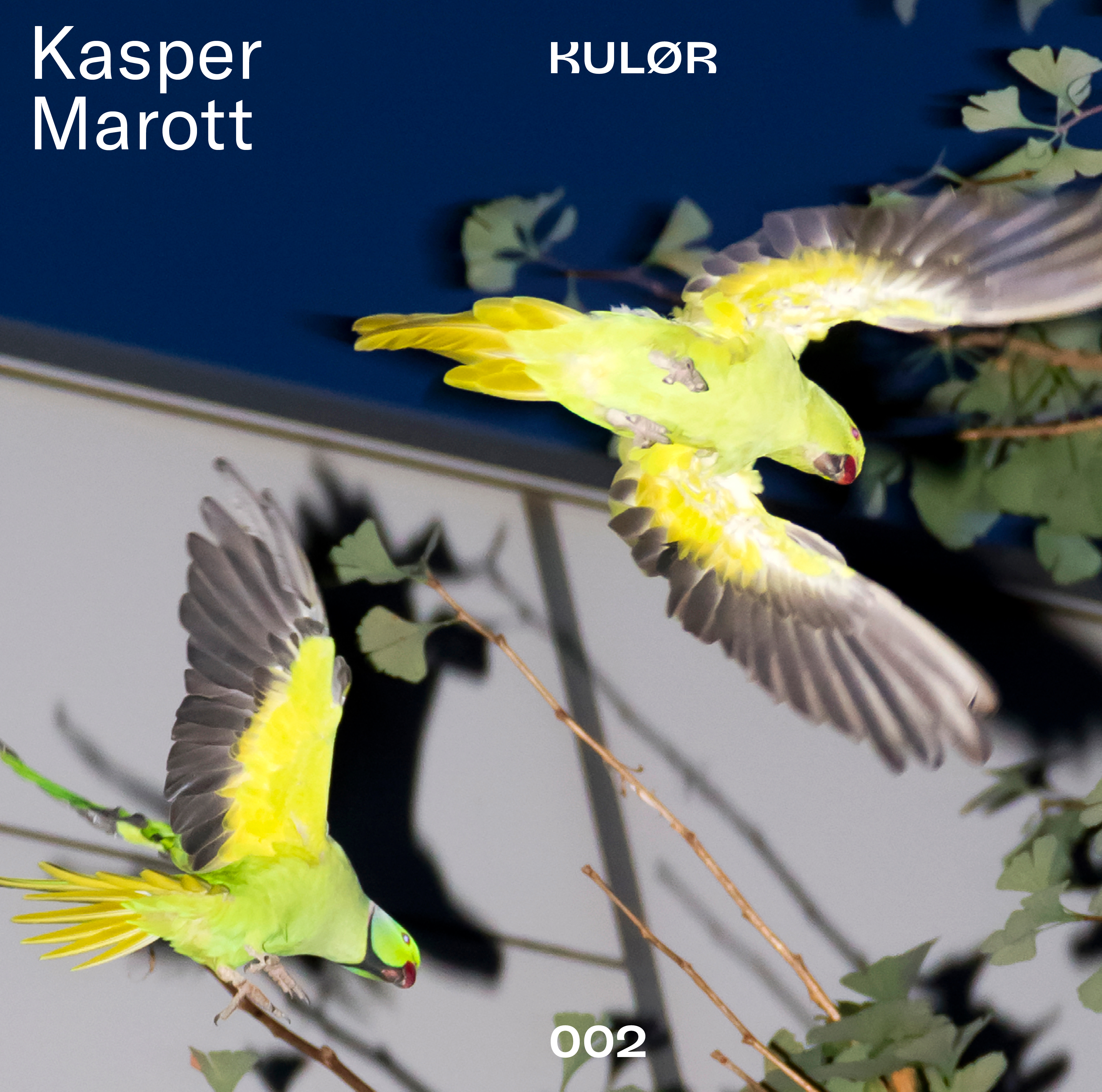
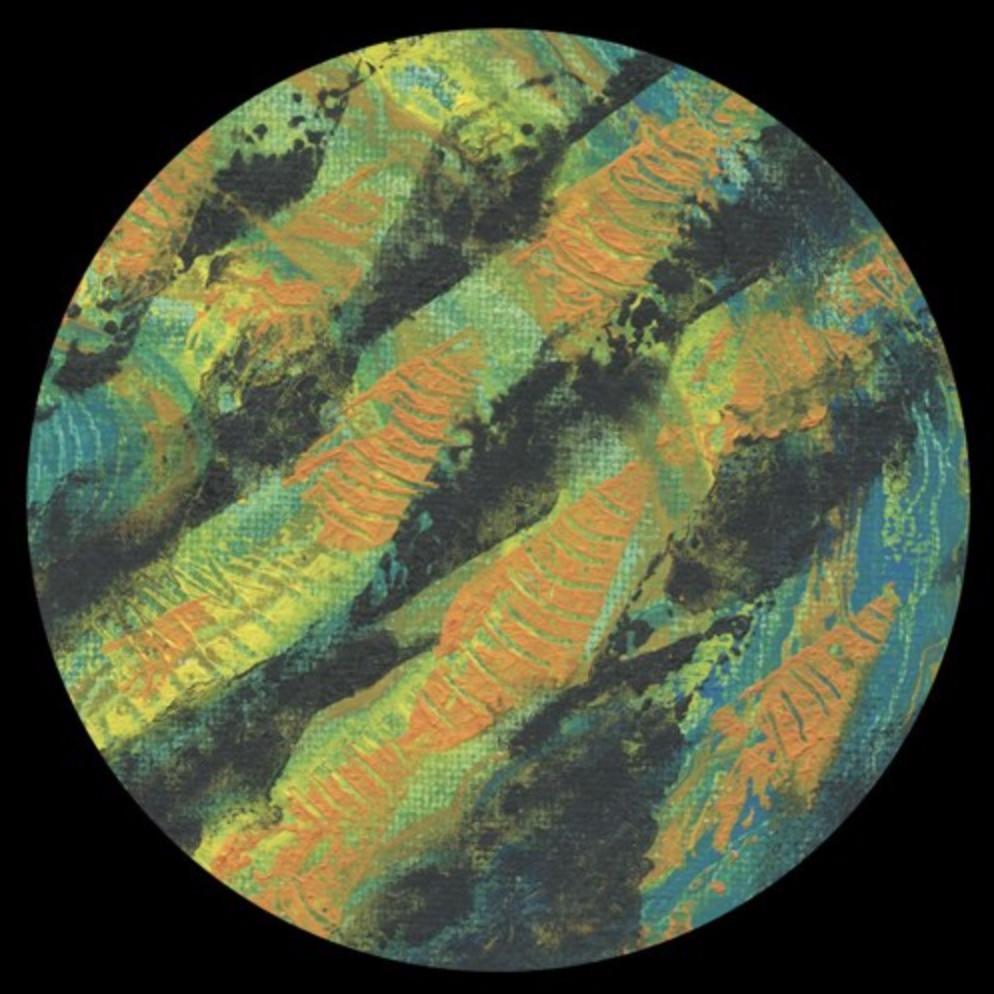
Artwork photography is by the Japanese artist Yoshinori Mizutani, and the vinyl comes with an A2 poster. Graphic design is by Spine Studio.
Kulør aims to showcase Copenhagen’s fast techno scene, launching late last year with Kulør 001, a 10-track V/A compilation.
“I’ve been eager to work with Kasper Marott for a number of years and I’m so grateful that Kulør 002 will feature two stunning tracks of his. I’ve been a fan since Marott was a teenager. Across different tempos and genres, he always manages to make dance music with a singular, clear voice.
“When I listen to the two tracks on Kasper’s record, I get this sense of being surrounded by wild birds, so in terms of artwork, we ended up looking for a photographer who could put a radical twist on wildlife and bird photography.” —Courtesy
Tracklisting
A1 Drømmen om Ø (Forever Mix ‘19) (14:04)
B1 Sky Dreams (8:30)
Forever Mix EP lands May 24, with “Sky Dreams” below.
White Rats II forms the second part of the White Rats trilogy, with the first part released just about one year ago. It’s Ho’s third full-length for Ron Morelli’s label, following releases on Veronica Vasicka’s Cititrax and Silent Servant’s Jealous God.
The album draws influence from the “dark soul” of Wormwood Scrubs prison in west London and Ho’s obsessions in the JG Ballard book “Crash.” It focuses heavily on the dancefloor with droning techno, head-banging acid, and cinematic synth noise.
Ho has been a driving force in the techno scene since the mid-‘90s, making a name for himself as a part of the new breed of British techno that drew inspiration from the country’s rich history of industrial and post-punk.
J-E-T-S should be familiar with all XLR8R readers by now, having submitted a podcast back in 2015—and with both members having featured prominently on our pages. Machinedrum, real name Travis Stewart, has completed a studio feature and written some highly informative Artist Tips, while Jimmy Edgar completed a Hi-Five in 2015.
This feature comes before the release of the duo’s debut album, Zoospa, out May 24 via Innovative Leisure following a series of EPs released on the their own Ultramajic label dating back to 2012. We’re told to expect a fiercely cohesive but wildly varied long-player.
Machinedrum and Edgar first met as teenagers on a pivotal trip to Miami, one of their first ever gigs outside of the places they were raised (Edgar originally hails from Detroit, Machinedrum from rural North Carolina.) They bonded over a mutual love of Warp, Schematic Records, and Chocolate Industries. A tight friendship was forged when both lived in New York but their first self-titled EP didn’t drop until 2012, by the time both had independently decamped to Berlin.
Eventually, they relocated to Los Angeles where their second EP was recorded in 2015. The idea has always been to record something bigger and more expansive, but it didn’t become a reality until Edgar headed up the coast, eventually settling and building a home studio in Portland. That’s where Machinedrum headed in the late summer of 2017 to cook up the tracks that eventually became Zoospa.
Zoospa will land on May 24, but ahead of the release you can read their answers to your questions about production, DJing, and just about everything else.
How do you handle dynamic and evolving careers? Does your art tend to lead career decisions, and do you ever worry about alienating fans with new material?—Kaelin B
One big thing we’ve learned after having long careers in music is that it’s important to enjoy the process and be as present in the creative moment as you can be. It can be easy to fall into the habit of planning for the future too much. For example, you might find yourself trying to decide where a track will go in the middle of creating it, what label it fits on, if it’s an album cut or better for an EP, if you should pitch it for someone else’s project, etc. There’s also the potential to focus on how people might perceive your work or potentially criticize it. Doing these type of things can take you out of the moment and will cause you to make decisions that usually end up affecting the music negatively. The more present you are in the creative process, the more the excitement and joy of that moment becomes clear in the music.
This same presence should be applied even after the creative process is finished. Every moment leading up to the release of your work should be treated with the same respect, presence, and love as with your music. This includes press- and promo-related things, building a live set, creating the artwork and music videos, or anything else related to the rollout of a release. That way when the day finally arrives and you’re able to share your music with the world, it feels much more like an exciting journey rather than like you’re “going through the motions.”
In regards to alienating fans, we apply the same principles that we do for our everyday lives. When you become too focused on the external world for validation you will find yourself feeling lost and confused. Yes, it is important to engage with fans and hear where they are coming from but it is impossible to know what leads every individual person to listen to your music. It’s impossible to know their overall taste in music, what aspects of your music drew them in originally, or what their lives are like in general.
Typically when someone complains or says something negative about your work it is coming from a place of insecurity and shouldn’t be given much attention. However, there are cases where someone genuinely misses a certain sound that you have provided in the past and there’s nothing you can really do about that. There’s been many times when people who aren’t in to our latest work eventually come around and find themselves loving it. We can think of many albums that “grew” on us in this same way and eventually became favorites. It’s our nature as creators to constantly evolve and try new things. Anyone who understands this usually doesn’t take issue with a musician taking a different direction with their sound.
How many of your tracks are MIDI vs recorded audio/samples or loops ?—Andrew Ford
The only time we use MIDI is for external gear like rack mount synths and modular. After we are happy with the sound we made or preset we chose on the gear and whatever chord progression, sequence, or melody we have come up with, we then record the audio into Ableton Live using rack mount EQs and compressors. All of our drum programming is done in Ableton in audio tracks using samples we have processed through the MPC 60. Most of the drums, modular, and some FX samples used on the album come from a library we created at the very start of the album writing process.
Are there any particular synthesizers or features of your DAW that are integral to your workflow? —Andrew Ford
Not really. Often we would go out of our way to try something new. We experimented with vintage samplers, synths, and effects along with newer digital technology. We feel that we could make the same aesthetic with any synth, sampler, or musical program.
Do you guys collaborate mostly in person or remotely, and are there particular roles you each stick to?—Andrew Ford
We prefer to collaborate in person initially, so that the song starts off feeling like we’ve contributed equally of the idea. We try to get a basic arrangement done together as well before we start swapping the session back and forth online. When we start working remotely it’s mostly for mixing purposes, and occasionally if we feel there’s a production element missing. For mixing, it’s nice having different studios with different treatments and monitors so that we make sure the mixes sound great in both of our environments. Once we’ve signed off on the first stage of mixing, we run the individual tracks through outboard EQs and compressors to give it a final mix-down.
As far as roles go, we tend to both share a lot of the same ones. However, we have noticed that both of our ears catch things like rhythmic timing, pitch, key, and tuning issues differently. We both end up noticing things that are off that the other might not catch as quickly.
What aspects of the tools you use are the most inspiring?—Andrew Ford
We choose the aspect we want to explore and the inspiration comes before that! We are generally already on a vibe before we get into the studio since we both know something incredible is going to happen when we get together. The tool is secondary, but we always put a lot of love into whatever we are using. The fun we have with each other is kind of like showing each other how we get into the zone, utilizing different techniques.
How the heck do you guys make those super lush sounding chord and pad sounds? I’ve been learning inversions and jazz scales, and also widening using tricks like really small track delays (so you get extra sub harmonics and unexpected things.) They still don’t sound as good as yours.—Philthy
The elements of a good chord recording are many really fun steps. It starts with a good voicing of the sound. A good voicing can make a timbre sound good or bad too. This is why the same chord played on an organ sounds different than it does on a piano. The chord harmonics work together with the timbre to create a spectrum of sound. Sometimes it’s a matter of changing the sound you’re using so that the chord progression is more defined. We recorded mostly digital hardware for the chords, with a lovely analog channel strip. This part adds harmonic distortion and noise to the recording.
Another trick is the spatial placement of each note in your chord. If all the notes of your chord are spread out within the stereo spectrum it can help to bring out some of the notes that might have been buried before. Some soft synths have stereo randomization options which you can use to your advantage. These kind of steps make it feel more alive and we believe this is where thoughts and feelings get encoded. After that, we consider sculpting the sound with devices such as EQ. We often take a considerable amount of time creating the chords!
As a duo, are y’all better song starters or song finishers? —Theo Kepler
It’s important to be both! Balance.
Would you guys consider doing an AmA over at r/electronicmusic? —Erik Hernandez
Of course! We love sharing our processes and things we have learned with everyone. There are no secrets. We believe in giving back in this way because it fuels more creativity which can in turn inspire us in the future. It also helps us to identify our own process in a way; when verbalized, it becomes more defined and we are able to apply it more efficiently in our own work.
Hi chaps, I’m just wondering how everything sounds so shiny and clean in your recordings. Is it that majestical 432Hz master I keep hearing about? —James Bernardo
Clean up is an understated exercise in music. It’s a risk to record vintage music equipment since it’s so noisy, but it gives us an opportunity to cut out what we don’t want and shape the transients by hand instead of relying on compression. We rarely use compression in J-E-T-S and in the mix process we made every transient bump.
Hi Jimmy and Travis. One of my favourite parts about the two new singles are the chord progressions. Some of the chords are pretty jarring together yet they still sound so fluent in that classic ’90s R’n’B way. How do you build your chord progressions? Also, what are the chords for “Potions”? —Jordan Russell-Hall
Even though we are pretty confident keyboard players, we tend to have a much more careful approach to writing progressions. We find that when we improvise on the keys we often end up playing a lot of the same kind of progressions or chords that we have in the past. There are a few ways we come up with progressions; one of the more interesting and new ways of writing we have discovered is to go back and forth writing each chord in the progression individually. For example, one of us will add a chord to start, then the next person will come up with the response to this chord, and we keep adding more chords in response to each other’s, etc. This makes the progression feel more like a back and forth conversation rather than a linear statement. You can hear this technique on “Potions.” The results are usually quite strange but it somehow works!
Why have you decided to work on the album now? What’s the motivation behind it?
We’ve usually found the time to collaborate for creation’s sake instead of collaborating for a specific purpose like making an album. When we got in the studio in Portland in summer of 2017, it was just to make music for fun, but we realized that we were on to something pretty special compared to our previous work. It felt like all of our experience from the past had accumulated into those new moments. The music was just pouring out of us. After one week we had made almost 10 songs and it was obvious to us that we were making an album, even if we hadn’t intended to!
You guys seem to be on a gratitude/universe tip right now and I applaud you for this. Was there an event or person or book that nudged you in this direction?—Jason Walker
There have been many events that have led both of us to our respective places of newfound spirituality. We have been guides for each other, lending our advice and recommendations when the moments present themselves. We both get excited when we talk about new things we have learned and how we have applied them to our lives. We have found that we must align our vibrations so that we can access unlimited possibilities together, which has been imperative to the growth and success of our collaboration. In order to do that, we have been focusing on becoming more of our ideal selves independently so that we become even stronger when we come together. We both enjoy the works of Dr. Joe Dispenza, Wallace Wattles, Esther and Jerry Hicks, and Eckhart Tolle, to name a few.
When you sit down to make music or come up with new ideas, as solo artists, what are your goals? —Anthony James
Our main goal is to be present and to be conduits for ideas to flow through. Our best ideas come from when we are experiencing the joy of creation for creation’s sake. As soon as we try to intentionally make a beat in a certain style or genre it tends to not be as rewarding of an experience. It’s best to be open and try new things, challenge each other and to make sure we are having fun. The energy we put in to a track can be felt by those who listen to it. If we struggle and labor over a track for too long, people can feel that. On the other hand, if a song just pours out of us and we find ourselves laughing and smiling uncontrollably, people can feel that as well.
Kamasi Washington has released his first short film, As Told To G/D Thyself, exclusively available now via Apple Music.
The 22-minute production features music from Washington’s Young Turks album, Heaven and Earth, and was created by newly formed film collective The Umma Chroma comprising Bradford Young, Terence Nance, Jenn Nkiru, Marc Thomas, and Kamasi Washington. It’s described as “a cosmic journey of sacred youth, during which pain, pleasure, and sublimation are non-negotiable.”
The Los Angeles saxophonist views the album as the fourth part of the Heaven and Earth release, referring to both sides of the conceptual LP and its bonus EP, The Choice.
Washington adds: “I wanted it to feel loose enough that people could create their own story within the story. It’s kind of like pieces of a puzzle that you can rearrange in different ways.”
Washington also announced a North America joint tour with Herbie Hancock that will run through the summer, with the initial round of dates listed below:
07/30 Vienna, VA—Wolf Trap
08/04 Philadelphia, PA—The Met
08/06 Toronto, Ontario—Roy Thomson Hall
08/07 Huber Heights, OH—Rose Music Center at The Heights
08/08 Detroit, MI—Aretha Franklin Amphitheatre
08/09 or 08/10 (TBC) Chicago, IL—Huntington Bank Pavilion at Northerly Island
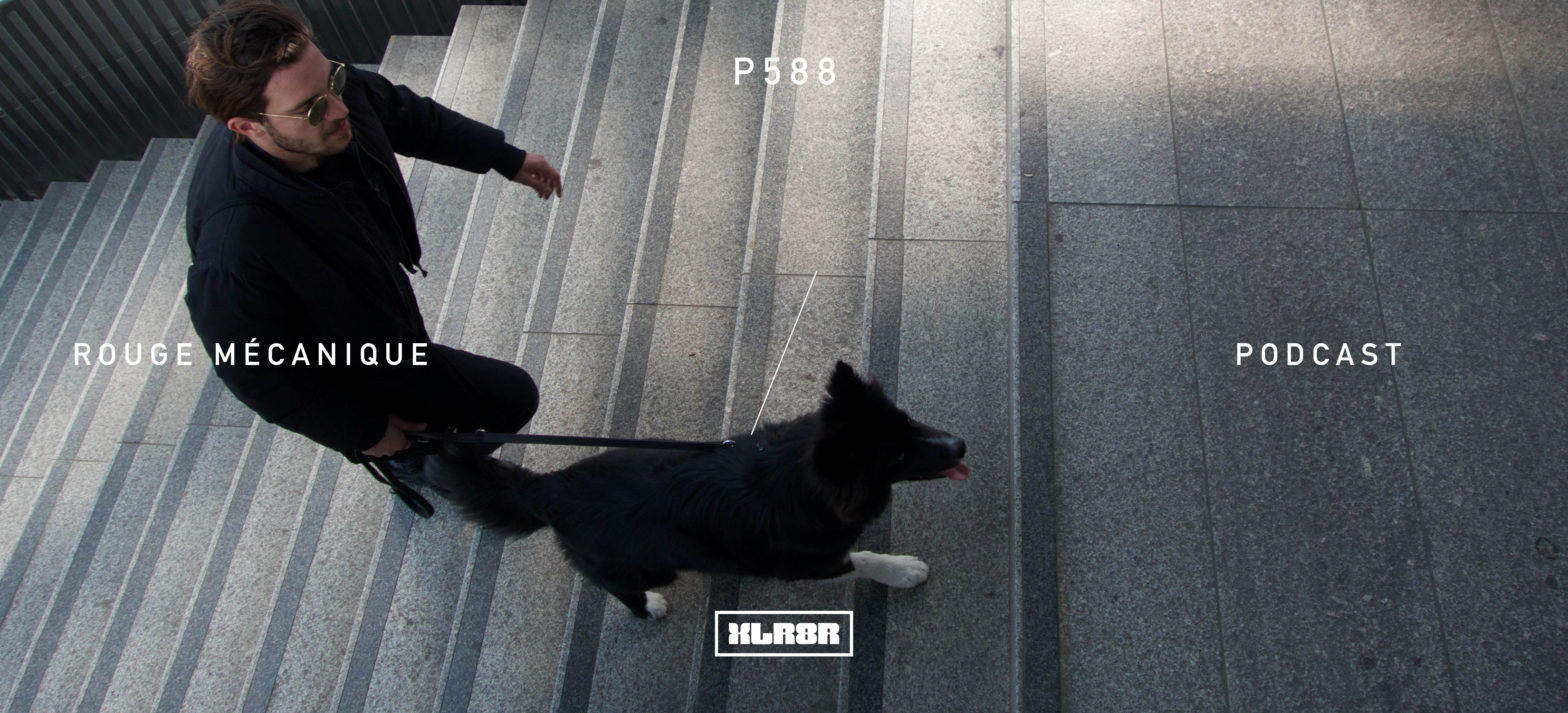
Rouge Mécanique, born Romain Azzaro, announced himself with his 2013 EP on Rekids off-shoot Pyramids Of Mars, The Witches / Stingray, a record memorably packaged in hand-stitched leather. Azarro has since amassed a healthy body of production work, broadly within the realms of cinematic, disco, and rock & roll, including his 2016 album debut, Don’t Touch My Sister, out via his own Rouge Mécanique Musique.
Raised between France and Italy, Azzaro spent his teenage years playing guitar and drums in punk, cold-wave, and psychedelic bands. He arrived in Berlin in 2010 with a growing interest in electronic music, and met fashion designer Aurelia Paumele at KaterHolzig one evening, to whom he explained that he wanted to make music for fashion shows and so set up the Rouge Mécanique project. “I discovered my rock & roll roots coming back,” Azzaro recalls, and this led him into production work.
You can hear these influences in all Azzaro’s work and his XLR8R podcast. Across the mix, you’ll hear ’70s psychedelia, blues, indie rock, and future punk, before the funky beats and electronic rhythms come in around the half-way point. The mix is a collection of Azzaro’s favorite records and an attempt to merge the different genres in the most fluid way. It sees him dig deep into his vast collection of vinyl and cassette tapes, many of which don’t even have titles.
What have you been up to recently?
The last three years have been full of projects. In 2016, I created the label Rouge Mécanique Musique which has released four records, three from myself and one from Jonny Teardrop. I also co-founded the party series African Acid is the Future with Maryama Luccioni, later joined by Dauwd. Together we created a label in collaboration with the Vinyl Factory, aiming to record and release on vinyl all the bands from our parties.
I also composed an album made with glass instruments in collaboration with my dear friend Jeanne Briand from Les Beaux-Arts de Paris Art School. Jeanne works with glassblowing techniques and made the instruments herself. The final project was part of a big exhibition next to the Louvre in Paris and in Bogota, Colombia. This album is now finished, but it hasn’t yet been released. Currently, we are presenting a vinyl made of real glass, and a live performance is in preparation.
When and where was this mix recorded?
This mix was recorded in my studio in Berlin on a rainy day in March. I used two turntables, two CDJs, a cassette player, a rotary mixer, and a delay pedal. I always have my guitar next to me when I DJ or play live, so you will hear it through the podcast.
How did you choose the records that you included?
I’m very focused on finding new music through my travels, and my record collection keeps on growing. I also collect tapes and recently made a cassette-only podcast for Worldwide FM.
For this mix, I went through some of my finest rock and punk records, as well as electronic and dance music. I’ve also included some obscure music I found while digging for tapes.
Is there a particular concept behind it?
The concept is to merge diverse genres of music in the most elegant way.
What’s bubbling in the studio at the moment?
At the moment I’m composing a new LP as Rouge Mécanique. I like to take my time when building a new album, but I feel it might be finished around September and released some time after that.
What’s next on the horizon?
The work I did for African Acid is the Future took a lot of my time, and I had to put the Rouge Mécanique live performance and label on the side. I’m now stepping back from the party to devote time to my main instruments, guitar and piano. I have been learning and playing a lot of classical music and jazz.
From my teenage years until the moment I arrived in Berlin, I’ve been playing as a drummer and guitarist in bands. I have this growing desire to build a band for the dance scene. I guess that will be the goal for 2020.
Due to issues regarding the GDPR, EU readers can download the podcast here.
Tracklisting
01. Intro “R.M Guitar” (00:00:51)
02. Unknown Cassette (00:00:51—00:03:15)
03. Unknown Cassette (00:03:15—00:05:47)
04. Fremde Welt “Die Wilde Jagdt” (Bureau B) (00:08:00—00:13:00)
Dario and Marco Zenker (a.k.a Zenker Brothers) will put out their first collaborative EP since 2017, marking Ilian Tape‘s 40th release.
Spiritual Priority spans two broken-beat techno tracks titled “Sorting Peanuts” and “Sample Predator.” It lands on April 23, and follows outings by Skee Mask and Roger 23 on the Zenkers’ own Munich label.
Tracklisting
A. Sorting Peanuts
B. Sample Predator
Spiritual Priority EP lands April 23, with clips below.
San Francisco’s Dark Entries will present two new EPs from De-Bons-en-Pierre, the duo of Beau Wanzer and Maoupa Mazzocchetti.
Beau Wanzer spends the majority of his days sifting through paraffin-embedded animal tissues, occasionally breaking his routine to record in various fits and bursts. As well as solo material, he is also in numerous projects including Streetwalker, Mutant Beat Dance, Civil Duty, and Corporate Park. Maoupa Mazzocchetti is the pseudonym of Florent Mazzocchetti, a French producer based in Brussels.
After working together on the Crepes EP in 2017, out now via Dark Entries, De-Bons-en-Pierre reunited for a two-day recording session in Brussels. The duo recorded 13 tracks that are split across two EPs, with six tracks on EP No. 1 and seven on EP No. 2.
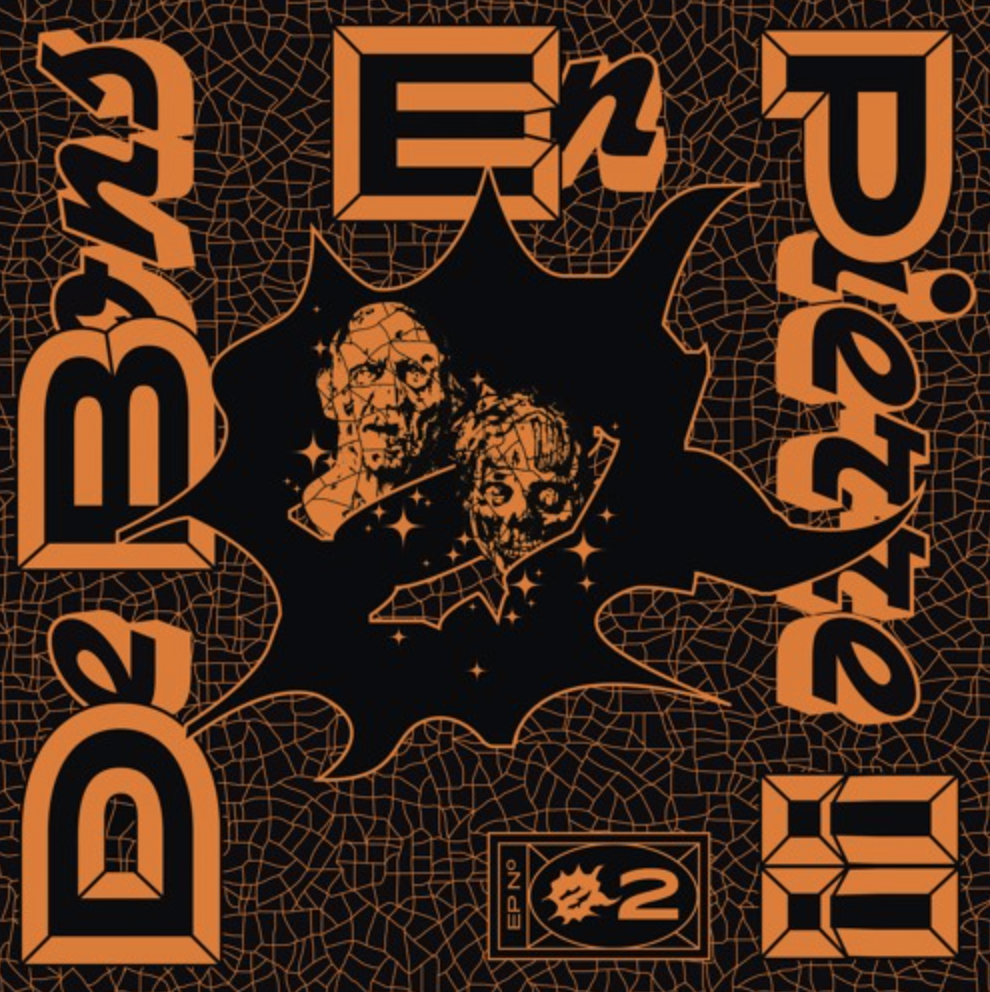
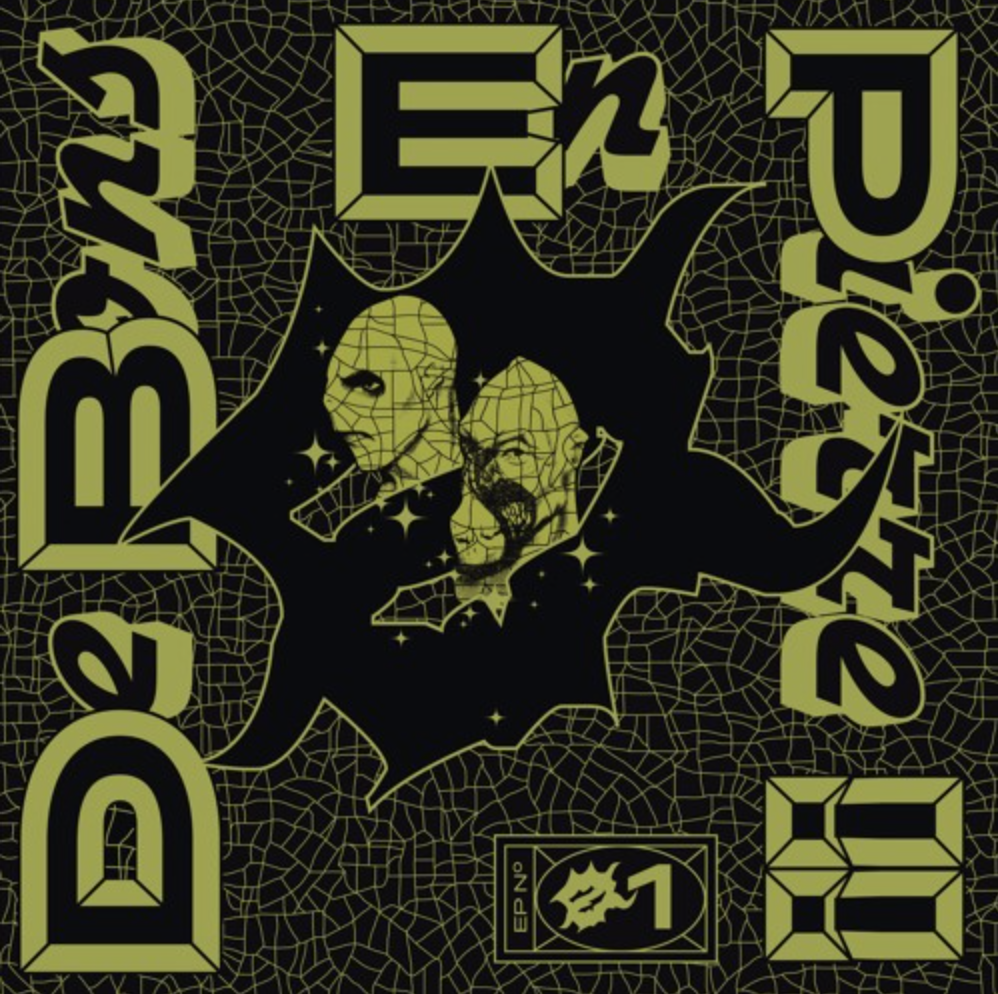
Each EP contains 25 minutes of dancefloor perversions that tackle an array of rhythmic forms. EP No. 1 is housed in a green jacket featuring a monster mask duo and spiky motifs designed by Florent Mazzocchetti, and EP No. 2 is radioactive orange with a different pair of monster masks.
Tracklisting,EP No. 1
Side A
01. Wrong Dose Nice Things
02. Pop Corn Sous le Lit
03. Insect Repellent Company
Side B
01. No Cure for Cancer
02. A Very Bad Meal
03. The War Room
Tracklisting, EP No. 1
01. His Name Is Fud
02. Frog Stoemp
03. Least Liked
04. Gras Saturé
Side B
01. The Terrible Translation
02. Centipedes
03. Ebmeme
EP No. 1 and EP No. 2 land on May 10, with clips below.
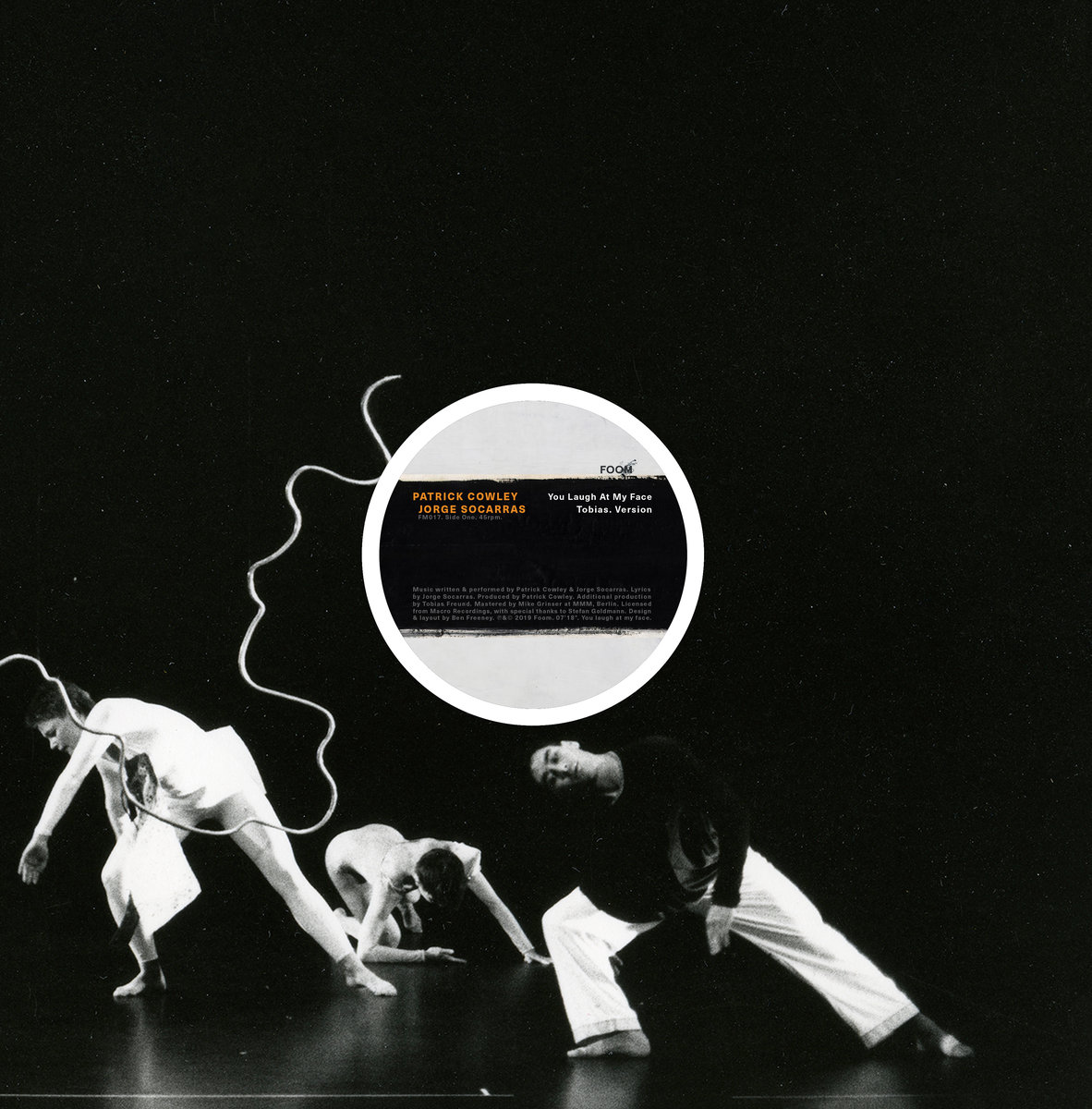
Up next on Ben Freeney’s Foom label is a split 12″ featuring a new track from Bruno Pronsato and Sammy Dee’s Half Hawaii project plus a Tobias Freund remix of Patrick Cowley and Jorge Socarras’ “You Laugh At My Face.”
Patrick Cowley is a pioneer of electronic music who created his own brand of Hi-NRG dance music, often referred to as the San Francisco sound. He died of an AIDS-related illness in 1982. Jorge Socarras was the vocalist for San Francisco art-punk band Indoor Life. Little is known about the story behind the remix by Tobias.
“Watch the Flash” is Half Hawaii’s first new release in over half a decade. The project is associated with Perlon, where Sammy Dee and Pronsato have both made solo appearances, and Hello? Repeat.
Tracklisting
01. Patrick Cowley & Jorge Socarras “You Laugh At My Face” (Tobias. Version)
2. Half Hawaii “Watch the Flash”
You Laugh At My Face (Tobias. Version) / Watch The Flash lands May 3, with pre-order here and a stream of the Tobias. remix below.
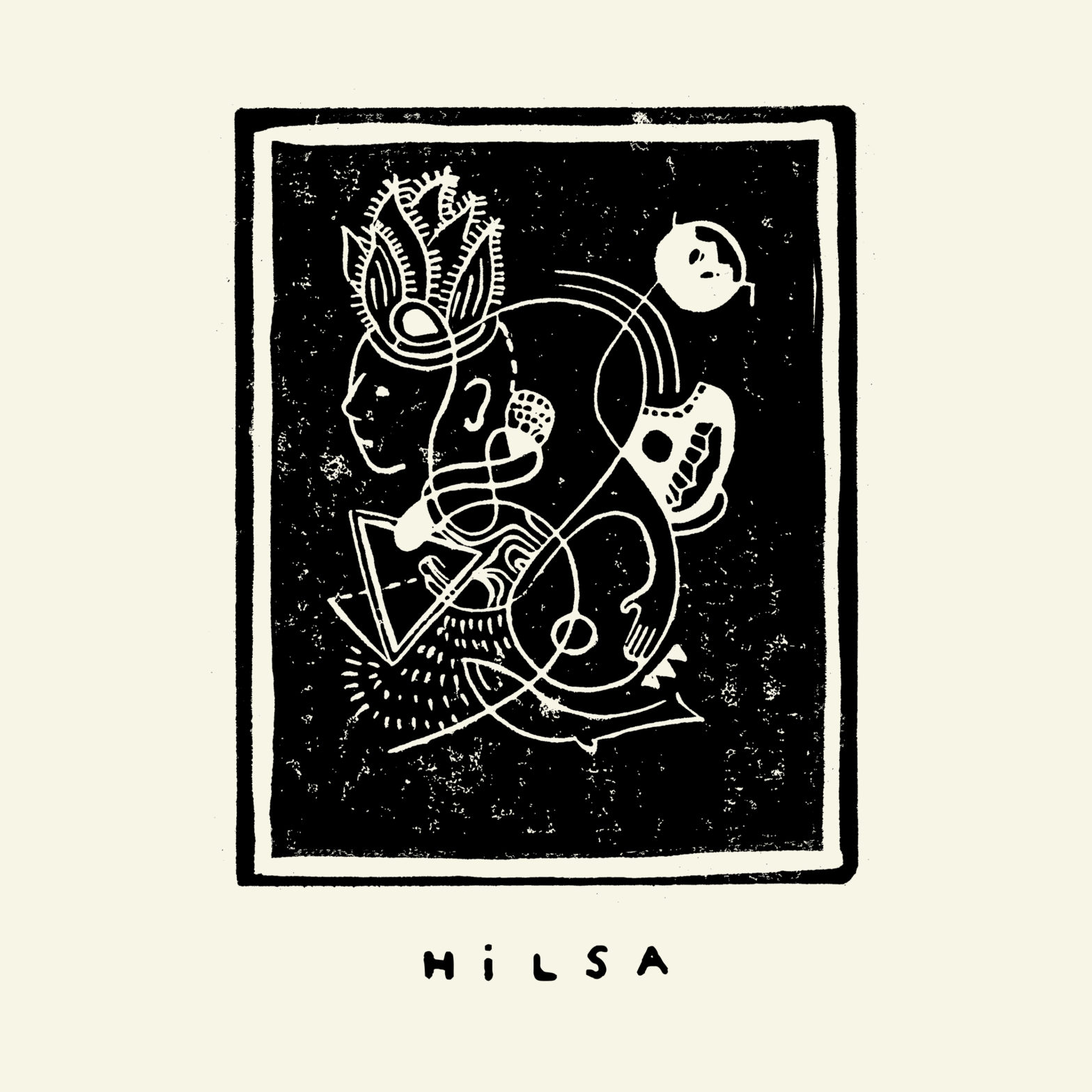
The third instalment of Youngbloods‘ 2019 Spring programme is the debut self-titled album from Brooklyn-based electroacoustic collaborative project Hilsa, guided by guitarist Kallie Lampel (JASS, Phlebotomists) and cellist Steve Goodwin (p.k.a Skeleton Zoo.) Presented on limited edition cassette and across digital channels, Hilsa is a subtle cinematic narration that floats in and out of focus, see-sawing between hazy harmonies in a perpetual reconstruction of ambient, iridescent forms.
Through their solo projects, Lampel and Goodwin found a mutual affinity for peripheral melodies and ethereal soundscapes, and in 2016 the duo started developing a technique to sample and affect one another’s instrumentation. By interweaving Lampel’s warm guitar work with Goodwin’s mini-orchestra of bells, music boxes, and cello, the two were able to delicately conjure a sense of familiarity and unplaced nostalgia, allowing rich patterns to be dismantled and remade.
Hilsa will be available from Youngbloods starting April 19 across digital channels and on a limited run of dark blue super ferric cassette tapes that include a pull-out featuring 11 custom hard-carved block prints. In support of the LP, you can download “Knight Swam” via the WeTransfer button below, or herefor EU readers due to GDPR restrictions.
Levon Vincent will soon release the third part of his Dance Music EP series, Dance Music Pt.3.
The three-track release is Vincent’s third release this year, following the first two parts of the series. There’s no more information about the release or the series, except that we should expect “speaker rattling stuff,” and a “delicious, dubby track in the vein of Maurizio and Basic Channel.”
It forms the 28th release of Vincent’s Novel Sound label.
For more information on Levon Vincent’s studio processes, read our detailed In the Studio feature here.