Goldie is set to release a collaborative album with engineer and producer James Davidson under the alias Subjective.
James Davidson, described by Goldie as an “exceptional engineer and an unsung producer in his own right,” has previously released via Metalheadz under the alias Ulterior Motive with Greg Hepworth, and also helped produce Goldie’s 2017 The Journey Man LP. This relationship organically progressed on to collaborating in the studio, “following the water as opposed to a strict concept,” Goldie explains.
“This album isn’t just Ulterior Motive and Goldie, it’s a vision of Subjective,” explains James. “It was really exciting to have no boundaries on what we were writing, not restricted by the BPM or anything else. We just went wherever the smiles were.”
We’re told to expect one of Goldie’s “most accessible pieces of work to date,” and that the album fuses classical, ambient, and electronic elements “with the ingenuity that only a trailblazer as himself could do.” It will land on Sony’s classical label, Masterworks.
“I’ve always been a fighter with music and gone way ahead of the curve in a lot of respects. I’ve come from an era that’s spanned three decades from the 80’s to now, and I think I’ve always pushed a progressive drum‘n’bass, sound. But this is a refined album, one that you can really fall into, immerse yourself in, or just play in the background—and it still works.” —Goldie
Tracklisting
01. Midnight Monsoon
02. Temple
03. Find Your Light
04. Rift Valley
05. Silent Running
06. Re-Entry
07. Waypoint
08. I Saw Her Last Summer
09. Stay
10. Landscape – Portrait
11. Inkolelo
12. Find Your Light—Beauty
Act One – Music For Inanimate Objects will be released on January 18 via Sony’s Masterworks.
Georgy Kotunov (a.k.a Long Arm) has shared new videos for “Sleepy Bird” and “For All People With Broken Hearts,” taken from Darkly, his latest LP on Berlin’s Project Mooncircle.
Darkly, out now, is the St. Petersburg producer’s third full-length, following Kellion / The Stories Of A Young Boy and The Branches.
These two music videos have both arrived in the last month, with “For All The People With Broken Hearts” directed by Ilina Vicktoria and Kotunov, and “Sleep Bird” created by filmmaker Sasha Userdnaja. As with all of Long Arm’s past releases, visual direction and design is credited to Project Mooncircle CEO, Gordon Gieseking.
Tracklisting
01. Prologue
02. For All People With Broken Hearts
03. I Walk, I Fly
04. Air
05. I Can’t Wait
06. Sleepy Bird
07. Utopia
08. Lullaby
09. The Light
10. Flight Through Thunderclouds
11. Kurami’s Georgia
12. Something
13. Darkly
14. Prince
Darkly is available now via Project Mooncircle, with the videos below.
As the power of streaming services continues to grow, the internet’s impact on the music industry is clearer than ever. But with tech corporations like Spotify, Google, and Facebook exerting ever more influence and major labels holding their own, what becomes of independent music? How are our listening habits affecting music’s most unique and individual artists? And will we ever see another musical revolution? Complementing XLR8R+, our initiative to support independent music and culture, writer Sam Davies digs in to offer his thoughts on today’s music climate.
XLR8R+ is a monthly subscription service to complement the main XLR8R site. Each month we share three unreleased tracks from three different artists—both known legends and lesser-known pioneers—that we feel are pushing the scene forward in inspiring ways. These tracks will be available for download in high-quality WAV format for the duration of one month; only subscribers for that particular month will have them. They will not be available anywhere else and there will be no access to archived material. You can find more information here.
“The company owns nothing, the musicians own their music and everything they do, and all artists have the freedom to fuck off.”
The above statement was once true. Or rather, the above agreement: it’s a quote from a contract written and signed by Tony Wilson in his own blood when launching his record label Factory Records in 1978. It was true not only in what it promised (to Joy Division, Factory’s first signees), but also what it symbolised, at the start of a new era in independent music when punchy upstarts with nothing but fresh ideas could become the biggest artists around.
Four decades on, independent music has been all but engulfed by the mainstream. Artists who would once have been celebrated for standing up against ‘The Man’ are now at the behest of major corporations. The impact on the industry has been drastic for both musician and fan, with a void of radical new ideas and a diminishing sense of what music is even for anymore.
Defining an independent artist used to be fairly simple. Signing to an indie label rather than one of the Big Six (BMG, CBS, EMI, MCA, PolyGram or Warner) aligned musicians with a collective sense of fighting back against ‘The Man.’ The perception was that independent record labels gave their artists complete creative control, in contrast to majors, who promised far bigger financial gains at the cost of signing away your soul to the corporate machine.
Majors soon picked up on the romance surrounding the notion of independent music and began using it as a marketing tool. A number of sales and mergers have left just three major labels, Sony, Universal, and Warner, each of which has several subsidiaries that are equipped to behave and appear like independents by catering to particular niche demographics. Meanwhile, established indies like Domino, Warp, and XL have become more like majors, structured around album release cycles and creating public profiles for artists.
The corporate enemy is no longer embodied by major labels, but by giant tech companies like Google, Facebook, Spotify, Twitter. The internet democratised music, allowing fans access to an almost infinite universe of sound. Yet how often do we listen without using one of those services? The mainstream was once bureaucratic and slow, unable to respond quickly to the rapidly changing tastes of the public. But services like Spotify can meet every listener’s needs in a millisecond. Or at least appear to…
The world wide web is, in theory, ideal for the emergence of independent artists. Anyone can upload music to YouTube, Soundcloud or um, Myspace — and millions do. But in a market where everyone is technically independent, who rises to the top? What determines the music we are recommended on Spotify, that pops up on our news feeds? Rather than provide a clear explanation, the internet overlords point to ‘the algorithms,’ complex coded processes which ostensibly match us with suggested clicks based on our browser history.
Increasingly however, users grow suspicious. Artist and outspoken champion of independent music Mat Dryhurst has argued that a lack of public knowledge is allowing tech companies to carry out their will or—perhaps more likely—the will of the highest bidder. It remains a mystery why the algorithms prefer certain artists to others (I am asked to watch Jamie xx’s “Gosh” every time I’m on YouTube, for instance).
While the mystery looks unlikely to be solved anytime soon, Spotify recently announced plans to begin licensing music themselves, bypassing the need for record labels entirely—and, quite possibly, spelling the end for physical releases. Although Spotify CEO Daniel Ek denies that the move will turn his company into a label, it’s inevitable that Spotify’s financial pulling power would dwarf that of any independent. Like Uber and Deliveroo, the system would benefit anyone with alternative sources of sustainable income looking for freedom to work as they please; but anyone reliant on music for a living would be enthralled to the will of a platform they can’t control.
Its will, of course, is for music that gets plays, music that gets past the magical 30-second mark and music that can be added to playlists, which attracts users, generates ad revenue, and makes money, of which roughly 12% goes to the artists. So musicians and labels, now more reliant on streaming than physical sales, are forced to make Spotify-friendly music and we’re left in a perpetual cultural malaise. Check out Spotify’s top songs of 2018 and you’ll find an almost formulaic homogeneity: hyper-polished vocals, predictable chord progressions, and endless big-name collaborations. And if you think pop is shit now, imagine an industry that’s been all but monopolised by Spotify, with music made exclusively in its image. It sounds like an episode of Black Mirror, and one with a bloody awful soundtrack.
The old mainstream’s response to Spotify’s growing dominance has been defiant. In a recent interview with GQ, Warner Music Group CEO Max Lousada indicates that his main competitors are no longer fellow labels, but tech giants like Google and Spotify. Yet at a time when it’s easier than ever for huge artists to license their music directly to streaming services, a series of big moves reminds us the majors aren’t dead just yet. Taylor Swift’s recent deal with Universal is the label’s third with a global star this year, following the expansion of its deal with the Rolling Stones and a new agreement with Elton John, all of which represent wins for the major label industry in the streaming era.
In the same GQ article, Sony Music Entertainment CEO Rob Stringer discusses the huge promotional campaign behind Daft Punk’s 2013 album, Random Access Memories, which the band knew would have been impossible without major-scale backing from Columbia (a Sony subsidiary). Encompassing billboards, television ads, and months of suspense, the campaign arguably eclipsed the music, coaxing the music press into almost unanimous appraisal for what is, if you ask me, easily Daft Punk’s worst album.
In some ways, RAM epitomises 21st Century music. With its celebrity checklist and ‘70s funk sound, the album, like its promotional campaign, did little but remind us just how good these huge, established artists used to be. Stringer’s marketing was a triumph, but it was only possible because Daft Punk were already global megastars. The same can be said of Universal’s deals with Elton John, the Stones, and Taylor Swift. They paint an image of a major label industry in no immediate peril, but as unlikely as ever to take risks on new and emerging talent.
The present era’s circumspection extends back to a time before Spotify, and is symptomatic of what the late Mark Fisher termed capitalist realism, the belief that “not only is capitalism the only viable political and economic system, but also that it is now impossible even to imagine a coherent alternative to it”. Arguing that the 21st Century is yet to produce a culture by which to define itself, Fisher lambasted contemporary music’s inability to generate new forms without relying on tropes from the past. (It’s not just music by the way: cinema listings are dominated by sequels and remakes, while sport can’t stop making overblown tributes to supposed heroes of yesteryear.)
This has long been the case in rock (Fisher wondered why the Arctic Monkeys were never officially deemed a retro band despite basing themselves on post-punk styles of the 1980s), but electronic music is similarly retrogressive, dependent on its halcyon days of the late ‘80s and ‘90s. A fruitful trend of the modern era is deconstructionist club music, in which artists engage with the perceived brashness, earnestness or cheesiness of old genres while maintaining an impression of being ‘deep’. Acts like Sophia Loizou, Lorenzo Senni, Shed (under new alias The Higher), DJ Python, and rkss have taken choppy, sampladelic approaches to jungle, trance, hardcore, reggaeton, and EDM respectively, while deconstructionist schools of thought permeate the experimental pseudo-pop of SOPHIE and Grimes. My love for all the aforementioned makes it hard to be critical, but deconstructionist music’s reliance on old forms makes it equally hard to consider it entirely new.
There isn’t really room for the next Autechre anyway, largely because, well, we’ve still got the old one. Autechre’s decision to upload 13 hours of electrical fluff to YouTube was one of the biggest news stories of the month in electronic music. This was overtaken by the announcement that Aphex Twin has released a new line of umbrellas and beach towels. Other 20th Century heroes like Jeff Mills, Moby, and Orbital remain relevant through constant reissues and rehashes of old ideas, which gain more coverage and more sales than anything released by new artists.
Further to this, promoters of electronic music, such as clubs and online platforms like Boiler Room, are increasingly dependent on funding from huge corporations, which makes new styles less likely to be discovered. In a panel discussion at this year’s ADE festival, RA’s Will Lynch suggested that an act as radically new as Autechre were in 1991 is unlikely to be successful in 2018 because companies like Ray Ban, who have targeted marketing campaigns at clubbers, would never attach their branding to such a potentially divisive artist. It’s also hard to imagine the next Autechre making it onto many Spotify playlists, crucial revenue spinners for today’s artists tending towards inoffensive music to fit certain moods.
None of this is necessarily the fault of the old independent labels. Warp was born in a largely pre-internet era when an indie could sell (actually sell!) enough records to break into the UK Singles Top 20 (as Aphex’s “Windowlicker” did in 1999). Those sales made Warp and other indie labels like 4AD and Ninja Tune enough money to invest in other projects which suited their ethos. No matter how much vinyl sales may currently be on the rise, the simple fact is that an independent label can no longer generate anywhere near the same income as it would have done in the ‘90s.
With very little investable income, it’s increasingly difficult for new labels to create brand identities and give new artists the lucrative legacies of those from the ‘90s. Instead, their best bet is to make music that maximises streams, turning their art into commodity. “It’s easier to standardise and mass reproduce mediocrity,” said Fisher. And so instead of radical innovation we’re left with a stream(!) of lukewarm mulch, or “Spotifycore,” as the New York Times’ Jon Caramanica has termed it.
Tony Wilson’s Manchester club the Hacienda was the birthplace of acid house and the beginning of rave culture, out of which grew crazy new genres like hardcore, jungle, trance, gabba, and UK garage. Since then what has been the most notable new movement in music, the most notable scene?
When dubstep emerged from London’s Big Apple record shop in the ‘00s, the community was vibrant and produced some great music, the aftershocks of which remain prevalent. But dubstep was indebted to its preceding era in every way. The genre’s crowning moment, Burial’s Untrue, triumphed by conjuring memories of rave heroes like Goldie and Todd Edwards, while Burial’s Hyperdub label-boss Kode9 called dubstep “the ghost of jungle.” Footwork, a focus of Hyperdub’s later years, remains a promising micro-scene among originators in Chicago and innovators like Jlin and a host of Japanese artists, though its appeal is niche.
The exception to the dearth and apparent death of music scenes, perhaps, is grime. Like dubstep, grime grew out of London’s garage scene in the ‘00s and became a thrilling new genre in its own right. It has also achieved what few underground genres have had since the ‘90s: mainstream success. What worries me is that many of grime’s foremost stars sound increasingly likely to go the way of American hip-hop, ditching innovation in favour of assimilation to the vapid mediocrity of pop. The ascent of Stormzy, grime’s first superstar, to Glastonbury headliner status is to be celebrated, but is there anything particularly new about his Number 1 album Gang Signs and Prayer? Starlets like AJ Tracey and JayKae represent reasons for optimism, but we can only hope grime doesn’t devolve into the Spotify-conquering fat of Stormzy collaborator Ed Sheeran.
One of few stars bigger than Sheeran is Drake, the reigning King of Spotify responsible for 2018’s most streamed album, Scorpion. By including the phrase ‘happy birthday’ in a track title and listing Michael Jackson as a featured artist (because of a supposedly genuine, definitely weird sample from an unreleased recording), the artist—or franchise—ensured the album would appear in as many searches as possible. A Spotifycore album if ever there was one, Scorpion encompasses a shameless 25 tracks, an attempt to land a record number of songs on the US Billboard Chart at the same time—and a successful one at that.
Yet as Rolling Stonerecently pointed out, 63% of Scorpion’s total streams are accounted for by just three songs, “God’s Plan,” “In My Feelings,” and “Nice for What,” meaning that the current biggest album in the world isn’t even being listened to as an album. Instead fans are just listening to their favourite songs, or Spotify’s most popular songs, or the songs that appear in whichever playlist fits their mood. And who says they’re even finishing those songs? Streams register after 30 seconds, so from that point onwards the listener is free to move on whenever they please. Musicians’ creative focus is shrinking to accommodate this: they know that just a few seconds of brilliance—a line, a drop, a mix between tracks—could have them circulating on social media in seconds.
And it’s not just Spotify. iTunes favours a track-based listening culture too, asking you to give star ratings to tracks and delete unused items for storage. I would love to keep entire albums on my phone, but I want a broad range of stuff, so I edit them down to just my favourite few tracks, or just the ones I want on my playlists. Being stubborn and a loser, I make playlists myself, sometimes downloading songs just to add to a new collection, designed to match a particular moment in some half-imagined future.
Usually built around moods rather than genres, playlists encourage eclecticism. In what many consider a post-genre world, the contemporary music fan’s fondness for a broad spectrum of styles is in stark contrast to the tribal days of pre-internet listenership. Once, fans’ tastes would be limited to what they could find in a record store and what they heard on nights out, which led to genres growing out of geographical locations. These tightly knit communities produced radical innovations, as artists tested the limits of what a genre could be and then tried it out in clubs the same night. It was testament to Brian Eno’s theory of “scenius” — where groups of people, rather than an isolated individual, achieve moments of inspiration through collective, complementary talents. Artists today are catering to an invisible listener who could be halfway around the world and who probably likes a little bit of everything; as a result their music is likely to be neither one thing nor another. The internet has made music global, but turned scenius into a relic of the past.
I should stress that I, music writer and obsessive listener, am not blameless. I’m probably worse than most. I use Spotify all the time. I leave a unique online footprint all over Google and Facebook, liking niche Instagram pages like technothegathering, following obscure labels on Bandcamp, and subscribing to HATE on YouTube, allowing the corporations to target me with whatever they want me to listen to. Invariably I oblige.
I’m as retroactive as any artist. I obsess over early Jeff Mills records like they were released yesterday. I’ve listened to more of Autechre’s 13-hour YouTube splurge than I’ll publicly admit. I spent £40 on an Aphex umbrella. I even listen to pop. All the time: Spotifycore anthem “God’s Plan” might just be my favourite song of the year, although I’ve never listened to it all the way through!
I’ve written about songs being worthy of this playlist or that; I’ve complained about music being stuck in the past and, in the same piece, moaned that things were much better in the old days. I started this article with a quote from 40 years ago.
Music criticism continues to suffer at the hands of the corporate machine. Media outlets are increasingly dominated by sponsored content. Scenes were once documented by thriving music magazines like NME, Melody Maker, and a host of smaller fanzines which were unapologetically opinionated, knowing that criticism could benefit both them and the music. Now writers are constricted by a fear of upsetting the suits who fund them, or alienating big-name artists with industry backing.
And if you, reader, agree with anything I’ve said here, then you too, undoubtedly, are a hypocrite. You probably found this article on Facebook or Twitter, thanks to the algorithms. You probably still download music illegally. You probably use Spotify too, and if you’re really bad you probably use it on web-player mode, with a particular kind of ad-blocker installed so you don’t have to pay for it or sit through ads. You’re probably listening to a playlist, skipping songs after 30 seconds or less, right now.
The point is it’s not easy to stand up against ‘The Man.’ It’s more complicated than indies vs majors now. As much as streaming services like Bandcamp and Saga offer innovative alternatives, expecting listeners to boycott Spotify is unreasonable. The same goes for Facebook, Twitter, or Google for that matter, because no other service can offer anything close to theirs.
All we ask is an understanding of the contemporary music landscape; an understanding of the harm being done to independent music by the major corporations on which we rely so heavily, and a willingness to think of ways we can improve. And understand that the independent musicians, labels, clubs, writers, and record store owners of today are more sacred than ever. Stay locked on XLR8R in the coming months to read about the people keeping independent music alive.
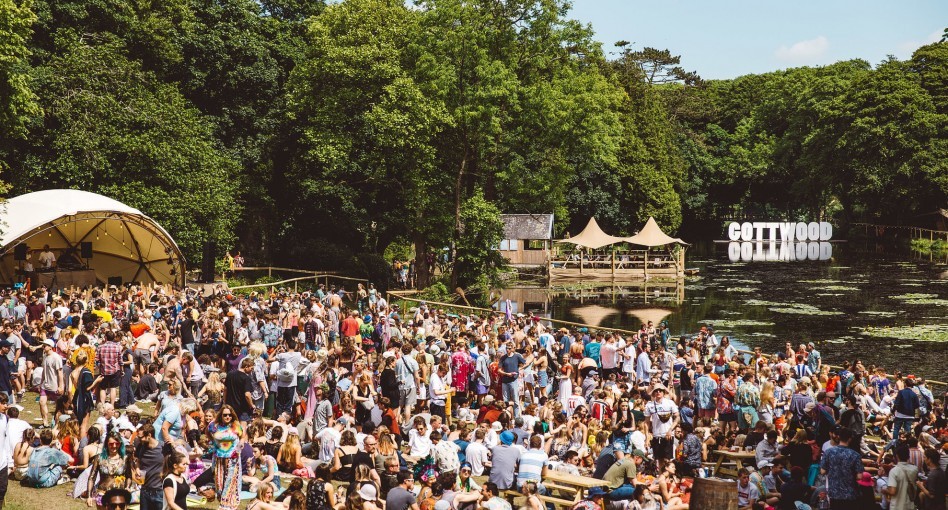
Gottwood Festival has announced the first wave of artists for its tenth edition.
Taking place from June 6 to 10 at Carreglwyd Estate in Wales, the 2019 edition will once again feature a staggering array of world class acts, including Margaret Dygas, Skee MAsk, Craig Richards, Andrew Weatherall, Ata, dBridge, DJ Boring, Hunee, DJ Stingray, Kink (live), Zenker Brothers, Sonja Moonear, and many more.
You can find the complete list of artists announced in the first wave below.
Novation has announced the first major update to its Peak synthesizer.
Peak’s firmware 1.2 update adds a number of the most requested features from Peak users, including a huge increase to Peak’s sonic palette with 43 new wavetables; two new freely assignable, non-voice-specific LFOs (bringing the total to four); a Mod Matrix update, with sources and destinations presented on the same page; a four-slot FX Mod Matrix, which lets you route non-voice-specific modulation sources to Peak’s FX parameters; new envelope features, including the addition of a Hold stage (up to 500ms) and the ability to loop between the Attack and Decay stages; the ability to maintain the current positions of all knobs and sliders when the Initialize button is pressed, rather than resetting their parameters to defaults; support for microtuning, allowing 16 Tuning Tables to be edited and saved for recall; and new presets and soundpacks from Patricia Wolf and GForce Software.
The new update is officially available to the public on December 19 .
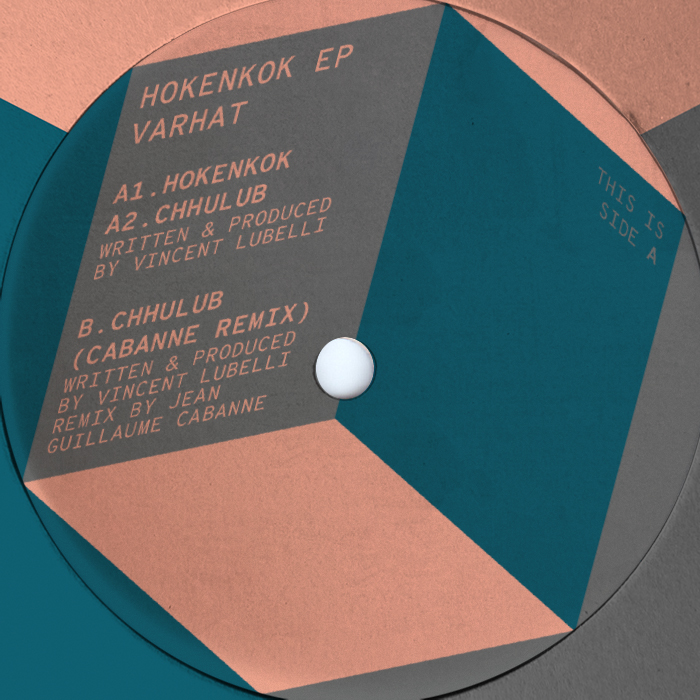
Cabanne will launch his vinyl-only Polyson label with a new EP from Varhat, Hokenkok.
Polyson is Cabanne’s second label, and will run in parallel with Minibar, which has seen releases from the likes of Fumiya Tanaka, Rhadoo, Audio Werner, Lowris, Ben Vedren, and more. Cabanne, of course, is also heavily associated with Perlon.
Varhat, a subject of our Bubblin’ Up series, hasn’t released an EP under this alias since 2016; he has, however, shared work as YYY, Vincen, Volière, and Niwa Tatsui, as recently confirmed on Discogs. He’s also widely believed to be behind Hostom, but this is yet to been confirmed by either him or one of his representatives. He’s released around 40 records between 2015 and 2018.
The EP features two originals from Varhat with Cabanne on remix duties.
Tracklisting
A1. Hokenkok
A2. Chhulub
B. Chhulub (Cabanne remix)
Hokenkok EP will land early February, with clips below.
To learn more about Cabanne, read our feature here.
At the regular Equations nights at OHM, Berlin, the audience is introduced to a different approach on clubbing, where musicians engage and interact, challenge existing techniques in a live setting, and free the imagination, while the public is part of the “extempore.” It’s a format that is so familiar in jazz, but is largely unexplored in a house and techno context. In rotating settings, with at least three musicians playing at once, the no-rules-no-plan live-jam unfolds itself and often goes into unexpected and previously unexplored territory. The interaction between the musicians is as important as the interaction between the audience and the musicians.
The collective consists of Derek Van Beelen (D), George Konstantoulakis (Aphelion, Archaic Space), Michael Kraus (Sphera De Noumenon), Nick Lapien (Artefakt, Metropolis, Lapien) and Robin Koek (Artefakt, Cyspe), Jesse Scherwitz, Julius Richter and Magnus von Welck (Aroma Pitch). Every edition a guest musician is invited, to bring fresh energy and sonic pallet into the circle.
The next event is scheduled for Thursday, December 6, at OHM Berlin. The special guest will be Orson Wells. Doors open at 22.00.
In support of the event, the crew has shared a recording taken from a nine-hour live jam on November 30, 2017. The room was sweaty, the vibe ecstatic, and there were seven people playing in the booth with hands on the machines. The special guest for this edition was Vida Vojic, who did vocals and electronics.
You can grab the cut via the button below, or here for EU readers due to temporary GDPR restrictions.
FJAAK, the Berlin-based trio of hardware heads, have really made a name for themselves over the last half a decade. Having grown up together in Spandau on the outskirts of Berlin, Felix Wagner, Aaron Röbig, and Kevin Kozicki began making music together early before they moved to techno. The trio first cut their teeth in electronic music by organizing illegal raves in and around Berlin, which eventually led them to run their own techno series, Machine Vibes. Based on all hardware setups and vinyl-only sets, the series took them not only to clubs beyond the German capital’s borders but all over Europe, steadily growing their reputation and fanbase.
2014 marked the turning point of FJAAK’s career, when 50Weapons bosses Modeselektor decided to take the young trio under their wings. The collaboration saw them release five EPs on the label within 18 months, while incessantly travelling the world. In 2017, they released their self-titled debut full length on Modeselektor’s main imprint, Monkeytown Records; and, earlier this year, they returned with another full-length effort, this time via their own FJAAK imprint, combining the energetic peak-time sound with sophisticated breakbeat arrangements and atmospherically dense ambient textures. In support of the album, XLR8R connected with FJAAK to learn about the key gear behind their work.
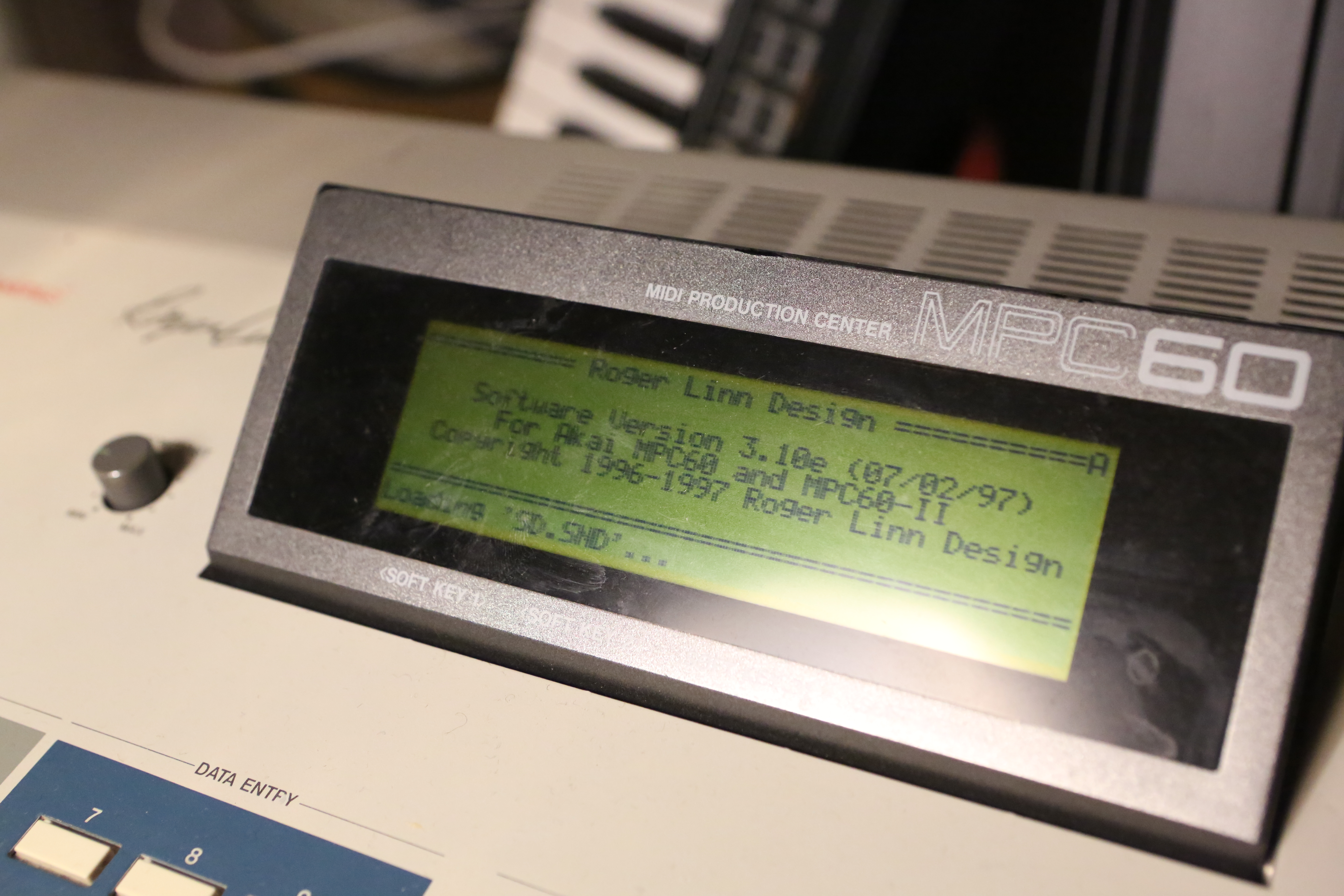
Akai MPC 60
This candy is the first MPC ever made by Roger Linn and we used it a lot for drums on our last album. The coloration and the groove of this sampler and sequencer is on fire! For drums and especially for claps and percussions. Sometimes we use the MPC60 also for sequencing synthesizers, pads or other hardware machines. Just the groove and sound made this machine an indispensable part of our studio process. Especially for our last album, Havel. We used it for all the groove, drums, and percussions in “**Smells like Security**.”
Roland SH-101
The Roland SH-101 is one of our favourite pick for baselines and FX stuff and we really love the flexibility of this synthesizer. It’s possible to do entire albums just with this machine. We’ve known about it since we read about it in interviews from artists we looked up to some years ago when we started to produce music. Also, a lot of hip-hop artists used it. It’s kind of a legendary piece of equipment, we would say, and we love hip-hop 🙂
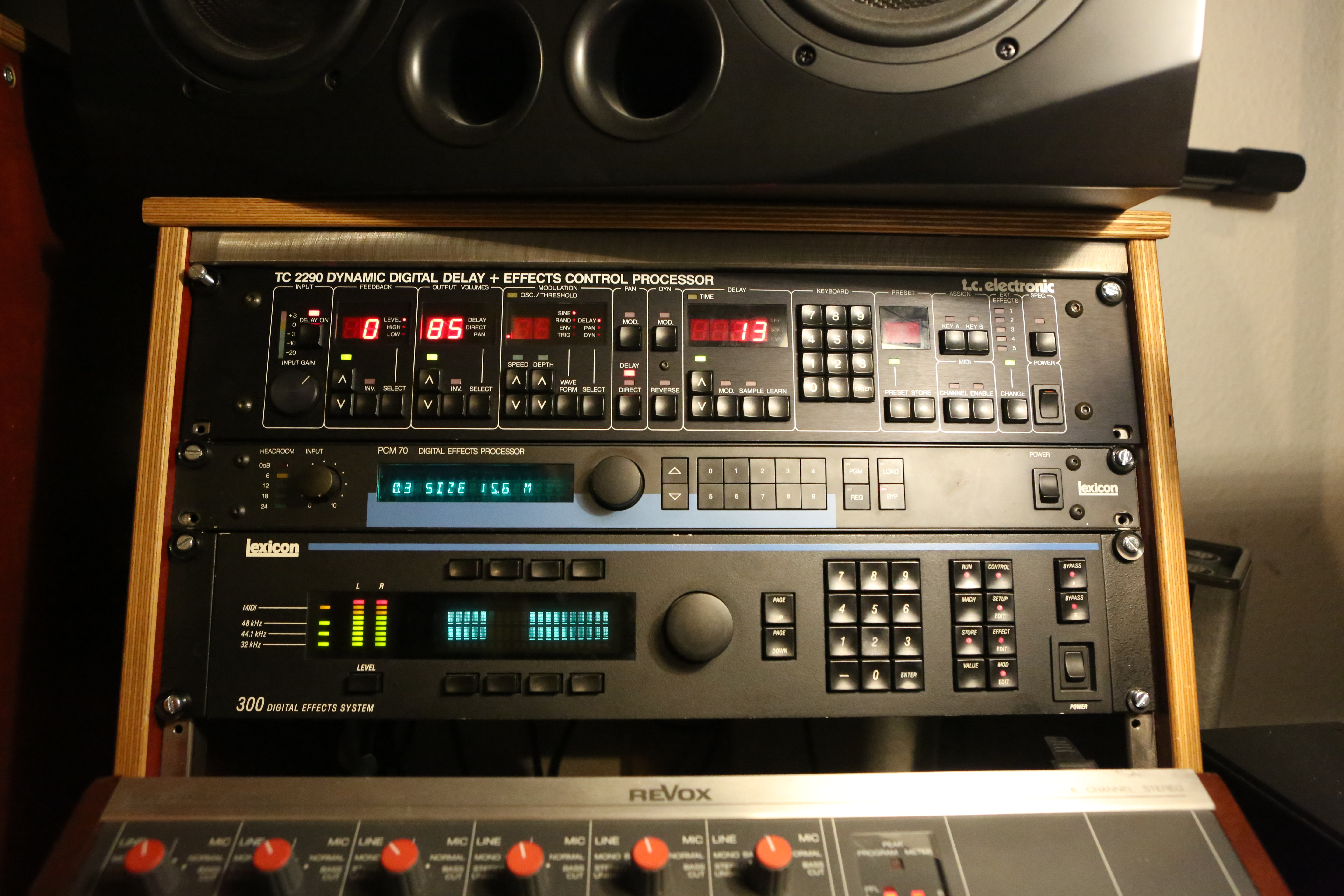
TC 2290
The TC 2290 by T.C. Electronic is our favourite delay because of its algorithm and user interface. It’s simple, only the most important parameters are available, and most of it is handled at the same time and that results in a very good work flow. Everything is made just in seconds. You can do a lot of nice stuff like chorus, flanger fxs and really, really good delays. It’s on almost every second pad or synthesizer line of ours right now. We used it in “**Smells Like Security**” as well, but also for “I Can’t Live Without You by my Side.”
Lexicon 300
The Lexicon 300 is like the small brother of the most famous reverb, the Lexicon 480 L. It’s close and there are some pre-sets which are just insane, like the”large room”; it’s just brilliant for drums, synthesizers, and FX. Because of the old transformers inside, it’s also colorful and we also like the little distortion of the Lexicon300. We still remember when we bought our first machine from Lexicon. The MPX 100. We bought it for less than a $100 and then used it for our first live set at Panorama Bar when we played there for the first time. As you need reverbs for almost everything in your production, we used this a lot on Havel. For example, the interlude “Arctic Warmth” contains some reverbs from the Lexicon 300.
Urei 1176LN REV F
This diamond is maybe the most famous and most cloned compressor of all time. It is the fastest compressor in the world and really good in front of a tube compressor because it eats all bad peaks you’ve got in your signal. The transformers of this machine are also really colorful; sometimes we just use it for coloration without compression. Specially on claps/snares and basically on all drums, it is really good. This one is also necessary for imitating most of the well known and established vocal chains. We used it for the beat in “**Smells Like Security**.” It added a lot of punch to it and we love this machine!.
Next week, Youngbloods will drop the latest release from Netherlands-based producer and vocalist Jethro Hopmans (a.k.a. Kratos Himself).
The release, titled Solstice/Part 1, will represent the first drop of a two-part Solstice-themed series, and will be the last release of the year for Youngbloods, following standout outings by lojii, Annabel (lee), Foamek, and Jacob 2-2. The conceptual project looks to pay tribute to the “celestial dance that separates the seasons,” with the first part featuring seven tracks that beautifully combine organic and electronic textures that evoke and soundtrack his hometown’s ancient tradition of marking the turn of the seasons with a communal fire, built on the ashes of the previous years’ blaze. Due to its subject nature, the music is ethereal and complex; engrossing, melancholic pieces of music built to transport its listeners to the ancient forests of the Netherlands.
Ahead of next week’s release, Hopman has offered up a download of album cut “Hibernal,” a tender and affecting beat-driven track, via WeTransfer below.
Finn Johannsen began collecting records in Kiel, Germany, during the late ’60s and early ’70s. Focus then was on anything danceable, from disco, soul, post-punk, and synth pop, and he was quick to find his way into nightlife, spending his formative years dancing in some legendary clubs in Hamburg before beginning his DJ career in the ’80s on the Rare Soul circuit. He began honing in on more conventional house after hearing Klaus Stockhausen at a club called Front, but his style, one that prioritizes versatility and fluidity, clearly references his earlier tastes. Johannsen today tours all over Europe, a much-loved but under-acknowledged artist; meanwhile, he’s relocated to Berlin (and once worked in Hard Wax) and now co-runs Macro Recordings alongside Stefan Goldmann. He also writes for numerous print and web-media publications.
Johannsen’s XLR8R podcast is exactly what you’d expect: groovy, feel-good tunes seamlessly mixed together. It begins light and easy-going before Johannsen introduces Jitwam’s “Stronger,” picking up the pace, adding some smooth vocal cuts, before winding it down with some with likes of Glance, Pacific Coliseum, and Larry Heard. “..this time I felt I should do a mix of records I bought this year, and play them like I would do it in a club context,” Johannsen explains.
01. What have you been up to recently?
Spending as much time as possible without music with my wife, daughter, and friends, booking the music for the Berlin club Paloma, buying and playing music there and in other local, national and international clubs, writing about music, and plotting music releases with Stefan Goldmann for our label Macro.
02. When and where was this mix recorded?
The mix was recorded in one take on the morning of October 11 with some records, two SL-1200MK2s, and an Ecler Smac First mixer, at my flat in Berlin. I am quite busy, so I have to use the time slots as they come.
03. Is there a particular theme or idea behind it?
I usually use mix requests to record mixes with a certain musical topic, but this time I felt I should do a mix of records I bought this year, and play them like I would do it in a club context. This does not read as particularly exceptional, but for me it is.
04. How did you choose the tracks that you included?
I was not in a peak-time mood, so this is either like I would play early in the night, or early in the morning. I selected some record store finds of 2018 and tried to mix them in a sequence that hopefully does not only makes sense to me. I own a lot of records and I am constantly running out of space, so I usually do not purchase any new ones if they do not offer something fresh and original. I try to avoid variations or references of music that I already have. And I am not the kind of DJ who plays tracks of a certain style for too long within a set. This mix should reflect all of that, and I hope it does.
05. What’s next on the horizon?
If 2019 brings more of what I have been up to recently as mentioned earlier, I am a happy man. And at the moment it already looks very promising. But I am also looking forward to anything wonderful I am not yet expecting.
Due to issues regarding the GDPR, EU readers can download the podcast here.
Tracklisting
01. Hanna “Fading Into”
02. Dam-Funk “In The City”
03. Benedek “Earlyman Dance” (Canyon Version)
04. SW. & SVN “LA-400x”
05. Jitwam “Stronger”
06. Big Zen “Buddons”
07. The Maghreban “Broken”
08. Pépé Bradock “Grandgousier”
09. K15 “Communion”
10. Paris Cesvette “Need You In My Life” feat. Darryl Walker
11. Amp Fiddler “So Sweet” (Louie Vega Remix Only Amp Mix)
12. Floppy Life “Dat Thang”
13. Isoul8 “On My Heart” (KZR Blazed Vocal) ft. Paul Randolph
14. Shinichi Atobe “Heat 1”
15. Ajukaja “Stranger” 16. Hamatsuki “You As Ronnie” 17. Glance “Great White” 18. Pacific Coliseum “Ocean City”
19. Larry Heard “Spy”
20. Joan Biblioni Band “The Boogie” (DJ Sotofett‘s Ultra Vibes Dubtour)
Finn Johannsen recently played at Hunee’s ‘Postcards from Hunee‘ residency at London’s XOYO.