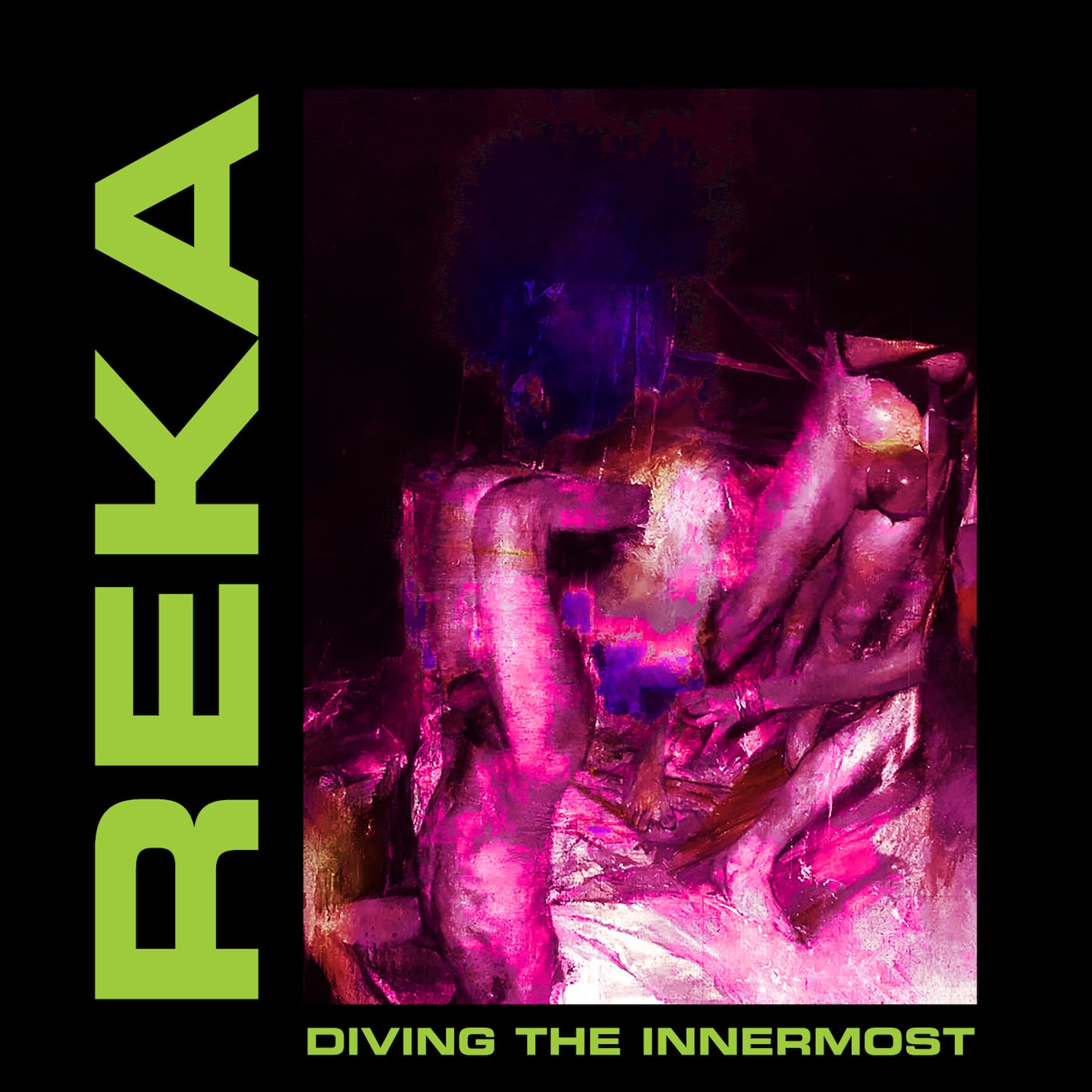
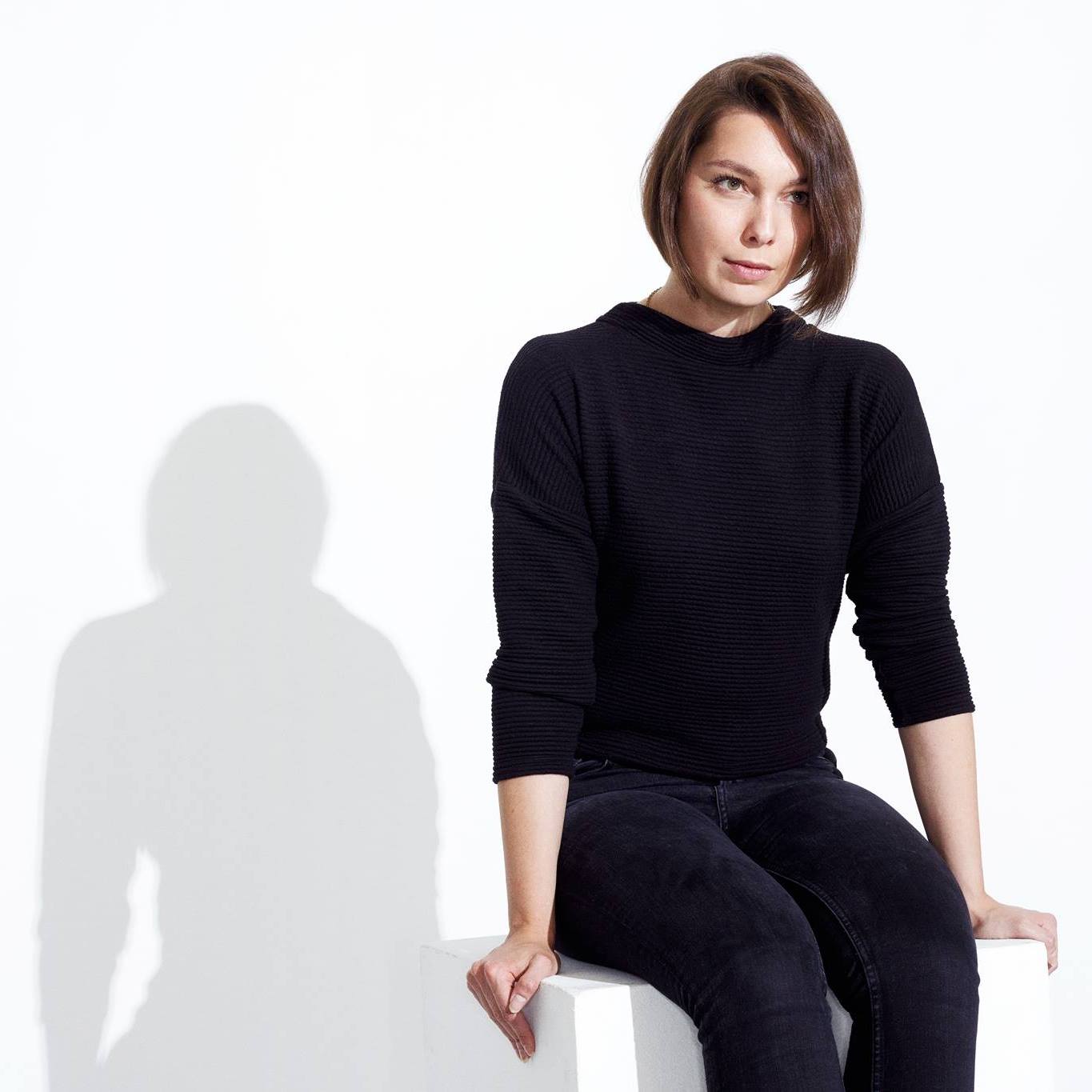
Phase Fatale‘s BITE will soon welcome REKA with her debut EP, Diving The Innermost.
A seasoned veteran starting out in Madrid in 2004, REKA joined DJ Hell’s International DJ Gigolo Records as part of the duo leChic. Now based in Berlin, she has held a residency at techno institution Tresor for the past five years.
We’re told that Diving The Innermost “reflects REKA’s intelligently curated DJ sets with each track offering a different view into her wide-ranging arsenal, which puts her right at home alongside the similarly eclectic stylings of labelmates Phase Fatale or Silent Servant.”
Tracklisting
A1 / 1. Diving The Innermost
A2 / 2. Purge
B1 / 3. Polarity
B2 / 4. Under My Eyelids
Diving The Innermost is out on October 22, with the title track streaming below.
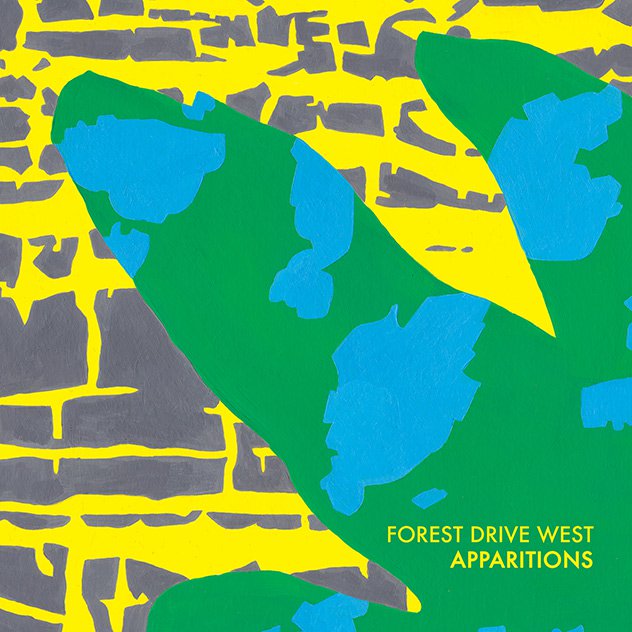
Forest Drive West is a mysterious UK artist with previous releases on Rupture London, Appian Sounds, and Hidden Hawaii. He’s appeared several times on Livity Sound and its sister-label, Dnuos Ytivil; his 2016 debut landed on the former.
Apparitions will be Forest Drive West’s third release of the year. We’re told to expect a “further development of the producer’s intricate fusions of techno, dub and jungle.”
Tracklisting
A1. Cut And Run
A2. Transmission
B1. Circles
B2. Vertigo
C1. Phaze-Shift
C2. Traveller
D1. Particles In Motion
D2. Cannibal
Apparitions will land on October 12, with “Phaze-Shift” streaming in full below.
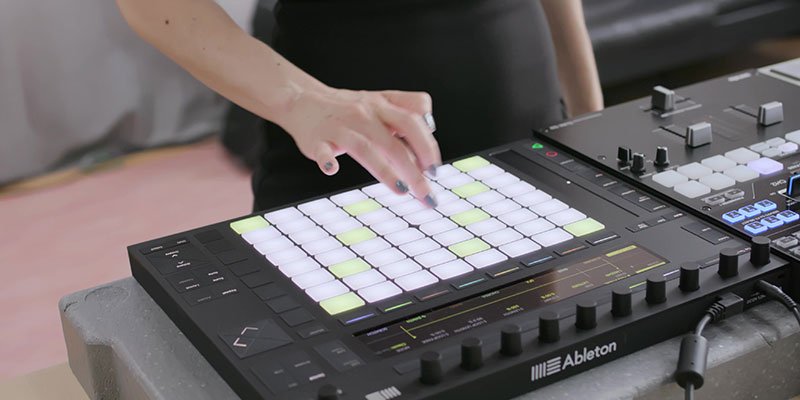
Ableton has released a Push performance video in collaboration with Bay Area turntablist DJ Step1.
In the video, DJ Step1 puts together an impressive performance of real-time sampling, beat making, scratching, and melody composition on her setup running Serato, Ableton Live and Push, and a Pioneer battle mixer. Ableton also recorded a second video in which DJ Step1 details how she runs Live and Push, explaining the signal routing, settings, devices, and extra controllers she used for her performance.
You can watch the two videos below and head here for a free finger drumming lesson based on DJ Step1’s performance by Melodics, a desktop app that teaches how to play MIDI keyboards and pad controllers.
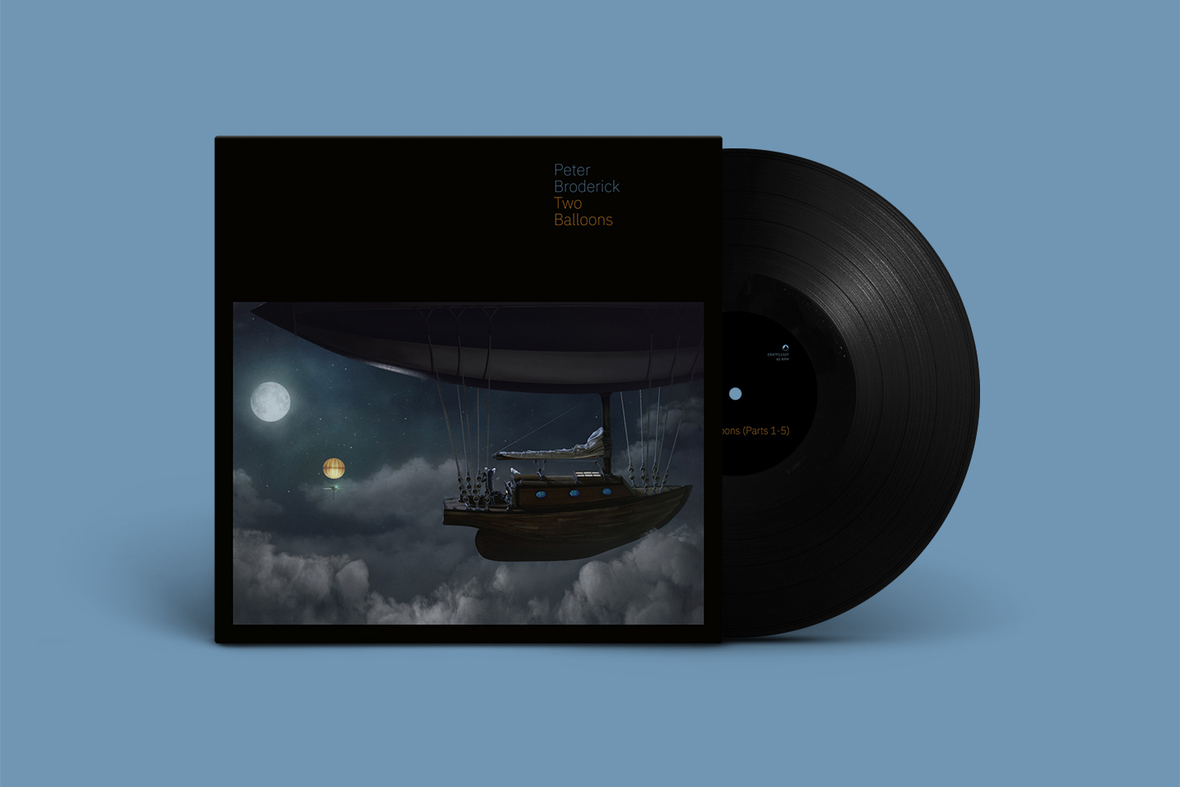
American-born multi-instrumentalist, singer, and composer Peter Broderick has announced a new EP, titled Two Balloons, scheduled for November 9 release via Erased Tapes.
Two Balloons will be available as a limited edition 10” vinyl and digital download. It features the score for the award-winning animation short of the same name, inspired by an early recording of Broderick’s, plus a nine-minute electronic rework on the B-side, “Techno For Lemurs.”
Director Mark C. Smith got the idea for his nine-minute stop-frame animation film while out at sea. Shortly after, he heard a song by Broderick from one of his earliest recordings—”4 Track Songs”—and the music struck a chord so strongly that he knew he wanted to make a film to fit the melody. And so began the five-year labour of love that would eventually produce this little film, currently circulating film festivals around the world and racking up countless awards and accolades including Best Original Music Score at the New Renaissance Film Festival in Amsterdam.
Even though the film was inspired by an older Broderick composition, the score for Two Balloons was recorded from scratch, revised and expanded to fit each frame.
“Techno For Lemurs,” the B-side, is described as “more than just a remix that recycles the original recordings.” None of the original parts have been re-used. The track is a homage to the two main characters in the story, the ring-tailed lemurs Bernard and Elba. Serving as Broderick’s first foray into the world of techno, this piece reinterprets the melodic themes from the original score by adapting them with electronic instrumentation.
Tracklisting
01. Two Balloons (Part 1)
02. Two Balloons (Part 2)
03. Two Balloons (Part 3)
04. Two Balloons (Part 4)
05. Two Balloons (Part 5)
06. Techno For Lemurs
Two Balloons EP will land on November 9, with “Two Balloons (Part 4)” streaming below, and a trailer for the short film streaming here.
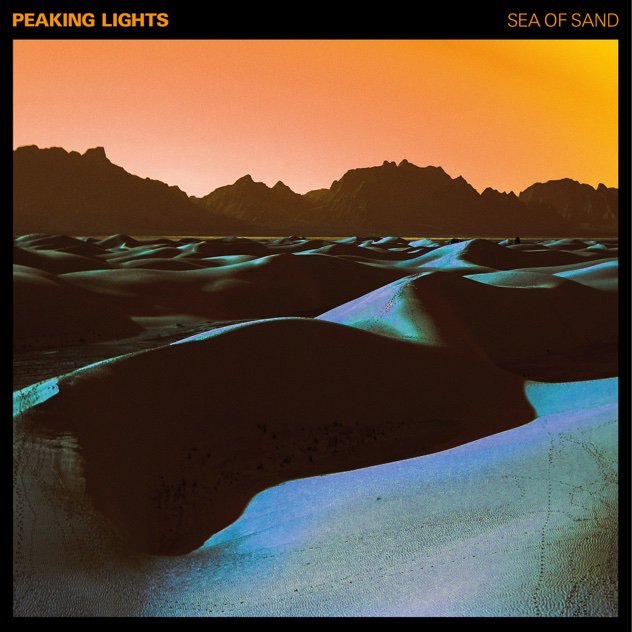
Peaking Lights will release a new EP on Dekmantel, Sea Of Sand.
Over the past decade, the California electronic pop duo’s music has appeared on City Slang, Night People, and Domino, among others. Sea Of Sand is their first release of 2018 and their Dekmantel debut; all material over the past three years has arrived on their own imprint, Two Flowers.
Indra Dunis handles vocals, synths, piano, and live electronic drums with Aaron Coyes handling synths, drum programming and live dubs via a mixing console.
The release features six tracks, exceeding 30 minutes in total, and forms the prelude to a forthcoming LP.
We’re told to expect a “kaleidoscopic melting-pot of dainty dub, experimental and leftfield beats, with wondrous sunny soundscapes that blend together the unconventional home-fashioned electronics, and windswept vocals that have defined Peaking Lights to date.”
Tracklisting
01. Blind Corner
02. Hypnotized
03. Shift Your Mind
04. I Can Read Your Mind
05. Noise Of Life
06. Sea Of Sand
Sea Of Sand EP will arrive on October 15, with clips streaming below.
Anastasia Kristensen has a novel standpoint on dance music that’s shaking up what techno means in 2018. Based in Copenhagen, Denmark, she’s quickly earned an international reputation for her spellbinding DJ sets. In one of her mixes, you’ll hear metallic juggernauts of kinetic 4/4 rhythm; electronics that glimmer like obsidian surfaces; and surprising diversions into hardcore breakbeats, weightless grime, electro, and IDM.
Her take on techno is refreshingly different, and this spirit of freedom extends to her productions, too: “Spring Ballade” for Nous Disques seemed to reference Detroit techno and Warp Records’ B12 with its looming bass and intricate percussion, while her latest production, a remix of Special Request’s “Tiresias,” is a stomping electronic groove decorated with swooping mechanical percussion and spiky bleeps, that opens out into contemplative ambient pads.
Growing up learning ballet in Moscow, Kristensen moved from the Russian capital to Copenhagen when she was 15 and found solace from the unfamiliar surroundings by getting into electronic music. Later moving to Canada to study at university, she discovered DJing, and it gradually became an obsession.
After years proving her mettle on the DJ circuit around Scandinavia and in Berlin, she’s now a resident at Copenhagen’s Culture Box and has an increasingly full DJ diary of bookings around the world. Kristensen is on the rise, and her first full EP—still very much under wraps—is out soon. In light of this, XLR8R caught up with Kristensen to learn more about her musical background, approach to DJing, and adventurous track choices.
How did your youth in Moscow influence your understanding or appreciation of music?
I believe my parents’ interest in music and my ballet classes created an appreciation for it. I think that inevitably developed my taste, as well as the appreciation for something unusual.
Was there anything about the discipline of ballet that has informed your attitude to playing dance music?
It was never a professional career path at all, it was more like a very strong enthusiasm. My now unfortunately passed-away father wanted to make sure I knew what ballet was like. I think it influenced me quite a lot in the sense of understanding rhythm and beauty, aesthetics, and giving me a general curiosity for the arts. I think that’s where it comes from, in general. An understanding of harmony and melody comes from ballet, too.
How did you get into electronic music?
It was in Denmark when I was 14, 15-years-old. There were some chip-tune artists from the United States, and their influences were Drexciya, Detroit techno. The artists mostly came from the Pulsewave music hub in New York, it was a big community back then. I was really inspired by that. I was digging for music as a teenager, ’cause I’d just moved and I didn’t have so many friends. Music was my way of dealing with the reality as a teenager of coming from Russia to Denmark, with a different culture. I didn’t think about mixing [records] or going out back then.
What made you want to DJ?
Until I was in my early 20s, I was mostly just listening to techno on the way to college or on the way to work. When I moved to Canada, I was introduced to some DJs, and I realised that all the knowledge and the passion I have, now I can actually mix records, and make something out of that. I went from listening to and following music to digging into that in a way where I could build something for myself, and create a certain vibe or story, without even thinking about any career. It was just interesting and challenging, mixing one kick with another and making one melody flow into another. I don’t think I had a deliberate mission [to become a DJ], just five or six years ago. It was a very organic thing. It’s very different now, working with several professionals around me, but just a few years ago that wasn’t anything I could imagine.
What were the first records you bought? What did you like about them?
The first music I dug for were actually original Warp records. I remember finding LFO’s Advance LP in a local music library and particularly the track “Shut Down,” which blew my mind. The glitch and emotion in this track appealed to me a lot. I was a teenager, and I had a lot of emotions, of course. The same experience goes for Wild Planet releases. Later on, I’d discover more of the classic Detroit stuff, and my taste started shaping up.
Also during that time, people would start to romanticize movies like Hackers—so the classic Prodigy stuff [on the soundtrack] was also an addition to the spectrum of my first influences. I honestly didn’t start with the current trends [of the time], like minimal, loopy sounding techno. I happened to jump right into the ‘80s and ‘90s.
Why did you choose Canada as a location for further studies, and what did you study?
My university offered courses either in Australia or Canada, and since I wanted to go to the US, it made more sense to choose Toronto. I advanced my studies in IT for Health Care there. I can’t really say I cared that much about my academia, but that experience of life and academic achievement helped me to complete my science degree in the end. Canada was also a sort of life school for me—other than learning how to DJ.
Whereabouts did you study? Was it a musically inspiring place to be?
I started in the suburbs of Toronto, a place called Hamilton. I met friends outside of the school because I was there for exchange studies and I was a bit bored with international students. I wanted something else, something local, true, authentic in a way, while staying there. So I somehow found a group of friends who were playing mostly house music in local venues, or who would sometimes go to Toronto to perform.
How did you learn to mix while in Canada? Did you find it tricky at first?
I asked my friend to show me what “that box with buttons and jog wheels” he had could do. I found it fascinating. I think it was the first time for me realising how things are from a DJ’s perspective. What it is to push the buttons, how to select music, how it looks, how it feels. I have always occupied myself with technology, devices and gadgets, so for me, it was really interesting to crack the logic and understand the mechanism behind it, in a purely technical way. Later on, I did the same with turntables. I still think it’s fascinating to just nerd out on the mixing itself and learn what can be done on both digital and analogue outlets.
Did you learn to DJ quite quickly or did it take some time?
I think I did quite quickly, but confidence and knowledge came only with practice and experience.
Do you remember your first performance in front of a crowd? What was it like?
Yes, it was at a contemporary art fair with a focus on chip technology and chip-tune. To be honest, I still remember being terrified, and not exactly knowing if I was even doing alright. But I loved my music, and the guests felt that too.
Did you start out playing the same sort of records as you’re playing today? If not, how has your style changed?
It has certainly changed. I went from not having any flow in my sets, to playing the more dreamy and hypnotic end of dance music, and then over to where I am today, with dazzling elements and intensity, and unexpected turns.
Is this because your tastes have changed or because you just found the music that excites you?
My perception of what is exciting at the club or festival has changed, while I enjoy all sorts of music personally.
Copenhagen is now recognised as a hub of underground dance music. Is that your experience of the city?
Yeah, there were definitely lots of crews doing stuff [before], they just maybe weren’t very visible to the media. I found different crews were trying to do different things because they wanted something to happen in their city, and many of them would travel to Berlin, get inspiration, and come back and try to throw a rave.
I think my past, my way of growing, was based in Denmark, but I started getting attention from Berlin, from Sweden especially, neighbouring Scandinavian countries. I belonged to everywhere and nowhere at the same time. I would keep in touch with all the crews, but I can’t say that I belong to a fast techno scene or a slow scene, or house music only. I try to have an individualistic approach, but it doesn’t mean I’m not part of the community, I just don’t have to claim my music is part of something particular. I have a vast network, particularly in Moscow where I come from, and where the scene is really blooming. I know I’m kind of included—made welcome—because I’m an immigrant from Russia who lives abroad, but still kind of Russian and people want to associate me with that.
You mention that your DJing got attention in Germany and Sweden early on. How did this happen?
Everything connected with music is a highly organic process for me, where passion for music, desire for equality in the communities, compassion, and mutual support is in the centre. I used to be invited to Malmö, as it is close to Copenhagen to play, and that has spread further on to other parts of Sweden. The same for Berlin: all these promoter networks across the cities and countries are quite connected with each other, so good feedback on someone’s good job will spread quickly. People’s mouth to mouth recommendations are still the most effective and probably also most fair method to get noticed.
You’re a resident at Copenhagen’s Culture Box club. What is it like playing there?
I recently played there with Randomer as a b2b. I have a bit of freedom there—I can suggest some artists and they will listen to me. I also suggested that maybe they start a night where they welcome new faces, so the club supports a bit of the local scene as well, and they’re doing it well. They engage lots of local promoters. It’s placed its roots as a local club: they want to be the first Copenhagen club in a way, to support big talent from abroad but local talent if they can. That’s a very healthy thing for any scene in any city, especially in a small city like Copenhagen, where you don’t have a vast amount of venues and you don’t have 50 nights in the same weekend. You actually have two or three major promoters, and you have to lift the scene somehow and be friends with other venues. It’s different to London or Moscow.
Though you’re associated mostly with techno, you play lots of other stuff too, such as jungle and forms of UK bass music—where does that eclecticism come from?
I think that music is so versatile and has so many influences, it would be a bit boring if you only stick to one genre. Like people saying, “I only play fast techno, or I only do this.” That’s a shame, ’cause there’s so much other good stuff, which you can still dance to or experience other moods or emotions, or lose your mind to. I use lots of rave, but also electro that shows the whole spectrum of different basslines, or different types of kicks that techno can’t have in its arrangement. It’s a good opportunity.
Do you enjoy it when a DJ surprises you with the direction they take in their set?
Yes, I enjoy the surprise part, of course. I also enjoy it when you can hear the DJ is in the flow. You can see the people are going crazy, so you maybe keep that vibe. Reading the crowd is a really big skill and important for a DJ. I can have all sorts of music with me, but there’s no reason to play too fast or too upbeat if nobody’s ready yet, if they’re still in the bar. It’s a good mixture of surprising [people] and playing what is appropriate.
How do you dig for records?
I dig for music in all formats and everywhere, because it is literally everywhere: in my inbox as promos, in a chat with music friends, at random Bandcamp profiles, on Beatport, at Soundcloud accounts or just on an occasional record store dig.
What is it about a record that makes it suitable for an Anastasia Kristensen set? What does it need to have?
It has to have a statement, a character, preferably interesting sound design and a narrative. A fairly stripped-back DJ tool has a narrative itself too, and as a club DJ, it is really useful to have a few of those in your music collection.
Which DJs, producers or labels are really exciting you right now?
Eris Drew’s sets are an energetic bomb, Telfort’s smooth and lush vibes on his latest [EP] Rooms For Speculation, and Katerina’s latest Coméme release is magical and very personal.
The underground seems to be particularly healthy at the moment, with lots of producers taking more risks. Do you think it’s a good time for electronic music?
I think it’s an extremely exciting time right now because it’s become a bit more accessible for everybody to get their stuff out there, either through platforms like Bandcamp, or good deals with people who do P&D [press and distribution] for their vinyl. It’s become motivating. People try to outcompete each other. There is more incentive to continue to go even more experimental, or reissue stuff that has been forgotten. I think it’s really good for people who don’t know about the earlier generation of music, too. I feel that the new generation of producers, promoters, and DJs are quite solid with each other, people help each other way more than I saw in previous generations. I think people my age and younger, I’m 26 now, there is a renaissance, even between friendships and cooperating with each other. Some people say it’s just generating more profit, I can see that, but if you look at the underground part, it’s booming. More cities are coming on the map. I’ve met so many friends from other countries through music.
Have you found that producing has helped to get you more DJ gigs?
Not really, in my case. Maybe actually quite the opposite: my DJ sets often lead people to discover my few tracks and remixes out there. “Spring Ballade,” however, has definitely got attention in the UK, which I am very happy with—I love it there and it’s a joy to return.
You recently remixed Special Request’s track “Tiresias” along with Nina Kraviz. Did you enjoy putting your stamp on that?
I was asked by the label [Houndstooth] very suddenly if I was interested in remixing Paul Woolford’s work as Special Request, and I said, “Yes of course!” It’s one of the most exciting things you can be asked to do because I really enjoy doing remixes. It’s a stamp of artistic friendship.
I looked up the word Tiresias, and in Greek mythology, it’s a man who turned into a woman and lived as a woman for 7 years. I decided to put my touch on the track, thinking about the transformation from man to woman, and that’s why it has these incoming elements—the way it grows and grows with more sounds. I was obviously happy to be part of it when I saw that Paul has put his own new track on it and that Nina Kraviz had contributed two floor-ready remixes. They work really well in clubs, people catch the loop and start moving to it, whereas I think my remix is a bit more of a listening experience. It does work in the club, but I think lots of people might listen to it in the evening at home. I met Nina two weeks ago, and she suggested we take a photo where we hold the EP together. That was a symbolic thing: that we both had worked on this EP, and are happy with the result. Paul [Woolford] was very happy with it, which is the most important thing.
Have you got any plans to work with Nina again?
I didn’t know she was doing these remixes originally, but Nina and I are definitely in touch, and I send her music. We don’t have anything on the table, but we do talk together.
You have an EP forthcoming, can you tell us anything about that?
Because it’s my first one I’ve prepared a lot for it. I’ve been sorting, adding and deleting them again for the final track list, together with the label. I can’t say who it is! I also believe it’s the strongest work I’ve ever done, and I like that it’s quite versatile. It has a bit of everything for everybody. I expect it to divide opinions. It will be very interesting to see what people click with. I have a feeling it will be something people like in the UK, but I’m also optimistic for the rest of Europe too.
Do you think carefully about where you’re going as an artist, or are you just enjoying the ride?
I never planned my career deliberately, unlike some other artists. However, I care a lot about the music I select and prepare for releases, and what message it sends out there.
What else is on the horizon?
I am moving to my own new home, so I am very occupied with making it cute. I can’t wait to explore all the upcoming exciting opportunities out there later this year.
Anastasia Kristensen will join the likes of Amelie Lens, Peggy Gou, and Omar-S at this year’s Into the Valley festival, taking place later this month in Andalusia, Spain. More information can be found here.
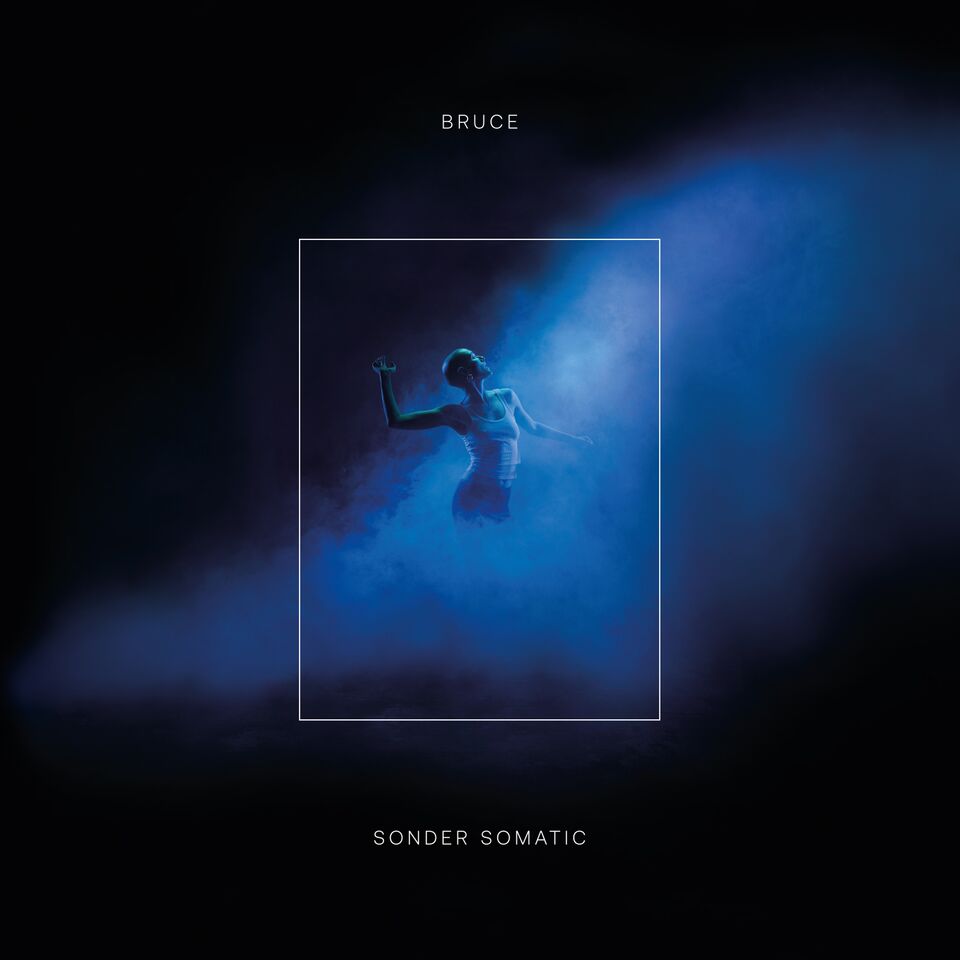
Bruce—a.k.a Larry McCarthy—will release his debut album, Sonder Somatic, this October via UK imprint Hessle Audio.
Sonder Somatic follows EPs for Timedance, Livity Sound, Idle Hands, and Hemlock, and comes four years after his debut EP, Not Stochastic, for Hessle Audio. We’re told that the album “pushes the boundaries of what club music can be whilst expertly refining his work as both a club producer and an experimental sound designer.” It “packs 11 singular UK club tracks that evoke a distinctly emotive and dense energy, channelling detailed sound designs, tangled textures and club anthems for 2018 and beyond.”
Bruce has been a long-term fan of Hessle Audio, the label of Pearson Sound, Ben UFO, and Pangaea, and wanted to craft an album that continues their singular attitude while incorporating vibes from UK sound system music as well as music from his hometown of Bristol.
“From being a fan of their work from the very beginning, it’s not only the music they have released that has informed my taste/work, but also the journey they have formed through the application of their attitude and approach.” —Bruce
Tracklisting
01. Elo
02. Cacao
03. Ore
04. Meek
05. Torn
06. What
07. Baychimo
08. Patience St Pim
09. It’ll Pass
10. Æon
11. Serotonin Levels Low
Sonder Somatic will land on October 26, with “Æon” streaming in full via the player below.
This Thursday, September 13, at 4 p.m. PST, Novation will host its latest Beats and Bytes livestream via its YouTube channel, this time showing you how to use sequencers to improve your workflow with sound design, production, and performance, as well as an in-depth look at Circuit 1.7.
The Beats and Bytes livestream series aims to help users and viewers advance their synthesizer, production, and performance techniques, as well as giving live performance demos of Novation’s product line—you can check out the Beats and Bytes schedule here.
You can subscribe to Novation’s YouTube channel here, with the livestream schedule below.
Later this week, Youngbloods will close out the summer with Radar Ruins, a LP collaboration with Connecticut producer Foamek.
The album reportedly channels “over a decade of life’s torments and the sounds that offered solace” via 11 colorful and nostalgic tracks that were recoded following a return to his childhood home after an “adulthood immersed in city nightlife, self-medicating increasingly self-destructive neurosis.” Foamek built his name in the lo-fi house community via a string of well-received outings on labels such as Haus of ALTR and PalmStructure, however, Radar Ruins mostly eschews house altogether, instead focusing on deeply woven ambient, IDM, and warped downtempo reminiscent of the early ’90s braindance era of Boards of Canada, Aphex Twin, and µ-Ziq—a style Foamek grew up on. Using these early inspirations as a base, Foamek let his productions run wild across a range of stylistic touchstones, applying his unique signature over hazy beats, textural atmospheres, and introspective synths.
Radar Ruins drops on September 14 and can be pre-order here, with digital bonus cut “Swing VIP” available as a download via WeTransfer below.
Due to temporary issues regarding the GDPR, EU readers can download the track here.
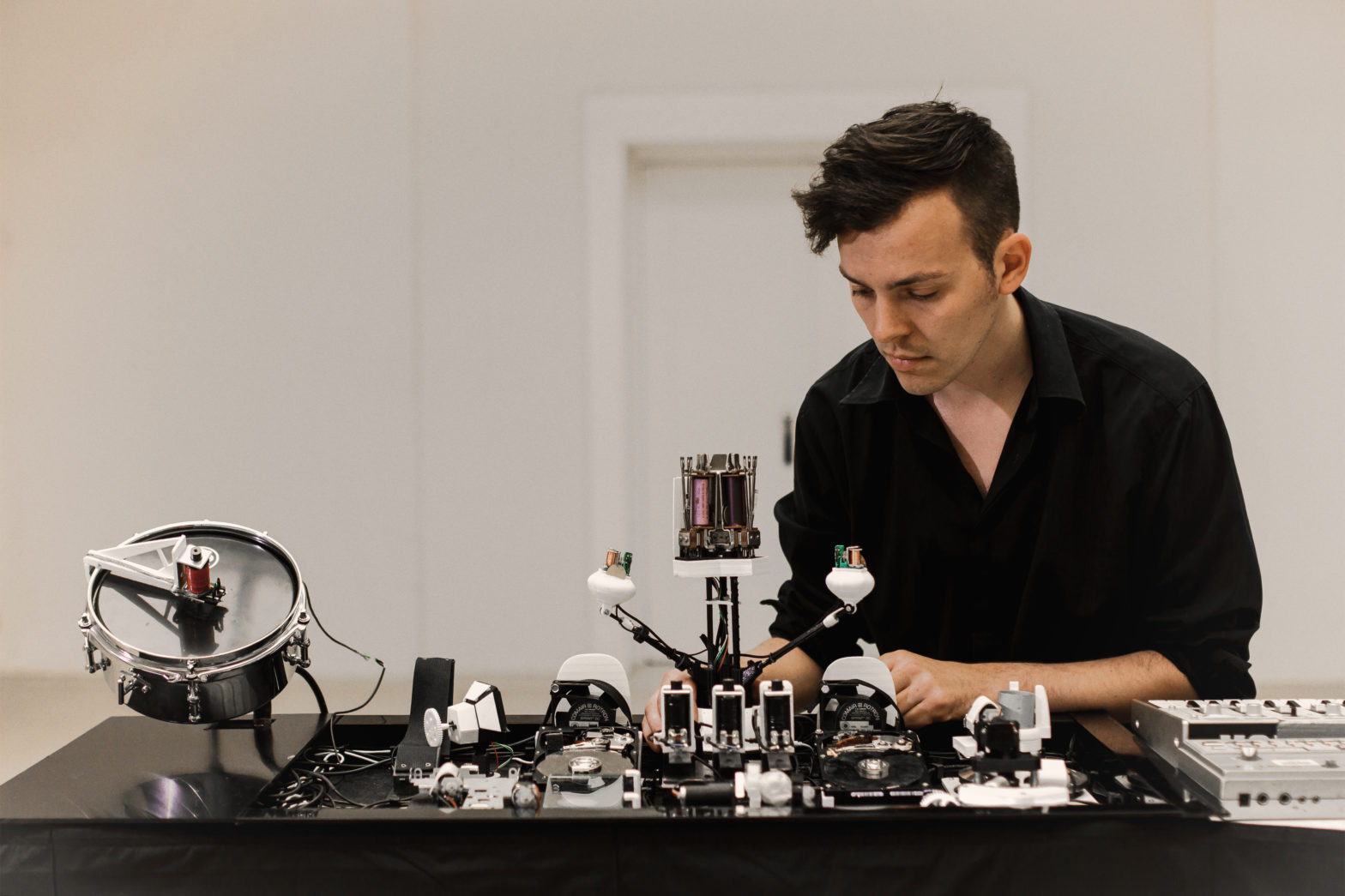
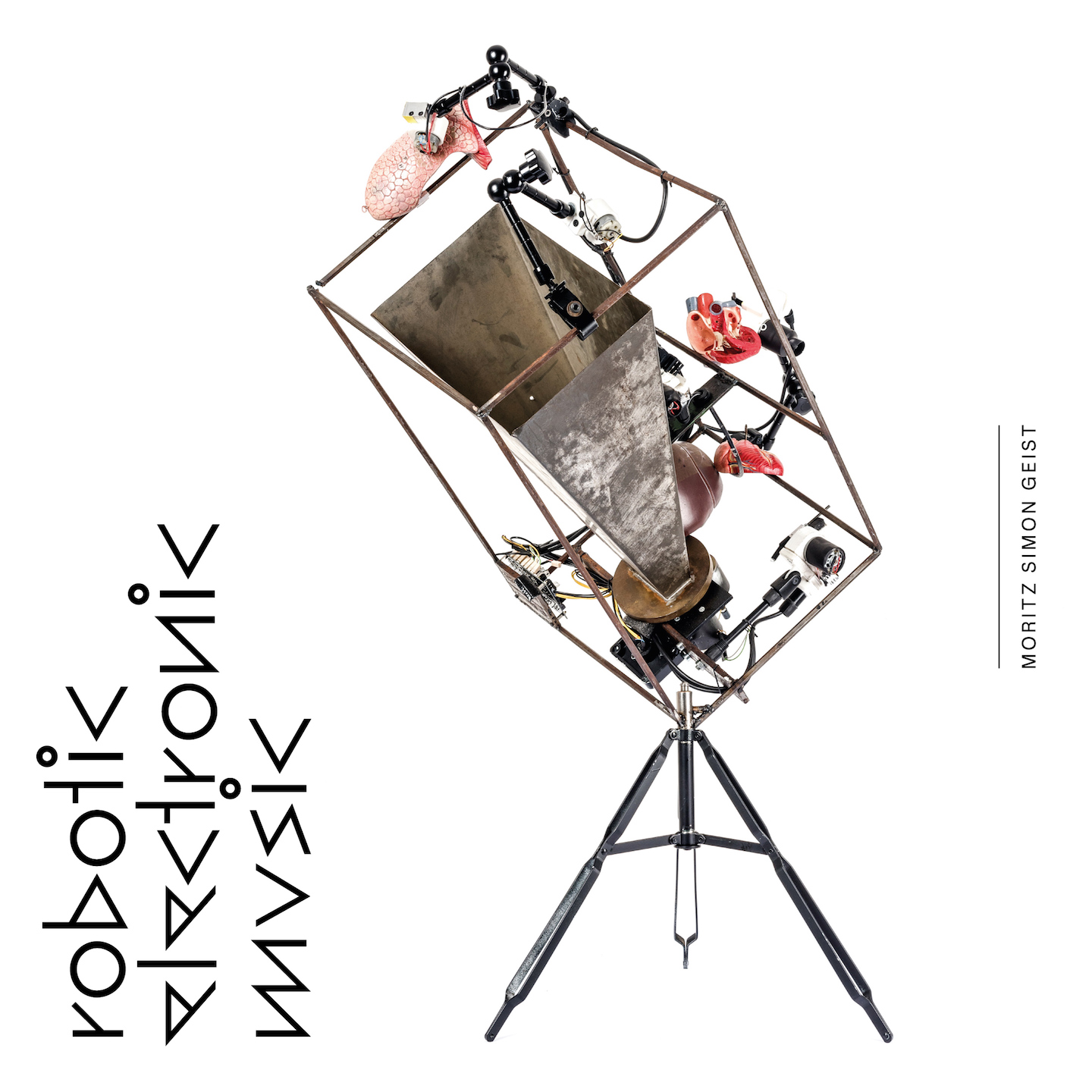
Robotics engineer and media artist Moritz Simon Geist will soon release the world’s first techno album played entirely by real robots. The album is produced by Mouse On Mars’ Andi Thoma.
Moritz Simon Geist is a robotics engineer and media artist. After playing Mutek, CTM, and Moogfest, and years of fabrications, tweaks, and tests—winning also Visual Music Award 2017 and Initiative Music 2017/18—he will now release a debut album. In doing so, he aims to “explore the sound of mechanics that keeps on filling our world” and create “a smashing soundtrack for both the precise automation and physical fragility that shapes today’s society.”
All of the sounds on his records are played by robots: small motors that beat on metal, futuristic 3D-printed robo-kalimbas, and salvaged parts from old hard drives that click and cut. The setup has taken him several years to build, tweak, and test.
The album is being preceded by an EP due out in October, inaugurating Sonic Robots Records.
Tracklisting
A1 / 1. Entropy
A2 / 2. The DNA Of Drumming
A3 / 3. In G# (Katze läuft über Klavier)
A4 / 4. Gateland
B1 / 5. Under Deconstruction
B2 / 6. Empathiemaschine
B3 / 7. Manchester Baby
B4 / 8. A-rhythmic
Robotic Electronic Music LP will land on November 16.