Next week, Aniara will release the latest EP from Arkajo, Avasarala.
The new EP follows last year’s Fathomless Music 12″ and will be the second release on Aniara this year, following Ebende’s Bang! EP. Like much of Arkajo’s output, Avasarala explores the beauty of soundscapes and the ritualistic rhythm via three tracks of gorgeous melancholia. From the achingly beautiful title track to the rugged grooves “Tape 16” and the tribal rhythms of “Expansive Mood,” Avasarala is another gem in Aniara’s immaculate catalog.
In support of the release, the label has offered up a full stream of “Expansive Mood,” available to stream via the player below.
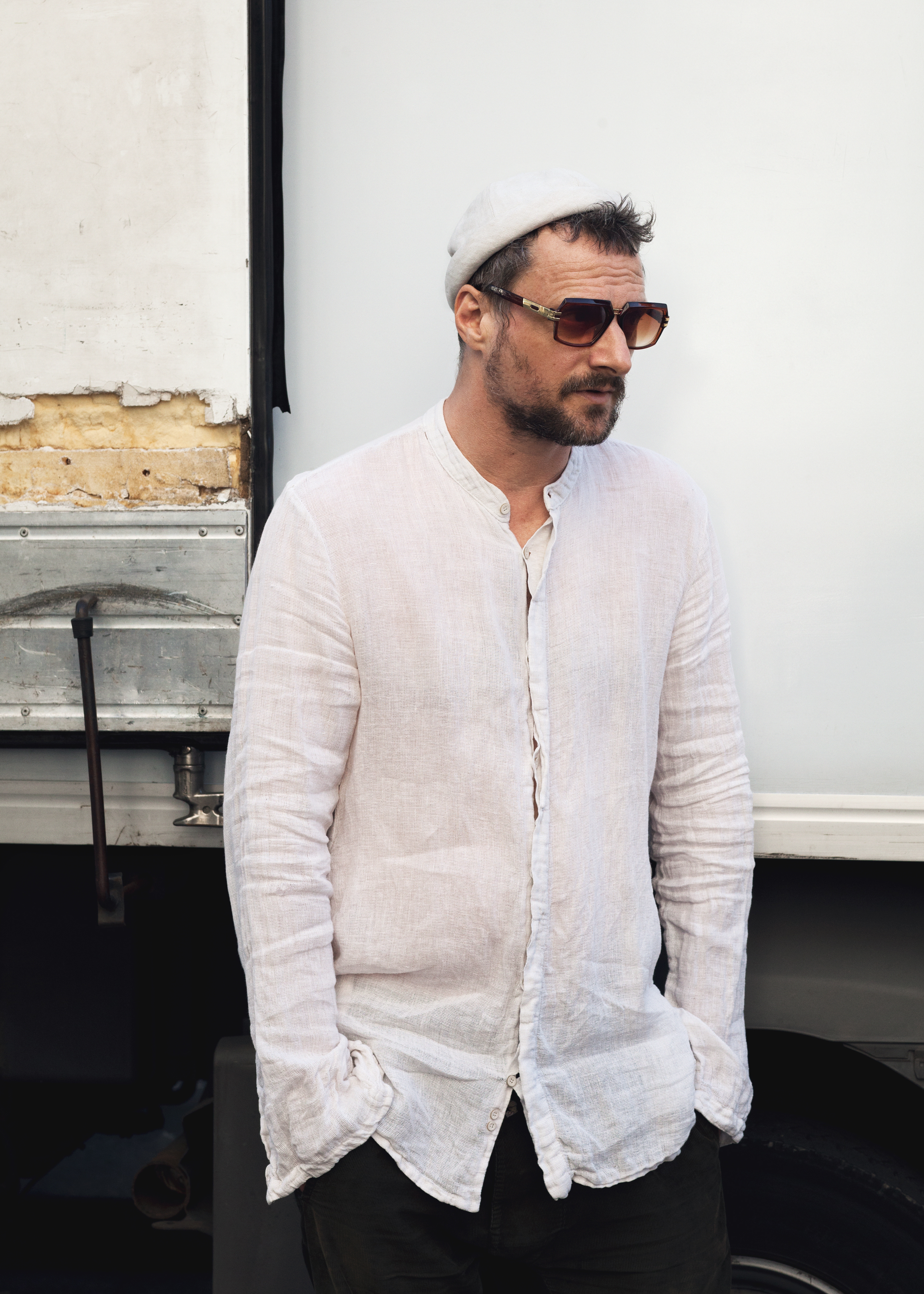
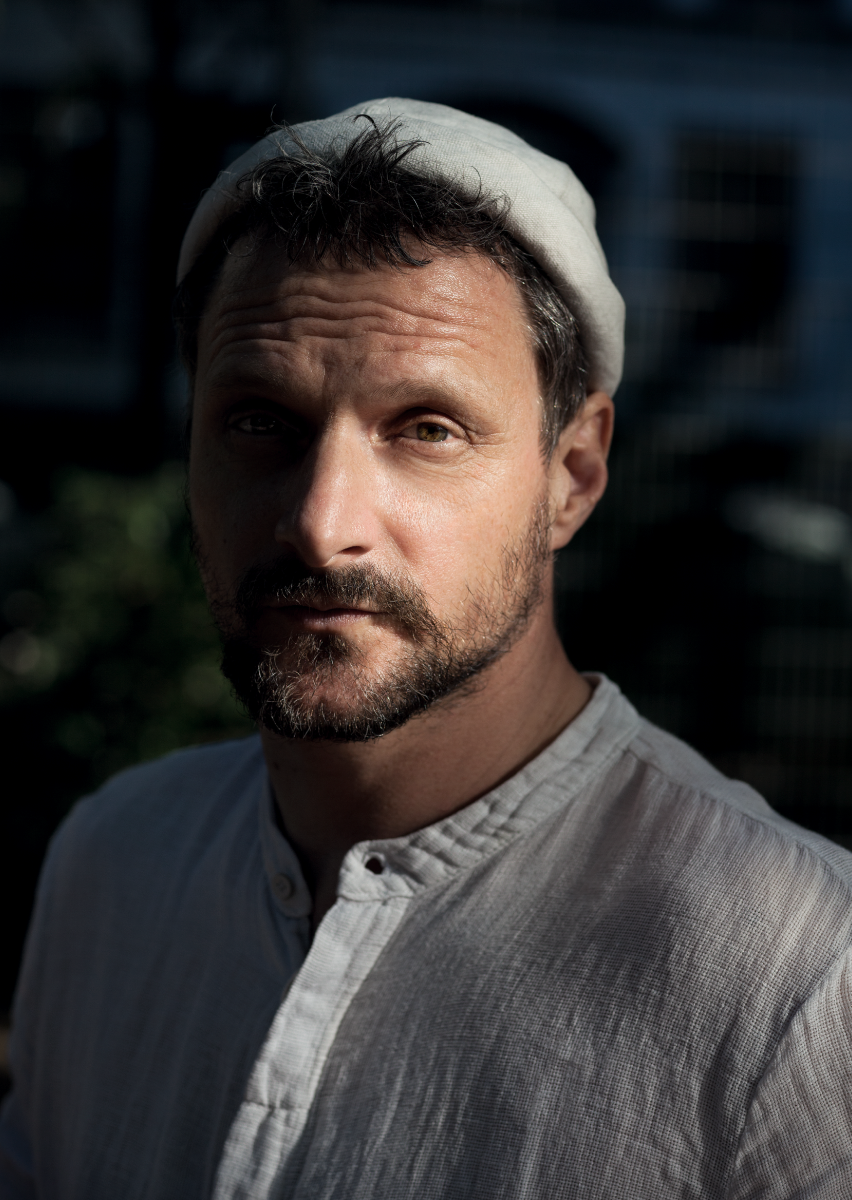
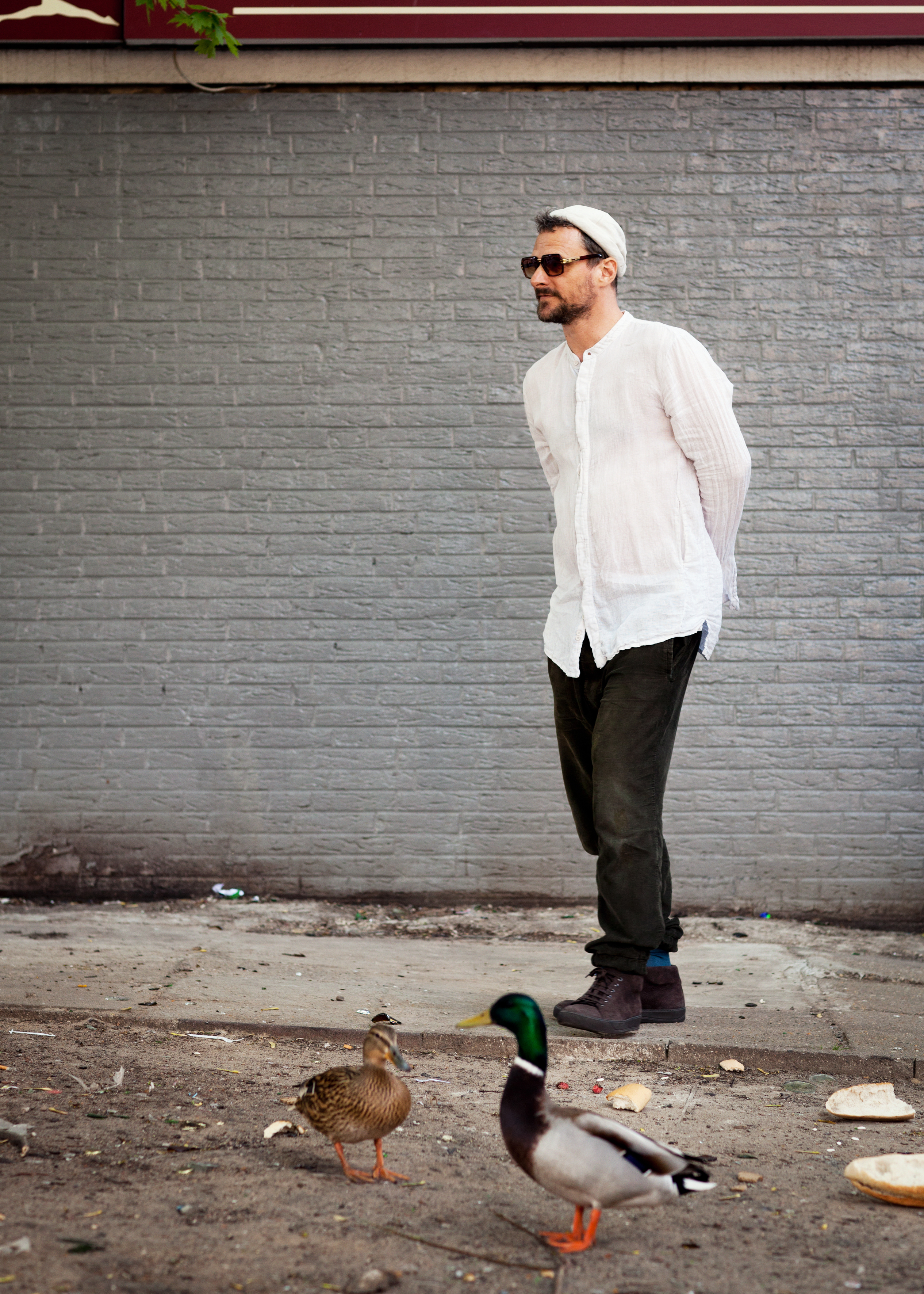
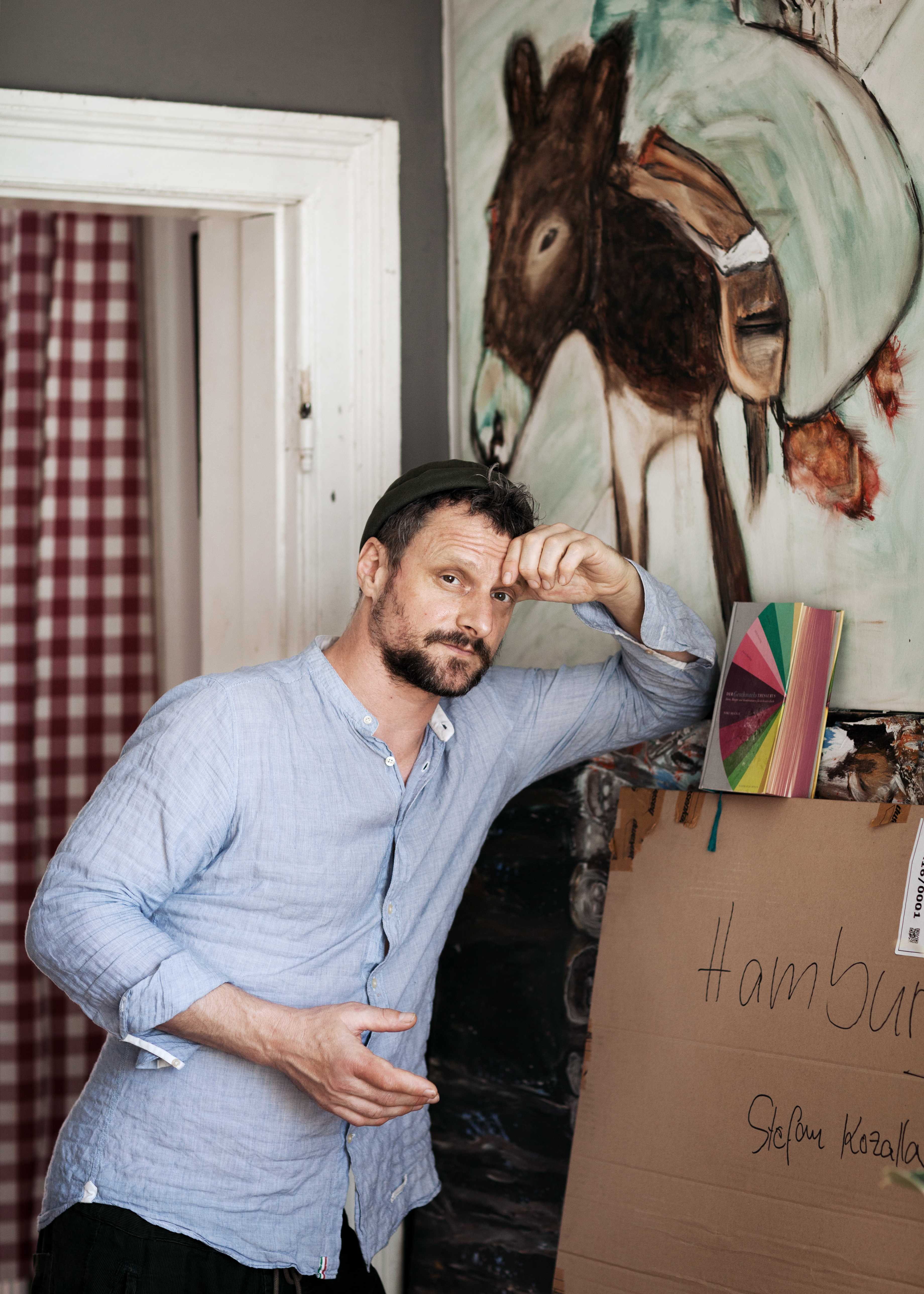
Stefan Kozalla is one of electronic music’s most intriguing figures. Over the course of a 25-year career, the German artist has released abstract hip-hop, sample-laden funk, wonky minimal techno, funky pop, always with a bewitching originality that is becoming increasingly uncommon. What sort of mind produces music like that? William Ralston ventured to Hamburg to find out.
The phone rings. It’s late, around midnight local time. “Hello,” says the caller, weary and a little flustered. “Hi, it’s Kosi. I’m nervous about tomorrow and I am not sure if we should do it.” My bags are packed and the taxi is booked, but perhaps I should have foreseen this hurdle: over the course of an engrossing 25-year musical career, Koze has kept media engagements to an absolute minimum. It really is remarkable just how little meaningful information you can find on him or his work. He says on more than one occasion that he got his start when his parents deserted him in a Marrakesh forest armed with only an AKAI MPC sampler, and at times it’s hard to determine the statement’s truth. “Just write that story,” he pleads. “I’ll pay you!” But after some light-hearted conversation and gentle persuasion, he agrees to meet the next day, granting unprecedented access to one of contemporary electronic music’s most brilliant and colorful minds.
This will not be the only piece you see on Koze over the coming weeks. The release of Knock Knock, Koze’s first long-player in over five years, has forced him to embrace the discomfort of the media spotlight more so than ever before. He reveals an inherent dislike for all that it represents and stresses a growing frustration at interviewers for posing the same ill-informed questions. It’s a statement doused with humor but there’s no doubting its sincerity. His only comfort, he explains, is knowing that our time together is one of his final pre-album obligations, albeit the most demanding. “I’ve never given an interviewer this much time,” he says, adding that he intends now to “disappear” for another five years. He deflects my attempts to extract more personal details with a gentle humor and sarcasm and is reluctant to offer any insight into how he became who he is. But every person has a story, and this is DJ Koze’s.
Koze, born Stefan Kozalla, was born in 1972 in Flensburg, northern Germany. He refuses to divulge anything on his childhood, but let’s slip that his father was an attorney who wished for his son to follow suit. He describes these years as “personal” and “irrelevant” in that they bear little reflection on the music he makes now. “I’m sorry if this is impolite, but you don’t have to ask these questions,” he says. An interest in hip-hop blossomed through his adolescence, sparked by US Rap from the late ‘80s, in particular Public Enemy, A Tribe Called Quest, and The Pharcyde, which, in turn, gave him an identity and connected him with a handful of young, similarly inclined teens. “Hip-hop was a fascinating force of energy that changed my life,” he explains. “The view on things was so uplifting and inspiring.” Sporting converse trainers, denim jeans, and oversized hoodies, he and his friends became one of Flensburg’s few hip-hop crews, anomalies in a crowd of indie-rockers. “Nobody understood who we were or why we liked this music,” Koze says. “We were like a Public Enemy franchise.” His mother stitched the American hip-hop group’s insignia onto his bomber jacket.
Koze explains that the roots of his non-conformist nature can be traced back to his Flensburg adolescence. The small German countryside city boasted little in terms of youth entertainment, meaning that boredom was prevalent among Koze and his peers. “We were just a bunch of bored youths,” he says, “and so we began looking for anything to make it more interesting.” On a deeper level, this common boredom, Koze suggests, instilled a deep-rooted craving for feeling and emotion—“something that kicked in on a deeper, harder level,” he adds. Partying was one such vehicle.
Koze found himself part of a 25-strong group of “crazy” youths, brought together by one common indulgence: drink, drugs, and, radical music. Within this wider collective were various sub-groups as defined by musical preference, many of them into different strains of indie-rock, Mod, psychedelic, jazz, house, and much more. “We were a ridiculous bunch of people,” Koze recalls, laughing at how musical taste defined dress codes and attitudes to create a wildly diverse tapestry of members. Koze looked up to the older boys who listened to music that he “couldn’t yet decode.”
Almost all parties were preceded by a gathering in one of the older boy’s cellars. The space was dark, dirty, and windowless—like a bunker disconnected from the wider world. It was a perfect base for the group to “talk nonsense, get completely fucked up.” Sessions would go on for hours, sometimes days, with “all different things in high supply and adolescents looking to experience a different reality,” Koze explains. He describes it as “like some movie,” with “people passed out all over the place!” The musical focus was on “fucking up the brain as much as possible,” Koze continues, “and we all wanted to play something more radical than all the others.”
This affinity for out-there sounds manifests itself in Koze’s work. His music, though he’s touched on various different styles, always retains a playful, warped out, and inventive vibe—invariably stimulating without ever being formulaic. “I learned early how much music can set you free,” he says, “and I became so used to listening to radical music that I now have big problems with the harmless side of electronic music.” He explains that he’s still “looking for this brain-fuck element” in all the music he listens to but that it’s rarely present. “A lot of it [music] is not disturbing enough for me,” he continues. “If there is beauty and elegance then I have to destroy it.”
Koze’s own musical experiments started around the age of 14. He began watching scratch DJs like DJ Qbert and Aladdin from Low Profile, and then experiencing his first DMC championships inspired imitation. “We bought the same records and we tried just to do it the same,” he continues. He finished runner-up in his first DMC DJ Championships in 1988, aged just 16. In parallel with this, though pursued with much less fervor, he was also making his own sounds. One guy, a local car painter who lived with his mother, owned an eight-track tape player and Koze sometimes visited him to play with it. He’d sample beat breaks from records and merge them into loops—known as multi-track recording. “To make a four-minute beat would take a whole afternoon and then I’d come the next day and add something more,” he explains. “This is where I come from.” He takes a sip of beer, and protests that he’s given enough “gold.” “I feel old now,” he adds, before sitting back, smiling, and inviting another question.
After finishing school and completing two years of social work, Koze relocated to Hamburg, aged 20, intent on “escaping the depression” of Flensburg. He opted against university because nothing appealed to him in terms of a “proper education.” Music was also proving exciting. He soon reconnected with Sven Mikolajewicz, Daniel Sommer (a.k.a Cosmic DJ), and Rafael Stachowia, former members of a rival Flensberg hip-hop crew. Putting their pasts to one side, they united to create Fischmob. Mikolajewicz had a sampler and they began experimenting with sounds, looking to combine punk and guitar with hip-hop. Much of the appeal of these aesthetics stemmed from the fact that none of the crew had any musical training: “Everyone can do hip-hop,” Koze explains, “because all you need are some ideas and a sampler.” They spent their days walking around the city with a recorder, posing random questions (e.g “How do you like the weather?” ) and then recontextualizing these responses (e.g “I like it”) by attaching them to a different question (e.g “How do you like Fischmob”). This brought a much-welcomed humor and light-heartedness to a hip-hop world so notoriously straight-laced and serious.
Their first tape arrived in 1994, titled “Ey, Aller,” and was quickly picked up by Plattenmeister, a small independent label in Lübeck, Germany. Having signed a record deal, they were pushed back into the studio to begin work on a debut album, which arrived less than a year later, titled Männer Können Seine Gefühle Nicht Zeigen. Sales exceeded 50,000 without any promotion or media support, a tremendous achievement even today. It was the first baby steps of a new German hip-hop movement.
The band supported the album with a European tour where they performed a choreographed show featuring rap, drumming, guitar, scratching—and some tongue-in-cheek, often grotesque humor. “It was a real performance,” Koze recalls, “so much more than just a music concert.” Further EPs and singles followed and soon, having impressed Die Ärzte with their music, Koze and the gang were invited to join the famous German punk-rock band on tour. Their stage time was limited to 20 minutes during which they embraced the spotlight—drinking, partying, and just having as much fun as possible. “They [Die Ärzte] said that they had never seen a band as self-destructive as us,” Koze recalls, laughing. “But we were in our 20s and just happy-go-lucky,” he continues. “Why should I go on stage without a Bacardi Cola?”
1998’s follow up album marked the beginning of the end for Fischmob. Success and signing with a major label brought with it expectations and an unwelcome pressure. The German hip-hop scene had also exploded, placing the band at the epicenter of a mainstream musical movement. “We were real pioneers,” Koze explains, “and now the whole country was paying attention to us.” Koze also harbored a dislike for how the hip-hop scene had become so competitive and male-dominated. “It was just full of young males and I think I grew beyond this,” he explains. But the most challenging part was retaining the naivety and innocence that had for so long been at the band’s core; they needed to make music to sell if they were to recoup the significant costs of an album campaign. “We had become aware of the reasons for our success and so we tried to stick to certain rules,” Koze explains. “We no longer felt that we had the freedom to do whatever we wanted.” This also grated on him personally given his need to break the rules and “fuck things up.” The group dissolved in 1998, shortly after the album’s release.
Koze’s Adolf Noise project was born out of these frustrations. It was also an outlet to satisfy his craving for radical music—music, he says, that “irritates” you. “When we were meeting, drinking, and smoking, we were always interested in being irritated,” he says. “I wanted music that you couldn’t understand—where you have no idea what the fuck is going on. Why is the beat changing every 10 seconds? Is it trying to ironic?” He reveals an appreciation for Deep Purple, KLF, Lee “Scratch” Perry, and Frank Zappa; it was the work of these artists that set the project’s ill-defined sonic template, “The purpose [of Adolf Noise] was humor and irritation,” Koze says. “I wanted the music to be completely non-functional except that it had to be irritating,” he continues.
A debut release, EP 1: Wunden, S. Beine Offen, came in 1996, and its production brought Koze much satisfaction. He made the record with no consideration for sales, and he revelled in this freedom. “I realized that sounds can be completely free and that I don’t have to make compromises with my work,” he says. At 45 minutes in length, the release is a bizarre tapestry of obscure field recordings, many taken from television and radio programs, some of which are musical and others only verbal—like a psychedelic radio broadcast. It’s also a direct manifestation of Koze’s rebellious nature. “Everyone at the time wanted to have a proper contract so they felt obliged to do proper music,” he says. “They never felt free enough to fuck it up,” he continues. “But we were all trying to go more extreme; in fact, we celebrated this!”
This proved a formative moment in Koze’s career. Freed from the shackles of market expectation, he had defined his love for out-there, abstract music—and there was no going back. “I think at this point I lost all interested in making the right music,” he explains. “My income was coming from hip-hop but my heart had moved on to music that has no rules or boundaries,” he continues. “Hip-hop started to feel like work because there were certain formulas to follow—but I wanted a white page to do what the fuck I wanted.”
Koze’s International Pony project followed a similar trajectory to Fischmob. Upon the latter’s dissolution, Koze and Cosmic formed International Pony in 1998 with Carsten Meyer (a.k.a Erobique), a multi-instrumentalist who had been supporting Fischmob on tour. With Mikolajewicz absent through sickness before a Berlin Fischmob show, Koze, Cosmic, and Meyer spent a week experimenting in the hotel’s conference room, giving rise to three new tracks with a funk and electro aesthetic. They pressed this to vinyl that same week, and continued making music for the best part of a decade. “We wanted to continue with this shit because it came so naturally,” Koze explains. But once again, success came with a price: “[After the second album] It became too professional,” Koze explains, stressing once again a deep-rooted aversion for expectations. Interest from major labels was high, even more so given that it had grown out of Fischmob. The music was also commercially viable, so much so that Fatboy Slim’s Skin label licensed some tracks. Yet as pressure grew, Koze’s focus waned.
By the early noughties, techno and house were on Koze’s radar. His gateway to these realms had been acid music; its brutality had fascinated him ever since he’d discovered it in Flensburg. “It really had the potential to screw with your brain,” he explains. But it had taken some time for him to appreciate these new sounds: “At first I couldn’t feel it because it was so abstract, but we had to understand it if we wanted to be cool,” Koze recalls. “It’s not easy for the countryside youth to comprehend such advanced music.” With some effort, an appreciation grew, and this bled into other strains of techno and house—though much of the former, he explains, has always felt too cold and monotonous; while the latter often feels generic and uninteresting.
Nonetheless, his success with Fischmob had led him to become a prominent figure on the European DJ circuit. Being surrounded by club-formatted house and techno sounds had influenced his work with International Pony, but it wasn’t until Kompakt came calling that he began zoning in on these aesthetics.
His relationship with the Cologne-based label stemmed partly from a late 1990s DJ set at Studio 672. In his bag that night were Steve Bug’s “Loverboy,” a cold techno track, and “Tausend Tränen Tief,” a pop ballad by Blumfeld, one of the most credible German acts of the period. With no prior intention, he mixed the two and the room “just exploded,” Koze recalls.“It sounded like Mickey Mouse with a techno beat” Blumfeld soon caught wind of Koze’s creation and asked him to record the mashup. The subsequent 12” became a widespread success, and Kompakt later reached out to invite Koze to put out a 12” on the label.
But this threw up a challenge of its own. Like many German labels during this period, Kompakt was a purveyor of stripped-back, minimal sounds and Koze had little experience in producing such. He was an accomplished producer, and the essence of minimal music fascinated him—notably “the idea that you can create big feelings with only a small amount of sounds,” he explains—but he recognized the difficulty in making something to fit with the label. Nonetheless, “flattered” by the request, he set about “following the formula” while trying to give it his own psychedelic spin. “If I am interested in something then I will work hard to understand it,” he says. “I will play around to make the sounds I want.” In 2003 came The Geklöppel Continues, followed by 2004’s Late Check Out, and then his 2005 debut album Kosi Comes Around. His appearances on Kompakt Extra, “Der Jäger Von St. Georg” and the classic “Brutalga Square,” were particularly brilliant.
And this is an example of one of Koze’s most defining attributes: the ability to apply his singular artistic brush to such a range of disparate styles. Listen through his discography, from Adolf Noise through DJ Koze, and there’s something intrinsically Koze about it all—a refined but colorful inventiveness despite a vast aesthetic diversity. “I am really happy that I don’t produce in the musical black hole,” he explains, “because that must be the most depressing thing for an artist.” He explains that his “deepest interest” is finding music that he hasn’t yet heard, and that he puts a lot of pressure on himself to make music that’s different, even if its founded upon something that’s already out there. “I am never trying to make music that you already know; there must always be a twist,” he explains. He believes that the foundations of his success lie herein. “I think a lot of people are motivated by success rather than being original and genuine,” he explains, “but if you’re thinking about the charts then God leaves the studio.”
Despite his lighthearted, care-free image, there’s no denying that Koze takes his music extremely seriously. He’s a thinker, an intelligent and inquisitive artist who thinks deeply about how best to develop his expression. His avoidance of social media, light touring schedule, and aversion to the electronic music scene are all choices aimed at harnessing this artistic voice. But Koze, too, is rebellious and wonderfully eccentric, as shown by his press photos (one shows him sitting on a toilet), bizarre track titles, and outlandish album art. It comes across as a “fuck you” but it’s really just an outlet for this mischievous young boy from Flensburg. Though serious at times, he’s also funny, possessive of a humor so dry that it can be difficult to determine sincerity. During a visit to my Airbnb apartment, he switches between these two states—one second analyzing why so many people settle in dead-end jobs before suggesting that we paint the apartment walls a slightly lighter shade of grey to make the owner think she’s losing her mind. It’s in these moments that you begin to understand why his music sounds as colorful as it does.
Important, too, he believes, is his lack of musical training. He explains that he’s an autodidact; his musical endeavors are entirely self-taught, and stresses the importance of this in forging an individual identity in an oversaturated scene. He reveals an appreciation for “non-music musicians, like punk rockers” in that their energy came because they couldn’t actually play instruments. “They would just experiment and make something that sounds good, oblivious to rules,” he adds. “For me, this wins every time against a jazz musician who studied his whole childhood.” Koze believes that observance of rules actually inhibits originality. “I am never interested in good musicians; I only like good musicians if they use their skills to do something less perfect,” he says. “By sticking to rules you’re only going to sound like those who wrote them.”
Instead, he values “interesting” ideas. “You have to have your own taste, that’s the most important thing, because you can tweak things to make them sound as you want,” he explains. “You have to determine what you like and what moves you,” he continues. “Once you have that then you have to work out how to make music that gives you a similar intensity of feelings.” Naturally, he agrees that being more “musically talented” would assist in translating these ideas into musical form, but that “you cannot make gold out of shit.” However, “if the idea is good then it can move you even if the production is shit.”
Koze’s ideas began to shift once again towards the end of the noughties. A string of standout left-field, psychedelic minimal tracks appeared, including 2008’s “I Want To Sleep,” before Koze’s work became softer, brighter, and even more colorful. Shimmering pop and sample-heavy hazy electronica usurped the stripped-back dancefloor cuts, as if Koze had taken off the handbrake. In 2009 came Reincarnations, a tremendous remix compilation, before he started the Pampa label with Marcus Fink. It was here that he released his wonderfully weird 2013 Amygdala long-player that delicately blended techno, house, and pop in a classy way that only Koze can. He offers one explanation for this transformation: “I started licking frogs and couldn’t stand techno anymore,” though it’s again not clear how serious he is being. Adopting a more serious tone, he also stresses there’s more to music than techno, and that formatting his music for clubs was limiting the emotions he was able to purvey. And so he moved on with his musical explorations, as he had done many times before.
It would appear that Koze’s evolution was also partly inspired by a personal transformation. Koze’s Kompakt releases did much to raise his profile, situating him in the midst of a vibrant house and techno scene from which he began to feel increasingly estranged. He makes no secret of his prior indulgence in the DJ lifestyle but explains that it soon became clear that he was not cut out for life as a touring artist. “I wanted to make a living from my music but being on stage and presenting myself is not a deep wish for me,” he says. “If somebody came to me and said you can earn the same money, get the same feedback, and spread the same music without going on stage, then I would do it.” He alludes to struggles with anxieties but says that he’s worked hard to maintain a life balance by prioritizing space and solitude. He limits his time on the road to only a handful of times a month. “If you take care of the engine it will last longer”, he says.
And this seclusion from the scene at large is central to Koze’s entire process. Living in a city with lots going on would pollute his mind and dampen his brilliance. He divides his time between Hamburg, where he lives in an apartment across the road from his girlfriend, and their shared home in a remote village a distance outside of Barcelona—where he recorded a healthy chunk of Knock Knock. He avoids places like Berlin, homes of vibrant underground music scenes, because they make it harder for him to listen to his own singular artistic instincts. “I see no gain from being inside the music scene,” he says. “The human brain works like this: you hear all these other people doing these other things and then you begin to lose yourself,” he adds. “You never win if you compare yourself to others.” His avoidance of social media is founded on similar grounds.
Solitude also means fewer distractions. His inspiration to make music, he explains, is based on boredom; only when he has nothing to do can he produce anything of meaning. “If everything calms down I am not trying to solve any problems then his feeling will grow in me,” he says, adding that he’ll sometimes be away from the studio for so long that he actually forgets how the machines work. His studio time has been severely limited of late because the “noise” of the album campaign has occupied him. He last produced anything of note in March when he and his girlfriend ventured to their home in Spain. “Once I have space to breathe again then it [this feeling] will return, I hope,” he says.
But even then there is no determining the outcome. “I cannot rely on myself to make something interesting,” Koze explains. “I still believe it’s complete luck when I make music; it’s like a miracle.” The primary reason for reducing his touring schedule has been to allow him the necessary time to work on new music—to be in the studio, ready for when the ideas do present themselves. “I can sit in the studio for weeks and there will be nothing I want to save,” he says. “I have to be in there waiting though. Because the muse never visits an empty studio.” He likens it to being in a desert waiting for the rain to come. “This is because I am not a good musician,” he explains. “Good musicians can just play but I am always depending on good ideas.” It is for this reason that Knock Knock took him more than four years to produce.
There’s no doubting that Koze is in a good place artistically. Writing music, an estranged electronic pop in which so many indulge, is an endeavor from which he draws much enjoyment. He’s a free-spirited and innately gifted musical mind who shuns expectation, opting for authenticity and originality above all else. He explains that he feels fortunate to make a living doing what he enjoys without compromise: “I am happy to have a life,” he confesses, but you feel this whole campaign has required him to take an unwelcome break from it.
But, like any human, especially those who dare color outside the lines, he’s far from immune to the reception of his work. On several occasions he indicates how nervous he is about the release, explaining that he has to constantly remind himself that “there is an option to fail,” and he seems touched when I remind him of the album’s quality. “Thank you,” he says, as if he really needed the support.
Later that week, when “Pick Up” was named “Hottest Records in the World” by the BBC, I sent him a message with the link: “Well done—underground integrity and commercial appeal: it’s not easy to keep a foot in both.”
His response, quoting his recent DJ Mag cover: “Yes, only “maverick geniuses” can combine!”
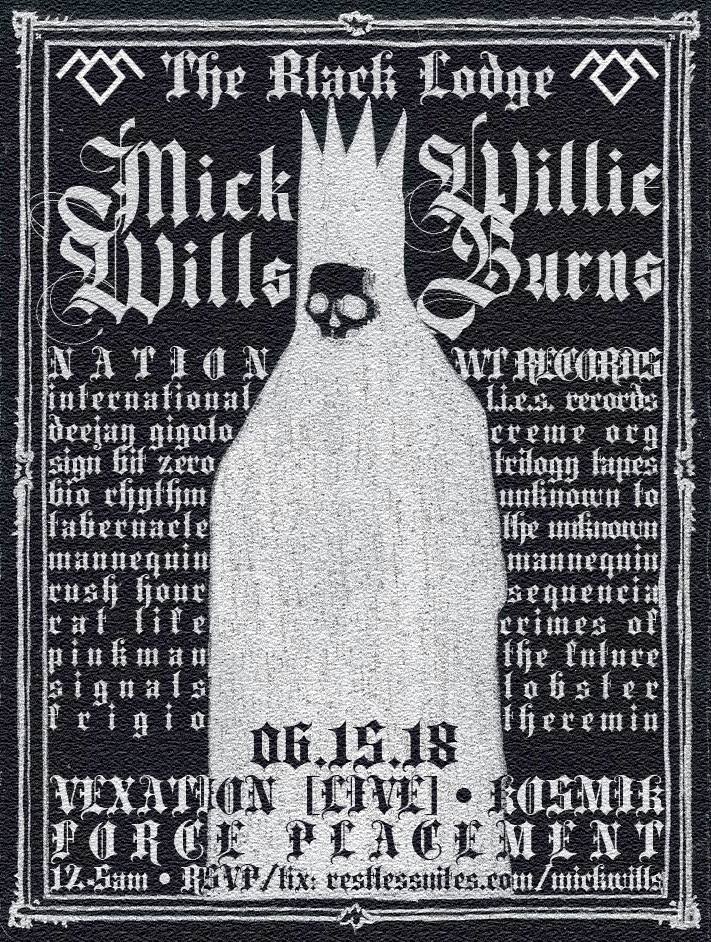
LA-based party The Black Lodge has announced its next event, taking place at a new private location on June 15.
Heading up the party will be Stuttgart-based Rush Hour affiliate Mick Wills—this stop is a part of his US Tour for Nation Records, which is run by Traxx out of Chicago—and NY-based WT Records label head Willie Burns, with Black Lodge residents VeXaTioN (live), Kosmik, and Force Placement on support duties.
You must RSVP for info, which will go out the night of the event, and tickets are on sale now.
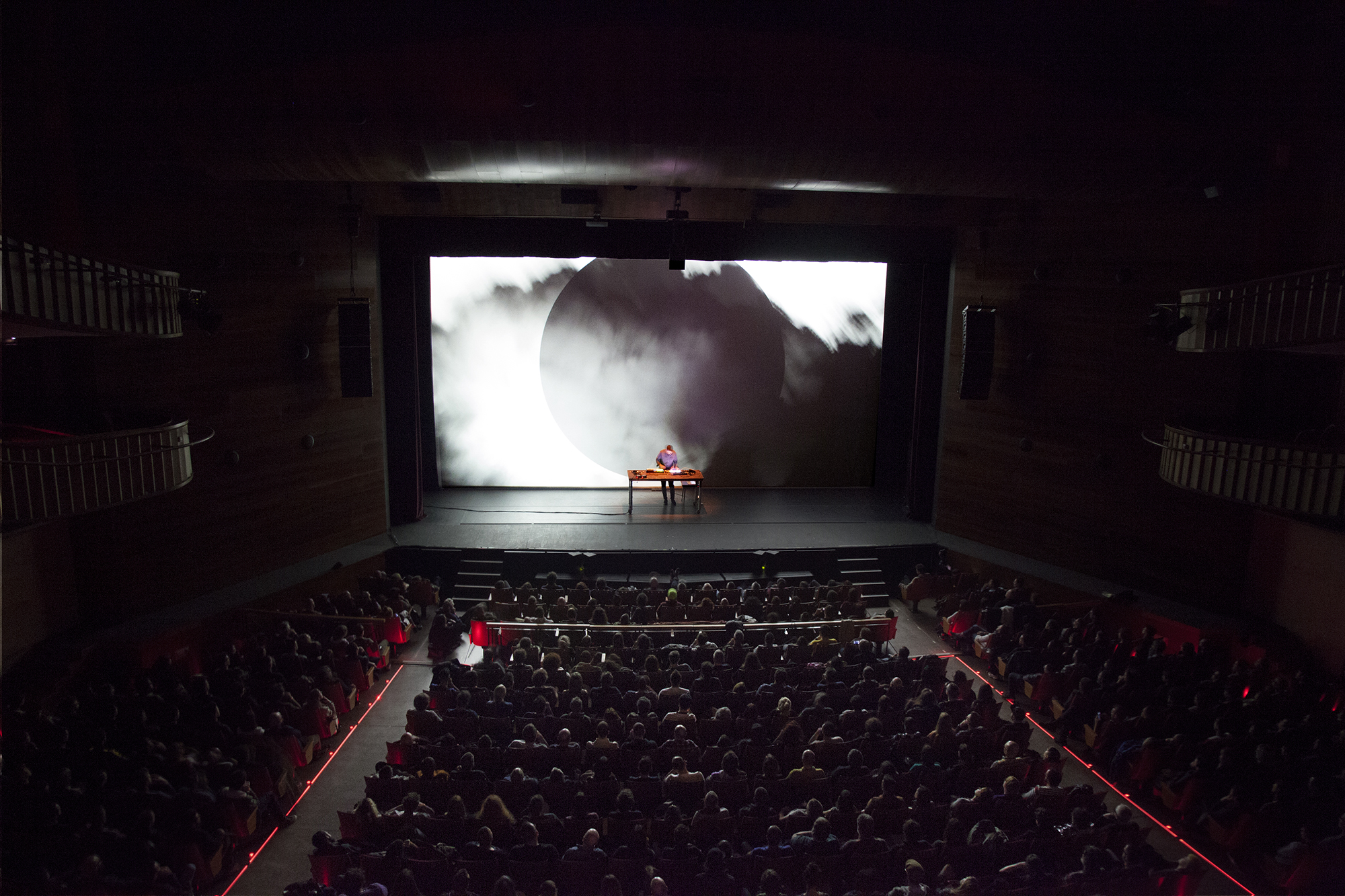
Rumour has it that General Franco commissioned the Universidad Laboral de Gijón building in order to indoctrinate the people of Asturias, a region of northwest Spain. It was supposedly intended to educate the orphans of local miners who worked nearby, but survivors of that era claim that the dictator noticed a strong left-wing outbreak in the area, and built this megalomaniac, robust work in order to contain it. Today, this building not only messily blends Ionian, Corinthian, Palatial, and Herrerian styles, but is also a center devoted to arts and culture, concepts scarcely appreciated during the dictatorship years. And, for the past 12 years, it has hosted L.E.V Festival, taking place annually on the last weekend of April.
This event, defined by its creators as a “Laboratory of Visual Electronics,” has no match in Spain, and pretty much globally, too. Despite its many years, it has never fallen into the temptation of including mainstream names to improve its results, as has happened with so many festivals, in Spain and otherwise. Every year, the festival gathers a handful of groundbreaking artists, ranging from the artistic and conceptual to the most festive and dancey. It appears a winning formula: once again, all tickets were sold out several weeks in advance.
Another thing that makes this event unique is the acoustic quality of La Laboral Auditorium. Previous editions included such varied acts as Ben Frost’s dazzling session of electronics and Hauschka’s delicate pianolas, and the result is always a crisp, punchy sound that says a lot of the venue’s versatility. Similar things can be said about La Nave, an extension of the University, where the more playful side of the Festival is held after midnight.
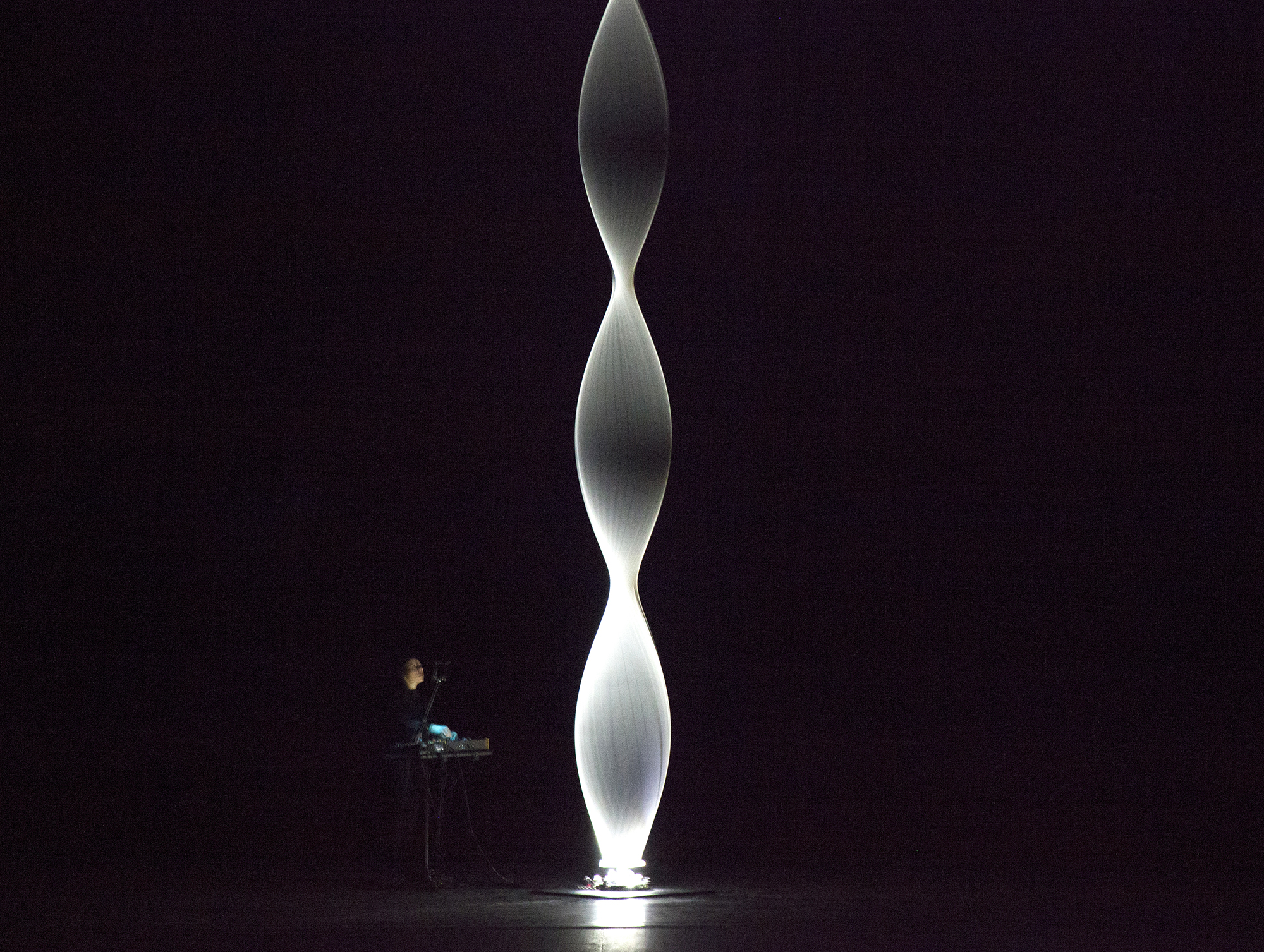
On Friday evening, those in attendance were welcomed by Gijón’s famous drizzle. As this is a small-sized festival with a very faithful following, many of them greeted each other, just like every year, eager to resume their sporadic friendships over the next two days. L.E.V’s first session was a perfect statement of its unwavering personality, opening with “Spacetime Helix,” a minimalistic work by Michela Pelusio (Italy): a hanging rope span around to generate helical shapes over the light beam on the floor, all to the sound of syncopated beats.
Amazement gave way to a sweet moment brought by Loscil. The Canadian artist played a session of ambient and intoxicating electronic music where new-age soundscapes blended with disturbingly beautiful visual collages of nature, architecture, and day-to-day images. Hiroaki Umeda, who had performed at L.E.V before and was one of the most anticipated artists of this year, closed the first day at the Auditorium. Over electrical spasms, he synchronized his body with abstract images to the sound of wild, minimalistic rhythms that shook the stage. It was the most impressive performance of this edition.
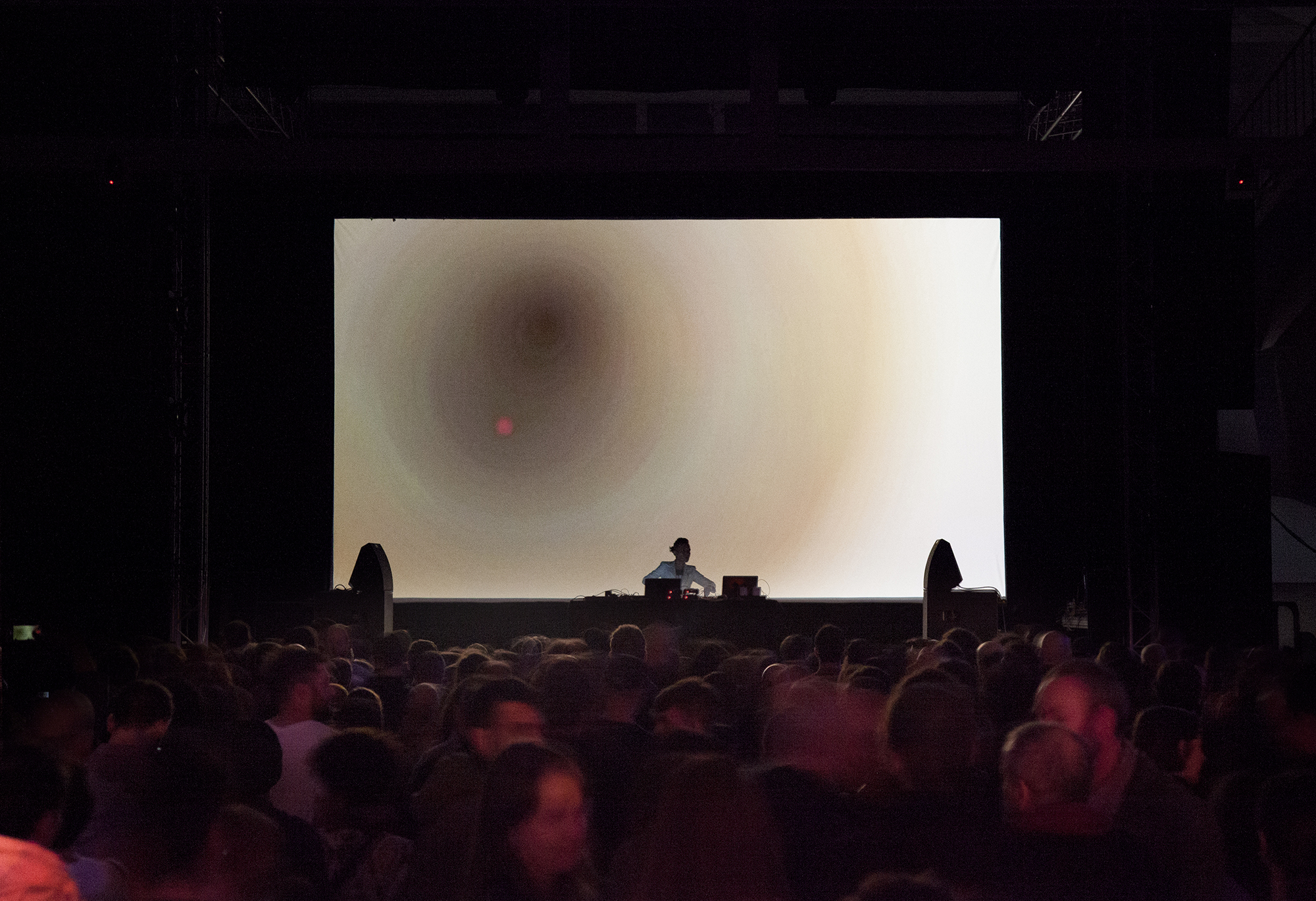
After midnight, the audience moved to La Nave. Electric Indigo (Austria) opened with tuneful electronica and hues of slow techno that can be found on 5 1 1 5 9 3, her latest album, setting the tone for the evening. The follow-up session was performed by SCHNITT (meaning “Cut” in German), a two-piece formed by producers Amelie Duchow and Marco Monfardini. Their combination of immersive visuals and rhythms set them apart from the previous act and excited the audience who were already cramming the space. They were followed by Moritz Simon Geist, or rather his small army or robots, which filled the building with techno (some pieces were written by Mouse on Mars), while the German musician programmed them live. His countryman Atom TM, who also played the following day, raised energy levels with some uncompromising techno, and rolled out the red carpet for the closing act, Mark Stewart (UK), who concocted an open-minded combination of techno, IDM, and house. The accompanying visuals by artist Jimmy Lakatos illuminated the jubilant faces of the audience, who could not stop dancing.
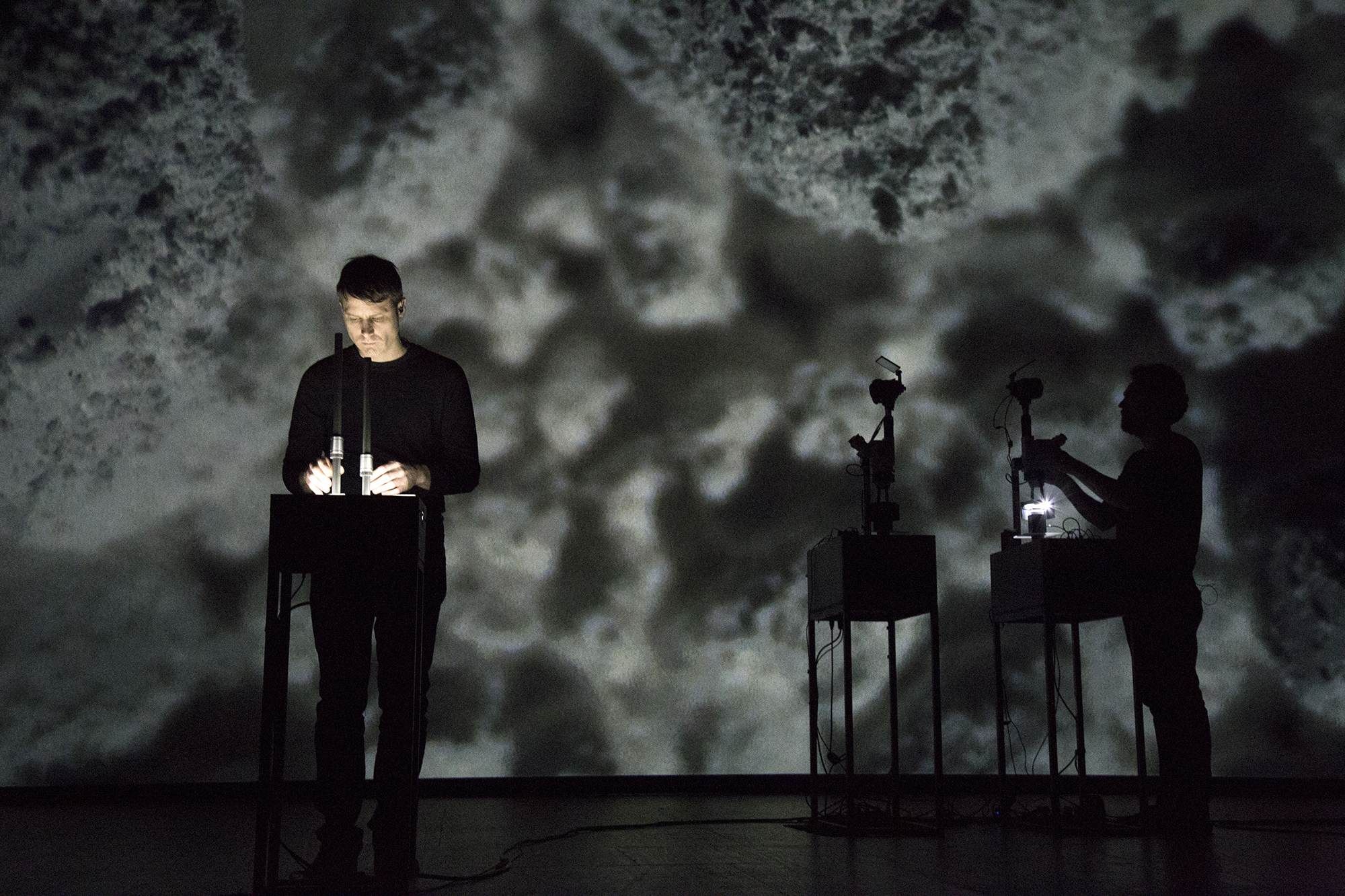
LEV Festival’s second day started in the Auditorium with a theatrical show by Martin Messier & Yro. The former had amazed the audience with his previous appearances at the festival, composing music onstage with an orchestra of synchronized sewing machines, or creating electric discharges out of huge sheets of metal. This time he shared the stage with Yro to present “ASHES,” a work born out of a fatal event: the studio where they were creating their show was destroyed by a fire, and they lost a lot of material. The resulting ashes, under the lenses of powerful microscopes created by the artists themselves, were projected onto a giant screen while synthetic sounds filled the room.
Zan Lyons (UK) followed. He projected an abstract movie made with vintage lenses about a young girl, reminiscent of video artist Bill Viola’s work, while playing baroque electronic music which immersed the audience into a state of weightlessness. Maybe that is why the next act felt like a resounding slap: “Rabit Collective,” led by Cecilia (Canada), reinterpreted Baudelaire’s “The Flowers of Evil” book in a personal fashion, through a harsh performance brimming with painful images, while the artist recited passages over uncomfortable soundscapes (the samplings of a baby crying made everybody squirm in their seats, and some even left the venue.) It was perhaps too much intensity.
Later, at La Nave, there was something perfect to ease minds and limbs. French outfit Zombie Zombie, with a set of drums and other analogical instruments combined with samplers and synthesizers, played Livity, their new album. Uge Pañeda (Spain), under the moniker OKKRE, was the following act, toning down the euphoria with walls of ambiance, plus some occasional flashes of obsessive techno, making sure the audience didn’t forget that they were there to dance. Jeff McIlwain (a.k.a Lusine) (USA) came afterward, in the nick of time: a last-minute flight delay meant he missed his connection in Madrid, so he had to travel the last 500 kilometers by car. Upon arrival, he played his latest work Sensorimotor, turning his show in an orgy of melodic IDM that, at times, verged on pop music. While there were some slower numbers, most of his set was formed by sharp, punchy tracks. Atom TM then played again, following his show the day before, again treating us with a barrage of techno bangers, but even more direct this time. But the highlight of the German spirit of the night was the closing act: Schwefelgelb, who delivered industrial electro while shouting through a microphone loaded with reverb and delay.
The following day’s shows, attended by a varied audience, took place at Gijón’s Botanic Garden, and worked as a juice to cleanse toxins after a frantic weekend. Lucrecia Dalt (Colombia) soothed everyone with her monotonal phrasing and slow beats. The follow-up, Jessica Moss (Canada) caressed our eardrums with the sheer beauty of her violin melodies, combined with a looper pedal to create soundscapes as bucolic as the space chosen for her performance. It is hard to think of a sweeter end for this edition of L.E.V Festival.
There’s no questioning that L.E.V has reached its peak in terms of maturity, as demonstrated by its fine programming. This year was more brilliant than ever, with a lineup that balanced the most artistic, dense, and conceptual performances with the most festive and nocturnal face of electronic music, without ever being predictable. Standards have been set very high, so we can only ask ourselves: what will the organizers do next year to keep it?
This year’s edition took place from April 26 to 29 in Gijon, Spain.
Later this month, Berlin-based label voxnox Records will release the latest EP from label A&R Sept, Challenge.
The EP will be the third release for voxnox in 2018, following EPs from Alignment and Brothers Black, and Sept’s third EP on voxnox. Challenge presents three inspired originals from Sept—from the peak-time groove of the title track to the eerie ambience of “Astral Spirits”—and two heavy remixes from Violent and Headless horsemen, both of whom twist the originals into devastating club weapons.
In support of the release, voxnox has offered up a full stream of Headless Horsemen’s tough, galloping remix of “Astral Spirits,” available via the player below.
Truth be told, Icelandic artist Yamaho (real name Natalie Gunnarsdottir) was unknown to the XLR8R team before seeing her name on this year’s Sónar Reykjavik lineup. Yamaho was scheduled to play a two-hour b2b set with Cassy to close out the festival, so naturally, our ears pricked up—and the set and Yamaho’s performance exceeded expectations. With each track, Yamaho enamored the crowd with intoxicating grooves that sunk into the skin, and her grace and subtlety behind the decks was transfixing, too. As the last track rang out, Yamaho and Cassy were met with screaming adoration and applause from the sweat covered crowd and we immediately wanted to know more about the somewhat mysterious Icelandic DJ.
Tracing her story back, Natalie was born in Chicago to an Icelandic mother and American father before landing in Iceland at three-months-old to be babysat by her grandparents—a move that resulted in her living there to this day, which was “the best thing that could have happened to me,” she says. Her grandfather was a musician and introduced her to all kinds of wonderful, interesting music at a very early age while teaching her how to listen objectively and play what she was hearing. From there, a world of musical exploration opened up and at 18, Natalie brought turntables and dove head first into mixing and DJing in bars and clubs throughout Reykjavik—and this is when Yamaho was born.
As a DJ, Yamaho touches on Detroit techno and Chicago, NY, and New Jersey house, with elements of dub and disco also regular touchstones. A known and respected artist in Iceland, a key international break arrived with the advent of Secret Solstice in 2014, with Yamaho showcasing the festival—Djing and singing—in London, before going on to perform at Airwaves, Sónar, and, of course, Secret Solstice. Following that, in 2015, Yamaho launched her side project Dark Features at Sónar, presenting a fusion of African drums, live instrumentation, and electronic elements.
Following a period of personal time off over the last two years, and with a range of high-profile gigs lined up, XLR8R reached out to Yamaho to learn more about her history, the fertile scene in Iceland, and her plans for the future.
Yamaho will be playing alongside Bambounou, Konstantin Sibold, Shifted, Roman Flügel, DJ Boring, Bleak, Oliver Deutschmann, and many others at this year’s HER DAMIT Festival, taking place from June 8 to 10 in Freudenberg, 50km outside of Berlin. You can find more information and tickets to HER DAMIT here.
Let’s start with your upbringing. I understand your grandfather was a musician and introduced you to a lot of music—what are some of your earliest memories of this time?
He opened up the world of music to me. He played the accordion and keyboard even though he lost his sight and the front of his right arm when he was very young—and somehow he still managed to play beautifully. He bought me a drum set and we started a band when I was seven years old. We were a duet and played some shows. Those are my fondest memories.
Did he teach you how to play and read music? What sort of music were you playing with him?
He taught me rhythmic arrangements to go with his music. He played the accordion and I was on drums. We were playing old Icelandic songs and something close to polka music (popular folk dance music).
Do you remember some of the artists and records he would play you?
Yes, he played me a lot of Les Paul and Louis Armstrong.
That really set the tone for my search for sound and the way I listen to music. My sensors are fine-tuned and I spot the good from the bad really easily because of this, I think.
How do you think this affected your growth as a person and artist?
It really shaped me in terms of my search for sound and made my musical range a lot wider. I was also introduced to different rhythmic progressions and arrangements.
Can you explain more about these rhythmic explorations and search for sound?
Well, he was blind so his ears were his tools. He would listen to and take interest in music that had either quirky sounds or really elaborate arrangements. We would sit together in his music room, sometimes in the dark because I wanted to sense the music the way he did and just listen and then we would talk about what we had just listened to. He would point out things to me in the songs and how they were played. He taught me how to listen with depth. That really set the tone for my search for sound and the way I listen to music. My sensors are fine-tuned and I spot the good from the bad really easily because of this, I think.
Do you think this focus on rhythm early on in your life was a catalyst for your love of house and techno?
Good question! I think so. That is also why I really love good disco and its beat progression. There is so much force in the beat and ability to take you to a different place. That is what has had me going for all these years and still does.
How long did you keep playing the drums? Do you still play now?
I played the drums for a few years. My grandparents bought me a professional set, then at some point me and my friends got into rock and we had pretty intense rehearsals. One day we really went all in and the drum set got damaged. My grandparents were not happy with that outcome and didn’t want to replace it—which is understandable. So that was a break in my drumming career. I started again in 2006 and played until 2009 when I fell off my grandparent’s roof and injured my leg and arm, but that’s another story!
You also bought turntables and started mixing at 18—what inspired this move?
Well, I listened to the radio a lot and all the dance music shows. I really loved how the songs would mix together and the progression in DJ mixes. I would hang out a lot in the record shop and go through a lot of music, and then at one point, I started to imagine how some songs would sound together. This curiosity drove me to purchase turntables and start experimenting.
How did you learn to mix?
I taught myself. Luckily I got a built-in metronome but it took many hours of practice until I got the mix on lock.
Do you think your exposure to rhythm so early on helped you to beat match?
I think that definitely helped a lot for me to get the hang of it. But like everything, practice is key to a successful performance.
What sort of music were you interested in at the time?
Hip-hop and house music. Hip-hop was really popular in my crowd but house music not so much. When you are at the tender age of 13, approval is important, so I kept my interest to myself. But at 17 I felt confident to share my love of dance music with my peers and I have been doing that ever since.
How did your peers take it when you first started introducing house music to them?
Well, to be honest not all were very happy with that. I laugh at it now but when I started sneaking in dance music in my sets I would get complaints about this house “music” I was playing. But I was firm in my belief and it didn’t stop me.
I understand dance music wasn’t popular in Iceland when you started playing out at bars and clubs—what was being played?
A lot of rock ‘n’ roll, ‘70s, ‘80s, and ‘90s music. If you didn’t bring those records with you, you could be sure to find trouble in the DJ booth.
Were you trying to guide the audience and slip in some more dance-focused records?
Oh yes, absolutely. Electro was my stepping stone and from there I would take them on a journey. These years taught me so much of how to curate a long night and use the songs to steer the way.
Do you remember when dance music and culture properly started filtering in?
Yes, I do remember, it was around 2006. Electro house came in with a bang and DJs all wanted to play it so that was the beginning. And now when you go to the supermarket there is deep house playing through the speakers. Times have changed indeed!
Where were you finding house and techno records at this time?
We had a really good record store called Þruman, which translates as “thunder.” It was owned by a DJ and he was really active in buying fresh stuff from around the world. Then we had an alternative record store which was good as well, called 12 Tones.
How was the clubbing scene in Iceland at this time?
The clubbing scene was great in the ‘90s with warehouse parties and all that. Then when both of the biggest clubs closed not much was going on and the parties moved into the cafes with a much smaller space to work with. That is also a factor why it was hard to play dance music.
When was Yamaho born and what is the story behind the name?
Yamaho was born at this time of year in May but many moons ago. I was in the countryside with friends and we were celebrating the birthday of a good friend. I was in the hot tub with my friend Frosti Gringo and that’s where the name erupted. Yamaho. I can’t really get into more detail other than that 🙂
When did you start looking at DJing as a career option?
I started looking at it with those eyes pretty early on. I really enjoy playing good music for other people and having that interaction with the crowd, so it was clear to me this is what I wanted to do.
And is DJing your full profession now?
Yes, it is. Like I said earlier, I have been helping my grandparents out since I moved back in 2011 so DJing was the most flexible job for me time-wise but you have to be creative when it comes to living off an artistic profession so I make playlists as well for certain fashion stores and companies. I really enjoy that as well because you are setting different moods for different situations.
When did you move to Berlin? Was a career in music the catalyst?
I moved there in 2011. I’ve always been drawn to Berlin, I think I had a previous life there; I always feel like I’m home in the city. Very strange but fun in a way. I first went there in 2001 and since then I’ve always visited regularly. Career-wise yes and no. It is the techno capital and I felt a creative energy I wanted to tap into.
Were you writing music at the time? Or was the focus on DJing?
I was starting to write my own then and putting a focus on that. DJing is always my focus no matter what is going on in my life.
And you moved back shortly after to look after your grandparents, which lead to you entering and winning a DJ competition in Reykjavik before going on to compete in Ibiza—can you tell me more about this experience?
Wow, that was quite a surreal experience. I was asked to partake in a DJ competition and I initially said no because I thought I was too old for it—however, in the end, I agreed to do it. I ended up winning the competition here in Iceland and went on to compete for Iceland in the Movida Corona competition in Ibiza. I was the only girl there and the only one playing old-school house. I ended up in the semifinals and played at Pacha but the judges later told me they were looking for a commercial DJ but loved the music. It was amazing to be able to go to this amazing island and play at the legendary club, though.
You then wrote and contributed vocals to “Release Me” with Intro Beatz, which become a hit in Iceland, before going on to showcase the project live on the festival circuit at Airwaves, Sónar, and Secret Solstice—was this your first foray into singing?
Yes, it was. So nerve wrecking I can tell you. But the crowd gave me so much positive energy it was all worth it. I am more of a singing at home kind of person but I’m trying to break free from that.
How do you get past those nervous feelings? Do you get them when DJing, too?
When I was younger I used alcohol to get by the first nervous hours. But today, I’m older and feel calmer and more secure in my own skin so I don’t need that aid anymore. What gets me going is the love of the music and the love of DJing for other people. The minute I start I enter my zone and I stay there until my set is over.
Do you have plans to incorporate more vocals on future projects?
Yes, I have those plans. I don’t consider myself a singer but I love doing it and I think I have built up courage to continue that venture.
Who are the artists in house and techno that you think are incorporating vocals into their work in a tasteful and interesting way?
Introbeatz & ILO are really setting the bar when it comes to Icelandic house music.
How have you noticed the scene grow over the last few years?
It has grown so fast lately. With all the DAWs becoming so accessible and new affordable equipment coming out every year, more and more people are able to make music. People have also been showing the music more interest in general and all the DJs just want to play dance music. That is a great progress I think.
What do you think it needs to further progress?
I am very happy with where it is right now. It is always progressing and more and more people are getting recognition like Volruptus and Bjarki, for example, who are both on Nina Kraviz’ label. I am very happy for them and I hope people will take further notice in the Icelandic scene.
Your Dark Features side project mixes African percussion with electronic elements—can you tell us more about this project?
That project was and is my attempt to expand my interest in music further and explore the depths of music making. I love the power of African drums and the vibe they give so I had to incorporate them. It is also a tribute to my grandfather and what we experienced together through music.
Can you explain how this particular project came about?
I wanted to take myself a step further and also I wanted to do something in honor of my grandfather’s memory and implement what I had learned and gone through with him. I used some of his old instruments in the project and it somehow feels like he became a part of it. I also wanted to explore the darkness and light aspects of music making. We all go through dark valleys and happy times at some point so that exploration is Dark features.
You told me that you make a lot of music but are shy about it and it ends up on your hard drive. I think many producers of all calibers would go through this loop—how do you think you’ll get past it?
Good question! I have been playing them in my DJ sets to see the reaction. That for me is one of the first steps to get past this wall of fear and breakthrough to the other side. I think 🙂
Wajatta—the new duo featuring beat-boxer, comedian, and musician Reggie Watts and renowned electronic artist John Tejada—will release their debut album, Casual High Technology, tomorrow, May 11, via Comedy Dynamics.
The album presents “a cosmic collection of funk-infused techno,” and follows the last year’s release of “Runnin’,” one of twelve tracks to have been created during the duo’s early jam sessions at Tejada’s home studio. According to the label, Casual High Technology ranges from 88 BPM to 139 BPM, spanning a diverse set of styles all aimed squarely at the dancefloor.
Casual High Technology will be released digitally on May 11, with a double-vinyl edition scheduled for June 29. You can pre-order the release here.
The duo are also preparing a live interpretation of the album, which will debut at Los Angeles’ Teragram Ballroom on May 23rd.
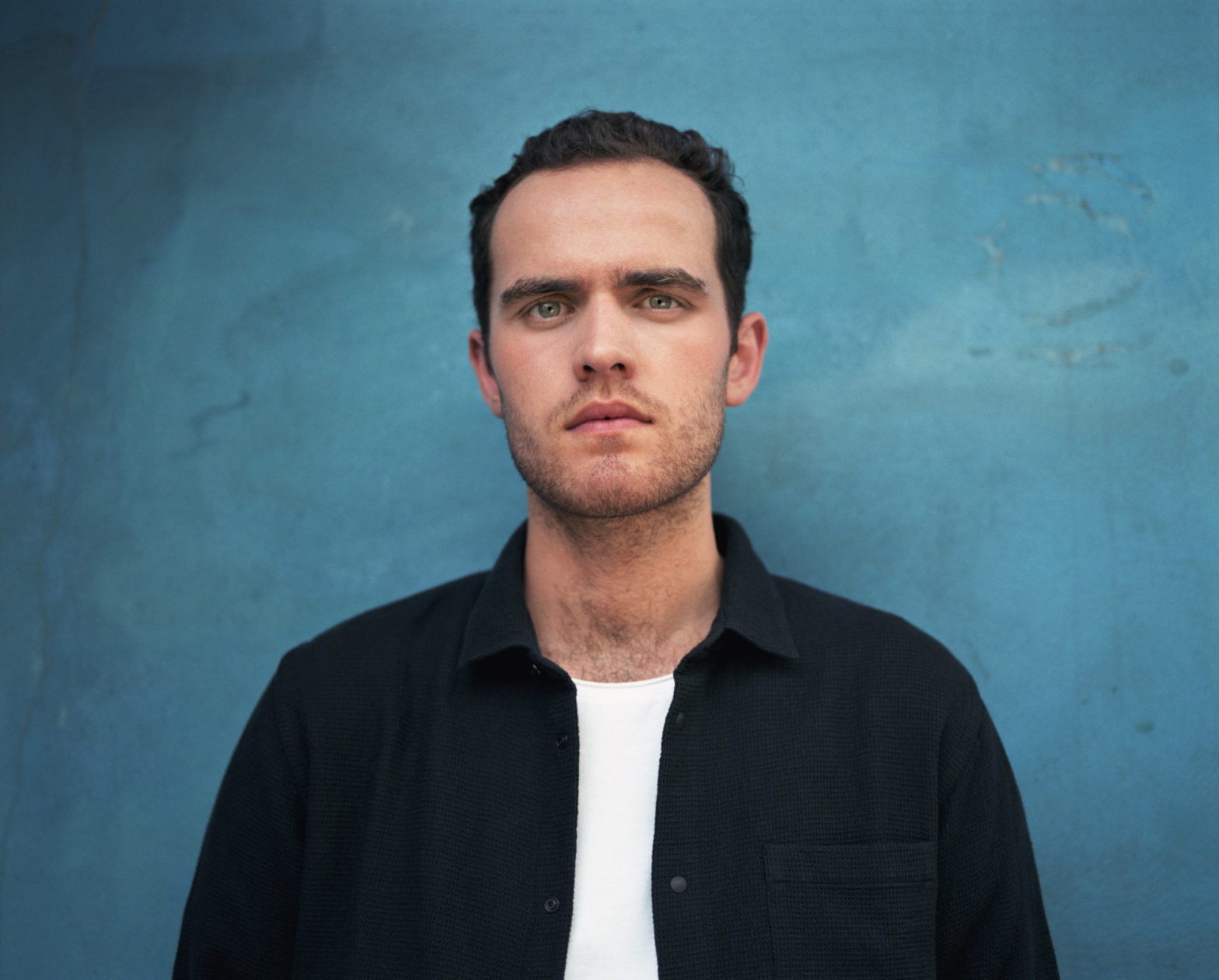
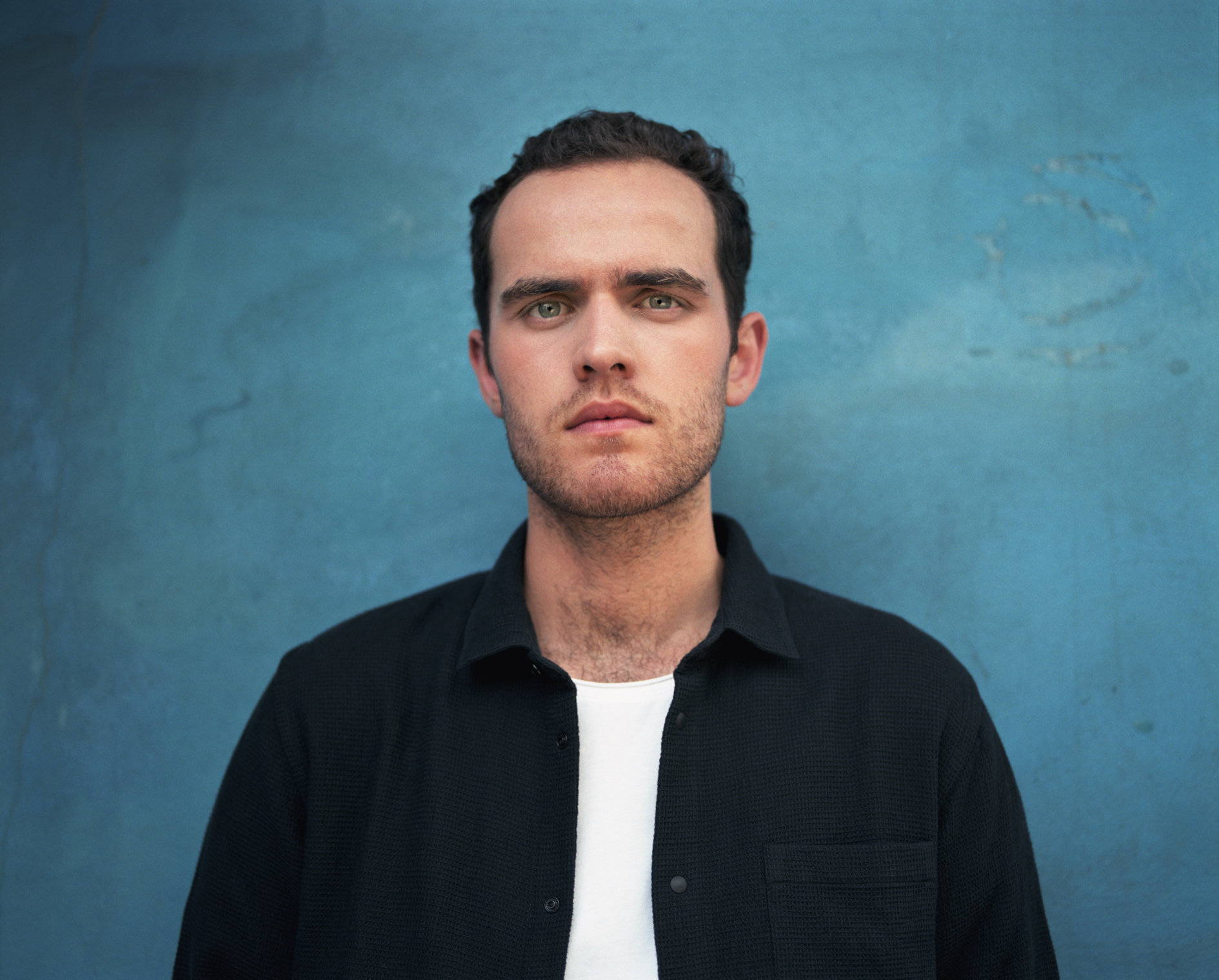
Jordan Rakei has shared a new track, titled “Wildfire.”
“Wildfire” is the UK 25-year-old vocalist, producer, and songwriter’s first new music since his Wallflower album, released last year via Ninja Tune. Through the summer, he graced stages at Glastonbury, Dimensions, North Sea Jazz Festival, Farr Festival and more before selling out his debut headline US tour. He ended the year with a prestigious Album Of The Year nomination at Gilles Peterson’s Worldwide Awards and was voted #2 in the shortlist.
We’re told that the track is about dealing with a broken friendship. “It explores how necessary it is to allow yourself to move on after you’ve been hurt and how holding a grudge affects your wellbeing,” explains Jordan. “I often write about the concept of overthinking but this track deals more with acceptance for the sake of peace of mind.”
Artist, producer, and vocalist Alexandra Drewchin has shared Trespasses, the second single from IRISIRI, her forthcoming album as Eartheater.
The three-movement piece is informed by her classical background and incorporates juxtaposing elements of complex shifting harmonic choral chords with a host of contrasted squelching and stuttering synth characters. Establishing an ambiguous atmosphere that falls somewhere between intuition and anxiety, the song builds to a crescendo of distortion, ominous pulses, and far off wails.
IRISIRI is Eartheater’s third full-length record, following two albums on Hausu Mountain.
Eartheater also recently shared the single C.L.I.T.
Tracklisting—IRISIRI
01. Peripheral
02. Inclined
03. Not Worried
04. Inkling
05. MTTM
06. Inhale Baby (ft. Odwalla1221)
07. Curtains
08. Slyly Child
09. Switch
10. Trespasses
11. MMXXX (ft. Moor Mother)
12. C.L.I.T.
13. OS In Vitro
IRISIRI is scheduled for June 8 release via PAN!, with “C.L.I.T. and “Trespasses” streaming in full below.
A.Fruit is a Moscow-based DJ, audio engineer, and video game sound designer, and a well-known figure in 160 bpm bass community. Since arriving on the scene in 2015, A.Fruit has released three EPs on Sequel One Recordings, Slime Recordings, and InternetGhetto—as well as tracks on TEKLIFE, Ten Toes Turbo, Black Marble Collective, Hyperboloid, Juke Bounce Werk—with her latest, Your Inner Sun, arriving soon on Hyperboloid.
Your Inner Sun is a deep and profound album full of soulful melodies and huge, mind-bending beats and basslines. Sitting in the range of 160 BPM, the tracks on the release beautifully weave in and out of various bass genres, from chopped-up jungle to vintage drum & bass and more forward-thinking experimental pastures. In tune with its name, Your Inner Sun presents a range of emotions, digging deep into the producer’s psyche to deliver melancholic heartache at one turn and euphoric happiness at the next.
In support of the release, Hyperboloid has offered up the dreamy opening cut, “Days,” as today’s XLR8R download, available via WeTransfer below.