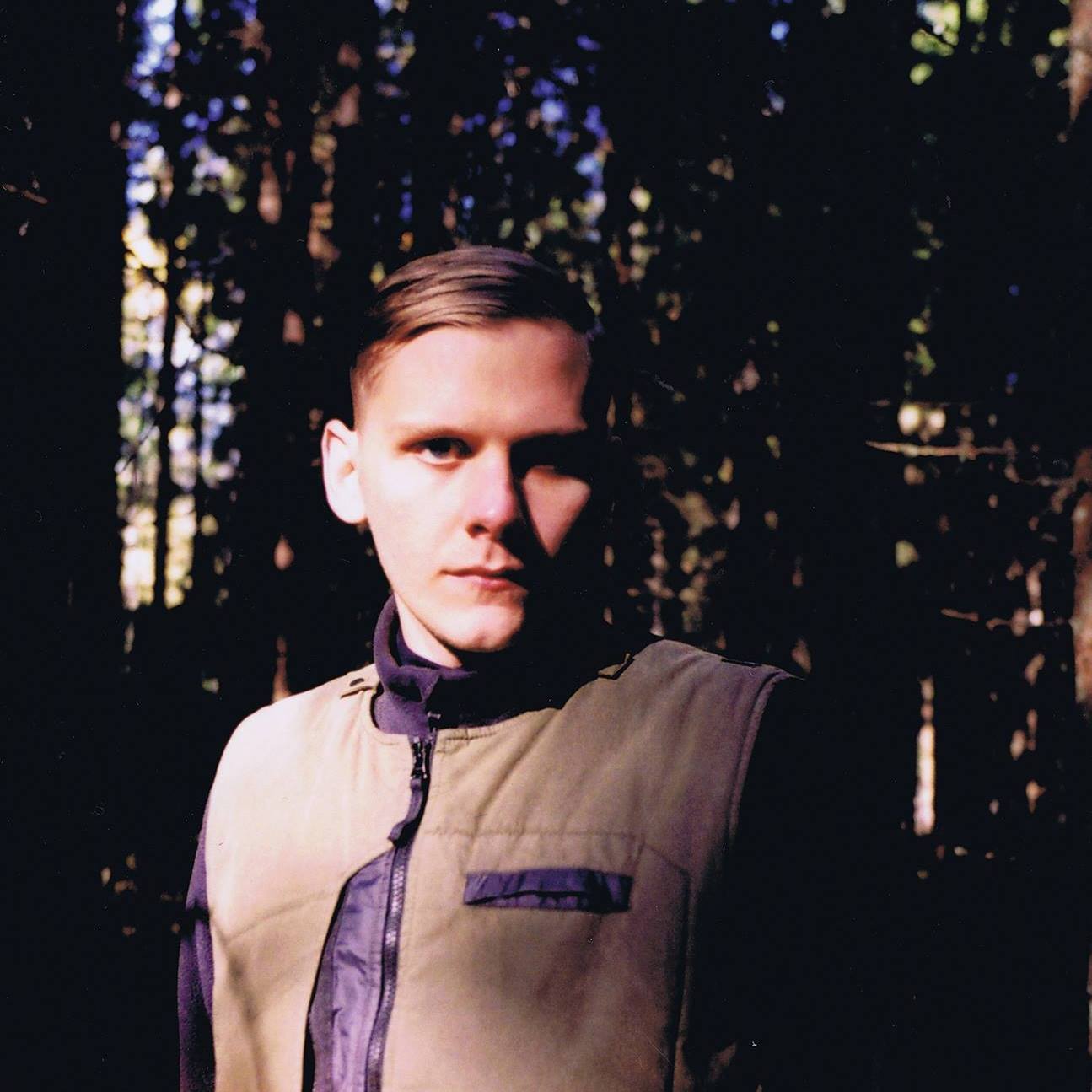
Created and curated by Samann, Traxx Underground first surfaced in 2012 with the release of Kool Vibe’s Spreadin’ The Vibe Pt. 1, a four-track EP that beautifully laid out the label’s ethos: raw, classic house. In the years since, Traxx Underground has gone on to release standout EPs from artists such as Four Walls, NY’s Finest, The Groove Victim, Pascal Viscardi, LK, DJ Different, and, of course, Samann himself.
To celebrate Chicago pioneer Vincent Floyd’s forthcoming release, Samann has recorded a mix that showcases his love for deep club tunes and classic ’90s house.
When and where was the mix recorded?
I recorded this mix a few weeks ago in my studio.
What equipment did you record the mix on?
I used both vinyl and CD, with many promos I like to play and some exclusive tracks.
Was there a particular idea or mood you were looking to convey?
Of course, as usual, I wanted to showcase my love for deep music, including my influence from the ’90s.
How does it differ from a regular club set?
In a regular club set I also like to switch on other style of music, such as raw house, tech house, vocal house, and sometimes techno.
To you, what makes a Traxx Underground release?
First of all, if we start from the very beginning, Traxx Underground is a deep house label mainly focused on timeless and crude cuts. Obviously, my label is keen to showcase an oldie vibe, tunes that could have been produced in the mid ’90s…but, it’s not an obsession and I think I’m quite open minded about that. Still, it’s important to keep a strong cohesion between each and every release. I have other labels that deliver different styles, but Traxx Underground has been created as an outlet for club wax with a strong taste from North American dance music styles. I must say, I’m happy because the label has always kept its focus, offering various shades of that specific genre through the years. So, if I really have to put some words on what’s very peculiar about the Traxx Underground sound, I would say that it’s powerful, crisp, and groovy, yet mellow and sexy.
What else do you have coming up this year?
I’m very excited for the upcoming release and I’m working hard on the new schedule. The next release (TU018) will be produced by the Chicago house pioneer Vincent Floyd. Following this we will have an EP (TU019) that I must say I really love, from a new talent coming from Copenhagen called B From E. He may be the new Kerri Chandler, who knows? Or at least I hope so hahah.
After these two great projects, I’m thrilled to announce that after 4 years, I’m ready to release Raw Lover Vol. 3. That’s my personal output and I’m actually super excited about it.
Other very important projects are under way, but i wanna keep it secret at the moment 😉
Night Dives is a moniker of Singapore-Melbourne transplant Marcus Chong, an inspiring artist that highlights as an engineer, 3D artist, and musician. Over the years, Marcus has created stunning CGI work for the likes of Amon Tobin and Jimmy Edgar, and first popped up as Night Dives in Liar’s 2016 mix for DIS Magazine, “How To Fuse Trends & Alienate People.” Now, he goes back to the Night Dives moniker for his self-titled debut on Infinite Machine.
With Night Dives, Marcus has crafted a collection of cinematic cuts full of gothic synth lines, eerie atmospheres, and razor-sharp mechanical percussion. From the opening track’s film score vibes to the closing cut’s melancholic sax lines, the listener is guided—or dragged—through a range of sonic imagery and twisted beats.
Ahead of tomorrow’s release, you can pre-order Night Dives here, with “Far Away Station” available as a free download below.
Photos: Sarah Ginn Anna Wallington Nick Ensing Danny Seaton
Lineup
Craig Richards Terry Francis Ricardo Villalobos Abdulla Rashim Ben UFO Blawan Hammer Jay Clarke Margaret Dygas Nicolas Lutz Peter Van Hoesen (Extended Hybrid Set) Raresh Voigtmann + Surprise Guests
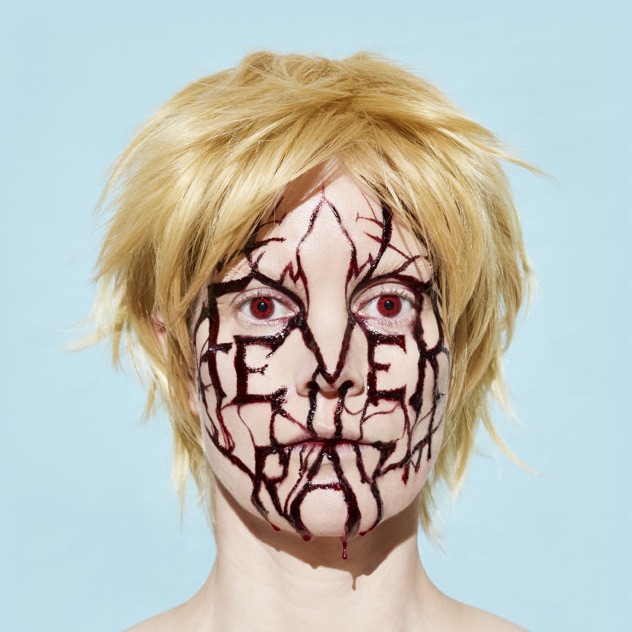
Tomorrow, Karin Dreijer (a.k.a. Fever Ray) will release her sophomore solo album, Plunge.
Plunge is the first Fever Ray release in eight years, following the acclaimed self-titled debut in 2009, and features collaborations with Paula Temple, Deena Abdelwahed, NÍDIA, Tami T, Peder Mannerfelt, and Johannes Berglund.
The album will be released digitally tomorrow, October 27, with the vinyl release scheduled for February 23 via Mute and Rabid Records. Plunge was announced with a note from Karin Dreijer, which can be read below, along with the tracklisting.
Meanwhile, “To The Moon And Back” can be streamed above along with the accompanying video.
Fever Ray will embark on a live tour in 2018.
Tracklisting:
01. Wanna Sip 02. Mustn’t Hurry 03. A Part Of Us 04. Falling 05. IDK About You 06. This Country 07. Plunge 08. To The Moon And Back 09. Red Trails 10. An Itch 11. Mama’s Hand
The decision to fall is harder than the fall itself
It is a joy to meet you. I don’t know how to feel about that. But already my repetitions are beginning. Do I confuse itch and ache? Here’s this helpful quiz to discover which it is, dedicated to a global team of heartbroken self-diagnosers that stretches from the threadbare social democracies in the north to the liberated markets in the west. The object of the song is love and the subject of the song is loss, or object and subject are genetically alike. This is how it sounds, the excavated voice, the archaeological dig one thousand or eight years into the future, when the bodies preserved in this auditory mud have become exemplary of their time and can no longer hurt or help each other. Then I will know how to love you and be loved by you.
The song, the lover, is interested in objectifying itself, herself. The lover objectifies herself as music. The song is a prosthesis that extends like a limb into the gut and pulls out the half-digested heart, it’s kind of gothic and kind of a shame. I learn gratefully in music that the decision to fall is harder than the fall itself, the anticipation of falling; I’m embarrassed by gravity is what I mean by “I put on weight”. The parent and the lover momentarily blurring, then some kind of travel sickness, and later I am home without remembering what happened. It used to bother me that violence is as intimate as love, but I see that you have resolved that problem by dissolving the two each into the other. Whatever is important to hide must be important. Whatever is important to forget.
Listen! I’m looking for a girl who stands 10 feet tall and has teeth like razors; I’m looking for a girl who could play the bored receptionist in the lobby of the afterlife, crossing the river of forgetting every morning and evening and back into the world of the living, where I will wait with flowers and an assortment of adult toys. Could this be you? I’m looking for a girl to affirm my reality, or cancel it. Me: I am beautifully dressed. I am a reflective surface. I am the president. Welcome to my body, my building, the border. The escalators only go up. You get down again by throwing yourself off the roof. And the song’s refrain there to catch you if you’re lucky. Listen! Sex is work, love is work, work is sex, work is love, the magical conversion of “is” given impossible power by its delivery in music. We have travelled together these minutes and years now and I am hopeful that we have finally solved this complicated problem of how to become… Even now at my age, preserved as an example in this perfect slab of ice, can you believe I am still waiting to become real? I had a plan for how sex or at least some kind of heartfelt physical intensity could save us but I threw it off the roof along with the body and it fell into the silence that limns the edge of the song.
Inside the architecture of repetition that constitutes both a song and a life, taken objectively and not subjectively, there are resonances, assurances, bonds, and securities. Sex and music stand guard over a shared silence under the noise, either because there is nothing or too much to say. It is still possible to negotiate between pain and pleasure, on the vanishing edges of pain and of pleasure, as if cutting a deal, the best deal, a beautiful deal. There are no simple binaries, and I don’t only mean gender, that’s old news; I mean that I am radiating and obsessed with the daydream hurt that I imagine your voice alone could cause me, now that I live in its zone, and I am too far gone to distinguish between sharpness and softness.
Baby, I hope one of us will hypnotize the other. Then the one less hypnotized will kill the other. Then after everyone is dead and we establish the scene, the next beginning, ending, beginning, ending. A pattern can only last its own forever and the song on repeat follows me around the city. The heart is the bloodiest organ and its rhythmic pacing and growling troubles the perception like movement at the edge of the vision mistaken for a creature. It is too early to fall in love, but all of history has happened and now there seems to be only the remainder to be arranged and rearranged. “We waited far too long.” It’s OK, everyone is here now.
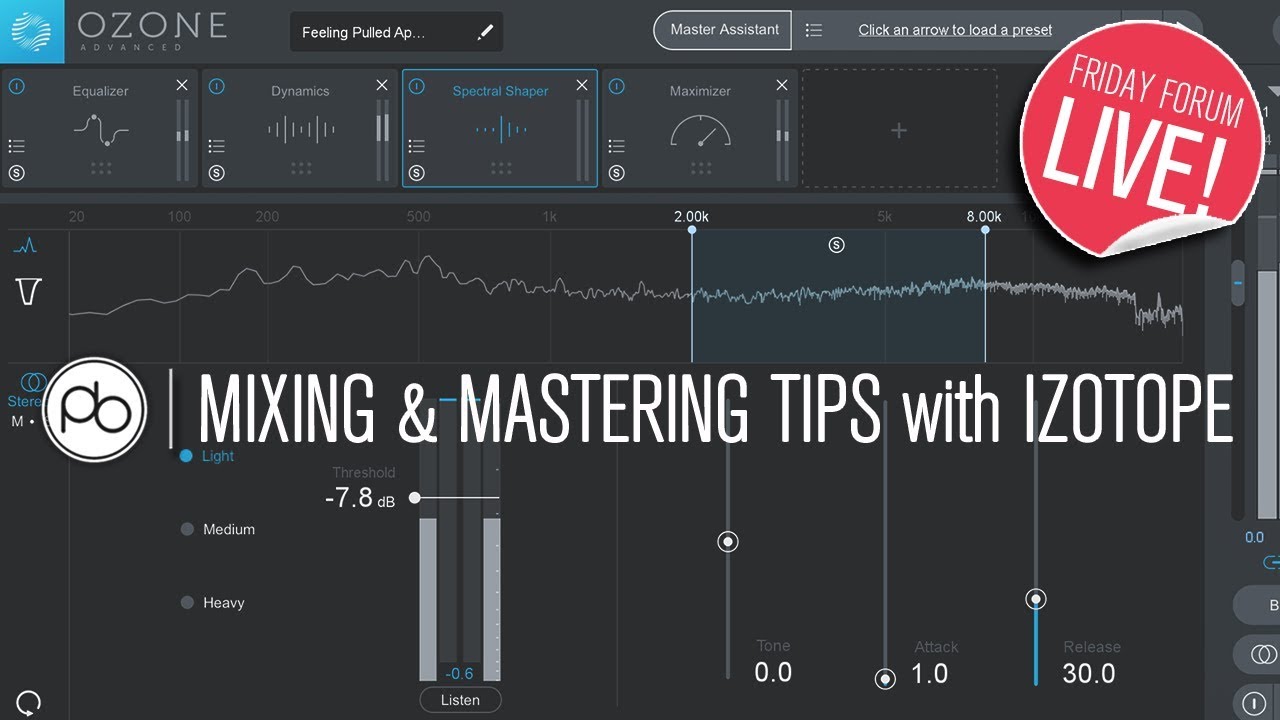
In Point Blank‘s latest Friday Forum Live, course instructor Anthony Chapman details the use of iZotope’s Ozone 8 and Neutron 2 mixing and mastering plugins.
In the video, Chapman runs through the new features, including an incredible visual mixer in Neutron, and gives useful tips and tricks in applying the plugins to your tracks. You can watch the video in full above, with more on Point Blank’s course here.
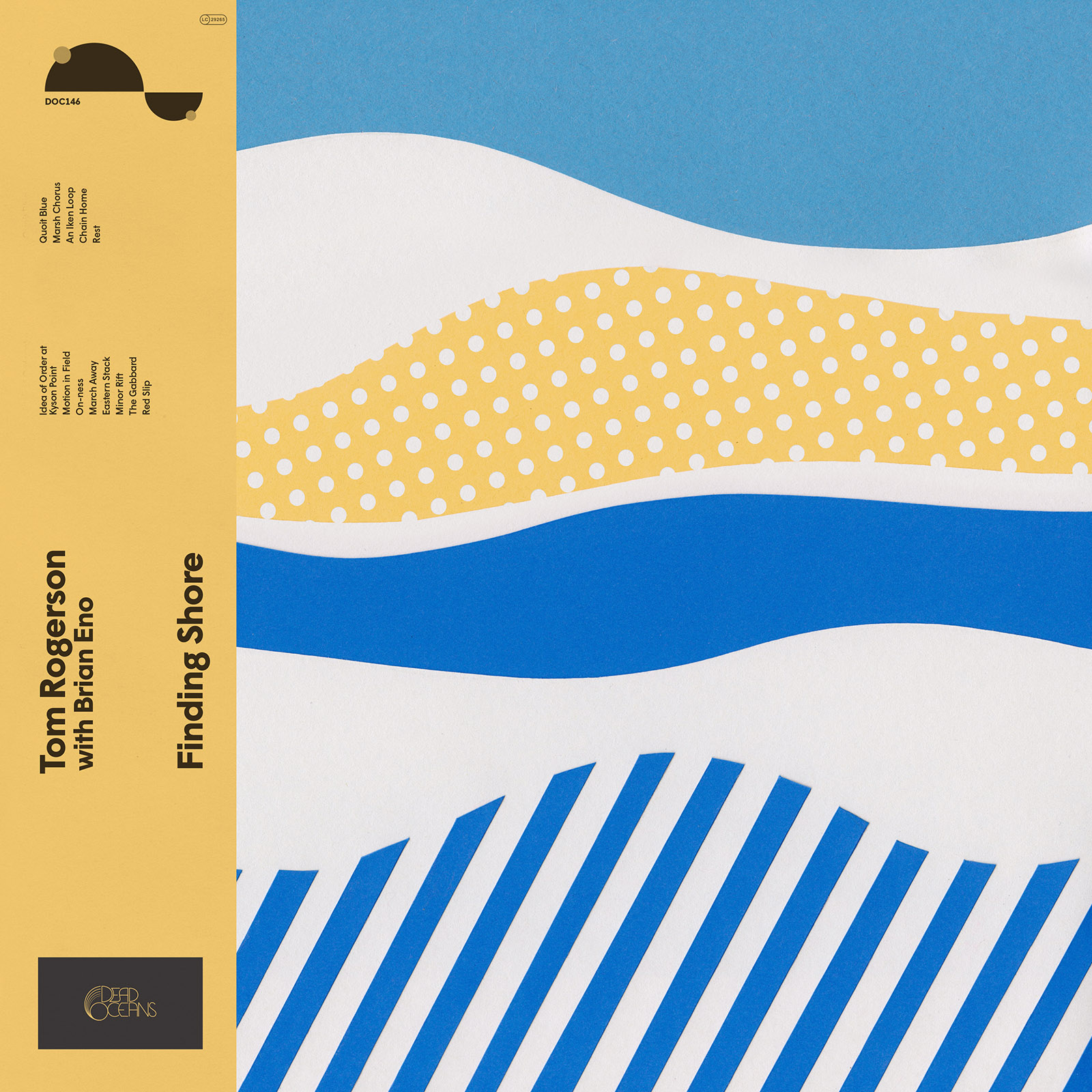
Finding Shore is described by the label as “the sound of Rogerson distilling the essence of what he does after a protracted musical journey from childhood until now.”
He took the traditional route of music lessons and learning notation before starting composing “properly.” As a 17-year-old he had the odd contrast of being taught by the composer Harrison Birtwistle but also working as a lounge pianist in a dilapidated hotel in Peterborough. He spent some time in New York playing jazz, recording with Reid Anderson of The Bad Plus, and had a successful career with post-rock group Three Trapped Tigers.
Upon meeting Brian Eno, the pair didn’t speak about music at all but bonded over their roots in the Suffolk town of Woodbridge, located on the strange flat landscape of Eastern England. Eno’s influence on Finding Shore began by enabling Rogerson to overcome his fear of committing any one piece to its own album. As a way to open Rogerson up, Eno suggested they try experimenting with the Piano Bar, an obscure piece of Moog gear that works by using infrared beams focussed on each piano key; these are then broken as the keys are played, transforming the piano’s note into a MIDI signal that can then be used to trigger or generate new, digital sound. As Rogerson improvised at the piano, Eno improvised with the MIDI signal to create a unique piece of music.
Tracklisting:
01. Idea of Order at Kyson Point 02. Motion in Field 03. On-ness 04. March Away 05. Eastern stack 06. Minor Rift 07. The Gabbard 08. Red Slip 09. Quoit Blue 10. Marsh Chorus 11. An Iken Loop 12. Chain Home 13. Rest
Finding Shore LP is scheduled for December 8 release via Dead Oceans, with “Motion in Field” streaming in full above.
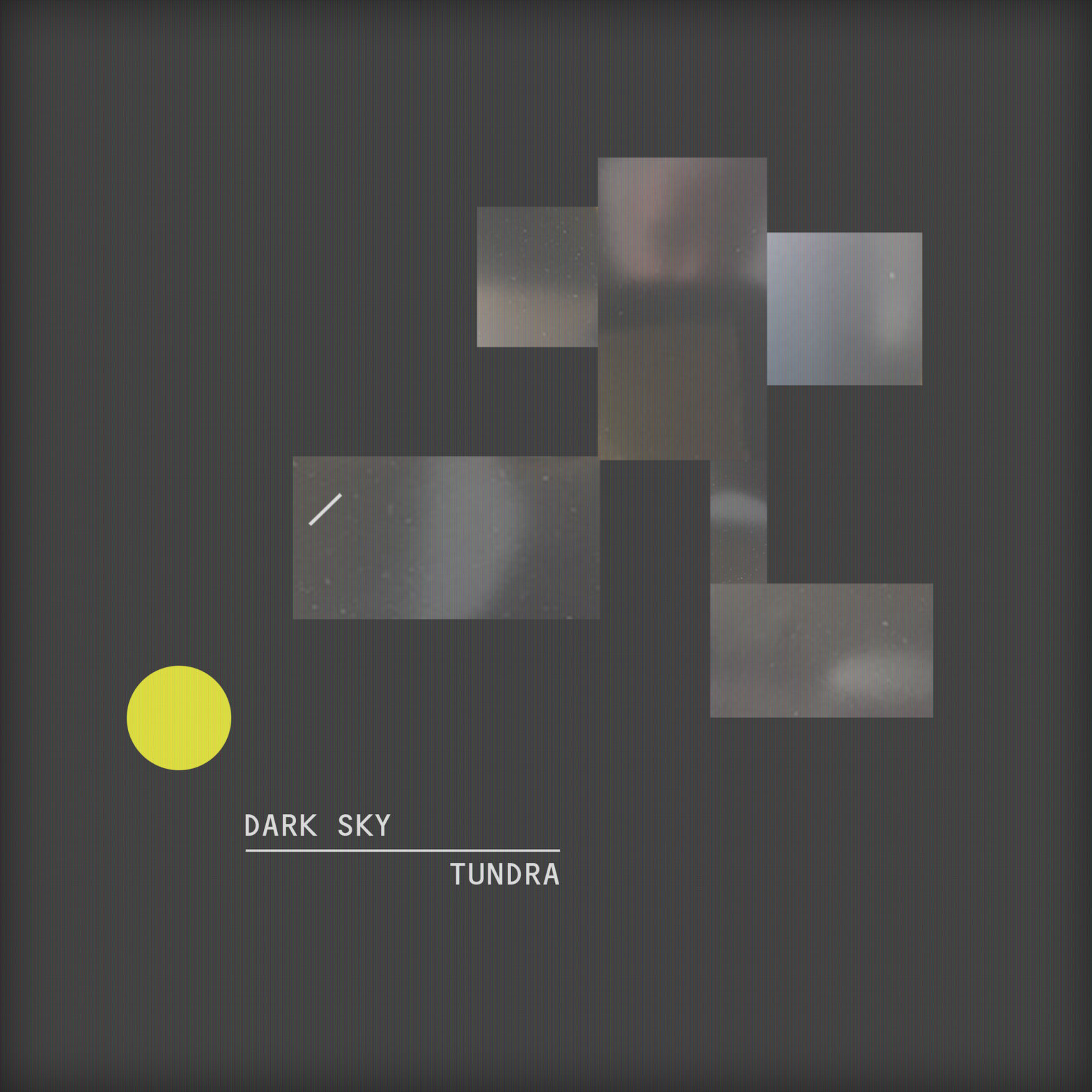
After their studio was broken into a few weeks ago, Dark Sky tried to make a “positive from a negative” by releasing a collection of tracks they managed to salvage from their unreleased back catalog. The album Lossless is now available as a free download and stream; while a previously unshared track—”Tundra”—is also available to download via the WeTransfer button below.
“Having our work stolen was hard to come to terms with, but has been made much more bearable thanks to all the support we’ve received from everyone. We hoped that one day we’d get to release this music officially, so to offer this download as a token of our appreciation despite the circumstances is a little dream come true for us. If the robbers happen to be reading this we’d like them to know the creation of artwork and one’s right to express themselves should never be taken away or discouraged. The investigation is ongoing and we remain hopeful. Once again, thank you to everyone for the support.”— Dark Sky
In less than a year DJ Seinfeld has become an extraordinarily influential figure in house music. What’s remarkable is that he’s done so with a series of subtle, slow burn productions that have come to characterize the lo-fi house sound: a blend of raw beats, nostalgic influences and a coating of analog dust, tape hiss, and dirt. His ascension has been low-key, but it’s been inexorable: Seinfeld’s debut EP, Season 1, laced with ghostly house stabs, acid lines, and hazy electro funk, caused a shockwave that’s rippling still now.
The moniker of Malmo, Sweden’s 25-year-old Armand Jakobsson, DJ Seinfeld has become an emblem of the ‘lo-fi house’ underground movement that encompasses artists such as Ross From Friends, Grant, and Mall Grab; and labels including Lobster Theremin and Shall Not Fade. Lo-fi house has invigorated dance music with its anti-image stance and DIY energy, though it’s also drawn derision from some who consider the artist names to be silly, the approach insincere, and who wonder whether the whole thing might be an elaborate prank.
DJ Seinfeld’s exceptional skill and style as a producer, though, are beyond question. His first EPs for Lobster Fury, Natural Sciences, and E-Beamz—and releases under the pseudonym Rimbaudian—had a strong emotional resonance redolent of classic house, contrasted with overdriven, distorted beats, suggesting an appreciation for the more abstract end of dance music too. It’s not just 4/4 that Jakobsson makes, either. As Birds of Sweden, he created an EP of gorgeous art-core drum & bass and tearing peak-time jungle that would have been hailed as classic in the sound’s mid-’90s salad days.
His debut album Time Spent Away From U is a more complete picture of DJ Seinfeld’s inner world: a set of jacking club cuts laced with flying hats, classic Korg M1 basslines, rolling breakbeats, and sweet R&B vocal samples, coated in his customary fuzz and a lush dreaminess. “I Hope I Sleep Tonight” combines a swung out beat with an emotive vocal, intricate strings and bell melodies; while another highlight, “How U Make Me Feel,” is a relentless stomp of distorted kicks, acidic funk, and looped vox. The tracks were apparently created after a painful relationship breakup, and this bittersweet flavor permeates the record, showing a deeper side of Seinfeld than we’ve seen thus far. We caught the elusive DJ and producer between gigs to find out more about his background.
You’re based in Barcelona, what made you move there?
Yes. I had a gap year after I finished my studies in Edinburgh, and I moved back to Sweden to work. Then I realized I needed to do a Masters. Barcelona had a really good reputation for an Economics degree. I also wanted a change of scenery. I’d been living up north and thought it would be nice to have a contrast.
Making house and jungle music is quite a contrast to studying Economics. How did your induction into dance music come about?
As with most people who get into electronic music, it was probably from friends and family. My family had been classical musicians and opera singers. I played the piano for a long time, but I didn’t get into electronic music until I was 13 or 14. At that age, you don’t analyze things too much; you learn completely by impulse. I started listening to underground house and techno more seriously around 16. I had one friend in particular who introduced me to a couple of artists, and then I started to explore a bit more myself.
Which artists did you get into then?
Legowelt. He’s probably my biggest inspiration when it comes to music. Otherwise, people like Omar-S and Theo Parrish, and a bunch of guys from Chicago and Detroit. At the same time, I listened to a lot of romantic electronic music such as Pantha du Prince. Of course, Burial as well.
There are classic influences in your music but filtered through your distinctive production techniques. How did you come to delve back into the history of dance music?
It’s a weird nostalgia for that late 1980s, 1990s time. You remember the time when MTV would play good videos every now and then, back in the day? I don’t remember watching that very consciously, but it would be in the background. There’s a certain charm about it. I liked how people in Chicago and Detroit and the UK used dance music as just as much of a political statement as it was a party. It was kind of a different thing [to now]. I like to imagine what it could have been like then. And it sounds good. I love the sound of those synths. I don’t know what part plays a bigger role.
Is the emotion in that music part of its appeal to you?
Yeah. I do like easy-to-listen-to harmonics and beautiful melodies. As much as that’s my strong suit, I love listening to atonal music too, such as Iannis Xenakis. I guess that’s not for the masses. It’s not to do with building romanticism through music or anything like that, it’s just a deconstructed form of listening. I didn’t get that at first, at all. It took some time, but I’ve been trying to expand, to challenge myself. If a group of people like something, it must have some kind of value attached to it. I like to put myself in that position to explore.
Does the dance scene in Sweden inspire you?
I’m quite detached from the scene in Sweden. It’s more my friends in Malmo who inspire me. They’re not doing house and techno, it’s really just a group of friends doing different kinds of music. I live quite an insular lifestyle so I’m not sure how anyone or anything influences me in a specific way, but I’ve had a lot of parties, fun nights and creative sessions with them, so I guess those guys contributed more than anyone else.
Why did you choose the alias DJ Seinfeld? I understand you’re a fan of the show…
It was just a way for me to keep things light and funny for myself. I went through a breakup and Seinfeld was the comfort show that I ended up binging on. I didn’t really make much music in the immediate time after that, but when I started back up I felt things a bit differently and thought it would be nice to do things anonymously for a while and just see what happened.
When you started producing, what kind of stuff did you make? Did you have aspirations to make lo-fi house specifically?
Since the start, I think I’ve been a bit all over the spectrum, though I tend to circulate back to dance music quite a lot. And no, not really. I’ve always liked music that has a rougher edge rather than polished and perfect sounds, so I guess the tracks I’ve made are some attempts to scope out my own take on that.
How did you come to sign Season 1 to Lobster Fury?
It was kind of a funny thing. At first, I wanted DJ Seinfeld to be completely anonymous, I didn’t really want to reveal who it was. But one day Nick Williams — he has this label Meda Fury who I’ve released on as Rimbaudian — wrote to me to ask if I knew who DJ Seinfeld was. I was hesitant to tell him, and then he said he had a friend, Jimmy Asquith from Lobster Theremin, and that they’d been planning on doing a collab label for a long time. They asked if I wanted to put something out. It coalesced into something special; it felt really right. Now we’re all really good mates. It was a funny thing and I’m really glad it came together in the way that it did. It was very impulsive and we’re just trying to have fun with it all. I hope that came across when it was released.
How does it feel to get an album out?
It’s such a relief, to be honest. It’s been a long time since I first put those tracks up on SoundCloud. Over time — every producer knows what I’m talking about — you develop a detachment from those tracks. I didn’t listen to any of those tracks for a long time. I had many doubts, as it wasn’t a conceptual album, it was just sad tracks from a sad time. But looking back on it with a different headspace, it’s really nice to see them all come out in the form that they did. It didn’t really make sense to put those tracks out as EPs.
Did the mood of the album come from that relationship breakup you mentioned?
Yeah, it did. I didn’t really intend the tracks to be released anywhere, they were just excerpts from a time that felt as though I was undergoing some significant changes and needed to exorcise the past. There are some happier tracks on there too, which I was very keen on including. Not a whole lot, but I didn’t want to drag everyone down completely. I wanted a few on there to be like the little flickers of optimism one suddenly and unexpectedly feels when they’re going through that rough patch.
Did you make all the tracks around the same time or over a longer period?
Yeah, all of those tracks came from a roughly three-month-long period after that whole thing. There were a bunch more I thought about including, but no, I think the album is quite extensive as it is.
The last track on the album, “U” has a spoken word sample about losing somebody, and the music is bittersweet. Where is that from?
It’s from a radio interview with Bob Geldof. I came across it on YouTube quite randomly. There’s this one segment where I picked up the words. I don’t know what I was thinking when I ripped those vocals, but I put it into Ableton. It seems to have worked somehow.
Are you into that sadness and emotion that can sometimes be a major feature of house music?
I’ve been trying to keep my music subtle, but I realized that the things that feel most natural to me are not subtle at all. Sometimes I overcomplicate things by not keeping them clear sounding, or trying to make them a bit more complex than they need to be. For these songs, I didn’t really compromise anything, I went purely by emotion.
“There’s always going to be people trying to make a club fist pump. Then you have the periphery of the scene, trying to explore and challenge the functionality or what makes those songs functional.”
What do you make of the functional material that constitutes so much club music now?
There’s always going to be people trying to make a club fist pump. Then you have the periphery of the scene, trying to explore and challenge the functionality or what makes those songs functional. A big inspiration of mine is Actress. His music has always been so incredible to me. The way he challenges the 4/4 conception of what works in a club is unique. I really admire that and I don’t think it really occurs that often.
There’s a natural tendency in dance music to conform to what is popular, what sells. What people think will make a crowd go crazy on Friday or Saturday. Everyone makes a choice and I’m completely fine with whatever people choose to do. I want to make both, in a way. I still want to challenge myself. There’s room for both things to occur in the dance industry.
“Sometimes lo-fi has become this replacement for, “You make a very generic disco track, and put a very standard 909 beat on it, put a filter on that, and then you have a lo-fi house track.””
You’ve been held up as a bastion of the lo-fi house scene. What do you think of the term?
I’m not going to sit here and say lo-fi didn’t get me to where I am today, because it’s hype that happened, and it did put the spotlight on a few producers who gained a lot from that kind of exposure, myself included. For that, I’m very thankful, but I’m also conscious of how reductive it can be to be put in one of those boxes. It doesn’t take a lot of time to go on the internet to see people talking about what lo-fi is. It’s not correct in a lot of cases. Sometimes lo-fi has become this replacement for, “You make a very generic disco track, and put a very standard 909 beat on it, put a filter on that, and then you have a lo-fi house track.” I’m not gonna judge people if that’s what they want to do, that’s ok, but my idea of lo-fi was always referring to the sound quality of what came from early Chicago and Detroit. People didn’t have the best equipment and the sound was the result from that. It has nothing to do with using a silly name like mine, there’s not a formula to lo-fi. If you happen to like raw music, that’s fine, that’s what I do, that’s why I didn’t mind the lo-fi tag at first. I don’t mind it, but I don’t pursue it either.
I guess I know what it’s about. Some of it is fair, for sure, some of it isn’t. It’s even strange to me how it ever became such a hyped thing. Not to say that there aren’t some great producers that have gained momentum from it, it’s just that it’s been around for so long that I guess people who are well acquainted with the history of dance music saw it as kind of strange when there were these producers with ironic DJ names rising up all of a sudden. From there, a lot of people could see a formula to lo-fi I guess, and as soon as anything becomes fairly formulaic it risks becoming predictable and boring. That’s fair enough, but I don’t really bother too much about it and I’ll always encourage people making honest and independent music in whatever manner they choose.
Is stepping away from the spotlight an aspect of what lo-fi house is about? Is it anti-image?
For sure. I’ve always made lots of different kinds of music and I don’t want that freedom to be reduced. I haven’t made a ‘lo-fi’ track in ages, I don’t know when I will next do that. I’m just trying to create some space for me to be free without worrying about what people will think about it. That’s never been a problem until this lo-fi controversy. Even then it was this momentary thing of, “Now I’m known, I’m exposed to all this criticism,” but I don’t worry too much about it.
How do you produce? What equipment do you use?
I just use Ableton. I use a couple of plug-ins, software. I like to leave a certain tag on a song.”
When it comes to the mixdown, what techniques do you use to get your sound?
I make music quite fast and spontaneously, though I’m trying to spend more time to perfect things now. But what I really like to do is put all the components of a song in, play around with it, and when I have an idea of what I want the track to be like, I’ll press record in Ableton, get some kind of rough arrangement and mess around until I’m happy with it. I don’t have any fancy way of making tracks sound better.
There are a lot of R&B samples in your music. Are you a fan?
I’m a fan of that music as well. There’s just a nostalgia and melancholy about some of those vocals that I find really beautiful. There’s a special kind of vibe you get from samples like that. They seem to work and I think people can relate to them.
You’ve put out a lot of music in quite a short period of time. Are you compelled to create?
I used to make a lot of music all the time, but because I’ve been flying around a lot doing shows, I haven’t really had the time to produce as much as I wanted to. But I’ve got a few months ahead of me where I hope to make a few tracks a day or something close to that.
As far as your DJing, which labels or artists are inspiring you at the moment?
I’ve been really digging this French label, Clek Clek Boom, I’m also into Luca Lozano, he’s great. I’ve been rediscovering this guy from LA, Santiago Salazar. He’s got some songs that are incredibly beautiful and melodic, functional as well. Some of the tracks remind me of what Omar-S has done. And also Special Request.
Speaking of Special Request, Birds of Sweden is your jungle pseudonym. Is that an outlet for another side of your musical personality?
Yeah, as with most things I do things I do, it’s spontaneous. I’ve loved jungle and drum & bass for a long time, but I didn’t want to convolute what I did with other projects. Birds of Sweden is another outlet for a different kind of music I wanted to make. I’m sure I’m going to do something else under the name in the future.
What’s coming up?
I have a release coming on Or:la’s label, Deep Sea Frequency, I’m still trying to finish up the last track, and I’m working on another album. I’m not sure where that will go or how it will sound, I just know I’m going to push myself harder with this one. I’m really excited, and I’m going to take more time with this music than what I did before. That will be the first time I’ve really structured an album or an EP. Normally it’s working retroactively where I’ll send things to a label and ask them to choose the songs. That’s on my horizon right now.
Federico Molinari will soon release his debut long-player, Whether Deport.
Fans of funky, minimal basslines will already be familiar with Federico Molinari. The much loved Argentinian DJ-producer has been on XLR8R’s radar’s for some time—around the time of his debut EP in 2007, titled Enerverende, in truth—although it was his wonderfully playful “La Vueltica” collaboration with Alexis Cabrera that really captured our hearts. Between these two releases, and even more recently, lies a deep pool of quality material, shared between labels of friends, including Melisma, Apollonia, and Epilog; although the majority of his cuts have arrived on Oslo, the imprint he co-founded with Nekes as “a way to express their own ideas of electronic music,” and also as a “homebase” for their own productions and those of friends.
He’s now set to debut on Russia’s Nervmusic Records with his first long-player, which is described as “a deep pool of captivating and intricate sounds.” It’s a long-player rather than an album per se because there is no concept; rather it is just a double vinyl of tracks.
Tracklisting
A1. Music Box B1. Emelfer B2. Detrox C1. Stopping D1. Banking Bank D2. Fat Cat
The three-track release will be the Swede’s third release under his own name, following on from Emerald Fluorescents and Consolidate, both of which dropped earlier the year via his own Northern Electronics label.
The intensity of Layers of Reality is said to be “somewhat prefigured” in Linell’s recent move away from his well established Abdulla Rashim moniker. This was first seen with his brooding collection of tracks on Consolidate, and then followed up with Emerald Fluorescents, a purposeful album that summoned a new registry of hypnotic techno. The change of name nods to the subtle switch further articulated in Layers of Reality.
Tracklisting
A1 / 1. Layers of Reality B1 / 2. Separated from Other Bodies B2 / 3. The Levels of Existential Space
Layers of Reality EP will land on November 27 via Northern Electronics, with the title track streaming in full below.