SP-X will release his first EP in two years on Cleric’s new PROJEKTS label.
After a string of highly successful EPs on Komisch back in 2012 and a triple release on Peter Van Hoesen’s Time To Express, the mysterious figure of SP-X disappeared as swiftly as he emerged. In only a few releases SP-X managed to capture the attention of many with his stripped back but hyper-effective take on techno. The fact that so little is known about the man behind the music only added to the story.
Now, after a long silence, the Brussels-based artist will release his first EP in two years on Cleric’s newly launched PROJEKTS imprint, with more releases expected soon.
Tracklisting
01. Textures of Thoughts 02. Process Control 03. Lost on Arrival 04. Lost on Arrival (Cleric Remix)
PROJEKTS will release Contours of the Soul on September 25, with “Process Control” streaming below.
Matt Cutler (a.k.a Lone) has shared the second track from his upcoming Ambivert Tools Vol. Two, the second instalment of four club-focused EPs scheduled to drop across 2017.
The release lands after May’s Ambivert Tools Vol.1 and is described by the label as “breezy atmospheric house, stacked with ‘floor ready tracks, inspired by his red hot Magicwire imprint.”
Non Series, the Spanish label run by Psyk, has lined up three new EPs.
On August 11, Madrid-based Aiken returned to the label with a powerful solo EP, Genetics, which featured his “well-known haunting atmospheres” with “distorted cuts among funky sonorities.”
Up next is Architectural, who releases his second solo EP on Non Series. Known for his smart production and sound design, Architectural (a.k.a Juan Rico) delivers a new four-tracker that presents “a wide range of sci-fi spellbinding sounds with a distinctive techno funk.”
Finally, Swedish producer Elias Landberg (a.k.a Skudge) debuts a 12-inch on Psyk’s imprint as Splice, the side project that he started in 2011.
NON026: Aiken Genetics – August 11
A1. Hybrid A2. Genetics B1. Somatic B2. Dominance
NON027: Architectural Smoking Fetish Close Up – September 22
A1. Silencio A2. Lipstick And Cigarettes B1. Poisonous Cocktail B2. Black Rose
NON028: Splice Blueshift – November 3
A1. Overlap A2. Blueshift B1. Magnetic B2. Five
Aiken’s Genetics is out now, and streaming below, while Architectural Smoking Fetish Close Up will land on September 22, with Splice’s Blueshift landing on November 3.
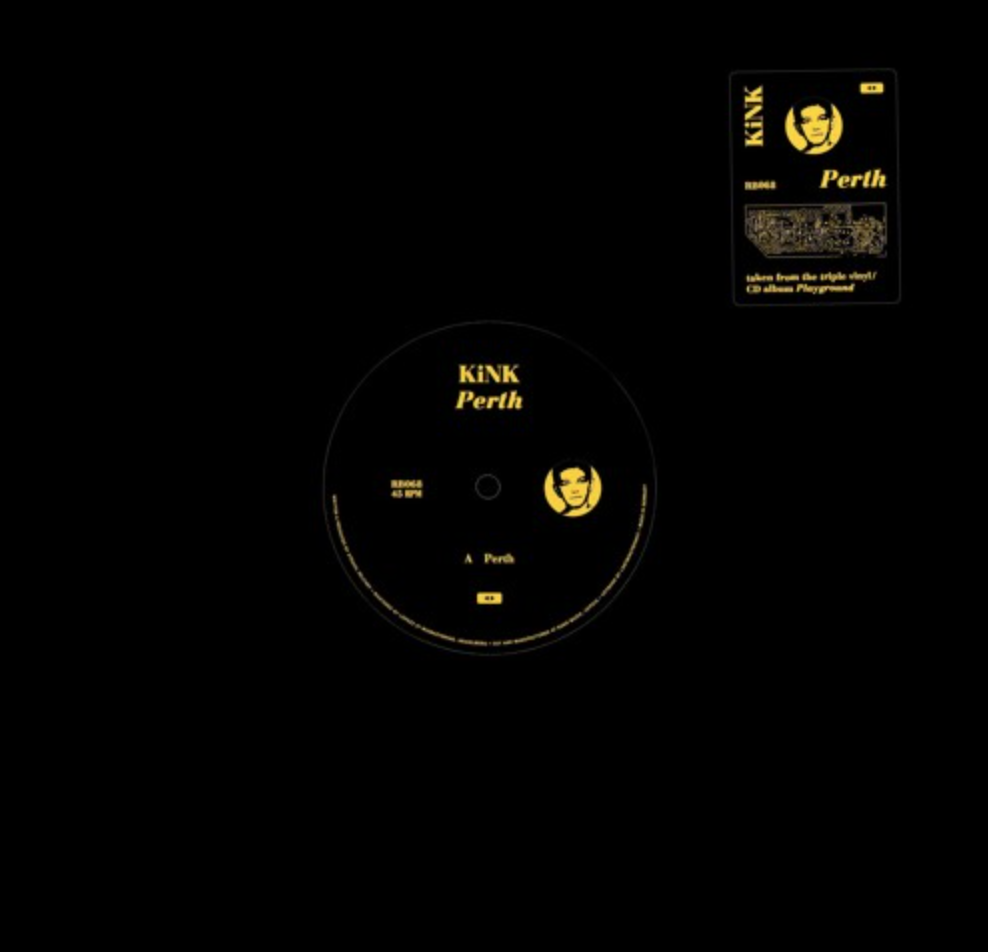
The Running Back label has revealed the first single from KiNK‘s next album.
The label, that of Gerd Janson, first hinted at the LP—Kink’s second—with a tweet featuring a new KiNK LP in a .rar file. It’s now been confirmed that the LP is titled Playground, and its first single is “Perth,” which will be released on a 12-inch featuring three different versions on September 22.
The label describes the cut as “dripping with grease” and “perfect house music for techno DJs and techno music for disco DJs.”
Tracklisting
A. Perth B1. Perth (Chord Mix) B2. Perth (Beat Mix)
Perth is scheduled for September 22 release, with streams available below.
Marat Mode, something of a regular to the XLR8R download section, is a music DJ-producer based in Castellón, Spain. Recently he signed a new song with the Swedish label House Music With Love, having previously released two tracks via our channels.
“The Red Wall,” his latest submission, is a song inspired by the artwork. The picture was taken by Pau Palau, a filmmaker based in Valencia. La muralla Roja, “the red wall,” is a housing project on Alicante’s Arcadian coastline, conceived by the architect Ricardo Bofill in 1973.
2-Section (born Julian Feierabend) is a Berlin-based DJ and record collector that digs deep into the archives of house, techno, and disco. His collection treasures a wide range of both genres and his sets are built on vibrant tracks which still remain with a focus on the dancefloor. He played various clubs in Germany such as Griessmühle, Loftus Hall or Artheater, formed the musical backbone to local O MATO gatherings and plays regularly for the Cologne-based HOOVE collective.
2-Section will be performing at this year’s debut edition of the O MATO experience which takes place from September 4 to 14 in Brazil. More information is available here.
When and where was the mix recorded?
The mix was actually recorded in my bedroom with two Technics SL 1200 MK2 turntables, an Allen & Heath Xone92 mixer, and a lot of cigarettes. They really keep me focused. I was sorting some new arrivals to my collection and got inspired by a record that a friend of mine gave me. He bought it from a record sale where he is currently working. I’ll get to this one later on.
Could you tell us about the idea behind it?
The idea behind the recording is an approach that I always try to follow when I play: combining effective drum patterns and mid-range heavy chords with rather groovy house records that bring some lightness and fun into the composition. Usually, this can also lead to some disco heat, but not in an hour of playtime and only if the audience is up for it. It’s rare that they’re not though.
How did you choose the records in it?
I usually prepare the first two to three records of a set before I play. Just to get into a comfort zone and to not panic out. If I didn’t, I’d shit my pants. From there on I rather let the flow decide where to go. It’s very important to me that a mix has a common theme without getting boring. It’s a pretty basic element of a good mix, I suppose.
However, some tracks in the recording are very close to my heart and have a rather symbolic meaning, some are just right for the spot they’re in. There is, for example, the Cherushii “Milk Of Paradise” on the Warrior Loves EP that came out on Jenifa Mayanja‘s Sound Warrior Label. I am just really in love with that whole record as it is so diverse and covers most relevant tones of house music. Also, I like the attitude behind the label itself. Something good to spend money on.
Then there is the record I was mentioning earlier. Liquid Variety “Best Part Of The Trip,” what a classic. Originally released in 1991 on Kaleidoscope Records. Had so much fun in my room dancing to those drums. Also really looking forward to playing this one out to 150 junglists in the middle of the Amazon.
Tell us a little about O MATO. What makes it special?
First of all, a big shout-out to the crew as those guys are brilliant. Met them through a friend of mine when I moved to Berlin in November 2016. Shared the same taste in music and had the same vision in regards to social gatherings and boom! Very happy to be part of this project. That’s also, at least for me, what makes this project so special. The standard answer would praise the stunning location right in the middle of the Amazon with loads of shit to discover and to adventure, or the fine selection of artists who are performing, which matches the setting like a lid for a pot. But for me, it’s about those guys putting so much passion into what they love. Experiencing them putting that shit on is what motivates me being part of this, even if I’d play in front of 30 people. Those are there to celebrate a one-in-a-lifetime experience and for the love of music and they are pretty damn in the right spot!
The latest video to drop from Point Blank‘s partnership with IMS College Malta is an interview with French producer Agoria on composing music for film.
In the video, which you can watch via the player above, Agoria discusses his entry into the film industry and shares his processes when composing for film, including how he approaches working with directors and working to a brief, as well as showing an example of some of his work and an insight into his workflow.
You can find more of this and information on Point Blank’s courses here.
Milan-based artist Tocci‘s new EP, Aircntrl, is out today.
The four-track EP will be Tocci’s debut for Human Pitch, following on from Rioux’s standout LP Fragmenta and continuing the run of form for the label, which was founded and run by Rioux and Brandon Sanchez. The tracks on the EP are hard to define and not ones to be boxed in any one genre; instead, it pulls from various touchstones (glitch, breaks, noise, drone, hip-hop) and melds them together in a wildly inventive barrage of sound that will have you on the edge of your seat and wondering what planet the music was beamed down from.
Tocci’s Aircntrl is available today on cassette and digital formats, with the full EP and its first visual single streaming below.
NX1 Remixed #1 is part of a trilogy of remix EPs, with the following two arriving later this year and featuring Orphx, Blush Response, Samot, P.E.A.R.L., Scalameriya, Surit, Lucindo, and The Exaltics. Across the three EPs, which evidently kick off the new Nexe Records, NX1 and the artists invited to contribute look to showcase techno in its purest form, from AnD’s blistering textures to the relentlessly chugging industrial rhythms of RE_P’s rework.
Ahead of the release next month, NX1 have offered up a full stream of AnD’s wall-shaking remix, available via the player below.
Anastasia Vtorova has an inquisitive mind. As Machine Woman, this musician from St. Petersburg, Russia transmutes her musical curiosity into wildly varied and experimental electronic music free from simple stratification.
Since 2014, she has been emitting her strange and compelling sounds into the world. Vtorova’s first available tracks were on underground cassette releases such as Pink Silk and the split release with Famous Moon King, Ono Famous Machine, and in the intervening years, she’s amassed a huge stockpile of tracks. More recently, she’s appeared on the label Peder Mannerfelt and subterranean noise bastion Where To Now? Her For Sweden EP contained the creeping, creepy 4/4 of “Very Kind Human Being”: all scrapes, hisses and eerie tones, like feeling your way down a dimly-lit tunnel pursued by someone or something. The same release contained the sound art/IDM breaths and clipped field recordings of “Liquid Metal.” Another release, the superb Genau House, imported her weird energies and crackly percussive originality into lush dub techno.
Machine Woman’s latest EP, When Lobster Comes Home is out through Ninja Tune’s underground club-orientated sub label Technicolour and should expose her reverberations more widely. The lead cut, “Camile From OHM Makes Me Feel Loved,” with its blissful chords and crunching beats, has been praised — and played — by Ben UFO among others. We spoke to Vtorova while she was on holiday in Latvia, and in a reflective mood, about her route into electronics, her noise background, and soaking up influences from everywhere.
Machine Woman will be playing this weekend at ELSE in Berlin alongside Route 8,TRP, and some more of the Lobster Theremin family. More information here.
How did you get into electronic music?
I got into it a long time ago in London, mostly when I was playing in punk and experimental noise bands. I was getting bored and I stopped enjoying it. Bands used to look for a female bass player, and I was in a lot of those bands. I started looking for something a little bit different and on Last FM I found electronic experimental sounds. I picked up proper Ableton lessons when I was still in Goldsmiths, University of London. I did evening classes once a week. That’s what really started me making electronic music more, and different kinds of stuff.
“Sometimes a mistake can be something very beautiful.”
It’s interesting you say you’ve played in noise and punk bandsbecause I can hear that punk essence coming through in the music.
That’s nice to hear. What you start with will come through in what you do later on. Even if you progress and find new ways, it’s still how you learned music that will be with you for the rest of your life. I don’t have a musical education or anything like that. Being in noise bands gave me more confidence to try other things, like electronic music especially.
I think of music production as a game. I enjoy it and it’s a lot of fun. If you see something as technology or as a task, suddenly it’s no longer enjoyable. You’re afraid to make mistakes, but the best thing to do is make mistakes. It’s a learning process for anyone who wants to learn something new but also, you find yourself through mistakes. Sometimes a mistake can be something very beautiful.
What do you use to produce your stuff now?
I do a lot of different things now, and I still experiment on a daily basis. I can take an application on my phone and mess around when I’m on the train, to see what ideas I can put down, or record a sound, someone talking, to maybe turn into drum samples later on. But lately, I’ve started getting into hardware more, drum machines and synthesizers. I still have lots of pedals left from playing bass guitar, so a lot of stuff comes from there. There’s a Yamaha sampler I’ve bought, it’s super old and has five seconds sampling time. I’m building up. Sometimes it could be a 12-hour session just on the computer, sometimes it could be a couple of hours on the bass guitar.
They all offer different methods of creating.
Every time I listen to music, if I find something interesting, I write to people and say, “Do you mind sharing how you made it?” It’s nice to find out that everyone produces music very differently. It’s so interesting. Even with Ableton, I’ve been using it for three or four years, and every day there’s something new, new plugins, new samples, but also the software gets updated. I remember trying Reason a few years back before I even started making electronic music and thought, “This is so hard.” A few years later when I tried it again, I thought it was very interesting. Reason has a very specific sound. It’s harder, like gabba compared with anything else. There’s Logic, which is quite different, but Ableton there’s something about. Maybe it’s an easy way to start and create and go further. It’s very user-friendly software.
Some of your recent productions are more house and techno-based than your earlier experimental sound. What has prompted that change?
In a day I listen to everything. I could start with listening to jazz in the morning, super fast gabba in the middle of the day, to some new demos that people send me. At the end of the day, I might listen to Alva Noto’s early stuff, which is very slow and experimental, to Boney M, to classical music, to Soviet Union stuff. At the moment I just want to experiment and go in a more dancey direction. The last show I played was all 142bpm, stuff I produced recently, and I was like, “Wow, this is the most enjoyable thing I’ve done in a year.” So maybe now all my sets are going to be 142bpm and faster. It’s happy, fast, hardcore, techno, and Soviet house. It has some vocal samples, which I’m really into at the moment. I record a lot of my own voice in and make it sound like a machine.
On your new When Lobster Comes Home EP for Technicolour, you’ve included a track called “Camile From OHM Makes Me Feel Loved” about the Berlin club and Camile who works there. What is the story behind that?
One time she helped me out; she was very kind to me. She looked after me. That club is something so special, unique. I remember visiting the club for the first time in 2013. When we first went there I think it was called Shift. The whole place seemed like something magical. It was very free, there were no bouncers on the door, just a door person. It’s next to Tresor, kind of part of it, but with a separate entrance. It’s also tucked away, so you wouldn’t know it’s there. You go in and you feel the atmosphere and the freedom of music. My friends and I went every day to that club ’cause we just fell in love. Every day we heard different music. It’s music orientated, not about being seen. There’s no attitude. To me, this is a true clubbing experience.
One of your new tunes is called “But It Was Like 30 Intros in a Row.” Are you amused by reviews like that, or do they offend you?
Everyone is entitled to their own opinion and there’s a bit of a story behind this track. I flew to Portugal and I wasn’t sure what club it was. There were a lot of issues. Being nervous, I was playing super slow for this fast club and people were booing me, like, “Drop the bass.” I don’t have bass, there’s no bass. One person wrote on Facebook for the event, “You guys usually get it right but this was just like 30 intros in a row.” I find it hilarious but also nice, I guess I created some kind of emotional response rather than being forgotten. I really angered that guy. I think it’s natural if you perform, not everyone will like your stuff and that’s OK.
There’s also the track “I Want to Fuck Tech House.” Do you think a lot of dance music is boring and conservative?
I think it’s more how seriously people take themselves. It’s almost like you can’t have a laugh, have a joke. There’s so much bad publicity happening around tech house because people think it’s a very basic form of electronic music. But I don’t know, it’s just a play on words. I keep hearing people say, ‘I don’t like country music, or I don’t like this’. It’s especially surprising coming from musicians because to me, I’m really curious about what people produce, from jazz to country to blues to tech house. To see how it is and what it’s about. You can find emotion in every type of music.
Do you feel that people are more receptive to experimental sounds in dance music now in a way they wouldn’t have been a few years ago?
Perhaps people are bored of hearing the same stuff? To bring an interesting touch to electronic music is a positive change and people just want something else. Also, music technology is growing and it’s becoming more widely available. So there are new ways, new generations of musicians and producers coming in. There’s a lot of internet influences. Maybe now it’s in fashion, or time changes and it’s just natural.
What do you have forthcoming?
I have two different hard drives and I looked and there are 500 demos at least. Not everything is good or even listenable, but like I said, I make music every day. I’m working with some people, I don’t know if I can say who or when, but there’s a few different options, remixes. There’s perhaps more ambient and chill stuff. More dance music, yeah, but you have to wait and see.