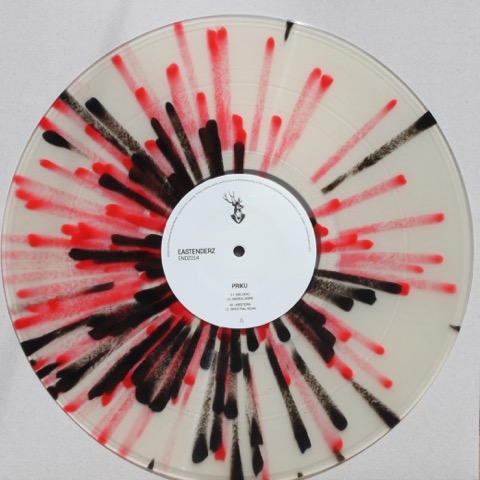
Motif Records‘ Priku has returned to Eastenderz for the first time since 2015.
The Bucharest producer is in fine form, too, kicking off a the EP with the bouncy tech-house beats, rising and falling bassline, and twinkling piano samples of “Melodic.” He opts for a crunchier drum machine rhythm and dreamier chords on “Marea Unire,” before opting for a deeper, more energetic feel on “Western,” where looped piano motifs spar with some lilting strings and a jaunty bassline.
“Spectral Scan” completes the package.
Tracklisting
A1. Melodic A2. Marea Unire B1. Western B2. Spectral Scan
ENDZ014 EP is available now, with clips streamable below.
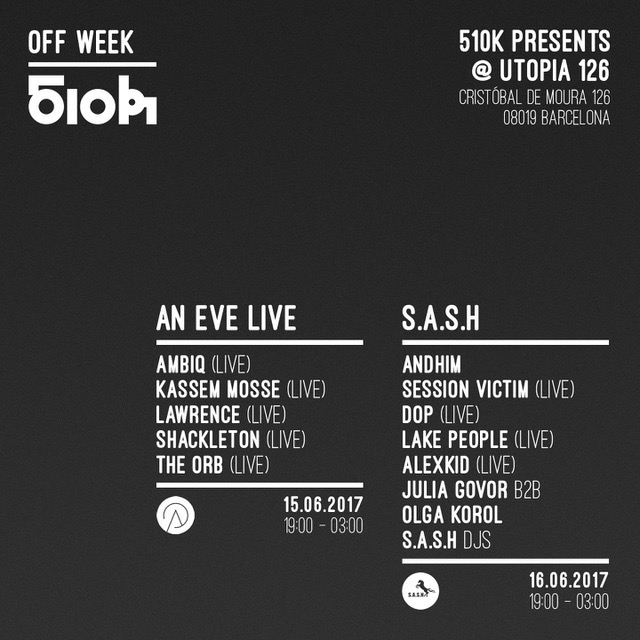
On June 15, they will team up with Arjunamusic label to present AN EVE LIVE, an intimate and unique live music experience in a warehouse setting. On June 16, 510k will collaborate with Sydney’s Sunday institution, S.A.S.H, who will be kicking off their world tour. Events will showcase a wide music range, from experimental electronica to peak-time house and techno. Events will last from 7 pm till 3 am.
AN EVE LIVE lineup will include the highest-quality acts that present a rich spread of musical flavors through their live acts. On the line up are the instrumental, genre-bending trio AMBIQ, that features Arjunamusic label head Samuel Rohrer and his long-standing collaborators Max Loderbauer and Claudio Puntin. The band will be joined by Kassem Mosse, Dial label’s Lawrence, Skull Disco label boss Shackleton, and the legendary ambient dub band, The Orb.
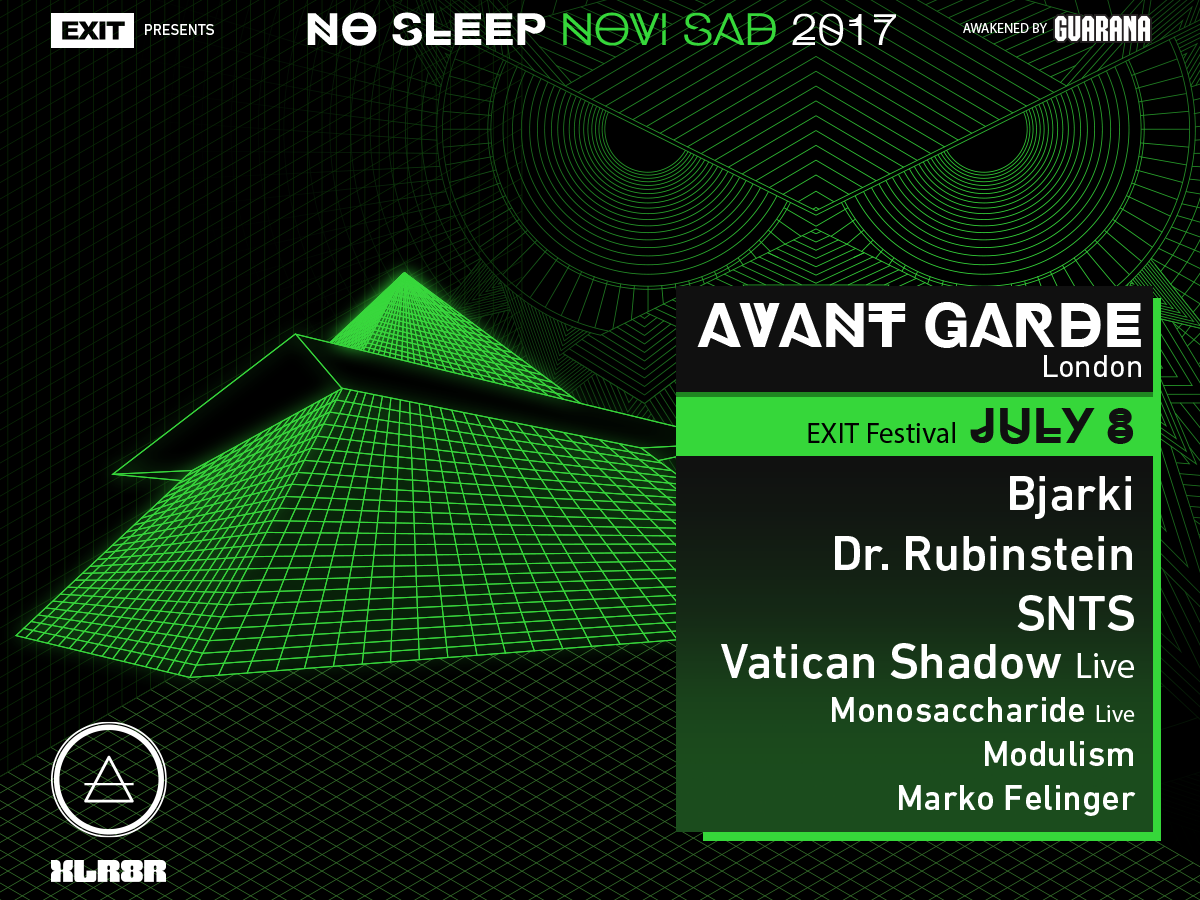
EXIT’s No Sleep Novi Sad stage has a concept of having world-known clubs take over each night. Previous years’ #NSNS stage has hosted showcases by Tresor, Nitsa, Concrete, Grelle Forelle, Drugstore, and 20/44; this year has Glasgow’s Sub Club, Brussels’s Fuse, London’s Avant Garde, and Paris’ Concrete.
Two out of five nights of the stage have already completed their lineups, with names like Function, Dax J, Charlotte de Witte, Pierre, Voiski, Antigone, Francois X, Leo Pol, and many other names all confirmed. Now, Avant Garde—the London promoter —has revealed the artists for their takeover on Saturday, July 8.
Scheduled to play are the following:
Bjarki Vatican Shadow SNTS Dr. Rubinstein Monosaccharide Modulism Marko Felinger
This year’s edition takes place in Novi Sad, Serbia from July 5 to 9. For more information, tickets and the current lineup, please click here.
AMBIQ will be performing alongside Kassem Mosse, Dial label’s Lawrence, Skull Disco label boss Shackleton, and the legendary ambient dub band, The Orb for an event at this year’s Off-Week in Barcelona. More information and tickets can be found here.
Earlier this month, Apparel Tronic released You Are Home, an experimental six-track EP from Japanese duo Omnine, made up of visionary musician and sound designer Gak Sato and singer Hiroko Mastropaolo.
The duo’s prefered equipment all dates pre-1984, including the Suzuki Omnichord, and the music they craft is an eerie fusion of ’80s synth pop—of the skewed variety, of course—and more modern electronica. It’s a graceful and ethereal style that mixes Eastern sensibilities with trippy-yet-accessible electronics.
In support of the brilliant EP, Omnine have offered up the EP’s closing cut, “fase,” as today’s XLR8R download. True to form, the track is a whirlpool of stunning synths that float in and out of the mix across the three-minute run time.
You can grab “fase” via WeTransfer below, with the EP available here.
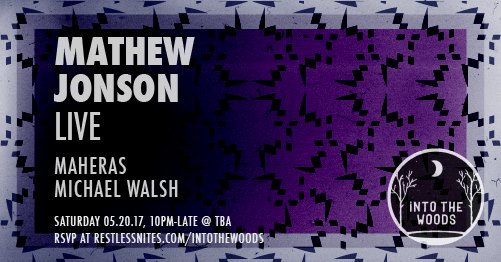
Created by DJ and producers Jimmy Maheras and Mor Elian—who XLR8R recently profiled in a Bubblin Up feature—Into the Woods looks to “capture the mystery of Los Angeles warehouse party culture of years past.” The popular LA party kicked off this year with a successful run of events, hosting artists such as LA-4A, Patrice Scott, Fort Romeau, Delta Funktionen, Luke Hess, Mozhgan, and Basic Soul Unit in intimate spaces in the heart of downtown LA.
Beginning this Saturday, May 20, Into the Woods’ summer schedule will kick off with a very special live performance by Mathew Jonson (Wagon Repair, Crosstown Rebels, M_nus), followed by events featuring Mike Huckaby, Derek Plaslaiko, Romans, and a Finale Sessions showcase featuring Kai Alcé.
You can find more information on Into The Woods here, with the full schedule below.
Dates:
May 20 – Mathew Jonson [Live] (Wagon Repair, Crosstown Rebels, M_nus) June 3 – John Barera and U-Kahn (Australia) June 9 – Derek Plaslaiko (Bunker) July 1 – Finale Sessions Feat. Kai Alce, Michael Zucker, Natan H July 15 – Mike Huckaby (Deep Transportation) August 12 – TBA September 23 – Romans [Live], Tin Man (DJ), Gunnar Haslam (DJ)
Summer / Fall Into The Woods Vinyl Releases
Into the Woods has two hot vinyl releases on the horizon for 2017: original tracks by Maheras with a remix from Basic Soul Unit on ITWS003. The first two Into The Woods releases are currently available and feature original tracks from Maheras with remixes by Jared Wilson and Radioactive Man.
Born To Ruin will be the first released material from the duo since Until Silence, their 2014 album on Leaf. Last year, they also composed part of the score and end credit theme for the SKY / Warp Films-produced drama series The Last Panthers, as well as a contribution to the Blanck Mass-curated score for Belgian horror movie The Strange Colour of Your Body’s Tears in 2013.
The new album is a collection of stripped-back, poignant pieces that are as fierce as they are tender. The film-score background is heavily splattered throughout the release, with cinematic cuts like “Under The Arches,” “Broken In Time” and “Potters Field” evoking strong emotions; whilst Mannerfelt’s muscular techno can be felt on “Coffin & Nails” and “Bright Lights, Dark Heart.”
Ahead of the release later this month, you can stream the haunting “Coffin & Nails” in full via the player.
Over the last few years, rising Belgian artist Thomas Neyens (a.k.a. Kiani & His Legion) has become a name to watch in the greater house music scene. Neyens first appeared on the radar under the Kiani & His Legion moniker in 2013 via two releases on Red D‘s We Play House Recordings. Both releases introduced his melodically rich sound world and hinted at an artist with a lot of poise and promise.
In the years following, Neyens kicked off Tanzbar Records—alongside Filip Grossard, Simon Nowak, and Tom Vandevenne—which has so far been the sole home for his techno-leaning alter ego Far Out Radio Systems. Last year, with the release of the ‘Paper Unicorn‘ EP, Neyens joined Nuno Dos Santos‘ Amsterdam-based Something Happening, Somewhere imprint where, arguably, he has released his most complete and realized work. That EP—which also featured a remix by producer-of-the-moment Fatima Yamaha—and his most recent outing, ‘Lima Oscar Victor Echo‘, both present thought-provoking artistic visions, albeit quite cryptic ones. From the bespoke artwork to the mind-bending synth lines and obscure track titles, both EPs invite the listener into Neyens sonic world but leave just enough mystery to warrant multiple explorations and the listeners own interpretation. This colorful ambiguity is something Neyens has been musing on for some time and, evidently, the subject he chose to tackle in our latest Real Talk: a science of uncertainty.
“There is nothing to get! Those are just 12 minutes of bleeps without any direction.” Although not a direct quote, this is very close to what a random stranger replied to the forum poster who argued that you have to ‘get’ Villalobos in order to like his music. I bet he contemplated for a while whether to put that first phrase in capitals or not. Here’s another popular one: “I would play this track so I could go have a piss.” Funny stuff. In fact, I think there is indeed nothing to ‘get’ but definitely something to gain from Ricardo’s glitchfests. Themed once by a journalist as the biggest divider of opinion, Villalobos and his peers kept a considerable amount of experiment in mainstream electronic music which, at the time, was rapidly evolving into the money machine it is now. Even if you don’t like his music, you have to appreciate his artistic vision.
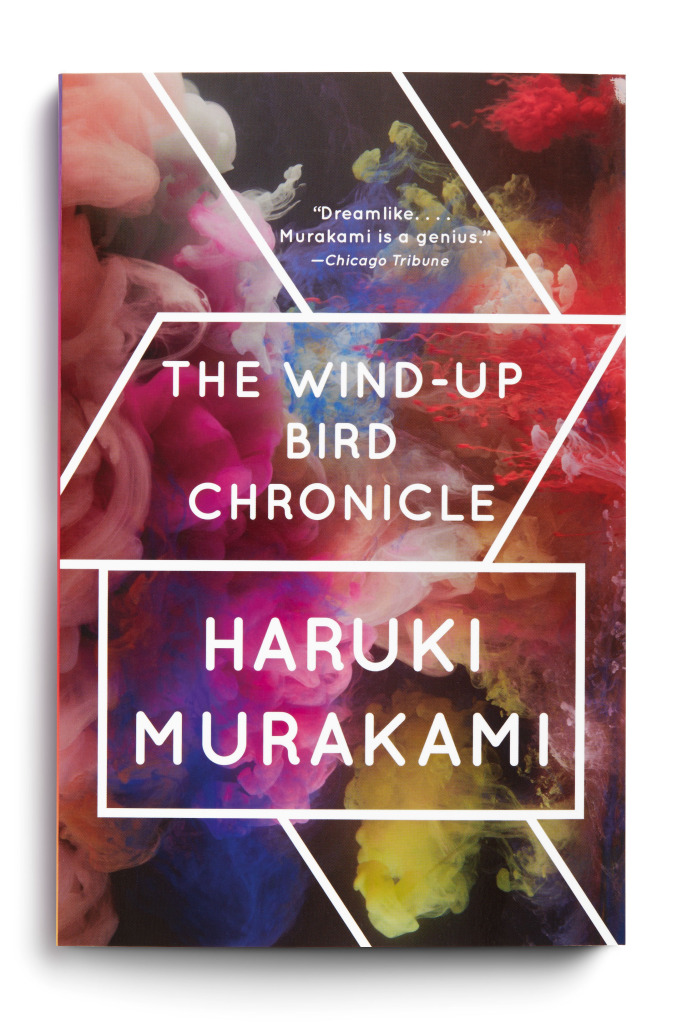
It struck me to see so many similarities when reading reviews about books by Haruki Murakami, the well-known Japanese author of mostly surrealistic literature. Murakami’s novels contain many of the ingredients that made me fall in love with Alcachofa: eclecticism, experimentation, sudden changes in direction, and, most of all, the ability to make you take comfort in the fact that you don’t understand everything that is being told. Isn’t it more fun when not everything is laid out for you from a to b via c to d? When there is room for you to fill in the gaps? Think about that moment when the DJ has a dusty needle: he/she picks up the tone-arm to clean it, the music drops dead for a few seconds, and the crowd goes nuts when it is put back on. It’s not what you generally hope for, but it’s good fun, right? The uncertainty is the exciting and, ultimately, the most rewarding part of the journey—in contrast to the well-defined and highly anticipated destination. My new EP is exactly about this: an attempt to make the process less predictable. It was not an easy choice, as it is common knowledge that simple and straightforward tracks, most of the time, work best in a club atmosphere. But I needed to do it, and strange as it may seem, books played an important role in this process.
It is no secret that many of techno’s first wave producers were inspired by novels such as Do Androids Dream of Electric Sheep? and the movie adaptation Blade Runner. That movie is one of my childhood favorites and when I was writing my previous SoHaSo EP, I read the book. I liked the novel, but the connection I felt to it was mainly caused by me being part of a music scene that is influenced by it—I read the book to better understand where the music I love came from. “Paper Unicorn Scenes,” “Electric,” and “Voigt-Kampff” are all references to it, but that is it. The novel did not affect the way I approached music, it merely provided concepts to think about. As important as the dystopian elements in such science fiction noir may have been for techno pioneers in the eighties, for me, the question of identity was the truly captivating part of this story. I loved the idea behind Voigt-Kampff, a test to measure one’s empathic capabilities in an attempt to differentiate between androids and humans. At the time, I already felt a lingering need for ambiguity in the music I made, hence the reference to the movie’s paper unicorn scene, in which agent Deckard finds an origami unicorn, an image from his dreams, on his doorstep. This has left fans debating whether agent Deckard was an android himself, with manufactured dreams.
This took a turn when I discovered the strange worlds of Haruki Murakami. I was so captivated by his unconventional writings, that they inspired me to try new things in the studio. For those unfamiliar with his work, most of his novels have references to jazz, the need for solitude, love, and philosophy. They revolve around a protagonist who gets carried away in a surrealistic story, without wanting to be part of it. These stories are backbones and sometimes even metaphors for underlying messages, such as the need to simplify our lives and the search for a general purpose. The most interesting facet throughout his bibliography, in my opinion, is his stylistic method. He writes chapters like jazz music evolves: eclectic, unedited, raw, and with strange side stories that at first might do not seem to add anything to the main plot. His books sometimes peak right in the middle, while the last 300 pages are some kind of outro. The fact that his creations are merely journeys without clear destinations can be felt strongly in his absolute masterpieces such as The Wind-Up Bird Chronicles or Kafka on The Shore. Part of the beauty lies in the awareness that when you’ve reached the end, you often feel like you don’t ‘get’ it completely; that there is a greater message you still need to discover. “There is nothing to get! Those are just 1200 pages of coincidental nonsense based on short stories without any direction.” Well, yes, that’s one way of putting it.
When Villalobos overlayed DJ Slip’s “Every Time It Takes A While” with Arvo Pärt’s “Cantus in Memoriam of Benjamin Britten” at Speakerplay in 2004 was the moment where he got me hooked on his style—my belief was confirmed when put in the off-beat organ melody in the middle section of “Moremax.” I don’t understand why he did it, how he thought of it, or if he even thought about it. It may have been a coincidence, but that’s not important; the variation and the inner contrast is compelling and that’s what it’s all about. In statistics, a science of uncertainty and regression techniques are used to identify a trend within a varying mass of information. The goal is to separate that trend from the noise. A lot of music nowadays sounds like one perfectly defined the trend and got rid of all the noise. But errors, fragments of nature that cannot be fully understood, are part of life; we need the noise if we want to create something that is truly interesting. For example, Hieroglyphic Being‘s “Temple of the Moon” has an endless rumbling drum pattern all tucked away in the back. “You should boost that high end, Jamal,” is what every sound engineer in 2017 would say. But when that flute drops in, it all starts to make sense. The contrast between the silent drums and the loud melody makes it an intense hyperspace trip. Or that looped ticking sound in the background of Aphex Twin‘s “Blue Calx.” Why didn’t I think of that? It shouldn’t be there, but it is and it works. Trying to find the essence in information convoluted with a lot of differing messages forms a great method in finding true meaning.
Finding that meaning is what has influenced me a lot as a musician and DJ. Especially throughout the last year, I’ve felt the need to work less predictably. I’m far from the genius of artists like Aphex Twin or Wolfgang Voigt, but I’m actively trying to deliver music in a way that makes it unclear what I would like to achieve with it. Hopefully, though, people will decipher a message and fill in the missing plot holes by themselves. Murakami has played a significant role in this process. Not only by convincing me to make the purpose of tracks less obvious, but also to use new and possibly less conventional methods in the studio, such as the use of multiple monophonic synthesizers to create pads instead of polysynths or playing around with LFO’s on resonance signals to create very interesting effects that add tension to a track. I’ve used the latter a lot in “I Can Take You There” and “Eindeloos/Eindelozer.” It’s hard to put your finger on what exactly triggers a creative process and it’s easy to invent a cause for a result, the but fact is that the atmosphere and stylistic moves in Murakami’s books have transcended into my music. I remember clearly that I just finished Colorless Tsukuru Tazaki and His Years of Pilgrimage, when I started on “Oval Flight.” The book is a story about lost friendship but has one chapter about a cursed man who will die within two months if he does not transfer the death curse to someone else. He chooses, however, not to pass it on and by doing so, he learns to enjoy life again knowing that he has only a few weeks to live. After I finished the book, I admired Murakami for creating a story that stood on its own within the novel. In “Oval Flight,” I wanted to introduce a similar section that was somehow disconnected to the rest of the track, but which felt right in the end. This resulted in the GRP and Therevox solo after about 2 minutes. The song structure felt a bit strange in the beginning, but it worked, at least according to me. There are tracks that refer to his novels in more direct ways: for example, “I Can Take You There” is very much inspired by Murakami’s book Hard-Boiled Wonderland and the End of the World, which tells the story of a man that leads a woman to a city at the end of the world—in fact his subconsciousness—where everyone lives in a bizarre community surrounded by herds of unicorns. It is very utopic or dystopic and as the story ventures between the real and dreamstate worlds, it is difficult to understand what exactly is meant by it. This particular track is a depiction of the trip to the city at the end of the world. Breathe, close your eyes and let’s fly to a new place. It only works when you believe that it will work and after numerous attempts, you embark on the journey… and then the Yamaha stabs kick in. But now I’m doing exactly the thing that I shouldn’t do. The meaning of the track should only be defined by the people that listen to it through the set in which a DJ plays it.
I guess that, in the end, this text is not about Murakami—he’s a symbol for something bigger. In a world that attempts to clarify everything, with an emphasis on concepts such as understanding, completeness, and balance, I find solace in the fact that dance music culture can offer an alternative. But we need to protect it from the money machine, the products, and the fakeness. Events have to be planned, CDJ’s have to be synced, revenue has to be made. Art is an industry and I am part of it. Isn’t is so that I’m writing this piece to gain exposure? Or at least for some part? It’s hard not to get swallowed up by the machine, the science fiction movie with special effects but no story to back it up. Somewhere outside this field of dollar bills, we’ll find the true ones, the ones who make me believe in more than the story itself. I think we need more people like Murakami or Villalobos. Maybe I’m naive, or even a hypocrite. I don’t have answers and I make mistakes. What’s with all the drama? Have I told anything that has made sense? I don’t know. It’s too big for me to understand and somewhere, in between the drum machines and the cosmic chant, I’m happy with that.
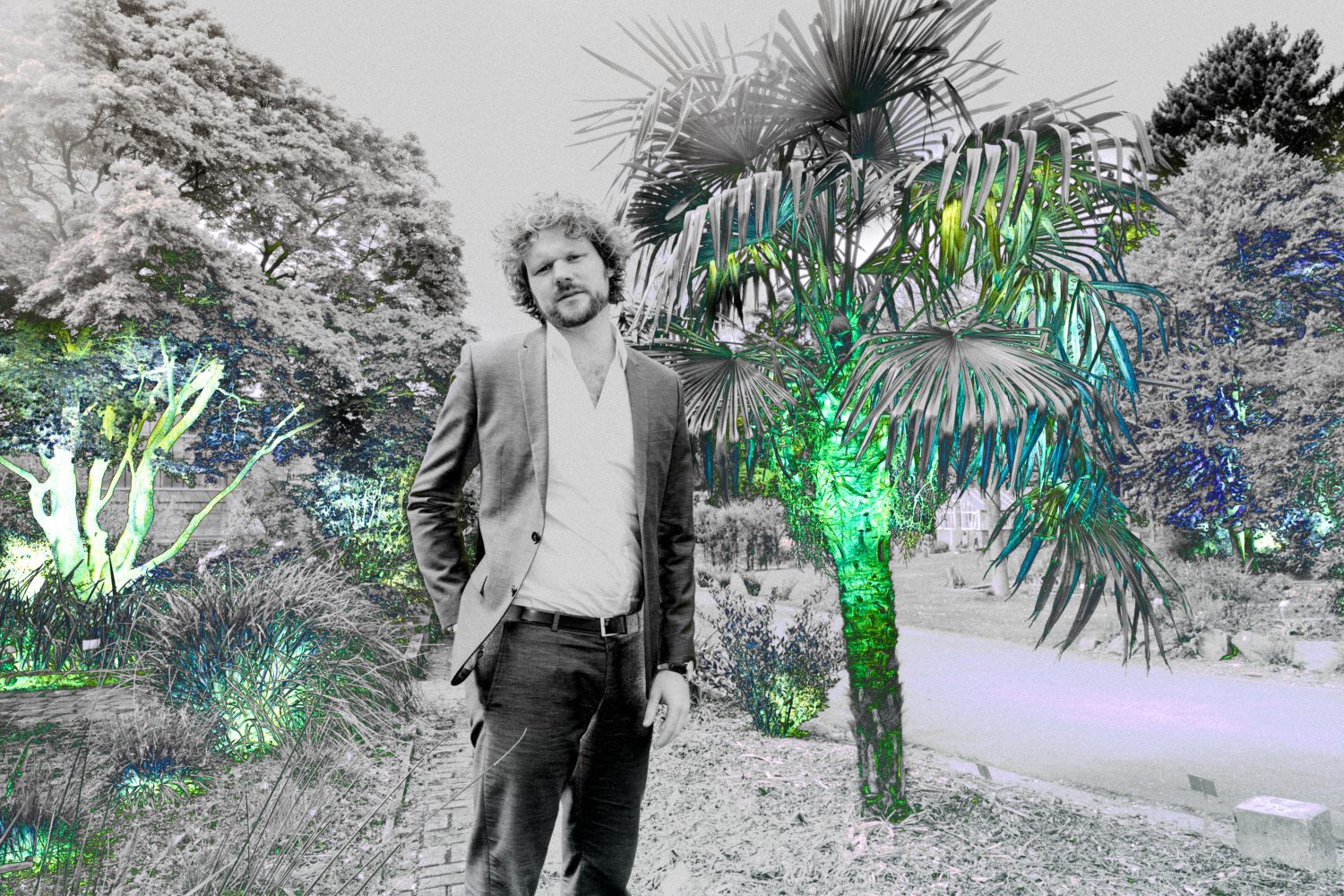
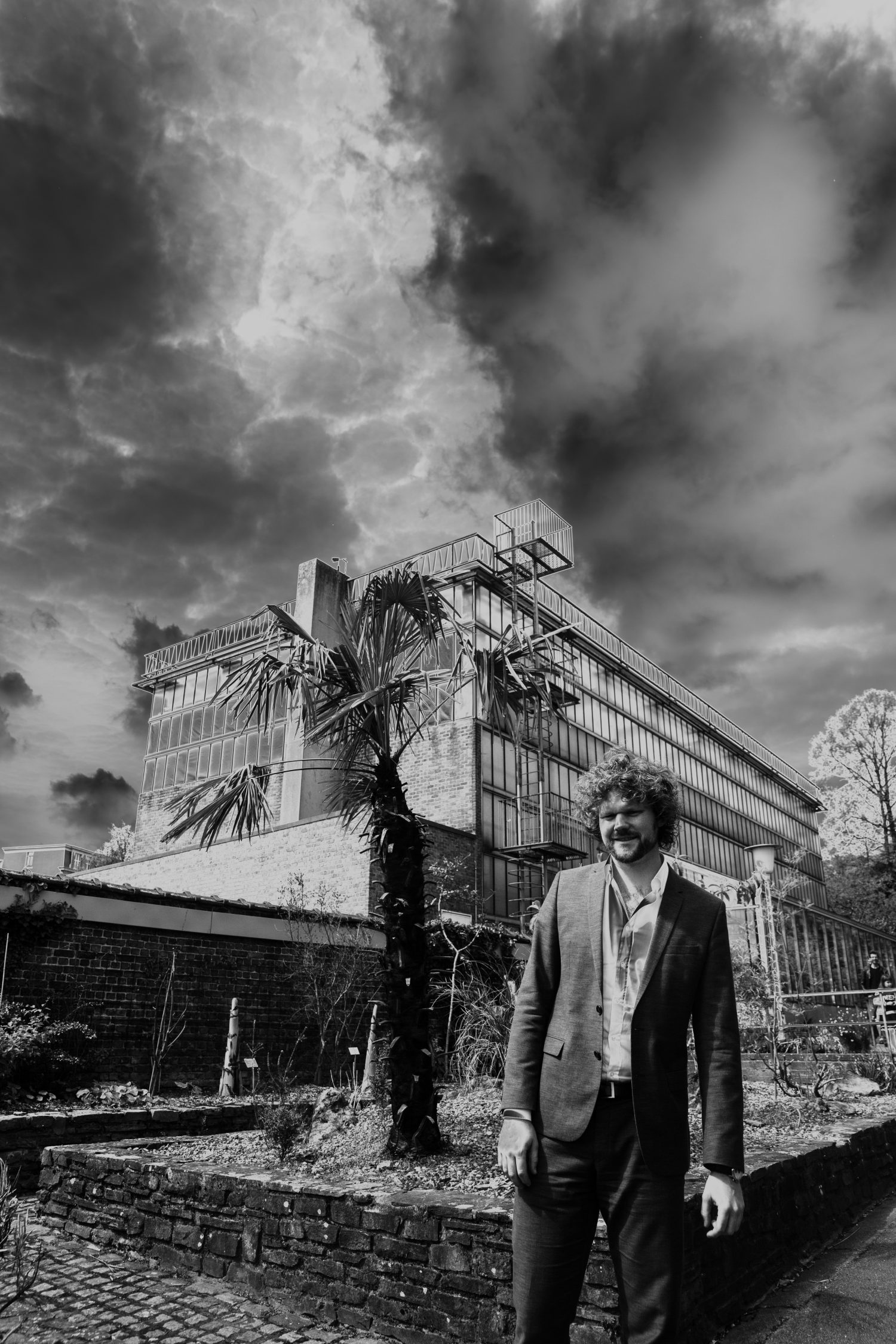
Mathew Jonson is set to launch a new label, titled Freedom Engine.
The first release of the label will be a remix package of his “Decompression” track.
“Decompression” was first released on Minus in 2004, and to celebrate 13 years since its release, the Berlin-based Canadian has commissioned 11 artists to remix this classic split over four releases.
The first EP of the series features remixes from dBridge, Konrad Black, and Nathan Jonson. It lands on June 30, with more “Decompression” remixes by Seth Troxler, Deadbeat, Mike Shannon, and Natalia Escobar to follow.
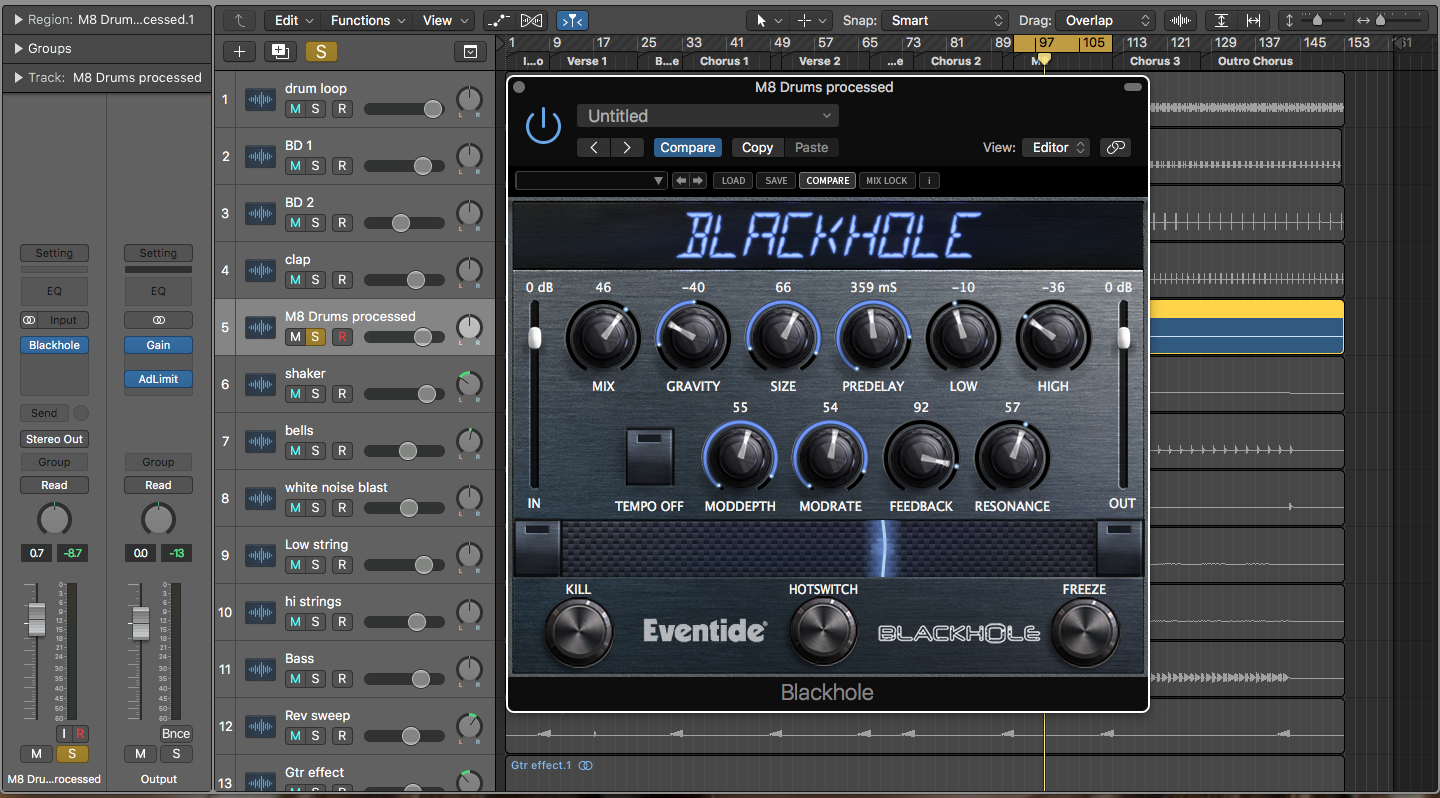
Blackhole originated as an algorithm in Eventide’s DSP4000 and H8000 hardware processors. The plugin allows its users to create reverbs without the constraints of reality, adding mind-bending drones and special effects, as well as being useful for highlighting key instruments or a backdrop for your mix.
In the above video, Point Blank’s JC and Carly run through the features and show some examples of its use. You can find more about Point Blank’s course here.