20 Questions: Bruce

Following a storming barrage of kicks and whistles on I’m Alright Mate via Timedance, lauded sonic explorer Bruce (real name Larry McCarthy) recently debuted on Hemlock Recordings with the Before You Sleep
 EP. Bass-driven yet melodic, dense and percvussive, the three-tracker was a perfect encapsulation of Bruce’s style: an abrasive, forward-thinking take on traditional techno. Indeed, all his previous material, which has been shared via some of the UK’s finest imprints—including Hessle Audio and Livity Sound‘s Dnuos Ytivil—evidences an immensely gifted producer with a drive to push boundaries, both sonically and aesthetically.

Now based in Bristol, the city where he grew up, Bruce’s profile continues to grow—much down to the maturing nature of his releases and an increasing number of DJ bookings. “”[2016] was a year that best laid the foundations of where I want to sonically reach out to in the near future.” With this in mind, XLR8R sat down with him to ask him some questions about production, inspirations, and just about anything else.

1. Where were you born and raised?

Within the home counties outside London, in a small town called Chesham in Buckinghamshire—at the very end of the Metropolitan Underground tube line.

2. You now base yourself in Bristol–a city with a rich musical culture. Do you find this an inspiring place to live? How does this influence the music that you make?

Most definitely. Living in such a culturally vibrant and localized city has facilitated my work hugely. Like any city, there is a hell of a lot of talent. But from my experience, what makes Bristol special is how proud, welcoming and auspicious it can be.

3. Did you have any musical training as a kid?

Yeh, I was a right posh boy—I sung in the choir, learned cello and classical guitar. But generally, I feel when it comes to what I write as Bruce, the actual relevant musical training comes from discovering/rinsing/sharing music you love, rather than musical theory. Although given I could never read music and failed my music theory multiple times, such a response is to be expected from a grade five dropout!

4. What was the first record you ever bought–and what music did you listen to growing up?

Probably the CD single to Liberty X Just A Little Bit. Yeh, I know—legendary tune. I had a pretty standard music taste which developed naturally for an early ’00s kid. There was help from my parents along the way: Mum listened to Jazz/Soul FM along with Seal, Alicia Keys, and Artful Dodger; Dad played Jimi Hendrix, David Bowie, and Moby. But I was an angry “misunderstood” little shit for the most part so confided in nothing but rock/metal for a while, most of which went on to inform the music I wrote/played in bands. When I started going to parties and getting drunk, I got into R&B, hip-hop and nu rave dance music. But nothing very cool or exciting until I discovered the “underground.”

“I didn’t really properly get into electronic music until the later, uglier years of dubstep. It hit the six form study rooms at my boys’ grammar school like a fucking storm.”

5. When did your fascination with music production begin?

I didn’t really properly get into electronic music until the later, uglier years of dubstep. It hit the six form study rooms at my boys’ grammar school like a fucking storm. Everyone was crazy for it as it felt so new and exciting. So, realizing I could get hold of the software to give making it a go, I spent all my lunchtimes inside the music rooms tinkering on awful music.

6. When did you begin going to clubs?

When I was 16/17 I went to these underage nights at super clubs like Matter and Fire in London. There was no alcohol served and I lived outside of town so had to stay up till the first train home the next morning. I was such a goodie-two-shoes that drugs weren’t even an option so I used to spend a few moments at the entrance every time, explaining to the bouncer that I wasn’t taking the piss and if he wouldn’t mind, “I would like my Lucozade energy tablets back because Benga has just dropped “Night” and the place is going off!” I was oblivious to how sober I was when I saw Benga, Skream, DJ Hype, Chase & Status all in their prime. The step up after that was Fabric, which obviously blew my mind. It finally made a lot of sense of things…

7. What was the first piece of studio software/hardware you bought?

My laptop, I guess!

8. When did you produceyour first ever track–and did it compare to the music that you make today?

Well as I mentioned before, I spent loads of time making stuff but had absolutely no idea what I was doing for ages and didn’t take it very seriously. By 2010/11, my sound was slowly becoming informed by “post-dubstep,” and things started coming together. It was around that time that I wrote a track called “Through Her Window” which I consider to be my first properly finished track. It’s funny how well it’s survived over time but I then didn’t write anything nearly as good as that until I got to university a year or so later.

9. Where is your studio and what is your setup today? What is your favorite piece of studio gear currently?

My “studio” is in my bedroom and it’s my laptop and an awful MIDI keyboard. It’s been that way since day one. I’m very much of the attitude that “if it ‘ain’t broke, don’t fix it,” and I’m happy working completely in the box. My beloved KRKs did actually break recently though so I’ve recently upgraded to a pair of Focal Solo Be 6s which are tasty as fuck and one hell of an upgrade.

” I am pretty much one hundred percent samples, of which I source from vinyl I’ve bought or music sources that I find around me.”

10. You’re known for this dense, percussive sound. How clearly are you able to produce the sound/sonic vision that you have in your head?

I’ve got a pretty stupid imagination. That helps. Sometimes I have tune ideas that are almost cinematic in how vivid they are in my head. But, usually, those visual, mental ideas only inform the production rather than defining it. I am pretty much one hundred percent samples, of which I source from vinyl I’ve bought or music sources that I find around me. The origin or musical/cultural context of those sounds occasionally inform the tune but in most cases, it usually manifests itself from the richness or sonic quality of the samples.

11. You keep a low profile despite an ever-growing fanbase. Is this a conscious decision?

Do I? Well everyone knows how lame social media pretty is and I’m pretty old fashioned when it comes to sharing culture. Plus my humor doesn’t work well with a character limit and I rarely check my spelling after giving little care to my typing so it’s probably for the best.

12. Do you perceive what you make as club music?

Pretty much, yes. It’s 2017, so I reckon at this point the boundaries of what is/isn’t club music are well and truly broken. But at the end of the day, shit still needs to bang and make people boogie, even if it’s very slowly and with a tear/fear in their eye. So I tend to overlook typical dance music requirements in favor of techniques that are better at translating emotion and ideas through sonic design that fucks with people’s expectations. In many cases, this means the music is hard to define and transcends the context it was intended for but I’d say that’s just a natural coincidence.

13. Talk us through your studio processes: are most tracks conceptualized in your mind or the result of spontaneous jamming–and how long do they take to complete?

Like most people working in the box, sometimes it takes weeks, consciously battling with an idea that get’s redrafted countless times. Other times my conscious thought will be totally switched off and the music almost writes itself. Like I mentioned before, I’m all about the samples, and I like to capture sounds that fuck with their instrumental definition. Through this process, I’ll attack impulses and spaces that can be easily manipulated to work as gestures and textures in somewhat unconventional fashions. Once I start manipulating the sounds it’s just a case of pushing them as far as they can go until something relevant comes out.

14. How have your production techniques evolved over time?

My core processes haven’t really shifted a great deal since I’ve begun. So over time, it’s just been a case of becoming more aware of what I’m doing, both technically and contextually within the current movement of UK dance music. Performing has been a major influence, especially when I realize how much of a fucking pain my “creative,” and “unconventional,” music can be to mix in the club. But I’m a soppy git, and my music almost always comes from my situational, personal mindset. So I guess whilst my end goals haven’t changed a great deal, my music has just matured much like I have over the years!

15. Your first release came in 2014 on the Livity Sound off-shoot, Dnuos Ytivil. How did that release come about— where did your relationship with the label come from?

Just through being a big fan of the label. I simply sent Peverelist tunes, hoping he’d get back to me and one day he did!

“I also need to stop partying so much and as hard because I’m not recovering as quickly as I used to!”

16. Since then, you’ve maintained a steady stream of releases–more so in 2016. How much time do you spend in the studio per week?

It’s hard to say as I go through patches of writing nothing and then writing solidly for short amount of time. In the most part, I generally work best to briefs or targets and thrive under pressure. I’ve only recently quit my day job and gone full-time music so I want to use the time to start writing more naturally but I’m yet to properly routine myself. I also need to stop partying so much and as hard because I’m not recovering as quickly as I used to!

17. 2016 was a particularly big year for you–with releases on Hessle Audio, Idle Hands, and Batu’s Timedance. Is that the year where you felt most assured of your sound? How do you reflect on this year?

All those tracks came from different places, both in a literal and emotional sense: “Petal Pluck” off the Hessle release is a tune from 2013; The Trouble With Wilderness release is focused entirely on the breakdown of a relationship I was in; Im Alright Mate‘ on Timedance is specific to the time I spent back at my parents’ house after university. So other than finding a home for creative ideas, indebted to both recent and former specific periods of my life, it was a year that best laid the foundations of where I want to sonically reach out to in the near future.

18. Your latest release is called Before You Sleep<?i>. What’s the story behind the name? Is there a story behind most of your track names?

Almost every track has a story. Being the prick I am, I’ve always revelled in boring the hell out of those around me by indulging into the in-depth meanings to my track names SO I’M SO GLAD YOU ASKED: “Before You Sleep,” is about evading sleep in favour for losing oneself in the lonely and soulless depths of the internet. As the twilight hours bring on inevitable and irrational melancholy, you try and escape the inevitable self-loathing through suspending your consciousness with escapism as you ruminate on your existence. But over time, your ego and insecurities come into focus and you realise this whole process had no real positive gain so you give into fatigue and set your mind to reset for the morning.

19. What’s next for you?

Getting over myself and going to bed at a sensible hour.

20. Having released several EPs, do you intend to work on an LP soon?

You’ll have to wait and see!
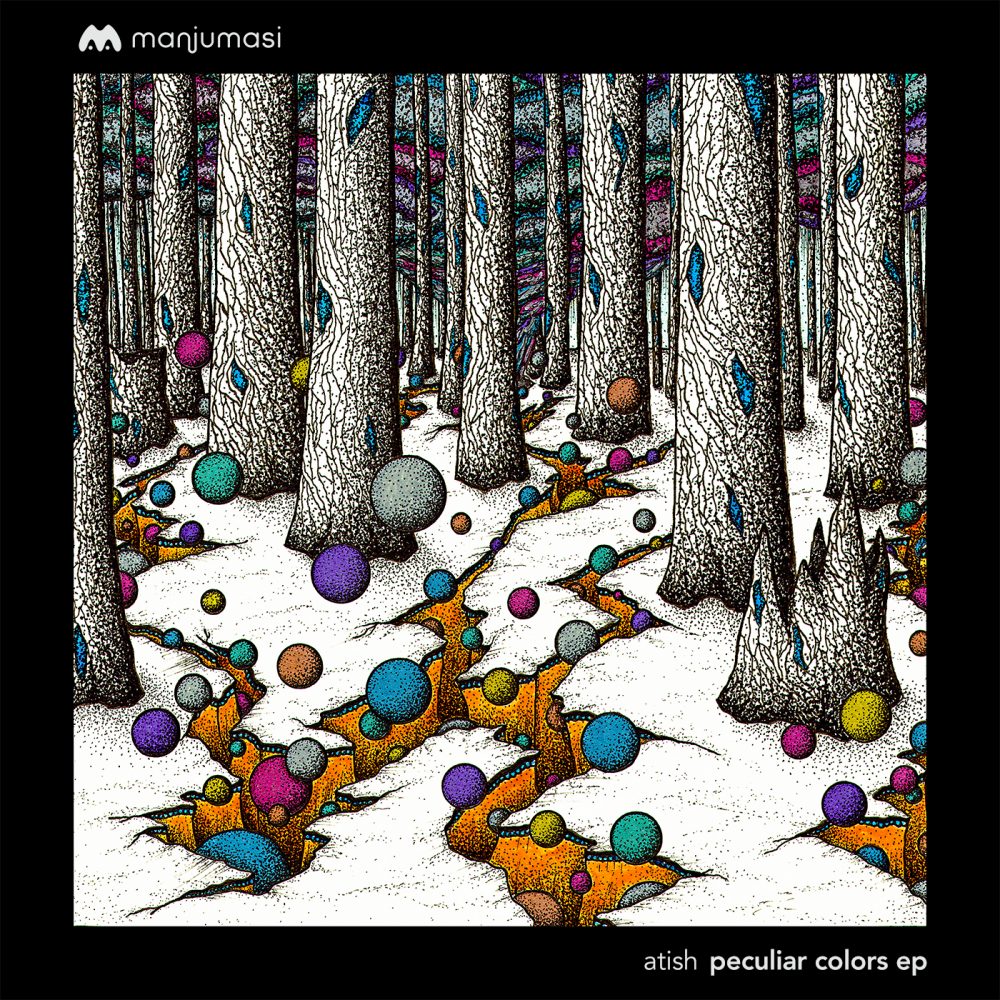
Atish ‘Twiddles’

At the end of last month, Atish released his debut solo EP on Manjumasi Records, the label he co-founded alongside Mark Slee.

Peculiar Colors will be the label’s fifth release, following efforts from Mark Slee, Brian Cid, R. Fentz, and Bengal. Alongside the two originals will be remixes from Lee Jones and Dance Spirit. Like the records preceding it, Peculiar Colors is a deep and melodic outing that furthers Atish’s reputation for emotive dancefloor tunes—a reputation built from his elegantly composed DJ sets.

In support of the release, Atish has offered up EP cut “Twiddles” as today’s XLR8R download. True to form, “Twiddles” is a stunning concoction of swirling synths and chunky club-based percussion, a perfect cut for the early morning hours on the dancefloor.

You can pick up “Twiddles” via WeTransfer below, with the full EP available to purchase here.

Twiddles

Premiere: Stream Huxley Anne’s Debut LP in Full

Los Angeles indie imprint and Alpha Pup Records affiliate Doom of Doom will release the debut album by Huxley Anne.

Titled Ilium, the album followed a period of creative stasis, an extended time in which Huxley Anne found herself “unable to feel emotion in the act of observing, interacting, and creating art.” The tip of the creative scale was the result of an encounter with Cy Twombly’s 1960s painting “Ilium (One Morning Ten Years Later)” at LA’s Broad Museum. The painting resonated deeply with Huxley Anne, as she explains: “…in one sublime instant I was overcome with raw emotion, tears bleeding from my eyes with joy and pain and beauty and melancholy and death and desire and the truest feeling I’d been searching for over the past five years. I could feel emotion again and the intensity was overwhelming.”

The resulting creative outpouring makes up her debut album, an engrossing body of work that straddles the line between darkness and light and touches on drone, industrial, ambient, and the beat-driven pastures of her LA base. On the album, Huxley Anne commented:

Ilium is a record of the dark, beautiful, moving things I destroyed—the contours of sound shaping themselves as I passed from a state of ghostly apathy to a state of subliminal passion—a record of the depths of woman.”

Ilium will be released on limited edition cassette and digital platforms tomorrow, April 14. The album can be pre-ordered here, with the full LP streaming below.

Weekly Selections: Coachella, Rhonda: Queen of the Desert, Delano Smith in LA, Paradise Island Festival

This weekend XLR8R heads out to Palm Desert for the first weekend of Coachella Valley Music & Arts Festival. As with every year, Goldenvoice has again organized a killer cast of artists to perform across the polo grounds’ seven stages, with headliners Radiohead, Lady Gaga, and Kendrick Lamar at the top of the bill for each night, respectively. On Friday, make sure not to miss booming DJ sets from Floorplan and Bicep in the Yuma Tent, before heading over to the world premiere of Richie Hawtin’s new audiovisual show, ‘Close,’ at the Mojave Stage. On Saturday, catch Ben UFO perform in the Yuma Tent before the three and a half hour back-to-back-to-back marathon with Four Tet, Floating Points, and Daphne. Moderat, Nicolas Jaar, and Classixx on the Mojave Stage should also be a highlight. And on Sunday, don’t miss Kaytranada at Sahara before heading to catch Ostgut Ton mainstay Marcel Dettmann in the Yuma. Take your pick to finish off the weekend; Sasha and Tale of Us in the Yuma, Justice at the Outdoor Theatre, or Kendrick Lamar at the Coachella Stage. Click here for more information about Coachella including the full lineup and schedule.

A Club Called Rhonda will also head out to Palm Springs this weekend to host their annual Coachella after party. Rhonda: Queen of the Desert, which will take over the Palm Springs Air Museum for an all-night extravaganza, is set to feature a highly anticipated back-to-back performance from two of Germany’s finest electronic exports: Diynamic boss Solomun and Dixon of Innervisions. West Coast legend Doc Martin will also play the party. More information and tickets can be found here.

And for those not heading out to the desert this weekend, Nuit Blanche has coordinated a stellar lineup for a proper warehouse gathering on Saturday night in Downtown LA, featuring an extended headlining DJ set from Detroit dub techno legend and Sushitech Records boss Delano Smith. Also on the bill is the up-and-coming Montreal selector Amir Javasoul, who was recently featured in our Get Familiar feature series. Tickets to the party and more info about Nuit Blanche can be found here.

Paradise Island Festival’s debut edition will also take place this weekend in Koh Samui, Thailand. The festival is the latest event from London-based concert and festival promoters Soundcrash, and boasts a diverse lineup including hip-hop royalty The Pharcyde, drum & bass pioneers Goldie and LTJ Bukem, Krafty Kuts, Maribou State, DJ Kentaro, and many more Thai and international artists. Tickets can be purchased via XLR8R by going here.

FRIDAY APRIL 14

Continuum | Mumdance presents: Special Guests TBA, Shed + more

Scru – Birmingham, West Midlands, United Kingdom

April 14 @ 10:00 pm – April 15 @ 6:00 am

Cyril Hahn

Good Room – Brooklyn, NY, US

April 14 @ 10:00 pm – April 15 @ 4:00 am

Maya Jane Coles/ Guada FK/ Lauren Flax at Output

Output – Brooklyn, NY, US

April 14 @ 10:00 pm – April 15 @ 6:00 am

Rick Ross Album Release Party At Club Lust NY

Club Lust – brooklyn, NY, US

April 14 @ 10:00 pm – April 15 @ 4:00 am

Birgit in Wonderland

Birgit – Berlin, Germany

April 14 @ 11:00 pm – April 16 @ 12:00 pm

Silent Special w/ Clouds, JoeFarr, 138 and more

RADION Amsterdam – Amsterdam, Noord-Holland, Netherlands

April 14 @ 11:00 pm – April 16 @ 7:00 am

14 Bruce, Viers, AceMo

Sunnyvale – Brooklyn, NY, US

April 14 @ 11:55 pm – April 15 @ 4:00 am

SATURDAY APRIL 15

Wicked Delight x Dr. Fresch present The Prescription Pool Party

the seguaro palm springs – Palm Springs, CA, CA, US

April 15 @ 11:00 am – 6:00 pm

Paradise Island Festival 2017

The Beach Bar – Koh Samui, Surat Thani, Thailand

April 15 @ 12:00 pm – April 17 @ 2:00 am

Easter Kids Party Cruise

SKYPORT MARINA CRUISE – New York, NY, US

April 15 @ 1:00 pm – 4:30 pm

SEQUENCE.415_Patrick Russell (The Bunker, Interdimensional Transmission)

Washington DC TBA – Washington DC, DC, US

April 15 @ 10:00 pm – April 16 @ 6:00 am

Back2NewYork Bday Celebration | Danny Tenaglia/ Taimur Agha

Output – Brooklyn, NY, US

April 15 @ 10:00 pm – April 16 @ 6:00 am

AKA DJ Seinfeld

Patterns – Brighton, United Kingdom

April 15 @ 11:00 pm – April 16 @ 4:00 am

AWAY

://about blank – Berlin, Berlin, Germany

April 15 @ 11:55 pm – April 16 @ 10:00 am

SUNDAY APRIL 16

Alter Ego Night

RADION Amsterdam – Amsterdam, Noord-Holland, Netherlands

April 16 @ 9:30 pm

Sundays in The Panther Room | Ale Sab/ Rama/ Nico

The Panther Room @ Output – New Yotk, NY, US

April 16 @ 10:00 pm – April 17 @ 4:00 am

Horos ‘Kthon’

Catch Recordings head on to release number 11 with a new four track EP from Horos, titled Labyrinth.

The label describes the release as “a knowing mix of house, techno, and bass-heavy styles that is fresh and exciting.”

Ahead of the release, “Kthon” is available to download below, a deep and sludgy cut with scurrying little sounds and percussive hits.

Tracklisting:

01. Sea Of Crete
02. Ethereal
03. Kthon
04. Descend

Kthon

Andrés Remixes Laroze

Detroit legend Andrés has remixed French producer Laroze for Flux Records‘ second release.

It’s turning out to be a big year for Flux, having just celebrated their sixth birthday, events in Leeds and at London’s Corsica Studios, and the launch of their record label with Shedbug’s Afterglow EP. The next release, which includes three original tracks from Laroze, also includes a remix from Detroit’s Andrés.

The EP, according to the label “exudes an effortless ’90s revival feel, drawing upon classic US house and acid as the basis for its form and style.”

Tracklisting

01. Loin Des Yeux
02. Acid Devotion
03. Loin Des Yeux (Andrés Remix)
04. Good Inside

Loin Des Yeux EP is scheduled for May 8 release.

Real Talk: Lawrence English

Lawrence English is an artist who deeply questions everything around him. His child-like fascination with dissecting life, from its unnerving questions to the sounds surrounding us on a daily basis, permeates the fabric of his entire artistic existence—one that he has unwaveringly pursued via sound, film, writing, live performance art, and curation. Look at 2013’s ‘Songs Of The Living,’ for example, a collection of field recordings collated over a decade and a half and taking in sonic stories as diverse as Cormorants flocking in the Amazon or Australia’s Daintree Rainforest at night; or ‘A Young Person’s Guide To Hustling in Music and The Arts,’ an essay in which English explores surviving and creating in “one of the most underpaid areas of creative enterprise.” His latest album, ‘Cruel Optimism,’ which is named after and inspired by Lauren Berlant’s book of the same name, also attempts to inspire and unearth questions on “how power consumes, augments, and ultimately shapes two subsequent human conditions: obsession and fragility.” This all-embracing approach and enduring dedication to the arts is refreshing in a society that, more often than not, looks for instant gratification.

Outside of his solo works, English has been a bastion of the underground for well over two decades—he started his first label and zine at 15 years-old—the main outpost of which is Room40, a multi-format label English started in 2000. In its 17-year run, Room40 has been home to the works of artists such as Grouper, Bee Mask, Ben Frost, Tujiko Noriko, Tim Hecker, Norman Westberg Rafael Anton Irisarri (a.k.a. The Sight Below), and Function.

For the latest edition in our Real Talk series, English take a fine tooth comb to his artistic processes, what lead to his sprawling body of work and his latest album, and society’s need for DIY culture.

New Futuring: Mined From The Past

I’ve never been the kind of artist who arrives at music directly. When I speak to friends and colleagues who make work I am often dumbfounded by the ease with which music seems to flow out of them. This is quite honestly not the case for me and I have had to come to terms with the fact that music for me is relational. By this I mean that I arrive at music through often very divergent journeys; pathways that might seem unusual or plainly unnecessary are, for me, part of the deal when it comes to making work. In some ways, this is why I have so readily taken to field recording amongst other practices—the setting and the sense of place in which the sound unfolds begets a certain bounded understanding I find invaluable. So, with this in mind, I have recently been considering how it is I arrived at Cruel Optimism and in the process of doing so, I have had the chance to trace out some of the territories that sit underneath the more pressing and contemporary concerns addressed in the material content of the record.

I have to start this piece by saying I am incredibly fortunate and privileged to have enjoyed a life that knows a richness of love and possibility that I do not take lightly. I come from a very supportive family and now have one of my own. I live in a country that still displays a great promise, even if some of the fundamental, historical underpinnings are deeply flawed; especially our relationship with the original inhabitants of this country. This is not to say that I have not had to face challenges and loss in my days, but it is to say that in doing so, I have faced these with great support from key people around me, a community of friends and family far and near, and through a background that softens out what might be much harder edges for other folks. I should also clarify that what follows is perhaps a reflection of my antipodean heritage, socially and geographically.

So, contemplating this question of what underpins some of the sentiments that lurk in Cruel Optimism, I’ve been struck by a realization that the world of today and the world of my mid teens feel deeply linked. The sense of heaviness and anguish that was present then appears very present again. The names may have changed, but the phenomenon that informs the concerns and suffering of everyday people seems to have become more readily perceivable at every level. What seemed like a fanciful dystopia 20 years ago is more tangible now. It’s as if the lessons of the 20+ years since that time have not been retained in any meaningful way and, rather, we’re just in a quickening downward spiral, towards what I am unsure. Let’s be frank, there’s nothing new about this inability to retain learnings or, more pressingly, meaningfully process them at a societal level. Progress, for the most part, moves so very slowly, it’s perhaps the most persistent feature of the human race. What is surprising though is, in light of the developments in technologies of communication and the possibilities of accessing information, we haven’t seen a more successful campaign in progress. We haven’t realized the promise that access to information suggested, largely, I argue, because we’re not asking the best questions of that information—or any questions at all. We’re not aspiring to Neil Postman’s translation of information into knowledge and then wisdom. Rather, it all just appears too overwhelming, the access to information is a prison of excess, rather than a portal of liberation. Some argue most people are largely disinterested and or that they are subscribing to the ‘I’m alright jack (pull the ladder up)’ attitude. I’d like to think the later is reflective of only a few around us and I don’t agree that people are disinterested, distracted yes, but disinterested, no. It’s hardly surprising, distraction is paramount; there has never been more choice of things to steal our time away from us. It’s a smorgasbord so epic that gluttony is encouraged, if not enshrined. This smorgasbord was not always present though, and my teenage years growing up in a city/country which was still a long way away from the rest of civilization is a testament to that.

The Present Past

If I was to trace back the roots of how it is I came to the modest ontology I have crafted for myself, I think the local and geopolitical conditions of my teenage years resolutely formed the essence of how I choose to navigate the world today. It shapes a majority of the work I do; whether that be through a politics of perception as it relates to listenership, my installation practice, or my performance work, which I consider, more and more, is related to bodily effect and the implications of collective gatherings and public assembly offered through music. When I was 14, Australia was in a significant economic downturn. It began to suffer its worst recession since the great depression. Somehow, the childhood glimpses of adult life I had witnessed, which looked hopeful, joyful, and full of promise—if not gently excessive—seemed to be engulfed by a horizon of upwardly mobile precarity.

At the time, I did not know what precarity was; in fact, it wasn’t readily theorized as a thing until more than a decade later. All I knew, or perhaps, all I was being told, was that the world that rode high on the bubble of 1980s economic possibility had vanished. The ideas of employment that were taken for granted were gone, as were so many of the fundamental social beliefs, institutions, and structures that had served us to that point. The promises made by those holding political power across the late 1970s and into the 1980s were unable to be realized beyond the moment of their utterance. That brief honeymoon period—perhaps best summarized by the attentive documentation of Eaton Ellis’s American Psycho and through the conspicuous consumption that somehow made ‘Lifestyles Of The Rich And Famous’ a realized proposition—was gone. We were being kicked out of the house by late capitalism and being taken for everything we had left in our pockets by the relentlessness of neoliberal policy agendas. Okay, sounds a bit melodramatic, but hell, that’s how it felt; I can’t think of the number of times I was told I had no future as it was known by the generations before me in those years of the early 1990s. What lurked ahead was a void, an uncertain, abhorrent void, not dissimilar to what many friends are presently describing their day to day feels like.

This was a current fuelled by a sense of determination that small actions could have large ripples, even if it took some time for those ripples to gather energy.

So it was in this foggy zone of dimensioned possibility that I started to become. Beyond the macro sense of dread, however, there was an extraordinary sense of passion and hope running as a sub-current, buried somewhere in the deepest trenches of this otherwise bleak sea. This was a current fuelled by a sense of determination that small actions could have large ripples, even if it took some time for those ripples to gather energy. I think back to Riot Grrrl, for example, here were a group of young women (and some men too) pushing for new ways of considering gender, equity, and more, through a passionate musical manifesto. It was regular people living regular lives striving against the status quo. They were hungry and determined, politically engaged and willing to action theory through practice. Not just that, they made amazing music, too—experiencing Bikini Kill in Brisbane still stands out as a highlight of that decade. It was inspiring and invitational in a way that I think offered a huge hope to that generation. The ideas of DIY were a central organizing framework for this methodology of radical and, in other scenes, not so radical dismantling of normative hegemony. It was a place in which everyday people, like you and me, could actualise things. Cumulative things. It was a dual recognition that artists, through their voices, had the capacity to reach out to others and affect them and, simultaneously, that the gathering of bodies in spaces had a value and power that was both subtle and radical. We could exchange ideas, find comradery, seed friendships, and have the chance to learn that the world was not just how we lived it—that other people lived in ways that weren’t like us, and that those ways were just as valid and valuable as our own way of being.

It was this underworld that I dived into, albeit from the bottom of the world and lived largely through a PO Box for many years. As you can imagine, this vista of culture did not reveal itself immediately, the world at that time did not allow that. Instead, it took several years for me with my hand written and completely personal fanzine about the music and other stuff I was interested in to find a way into a world that still, to this day, fuels and inspires me. The connections were elegantly random at times. For example, I’d read about a fanzine covering industrial music in the back pages of some import music magazine, so I’d write them and organize a trade, and when the issues arrived, I discover the writing of JG Ballard who appeared alongside some interviews of musicians I was interested in. Another literary example is when I came across Naked Lunch through an artist talking about it in an interview, and before long was headlong into the cut-ups that William S. Burroughs and Brion Gysin pioneered—still possibly one of the greatest cultural breakthroughs of the 20th century. Through whatever means they could, usually fanzines and cassette trading lists, people like us shared the things that inspired them and that challenged them, with each other.

Through this process, slowly but surely, a way of understanding the world as something so much more than the macro-political void-scape that had become the mainstream reading of the world, began to open out to me. Now, this did not deny the growing precarity unfolding around me as my teenage years progressed into my early 20s. It is to say, however, that I could become better equipped; not just to register these issues in a more informed and considered way, but I could start to think about how I wanted to work against them. I could consider the questions the critical theorist Lauren Berlant outlines in her book Cruel Optimism from which I take the title for my latest work. I wasn’t focused on the fantasy objects, as Berlant titles them, I recognized the means through which these objects were in fact traps, lures to keep me distracted from what was really meaningful, to me, in my life. It was as if the more diverse my interests got, the more open I became to registering the vibrations and murmurings of the world, the more focused I become on realizing the humbly peculiar life I wanted to lead—a life that shunned the narratives people had constructed for me and tried to sell me in my formative years. It was a wonderfully unusual inverse logic that I think many people, like me, reveled in during those years.

It’s around this time that I recognized the power of DIY at all levels. Rooted in punk and then exploding in contest to the mainstream during that period of the early 80s economic boom, this ethic of making things happen as best you could under the circumstances at hand because you believed in their worth was a fundamental realization for me. My time making fanzines and releasing music in the early to mid-1990s was, I realize now, the end of an era. In 1996, I had a Hotmail email address and the web started to shift this way of engaging that up until that point had worked on a different scale of time and, I’d argue, commitment of self. Don’t get me wrong, from that point on it was wonderful to have increasing access to more and more curious materials and people through the web. But in saying that, I count myself fortunate as I had already undertaken an internship, if you like, of how to sort through the various caves and labyrinthine passages that were those underground networks. People were my torch and time unfolded in an almost narrative sense; the web, by contrast, seemed to deny some of those critical functions. And then, somehow, it all seemed to get more and more busy, the echoes of the ways of being that had fuelled those periods of interconnectedness gave way to a more amorphous and then more segmented and splintered engagement. The chance discoveries of those strange and entirely personal fanzines and Xerox art projects seemed less possible. The internet offered the chance for everything (and it still does and let’s be thankful for all the amazing work that it brings to us daily), but to actualize that possibility proved more complex than any of us had initially imagined.

When you examine the immediate cultural legacies of punk and the politicized voices of 1980s hip hop, contemporary cultural phenomena do seem somewhat dwarfed, if not a bit muted.

The Future Present

So how does all this connect me to today? In the wake of Mark Fisher’s untimely and profoundly devastating passing, I find myself returning to his writing—and to what his k-punk blog represented as a recurrence of the experiences encountering fanzines and music writing in my teens. Fisher’s texts embodied the character and passion of the work I had first encountered as a teenager, he carved out a way of bringing together disparate ideas and interests and uniting them through a particular series of lenses. His writing was a provocation born of passion and offered serious consideration of materials often disregarded. I didn’t always agree with what I read, but it resonated with me and challenged me to consider criticisms and positions I might not necessarily share. It affected me and, in doing so, lingered in me.

This brings me to a point of this piece: in his book, Ghosts Of My Life, Fisher raises, through the use of Franco ‘Bifo’ Berardi’s phrase ‘the slow cancellation of the future,’ the crisis that is ever more apparent now. It’s a crisis of the value and relevance of the work we all undertake, as artists, as listeners, and as engaged human beings more broadly. A crisis about how we approach these increasing complexities that are the environments in which our works exist. Fisher himself summarized, “there’s an increasing sense that culture has lost the ability to grasp and articulate the present.” When you examine the immediate cultural legacies of punk and the politicized voices of 1980s hip hop, contemporary cultural phenomena do seem somewhat dwarfed, if not a bit muted. But I propose that the energy of their ripples functions differently and their immediate impacts are secondary to their potential to linger and resonate in ways unfamiliar and unpredictable. Perhaps this is a naive hope, but I argue it is more than that.

The medium through which these ripples move has shifted. They once vibrated exclusively through the tangible temporality of the world we can readily access through our senses, but now they have been repositioned existing more readily in the relatively new and unfamiliar zone of the web. As Tarkovsky—via the Strugatsky brothers—prophesized, we are all now a stalker in the zone, finding new temporal relations and wormholes of possible experience. The zone is a place we cannot readily know and it is never the same for long. With this in mind, I suggest we embrace these new possibilities for cultural resonance and exploration of the unknowns of this zone into the 21st century. I also suggest we collide them with the promise of what DIY epitomized. We need to remember the pleasures of point to point and remind ourselves not to be overcome with frustration and become paralyzed. I think the frustration can sometimes be a sense of powerlessness to change and address, in a wholesale way, the crisis we perceive around us. It’s an understandable frustration, but it’s critical to remember the macro and the hegemonic is not absolute of how we operate day to day, nor should it ever be. We are so much more than that. Sure, we feel its pressures, but we must push back against them and not let them mold us.

I feel more than ever that what we give of ourselves to each other and what we pursue, critique, and demand through our works has great value, symbolically and, in many cases, literally.

With this firmly in mind, we can look to situate ourselves in these emergent zones, borrowing the most valuable learnings of what DIY cultures before us proposed. This mode of interaction built doorways of thought, encouraged new senses of self to be realized, and built community one connection at a time. It did not seek to transform everything and it did not expect the changes to be instant. What it did produce, more precisely, was a quality of meaningful interactions between people that they could carry forward with them into the rest of their lives. It was a means of forging meaningful community and culture into the future—I have found this to be the case. I feel more than ever that what we give of ourselves to each other and what we pursue, critique, and demand through our works has great value, symbolically and, in many cases, literally. Every conversation we have, each work we create as artists, if imbued with agency and the desire to affect those around us, creates one of these doorways I’m speaking of. In the broadest sense, I feel Cruel Optimism is one such doorway. It is, amongst other things, a call to recognize where power is situated and how it is those structures can be reduced through various methods. Amongst those methods is an active pursuit of dismantling normative positions through the determined recognition of unity in diversity—or difference, for that matter—at its most fundamental and hopeful, as a means of recognizing the potential value of community; In Varietate Concordia.

I gently encourage each of you to become a stalker and to share your learnings of the zone with each other. Through whatever means we have at our disposal, in all settings, we must strive now more than ever to actively celebrate and embrace difference as a means of repositioning the power structures around us—the effects will not be instant, but they will be. It’s just a matter of us refusing to accept the slow cancellation of the future and moreover about us actively moving towards the possible futures we know are just beyond the horizon.

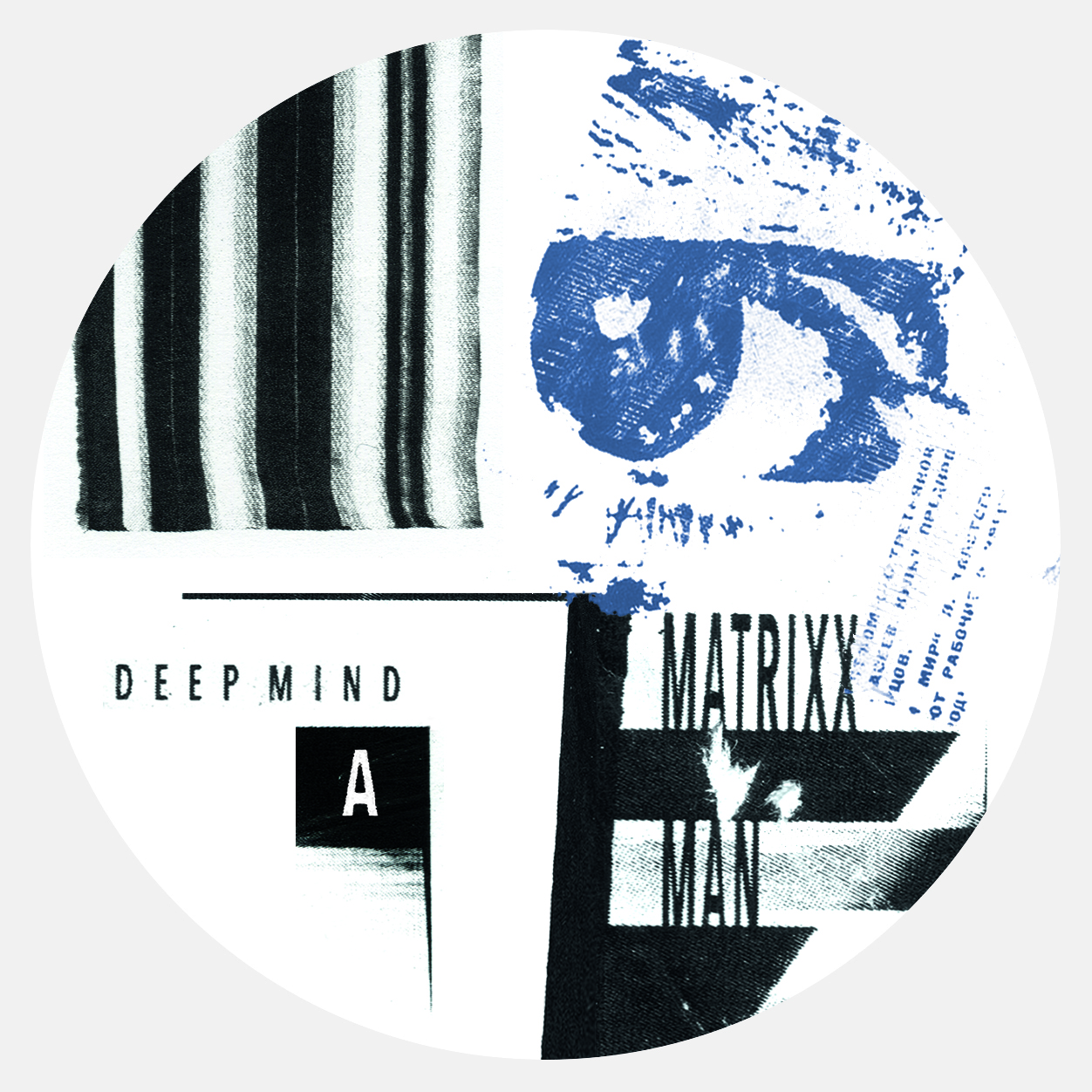
Henning Baer’s MANHIGH to Release Matrixxman EP

Charles Duff (a.k.a. Matrixxman) is set to release a new EP on Henning Baer‘s MANHIGH imprint.

Berlin-based Duff is best known for his work on Dekmantel and Ghostly International, and this is his first release on MANHIGH. It is the label’s third release and its biggest to date.

Tracklisting

A1 / 1. Deep Mind
A2 / 2. Polarity
B1. / 3. Beacon
B2 / 4. Beacon (Goner Remix)

Deep Mind EP is scheduled for May 15 release.

Brouqade Shares a Cut from its Forthcoming VA

Back at the start of the month, Brouqade kicked off its 2017 campaign with its 40th release, a VA that celebrates 10 years of Brouqade.

To give an idea of the label’s past, present, and future sounds, Brouqade’s 40th release arrives in three parts: BQD040.1 is a collection of remixes the label released during its early years, including Rhadoo’s remix of Pherox’s “Gabrielle,” Buck’s remix of Danilo Schneider’s “L’ecole,” and Laurine Frost’s remix of Dana & Nvelope’s “Flowers”; BQD40.2 features recently signed artist, including Vid’s “Camelie,” Oshana’s “Different Places, Different Spaces,” and Andrea Fiorito’s “Black”; and BQD40.3 presents new label signings with Giuliano Lomonte “Reflections,” Jorge Gamarra & Gulp’s “Valve,” Formas’ “Prisma.”

As a whole, Brouqade’s 40th release paints an inspiring picture of a label that has unearthed and pushed forward-thinking dancefloor tracks for 10 years now. More so, with the latest drop, BQD40.3, the label shows that its future is sounding as bright as ever.

Ahead of the mid-May release of BQD40.3, you can stream Formas’ “Prisma” in full via the player below.

Mule Musiq to Release Lake People LP

Japan’s Mule Musiq will release the second album of Martin Enke (a.k.a. Lake People), titled Phase Transition.

Phase Transition arrives after half a decade of strong EPs on labels including Krakatau Records and Rumors; while it was Permanent Vacation who handled the Leipzig and Berlin-based producer’s 2015 debut LP, titled Purposely Uncertain Field.

According to the label, the LP sees Enke shift towards “a focus on the essentials of electronic club music: sounds and groove, rough and playful interweaved with the aesthetic particles of techno.” It was recorded using “analog synthesizers, UAD, and other creative interfaces” and “bears the influence of deep house pioneer Larry Heard.”

Tracklisting

01. Frame Of Reference
02. Subsurface
03. Fabula
04. Mutual Isolated
05. Catharctic
06. Syuzhet
07. Spark Eroded
08. Delusive
09. Charlie Carlisle
10. Tomorrow’s Happiness

Phase Transition is scheduled for June 30 release, with clips available here.

Page 620 of 3781
1 618 619 620 621 622 3,781