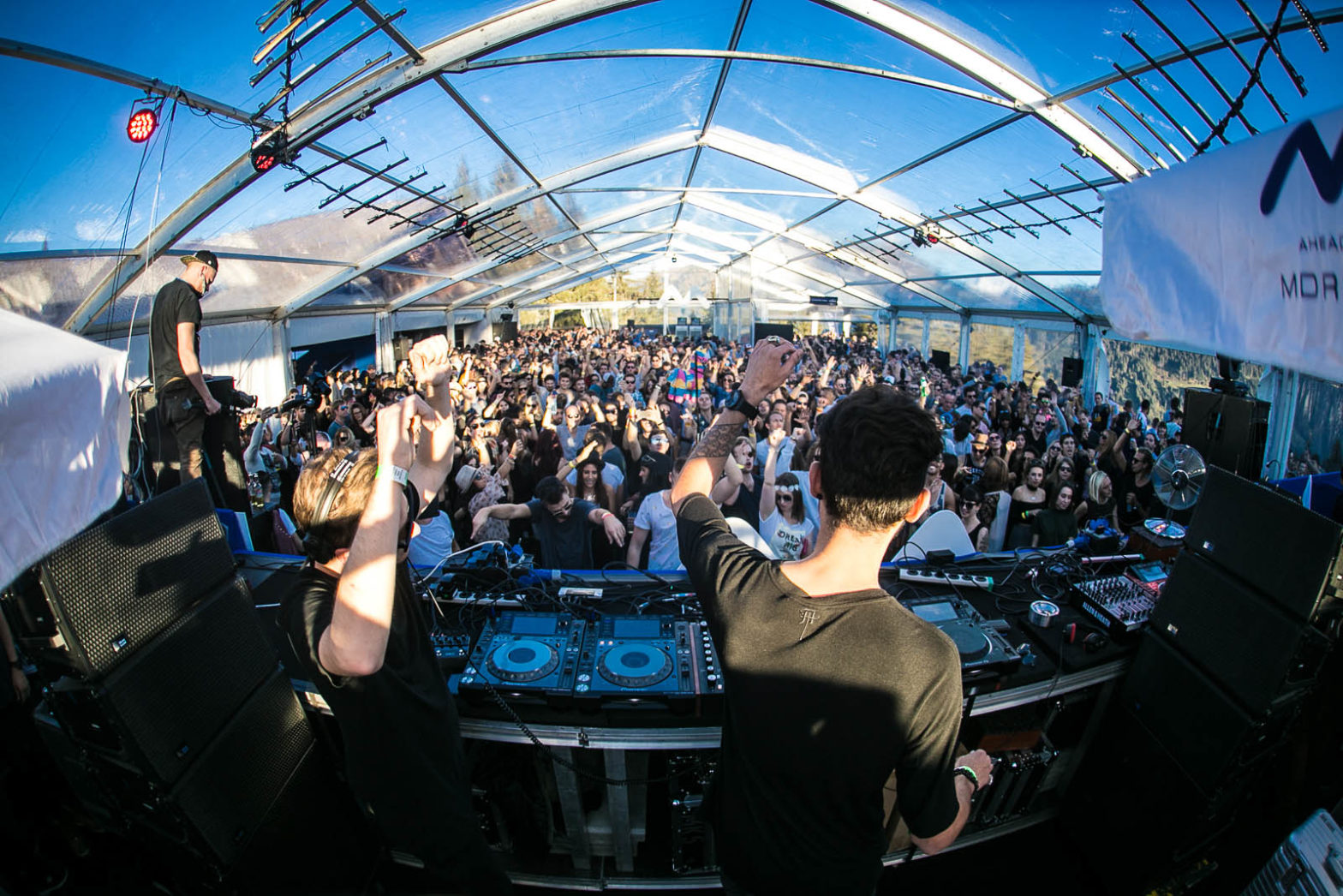
In The Studio: Christian Löffler

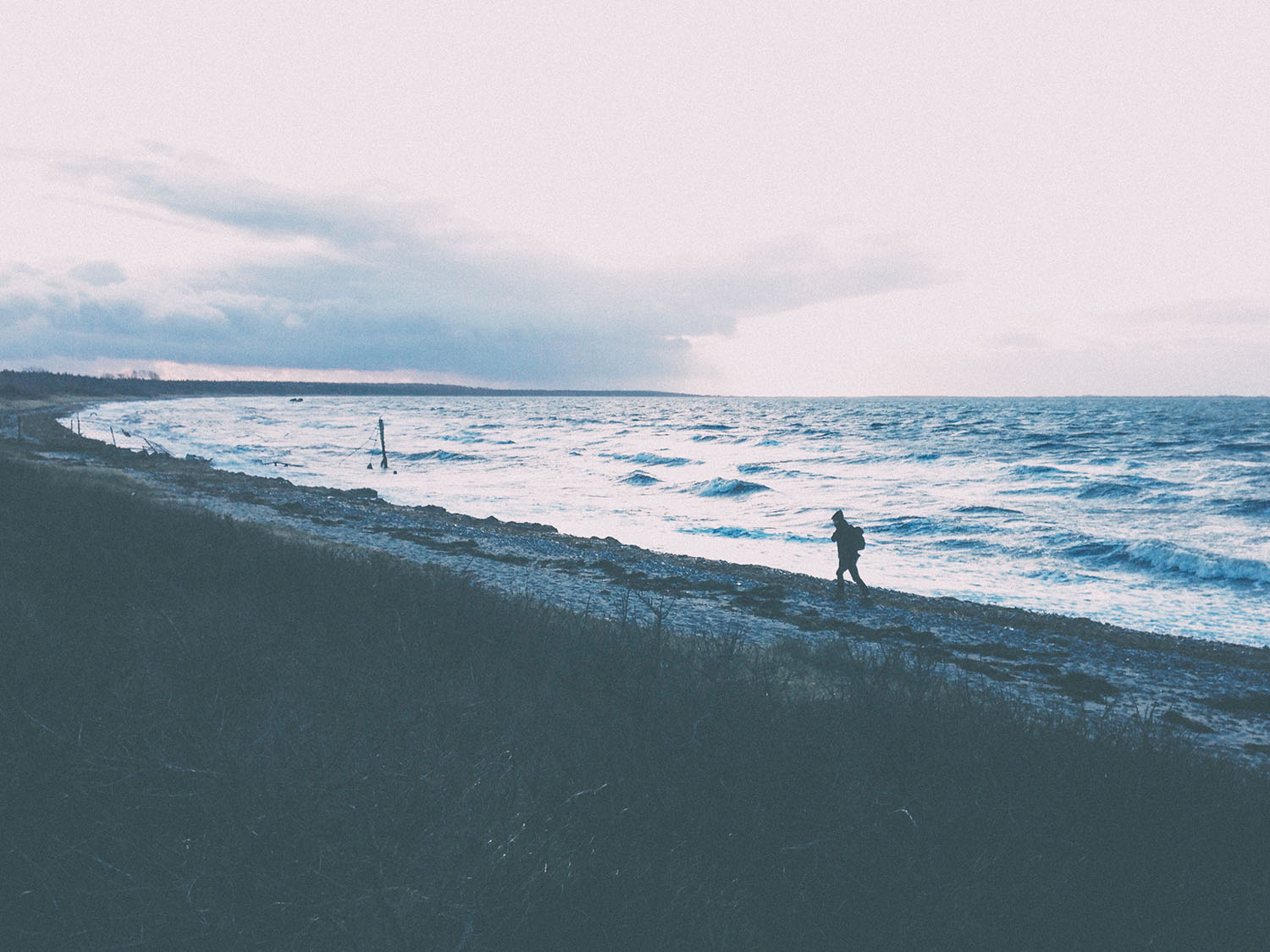
Nestled amongst a beautiful forest in an idyllic corner of Germany on the Baltic Sea, Christian Löffler’s calm demeanor and openly playful nature personify his home region. It’s an area in which Löffler has lived his whole life, soaking up its sounds and images and reinterpreting them, along with parts of himself, across a range of artistic mediums including music, painting, and photography. That art, however, paints a slightly different picture as to what’s on the surface; it’s drenched in hazy melancholia with subtle, gloomy-yet-euphoric undertones—a probable reflection of the tranquil solitude of the region.

The first taste of Löffler’s cloudy sonics arrived in the form of the Heights EP, released in 2009 on Ki Records, the label Löffler co-founded with his childhood best friend. Other than three EPs on c.sides, Just This, and 20:20 Vision, all Löffler’s work has been released via his own label—in the years since the 2009 debut, there have been four EPs, four singles, and a full-length album, A Forest. This tightly held release schedule—not to mention the family-focused network and undisturbed living—points to an artist whose single intention is the outpouring of art; the latest piece of which is Mare, the alluring A Forest’s much anticipated follow-up album.

Once the framework for the new album was set, Löffler retreated to a secluded cabin by the sea with a modest setup to mold it into a finished piece. The album would also be the first time Löffler would use his own vocals on a record, sitting alongside his longtime vocal collaborator Mohna, all of which points to an artist completely confident with his craft. Arguably, it’s his best work yet, a 17-track odyssey of endearing beauty and haunting soundscapes.

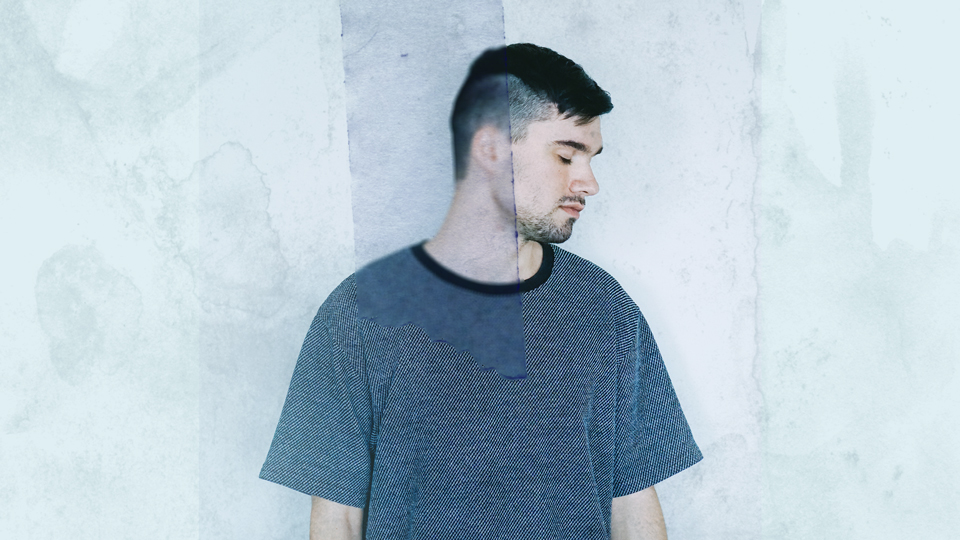
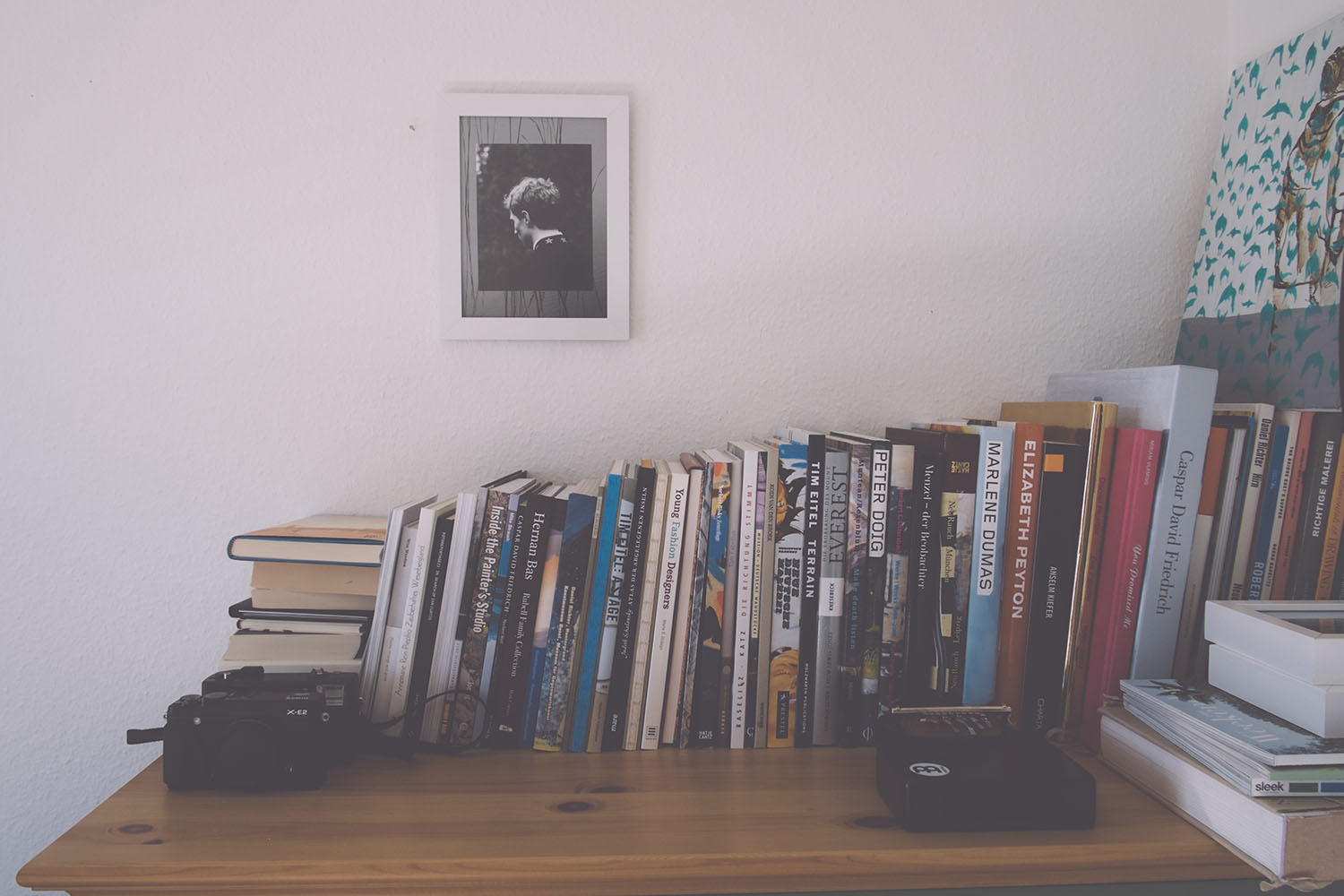
With Mare now on the shelves, we took a trip to Löffler’s hometown to visit his studio and chat on the processes and theories behind his work.
CLICK ON AN IMAGE TO ENLARGE AND ENTER GALLERY

You started learning and playing music at 14, right? Was that with instruments?

From the beginning it was electronic music. I think the catalyst was a really good friend of mine who was a guitar player—I was always with him watching videos and listening to a lot of music. I was really into that sort of stuff, guitar music and synths and stuff like that. But I never managed to learn guitar, it wasn’t something that I was really interested in learning, to be honest. I was 14 and really into computers and programming, and finding out about music programs was how it all started. It was hard for me because I was thinking it was not real music—but it was still fascinating.

Do you remember what program you were using?

At first—for a couple of weeks—it was Music Maker, but I had also Rebirth from Propellerhead and Reason. Then, after that, I moved on to Logic, and now it’s Ableton. Sometimes I still use Logic, Reason, and Rewire, but mostly Ableton.

Had you ever had formal music training?

No never. I was completely self-trained.

Your music has a lot of melodic content and musicality, though.

Yeah, I practiced a lot and was always a fan of early trance music, so I was trying to figure out how those melodies go and where it was coming from—all the changes and stuff like that—so maybe that’s the reason. Also, around 17 or 18 years old, I was really interested in piano music, so I was practicing that a lot—but never in a school or something, all on my own. It was always just for fun, I did it for purely for myself. I didn’t want to have to be somewhere at a certain time for someone to teach me. I’d prefer to just do it whenever I felt the urge and see what would happen, and it’s still like that—all for fun. It’s just what I like to do.

When did you start introducing gear and instruments?

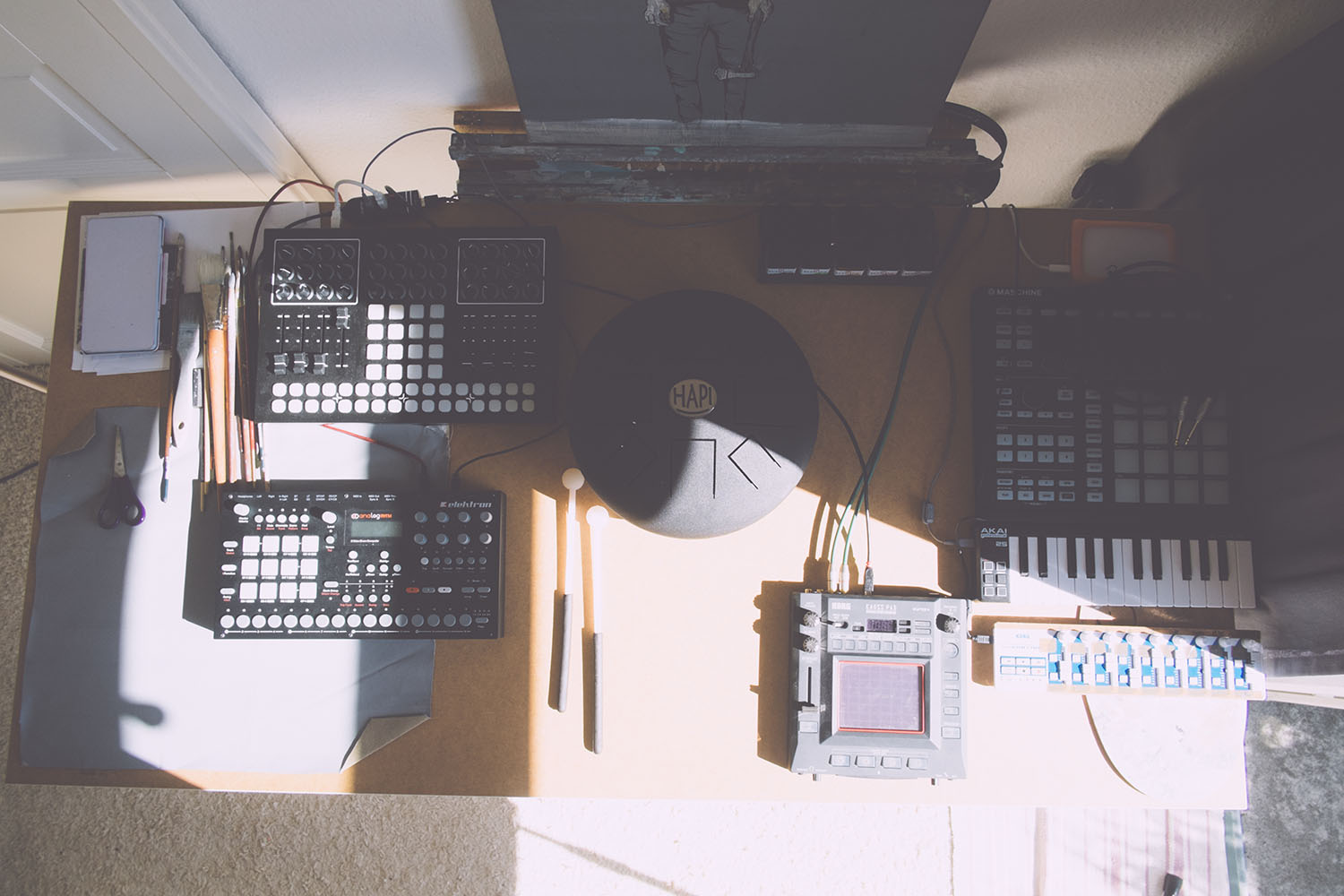
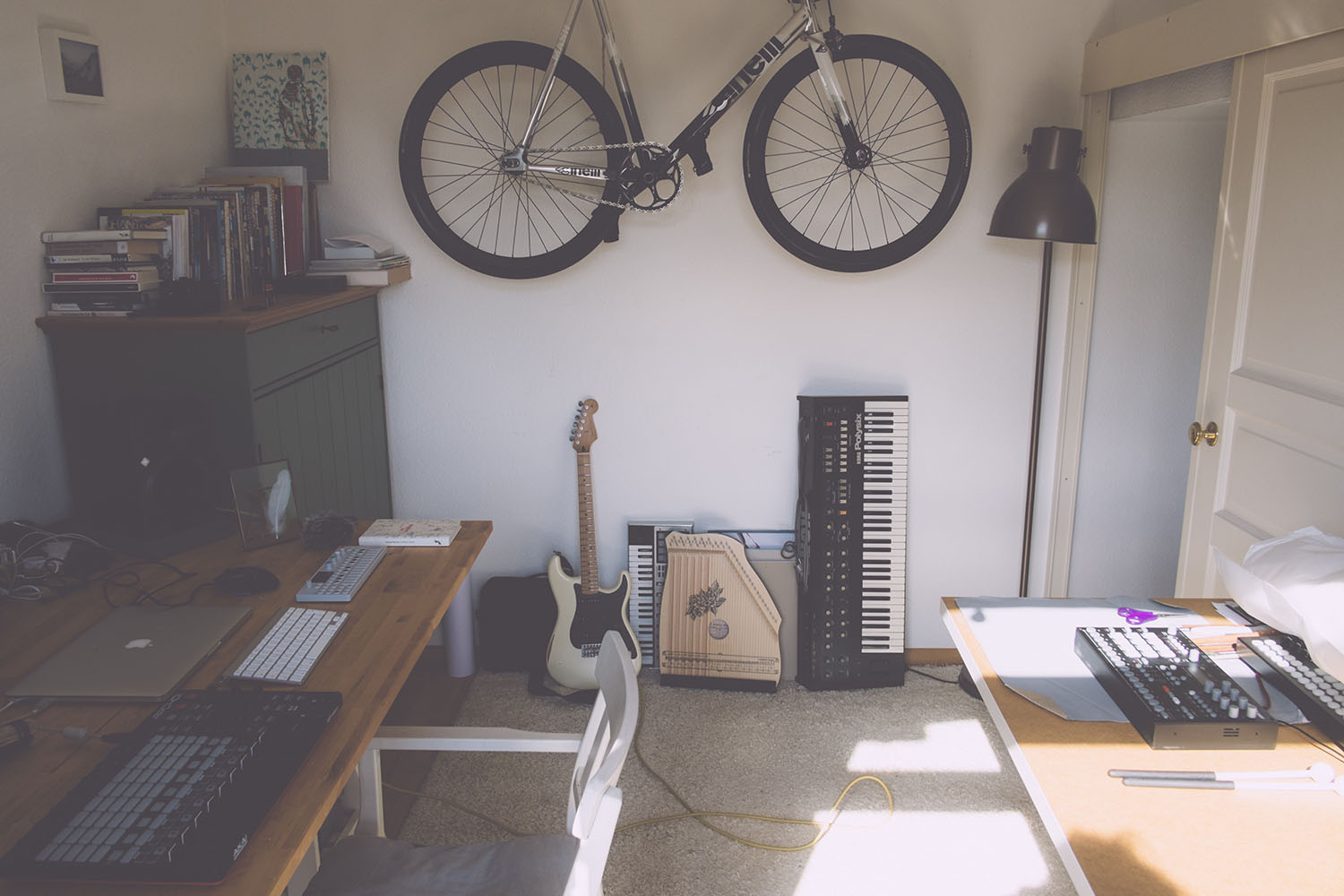
I was always collecting and selling things. New synths or drum machines, anything. The first was the Korg PolySix, and I just recently checked the price—because I got it for €300 when I was 18—and now it’s worth over a€1000. I still have it which is pretty cool.
I’m mainly still working in the box, though.
Were you living in this area at the time?

One hour from here, yeah. The same type of area, a small town.

I can imagine at that time there wouldn’t have been much electronic music happening in the area, or people interested in it. Were you using the internet to connect with like-minded people?

Yeah, it was mainly on the internet—production forums and things like that for the technical side. All my inspiration from the music side came from concerts.

Were you traveling a lot to see concerts?

Sometimes, yes, for some festivals and some concerts. It was mostly to see bands and stuff like that; it wasn’t so much electronic at that time.

At what age did you think you wanted to release something, or really work towards releasing something?

I think it was 2008 or 2009. It was mainly due to my best friend who always had an idea to start a label. He knew I was making music, so he got his first job and saved some money and then we did a record. That was how our label Ki started, with an EP, so that was it.

When did you start recording, or thinking about, your first album, A Forest?

I think it was 2011. Right after the first EP, I was more into painting and stuff like that. I nearly stopped making music altogether at the time as I was really focusing on painting and trying to get into art schools in Berlin, Hamburg, and Düsseldorf—but I never managed. So, at some point, I slowed down with the painting and went back to music and that’s when I started making A Forest. I came back to music and it was fresh again—and I stopped everything else. That’s how my first album came out.

Was the intention to produce an album?

I think it was all just new again and I had so much fun making music, so many tracks came out of that time—so it made sense to do an album.

So how long did you step away for before that?

I think it was about three years. It was 2009 when I pulled back, right after the EP.

Do you get the same feeling and the same release when you’re painting as you do when making music?

The reason is the same: what I want to express, or why I feel I want to create—it’s the same state of mind. It’s only in the moment I might feel like I wanna do something by hands and create a picture, it’s just a choice—what I feel at that moment. But the intention is the same, yeah. In the beginning, music was just a more obvious way for me to express myself—for a young boy it just makes more sense.

The majority of your music has melancholic beauty instilled in it. Do you think that the area you grew up in and live in now has had a major influence on that?

I have been thinking about that lately, actually. Sometimes it’s really inspiring to be in the city as well, you know? I remember on my first US tour I had some days off in New York and I wasn’t staying in the nicest hotel. It was a dark kind of area and it was exciting and very inspiring. It really depends, I think I just focus on the darker, more melancholic side of things in my art. I do think that I need this area, it definitely plays a big role in my work. It wouldn’t be possible for me to be in the city for half a year, or something like that, it would be too much. But sometimes it’s good to do it for a bit to break out and get some new inspiration.

What are the differences in processes and techniques from A Forest to Mare?

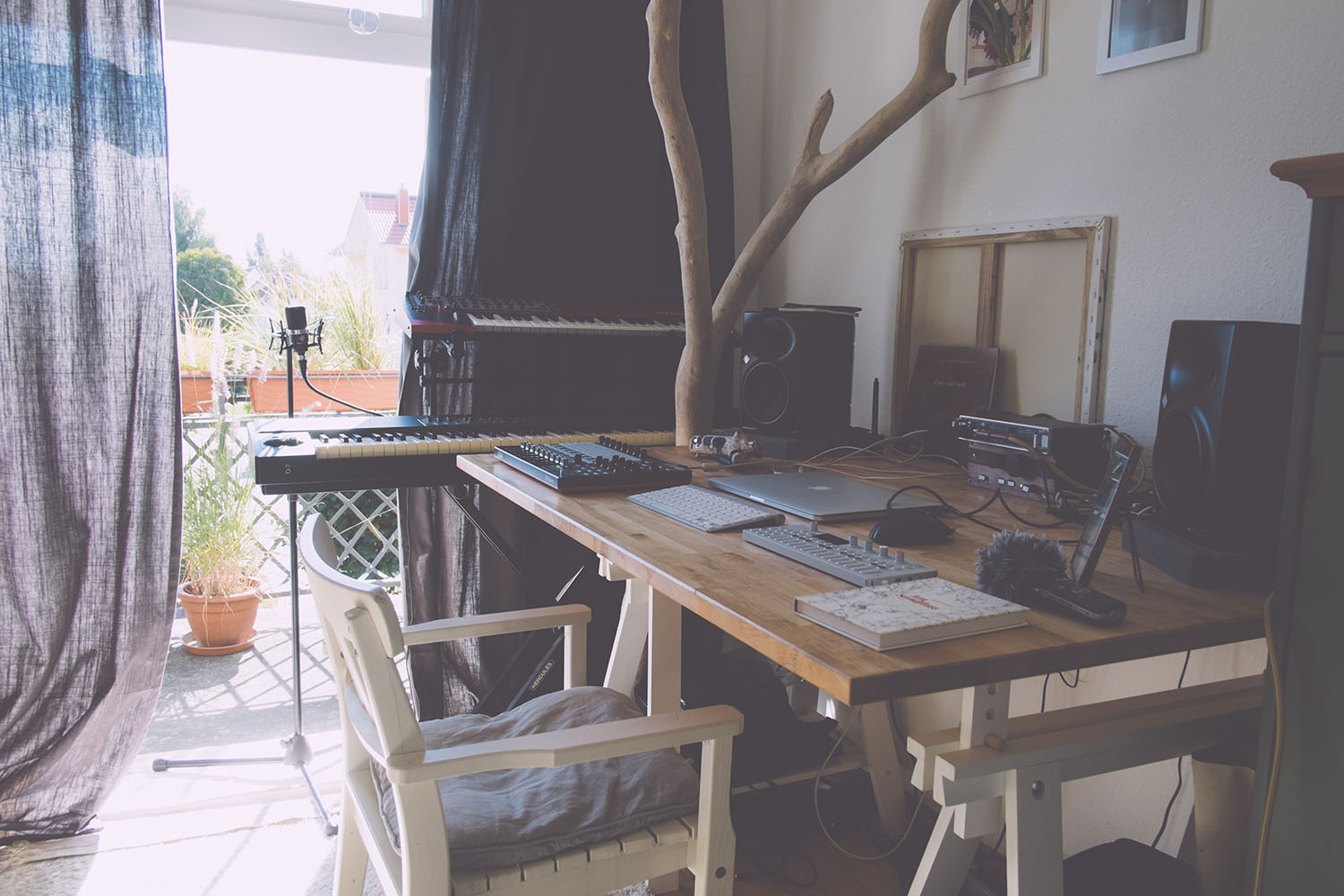
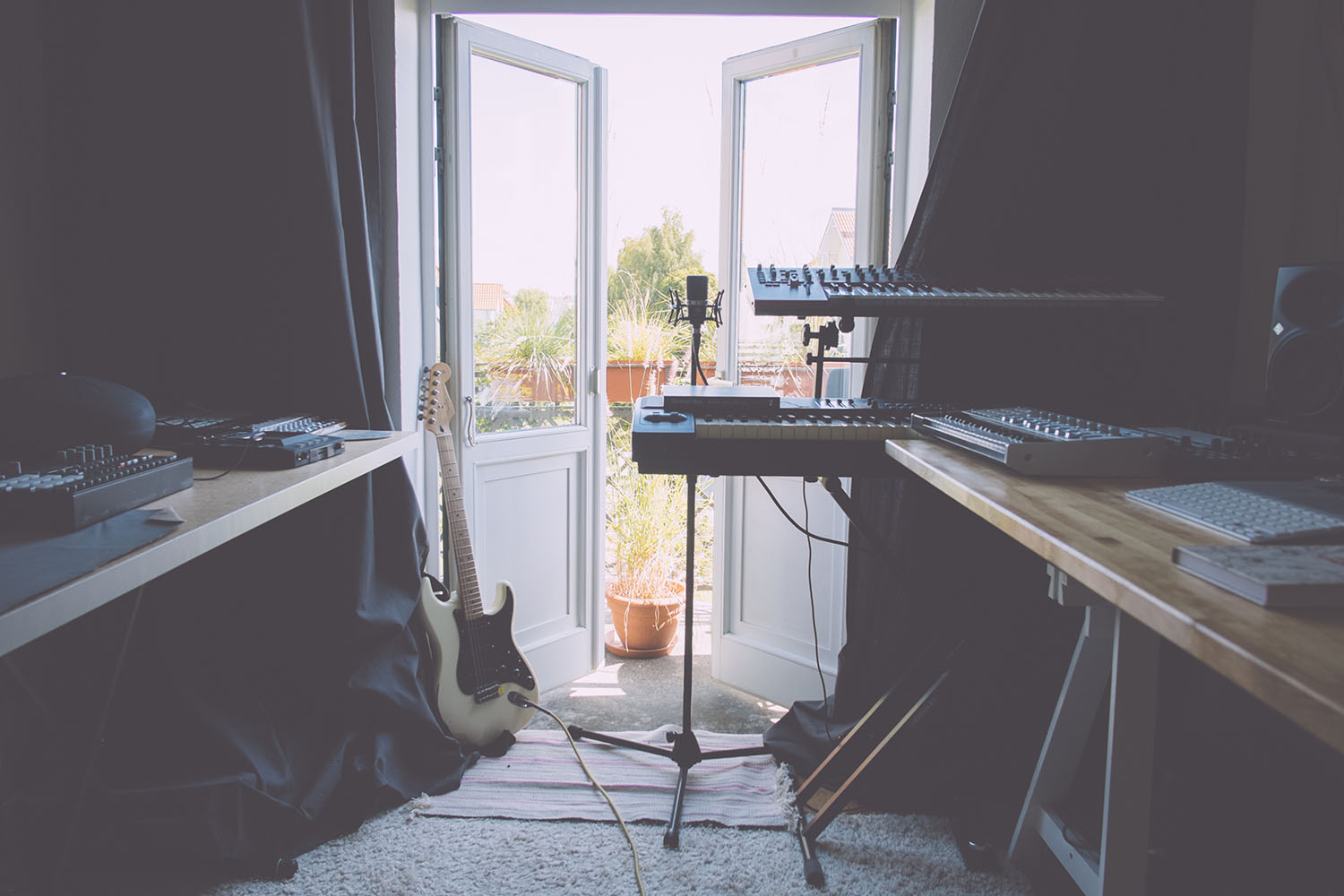
I’d say A Forest was more loop-based. I’d go into, say, 10 seconds of a loop and build a track from there. Now, it’s more like a jam session I have with myself. I’ll have the drum machine running, the synthesizer, and also a microphone when I’m jamming—the microphone acts as a second recorder. For example, if I’m playing a line on my synth, it’s not just directly recording from the mixer but also what comes from the speakers. Sometimes I set up some gear on the balcony, for example, or when I was at the cabin I would always have an outdoor space where I could make music so I was always recording some sounds from the environment as well—the trees and stuff like that. The main thing is the jam format, it’s much different to before. I’ll do sessions, say for one hour, and then I go through and look for interesting parts and think about where I could go from there. There might be a good idea for something, or a good line I can use.

So you recorded the majority of the new album in the cabin?

Just a part of it. For a while, there wasn’t an intention to do another album. At some point, though, I thought I wanted to do an album. Making music is a routine for me, I do something everyday—even just for one hour. I have many loops and sketches but at some point I recognized that I had 20 really good ideas—stuff that worked really good together—so I thought I would take the time to focus on an album. I had the idea to go to that cabin and really focus on the album, because, for me, the problem is that I sometimes just create and create and I lose track of everything.
Field recordings obviously play a major role in your work. The area around here looks like it lends itself really well to collecting interesting recordings.

Yeah, I have a huge collection of recordings. I really like to photograph as well, so nearly every day I am out there collecting sounds or taking photos. Mainly photographs, but I always have my audio recorder with my in case I catch a nice sound and moment. It’s nearly on a daily basis.

Both albums featured vocalists throughout. When did you first think to work with a vocalist, and was it daunting for someone who is completely self taught to be recording with a vocalist?

I always knew I wanted to work with a vocalist because it really made sense for some of the tracks to have vocals, but for most of my career I wasn’t ready to use my own vocals. I knew Mohna from her band [Lust For Youth] already and we were in contact for some time so I asked her to send me some recordings that she didn’t use anymore and I just experimented. There was no real plan behind it—it was just another instrument and project for me. The focus has always been on atmospheres and pads. I didn’t want too many vocals on the albums, but it definitely made sense for some tracks.

In regards to being self taught, it’s really complicated because you always have a finished idea of how things sound in your head and I’m not so good with teamwork. So, eventually, it made sense to sing myself.

Had you ever done singing lessons?

No, not at all. I was always singing along while making music, finding melodies and stuff like that. I think years ago I did some recordings, but I never felt like I wanted to put it out. Now it totally makes sense and I’m happy I took that step.
What were the main hardware pieces that you used on Mare?

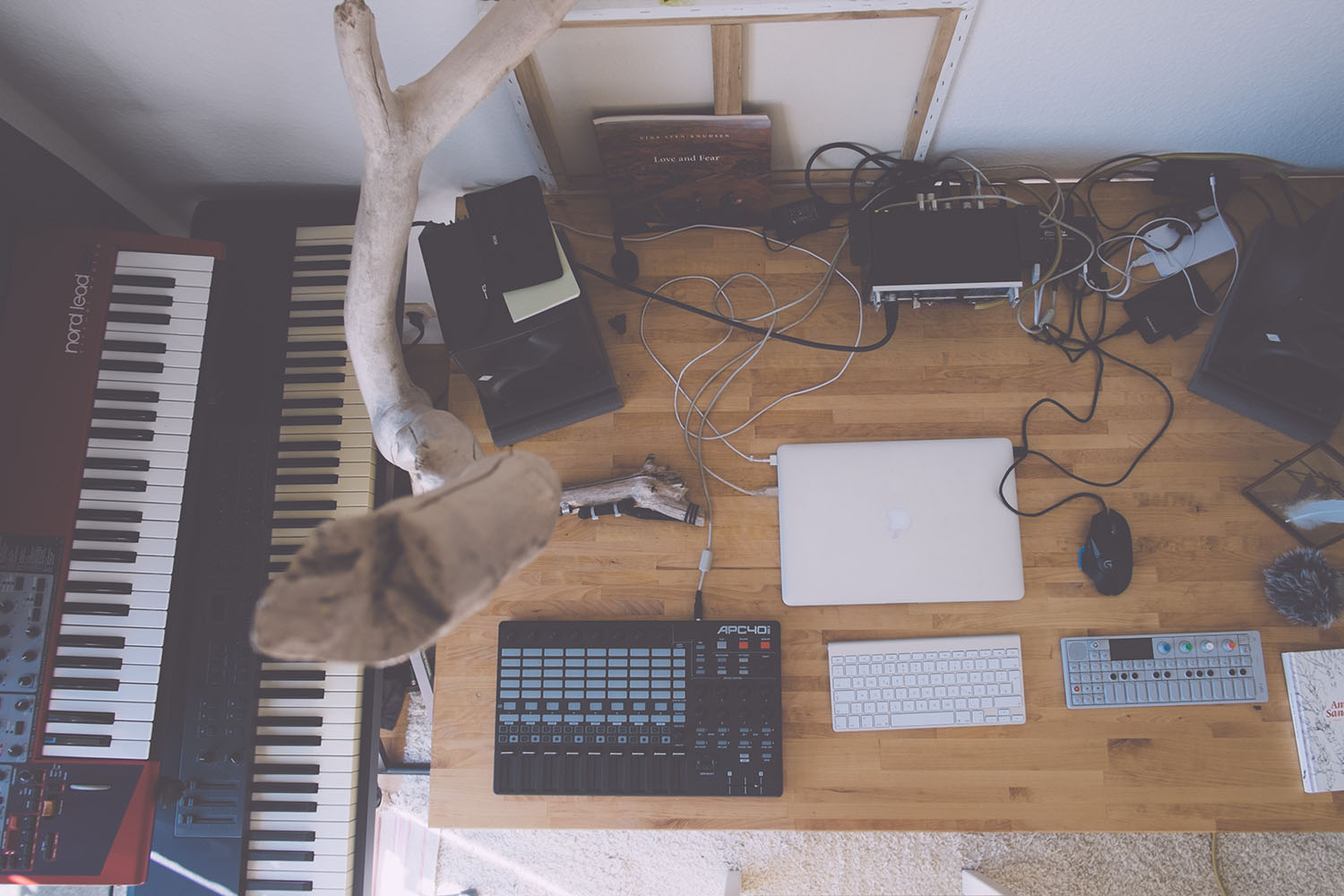
For the drums, I mainly used the Analog Rytm from Elektron; for synths, it would have been the Nord Lead 2X, which is actually a pretty basic synth, but it does everything quite well. I do a lot of effects on the synths lines so it’s always changing and being resampled.

So would you do these hour-long recordings and then work on effects? Or do you have a few chains that you run them through straight away?

Sometimes right at the moment and sometimes after. If I have that long recording, I go into it and take a part, pitch it down, put some reverb on it, and then play that on a sampler—just some notes from it. I like to experiment and keep it interesting each time. What I end up using in the track is always quite far from the original recording.

Are there particular inspirations behind each of the tracks? Or is it a case of going into the studio and just messing around?

It can be many things: a movie, an exhibition, anything really. Last time I was touring I was in Mexico city and I went to a museum—I don’t remember the name—but it was a really interesting exhibition. I remember after that I did nearly three tracks. It’s always the moment for me, it could be a book, anything.

And how do you treat the recording process—do you try to go in the studio each day?

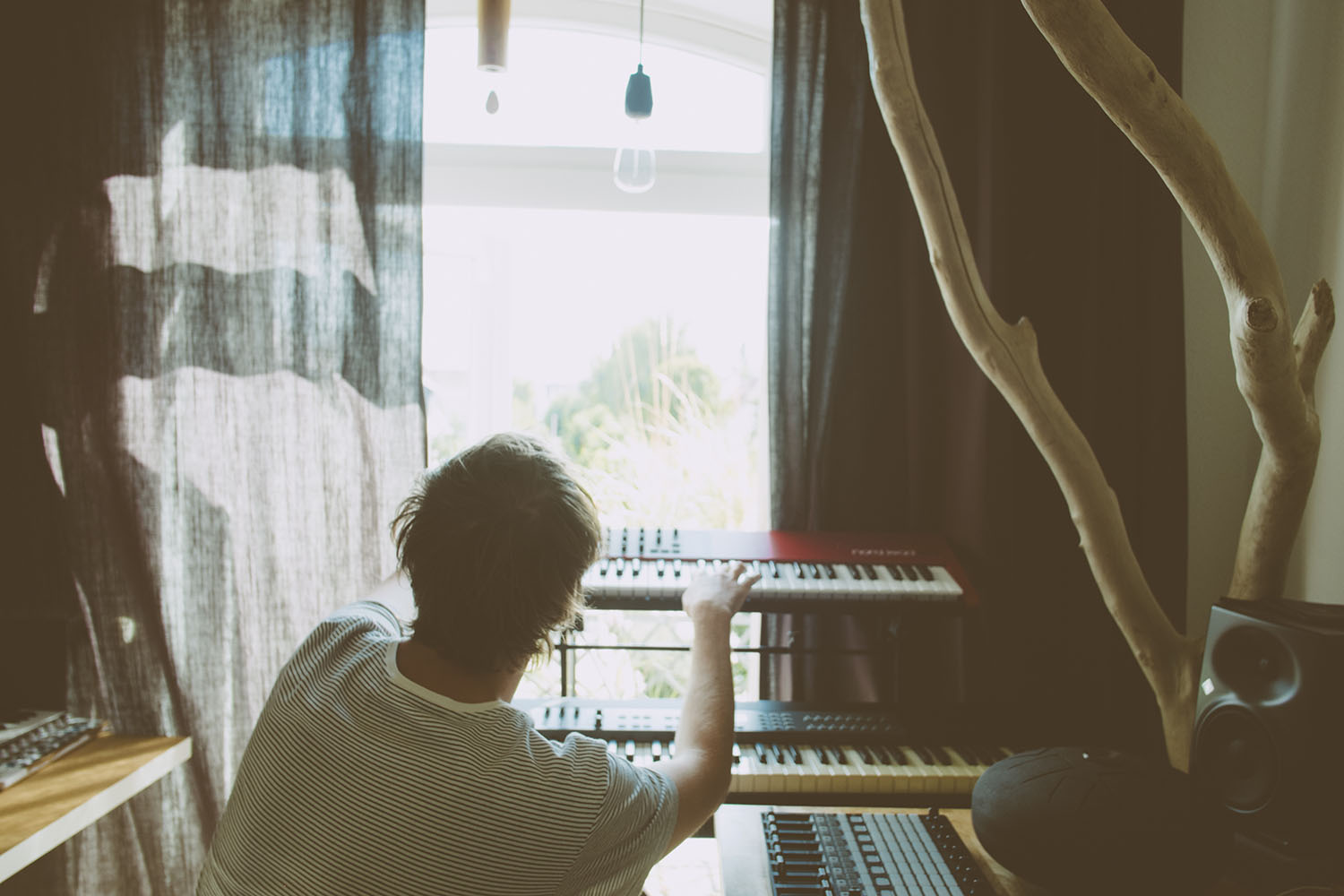
Yeah, my studio is in my home so it’s really easy. I always want it close and in my place where I live so I can just go straight in there if I feel like I want to create—even for 30 minutes. When that moment comes, I want to be able to dig straight in. That’s the way I work, really quickly. I finish lots of sketches with not too much detail, it’s a rough way of working.

So you don’t have a set time period? Like a 9-5?

No. Bt usually, it’s around 9am—in the day works better for me.
Do you write and produce many sketches on the road?

Yeah, in the hotel I do if I have time, but never on the plane—it doesn’t work for me. And I use my phone for field recordings as well.

When you have tracks or sketches that aren’t finished yet, are you always thinking about these and how to move forward?

Sometimes I will go back but not all the time. I have a private SoundCloud account with all my sketches in there and I put a picture on all of the tracks so I can remember them. I just label the tracks as a number with a picture. I think there are currently 150 or more on there. So sometimes I will be walking on the beach, or in the forest, and I will go through the SoundCloud with my headphones on and maybe a melody will come to mind or an idea and I will go back and get to work on the track. If I have an idea that I really feel like could be something strong, I try to finish it as quickly as possible in the moment because it is hard for me to go back. Every time I go back to a track after a long time, it rarely works out. Let’s say, for example, I have 20 sketches from the album and one really inspires me, I will focus on that and finish that particular track.

Is there a cut off point where after a certain amount of time you know to move on and forget it?

Yeah, definitely. Also, sometimes I’ll feel like I want to go back to a track and record some vocals or new instruments, but it doesn’t feel finished at all and I’ll realize that everything could always be better and that it’s good to just leave it how it is.

So you struggle to know when a track is done? Do you show it to people for input?

I used to do that—I would show them to many people. But now, not so much, maybe like three people: myself, a good friend of mine, and maybe my girlfriend.

On the new album, I read that you used a few antique instruments, like the kalimba.

Yeah, I always try to pick up instruments when I’m on tour, or at least keep an eye out for things. I think I got the kalimba in Miami—it’s nothing special, I got it from a flea market to try something different and get some different sounds. I love the contrast of having instruments in electronic music, working them into the structure of the beats and stuff like that.

“I’m not someone who will study a synth inside and out—it’s more on feeling.”

And you also customized some synths that you used?

That’s mainly my father. He also makes music and is a working electrician, so he is really good at rewiring things and experimenting. For example, if something is broken, we try to change things up a little bit on the inside of the machine. He also has a studio in his garage, so we experiment a bit musically as well. It’s all about attempting to find something different and you can find interesting sounds by accident. It’s the same as with the computer: there isn’t a big plan and I’m not someone who will study a synth inside and out—it’s more on feeling.

Is there a particular instrument that you start with all the time?

Most of the time it’s an atmosphere or a piano loop or something that will give a good base for the track, or a melody. Then I would move to the bass and find something that works off the melody. The rest is pretty simple for me, I try to keep it like this all the time, it’s all about the harmonies. That’s why I start with an atmosphere and go from there. It’s also why it makes sense to use field recordings because you already have something that is constantly changing and it makes for a really good base for the track. There will always be changes and things coming in and out keeping it interesting.

And you have a big collection to pull from there.

Yeah I do, lots. And that’s actually a lot of my drums sounds as well. The snares, for example, are mostly cut out of the recordings and layered.

It sounds like there’s a continual search for unique sounds and unique textures.

Yeah, it’s never like I feel, “Oh I need that sound,” or that I hear a track and want to use a sound from that.

I find it interesting that even though you are using all these different sources and different instruments, you still have a very distinct sound signature that is quite recognizable. Do you think this is through your sound processing?

Yeah, one of the things I use quite a lot is Native Instruments’ FM8 as an effect. That’s the main thing I would use, actually. I also think it’s how I choose the sounds and the things I gravitate towards. I always have a very finished idea of how something should sound and so I choose things to fit that.

Can you see similarities between your music and your painting and photographs?

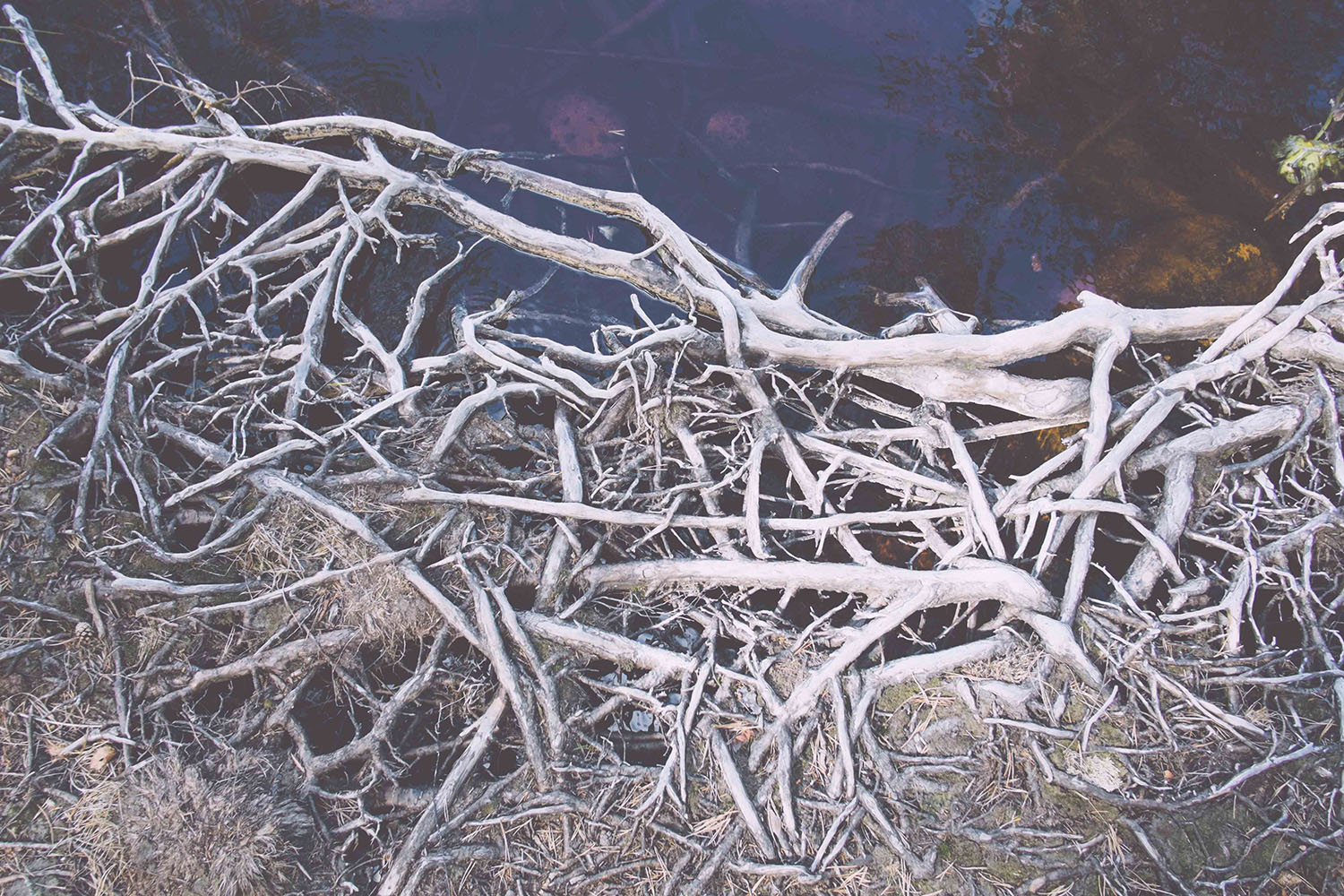
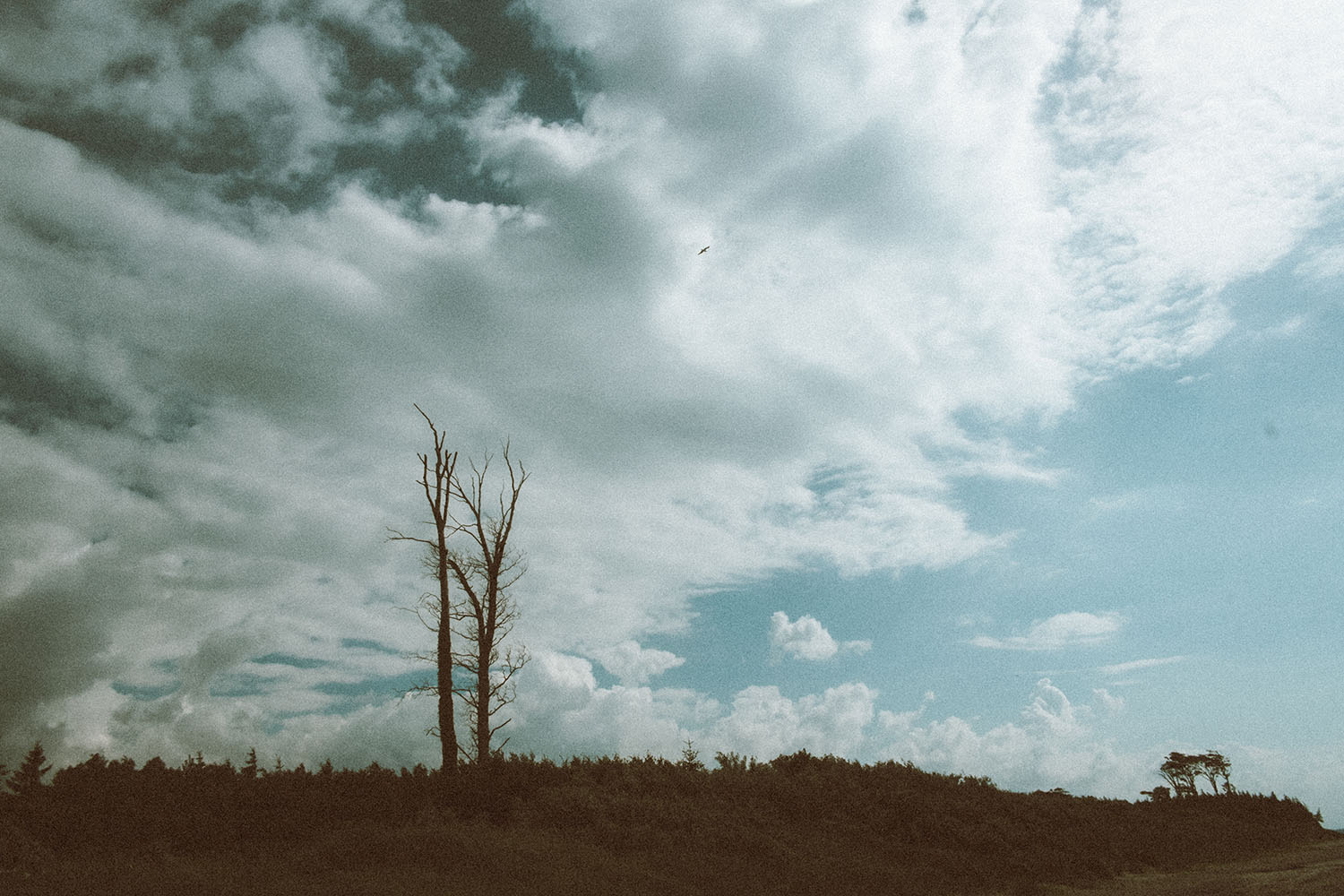
Yes, I would say so. Especially the photographs; they are really hazy, not too direct, and a little bit foggy, with a wide landscape—it’s very spacious. So I guess that’s the same as my music.
Do you get production blocks at all? How do you combat them?

It’s actually quite often for me. To get around it I just do something totally different, or I stop music altogether. I used to just push on and come out the other end but it never worked for me. So now I just stop and have a break and it will come back. A lot of the time there will be gigs to play too, so that is an easy way to have a break and still stay busy and use my music for inspiration.

How did you develop your live set?

That was really complicated for me because before that it was only about producing. I never had the intention to present it to people like that. Of course, I wanted to release it and see how people would react, but there was no intention to play somewhere. So it was really hard in the beginning to get it into a certain structure. It was a big mess, basically, 16 channels on Ableton and really complicated. It was stressful to get everything together and sounding right. At the time, I found some strategies to make it more simple and to focus on the main elements.

What was your setup then?

It was Ableton and MIDI controllers. It was quite simple but with all the loops and stems it was a big mess. It was just divided into so many parts, it was too much.

So how has that evolved into your live set now?

I realized that it doesn’t make too much sense to have that much going on. It’s better to keep it simple and focus on the key elements that everyone recognizes, and to make a good transfer from track to track and go quickly to the point. I managed to reduce the stems and also to be more flexible; to play a loop or element or, for example, I have a wood block with a mic on it, so if I have a break down I can make some recordings at the moment and have a live element.

What’s the current setup, gear-wise?

MIDI controllers and a drum machine—I’m also experimenting with the Nord Lead to get that on stage and make it even more improvisational. I want to make it more open and free.
Are you practicing the live set quite often?

Yeah, at the moment my main focus is the live set. I practice it a lot, experimenting with how to run the synth lines and things like that.

And you will be presenting this live set at ADE?
Yes, one show will be with Mohna and then the other a solo show.

There are a lot of effects and chopped vocals on the tracks with Mohna. How will this work live?

She will be doing a lot of it, handling a loop station with her vocals to affect it and layer it live in real time.

Do you get to practice much with her?

Yeah, a bit. We have also done some shows together already: one at Watergate in Berlin, one in the Ukraine, one in Georgia, and one in Hamburg at the airport, it was a special one. They were closing the flights and we had a stage down at the train station and they had like 300-400 people and the trains were running and we had music for four hours.

But, yeah, we still practice a lot as it is still evolving; and with visuals now, we have to set that up with the music. We’ll have a visual artist doing live visuals, which I film a lot myself and then pass on to him to perform—I give him the material and he works it live. I did the master edit for 90 minutes so he could see how I want it and then he takes it from there and runs with it.

Are you DJing as well?

No, I never DJ. I’ve done podcasts, so I mix tracks, but it’s just in Ableton. I really enjoy it so I would like to get into it but I have never done it. It would be good I think, I would like to play some stuff I like from others as well.

Are there any pieces of equipment you feel like you’re missing?

I’m always looking for something new. For starters, I really want to have the old Prophet. I tried it at a friend DJ Tennis’ studio in Miami and I really liked it. I did one track with it on the new album—I really want to get that one. I really like to focus on just a few things, though, so I don’t have too many options. I try to keep it minimal and constantly evolving and changing. Whenever I’m not using something, I will swap it out. Or if I’m using something too much and the sounds are becoming tired, then I will move on and try something new. I swapped the Machinedrum for the Analog Rytm, for example. I also really like the Teenage Engineering OP-1 lately, it’s very portable. I was playing with Stimming and he recommended it, it’s really cool. The sounds are huge and different and it’s very easy and handy to have.
Burnt Friedman: Rhythmic Anomaly

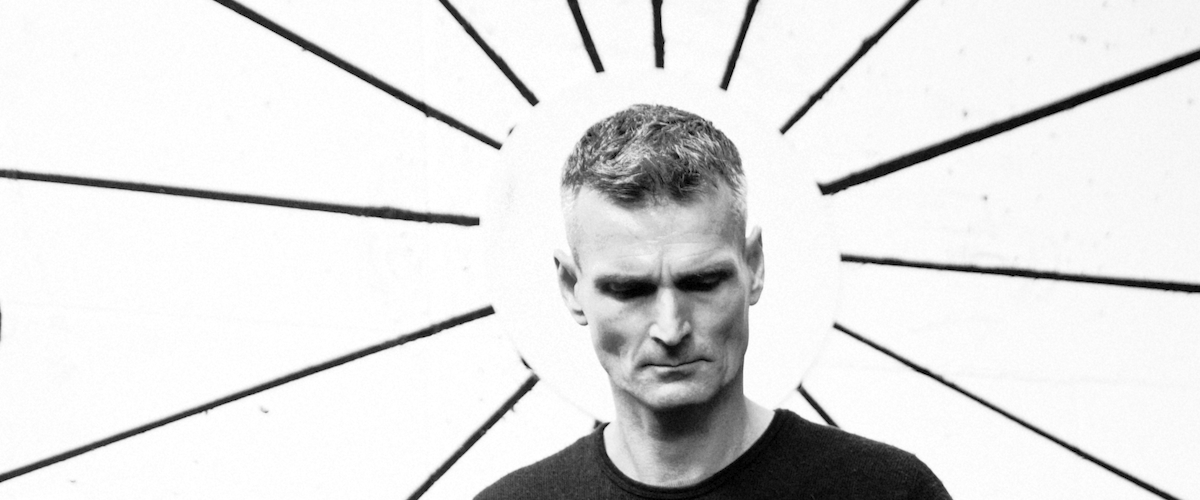
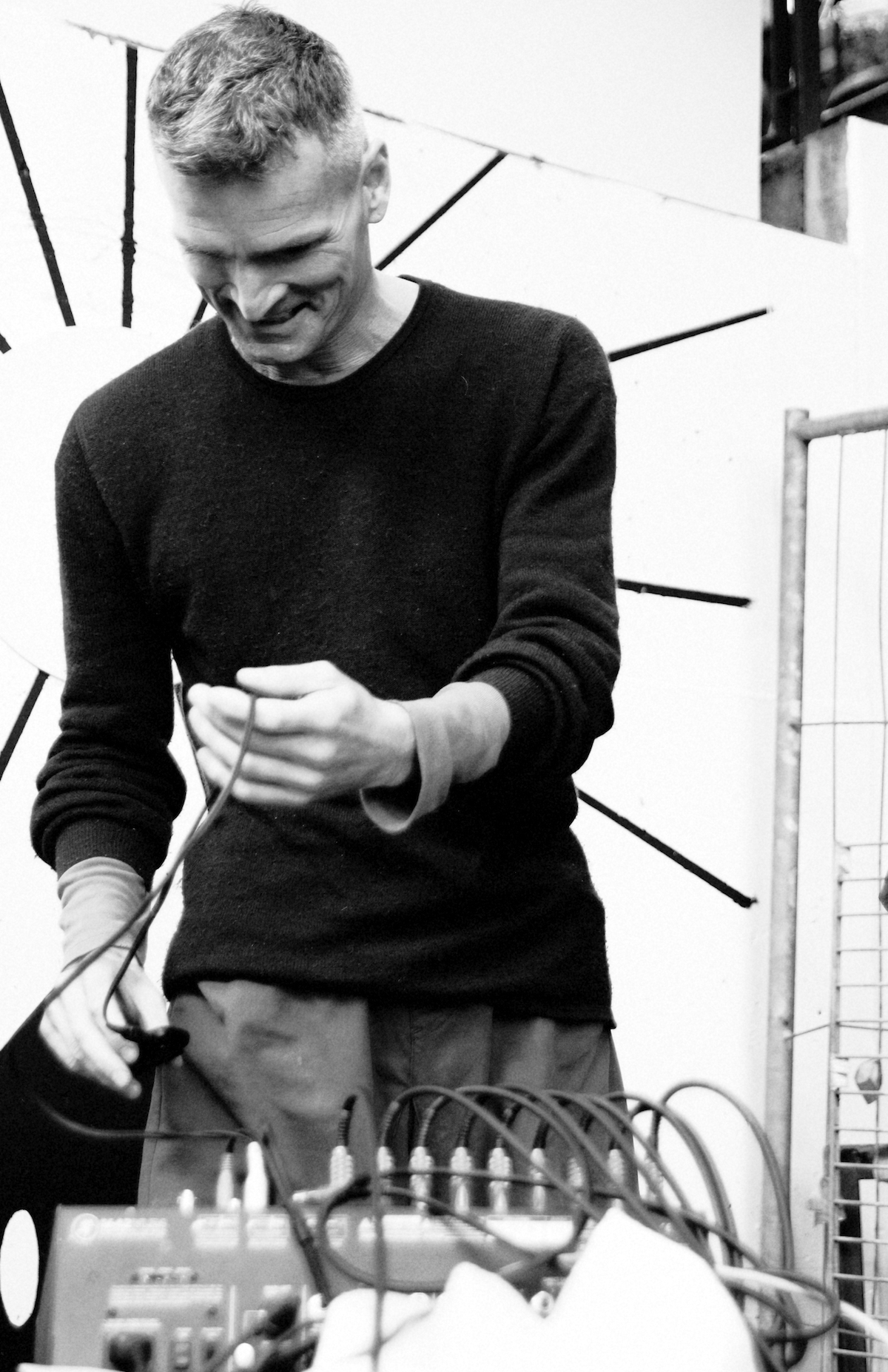
As summer dawned on Berlin this year and the outdoor events program got underway, one particular coming together of artist and venue showed real promise: with its otherwise largely house-oriented calendar, Burnt Friedman’s debut at Club der Visionaere was an unexpected curveball. With sets from Audio Werner and Ion Ludwig bookending it, the German musician’s show was a pleasantly incongruous feature on the lineup. In the pokey confines of the booth, hunched over his mixing desk for about two hours, he patched together elusive rhythms and mystical textures, conjuring emotions of delight and confusion among members of the swelling crowd.

It’s a live experience that has been years in the making. Actively producing and recording music since the late ‘70s, the Nonplace owner has devoted himself to honing a style which confronts and dismisses broad western conventions. Enthused by counter-cultural sentiments and an outspoken voice against generic, popular styles, he is an experimental icon to many—tough to keep up with, difficult to categorize and impossible to ignore—though to him, that path is the obvious one.

Friedman’s subversive attitude to modern music trends has been well-documented by journalists over the years. Sure enough, as we chat one afternoon in his Berlin apartment, he is quick to nudge conversation in that direction. His gentle conviction serves him well as an ambassador for those alternative sounds, yet it’s touch in the studio that really gives it weight. I peer over his shoulder as he carefully tweeks his mixing desk, and it all makes sense.

Will a Burnt Friedman live set always be substantially different, even though you may be playing the same songs?

Exactly. You may recognize certain elements or sequences, which I would mix with other sequences—other single instrument tracks. Per song I run about 16 separate tracks of different lengths, loops if you wish, which I refine, exchange or redo over long time periods. Maybe in two years time they’ll be gone, even if the groove is the same. One has to distinguish between sound surfaces, and the form, which I call “mode” or “rhythm.”

The sound surface of an instrument is subject to taste and therefore likely to change over time. I would even claim that almost any kind of sound works and serves a musical function. as long as the structure—the form, patterns, or phrasing—is correct. By correct, I mean supportive.

Recording clearly stops the process of change. Musicians will always prefer the live situation I would say—you can present something that you are really concerned with at that moment, unless you are The Rolling Stones playing the same program over and over. You could argue that that isn’t even music, as it denies that natural dimension of motion.

“Music has hypnotizing qualities, an inherent potential to guide you into a different reality frame so to speak, to stop the ordinary flow of thinking.”

People today refer back to our amassing archives as if it was real, live music. Of course, any recording’s playback sound is, technically speaking, real, no matter how terrible your speakers may be. What has gone missing by making recordings, or by taking samples, is the dimension of continuous motion—a motion that should naturally evolve, containing different information with each following performance, new interpretations, new versions, and so forth.

I am saying this because, with today’s vast libraries and idiotic sub-divisions of genre, an artist’s original expression is doomed to fall somewhere in between countless filters. I think that listeners get the impression that everything in music has now finally been developed and is unalterable and petrified. During the late ‘90s, with Anglo-American pop and dance music, and their sub-cultures, the process of feeding and accelerating modernity may have come to an end point where one cannot be louder, faster, noisier, slower, lower, higher, and so forth. It’s created a standstill where everything seems retro from today’s point of view.

What would your alternative be?

There are a bunch of alternatives: not to take music as a hostage for all sorts of profane purposes. Allow music to be useless, because herein lies its greatest power. Avoid pinning it down to territories—music tends to travel beyond territory, which I am sure is no surprise; instead, it is predominantly represented by either individuals or small groups of people, not cities or nations.

That’s what I mean by saying music is motion. Whenever music is played, that is the perception of a specific moment which you are experiencing. If a playback is engaged once again at any occasion, specific memories return with a close connection to that consciousness. Music has hypnotizing qualities, an inherent potential to guide you into a different reality frame so to speak, to stop the ordinary flow of thinking.

Also, there is a big misinterpretation of the term electronic music. Imagine someone playing an acoustic rock kit—while he is playing, if you removed the kit and replaced it with an electronic one with sampled sounds, what the drummer does is the same. Would you call that electronic music? Does that define what is going on? It is just the sound surface.

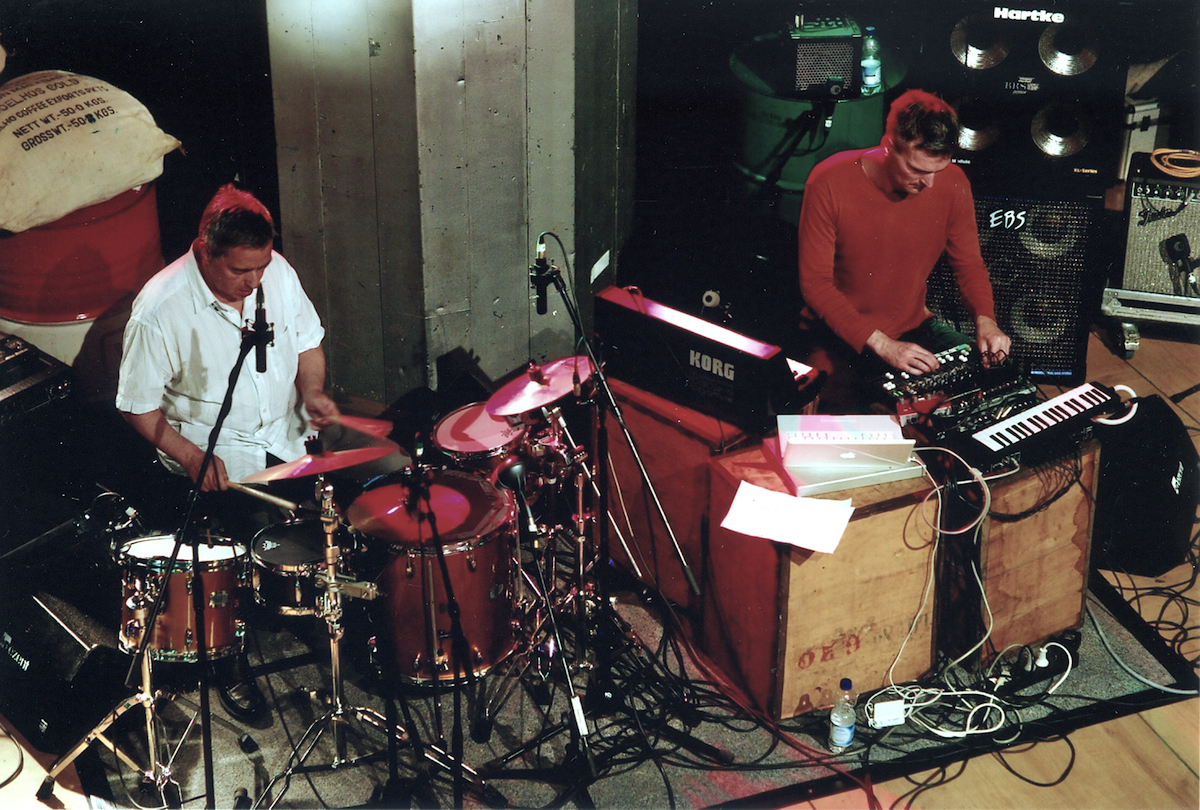
 Live at Pudel Club, 2014. Photo by Katja Ruge.

How would you categorize your own music?

I’ve always been fascinated by music that I don’t understand. So, I try to find out more about those types, about their structure. I thought it would be the desire of the regular listener, but as you can see from the club scene, it’s not like that.

I’ve read a quote from you that said the same thing elsewhere. Are you still finding more music that has the same impact?

I still continue to learn, of course. I have an understanding of my label as being like that of a scientist, but with a more unified concept, where all the different aspects of music are contained. I am exploring an area that is not man-made. It’s like electricity—man didn’t invent it, it’s something that is already there. It belongs to reality. The fundamental laws of music are not man-made, but are often responded to by musicians as an oppressive authority, standing in the way of personal expression.

I don’t have a background in music, and neither did my parents, so I’ve always had an intuitive approach to understanding music. I’ve learned things in a bad way—looking at American drummers for example. That’s just a certain concept of music that was sold to me. The rest was D.I.Y. A lot of music is about practice, but when you don’t have the right technique, you might not be able to play confidently.

“Pop and rock music is only so popular because it has been so brutally promoted. Most musicians think that is the way you have to make music, but that’s not the case. It’s just one particular strain. One interpretation, one branch. Often in western societies, people don’t see the alternatives.”

So you feel like you didn’t learn it properly to begin with?

No, I didn’t. I started with the standard rock drum kit, with the same technique many others did, by watching TV and music videos. It only serves a particular style. If you want to make something else, it will be difficult to get rid of that technique, to play new music.

Pop and rock music is only so popular because it has been so brutally promoted. Most musicians think that is the way you have to make music, but that’s not the case. It’s just one particular strain. One interpretation, one branch. Often in western societies, people don’t see the alternatives. They think of drumming as primitive. I don’t have that point of view. It’s not a question of taste, it’s objectively incorrect.

I understand that you have been looking to other cultures for inspiration for many years?

Just to learn, to find out what is happening in other places, where the music is referred to as being traditional. It’s quite misleading to use the word traditional however, because it’s often understood as outlining techniques which are carried from one generation to another. There’s some truth in that, but that’s not the whole story. Even in traditional music, things mutate all the time. That’s the nature of it, unless you have a super strict, rigid ensemble—though that’s rare.

What remains fundamental is the motion in the music. The motion pattern inherent in the tune doesn’t change, it’s like a law. What’s important though, is that it isn’t a straight-jacket—it’s actually quite flexible. It’s the same technique for all instruments. There are so many variations that you can play on that one rhythm, many different ways to execute it. It can always evolve, there are so many possibilities. The more experienced you are, the more fun it is to play.

We’ve all got a big advantage now—we can listen to music from all over the world because of the recordings that have been made. It’s amazing. Yet, what we have access to is only a small portion of all music. It might not be the best or most interesting stuff. Maybe if the recordings hadn’t been made, we might have even more lively music today.

 Live with Jaki Liebezeit, 2005.

How does rhythm factor into this?

Usually when you go to a concert to see a band, they will normally play everything in the same rhythm—four or eight beats to a bar, probably. Maybe in the field of jazz one is more likely to come across various rhythm modes. If it changes, it’s very hard for the listener’s consciousness to switch from one to another. Maybe the old groove still resounds in your mind, and you then enforce it on to the next rhythm scheme. I assume that most people probably don’t get the groove, it’s a common thing.

It would happen to me too, but I have a trained ear. It’s only on a rare occasion that I don’t recognize the groove, and it becomes impossible for me to mix the tracks. Everything turns upside down. That means that the music informs me in a different way—maybe because I missed the cue point by pushing the fader at the wrong time, so it didn’t start from the beginning. Perhaps I had perceived it as an accent that drew me to the beginning of a loop, so I was coming at it from a different angle. It can be quite interesting sometimes, so I play with that. If you have longer cycles, then that stuff happens. I like the effect of rhythms falling apart, I like that surprise effect. Even I get to the point of the music being unpredictable.

With techno grooves on the other hand it’s almost arbitrary. The beats can be divided by two, so almost any combination of sound, noise and chords on that beat formula can work. It’s like a metronome, not really a rhythm.

Do you feel any connection to that kind of music? How does it impact on your when you play at those kind of events?

I have some metronomic elements in my music—a straight bass drum or hi-hat, very regular stuff. That’s my way of assimilating to trance-inducing, beat driven music. I use metronomic elements on odd grooves. It’s usually considered polyrhythmic, but actually it’s just a metronome. It’s not an alien element, rather the pulse of the music. Whether it’s low tempo or quick tempo, it’s just a pulse. In any rhythm, it’s always there, you just don’t hear it.

Polyrhythm has become a popular term because it’s void of sense. It’s an easy term. The way we use the term in our culture is for anything that doesn’t count in four. It’s stupid, but it serves a shrewd purpose—appearing to certify academic background knowledge, but is only obfuscating the matter.

Is there anything you heard in recent years that has impressed you?

It’s a legitimate kind of beat, sure! I was just listening to Mark Ernestus’ recent Ndagga Rhythm Force EP. In the early ‘90s I was impressed by techno when it had just started. I really enjoyed that music. The 909 and 808 bass drums, I really like them. The problem is that the sound hasn’t evolved anymore.

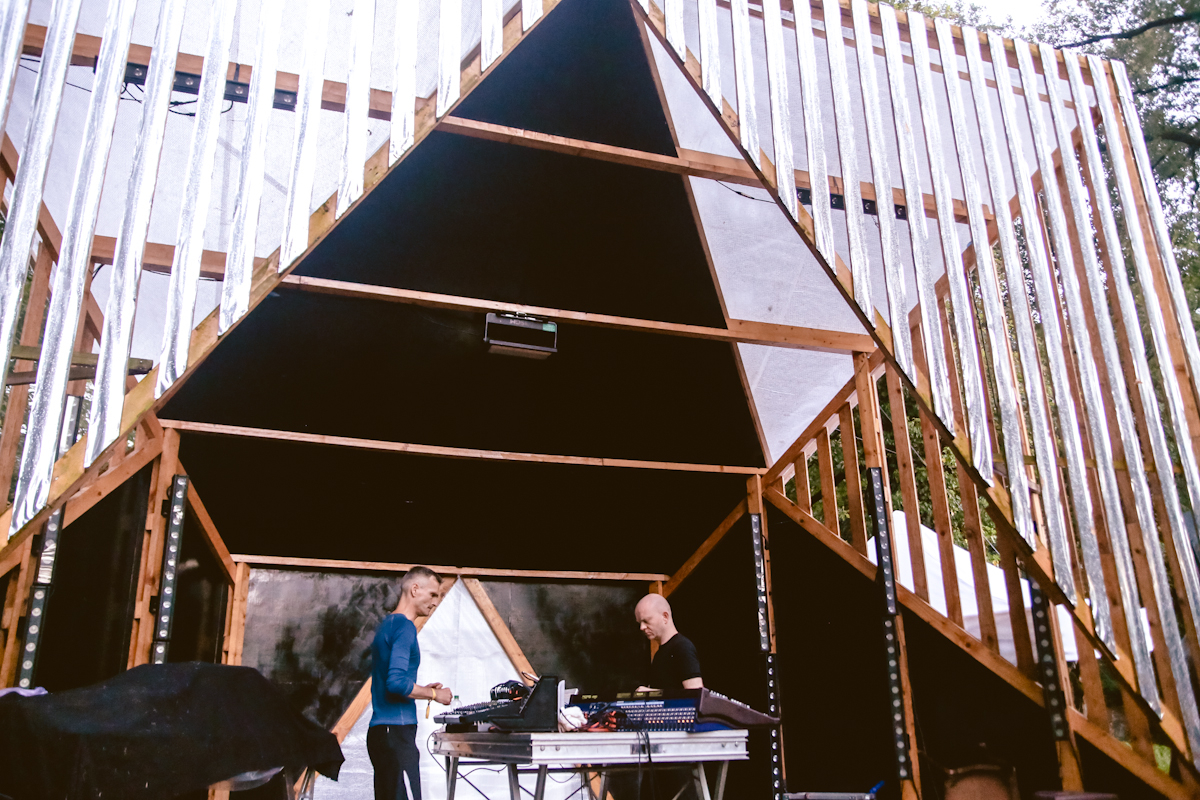
 Flanger - Terraforma Festival, 2016.

Do you think your own development has made it less exciting?

That is completely irrelevant. In fact, I almost can’t stand it anymore. By ‘95 or ‘96 I thought it wouldn’t last much longer. Up until the late ‘90s things were truly accelerating—people seemed to have the urge to create new genres, simply to be unique. They would come up with ironic projects just for the sake of inventing new genres, a competition to evolve. Within that scene, no big leap really took place. The developments were actually tiny, all within the same 4/4 rhythm.

Techno and IDM got mixed up, and sub-genres were developed, though it all came to a sudden end. Since then everything is just retro. It’s an interesting phenomenon. There’s been a creative standstill. This is a big generalisation, sure—there are always exceptions. I would consider myself one, too.

Jon Savage recently release a book called 1966: The Year the Decade Exploded. There’s another peak after that, around ‘82 or ‘83, when machines were introduced and different production methods came in. I relate to that one the most, because I was socialized in my teenage years with that kind of production. The stuff in my record collection that excites me the most comes from that time period, because it has the broadest spectrum of music.

Looking back from 2000 to the present, can you see any major change or development? There has been no eruption of new ideas. Mark Fisher, author of Ghosts of My Life, uses an interesting thought experiment—he suggests that we should beam a track from today back to someone in ‘92, and consider how they would respond to it. It probably wouldn’t be much of a shock to that person. He poses all the right questions. According to him, we’ve lost the sense of futurity in music. The only thing that has really developed is how we distribute the music. 

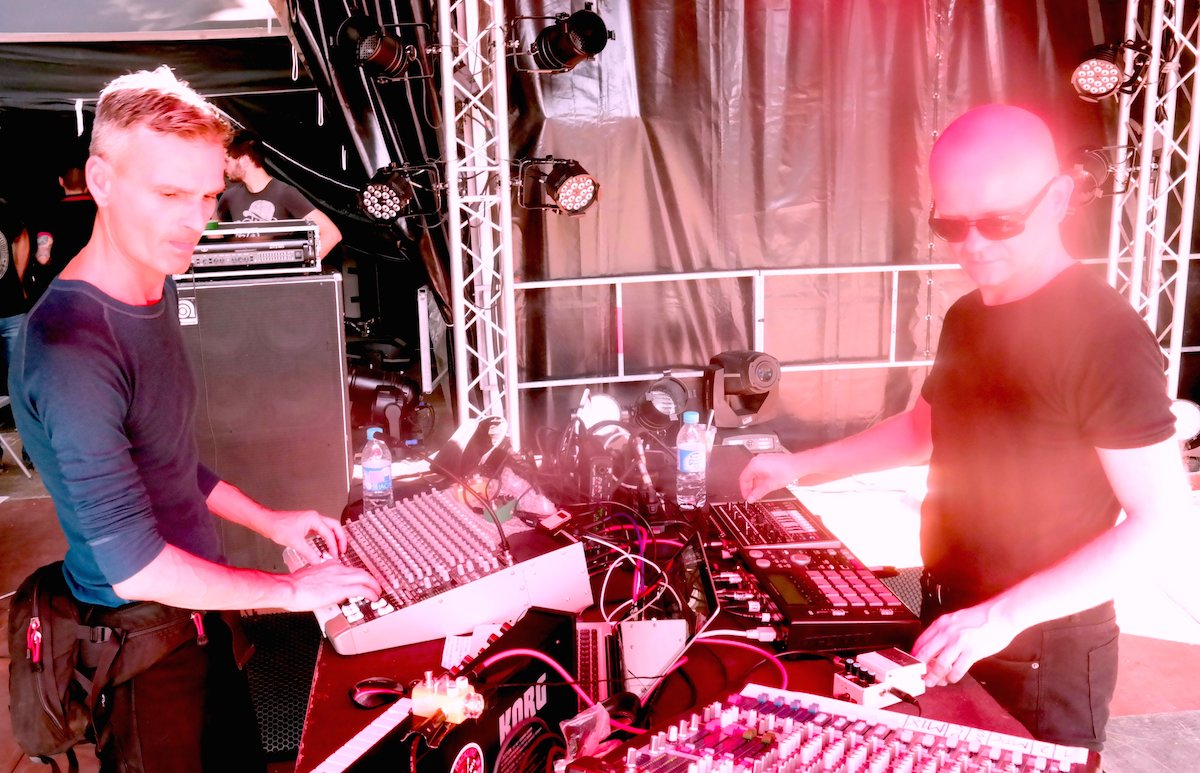
 Flanger - Nantes, 2016.

I wanted to ask about the return of Flanger. What was the impetus behind working with Uwe again?

The project never closed—we’ve always been in touch.

Were you together in the same studio for it?

We recorded the basic sessions together, but finalized them separately. We would just send the sessions back and forth, overdubbing them, working on them privately. It’s difficult to say who actually finished the works.

Is there a general role that each of you fulfill in the project?

There has been a significant change every time that we came together. Since the first time we recorded together in ‘96 and ‘97, there’s been a drastic change. At that point I would travel to Chile with an Atari and a sampler. Uwe would use a mixing board and MPC sequencer, with some modules connected. Everything that we composed on the albums Templates and Midnight Sound was mixed down and finished straight away, all within one day. It was all processed in improvisation mode. We could never go back to the beginning to change things.

The third album, Outer Space / Inner Space, was similar, though we also worked with a group of seven Danish musicians, who Uwe had worked with in his Señor Coconut tracks. We collected their contributions for the Flanger sketches, sampled parts from it and recombined it.

“Cooperation has deteriorated so much over the past 50 years. Society is atomized, people are all for themselves. Families are breaking up and everyone is just doing their own thing.”

By the fourth album, Spirituals, released on Nonplace back in 2005, we took a leap. It featured singing too. The process was more like how you might imagine—a more conventional way of working, with musicians too and other electronic tools. Last year’s Lollopy Dripper was just a duo production however, most of it programmed. Same goes for this year’s Spinner EP.

Do you still get a lot out of working in collaborations?

Back in the day I used to be happy with any kinds of contribution, as long as it was well-executed—in tune and rhythmically correct. I’m quite happy working alone now. The thing is, I can’t really afford musicians anymore. If I ask someone to play with me, I would like to offer them something for their time and expertise. I am not in that position anymore, like I was ten years ago for instance.

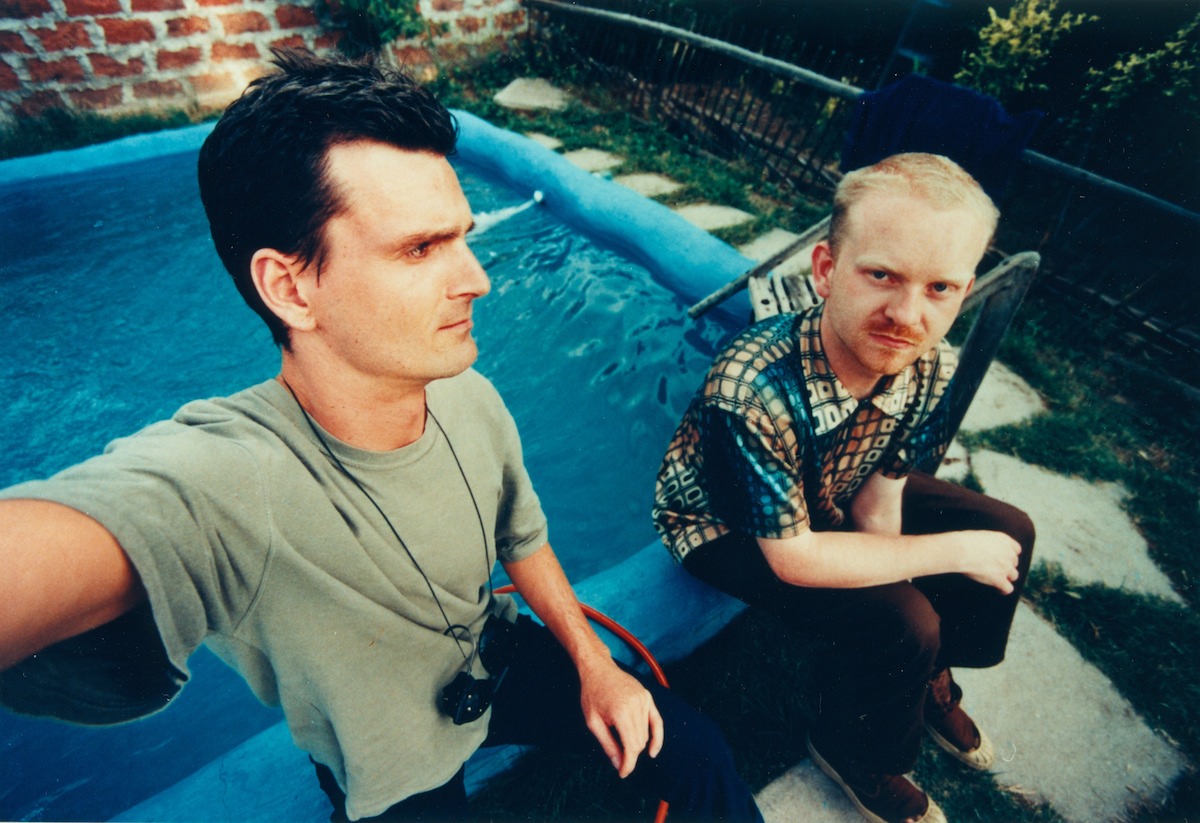
 Flanger - Chile, 1998.

I suppose it’s an example of the creative cutoff we spoke about earlier.

Yes, that’s true. Also, cooperation has deteriorated so much over the past 50 years. Society is atomized, people are all for themselves. Families are breaking up and everyone is just doing their own thing. In music for example, everyone does their own label. Look back to the ‘70s—everyone had their own role, their own way to contribute. It was all about cooperation. Productions went through so many filters, and so it was more likely that everyone would agree on it.

Today, there are millions of sub-divisions. It’s easy for somebody working alone to feel totally euphoric about his own art. I know that when I started making music, I felt super excited, simply by playing a keyboard or listening to a drum machine alone. From someone else’s perspective, it probably wouldn’t be a valuable creative thing. If you were self-critical, you would be hesitant to release it. People have lost that filter.

Does this apply to your own music?

I still seek full cooperation—to play among people, and to perform like that. It’s become less feasible though. It’s hard to go on tour even with three people, I just can’t see it happening.

More broadly speaking, how does the world in 2016 influence your music?

This touches on another major misunderstanding of music in general. If you look at a musician’s history, it’s obvious that in their most tragic moments, emotion isn’t reflected in music. There is no evidence for that. Take Bach for example—he lost his parents when he was 10 and his relatives were all dieing. This is hardly reflected in his music. In fact, the interpretation of what emotions are contained in the music is entirely the listener’s job, not a feature of the music.

You can’t just impose your state of mind into the music. In fact, the opposite is as likely. If I’m going through a rough patch, I would probably use music to stop thinking about it. It’s a way to deal with it. That’s why it’s so important today, when so much shit is hitting the fan. Music can help you enter a different reality. You cut off thinking when you are truly immersed in it. Equally, it happens when you are listening to challenging music, too.

It’s a strange thought. How can you think that the world situation wouldn’t affect your music? Of course it must, you are a part of that game. You have to deal with it. The bigger question is how it translates. It would be reflected in lyrics, sure, but that’s actually just poetry. The tone and mood of the music is another matter—it follows its own logic.

We could all be dead at any point, even moreso now than 30 years ago. The threat is more in our consciousness, it’s much more probable. I see that. It’s really depressing, but it can only change if we realize that we need to cooperate. If everyone continues to work for themselves, then the world will continue to polarize. There needs to be radical paradigm shifts.

You can catch the European premiere of Burnt Friedman & Hayden Chisholm, live at Red Salon, Berlin, October 31st.

Kid Smpl Announces New Album, Privacy; Shares Video

Former XLR8R podcast contributor Kid Smpl will drop his latest album on Kastle‘s Symbols imprint next month.

Privacy follows 2012’s Skylight LP—released via Seattle imprint Hush Hush—with 13 immersive cuts that approach “oft-unspoken, but deeply important issues of dissociation, isolation, and hyper-connectivity that seep out of our digital lives and into our psyches.” Like its subject matter, the music on Privacy evokes digital paranoia and fear—there’s also beauty hidden beneath its layers, but you have to dig.

The album will also be accompanied by three music videos developed by Kid Smpl by linking Unity—a video game engine platform—with Ableton. Like a player would send signals to a game via a controller, Ableton sends input information to the engine via audio signals, causing the images to change and morph over time. This will also be the basis of a new A/V show that Kid Smpl has in the works to present the album.

Symbols will release Privacy on November 11, and in the meantime, you can watch the video for “Riven” in full via the player below.

Douglas Dare Prepares Playlist in Support of New Album

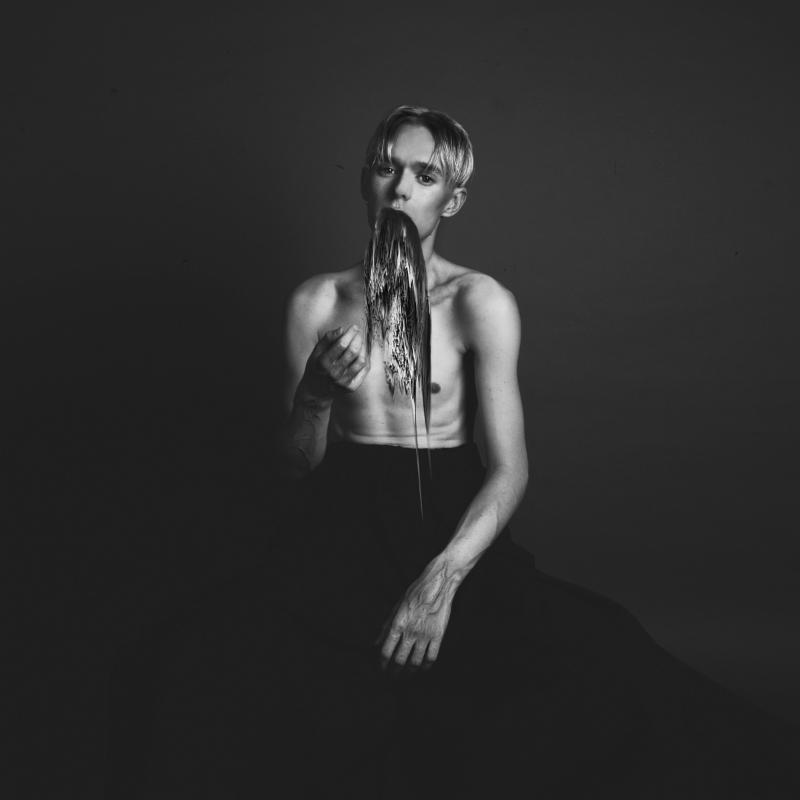
Douglas Dare‘s sophomore full-length, Aforger, was released last week via London’ Erased Tapes.

As mentioned, central to Aforger are two major moments in Douglas’ life: coming out to his father for the first time and learning that his longtime partner was committing adultery behind his back.

As a mark of the LP, Dare recently compiled an exclusive playlist for XLR8R that reflects his various musical inspirations. Included within are two new recordings and two solo piano versions of album tracks that are not yet available.

The playlist is downloadable via the WeTransfer button below.

Tracklisting:

01. Douglas Dare and Jayson Patterson “Morning Class Notes”
02. Douglas Dare “6a (Tape)”
03. PJ Harvey “Before Departure”
04. Farao “To Sleep Apart”
05. Bulgarian National Folk Ensemble Pirin “Vila Sei Gora”
06. Douglas Dare “Rex (Solo Version)”
07. Alex Kozobolis “Weightless”
08. Angelica’s Elegy “Pictures of the Moon”
09. Björk “Dark Matter”
10. Daniel Rossen “Saint Nothing”
11. Elliot Smith “Pictures of Me”
12. Douglas Dare “Venus (Solo Version)”
13. Steve Reich “Come Out”

When and where was the mix recorded?
The mix was recorded in a variety of locations and times; some of my original tracks were recorded at Paul Epworth’s Church Studios last December, and other the opening track is a demo recording at home just last week.

What equipment did you record the mix on?
At the Church Studio we used the vintage EMI Neve console—one of the rarest desks in the world.

Where did you intend the mix to be listened to?
At home. The best way to listen is with headphones, sitting in the dark or laying down.

How does the mix differ from one of your regular performances?
This mix is very intimate and melancholic. I might only play one song like this in a live set. Knowing people can listen to this mix in their own time I’ve been more indulgent.

You are set to release a new LP on Erased Tapes. How do you feel the sound and style of this release differs to your earlier work? Do you feel that it marks a maturity in your sound?
Before recording my latest album I said it was important that I don’t repeat what I’ve done before; I wanted the sound to be bigger and more bold—the first record was essentially piano and voice and now there’s guitars, a brass band and a choir. The subject of album is also a lot more personal and direct and yes; I think this has certainly made for a more mature sound.

Is there a idea/moment behind each one of your songs, or do they normally result from jamming?
Each song has a very specific idea behind it. I do a lot or research behind the song and often write many verses before editing it down. We did however, begin the recording sessions by playing all the songs live in order to find the right feel. This was a whole new approach for myself and my producer/drummer.

Monster Rally ‘Full Sail’

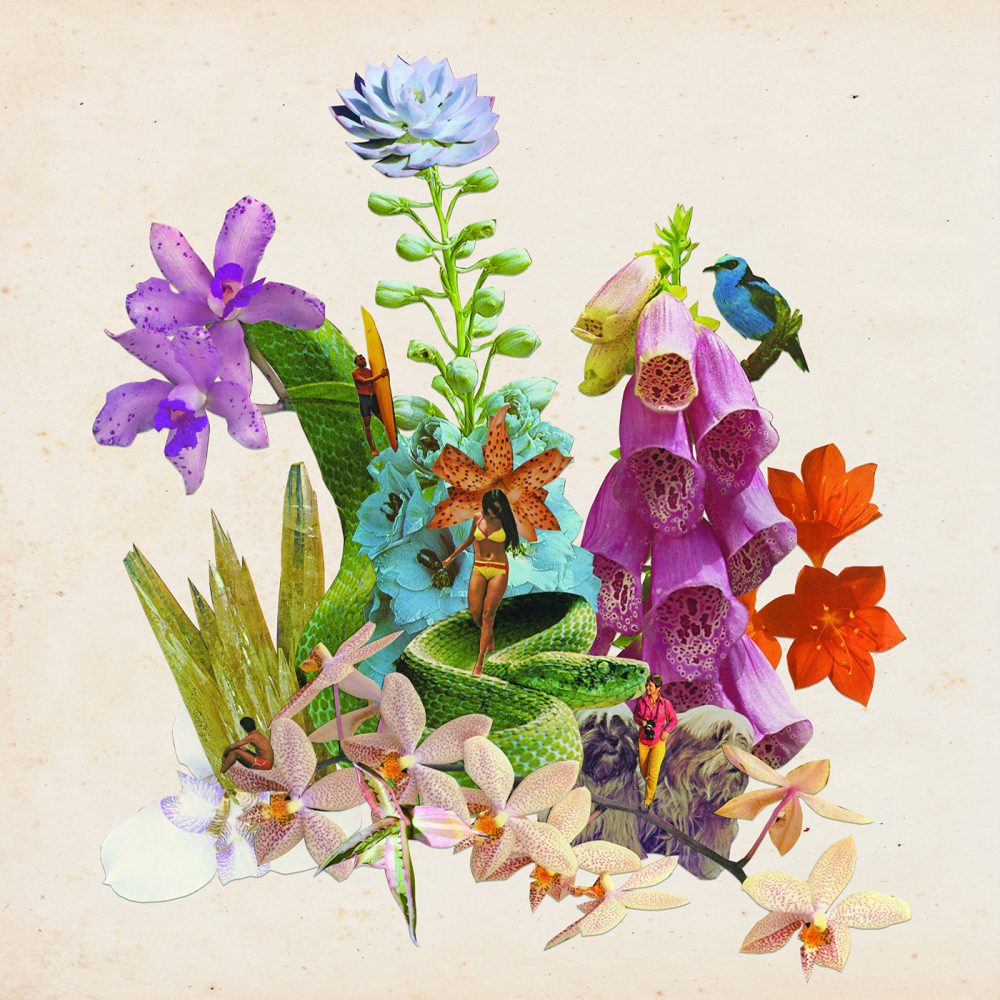
Artist and musician Ted Feighan (a.k.a. Monster Rally) has crafted a highly distinctive style across his two main mediums: design and music. Both sides of his work combine somewhat disparate elements into multi-colored, fantasy-like pieces—it’s an intriguing concept that certainly grabs your attention.

His latest piece of work, an album titled Mystery Cove, combines hip-hop beats with Hawaiian Luau music, creating a singular sound with alluring qualities. The album is a soundtrack to an imaginary film, one that “reveals a cabalistic presence in the jungle that leads them on an adventure of surf competitions, voodoo terror, and plenty of slushy cocktails.”

Gold Robot Records will release the album on November 11, and ahead of that release, you can download LP cut “Full Sail” via WeTransfer below.

Full Sail

Clone’s Jack For Daze Reveals Forthcoming Releases

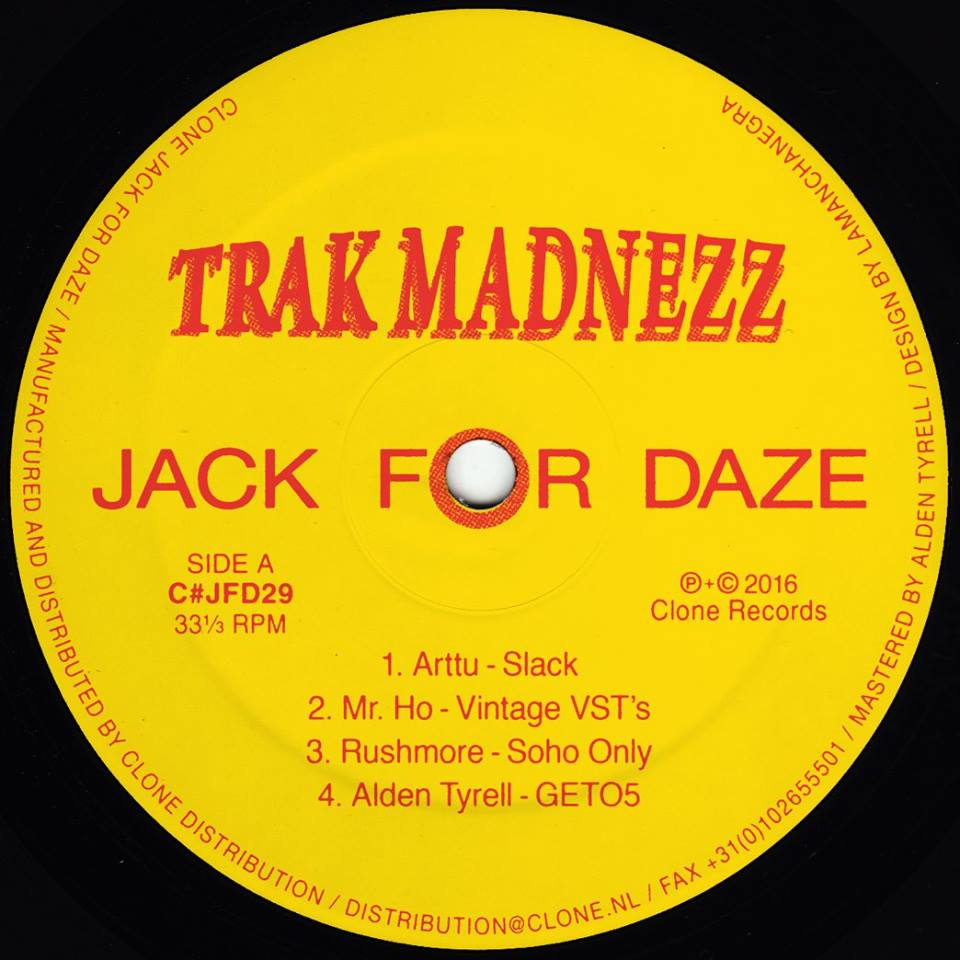
Clone has shared details of upcoming Jack For Daze releases.

Jack For Daze is the Clone sub-label which focuses mainly on pumping, acidic Chicago beats. Its next release will be a four-track EP, Track Madnezz, featuring “big no nonsense tools” by Arttu, Klasse co-owner Mr. Ho, Rushmore and Clone regular Alden Tyrell.

Shortly after that release, Jack For Daze will drop a four-track record by Mike Dunn as MDIII. The EP, 88-90 Proto Acid, promises “raw jacking acid and drum tracks.”

Clone will release Track Madnezz in late October, and 88-90 Proto Acid in late November. Pre-order them both at the Clone store and stream snippets below.

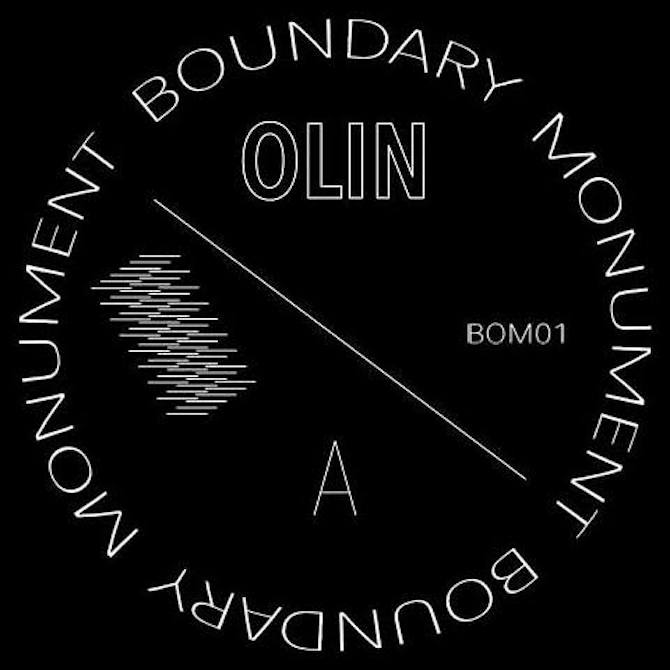
Olin Launches New Label, Boundary Monument

Olin is launching his own label.

Boundary Monument is the latest project from Chicago-based smartbar music director, DJ and producer Jason Garden (a.k.a. Olin). The imprint will launch in November, with an EP from the man himself: three-tracker Conne, which features elements of techno and house. It comes at the end of a year in which Garden also released a sample-heavy EP on Giegling; another addition to a varied and unpredictable back-catalog.

Conne will be released November 4. Stream it in full below.

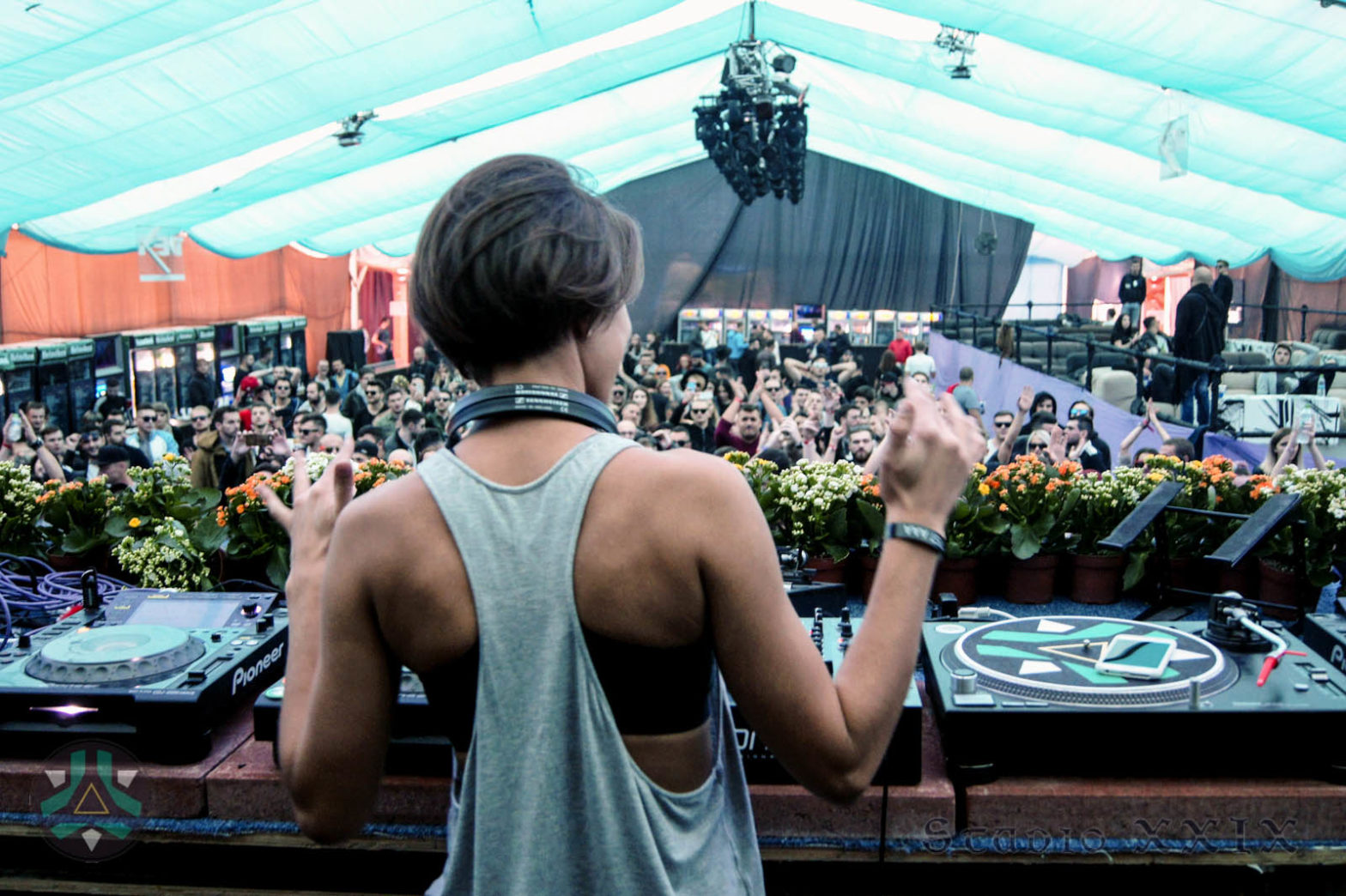
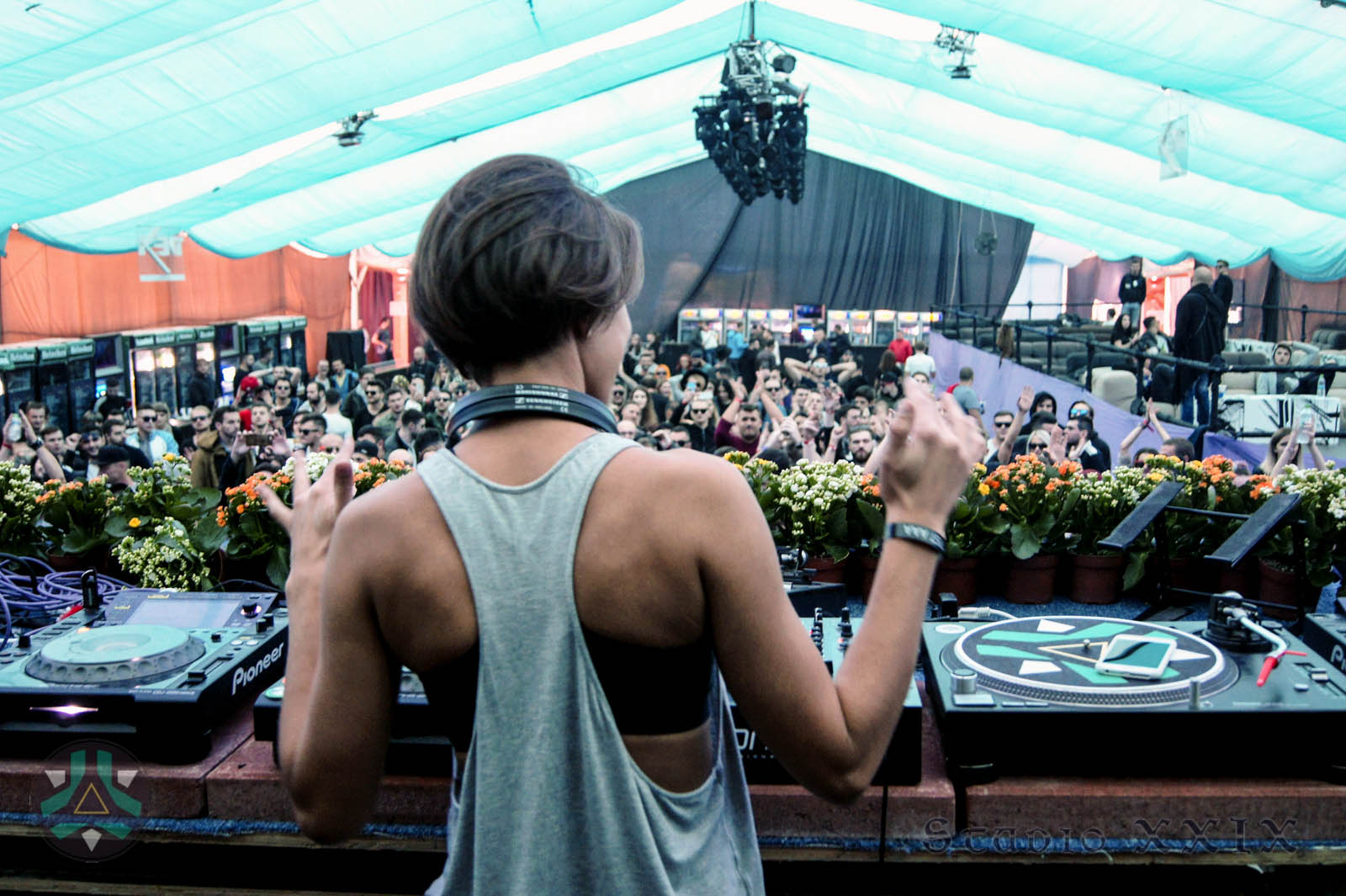
Photo Gallery: MIORITMIC 2016

CLICK A PHOTO TO VIEW GALLERY

Photos by:

Troy – Studio XXIX // Gabriel Aldea, Vlad Cupsa and Marius Maris

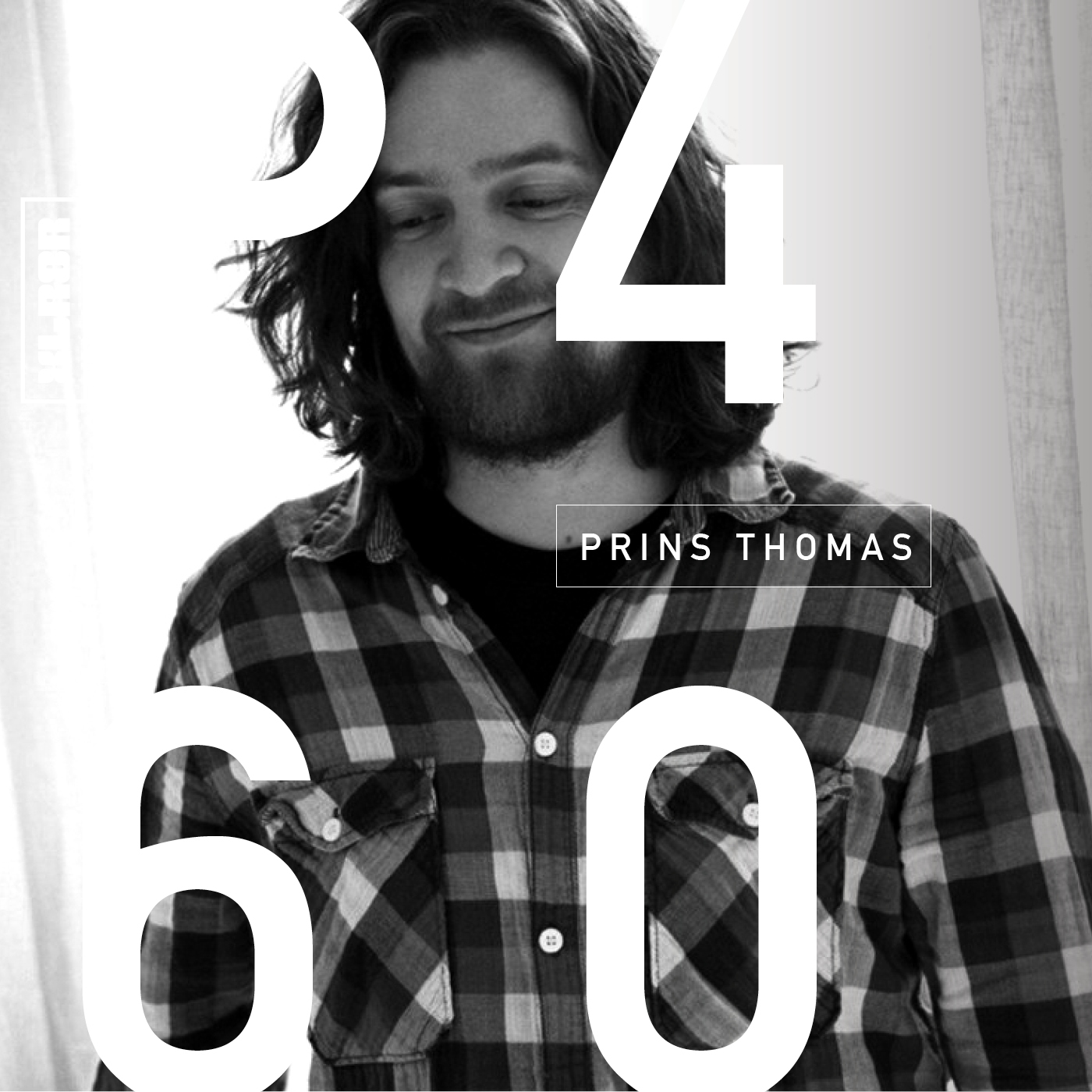
Podcast 460: Prins Thomas

At some point, all ears are likely to have been exposed to some form of space disco—a wave of jolly, synth-heavy productions, which took direction from decades of disco and electronic music before it. The sound, which truly exploded in the mid-noughties, has had ongoing success via major figures including Todd Terje, Lindstrøm, and Thomas Moen Hermansen, better known as Prins Thomas.

It’s the latter of the bunch who is widely cited as its godfather. There from the beginning, the Norwegian musician has been a constant pulse through the sound’s emergence and evolution. In the studio, via his own imprint Full Pupp and beyond, he has kept things fresh and exciting by turning in new variations and approaches. His most recent full-length, Principe Del Norte, was no different: an ambient album of sorts, which was viewed by many as his best to date (and also given the remix treatment by a host of electronic acts).

Behind the decks, his approach is equally colorful. In an interview with XLR8R from last year, he made reference to his passion from “exploring new genres of music,” things that he knows “nothing about.” That passion truly shows, embodied in his deep range of selections. This week’s podcast is no different; a tight 70 minutes of dancefloor shakers, made up of everything from electro to house and acid, all with a pleasantly retro feel.

When and where was this mix recorded?
I recorded the mix on the setup I have in my little home studio, which I call “M57 Studios.” It was recorded at 15:00, just in time to pick up my daughter from kindergarden, with barely any time to make the deadline.

What equipment did you record the mix on?
2 turntables, 2 CDJs and a Urei mixer. No separate channel EQs, so beware of some wonky three deck mixing with clashing basslines!

Did you have a specific mood or idea that you wanted to express?
Originally I had picked out a bunch of records that I thought could make an enjoyable hour of listening, but as I nearly forgot the deadline, I couldn’t find the records in question and then had to throw it together quite quickly. The selection, moods and ideas ended up being both random and accidental.

How did you select the specific tracks that you wanted to include?
The way I usually do: doing the selection on the fly and once in a while thinking two or three tracks ahead and then forgetting. In this case, it was mixing in a track then running out the room to browse through my records for the next track

How did you approach this mix in comparison to a regular DJ set?
Not that differently, apart from the crowd missing in my studio…

You recently dropped the Principe Del Norte Remixed release. Talk to us about the origins of the project, and how did you select these remixers?
Principe Del Norte was me trying to do something different to what I’d previously done, using new ideas and new tools in the studio. All the remixers were chosen because I wanted to hear these producers take on my tracks. They are all people I admire, get inspired by, and in some cases even feel push the envelope. I think there’s enough people in this business driving in unison on the same highway and this record feels more like finding alternative routes on the map.

What else do you have coming up this year?
Besides the last three vinyl 12″ releases from this project, I’m not actually sure what will make it’s way from the pressing plant before the new year. More or less just around the corner is a pretty full-on techno 12″ on Rett I Fletta, a handful of remixes both on my own and a few done together with Lindstrøm. There’s two new albums finished, one being a co-production with another Norwegian producer, the other being my next solo album; most likely stand alone records on both Full Pupp and Horisontal Mambo.

Besides that, there’s all the other artists I release: Keita Sano‘s album on Rett I Fletta should drop soon, Chmmr‘s debut album on Full Pupp early next year, Farbror Resande Mac‘s EP on Horisontal Mambo (following the 12″ we recently put out), a Laars 12″ on Full Pupp, a new Magnus International 12″ on Full Pupp, a pair of The Emperor Machine 12’s on Internasjonal, including remixes by me and Wolf Müller… and that’s just the stuff I haven’t forgot!

XLR8R Podcast 460 – Prins Thomas

Photo Gallery and Review: MDRNTY 2016

I was pleasantly surprised by this year’s MDRNTY event in Gstaad, Switzerland. The Swiss brand has been throwing parties since 2009, although this is only their second visit to this particular location. Earlier editions were held in various other venues in and around the surrounding areas—including Davos and Uetliberg—and also as part of Caprices Festival, the larger-scale annual event that comes under the same ownership.

The focus of MDRNTY as a whole, I am told upon my arrival, is to create “special” parties by hosting great music in intimate locations—throwing “events” rather than “festivals,” confirms my host for the weekend. Caprices, he explains, is the only annual MDRNTY party that falls close to the latter category; all others are small enough so as to retain the sense of intimacy that can seem so absent at many electronic music events of the modern day. As way of example, the brand once threw a party in a hot air balloon—part of their highly exclusive MDRNTY+ series—and plans are in place to find similar unusual locations in the future.

On the whole, it would be difficult to deny the successful application of this formula—much more so than with other events that attempt to abide by a similar tried and tested model. Make no mistake: MDRNTY is a real party—a good one by many standards—but also one that leaves plenty of area for improvement.

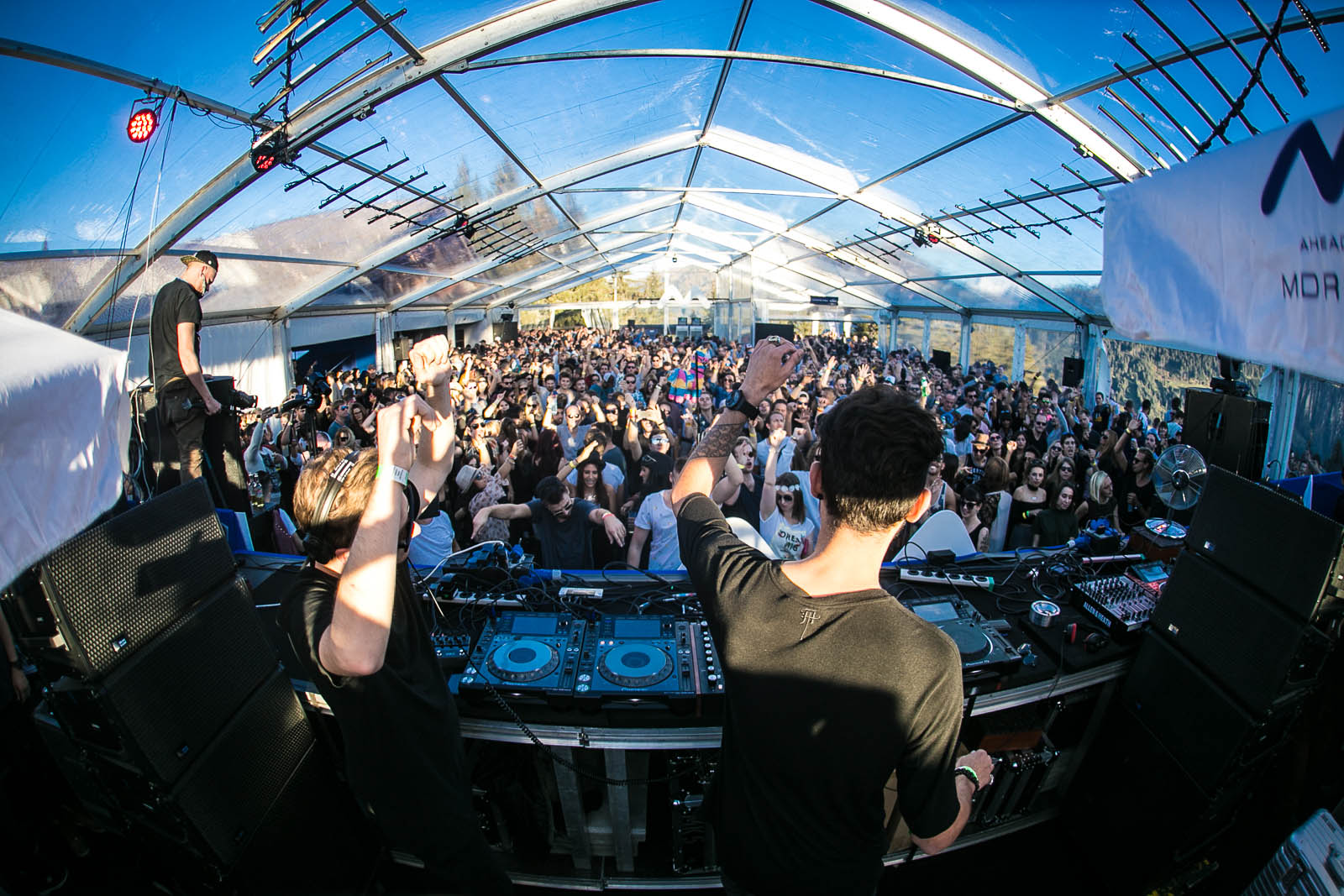
After a slow start on both days—particularly so on the Sunday, for obvious reasons—the energy picked up in the mid-afternoon as people made their way up to the top of the mountain on the cable car. Early sets were provided by locals James McHale and DJ Blazer on the Saturday and Sunday, respectively, both playing to a quiet dancefloor as anyone who had decided to arrive early either made their way inside the attached chalet to grab some food or outside to enjoy the view in the afternoon sun. It was a blissful scene, but there were little signs of a party until much later—around the time DJ Tennis arrived on the Saturday or Seth Troxler on the Sunday. This kicked on until around midnight, and even continued into the early morning for those who wished to attend the after-party hosted in a gymnasium in the village at the bottom of the mountain—although the sound in this venue left plenty to be desired. It’s a shame the hours could not have even extended at the main venue; the party really was in full swing by midnight on the Saturday. Sunday curfew was at 7pm meaning that it never really reached top gear—another consideration for next year’s edition.

Much of this success comes down to the venue—and compliments must also be made to the organizers for really maximizing the space at their disposal. Hosted at the peak of a Swiss mountain in a 270° degree transparent custom-built tent, it is without doubt one of the most unique spaces you’re likely ever to party. But, in contrast to many organizers of such electronic music events, those behind MDRNTY do not assume that this is enough; instead, it was clear that great care had been taken to ensure that the space was used wisely—both in terms of layout and sound. While the volume could certainly have been lowered, the room acoustics had been reasonably well managed given the temporary nature of the structure. In addition to this, strictly enforced capacity restrictions meant that the room never felt overcrowded; also, the outdoor area allowed plenty of space for those who wanted to grab some fresh mountain air.

As good as the venue is, however, the lineup needs improvement. It really is the weak link in the chain—the only oversight in an otherwise solidly applied model. It’s difficult to divulge too much on this without sounding overly critical, but let’s say this: MDRNTY 2016 was excellent despite the music on offer rather than because of it.

Of course, the event wasn’t entirely absent of good music: DJ Tennis and Adriatique were as solid as we’ve come to expect—although the latter’s set lacked imagination to say the least. Anthea’s after-party set came good after a patchy start, and Seth Troxler started wonderfully well before tailing off after 40 minutes—but it’s difficult to think of anything else of particular note besides James McHale’s DJ set and Guti’s live performance, two positive musical takeaways from a weekend short on them. At the other end of the spectrum were Guy Gerber and Alex Niggemann, both of whom delivered sets of generic tech-house, leaving one with the feeling that the artist budget had been poorly spent. Given the deep pockets at the organizers’ disposal, you’d think they could use their imagination to curate a lineup better suited to such a stellar musical environment. There’s no shortage of names that spring to my mind.

But it’s important to be positive because MDRNTY is a nice event. It’s a beautiful concept and one that is tremendously well executed, on the whole. Those who attended this year— almost all of whom came from Italy or Switzerland given the party’s remote nature—are sure to have enjoyed a special experience, but one that stemmed more from the venue and the setup rather than anything musical. It must be noted that any of the issues can be easily addressed; and with these simple changes, MDRNTY could become an international musical attraction too.

CLICK AN IMAGE TO VIEW GALLERY.

Photos: Valeriu Cătălineanu / Romanian Club Culture

Page 740 of 3781
1 738 739 740 741 742 3,781