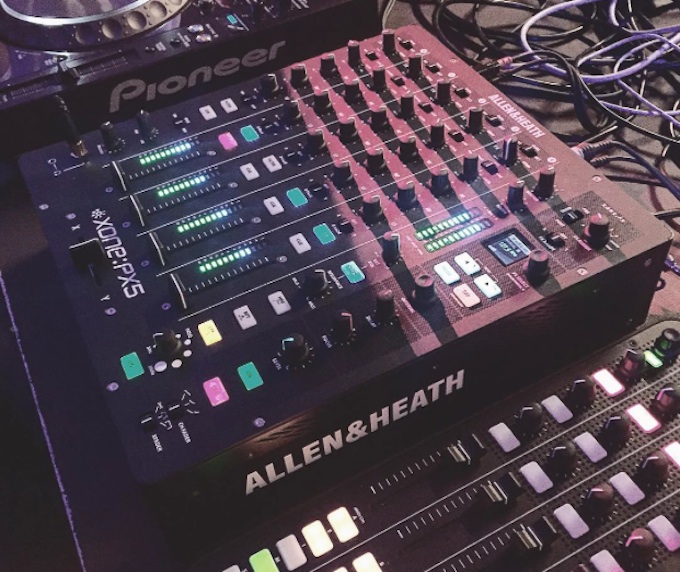
British audio equipment specialist Allen & Heath has a new mixer on the way.
Earlier today, DJ Tech Tools reported on the first sighting of the latest in a long line of Xone mixers, the four-channel Xone:PX5. The new product debuted at a company event at Berghain Kantine last night, following a period of rumors and speculation.
According to the gear website, based on images shared on social media from the event, the new mixer looks set to be a follow-up to the Xone:92, “with built-in digital FX, send/returns, and a built-in soundcard.” It is different from its predecessor in that there is one filter for the whole unit (which can then be assigned to each channel).
More info on the product is set to follow, including price and release date.
With the relaunch of our Ask the Experts series, we were set on inviting a person of a certain calibre to handle the responses. Someone who has a wealth of experience in all fields of musical interest. Someone with the kind of colorful character to give the best answers to all your questions. Someone special, basically. After some discussion around the matter, there was one name that stood out—a favorite at XLR8R for many years now, Gerd Janson. The Running Back label head has done a good job of sticking his finger into all manner of musical pies, becoming one of the most recognizable faces out there.
Back in 2014, he mixed a particularly well-received podcast instalment for us (which he christened the “Autumn Blouse” mix). At that point, we were busy musing over his move away from the oft-received branding as a “DJ’s DJ,” and how he had shrugged some people’s perception of him just being “that guy from all the Red Bull Music Academy interviews.” How times have changed—it’s hard to imagine electronic music today without him. Much of our appreciation for him stems from Running Back, the house-focused label that was founded back in the early noughties, which he has been curating alone for some time. When it’s come to his own studio work, he’s tended to share his productions through other channels though—most notably his collaboration with Phillip Lauer as Tuff City Kids. It’s still his skills behind the decks that are the most palpable though, and with regular gigs taking him across the globe from Panorama Bar to Output, it’s no surprise. With all this in mind, it’s over to Gerd to respond to his personal favorites from the questions he received from you, our readers.
Are there any key albums from your adolescent or early years that you find yourself revisiting and enjoying in the current era?
Although nostalgia is a one-way street, there are quite a lot of them. In fact, probably too many to mention. Once I like something, I usually tend to keep it close to me.
In regards to key albums, I will spare you the deadly dullness of name-checking everything from the Pixies to Massive Attack and back to Neil Young again, and just mention the ones that have some connection to or influence on my taste in dance and electronic music.
In no particular order and with not one single grey hair (please excuse the compilations):
Was there a moment in your career where you really felt like “this is it” or “I’ve made it now”? Were you generally happier after getting to that point?
I am sorry to say it, but I haven’t felt that feeling yet. Rather on the contrary: I am still amazed that I am allowed to do this for a living and people actually (and not only) pay for me to get on a plane. This isn’t meant to sound like the flip side to the DJs-complaining-coin. The most prevalent feeling that I have is that of being privileged or having received Willie Wonka’s golden ticket—that and being bleary-eyed!
It feels from your sets that you edit a number of tracks to fit them in. Why do you edit them? And if you had to give some tips about editing tracks, what would they be?
I wish I could verify that. The urge to edit is taking place in my head rather than in reality. Time is of the essence here, and although I hear things all the time that I want to edit, I rarely get around to actually doing it—or, I ask my friend Shan for executive assistance. He is pretty good and fast with it. A hindrance, or shall I say blessing, is the quantum leap that CDJs have made. Their loop function and hit cue buttons make it pretty easy to edit on the fly and get back and forth between the different sections of one track.
So, tips:
Just try to make it your own, or design it the way you think it should be played. It is always a good reason to start if something is too short, too cheesy or too complicated to be played out in your DJ sets.
Don’t be shy about disrespecting the artist’s original intentions, but respect copyright. Not everything that manages to add beats to intros and outros needs to be pressed on vinyl. You are your own judge.
It doesn’t matter if it’s an ugly edit or a perfectly executed job that sounds like you had the master tapes.
Ableton’s warp function makes things tighter than seat rows in discount airlines. If you dislike that, there is always reverb, delay and the backwards loop option for faking a tape machine.
Apart from “feeling,” are there aspects or musical elements that make you like or appreciate a record or track?
It depends on the genre, I guess. A techno record can have an appeal just from the mere quality of its sound design; whereas a pop, disco or house record can really suffer from over-production. Certain vocal samples can be really off-putting one time and really inviting in another. Guitar solos in dance music are hard to stomach, though I am always happy to hear a saxophone in a house record that doesn’t make me cringe. So, I only listed what I don’t like or appreciate, so just imagine the opposite of that. I hate to sound corny, but I am afraid “feeling” is the one that matters.
“A good tip a friend of mine once gave me is to pick a track or song you really like from start to finish, take a look at its structure and use it as a pattern.”
Do you have any advice about arrangements?
David Matthews might be the one to answer that question, or Dr. Richard Niles’ book “The Invisible Artist” could help here, but as this is supposedly about club music, I could at least answer it from a DJ’s point of view.
Keep the simple rules in mind that allow DJs to mix records in and out, while also try and keep everything in between interesting. That could include mega-long breakdowns, as well as classic structuring with verse and chorus parts. It really depends on what you are trying to do. Generally, with the advent of digital DJing and the diminished importance of vinyl, most tracks don’t need to be 10 minutes long these days.
A good tip a friend of mine once gave me is to pick a track or song you really like from start to finish, take a look at its structure and use it as a pattern. Or just buy into a DIY attitude and do whatever sounds or feels good to you. There is always someone ready to edit (see above).
Would you say success equals happiness in some way?
Is this a philosophical question? If all you want to do is be successful no matter what, then I guess the answer is obvious. There are a lot of successful people in all fields who don’t appear very happy to me. And there are a lot of happy people who aren’t successful at all. Will Powers’ “Adventures in Success” or Talking Heads’ “Once In A Lifetime” can be of great help in answering this quintessential question.
One would think that when you have a lot of gigs, some of them might be more boring or just worse than others. Without dropping names, is there a ratio of good gigs vs. bad ones?
After all these years, I still cannot put my finger on what really makes it work and what doesn’t. You can be in a perfect setting (sound, booth, dancefloor, ambience etc.) and it all could stay lukewarm. Then you might find yourself in a sticky basement with a beat-up, low budget mixer and a monitor set up that’s louder than the actual sound system, but you have the time of your life. So, there is no ratio at all. Probably, more often than not, it’s how you approach “playing a lot” and how much you enjoy being at a party all the time. I would say that if the “bad” ones outgun the “amazing” ones, you need to take a break or change your booking agency.
” I strongly believe that DJing should be about the moment rather than about a certain “set”…..
My question is about DJing. I saw you at Sonar and MUTEK Barcelona and was so impressed by your set and the quality of the transitions. I was wondering how it works at this level. Do you prepare your set and know exactly what tracks you will play and in what particular order? Or do you just improvise in the moment according to the vibe and the crowd?
Thank you. That’s very flattering. I tend to disagree though. With the amount of gigs that I am blessedly allowed to play, the preparation—at least in the sense that you imply—tends to be almost zero. It’s definitely more tailored towards the moment, the atmosphere and the people, but not improvised in the narrow sense of the term. If you play a lot, you tend to know the tracks that you use after a while quite well, so it becomes easier to combine them randomly as you see it fit. Of course, if someone would want me to play a certain-genre-only kind of DJ set, there would be some preparation in regard to picking music or packing a record bag for it. But I strongly believe that DJing should be about the moment rather than about a certain “set,” or you just hope that everyone is one the same page anyway.
What would be your advice for someone to make it as a DJ? Especially for beginners.
These days you should probably get a great haircut, work on your social media skills and sniff out the zeitgeist—or, just do the total opposite of that and carry the torch of the underground. Without a grain of salt, our times are probably the best for DJs in quite a while. Of course, you can still try to make yourself a name by having it on good, successful (that word again!) records, or you will just have to work your way up the hard way. Listening and ideally dancing to music for hours, starting at private parties and bar gigs, frequenting as many clubs as possible and just staying on the ball until someone takes notice. I strongly believe that everyone can do it as long as you have a sincere interest in music and the way it is presented or played. It’s not rocket science. And if everything fails: start your own party or club. No pain, no gain.
Best tips for DJing vinyl?
Before I start telling you about how to adjust tonearms, buy Origin Live splimats, Audio Technica record weights, cartridges with a high output, ideally phono pre-amps and Oehlbach shock absorbers (very cheap and actually working), please let me quote the expert that is Objekt, who tells clubs and festivals all they need to know:
VERY IMPORTANT RE: TURNTABLE FEEDBACK—MUST READ!!! ********************
IF THE TURNTABLES ARE FEEDING BACK (OR BROKEN), THEN THE SHOW DOES NOT HAPPEN.
It is the promoter’s full and sole responsibility to ensure adequate isolation and feedback prevention. Simply saying “turn the bass down” is not an option. Objekt reserves the right to refuse to perform if poor turntable setup does not allow vinyl playback at a reasonable volume.
Here is how to prevent turntable feedback:
– Put at least one concrete paving slab under each turntable – Put four whole tennis balls underneath each concrete block. These are important. – Better yet, several layers of concrete paving slabs, with tennis balls between each. – If the turntables are still feeding back, get some rubber bands and some rolls of tape and do this. – Don’t put the DJ table on a portable stage. It’s bad news if you can feel the vibration in your feet. – Don’t set up the main PA so it’s behind or pointing at the decks – TEST THE SETUP AS BELOW! Often one concrete block is not enough.
– ABSOLUTELY NO “FREE-FLOAT” INFLATABLE CUSHIONS
Here’s how to test for turntable feedback:
– Play a quiet record (e.g. 33rpm album track) at FULL club volume – Without touching the gain, now play the silent lead-out groove at the end of the record – Tap the side of the turntable – Does the system start to feed back?
If the answer is yes then there is still work to be done.
Unfortunately, in 2012, with the vinyl DJ becoming a dying breed, it seems all of this can no longer be taken as assumed… PLEASE check and double check. If in doubt, buy some tennis balls, a pack of rubber bands, and some rolls of tape and have them ready.
If, God forbid, it’s 6pm on Saturday and you’re only just reading this tech rider now, an inflated bike inner tube can sometimes work as a substitute.
What’s you’re favorite record label?
I could say Strictly Rhythm for the best and the worst house records of all time, or just name Prescription Underground who made me buy underground dance music in the 12” format.
What’s your favourite “save the dancefloor” song?
Chic’s “Dance, Dance, Dance,” Earth People’s “Dance,” Prince’s “Sexy Dancer,” or if the message in all of them is too subtle, try Mike Dunn‘s “Dance You Mutha.”
What advice would you give an aspiring DJ looking to get regular gigs or a residency?
Please see above. Just invest the time and make the effort. As for residencies, back in the days before the internet it always was a strong look to actually hang out at the club that you wanted to play at ALL the time (instead of showing up out of nowhere with a mixtape in your hand an demanding a slot). Like I said before: you can always start your own party.
What DAW do you use when you produce? Do you mix and master your own tracks, even if just for club use?
Cubase, as that is the one that Phillip Lauer taught me how to use. Very rarely Ableton, which is great for edits and equipped with an almost endless set of possibilities, whereas Cubase seems to be more like an adult-oriented-musician type of thing (which I am as far removed from as an Indian elephant from the North Pole).
No mixing, no mastering. I know what I like when it comes to that, but I also know that someone like Lopazz is way better at achieving a level than I never could. For mixing and mastering, it’s also important how your studio room sounds, what equipment you have, how well you know how to use it, and, most of all, how much time you have. The amount of remixes we do as Tuff City Kids wouldn’t be manageable if we had to do the mixing and mastering ourselves, especially not in conjunction with our travel schedule.
Having said all that, I am very aware of the fact that a lot of people consider mixing as an artistic act, or at least an integral part of their sound. So, I understand if you don’t want to leave that to other people. I don’t mind though. I think it’s even more important than the actual mastering process, so I want it to sound as good as possible.
How much of your solo production is hardware-based? Do you think there is any difference, or is it just a matter of preference?
With Tuff City Kids it’s almost 80% hardware based. Even though I almost mirrored that studio we use together, my own still needs a lot of work. So, if I am working on a remix by myself, I try to use the “classic” approach of using the stems I get, and making something else out of it with some additions from within “the box.” Hardware is usually more fun and even quicker as it tends to impose some limits on what you can do. But, at the end of the day, it’s a matter of preference or your personal belief system. The end justifies the means.
Do you think about the emotion you want to convey when producing or playing a track? Or is it more intuitive or a reaction to the crowd?
Emotion equals reaction, and form follows function. Producing can be quite visceral, while remixing is definitely a bit more calculated (what does the track or song need?), with a strong emphasis on being dancefloor friendly. The same can also be applied to DJing. If you are playing, be friendly to your dancefloor. I leave it to other people to do their own and other’s heads in.
“Use the blind copy function that your e-mail client offers you so gently. Please do. Really.”
Being a label head, what advice would you give an artist in regards to sending tracks to a label?
Use the blind copy function that your e-mail client offers you so gently. Please do. Really.
Other tips: give your USB stick or CD personally to someone who works at or owns the label you want to release on. Try and pick a label whose music you like, or which at least corresponds somehow with the music you make. Soundcloud and non-expiring download links are a bonus.
Keep in mind that most labels, and the people who work at or own them, live in the cross-fire of demos and mails. There is just no guarantee or safe way of getting heard. The best idea might still be to release your first record all by yourself. If you believe in it enough that you would go through the costly and unnerving process of releasing it, chances are high that someone else might feel the same, and then people will come knocking on YOUR door. See “making-your-own-parties” if you are a DJ.
A word on a personal matter: I hereby would like to apologize to each and every person (friend or foe, stranger or acquaintance) that ever sent music to my doorstep and didn’t get heard or even a reply. I am deeply sorry, but it’s humanely impossible to listen, deal, feedback or discuss about all of it—at least for this regretful and guilty human.
I’ve been thinking about starting a label for some time now. What do you think the most important factors are and what would be three tips you would offer?
If you have the urge to start a label, just do it. It doesn’t matter, if your label brings something new to the table, does valuable re-issues, or serves an old formula. Just ask yourself if you would buy the record yourself—that is all you need to know.
Plus, in our times, the eye of the needle is wide open. Distributors and record shops are still vitally important and might be still on top of the game, but they are not the only players or the constitutional quality control.
Tools like Discogs, Bandcamp and the internet as a whole make it possible for everyone to distribute their own music/label themselves. It is the window to the record buying world, no matter which place on this planet you call home.
So, here are my three tips:
Still get a distributor, if possible. They make things quicker and easier if you have something else to do other than going back and forth to the post office all day and writing countless emails in between. Other people might prefer the DIY route.
Try to find a mixing-mastering facility you like and trust, and stick with them. The same goes for a record pressing plant. Like in every other business (if you want to consider this one), it’s good to build relationships that last (which mean quicker turnaround times, trust etc.).
Inform yourself about how the classic music industry works (publishing, mechanicals, copyrights etc.). Even if you want to be independent and underground, it helps to know how things are done on the other side. If you don’t care, go back to DIY and shrug.
_______
Gerd Janson is mixing Fabric 89, due out on August 19.
Ahead of that, catch him spinning at Sweden’s Into The Valley Festival (taking place July 28-30).
Entitled tran-c EP, the two-tracker will be the Argentine’s third EP of the year, following on from Congo Toys on Apollonia and Nais on Ice on Melisma Limited.
Tracklisting:
A. Tran-c B. Gom On
Ahead of the EP’s July 25 release, snippets are available to stream below.
Earlier this month, the Berlin-based DJ-producer also offered up an unreleased track as a free download; grab it here now.
Smallpeople and Moomin have come together for their first ever collaborative EP.
Smallpeople are production duo Julius Steinhoff and Just von Ahlefeld (a.k.a. Dionne), a pair also well known for their work heading up Hamburg-based imprint Smallville Records. Their next record will be a collaboration with Sebastian Genz (a.k.a. Moomin), a favorite at the label. Despite having worked so closely together over the years, it’s the first time that they have come together in a production context—expect three cuts of perfectly assembled deep house, dropping on Genz’s Closer Records.
For more of an idea of what to expect from the trio, check out the podcast they put together for us last year in celebration of a decade of Smallville.
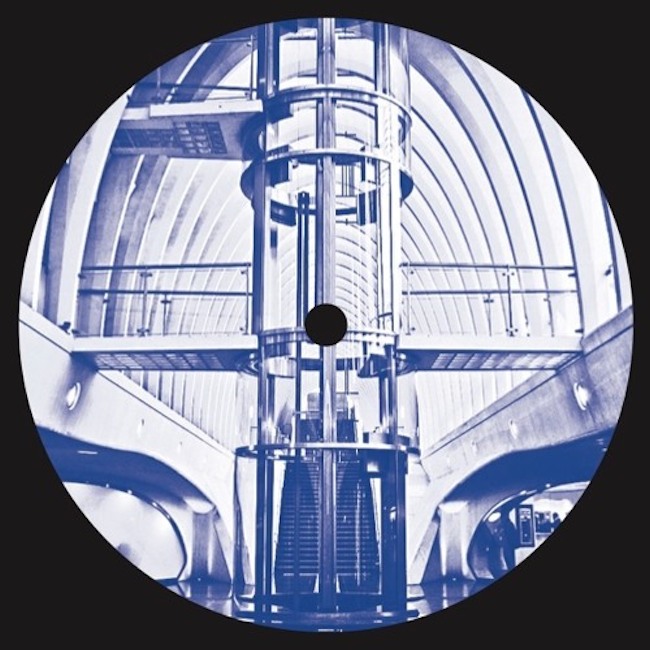
Secret Elevator is set to drop in early September. Stream snippets below.
Tracklisting: A1. Lack of Lighters B1. Secret Elevator B2. Soup of the Day
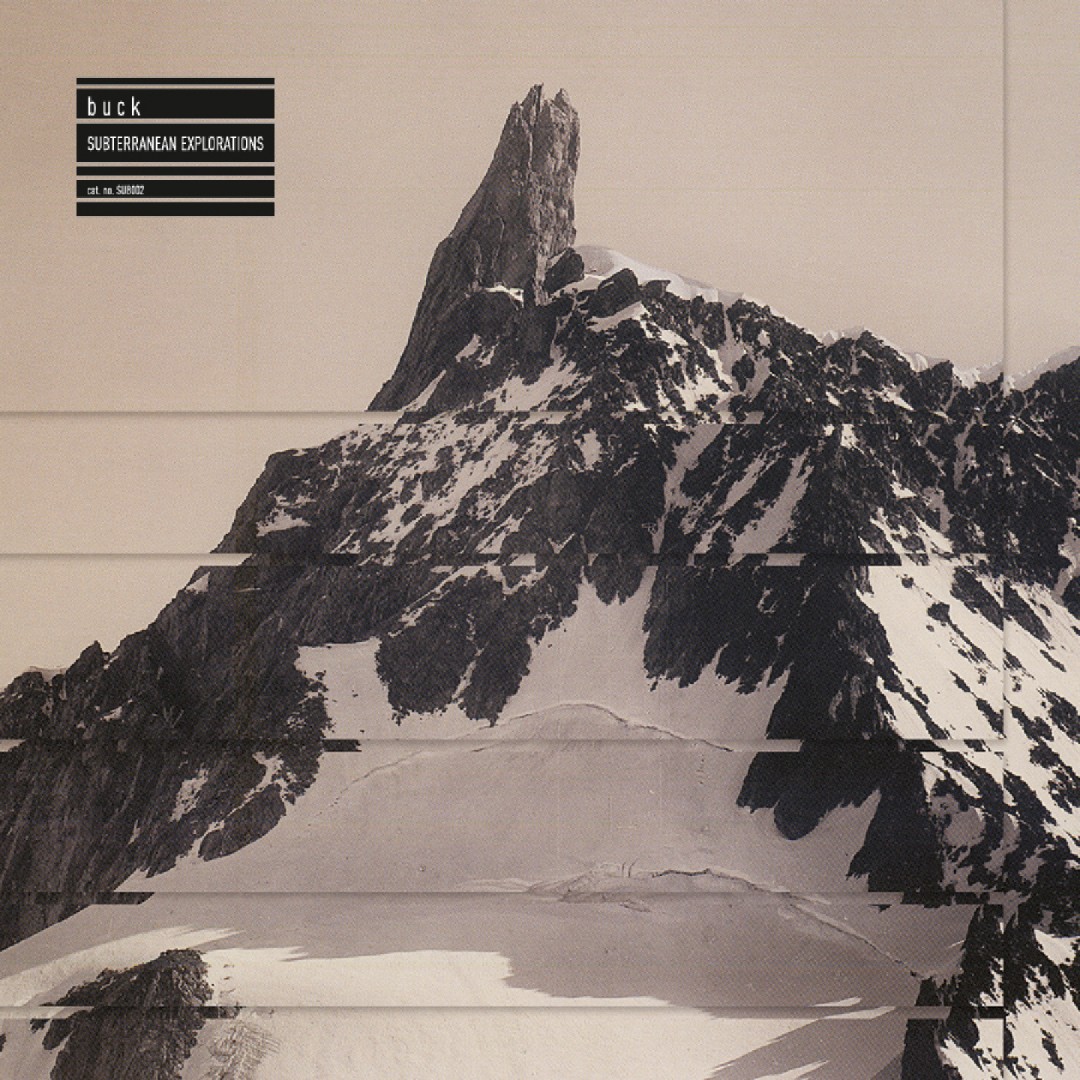
The second release to come out on Alessandro Stefanio’s Substrato label comes from the Italian producer himself, this time under his familiar Buck alias.
Just as with Substrato’s debut release, Limo’s Fluid Identity, Buck’s latestEP is a musical exploration of both atmospheric heights and geological solidity. A mix of intense tectonic beats and ambient winds, Subterranean Explorations showcases Buck’s skillful take on the natural living environments that we often take for granted.
The four-track release also includes a B-side remix of “On Board” by collaborative Dutch producers Robin Koek and Nick Lapien as Artefakt.
With its vintage vinyl crackle framing a progression of sounds,”Atmo 003″ feels like you’ve stumbled across some historical recording of a long-lost technological civilization, showing that Buck is as capable of producing sonic stories about imagined pasts as connecting us with the tactile reality of the present.
Tracklisting: 01. Ambient Progression 2. Atmo 003
Side 2 1. On Board 2. On Board (Artefakt remix)
You can pick up the full EP in 12″ and digital versions by visiting Juno or Clone, and you can download the track “Atom 003” by clicking on the WeTransfer button below.
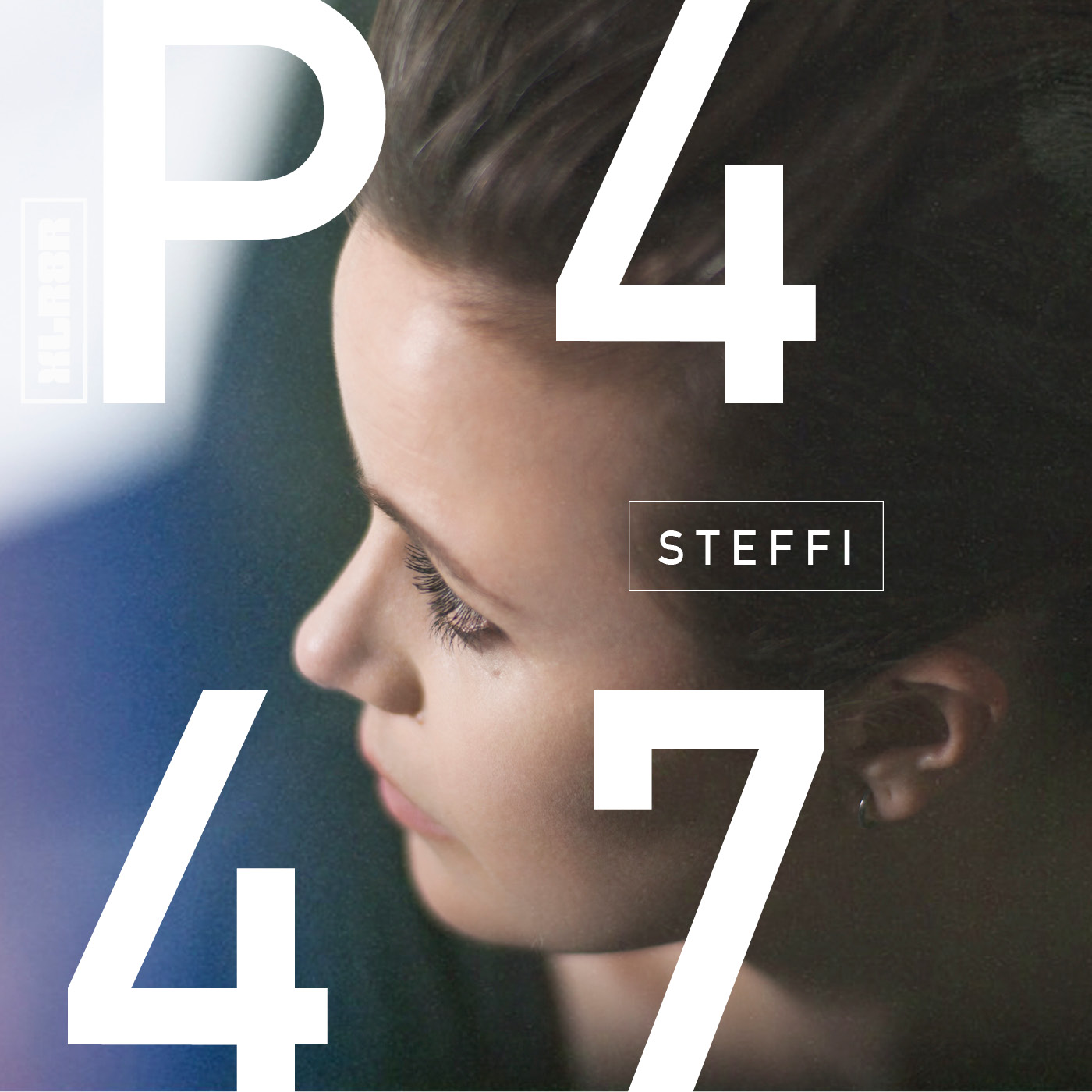
Dutch-born Steffie Doms (better known as Steffi) was featured twice on XLR8R last year. The first appeared around April when the Berlin-based DJ-producer invited us into her hardware-heavy studio to discuss the launch of her new live set and how she was tailoring her touring schedule to allow her more time to work on her productions; the second arrived several months later and focused specifically on the relaunch of Klakson, the imprint she co-runs with Dexter, her compatriot who marked the occasion soon thereafter with a 70-minute mix full of gritty and funky electro.
During the same conversations, it was agreed that Steffi, too, would contribute to the XLR8R podcast series; in a sense, we asked her to celebrate the label’s relaunch and prosperity with a showcase of its electro/IDM-focused sound. It’s been a long time coming—over eight months in total, if you’re counting—but it’s certainly a mix worth waiting for.
Shying away from the limelight, Steffi has long been a real DJ’s DJ; she is widely acclaimed for both her technical proficiencies and ability to deliver the right record at the right time. The foundations for these successes were laid during a decade of spinning in Amsterdam—”..it[this period] allowed me the time and space to really hone my skill set as a DJ,” she says—before a move to Berlin in 2007 and an invitation to join to Ostgut booking roster gave her the platform to excel and offered a wider audience to which she could then begin to express herself. In a 60-minute mix laced with dirty electro and broken beat cuts, Doms delivers another timely reminder of the skills that earned her a Panorama Bar residency over eight years ago.
When and where was the mix recorded? Last week at home.
What equipment did you record the mix on? Two technics 1210 and a Rane 2015 mixer
Did you have a specific idea/mood that you wanted to express? In last year’s interview with XLR8R, i spoke about the relaunch of my other label Klakson records. This has always been a more electro/IDM-based imprint; to celebrate the return, my label buddy Dexter and I came up with an idea to do two electro-flavored mixes.
How did you select the specific tracks that you wanted to include? It’s a blend of new contemporary broken beats with some more classic electro from the last few years. There is a nice community picking up the genre again which is really inspiring.
How did you approach this mix in comparison to a regular DJ set? Go with the flow.
You relaunched your Klakson label towards the end of last year. How are thing shaping up with that? I have quite a few things lined up for that. I have just finished a release with Dexter, and I signed a few brand new artists as well.
Lukas Keijser is doing all the artwork. He recently did the cover for Virginia’s new album on Ostgut. It’s nice to work with my closest friends because Klakson always has been a family affair.
What else have you got coming up this year? Can we expect some more releases? In 2014 i started a new project with Martyn called Doms & Deykers. We released two 12″s and we just finished our first album which will see daylight at the end of this year. We’ll be performing a few live shows to celebrate this. In 2017 I will be taking quite some time off DJing to write my third solo album.
Two weeks ago it was announced that Australian producers Lucianblomkamp and Seekae‘s John Hassel would be teaming up to form Brutalist, a collaborative project that will release its debut mixtape via Good Manners on August 26.
The pair met at a show in 2015 and subsequently started sharing musical ideas via correspondence when Hassel returned to his UK base. Meeting again in Melbourne—using a range of instruments including a Korg Poly 800, MPC1000, Piano, and Violin, as well as various music software—the pair completed the Brutalist mixtape, a thoughtfully conceived piece of ever evolving, textured music. It’s introspective, powerful, and beautifully melancholic—a perfect amalgamation of both artist’s strengths.
With the mixtape dropping later in August, Brutalist and Good Manners have shared with XLR8R the first taste of the project in “Strep.” Driven by floating atmospherics, melody, and hard-hitting beats, “Strep” is music to drift away to and can be downloaded in full via the WeTransfer button below.
Casper Clark (a.k.a. Volte-Face) has two new EPs on the way via his own BleeD imprint.
First up is a solo effort entitled You Bury Me, set to drop this July—a four-track package that features a remix by Japanese techno head Iori. That record will be followed by another new EP from Clark’s collaborative project with Daniel Avery, Rote (a paring that we profiled earlier this year in our Get Familiar series). The five-tracker promises more of the dark, mysterious techno and ambient works caught in their previous releases.
Volte-Face’s You Bury Me will drop on July 15. Pre-order it at Juno and stream the EP in its entirety below. Rote’s EP2 will follow later this year, scheduled for a September release.
Tracklisting:
Volte-Face You Bury Me A1. Shirime A2. Shirime (Iori Remix) B1. You Bury Me B2. Dead Cat On The Dinner Table
Rote EP2 A1. Lifted A2. Rote 3 A3. Sun In The Night B1. Rote 4 B2. End Of The Sky
Earlier today we reported on the upcoming release of the next and final episode in Solar One Music‘s Hubble Telescope series—a trilogy dedicated to the marvels of the spacecraft. First up was 2015’s Everything is Nothing by Luxus Varta, followed by E.R.P.‘s contribution earlier this year—Ancient Light, an EP that we described as “cold, angular music” with “a unique appeal that few others can muster.” The German imprint will now add to that list a split EP by The Exaltics and Gerald Donald (working under various guises, including Heinrich Mueller and Der Zyklus), entitled Spiralgalaxie. It will also see the debut of their collaborative endeavor Project STS-31, a name that was borrowed from the launch of the telescope itself.
The EP looks set to contain all variety of electro and techno jams, spawned from a number of the artists’ different aliases—amongst all of them, you can be sure that dark, cosmic themes will be awash in the works. Alongside the vinyl pack, the label are also offering five bonus cuts on CD format; ahead of that release, they have been kind enough to share one of the five, a cut from label co-founder Robert Witschakowski (a.k.a. The Exaltics).
The tune in question, “Messier 81,” is a prime example of one side of the multi-talented producer’s varied palette. Unlike some of his tougher works, this is more like a throwback to retro electro production. A lively acid line subsumes its laidback beat, amid the occasional melancholic synth. It’s very precisely put together, but still oozes raw character—the hallmark of a real professional.
Download “Messier 81” via WeTransfer below. Spiralgalaxie is due out on September 5, and can be pre-ordered at Bandcamp.
Following on from a contribution to the series earlier this year by Gerard Hanson as E.R.P., German imprint Solar One Music has announced that Heinrich Mueller (a.k.a. Gerald Donald of Drexciya) and The Exaltics will handle the third and final chapter in their tributary series to the Hubble Telescope. Together, the two electro acts will present a new endeavor entitled Project STS-31—a name that references the launch of the telescope itself.
The EP features contributions by both artists under various different guises. According to the label, we should expect “nothing but contemplative and cosmic electro beats using original outer-space sounds from the Universe.” As part of the bonus CD package, there will be five additional cuts provided.
Spiralgalaxie will be released on September 5, and can be pre-ordered now at Solar One Music’s Bandcamp (where 100 limited edition box sets featuring T-shirts, posters and more can also be pre-ordered). Stream snippets of all the tracks below.
Tracklisting: A1. Project STS-31 “Spiralgalaxie” A2. The Exaltics “NGC 253” A3. Heinrich Mueller “Adaptive Optics” A4. Robert Heise “Stars, Gases and Dust” B1. Der Zyklus “Ionospheric Delay” B2. Project STS-31 “50,000 Light-Years Away” B3. Rudolf Klorzeiger “Globular Cluster” B4. Crotaphytus “Diving Through the Oceans of GJ 1214 b”
CD Bonus: 09. Project STS-31 “Density Waves” 10. The Exaltics “Messier 81” 11. Project STS-31 “The Supermassive Black Hole” 12. Robert Heise “The Survey of the Entire Sky” 13. Der Zyklus “Ionospheric Delay” (Extended Alternate Bonus Version)