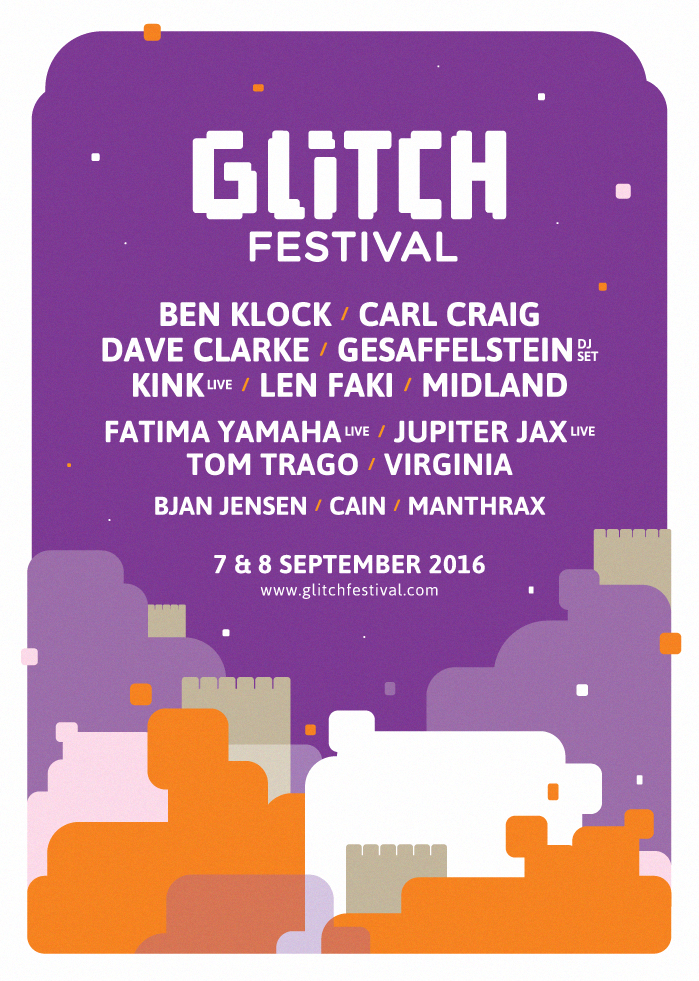
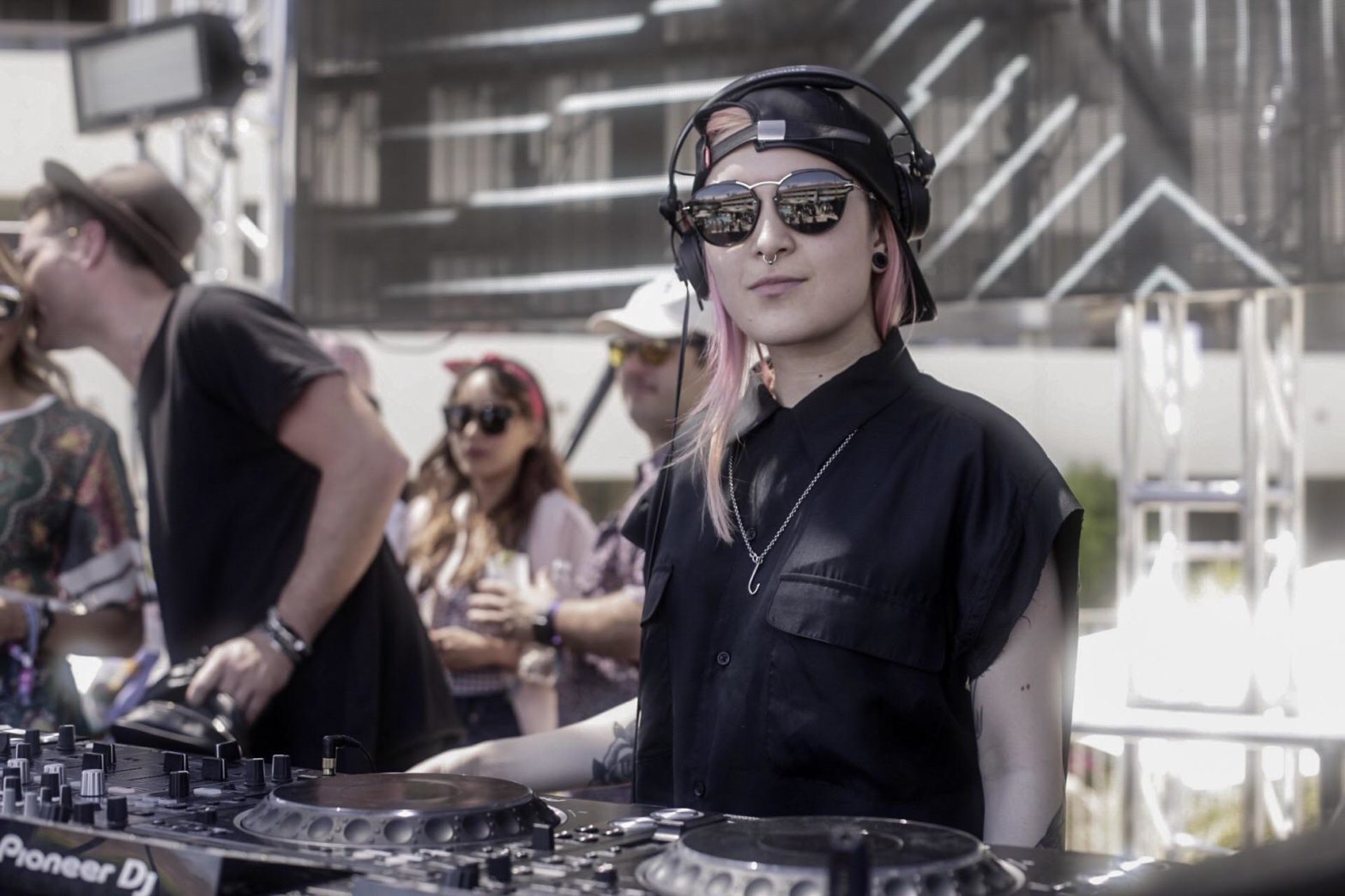
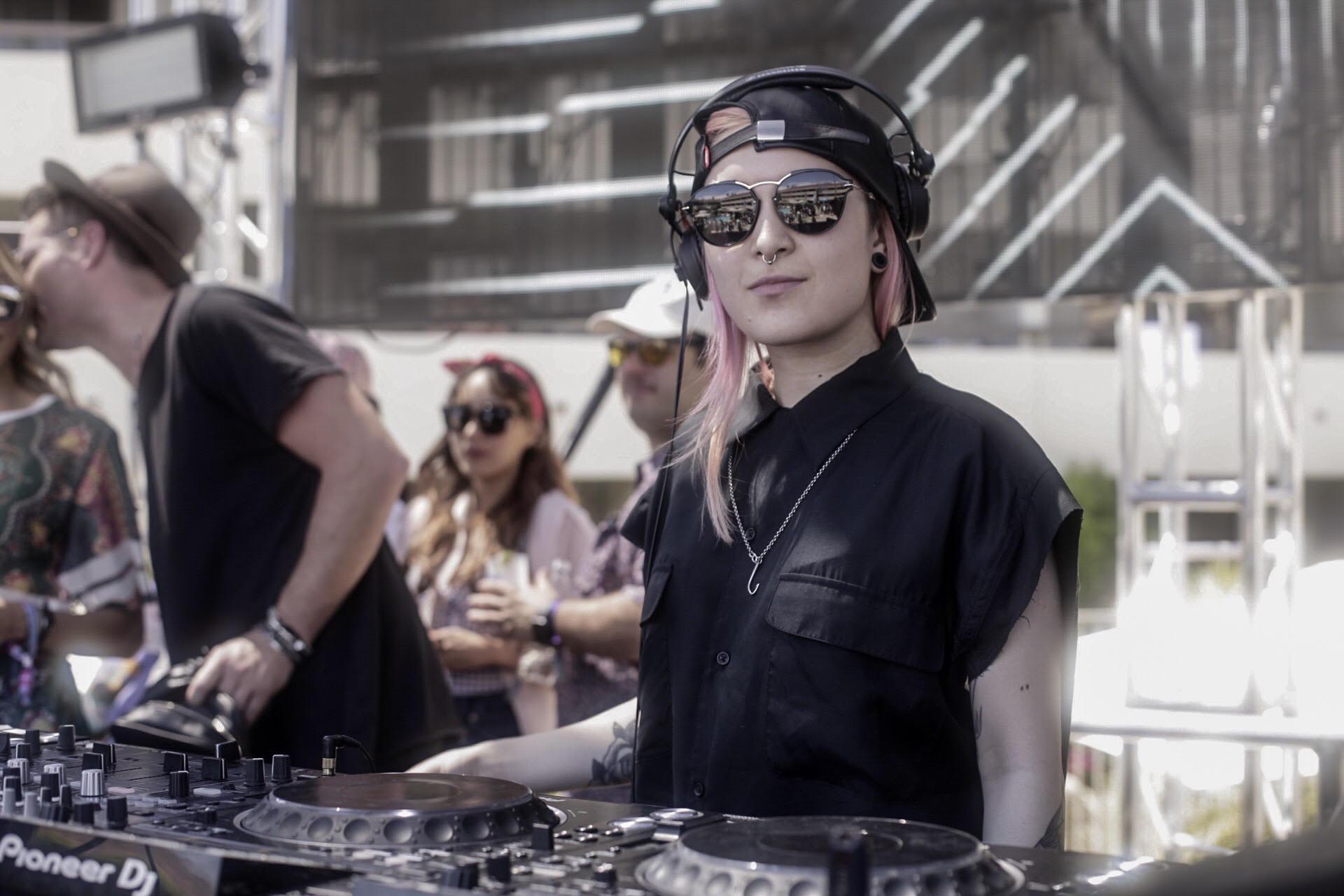
Glitch Festival, the newest of several promising festivals happening around the Mediterranean this season, has revealed details surrounding the lineup for its first edition which is set to take place September 7-8 on the island of Malta. The event promises attendees a unique destination festival experience in its partnership with the Malta Tourism Authority, bringing a quality roster of house and techno heavyweights to a fortress hidden deep in the woods of Buskett.
The lineup for this year’s Glitch Festival is as impressive as its distinctive location, assuring partygoers a strong techno presence at the fortress with Berghain residents Ben Klock and Len Faki both booked for sets. Those with a penchant for house music should also be satisfied, with performances by Fatima Yamaha, Tom Trago, KiNK, and more.
You can buy tickets to Glitch Festival by going here, and you can view the full lineup for the event below.
[row]
[column size=’1/3′]Ben Klock Carl Craig Dave Clarke Fatima Yamaha[/column]
[column size=’1/3′]Gesaffelstein Jupiter Jax KiNK Len Faki[/column]
[column size=’1/3′]Midland Tom Trago Virginia[/column]
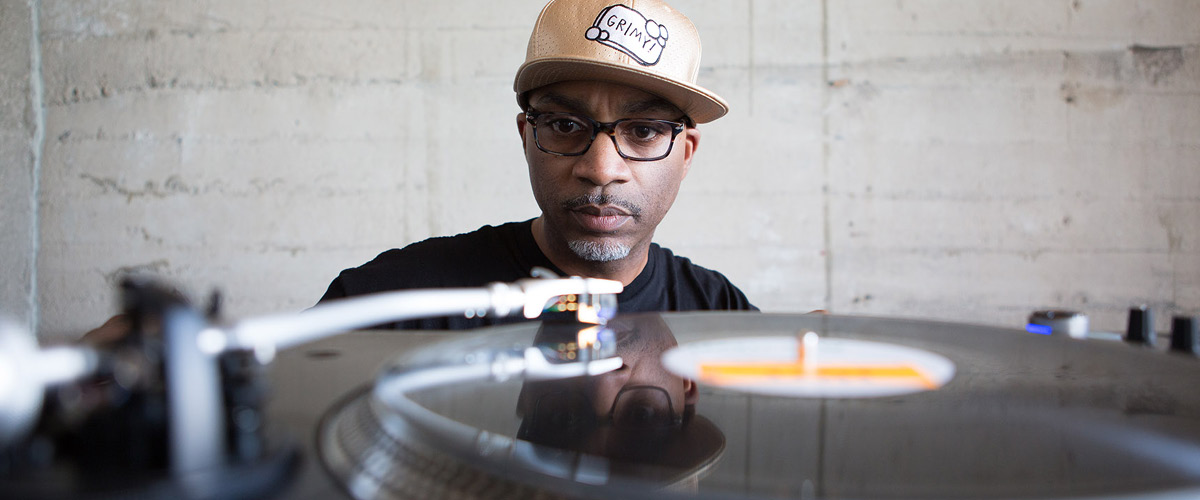
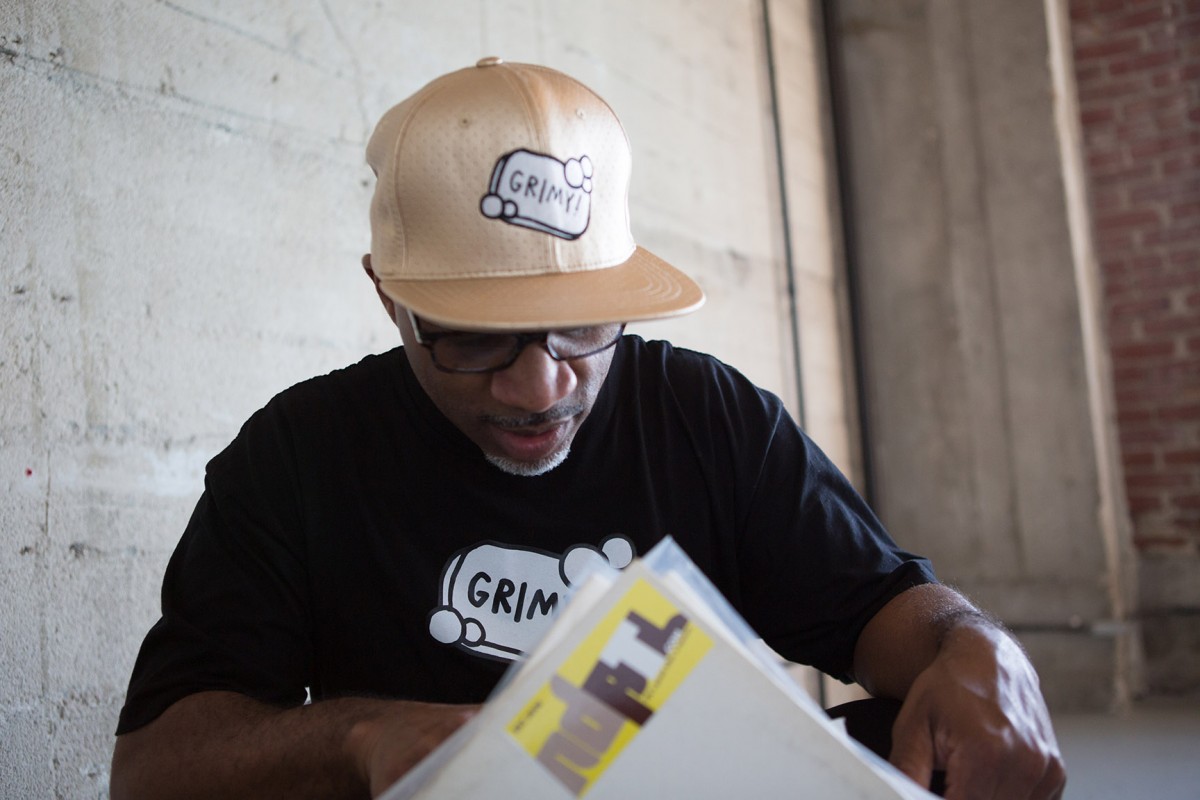
For those unfamiliar, Zernell Gillie (a.k.a. Grimy) is a highly respected Chicago DJ and producer most known for his role at the helm of Crate Diggers and Grimy Edits. Crate Diggers, a multi-platform initiative and events series, was launched in conjunction with Discogs and has held massive showcases—with an attached record fair—in Portland, Los Angeles, and Miami, with the rest of the world to follow this year. Grimy Edits, on the other hand, is a faithfully reliable house and disco edit label that sees Zernell and his Chicago cohorts unearthing and reworking rare cuts from days gone by. In short, he’s a relentless digger who has dedicated his life to the craft of DJing and everything that it entails—and it’s because of this fact that XLR8R has invited him to provide 8 tips on ripping vinyl to a playable digital format.
Clean the Record
The first step to creating a high-quality vinyl rip is to work with a clean record. This step is a no-brainer, whether you’re mixing or ripping records, you should always make sure your records are free of dust or grime. Start off by using an anti-static carbon fiber cleaner to lift the dirt out of the grooves of the record and a micro-fiber cloth to wipe the dust away. If you have new or sealed records that you want to rip, you should try to record them within the first couple of plays while they are at their cleanest.
Configure the Cartridge and Stylus
If you want to make high-quality recordings from vinyl, you will have to properly configure your needles. The next step would be to get your cartridge, headshell, and stylus on point. Be sure to use a professional needle set from reputable manufacturers like Pioneer, Shure, or Ortofon. In this example, I am going to show you how to put together the Pioneer PC-X10 cartridge and PN-X10 stylus and how to properly mount and calibrate it on a headshell. You can mount your cartridge to your headshell by connecting the four corresponding color coded wires to the cartridge and mounting it to the headshell with the screws supplied by the cartridge manufacturer. This is a tedious job and requires patience to do it right. Make sure the cartridge is parallel to the sides of the headshell and confirm that your wire connections are flush and that cartridge is secure before you tighten down your screws. The absolute final step to mounting your cartridge to your headshell is to insert the stylus into the front of the cartridge. Once all of these are complete, we will move on to calibrating the cartridge overhang.
Calibrate the Cartridge
Most turntables and needles come with a valuable tool for calibrating your needle that you might not always know about. This tool is provided with some, but not all, turntables and can be used to hold your headshell while you work on it, store your needle when not on the tone arm, and calibrate and adjust the cartridge overhang. Cartridge overhang settings will vary depending on what turntable you own (check the owner’s manual for make and specs of which overhang gauge to use). You can calibrate your overhang by placing the headshell into the tool and lining up the stylus tip with the indications marked on the tool. If the alignment of the needle and the tool are not lining up, loosen your screws and adjust your cartridge.
Adjust the Tonearm and Counterweight
Next, connect your headshell to the tonearm and adjust the weight and anti-skate of the tone arm. This is a very important step when it comes to making a banging vinyl rip. With the tonearm locked in place, put the anti-skate dial on “0” and push the counterweight onto the rear of the tonearm. Make sure that the numbers face to the front of the turntable and turn the weight until you feel it “click” into place. Unlock the tonearm from the rest and move it toward the middle, about one inch from the edge of the platter. Hold the arm off the surface with your right hand on the finger lift. Begin turning the counterweight clockwise, until the arm seems to float in place. It should be sitting without holding it and parallel with the platter.
Set the Cartridge Tracking Force
Holding the rear, silver section of the counterweight with one hand, use your other hand to turn just the number ring. It doesn’t matter which direction you turn it, but you will want “0” to face up when you are done. Using just one hand, turn the entire counterweight (the silver part) counterclockwise until the recommended tracking force is achieved—again, this will vary on what equipment you are using so check the manual.
Set the Anti-Skate
You will need to find a record that has one blank side to help you set the anti-skate. Since there are no grooves on the blank side of a record, when you put the needle down in the middle of the record, you might see the tone arm drift towards the center of the record or move to the outside of the record. Eliminating this drift and drag from the needle on the groove is what we want to accomplish with anti-skate. For example, place the needle in the middle of the blank record and if the needle maintains its place during playback, then the anti-skate is setup properly. If the needle skates towards either the center or the edge of the record, your anti-skate needs to be adjusted accordingly. This will ensure a strong stereo signal for your recording, and will also help with general wear and tear of your records—it can also help with needle jumps or skipping records.
Set Up The Mixer and Recorder
Once the previous steps have been completed, you are ready to hook up your recorder to your mixer. Most DJ mixers have a place where you can plug in a recorder, but not all of them have a volume control for the record out. You will want to make sure that your channel volume, gain levels, and master volume are set properly on the mixer. I like to use a stand-alone digital recorder like the Tascam DR-40 for recording DJ sets and ripping vinyl. I also like the Tascam because you can record in different bit-depths and also .wav format. Play your chosen record and adjust the gain on the mixer to ensure you have a proper signal coming out without redlining the channel volume or master volume on the mixer. Also, make sure that the balance is set evenly—this prevents your recording from having one channel higher than the other. A turntable weight is also helpful when it comes to isolation and minimizing vibration in your recording. I always use my limited-edition Crate Diggers weights that were made for us by Master Sounds. You will also want to make sure that your environment is quiet and that you have your monitors turned down. Needles are like tiny microphones and the sound from your monitors being turned up or your friends yelling in the room while the recording is happening can very easily be fed back into your recording. Check the levels on your recorder and adjust. You want the volume to hit full peak without redlining the recorder or the mixer. You will want to plug your headphones into your recorder, so you can aurally monitor the track levels coming into the recorder and make sure it sounds tight.
After the Recording
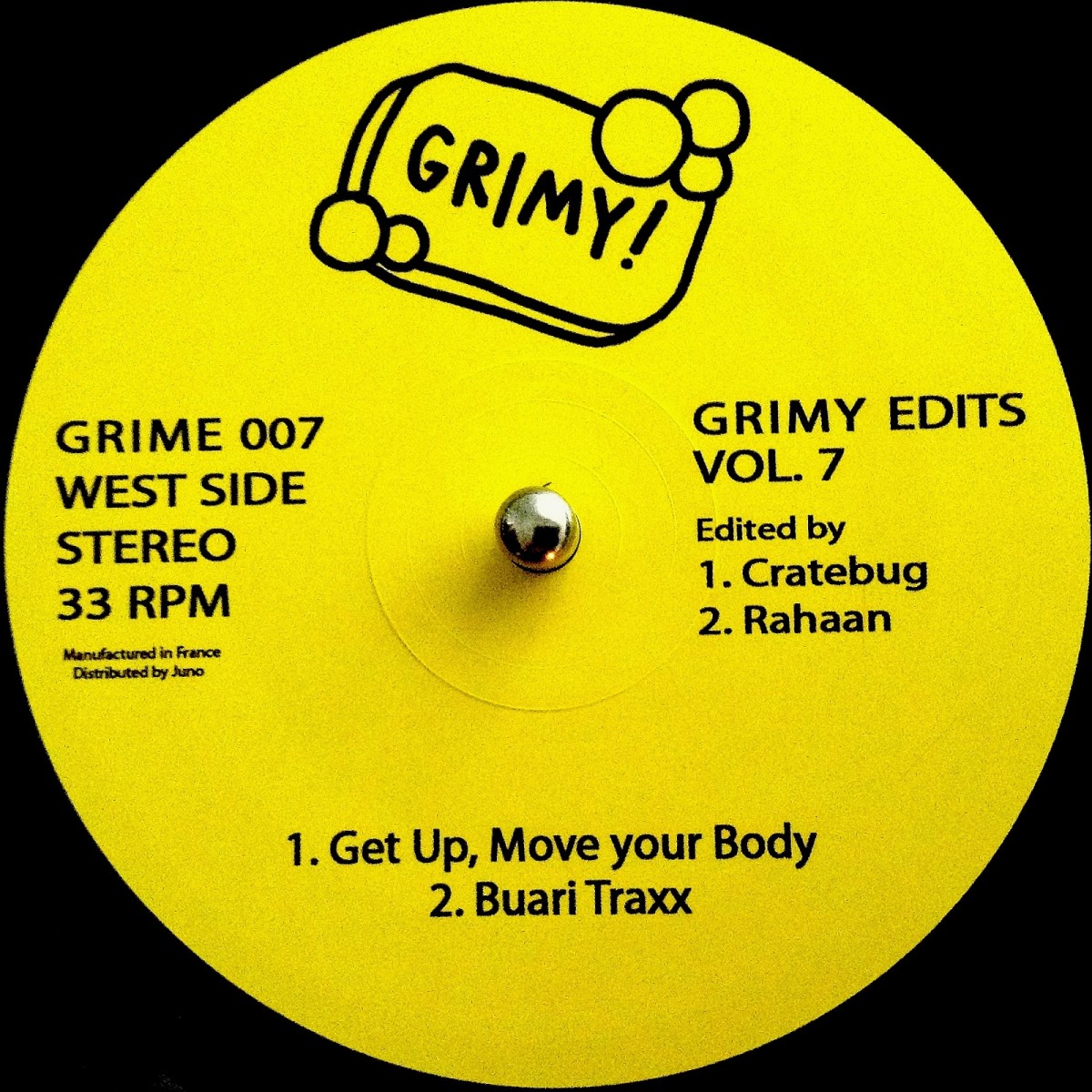
Once the recording is complete, you can stop your recorder and push stop on your platter. You can playback the track directly from the recorder and have a listen with your headphones, or you can pop out the SD card and drop the file on your computer. Some people will go on to master the digital file, but I am old school and I prefer to get a quality recording right from the start and not alter the track in any way from its original sound. That is, after all, why we choose to play vinyl in the first place. The sound is warm and the tracks are harder to get. You will have to experiment with this process and see what works best for you, and I look forward to hearing about other people’s technique when it comes to making vinyl rips. If you want to check out the vinyl rip that I made during this process, you can download it right here on XLR8R via the WeTransfer button below. The track is called “Get Up, Move Your Body” by Cratebug from Grimy! Edits Vol. 7.
You can find out more about Crate Diggers by visiting them online, and you can catch Zernell on the decks starting next month in New York, Chicago, and Los Angeles.
California-based music and technology firm Output has recently announced the release of its fourth-ever product and its first-ever effects engine, MOVEMENT.
With a straightforward and tightly focused mission of enabling music makers to be creative, Output created this latest tool with an intuitive design and ease of use that can be applied in both live scenarios and in the studio.
With the ability to transform any sound in real-time, Movement allows users to choose from over 300 presets while also holding the capability to build custom rhythms with the sidechain, flux, LFO, or step-sequencer rhythm modulation. These rhymes can be tweaked swiftly while adjusting parameters in real time with the XY micro pad.
Output founder Gregg Lehrman offers up a perfect summary of his product, saying: “Movement is not only powerful but also incredibly musical. Whether you’re slowly bringing in subtle motion, or adding insane movement, you’ll find that each and every rhythm combination is first and foremost musical.”
You can learn more about MOVEMENT including how to purchase this latest software, or any of Output’s other virtual instruments by visiting the website. You can also watch an instructional video about MOVEMENT by clicking on the video below.
Earlier this year, Ableton introduced a host of new and exciting features with its 9.5 update, including a few much-needed additions of new filter types. The team at Ableton modelled a few classic filter circuits and designed their own hybrid versions to be added to the DAW’s Auto Filter.
In one of its latest tutorial videos, Point Blank invited resident Ableton wizard Freddy Frogs to run through the new filter types and provide some insight into working them into your tracks. You can watch the video in full via the player above, with more information on Point Blank and its courses here.
If you share an appreciation for minimal house and techno, then it’s highly likely that Sunwaves Festival will have been on your radar for some time. The event takes place twice per year—in May and August—on Romania’s East coast, a two-hour train ride from Bucharest. Considerably smaller than its August counterpart, the May edition champions the electronic music with which the nation has become so strongly associated, providing each artist with the perfect platform on which to perform—including stacks of Funktion One speakers perfectly tuned to their particular style of output.
Having skipped most of the opening night to prepare for the long weekend that lay ahead, the festival really kickstarted on the Friday evening on Stage B. Up first was Cristi Cons, one of the latest members of the Romanian scene to really make an impression outside of it—the reasons for which became increasingly apparent during his stint inside the booth. He was followed by Zip who then subsequently made way for Ricardo Villalobos as the sun rose. Seeing these two Perlon stalwarts play is likely to be something of a highlight for any event—but there is a certain aura surrounding Sunwaves that encourages artists to push beyond their normal boundaries, and the duo’s back-to-back through Friday mid-morning was perfect evidence of this. Despite a few minor technical glitches, and Ricardo only really being fully focused for the first half of his set, the atmosphere of the room encapsulated everything that makes this event so special.
Friday melted into Saturday, and then came the turn of Ar:pi:ar—namely Raresh, Rhadoo and Petre Inspirescu (affectionately known as Pedro)—to take the headline evening slot after a steady opener from local favorite Dan Andrei. It’s not so often that the trio are given such an extended period of time to delve through their record bags—and their set grooved through several genres of electronic music, well beyond the “loopy” sound for which they have become some famed. Although they never really matched the moments of euphoria of the previous evening, they were far more consistent in their delivery than the celebrated Chilean. Meanwhile, in the other main room, was Marco Carola, winding up for another session with his posse having already overrun the backstage area.
With Ar:pi:ar finishing up and the sun having now fully risen, it was time to head outside to stage C, the red and yellow handmade wooden tent that offers the DJ a tunnel view of the sea. Always bursting at the seams, the stage is in definite need for an extension—or the simple addition of some outside speakers to allow revellers to enjoy the music without having to cram in. That being said, this space has become such an integral and iconic part of the festival that it’s difficult to imagine anything different. Spending the afternoon there made me wonder why I’d spent the majority of my time frequenting the night events; the mood down by the sea is much more relaxed, made all the more enjoyable with the likes of Topper and Alexandra behind the decks. Dewalta and SIT (Cristi Cons and Vlad Caia) had apparently also been brilliant, but such is the nature and consistency of the festival that it is impossible to see every performance. It was around this time that Tini and Bill Patrick were starting, more on which is to come later.
Sunday evening was graced with a live set from minimal pioneer Ion Ludwig—a performance that sits comfortably within the catalog of highlights from the weekend. Ludwig was the last international artist to play the stage, before making way for the local heroes to close out the party. Following on from Cezar, Rhadoo initiated perhaps the most enchanting period of the whole festival. The Romanian’s softer selections provided the perfect soundtrack to the sunrise, a spell that was broken by the heavier kick drums of Mihai Popescu’s “Inder Random,” giving the party the little boost needed to get it pumping once again.
Stage D’s warm reds and yellows now glowing under the midday sun, Rhadoo gave way to the lesser known but similarly revered (at least locally) Romanian in the form of Dubtil. The elusive producer, who has no Resident Advisor page, delivered a blissful set of rolling house and techno, a soundscape so beautifully textured that it had something of a healing effect on weary minds and bodies, preparing those present for the final stretch of the event. Praslesh, Pedro, Priku, Barac et al carried on the party, seamlessly bringing in track after track of old, new, and unreleased electronic music of an extraordinarily high quality. Credit, here, must go once again to Pedro, who delivered another wonderfully melodic set as the sun went down for the final time.
Special mentions must also go to Marco Carola and the back-to-back of Bill Patrick and Tini, whose respective set lengths extended well beyond the 24-hour mark. Although a remarkable achievement of sorts, you have to question the musical value in such extended sets: it exposed a lack of metronomic precision and musical quality that was on show elsewhere during the festival. It’s hard to find an artist on the Sunwaves lineup who is not capable of playing for pronged periods, but something must be said for stopping well before your ability to mix in and out has coherently disintegrated.
Not everything about Sunwaves is perfect. We haven’t even touched on Mamaia, a strange seaside resort similar to those which line the Costa del Sol’s sea front. Neither have I mentioned the degree of bar hopping needed to acquire beer towards the latter stages of the party. Additionally, the over presence of brands—including a giant Kent cigarette area at the main entrance—gave the festival an unexpected corporate feel more in line with larger commercial festivals. Food was also at a premium, with one (albeit extraordinarily slow) bar serving delicious smoothies and soups.
All that being said, these moments of frustration add to the all round experience. Sunwaves perfectly embodies the spirit of what festivals should be about: a fun-loving and open minded crowd gathering to celebrate the music that they love in an environment specifically tailored towards it. For some, seeing Romania’s top DJs hour after hour may sound dull—but the lineup, atmosphere, and pristine sound quality make Sunwaves an unmissable event for those enchanted by the offerings of this unique scene. This was my first Sunwaves, and like most of the people I met there, I have no intention of making it my last.
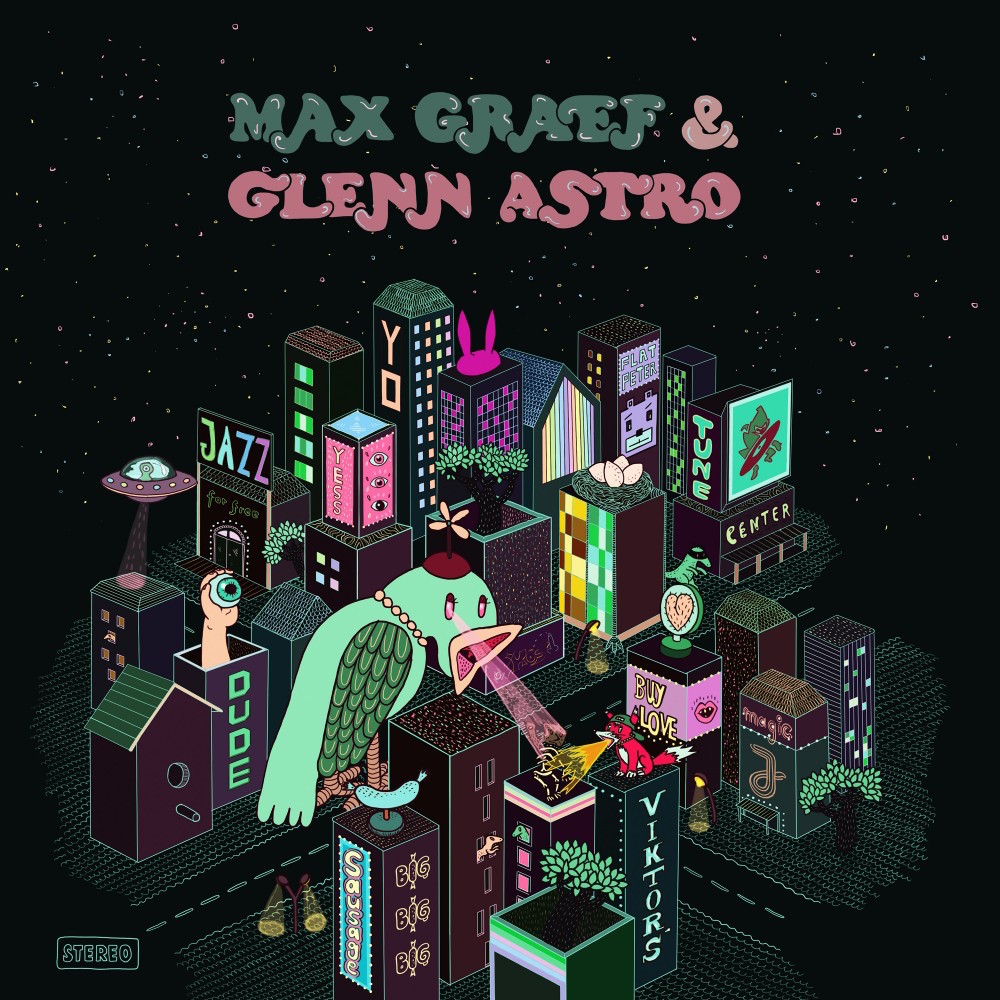
Max Graef & Glenn Astro, the soulful and dance-inducing house duo with an outstanding funk finesse, are set to release The Yard Work Simulator, their first ever collaborative full-length album, on May 27 via Ninja Tune.
The pair first linked up through SoundCloud in 2012 after discovering a mutual admiration for each other’s sounds and in 2014, they formed the Money $ex Records imprint. On top of releasing music from noteworthy up-and-comers on the label such as Christopher Rau, Hodini, and Alex Seidel, the pair’s first collaborative effort, M$001, turned out to be a massive success and was followed up shortly by their Magic Johnson 12″, which was released on Ninja Tune in December of last year.
>Channeling a connection to the sounds of Detroit, Max Graef & Glenn Astro’s new album is a “ten track trip through the pair’s deliciously warped psyche, channelled through a ton of hardware.” When speaking about the album, Glenn notes: “We wanted to make a dance record without the obvious components. It was kind of a concept album where the tracklisting existed before we produced any music. We had a list of directions and sounds for each track name and we worked through track by track. Most of the sounds and instruments are recorded and not sampled. We worked out the harmonies, themes and chord progressions very carefully.”
Ahead of the album release, we are pleased to bring you an exclusive stream of the album’s title track, “The Yard Work Simulator,” which you can hear in full below.
Following his 2013 debut LP A Fallen Empire (Downwards) and 2014 EP Deficit of Wonder (Blueprint), Kerridge released his sophomore LP Always Offended Never Ashamed as the launch of his CONTORT label in early 2015, an evolution from his Berlin party series. The Fatal Light Attraction LP was then released in February.
Matte Projects, the Manhattan-based creative production company has revealed details surrounding the lineup for this year’s edition of its Full Moon Music Festival. The past few years have seen Matte Projects grow into a legitimate force in the New York City music scene, organizing showcases for respected labels like Kitsuné and Black Butter Records, as well as producing the new BLACK party series which debuted at a Brooklyn warehouse last November with a blazing set from Jon Hopkins.
Now in its sixth year, Full Moon Fest aims to bring a sophisticated and worldly vibe to a beachside location on Governors Island. The lineup features a variety of talent from across the electronic spectrum, with SBTRKT and Santigold topping the bill. Other highlights include DJ sets from Black Coffee, Moodymann, Julio Bashmore, and many more.
You can buy tickets to the event by going here, and you can view the full lineup for Full Moon Fest below.
[row]
[column size=’1/3′]SBTRKT Santigold Pusha T Black Coffee[/column]
[column size=’1/3′]Allah-las Julio Bashmore Moodymann Lolawolf[/column]
[column size=’1/3′]Kali Uchis Escort Dave Harrington Marcus Marr[/column]
Ahead of the release of their self-titled debut long-player via Kompakt, Harm Coolen and Merijn Scholte Albers (better known as Weval) have shared a video from their recent performance at Nuits Sonores Festival, held 4-8 May in Lyon, France.
The video can be streamed in full below.
Weval, the duo’s debut album, is schedule for June 10 release, and can be pre-ordered here.
London-based singer-songwriter James Blake has shared a new video for “I Need A Forest Fire” (which features Bon Iver), taken from his latest album, The Colour In Anything.
Blake’s third and most recent album is a 17 track affair that was unexpectedly released last week. Seven of its tracks were co-produced with Rick Rubin, and there are appearances from Frank Ocean and Justin Vernon (of Bon Iver).
Blake has now shared a new video for one of the cuts, “I Need A Forest Fire.” Directed by United Visual Artists (who are set to collaborate with Blake on his 2016 tour), it’s a moody trip through abstract art installations—a fitting accompaniment to one of the LPs most soulful cuts.
The Colour In Anything is out now, and can be purchased from iTunes.