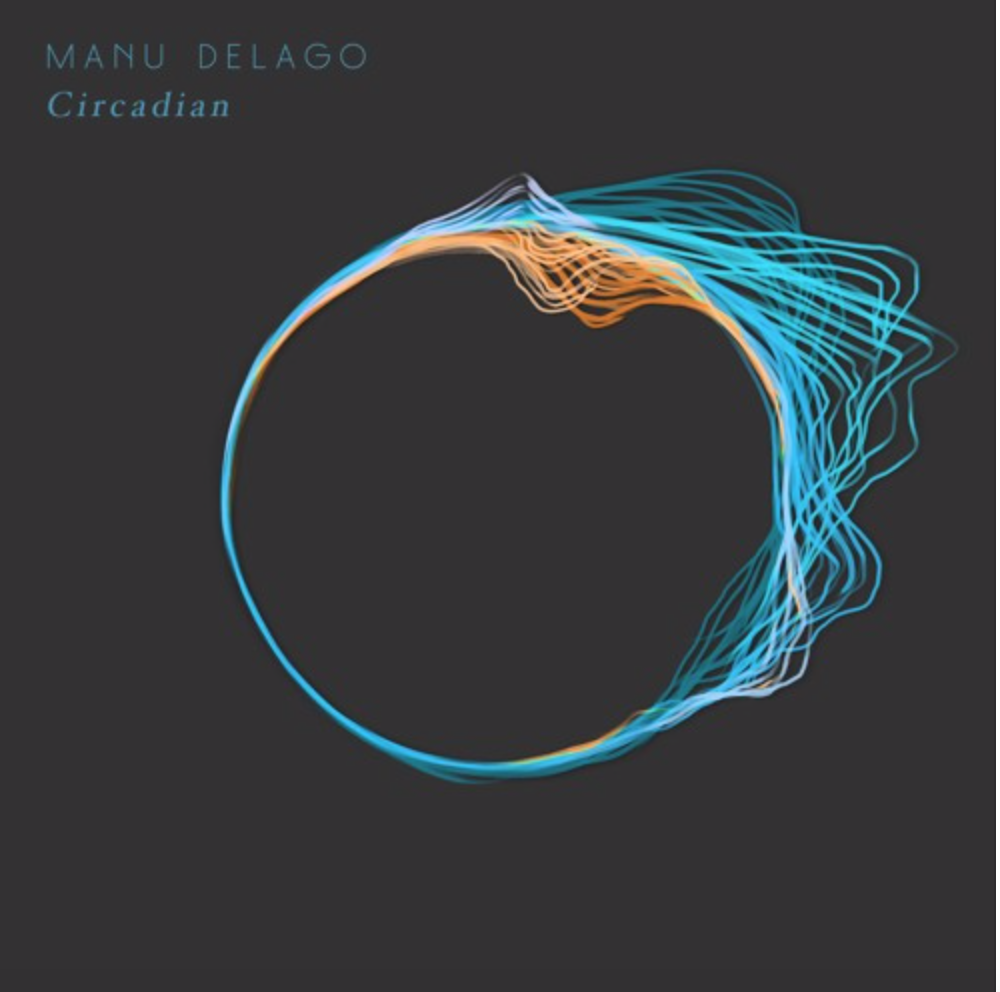
Manu Delago will release his new album, Circadian, this September.
The album, set for release via One Little Indian Records, takes the listener through the cycle of sleep stages, emulating REM, light sleep, deep sleep, and an abrupt awakening. It begins in the late afternoon, moving into sunset and night time, and through to the morning.
Delago was inspired by the concept after touring with Björk, Ólafur Arnalds, The Cinematic Orchestra, and Anoushka Shankar.
“Before I made this album, I had a phase of very intense touring with multiple trips to five different continents, without a break for several months,“ Delago says. “It literally felt like touring with four bands simultaneously, and in my dreams the music and crews started to commingle. I found it interesting how my brain was trying to digest all these experiences during sleep hours. In fact, during REM sleep the brain is very creative. In that stressful touring period, I started to consciously appreciate sleep and how much it contributes to mastering any challenge.”
Sonically, it see the Austrian musician depart from his electronic-leaning work by incorporating percussive instruments found on those worldwide tours—from places such as Vietnam, Russia, Turkey, and Indonesia—aiming to create an electronic-inspired album in an acoustic form.
“I wanted to incorporate elements of the electronic music that influences me; I used clarinets and accordion like warm analog synthesizers, and added strings and trombone to give it an orchestral but yet very intimate character,“ Delago explains.
Last year, Delago released Parasol Peak, an awe-inspiring short film and album project, also on One Little Indian.
Tracklistings
01. Circadian
02. The Silent Flight of the Owl
03. Uranus
04. The Moment I’m Still Awake
05. Delta Sleep (Live at 4:33am)
06. Draem
07. Zeitgeber
08. Delta Sleep (prototype)
Circadian LP lands September 13, with more information coming soon. Meanwhile, you can stream “The Silent Flight Of The Owl” below.
Bonobo (a.k.a Simon Green) has released a new single, “Linked.”
“Linked” is an atmospheric slow-builder, and the LA-based artist’s first new release since “Ibrik,” which was included on his “fabric Presents” compilation. It lands digitally today, with the 12″ coming tomorrow via Ninja Tune.
The artwork is Green’s own photography.
For more information on Bonobo, read his Artist Tips feature with XLR8R here.
Huxley Anne will self-release the FIGS EP later this month.
FIGS uses a variety of sonic canvases to explore the core themes of human experience. It was recorded in windows between tours, and is the US artist’s first solo release since 2017’s Ilium on Dome Of Doom. She also contributed a track to the first edition of XLR8Rplus last year.
The four tracks explore different terrains musically, touching on aggressive bass, soulful hip-hop, trap, and also lyrical content.
Opener “Fury” ushers the record into a celestial world, picking up the surrealistic and darkened soundscapes that defined Ilium. The track finds Huxley Anne spacing out each section with wordless vocal layers. “Shame” takes the EP into its most unhinged terrain, with saturated synth lines and a surreal breakdown that dissipates the intensity and shifts the mood. EP closer “Agarwood” blends electric guitar loops, lush sweeping drum patterns, and echo-laced flute.
The launch of FIGS is preceded by the single release of “Boy, No,” a futuristic R&B track featuring HEZEN, whom Huxley met in the summer of 2018 during her tour with Ivy Lab. “It’s a song of empowerment,” she says. “It’s a song reclaiming identity as a source of artistic freedom, it’s a song about choosing to love yourself.”
Tracklisting
01. Fury
02. Shame
03. Boy, No (feat. HEZEN)
04. Agarwood
FIGS EP lands July 12, with “Boy, No” (feat. HEZEN) streaming in full below, and order here.
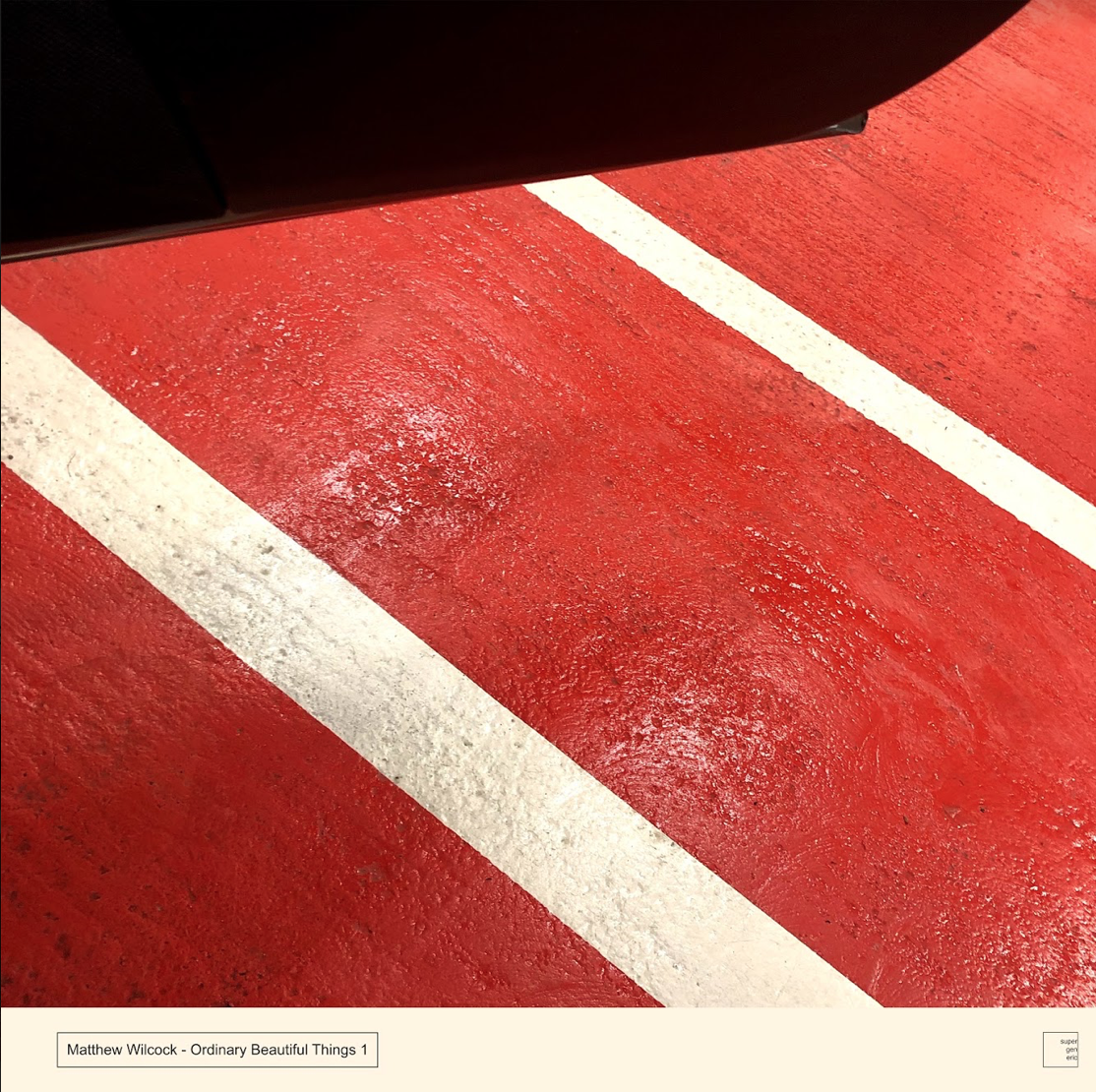
Matthew Wilcock will release Ordinary Beautiful Things 1, his debut solo album, on August 30.
The uniting theme of the release is “finding temporary beauty in the ordinary,” the UK producer says. It’s an album of largely drum-less electro-acoustic instrumentals filled with heart-stopping moments of enduring beauty.
Born in 1986, Wilcock grew up in a working-class family in Tameside, Greater Manchester. Rejecting the Mancunian tropes of rave, Britpop, and post-punk, he started making sample-based music as a teenager on a borrowed version of Acid Pro. After a brief spell studying art in Manchester, he started to take music more seriously, switching to a foundation diploma in music and winning a place to study composition and music theory at the University of Huddersfield, where he immersed himself in the work of composers such as John Cage, Steve Reich, Christian Marclay, and Karlheinz Stockhausen.
After graduating, he and his creative partner Aleah Morrison-Basu set up Zelig Sound, a company based in central London making bespoke music for commercials and full-length movies—including Daniel Kokotajlo’s 2017 drama “Apostasy,” the Palme D’or winning short “Waves ’98,” and the BAFTA-nominated “Mamoon.”
Running parallel to his work with Zelig, Wilcock has also recorded beat-driven electronica as MODEL 86. Ordinary Beautiful Things 1 is his first full-length solo outing under his birth name.
At the centre of the album is “I Might Die Now And I Feel Fine,” an expansive three-minute track where a 20-piece string section plays a slurring, emotionally wrenching series of escalating chord changes. Wilcock wrote it “mirroring the feeling” that turned into the concept for the release:
“That moment, you can be anywhere, on the bus, walking down the street, in car and all of a sudden something lines up, light hits something in the right way, a shadow a reflection, and it’s just beautiful for that split second. Everything in that moment feels worth it. It makes you feel human and amazing to be alive but at the same time it makes you feel lonely. You can’t share that with anyone and you’ll never see it again. It’s gone. That duality, the beauty, and the loneliness, it’s interesting and beautiful and kind of pure.” — Matthew Wilcock
In support of the album, out August 30, we’re offering “I Might Die Now And I Feel Fine” as one of today’s free downloads, available now via the WeTransfer button below, or here for EU readers.
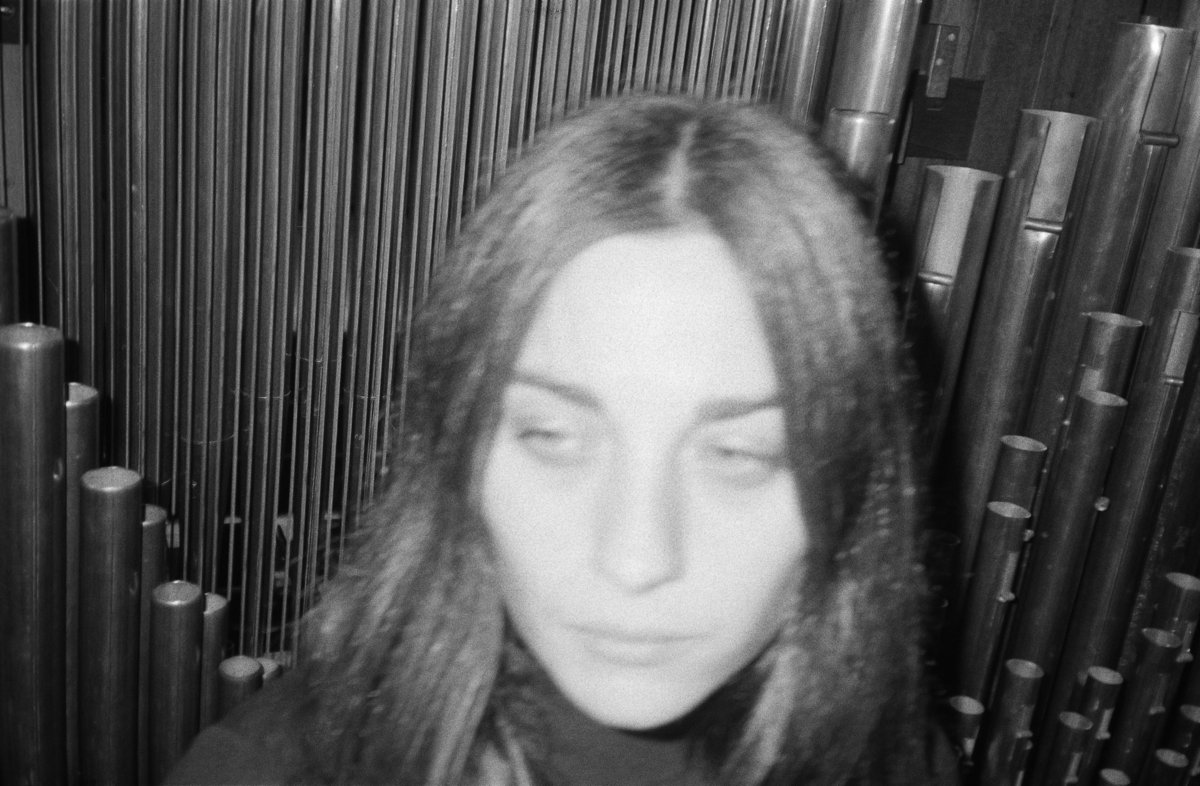
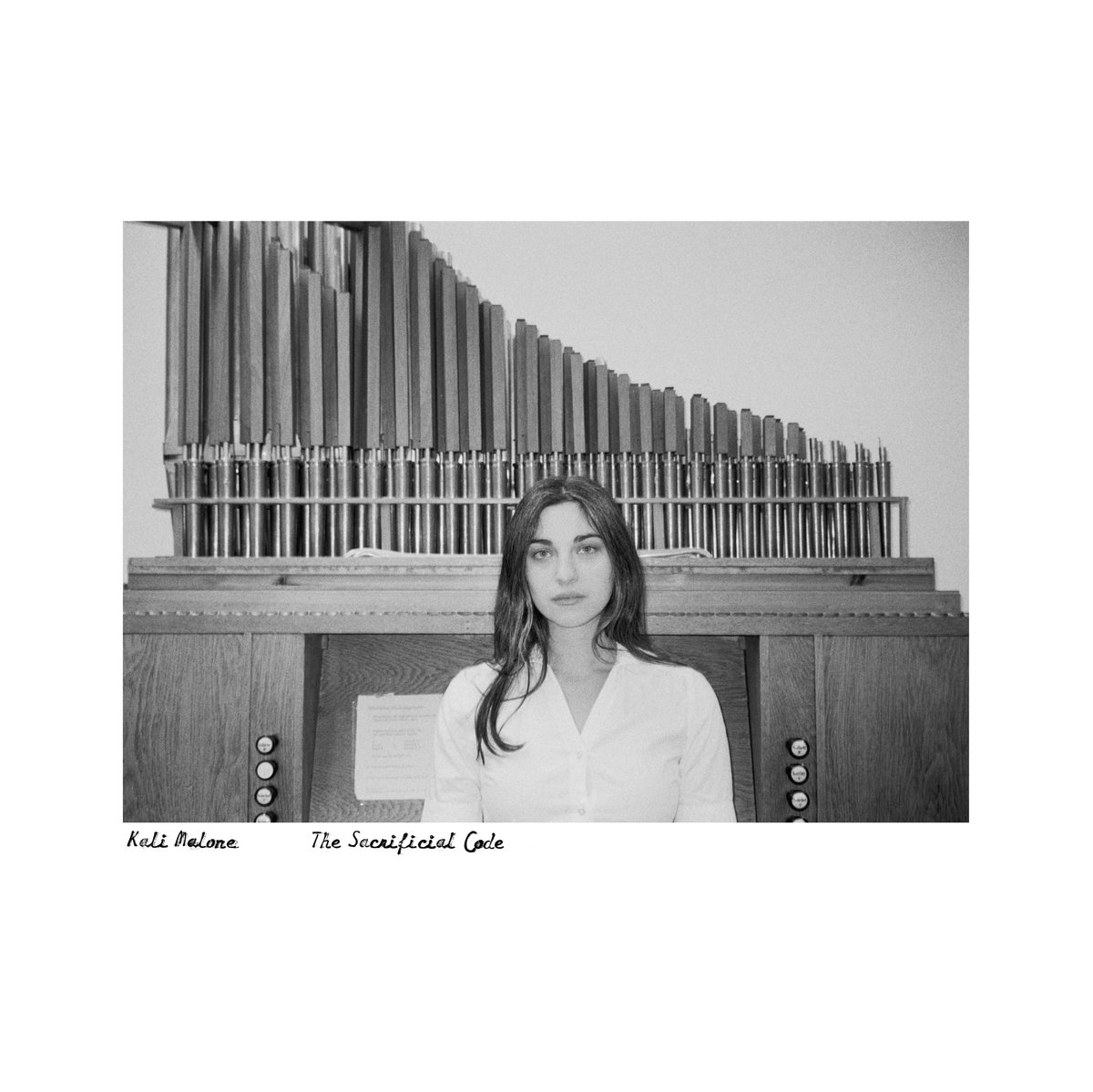
The Sacrificial Code sees the Stockholm artist and organ tuner developing the experimental techniques she used on last year’s Organ Dirges 2016—2017, but adopting a more surgical approach. It features almost two hours of concentrated, creeping organ pieces governed by a strict compositional code.
Malone recorded the album by placing microphones around the organ in such a way as to eliminate environmental identifiers as far as possible, essentially removing the large hall reverb inextricably linked to the instrument. The pieces were then further compositionally stripped of spontaneous expressive impulse, an approach that flows against the grain of the prevailing musical hegemony. It echoes Steve Reich’s sentiment: “..by voluntarily giving up the freedom to do whatever momentarily comes to mind, we are, as a result, free of all that momentarily comes to mind.”
“With its slow, purified, and seemingly austere qualities, The Sacrificial Code guides us through an almost trance-inducing process where we become vulnerable receptors for every slight movement, where every miniature shift in sound becomes magnified through stillness,” the Gothenburg label explains. “….It has a perception-altering quality that encourages self-exploration free of signposts and without a preordained endpoint—the antithesis to the language of colourless musical platitudes we’ve become so accustomed to.”
Malone’s friend and collaborator Ellen Arkbro contributes additional organ pieces to the record, and Rashad Becker features on mastering duties.
The Sacrificial Code LP is out now, with clips below.
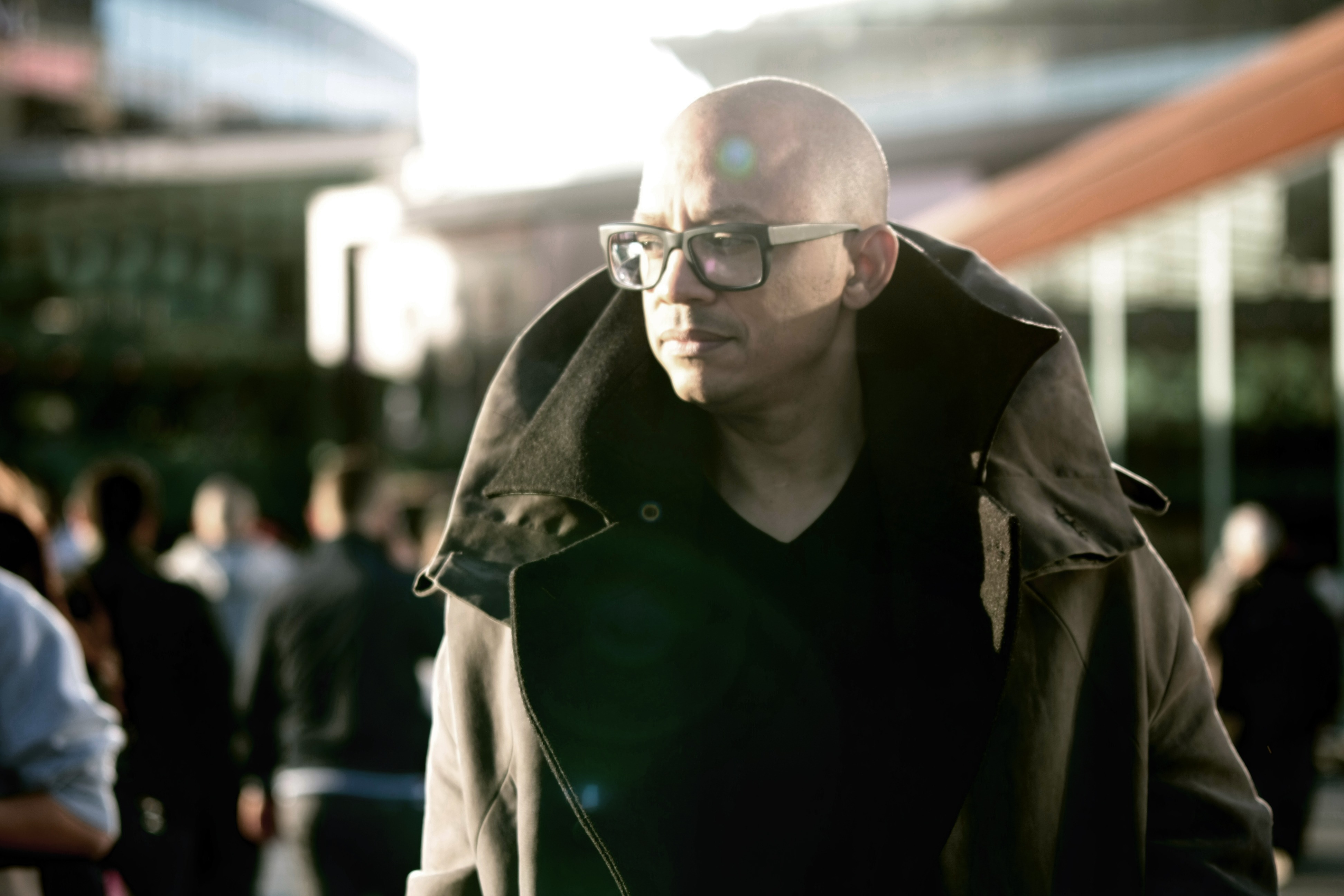
LTJ Bukem, real name Danny Williamson, found his way into music through piano lessons as a child. He didn’t discover clubbing until the early ’80s, aged 17, by checking out the local soul venues. As a keen record buyer, he became interested in the idea of mixing his own version of a club soundtrack and DJing soon became his main focus. By 1988, he’d gained enough of a reputation to realise that DJing could maybe offer a full-on career; and no more than 24 months later, he’d performed in front of 10,000 people.
As a producer, Bukem has released an extraordinary number of legendary tracks, starting with “Logical Progression” (1991), “Demon’s Theme” (1992), “Atlantis,” “Music” (1993), and “Horizons” (1995). At once anthemic and relaxing, the former of these offered the blueprint to Bukem’s sonic vision, and inspired the birth of his own imprint, Goodlooking, which has since established itself as a leader in these sonic realms.
In 1998, Bukem released the Mystical Realms EP, featuring “Twilight Voyage” with sombre flute refrains, chopping keys, and an outer-world ambience. The vocal and instrumental versions of “Orchestral Jam,” with its urgent breaks and dissonant violins, along with the reflective last track “Journey Inwards,” represented a deeper development of the Bukem sound. In 2000, he released his long-awaited solo album, Journey Inwards, a diverse and multi-directional release of drum & bass, soul, downbeat, and house tracks.
During this time, Bukem has continued the Progression Sessions series of live mixes captured on CD, featuring performances recorded live in the USA, Tokyo, London, and Germany. He’s also compiled the Soulfood and Soul Addiction compilations, underlining his position as a sonic leader of post-rave breakbeat culture. In a constant pursuit to reinvent himself and his work, LTJ Bukem also continues to bring the sounds of soulful drum & bass to listeners through his impactful performances worldwide.
Having scanned through your questions, he’s selected those he wished to answer, and submitted them below.
Would it be possible to get some information about the production of the track “Remnants” with Tayla. Are the drums chopped from a break? What synths were used, etc? —James Boxley
Ah yes, “Remnants.” I guess there lies a story of the wonderful B-side and having to rustle one up to release a complete 12”. I think the track is about as basic as basic gets.
Russ (a.k.a Tayla), a dear friend to this day, came to me at the back end of ’92 with samples and an idea for “Bang The Drums.” We sat there, did it together, and were happy enough with the result to eventually release it in ’93. We then thought, as you do: Oh yea, we need another track for the flip to actually put it out.
The string intro was probably from a Korg M1, Roland D 50, or a similar synth from that time. The break is a famous one and used many times back in the day—Young Holt Unlimited’s track “Wah Wah Man,” if I recall. And then into the mix stepped Jon Pertwee for a vocal. He played one of the first doctors from Doctor Who in the ‘70s. Not sure whose idea that was—couldn’t have been mine! But hey, it gave us a title for the track. The breakdown string is also a famous sample within drum & bass, and used many times, lifted from one of the early sample CDs such as Zero G, X-Static Goldmine, Time and Space, etc. If I’m totally honest, I don’t look back on it with too much pride, but I appreciate you asking.
“Generally speaking, drum & bass moved from being complex story-telling compositions with numerous sections, key changes, and mood swings, to much shorter loop-based, drop-focused tracks, that are more technically advanced and instantaneously impactful.”
I’ve always loved the way you chop up the crossfader. The question is: were you a hip-hop scratch DJ before doing hardcore? —James Boxley
The chopping thing came from my love of all things “breaks.” I’ve never been a scratch DJ. I heavily got into it when house music became the thing. Around ’88-’89, certain hip-hop break tracks weaved their way into house music, such as Young MC’s “Know How” and Beat Club’s “Security.” During this time, I really got into buying break albums such as Renegade Break Loops and Bonesbreaks. This is where my chopping started—chopping bits and pieces of breaks over house tracks of the time. And this just stuck with me when drum & bass started. The early years of drum & bass saw many raw original breaks used so I had a lot of fun chopping them. Today’s tracks don’t use that many original breaks; tempo and production styles are very different. But I still manage to find bits and pieces to chop.
Do you remember back in the days, during Midem in Cannes, France, playing live in a nightclub called Le whisky à Gogo? It was in 2000 or 2001. That was not really packed that night, nobody was listening to drum & bass in the south of France at that time. Even today, I can say that it was one of the best nights I’ve had in a club; I was one of the few people dancing but I danced like crazy until I was so tired I had to come home to sleep.—Charles Dvorak
Yes, I do remember that night, and also playing at many other nights where drum & bass was first heard. Some packed, others not. These were exciting moments of introducing new ears to the music. Glad you had a good night. It’s amazing that nearly 30 years after its inception, drum & bass is the force it is today. Long may it live!
I released a drum & bass record in 1999 by Quadrant 4 called Uhuru, and we heard from someone that you played it, but I never had it confirmed. It wasn’t that easy to get a hold of people back then as it is now. It’s quite rare, only 150-200 copies were pressed, and we didn’t have them distributed in the UK as far as I know, so we obviously got really excited when we heard that you played it. I still have a few, so drop me a line if you’d like me to send you one. Peace! Discogs.
You got me there. Would love to hear! Message me a link of the four tracks to here and I’ll let you know if I ever played it or not.
I’m from Bristol where there’s been a surge of drum & bass and breaks events in recent years. Is there a location that you see as the epicentre of the genre?—Undisclosed
For me Bristol, and indeed the West Country, has always been at the forefront of drum & bass from way back right up to the present day, and it’s where I’ve spent many years playing. Some of our most treasured drum & bass artists began their journeys in Bristol and a lot have moved there since, so the city is an important place for this music, no doubt about it. London will always have that special place in my heart though, as this is where my drum & bass journey began.
I read somewhere that you’re a classically trained pianist. Why did you go into electronics? —Undisclosed
Yes, correct. From an early age I learned the piano but I didn’t take it all the way, and when I got into my mid-teens, I started going clubbing. It all changed for me then. Nightlife in the UK, especially London, was the place to be—a melting pot of so many music forms. I saw Alistair from Rapattack Sound System play at Acklam Hall in Ladbroke Grove 1984-85 and fell in love with Technics, the art of DJing, and I had a passion to share music with others. The sounds of that time were my music school for life and they still affect everything musically about me today.
Lots of your early work, like “Demon’s Theme,” seems to have prolonged intros and other musical features that a lot of other rave music at the time didn’t. I want to make melodic music that stands out, but do you think it runs the risk of not being suitable in the eyes of promoters at club venues and radio stations? —Undisclosed
The structure of drum & bass songs has changed a lot over the past three decades. Tracks back then could easily be 8-10 minutes long. When I made “Demon’s Theme,” it wasn’t unusual for a track to consist of two or three distinctive sections that individually could almost make separate tracks themselves. Many changes of direction and moods within a single piece of music, long intros, epic breakdowns. Even though tracks nowadays are half the length, even less, this doesn’t stop you from injecting melody into your song, or creating that moment that stands apart from other tracks. Main point, I think, is to make a piece of music that you yourself enjoy listening to. Why make something you hate to please others? This can often lead to a disaster. Look forward to checking out what you come up with.
“As an artist, you don’t undertake any monetary risks putting up a track. Reputational, possibly. But not monetary, really.”
I’m interested to know about your use of samples in your production. In “Logical Progression,” the Flowmasters sample works so nicely. How did your production process work—did you make a bass track and then think about suitable samples, or hear a song and think: “I can sample that,” and then make the track? — Will McCartney, London
When I first started to produce in 1990, like so many, I had no clue as to the legality of sampling someone else’s music composition. You had a record collection, you loved a piece of music from it, took a snippet, and off you went. Whether it was a must-have beat, new synth sound, catchy music, or a vocal sample—I guess this was often my starting point to creating something. Nowadays with so many choices of sounds and beats available from soft synths, including the thousands of official sample CDs on the market, sampling isn’t always necessary. With many great vocalists around today, getting that original voice on your track is a lot less hassle than sampling could turn out to be. If you think, however, using a sample in your track is worth it, then clearing it is the way to go. Thank me later.
When you first started producing, what gear did you use? I’d love to know your thoughts on the change in production equipment and programs from then compared to the modern day!
When I first started producing, I was using pure hardware, of course. I’m trying to remember everything I bought during the initial years, but below is a list of some of it. Writing the list is making me realise why I was always so broke!
Kurzweil K2500R
Juno
Korg Trinity
Korg M1
Korg Z1
Roland JD 800
Roland JV1080 & 2080
Roland D-50
Yamaha DX-7
Roland SC 880
Akai S950 & S1000
Emagic C-Lab Creator
Atari Computer
I also had a couple of Rhodes keyboards and a Solina, and some old ropey 32-channel mixing desk which, for the life of me, I can’t remember the name of, but it certainly worked. I had MIDI cables, patch bays, and audio cables everywhere. My studio was actually in the front room, much to everyone else’s disapproval in the house, so thanks for putting up with me in those times! Love you all! I used to love that race to buy the latest keyboard, when I could afford to. I’d get it home and go through the presets checking out the latest sounds.
It’s an obvious thing to say, but the computers were so much slower back then. They also made the music sound a certain way, and this made you work hard to get the required result, and gave a unique “out-of-time” swing to things, which was sometimes interesting.
Modern day making of music is so different. The main thing I love is how everyone can have a go with a studio in the box. It’s now affordable for most to have a little setup and give it a try. Load up your laptop and you’re off and running. These days with the amount of soft synths and sample CDs, you’ve almost got too many choices and can get lost in sound selection before you’ve even created anything. I guess it’s a good problem to have. I’m certainly having this problem myself as we speak, being back in the studio.
One thing has to be said though. Back in the day, after spending so much time creating a piece of music, and with the cost of making a record not being cheap, you kind of had to make sure your song was something you were completely sure on releasing. Nowadays I do think quality control has gone a bit south. As an artist, you don’t undertake any monetary risks putting up a track. Reputational, possibly. But not monetary, really. Saying that, I wouldn’t have it any other way.
I think that modern drum & bass and breaks are a lot quicker and drop-focused than older work. How do you think the scene has developed?
First and foremost, any development is better than stagnation. Two of the most significant shifts within drum & bass production that stand out for me are stylistic and structural. Assessing where the music has arrived stylistically is subjective and depends on one’s personal preference. But there’s no denying that there’s something for everyone these days; we have more variety than ever before.
Structurally, drum & bass tracks have indeed become a lot faster and much shorter over the last three decades. Tracks used to be around the 125bpm mark with an average length of eight minutes back in 1990, and now are made at around 172bpm upwards at just four minutes long—a big jump. The tempo increase has put limitation on using most original breaks sampled from old soul tracks—that would just sound too frantic at 180bpm—and I do miss those breaks in drum & bass because I love them so much. But at the same time, I do love how clinical producers have become with their modern beat designs. Generally speaking, drum & bass moved from being complex story-telling compositions with numerous sections, key changes, and mood swings, to much shorter loop-based, drop-focused tracks, that are more technically advanced and instantaneously impactful.
I guess this shift in music is indicative of our society in general, moving with the technological advances, seeking that instant emotional gratification: be it a takeaway over home cooking, a download over crate-digging, an emoji over a good old-fashioned phone call. At the end of the day, there’s no right and wrong; all of this works perfectly fine if it makes you feel good.
LTJ Bukem will play at Hospitality in the Park on September 21, with information here.
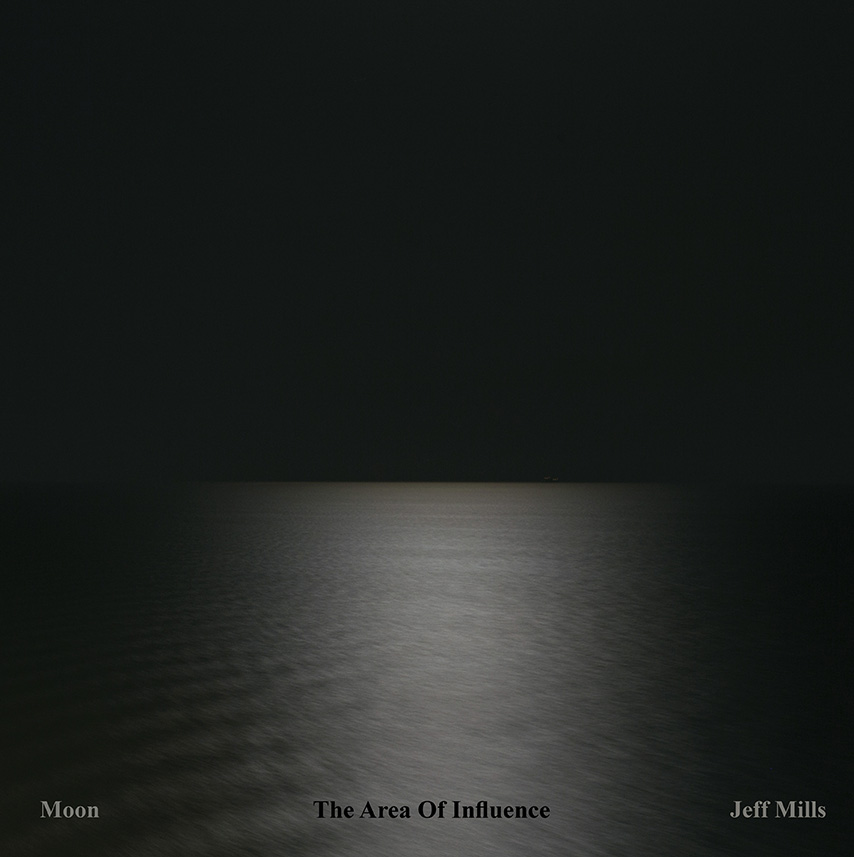
Jeff Mills will celebrate the 50th anniversary of the 1969 moon landing with his new album, Moon—The Area Of Influence, out July 19 via Axis Records.
The 13-track outing reflects Mills’ “interpretations of earth’s moon and its profound effects on us and the planet,” and see him manipulating his futuristic sci-fi beats to act as a sort of enchiridion for the lunar rock.
Mills hints at this through the artwork by not including the moon so the focus can be solely on the influence it wields. The tracks are also named after the astral stone’s ramifications, what it means, and how it has shaped our world. “Control, Sattva and Rama” includes a vocal from a NASA control room.
The release follows the revival of Mills’ Purpose Maker label earlier this month. The techno icon also put out the Str Mrkd EP through Axis Records in January. Mills’ last full-length, an OST for Tatsushi Omori’s “Then There Was Light,” landed in 2018.
To coincide with this release, Mills will be doing a 60-minute show of the album on July 20 presented on the Axis Records website by stream at 16:17 US Eastern Time, 22:17 in Central European time.
Moon—The Area of Influence LP will be released July 19 on a two-vinyl set and digital album, with a trailer streaming below.
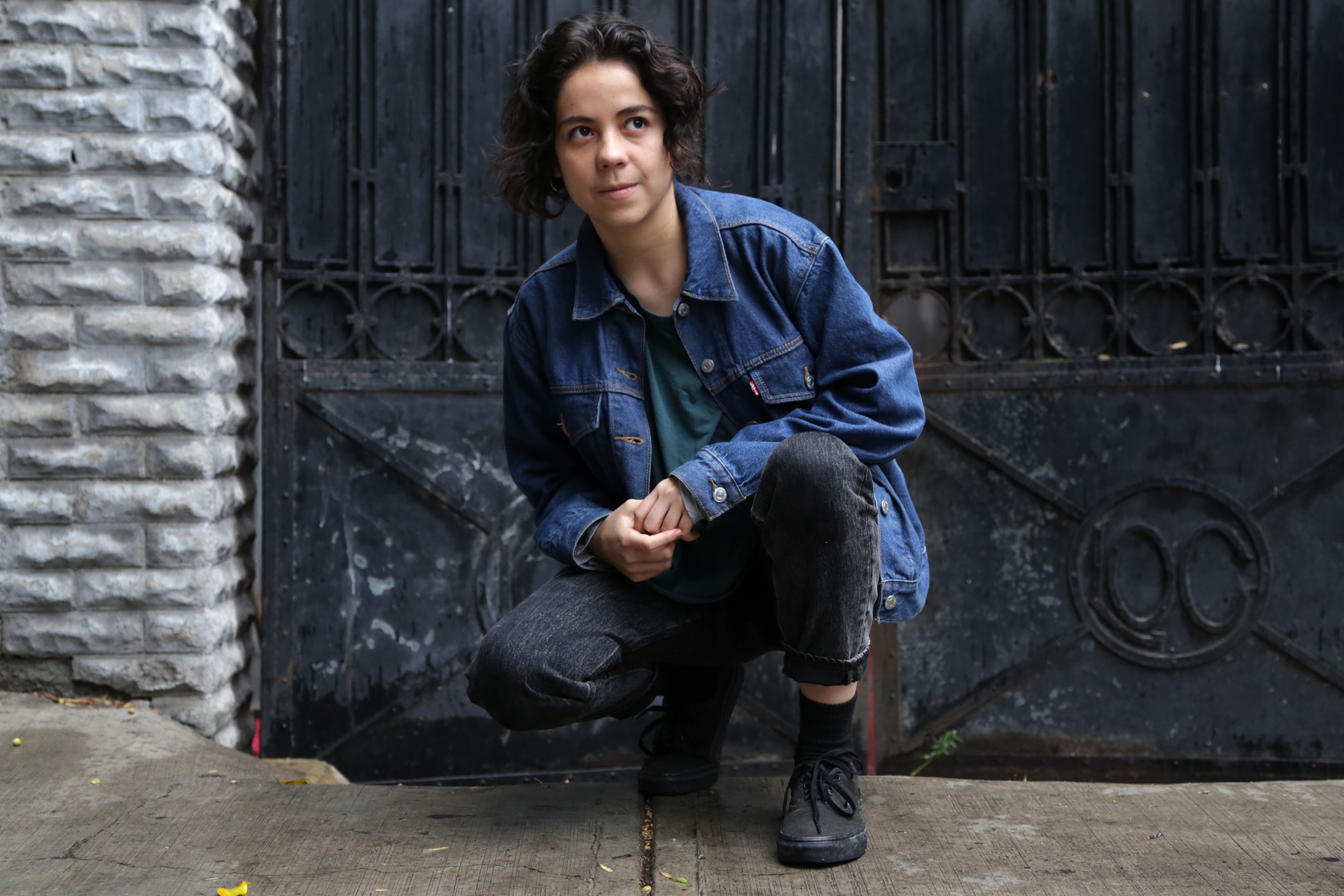
Mabe Fratti is a cellist now based in Mexico City. Ask music fans for regional tips, and Fratti’s name is likely to crop up more than once. After various low-profile live performances across Guatemala and Mexico, including her Aire Libre 105.3 FM live Session, in August she released Aprendiendo a Hablar (meaning “Learning to Speak”), her EP debut, before signing to Hole Records for her debut album, Pies Sobre La Tierra, meaning “Feet on the Ground.” Available now, the eight-track long-player—only her second label outing—is a chillingly-beautiful showcase in the delicate and deeply intimate soundscapes Fratti creates using only synthesiser, vocals, and her cello.
Fratti grew up in Guatemala, with a backdrop of violent crime and homicide. During the early ’00s, murder rates in Guatemala were higher than during the country’s 36-year civil war during which an estimated 300,000 people were killed. Zona 12, in particular—Fratti’s hometown—bore witness to a proliferation of youth gangs, known as “maras,” creating a volatile environment that her parents sought to protect her from.
Encouraged by those close to her, Fratti began playing cello and attended a local academy. It became clear that she was a fast learner, though a natural non-conformist, and an appreciation for electronics led her to blend them with her cello. She’s filled her time since by performing in several experimental bands, all the while developing her own musical voice through live sets and self-releases, many of which can still be found on her Soundcloud page. Now based in Mexico, a relocation driven by the artistic community she’s found there, she feels more settled than every before, musically and otherwise. On the back of her debut album release, XLR8R connected with Fratti to learn more about the story behind it.
You’re born and raised in Guatemala, but where?
The first years of my life were in Zona 12, Guatemala. That area is quite big, and not really safe in some of its areas. It has the long street Atanasio Tzul, which is surrounded by factories and a floating Canadian cabin. There’s also the National University, Universidad San Carlos de Guatemala, and a recreational park (the IRTRA) for the working class of the private sector that was founded by entrepreneurs collaborating with the government back in the ’60.
We lived on the second floor of my grandparents’ house in a neighborhood called La Reformita. My grandparents looked after me and were really caring while my parents worked. Most of my time was spent either inside the house or in school. Then we moved to the suburbs of Guatemala, which are really dull—just tons of houses designed with an underlying sense of paranoia, in the sense that most of these neighborhoods are walled. Carretera a El Salvador. Still, before it got really populated, Carretera a El Salvador had lots of vegetation, and growing up with that was good.
What was your childhood like?
My childhood was quite tranquil in the sense that my parents were really caring. They were committed to building a good family. They were also quite focused in getting us, meaning my siblings and I, a good education. So, for example, my mother was really into discipline through TV restrictions and lots of lecturing.
There was a lot of violence going on around you. How did this affect you?
I was not allowed to do many things that involved being outside. The outside was full of the mystery of threat. Public safe spaces in Guatemala City are few, and there are many social tensions that result in violence, so it’s not easy to ignore what’s going on. You’re supposed to be paranoid, but you actually kind of get used to a certain kind of alertness. I am of the thought that you cannot be extremely cautious all the time, and that it’s good to roam around the city. There are so many beautiful things there.
Did you feel isolated as a musician?
Sometimes. There’s not a lot of creative spaces for artistic education—most of it is very traditional—in Guatemala, but there is a lot of information in the streets, outside, or of course the infinite paths of the internet. From there, you can choose to follow whatever nurtures your own creative aspirations, and it’s a matter of making decisions based on your own criteria or listening to people that you’re surrounded with who are in a similar process. I think that your friends or the people you admire curate your process.
And I have this theory that in small cities there’s some kind of special self-design that fosters interesting eccentricities that stem not from a “global” sense of innovation but only from the very personal pursuit of self-realization. You don’t have many direct references; you have to find whatever makes sense in your direct surroundings and take that as inspiration for moving forward. You also have to find creative ways of expressing with fewer direct resources. I mean, many things that happen have to be DIY. There’s really not much of a scene: identity is something you have to build according only to your own notion of what you feel you like.
Did you find this lack of infrastructure—labels, venues, etc.—frustrating?
Definitely. When you start making a music project, it all starts from an inner feeling of just doing music. That happens in Guetamala, but it quickly becomes frustrating when you look to move forward because there are no forums to grow your work. It’s hard because there is nothing going on and you feel that you won’t be able to have success.
How did you find your way into music, in particular the cello?
I wanted to play the saxophone when I was really young. Then they told me that I had some breathing problems and I started accompanying my sister to her violin lessons. After the lessons there was some kind of ensemble that I really liked watching. The cello caught my eye, and I had the privilege to be able to take lessons, so I started playing the cello. I still want to play the saxophone, though!
You learned at an academy, correct?
Yes, it was a small academy designed by musicians from the National Symphony. I basically followed my teacher around, Alfredo Mazariegos. He tried to teach me discipline, and he taught me to question everything. To search for a personal voice, not only musically but also as a person. We had lots of conversations. He has a strong personality. After some time, the academy became harder to embrace because its teaching structure clashed with my chaotic nature.
How supportive was Alfredo towards your unconventional methods of blending cello with electronics?
I don’t think he ever saw this side of me. If he did, he’d just have laughed. I don’t actually think he liked anything that happened with music after 1930! He certainly didn’t like minimalism, we talked about this. But he’d always respect what I did, even if he personally didn’t understand it.
Were you a natural, do you think?
I don’t know, I did feel really “able” to play the cello in the sense that I didn’t feel the frustration not being able to learn to play. So maybe that made me some kind of natural.
How did you begin touring around, and when did you begin recording your material?
I started touring more here in Mexico City, and it all happened as I met more musicians and we started making plans on moving around because they knew a place here or there. Also through social media I started receiving invitations. I bought my first recording equipment like 8 years ago, that’s when I started recording.
How did your musical development overlap with your education?
I studied Journalism, Art History, for one month, Liberal Arts, and also to be a Sound Technician, but I didn’t finish any of them. I was always longing to do something connected to my creativity. I found what I learned in college interesting in its own way, but it wasn’t as inspiring as making music or reading something that I had selected.
What do you sing about in your music?
Sometimes I don’t say anything and just use invented words. But when I write, most of my lyrics are quite existential, but I never want them to sound solemn. In this particular album, Pies sobre la tierra, I was thinking about how we plan things in our heads and how we export that into the real. The interaction of these seemingly separate spaces of mind-reality.
How did this impact the sound of the album?
I feel it’s really introspective, so the sound brings you inside your head but the lyrics are talking about the outside and how you connect to it.
How is this connected to the album title, Pies Sobre La Tierra, meaning “Feet on the Ground.”
I was thinking about what we think we can change about reality, and how we make some kind of boundary between our bodies and our mind which becomes this theoretical space for planning, when in reality we’re all here standing, in the ground. I don’t think there’s any real boundary. Then I put all this dreamy music around the concept.
Where does this sadness come from in your music?
This makes me laugh a little bit. I know the music is sad, and I’m now even looking to change that my sound into something more neutral and energetic. I think this neutrality happens when I play free improvisation in live shows. However, I feel like I’m in a state of constant melancholy and my music, especially when it’s composed and produced like in this case, is just a reflection of how I feel. I like introspective music. But I’m not actually sad, if you get to know me; I actually laugh an awful lot!
You’re now based in Mexico City. What drove the move, and how do you find living there?
I met some really beautiful people here at CDMX in 2015. It was a kind of music residency in which musicians from Central America, Mexico, Germany, and Finland reunited and created a show. I felt extremely attracted to the city, and so I moved here at the end of 2016. It has been the most enriching learning experience of my life. I’ve met some great and inspiring musicians, and I’ve had the fortune of playing with many of them. I feel I’ve grown up spiritually and musically.
It seems that your career as a musician has really accelerated since the move. Why do you think this is?
Moving to Mexico City was certainly part of it, because there’s a lot of people here and lots of space for what I do. Another thing is just being there, available, doing things, playing, learning. Maybe the fact that I’m a girl, or being Guatemalan, has made people more curious about what I do, but I’m just going to continue believing in what I’m doing. I’ve been lucky.
How did you first connect with Hole Records?
I got to know about the label in 2016. After moving to Mexico City and scouting through the city, I ended up at a Hole Records showcase in Foro Niza. I finally met the Tajak crew, the band that founded the label, in 2018 through some friends I made here in the city. I had already heard Tajak and some of the Hole releases before and I knew them personally through my some friends. So we met, we hung out, I sent them an Instagram message with a demo of “Todo Lo Que Querías Saber” and they said “Yes, let’s publish something.”
How long have you been working on this album?
Five months or so. Some songs like “El Sol Sigue Ahí” or “Creo que Puedo Hacer Algo” I played live for a couple of years. But recording and producing this album, five months.
How do you go about writing your songs?
In the case of songwriting, I sit down with an instrument. Normally the cello, which is my first language. Then I just start playing and when I hear something that catches my ear, I begin to develop the idea until I don’t know what to do with it. Then I listen to the whole idea: that’s when I decide if I want to produce it or not. Or to release it. It’s a process that involves a lot of self-criticism.
What would be “success” for you as a musician?
I feel I’m innately an idealist even though I acknowledge the boundaries and unpredictable ways of the world. But for me success as a musician, as old-fashioned as it may sound, is to have an inner feeling that I have created a masterpiece. I know that’s idealist, but this process of finding whatever that masterpiece is has kept my ears open to whatever comes, allowing myself to feel my reaction to it, collaborate with people, and pay attention to what I’m playing, and how I’m being honest with myself as I do that. As a result, there’s lots of self-criticism. Sometimes it hurts, but I still consider this pursuit the only thing that has been around my whole life.
What do you think this masterpiece sounds like?
I don’t really mind how this masterpiece sounds. Part of me even hopes that I never get to feel that I’ve found it because it’s the dialectical process of feeling that I’m close but never really there that gives me the excitement to continue making music.
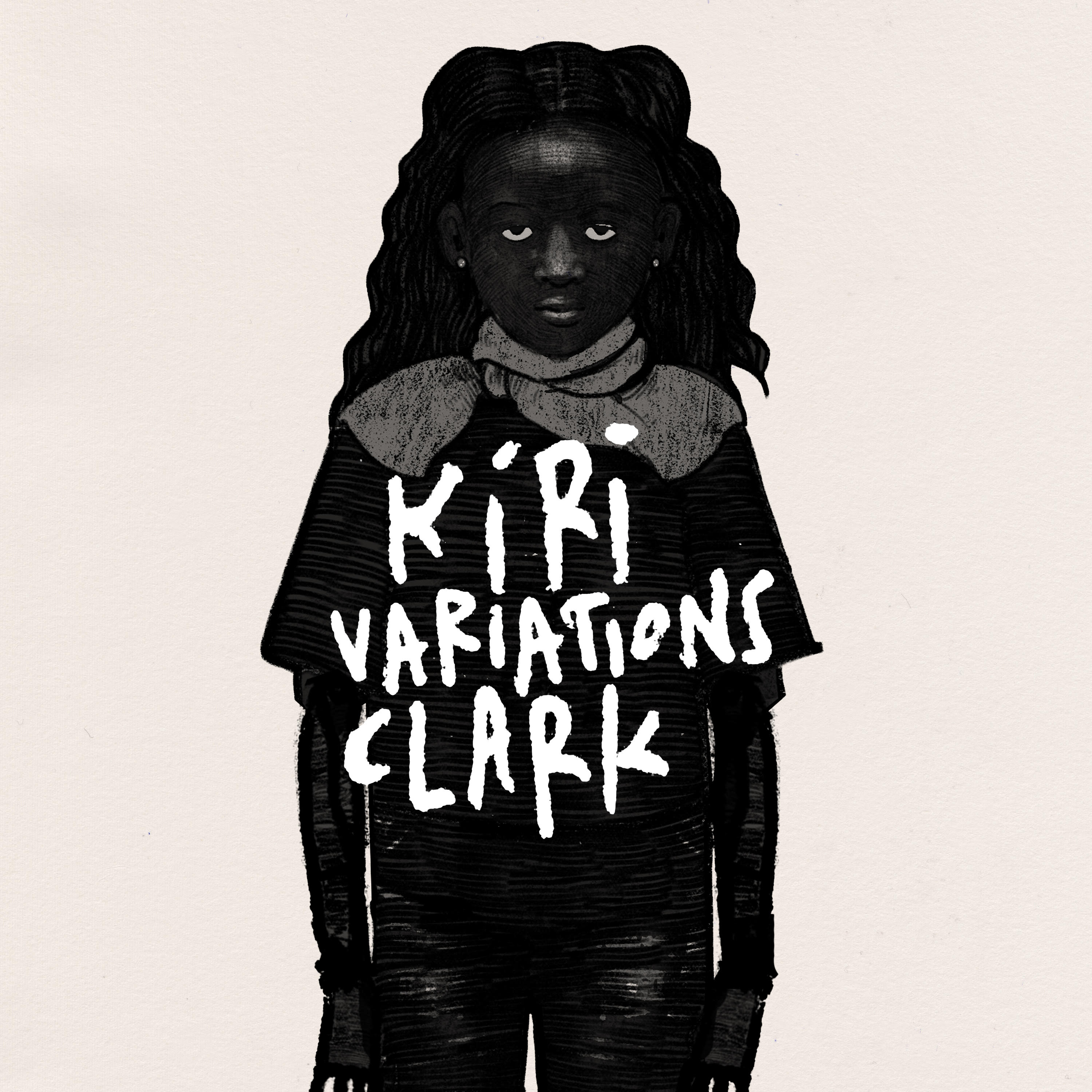
Clark‘s latest album, Kiri Variations, will land on July 26 via his own Throttle Records.
The 14-track album is the UK artist’s first since 2017’s Death Peak via Warp Records. It started life as the score to the BAFTA-nominated TV program “Kiri,” but only a small portion of the recorded music was used by director Euros Lyn. That first incarnation has since been morphed into a proper artist album. “In addition to my usual methods of controlled randomness and tangential ideas, the TV commission was a prominent spark for new approaches. It’s a great balancing contrast with the solipsistic studio album,” Clark explains.
It’s said to allow Clark’s simplicity and playfulness to shine through: “It’s a skeleton of an album, reduced to bare essentials, although it started out rather dense. The thing that takes time is making it succinct,” Clark explains. “Certain parts are also what you could call anti-muso—for example the recorder on ‘Kiri’s Glee’ is totally out of tune—but it sounds so colourful. I can’t resist the primary paint of acoustic instruments; it’s an antidote to frictionless digital music.”
We’re told to expect and album of plaintive beauty, eerie horror, and childlike outsider music that epitomises Clark’s ability to flip-the-script and coherently organise an abundance of new ideas.
In advance of the album’s release, Clark has shared “Cannibal Homecoming,” his most song-based composition ever featuring not only augmented human voice but also a fully-fledged vocal, sung by him.
Tracklisting
01. Forebode Pluck
02. Simple Homecoming Loop
03. Bench
04. Kiri’s Glee
05. Coffin Knocker
06. Forebode Knocker
07. Yarraville Bird Phone
08. Primary Pluck
09. Flask/Abyss
10. Tobi Thwarted
11. Cannibal Homecoming
12. Banished Hymnal
13. Banished Cannibal
14. Goodnight Kiri
Kiri Variations is scheduled for July 26 release, with pre-order here.
Global Modular Traffic 1/3 is the first compilation of three planned releases coming via Ukraine’s Corridor Audio. It includes material from Ukrainian modular nerds Heinali, Lobanov K., Synthkey, Friedensreich, Danilenko, Vaxoid, Louwave, and Splinter UA, who curates the label. The artwork comes from Anatoly Griaznov, an artist based in the south of Ukraine.
Each release in the series comes with its own manifest. Here is the first one:
“Listen, there is something else. Once upon a time a scientist raised the question: why do all electrons in the universe have the same mass and charge? One theory claims that all electrons and positrons are the manifestation of the same entity moving backwards and forwards in time. Thus everything you see might be created by one single particle. We are all a single particle. We create different things and we are different, but at the core we are one. Possibly.”
Corridor Audio is a platform for experimental electronic music from Ukraine, and aims to create a symbiosis of music and abstract art, tuning the listener and the viewer to the same frequency.
Global Modular Traffic 1/3 is available here, and in its support we’re offering Danilenko’s “Perseverance” as one of today’s free downloads via the WeTransfer button below, or here for EU readers due to GDPR restrictions.