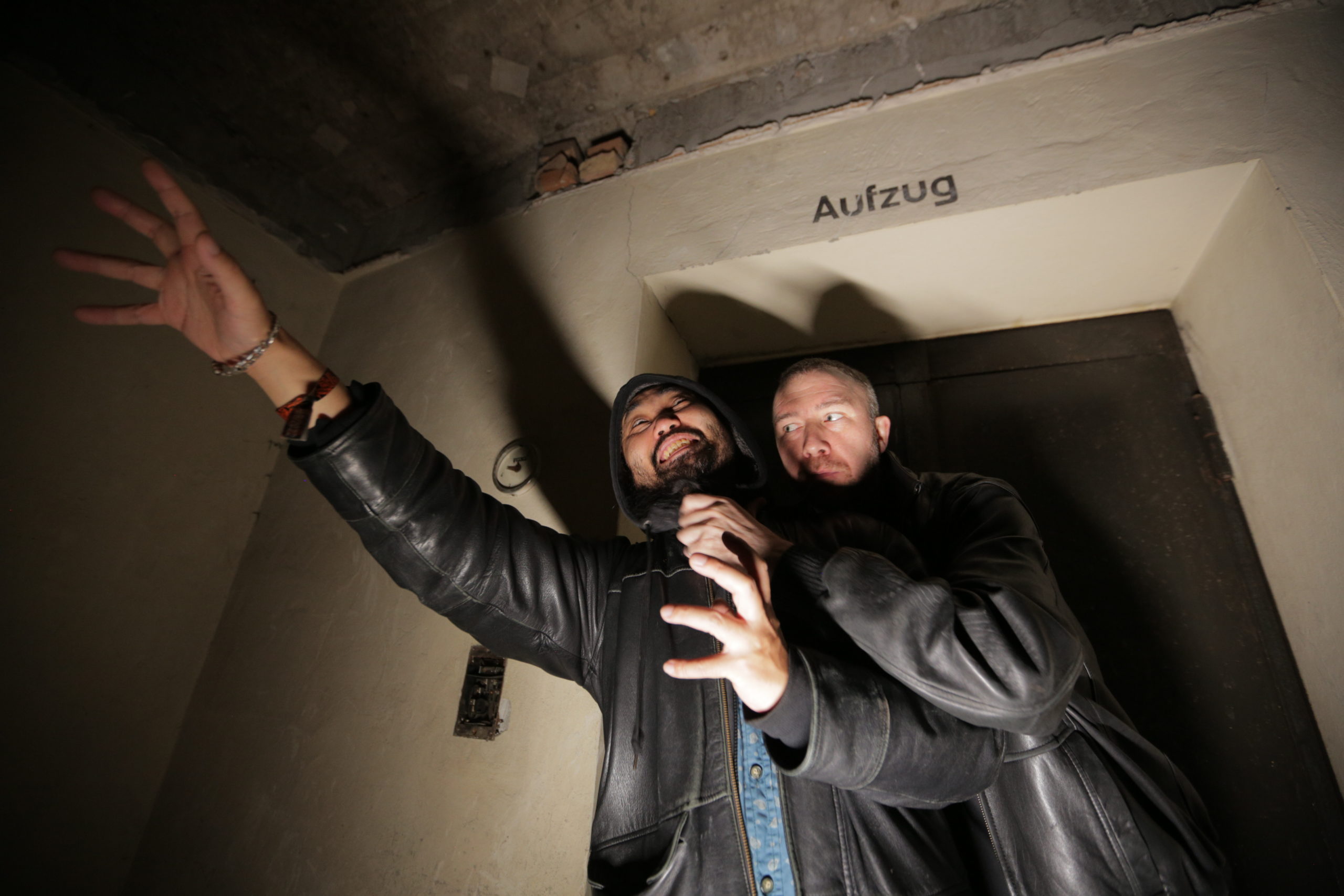
Scotch Rolex (a.k.a Shigeru Ishihara) and Shackleton (together known as Scotch Egg) will release a collaborative album on Silver Triplet, a new label.
Death by Tickling is filled with wild and unpredictable changes, we’re told, “incorporating odd time signatures, cosmic synth freak outs, and dubbed-out space vibrations.” At times the album “lulls the listener into a zoned-out trance, whilst at other times it startles with its ferocity.”
Across all 10 tracks, both artists’ sonic signatures can be recognised. Scotch Rolex is best known for his work with Kampala-based artists MC Yallah and DUMA’s Lord Spikeheart. He has released on Nyege Nyege’s Hakuna Kulala label, drawing on dancehall, trap, Japanese traditional music, gabber, grindcore, gqom, and kuduro. The same energy “permeates this new release but with new elements of shamanism and deconstructed rhythms,” we’re told.
Meanwhile, the founder of Skull Disco, Shackleton, has been carving out his brand of esoteric ritual trance music for the best part of two decades on labels such as Honest Jon’s and Perlon. This record is his first since 2022’s The Majestic Yes, which included a collaboration with Mark Ernestus. It sees him taking Rolex’s raw beats and “exploding them into outer space.”
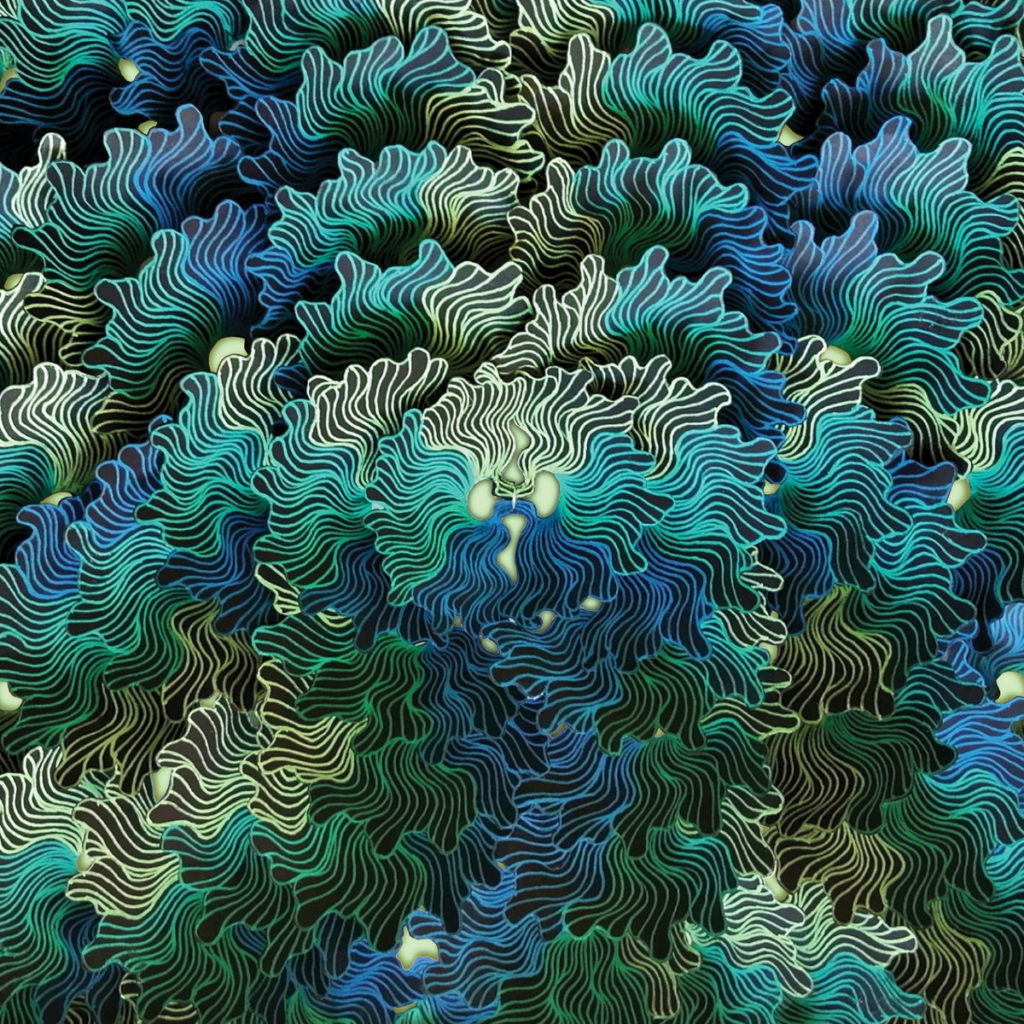
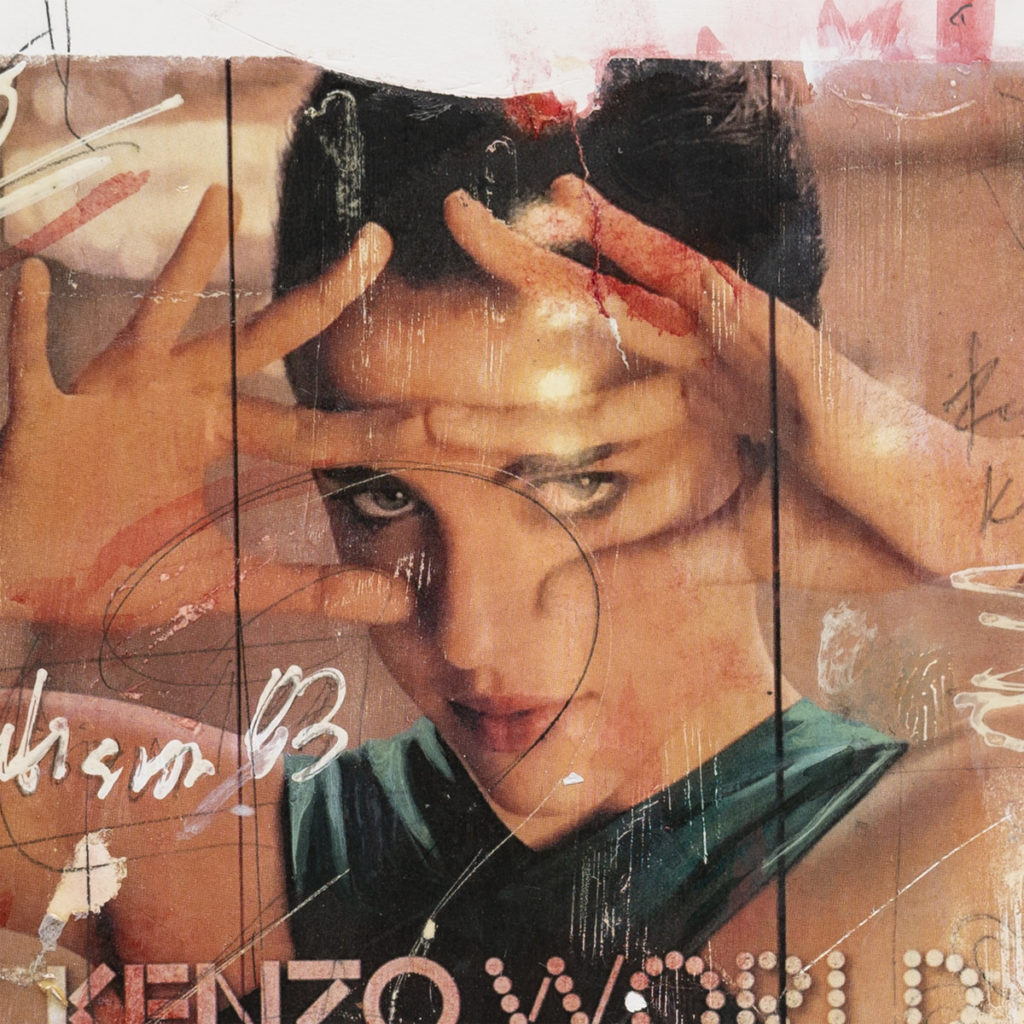
The artwork is courtesy of Zeke Clough.
Tracklisting
01. The Blue Sun 02. Asterids (Enter Life) 03. Five Butterflies 04. Deliver the Soul 05. Final Spasm 06. Love Songs 07. Opium Vibration 08. Shattered 09. Serotonin 10. The Eleventh Voyage
Death by Tickling LP is scheduled for March 31 release. Meanwhile, you can stream “Opium Vibration” in full via the player below and pre-order here.
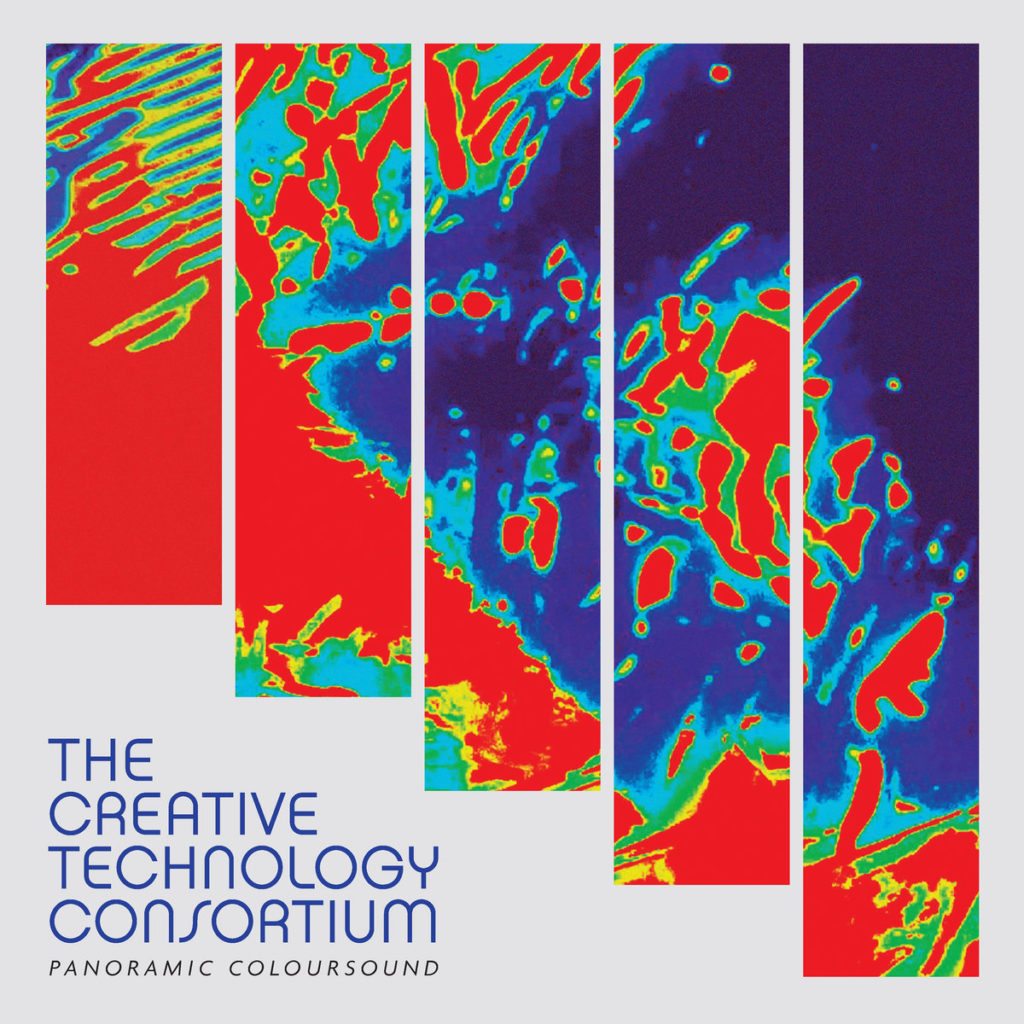
Dark Entries will celebrate its 300th release with Panoramic Coloursound, a triple LP from the Creative Technology Consortium.
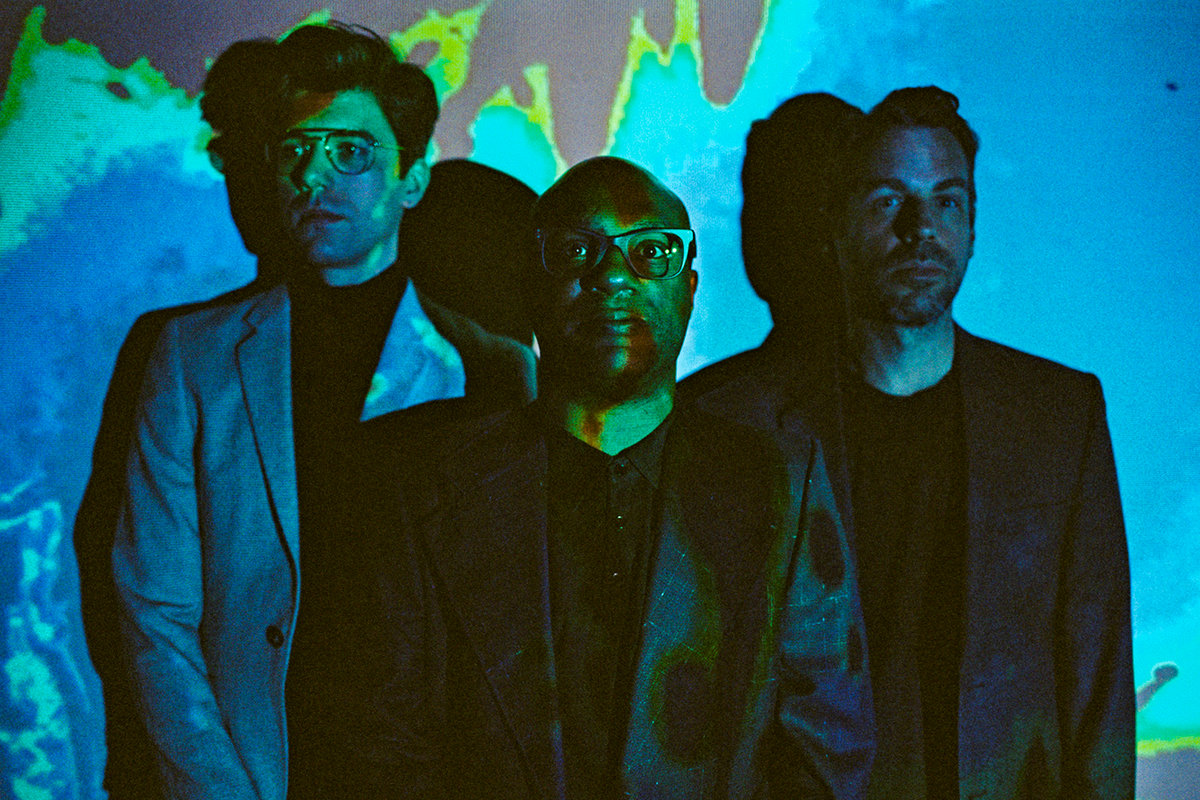
Creative Technology Consortium is the collaboration of Traxx, Andrew Bisenius, and Jason Letkiewicz, who forged the project during the depths of pandemic isolation. Drawing from film and television music of the ’80s and ’90s, and armed with a mighty array of vintage analog and digital synthesizers, they set out to “explore heists, vices, and catastrophe,” in sound.
We’re told that the album “collapses sound and image into a neon blur” throughout its 25 tracks, and that the tracks bring plenty of EBM, funky bass, and cosmic chord patterns to the dancefloor.
Panoramic Coloursound was mastered by Frédéric Alstadt. The sleeve was designed by Eloise Leigh, and features a photograph by Jason Letkiewicz.
Tracklisting
01. A Retro Vice 02. Addiction (Vicki’s Revenge) 03. Babalorichàs 04. Beautifully Polluted Sunset 05. Better Living Through Circuitry 06. Catastrophe 07. Complicity In The City 08. Confrontation 09. Down The Hall, What We Make Happen 10. Far From Amateur 11. Follow Our Kode 12. High Altitude Meditation 13. Initiative 14. Know Your System 15. Looming Shadows 16. Nyte Sequence 17. On The Edge Of Confrontation 18. Out Where the Transit Buses Don’t Run 19. Palm Tree Inferno 20. Rapidò 21. Sympathetic Ear 22. The Descent 23. The Monaco Falcon 24. Triangle (Cue Take) 25. Undercover Heist
Panoramic Colorsound LP is scheduled for April 14 release. Meanwhile, you can stream “A Retro Vice” in full below and pre-order here.
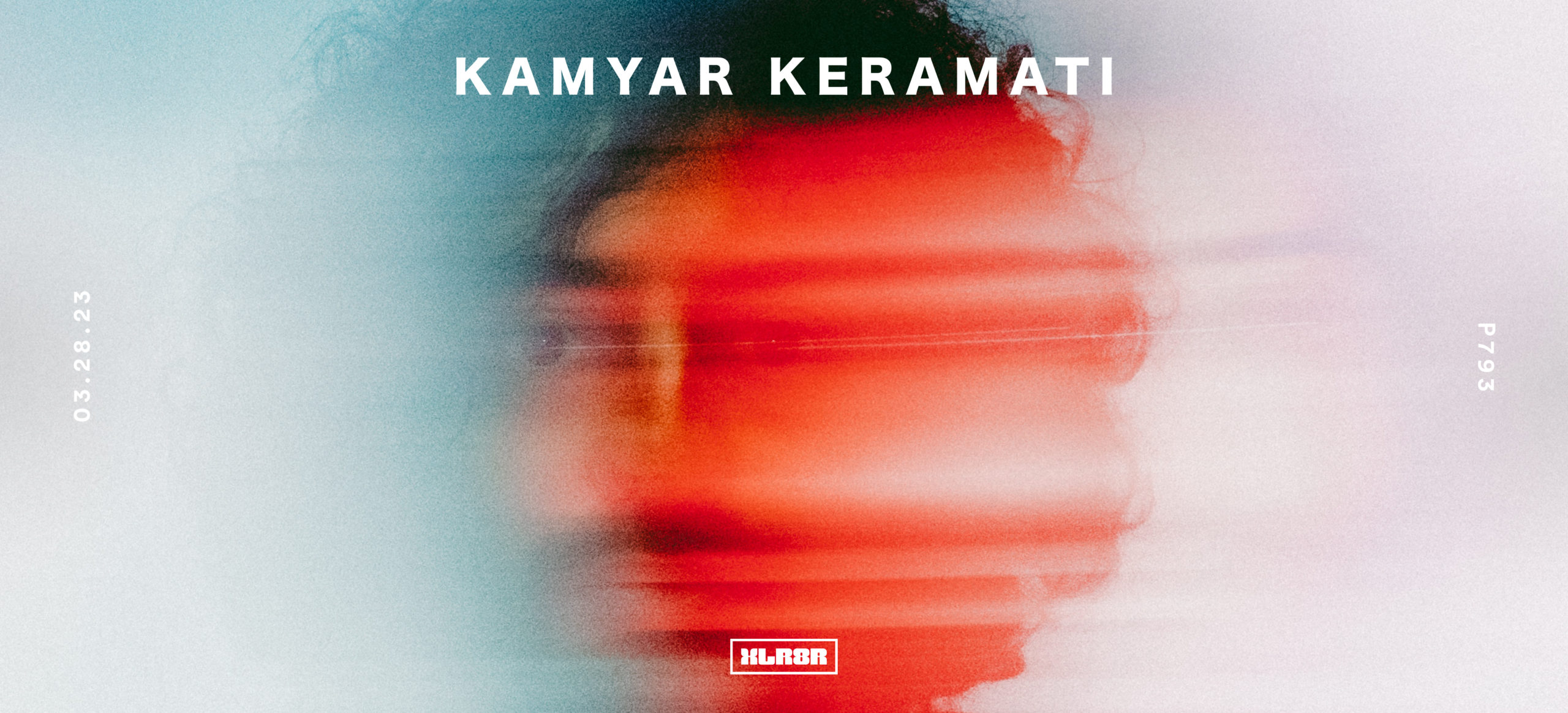
Kamyar Keramati is a DJ-producer born and raised in Tehran. His route into music was through guitar, which he’d play as a teenager, but because this was perceived as resistance against the Islamic regime, Keramati taught himself to produce music and eventually set up his own electro band called Langtunes. Between 2012 and 2017, as he would tour through Europe, he discovered electronic music—house, techno, electro, and disco. There were also many bands that influenced him, including Susanne Blech, John Coffey, and Steaming Satellites. In 2019, these experiences led him to set up Tonnovelle with Arman Jalili, and together they’ve put out EPs on Better Sound, OSMAN, and their own self-titled label, which is where they released their most recent EP, Equinox, with four tracks of techno and acid.
For nearly a decade, Keramati has been living in Berlin, where he works at popular record store Kimchi Records and runs I.V.O.E (Interactive View of Emotions), home to his most recent EPs: Abyss in 2021 and A.N.E.P last year. As a DJ, he melds genres and textures to deliver meandering club voyages that are dark, melancholic, and psychedelic, which is exactly where you’d place his XLR8R podcast, recorded a few months ago in his home. At exactly one hour in length, it’s packed full of his favorite records from the past few years—coming from John Dahlback, Jaumëtic, Derek Carr, and more.
01. What have you been up to recently? I’ve been busy with Kimchi Records, as well as with the tech company job I work at. Luckily, I’ve recently become an early bird, so through the first part of the day I get to prepare my sets for the weekend gigs and manage to produce new tracks in the studio.
02. What have you been listening to? I am digging into Iranian hip-hop music right now, especially the recent releases that have been put out about the subject of the recent revolution in Iran. At the same time, digging through dance music is my job and that’s something I always do. Also, recently I have been getting more into experimental and noise music as well. (And I still dig The Beatles!)
03. Where and when did you record this mix? The mix was recorded on a cold evening in Berlin, in the large room I live in. I made myself a DJ booth in the corner, surrounded by my records, which feels more like an office to me than anything else. Recently, I realized how I like this corner more than anywhere else in the world!
04. How did you go about choosing the tracks you’ve included? In general, I try to let the ongoing voyage that each mix represents find its path subconsciously. The records included (the mix is 100 per cent vinyl) are basically the greatest hits of the last two years of digging, and it’s likely that my friends who have come to some of my gigs will have heard some of them. I have mad respect for each gem in this mix!
05. What can the listener expect? This is a glimpse of what they would hear on the dancefloor. Although, obviously, in a gig I am a bit less conscious of each record that I am playing. The constant exchange of energy between the party-goers and me plays the main role there, meaning that high energy in the crowd will push for higher energy records. In other words, it’s more usual for me to play “crazier” records when I play at a party!
06. How does it compare to what we might hear you play out live? The mix starts at around 125 bpm, but the sound that I recently got to deliver on the last few gigs started at 100 bpm. I am starting to be more interested in long openings or closings at the parties than playing at peak times.
07. What’s next on your agenda? There are two EP releases I am working on at the moment, one will be released on my own IVOE label and another one is going to be released on the Kimchi Records label. There’s also some release offers that I am studying. Also, I’m looking forward to playing open-air gigs in the near future and getting back into the spring and summer vibes!
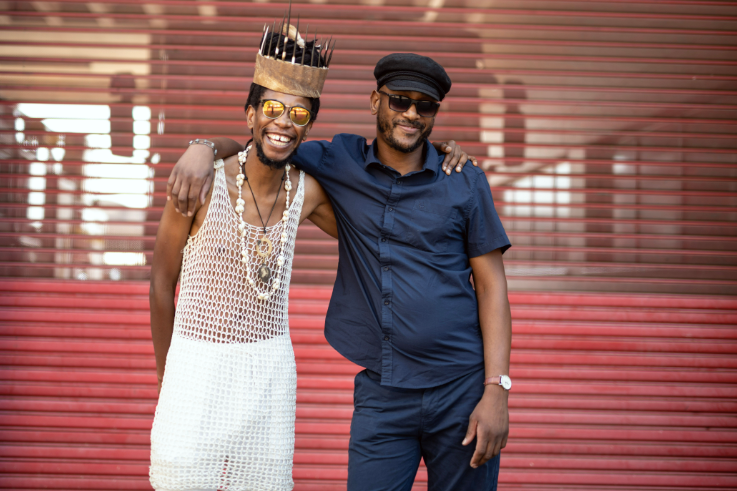
IzangoMa, a 15-piece experimental collective hailing from Pretoria, South Africa, will release their debut album on Gilles Peterson’s Brownswood Recordings.
Although Ngo Ma may only be reaching us in 2023, the collective’s roots stretch back to the meeting of core members Sibusile Xaba and Ashley Kgabo in 2016. The ensemble is a link-up of Mozambican and South African musicians.
“I had this idea of working with my students from Mozambique,” says Xaba. “When I first met them during exchange workshops, they were young men. We’d return every year to find these great human beings growing into these phenomenal musicians. We felt like it would be nice to incorporate them into this thing that we were doing.”
Fittingly, the album is a “collective effort through and through,” we’re told. While the duo of Xaba and Kgabo forms the backbone, it’s the “kaleidoscopic collective which feeds into the cycle that expands each time, adding something new on each iteration.”
Ngo Ma, which loosely translates from Zulu to English as “by my mother,” explores themes of creation across 11 tracks.
Alongside the announcement, the group has shared the title-tkack, which is “a cry to The Spiritual Mother about the discordant lives that many people lead,” we’re told.
Tracklisting
01. Agenda Remember 02. Birds (Of A Feather) 03. City Lights 04. Le Nna Mfana 05. Mgung u Ndlovu 06. Ngo Ma 07. Out Of The World 08. Phew 09. Q & A 10. Tribute to Johnny Dyani 11. Wathint’ Imbokodo
Ngo Ma LP is scheduled for May 26 release. Meanwhile, you can stream “City Lights,” “Ngo Ma,” and “Tribute to Johnny Dyani” in full via the player below and pre-order here.
There’s a reason why Eddie Fowlkes‘ handprints are cemented on the Detroit Historical Museum’s Legends Plaza. Born and raised in the Motor City, Fowlkes has left an indelible mark on modern electronic music. He began his journey with a little help from Juan Atkins, from whom he borrowed some turntables and taught himself to mix, and to better his sets he’s since recorded and released music for Metroplex, Tresor, Sony, and Peacefrog, plus his own labels CityBoy Records and Detroit Wax. “First and foremost, I am a DJ,” Fowlkes once said. “I created music to have some music to DJ with that the next DJ didn’t have. I’m just a DJ who decided to make music.”
Sonically, Fowlkes introduced the world to what he calls “techno soul,” a mixture of techno, ’70s funk, and Chicago house. (Because “Detroit … is both house heads and techno heads,” he says.) In the 1980s, he was part of the Deep Space DJ collective, which included Atkins, Art Payne, and Keith Martin, and he would perform solo with three turntables, a mixer, a wah-wah pedal, and the 808 and 909 drum machines. Techno legend Kevin Saunderson, whom we’ve featured on XLR8R, said that seeing Fowlkes DJ a fraternity party in Kalamazoo, Michigan, inspired him to become a better DJ.
After some time away from music, Fowlkes has returned with a sizzling four-track EP on Radio Slave’s Rekids, and another one will land soon. (There’s some more new music coming on Defected.) To toast his comeback, Fowlkes has recorded an XLR8R podcast, delivering precisely one hour of uplifting techno soul—coming from Kerri Chandler, Laurence Guy, Rick Wade, and more, plus a few unreleased gems from his private collection.
01. What have you been up to recently? DJing in America a lot and recording. I’ve been making some cool tracks for 2023.
02. What have you been listening to? It really hard to say. My range of music is wide open because I like to play different styles of music, so I can’t pin-point it!
03. Where and when did you record this mix? I recored this hot mix at my studio, early on Friday morning.
04. What setup did you use? Pioneer CDJ 3000s and a DJM900NXS2 mixer.
05. How did you go about choosing the tracks you’ve included? I always pick tracks that have both elements of urban house and urban techno styles
06. How does it compare to what we might hear you play out live? Techno soul baby!
07. What’s next on your horizon? I am looking for a proper booking agent for Europe, and putting out smoking hot tracks for the world!
XLR8R Subscribers can download the podcast below.If you’re not an XLR8R subscriber, you can read more about it and subscribe here.
Tracklisting
01. Martin Ikin “Key Issues” (Soul Purpose) 02. Mr Jay “Chase This” (Extended Mix) (HouseU Tunes) 03. KPD, Mo’Cream “Clubs In NY” (Mo’Cream Remix) (Blockhead Recordings) 04. Laurence Guy “Waiting For Love” (Shall Not Fade) 05. Homero Espinosa “Along The Way” (Original Mix) (Moulton Music) 06. Sebb Junior, Saison “As One” (Saison Rework) (No Fuss Records) 07. Double 99 “Ripgroove” feat. Top Cat (Rerecorded) (Get Human Records) 08. Luyo, Reno Ka “Back To Me” (Instrumental) (Nervous) 09. Voigt & Voigt “Why” (Kompakt) 10. Retromigration “Retromigration-Flying Lotus” (wewillalwaysbealovesong) 11. Rick Wade “Acid Creep” (Shall Not Fade) 12. Kerri Chandler, Lady Linn “You Get Lost In It The Warehouse Project” (Kaoz Theory) 13. ColorJaxx “Easy Rhodes” (Large Music) 14. Unknown “Unknown” (Unreleased) 15. Unknown “Unknown” (Unreleased)
As KMRU, Joseph Kamaru, a 26-year-old sound artist from Nairobi, Kenya, sits at the forefront of modern experimental ambient music. Now based in Berlin, Germany, where in 2020 he enrolled in a graduate program for Sound Studies and Sonic Arts at the Universität der Künste, Kamaru has released several albums, on labels including Warp Records, Seil Records, and Editions Mego, which is where he released Peel, his debut album of delicate, textural compositions, in 2020—shortly after he’d made a name for himself with his more beat-driven songs with a performance at at Nyege Nyege festival.
Across all of Kamaru’s recent tracks, including on Epoch, which he released in October, he delivers an exquisite mix of evocative and moody textures, some of which are between 10 and 20 minutes long because they unravel at a repetitive and leisurely pace. At the heart of them all you’ll find Kamaru’s field recordings, recorded out of the window of his Berlin apartment or when roaming the streets of Nairobi, where he grew up and began making music in university using computers that came equipped with the digital audio workstation FL Studio. With the help of a classmate, he eventually learned Ableton Live and signed one of his first songs to German label Black Lemon, but something inside Kamaru was drawn to textural sounds.
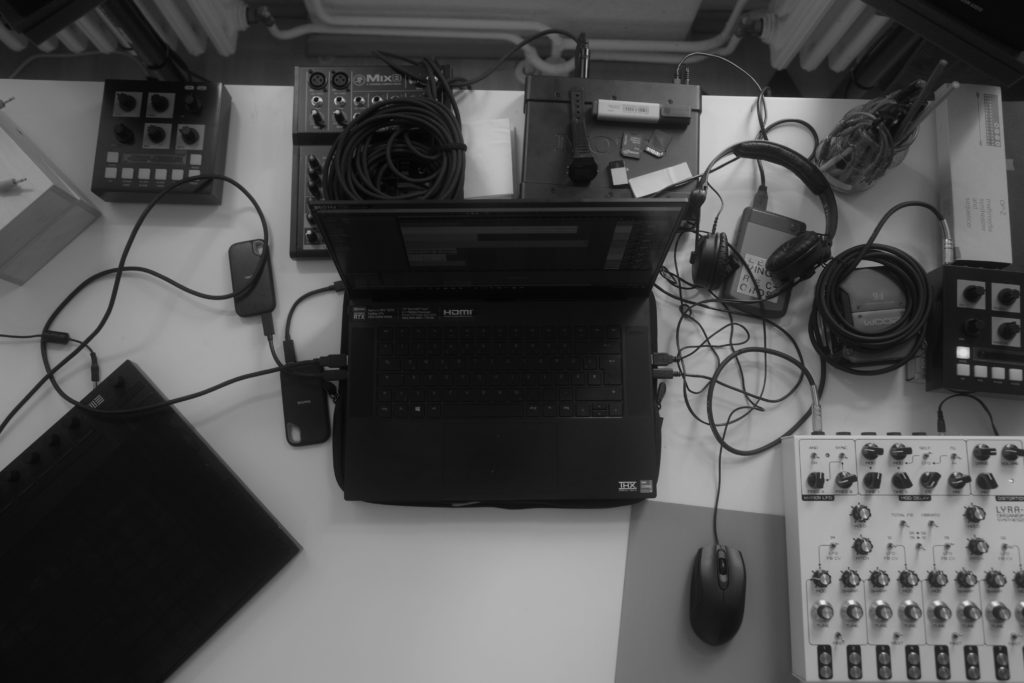
One day, during a train journey from Nairobi to Kilifi, he became entranced by the train’s sounds and began recording them into his IPod. These sounds eventually became his EAST EP, released with Manch!ld, whom he met on the train, in 2017, and led him to discover the work of experimental musicians like Slikback and Dj Raph. “Recording outside, with my headphones on, I realized there was so much sound around me,” Kamaru toldPitchfork. “ Armed with these sounds, he’d return to his laptop, which is normally positioned at his kitchen table, and morph and stretch them into these hazy tracks. For this edition of Artist Tips, Kamaru sat down with XLR8R and told us how he goes about it and some of the key practices at the center of his work.
01: Follow Your Intuition, Rather than Analyse
When I am writing ambient works or textural-based compositions, I try to follow my intuition. I write my best music when I feel completely attuned to the music, so much so that I actually forget what I am doing. At no point am I consciously thinking, Ok, I am going to this synth or this setting, then connect it through this pedal. I just take the synth and take the pedal and just mess around.
To do this, you must not set predetermined goals; instead, as you progress through a track, make choices that feel right in that moment. Start a project without a clear goal, using sounds and instruments that you select, and do not undo anything. Create a 20 or even a 60-minute loop and then make a really short track. Rather than analysing what you’re doing too much, just follow your intuitions. Your instincts. Your body, the space you’re creating, and the tools you’re using have to be intuitively synched.
It’s not easy to find this headspace but I do have some rituals. Like ways where I get myself into this state of creation. What I normally do is open the software and just play around with sounds. Then at some point I get this Oh, Aha moment and slowly I get lost in the music. I become calm. If I don’t find this space then I feel frazzled and I think too much and what I make doesn’t make sense. Yes, there’s too much thinking going on!
I also suggest that if you’re used to starting a piece of music with a metronome or a specific BPM, try not to. Instead, take an instrument, either hardware or a software plugin, and hit record on your DAW. Listen before you play any sounds of the instrument; this will enable you to become attuned to the space you’re working at. Listen before you record. Be patient.
Another thing I like to do is turn off the grid on my DAW, such as Live. If you press ctrl +4 on Ableton the grid sort of disappears, and this helps me to break away from the confines of the software, so you can create in new ways!
I also use software like Maxmsp to explore vertical ways of composition. And when recording sounds with plugins, I think it’s good to bounce the tracks in place (as audio) and move on, rather than going back to figure out the sounds and settings used. I also recommend using basic synthesis to create sounds: sine waves, saw waves, and field recordings too.
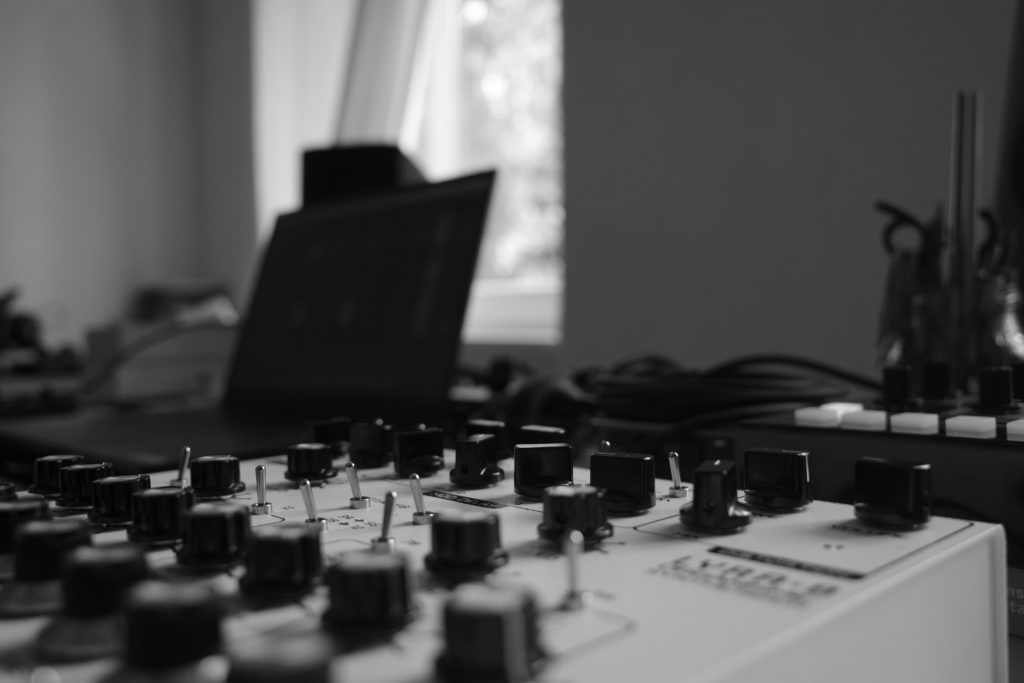
You can hear this effect on “Odra,” which I started with my Lyra 8. My Lyra 8 is an organismic synthesizer and the beauty about this synth is that it never sounds the same; if you want to record something you always have to be present with it, listening and recording. The process was simple: I’d capture sounds with the Chase Bliss Mood pedal and layer in improvisations from the Lyra. I wouldn’t ever go back to the recorded sounds after; rather I would build upon what was already created.
Often, when you do this, you’ll end up with long-form compositions done in one take, but they’ll sound fantastic. Authentic. This is the same process I use on most of my tracks. If the track is long, you can let it be, but you can also cut them down if you want to.
02. Use Subtle Repetition to Engage the Listener
I like to explore different repetition patterns of a specific sound in my tracks, so laying the same sound across different positions. For example, sometimes I’ll capture a pattern on a pedal and record the sound into the project, then I’ll slowly move the volume knob and fade it in and out, adding subtle gestures from other parameters—delay, etc.— as well.
I also like to record longer loops which have different permutations and I’ll add inversions of those loops within the main loops. The whole Peel album feels like this. It’s really just long and short loops interacting with each other.
Sometimes the sounds might be off but that’s ok, unless it feels really wrong! I think it feels as if something is happening but it’s not really happening. I would suggest is that you use the effects quite subtly and slowly. Lightly. For some tracks I’ll be sitting there for hours, twiddling with the volume knob, recording in automation on the track, so the effect is tiny, tiny. This is especially true for long durational tracks, or those with lots and lots of layering. On “Peel,” the track, you can hear that the volume drops out in the 12th minute because my hand was tired, though nobody has ever mentioned it! My experience is that this effect really engages the listener.
03: Drive, or Score, with a Field Recording
One of my favorite recording techniques is to begin a track with a field recording, which forms the basis for the composition. What I’ll do is make a recording, maybe on my phone through my window, perhaps of a bird flying past or something. I will then use those sounds to guide the piece that I am creating.
Normally the recording will be the skeleton for the track. Like it’ll be the focus or the lead. It carries the piece. On other occasions I’ll just use that recording as an idea and I’ll score a film for that moment. That motion. Or whatever it is. (That was the case with “Tor,” which is based on a field recording a friend sent to me in 2018.) Taking an instance or phenomenon from the outside and contextualising it through sound can be an interesting approach to explore.
My daily walks are central to this process. When I’m in Berlin, I love going for walks along the Spree and recording there. (You can hear some of these recordings in “for sure I saw him” from my as it still is EP.) I will walk for around 10 minutes, and I’ll never cut or edit the recording in any way.
Once I’m back in the studio, I’ll drop the recording into my DAW and then the work begins. Normally I will choose one instrument to use for the composition of the entire piece. I’ve found that limiting myself to one instrument provokes more possibilities of what you can do with the one sound. I’ll edit, layer, and process the sounds of the instrument, but the field recording is what drives the piece.
I’ve used this technique a lot in my music. “life at ouri,” for instance, was based around a jam I made on a friend’s piano in Montreal, when the window was open when I was playing. Also, “Walking Dreams“: it’s an old track but I remember it because the recording was done when I was walking home from a night out in Nairobi. I used a field recording from my phone, then I added all the layered sounds around it. The field recording isn’t edited in any way.
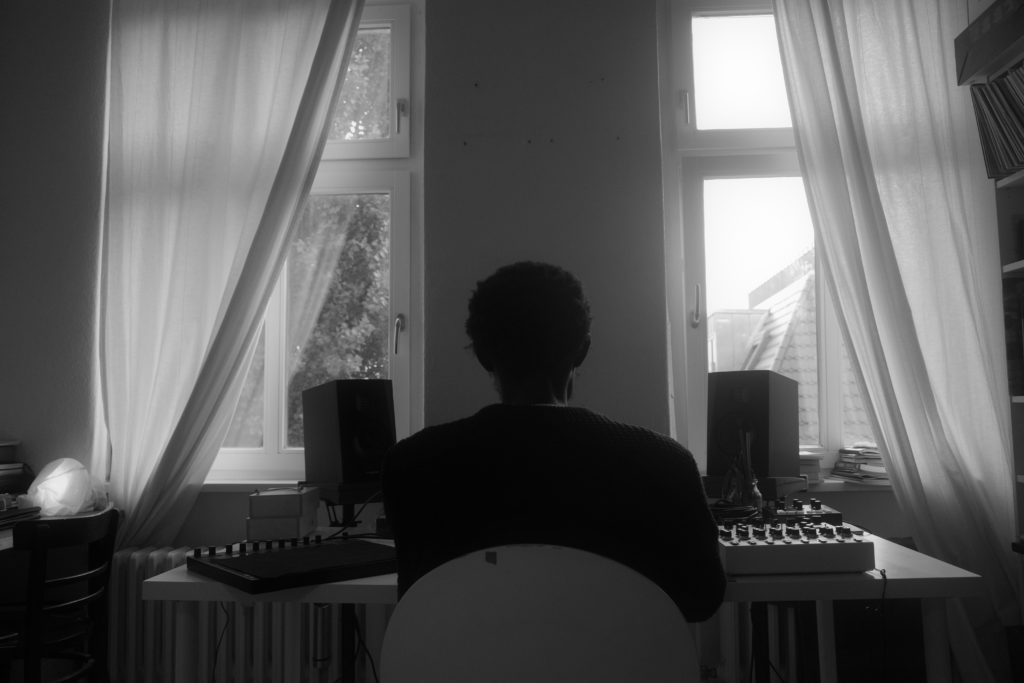
I would also like to talk some more about limiting yourself in terms of equipment. Spending time honing an instrument or piece of gear will inspire a more tactile connection with equipment. I’ve come to love producing on my kitchen table because it’s quite small so it means that I can’t have more than one piece of equipment, other than my laptop. It also faces out of the window so I find myself in a contemplative mood when I work from there. My favorite instrument to do this with is the Lyra 8. I use it both for live performances and production, mostly because of its uncertainties. It’s chaotic but beautiful.
04. Juxtapose the Loud with the Quiet for Maximum Impact
I’m really not sure whether this is a thing but I use it in my music a lot. With tracks that have lots of layers and tracks, I think that there are many sounds that aren’t actually heard but they can be somewhat perceived by the subconscious ear. Therefore, they impact the listeners’ experience with the music.
So, while adding sounds to a project, I like to experiment with relatively low volume sounds and contrasting sounds that will respond to the low sounds. I’ll intentionally record sounds at low volumes to contrast with the higher volume sounds. So you’re sort of juxtaposing low sounding recordings with really loud or massive sounds. In my experience, this allows you to hear the sounds beyond the thresholds of the human ear. In Tennyson’s track “Like What” they do this really well. They play with sounds and it feels like you’re in a building and you’ve moving in different spaces in the house.
I find the technique works best on long-form tracks or drones which evolve over a long period. With “while we wait,” for example, you can hear the literal clicking sounds from my Lyra 8, and though they’re quite subtle they carry the piece. The whole concept of the track came from the click sounds during a jam on the synth. And I thought it would be interesting to dive into this immersive world of undertones of the Lyra and low field recorded sounds.
I also recommend that you try listening to the tracks in different listening environments: listening in a room with windows open, on your phone, or even outside. Note down every difference you hear in these environments. There’s no doubt that you hear new sounds from the piece based on the listening conditions. That’s because the piece feels different in different spaces and rooms. Sometimes I even like to play out a track out loud through the speakers and record the sound with microphones and use the new sounds layered with the original track. That’s just another way of listening. This really helped when I was recording Peel, where different overtones would emerge depending on the spaces where I played it.
05. Omit The Main Element for More Perspective
In ambient or experimental music, the main element of the piece can be any sound, which is different to, say, pop music where the vocals have to be mixed perfectly with all the other instruments. Because of this, there’s so much more flexibility.
One thing I like to do, then, when a piece of music is finished, is mute one significant element before rendering. This gives a different perspective to the track when listening back, which is important when you’ve been working on it for an extended period. Sometimes the track doesn’t need that element, and this is a great way of identifying what you do and do not need. With “rimpa dusk,” for instance, and “Well,” these were recorded in only one take and I ended up muting various sounds. I did this because I thought they needed less clutter, and they sounded better without the main instruments and sounds!
Another thing you can do is reverse the whole track once it’s finished. On Jar, the first track is called “Degree of Change” and the last track is called “Change of Degree.” What nobody knows, until now, is that these are actually the same track, only reversed! Some tracks will sound wildly amazing when reversed, but others don’t.
Finally, you can change the pitch. Plugins like SoundShifter (waves) are ideal for this. I’ll often pitch the entire track a few pitches higher, work on it in the new pitch, and return to the original key. On other occasions, I’ll just listen to the music in different pitches to see how they sound. This is sure to give you some fresh perspective!
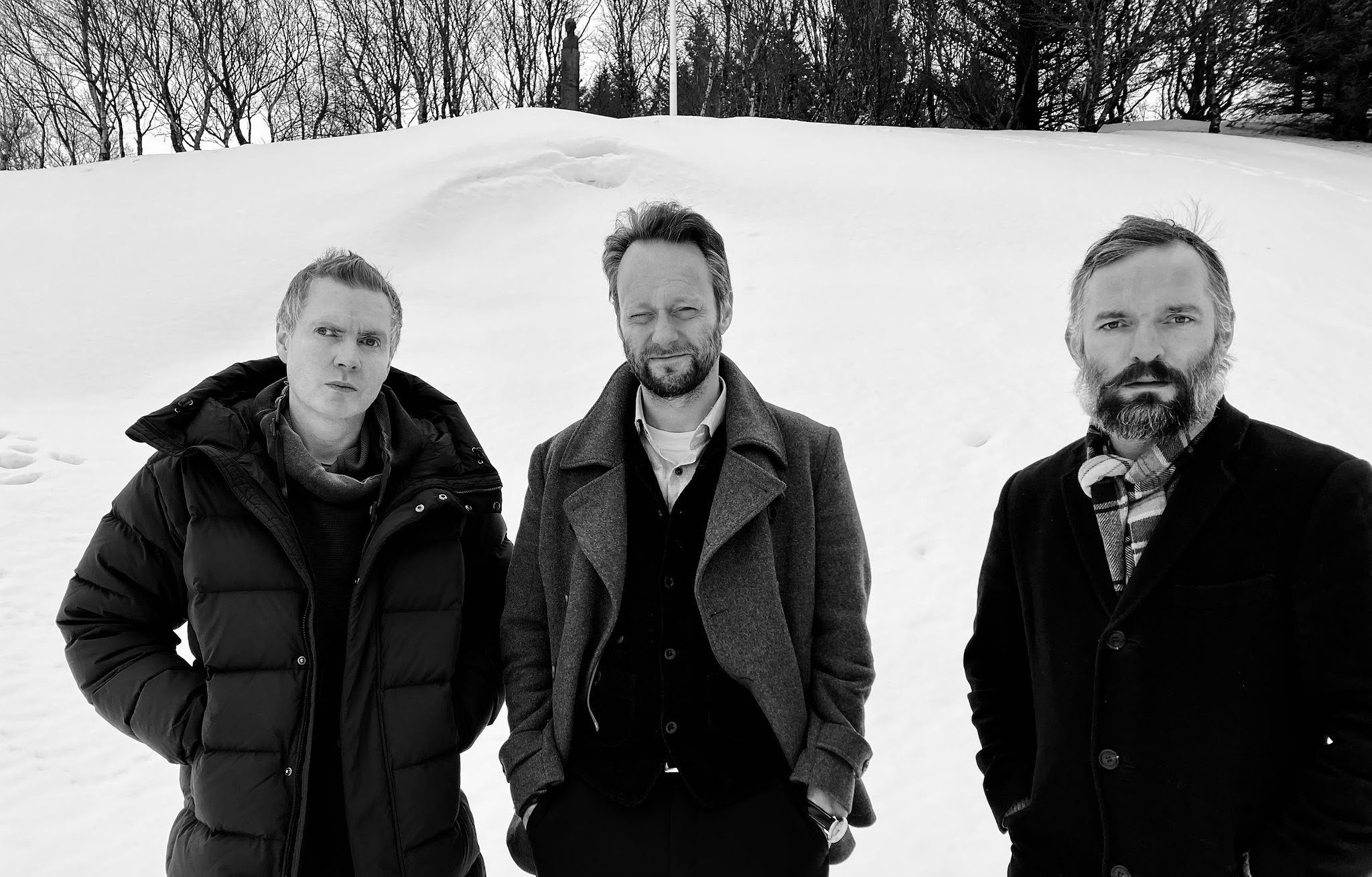
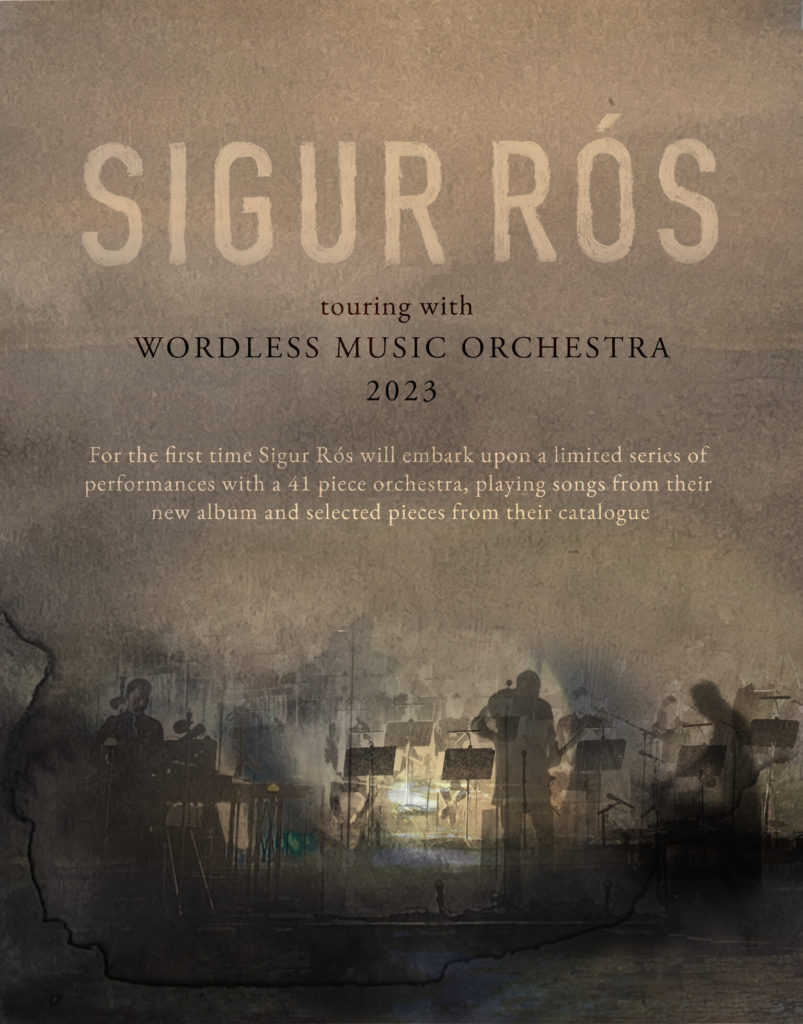
Sigur Rós have announced a limited run of special dates, where they’ll perform material from a new album with a 41-piece orchestra in both Europe and North America.
Having spent the past few years writing and recording, the Icelandic group will now debut these new songs to the world. They’ll do this with the Wordless Music Orchestra in North America.
The tour kicks off with Meltdown Festival in the UK, where the group will perform with the London Contemporary Orchestra, who also accompany them on their following European tour dates. All orchestral dates will be conducted by Rob Ames.
Courtesy, real name Najaaraq Vestbirk, will release her second EP next month.
Violence of the Moodboard follows the Danish artist’s Night Journeys, which came out in March last year. Sonically, we’re told it continues down a path of “blissful and serene sonic melodrama.”
The title of the EP is lifted from the essay “Adam Pendleton and the Issue of Originality in the Digital Age,” written by fashion critic and curator Jeppe Ugelvig, who explores the ubiquity, and complexity, of appropriation and copyright infringement in artistic contexts, specifically within fashion.
Ahead of the release, Courtesy has released a cover of L.S.G.’s cult trance classic “Hearts,” but in Courtesy’s version it’s softened, distilled to its core in a blend of ambient and synthesizer euphoria.
Deco is Trago’s sixth album and his first for the Amsterdam label in a decade. He recorded it following an extended absence from dancefloors, as he cut back on DJing commitments to spend more time with his young family. When he returned to the studio, Trago struggled to get back into the groove, because “the desire to make dancefloor-focused music had temporarily deserted him,” we’re told.
Returning to the first synthesiser he ever bought as a young DJ-producer, Trago set about “navigating different musical routes without the confines of the club,” we’re told.
The album’s name comes from Deco Sauna, where Trago would go to decompress when he was living in Amsterdam. It features Tracey and Maxi Mill, both of whom are part of his Voyage Direct label roster, but for the most part the production process was a solo endeavour of “musical therapy” for Trago, who wanted “to do things differently after years making club cuts and sweat-soaked peak-time workouts.”
01. A Dark Oak feat. Tracey 02. Central Park feat. Maxi Mill 03. Never Peace A Puzzle feat. Maxi Mill 04. To Be Left Unlocked 05. When The Sky Is Watching Us 06. It Might Be Forever 07. Blue Dope (digital bonus track)
Deco LP is scheduled for April 28 release. Meanwhile, you can stream “When The Sky Is Watching Us” in full below and pre-order here.
Though raised only a short drive away from Detroit, Hila Lubman, better known as Hilu, has been calling Israel home since 2007. She’d always been drawn to electronic music, and would regularly go out to parties, but she didn’t try mixing it until 2015, when she discovered it was her “true means of self-expression,” she says. Since then, her relationship with it has changed—from that of a dedicated clubber, who would spend endless nights immersed in the sounds and atmospheres of The Block, Tel Aviv’s most famous club, among others, to one who would create them for herself. To do this, she relies heavily on her experiences watching artists like Honey Dijon and Raresh, who are among her favourites, and constantly digging to discover new sounds.
Fast forward to today, and Hilu is DJing all across Europe, while hosting her own events in Tel Aviv through Zaza Island, a female-led event series that has already hosted artists like Traumer and Francesco Del Garda in quirky venues like ancient theatres and pecan and orange fields, bringing European style events to the Middle East. Soon she’ll launch her record label of the same name.
For this week’s podcast, Hilu has delivered a live recording from the closing party at The Block, where she held a residency before it closed last year. It was a “super emotional event,” she recalls, and she stepped onto stage for the middle slot between 3 and 6 in the morning. As you’d expect, this part of the set is filled with deep and groovy minimal house tunes, coming from artists like Dana Ruh, Chaos In the CBD, and Steve O’Sullivan. Listen carefully, and you’ll also hear a rare remix of DJ Vasile by Rhadoo!
01. What have you been up to recently? I’ve been putting a lot of effort into spreading my Zaza Island project together with my partner, Roni Amitai. This is a female-led brand which runs parties in Tel Aviv, and soon it’ll become a record label. Besides that, I’ve been studying to be a yoga teacher and I’m staying super dedicated to my practice.
02. Where and when did you record this mix? Late August in 2022. It was recorded live at the closing party for The Block before they sadly shut down.
03. How did you go about choosing the tracks you’ve included? It was a very spontaneous selection in the moment. Most of the tracks are more in touch with my “deeper” side as this was also the general guideline for the club. That’s also because the sound system was so good that you didn’t need much more to catch the crowd.
04. What’s next on your horizon? Working on some Europe touring, studio time, and having Zaza Island break boundaries.
XLR8R Subscribers can download the podcast below.If you’re not an XLR8R subscriber, you can read more about it and subscribe here.
Tracklisting
01. Cojoc “Timeless” (Otaku Records) 02. Mario Liberti “Get Lost” (Piros) 03. Heerd “Hellrot” (Stomping Grounds) 04. Dana Ruh “Natural High” (RDV Music) 05. Politics of Dancing X Nail “Track 2” (P.O.D CROSS) 06. Robert James “Soundscaping” (Outright Records) 07. Morose “Holy Ghost” (Humboldt County Records) 08. Chaos In the CBD “Digital Sound” (In Dust We Trust) 09. Mariusz Kryska “Octopussy” (PURISM) 10. Steve O’Sullivan & Ben Buitendijk “Take it” (SUSHITECH) 11. Brako “001 Bandit” (Brako) 12. DJ Vasile (Rhadoo Edit) “Nu Vrei Sa Mergi Cu Noi” (Unreleased) 13. Neighborhood Watch Patrol “The Poon Street Boys” (Telomere Plastic) 14. Politics of Dancing (Mome Remix) “Robin Sucks” (Politics of Dancing Records) 15. 9th House “Keeping Me Up” (9th House) 16. Cosenza “Future Salad” (HOARDER Records) 17. Eric OS “Lost And Found” (Terrazzo) 18. Mehlor “Holster” (Jambutek Recordings) 19. Shonky “Kombattant” (Third Ear Recordings) 20. Mr. Ho + Mogwaa “Bail-E” (Klasse Wrecks) 21. Nebulaee “Xtraction” (PURISM) 22. REda daRE “Eraserheard” (PURISM) 23. Raymond Castoldi “Cycles Of Life” (X-Ray Records) 25. Steve Bug & Clé “Let It Go” (Bassmix) (Nu Groove Records) 16. Jimpster “Lightshine” (Suol)