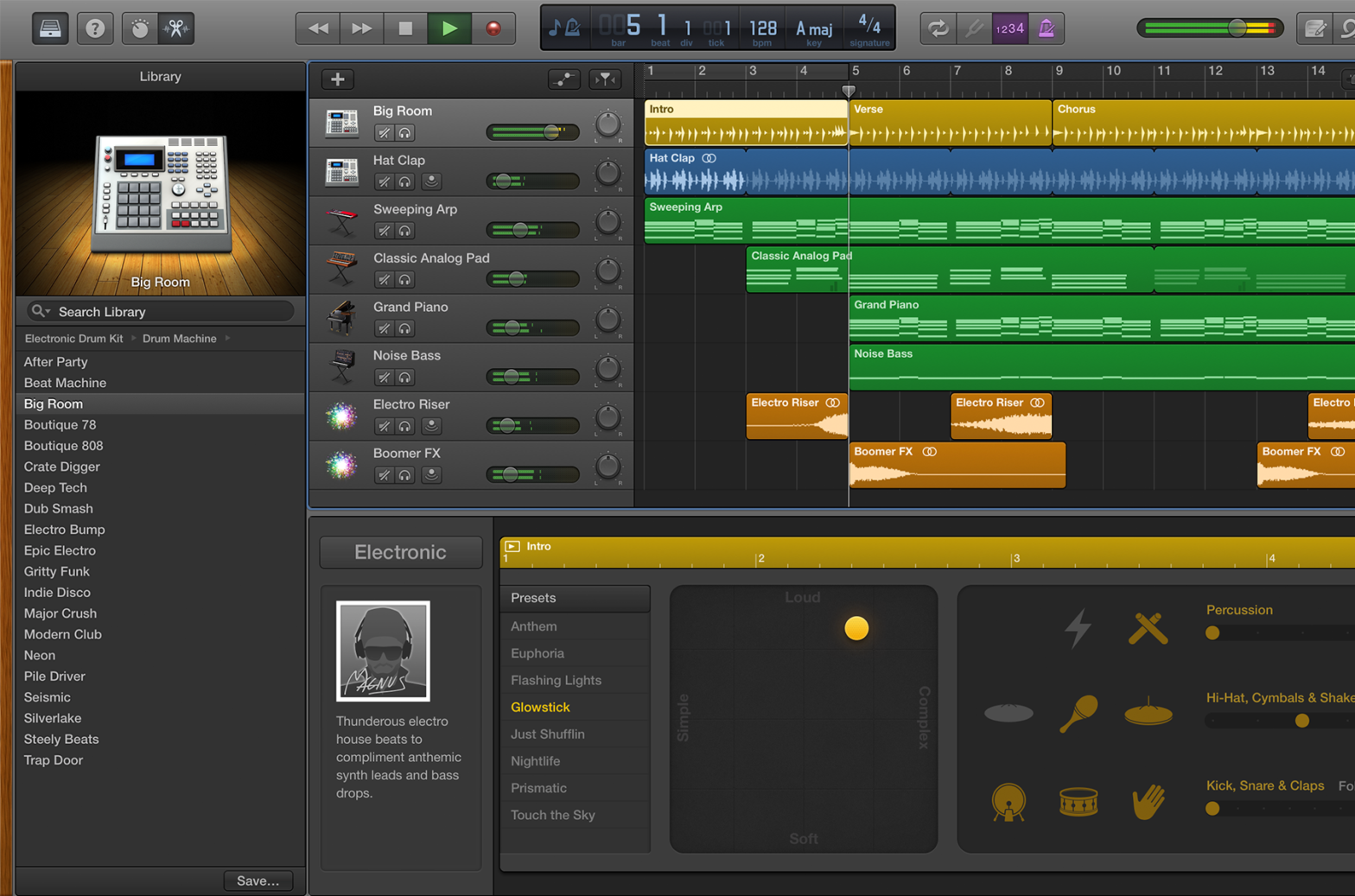
Point Blank has released a new video detailing how to make a basic house track in Garage Band.
The long-running music school focuses its courses on two main DAWs Ableton Live and Logic Pro. Although being very powerful tools for music makers with nearly limitless potential, Ableton and Logic can both be a little daunting to learn for first time users—which is, evidently, why Point Blank’s introductory courses that focus on both Logic Pro and Ableton Live are some of its most popular.
In regards to beginners, the most popular DAW is, arguably, GarageBand, a program developed by Apple that comes pre-loaded with most variations of Mac computers and MacBooks. Despite its simplicity, GarageBand can be a powerful tool in a producers arsenal and is basically a streamlined version of Logic Pro—GarageBand projects can even be loaded in Logic Pro when you’re ready. To get you started in GarageBand, Point Blank has produced a 30-minute video tutorial focusing on the fundamentals of the DAW.
In the video, which you can watch below, Point Blank’s composition and mixing instructor John Davies runs through a range of GarageBand tips and tricks, including programming instruments and loops, track arrangement, effects, automation, quantizing, keyboard shortcuts, tempo, and much more.
You can find out more about Point Blank’s courses here.
Chrissy Shively—better known as just Chrissy—is a genre-bending artist, once described as “one of the best DJs to ever walk the earth” by The Black Madonna. He specializes in Chicago house, disco, and rave-influenced sounds, but his 20-year career has ranged from jungle to garage to freestyle to footwork. In his previous incarnation as Chrissy Murderbot, he helped introduce the world to this latter genre through DJ gigs and releases on Planet Mu, Hyperboloid, and others—and he even organized the first international tour of footwork dancers, all while running the juke/footwork label Loose Squares. His more recent releases have landed on esteemed labels like Classic, Freerange, Razor N Tape, and Hypercolour. He also runs a house music label called The Nite Owl Diner, and its new sister label, Cool Ranch, which releases limited, hand-stamped runs of jacking, disco-inspired Chicago house.
Few contemporary artists can claim to have such an encyclopedic knowledge of music and a deep insight into the modern dance community as Chrissy. As a highly regarded voice in the industry, he ran the popular My Year of Mixtapes and My Year of Edits blogs, where he posted original genre-focused DJ mixes and disco re-edits every week for a year. He also wrote the liner notes for Hardcore Traxx: Dance Mania Records 1986-1997, a compilation of classic Chicago ghetto house on Strut Records, establishing himself as a go-to historical source for numerous dance music journalists. For this month’s Real Talk—an opinion series penned by the artists themselves—he addresses how vinyl-only DJ nights, vinyl-only labels, hardware-only producers, etc. are really just forms of classist, exclusionary gatekeeping and harmful to the scene at large.
One of the things I’ve always loved about dance music culture is its inclusivity; the refuge it provides for all sorts of people who feel excluded from the outside world and just want a place where they can be themselves. (It’s not perfect, of course, but I like to think the dance music world is ahead of the curve in terms of having tough conversations about how to follow through better on our inclusive ideals.)
Our scene has always been rooted in this approach: it was largely created by poor, young, LGBTQ people and people of color (and especially LGBTQ people of color) in New York, Chicago, and Detroit—people who dealt with a lot of bullshit in their day-to-day lives and needed an escape from it. Our openness and acceptance as a subculture is directly linked to our predecessors’ desire for somewhere open and accepting. Likewise, DJing as an art form has similar roots: it was largely invented by people who didn’t have “real” instruments, playing in venues that couldn’t afford to hire “real” bands. (Gear back then was cheaper, largely because DJ gear hadn’t yet been invented so it was consumer-grade home stereo gear they were buying.) Many of the great innovators in DJing came from poverty, and before specialized “DJ gear” existed they had to improvise their performance techniques and setups. They played on home stereo equipment, modified radio equipment, or whatever they could get their hands on, however they could get it. Pioneers like Grandmaster Caz and Clark Kent even admit to having stolen their first setups during the 1977 New York City blackout.
It’s with that in mind that I say the following: “vinyl-only” club nights, “vinyl-only” record labels, hardware synth elitism, and all other forms of “you have to own X to participate” go against the spirit of what dance music is about, and we should give it a rest.
I’ll start with the vinyl-only club nights. I love vinyl, I played on vinyl for years, and I run a record label that puts out vinyl, but when I see “vinyl-only” on a flyer for an event, I cringe. If a DJ prefers to play records then that’s fine, but when they use the records as a selling point for the night, it feels like they’re trying to lure me in with the promise of seeing their collection rather than hearing it. It also signals that I’m not going to hear any innovative new genres or current music from the developing world because almost none of that music comes out on wax. But, most importantly, it says “all the people on this bill are old enough and/or have enough money to have amassed large record collections.” It excludes new, young talent, or people who can’t afford to buy physical records or turntables from having a place to perform, and electronic dance music was built on broke-ass kids with crazy ideas experimenting with whatever they had. Why are we letting DJing get twisted into this weird status symbol where you have to show off your expensive collection of physical possessions to have credibility? Crate-digger culture is supposed to be about the knowledge you have (about artists, producers, record labels, good bargain hunting spots, etc.), not the stuff you own.
I want to emphasize that I am not attacking record collectors or DJs who love vinyl; I am one of you! I just think we shouldn’t base our self-worth on the quality of our collections, and we should take other DJs and musicians seriously even if they don’t collect records. Let people play vinyl on turntables, or files off of CDJs, or Serato and a controller, or a laptop with a mini-jack out to the mixer, or two iPods, or whatever the hell they want. If they take great songs and play them together in a way that works on a dancefloor, that should be enough. When we judge somebody for playing on an unconventional setup, we’re discouraging innovation—and being classist assholes to boot.
Even worse than the vinyl-only nights, I’ve seen nightclubs that have a vinyl-only music policy across all their programming. When a DJ brags about being vinyl-only, maybe they’re just a passionate collector being over-enthusiastic, but when a bar manager chooses to be vinyl-only, you know it’s just a cynical gimmick. And to circle back to the types of music that don’t get pressed on vinyl these days, being a vinyl-only establishment means that you’re effectively banning most new underground hip-hop, new reggae, and dancehall, new music from Africa and Latin America and Asia, and pretty much any new dance sub-genre bubbling up on the internet (case in point: there are currently about a dozen vinyl Gqom releases on all of Discogs.) When a bar has a “no rap music” policy, people are quick to call them out as racist. Is “no new rap, no new Caribbean music, and no new African music” any different? Seems pretty messed up, when you think about it.
And speaking from experience, the audiences at those types of places look pretty much the same as the audiences at the “no rap music” spots. It’s always Hedge Fund Harry and his buddies from business school drinking cocktails that cost more than my dinner and asking the DJ to “play something we recognize” (like, while the DJ is playing “Groove Is In The Heart” AT THAT MOMENT!).
Next up, vinyl-only record labels. I have to admit, I was guilty of this one for a while, as my label The Nite Owl Diner did a few vinyl-only releases before I saw the light. It’s hard to run a label and make any money, and there’s the constant fear that people are just going to steal or stream your music instead of buying it. Shifting the focus to a physical product with interesting artwork and artificially scarce limited edition releases can feel like an easy way of ramping up enthusiasm and preventing theft. But you know what it also prevents? More than 300 people ever hearing your record! It also keeps your music out of the hands of people who can’t afford records or people in other countries who can’t afford to ship a 12” single across the globe. (Or people who live somewhere that doesn’t have a record store or people who find out about your record two years later, once it’s already out of print, and then have to fork over $50 to some jerk on Discogs who doesn’t even give you a cut!) Admittedly, not everybody shares my “all art should be for everybody” attitude. Maybe you think it’s cool to have your art be exclusive and underground—but don’t you want it to be underground because it’s actually groundbreaking and edgy and not just because of artificial scarcity or other market forces?
Like I said earlier, I run a label that still puts out records, so I’m not advocating for an end to vinyl—just more options for people who can’t access vinyl. For instance, I’ve done a string of 12” singles called Cool Ranch, which are all limited-edition, hand-stamped vinyl releases that aren’t on iTunes or Beatport or any of the streaming sites, but instead of doing it as a strictly vinyl-only release, the digital files are for sale on my Bandcamp page. That way the record collectors can have something that is genuinely rare, but somebody who can’t afford the record can still have access to the music. (And to the people who collect records, and chase rare releases from vinyl-only labels, and throw loads of your hard-earned cash at starving artists so they can do their thing: THANK YOU. Keep doing what you’re doing!)
Now, let’s discuss the hardware elitists. I’m not talking about all those people who have a load of modular gear and a 303 and a 909 and a Yamaha CS80 as a hobby (but, uh, congratulations on your startup going public or whatever.) I’m talking about the people who tell you that you need a load of modular gear and a 303 and a 909 and a Yamaha CS80 or else your tracks won’t be good. Fuck them and their gatekeeper ridiculousness.
Just like DJing, house music was invented by broke people improvising makeshift studios out of stuff they found in pawn shops (back when realistic-sounding digital gear was new and fashionable, and analog pieces like the TB-303 and TR-909 were considered low-tech, fake-sounding junk by most professional musicians). Many of them just wanted to recreate the stripped-down disco tracks that Frankie Knuckles was playing at The Warehouse. For example, if Steve Silk Hurley had enough money for a modular rig, do you think he would’ve been tinkering around with that to make “I Can’t Turn Around”? Hell no—he would have hired a string orchestra! And if acid house innovator DJ Pierre (for example) were starting out in 2018, he’d probably be making tracks on something affordable and easily accessible like an iPhone app or FL Studio, not a bunch of expensive vintage Roland gear. Remember, back in 1984 when all your fave acid house tracks were being made, a 303 was something that “real” producers might laugh at you for using. Likewise, modular synths were thought of by many as old-timey, overpriced, unwieldy curiosities, not of much use to anybody outside university music departments or the movie industry. Everybody back then wanted a Fairlight CMI (which today seems old-timey, overpriced, and unwieldy). And just like back then, producers today who shame other producers for not owning certain bits of gear are just trying to limit the number of producers out there because they’re afraid they can’t compete on an even playing field. Either that or they’re trying to sell you their Arp 2600…
What strikes me about the vinyl-only DJ nights, the vinyl-only labels, and the hardware-only producers, is that I suspect all these attitudes spring from an underlying insecurity—a worry that one’s art won’t stand on its own, and a decision to dress that art up in a bunch of cool stuff to make it seem more interesting.
And I get it: this industry can be terrifying, and it’s really hard to get people to pay attention to your art, and harder still to earn a living from it. In order to be successful, artists need a way to show the world that their art is worth noticing and that they’re talented professionals worth taking seriously. Low-key bragging about one’s expensive setup might seem like a way to impress people who otherwise wouldn’t give you the time of day (and it seems “cooler” than wearing a mouse head on stage or whatever).
But when we value music based on the gear used to make it or the format it’s played on, we perpetuate the cycle of talented artists not getting noticed on their own merit, and we contribute to a scene where people who don’t already own fancy gear can’t get a foot in the door. It’s classist, and in our society, where poverty is still closely linked to racial discrimination and women are still largely discouraged from technical pursuits, saying “you have to have lots of money and an interest in specific types of hardware in order to participate in this music scene” is racist and sexist. It’s dance music—you shouldn’t have to be a programmer or a wealthy gear/record collector to participate, and overemphasizing the importance of programmer/collector culture (in a world where programmers and wealthy collectors still, unfortunately, tend to be white dudes) has the end result of disproportionately affecting minorities.
Instead, I think we should focus on building a scene that fosters lots of different approaches and workflows, and treats turntables and CDJs and DJ controllers and hardware and software and phone apps and whatever else there is under the sun as equal. Let’s stop asking questions like “What did they make this track on?” or “What gear do they DJ with?”, and double down on questions like “Can they mix?” or “Was their set any good?” or “What are their tracks like?” When we get rid of pointless barriers to entering—or being taken seriously in—our scene, we make it easier for people from all income brackets and walks of life to participate on stage and in the audience. I think we all suffer for not getting to experience the music they could be making.
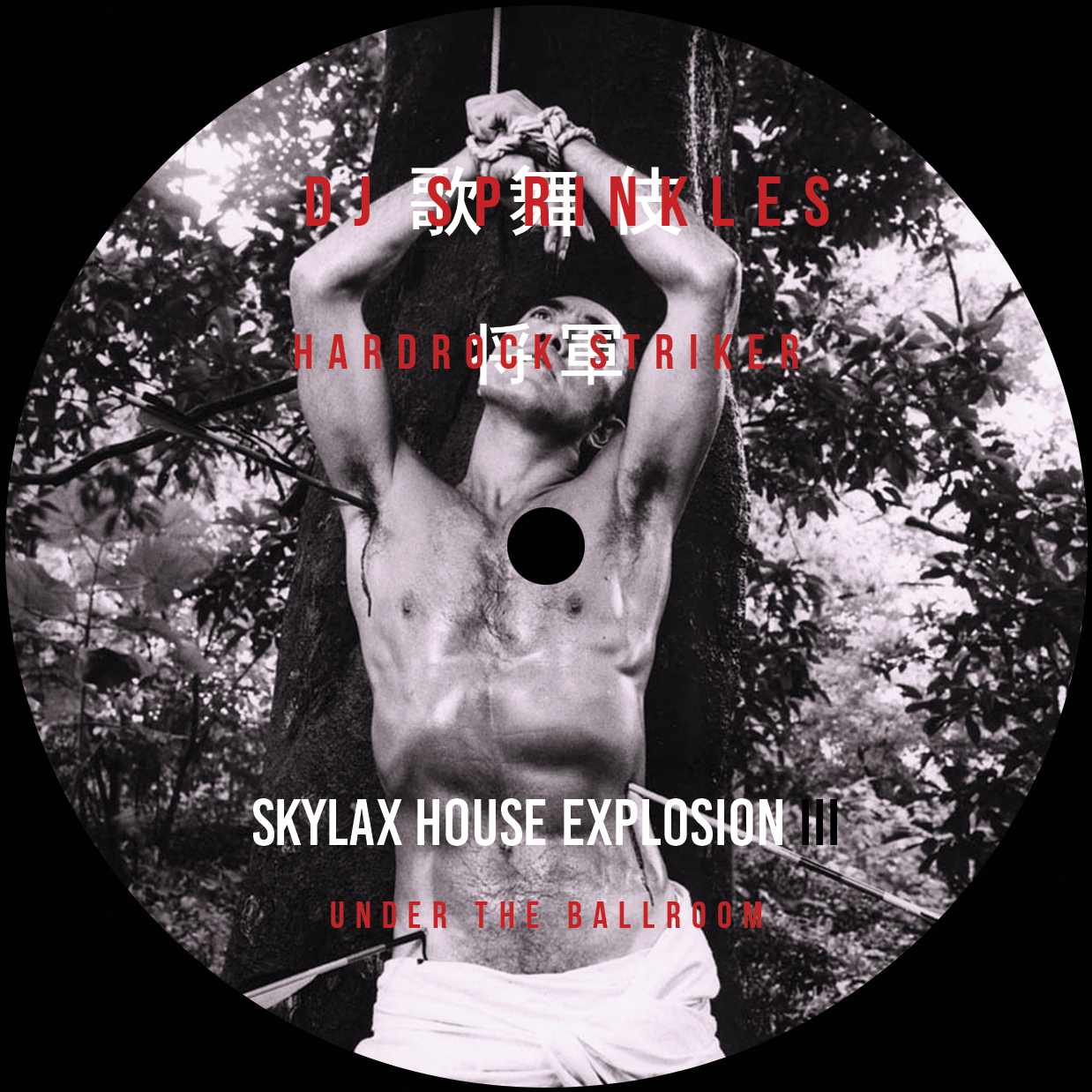
Celebrating two decades of SKYLAX RECORDS, label-head Hardrock Striker teams up with longtime friend and music partner DJ Sprinkles, under their new project name SKYLAX HOUSE EXPLOSION (S.H.E.). Forming a template for their future musical projects, they present a large compilation that features a mix CD accompanied by three vinyl releases comprised of unreleased music personally curated by S.H.E.
As with each of the vinyl EPs, they make reference to a particular space as it pertains to the formulation of house music. Under The Ballroom is of particular resonance to DJ Sprinkles who, in the early ’90s, started out in transsexual sex worker clubs like Sally’s II that were centers for the drag queen ballroom culture that originated in New York City.
As with the two EPs before it—Under The Garage and Under The Loft—Under The Ballroom features tracks personally curated by DJ Sprinkles and Hardrock Striker. Populating the A side is Laurer who’s cataloged leanings towards more ’80s dance music sounds are nearly as old as the SKYLAX label itself. He is joined by SKYLAX RECORDS signee Octo Octa, who presents “Running,” a piece full of what are slowly becoming the signature house sounds of the Brooklyn-based producer: pitched vocals and machine noises that ally with some of her tastes for deep textures, drawing from house as well as her love for drum & bass. Taking up the entire B-side with “Soleil Mauve” is Violence FM & The Underground Soulsavers, who are making their production debut under this moniker as part of the 20 Years of SKYLAX compilation.
We’re told that Under The Ballroom makes up the final piece of the SKYLAX RECORDS 20 Years compilation, but sets a precedent for future projects presented by SKYLAX HOUSE EXPLOSION.
Tracklisting
01. Lauer “Bigs”
02. Octo Octa “Running”
03. Violence FM & The Underground Soulsavers “Soleil Mauve”
Ahead of the Under The Ballroom EP’s July 13 release via Skylax Records, you can stream Octo Octa’s “Running” in full below.
Featuring three originals and a remix from Rico Casazza, Comme Ca is a collection of sophisticated dub-infused house music from a talented producer on the rise. On the originals, Imran mixes swinging drums and smooth chords to great effect, while on the remix front, Casazza goes down a darker route with loopy samples and buried synth lines.
In support of the release, Imran has offered up “La Quica,” a deep and dubby bonus cut, as today’s XLR8R download, available via WeTransfer below.
Philip Sheppard will digitally release his sophomore solo orchestral album titled Fall From Earth on June 22.
Sheppard is a composer, virtuoso cellist, public speaker, Academy of Motion Picture Arts and Sciences member, Royal Academy of Music professor, electric cello pioneer, and creative innovator. He’s composed 60+ film, television and theatrical scores, including the Star Wars Force Awakens Comic-Con trailer, and has performed with the likes of Scott Walker, Jimmy Page, Jeff Buckley, David Bowie, and Jarvis Cocker. For the 2012 London Olympics, Sheppard conducted, rearranged, and edited all 206 national anthems for the winners’ ceremonies.
Each song on the album has an intricate and deep meaning reflective of human experiences, all of which were crafted by Philip himself. The album was recorded at the legendary Abbey Road Studios in London by the English Session Orchestra and conducted by Philip Sheppard.
“I love the idea of losing belief in gravity itself, somehow leaving the surface of this small blue dot and flying higher, further and faster, literally and metaphorically”, said Philip. “Falling from earth is what the god, Hermes, did in ancient legend, and by the 1960s we humans transcended to the point where we could leave the earth (via Apollo – Hermes’ half-brother) in order to look back and think, my God, we’re lucky.”
“This track was written in a single afternoon just before our Abbey Road sessions for Fall From Earth. “Chosen Road” is about the paths you take and the routes you choose through life. Sometimes the going is hard, but the views can take your breath away.”— Philip Sheppard
XLR8R and Muted Noise will host Dewalta and Halo Varga in Downtown Los Angeles on Sunday, June 24.
Taking place at an intimate, open-air venue from 3 p.m. to 10 p.m., the event will also feature support from WXC (John Wander and Luke Cheadle) and Dialogue residents MD. There will also be a pop-up record store by ARTIFACT, alongside a pop-up by A Line Called K.
Capacity is limited and presales are highly encouraged. You can still find the last remaining early bird tickets here.
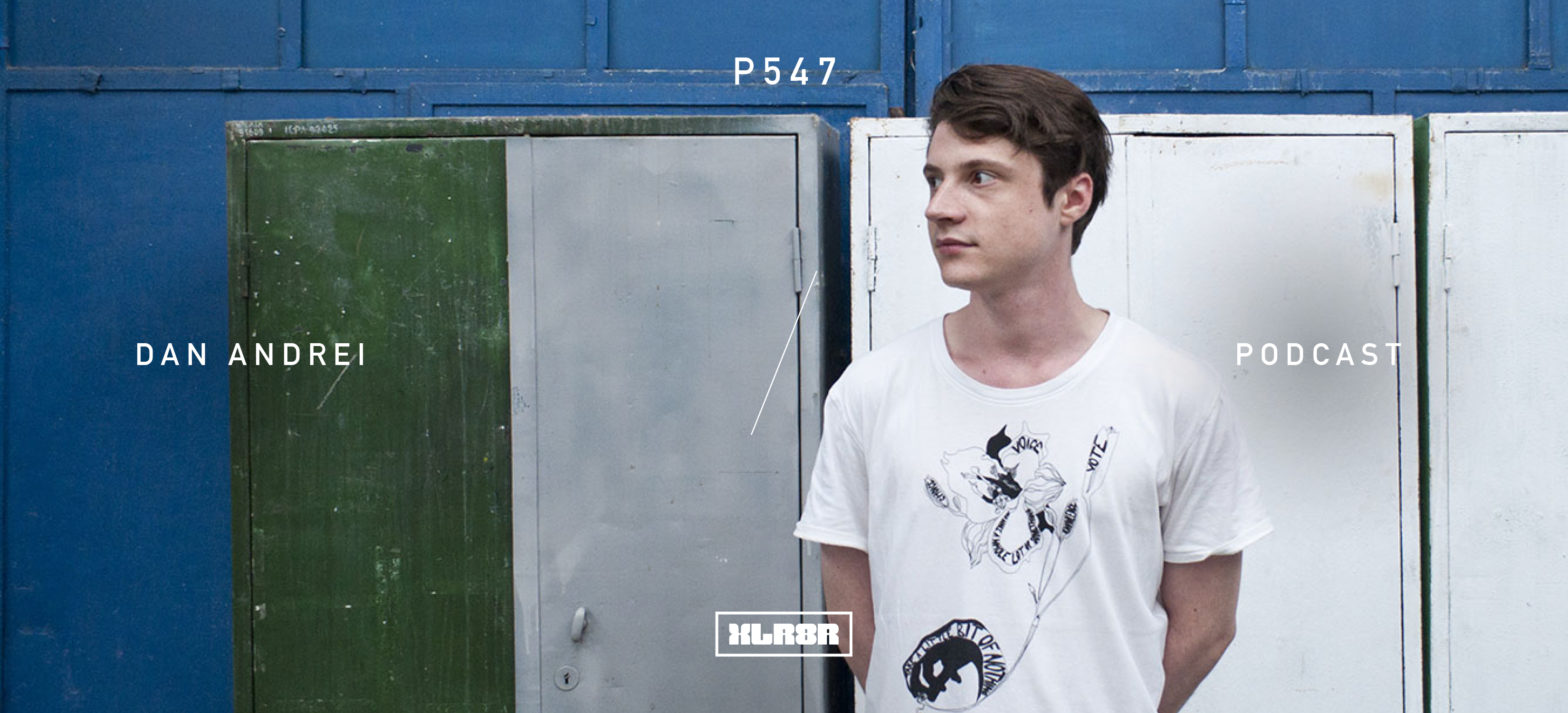
Circumstances dictate that this will be a short introduction. Dan Andrei is hardly a talker. Of course, this media-shy stance is anything but uncommon among his Romanian peers, but Dan Andrei is one who positions himself in the shadows more than most. Recent years have seen the likes of Rhadoo and Raresh become global names, while Priku, Barac, Alexandra, Herodot, and SIT have all ventured from their Bucharest-centric bubble and become receptive to outside interest. Dan Andrei, meanwhile, has done neither; he avoids attention, establishing himself as a much-respected but little-known artist, appreciated by those who’ve grown to enjoy the minimal-centric bubble whence he came.
With this in mind, we must just go with what we already know. His text on Facebook, which he largely avoids, explains that his influences come from rock, hip-hop, soul, funk, and trip-hop. He’s part of a younger generation of artists in the much-discussed Romanian minimal movement, following in the path of Rhadoo, Cezar, and Petre Insprescu, and has become an integral figure, regularly sharing a bill with Rhadoo, Raresh, and Petre. As far as releases go, he debuted on Arpiar in 2011 before returning in 2015 with his debut Parcul Cosmos LP. Elsewhere, he’s shared his music on Be Chosen, Kurbits Records, and Jesus Loved You. There isn’t much more to be said.
His podcast for XLR8R is a segment of a rare live club set. Recorded on March 10 at Sinaia Casino in Romania, it’s two hours of heady and hypnotic minimal grooves.
Due to temporary issues regarding the GDPR, EU readers can download the mix here.
Helena Hauff has a new album on the way, titled Qualm, scheduled for August 3 release via Ninja Tune.
The title has a duality that Hauff enjoys—the German word “Qualm” ( kvalm) translates as fumes or smoke, whilst the English meaning refers to an uneasy feeling of doubt, worry, or fear, especially about one’s own conduct. We’re told that the record is “unapologetically raw” and finds Hauff returning to her original modus operandi—jamming on her machines—“trying to create something powerful without using too many instruments and layers.”
A former resident of the Golden Pudel club in her hometown Hamburg, Helena’s profile and global standing has grown exponentially since the release of her Discreet Desires LP in 2015, purely on the strength of her authenticity and her DJ sets spanning acid, electro, EBM, techno, and post-punk. She made her recording debut in 2013 on Werkdiscs / Ninja Tune and has since partnered with PAN (as Black Sites alongside F#x), Lux Rec, Bunker sublabel Panzerkreuz, Texan cassette imprint Handmade Birds and established her own label Return To Disorder (2015). Most recently she released a four-track EP Have You Been There, Have You Seen It (2017) via Ninja Tune, and now she returns to the UK label with a new album.
Tracklisting
01. Barrow Boot Boys
02. Lifestyle Guru
03. Btdr-revisited
04. Entropy Created You And Me
05. Fag Butts In The Fire Bucket
06. Hyper-Intelligent Genetically Enriched Cyborg
07. The Smell Of Suds And Steel
08. Primordial Sludge
09. Qualm
10. No Qualms
11. Panegyric
12. It Was All Fields Around Here When I Was A Kid
Qualm is scheduled for August 3 release via Ninja Tune, with “Qualm” and “No Qualms” streaming in full below.
Joe Andrews and Tom Halstead (a.k.a Raime) will release a new 12″ on Friday via Logos and Mumdance’s Different Circles label.
Am I Using Content Or Is Content Using Me? is the London duo’s first release of 2018, following on from 2017’s Notion 2 Notion EP. It’s also their first appearance Different Circles; all their other material has arrived via Kiran Sande’s Blackest Ever Black.
We’re told that Andrews and Halstead explore new sonic aesthetics, moving into more contemporary sound design and taking influences from grime, jungle, R&B, and dubstep.
It will be Different Circles’ third release of the year.
Tracklisting
A1. Some Things Can Happen, Just Like This
A2. Our Valleys Are Always Uncanny
B1.The Nourishment Cycle
B2. Real People. Not Actors
Am I Using Content Or Is Content Using Me? will land on June 22, with clips streaming below.
Last month, Sequel One released The Prequel, a new EP from label co-owner Lukasz Szyda (a.k.a. Symbiotic Sounds).
The Prequel finds Szyda returning to the fold from a six-year hiatus after the release of Everybody Loves An 808, credited as the first footwork EP from Poland—it also gained support from some of the top artists in the footwork genre, such as DJ Rashad, DJ Spinn, and Addison Groove. Featuring four originals and a remix from Cesrv, The Prequel is a collection of stylized beat outings full of sun-drenched synth work, warm samples, hip-shaking rhythms, and raw basslines.
In support of the release, Szyda has offered up the shimmering EP track “Dance With You” as today’s XLR8R download, available via WeTransfer below.