Jitwam’s Third Album is Incoming

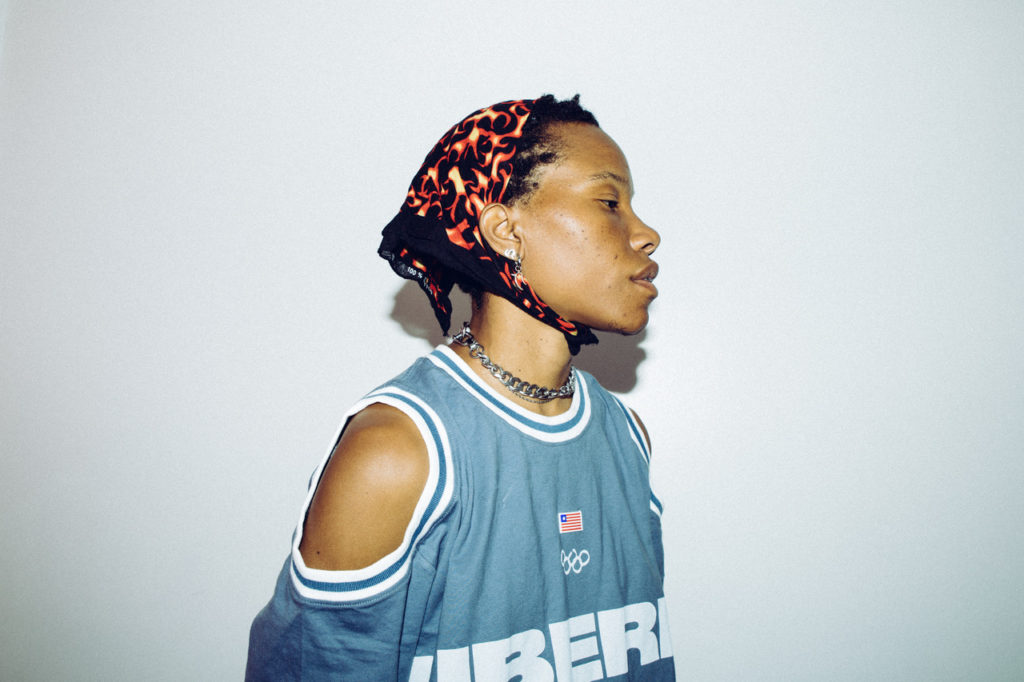
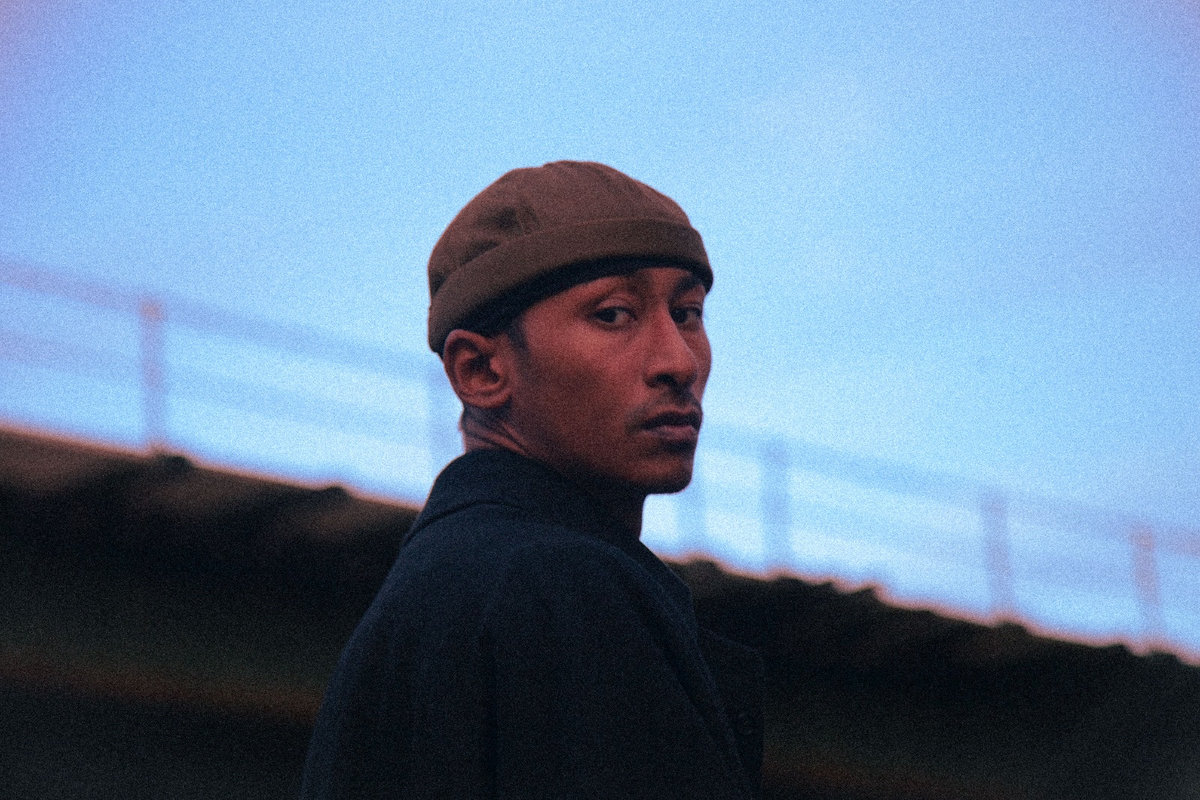
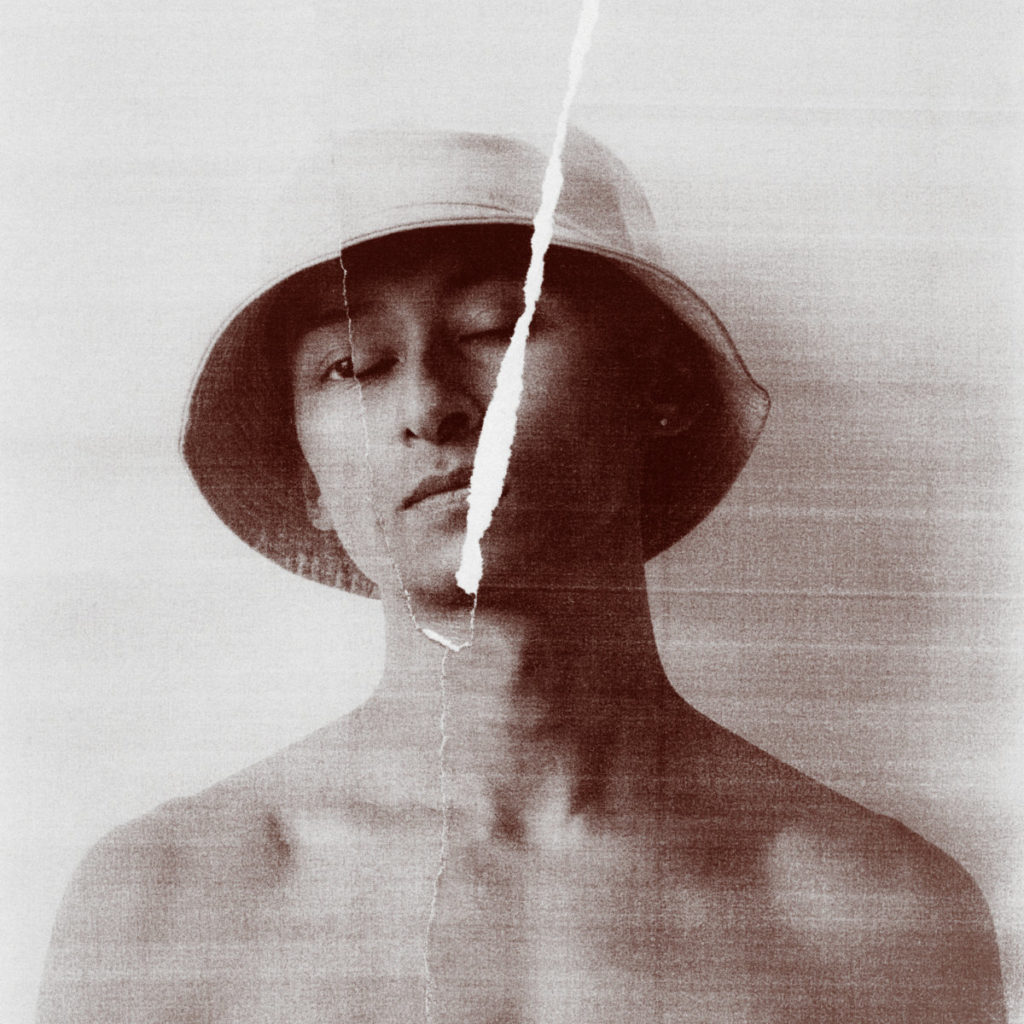
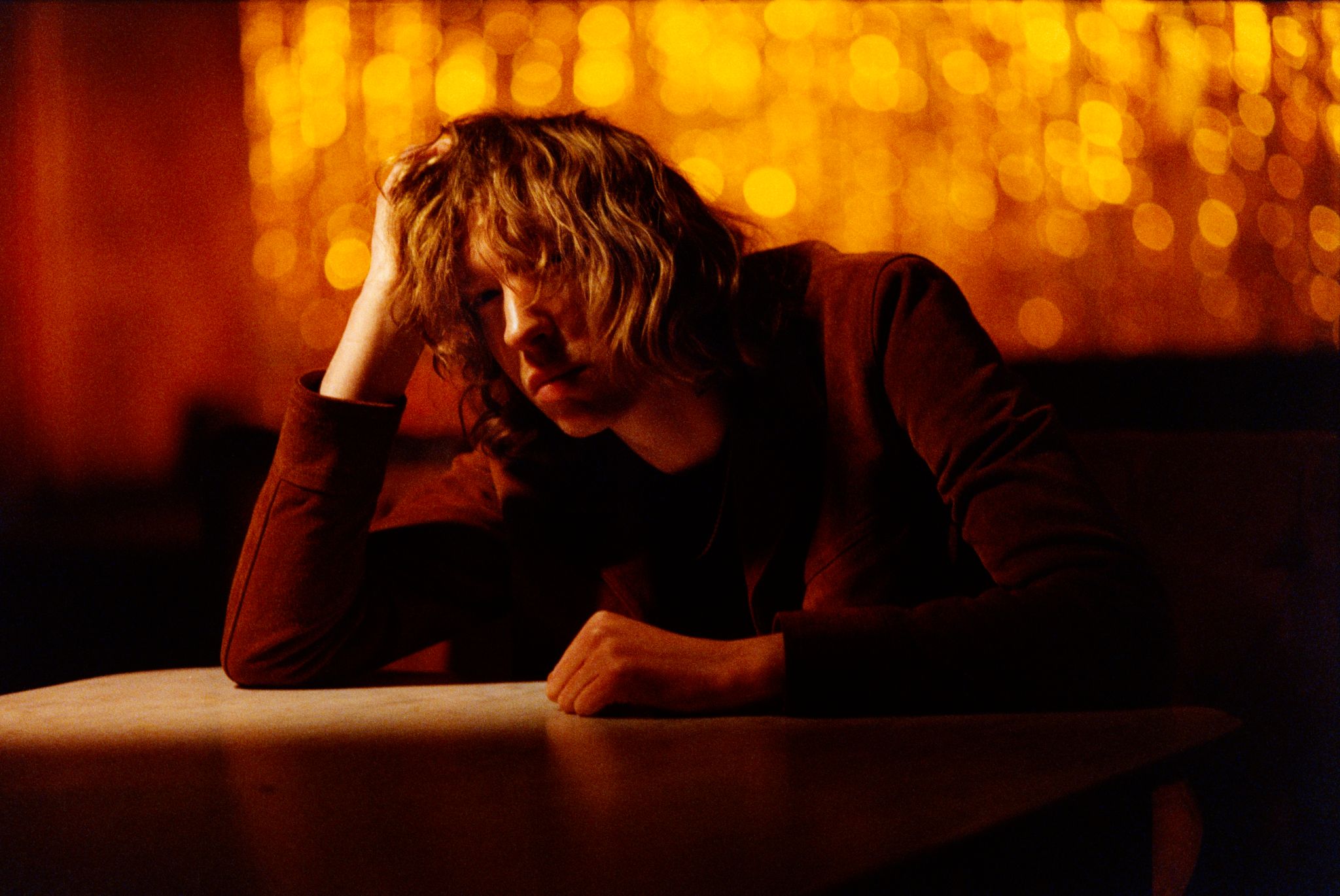
Jitwam has shared a new single ahead of his new album, Third.

Evoking memories of “finding peace within the chaos of daily life,” we’re told, Third draws influences from Latin music, soul, punk, and disco. We’re told that it expands on Jitwam’s beat-making abilities to incorporate “tight production with modulated vocals.” It follows his two previous albums, ‘ज़ितम सिहँand Honeycomb, both on Copenhagen’s Tartelet Records.

The announcement comes with the infectious new single and video for “Confidence,” directed by Vivek Vadoliya.

Rich in melody and infectious in rhythm, “Confidence,” pays homage to Jitwam’s time spent in London and New York. He describes it as a psychedelic Brazilian “samba-funk odyssey to wake up your booty, and wake up your mind.”

“‘Confidence’ is that swag in your step,” he says, “a mantra to your true self to get up and shake the cosmic blues from your head to your toes.

“Confidence” follows Jitwam’s last single, “Brooklyn Ballers,” which came with a house-fuelled remix from New York’s musclecars.

For more information on Jitwam, based on Brooklyn, check out his XLR8R Influences mix here.

Tracklisting

01. India
02. Confidence
03. The Get Down
04. Lalala
05. Equanimity (feat. Melanie Charles)
06. Money & Things!!!
07. Brooklyn Ballers
08. Stranger Danger (In The Streets Of Life)
09. Hey Papi
10. Maryjane

Third LP is scheduled for July 22 release. Meanwhile, you can stream “Confidence” below.

Levon Vincent Goes Downtempo on Fourth Album

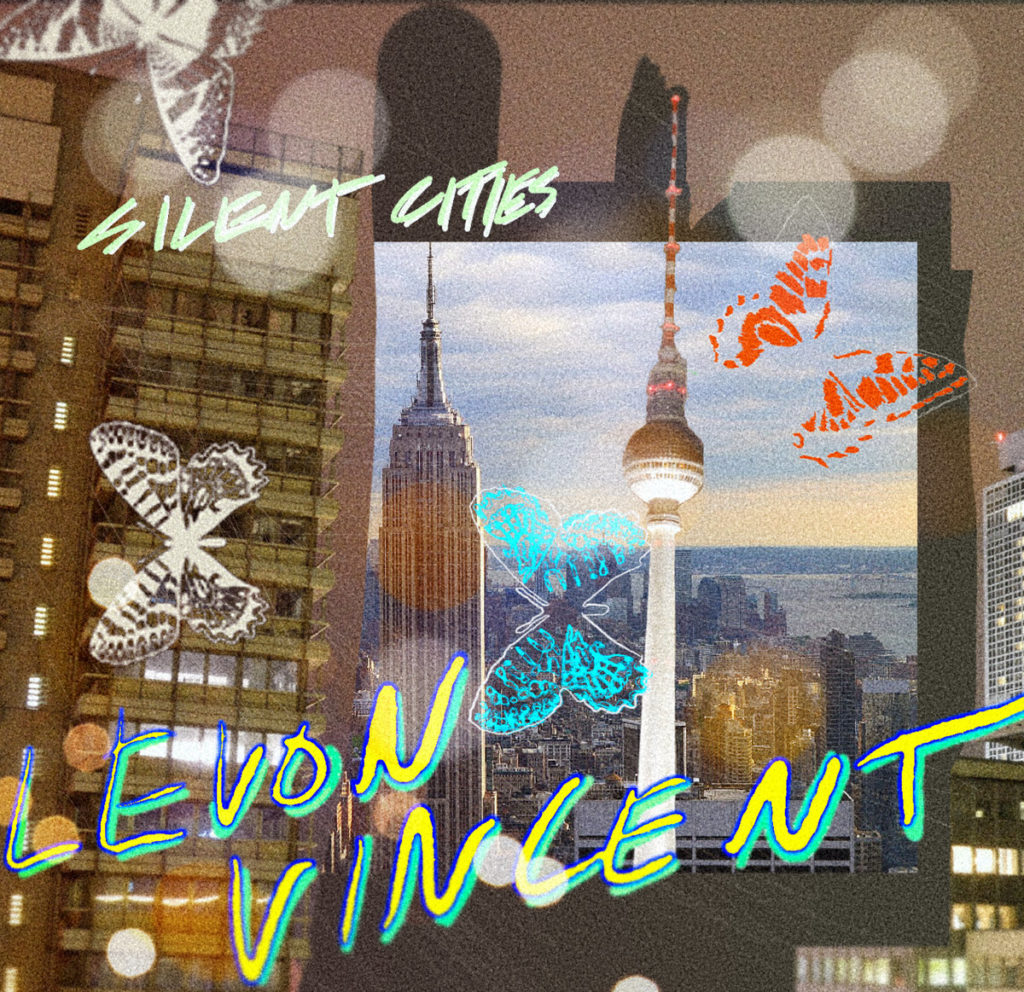
Levon Vincent will release Silent Cities, a new downtempo album, on Novel Sound.

Silent Cities, Vincent’s fourth studio album, is a “striking departure” from his previous records, we’re told, with 11 tracks of ambient, krautrock, shoe-gaze, hip-hop, and electro.

The majority of demos for Silent Cities were recorded before the pandemic, when Vincent had found a studio space outside of home in his adopted city of Berlin. It was a career first, working on music outside the bedroom, and riding the train and bicycling opened up a new mood in his music, using the time back and forth to be inspired.

Then, to support himself through the pandemic, Vincent set up a shop online, and sold all of his music equipment. He also created a separate shop for all his clothes which provided him with a “slow drip” type of income, allowing him to focus only on music, without touring.

“Getting rid of all my possessions felt like a weight being lifted from my shoulders and I was able to stay the course and remain committed to the music,” he explains.

He needed a further two years to mix and arrange the album but, were it not for the pandemic, he would not have been able to make this kind of album, he says. “So in light of everything, I was able to turn a depressing time in to something lasting and musically very positive!”

This is also the first time that Vincent has experimented with the cassette format, though it will also be available digitally.

Vincent’s last album, World Order Music, came in 2019. You can read more about him and his work in his XLR8R In the Studio feature here.

In the run up to Levon’s next cosmic krautrock and shoegaze influenced full length studio album Silent Cities due in June, Levon takes us right back to the peak experience in club with the E.T.A. INFINITY EP 12”.

Ahead of the album, Vincent has shared ETA—Infinity a “peak club” experience.

Tracklisting

01. Everlasting Joy
02. Gattaca
03. Sunrise
04. Birds
05. Wolves
06. Tigers
07. Mother Earth
08. Moonlight
09. Silent Cities
10. Mother Amazon
11. Sunset

Silent Cities LP is scheduled for June 10 release. Meanwhile, you can stream “Sunset” in full below and pre-order here.

Gold Panda Teases Album with New Single of Melodic Electronica

Photo: Laura Lewis

Gold Panda has shared “I’ve Felt Better (Than I Do Now)”, his first new music since 2019’s “Transactional Relationship.”

Despite the dour track title, “I’ve Felt Better (Than I Do Now)” is a composition packed with soulful breaks and joyous warmth. Across its four-minute runtime, it shimmies and skips along at a breathless pace, merging kaleidoscopic synths, chopped vocals, and a Balearic melody.

Written and recorded over the last 12 months at his new studio at home in east London, the track is the “first taste” of a forthcoming new album.

“I made this when my daughter was two years old and I felt knackered and I’d turned 41,” Gold Panda, real name Derwin Dicker, comments. “The samples just came together and sounded like “I’ve felt better…” and at the same time I was looking at my anti-depressants feeling tired and just thought ‘ha, that’s right!’”

Tracklisting

01. I’ve Felt Better (Than I Do Now)

“I’ve Felt Better (Than I Do Now)” is available now on City Slang.

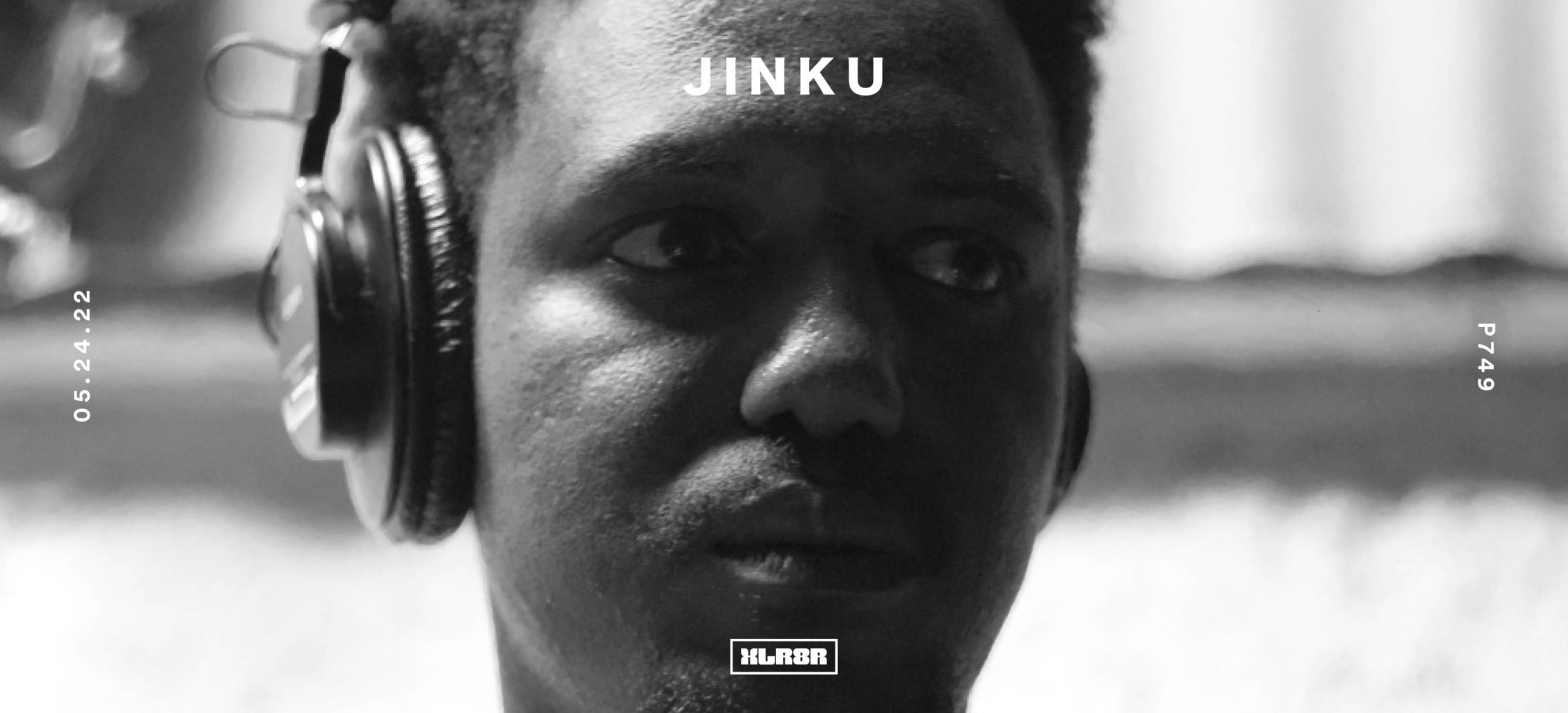
Podcast 749: Jinku

Jinku, known to his friends as Jacob Solomon, featured in the latest edition of XLR8R+, which aims to shine a light on Nairobi, the Kenyan city where a new generation of artists is bringing a palette of fresh, colorful sounds to a region once dominated by benga, a type of pop music that emerged in the 1940s.

While electronic instruments have long been part of Kenyan music production, it’s only recently that these electronic tracks have found a local following, and this is encouraging younger artists to join in, stretching boundaries and inciting experimental music that in the past had seemed unfathomable.

Solomon’s route into music was through Saint Evo, a DJ-producer hailing from the savannah plains of Kajiado County, for whom he designed artwork. After watching how Saint Evo produced, he was given a copy of FL Studio, before moving into Ableton. That’s when he became infatuated with African sounds, in particular African chants and percussion.

“I like the percussion and the movement; the off-ness of the beats,” he says. “That’s what gives the song’s energy. It’s an ebb and flow; release and anticipation.” He’s since been adding African sounds to western music, in particular R&B and hip-hop, creating a genre he calls tribal downtempo. He’s also known as a founding member of EA Wave, a collective of artists that combine traditional east African elements with new genres.

To celebrate this community, we asked Jinku to present two artists on his radar, namely Nu Fvnk, and RVMP, whom he connected with through Soundcloud. He also shared two of his favorite unreleased tracks, namely “Barda,” a straight-up percussive jam in collaboration with trumpeter Samson Maiko; and “Jimmi’s Cloud,” a psychedelic jam session with two of his EA Wave members: Nu Fvnk on guitar and Hiribae on drums. Now, after providing an Ableton project of “Barda,” he’s delivered an XLR8R podcast, which he has peppered with exclusives from both him and local artists. Press play for one hour of buttery smooth bass and sultry vocals from one of Nairobi’s rising stars.

01. What have you been up to recently?
To be honest, finishing music! Covid really messed with my flow; I really loved going out and would let that energy feed into my music. I am in a calmer environment so I am digging into a backlog of records and just churning out tunes. I am finishing an album for my friend Tihane, she is an amazing soul singer and we cut up 21 tracks together, placing the polish on that. I made a promise and I want to fulfil that before the end of this year.

02. What have you been listening to?
My Spotify Discover weekly is a boss! I’m finding so many gems on there. I recently found this singer called Cosha from Dublin. Her album, Mt. Pleasant, is bananas! I had to include one of the songs in my mix.

03. Where and when did you record this mix?
I compiled the tunes in my living room at my apartment in Råcksta, Sweden on Saturday, May 14. I recorded it in my studio in Årstaberg.

04. What can the listener expect?
I think it’s a pretty romantic mix—buttery smooth. Even the bass is smooth, and there’s sultry vocals weaving in and out. It also showcases EA Wave’s music and you get a sense of where we fit sonically in a global context.

05. How did you go about choosing the tracks that you’ve included?
I let the songs play in the background, and the ones that grabbed me remained. Cooking food and listening at a low volume was the litmus test. If I reached out and turned up the volume, the song made the list.

I also included a lot of my collective’s music, to showcase the NuNairobi sound. Ukweli’s “Silaha” is a stand out for me. My friends hold on to such great music and reaching out to them and asking for exclusives has shown me the growth and depth they are at now in their craft.

06. Where do you imagine it being listened to?
It’s very calming but the end really brings the energy up, lifting your mood. It’s a great morning mix to listen to before you go to work, school, or whichever mission you have. It’s coffee through your stereo!

07. What’s next on your horizon?
I’ve got Passenger 555, the album with Karun, dropping on June 3, then I’ve got a slow house single and a music video on June 17. Finally, The Oasis Park Trilogy starts dropping on June 24, and the songs there are peppered throughout my mix.

XLR8R has now joined Mixcloud Select, meaning that to hear the podcast offline you will need to subscribe to our Select channel to listen offline, or subscribe to XLR8R+ to download the file. The move to Mixcloud Select will ensure that all the producers with music featured in our mixes get paid. You can read more about it here.

Full XLR8R+ Members can download the podcast below. If you’re not an XLR8R+ member, you can read more about it and subscribe here.

Tracklisting

01. Jinku “Tena na Tena” feat. Swahili Papi, DEZ & Wendy Kay (Jinku)
02. Hiribae “Different Strokes” (Byrd Out)
03. Clu “Moonrunner” feat. Gemma Dunleavy (Earmilk)
04. Dpat “Pray For Me” (Heaven Only Knows)
05. EA Wave & Wanja Wohoro “Honeydew” (East African Wave Sound Collective)
06. Ukweli & Kasha Tsuma “Hamna Aibu” (Ukweli)
07. Nu Fvnk “GWIT” (XLR8R+)
08. Jinku “On My Way” feat. Wendy Kay, DEZ & Supersun (Jinku)
09. Jinku “Råcksta” (Jinku)
10. Jinku, Karun & Flexfab “Listen” (FLEE)
11. Jinku, Karun & Pier Alfeo “Fluid Reprise” (Jacob Solomon & Karun Music)
12. Ukweli & Kasha Tsuma “Silaha” (Ukweli)
13. Cosha & Coby Sey “Tighter” (Ashtown Lane)
14. ELIZA “Straight Talker” (Different Recordings)
15. Juniper, Sango & VHOOR “Só Para Você” (Wright Music Group/Juniper/VHOOR)
16. NAMVULA “Dust To Dust” (Jinku’s Touch) (NMR Records)
17. Jinku “Håll Mig I” feat. feat. Lina Hansson (Jinku)
18. EA Wave “Alango” feat. Makadem (East African Wave Sound Collective)
19. Nu Fvnk “I Know You Got Soul” (Platoon)
20. Omeria “Seymour” (Cafe De Anatolia)
21. NAMVULA “Soleil” (Jinku Alternative Mix) (NMR Records)

Web3 Wrap: Actress and Dean Blunt Join Mysterious NFT Collective, Foundation Opens to the Public, Channel’s Roadmap, and More

This week’s Web3 Wrap includes a new Mysterious NFT collective counting Dean Blunt, Cosmin TRG, Laural Halo, Actress, Teebs, and many more as members, decentralized media organization Channel’s product roadmap, Foundation opening its doors to the public, Holly+ Season 1 NFTs, and more.

Check it all out below.

Channel Releases Roadmap 

Decentralized media organization Channel has released its product roadmap.

Over the next few years, Channel will endeavor to “build tools for creators to join forces,” and the product roadmap offers an overview of what some of the tools will look like. Some of the highlights from the roadmap for Season 1 include a General Membership Token, which will act as a subscription to Channel and store member information on-chain; the Channel Dashboard, which will present content, social graphs, chats, and analytics via a unique interface; and a Proof Of Patronage Airdrop, which will reward longtime subscribers to the founder’s channels (Interdependence, New Models, and Joshua Citarella/DNR) with a Season 1 membership.

Further down the line, Channel will open up its membership protocol and tools so that approved creators and communities can offer their own memberships via Channel. There will also be user-curated channels, studios in NYC and Berlin, multi-format content support, and more.

You can read the full roadmap announcement here.

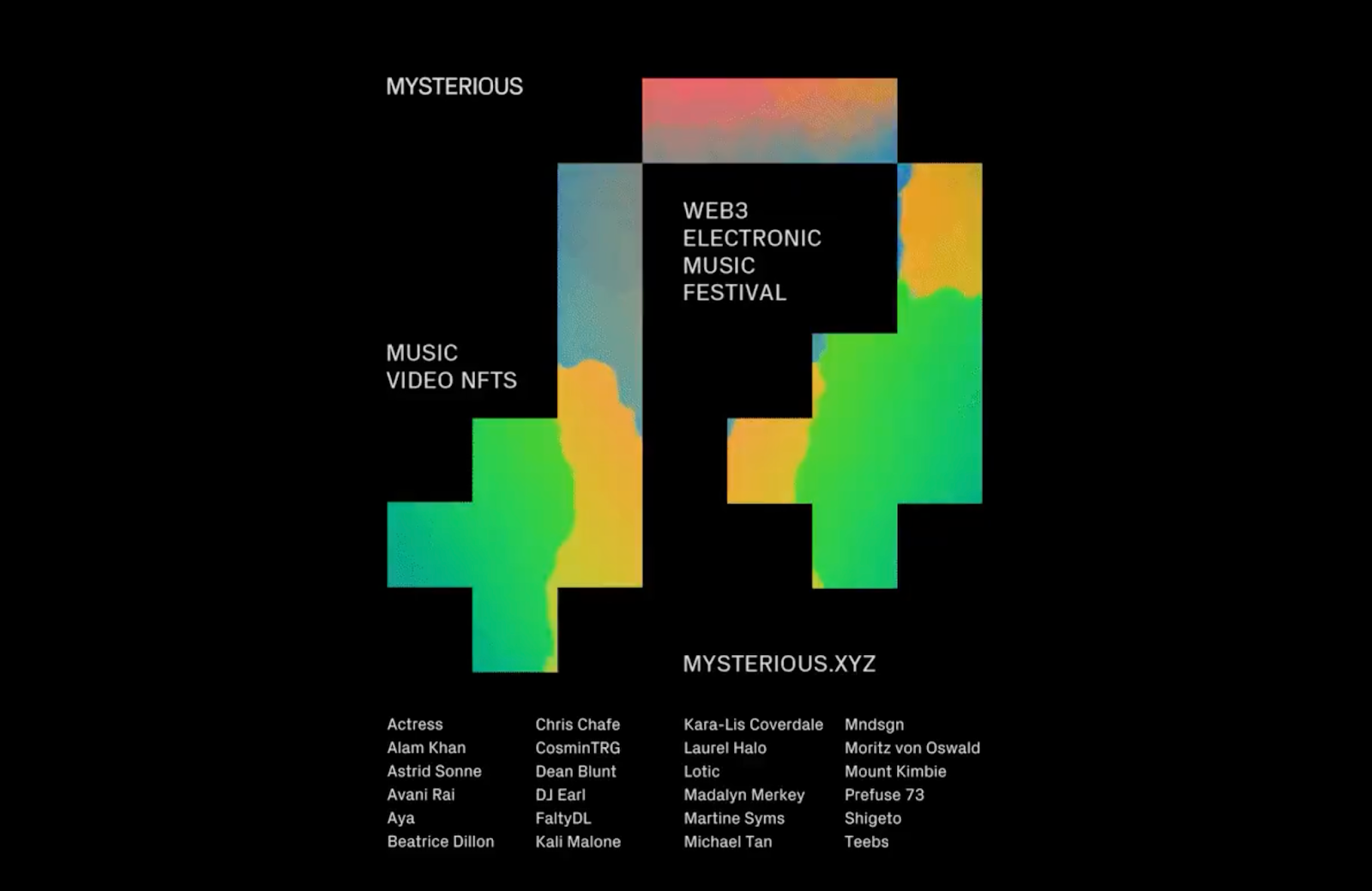
Cosmin TRG, Actress, Dean Blunt, Laurel Halo, and More Join Mysterious NFT Collective

Mysterious, a new collective releasing music video NFTs, have launched.

As the name might suggest, not a lot is known about the platform and collective other than the mission “to help the world’s best experimental audio-visual artists realize the full value of their art.” This will be done via curated drops from the founding artists and a Web3 music festival.

The founding artists of Mysterious include Mount Kimbie, Actress, Cosmin TRG, Dean Blunt, Laurel Halo, Shigeto, Moritz Von Oswald, Teebs, MNDSGN, Prefuse 73, Kali Malone, Beatrice Dillon, FaltyDL, and Lotic, among others.

The NFTs will be dropping May 27.

You can find more information and check out Mysterious here.

Foundation Opens to the Public

Popular NFT marketplace Foundation has opened to the public.

This week, Foundation announced it was opening its doors to the public. The announcement was met with mixed responses, with many creators and users predicting that the platform would now be filled with spam and scams, and that it was now no different than Opensea. Foundation was previously invite-only, with selected artists given a set amount of invites to pass on to fellow creators, which ensured a quality control for what appeared on the platform.

The public release follows a recent round of upgrades to the platform, which included “buy it now” functionality, the ability to make offers on works, a reduction of the fees from 15% to 5%, and more.

Holly+ DAO Releases Season 1 NFT Collection 

Last week, the Holly+ DAO released its Season 1 collection of NFTs, featuring 70 different artists and tracks.

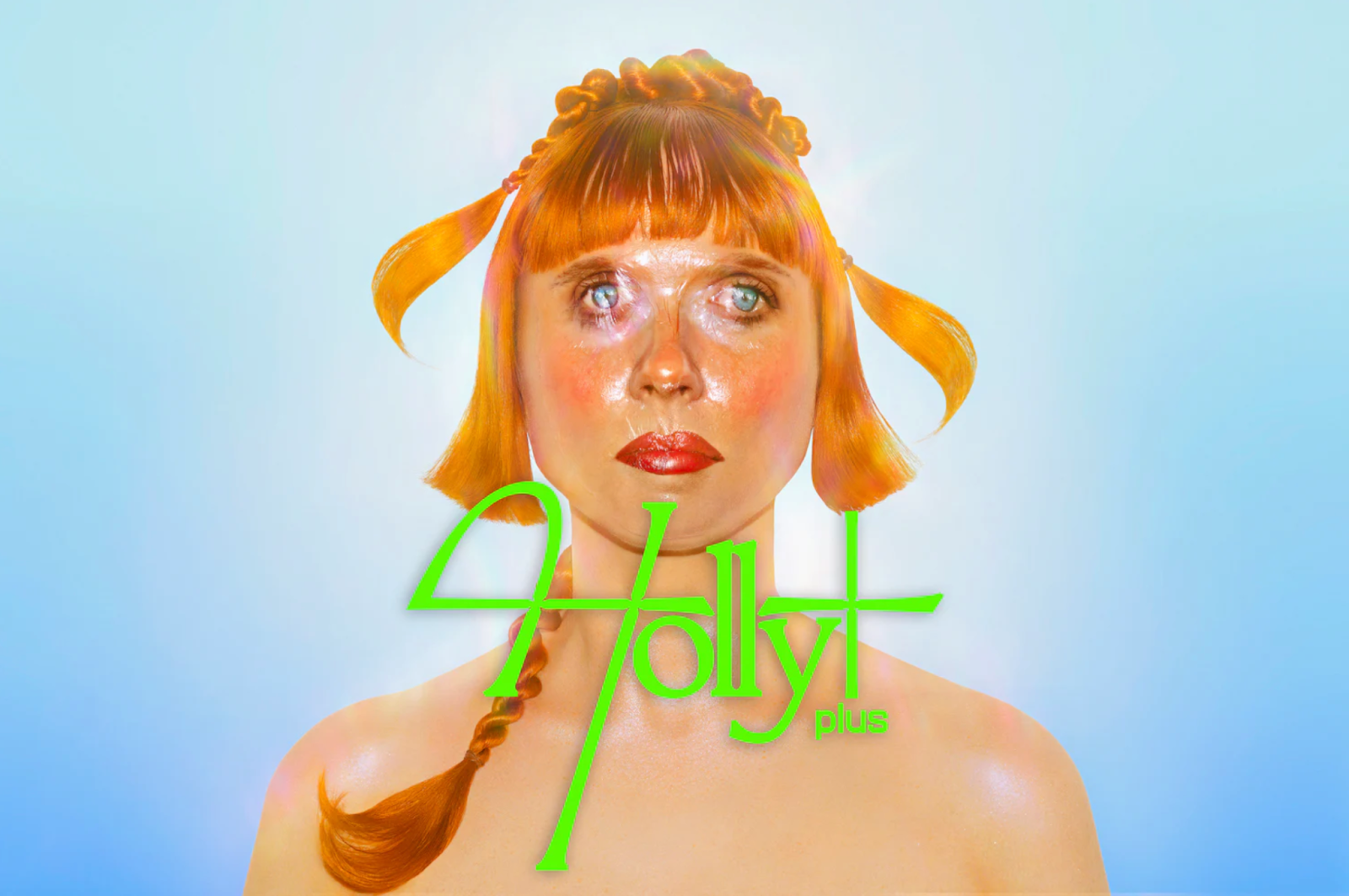
For those unfamiliar, the Holly+ DAO governs an AI version of acclaimed artist Holly Herndon, which also acts as a high-powered tool that allows creators to create music and art with Herndon’s voice and image. Any artist can create works with Holly+, but only members of the DAO can officially publish them under a governance structure that verifies official usage. 

Each Season, the Holly+ DAO puts out an open call for submissions of works created with the technology, with a selection being released and auctioned off by the DAO via Zora’s Auction House. The Season 1 collection of NFTs was released last week and featured works by 70 artists, including Thys, Claude Speed, Shadowsweat, Deafbeef, Azur & Maelstrom, and many others.

Proceeds from the sales of the NFTs were split across contributors, with 50% going to the creating artist, 40% to the Holly+ DAO, and 10% to Herndon herself.

You can find the Season 1 collection here, with more on the auction house and project here.

What to Join and Who to Follow:

Raays: LA-based producer releasing on Leaving Records, and Genre DAO member.

XHL Unit: producer, creative director, and White Forest label head.

Endless: music production studio and community.

Daniel Avery Looks “Directly into the Darkness” on New Album

Photo: Steve Gullick

Daniel Avery will release a new album, Ultra Truth, in November.

Ultra Truth offers a different listening experience to any of Avery’s previous records, including 2018’s Song for Alpha and last year’s Together in Static. It inhabits its own world of sound, one that’s “intentionally heavy and dense,” and where the hooks are “often hidden in dusty corners.”

Ultra Truth finds me in a different place to where I’ve been before,” Avery says.

Whereas his previous albums have all focused on the idea of “music being an escape or a distraction from the world,” that’s not the case here. Instead, this album is about looking “directly into the darkness,” he says, “not running away from it.”

In creating Ultra Truth, Avery went back to many of the things that had inspired him to first make music as a teenager: pensive, emotive records by Deftones, Portishead, Nick Cave, or Mogwai; the exquisite darkness of David Lynch’s movies and, on tracks like “Devotion” and “Higher,” the thunderous energy of left-field rave music.

The album features the production touch of Ghost Culture and Manni Dee as well as the vocals of HAAi, Jonnine Standish (HTRK), Marie Davidson, Kelly Lee Owens, Sherelle, and James Massiah.

“I’m working with an entirely new world of sound on this record,” Avery adds. “Every single influence from the last decade spent on the road plays a part. Things that have been in the back of my mind forever, warped, distorted and pushed to a new place.”

Once again, the album lands on Phantasy and Mute.

Tracklisting

01. New Faith
02. Ultra Truth
03. Wall of Sleep
04. The Slow Bullet
05. Devotion
06. Only
07. Spider
08. Near Perfect
09. Higher
10. Ache
11. Collapsing Sky
12. Lone Swordsman
13. Overflowing With Escape
14. Chaos Energy
15. Heavy Rain

Ultra Truth LP is scheduled for November 4 release. Meanwhile, you can stream “Chaos Energy” in full below and pre-order here.

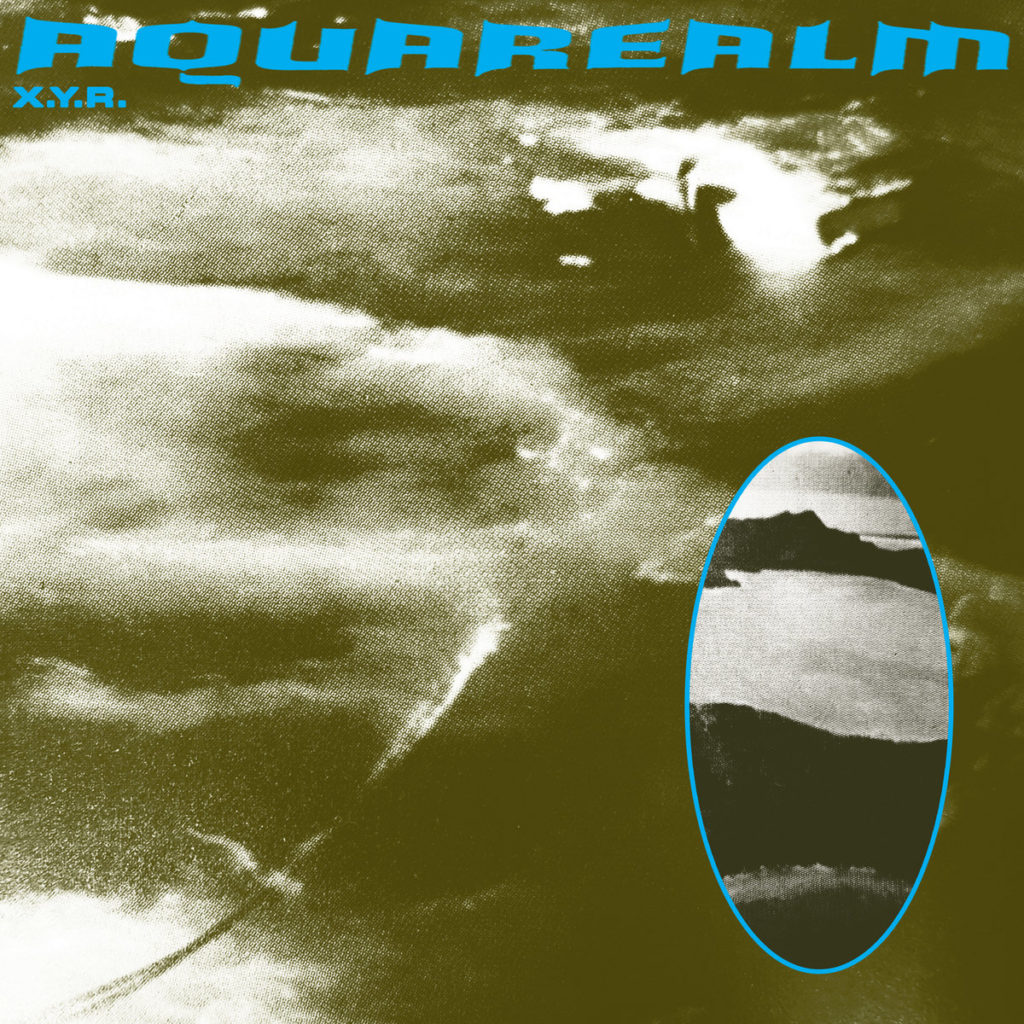
Vladimir Karpov (a.k.a X.Y.R.) Soundtracks Shimmering Mysteries of Underwater Life on Tenth Album

Photo: Andra Ljos

Vladimir Karpov, better known as X.Y.R., will release a new album on Los Angeles’ Not Not Fun.

Aquarealm, the Russian artist’s 10th full-length, is a “liquid suite of surreal tranquility,” we’re told, designed to soundtrack the shimmering mysteries of underwater life.

Inspired by vintage Soviet cartoons, nature documentaries, and Karpov’s colorful aquarium fish, the album’s seven songs share a mood of contemplative depth and “dizzying beauty,” filled with hazy tones, crystalline keys, and echoes. It’s music that’s simultaneously serene and cinematic.

Karpov, a self-proclaimed “ambient recluse,” is a producer based in St. Petersburg. Under the pseudonym X.Y.R., he releases music that aims to immerse a sensitive listener in a state of hypnosis. Last year, he put out the Possible Motive album on Sweden’s Possible Motive and returned earlier this year with Vision Quest on France’s Good Morning Tapes.

Tracklisting

01. The Signals From The Abyss
02. Coral Reef Exploration
03. Poisson-ange Exotique
04. Emerald Dream
05. Oxygen Waltz
06. Silure Albinos Drifting
07. Species Of Fishes

Aquarealm LP is scheduled for June 3 release. Meanwhile, you can stream “The Signals From The Abyss,” “Poisson-ange Exotique,” and “Oxygen Waltz” in full via the player below and pre-order here.

Los Angeles’ Dylan Moon Next on RVNG Intl.

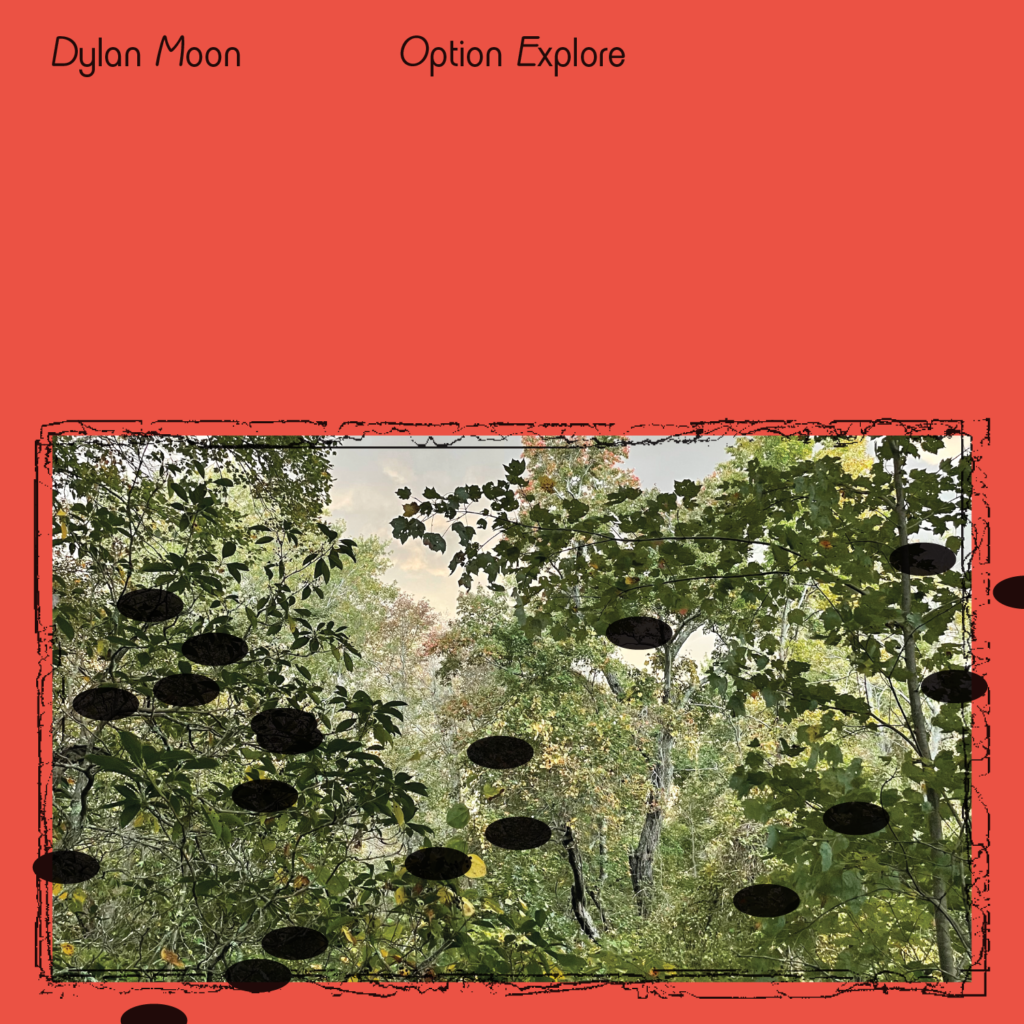
Los Angeles’ Dylan Moon will release his second album on RVNG Intl.

Sonically, Option Explore provides a significant departure from Moon’s album debut, 2019 Only the Blues, which at its heart is a folk record from the fringes of psychedelia. With a careful study of synth-pop and a penchant for warped guitar grooves, Moon arrives at something “deeply futuristic in its disregard for genre sanctity,” we’re told.

We can expect a “glassy-eyed survey of pop’s playing field both past and present,” and a collection of “colorful songs filtered through frequencies, timbres, and dreams.”

A guiding principle for the album was the “explore/exploit trade-off” concept, which is to say the choice between exploiting a familiar option for a known reward and exploring unfamiliar options for unknown rewards.

Across 13 tracks, Moon uses what he calls “exploratory foraging” as a manifesto for song construction, creating music “without end” and “without limit.” All this goes to say that many of these tracks avoid conclusive compositional conventions and sound more like turning a radio dial than pressing preset play. Tracks begin at what feels like a midpoint and fade out with little warning.

Alongside the announcement, Moon has shared “Deep Time,” a piece of sticky electronica, and “10 Apples.”

Tracklisting

01. 10 Apples
02. Spandex Simple
03. Creaking
04. Plot Points
05. Deep Time
06. Hmm
07. Understand
08. I-80
09. Fortuna
10. Again
11. Dröm
12. Look
13. Hello Mirage

Option Explore LP is scheduled for June 17 release. Meanwhile, you can stream “10 Apples” and “Deep Time” in full below and pre-order here.

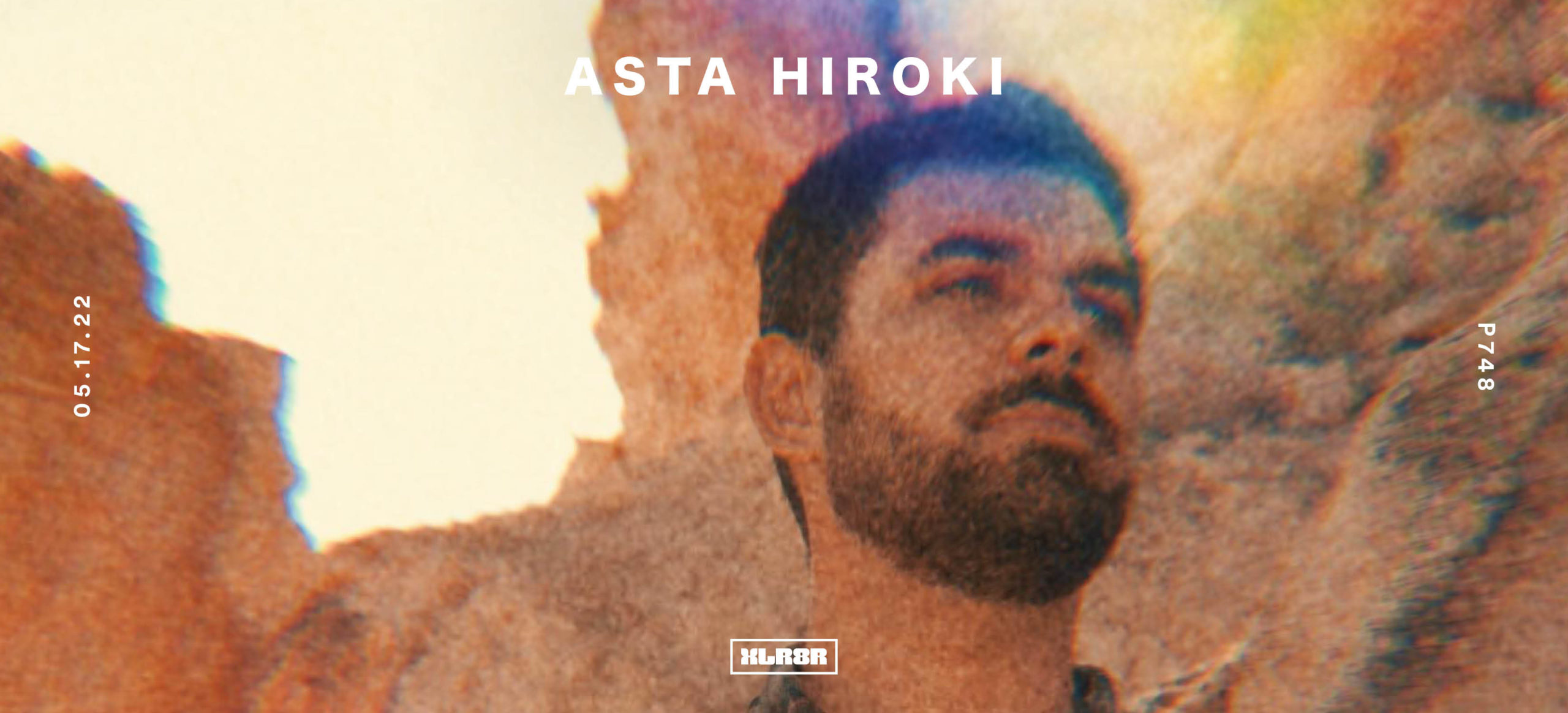
Podcast 748: Asta Hiroki

Asta Hiroki, from Brighton, on the south coast of England, came onto our radar through his submissions to our XLR8R+ member portal. Drawing from a diverse palette of styles including modern jazz, electronica, and abstract hip-hop, he builds layered compositions of soulful electronica, which are typically nuanced and deep. In 2016, British label Jalapeno Records signed four of his original tracks for the Balance EP, including two featuring the Australian songstress Kathrin deBoer. After several more singles with the label, he reemerged last year, having moved to Cyprus, with his debut album, Entropy, a cohesive record rooted in contemporary jazz and hip-hop. Though Asta Hiroki maintains his own aesthetic, you can broadly file his work next to the likes of Teebs, Flying Lotus, James Blake.

While he works on his second album, Asta Hiroki has put together an XLR8R podcast, on which he wanted to “really introduce my musical world,” he says. Style-wise, then, you can expect muscular bass sounds, colorful Fender Rhodes chords, delicate organic textures, and intricate sound design. As with his production work, there are knowing nods to the Los Angeles beat scene, the Bristol bass sound, and London’s jazz upstarts. And, as the mix moves through its left-field beats, downtempo electronica, and even ambient, it also nods to Asta Hiroki’s past, with the inclusion of his first ever composition, and looks to the future with unreleased material from himself and other artists signed to Folded Music, his own label.

01. What have you been up to recently?
Recently, music-wise I’ve been busy in the studio writing the second Asta Hiroki album, which I hope to get out next year, and I’ve been finishing off a collaborative Asta Hiroki EP with Tristan de Liege. But the bulk of my time has been spent running my label, Folded Music, which has been averaging two or three releases a month, so a lot of effort has been invested in building that. Aside from that, I am preparing to move back to the UK in a few months, from Cyprus, where I’ve been based for the last two years.

02. What have you been listening to?
Well, I am listening to a wide range of music on a daily basis. I’m obviously bumping all the Folded artists and their various projects because I am a fan of them: Catch92, Fthmlss, FLOCKS, and Bon-Psy; they’re all stellar musicians. You can hear them all in the mix and make your own mind up!

Aside from this crew, I’m enjoying the sounds of Megiapa, a soulful beats producer and vocalist from Chicago. There’s also a producer from Leipzig going by the moniker |||||||||||||||||||| (I believe it’s pronounced “barcode”) who makes sublime and intricate esoteric work that has many layers.

Recently, I’ve been working with Arms and Sleepers so I have been digging into their work a lot, and Move78 in Germany have impressed me with their jazz-inflected live hip-hop sound that goes outside the usual confines of the genre. Marley Carroll has sent me a couple of great UK dance-influenced tracks, too, that are going to be big, I think—they have a nice balance between classic and modern influences. Also, I’m loving the work of a Polish producer I’ve been supporting: PAWELG. He makes hazy and psychedelic electronica beats with a hint of Flylo!

I usually update what I’m listening to and working on in this playlist.

03. How did you get into music?
I was exposed to early ’90s dance and electronica as a child via my mum’s tape cassettes on the way to swimming lessons, so I enjoyed a lot of that material from a young age. Despite always listening to a lot of different music, as a teenager I was a decent guitarist, bass player, and pianist, mostly concerned with bands, but I developed a strong interest in the output of labels like Ninja Tune, Warp, The Leaf Label, and Mo Wax, I think mainly because I was excited by the possibilities of what sounds were achievable outside of a regular band setup. There was no watershed moment when I was suddenly into electronic music, but my interest definitely intensified from my mid-teenage years onwards, around the same time I was attracted to production.

04. What is it that appeals to you about music?
There’s a Basquiat quote: “Art is how we decorate space, music is how we decorate time.” This really resonates with me.

On the creative side of music, you are the decorator that can influence the mood in a moment, or even throughout a lifetime. It’s a beautiful responsibility that is so wide-ranging and offers so many options.

As the experiencer it’s equally exciting to be taken on a journey for a few minutes, or however long, and to appreciate how it makes you feel, or just to be lost or immersed in something else. It can be both a basic joy, or deeply moving. For me it is a life-long love that won’t fade!

05. When and where did you record this mix?
The mix was recorded in Nicosia, Cyprus between April and May 2022.

06. Where do you imagine it being listened to?
Interesting question. I could see this being a mix for a long walk, a bus or train ride, or some kind of journey. It travels various styles and BPMs, and I feel that gives the mix a journey-like feel in my mind. Equally, though, you could listen to it in your room at night and let the music do the travelling for you!

07. How did you go about choosing the tracks that you’ve included?
For this mix I wanted to cover a lot of ground to really introduce my musical world to XLR8R. Style-wise it spans left-field beats, abstract hip-hop, nu jazz, downtempo electronica, ambient, and everything in between. There is a nod to my past with the inclusion of the first ever Asta Hiroki composition and a look to the future with unreleased material from myself and three other Folded Music acts. First and foremost, I’m a fan of all the artists on the roster so there is a healthy amount of sounds from our catalogue, among works from labels I have looked up to for a long time, as well as a couple from my hometown in Brighton!

08. How does it compare to what we might hear you play out?
It’s not dissimilar to what I would spin on my Radio D59B radio show, but for live audio-visual shows there is more of a focus on groove, whether that’s with more hip-hop beats or more dance-oriented electronica. And there would definitely be less ambient material in the set list than there is in this mix!

09. What’s next on your horizon?
I have an Asta Hiroki x Tristan de Liege EP coming this year with the first single scheduled for September. Finishing off the second album is an ongoing task for me right now. I’m enjoying how that is shaping up but it will likely be a few months before I’m there on that.

Folded Music has a packed schedule which will put us over 30 releases deep by the end of the year so that will continue to be a primary focus for me. We have our first vinyl release coming in August or September with the FLOCKS album You Were Probably Younger Then, which is something I look forward to getting my hands on. Once I’m back and settled in the UK, I’ll be looking at Asta Hiroki live bookings again and planning next year on all fronts. There’s no rest for the wicked!

XLR8R has now joined Mixcloud Select, meaning that to hear the podcast offline you will need to subscribe to our Select channel to listen offline, or subscribe to XLR8R+ to download the file. The move to Mixcloud Select will ensure that all the producers with music featured in our mixes get paid. You can read more about it here.

Full XLR8R+ Members can download the podcast below. If you’re not an XLR8R+ member, you can read more about it and subscribe here.


Tracklisting

01. Catch92 “Wake” (Folded Music)
02. Green Tee “Dispatch” (Folded Music)
03. Agosta “Don Alfio” (Space Is The Place)
04. Bugseed “Stronger Far” (Raund Haus)
05. FLOCKS “find, fix, finish” (feat. Ben Sloan & Brianna Kelly) (Folded Music)
06. Koushik “Welcome” (Stones Throw)
07. Tsaik “Hera” (Lost Tribe Records)
08. Fthmlss “Treks” (Aviary Bridge Records)
09. Arms and Sleepers “If I Had Drowned, I Would Be Here” (Future Archive Recordings)
10. Teis Ortved “Cliff” (Bathurst)
11. Kaukolampi “Part VIII” (Wejazz)
12. Asta Hiroki x Tristan de Liege “Swim” (Folded Music)
13. Actress “Walking Flames” (feat. Sampha) (Ninja Tune)
14. Anchorsong “Breathe” (Tru Thoughts)
15. Godriguez “Max Lush Carlos” (La Sape)
16. Asta Hiroki “Her Image In Focus” (feat. Kathrin deBoer) (Jalapeno Records)
17. Four tet “She Moves She” (Domino Recordings)
18. Bugseed “Intaglio” (Raund Haus)
19. Inwards “Mouse” (Small Pond Recordings)
20. Agosta “Ilice” (Space Is The Place)
21. Bon-Psy “Order” (Folded Music)
22. Gold Panda “You.” (Ghostly International)
23. Rival Consoles “Recovery” (Erased Tapes)

Download an Ableton Live Set From Jinku

Nairobi has long been a center of musical diversity and experimentation – a place where global influences meet regional traditions. The fresh energies set free by these encounters inspire artist collectives like EA Wave, who push the boundaries of modern African music. 

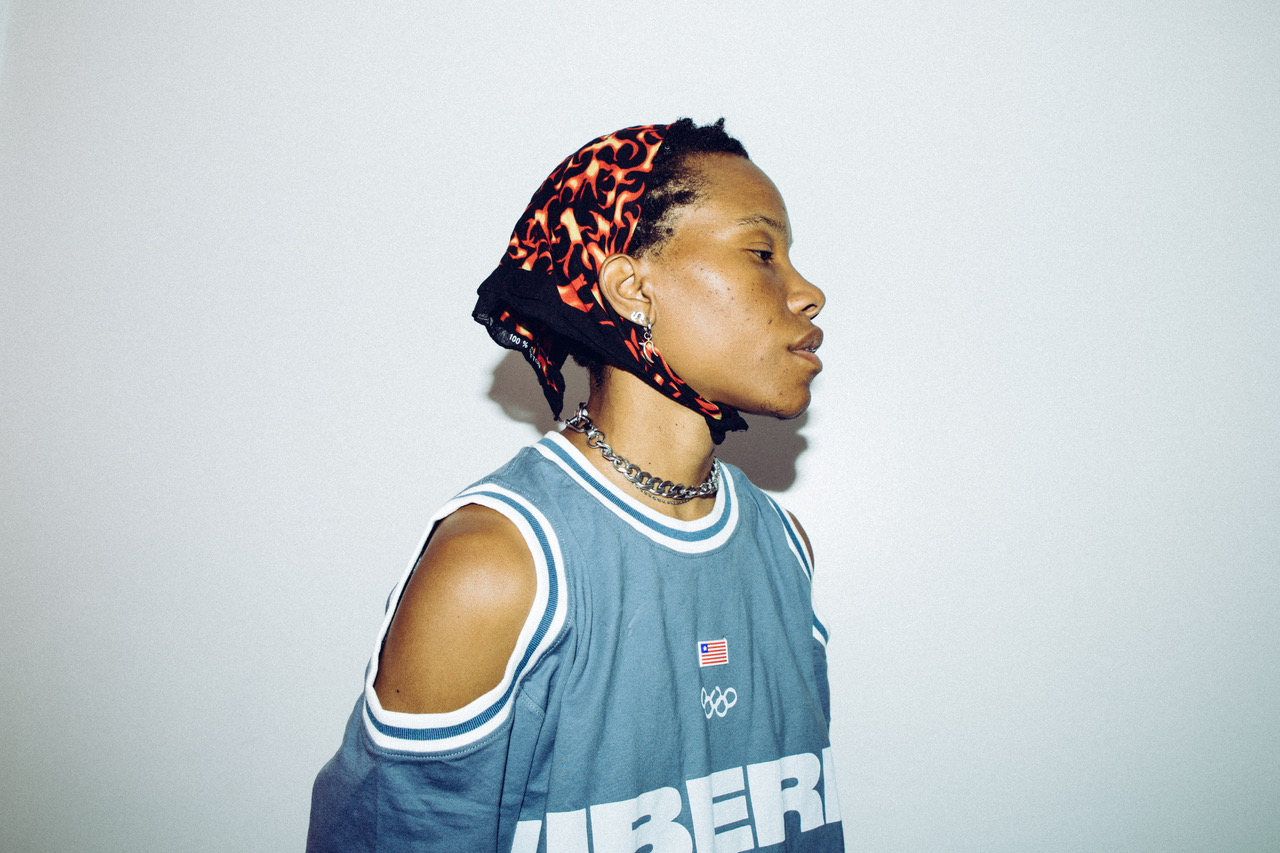
Jacob Soloman (a.k.a. Jinku) has grown up immersed in Nairobi’s thriving arts scene. As the founder of EA Wave, he’s been steadily refining his fusion of afro house, R&B, and African percussion into a genre he defines as tribal downtempo. 

In this month’s XLR8R+ edition, Jinku released his new track “Barda”. We caught up with him from his adopted home in Stockholm for a chat about his techniques and creative strategies; plus he shared a download of his Live Set for a direct look into his process.

Download the Live Set to Jinku’s track “Barda” here*

*Requires a Live 11 Suite license or the free trial.

Please note: this Live Set and included samples are for educational use only and cannot be used for commercial purposes.

This feature first appeared in this month’s edition of XLR8R+, which dropped exclusively to subscribers last month, alongside six unreleased tracks, including the track in question here, “Barda.” You can download “Barda” and the rest of the pacakage once you subscribe here

XLR8R+ is a curated subscription service and music community delivering exclusive music and content every month, plus access to the XLR8R+ member’s area, where you can submit your music to be showcased across XLR8R’s channels and to the XLR8R+ community. The XLR8R+ subscription is also available as an NFT, minted on the Polygon (Matic) chain.

Jinku, thanks for taking the time to talk to us about your work. How did you find your way to music-making while growing up in Nairobi?

I actually wanted to be a painter or graphic designer. But my parents were having none of that. They said I needed to become a doctor, engineer, or a business person. They were worried that artists were some of the poorest people in our country. Back then there were no cultural reference points in Nairobi. There were no famous people making bank as artists. So I went and did a communications degree. During university, I still managed to learn Photoshop and Illustrator. Then I started doing artwork for music producers. So actually I entered the music scene through graphic design.

What influenced your transition from graphic design into music-making?

There was a musician I worked with called Saint Evo. He was making afro-house and that kind of stuff. After watching how he produced I would start throwing in random ideas. Eventually, I was given a copy of Live to try and my whole mindset about African music and African rhythms changed. From there I formed EA Wave and I’ve just been grinding at it ever since; trying to create these alternative sounds in Nairobi.

Are you still releasing music with EA Wave?

As the collective became more well known there was more pressure to release music together. But lately, we’ve become like the Avengers! So it’s like when The Incredible Hulk, Iron Man, and Captain America all do their thing but then come together. That’s what I feel is happening with EA Wave. Everyone is having their own adventures. But when the time feels right, we’ll put something out collectively. 

EA WAVE “Alango” (feat. Makadem)

Where did you meet?

In Nairobi, if you wanted to find the fresh sounds in the city you’d go to SoundCloud. That’s where we all found each other. I think we were known as the SoundCloud era. When we met in real life no one knew each other’s actual names. Everybody was being called by their usernames!

How is the local music scene in Nairobi lately? 

Well, I think COVID really did a number on it. But there have been some small incremental things, like Spotify setting up in Kenya in 2019. So now we are starting to get localized playlists. That’s helping the burgeoning scene and the younger cats who’ve come after me. 

From when I started to where it is now, I can definitely see people are more expressive in Nairobi. We have a really strong queer scene in the city right now. There’s a singer called Bakhita who’s advocating for this community. It’s really nice to see that thriving.

You’ve described yourself as a sponge of different influences. What kinds of music inspire you?

Right now I love ‘90s hip-hop and 2000s R&B. The first time I was introduced to afro-house it was mind-blowing to hear African percussion in such a western genre. What I’m now doing is taking that basis of afro-house percussion and putting it into R&B and hip-hop. I call it tribal downtempo. 

Jinku ‘WAVE TAPES 01’

There are a lot of those percussive influences coming through in the Live Set you’ve shared. How did you come about naming the track “Barda”?

Barda is actually a musician who’s part of this organic downtempo movement. When I made it I was thinking of her sound and what would compliment it. I was actually trying to come up with another name, but it just felt like her.

When starting a project, are you more likely to pick up an instrument, or head straight to Live?

Recently I’ve been recording a lot of sketches on my phone, which I then drop into Live. Then I’ll use the tap tempo feature to match those sketches. A lot of my new songs have weird tempos like 91.83 or 80.47 BPM because I’m using my body’s actual internal rhythm to determine the speed.

What does your typical creative process look like in the studio?

I have two layers: the creation process and the mixing process. The creation process is just about throwing everything at the wall. It’s about finding sounds, getting a basic groove, and then trying a lot of combinations of things with it. I will do that until I get bored, then I’ll close the project down. When I come back to it I’ll throw everything on the timeline. I’ll start soloing different things to see what works together and where relationships are forming between different parts. Then I’ll start using the mute button (0 on the keyboard) to deactivate clips and build a song. Once I have an arrangement it goes into mixing. Personally, I really enjoy the mixing stage because that’s what makes the track. 

“Sound is like a block of clay and EQ is the sculptor”

Jinku

All of the tracks in your Barda project have been rendered as audio. Was that a creative decision?

That’s just how I work. I always bounce everything down to audio. I just don’t like MIDI for some reason. When I bounce to audio it feels like I’m committed. Also, I want to be able to move my projects across different computers without having to worry about plugins. Moving those big sound libraries is always difficult. So as soon as I put an idea down I freeze it immediately. It’s a very conscious decision. 

You’ve used a lot of EQ devices running in serial on many of your channels. What’s the thinking behind this?

Sound is like a block of clay and EQ is the sculptor, that’s how I see it. I read in forums you’re not supposed to create too many notches with one EQ. They say it’s more destructive than subtractive. So it’s better to do small things with different EQs because it gives a much cleaner sound. It’s like you’re dividing the load between a number of EQ plugins rather than having one do all of the processing. 

Jinku uses multiple EQ devices in his signal chains to spread the processing load.

Did you record real percussive instruments for this project, or did you work with samples?

It’s a mixture of different loops that I cut to get certain accents. I then processed some of them through devices like Beat Repeat and Granulator and bounced them to audio. 

Was any warping required?

I actually don’t warp what I play. I don’t quantize my drums or use swing templates, because that’s like copying the swing of a certain drummer. The reason we might like J Dilla’s drumming, for example, is because he played his drums using his own internal swing. That’s why, when I do my drum programming I prefer to just keep it as is. If it’s a bit wrong I’d much rather do it again than quantize it. It keeps it more performative. This way it’s more like having a conversation with your computer rather than your computer dictating what you create!

When building up this percussive section, how did you make all of the individual layers work together rhythmically and sonically? 

OK, one thing: always tune your drums to the key of the song. Then it’s about adding some aggressive EQ, panning, leveling, and good mixing etiquette. I also squashed everything with a Drum Buss. 

Do you use a tuning device to determine the key of your drums or is it done by ear?

By ear. Sometimes I will solo a melodic element in the song and then just start tuning each percussion clip one by one. I’ll keep tuning by ear until it feels like they’re all related and part of the same universe. If all your drums are in the key of the song it feels like they’re lifting the melodic structure. 

What effect is the College Dropout Max for Live device having on your percussion master buss?

It’s basically like tape saturation. So it rolls off all that annoying high end and gives things a nice round low end.

Jinku uses the College Dropout Max for Live device to roll off unwanted low and high frequencies.

Throughout the piece, there’s a Rhodes chord line that gives the track a dubby vibe. How did you process it?

Those chords are from Arturia Analog Lab and I’ve added the Max audio effect Color. Color’s Phase gave the chord more depth while the Wobble made it veer in and out. There’s a bit of hiss generated by the Age parameter which gives the chord a vintage sound depending on how high you crank it. 

Jinku uses the Color Max audio effect to add phase, wobble and hiss to his chords.

You’ve created a big bridge section with trumpets. Were those taken from live recordings or did you use samples? 

The trumpet is played by Samson Maiko. He’s an instrumentalist from back home in Nairobi. 

You used a Max for Live Device called Track Stereo Pan a lot in this section. What’s it doing?

This device enables true stereo panning. I use it as a correction tool when dealing with samples that are already panned in a certain way. If I want to use automation with Live’s own Stereo Pan mode, it can get tedious editing the left and right channels. This plugin allows me to draw automation more easily. It’s a time saver and keeps me in a flow state.

A lot of the width and space in this section seems to be coming from an Effect Rack containing Reverb, Spectral Blur, Delay, and Grain Delay Devices. What was the thinking behind this effects chain?

I used Spectral Blur more like a reverb rather than a blur. Using its Halo mode with the Residual and Frequency parameters gave a really washed-out sound. When I mixed it with the dry signal it sounded like a big hall verb. 

The Filter Delay is more for space. It was about pushing the delay into the stereo field more. I was able to EQ the left and right sides individually on this device, so it gave me more control over the delay signals. 

Some of your trumpets have high-pitched crystallizer effects coming through. Which device did you use to create those?

I wanted to give the trumpets more high-end sparkle so I used Grain Delay with its pitch set to 12. At low volumes, this gives the trumpet a more high-frequency presence. It also helps with the stereo width. 

Jinku uses an Effect Rack containing Reverb, Blur, Delay, and Grain Delay to create space, width, and high-frequency harmonics in his trumpets section.

How did you build up the rhythmic melodies in your Arps section?

I have an Arturia KeyStep Pro with an arp function on it which was triggering Arturia Analog Lab. I was playing with the swing, recording different takes and bouncing them down. Instead of playing the arpeggios to the grid, I was riding their speed. This helped them to catch the percussion in a certain way. It gave the feeling of both elements playing together. On Analog Lab I was also tweaking the filters, making them rise and fall to create lots of movement. 

Where did the African vocals come from?

The vocals were from Splice. I really like how Splice has democratized music-making. You have to be more creative to stand out because these sounds are accessible to everyone. But in the past, I’ve recorded a lot of vocalists I found online through Twitter, or in Nairobi through word of mouth. 

Lately, I’ve reached a point where I find it very hard to imagine a completed track without a vocal contribution. But that’s something I am trying to get out of now. I’m trying to remind myself you can make purely instrumental music and consider it finished.

One of your return channels is called Devil Loc. What’s happening here?

On this return channel, I’m squeezing the life out of the song with a number of devices like EQ Eight, Saturator, and Dynamic Tube. I grouped every channel in the project into a mix bus so that I could mix this return channel back in. This had the effect of warming up the mids basically.

What kinds of master effects have you added to the mix bus itself?

I’ve used Utility to mono the bass and added some mid-side EQ. Then I’ve used Final Glow which is an Effect Rack that has a ton of different things like saturation, overdrive, and compression. It works like a very aggressive compressor. But you’ll see the Macro Controls are only set to one, so it’s just tickling the signal chain. 

You’ll see another Effect Rack where I did some processing to the top end, to give it some sparkle. The first layer of the chain is left dry so that I can process the high frequencies in subsequent chains without affecting the whole signal. Then you will see I’ve high passed the signal and added Saturator.  In the third chain, I’ve toggled a Utility device to Mid/Side mode. This allowed me to add saturation and overdrive just to the sides. 

In the third chain, I’ve toggled a Utility device to Mid/Side mode. This allowed me to add saturation and overdrive just to the sides. 

Jinku uses an Effect Rack to process specific frequency bands on his mix bus channel.

Would you typically leave all of this processing in place before sending the track to a mastering engineer?

Definitely.As you can see, this track is peaking at -6db. That’s how I sent it off to be mastered. This is also why I have a Utility device at the beginning and end of the master effects chain. If you keep all your channels low it’s much easier to gain stage and make sure all of the plugins are fed the right amount of amplitude where they sound best, and most optimal. Then you can use the Utility devices to trim the signal as needed. 

Jinku, thanks for sharing so many insights into the production of your track. What music projects do you have coming up in 2022?

Thanks for the opportunity! So, in June I have an album coming out called ‘Passenger 555’ featuring a Kenyan singer called Karun. It’s a seven-track album of cosmic R&B. It’s really percussive and synthy with some heavenly vocals.

In July I have a tape coming out called ‘Oasis Pack.’ It’s about my journey from Nairobi to my first winter in Sweden. It’s an amalgamation of Kenyan artists and Swedish musicians coming together in proper tribal downtempo fashion.  

Page 55 of 3781
1 53 54 55 56 57 3,781