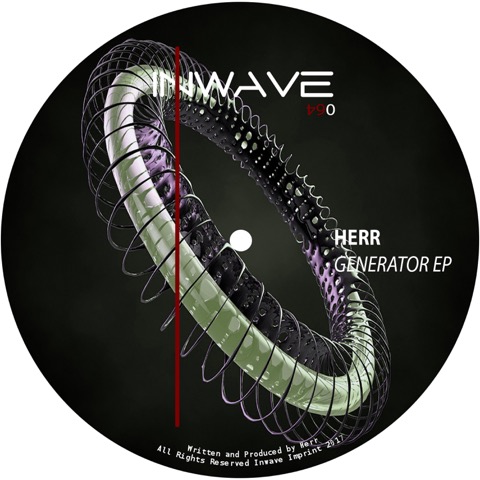
The latest release on NYC imprint Let’s Play House is Luces’ Habitual Ritual.
The four-track EP will be the debut from Luces (a.k.a. Plastic Plates and Amtrac) and also includes a remix from Autofac (a.k.a. Juan Maclean and Shit Robot), whom also debuted on the label earlier in the year. From the big-room stylings of the three originals to the stripped-back dub-infused Autofac remix, Habitual Ritual is an EP that will surely destroy countless dancefloors this summer.
The EP is out now on vinyl and can be grabbed here, with the digital release available via Let’s Play House’s Bandcamp ahead of the wider release on June 16.
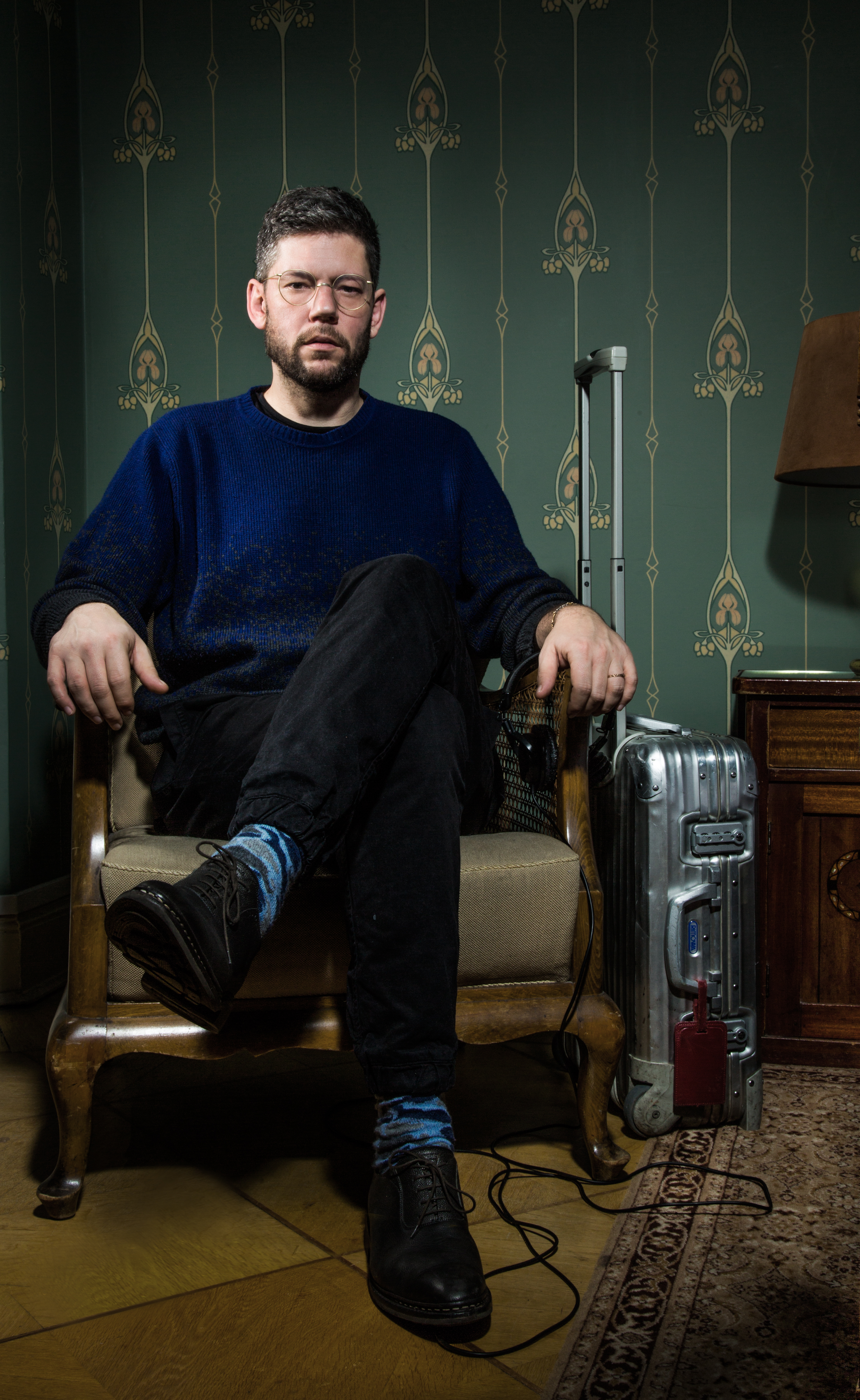
Frank Wiedemann, the Berlin-based producer, remixer, and live performer is perhaps most widely known for his role in Innervisions, the lauded electronic music label and collective that he co-founded in 2005 with Steffen Berkhahn (a.k.a Dixon) and Kristian Beyer. Still, today, Innervisions, a former sub-label of Sonar Kollektiv, remains one of the most influential and reliable house labels in electronic music—an invaluable platform upon which Dixon, Wiedemann, and Beyer have gone on to become three of the most established artists within in the wider scene.
Together with Beyer as Âme, Wiedemann is also responsible for some of the most iconic house tracks and remixes of recent years—starting with 2005’s “Rej,” a minimal masterpiece that launched the duo to a global audience. For many years, too, the duo toured separately as DJs—often appearing in two different cities on the same date—until splitting their duties: while Beyer now plays as Âme the DJ, Wiedemann has been touring exclusively as a live act ever since 2010. This is, the duo explain, is much down to Wiedemann’s background in band music: it was in this domain that he spent much of his earlier years before embracing the club world. And his love for production and live performance has seen him become acknowledged as the “producer” of the Innervisions trio: while Dixon and Beyer are on the road, Wiedemann commits much of his time to the studio, opting to work on solo material, one of his various project—or on the upcoming Âme album, which is rumoured to be in the works.
As for other projects, Wiedemann works with Henrik Schwarz as Schwarzmann and RY X has Howling, a collaborative band-focused project that rose to acclaim in the wake of 2014’s Sacred Ground LP. Having recently dropped “Phases,” the first new music from their forthcoming full-length, more material is expected to land soon. Together, the duo also run Sacred Ground festival, a three-day event that takes place in a 100-year old farm in North Germany’s Uckermark. In addition to this, Wiedemann maintains a slow stream of solo EPs and remixes—in 2016 he released his debut solo EP on Innervisions and a stunning rework of I Have A Tribe‘s “Yellow Raincoats”—and also runs a new label called BIGAMO. It’s a wonderful and diverse collection of projects.
Wiedemann is set to perform as a co-host of Sacred Ground Festival, taking place from July 21-23 at a 100-year old farm in Uckermark, Germany. More information is here. He will also be performing live as Âme alongside many of electronic music’s biggest names at this year’s Into The Factory event, taking place from August 10 to 12 in Nynäshamn, Sweden. More information can be found here.
In addition to this, Âme (DJ) will also perform at this year’s Paradise City festival alongside Recondite, &Me, Agoria, and many more great artists. More information, including tickets, can be found here.
How do you divide the time between your projects: Howling / Âme / Schwarzmann / Frank Wiedemann?
I actually like having different projects because this allows me to reveal my different musical personalities and it also prevents it from becoming too boring. This is relevant for life and for studio work. Playing live as Schwarzmann and Howling is so different to playing live solo and producing with Kristian [Beyer]. After a Howling tour, for example, I am always looking forward to playing in a club alone, and then before a Howling tour, I am so excited to work with musicians. I’ve realized that it is important for me to have these different projects.
With Ry and Henrik, their time is limited — more so than Kristian’s, perhaps — and we have to be together to make music so when they’re available I will always put some time aside to concentrate on these respective projects. My solo work then fills the gaps, and then I also try to put some time aside to work with Kristian. With Âme, there are certain times where we need to be together in the studio: the initial creative idea and then the finishing—the fine tuning.
I also like the cross-over from these projects. There will be certain moments where I will be in the studio with Ry, Henrik or Kristian and then we will realize that this material is actually better for another project — and so each project clearly influences the other ones.
How come it took you so long to release your first solo material?
Simply because I was occupied with other projects. Often I am in the studio alone and so I have many sketches. Some of them go into the live show and some of them go on to be a finished track — but mostly with Âme. With my solo EP on Innervisions, it was a case that Kristian liked them but didn’t “feel” that they were Âme tracks. So I released them alone.
“If people pay you for the music you want to do then that’s great; but don’t become a musician to make a living—make the music you want and if you can earn money from it then it’s good.”
How did you make the jump from a “normal” life to a life as a producer, live act, label co-founder etc? And how much did it affect your personal life?
I’ve been playing music since I was eight. I played in bands, I DJed, and composed music. It was a long journey but it all kind of grew naturally—and it’s important that young producers don’t rush it. When people become 18 or 19 they want to be a DJ or producer and they try to push it; however, it’s important to invest your time and just let the music grow. For me, there wasn’t so much of a jump. It just happened naturally—and that’s how it continues now. We built the label because it felt natural. At a certain point, I met Kristian, Henrik, Ry or Steffen and we started making music—it was just organic growth.
If it comes to my experiences I’d say never do music just for the money. If people pay you for the music you want to do then that’s great, but don’t become a musician to make a living—make the music you want and if you can earn money from it then it’s good. I think it’s not healthy to make music in order make money.
How do you deal with the differences between a family life and your touring schedule? Do you manage to get a good balance between production, touring, label management, and family life?
It’s not easy—it’s a real challenge. I thought my job was perfect to be a father because I have a lot of “spare” time during the week — but this is not the case because there are so many things to do also n my “free time”; music, of course, press, label work, office things. And it also makes it hard because I am completely unavailable on the weekends so if there is an issue then I can’t come home immediately to be with them.
However, we have our routines and I try to spend as much time with the family as possible. Monday has become my new Sunday — or actually Tuesday, these days, to be honest.
A usual week is Monday off, Tuesday to Thursday in the studio or office, and then Friday to Sunday touring.
I consider travel as the time that I get paid for, whereas the playing is mostly the fun bit.
The quality of music that is released on Innervisions is really high. How do you guys decide on what to release from all of the tracks that you must get sent? Is it important that you already have a relationship with the artists on your label or would you still release a track from a completely unknown artist?
I am not the person who does the A&R for the label — Steffen and Kristian do that. But from the past, anyone can release on Innervisions; it doesn’t have to be friends. However, it can be hard to listen to all demos with so much music being sent in and we only do a limited number of releases per year. I think Kristian and Steffen do listen to a lot of the demos and it’s certainly not a rule that it has to be a friend; however, a lot of the material does come from friends or friends of friends because that is just how the industry works. For example, if another producer that we really like sends us a demo from his friend chances are higher that we give it a certain attention.
“There are so many of the Innervisions records that you could play today and people would still appreciate it and that makes me feel like we have done a good job.”
What is an Innervisions track?
So, for me, an Innervisions track should be more a song than a track—it’s not just a tool. It is always for a special moment. Even though we don’t always achieve it, the goal is to release timeless music. Now there are two forms of “timelessness” in my opinion: timelessness of a melody that sticks in your head even though the track will be outdated sound wise; and then tracks that will sound modern in any decade. Both aspects are important for us. For example Innervisions 9—Château Flight: still, when I listen to it I think it could be from today. There are so many of the Innervisions records that you could play today and people would still appreciate it and that makes me feel like we have done a good job.
If you were starting a label in today’s electronic music climate, how would you go about it?
I would do it just as we are today. There’s so much music being released today but all the usual control mechanisms — distributor, label manager, record store guy who is buying your record — are being skipped because of digital formats and streaming. This means that a lot of music is coming out that wouldn’t have been released before. And this means also that there is a lot more music for the consumer, but there is in my opinion also a lot of meaningless music. So there is particular emphasis on labels nowadays to filter through the “bad” music, and this means that labels are actually more important than ever.
Do you produce tracks from the point of view of having to play them live at some point and let that influence the decisions that you make during their creation — or do you just let the track develop naturally and then work out how to perform it live once it is finished? Also, in the creative process, do you make critical decisions based on whether the track is going to “work” on the dancefloor or not, or do you feel complete creative freedom under the name of Âme?
I would never produce a track just so that it works — just for functionality. It must be musically satisfying for me. But of course we produce mainly club music and the aim is to make it work on the dancefloor. Whenever I have a new creation that has a club feeling I put it in my live set because this is a very good way of working out whether and how a song works or not.
“You hear something you’re inspired by and then there are two ways of dealing with it: one is just copying it which will probably not satisfy you that much; and the other is using it as inspiration to put in your own work..”
How do you see a connection between your work environment and your musical output? What do you see as being your main influences in the world in terms of inspiration? May it be nature, colors of stuff you see, human relations, or whatever.
Everything is inspiration. It can be nature, a movie, a piece of art, a book and, of course, other music which is probably the most inspiring for me. It could be a day with my son. I consider everything being part of it. I watch a lot of documentaries about how music has been produced — like watching a documentary on The Beatles and then applying these ideas to your own work. For example, James Brown took the Blues to another level, he created his version of funk. You hear something you’re inspired by and then there are two ways of dealing with it: one is just copying it which will probably not satisfy you that much; and the other is using it as inspiration to put in your own work, expand your musical language—and this development will be much more satisfying. As an example, I made a couple of sessions with Henrik [Schwarz] which we called “Ethnological Studies,” which meant that we spent a day just finding how for example Indian Ragas work—harmonic structures, rhythms, etc. We were just trying to understand. And at the end, such studies expand your musical vocabulary a lot.
Can you explain what your creative process is? Do you try to have creative sessions every day, do you have any specific routines, workflows or habits that help you to be more creative and how does your process change when collaborating with others?
The fact that I am a father now makes me use my time more effectively. So for me, I have three days per week in the studio. It certainly helps to have a couple more days in a row.
Most of the tracks come either from jams or from certain ideas—for example, recording drums in a specific way. It’s very inspiring to try to get behind other productions to understand, read, or watch documentaries to know how other artists did things—and that inspires you to use those techniques in a modern way or at least in your own way.
“…with “Rej,” we started with a completely different track. The only thing we kept in was the melody, which used to be an arpeggio over the whole song.”
Your tracks always have such an amazing emotional content to them. Is this something that you think about from the outset—do you have a specific concept or idea for the story/journey that each track will tell before starting or do you just try out different ideas until one of them catches your ear and resonates with you then start developing it from there?
No, I don’t have a story in my head. Every track is kind of growing in a different way than it started, so maybe I have this one melody or beat — and then it ends up not being in the song. Like, for instance, with “Rej,” we started with a completely different track. The only thing we kept in was the melody, which used to be an arpeggio over the whole song.
Does equipment—or gear—really matter? It’s an interesting topic, and I want to know your opinion.
No, gear doesn’t really matter. That’s really important. You look at those guys in Detroit when they invented the music we love—they made their sound using the cheapest drum machines and now it’s the sound we all admire. This means you maybe should find your personal cheap gear and create your own sound.
Limitation is also very important. Saying this with a lot of gear in the studio seems weird but I really like to reduce myself often to use only one or two pieces of gear. And I am hoping now that I have all this gear that it doesn’t impede my creativity.
At the end it’s not what you have; it’s what you do with it. It’s also good to try to get the maximum out of one plug-in or one piece of gear and know it inside out.
I believe that most of your production is quite minimalistic, yet extremely emotional. What is the secret recipe to achieving this full sound?
First, I don’t think it’s minimalistic—it has too many layers for that. I think it’s one of the hardest things to do to use very few elements and make a track still sound on point — it’s something I am always striving to do. That’s actually the most interesting thing to achieve and I am continually working on it. I am still trying to find the secret recipe myself.
If you think of a band in the ‘50s, they had one or two microphones in the middle of the room and they had to play it perfectly. Nowadays we can have as many channels as we want and we can have three kick drums layered. It’s really hard but one should reduce himself on fewer sounds and elements.
Âme remixes always bring out the best of the original tracks and then elevate it to a new level. What is your approach to working on a remix and how does it differ to woking on an original track?
For us—as Âme—if we agree to do a remix then we have to like the original song. Then there are two ways of doing a remix: one is having an almost club-ready track and just editing it, but the other one is more interesting — when you put it into a different context. For example, Toto Chiavetta just reworked a Howling track—a typical Howling song—and he transformed it into an almost Latin House, New Jersey track, but with a very modern sound aesthetic. This is when I enjoying doing a remix.
With Yellow Raincoats, we have a good relationship with the label. They rereleased a lot of stuff that we love, and they sent us a track. I was in contact with I Have A Tribe, and he is very lovely. I just really liked the track and I wanted to work on it.
I approach it like I do an original production—it’s normally easy to make the first steps but then the time-consuming part is to “distil” all the ideas into a final version.
“It’s all about the flow in techno music but for me it’s all about the single song—the short moment. I have always been a musician—even when I was DJing.”
How come you decided to play live instead of DJing?
I am a musician. I have never been a typical techno or a house DJ; I am not the guy who is in this kind of trance for 24 hours. But I understand that people want it. I want to do the best that I can for an hour—and it should be special. That’s just who I am and what I enjoy. It’s all about the flow in techno music but for me it’s all about the single song — the short moment. I have always been a musician — even when I was DJing.
“Moorthon II” still gives me goosebumps every time I listen to it. I’m a young aspiring producer and I need a little bit of inspiration. I was wondering, how long did it take you from when you first started producing to get to the point where you felt “happy” with your tracks. I know that you probably never feel 100% happy with what you produce, but after how long producing did you feel that you were finally ready to start sending demos out to labels?
I made a lot of music before I was ready to release anything —but this was not necessarily club music. As Âme we made our first release in 2001, and this was actually only the second track we produced together. The only track we didn’t finish was the very first one.
One thing I would say, however, is this: in the very beginning it’s important to not spend too much time on each track because you will get stuck. Always kill your darlings: if you are stuck then put it aside and come back to it later.
Also, it’s likely that the first music you make will be heavily inspired by other styles and it will take you some time to find your own voice. Be patient — always take your time to discover what you’re trying to achieve because if you do something that is good then it will find its way.
What are the main differences in the approach to music, between a DJ set and a live set? Finally, can you briefly explain your setups? (links, MIDI, software, hardware) and the set up for a live performance, is the same in the studio?
My live setup is pretty simple. I use Ableton and a Macbook. I use two controllers which allow me to tweak the stuff—not too many things because too many possibilities take you away from making music. I have a drum machine and one or two synths, depending on where I am traveling. In the Ableton set I have eight parts per song, so I can arrange the song live—and I am quickly getting to the way of using the drum machine and synths to build something new from the parts that I have. So I am beginning to improvise more—so that each track sounds different every time I play it which allows me to remain excited.
In the Ableton setup, I have two MIDI tracks—one is drums and one is a synth that I can tweak—and the rest is audio files. I also have filters. I am limiting my setup to give myself more freedom.
At the beginning, I tried to replicate the songs as much as possible because I had to mix live and this gave me no freedom at all. I didn’t like this because it was very boring. I tried to find the essential elements or moments, and then I can add vocals or whatever from other tracks.
“I consider myself as doing a concert rather than a set.”
Do you have moments where you are booked but you do not feel like to performing?
It often happens that I am exhausted because of traveling and I arrive and don’t want to play. But I am lucky because I really enjoy playing so most of the time I am in my zone when I start playing and so 95% of the time I do have fun. The good thing about playing live is also that I am doing it for myself: I consider myself as doing a concert rather than a set. There are always ups and downs and I appreciate it if people are aware of this. That’s why I try to make that one hour a concert rather than just a regular DJ set.
Âme (DJ) will be performing at this year’s Dancity Festival in Foligno, Italy, alongside some of dance music’s biggest names. More information here.
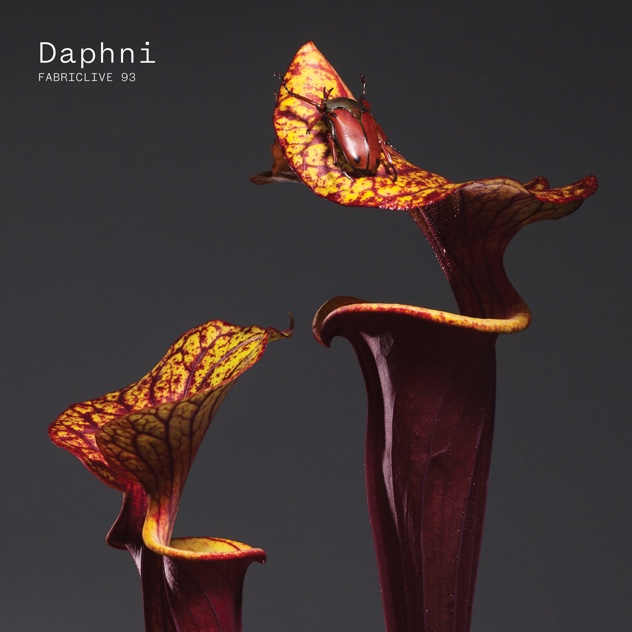
Daphni (a.k.a Caribou / Dan Snaith) has shared a new track from his upcoming Fabriclive 93 mix.
The release will be Snaith’s first ever mix CD and consists of 23 of his own new and unreleased tracks along with four exclusive edits—including a version of Container’s “Dissolve. The release actually contains more Daphni material than the project’s entire back catalog, and it is also the first Daphni music to surface since 2015.
Ahead of the mix’ July 21 release, “Tin” is streamable in full below.
Tracklisting
01. Daphni “Face To Face” 02. Daphni “Xing Tian” 03. Daphni “Carry On” 04. Jamire Williams “FUTURISM” (Daphni Edit) 05. Daphni “Poly” 06. Daphni “Ten Thousand” 07. Daphni “Medellin” 08. Daphni -“Hey Drum” 09. Luther Davis Group “You Can Be A Star” (Daphni Edit) 10. Daphni “Try” 11. Daphni “Vikram” 12. Pheeroan Ak Laff “3 In 1” (Daphni Edit) 13. Daphni “Listen Up” 14. Daphni “Tin” 15. Daphni “Moshi” 16. Daphni “Strange Bird” 17. Container “Dissolve” (Daphni Edit) 18. Daphni “Joli Mai” 19. Daphni “Nocturne” 20. Daphni “So It Seems” 21. Daphni “Screaming Man Baby” 22. Daphni “Vs” 23. Daphni “The Truth” 24. Daphni “406.42 PPM” 25. Daphni “Always There” 26. Daphni “Fly Away” 27. Daphni “Life’s What You Make It”
Of Turkish origins but born and raised just outside of Zurich, Alci’s entry into DJing came via hip-hop and street culture, trying his hand at graffiti and breakdancing before discovering turntables. Over time, his taste has evolved, shifting into the electronic world where he now places his sound between funky house grooves and minimalistic techno.
In 2013 he released on Phil Weeks‘ Robsoul Recordings, and by the end of the year he had followed up the EP with a three-part Early Beginnings series for the imprint. Other labels quickly took an interest, leading Alci to put out music on Infuse, the sub-label from Fuse London, and Apollonia.
Up next is the Humanized Pattern EP on his own Seeing Sounds and the free download of “Eleven,” a groovy track made exclusively for XLR8R.
Talk to us about how you got into DJing and production?
I actually did my way through the hip-hop culture, like breakdance, graffiti and of course Djing when I had enough money to buy a pair of Technics. At this time I also started to produce music while at the same time I discovered the electronic music culture and really got into it very fast.
When and where was the track recorded?
The track was recorded and mastered in my home studio around March this year.
How did your first release on Apollonia come about?
It was great. I’m still moved by the fact that I released my music on one of my favorite labels.
What’s the aim of your label, Seeing Sounds — do you have a clear sound aesthetic?
There is no straight direction on the aim or on the sound. It’s just music that I love and art that inspires me.
What’s your production setup like?
Its a balance between analog and digital. For the sound, I use some hardware gear, virtual instruments and own recorded/sampled sounds like from old vinyl or my surroundings..To record, I try to stay in the analog world as much as possible.
How do you start a track — is it spontaneous jamming or do you have a clear sound in your head before you start?
It’s more kind of a jam; of course, sometimes I have a clear sound vision in my head but in the end of the session it’s completely something else.
What’s next for 2017?
The SEEINGSOUNDS.002 will be out soon and more music is scheduled on different labels this year.
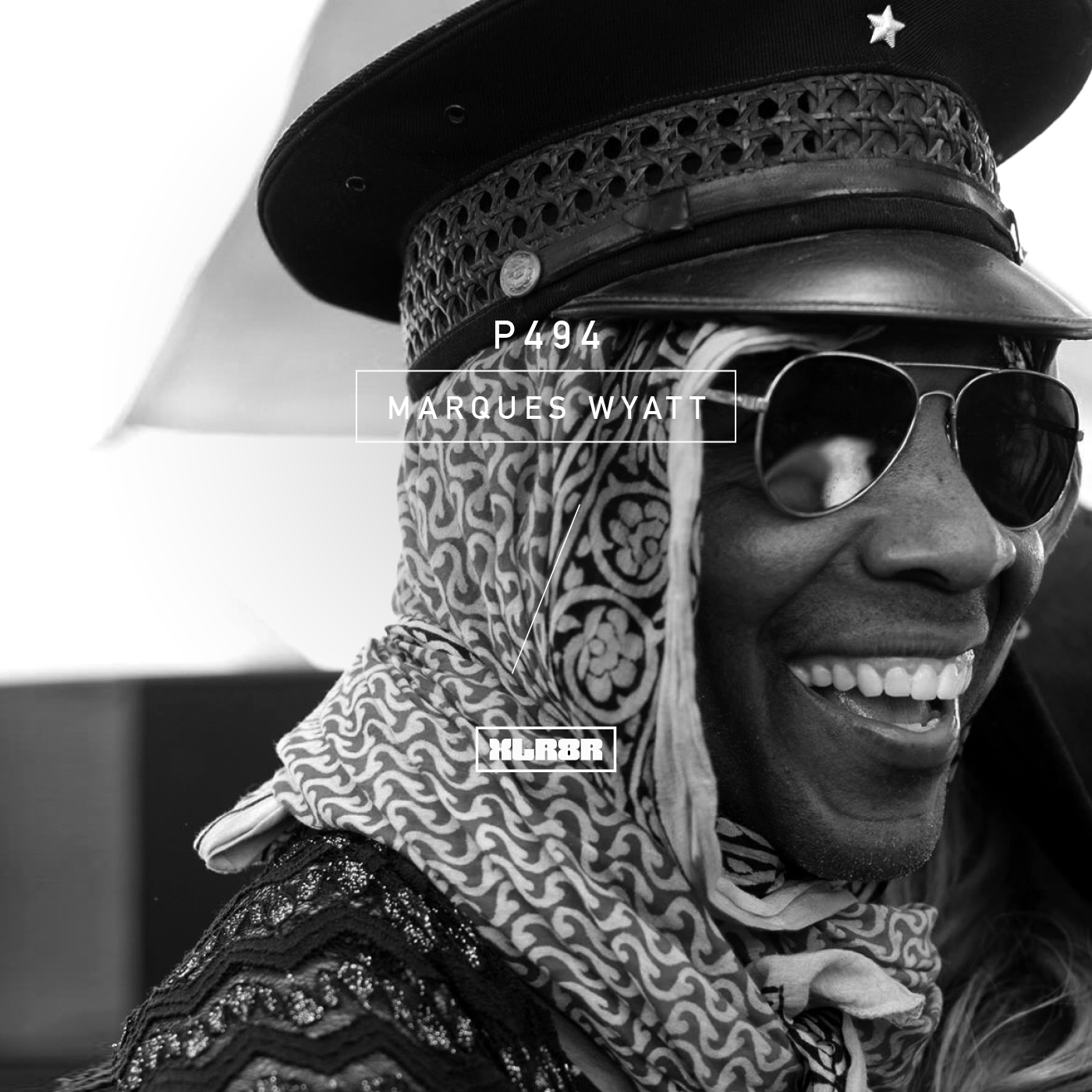
When it comes to the West Coast house scene—and the wider US scene, for that matter—few command the love and respect, of artists and dancers alike, that Marques Wyatt has procured over his 30-year career. From his early events BBC, MAC’s Garage, Brass, Prague, and Does Your Mama Know, Marques built a dedicated following that transcends generations. Via these events, Marques introduced his home city of Los Angeles to debut live performances of high-profile acts such as Jamiroquai, Digable Planets, and the Brand New Heavies, as well as DJ sets from legends such as Louie Vega, who, in 1996, invited Marques to play the infamous Masters at Work party in Miami at WMC—essentially acting as a launching pad for Marques’ career.
His productions, too, share the free-spirited notion of his parties. Channeling his knowledge and connection to the dancefloor, Marques has released original tracks and remixes on some of house music’s most respected labels, including Om, Strictly Rhythm, King Street, Nervous, and Yoshitoshi. In recent years, however, Marques has stepped back from the studio to focus on his latest party venture, DEEP.
Now in its 18th year, DEEP is one of Southern California’s most cherished events. The breadth of talent who have performed at DEEP is staggering, to say the least. In its long-standing run, DEEP has played host to house music royalty such as David Morales, Frankie Knuckles, Timmy Regisford, and Louie Vega, as well as Tony Humphries, Dennis Ferrer, Ben Watt, Mark Farina, Derrick Carter, DJ Harvey, Francois K, King Britt, Osunlade, The Martinez Brothers, and Kerri Chandler, to name but a few.
The mix Marques has submitted for Podcast 494 runs in synchronicity with something you would hear from him at DEEP, or one of the many parties on his tour schedule; across 60 minutes, he weaves through silky smooth cuts in a manner that plays out like a love letter to house music.
Marques Wyatt will be performing alongside Green Velvet, Dimitri From Paris, Jay Tripwire, Halo, Doc Martin, Catz ‘N Dogz, Walker & Royce, and more at RHA Festival, which takes place June 30 – July 1 at Marina Riveria Nayarit in Mexico. You can grab tickets to RHA here.
When and where was the mix recorded?
Casa De Wyatt (my cave).
What equipment was it recorded on? Pioneer Nexus 900 Mixer, Pioneer CDJ Nexus 2000, and a ZOOM H4N Recorder.
Could you tell us the idea behind it—was there a clear concept in mind? No concept, just a feeling—painting with music using my favorite sonic colors of the moment. Some new, some older.
How does the mix compare to one of your club mixes? You can’t really compare them. It was just me and my cats Leo and Luna Monroe on this one and they like it deep, so that was the vibe (haha). At clubs, I transmit from the reciprocal loop of energy I form with those on the dance floor. Whether at home, a club or a festival, I manage to get it going and shake my ass. If not, I would just hang it up.
You’ve been throwing parties and DJing across the US since the mid-’90s—what are your thoughts on the current scene in the US and, more specifically, the West Coast? I’m actually quite pleased with what’s happening in our LA dance community. Especially, because I’m working and collaborating with so many friends and people I respect (such as yourselves). Whether new or old relationships, magic is happening. Lots of talent living in this town or transplanting here.
Your party DEEP has been running for over 18 years now—what are some of the most memorable moments of the last few years? I must say, a majority of my favorite moments have happened at festivals. One non festival event that sticks out right off the top is when DEEP collaborated with KCRW at the Hammer Museum a couple years ago and Doc Martin and myself played to 3000+ people. We were both pretty blown away and felt things had come full circle. This was followed by playing Coachella both weekends in 2015. Then DEEP producing the closing party of the King King. Outside of DEEP events, I would have to say closing Lightning in a Bottle’s Favela Stage in 2016, Playing Deserts Hearts this past April, and, recently, returning to the Woogie Stage at Lightning in a Bottle last month. And of course, lots of memorable ones on the playa.
What’s in store for the rest of 2017? In 2017, we plan to brave some new territory with DEEP—lots of exciting opportunities have been surfacing. Secondly, I recently returned to the studio, so much more of that on the horizon. Lastly, we’re really looking forward to celebrating DEEP’s 18-year anniversary at Grand Park on September 17.
Next month, Weather Rec will launch with WTR101, a four-track VA.
The double-sided 12″ will feature minimal-leaning cuts from InHaus Wax head Tijn, Parliamnt founders Shiftr and Variancé, Romania’s Octave, and Italian producer Katal. Each of the four tracks presents a different take on house, from Shiftr’s broken beat influenced “Untitled” to Octave and Variancé’s rolling “Vaiven.” With another VA scheduled for this summer, the label will cement its core artist roster, which is centered on a close group of friends that share a common sound and vision.
You can pre-order WTR101 now via Decks, Deejay, and Juno, with Shiftr’s “Untitled” streaming in full below, alongside the tracklisting.
Berlin-based DJ and producer Luke Black will return to Tact Recordings towards the end of the month with his new EP, Buccaneers Bodice, which arrives with a remix from label co-founder fletcher.
Outside of regular label home Tact, Black’s deep and groovy minimal outings have landed on labels such as Yoruba Grooves and Release Sustain, whilst behind the booth, Black has appeared at institutions like Club Der Visionaere, Chalet (Berlin), The Rainbow Venues, Egg London, and more.
His latest EP continues the trend with three haunting compositions filled with rippling percussion, textured soundscapes, and low-slung grooves. Alongside the originals, fletcher strips back “Creaking Contraption” for a deep and dubby six-minute run.
In support of the forthcoming release, Black and Tact have offered up “Creaking Contraptions” as today’s XLR8R download, available via WeTransfer below.