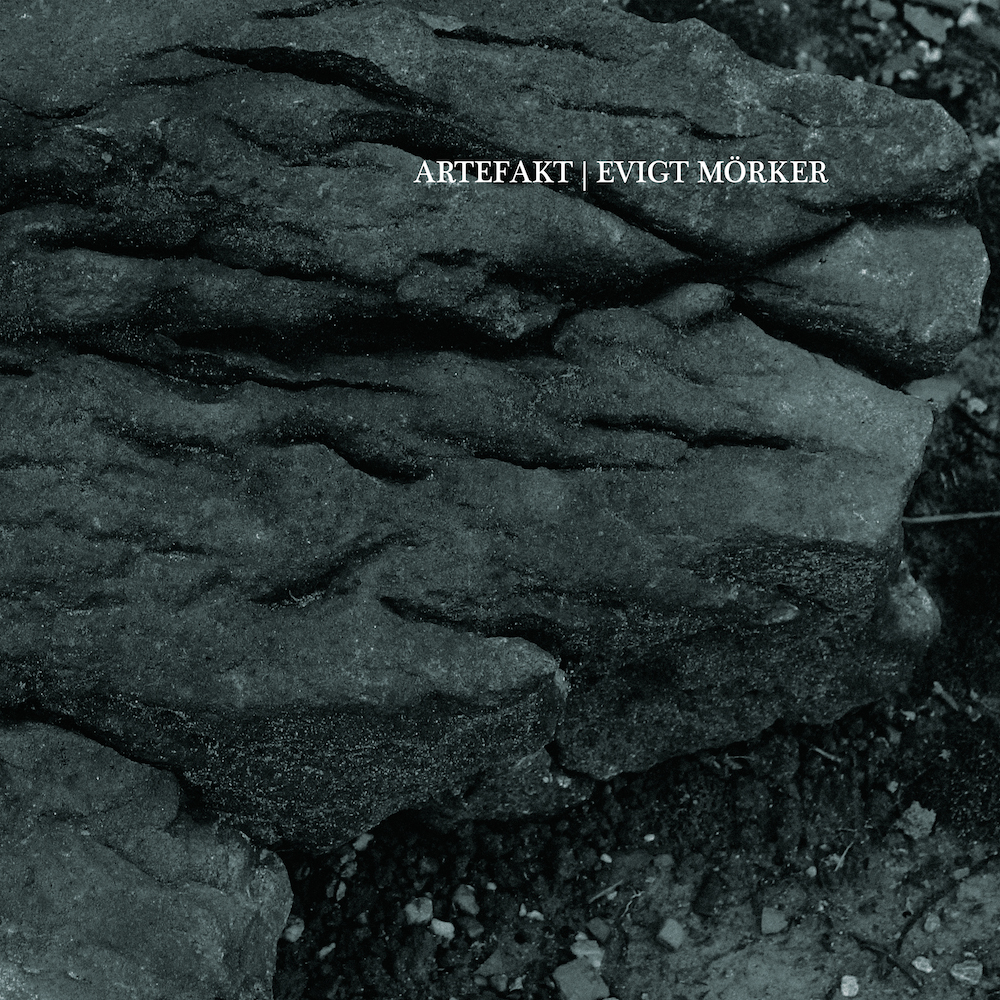
The next release on Amsterdam-based label and party series Konstrukt will be a split EP by Artefakt and Evigt Mörker, due out at the beginning of July.
Konstrukt launched as a label last year, and has so far put out music by SHLTR, Cassegrain and Sendai (a.k.a. Peter van Hoesen and Yves de Mey). Their third EP will feature two tracks by Dutch duo of Nick Lapien and Robin Koek as Artefakt. Taking care of the B-side is Swedish producer Evigt Mörker, who up until now has only released on his self-titled imprint, as well as contributing a couple of tracks to EPs on Appian Sounds and Reclaim Your City.
Konstrukt 003 is due out on July 1. For a taste of what to expect, stream snippets from Konstrukt 002 below.
The next release on Amsterdam-based label and party series Konstrukt will be a split EP by Artefakt and Evigt Mörker, due out at the beginning of July.
Konstrukt launched as a label last year, and has so far put out music by SHLTR, Cassegrain and Sendai (a.k.a. Peter van Hoesen and Yves de Mey). Their third EP will feature two tracks by Dutch duo of Nick Lapien and Robin Koek as Artefakt. Taking care of the B-side is Swedish producer Evigt Mörker, who up until now has only released on his self-titled imprint, as well as contributing a couple of tracks to EPs on Appian Sounds and Reclaim Your City.
Konstrukt 003 is due out on July 1. For a taste of what to expect, stream snippets from Konstrukt 002 below.
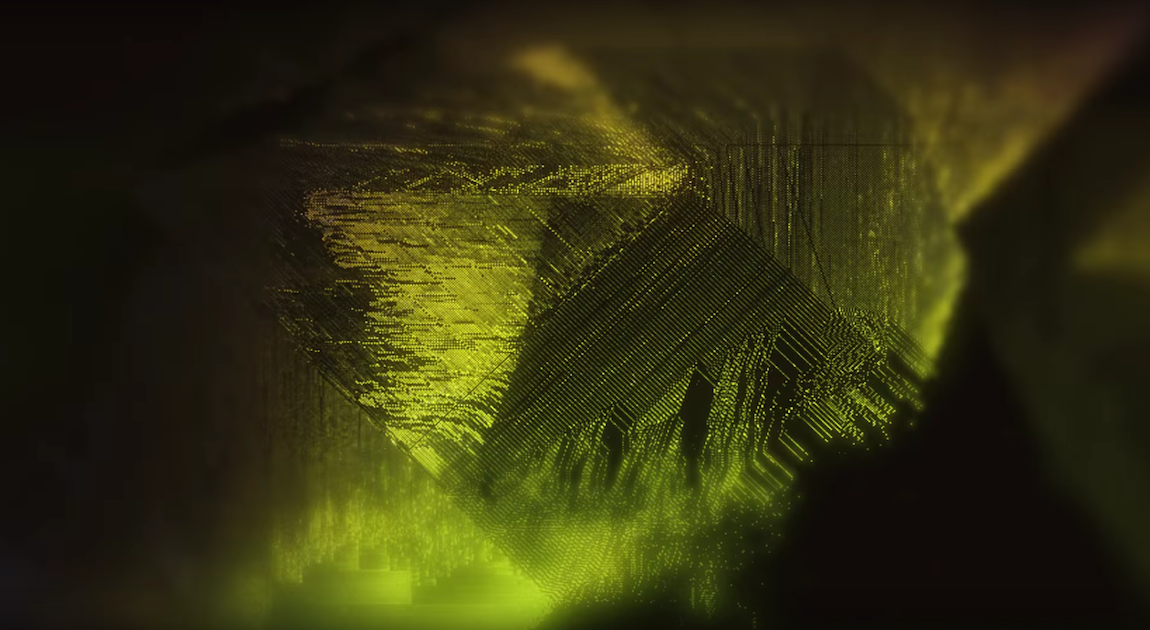
London-based Houndstooth has released a psychedelic new video for the first track from Vester Koza‘s new OTR EP, “OT_R~cord [4.10].” The video was produced by sound and visual artist, Sarah Hammond.
Conceptually, the visuals cover many of the themes present in the EP, namely those of privacy, personal security, and mass surveillance. The source footage itself—which Hammond explains was put through a pixel-sorting algorithm that “visually encrypted” recognizable forms—was animated from personal artwork and provides a dynamic contrast to superimposed analog shapes placed throughout the video.
Stylistically, the track finds Koza exploring new territory, ranging from IDM-inspired glitch patterns to fuzzy ambient soundscapes. The EP can be purchased via Houndstooth’s site here on vinyl, MP3, and WAV.
Following weeks of speculation, Australian act The Avalanches have now revealed details of their forthcoming album, which will drop in early July via Astralwerks.
In their first interview for 16 years, conducted by Zane Lowe for Beats 1 Radio yesterday (which you can stream here), Tony Di Blasi and Robbie Chater confirmed news of the release, their only full-length since 2000’s Since I Left You. They also revealed that it had been in the making for “three or four years,” and will feature collaborations with Father John Misty, Danny Brown, Toro Y Moi, and MF Doom. Following the interview, the group posted a video for one of the album’s cuts, “Frankie Sinatra,” which can be viewed below.
On the matter of the album and their lengthy period of inactivity, the group posted this message on their Twitter: “Sorry we kept you waiting. It’s been a wild ride and at times we thought we’d never make it through. What kept us going was the belief in the day-to-day experience of music as a life force—as life energy. How music can change the tone of your day. How the sunlight refracts differently through the atmosphere can make the world look different, changing colors and feelings. What a beautiful thing sound waves can be. It’s magic.”
The news follows ongoing speculation over the release of another record, fueled by their announcement earlier this year that they would play a handful of dates this summer, and the update of their otherwise dormant social media account. More recently, the group set up a mysterious hotline which played their track “Subways,” as well as releasing a teaser video entitled “Since They Left Us.”
Wildflower is due out July 8, and can be pre-ordered from The Avalanches’ store. Check out the video for “Frankie Sinatra,” which features Danny Brown and MF Doom, below.
Tracklisting: 1. “The Leaves Were Falling” 2. “Because I’m Me” 3. “Frankie Sinatra” 4. “Subways” 5. “Going Home” 6. “If I Was A Folkstar” 7. “Colours” 8. “Zap!” 9. “Noisy Eater” 10. “Wildflower” 11. “Harmony” 12. “Live A Lifetime Love” 13. “Park Music” 14. “Livin’ Underwater (Is Somethin’ Wild)” 15. “The Wozard Of Iz” 16. “Over The Turnstiles” 17. “Sunshine” 18. “Light Up” 19. “Kaleidoscopic Lovers” 20. “Stepkids” 21. “Saturday Night Inside Out”
British DJ-producer Geoff Kirkwood (a.k.a Man Power) has announced details surrounding a new EP, set to be released June 24 via NYC-based label ESP Institute. Named as one of XLR8R‘s Best New Artists of 2015, Man Power quickly caught the attention of discerning electronic devotees through his tough, brooding releases on John Talabot’s Hivern Discs, as well as his more outlandish material on Jennifer Cardini’s Correspondant imprint.
Kirkwood’s first offering for ESP Institute, the label headed by Lovefingers, includes two powerful tracks—”The Tourist” and “Oye”—which combine crashing percussion, emotional chords, and rolling acid basslines into euphoric compositions that test the boundaries of “functional” club music. This latest release reflects Man Power’s versatile production abilities, as well as his knack for quickly shifting the narratives of a track in unpredictable yet provocative ways.
To hear more of Man Power’s work, check out his recent podcast for XLR8Rhere.
You can hear snippets of ‘The Tourist b/w Oye’ in the player below.
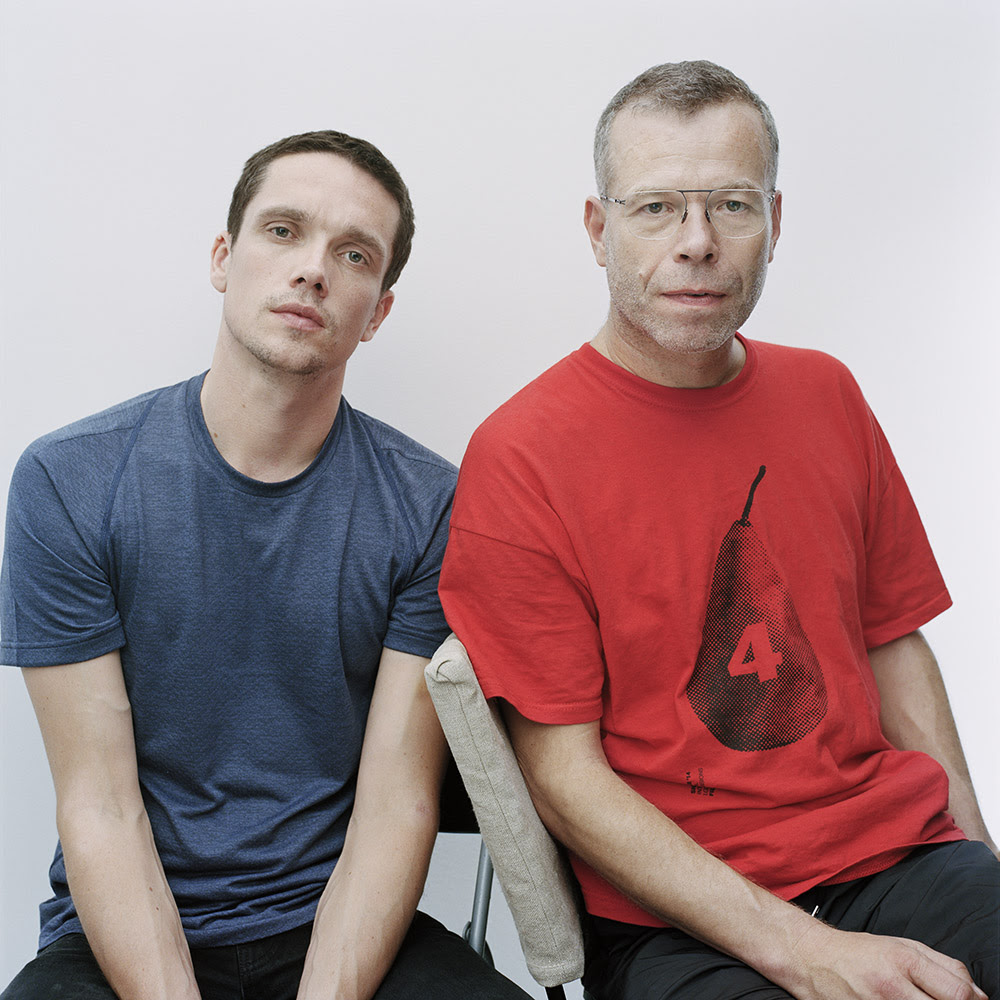
Pantha Du Prince is the chosen alias of Hendrik Weber, the German producer, composer and conceptual artist. The origins of the project can be traced back to 2002 when a Nowehere EP dropped on Dial Records, a label that became something of a regular home for Weber’s earliest minimal productions. It was this particular German imprint that housed his first two long-players, namely 2004’s Diamond Daze and 2007’s The Bliss. Since then, however, the vast majority of Weber’s solo works have been released through Rough Trade, the chosen label for his latest release, The Triad, which landed on shelves towards the end of last month and marked his first original solo material in nearly four years. Despite this extended hiatus, however, Weber’s skills in production—the blissful melodies and cerebral charm—were evident throughout both the 10-tracker and the taster EP that preceded it. Given this, we thought it was about time for Weber to give his views on the production process and the inevitable mental hurdles that accompany it. This is what he had to say.
“It’s important to look at the situation you are in because even the most awkward situation could be a piece of music if you find a pathway into it.”
Keep an open mind. You can make music anywhere
You can make music wherever you are; you just need to find the right moment to actually make it happen, so it’s better to find a silent place or somewhere a little bit more protected. I believe that in order to really work on something for a longer time, you need to create your own environment, but that can be anywhere in the universe.
From my own practice, I can really say that I can work from anywhere in the world provided I have headphones. For example, I’ve worked in toilets, kitchens, and nice studios with big speakers—it doesn’t really matter. All you need is a musical idea, and that can happen anywhere and there is a certain beauty in that. It doesn’t really matter what technical gear you are using, so don’t get hung up on the idea that you need a specific tool. The worst thing to do is say you need this certain piece of gear to work on something—of course, you need to have a certain attraction to an object or a situation, but the situation counts more. It’s important to look at the situation you are in because even the most awkward situation could be a piece of music if you find a pathway into it. Challenge yourself to see if you can put a thought into music. Or you just use the chair you’re sitting on.
Linked to this is sampling: I take samples from all over. I take snippets from absolutely everywhere that I go. If you have a phone, then you have a field recorder. It’s that simple. But field recording can also mean you are actually playing something in the field, like ethnographic recordings: that’s the origin of the word meaning to record in the field. These are my raw materials that then get taken to the studio, so I am always recording sketches and ideas—it’s like archiving. Some of them do get thrown in the trash, but lots of them get transferred to my computer, and then the story of the moment unfolds.
For the new album, I worked in all sorts of different spaces and studio environments. I worked in my friend’s atelier, where I recorded many of the voices. It was not acoustically ideal, but it was the right mood and the right moment to record the voice. It was the room for this specific situation in my life. It’s not conscious: it’s more about following the music and doing what is inherent, staying close to the moment and its parameters. What is actually available at the moment? Which space of experience is open for me right now? It’s all about having an awareness for the material.
“People would always criticize my art—and there were moments where I would doubt myself and question what I was doing.”
Ignore Expectations
It can be very hard to do what it is that you want instead of what other people expect from you. If you listen to outside expectations a lot, or act based on what will earn you the most money, you will change your art form to fit in with what is expected. This would make the world a boring and suffering place, so you must create your own vision.
Earlier in my career, I had lots of people telling me, “You can’t do this,” and me saying, “I can do this because I am doing it right now.” People always told me all kinds of things, like, “Your harmonies are wrong,” and “You can’t make techno like this,” or, “the melody is off.” It was constant! People would always criticize my art—and there were moments where I would doubt myself and question what I was doing. But you have to use the criticism in the right way: criticism can be a good thing, although it is difficult to overcome emotionally. Criticism gives you a chance to make your style unique in a more conscious way.
This is what you have to remember: on one hand is the criticism, on the other hand is the material, and then there is the ritual for the material itself. The critics don’t see you play your tracks in the club, or with an audience. Most of the time, they forget about the frame the music is made for. The thing that counts is that it works for you and the audience.
Success shouldn’t be the only goal. Some colleagues of mine are so far out and so successful that they become very unhappy after a while because they are not in tune with their surroundings and their creative processes. The success becomes too much of a focus. I think it is about a certain mindset: I’ve had this connection since the beginning—it’s like being in a stream and a flow of the material itself, to find a way to listen close enough and, of course, build from there, rather than listen to the part in you that tells you how to be successful in terms only of money.
Truly, I was never sure I would earn anything from pursuing music. I knew I would find a certain amount of joy from doing it, and that some of this joy would get through to the audience—although, I never knew whether it would be to 10 people or 1000. But I didn’t mind because I was never thinking about this stuff. From an early age, I knew that I had a gift for interconnecting these modes of existence, but I didn’t know if I would be an actor, musician, or a visual artist. I then decided that I should not make this decision, and that it would be made for me by the gift of joy.
Reflect on Criticism
This is linked to the above. Criticism can be a good thing, and you should accept it. You should embrace it and generate power from it. Don’t allow yourself to get pushed into a corner, stay in an open space for your own headspace. It helps to exchange experiences with friends, interesting people in general, and other artists—hearing their thoughts is important in order to get a clear picture of what it is you are doing.
However, don’t allow yourself to be too affected [by criticism]. You have to make your own decisions even though people say these things. You can base your own decision upon the knowledge you have and face the criticism in your own way. It makes yourself more conscious about what you do. It’s a very fruitful way of embracing your point of view.
“….if you get yourself into an open state of mind then inspiration can come from many different things.”
Inspiration can come from anywhere
It’s easy to say this, and it’s important to find inspiration, but if you get yourself into an open state of mind then inspiration can come from many different things. This can include limitation—like making an album out of just a car, or even a spoon. I personally find spaces and philosophical ideas highly inspirational.
How you see the world, and what you think about it, will be reflected in the music you are making, so be aware of your own philosophical input and the experiences you have with music. Sometimes it’s better to be in a scientific headspace and analyze empirically; sometimes it’s through the lens of an author or poet—and, for me, that is something that people should not forget, because sonic work needs poetic friction as well.
This is all a form of content and you need a story to tell. Once you have that, whatever medium you use to tell the story is not so important. The medium is also the messenger, but with music it comes through you and your physical presence, and you need to be aware of that.
Visiting exhibitions is very inspirational to me also. The visual can have a very sonic effect in the end; it’s quite interesting how the mind is actually an entity that does not divide, so any sensory input can trigger a new form of creative outcome. You need to melt down your own preconceptions of sensual perception and then the music comes easier to you. It’s also confusing, but confusion is welcome. Even just thinking what you don’t like about these exhibitions can inspire you as you make an aesthetic distinction.
Once you have that source of ideas, you can sit in front of a piece of music for hours, or have it done in a few seconds.
Broaden the Mind
From my perspective, the music has never been the priority. The outcome is not as important as exploring what it is that is driving me and fascinating me. This is where my fascination with art, film, religion, healing techniques, science, and the metaphysical comes about. You read and it is also about an experience, a personal envisioning, and this will ultimately affect everything that you do in the studio for the next day or even the coming weeks. These informations about the world and how we perceive it stick within your system, even though you might not understand it straight away. It stays with you, it will go through your brain and come out in a piece of music, in one way or the other.
You can also approach music very pragmatically. Music will always be a reflection of what you think and feel about the world, its thought processes, atmospheres, and embodied knowledge. You strip those things down into music and it becomes an experience for everyone that opens the senses.
Be Decisive
Music production requires a process of fast decision making. I take clear positions at the moment of the recording. The decisions do not always happen on a conscious level; it is just something that arises, sometimes really fast, like because the cable is not connecting or the machine is not working. Then you think about it and realise that maybe you don’t need this. At some point you have to be very clear and precise and say, “This is what we have got now.” Music production is about living in the space between the conscious decision making and staying in the flow, which is a hyperconscious thing and somehow mystical as well.
Also of note: there should always be a certain limitation within in the frame of technical set ups. On the Triad album, each track has a very stable minimal setup that we used and that we tried to explore to its maximum.
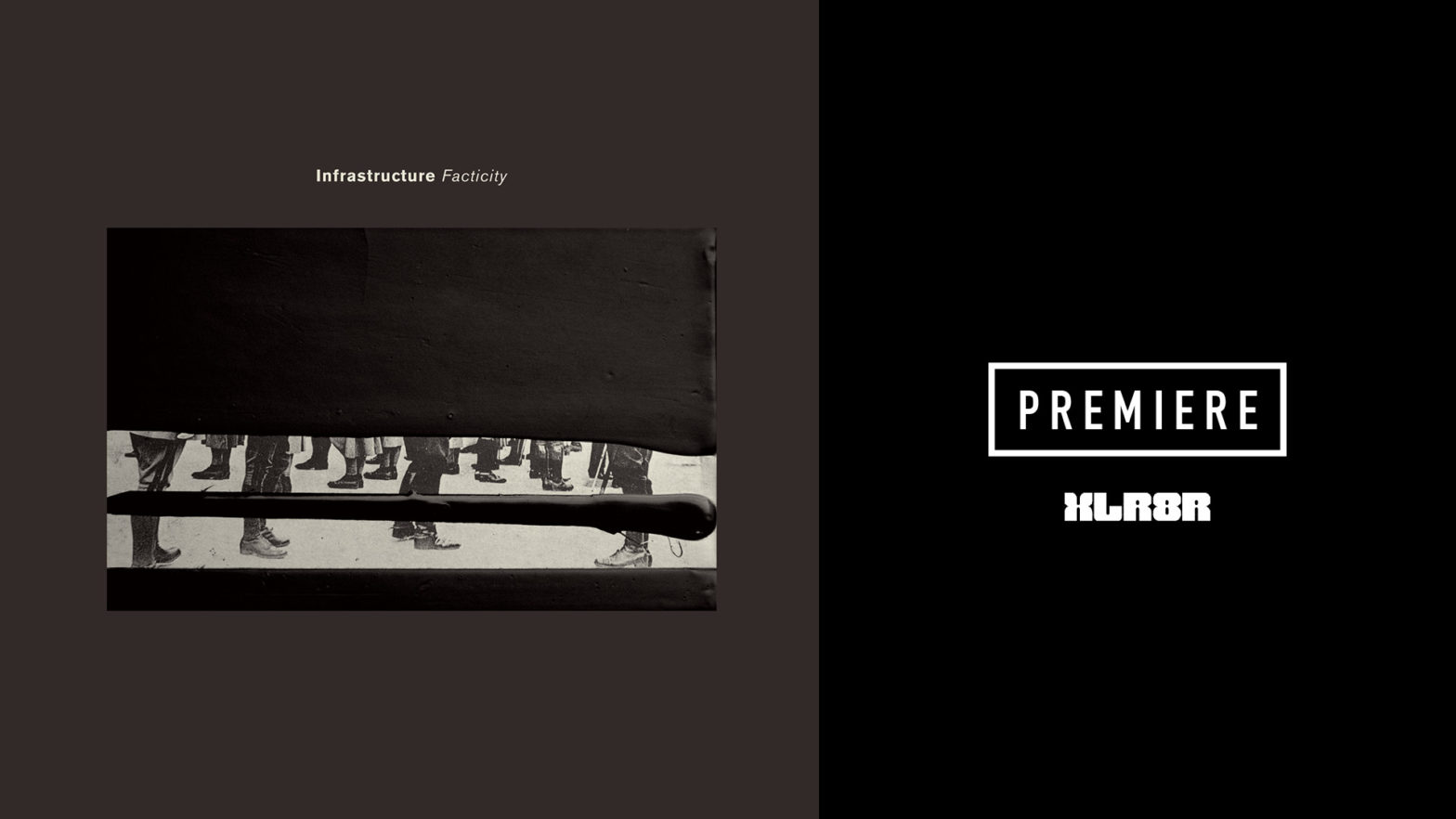
The compilation—which features cuts from Function, Inland, Campbell Irvine, Post Scriptum, Cassegrain & Tin Man, Rrose, Efdemin, Vatican Shadow, Silent Servant, Blue Hour, Steve Bicknell, and Cleric—was created as a means to take stock on the label since its relaunch in May, with the intention of sounding like a coherent album, rather than a standard compilation. Facticity includes not only the core group of artists involved in Infrastructure but also attempts to connect the “dots between the label’s past, last year’s Berghain 07 mix, Sandwell District, and the respective histories.”
The music presented ranges from beautiful ambient excursions to experimental IDM-like cuts and more straight-forward contemporary techno and back again—it’s a highly-varied release that gets better with each listen.
Ahead of the June 17 release, you can stream “Acidalia,” a driving cut from co-label-head Inland (a.k.a. Ed Davenport), via the player above.
Numbers co-founder, famed record digger, and world-renowned DJ Jackmaster (a.k.a. Jack Revill) will deliver his own mix through the legendary DJ-Kicks series, due July 8th via !K7. The mix will provide a sonic voyage through Revill’s growth as a connoisseur for hidden house and techno gems. From employment at acclaimed Glasgow record shop Rubadub to residency at local techno night Monox, Revill’s maturity as a selector stems from nearly two decades of avid collecting and mixing.
Since its humble beginnings, Revill’s Numbers club night has evolved to represent some of the biggest names in the U.K., including Jamie xx, Hudson Mohawke, and Rustie. The mix—which features exclusives from Tessela and cuts from Numbers signee Dennis Sulta—will encompass that journey with tracks from major players, label up-and-comers, and underground secret weapons.
Tracklist:
01 LNRDCROY – Freedom for Antboy II 02 Denis Sulta – My Soul Needs Justice 03 Phil Moffa – Centre Of The World 04 X_1 – Happy Hippie Hifi 05 Eliphino – Isabella Road 06 Massimiliano Pagliara – I Am Running All My Drum Machines At Once and Dancing 07 Mike Dunn – The Groove 08 Playground Productionz – Orgy XXX 09 Eli Escobar – Tension (Vinyl Mix) 10 Alcatraz Harry – Ode To Frankfurt 11 Lory D – Deep Acustic 12 Tomahawk – Forever Free 13 Anno Stamm – A Night Out With Therese 14 Denis Sulta – Dubelle Oh XX (Jack’s VIP) 15 Konakov – Clnki Part 2 16 Mr. G – Transient 17 Basic Channel – Q1.1 18 Fango – Vena Cava 19 Tessela – Yeah That Lush (Demo Version) 20 Ricardo Villalobos – Logohitz 21 Dean & Deluca – Chapter One 22 Robert Hood – The Pace 23 Overmow – Convultions
The Canadian synth-pop duo Junior Boys have been making the rounds since the release of their fifth full-length LP, Big Black Coat, which was released this past February via City Slang. Forming the group back in 1999, Jeremy Greenspan and Matt Didemus have thoroughly honed their productions skills and crafted a sound that finds an appealing and distinct common ground between indie-pop and a dancefloor sentiment shaped by their appreciation for techno.
Ahead of the duo’s full-blown North American Tour which is set to land in 24 different cities between August 6 and October 8, Junior Boys have shared a new music video for their LP cut “No One’s Business.” You can watch the video in the player above and check out their tour schedule below.
For tickets and info visit the Junior Boys’ website here.
Junior Boys North American Tour:
8/6 Brooklyn, NY – Variance Music & Art Festival 8/27 Los Angeles, CA – FYF Fest 9/9 Montreal, QC – Bar Le Ritz PDB 9/13 Milwaukee, WI – Turner Hall 9/14 St. Paul, MN – Turf Club 9/15 Winnipeg, MB – West End Cultural Centre 9/16 Regina, SK – The Exchange 9/17 Edmonton, AB – Starlite Room 9/18 Calgary, AB – Commonwealth Bar & Stage 9/20 Missoula, MT – Top Hat 9/21 Salt Lake City, UT – Urban Lounge 9/23 Denver, CO – The Bluebird Theater 9/24 Omaha, NE – Slowdown 9/26 Kansas City, MO – Record Bar 9/27 St. Louis, MO – Old Rock House 9/28 Bloomington, IN – The Bishop 9/29 Louisville, KY – Zanzabar 9/30 Lexington, KY – Cosmic Charlie’s 10/1 Knoxville, TN – Pilot Light 10/3 Asheville, NC – The Mothlight 10/4 Athens, GA – The Georgia Theatre 10/6 Tampa, FL – Crowbar 10/7 Orlando, FL – The Social 10/8 Miami, FL – III Points
Back in April, Australian producer Kyson released his sophomore LP, A Book Of Flying, via Friends of Friends.
Produced during “a time of solitude,” which was “born out of a return to his homeland Australia,” A Book Of Flying finds Kyson in an introspective mood, pushing his normally dancefloor-focused sound into the realm of bedroom pop. The LP was “inspired by delicate sound fragments and a connection to nature’s noise” and features 11 songs built around Kyson’s delicate vocal work and sublime songwriting.
Following the release of A Book Of Flying is the video for moody album cut “Black Dreaming.” Like the song it represents, the video, which is directed by John Jeanes, is a hazy, hypnotic, and altogether beautiful appropriation of a relationship and all its highs and lows. It’s a haunting and inward-looking piece that, like the album itself, touches on our innermost human qualities.
You can watch the full video for “Balck Dreaming” via the player above, with the album available to purchase here.