Renowned German trio Wareika is scheduled to release its latest LP, The Magic Number, in mid-March on the Detroit-based music label Visionquest.
Having previously released music on a plethora of respected labels such as Perlon, Future Classic, and Tartelet Records, this will be Wareika’s fourth release on Visionquest. The project is a sonic labyrinth of convoluted, forward-thinking tracks that point towards the dancefloor in an unfamiliar-yet-seductive fashion.
You can view the entire tracklist below and check out more music from Wareika by visiting their SoundCloud page here.
Tracklist:
1. The Magic Number (Part 1) 2. Planet Of Jason 3. Song Of Wareika 4. Bolero 5. My Guitar 6. Keen To Rebel (feat. Miajica) 7. Finding Essence 8. Protect Me From What I Want 9. The Magic Number (Part 2)
Los Angeles native and proficient vocalist/multi-instrumentalist Zack Sekoff is scheduled to release his second full-length album via Alpha Pup Records on January 15.
In the fall of 2014, as he made his way across the country to start his freshman year at the prestigious Yale University, Sekoff was struck by feelings of uncertainty about his future as a musician. Leaving his musical cohorts behind with the knowledge that the school work that lie ahead would take up a huge portion of his mental bandwidth, it was unclear whether or not his creative output would dwindle or flourish. Luckily, the latter occurred. As a result, we have Remnants of a Winter Sun, a full-length LP recorded partially on a Laptop in his dorm room and later mastered by world renowned engineer and Alpha Pup founder Daddy Kev.
Ahead of the album’s release, Sekoff has shared with XLR8R an exclusive premiere of album cut “Debauchery,” featuring Brainfeeder virtuoso Thundercat. The stirring and prismatic track showcases vaporous synths and scurrying rhythms that hover above the all consuming basslines crafted by these ivy league artists.
You can stream “Debauchery (feat. Thundercat)” in full below and be sure to check out more from Zack Sekoff by visiting his SoundCloud page here.
In line with the rapid development of DIY home-studio hardware and software, making professional production tools more available to anyone with a computer, there is now the online mastering tool LANDR. This tool allows you to complete the last step in the production process by yourself, from behind your computer. With this service, with a subscription price that ranges from free to $25 a month (depending on which options you choose), LANDR is aiming for amateur and semi-professional bedroom producers that want to get their production mastered at professional quality in a time-and-cost-efficient way.
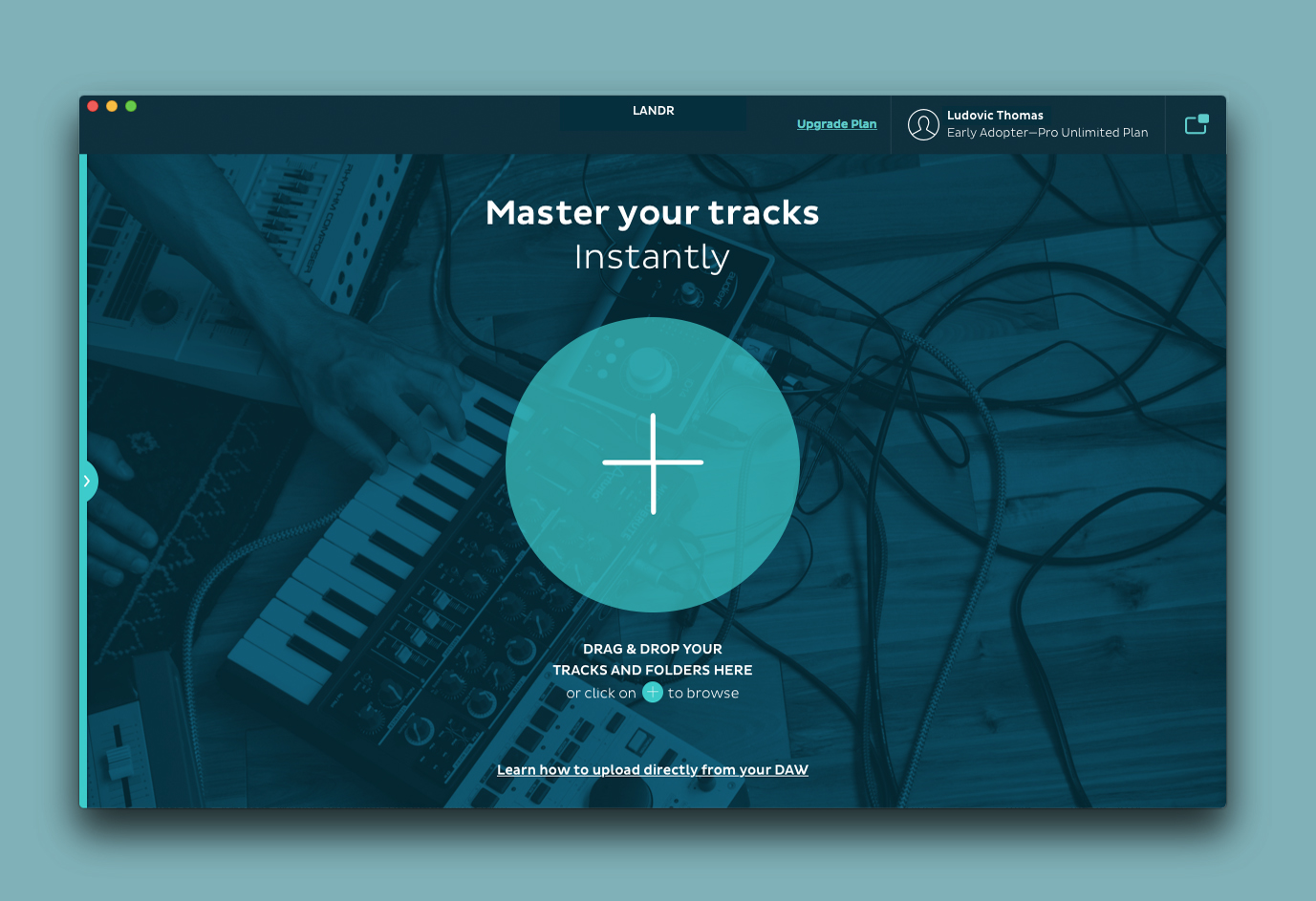
How it looks After registration, which is surprisingly effortless, one is immediately directed to the upload page, which boasts a playful layout and a drop-box in the middle. After the track uploads, which shouldn’t take more then ten minutes, you end up in the control room—which basically consist of a media player where one can directly compare the pre-master with a looped snippet of the mastered production, with no further controls or options except for the intensity control (more on that later). The way the service is set up and the playful yet modern layout of the website shows that much priority was given to functionality—LANDR wants the service to be available and workable for everyone.
How it works LANDR opted for a very simple interface, leaving the user to control but one parameter, intensity, which can be adjusted in three grades: low for a subtle compression and stereo imaging, medium, and high for the most aggressive mastering algorithm. Easy does it. All the work you do in LANDR will be saved on your personal online cloud, accessible from anywhere; you simply login and navigate through your mastering history and rework tracks that you previously worked on.
There’s also the bulk upload option, which allows you to master a whole folder at once. You can basically feed the renders from your DAW straight into the LANDR pre-master folder, and your bounces will be rendered directly. A smart concept.
Even though the choice for a simple interface is understandable, as there are already tons of great but more complicated mastering plugins on the market, some playback controls would have been welcome. Having uploaded the original track on -4db as requested, LANDR previews the pre-master at its original volume, which results in a major volume difference between the preview of the original version and the mastered version. This makes it almost impossible to hear subtle differences in dynamics, EQ, and stereo imaging. The main difference you will be noticing is the 4db increase in loudness. This might create an initial “wow” (we often perceive louder as better), but it makes accurate monitoring quiet difficult. I find myself compensating the volume difference by adjusting the volume knob of my audio interface, not a very ideal situation. Luckily, LANDR has an active “community manager” that will be more then happy to hear and hopefully implement any feedback.
How it sounds LANDR promises “results that rival professional studio work in minutes.” Having worked with a number of different mastering studios the last few years, I have learned that professional results are mostly dependant on the man behind the knobs. It’s nice owning a fancy car, but its not much use if you don’t know how to drive it. With that said, lets take a look under the hood, and behind the wheel.
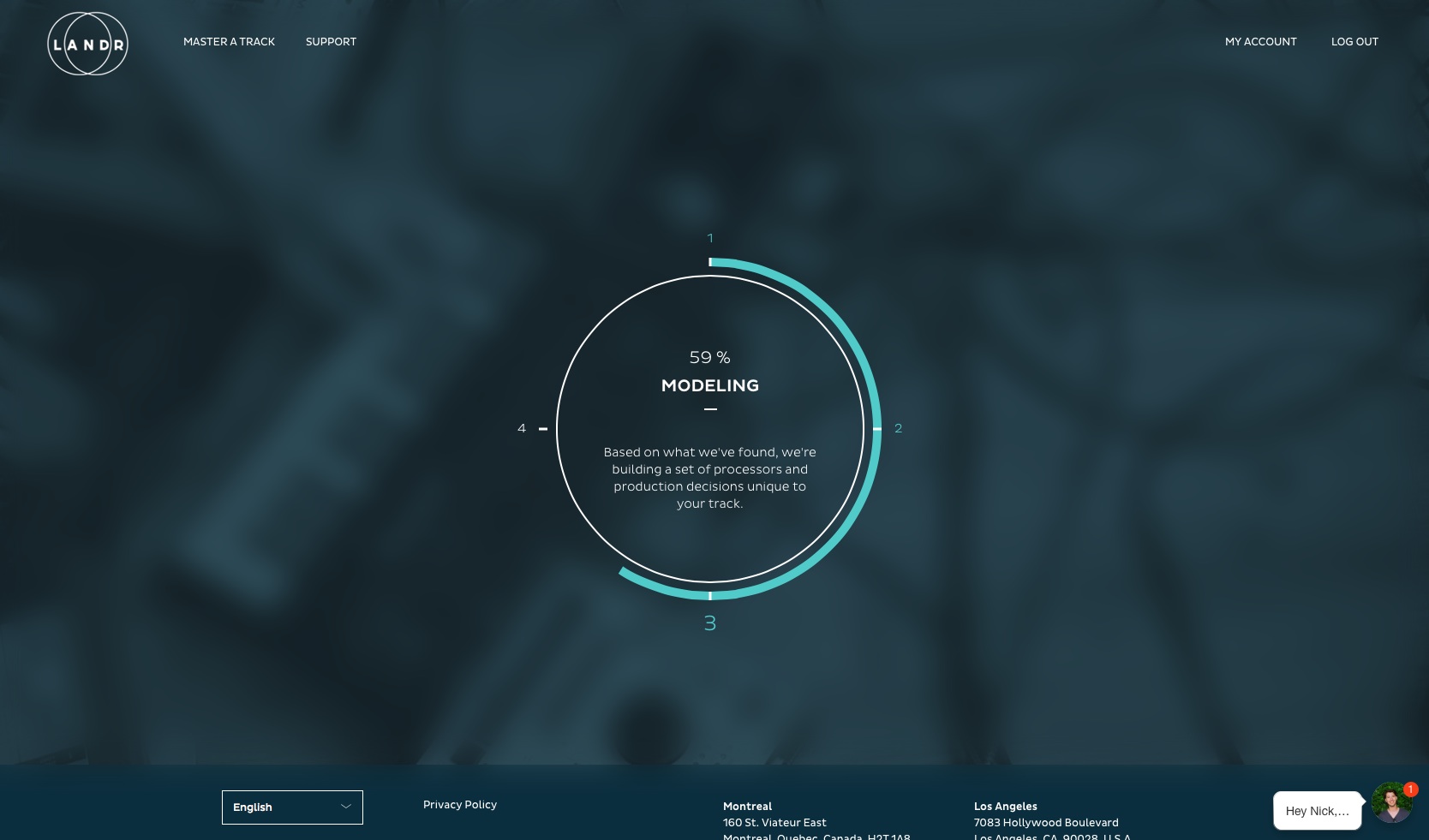
The info on the website reads that, behind LANDR, there is a smart algorithm designed by sound engineers and is therefore “guided by profoundly human thoughts.” Through wave analysis, the algorithm defines the genre or production style of your track, and applies a set of post-production processors to it based on that. This should function as the ears of the mastering tool, as every production needs a different treatment.
This algorithm is what makes or breaks this online mastering tool, so I intended to test it thoroughly. To do so, I processed a variety of different tracks, with different production techniques and sound quality, to see if LANDR could even out my mixing faults, and deliver a neutral but powerful master of my input track.
The upload was relatively easy to master. The stereo image was and the frequencies were neatly spread through the spectrum, with no strange peaks or dips. The initial preview of the master was a bit to aggressive for my taste, so I changed the intensity to LOW, which left me with a slightly more powerful, yet still organic sounding master. The result is comparable to temporary digital masters I’ve made for online purposes and for my own use using plugins like Elysia Alpha, but without tweaking and fiddling the controls. I was pleasantly surprised—but not convinced just yet.
The second track I processed was a bigger challenge—a temporary version of a more “dirty-sounding” production I am currently working on. The track contains some more lo-fi, pitched-down drum samples, and several layers that have been damaged by guitar amp and stomp boxes.
Comparing the two masters, I hear the first signs of LANDR “listening” to my production. Even though the sound quality and aesthetics of the master are not radically different then the result I got mastering the first track, the techniques that were applied were, as the different production demanded different strategies, different. Choosing the LOW or MID intensity, the mix sounded powerful, but mostly more neutral, “peaceful” and balanced, which is exactly what I want a master to be.
Conclusion A good master will always be something subjective, as some people prefer a more aggressive and punchy sound aesthetic, while others opt for a subtle compressed master with more dynamics. What can be said is that LANDR provides a good alternative to existing mastering plugins, and is ideal for creating quick and great-sounding masters for online purposes, both for your own productions,and for sets you have recorded. The sound quality is not as warm and flattering as you can expect from heavy duty analog compressors and EQs used by renowned but costly mastering studios, but you can expect a decent-sounding digital master with very little effort.
Its arguable that LANDR takes away the craft from mastering. As technology develops, more steps within the composition and production process can be automated or corrected. In that respect LANDR can be placed in line with the Auto-Tune, a useful tool to correct off-pitch vocals, and Henrik Schwarz‘s Schwarzonator, correcting notes that are not in the native scale to a neighboring note, making it impossible to hit a false note. All these tools are useful—and at the same time receive criticism, which is understandable. It is this reviewer’s opinion that there is no harm done, as these applications will never be able to compete with people that have a real skill, which takes years to develop—but they offer a good alternative for people that are looking for a fast and advantageous way to get their tracks mastered.
This joint tour in support of their most recent releases is also a logical progression of their shared history on Ghostly. It was Shigeto who put Lord RAJA on Ghostly’s radar, and Ghostly A&R Heathered Pearls who brought Shigeto into the fold before becoming an artist on the label himself.
Having all three released wildly impressive releases in 2015 (PARA, Body Complex, Intermissions EP) these three artists are bound to bring an exquisite and lively electronic experience to all those who attend.
To get an idea of what Shigeto’s live show is like, you can check out this beautifully shot studio performance here.
Tour Dates:
WED 3/2 NL – Amsterdam / Paradiso Noord THU 4/2 CH – Basel / Kasern Basel FRI 5/2 SI – Ljubljana / Ment festival SAT 6/2 IT – Venezia Mestre / Spazio Aereo SUN 7/2 IT – Milano / Circolo Magnolia WED 10/2 IT – Porto S. Elpidio / Harmonized Club THU 11/2 UK – London / Oval Space FRI 12/2 DE – Mannheim / Altefeuerwache SAT 13/2 UK – Leeds / Headrow House WED 17/2 UK – Brighton / Patterns THU 18/2 FR – Nantes / Le Ferrailleur FRI 19/2 FR – Tourcoing / Le Grand Mix SAT 20/2 DE – Berlin / Gretchen TUE 23/2 EE – Tallinn / Vonkrahl ## WED 24/2 PL – Warsaw / Kredytowa 9 THU 25/2 TU – Istanbul / Babylon FRI 26/2 HU – Budapest / A38 SAT 27/2 CH – Yverdon les Bains / L’Amalgame WED 2/3 FR – Paris / New Morning THU 3/3 FR – Nimes / Paloma FRI 4/3 ES – Barcelona / Mutek festival ## SAT 5/3 IR – Dublin / Opium Rooms
It’s so easy to boot up a computer and decide you’re a musician in 2016; there’s software to make budding beatsmiths of the most sonically inexperienced. One consequence of this technology, though, is that so much sounds the same. Producers are on rails, stuck in templates and working in rigid constraints. Not so Salford, Manchester’s 22-year-old John Howes—or simply Howes, as he’s known through his releases for the city’s well-regarded Melodic stable.
Howes’s eerie, deeply hypnotic music is all composed with a modular-synth setup, a constant dialog between the man and his machine. Recording everything to cassette tapes, his tunes are culled and edited from late-night jam sessions, with the synth sounds mutating and evolving over time, taking on a life of their own.
Oscillators warm up and the tone of the sound changes; parameters are automated with software controllers, and a ghost possesses the circuits. Listen to “Source 000535” from his debut album 3.5 Degrees (coming out on January 22) and you can almost see luminous phantasms shimmering and emerging from the crackling waves and gentle hiss of the tape. “Overeen” is all 4/4 beats and distant bell-like textures—it’s something closer to techno, but from deep in the left-field, speaking of his clubbing roots and subsequent drift towards more experimental forms.
He started out making house and techno with software sequencers, but grew tired of the hedonistic aspect of club culture as he became dissatisfied with the limitations of a DAW. You can see his music in the tradition of Border Community, Hieroglyphic Being, Cosmin TRG and Ital—but right now the sounds he’s making are quite unlike anyone else. And that, says Howes, is the way he prefers it. XLR8R dialed his digits to find out more.
What was your path into music? The first things I ever made were on PlayStations. I slowly escalated through freeware, then Ableton. After doing that, I switched over to doing more modular stuff. I use computers all day for everything in my life, do you know what I mean? So when you’re making music to unwind and relax, it’s nice to get away from computers. It’s a bit more hands-on away from a screen. Sometimes Ableton can look a bit like a spreadsheet.
It’s a different level of abstraction. Using Ableton, there’s a certain way of working, whereas with modular stuff… it’s not about analog synths, or lush expensive filters. It’s more about getting down to the grittiest form of making stuff.
“The thing with modern music is there’s so many people selling these supposedly awesome tools, but with limited stuff you can get really into it, break it all apart. All these tools impose a working method on you, which is something I want to avoid.”
What actually is a modular set-up, for those who don’t know? Say when you buy a microKORG: A microKORG inside it has oscillators, filters, envelope generators…the keyboard. So if you imagine taking your microKORG and blowing it up, you have all these different sections laid out in front of you—it kind of works in that way, because it’s set up like that. Rather than just route it one way, when you use modular the signal flow is open to any kind of interpretation you want.
Do you find that you create or stumble upon new sounds working that way? Yeah, that’s one of the reasons I got away from using Ableton. The style I make music in is more generative. There’s an element of giving away control to certain parts of your patch. With this, I can make a logic system—a chain of things that are all linked together. You can just mess around with that. It’s a different way of expressing yourself. I’m not musical in the sense of knowing keys or chords, I can let all that get handled by something else and get on with the bits I’m interested in. It’s wicked! For one track I’ll make three synth noises, but if you repatch everything you can have the whole thing playing like a drum machine. People get into the modular thing and want to buy loads more gear, but you can churn out mad different shit every time you approach it.
The thing with modern music is there’s so many people selling these supposedly awesome tools, but with limited stuff you can get really into it, break it all apart. All these tools impose a working method on you, which is something I want to avoid. People always go on about people using presets, but [Native Instruments soft synth] Massive is a preset! It’s a preset, defined way of working.
“Rather than try to make the tunes that make everyone go wild at the club, I want to make the ones that people’s heads cave in after.”
You can hear techno and electronica in your music, but it also bears a resemblance to sound art and composition. To what extent is dance music an influence? Now that I’ve got a little bit older—I’m 22 now, but when I was 18…you know when you first go out clubbing or whatever? I had a really, really fucking good time. There was always mad, amazing tunes going on. I was doing that for a few years and trying to make house and techno. After a couple of years, I realized I’m not a massive party guy. With really good house and techno, you’ve got to be this outgoing party guy. But my favorite tunes were always the weird tunes you’d put on after you went out…the Autechre albums. A better representation of me is that rather than try to make the tunes that make everyone go wild at the club, I want to make the ones that people’s heads cave in after.
Only a matter of years ago, people didn’t listen to house and techno at home so much. Now certain artists are making it primarily as listening music. Do you think that more people are listening to 4/4 beats at home? I think so. Part of the reason for that is the Internet. A good example of this is Huerco S. He lives somewhere without a lot of clubs but he’s into that kind of music, so you make it for listening to at home. That’s always my favorite kind of stuff. In Manchester now, there are nights that are really good at playing music that shouldn’t be played in clubs, in clubs. You can get away with it. That gives me a bit of confidence. In Manchester there’s so many different nights and scenes that are so well developed.
Those club-format tunes, I think people are getting a bit sick of that stuff. It’s a nice framework, but part of the problem I have with club music now is I don’t think it comes from people who enjoy the aspect of going out clubbing, it comes from enjoying the technology of making music. Stuff like Ableton and Native Instruments have made making music so easy that you can make a house track in 15 minutes. If someone wants to get into making music now, maybe try not using that stuff—downloading Richie Hawtin sample packs or whatever. Making music is about yourself. There’s people out there trying to project a brand or an image, a lineage of music. But they should act like themselves and make music as themselves, so people can say, “I relate to you” rather than the image.
What’s your typical way of recording? Out of the eight tracks on the record, six of them were recorded live. I could leave a drone running on a Friday night, and then by Saturday morning, that drone could be something slightly interesting. You refine it and tweak it; it’s a generative thing. You could be doing the dishes and have this music playing in the background being generated on the spot. I just walk over every now and again and tweak it slightly, go and do something else, and keep it playing and go do something else. So you’ll be listening to it for a long time. Rather than sit with a bit of software and EQs or whatever, if you listen to something that long and it doesn’t annoy you, it might be quite good.
There’s are no overdubs; it’s all recorded live to cassette. The cassette thing…I know it’s on-trend now, but the reason I use it is, I’ve had it since I was a kid and it sounds lush! When you’re recording Ableton, there’s always this command undo, but with a tape when you press record and start messing with the synths you get this shiver of, “don’t fuck this up!” Pay attention here, because when you get five minutes into a track that’s being recorded on tape, you can destroy it with one twist of a knob. You’ve got to focus in and shut out the entire world.
There’s definitely quite a nocturnal feeling about your music, in the darkness of “Zeroset”, for instance. Do you find your creativity at its strongest at night? Part of it is like a coping mechanism, from having a shitty day and then going home and making tunes. Someone said when they listened to it, it sounded like painting where it’s pure expression of yourself rather than a constructed thing. When you get to that thing of purely expressing yourself, then the only thing that’s going to be put into the music—rather than a feel or a vibe—is your own thoughts, trying to find their way into the music. When people say it’s night music or it’s sad, I say that’s just me.
What have you got planned after the album? I started a small label with a couple of mates. It’s not a label in terms of having grand ambitions of selling out twelves. Some of my mates are in a similar position to me where they were making music but they weren’t very confident about what they were doing. They were nervous about putting it out or showing it to people. The idea of a label is to support people. We’ve put out mixtapes and two albums—just really low key—and one tape, and we’ve got plans to put out another tape. The label’s called Cong Burn Waves. It’s a real mixed bag. There is the music I make by myself but I also jam with people, [who are] playing bass and sax. It’s a bit more improvisational. For my own stuff I’m in a refurb stage, trying to get better at programming and building synth modules so I can do the things I’ve got in my head.
With over thirty releases under his belt and heralded as of the longest running members of the BNR crew, Transfer will be Housemeister’s sixth album. Straying from his staunch and aggressive electro sound, Transfer is an album that consists of spacious, ambient, and poignant hardware-only compositions, showcasing the artists creative depth and ability to produce electronic sounds of all shapes and sizes. Ahead of his new release, we managed to get in a few words with Housemeister to discuss his new composition, the recording process, and the parallels between Detroit and Berlin.
After previously releasing albums on your own AYCB label and the infamous Boysnoize Records, you are putting out your latest release on Detroit Underground, an artistic collective established in 1997. How did you meet the guys behind the label? What prompted you to create an album for such a legendary collective?
Thats a good story actually. The first releases I did in 2000 on Ellen Allien Bpitch Control, Kero (DU label owner) also had some releases there, so we even played sometimes together in Germany, but in this time we didn’t really know each other. Last year my girlfriend Dinamite (she is DJ and producer too) and I were invited to my sister’s wedding in Toronto for two weeks. Ana told me that her good friend Annie Hall (they are both from Madrid) lived in Windsor with her boyfriend Kero. We decide to visit them for a few days, so we rented a car and drove over there and thats how I met him. We had a good time and had some nice tech-talk in his studio, visiting Detroit and checking out the underground resistance house. When getting back to Berlin, I was kind of inspired and made my first track from this album, “Multiversum.” Dinamite loved it so much that she suggested I make more music like this. So from there, I decided I would make one ambient track each week. I slowed down the machines, added more reverb and delay, and after 2 months the album was done. Then I sent it to Kero and he really loved it.
This album seems to stand out as a more original piece in comparison to your other works. Has this album been a challenge for you working solely on hardware?
Yes this album is special for me and I’m very proud of it. It was lots of fun to make. Production wise, I only used drum machines, samplers, and synthesizers. I’m used to it and this kind of music is perfect for live-recording. The only thing I had to take care while recording was not touching the instruments too much, this type of music needs time to flow. Just little knob moves or pattern-changes. Whenever I wanted to change something, I stopped myself and did it 64 or 128 steps later.
Berlin to seems to share a dismal history of a large industrial powerhouse which saw an unfortunate migration of people, whether war or the exportation of manufacturing, leaving desolate empty spaces. Why do you feel the sounds of Detroit translate so well to Berlin? What about this album represents Berlin to you?
Berlin and Detroit go hand in hand. These two cities have many things in common and Detroit has always been around in Berlin. I bought my first records at Hardwax, which was also the main Europe distributor for all the Detroit labels. We had enough dirty dark clubs where that Detroit sounds works really well. Tresor and E-Werk used to bring all the artist from overseas to play and I used to go dancing there all the time. There is no denying it’s a big influence. Another thing that both cities have in common is that both cities have hard winters, which is a good time to make and listen music like this. It just fits. Its dark, deep, and beautiful…
Today, Leeds-based imprint Permahigh dropped producer Lawrence Nash’s (a.k.a Us and It) six-track release titled The Bombs Of – INSERT HERE –. The mini-album is the youthful label’s second official release, an imprint which claims itself to be “too weird for the dance crowd, too dancey for the weird crowd.” Acting as a musical outlet from which Nash and his friends can draw inspiration from one-another, Permahigh is the type of untainted, smalltime, experimental, and refreshingly genuine label that inspires us to keep scouring the web in search of the next great sound.
To celebrate his new release, XLR8R is offering up one of the cuts from Us and It’s album, titled “We Are Not Afraid.” A disorienting melting pot of various musical influences, the track uses everything from African drums, big string orchestration, badman vocals, jazzy horn samples, and delicate piano arrangements, all wrapped together with a massive bassline and a crispy beat that doesn’t quit.
You can download the track in full below and be sure to check out more from Permahigh by heading to this promising new label’s SoundCloud page here.
Following XLR8R‘s January 22 party in Los Angeles with Clovis, Vera, and Andrey Pushkarev, both Vera and Pushkarev will be making their way to NYC for a special all-night event in a secret location, hosted by Resolute NYC.
Andrey Pushkarev, who just delivered our 420th podcast this past week, is one of Moscow’s finest purveyors of subtle sounds and electronic house gospel. Pushkarev will be playing alongside dub mastermind Deadbeat who is celebrating his new album, and Perlon’s Vera, for an event that is not to be missed.
You can purchase your tickets to both of these events via XLR8R.
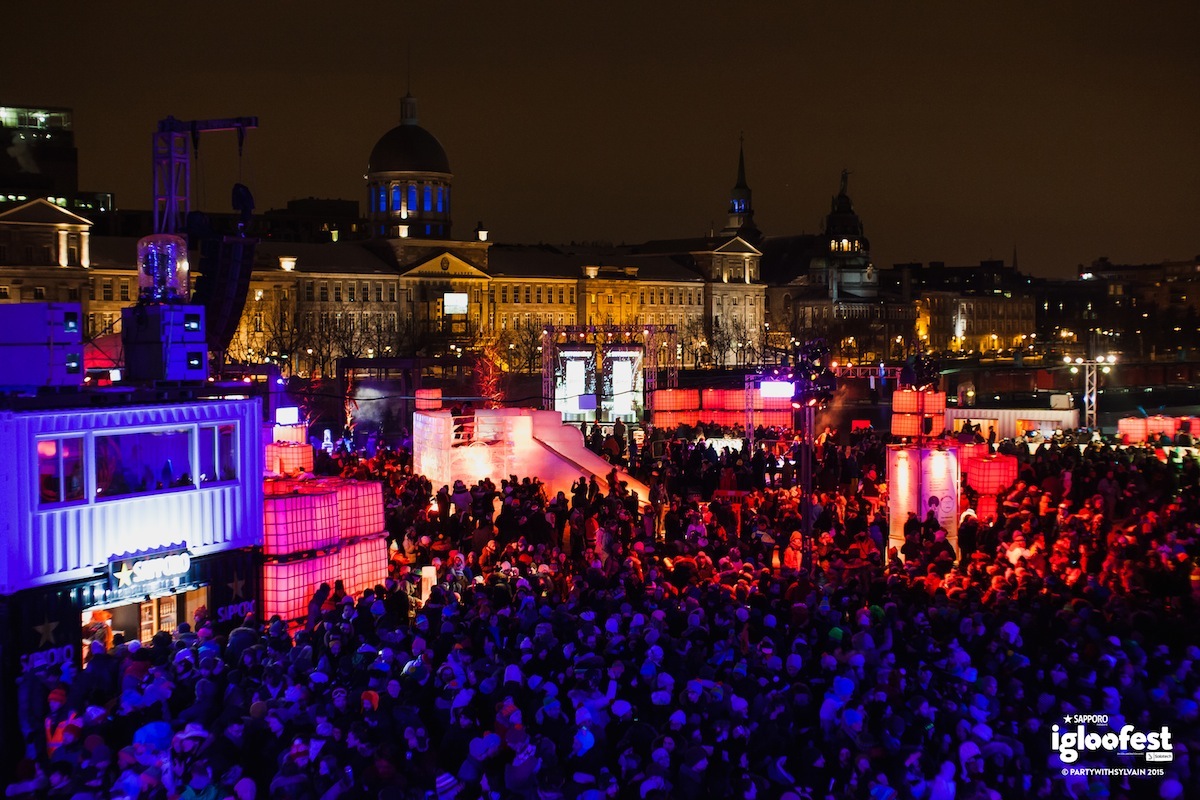
It’s one of those so-crazy-it-just-might-work ideas: Toss a festival outdoors in Canada, in the middle of winter, on a pier jutting out into the frigid St. Lawrence River. And it certainly has worked—Montreal’s annual Igloofest has become one of the most anticipated North American electronic-music events of the winter. Over the course of a decade, the event has grown from a single-weekend, single-stage affair featuring local spinners into a sprawling beast of a party, with 12 nights of action spread out over four consecutive weekends on two full-scale stages. This year’s Igloofest—boasting a wholly resdesigned site on the Jacques Cartier Quay—kicks off on this Thursday, January 14 and runs through Saturday, February 6, in the process hosting a wide-ranging swathe of artists that includes Bonobo, Carl Craig, Kim Ann Foxman, Michael Mayer, a tag-teaming Scuba and Jimmy Edgar, Shed and Tale of Us, along with Montreal stalwarts like DJ Maus, Nymra & Sofisticated, DJ Mini and Shaydakiss. And that’s just to name just a few—peep the full lineup here.
Igloofest’s history actually begins a few years prior to its first installment in 2007; originally conceived as an offshoot to the already-established summer series Piknic Electronik held in the city’s Parc Jean-Drapeau, the Igloofest template began to take shape in 2005 as the decidedly more humble Piknic Electronik des Neiges. From here, we’ll let a pair of Igloofest’s (and Piknic Electronik’s) main men tell the rest of the story.
Where did the idea behind Igloofest come from? Michel Quintal (cofounder, programming director): It is crazy idea. I would also say it was a drunk idea. We had finished the second season of Piknic Electronik, and we were in a country house, snowboarding and stuff like that. One night while we were there, we were drinking and just came up with the idea: “Oh, we should do Piknic during the winter!” And, since we were drunk, we were all like, “Yeah, we should do that!” It was really just a funny joke that we made, a joke that became Piknic Electronik des Neiges.
Nicolas Cournoyer (cofounder, general director): Yes, it’s a silly idea—but I guess that’s why no one had thought of it before! When we first got the idea, it was a bit of a joke. But after a while, we were thinking, why not? The idea was to try and transpose that outdoor spirit of Piknic Electronik in a different way—and the wintertime was pretty much virgin land. This would be a way to get people to stop complaining about winter. There’s a carnival ambiance to the event, and it makes people really happy.
You probably didn’t think you’d be doing it so many years later. Cournoyer: Nope, not at all. When we started doing this, we were all working full-time at other jobs, and we just wanted to do something cool—just a way to let people have fun, really. To have it grow as it has, to four full weekends of three days each…that was not expected at all. And between Igloofest and Piknic, now this is our full-time job. And it’s a job that is growing all the time.
Was Igloofest a success from the start? Quintal: The first couple of years, when it was still Piknic Electronik des Neiges, we got maybe a thousand people. When we moved it to the current Igloofest site, we just considered it to be a test. If it didn’t work, that that would be it—we wouldn’t do it anymore. It originally just one weekend, and we got 2,200 people the first night and 2,000 the second night. We were like, “Wow that’s cool—let’s do it another year!” The second year we got 14,000 people—and that’s when we knew we had to keep doing it. The year before last was our biggest year yet; we got 86,000 people. Like I said, last year was really, really cold, but even then, we got 76,000. I’d never seen anything like that—so many people outdoors having fun when it was -30 degrees outside.
Have you ever had to cancel due to the weather? Quintal: We have never had to cancel. But I can remember the opening day, three years ago; it started snowing at 4pm, and we ended up with two feet of snow. We opened 30 or 40 minutes late, but that was it; not a big deal. There was one day that it was raining, though, and that was a lot worse!
Cournoyer: No matter how cold it gets, we’ll still get a lot of people, and they’ll still have a great experience.
Have there ever been any equipment malfunctions due to the cold? Quintal: Not really. We learned early that you need to keep the sound system on, 24/7, for the whole time. The whole month! If you turn it off, it’s not going to start up again.
Is there a philosophy behind your artist bookings? Quintal: At Piknic Electronik, we try to go in every direction within the underground scene—house, techno, even funk. With Igloofest, at first we were doing the same, but at some point we learned that you need music that will really make people move—fast! Otherwise people get really cold.
Have you ever had the temptation to go mega-size, and book commercial, EDM-style acts? Cournoyer: We couldn’t afford to, even if we wanted to. [laughs] And we want to keep our events accessible, anyway. Events that get that kind of artist have to charge, fifty, a hundred, maybe even two hundred bucks, and at Igloofest we charge $20, and $25 at the door. It’s affordable. We do have a broad range of artists, and sometimes we do flirt with the mainstream; we’ve had Major Lazer, for instance, or Flosstradamus. But that’s about as far as we will do. And we don’t want to go commercial, anyway; that music isn’t us.
Have their been any artists or DJs that have particularly stood out over the years? Quintal: There have been tons, but KiNK was really amazing. I was like wow, and the crowd thought the same thing. James Holden in 2009 was an historical set, at least for me. He said that he tried to choose tracks that reminded him of winter. He told me before that he was a little nervous! But it was a great set. And last year, Detroit Swindle was great.
Are there any there any artists that you’re particularly looking forward to seeing and hearing this year? Cournoyer: For me personally, it might be Modeselektor. We had them early on—I think it was our third year—and they played the very first night that we ever sold out. People got crazy; those guys know how to start a party, and I’m looking forward to seeing that kind of energy on the dancefloor. And then there is Sébastien Léger, Paul Kalkbrenner, Swindle, Dave Clarke for some good old techno…I could keep going.
Quintal: This year we have so many great people, like Carl Craig, Bonobo, Maceo Plex, the Martinez Brothers, and a lot more. I’m always fighting for a bigger budget so we can get everyone we want! But there are a lot of people who maybe aren’t that well known who I am really excited about, too, like Rone, La Fleur and Benjamin Damage.
Both Piknic Electronik and Igloofest have always supported the local scene by hosting a lot of Montreal DJs. Is that by design? Quintal: At first, that was necessary—in the early years, we couldn’t afford to have any international DJs. But we still like to focus on the local scene. There are a lot of DJs in Montreal—if one out of 20 people are DJs in a normal city, in Montreal it’s one out of ten. And not only there are a lot, but there are a lot of good ones, both DJs and producers. And we’re really proud of that! They are the ones who keep the city’s scene alive; they make us dance, and they make us dream. So it’s only natural that we would feature a lot of local DJs.
Cournoyer: That’s our roots. In the beginning, they were the people who were there for us; they totally went for the idea when we started doing this. If it weren’t for them, we would not be here. We have a lot of gratitude and respect for what they’ve allowed us to do. Yes, we have grown and can now get bigger DJs, but we will always have local acts. And anyway, we have so many good ones in Montreal, so why not showcase them?
It’s sort of a feedback loop, too—by supporting the local scene, you perhaps help to keep it strong. Quintal: Yes, I think that is true. Once somebody said to me, “You know why there are so many DJs in Montreal? Because of you—it’s your fault! People see something like Igloofest, and they see Montreal DJs playing, and they want to become a DJ. They see what a nice vibe it is, and they see all the love.” I don’t know if we really can take the credit, but that was a nice thing to hear.
You seem to be doing this for all the right reasons. Cournoyer: I don’t think we’ve never really lost the spirit we had ten years ago.
What do you foresee for the next ten years? Any plans to take Igloofest international, as you have with Piknic Electronik? Cournoyer: We would love to do that. But it’s not quite as portable as Piknic; the production costs are higher and the whole thing is more difficult when you do it in the cold weather, so we’d need a really strong producer to do it with. You need to build up a whole site. But that is our dream. Until then, next year is Montreal’s 375th anniversary, and we have some special projects to go along with that. Other than that, we’re just planning to keep it going and keep it growing!
Igloofest runs Thursday, Friday and Saturday nights from January 14 through February 6; tickets are available here.
Highly successful collaborative project between Apparat and Modeselektor (aka Moderat) has announced the release of a third full-length, completing the artists’ LP trilogy.
III precedes 2013’s II and 2009’s Moderat—the first two installments in the trilogy. The upcoming LP will be co-released via both Mute and Monkeytown Records in April of this year.
As stated in a press release: “III pairs an emotional pull with sensual imagery, creating dynamic sound and depth with sophisticated lyrics and themes as they direct their gaze inward. Apparat gives unfiltered insight into his personal take on the journey we call life—he is opening up, discussing his shadow, his fears and doubts. Modeselektor reach another level, developing an intoxicating energy with their distinct rhythmical textures.”
To support their new release, the trio will also take their live show on tour across Europe and North America. Find more information about the tour here.
View the upcoming album’s tracklisting in full or watch the tour trailer on the player, below.