Veteran crate-digger and BBC Radio mainstay Gilles Peterson recently embarked on an ambitious project to document Cuban music. Backed by the rum company Havana Club, the UK personality has assembled a remix compilation of Cuban originals entitled Havana Club Rumba Sessions, a downloadable sample pack, and a feature-length documentary that maps the trajectory of rumba music. The compilation (tracklist below) finds producers such as Motor City Drum Ensemble, Pépé Bradock, Max Graef & Glenn Astro, and more reimagining the rumba styles of guaganco, yambu, and columbia. Stream MCDE’s treatment below before Havana Club Rumba Sessions drops on March 11, and grab the free sample pack here. (via Resident Advisor)
01. Yambu (Daisuke Tanabe & Yosi Horikawa AtaMix Remix) 02. The Rumba Experiment (Motor City Drum Ensemble Remix) 03. La Plaza (Poirier Remix) 04. Weird Melody (Max Graef & Glenn Astro Remix) 05. Okay Cuba (débruit Remix) 06. Havana Sessions (Pablo Fierro Remix) 07. Havana Cool Out (Reginald Omas Mamode IV Remix) 08. Rumba Version (Al Dobson Jr Remix) 09. Rumba Tierna (Tenderlonious Remix) 10. Emergency Rumba (Pépé Bradock Remix) 11. Yuka Music (Mo Kolours Remix) 12. Mi Yimboro (Djoyvan Remix)
In the wake of a few years during which his output tally rocketed, the curious case of Tommy Vicari Jnr has begun to unspool further. Having steadily worked his way through a decade during which he maintained a fairly humble profile, the Englishman turned many more heads over the past couple of years with a series of EPs on 320KB Music, as well as a rapid-fire series of releases on a host of other imprints. It is now the turn of YAY Recordings, an Italian party-cum-label with an appetite for underground selections, to be blessed by Vicari’s Midas touch on their third outing.
Mic Ang opens with the straightforward garage house of “Horizot,” in which an edgy piano riff plays on rotation, spiced up by a choppy hip-house sample and the occasional scratch—before leaving it to the two B-siders to really steal the show. The sublime “D&E” is a deeper cut, lifted by echoing keys that sound something like a musical take on bouncy balls from outer space, in the best possible way. The breakbeats of the title track, meanwhile spill into an entirely different sound—pierced by nostalgic synth stabs, it is as much of a ballad as this genre could be, and smacks of set-closing material (which, in a memorable Binh set at Berlin’s Hoppetosse, did the business on a recent Sunday afternoon).
Hailing from Lithuania, Linas Strockis (aka Few Nolder) has been crafting his own unique concoctions of ebonized techno and robust, intricate house since the release of his debut ‘Patterns’ EP on Partzanai back in 2006. Showing a steady upward trajectory, Few Nolder has established himself as an internationally respected DJ-producer, releasing music on a handful of esteemed music labels such as Planet MU, Connaisseur Recordings, and Boso. 2015 was a wildly productive year for Strockis and 2016 is gearing up to be just as busy and advantageous. In addition to his remix of the track “Montana” for Tycho’s Awake Remixes LP that is set to drop via Ghostly International on January 15, Few Nolder will release a new EP titled One on Needwant in February. Strockis was gracious enough to offer up a first taste of this forthcoming EP by gifting the track “Seven” as today’s XLR8R download.
With a heavy 4/4 attitude, “Seven” is a guttural and ominous club ready banger teeming with purpose and aggression. It is the type of track bound to go over incredibly well in the smokiest and darkest dens of techno. You can download “Seven” in the player below and be sure to check out more from Few Nolder by visiting his SoundCloud page here.
Esteemed Weimar collective, Giegling, has announced its first release of the year will be coming in the form of a five-track EP titled: Talk.
The release, landing late January, will be Kettenkarussell member Leafar Legov‘s first major solo effort on the German imprint.
Kettenkarussell has been a mainstay for Giegling, ever since the label’s inception back in 2009, providing the collective with its first ever release; a 12-inch titled: I Believe You And Me Make Love Forever.
TRACKLISTING: A1 Talk A2 Years B1 Ladder B2 MX Home B3 Skit
In anticipation for the upcoming Kindisch Showcase in Tulum, Mexico—set to take place on January 10 at Cenote Dos Osos—label mainstays Mia Lucci and Nu (together called MINU) have supplied XLR8R with a special one-hour set, consisting of 22 Kindisch tracks from 20 different artists. The seamless compilation, Kindisch Stories: Beautiful World (MINU Interpretation), features unreleased tunes from Marcelo Cura, Cloud Factory, and Ben Hoo, as well as tracks that go as far back as the label’s founding ten years, including tunes from Acid Pauli, Nu & Raz Ohara (all artists from the Berlin based collective called ‘Feathered Sun‘).
Bringing together the musical efforts of this beloved label, Beautiful World speaks volumes regarding the swelling and alluring nature of the Kindisch collectives’ superb sound, and the mix serves as a unique attempt to capture the mind, body, heart, and soul of Kindisch. Steam the mix in full below.
Both Mia Lucci and Nu are set to play the showcase. where they’ll be joined by a top-tier lineup of global house and techno talent that includes Nico Stojan, Bedouin, YoKoO, Oceanis Orientals, LUM, and the longtime Tulum-dwelling duo Blond:ish.
Tickets to this glorious all-night event are being sold exclusively through XLR8R, so be sure to grab your tickets here.
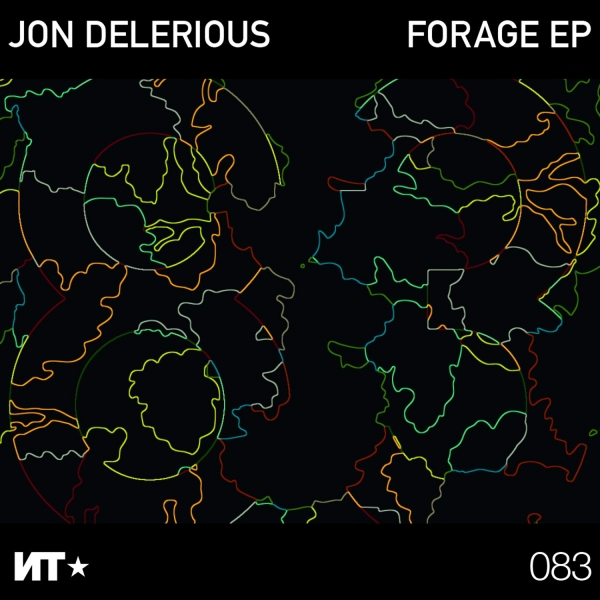
House music isn’t the first thing that comes to mind when considering the Alberta city of Calgary—that would the oil industry, maybe, or perhaps the the 1988 Winter Olympics, or the Calgary Stampede—but there must be something going on out on the Canadian prairie. After all, there has to be an explanation for the existence of artists like John Delerious, a deep-house maestro who over the past decade and a half has made fans out of everyone from Laurent Garnier and Lee Burridge to Tensnake and Crazy P. He’s done so by amassing a discography brimming with rock-solid house grooves, a list that’s gotten a little bit longer with the release of the Forage EP on the ever-dependable Vancouver label Nordic Trax.
The release’s five cuts tend to split the difference between dancefloor muscle and headphone nod, occasionally leaning in the direction of the latter; they’re all rather straightforward as well, relying on house’s innate, tried-and-true appeal to work their magic. The EP’s namesake kicks off with a loping boogie-tech beat, its uncomplicated yet vaguely tense melody running throughout while various effects and filters weave in and out. “Cycles” amps up the boogie connection, with a syncopated guitar riff, handclaps, disco-throb bass, hypnotic synth line and a few well-placed vocal snippets propelling the song forward; it’s not unlike the kind deadly effective material that labels like Paper Recordings used to specializing in back in days of yore.
“Loft” adds a Jamaican vibe to the mix, with its reggaefied bassline and emphasis on the second and fourth beats—not to mention plenty of effects in the mix—positioning the track somewhere between the deep dub-isms of Rob Paine‘s Worship Recordings label and the ’90s output of Rockers Hi-Fi. The plaintive melody and subtly gorgeous sound design of the understated, acidic “All Caught Up,” meanwhile, add up to the EP’s most sweetly emotive moment. But “Sticky” might be best of all: Gorgeous Rhodes piano chords and angelic strings float above a stripped-down rhythm track, while a synthbass percolates below. Like the rest of Forage, it’s not complicated or abstruse, and that’s part of the EP’s charm—it’s just well-constructed house music, doing what house does best.
Taking place on Friday January 22 at a private location in DTLA, XLR8R will showcase a full night of dancing with performances from Vera, Andrey Pushkarev, and Clovis from 11pm – late.
Andrey Pushkarev, who just delivered our 420th podcast this week, is one of Moscow’s finest purveyors of subtle sounds and electronic house gospel. Playing alongside Clovis, the chief of the local L.A. underground, and the authentic, visceral, and progressive lady of electro known as Vera, this is an event that is an event that is not to be missed.
Admission includes complimentary bar for the duration of the event and due to the fact that this is a private event with a limited walkup, advanced tickets are highly recommended.
Recently named as one of Beatport’s “Breakthrough Artists of 2015,” Los Angeles–based DJ-producer Michael Sandler (aka SAAND) is making big moves in the electronic music world, and is slated to release his new EP Mysterious Power via Sabo‘s imprint, Sol Selectas Records. This EP finds SAAND exploring his deep tribal side with two original tracks that seamlessly blend indigenous and organic sounds with modern beats. In addition to a remix from Powel, the German house maven whose most recent release on All Day I Dream has proven markedly fruitful, Berlin-based producers and Keinemusik mainstays Till Von Sein & Tigerskin teamed up to deliver a remarkable remix of SAAND’s forthcoming original production, “Fiddler.”
Lush chords, ethereal strings, dubbed out percussion, and an exquisite ever-evolving arpeggio create an unmistakable feel-good momentum that’s down to earth and unceasing. Stream the track in full below, and hear from SAAND by visiting his SoundCloud page here.
In addition to spending his time creating high-quality house music, Sandler is also the director and senior editor of the music blog Music Is For Lovers (MI4L). Check it out by going here.
This certainly won’t be the last feature you read on Max Kobosil. Following a Barker & Baumecker remix and the release of his debut EP in the early summer of 2013, his profile has been on the rise. Quick recognition of his raw, though undeveloped, musical abilities by Ostgut Ton opened the door to a twelve-inch on its Unterton sublabel, as well as his first DJ booking at Berghain less than one month later. The widespread reception of his sets had earned him a residency before the year had even reached a close.
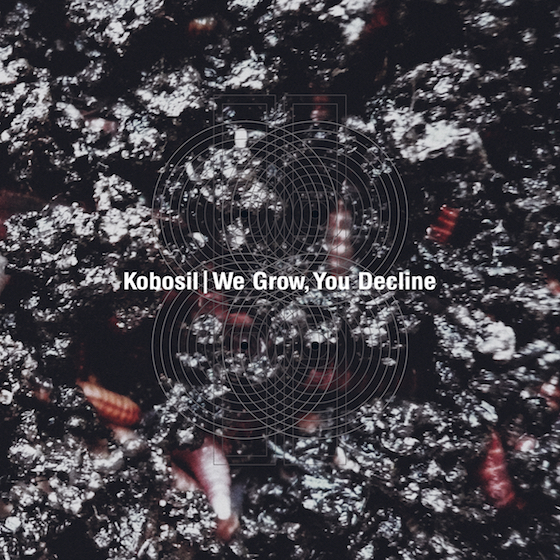
Now, at just 24 years old, there’s a growing expectation on the young German’s shoulders—more so given the uncompromising quality of his recent works, including November’s 91, an intense and gloomy four-tracker that many rank among Ostgut Ton’s finest EPs of recent times. Given such early success, it’s only natural that comparisons with the likes of Answer Code Request and Marcel Dettmann, both of whom have trodden a similar path, will be drawn, but Kobosil says he is focused only on carving his own identity. With the release of his highly anticipated debut album, We Grow, You Decline, scheduled for January 29, Kobosil sat down with XLR8R to offer his thoughts on the album, as well as his ascendance and the inevitable pressures that accompany it. It was a frank and candid conversation.
In many ways, We Grow, You Decline can be can be seen as an landmark in Kobosil’s blossoming affinity with Ostgut Ton. His work—both his powerful dancefloor-friendly techno and his hypnotic productions—is a perfect fit for an establishment that has long been one of the key cornerstones in the global house and techno scene. Some would chalk his success down to talent alone, but listening to his tales of how the connection came into fruition leaves one with a fuller sense of the scope of his ambitions, and a feeling that there were larger forces in play.
“Of course I’ve been lucky—but it sometimes feels a bit like destiny,” Kobosil explains. The relationship can be traced back to October 2009, when he first visited Berghain at the age of just 18. “As soon as I went in, I was just amazed,” he recalls. “I immediately knew that I couldn’t just be a dancer—I knew I had to be part of Ostgut and play there!” Having uploaded a number of early demos via his personal SoundCloud page, he actually turned down two label deals in the knowledge that he had not yet defined his direction, and that this could eventually jeopardize his chances of joining the Ostgut roster. “It was a crazy move, but I knew what I wanted,” he says. “Before you release on a big label, it’s really important that you’ve discovered your own sound. Releasing the wrong music on the wrong labels blurs your identity.” His late teenage years were spent living with Nitam and Somewhen—two promising artists in their own right— learning to DJ and produce with Ostgut firmly in their sights.
But perhaps the most compelling revelations come a bit further down the line. Growing up in Neukölln, a district in South Berlin, Kobosil was encouraged to take a bachelor of arts program in audio production by his father, who envisioned him finding a job in the more traditional sense. “But my mum was always encouraging with my own musical ambitions,” Kobosil recalls. Just months before his graduation, towards the end of 2012, he then dropped out of school without finishing his bachelor exam, because he felt the time was right to begin prioritizing his music.
The reward for his bravery came just a few months later when Ostgut Ton announced they were releasing his 2013 interpretation of Barker & Baumecker’s “Silo” as part of a remix package—an opportunity that itself arrived draped in fortune. Having asked Andy Baumecker for the parts to edit, the track was only added because one of the original four remixers failed to deliver on time. “Artistically, if you have the feeling that you’re ready then you have to do it—you can’t wait until you’ve finished your thesis paper,” Kobosil explains. “I just had this feeling inside that it was the right thing to do.” In line with this, his first booking at Berghain only arrived when a slot originally intended for Ryan Elliott became available at late notice. Three months later, he was invited to join the Ostgut Ton booking agency—although he thought about playfully declining as a joke.
Discussing the album’s production, Kobosil explains that the process started in February last year when he revisited some experimental sketches dated pre-2013. “I just thought they were interesting, and so decided to finish them off,” he says. Feeling inspired, he committed himself to the studio until early May at which point he delivered the material to the label. “It was an entirely immersive process,” he explains. “My ideas for the album just began to take shape and I felt ready to finalize them.”
As with all his productions, the album’s tracks were completed very quickly—“The main part is normally ready in 30 minutes; if it takes more than an hour then I have to stop”—but the challenge was finding the initial concept or inspiration. “A lot of tool techno tracks don’t have a soul— but music captures feelings, and I always leave a small part of me in each of my tracks,” he says. “There is a very specific mood behind each one.” To give an example: “When I Speak” can be traced back to when Kobosil was informed that a the swelling in his gland may actually have been cancerous—which was fortunately not the case. “But I will never forget when the doctor said, ‘This could be a tumor’,” he recalls. “The track captures my emotions from that time of uncertainty.” The same principle, he says, applies universally to all of his productions.
We Grow, You Decline is an extremely commendable long-player—whether it scales the same heights as the classic Ostgut Ton debuts remains an open question, but there is little questioning the quality of the work. The actual concept, however, remains largely undisclosed. The title, Kobosil explains, is a homage to the new wave of artists, such as himself, who are steadily finding acclaim—“Electronic music is growing within youth culture, while the other genres are declining” —but the specific reasoning behind the artwork and track names are secret until further notice. “For me, the tracks are only 50 percent of an album,” he says. “The whole package, including the pictures and the titles, provides a context for the release.” His DJ-producer friends, including Marcel Dettmann and Patrick Gräser (a.k.a Answer Code Request), were not allowed to hear anything until just recently, long after the album’s completion. “I wanted to wait until I had finished the whole product,” he says, ” because that’s a totally different experience to receiving a bunch of files with working titles.” For advice, he selected only a few long-term friends. “I wanted people who were honest” he says. “I wanted people who know me as Max, not as Kobosil.” 2016 will also see the release of a limited edition vinyl edition containing a text that, when decoded, details the inspirations behind the individual track names and artwork.
Shifting through Kobosil’s modest discography, it’s hard to overlook the pronounced diversity in his style. Although there is an alluring darkness laced through it all, it is possible to divide his productions into two categories: techno, and ambient or drone. Tracks like 2014’s “Head”or “1018818” are distanced considerably further from the club than any of his releases on Ostgut Ton or Marcel Dettmann’s MDR. He reserves his more experimental productions for his own RK label, while sending those that fall into the former category elsewhere. “For my releases on MDR, I have always worked with Marcel [Dettmann]; and when I release on Ostgut, I always work with them. But for my label, it’s just my stuff,” Kobosil says. “Looking back at my records, I am especially happy with those on my own label, even though they were more under the radar,” he adds.
Capturing this versatility on the album was an essential consideration during the production process. Although it will be released via Ostgut Ton, Kobosil explains that he was at complete liberty to produce a record that he feels best represents his work. “We Grow, You Decline” was different [from the EPs] because it’s more personal,” he says. “The label didn’t get too involved.”
The outcome of this autonomy is an 11-tracker that features a wonderful variety of tempos, as Kobosil attempts to capture both sides of his artistic character. Relentless dancefloor pieces like “Aim For Target” are delicately sandwiched in between more down-tempo, experimental tracks like “The Exploring Mountain” and “Eihwaz.” “I didn’t include just ambient material because I wanted some tracks that would work in a club-related context, where I am coming from,” he explains. “I wasn’t interested in a plain techno album. I wanted to make a record that could be listened to and enjoyed at home, but not bore you. You should be able to talk to friends at the same time, and have a drink, that sort of thing.”
“If I was only producing floor-friendly tool techno, then I wouldn’t feel like I am meeting my artistic ambitions. I’ve always wanted to be more than that.”
To understand the motivations behind this sonic diversity, it is necessary to consider Kobosil’s long-term objectives as a producer. Although unquestionably youthful, there is no masking the maturity in his character, and given his recognition at such a young age, he would be forgiven for overindulging in the fruits of success and becoming a bit distracted. But Kobosil’s vision remains quite clearly defined, if still in maturation: He has, he says, long harbored the ambition of becoming a “proper electronic musician.” “If I was only producing floor-friendly tool techno, then I wouldn’t feel like I am meeting my artistic ambitions. People from other generations and scenes might feel that it’s just straightforward [makes drum noise] music, where people take drugs and stuff. I’ve always wanted to be more than that,” he continues. Offering an example, he explains that Alva Noto’s ability to bring an artistic element to a notoriously hedonistic environment is an achievement that he one day wishes to replicate. “He is a true artist because his music is creative,” Kobosil explains. “It appears he is very selective with his shows, and will also play some sets to a sit-down audience.”
Closely linked to this endeavor is management of his bookings. Having first joined the Ostgut roster over two years ago, the combination of his skills and new associations with the famed imprint have been been sufficient to earn him requests the world over, and the quality of the new album and the consequential growth of his profile are likely to see demand rise further. Curation of his touring schedule, both in terms of frequency and type of shows played, will become an increasingly important task if he is to carve the profile that he desires. As Kobosil explains, the decisions that he makes will determine his reputation. On the issue of frequency, overloaded touring schedules aren’t conducive to creativity and studio productivity, and there is no shortage of affiliated artists whose output has suffered as a result. Although he originally started as a DJ—his flatmate, Somewhen, advised him on production in return for beat-matching lessons—Kobosil intends to maintain a focus on the studio.
“I really want to make more, and better, music,” he says. That’s my biggest aim.” He reveals that he has to be “very selective” about where he plays. “I am fortunate enough to have a clever, intelligent following who appreciate what I am trying to do, but if I begin chasing the money and playing big festivals with the wrong crowds, then this will change very quickly.” He adds that he is working with his booker to get involved with experimental events, both with his DJ and live sets. “I want to be able to spin records for 14 hours at Berghain. but also maybe play shows with more of a concert vibe,” he says. As more and more money is thrown at him, the temptation will grow—but his focuses today remain untainted.
“The concept of flying around the world to play techno is still strange to me.”
It’s a remarkable situation in which Kobosil currently finds himself—and at times, it’s clear that even he is coming to terms with it. “The concept of flying around the world to play techno is still strange to me,” he says, laughing. In the space of just over two years, he’s achieved much of what he set out to do, already carving himself a sonic identity in what is an increasingly saturated market; in one of his recent podcasts, an untitled track of his was correctly identified as his own. But with an ever- growing fanbase and acclaim comes great pressure and expectations—something to which Kobosil concedes he is still adapting. “At the beginning, you only receive positive feedback because it’s only people who are interested in you who say anything,” he explains. “But this changes as you get bigger because suddenly everybody feels the need to comment—minus the positivity,” he continues. Above all else, dealing with these negative comments is something that I must learn.”
It’s obvious from our conversation that he is heavily critical of his own work. He recalls how a single comment about an album track drove him to replay it several times in an attempt to determine the feedback’s legitimacy. Central to overcoming such psychological hurdles are his close friendships, almost all of which have been in place for many years. He explains that establishing similar relationships can sometimes be difficult given his status today. “Some people that I meet aren’t honest with me because they want me to play their tracks or do a remix,” he says. The knowledge that he has support from key figures in the scene, including the team at Ostgut Ton, is central, he says, to overcoming the challenges that accompany his success.
There’s no denying Kobosil’s deep-rooted ambition, and he deserves credit for what he has accomplished. Despite this, however—and even accounting for the professional nature with which he approaches his work—there is still a lot to learn and many things to achieve. 2016, he says, will be marked by the release of the album and further development of his live set—and after that, he is unsure. But given his route thus far, he is blessed with no shortage of role models, many of whom have overcome similar challenges and gone on to write themselves into techno folklore with their output over the course of the past decade. Despite his undeniable modesty, Kobosil explains that he is eyeing similar pastures. “I want to be a DJ and live act with a wide production catalog that is both artistic and sounds great in a club,” he explains. “But I am still super young, and there’s still a lot to do,” he says. Chapter one, however, is now almost complete.
Ahead of the EPs release,we have questions for Cassegrain and Sendai, with snippets available to stream below.
As Konstrukt is also a party series, you played a three hour set alongside co-label owner Doka at his Studio 80 event last October. How did your relationship begin with the label and how did you end up on a split with Sendai? Doka booked us a couple years ago to play in Amsterdam so this was our first contact. He approached us about being involved in their new label earlier this year alongside some very interesting artists. After hearing the suggestion of the split record with Sendai we thought it was a great idea. We made the two tracks in a weekend specifically for this project.
You guys released your first full length album last year on Prologue which was a great accomplishment. You are also working separately on your own solo projects; how do you find the time to separate your work? Do you find it easy to meld together creatively when need be? We slowed down a bit after the album, focused on remixes, our collaboration with Tin Man and our upcoming solo projects. So our working time was more compartmentalized this year. It’s kind of the opposite right now, getting more to the point where we have everything on the go at once. Main point being, we’re writing new material as Cassegrain again. It’ll be interesting to see where things go. Although we toured more than ever this year, it’s been our first year since being together that we’ve had our attention elsewhere production-wise.
We also had some questions for Sendai:
You played an extra special two-hour live set at a Konstrukt event during this past ADE. The room was dark and there was a chilling ambiance with people seated giving their full attention. Do you think your live sets are representative of the material you produce together for EPs? Does it depend on your mood or the energy from the crowd? The material is not really representative, because we usually play abstractions of our tracks. And our mood doesn’t have that much impact on the live sets. The energy from the crowd makes it either a very pleasant or a very annoying experience, but it doesn’t have any effect on out set.
Do you think that your tracks for this release are characteristic of the direction you want to go in musically in 2016? Hard to say, we don’t really plan ahead when it comes down to creative issues. We only care about going forward forward, and that’s regardless of style or genre.