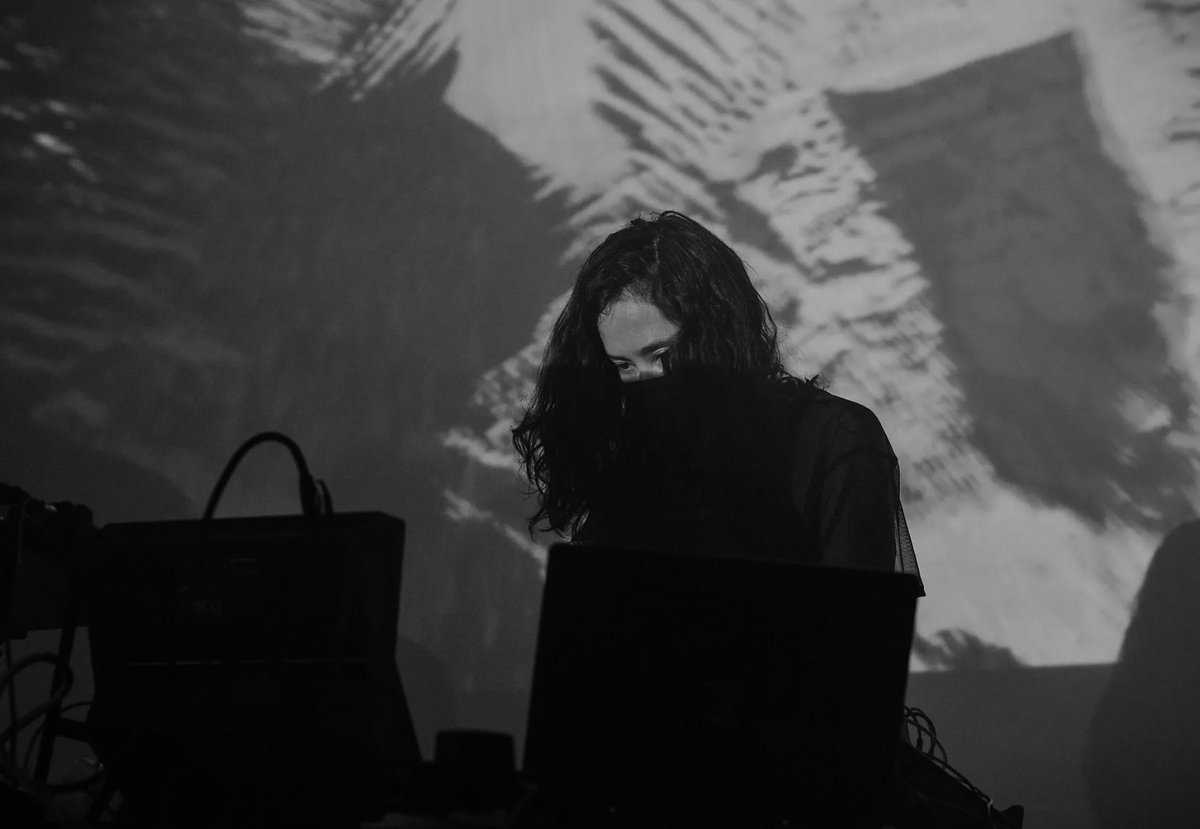
Have you ever considered the role that rhythm plays in shaping our health? Beyond the beats that accompany our favorite tunes, rhythm permeates every aspect of our existence, from the steady cadence of our heartbeat to the rhythmic flow of our breath.
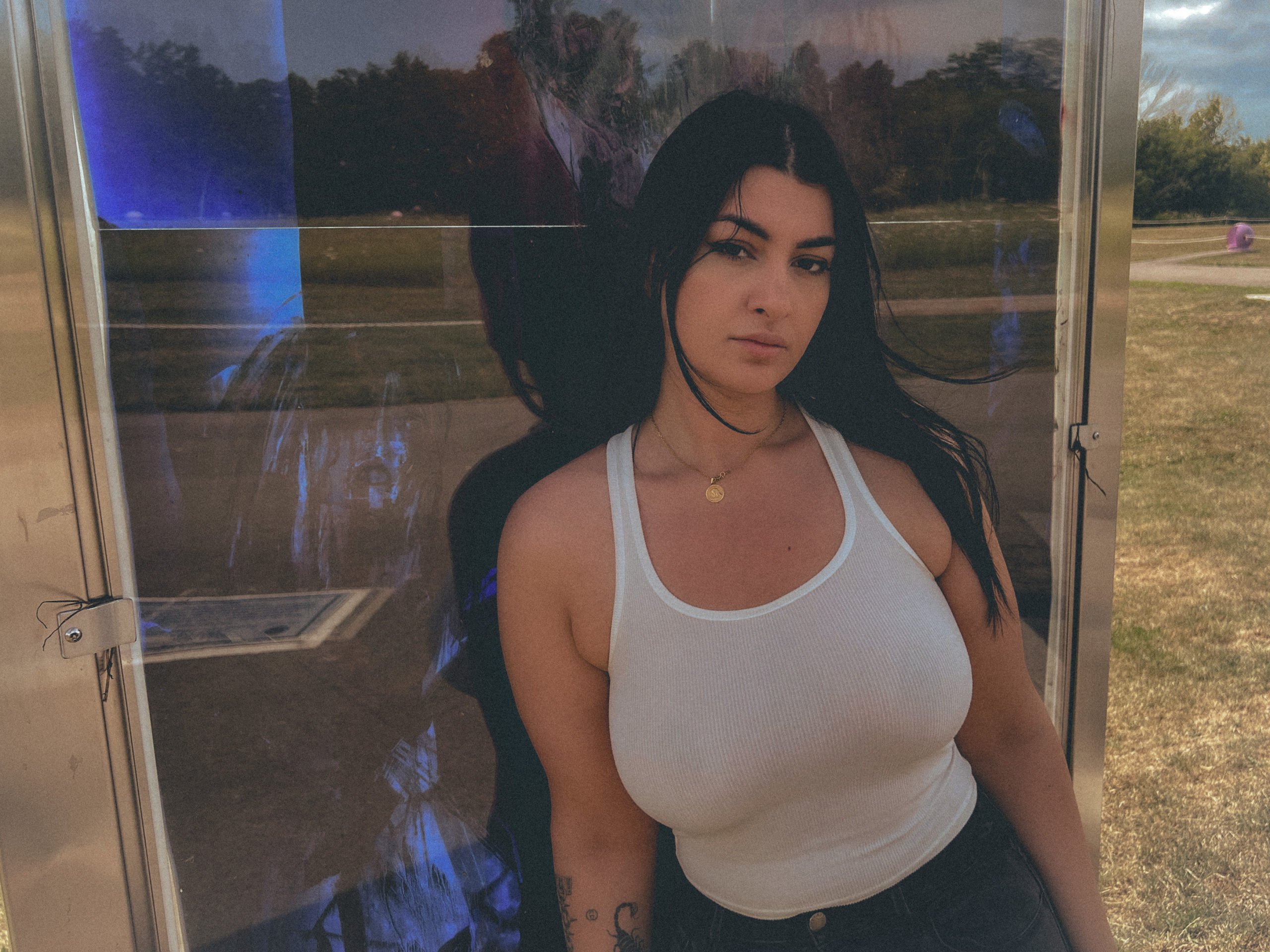
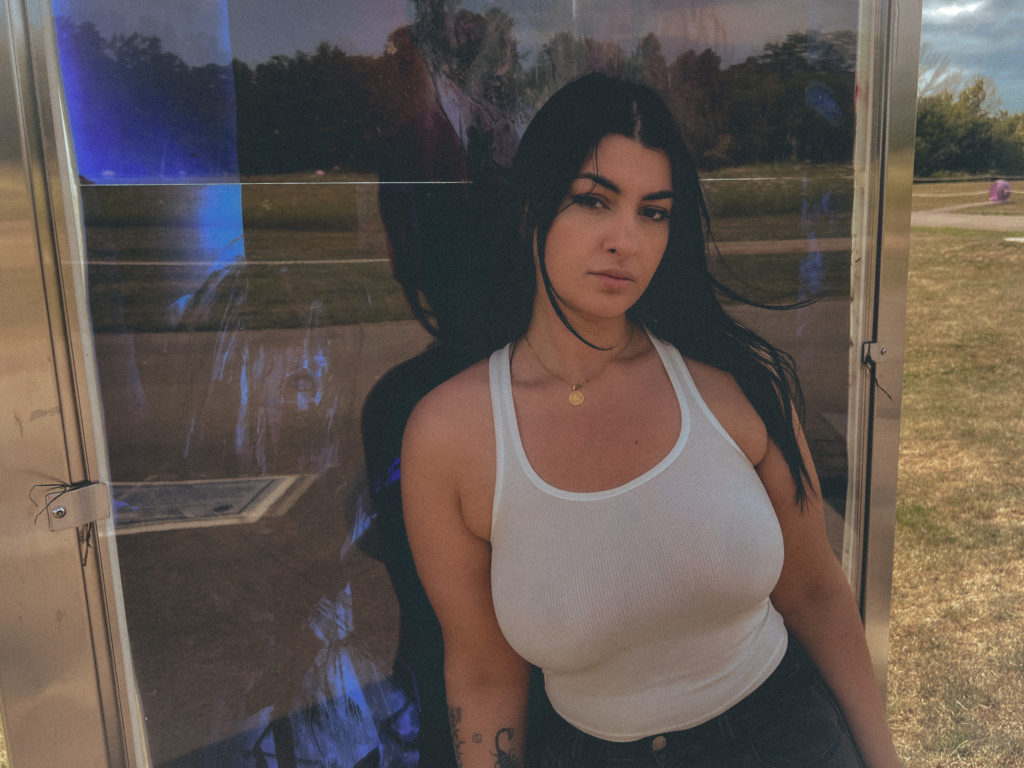
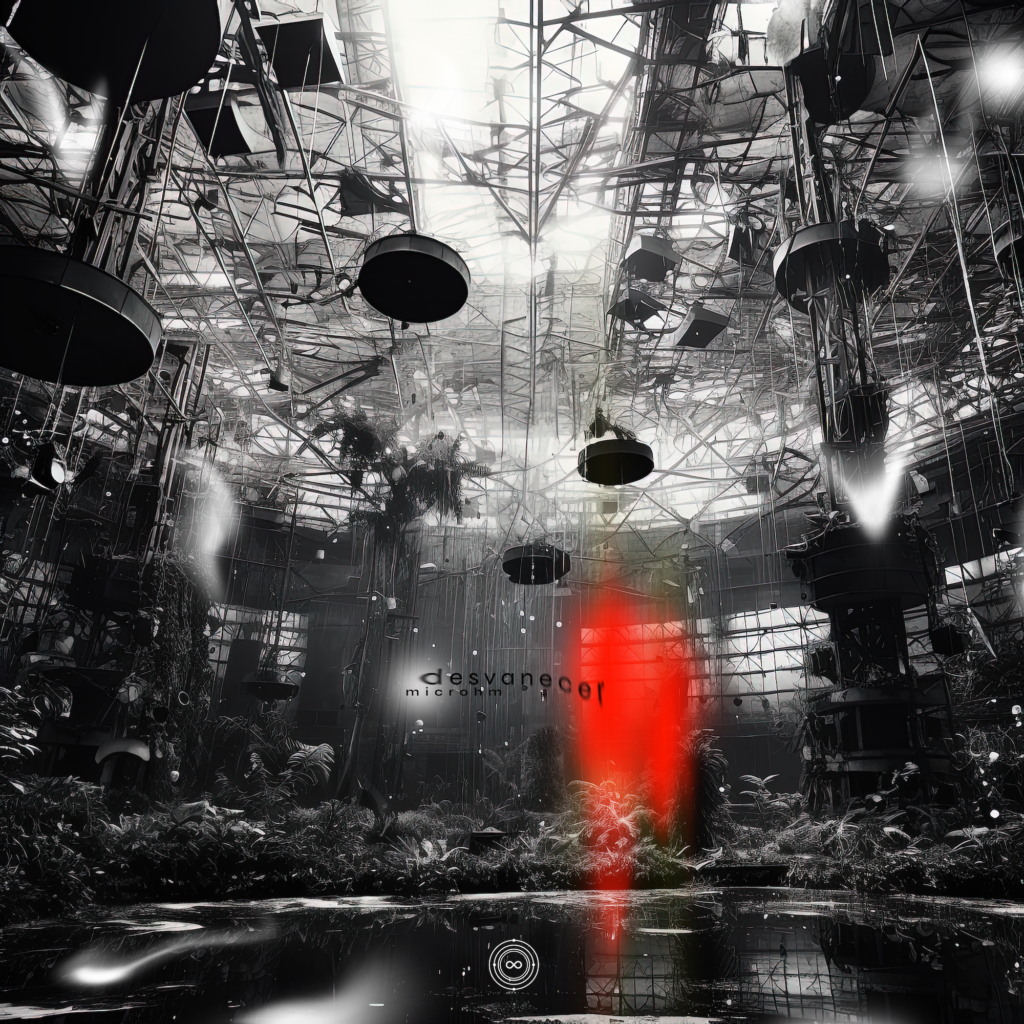
DJ Gigola’s inaugural solo album, Fluid Meditations, draws profound inspiration from these intrinsic bodily rhythms. Rooted in her academic background in medicine, her work reflects on a world going out of sync while guiding us back to the healing potential of music, meditation and spirituality.
As a teenager growing up in Berlin, Gigola—real name Paulina Schulz—discovered her passion for DJing. Joining the international collective Live From Earth in 2016, she found a network of like-minded artists whose unwavering support helped put her on a path towards a globetrotting music career. After a series of successful collaborative EPs, including “No Es Amor” with Kev Koko and Perra Inmunda, she has been meticulously honing her craft as a solo artist producing notable tracks such as “In The Mood” and “Gigi Groove”.
In partnership with Ableton, we interviewed Schulz about the conceptual and technical approaches underpinning her work. For a direct look into her creative process, she’s also shared the Live Set of her track “Unfolding Practice II.”
Download the Live Set to DJ Gigola’s track “Unfolding Practice II” here*
*Requires a Live 11 Suite license or the free trial.
Please note: This Live Set and included samples are for educational use only and cannot be used for commercial purposes.
Paulina, thanks for talking with us today. First of all, can you describe how your experience as a DJ inspired your move into music production?
When I would transition the songs I mixed, it was always this aspect of my DJing that felt like music creation. But obviously, I couldn’t take those creations away and release them afterward. As my music selection is very genre-fluid, I was also always looking for songs that could connect the genres elegantly, but I often couldn’t find any. So it was the lack of songs I needed for my sets and the inspiration I experienced when mixing, that first made me want to explore music production.
So how did you get started producing your own music?
I met Kev Koko, who is a very experienced producer. He used to be with the techno band FJAAK. I told him I wanted to explore production and that I had all these different ideas. He said, “Why don’t you come to my studio and we’ll just do a session.” That was basically how it started. He taught me the basics and encouraged me to write lyrics. He taught me a lot about vocal mixing. He introduced me to Ableton Live, to plug-ins, to writing melodies, and everything like that. After three collaborative EPs and one remix we did together, I felt comfortable enough to do my first solo project, “In the Mood,” which I released in 2022. Fluid Meditations followed in 2023.
What steps did you take to prepare yourself for releasing solo music?
Before I could release any music by myself, I needed to know what I was doing. No matter what, I would rather practice something for a long time before putting it out there because then I can be proud of what I do. For me personally, I grow confident from competence.
You’ve developed that competence relatively quickly. Did you have any musical training beforehand?
Yes, I learned how to play the piano, so I already knew about keys and melodies. I still feel like I’m on a learning curve though, I still have my work mixed and mastered by a professional. This is just to double-ensure that the sound experience will be at its best. Rhythm comes quite naturally to me because I also used to be a dancer. In medicine, we learned a little bit about sound synthesis, frequencies, and decibels—but more from the neurological aspect of how sound is processed in the brain.
Your academic background in medicine followed by your transition into professional DJing must have felt like a significant shift in career trajectories.
I think the job of a DJ and a doctor both capture something that I wanted to do in terms of work because they are both about the human body. Both are about making people feel good. They are especially about making people feel good who are in a vulnerable state. For example, in medicine, it would be about the vulnerability of people who seek help because they might be injured or sick. In DJing it’s about people who are getting into a trance state while dancing. This can also be a very vulnerable state which one has to be careful with. I like that in both jobs I can connect to this vulnerability and help people elevate themselves in a certain state of being. As a DJ you can start a healing journey on a dance floor, at the very least by giving people a good time who are maybe escaping the stress of everyday life.
Do you think your knowledge of medicine has imparted any unique influences on your approach to music?
I was always quite strict about separating my DJing from my medical background because I wanted to be respected as an artist for that reason only, not because I am a doctor. I don’t want people to book me because they think, “Oh you’re so cool, you’re a Doctor/DJ”. This is not at the core. I did medicine because I love medicine so much, and I still do. I was quite conscious about not mixing these two up. But obviously, I understand that people are interested in this aspect when they ask me
“How can you be this but also that?” So in Fluid Meditations, I allowed myself to express my own point of view as an artist. But I also have to admit that this body of work is influenced by my medical background too. I think this was the first time I was not afraid to fuse both.
Can you pinpoint a specific catalyst in your music career that compelled you to commit to the path fully?
If it had just been me alone, I never would have said, “Oh I’m going to be a DJ,” I only did DJing on the side. But in 2016 I met the people from Live from Earth and here I found a community that was encouraging me to do more. They gave me a platform to play at parties which was also really difficult at that time, especially as a woman. Meeting my collective was the greatest catalyst and still is the greatest catalyst for my music career even after seven years. We have grown together. Everybody helps each other. I love the community we have created and the work we have done. I don’t think there would be DJ Gigola without Live from Earth.
Let’s take a look at the Live Set you’ve shared with us. What’s the story behind the track’s title “Unfolding Practice II”?
It’s called “Unfolding Practice II” because it embodies the idea of opening up our physical and mental state to connect to the greater source, which is the spiritual source connecting and unifying everything in the universe. For me, it was a reference to philosophical practice, Buddhist practice, and meditation, where often the idea of spirituality is just the idea of connectivity. It is a transitional state where you open the borders of what you perceive as yourself to let in that which connects you.
Do you perceive an intersection between music and meditation?
I used the topic or the field of meditation to comment on a world I feel is getting faster and faster. A world where you lose your connection to the moment. I practice yoga, where breathing synchronizes everything. It sets the rhythm. This is followed by asanas, which are the body movements done in a collective movement. It’s the same for me in a club. The music sets the rhythm for everybody. Everyone experiences the same rhythm and moves to it in a collective experience. There’s a similarity in finding yourself in meditation to what you can experience on a dancefloor. I love to play with this. This is where I see a parallel between music and meditation.
Is there any contextual link between “Unfolding Practice II” and your Fluid Meditations album?
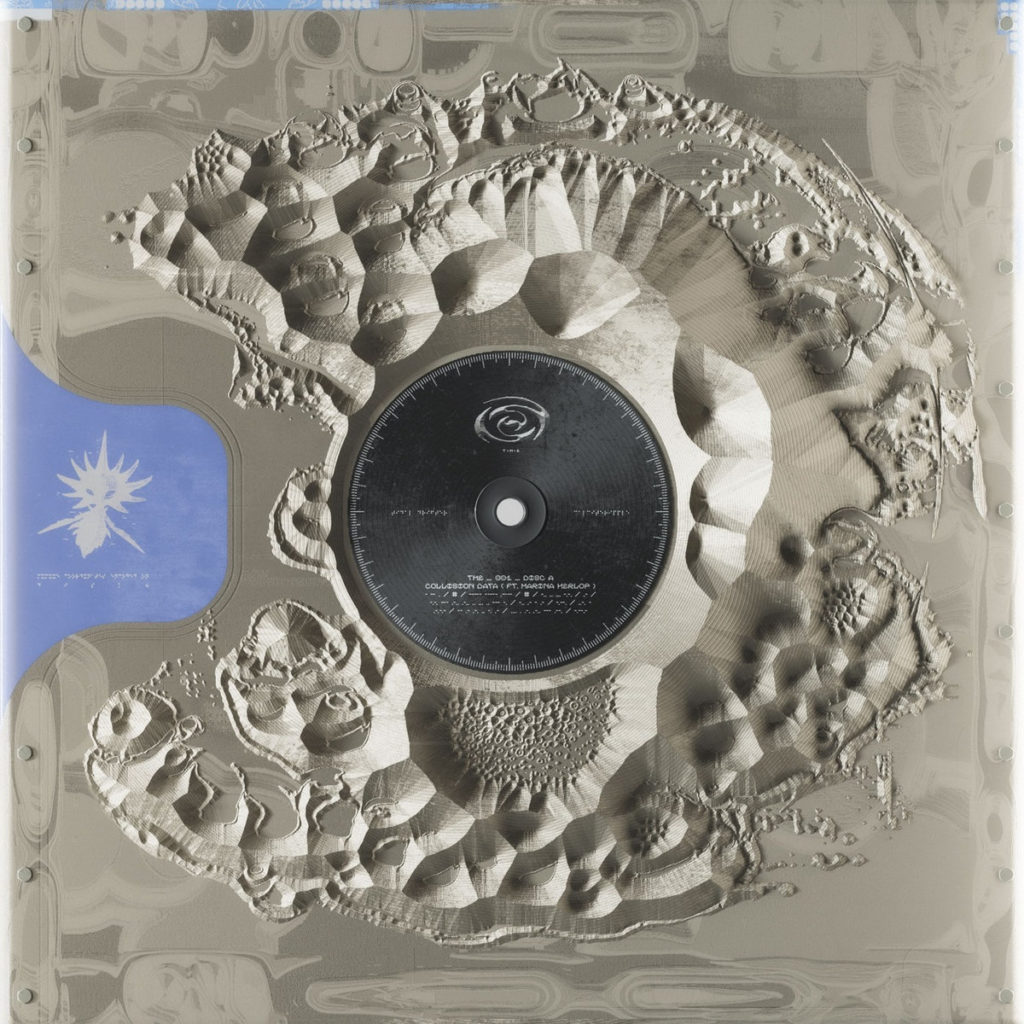
Yes, there’s an ambient version of the track on the album. I presented the album for the first time in Berghain, as a live show. At the time I had broken my leg, I felt vulnerable because of my injury, so the ambient version spoke to me more than this one. “Unfolding Practice II” was actually meant to be the original version. Now, a year after the injury, I’ve included it as an additional track on the album’s vinyl release. It’s kind of like a full-circle moment in my healing journey.
What does the breathing we hear in the track’s intro symbolize?
Studies have shown that not every culture perceives a song in a minor or major scale as positive or negative or sad or energetic. However, the perception of rhythm and tempo is more ubiquitous among people from different cultures. So I wanted to focus more on rhythm. I think the breath is the embodied form of rhythm. It’s like the most obvious rhythm that we have. The whole body works in rhythm so I’m generally fascinated with this. Your heart beats in a certain rhythm, your hormones and your breathing are in a certain rhythm. You can influence the way your body works through the rhythm of your breath.
There’s a common assumption that the rhythm of the body starts with the heartbeat. Are you suggesting that the heart could defer to the rhythm of the breath?
Mostly we perceive the heart as the beat maker. But we talk about breathing frequency in medicine so, there’s a rhythm to it too. And even in yoga practice, there are different breaths you can use to get to a different state of being. But in general, the whole body is about rhythm. Funnily enough, my thesis is about autoimmune diseases of the brain, like epilepsy. Epilepsy is a disease where the brain is out of rhythm. Everything in the body is very orchestrated. The moment something changes in this orchestrated way it sets the body out of rhythm. It can be in hormones or neurons, neurotransmitters, breathing, or the heartbeat. So just thinking of the body as a rhythmic subject is a beautiful way to connect to it. I love that music picks this up. That’s probably also where music and medicine find their intersection.
And you’ve also featured a heartbeat within the track too.
Yes, the heartbeat is the same as the breathing where I wanted to juxtapose the rhythmic percussion with original body percussion.
What do the spoken words in the track represent?
The words “I reconnect, my mind, my body, my soul, myself” reference a repeating mantra. In the sense of this meditative tradition, it’s about being open to a transitional space in order to connect with the greater source.
At bar 31 there’s a short rest before a powerful kick drum takes over. Can you talk about why you made this choice?
The track in general has a lot of hardcore elements from the ‘90s which are very tempo-driven. It’s very exhausting when you dance to it. I remember my first gabba party, I was so exhausted. That’s when I realized it actually makes sense that there are such epic breakdowns in the genre itself. Because for the dancer it helps to recharge and refuel before dancing again. So I have this breathe-in, breathe-out moment to take a rest before this very intense, high-tempo kick comes in.
Can you explain how you processed the kick drum?
I feel like adding warmth to the drums makes them more organic. This again references meditative practice and the very organic rhythms I play with throughout the album. I added a warm color to the kick with the Damp function on Drum Buss. With the Drive function, it’s more about adding a little distortion which goes in more of a hardcore direction. But I didn’t want to have too much of a distorted kick as I wanted to keep it simple. And then there’s the Boom function where you can enhance the low end, which was nice for this kick because I don’t have any bassline in the song, so it was a good way to give a little extra depth to the mix.
You used the 909 Core Kit from Live’s drum library. Can you talk about your processing techniques, like compression and EQ?
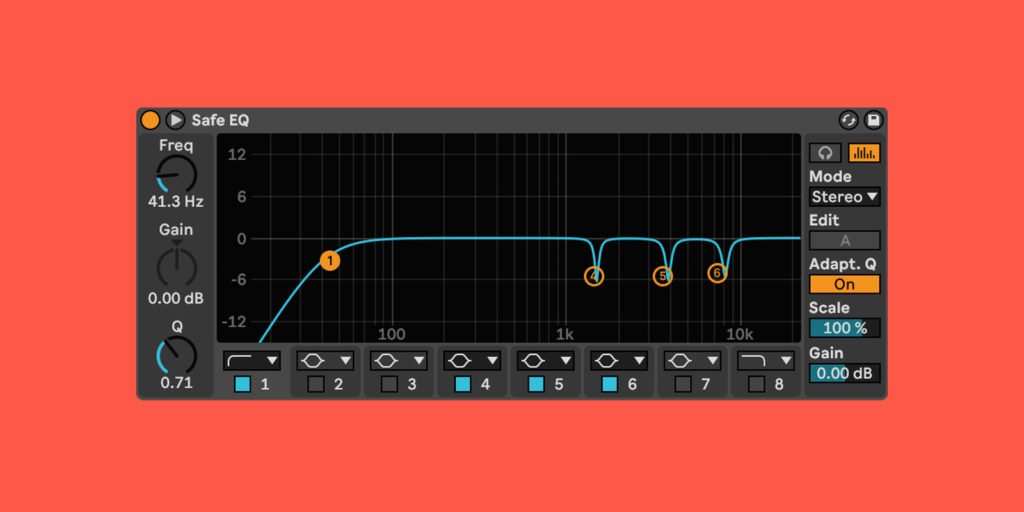
It’s all very similar. The Saturator adds warmth. There’s a low-frequency EQ cut because I don’t need it in the 909 kit. Then there’s a Compressor to squeeze the signal and I have sidechained it to the kick because that’s better for the overall mix; so the impact of the kicks are not masked by my 909 drum kit. Because some noisy resonances are coming through, I like to use subtractive EQ. On EQ Eight, the Audition function is nice because you can solo the filter and search the whole frequency range for resonances that you don’t like. Then you can turn them down.
You’ve created a transition effect at bar 97 with a flanged hi-hat. How did you make this?
This is a really good example of how accidents can turn out beautifully. I just duplicated the 909 Core Kit Track, but it had a different plugin chain. Because of the different processing, there’s a slight shift in how hats are played, and with that shift, you create the flanging effect. It was so nice I kept it. Sometimes when you change a rhythmic pattern or you just copy something like that, it can create the best parts of a song. It’s the same as introducing grooves or moving notes slightly to the left or right.
Is everything quantized to the grid in this track? Do you ever experiment with grooves?
Sometimes I experiment with grooves, yes, but this one is on the grid because it’s supposed to be drum-intense. It was not about going into the hips, you know? It was more about creating this feeling of urgency and about being a dance floor filler.
But sometimes, yes. I am working on a project now where I have three bassline layers and I change every layer a little bit. It helps to give a certain bounce to the track.
Sometimes, if I like the rhythm of a drum loop I use it to see where the hits are played so I can put my MIDI notes in the same position. Then I can mimic the sample’s rhythm, but I am not bound to that sample. I can put my MIDI part on any synthesizer I want.
Do you use the Extract Groove function in Live for this technique?
No, I like to do it by hand because this allows me to learn grooves. To recreate grooves faster, I like to translate them by myself. Then I’m like “Ah, this is how I do it, or this is how I do a psytrance bassline,” for example.
Does the percussive woodblock that comes in at bar 49 have any conceptual meaning?
The woodblock is a little bit like a metronome, or clock. It’s like an element to reference the continuity and eternity of time; which plays an important role in meditation. If you look at the automation, there’s a panning of the woodblock to the left and right. These are little tweaks I do to give it a three-dimensional reality.
How did you create the arpeggiated choral synth that comes in at bar 65?
It’s from a sample pack. I’ve processed the original sample and I’ve transposed parts of it. I don’t like to use samples right out of packs, because other people will use the same sample, which I find quite annoying. So I try to extract certain parts, transpose certain parts, and rearrange them. I put a little delay on this one too. There’s a low-cut EQ and I sidechained it to the kick.
When you talk about changing pitch or rearranging these samples, do you edit the audio clips directly in Live or are you chopping them up in samplers?
Sometimes I convert audio to MIDI which is kinda cool. Sometimes I just work with the audio, cut it up into fragments, and change the pitches. Ideally, you don’t use any samples when it comes to melodies. Because the problem with samples is that it can be really hard to change things. I like to use a sample if it adds a certain air to a song but if it’s something I want to evolve within the song, I write things myself. There are beautiful ways to write melodies. It takes time to write a nice melody and usually, this is what I start with. Then I try to develop different layers of the melody and find different synths that fit together. Because it’s just easier if I want to change something about it later. I can also reuse them in other tracks, and rewrite them a little bit if needed. It just gives me more freedom in the expression of the song and the arrangement.
Could you explain the effects you’ve used on your three Return Tracks?
Return track A is like a main reverb. I used this reverb in the album a lot because it gave a certain roominess to the sound. The low-cut EQ is there for safety to make sure the reverb is not adding any unwanted low frequencies.
My vocal reverb is on return track B. Here I used Hybrid Reverb as it allows you to blend different rooms or different reverbs. I then use a Compressor and sidechain it to the vocal because if I didn’t, the effect would overlay the vocal itself. So every time the vocal is playing the reverb ducks out and then it comes back in. So the vocal always stays clear. It really helps.
I did the same on Return Track C. There’s an Echo which is again, sidechained to the vocal. It controls the clarity of the original vocal.
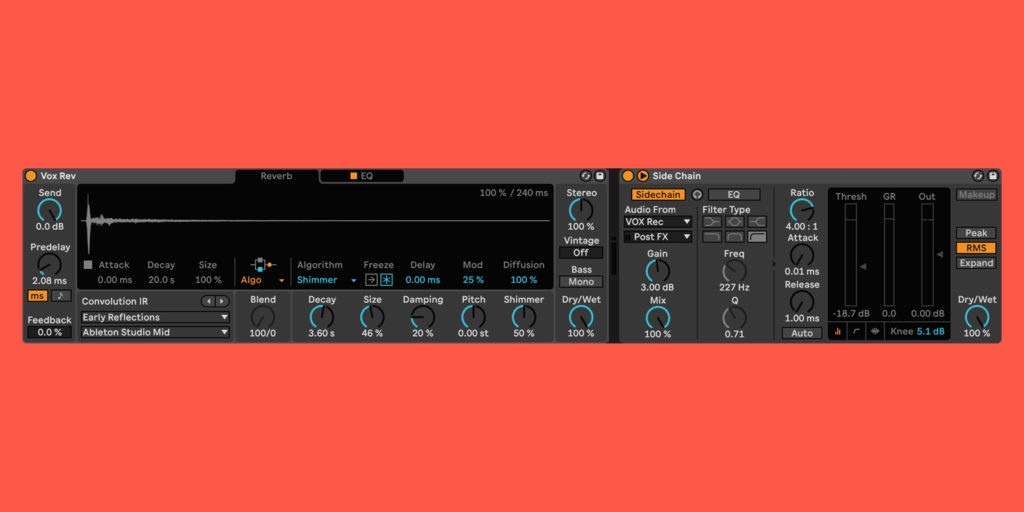
That’s an interesting technique. Sometimes when you add spatial effects it can also muddy the mix. Does this technique help with reducing that problem too?
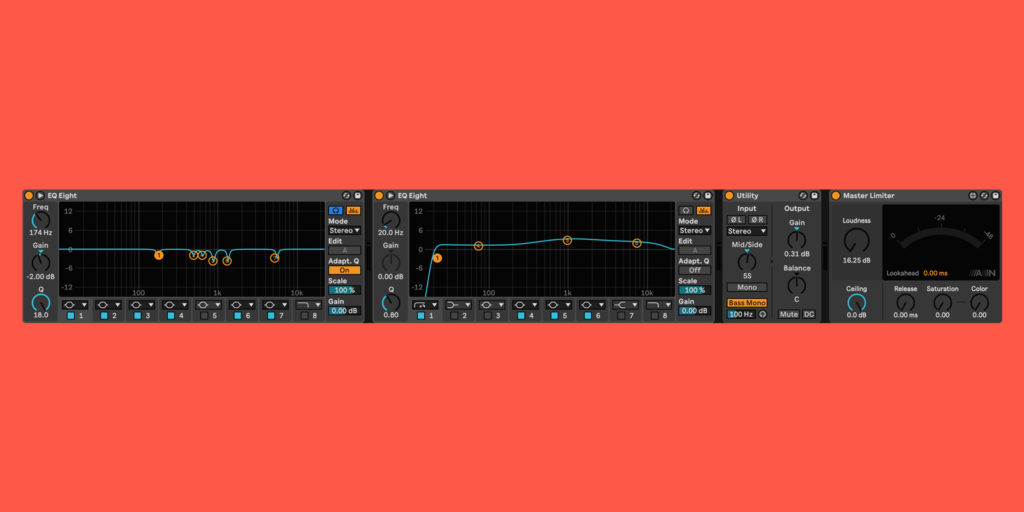
Exactly that. And speaking of mud in the mix, when you look at the device chain in the Master Track, first of all, there’s an Auto Filter which I use to filter out a certain part of the choral melody. Then there’s a Compressor which again brings some warmth. Then comes some subtractive EQ, the same as I did with the 909 Core Kit. Again, it was about using the Audition function on EQ Eight to find the resonances I didn’t like and tame them. And then comes the second EQ Eight. My vocals sit at around 1KHz on the frequency spectrum, so it always helps if I do a little boost there. Also with music that has such a heavy kick, it’s always nice to bring up the highs a little bit. The Utilty device is just for checking the bass is in mono and a Colour Limiter is added on top.
Your Utility device is set to mid-side mode, enhancing the stereo slightly. What’s the reason you’ve done that?
It’s for the roominess. It brings out the side signal and helps with the mix. It’s just something I learned that tends to sound better.
Paulina, thanks for sharing such interesting concepts and tips with us. As we look ahead to 2024, are there any exciting plans on the horizon that you’d like to share?
I took a leave of absence from music production after bringing the album to life. It was such an intense period also with the injury. I needed to get space. I’m working on new club-focused music now which I’m excited about. It’s always easier for me to start with that because it’s less conceptual. I’m working on a bigger EP for next year that is more on the conceptual side and is also probably not what anybody would expect. And I’m just enjoying exploring the creative journey, my artist persona and my sound for 2024.
Interview by Joseph Joyce. Photography by Charlotte Ernst.