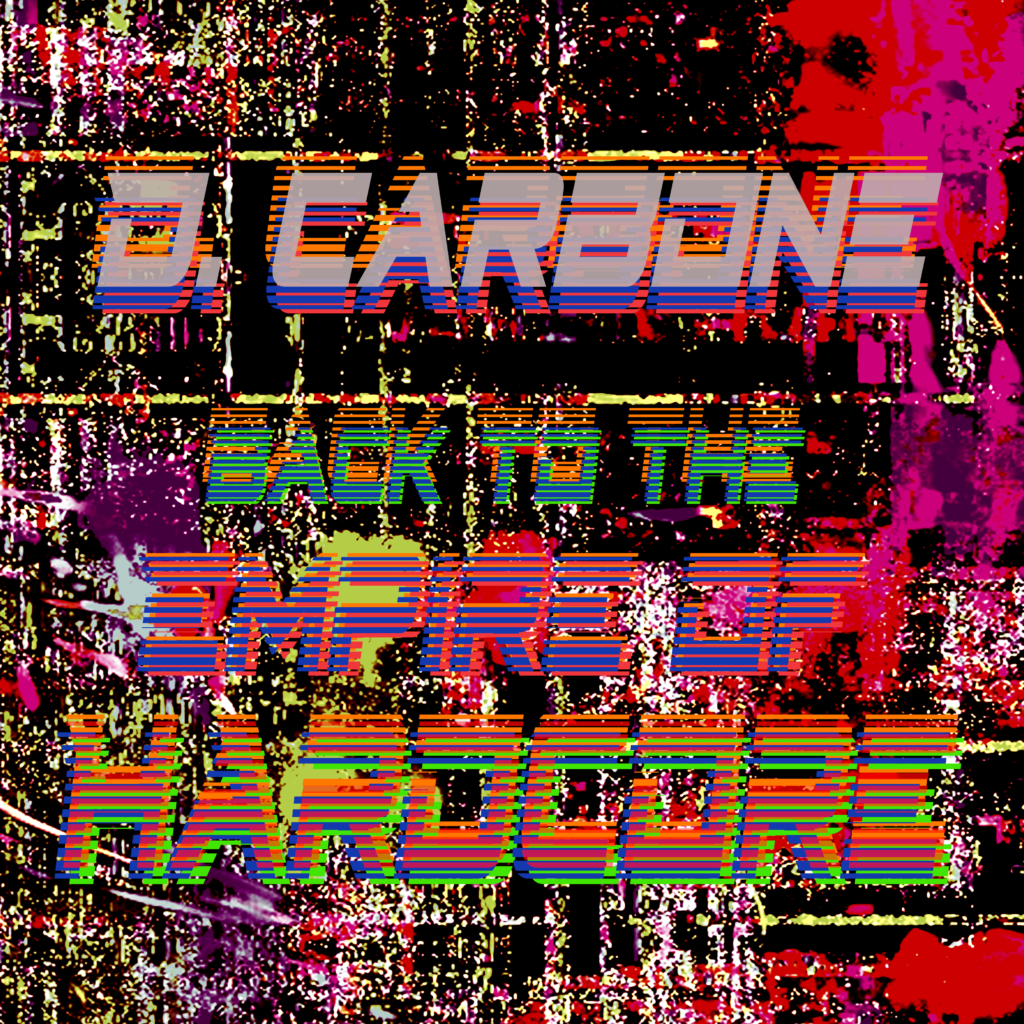
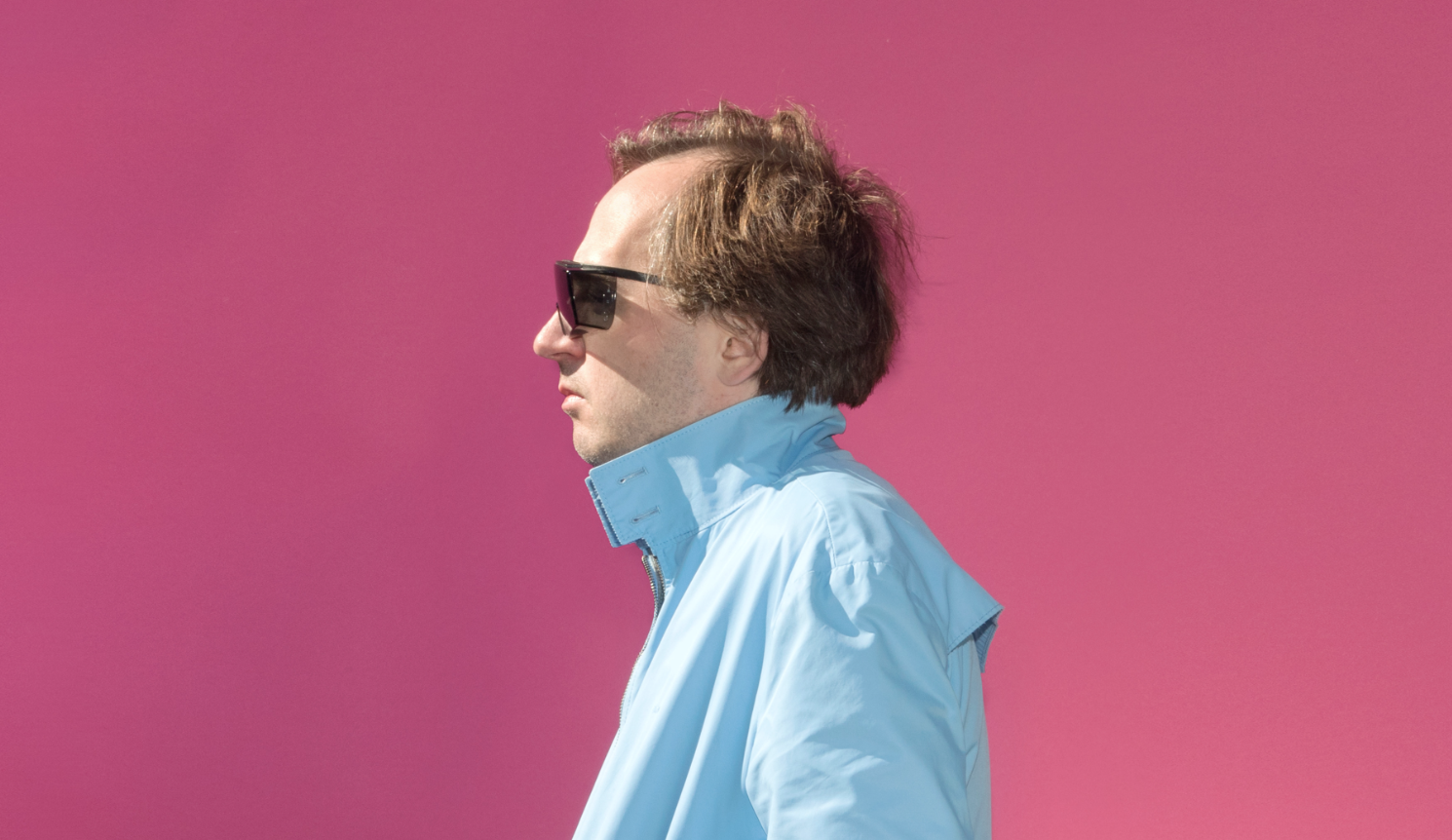
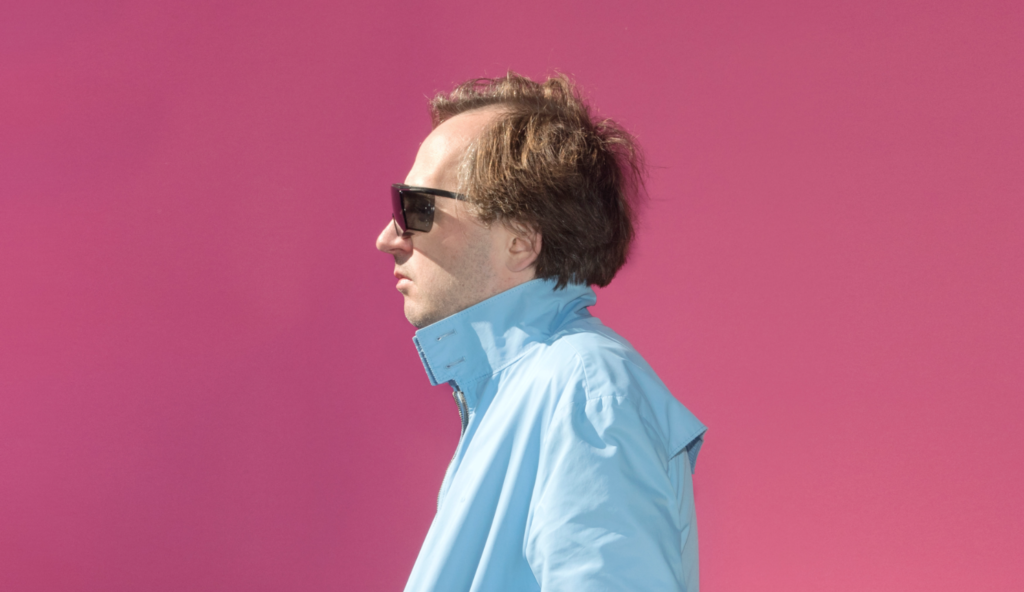
The EP, out next year, is the latest in a series of releases following 2016’s Ravers that sees Carbone trying to push the movement even further. “It’s in modern key because the new hardcore wave is really slow compared to ’90s hardcore but it still sound the same way,” he explains.
The EP features two remixes from VTSS and 14Anger. Since that mini-album, Carbone has put out music on Repitch Recordings and Cosmo Rhythmatic, both of which he co-owns.
The digital version of the EP comes with a bonus track, “The Rhythm of Acid Core,” described as a hypnotic acid banger.
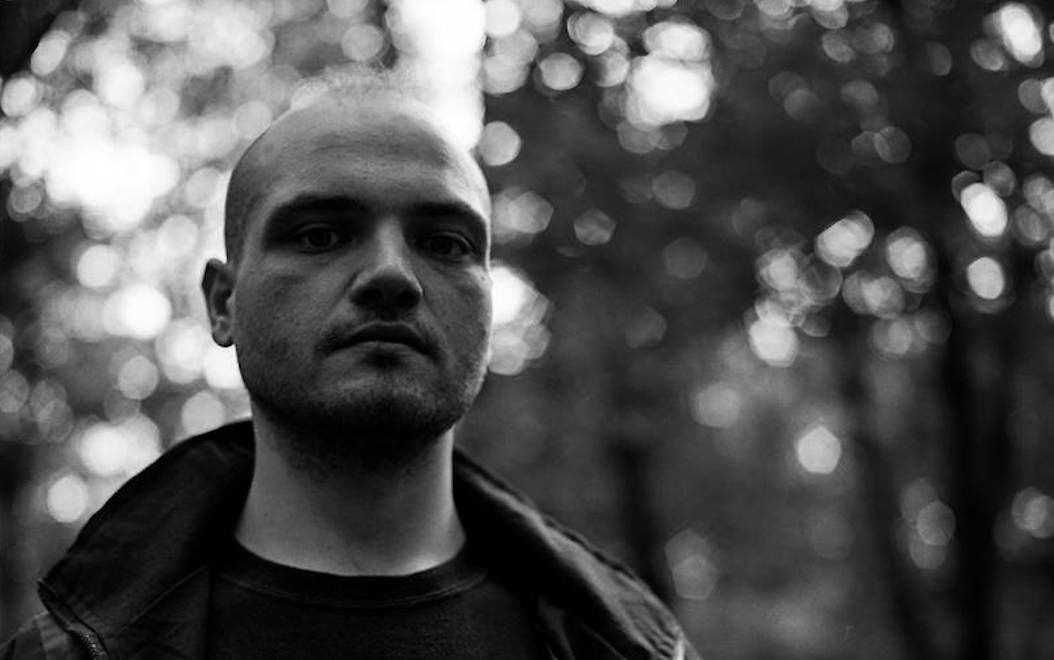
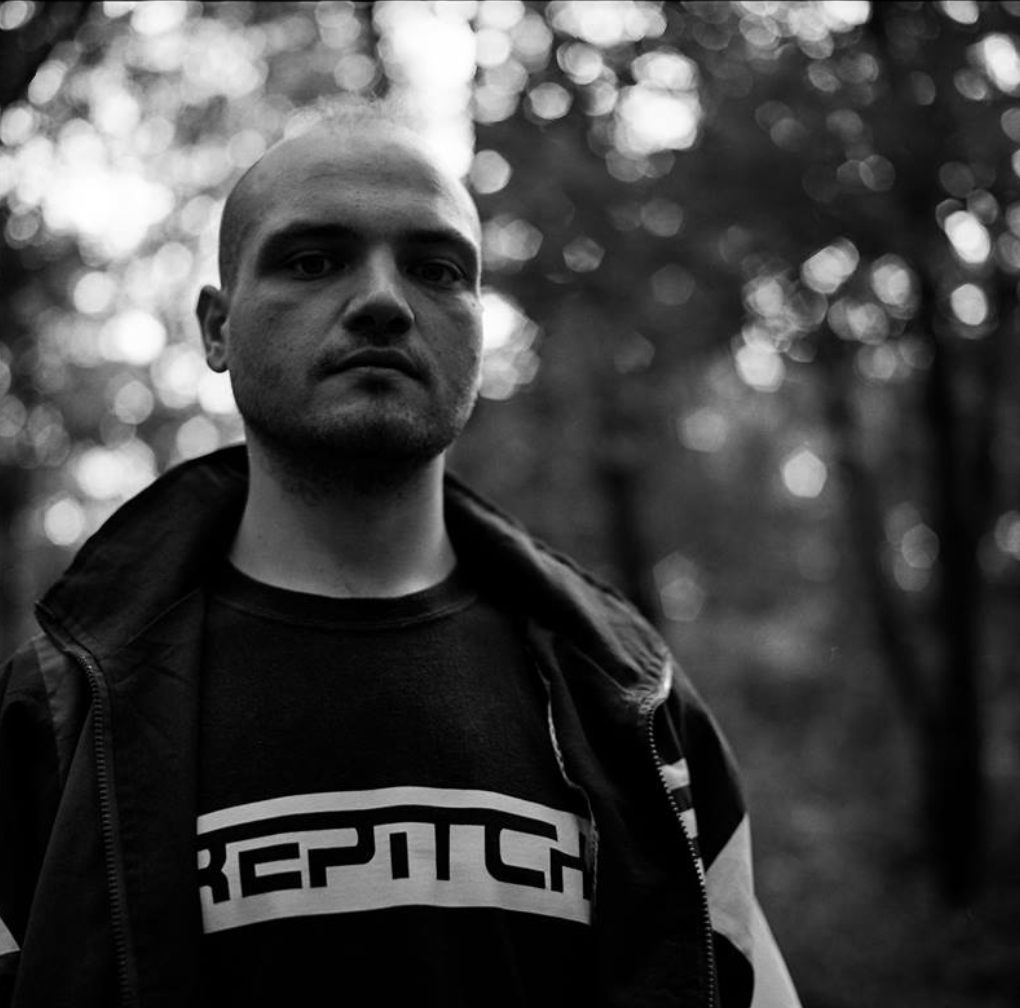
Carbone is a techno producer born in Naples, Italy in 1987, and is dedicated to “extolling acid and rave culture.” His most known solo projects are D. Carbone and Honzo, and he has collaborations with the likes of Ascion, AnD, Gaja, Shapednoise, Noneoftheabove, and CJ Bolland.
Tracklisting
01. Back To The Empire of Hardcore 02. Back To The Empire of Hardcore (VTSS Remix) 03. Back To The Empire of Hardcore (14Anger Remix) 04. Raver Killer 05. The Rhythm of Acid Core (Digital Bonus)
Back To The Empire of Hardcore is out on January 24, with clips below and pre-order here.
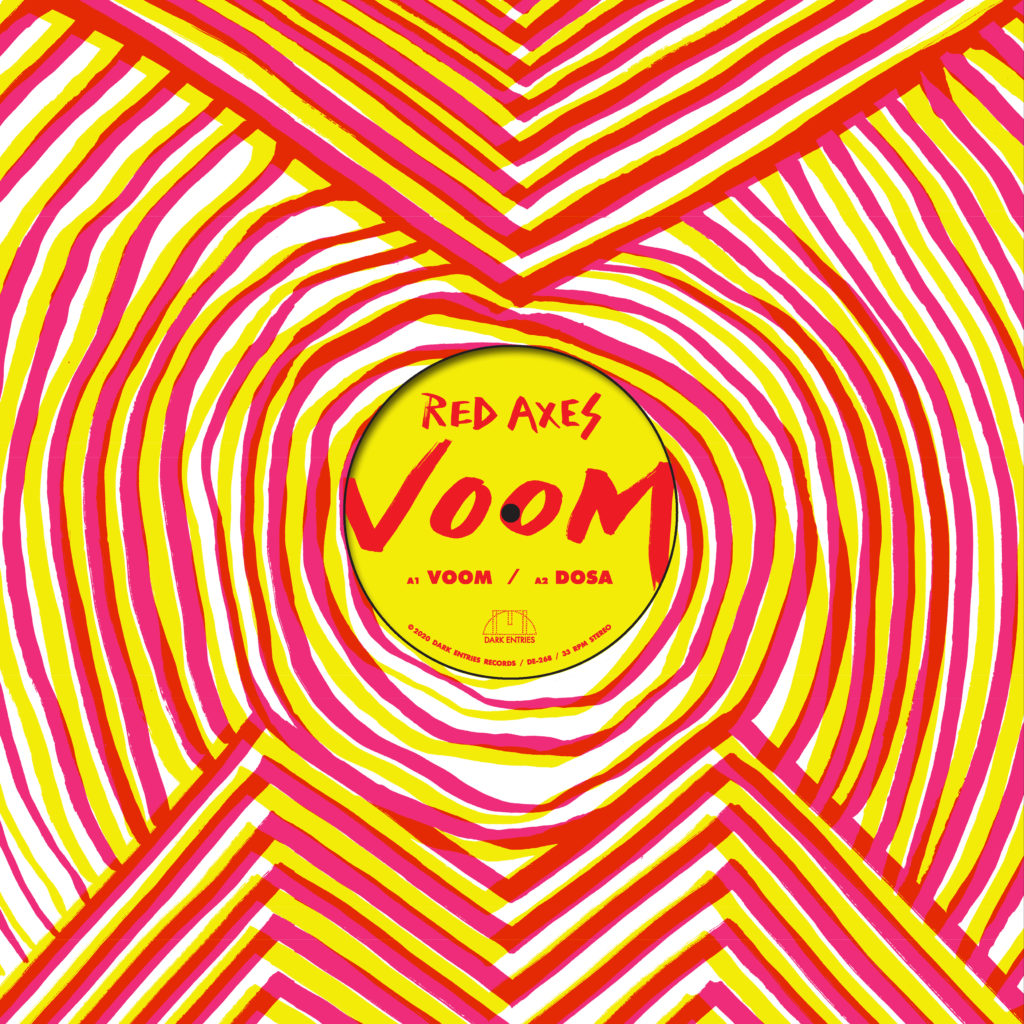
Dark Entries‘ final release of 2019 comes from Red Axes, the production duo of Dori Sadovnik and Niv Arzi from Tel Aviv, Israel.
Sadovnik and Arzi were raised on a diet of post-punk, new-wave, and Italo-disco at fogged out warehouse and basement parties. Their own productions and remixes have appeared on labels such as I’m a Cliché, Correspondant, and Hivern Discs. They last appeared on San Francisco’s Dark Entries in 2017.
“Voom” kicks things off with wild percussive toms and bubblegum female chants over a fat electro break. “Doom” brings us into a dark, menacing cave with pulses of light in the form of carefully placed synth lasers. “Mister Q” serves up metallic rhythms backed with a strobe-ready sound. “Prblems” is the 10-minute anthem that closes the EP in typical Axes fashion: militant drums and battered electronics, while traditional instruments hypnotically pulse and reverberate.
All songs have been mastered by George Horn at Fantasy Studios in Berkeley, California.
The EP is housed in a die cut jacket that keeps the dancefloor vibes with a bold, DIY design by Eloise Leigh.
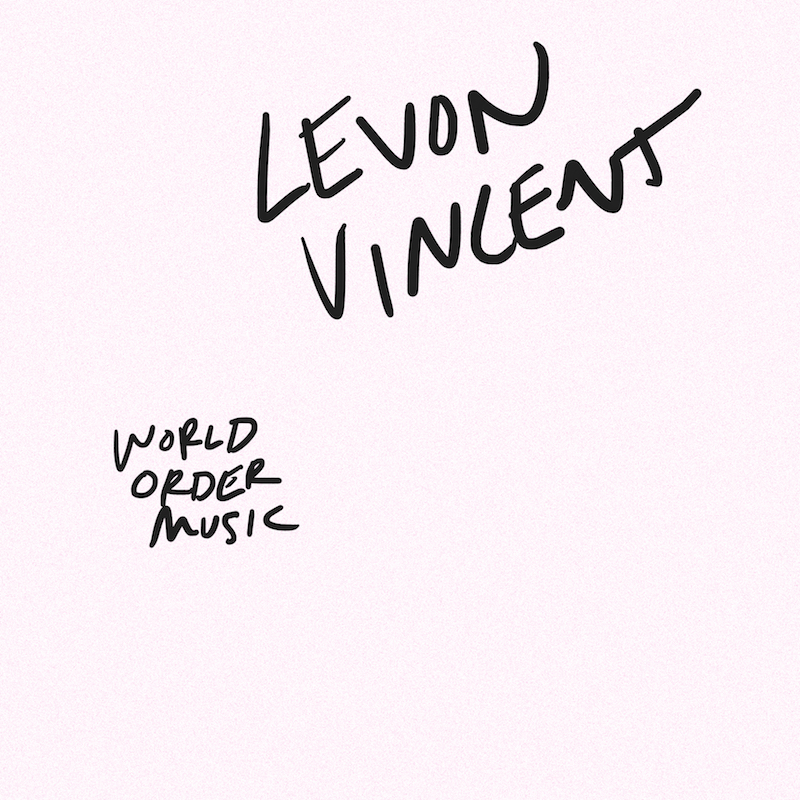
Levon Vincent has offered a free download of his third studio album, World Order Music, out today on Novel Sound.
This 11-track outing combines euphoric dance sounds with techniques pioneered by the older minimalist composers like Steve Reich and La Monte Young. It’s also a nod to the UK’s golden age of rave. Vincent wrote it while traveling around playing for “sweat-drenched dance floors, watching Brexit unfold, listening to old house music, and spending days in the studio with my cat,” he explains.
One of the most colorful producers of his cohort, Vincent began releasing music independently in the early ’00s and has continued ever since. He’s previously released two albums, 2015’s self-titled effort and 2017’s For Paris, both of which were also offered as a free download.
He’s offered the vinyl version here, and a free mp3 download HERE.
For more information on Vincent’s production techniques, check out his XLR8R interview here.
Tracklisting
01. Kiss Marry Kill 02. Flowers For Algernon 03. World Order Music 04. Reverse Stockholm Syndrome 05. The Vampire Lestat 06. She Likes To Wave To Passing Boats 07. Ratios III 08. Opening 09. And It Don’t Change 10. Diane Fossey 11. Back To The Grind
Alec Falconer is one of those electronic producers who operate in the shadows with a small but loyal following. The UK artist grew up in Kent, a county in south-east England, and involved himself with bands through school before moving to Newcastle for university where he learned the ropes of production: “I really struggled to find anyone who shared my passion for making music so I filled the gap in my life by learning to produce on Reason, learning to mix, and buying vinyl,” Falconer recalls. YouTube tutorials weren’t really what they are today, and so he owes a lot to Rob Amboule, whom he played in a band with, and, once he made the transition to Ableton, Harry Wills.
Falconer relocated to London at a time when many of the capital’s clubs were closing. He worked in a petrol station and then as an environmental lobbyist but quit to move to Paris to be with his then-girlfriend. The free time allowed him to focus more on his production, and he soon felt ready to share his music. Following an outing on Oval Distribution’s EXT series, he put out an EP on local label Rue De Plaisance called Flicker Zone, featuring four minimal-leaning UK cuts. Alongside Harry Wills and Rob Amboule, Falconer is also behind Phone Traxxx, an uptempo UK garage 12” series with three releases to its name.
Falconer now lives a “calm” life on his grandmother’s farm in Kent. He fills his days by digging in second-hand stores and making music, waking himself at 6am to experiment in his studio, and gigs on the weekend. “For me, the inspiration comes in a small niche of 10 minutes, and the rest of the track is just a matter of laying out the idea and filling in the blanks,” he says. “You can edit sounds and deal with the endless fiddling whenever you like, but you shouldn’t squander the moment where you’re able to hear the whole track in your head.” Earlier this year, he released Entity 005, a new 12” with a remix from Harry Wills, and there’s also been various bits on V/A compilations as Billy On The Buttons or The PGA, once again alongside Wills and Amboule.
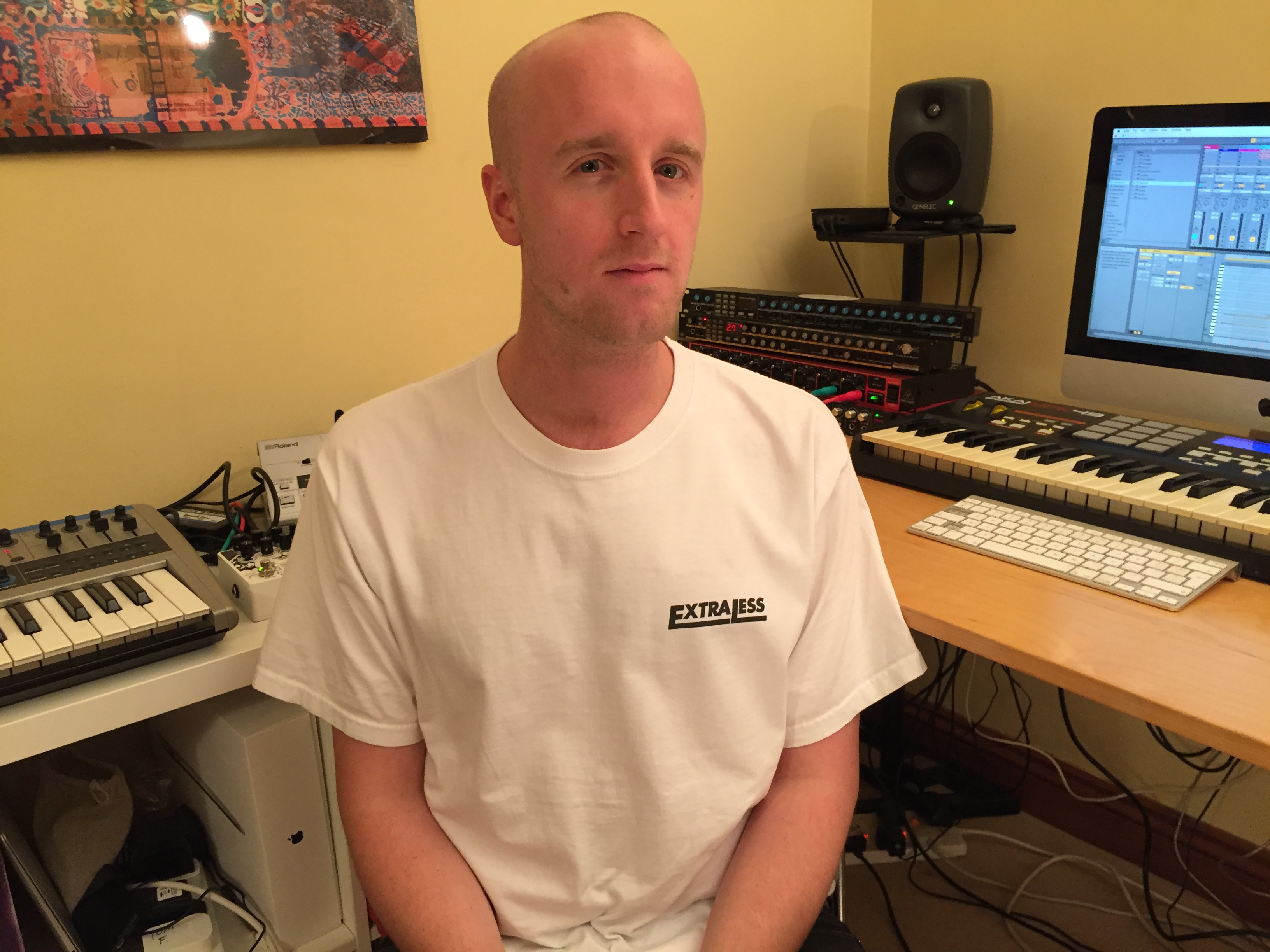
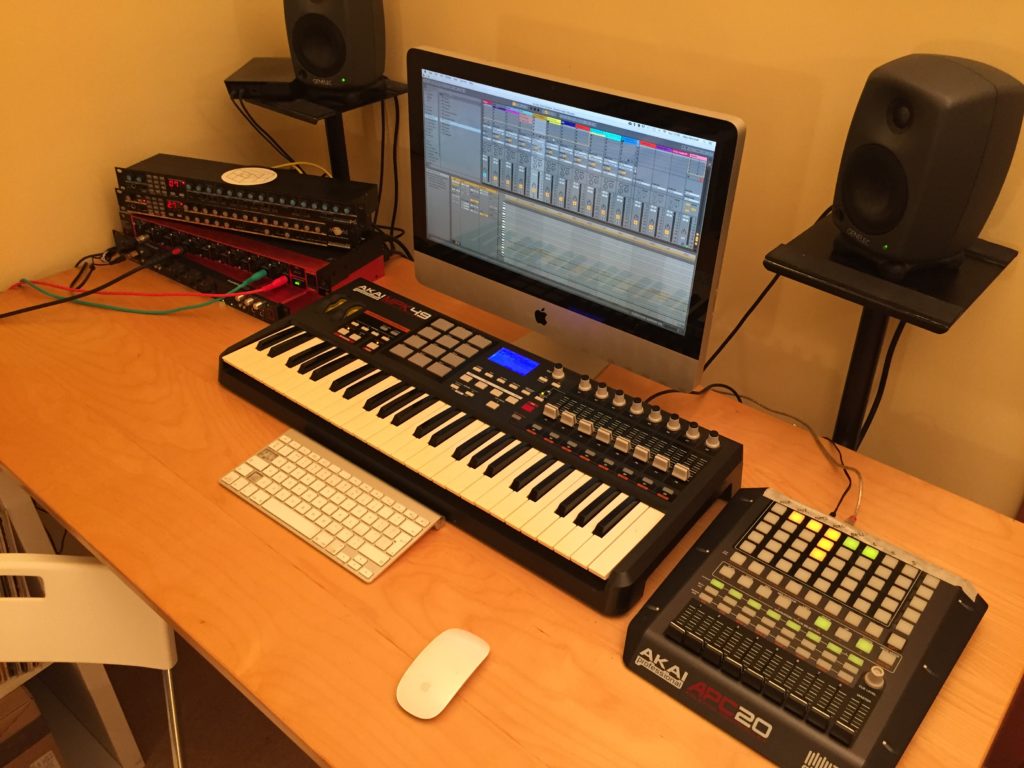
This article will not be of interest to anyone who is into hardware. The total value of gear referenced here barely touches $1,000. Personally, I find a lot of hardware looks like exactly the thing I need to make a certain sound but in reality, it slows me down. I don’t have the patience to spend multiple days on a track, and spending time menu-diving while programming hardware just frustrates me!
In terms of future purchases, I am looking at buying the Vermona DRM MKIII and sequencing it via Ableton. The reason for this is that it has such a wide sound-palette which will complement the classic sounds of the DrumStation nicely. Likewise, I’m aware that I should replace my Novation K-Station (referenced below) with something that sounds a bit more serious and I’m probably looking at a Behringer Deepmind on that front.
XLR8R+ is a member-supported music community and subscription service championing independent music and culture—every member will get exclusive, unreleased music every month that you will not find anywhere else.Subscribe here now.
Ableton Operator
I know this is a cop-out as a first answer but it is the synth that I use the most, bar none. In order to make the sounds that I hear in my head, I turn to Operator. I don’t think I’ve ever used any other synth to make a sub, at least which ended up staying in the final version of the track! Likewise, when I want to mess about to make the glitchy sounds that keep your ears interested, then I use Operator and a bunch of Max for Live LFOs. It’s essentially a really simple version of modular synthesis for dullards such as myself. Almost everything is doable in Ableton. The rest just makes writing more enjoyable.
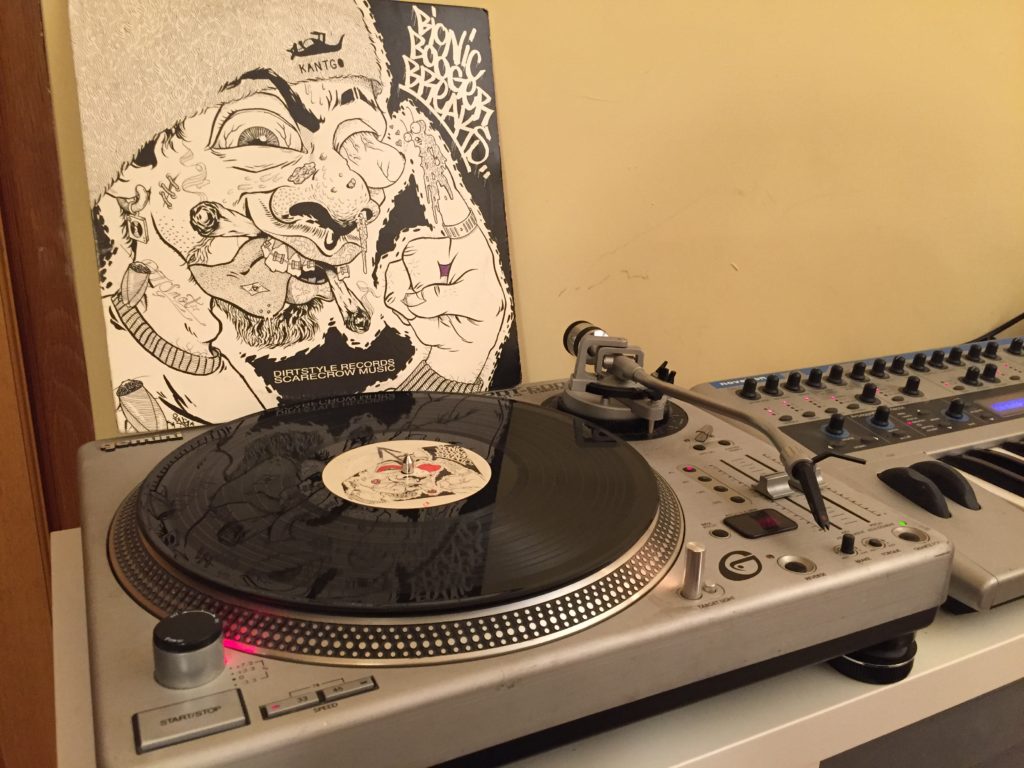
Gemini Turntable
This should be essential for any studio, in my opinion. When you’re out digging in the cheap bins for vinyl, I’d say only five percent will actually be playable in a set, but maybe 20 percent will have something that is interesting or useful. I love making edits of tracks from the cheap bins and I’ve been using the turntable on more and more of my original productions. I started out by recording my own rewinds but now I do basic scratches that can be re-edited in Ableton to sound like someone with actual talent scratching! The technique is to take a few of your favorite samples cut from your own poor attempt at scratching, then assign them across the keys of your keyboard on your DAW sampler (maybe reverse a few?) and then set the pitch shift to +/–24. Record in MIDI, and it sounds like you’re scratching; quantize the midi: sounds like you’re Qbert!
I don’t have much preference on turntables but this one will play a record anywhere between 20 and 100rpm forward or backward, which is an interesting feature. Likewise, it is amplified within the turntable.
Dexed Plug-In
This is a free plug-in that was made for people to edit Sysex patches, as used in my tracks “DX7” and “Volca FM,” but you can run it directly through your DAW. Sysex patches are widely shared on the internet, and if you can take the time to browse then you will find some great stuff. I use a lot of organ sounds in my tracks and most of these now come from Dexed rather than the Korg M1. I don’t think I have any examples of alternative organ basses in released tracks but I think the keys in “Hospital Interview” are from Dexed. Anyway, have a fiddle; it’s an interesting free plug-in that is capable of lots of amazing ‘80s sounds!
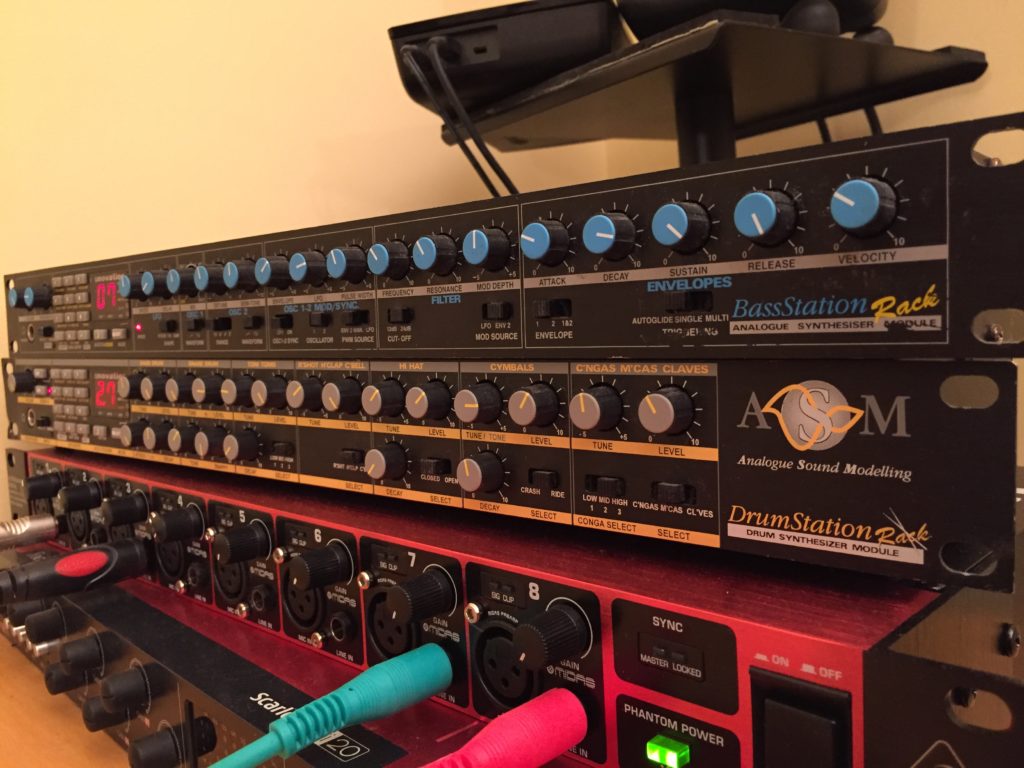
Novation Drum Station & Bass Station
Both of these are really cheap to buy and don’t take up much space. I’ve never really managed to get my head around any hardware sequencers but both of these guys sequence really nicely from Ableton, particularly the Drum Station with Ableton’s Groove Pool.
Lee Renacre (a.k.a 100Hz) sold me on the need for the Drum Station when he said, “It’s got both kicks!” (ie: 808 and 909), and I don’t regret the purchase at all. In the last couple of months, I’ve definitely got really into the swing of a laidback house groove from a combo of 808 and 909 sound, especially when they’re blended with a few organic drum samples.
The best example of this in a recent production is “Nine Bar Loop,” which is below. The sub is from the Bass Station. The pads and organs are taken from Dexed and resampled to death. I added the sound of some coins as a wink-and-a-nod to Pink Floyd’s “Money” which has to be one of the most famous examples of an unconventional meter (⅞) in pop music. Unconventional time signatures are (almost) impossible in dance music but you can get away with interesting loop lengths in terms of bars. This track really only mixes into very loopy and deep techno but the effect is relatively interesting and unique.
Likewise, I may just be imagining this but I love the combination of the Bass Station and Roland TB-03. You ping the two off each other in syncopation and the subtle differences in the character of the sound really work together. I used this a lot writing “Reflector Dub,” which will be coming out on 2XGREEN at the beginning of 2020.
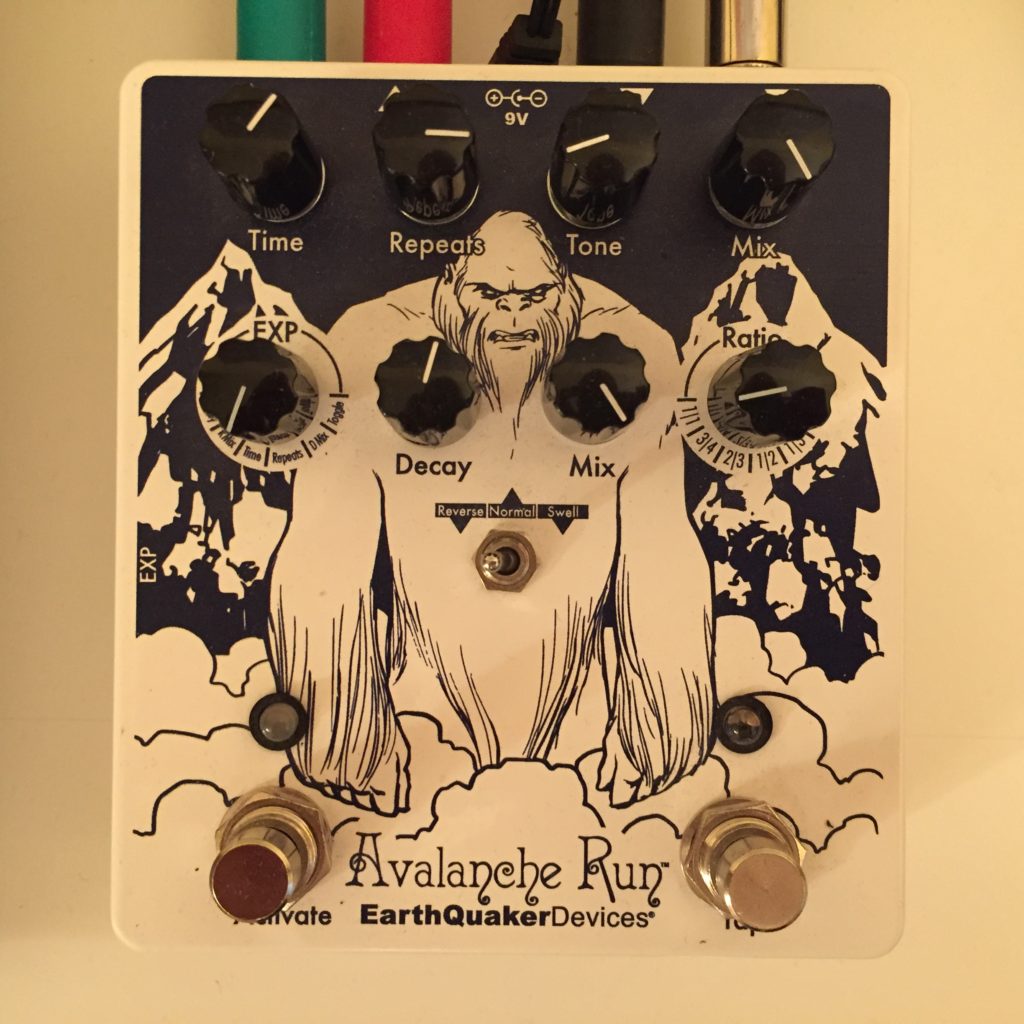
EarthQuaker Devices Avalanche Run V2
I played in the United States for the first time this year and used the remaining dollars from my fee to buy this pedal which I had been lusting over from the excellent Youtube channel Knobs. It’s quite a crazy pedal and I’ve only just started working it into my tracks properly. You can modulate delay time and create all the weird twisting sounds that keep people coming back to delay pedals, but you can also send signal from your melodic and harmonic parts to the Reverb and the pedal creates an insanely warm wash of sound which can be recorded, resampled, and used as pads. I’ve used this in a few new tracks and I’m really pleased with the results.
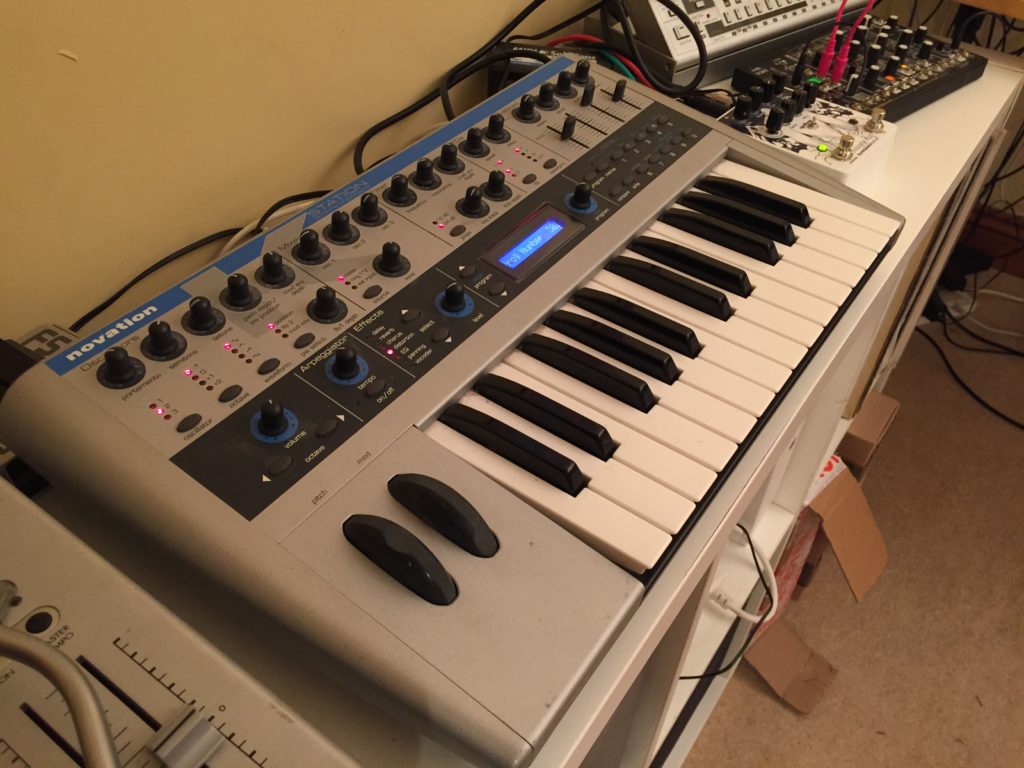
Novation K-Station
It sounds like I’ve got a fetish for cheap Novation synths but the reality is that I’ve never splashed on more expensive gear. I have to shout this synth out since it is the one that I bought when I was 17 and I’ve never sold because it wouldn’t be worth it for the £100 I would get. For years, this synth gathered dust but each time I get it out and rediscover it I remember how much I like it. The layout is simple and the sounds can be diverse. In fact, almost everything that isn’t drums or the TB-03 on my Flicker Zone EP was made by messing about on this synth. Quite a lot of this was done with players because the decay fader was knocked off in a house-move!
Editor Note: All passes have now gone. Those who have been successful have been notified.
XLR8R is offering XLR8R+ subscribers free passes to the upcoming Rakastella Festival taking place in Miami on Saturday, December 7, 2019.
The festival takes place during Miami Art Week, the city-wide occasion centered around Art Basel. Attendees can expect a 14-hour marathon party, located on the Historic Virginia Key Beach Park.
XLR8R has partnered with Rakastella to offer some free passes to our members, and with tickets currently at $85, this is an opportunity not to be missed!
For those who haven’t yet, just SUBSCRIBE HERE and email your full name with “Rakastella” as the subject to [email protected] to claim your FREE ticket. For those current subscribers, simply email your full name and “Rakastella” as the email subject.
The 16th edition of XLR8R+ is here, featuring tracks by Alec Falconer, Jack Michael, and Leif. You can subscribe here and hear snippets of the tracks below.
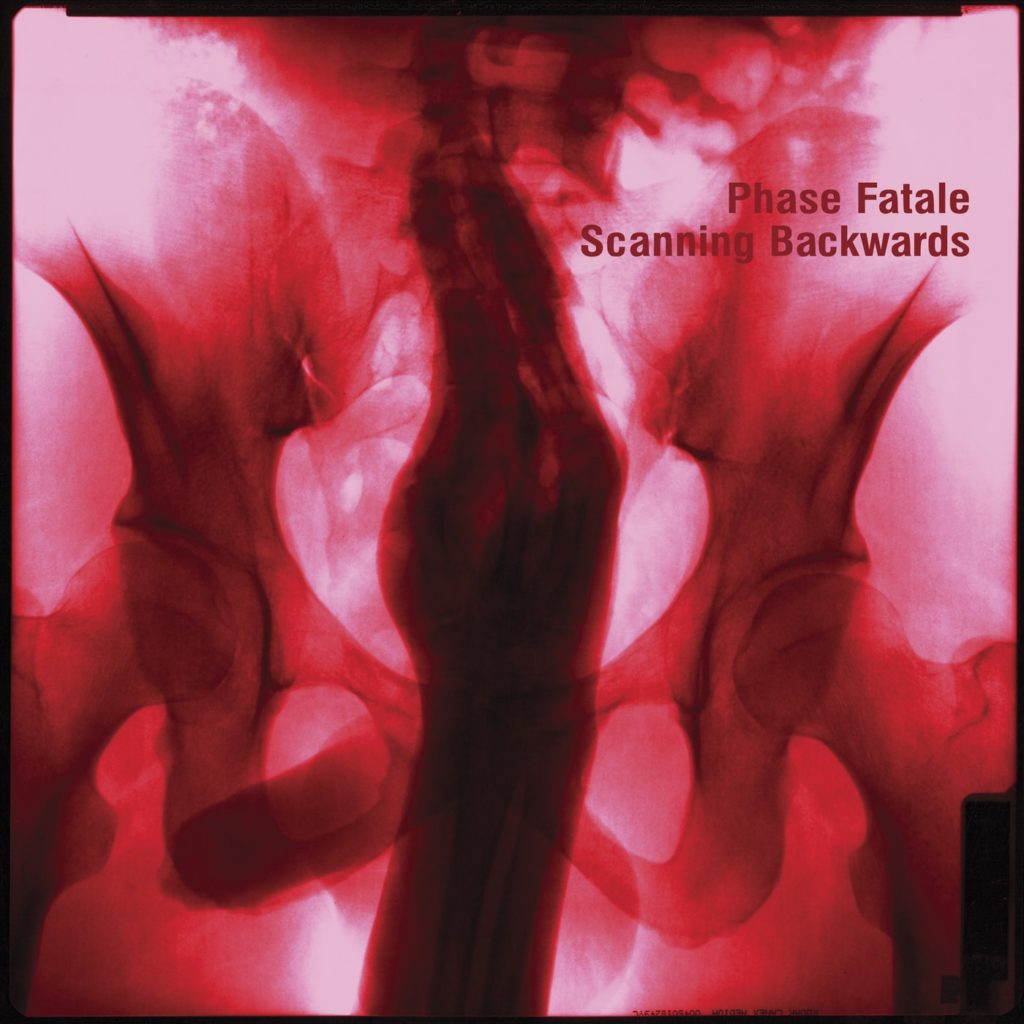
Phase Fatale (real name Hayden Payne) will put out his second full-length via Ostgut Ton’s main label.
Scanning Backwards is described by the Berlin label as “music about control.” Using the connection between weaponized sound and psychological manipulation as a conceptual foundation, Payne explores the ways in which music, particularly sub frequencies, are used to influence thinking and synchronize emotions and behavior.
Over eight tracks, the Berghain resident draws on his background as both a guitarist and sound engineer to create a heady mix of broken rhythms, noise-, and shoegaze-inflected techno, often at slower tempos. “The result is music with space and pace to expand, highlighting the intense rushes of frequencies found in both sonic warfare and functional dance music,” Ostgut Ton adds.
Payne tailored all tracks to sound a certain way in Berghain, “something I figured out through years of dancing in the middle of the floor, DJing as a resident, and investigating what frequencies really penetrate the body,” he explains. “This includes speech and high-frequency, brain-penetrating instrumentation, and drilling textures that I had not utilized so often before, but which I think also have an effect on thought and memory.”
Redeemer, Phase Fatale’s debut album, arrived in 2017 on Hospital Productions.
Tracklisting
A1. Velvet Imprints A2. Binding by Oath B1. Polystyrene B2. During the Freezing Process C1. Mass Deception C2. Proxy Contact D1. De-patterning D2. Splintered Heels
Scanning Backwards LP is out on January 24 via Ostgut Ton.
Chris Korda might be a new face to Perlon, but she is no stranger to electronic music. Korda burst on the scene in 1993 with “Save The Planet, Kill Yourself,” a rare breed of cross-over club hit and hardline eco-political statement. It came on DJ Hell’s Gigolo Records, which went on to release four more Korda classics: Sex Is Good (1998), Six Billion Humans Can’t Be Wrong (1999), When It Rains (2002), and The Man Of The Future (2003), all featuring Korda’s fearless blend of unhinged beats and piercing points of view.
In 2002, Korda released “I Like To Watch” on Null Records, the only label who dared to released it. The song presented peppy house production and a robot-tuned voice stating, “I like to watch the plane going in. I like to watch the flame shooting out.” The song came accompanied with a video featuring cut-up footage of the 9/11 attacks from the endless news replays, footage of football goals being scored, and footage of climaxes in pornography. Other artists may have regretted such a polarizing artistic statement. Not Korda. When I asked if she had second thoughts about what turned into a career-altering move, she promptly responded, “No, I had to make it.”
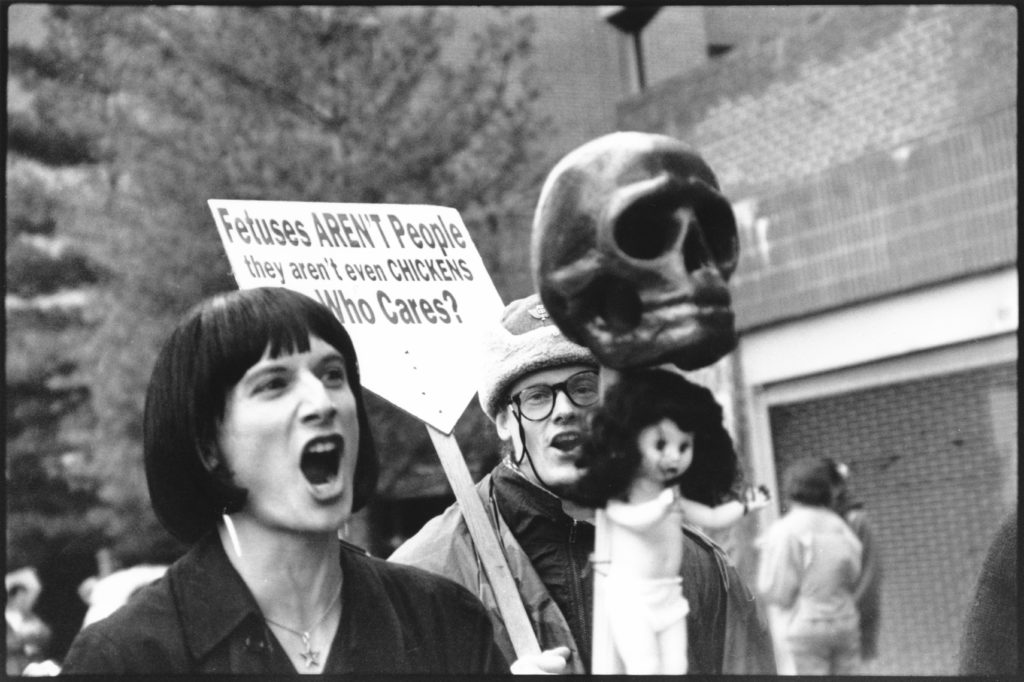
Korda’s debut album, Six Billion Humans Can’t Be Wrong, also marked Korda’s musical debut as Church Of Euthanasia, the name of the literal church that Korda founded on the premise of four pro-ecology pillars: suicide, abortion, cannibalism, and sodomy. A pure piece of ethical provocation, CoE staged protests and interventions around Boston in the ‘90s: slaughtering semen on the steps of a sperm bank, hosting human pig roasts, barbequeing fetuses at a pro-life rally, and handing out “Save The Planet, Kill Yourself” stickers at the 1992 Democratic Convention in New York by using fake press passes. Never shy to express herself, Korda also did all of this while proudly cross-dressing. In case you’ve arrived uninformed: this is not your average electronic artist.
But in the last 15 years, Chris Korda has been relatively quiet—no less forward-thinking, but in more introspective ways. Many of Korda’s early records relied on software she programmed herself in order to compose music that other software at the time wasn’t able to do. Frustrated by the sequencing limitations of the day, she coded her own software that allowed her to layer sequences of non-traditional rhythmic changes, employing a musical form called polymeter. More than that though, Korda dreamed of the potential of having a program that shifted the meter/timing of each individual track in a song, even per-step, to perform, modulate, and thus create subtle new complexities and human-like variation. Korda dubbed this “complex polymeter.”
This was the late ‘90s, thus the result was technologically primitive. It wasn’t yet the right time, and Korda had hit a creative peak with what it already offered her, so she stored the software away, and worked instead on developing the world’s first 3D color printer. It wasn’t until 2016, after the loss of her mother, that Korda revisited her software and early polymeter compositions. Upon opening the time capsule, Korda realized she was now able to complete her original vision with ease and spent the next months exploring the compositional possibilities it offered her.
What resulted was Akoko Ajeji, her debut LP on Perlon. As challenging as it is fun, Akoko Ajeji finds Korda charged with her most vital and provocative task yet: to create music that has never been heard by human ears, let alone imagined. In the wake of the album’s release, André Baum connected with Korda to learn more about her process and the story that led to this landmark moment.
You’ve just released a pioneering album on Perlon. What is the significance of the record?
Well, it’s probably the first album in the world that is entirely in complex polymeter. In terms of rhythmic complexity, it’s hard to find anything to compare it to. It’s a new approach to music composition, a new type of algorithmic music. I had to write my own MIDI software to even begin composing the album because commercial sequencers don’t handle complex polymeter. I’m presenting something that is actually new.
How do you define complex polymeter, and why would a producer wish to work in it?
I have a very clear definition of complex polymeter. It either uses three or more prime numbers (at least one of them greater than three) or it doesn’t. So using two, three, or five simultaneously is the bare minimum for complex polymeter. And most of my work uses many more primes, even as big as 37.
Complex polymeter is the frontier of music. The music industry has poured money into developing sophisticated sound design tools, but neglected the development of music itself. It has built a playground, and most producers are happy to stay in the playground and play with the toys that industry provides. Many assumptions are baked into the toys, for example drum machines typically have 16 buttons not only because it makes their development easier, but because most people are happy making four-based music, like everyone else. But the playground is a tiny island of familiar boredom: beyond its walls lies the vastness and excitement of the unknown. Not everyone wants to explore the unknown, but those who do should investigate polymeter and study my work.
Why aren’t more producers working with complex polymeter?
My theory is that it’s not being used because: one, it requires a lot of planning and math, and, two, unlike with common time signatures, there’s no tradition of polymeter in folk or ethnic music to draw inspiration from. Polyrhythm isn’t polymeter. And three, commercially available sequencers make it very unpleasant to work with polymeter.
But the real answer is that software isn’t enough. Like any tool, my software can be used in many ways. Juxtaposition of meters is the simplest type of polymeter and it’s achievable in other music tools than mine. Beyond that are more sophisticated uses of polymeter as an engine of melodic and harmonic variation. But to take advantage of such methods you need to have a deep grasp of tonality. Such knowledge is common among jazz musicians and classical composers, but in the world of electronic music it’s rare because producers focus on sound design instead.
The polymeter revolution would also spread faster if a developer ports my software to Mac, or if a big music software company “borrows” the ideas. But the best way to spread it is by making persuasive examples, and that’s something I can do, so I’m concentrating on that!
Let’s go back to the beginning. When did you begin thinking about using polymeter in your music?
Wow, a long time ago now. My first experiments with polymeter are really ancient. They’re probably from 1991. I’m not one hundred percent sure how I got the idea, but I think it just occurred to me because I’m a super curious person. The sequencer I used back then—I used a DOS version of Cakewalk, which was state of the art at that time—one of its eccentricities was that it allowed you to set each track’s loop length completely independently of the others. So essentially, in its own quiet way, it was an early version of my software. I got pretty tired of Cakewalk’s user interface, it was quite primitive. But I was rapidly drawn to explore polymeter with this. And I quickly discovered [counting] four [beats] against five [beats], four against seven, and then four against five against seven, and so on. One of the first experiments I did was take a single note and put it in 24 tracks, and then made each track one beat longer than the track above it. So that creates a very interesting characteristic melody.
How did this lead to you to creating your own polymeter software?
So I was exploring it, but I was also frustrated by the slowness of the interface, also the ugliness and clumsiness of it. So what I did for a while, because I didn’t know how to do anything else, was I reverse-engineered DOS Cakewalk. I figured out where all code and memory was to turn the tracks on and off, and then built my own software on top of that, a kind of live-performance software. You would run Cakewalk and then run mine on top, and mine would poke into Cakewalk’s memory while Cakewalk was sequencing and turn on and off the track mutes so I had my interface and I could control Cakewalk as if I had infested its brain somehow. And this was pretty ass-backwards, but it worked for a while and I did some stuff with that. But eventually I got tired of that and said fuck it: this is so important and so useful, I’m just going to have to write my own sequencer from scratch.
“I’m fairly certain I’m the only electronic music artist to have made albums completely in complex polymeter. And I was doing that from the start.”
— Chris Korda
Were there other artists at the time that you felt were doing something like this?
Nope. I hadn’t heard of Steve Reich by then, and I didn’t know about him until much later. And in techno, zero. There were no polymeter techno tracks at the time that I ever heard. Though I did hear people doing stuff with records like in the minimal scene where they’d play the same record on two turntables and do interesting things during the crossover where it’s slightly out of phase. But that’s not really polymeter; that’s phasing, and they’re subtly different and in important ways. So no, I have to say the first polymeter techno track I ever heard was a Der Zylkuss track much later on one of the Gigolo compilations that had a simple polymeter, meaning that it had one thing slipping relative to everything else. But complex polymeter, I’m fairly certain I’m the only electronic music artist to have made albums completely in complex polymeter. And I was doing that from the start. I mean on Six Billion Humans Can’t Be Wrong, my first record: “Stencil,” one of the tracks on it, that’s in super complex polymeter.
Were you making music before that wasn’t using polymeter?
Yes, I’ve been playing piano and guitar since I was a teenager. I flunked out of the Berklee College of Music, which counts for something I guess—definitely got quite an exposure to changes and how to play changes, and how to think about all that. And then had a wonderful teacher for many years, Jerry Bergonzi, who is a pretty notable tenor saxophonist, who taught me a lot about advanced harmony and how to think about tonality and different ways to change and alter tonality. So I was pretty proficient as a musician and had a lot of experience in writing harmony by the time I took this all up. But I don’t think that was the only influence. A lot of the influence for this comes from art rock. I was actually going through it the other day trying to figure out exactly where I first heard polymeter. And I’m pretty sure it was “Siberian Khatru” by Yes. That last track on Close To The Edge might have been the first polymeter track I ever heard.
What was your introduction to house music?
Well, that was all because of cross-dressing. It was because of cross-dressing that I got exposed to house music because I started hanging out in gay clubs. And it was because of hanging out in gay clubs that I heard stuff like Black Box and C & C Music Factory and so many others. I heard deep house. And deep house changed my life. It got me curious, and when I listened to the radio in my college town in Boston, I discovered they had an acid show called “Acid Burn” every Sunday, so I would listen to that religiously and that opened my horizons a lot.
How did you begin making electronic music?
I moved to electronics in the late ‘80s via building and programming my own synthesizers, then in the ‘90s, after exposure to gay clubs and deep house, I started working in Cakewalk and ultimately MIDI.
How did you transition from making electronic music to performing it?
Well, long after I had produced Save The Planet, Kill Yourself [1993] and released it, it was still sort of a bedroom project. I mean, I pressed records and they were charted a little bit in Detroit and Chicago, just distributed through DJ pools around New York and U.S., and somewhere down that line, around ’94 I think it was, DJ Hell found one of those records in a New York record store and brought it back to Munich, where his then-girlfriend, Gabrielle Meixner, my fairy godmother, heard it and started badgering Hell for months to do something with me, to bring me to Germany.
So, in the end, he tried to contact me, but it took him a while. He had no way of reaching me. Somehow it just happened through mutual friends. I went to a party in south Boston, I went to talk to the DJ ‘cause that’s just sorta what you do, and when I told him my name he was floored. He was like, “Oh my God, you’re Chris Korda? DJ Hell is looking for you!” I had no idea who DJ Hell was! So he said, “Just write down your contact info and you’ll hear from him.” And I thought, “Yea, I’ve heard that before.” Well, 24 hours later I had a fax from Gigolo Records saying something to the effect of You’re going to be a huge star in Germany. It was like something out of a comic book, it was just hilarious!
And DJ Hell came through after that first contact?
Yea, he was good as his word. He brought me to Munich and it was around then that I realized I wasn’t really prepared for any of this. He didn’t bring me to Munich first, he brought me to Cologne, to Popkomm. And I brought nothing with me except an electric guitar and a dress. And when they asked me for my tech rider, I told them I wanted a really big guitar amp and a microphone. And they’re like, “What?!” and I’m like, “Yea, you heard me,” and they’re like, “Ooook.” And so they put a big-ass amp and a microphone on stage and I did electric-guitar-and-voice-only versions of Save The Planet, Kill Yourself and some of my other tracks. People were fucking crazed! I started by giving a sermon, which is so not done in a club in Cologne during Popkomm. I started out rapping at the audience about anti-humanism and anti-natalism and over-population, and by the end people were jeering and shouting, “Shut up and play some music!” And then I grabbed my guitar, super distorted; it was kind of punk. And that was how it all got started!
So this was during the time of Church of Euthanasia?
Oh yea, those were peak Church of Euthanasia years at that time.
Church of Euthanasia protests, mid-’90s.
Let’s talk about about Church of Euthanasia. It started as a radical idea, turned official church, and became your musical project to explore eco-activism. How did it begin?
Hard question. It probably started in a Thai restaurant, as I recall. That’s a little bit vague but what happened was the slogan “Save The Planet, Kill Yourself” had come to me. And I started making stickers with that slogan because I was super into making stickers. And I had handed them out on the floor of the Democratic Convention in 1992 in New York City, which I gained access to by forging press passes. And before we got thrown out of there, I handed the stickers out to all kinds of big wigs in the Democratic party and it made the Daily News. This was arguably the first action of the Church of Euthanasia. There’s a picture of me in the Daily News holding a “Save The Planet, Kill Yourself” sticker, and I realised that it was catching. Everyone wanted one, even super square people wanted it. Soon after that, I had this strange dream where the lyrics for “Save The Planet, Kill Yourself” came to me as an alien voice, like the one in the song. And I’m telling a friend about all this and we’re sitting in this Thai restaurant, and he said to me, “You need to start a church, that’s what’s happening here.”
“I think that if you make the track in half an hour, it’s going to be hard to avoid it being somewhat generic. It’s possible, it could happen, but it’s unlikely that it will be really revolutionary in its ideas and content.”
— Chris Korda
So DJ Hell brought you to Germany while you were running Church of Euthanasia in Boston. How did these two threads come together?
At first, it wasn’t obvious that the German thread was going to lead to anything. I had never been to Germany, and I didn’t know much about German culture. It had certainly not dawned on me the extent to which Germany was ground zero for electronic music and I was stepping into a kind of vacuum that was going to absorb me and lift me up. And yet that’s what happened. But it became pretty clear, pretty fast.
Within a year it was obvious that I was a hit. “Save The Planet, Kill Yourself” was a hit. That’s what every label wants, a hit. And the rest of it is history. Once you get a hit for a label, they give you some latitude. The next thing you know, they say, “You wanna do an album?” So I spent the next couple of years frantically coming up with enough material to fill an album. Initially, I didn’t have anywhere near enough material; it has always been a problem: I’m a very slow worker. And the things that I do are very ambitious, so they take time! You know, I watch guys work, they make an album in half an hour or at least a track. I could never, ever do that.
Do you think there’s a correlation between good music and the time it takes to make it?
I think that if you make the track in half an hour, it’s going to be hard to avoid it being somewhat generic. It’s possible, it could happen, but it’s unlikely that it will be really revolutionary in its ideas and content. It’s more likely that something revolutionary requires a lot of preparation. And a lot of deep thought, and analysis, and testing, and experimentation. And it’s been a problem. Sometimes it’s so daunting and discouraging that I gave up. That’s part of the reason why Akoko Ajeji took so long. A lot of it was because I had to go back and work for a living because I couldn’t make enough money as an electronic musician, which is a whole other subject. But a lot of it was discouragement! It’s difficult to think outside the box. Every one of my tracks is its own crazy, weird universe. If you go through Six Billion Humans Can’t Be Wrong and The Man Of The Future, they cover an enormous range.
There seems to be a connection between your work in resistance—to status-quo, to consumerism, to gender norms, to abuse of the environment, to laziness in music. What do you think unifies it?
Thinking outside the box. Seeing things like an alien. I approach things a lot of the time like an alien. People even sometimes say to me, You’re like an alien. And I feel like an alien. I mean, The Man Who Fell To Earth notwithstanding, I sometimes feel like David Bowie’s character. I see things through eyes that are not normal. And what I see is not what most people see. And I write about it.
After the early 2000s, you took a long hiatus. What did you do during this period?
I became a Visual Jockey for a lot of those years, and I spent 18 years as a 3D-printing programmer. I did some revolutionary work with that. I helped design the world’s first color 3D printer. The very first one! It was literally a single one, eventually called Z402C. But it was a single prototype and we sold it to a Japanese company for a million bucks.
Who is “we”?
The company I worked for, Z Corporation. The deal was the Japanese company got to have exclusive use of that for something like six months. But in exchange, after those six months were up, we got to develop it as a product. So that took up the next 15 years of my life, developing a long succession of color 3D printers that got better until they became absolutely life-like. You could print incredibly realistic models of stuff. If you had high-quality 3D scan data, you could print a doll of you that looked just like you. With shadows and everything. It was spooky. So that was very interesting, I don’t regret any of that. It was very well paid. But it had nothing to do with music particularly!
“There’s just nothing like stuffing your mom’s things down a trash shoot in the middle of the night to show you that this is not forever and time is running out very quickly.”
— Chris Korda
How did you come back to making music and releasing on Perlon?
Well, a lot of things happened at once. In truth, everything changed in 2016. In 2016, I was working at my 3D-printer job and life was pretty much continuing as usual.
And then out of nowhere, my mother died. And that really changed everything. I can’t exactly explain all the details. For one thing, I had to spend a year of my life dealing with that. It’s a big thing. She died in the apartment I grew up in. So some of my original stuff was still there, pictures and things. It was spooky to be in that apartment. I remember it from the earliest days of my life. So it set me back. But the up and shot of it was it really put things in sharp perspective for me. There’s just nothing like stuffing your mom’s things down a trash shoot in the middle of the night to show you that this is not forever and time is running out very quickly. So I quit my job and I started on settling my mother’s affairs and I also started getting back to all the things I said I would get to some day. And the first item on that list was finally tackling the sequencer.
How did you go about this, and how did that become Akoko Ajeji?
I just got it done! I built the core of it. There’s a core somewhere in there that knows how to hand data to Windows. I got that part working. And from there, it’s easier. Then it dawned on me as I started developing it how there were many more degrees of freedom that were accessible to me because I was no longer limited to 64k, as I was during the DOS days. And the processor is a billion times more powerful, literally, and can do a lot more per every microsecond. Many things that would have been prohibitively expensive computationally before became no problem. Plus, I even knew about multi-threaded programming by this time and there was even a model for that. It was quite easy to make the thing a lot more intense and complicated. New degrees of freedom started to show up and the evolution of all those new degrees of freedom is inscribed in Akoko Ajeji. Essentially, the album is a history of the development of my polymeter software.
If this is truly something new, then I would expect there would be some friction to this being a dance record. Can you share some thoughts on this?
I have been making dance music in complex polymeter since the mid-’90s, and have watched people dance to it countless times. The key is that the loop lengths I’m juxtaposing all have a common denominator, typically a 16th note. In other words the loop lengths are 5/16, 7/16, 11/16 and so on. Fast syncopated 16th note rhythms are exciting and often inspire people to dance. The issue can be that not only is polymeter unfamiliar, but it may interfere to some extent with what most people perceive as the desired function of electronic dance music. So if people have been trained by experience to want music to be dumber, and then you suddenly try to make it smarter, you have a problem! People will say, Hey, I respect this, but it’s not what I need right now because I’m programmed to like this other thing, and my whole party-social life is constructed around this aural wallpaper.
Why do you think the industry has become so conformist?
Like consumerism more generally, the electronic music industry is global and requires interchangeability, standardization, and homogeneity. The industry generates significant income, primarily from the sale of alcohol, but also from ticket sales, merchandise, travel, etc. Producers get a slice of this income, and often depend on it to stay afloat. This financial dependence creates an inherently conservative dynamic. People are asking themselves: how can I can be the flavor of the month? But in music, as in visual art, it’s the wrong question. The right question is: what is my artistic vision, and how can I follow it? There is no greater honor than discovering something truly new. Achievement is its own reward.
How did the album end up on Perlon?
Well we can thank Seth Troxler for that. And Ricardo [Villalobos]. And of course Thomas [Franzmann, Zip] himself. But none of it would have happened without Seth. Seth made the connection.
Did you send him the record?
I did. I sent it to him just because, well, that album had more than a dozen rejections from labels big and small. So at that point, in 2018, I was just working my way through my Facebook friends thinking, Who do I know who’s into music? and then I ran across Seth and I thought, Well, we’ve never actually chatted but here he is, I’ll send him a message. It doesn’t cost a dime, you know, why not? And he responded immediately, and when I told him I had a new album he just lit up. He was super excited. He said, “Send it to me! I want to hear it!” So I sent it over and he listened to it right then and there with his girlfriend. They sat there in his apartment in Ibiza and listened to it, messaging me back as they listened to it. And after that everything changed; my world became very, very different overnight!
“By this point I had completely given up. I was preparing to give it away for free on YouTube! So it’s one of these rags to riches stories.”
— Chris Korda
How did it evolve from there?
Seth had ideas. He played it for a lot of different people. Originally there was talk of releasing it on Tom Trago’s label. But that didn’t work out for various reasons. There was talk of Seth releasing it. We would message back and forth periodically. And he messaged me excitedly one day saying he found just the thing.
So, I’ve heard this story from multiple sides now—from Seth’s side, from Ricardo’s side, from other people’s sides—so I don’t think what I’m saying is privileged information or anything. But I think what happened was that Seth and Ricardo were in the same place somehow and playing some tracks and Ricardo heard Seth play Akoko Ajeji and said, What the hell is that? I wanna hear that! and got interested in it. And that’s how it happened. Ricardo heard it and had never heard anything like it really, and then he brought it to Thomas. Everyone has a different telling of this story, so it’s kind of apocryphal. But something like that happened.
https://www.youtube.com/watch?v=2ng1_yqKZBA
So Zip took it immediately? Like, as-is?
Yea, once that happened it was all pretty straight forward. “We love it, we want to release that!” And I’m like, “Ooookayy.” By this point I had completely given up. I was preparing to give it away for free on YouTube! So it’s one of these rags to riches stories. I joked around that by that point that I should be wearing face protection after having so many doors slammed on my nose. It only took the one right person to hear it. But the album is extreme. And it remains to be seen what will happen now. I’m fascinated. I want to know.
It’s like watching a new organism grow.
It’s like watching a firework explode. I just don’t know how it will end. And it could be that the moment has come for this. It could be that it will catch on. I hope so. There’s a road that doesn’t involve electronic dance music at all, where we start creating super advanced polymetric music that’s probably atonal in some way, just for people to experience and listen to. Of course, this leads in a whole other direction in my life. I would like to go in that direction, but I don’t know if I can make it work. I may do it anyway, even if there’s no audience for it, because as an artist I have to stay true to my muse, to my inspiration.
It seems like it’s led you well so far.
Yea, it hasn’t been wrong so far. Not all my projects succeed, some of them fail. But I feel very strongly that I should never be making music in order to satisfy a particular audience or to achieve some specific financial objective. That’s all the wrong way of looking at it. You have to ask: what do you hear? Where is your heart? What is the muse singing for you? Whatever that is, you should do that. And if people like it or don’t like it, that’s after the fact. So I think if you follow that approach, you can’t go wrong. The worst you could be accused of is being unsuccessful. I’m OK with that. I’ve been unsuccessful a lot. That’s fine.
Squarepusher (real name Tom Jenkinson) is back with a new album, Be Up A Hello, out in January on Warp Records.
Be Up A Hello is the first Squarepusher album in over five years. It sees him delving into the same bewildering array of vintage analogue and digital hardware that helped him develop his sound in the early ’90s, but exploring new sounds and textures within it. These synths, effects units, and even a Commodore Vic20 are in contrast to the tools he used to create 2015’s Damogen Furies, his last album, created using cutting-edge software that Jenkinson developed over the course of 15 years.
The album, described by the UK label as “celebratory,” mixes breakbeat tracks such as “Nervelevers” and “Terminal Slam” with pieces loaded with visceral atmosphere and melody. Darker moments such as “Vortrack” and “Mekrev Bass” illustrate Jenkinson’s fascination with finely balanced psychological overload. The album gives a nod to the mayhem, joyousness, and abandon of the DIY Essex rave scene that was a strong determinant in Jenkinson’s work.
Jenkinson’s approach to making the album was fast-moving and spontaneous. The nature of the analogue equipment requires many parameters to be tuned to generate a given set of sounds, making it difficult to revisit tracks to improve mixes and adjust timbres. Consequently, he wrote it in the mode of a diary—pieces were finalised and recorded in a single take, after which Jenkinson moved straight onto the next piece.
Fans can enjoy a taster as the double-A side 12” Vortrack will be released on December 6, featuring Squarepusher’s own Fracture Remix which already caused a stir when dropped into his brain-melting breakbeat and jungle set for Warp’s 30th anniversary NTS takeover in June.
Tracklisting:
A1. Oberlove A2. Hitsonu A3. Nervelevers A4. Speedcrank A5. Detroit People Mover B1. Vortrack B2. Terminal Slam B3. Mekrev Bass B4. 80 Ondula
Be Up A Hello LPis out on January 31. Meanwhile, you can stream “Vortrack” and the Fracture remix below.
EPROM has put out a rave-inspired new EP, titled AIKON.
AIKON features five new EPROM tracks, including a collaboration with G Jones on “Daemon Veil.” The release, which was in the works for over a year, sees the Portland-based producer “delving back into his trademark sound while pushing the envelope as he experiments along the way,” Deadbeats, the label, explains.
Standout cuts like “Shirow Softworks” hear EPROM construct a conglomerate of trip-hop-inspired beats and melodic synth concoctions that as standalone features seem unrelated, but are woven together in such a way that creates a complex and heady soundscape. “Hope” adversely kicks things up a notch as EPROM tries his hand at bass-laden rave music, fusing together elements of throwback breakbeat and electronica.
“Each tune represents a unique point in my trajectory,” explains EPROM. “For me, this release represents a step onto a bigger stage. I have always been reluctant to fully embrace the ethos of dance music, so I have previously kept my work underground, and to a certain degree, intentionally inaccessible. This EP is my take on pure rave music.”
AIKON comes on the heels of a string of releases that include two studio albums, over six EPs, and singles via labels including Warp, Rwina, Surefire, Cloak x Dagger, and more.
Tracklisting
01. Hope 02. Daemon Veil w/ G Jones 03. The Cat 04. Phoneme Gothik 05. Shirow Softworks
AIKON EP is available now, with a full stream below.
XLR8R has an announcement to make: moving forward, our mixes—the podcast series and all—will all be hosted on Mixcloud Select, a fan-to-creator membership layer to Mixcloud that enables audio creators to get direct support from their fans.
We have a number of motivations for making this switch, but fundamentally it’s because we believe that creators—in this case, the producers; those making the tracks in the music—should be paid for their work. With this move, each time you listen to a mix, the producers will be paid.
This doesn’t mean that we won’t be using Soundcloud, however. We’ll still be uploading all of our mixes there, for you listen to when and where you want, but if you want to listen to these mixes offline—if you want to download—then you’ll need to swing by Mixcloud, where the mix will be ready and available for Mixcloud Select subscribers to download to the Mixcloud app.
Subscription costs $2.99/month. Of that fee, 60% goes toward the artists, labels, and publishers who own the rights to the tracks played in that creator’s shows, as well as a small credit card processing fee of 5%. The other 30% is then split between the Select “creator”—in this instance, XLR8R—and Mixcloud, which will allow them to invest back into the platform and keep things running.
Remember: this is directly supporting the artists who are making the music that you enjoy. Without them, this scene couldn’t operate.
In addition to this, the weekly XLR8R podcast, which arrives every Tuesday and has done for over 500 consecutive weeks, will now be available early on Mixcloud, as a little treat for those who have subscribed. We’ll also be adding regular mixes, live and studio, which will only be available via Mixcloud.
One important caveat to this, however: all mixes will be added to the XLR8R+ member’s area once they’re uploaded for streaming, so XLR8R+ members have direct access to the mixes.
You can learn more about Mixcloud Select here, and subscribe to XLR8R‘s Mixcloud Select channel here, starting with a mix from Answer Code Request.