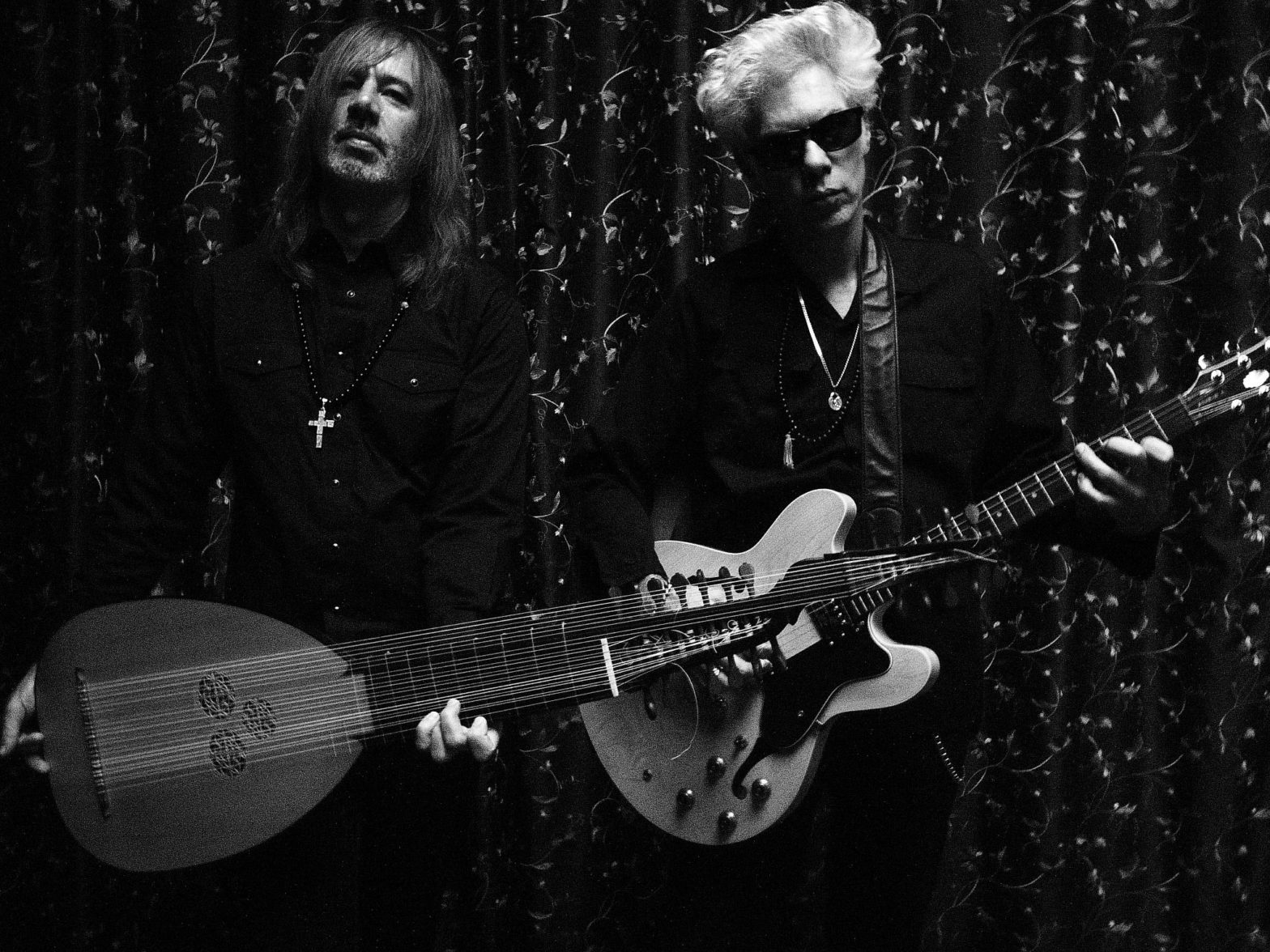
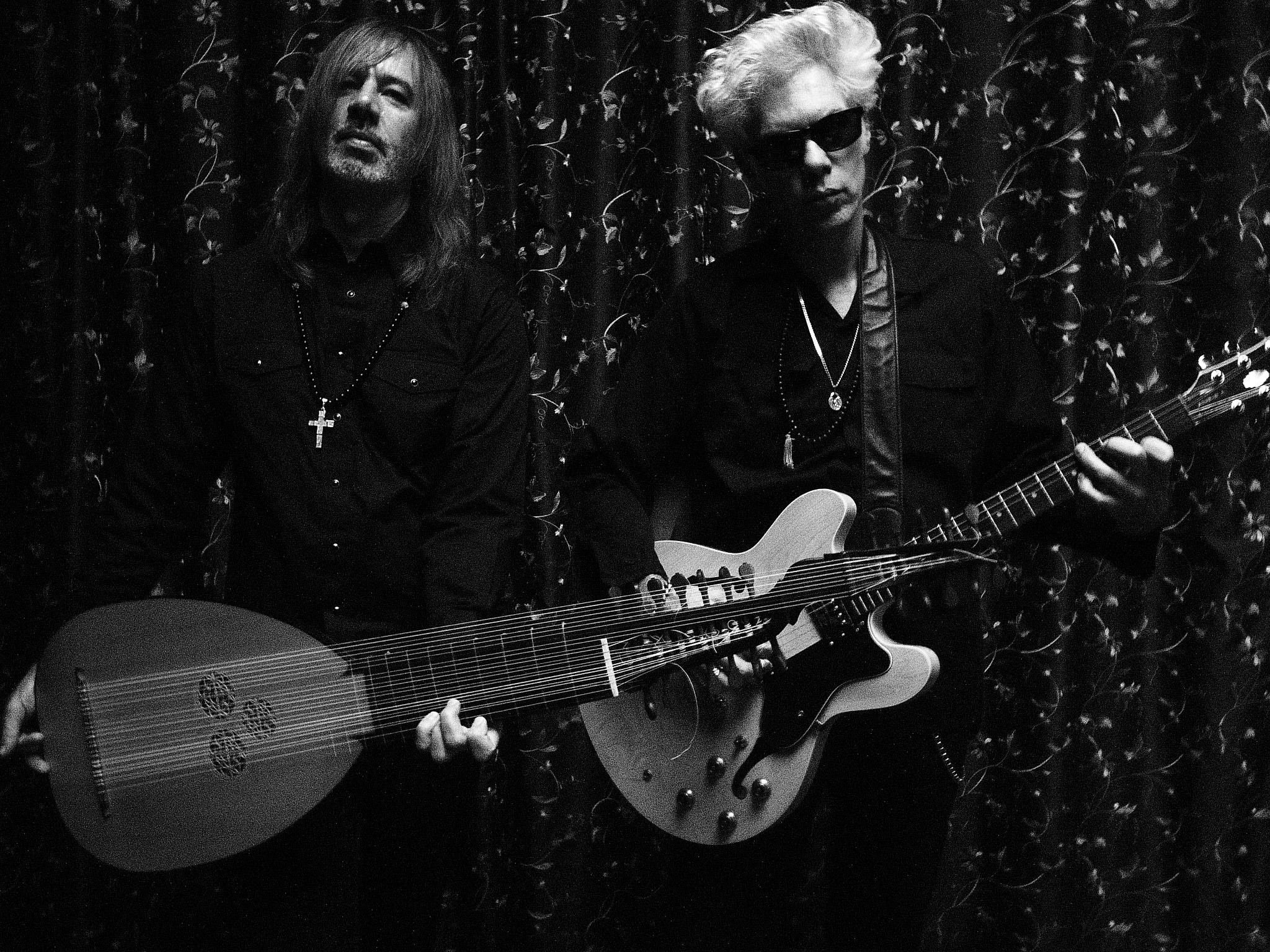
Van Wissem and Jarmusch have a working relationship that dates back to 2006, when they ran into each other on the street in New York City and quickly struck up a friendship. Van Wissem contributed to the soundtrack for Jarmusch’s 2013 movie Only Lovers Left Alive, and the two have collaborated on three previous studio albums—Apokatastasis, Concerning the Entrance Into Eternity, and The Mystery of Heaven.
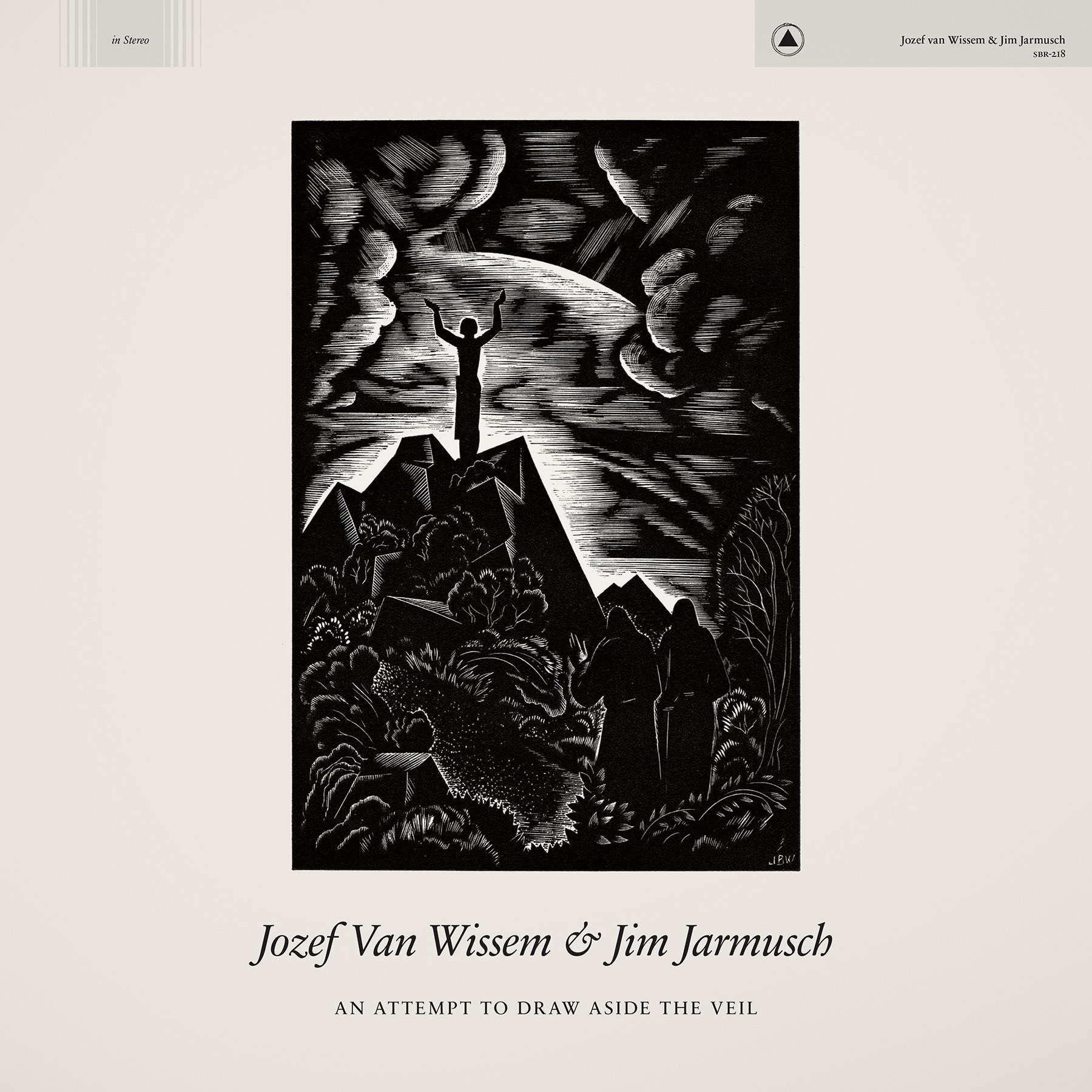
An Attempt to Draw Aside the Veil is their second release as a duo for Sacred Bones Records, following The Mystery of Heaven, and its narrative picks up where that album left off.
Like The Mystery of Heaven, An Attempt to Draw Aside the Veil delves into the theology of William Blake and Emanuel Swedenborg, this time also exploring the work of Russian occultist and philosopher Helena Blavatsky. The album is mostly instrumental, so the dialogue between the esoteric thinkers who inspired it and Van Wissem and Jarmusch is expressed primarily in the song titles—fittingly arcane phrases like “Concerning the White Horse,” “The Two Paths,” “When the Sun Rises Do You Not See A Round Disc of Fire.”
Musically, we’re told that the album finds much of its power in minimalism. Van Wissem’s lute traces the outlines of subdued electronics and ominous guitar drones laid down by Jarmusch. It’s a subtle album, and “repeat listens reveal vast depths in its dark corners,” we’re told.
Tracklisting
01. Concerning the White Horse
02. Dark Matter
03. The Unclouded Day
04. The Two Paths
05. Lost Continent
06. Final Initiation
07. When the Sun Rises Do You Not See a Round Disc of Fire
An Attempt to Draw Aside the Veil LP lands on February 8, with “Concerning the White Horse” streaming below.
Lines of Sight follows Thorne’s work as artistic director of collaboration-focussed group Immix Ensemble. Together with experimental electronic artist Vessel, he co-wrote Transition, released on Erased Tapes in 2016, described by BBC Radio 6’s Mary Anne Hobbs as “a remarkable new piece of music.” More recently, he worked with acclaimed modular synth wizard Luke Abbott to create a four-part suite which was premiered live in June 2017. Immix Ensemble have also performed special live commissions with Kelly Lee Owens, Dialect, Jane Weaver, and Bill Ryder-Jones, among others.
Described by the label as “deeply moving, full of otherworldly beauty, and rapture,” the album is “alive, throbbing like a circulatory system, colourful and glowing.”It’s inspired by birds-eye aerial images and the idea of perspective—how something incredibly complex like a river or the surface of the ocean is reduced to a simple line or shape when viewed from the heavens.
The first track under Thorne’s own name, “Iroise” was recorded for the Erased Tapes 10th anniversary release, 1+1=X, alongside works by Nils Frahm, Penguin Cafe, A Winged Victory For The Sullen, and Rival Consoles.
Tracklisting
01. From Inside, Looking Out
02. From The Other Side Of The World
03. From The Heavens
04. Pyriscence
05. Threnody For A Burning Building
06. Fear Of Floating
Lines of Sight LP will land on March 15, with “From Inside, Looking Out” streaming below.
Natural Sciences and Textasy/Dustin’s FTP label will present Texas Terrortech Volume 1, a collection of boosted ghetto-tech and Miami bass edits in the vein of DJ Godfather/DJ Assault. Coming out on March 29, the release comes with an insane 100+ track mix of unheard bootlegs and original material with pre-loaded Rekordbox metadata so DJs can make their own versions in the club.
“Texas Terrotech is a combination of hyper-frentic futurism with the gritty global sound of the streets, wherever it comes from. It’s the pop music on the radio, combining that with innately adaptable, yet eminently absorbable form which evolved in these different little things, all compatible, yet closely related. When they are decoded from the genome of our global musical collective, their inter-relatedness becomes even more clear, and a new perspective can be gained. The internet made everything smaller. It turned the territory into the map, destroying the physical borders between geography and genres, reducing it into digital code, breaking it into bite-sized bits. This is the sound of the phuture digesting the people.” — Natural Sciences / FTP
In support of the release, you can download Textasy’s “Woodgrain,” in full via the WeTransfer button below, or here for EU readers due to temporary GDPR restrictions.
These are strange times for Giegling. Five years ago, the crew from Weimar were darlings of Discogs and the dancefloor, touted by critics and DJs, adored by fans of techno, house, ambient, and hip-hop. Traumprinz had emerged as one of the most fantastically mysterious artists in a generation. Now, as the label approaches 10 years of existence, Traumprinz has severed ties with Giegling, while Konstantin—one of the label’s founding members and by many accounts its driving force—stands accused of sexism, condemned by more than 2,000 signatures in the buildup to his controversial appearance at ADE festival last October.
Konstantin’s actions are just one example of the sexism still rife in electronic music. Discrimination makes the scene uncomfortable and dangerous for women, leading to fewer women appearing in clubs and the pages of music publications. This shouldn’t even need to be said, but if music is dominated by men—and largely men from the same background —it will end up sounding incredibly boring. Music needs diversity. For this reason, any sympathy for Konstantin is misplaced.
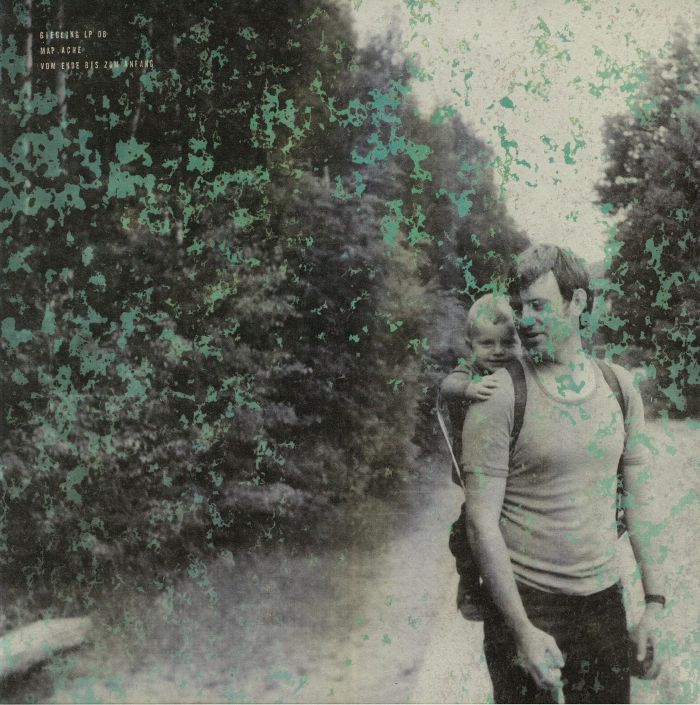
Amid all this, the label continues to quietly release music, including a charming second album from Map.ache (real name Jan Barich), the first Giegling record since ADE, squeezed out in November last year. Though it might be convenient to argue that Vom Ende Bis Zum Anfang (translated as “From the End to the Beginning”) is an implicit commentary on the Konstantin controversy, I shan’t, because—seriously—it isn’t. It’s hard to completely separate the album from its context, especially concerning a label that has boasted such a tight-knit family feel ever since its inception, which may be enough for some to avoid all Giegling releases from now on. And yet the album warrants discussion.
This is partly because it is, at times, very good, but also—crucially—because it, like so much of Giegling’s catalogue, means something to lots of people. Giegling records continue to sell fast and at high prices, including a recent EP from emergent producer Molly, a rare release from a woman on the label. Like it or not, art has the power to affect a beholder beyond any preconceptions about who made it. And is this not true in electronic music more than most art forms? This is not a comedian making ill-judged jokes in the wake of sexual abuse accusations, or a rap album which fails to address allegations of violence in a previous relationship. This is techno, house, ambient, almost entirely wordless, bearing no explicit reference to its real-world context.
Why is Map.ache’s second full-length a hit with listeners? Well because, like much of Giegling’s catalogue, it is subtly beautiful, and occasionally brilliant. Its opener, “Seis,” is nothing short of lovely, sweeping arcs of noise that sound best when introduced three quarters of the way into Map.ache’s Leaving mix, an all-original 50 minutes released about a month after the album. The track’s wistful sighs border on the nostalgic, but there’s nothing so snivelly about “Errante,” a deep 2-step cut befitting of Ostgut Ton (which is high praise at the moment) and capable of turning any mediocre set into catatonic bliss.
After-hours club moments are where Map.ache is at his most devastating. “Homerun” is Vom Ende Bis Zum Anfang’s standout: a looped house vocal gradually recedes behind clouds of ambient, building towards a heady breakdown in which the anonymous diva emits a yowl that will have hairs standing on end if ever dropped at peak time. The unerring use of vocal samples is, for my money, what sets Giegling artists apart from all the other Kompakt/Basic Channel acolytes in contemporary minimal techno, and Map.ache repeats the trick on ambient cut “Haus Without Walls.” An ode to Chuck Roberts’ “My House,” it uses the famous lines (black/white, Jew/gentile…) previously sampled by Rhythm Controll and Mr. Fingers, bouncing them pleasingly between chords.
The sample in “Copy Love”—“what a trii-iii-iip”—is either boundlessly wonderful or just a bit… wet. Decide for yourself. It’s sort of like Traumprinz lite, using Moby-esque vocal loops and big cuddly builds that might please a casual listener even if it’s unlikely to impress many who are familiar with the usual Giegling formula.
Some of the beatless moments, like “Birthday 2.0” and closer “Arruve,” feel somewhat ponderous, as though included simply to turn a collection of standalone club tracks into an album. Often the combination of ambient with beating rollers signifies a natural technoid losing themselves in the search for concept. Such a perception is limiting—there are many albums in which ambient and club tracks work together to create an overall feeling. But Map.ache’s ambient outings are decorative at best; I’d much prefer five more tracks like “Homerun.”
For that reason, Vom Ende Bis Zum Anfang doesn’t bang as hard as Map.ache’s first album, Ulfo, or any of his invariably brilliant remixes. Instead this is a broadly pleasant listen, with little pockets of delight waiting to charm anyone patient enough to look for them. Though held back by a few dithering moments, its endorphin rushes are up there with the very best goosebump techno.
Head to giegling.net and you’ll find a series of typically enigmatic messages, presumably pertaining to the label’s 10th anniversary. Among them are “changing myself is easy” and “from now on only music.” Well. To make amends, Giegling will need more than just music: releasing more records by women and opening a dialogue with anyone upset by Konstantin’s behaviour might be a good idea. Otherwise, records like Vom Ende Bis Zum Anfang will be tainted. Nevertheless, Map.ache’s second album is emotive and rewarding, and as likely as most other Giegling records to have fans reaching for their wallets.
Tracklisting
A1. Seis
A2. Dream / Awake
B1. Loosing is not an Option
B2. Errante
C1. Friden
C2. Birthday 2.0
D1. Homerun
D2. Haus without Walls
E1. Copy Love
E2. You need the Devil
F1. Salus
F2. Arruve
Vom Ende Bis Zum Anfang LP is out now via Giegling.
In support of XLR8R+ and independent music, we’re now compiling 10 of our favorite Discogs gems into an easy-to-digest list each month; all submissions come from independent labels. You’ll perhaps know some but you’re unlikely to know them all—but these are some of the tracks that are on repeat week after week in the XLR8R offices. For our fifth edition of 10 Discogs Gems, we’ve gone for a deep house-, minimal techno-, and garage-inspired list.
XLR8R+ is a monthly subscription service to complement the main XLR8R site. By subscribing to XLR8R+, you’re helping to allow us to continue doing what we’ve been doing for over 25 years: finding, curating, and serving the best electronic music out there, without paid influence. Each month, we share three unreleased tracks from three different artists—both known legends and lesser-known pioneers—that we feel are pushing the scene forward in inspiring ways. These tracks will be available for download in high-quality WAV format for the duration of one month; subscribers for that particular month will have them. They will not be available anywhere else and there will be no access to archived material—join our movement to keep independent journalism alive. You can find information on the latest edition of XLR8Rplus here. XLR8Rplus 007 features cuts from Robert Dietz, Julia Govor, and Forest Drive West.
A piece of classic, proper deep house from back in 2003 by Smooth Society (a.k.a Jörg Fiedler & Thomas Neumann). There’s very little info on the duo but this is too special a track not to include, with its deep chords and bassline perfect for any time or mood. Released on German Deep House label Auris Recordings—ran by Pino Shamlou, Jay Eff, and Frankman—”Escape From A Restless World” is our pick from a string of quality releases from 2003 to 2005. Also included on the record are three remixes, which are all well worth checking out.
Grant Nelson (a.k.a Bump & Flex) has been celebrated as one of the original forefathers of garage. This is due to his sound in the mid-’90s having such a big influence on the ‘Sunday Scene,’ which went on to become UK garage. He started using the name Bump & Flex in 1997 and went on to release this Goldie remix of “Believe” in 2001. The track was actually made in 1997 but wasn’t released until four years later on Nelson’s own label Swing City Renegade.
Uruguayan DJ-producer Fernando Zapico (a.k.a Z@P) has been producing and playing out since the early 2000s. A regular figure at his iconic hometown club of Phonotheque in Montevideo, Zapico soon became one of the biggest names in the thriving South American underground scene. He regularly plays all over the world and is a resident DJ at the Cartulis events, the label from which “Tracid” was released in 2018 on Cartulis Music. “Tracid” was a track that was consistently played out among house artists last year, and rightly so—it’s got a thumping groove layered with spacey synths, perfect for the club dancefloor or a festival.
Get a free ticket to see Z@p play on a lineup featuring Zip, Baby Ford, Laurine & Cecilio, Junki Inoue, and more at the upcoming Cartulis Day party at FOLD in London on January 26 by subscribing to XLR8Rplus. More info here.
Forest Drive West has always kept a low profile and for good reason. Outside of producing music, he is also a full-time school teacher and father. He learned by playing records at friends’ parties and small club nights, among them Carbon, a forward-thinking drum & bass night that will see its 15th birthday this year. Inspired by the music he was hearing, he then began to produce himself, entirely self-taught. “Jungle Crack” was released on Rupture in 2016 on the incredible EP of the same name from which we could have picked any of the four tracks available. Each one showcasing the diversity of jungle, bringing something new to the genre that we haven’t heard for a while. Listen to a snippet of his recent addition to XLR8R+007 below and subscribe here to get the full track.
Chicago native and house legend Boo Williams started DJing back in 1981 and experienced the legendary early days of house in the late ’80s and early ’90s. His back catalog is full of tunes that were made in the ’90s but sound just as fresh now as they did then. Boo Williams was part of the Strictly Jaz Unit along with close friend and regular collaborator Glenn Underground, as well as Vick Lavender, Tim Harper, Brian Harden, and Dae Dae. “Crying Black Man” was released in 1999 and has been re-issued since but the original was on house label Three to Five.
Julia Govor grew up in Ochamchira, a small city on Abkhazia’s coastline, later moving to Russia and learning to DJ and produce. She then moved to New York, playing alongside Jeff Mills and Richie Hawtin, and gaining support from Ricardo Villalobos. Govor enjoyed a breakthrough year in 2017 and in 2018 kicked off her own imprint, JUJUKA, which is where this track “1984” comes from. Described as a “multidisciplinary art project,” a JUJUKA release incorporates music, graphic artwork, and humorous comics based on electronic music culture. Her XLR8R+007 contribution, “TT3,” can be heard below, with the full track available by subscribing to XLR8R+here.
Primitive Records was a UK tech-house label owned and run by Chris Duckenfield and Richard Brown, the duo behind Swag (not to be confused with Croydon’s Swag Records), famed for their remixes and releases on Jus’ Trax. Along with labels like Eukahouse, Wiggle, Wrong, and Surreal, Primitive Records are seen as one of the founding labels behind the original tech-house sound, which has evolved beyond comparison into the tech-house genre we know today. For this remix, Asad Rizvi (a.k.a Silverlining), teamed up with Kester Lyddon as Appleheadz, producing it in Lyddon’s studio and mixing it on a Neve desk and some high-end outboard. Silverlining is one of the true underground legends of the scene, still going strong since the mid-’90s, releasing tracks and playing out regularly. He spoke to us about the track: “I think it slipped under the radar a bit back then so it’s great to see people appreciating it so many years later.” Expect a re-issue later this year…
Hailing from Frankfurt, Robert Dietz is a DJ-producer who has consistently adapted his musical style. He made his name quickly from 2008 onwards via releases on labels such as Cécille Numbers, Be Chosen, and Deep Vibe Recordings with a more hard-hitting house/techno sound. In recent years, however, inspired by the new sound of Frankfurt and the GOSU record store, Dietz seems to have entered into a new sphere of his sound. His 2017 EP on Truth Be Told is definitely worth a mention as it was a close call between the track “Kinda Nice” and the eventual choice, “Kitkat.” In the end, it was the complex sounds and breakbeat style of “KitKat” that came out on top, released on the Micro Dosen EP via label Blank State. His contribution to this month’s XLR8R+007 stays true to this new ethos and is a typically brilliant live studio recording that mines a deep and driving middle ground between heady house and techno. Subscribe here to download it and listen to a snippet below.
Whether as MJ Cole or one of his many aliases, Martin Coleman has consistently produced track after track of timeless beauty. The number of times we’ve dug for a garage track and found out that the person behind it in the small text on Discogs was MJ Cole is more than we can count and he’s still releasing quality with his Foundations EP coming out late last year. “Never Forget” was released in 1997 on the Datuna EP with a slow building start, hypnotic chords, and vocals that build up to a shift-changing garage drop.
Bucharest-based producer Sublee (real name Stefan Nicu) collaborated on the Outofstock 01 EP with Audiotheque, a duo made up of Andrey Kharitonov and Sorin Timofti, also both from Romania. The wealth of talented producers and DJs coming out of Romania has been building for a while with an increasing amount being booked to play all over the world, with Sublee one of the leading lights. His releases show a diversity of musical knowledge being showcased in so many different emotive ways through house, techno, and minimal. It’s no surprise that he used to work in the iconic Missbits Record Store in Bucharest, owned and ran by Miss I (a.k.a Ioana Parlog). “Pulse” patiently builds all of its elements, which come together when the synth drops around the three-and-a-half minute mark; from there, you are taken on a journey into a dream world with each component working in transcendent harmony.
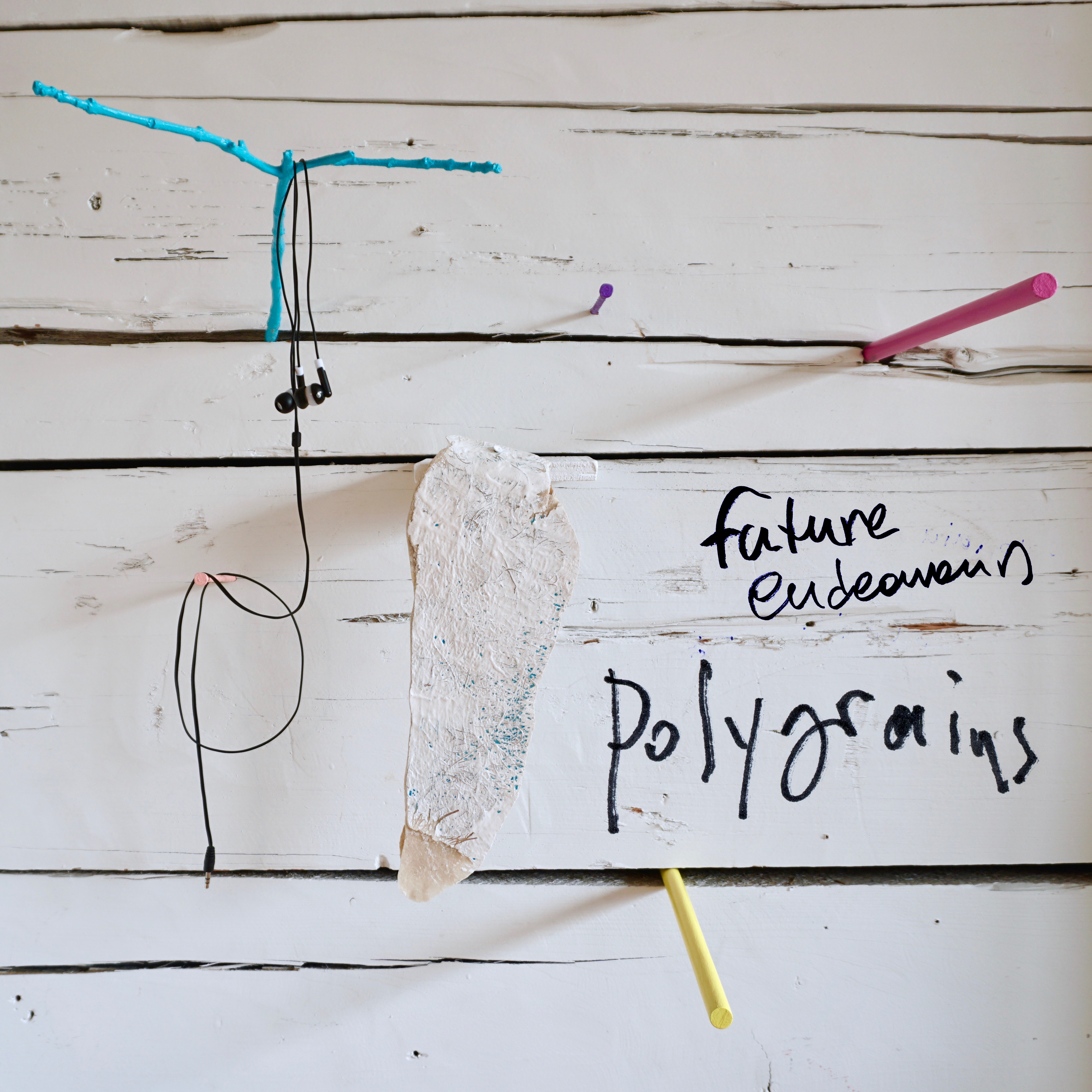
Later this month, London-based Greek producer Vasilis Moschas (a.k.a. Polygrains) will return with his latest album, Future Endeavours.
Future Endeavours follows 2016’s Pleasure Coma LP with nine tracks that run the gamut from synth-pop to swinging beat outings, dub-tinged grooves, and post-punk electronics. The album’s theme is the artist’s relation to failure, as Vasilis explains:
“Failure is a bitter feeling experienced by most artists. Failure is also inevitable in life, especially in a capitalist society, where the importance of success weighs heavily on its members. But it is also part of the creative process. John Baldessari advised his students: ‘Art comes out of failure. You have to try things out. You can’t sit around, terrified of being incorrect, saying ‘I won’t do anything until I do a masterpiece.’
Failure often can be more rewarding than success. But there’s also Quentin Crisp’s view which says that ‘If at first you don’t succeed, failure may be your style.'”
Ahead of the album release on January 25, Vasilis will be playing a gig in London tomorrow, January 10, supporting InFiné’s Leonie Pernet. Following the release, he will also be performing in Athens, Greece, on January 26 with DFA’s Larry Gus.
In support of the album, Vasilis has offered up a full stream of album cut “Life Makes More Sense When You Don’t Get What You Want,” available via the player below. You can pre-order the EP here.
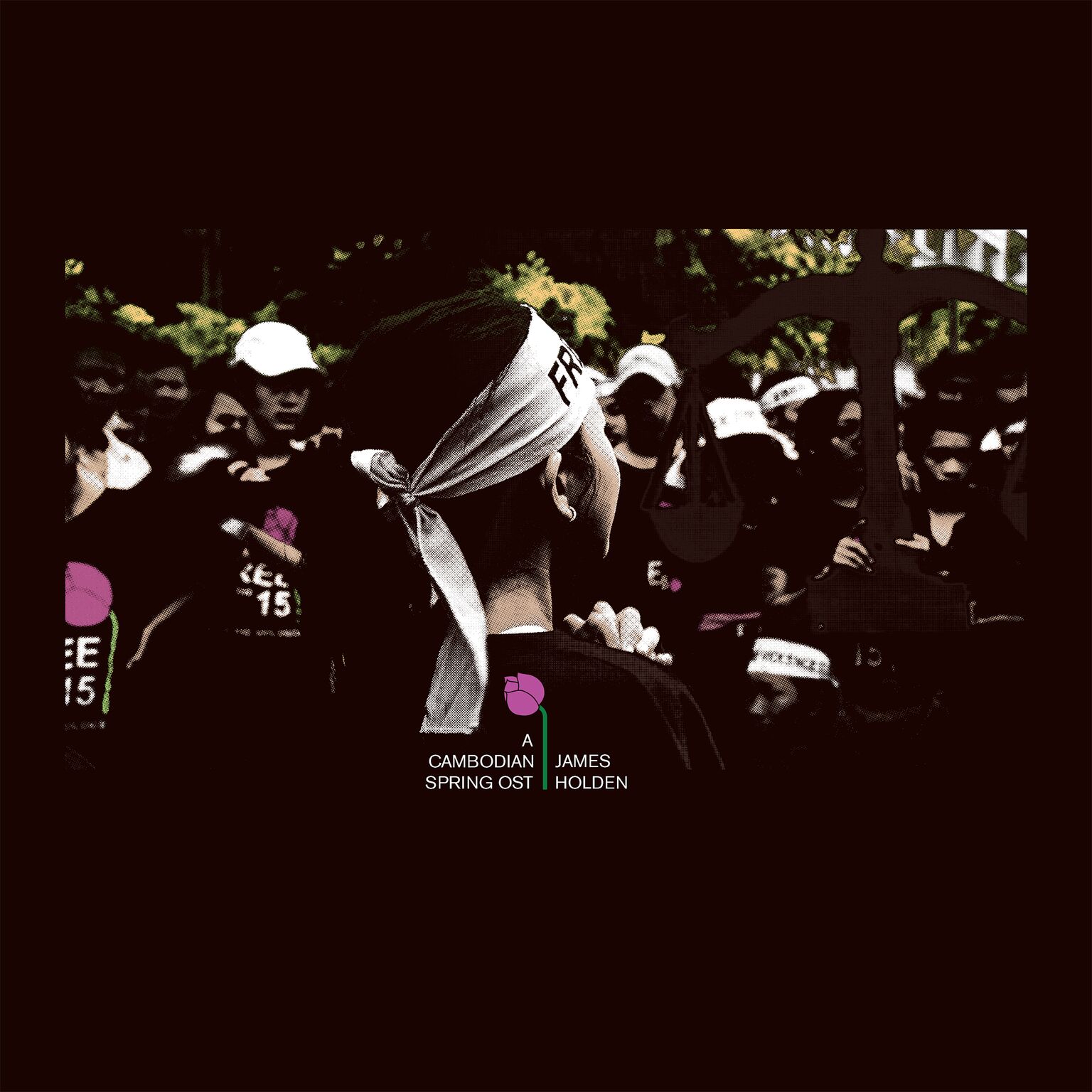
James Holden‘s latest album comes in the shape of his debut soundtrack project, A Cambodian Spring OST.
The album, which follows 2017’s The Animal Spirits album, accompanies the critically-acclaimed documentary A Cambodian Spring, which, following international film festival success, a programme of UK-wide screenings, and a near-worldwide slot on MUBI, is currently available to buy on DVD, Blu-Ray, download, and stream. It is Holden’s first film soundtrack.
We’re told that the release sees the British artist draw on his favourite go-to analogue instruments to showcase the many sides of his diverse musical leanings throughout 14 tracks of pulsing melancholy, foreboding drone, and even the occasional burst of beatless trance.
The starting point for the soundtrack was “Self-Playing Schmaltz,” the closing track of Holden’s 2013 album, The Inheritors, which documentary director Chris Kelly had used in an early rough cut to soundtrack what would eventually become the shocking and dramatic denouement of the whole film. Holden’s haunting, decaying synth lines seemed to line up perfectly with the fraught images of a community in breakdown, and it was this serendipity that prompted Kelly to invite Holden to work on a whole new original soundtrack for the rest of the film.
The signature Prophet 600 sound palette which dominated The Inheritors also features heavily here, supplemented by a cranky old Hammond organ. It’s said to be “certainly powerful and arresting when viewed in context, set against the striking collection of images assembled by director Chris Kelly,” but as a stand alone album release it also has much to offer, “with cleansing, contemplative drone, and euphoric melodies alike,” we’re told.
Tracklisting
A1. Srey Pov’s Theme
A2. Monk’s Theme Part I
A3. Downturn Medley
A4. Solidarity Theme (Villagers)
A5. Monk’s Theme Part II
A6. The Villagers
A7. Disintegration Drone I
A8. Solidarity Theme (Release)
A9. Monk’s Theme Part III (Exit)
A10. Reprise
B1. Disintegration Drone II (Torn Cone)
B2. Disintegration Drone III (Death Rattle)
B3. Self-Playing Schmaltz
B4. Srey Pov’s Theme (End Credits)
A Cambodian Spring OST will land on January 25 via Border Community, with the film trailer and “Solidarity Theme” below, and pre-order here.
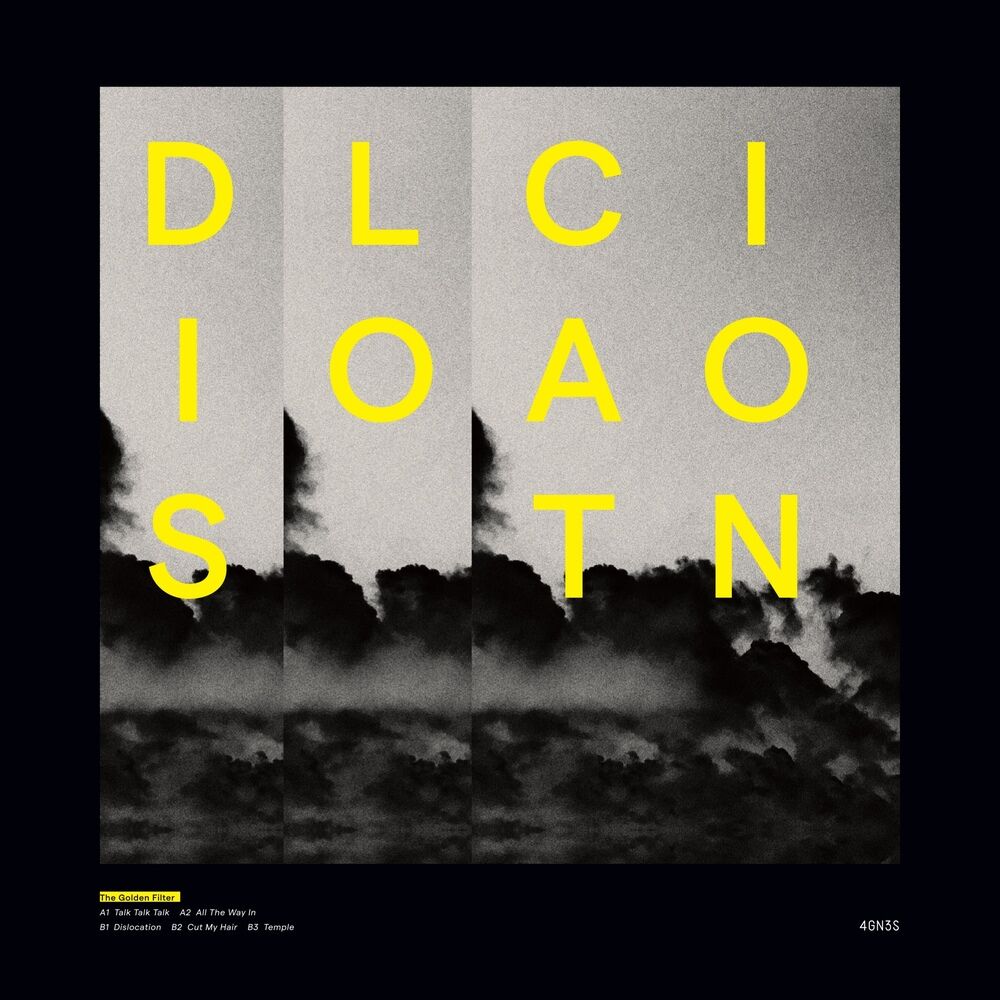
The second release on 4GN3S, pronounced “Agnes,” is an angular and shadowy EP by The Golden Filter, titled Dislocation. We’re told to expect five pieces paying equal homage to minimal wave, post-punk, no wave, and electro.
The Golden Filter, originally from NYC, is a London-based duo consisting of Penelope Trappes and Stephen Hindman. They released Italo-inspired track “Solid Gold” in 2008, and have since steadily released minimal wave- and post punk-influenced singles, EPs, and albums on labels like Optimo Music, Dischi Auotunno, Vinyl Factory, Brille, and Kitsune. They started new label 4GN3S in 2018 with the intention of releasing more free flowing, genre-bending spectrums of analog electronic music. The first release, Talk Talk Talk, is out now with a remix by Cooper Saver.
The Golden FIlter’s Dislocation EP comes out January 18, with a special XLR8R exclusive beatless remix of “Talk Talk Talk” available now via the WeTransfer button below, or here for EU readers due to temporary GDPR restrictions.
Nicolas Jaar’s Other People will release a new LP from Vtgnike, titled Steals.
Vtgnike, real name Danil Avramov, a Russian artist, is resident of Moscow’s NII club. He started actively making music in 2010, and, after releasing a couple of EPs under different monikers, began working as Vtgnike. He released the Dubna LP other Other People in 2014, and then ended up in jail, we’re told, for drug-related charges, and has since got back into music production.
“In producing I’ve been switching music genres all my life. Electronic music has that flow in it, doesn’t need to be glued to any specific range of bpm, etc,” he says.
Nicolas Jaar launched Other People in 2013, and has appeared on the label several times. Other releases have come from Patrick Higgins, Dave Harrington, A Pleasure, Valentin Stip, among others.
Tracklisting
01. Vechermix
02. Sentimental Geometry
03. Sweep
04. Sausemix
05. VVK
06. Nervnii RnB
07. Can’t Tell
08. Slowshit
09. Primechord
Steals LP lands on February 22, with “VVK” streaming below.
Born in Italy, Francesca Lombardo began DJing after moving to London in the late ‘90s, starting out on Saturday afternoons playing in Kentish Town record shop Access All Areas, a mecca for the city’s acid techno scene. These early forays into a career in music felt natural, having studied at Italy’s Conservatorium of Music from the age of 13. After her first releases on Crosstown Rebels in 2012, Lombardo has gone on play everywhere from Burning Man to IMS’ Dalt Vila.
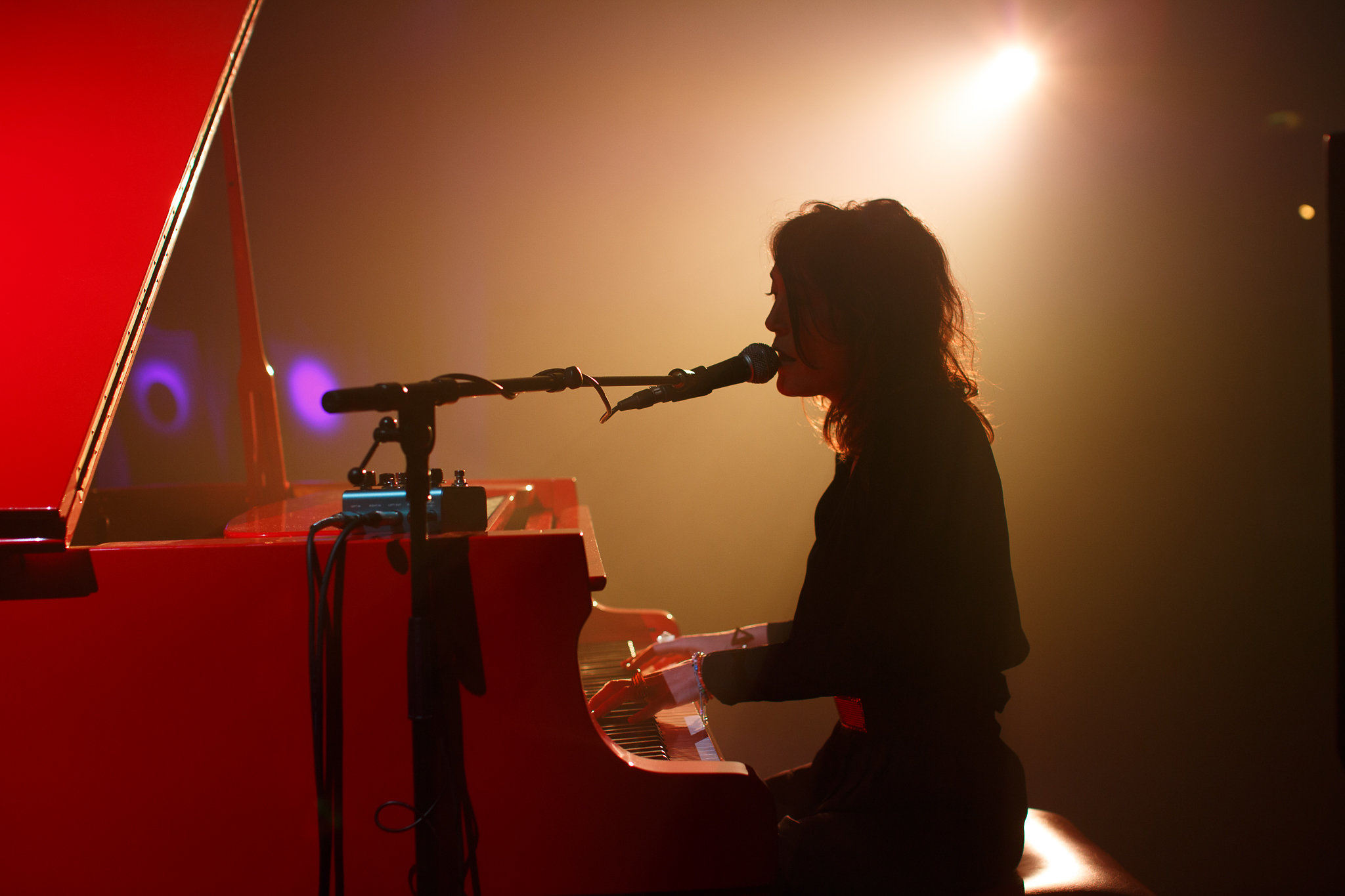
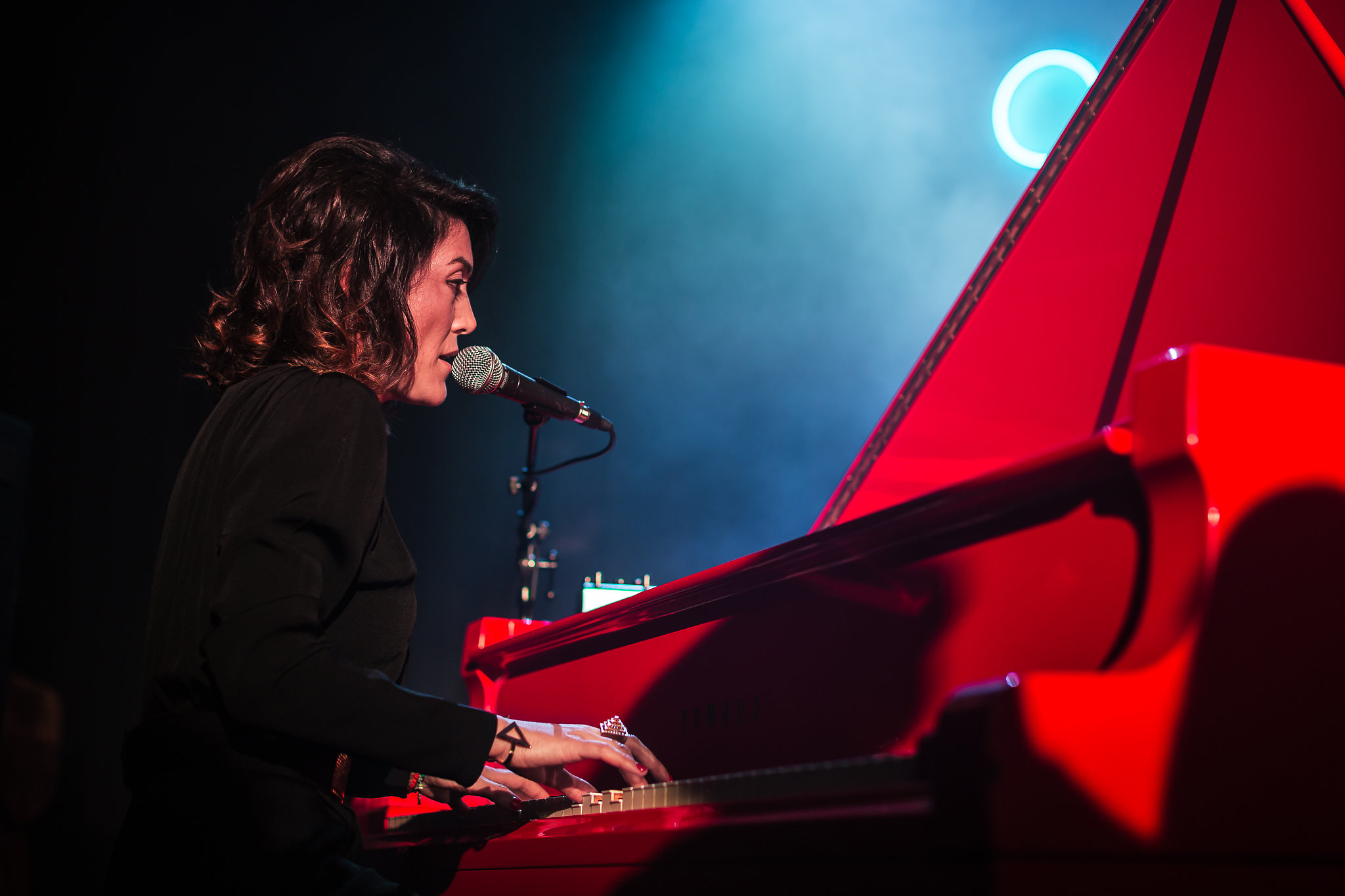
But this was never the original plan. Now touring a live show alongside her successful DJ career, she’s returned to her roots as a singer and a piano player, highlighting these on her most recent original track, “Eye Ring,” and forthcoming single, “Rain.” Her debut album, Life of Leaf, will be out next month on her own Echolette imprint; and Lombardo has already performed material from it at London’s Royal Albert Hall. In light of this, she offered to talk about the challenges of a DJ starting a live project that steps away from the dancefloor. From the need for like-minded collaborators to the question of what even constitutes a live performance in electronic music, she explained the obstacles facing a multi-disciplinary artist in today’s age, and the rewards at the end of it.
I grew up as a musician. Before I came to London, I was always involved in bands and came to England to be a singer; that was my dream. When I started DJing it was just for fun in my bedroom, and this feeling of fun still keeps me young today—but as I can read and write music, I have always had this need to play piano and sing. You get all your muscles involved and more. With DJing, you’re using your hands and brains, for sure, but playing an instrument is a completely different art; you enter a completely different mental space. You never truly lose your skills as a DJ—if you stopped today and came back in 10 years, you’d still know how to play two records in time—with the piano and singing, you have to keep practicing or you lose it altogether.
When I started DJing, I never dreamed that it would become a job, or that I’d get to travel the world with it but that’s the way my story has gone. I’m really happy because I enjoy it so deeply but I’ve got this other mission. It’s very personal compared to DJing; it’s about playing my own music, my own melodies on the piano, my own lyrics. In doing so, you create something completely unique to you, each time you play; it feels like nothing can be recreated.
I have always wanted to blend the worlds of electronic and classical music because I spent my youth completely immersed in both. This desire has been shaped fundamentally by some unforgettable live shows. When I saw Jeff Mills doing his classical version of “The Bells,” my jaw just dropped. Orchestras have different parts for each instrument. When you make techno, it’s kind of the same. You have the bass, you have drum machines, you have pads, extra percussion. It’s a similar way of composing in this sense. What really excited me is the feeling that you can translate every single channel of a techno track into a live instrument. This is exactly what Jeff Mills did with “The Bells.” Francesco Tristano, Björk, and Agnes Obel are are also big inspirations.
The journey towards my album and live show started in 2013. I had created some initial ideas for songs, with no real purpose for them in mind, but they felt very different to what I had previously produced and played out as a DJ. Normally I was making house and techno, strictly for the dancefloor. It was through these new productions that I first met Damian Lazarus and our friendship grew. Learning about my more traditional background, Damian introduced me to the composer Andy Waterworth, who in turn encouraged me to bring more classical elements into my music. These non-dancefloor tracks came to make up the foundations of my debut LP and live show.
Later that year, I was invited to play my first Boiler Room show. Initially, I thought I was going to DJ but Crosstown suggested I incorporate string players, as I had been working with and recording them recently. To me this didn’t make any sense—DJing someone else’s music with live string players? So I decided last minute to do a live show, compiling some of these early album tracks and practicing with a quartet in London for a few days, so they could get familiar with the music. Some of the tracks didn’t have strings, but I knew these guys and they could improvise.
It was during these rehearsals that I reconnected with the essence of what a live performance is to me: collaboration, instrumentation, and improvisation. I was so deeply inspired that I set about involving more instruments and more players, stepping further away from anything overly pre-programmed, starting to play live in the way I always wanted—fully live, in the realist, purist sense. In my earlier experimentations, I had used the more industry standard Ableton, triggers, and MIDI keyboard. This was never that powerful an experience for me. I needed to sing, play piano, and work with other musicians on the fly.
The usual club promoters didn’t fully appreciate how much goes into something like this, which is why you need to build the profile of the live show first, so promoters know what to expect. You also have to reach a new audience outside of the club; it feels like finding a whole new world. You have to connect with people who consume music differently, those who don’t go out clubbing or follow the electronic music scene; I also needed to find those who didn’t really know my previous work and those who aren’t necessarily there to dance but rather to lock into each aspect of the performance, so there is a different skill in holding their attention. If you have one, your team should also be fully focussed on tapping into this new audience, be if through PR, management, or agent efforts etc.
Since these early stages, my live show has taken on many forms. From performing alongside quartets to full orchestras. These setups involved a whole other level of organisation and so much more preparation. As much as I loved doing them, it became too logistically difficult to pull off. I couldn’t afford to take string players on tour with me, so I had to find them in every city I performed. This never worked, as you can only ever manage two or three-hour rehearsals, which was far too short. So I’ve had to scale my ambitions down and wait until it’s the right time to achieve my ultimate vision. Once the album is out, it will be easier as people will have heard the vibe. The key is to wait, be patient, and keep improving. Be realistic and do what you can while aiming for what you really want.
A sense of the venues and promoters that nurture shows like mine and artists like me is also important. I feel like there should be more but often people are afraid to take risks. No doubt this could leave many DJs and producers feeling tentative about exploring live performance, perhaps getting in the way of someone realising their potential. Remaining behind the decks throws up fewer uncertainties.
Since last year I have a new set up and live show, one where I don’t have to use a laptop, I can play the piano, some synths and sing. So far, it’s a good compromise and feels legitimately live to me. I am not just recreating the sound of the record on stage, different instruments are involved, replacing the studio parts. In a way, like Jeff Mills’ orchestra in “The Bells.”
“Playing live” is concept I feel strongly about, and take great pride in. There are so many different setups that promoters and artists call “live” now. Some DJs even play other people’s tracks on Ableton, syncing them and then billing that as live. When you look at flyers, some promoters seem to think that just a laptop is enough to distinguish a live set; they’re happy to blur the lines for the sake of marketing. When I think live, I mean you’re actually playing something in the moment. Adding effects and looping isn’t live but singing or playing something then adding effects or looping this is; it comes from a unique place, again different from the known record. For me, you need to be writing something whilst you’re playing it, creating something new to that point in time. My wish is that the term “live” be used with more consideration, as I wouldn’t want this kind of performance to become devalued over time.
That’s not to say that there aren’t good examples of DJs who achieve a truly live performance, Matthew Johnson for example, he plays his own music whilst adding live synth work over the top, again making room for improvisation and new experiences. Richie Hawtin is another great example: when he plays you get a real sense that he is jamming with his instruments, they are his players. If it was just pre-programmed parts on a computer, it would become rigid and he wouldn’t be able to jam like that.
More than making a show truly live, improvisation makes a show truly enjoyable, both on the stage and in the crowd. This is the sense I get whenever I watch acts like Bonobo, Nils Frahm, and Nicolas Jaar, my ultimate live shows, although I’m sure their reputation plays some part in the production value there. I will always strive for these kind of shows in my career, as you hit another level, not in prestige but in feeling.
When you have various musicians on stage, all doing something different, contributing to one song in the moment, it can be so much more powerful than one person putting on records. Although I would never stop doing DJing myself and still love watching DJs play, it’s this transportive and all empowering emotion that I’m most chasing when I get up on stage. And, despite the hurdles involved, I hope to achieve it sometime soon.
“Rain,” the second single from Lombardo’s ‘Life of Leaf,’ LP lands Jan 14, with pre-order here.