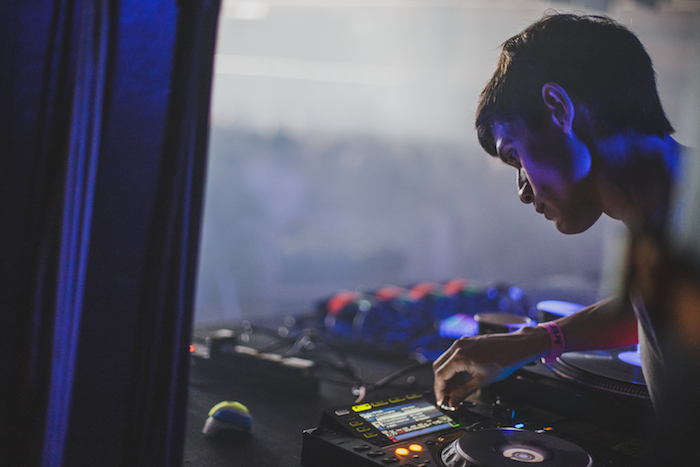
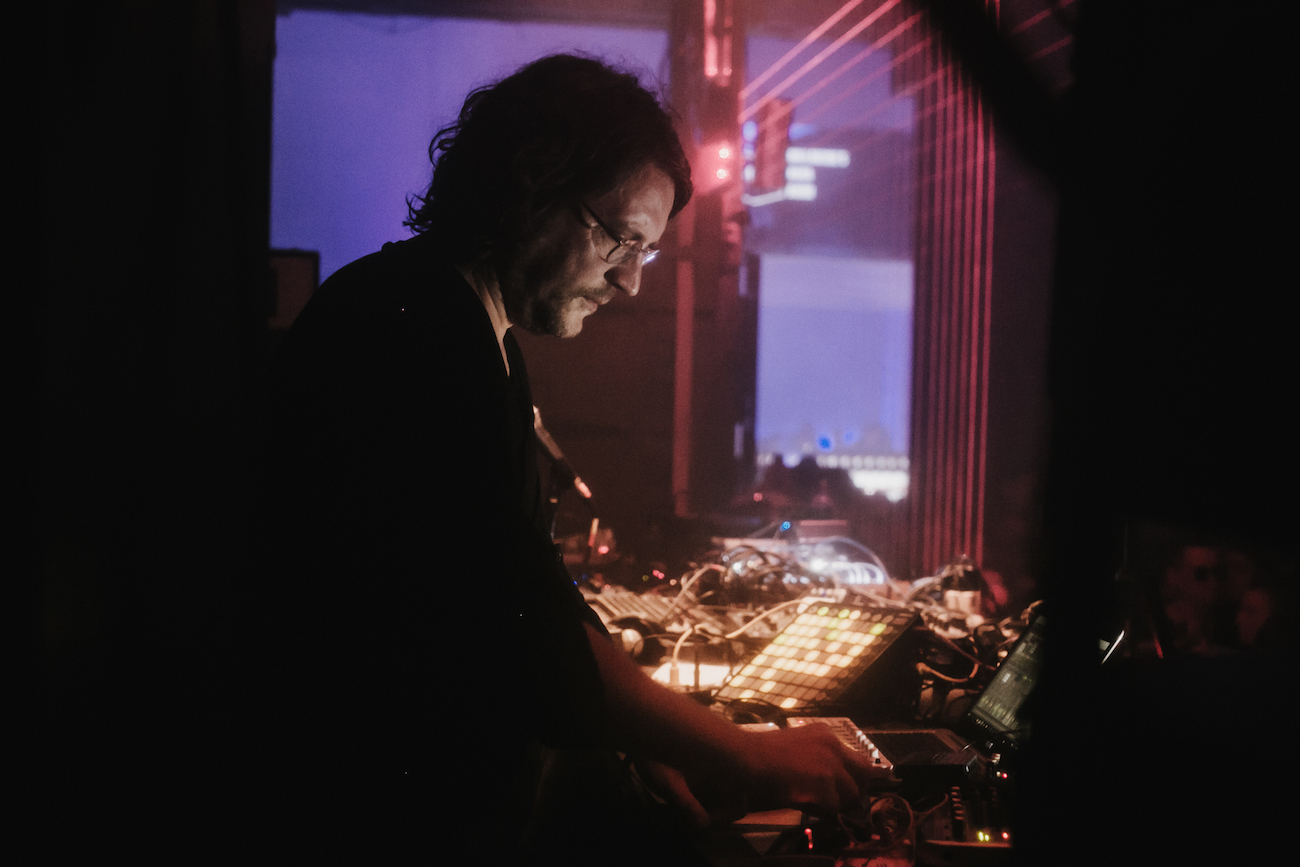
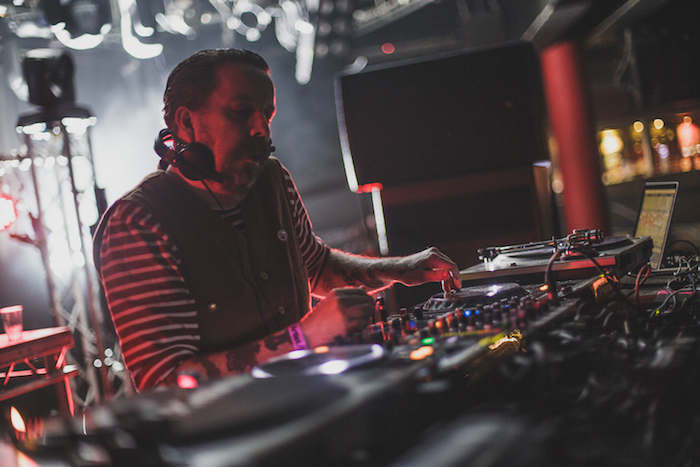
Five years after the creation of his self-titled record label, Parisian artist Djebali has announced the formation of a new digital sub-label titled Digi. To inaugurate this label, Djebali is set to release an exciting 10-track compilation titled Ideal Juice, which is named after his popular residency at the legendary Rex Club. The selection of tracks comes from Djebali’s back catalogue, edited especially for the digital release so vinyl and digital owners have the exclusive versions of each track.
Ahead of the compilation’s release, the French house hero has gifted XLR8R the second to last track off the forthcoming album, titled “This Thing For Wil.” You can stream the track in full below and be sure to check out more from Djebali by visiting his SoundCloud page here.
Djebali is set to perform at this years edition of Springfestival in Graz, Austria on May 26. Like no other Austrian festival, Springfestival manages to bring the format of an international electronic music festival into one of Europe’s most well preserved city centres. You can check out the full lineup by going here.
Tracklist:
01 Ideal Juice 02 Urban Posture 03 This Ultimate Dare 04 Sakura Park 05 O’riginal Rude Boy 06 Bezbar 07 Hunting Back 08 Juicy Street 09 This Thing for Wil 10 Seven Cells
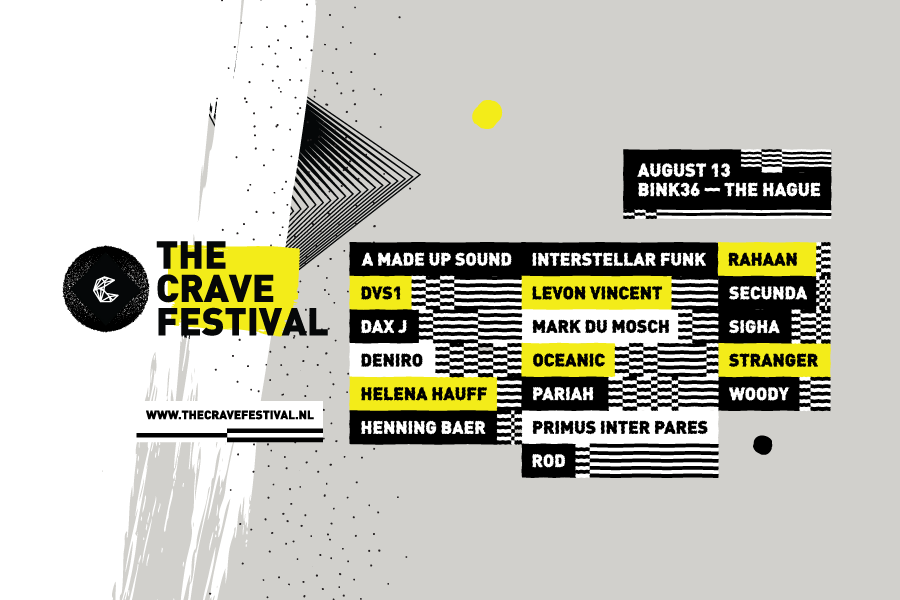
Since its inception in 2014, the forward-thinking event known as The Crave Festival has consistently brought an assortment of worthwhile artists to The Hague for a marvelous display of musical dexterity. Taking place across the afternoon and settling late into the evening, the event will take place on August 13 at the large, smokestack creative space known as Bink36.
Today, the festival has revealed its lineup, bringing a noteworthy mixture of techno, disco, house, and experimental works to the forefront. These artists include DVS1, Levon Vincent, Interstellar Funk, Helena Hauff, Pariah, Sigha, and many more. You can view Crave Festival’s entire lineup in the list below.
You can now pre-register to the festival by going here.
Crave Festival 2016 Lineup:
• A Made Up Sound • Dax J • Deniro • DVS1 • Helena Hauff • Henning Baer • Interstellar Funk • Levon Vincent • Mark Du Mosch • Oceanic • Pariah • Primus Inter Pares • Rahaan • ROD • Sigha • Secunda • Stranger • Woody
The forever evolving UK-based ensemble Submotion Orchestra has continuously demonstrated a knack for crafting a sonic blend of graceful and hard-hitting music since the release of its self-titled debut EP in 2010. Since then, the group has gone on to release a slew of singles and EPs and has crafted a total of four full-length LPs, including its most recent album, Colour Theory, which was released on February 19 via the Ninja Tune affiliated label Counter Records. Following the album’s massive success, Counter Records recruited a number of exciting and noteworthy producers to put together a remix compilation for album cut “In Gold.” The remix album, which features artists such as Sorrow, Traces, Impey, Nikitch, and more, is set to drop March 25 via Counter Records.
Ahead of the release, Counter Records has graciously offered up one of the album’s remix contributions from the consistently prolific DJ-producer xxxy as today’s XLR8R download. The London-based artist’s interpretation of the track picks up the pace significantly, employing a myriad of spotless and soaring synth arrangements that transforms the tune into an upcast dancefloor vanquisher.
You can download “In Gold” (xxxy Remix) below via WeTransfer.
Originally released in 2004 on the Rephlex label (the label co-founded by Aphex Twin), Kerrier District’s debut has long since gone down as a classic album, a kaleidoscopic ride through disco, funk and MPC beats. The mastermind of Luke Vibert, the Cornish acid pioneer and grand exponent of mischievous electronic sounds under a variety of guises (including Plug, Wagon Christ and Amen Andrews), the Kerrier District debut has long been out of print and circulation.
Following 2015’s successful re-entry on Hypercolour, with the critically acclaimed album 4, the label will re-master and re-issue this landmark release. Faithfully re-creating the original 3LP vinyl set, and re-issuing on CD and digital alongside a bonus disc/tracks that feature the second Kerrier District EP (2, originally released in 2006).
Kerrier District (Re-Mastered) is scheduled for April 29 release.
3×12″ Tracklist: A1. Let’s Dance And Freak A2. Silhouettes B1. Illogan C1. Disclix C2. Disco Bus D1. New York E1. Yesco E2. Negresco F1. Wide Vice F2. Squaredance
CD/ Digital version contains a bonus disc of Kerrier District 2 (with a digital code included within the 3×12″)
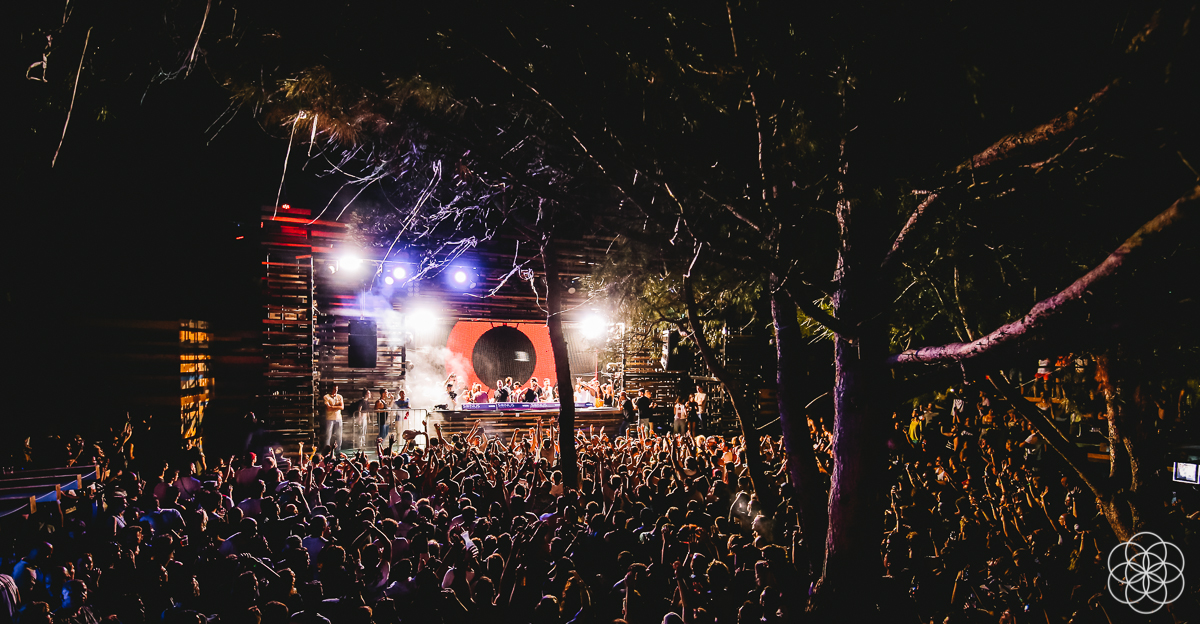
Sonus Festival takes place at Zrce Beach, Croatia, from August 21-25. For more information and the full line up, head to their site. You can purchase tickets here.
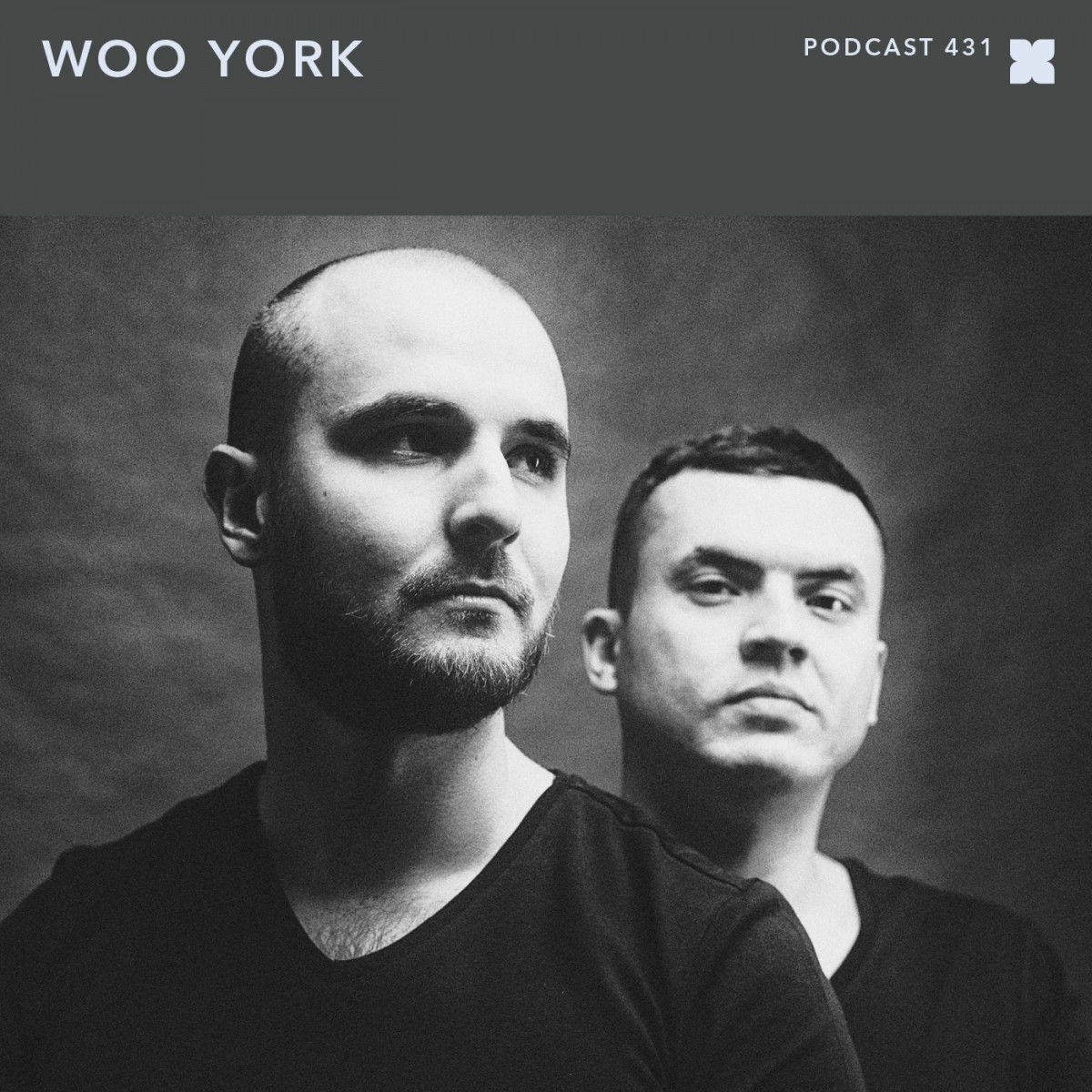
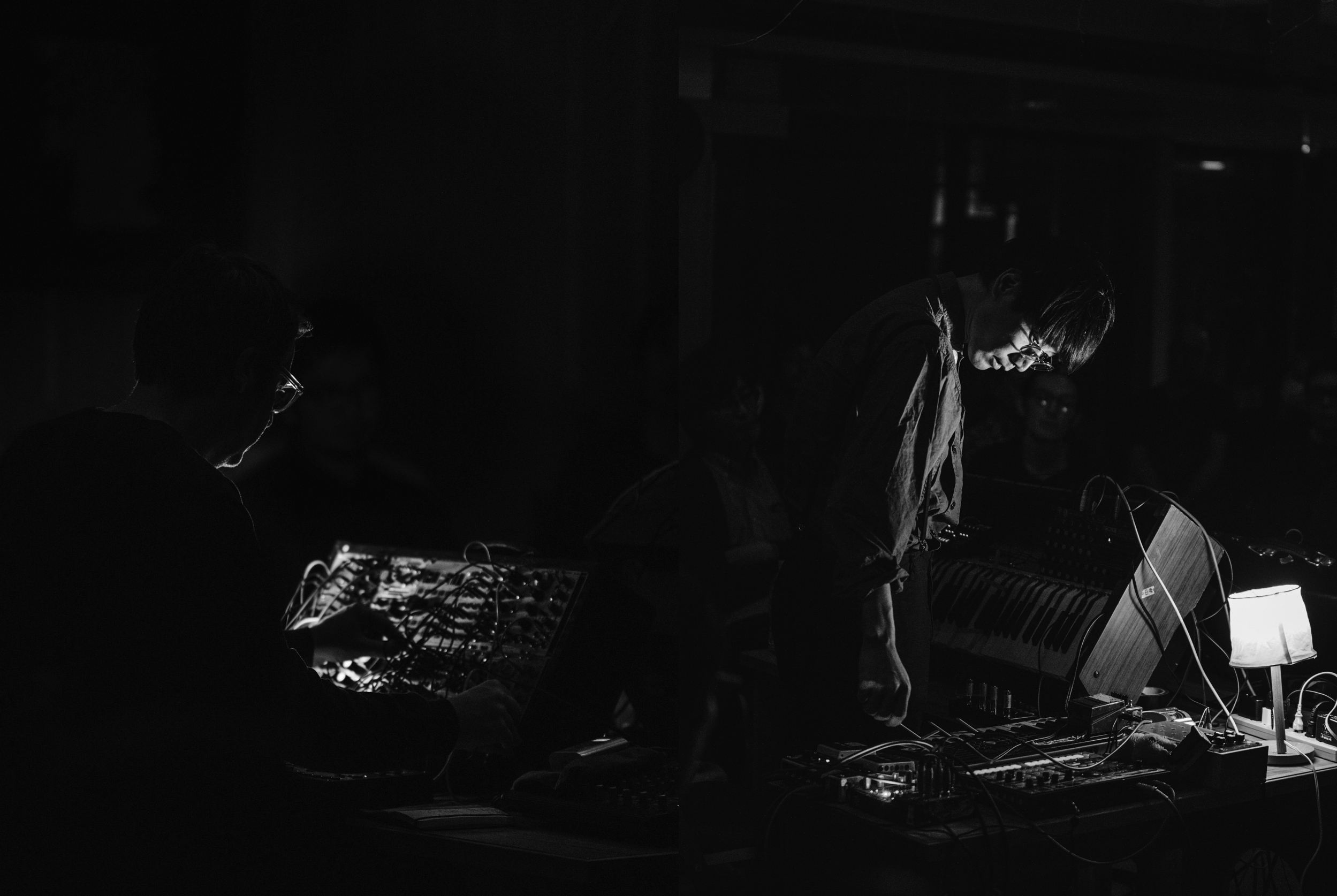
Though enigmatic and media-shy, Ukrainian duo Woo York have been a staple in many techno fans’ diets after their 2012 releases on Soma Records and Planet Rhythm. In the studio, they have been nothing short have of prolific: There has been a continual stream of releases, shared over a range of different imprints—but their biggest achievement came last year with a deeply melodic four-tracker on Tale Of Us‘ Life and Death. Their synth-heavy sound make them the perfect fit for the widely-respected imprint, and so it came as no surprise when their live set became a regular fixture at the label showcases around the globe, for many a favorite amongst a remarkable lineup of artistic talents. Marking both their upcoming performance at this year’s DGTL Festival and the start of a new live tour, the duo locked themselves in the studio for a day and put together the following fully-improvised live recording. They were also kind enough to give us some of the details on their approach on the equipment they use.
In terms of making your music, just how much of it is organic versus the computer? To be completely honest with you, we find “organic versus computer” comparisons a little irrelevant. For us personally, the very presence of a computer in our studio is an absolute must, since it is a perfect tool for sequencing, sampling, multi-tracking and editing, while synths and drum machines are used for creating the sounds themselves. Moreover, having a computer at hand allows us to have more freedom sound-control-wise than the hardware-only setup would have allowed. We know it is kind of a trend nowadays to have the table loaded with multiple boxes and say things like, “Our setup is way more lively than the one with a laptop in it,” but we really do think that the most important point is not about what you use technically, but rather what you give to the audience in terms of sound design and energy. It’s all about utilizing the best parts of technology we have available to us, hence we use both hardware and software in our live and studio setups.
How do you translate your productions to the live stage? Preparing new material for our live set is a rather thorough and time-consuming process. We have to think well in advance about organizing our performance in a way that would allow us the maximum control over pieces of music we have prepared, especially given that we only have limited setup available on the road.
Let’s consider a practical case: We’ve produced a new track and want to include it in our live set. What we do is strip down all the synth lines into numerous small parts and pieces, and then try figuring out which ones have to be used as samples, and which ones are to be reproduced through synthesizers in live mode. Then we prepare these samples and MIDI lines for synths. What has been described above is only one part of the process relating to synth elements—with drum patterns we don’t prepare anything prior to the show at all, but generate everything on the fly during the performance. In the end we get a lot of individual channels in use plus effect buses, signals from synths and the drum machine, additional one shots, textures etc. All these are deeply incorporated into the show which gives us almost unlimited opportunities for live sequencing. This is the very basis we build up our show on.
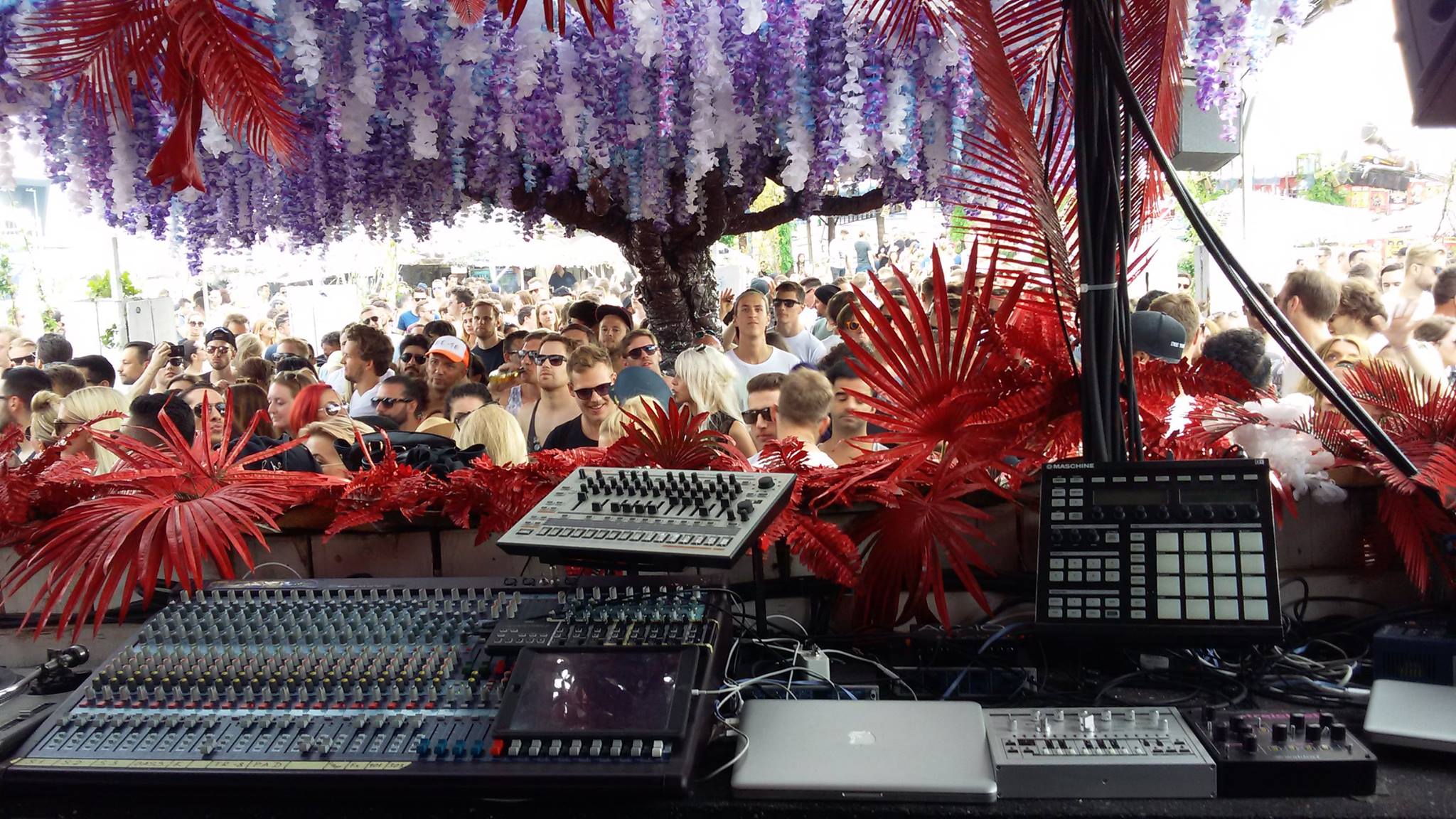
What is your actual set-up these days? What are the main pieces of gear that you’re using? Today we use the following: X0xb0x synth, Roland TR-8 drum machine, Roland JP-08 synth, Waldorf Streichfett synth, Mother 32 synth, NI Machine (acting as a sequencer and FX processor), Korg Nanokontrol, and two computers used as clock generators, samplers and multi-tracking tools. On top of this, we also have two RME Fireface cards, and an iPad with application to control Ableton Live.
Is the live setup a stripped-down version of their studio? Or is it totally different, gear-wise? While choosing gear for our touring setup, we take a number of factors into consideration. Back in the days when we had fewer international gigs, we used to travel with two trolley bags, two backpacks stuffed with wires and gear, and quite a heavy case where we were putting two rack units with a compressor and exciter. This was a pure nightmare in terms of logistics: First of all, it was very difficult to carry all these things, and secondly this used to cause problems at boarding gates in the airports. Later on, we figured out we had to do something to minimize both the weight and the volume of our setup without losing the ability to control our set and causing harm to the sound quality. That’s why these days our touring setup differs from the one in the studio; we only take on board what’s really necessary. Basically, our current setup fit into two cases and one backpack, and represents the 30kg heavy set of gear and wires.
How do you approach crowd-dynamic changes? Do you have paths you can go down to cater to changes in crowd atmosphere and energy changes? It all depends on particular situation, the mood, and the reaction from the crowd. There is no perfect ratio between pre-recorded fragments and full-on jam sessions really. That said, we do try not to repeat the same set even twice, hence we’re constantly adding some new material to our live set, so that we could have more options to choose from and more space for diversity. Some level of prior preparation may help to ensure a smoother, more consistent set though. The balance between frequent studio sessions and pre-show rehearsals on one hand, and good knowledge of your software/gear, and confidence in ourselves on the other, results in what we consider the freedom to improvise. That feeling is always there when we hit the stage. Also, if we feel like our efforts are being met with critical acclaim from the audience, this always enhances the way we improvise. We basically start going for it big time.
After starting out as a small 2,200 capacity electronic music get-together back in 2007, Bloc quickly rose through the ranks to become a key player on the international scene. The brand painted itself as a boundary-pushing electronic music festival from the outset, with Autechre headlining their first ever weekender. Two years on, they moved to their spiritual home at Butlins, in Minehead—a bizarre and magical playground to run wild in.
Bloc quickly became infamous for their exceptional curation and well-up-for-it crowd, finding a niche in an otherwise fairly generic landscape. After a rollercoaster of well-documented ups and downs, it was announced earlier this year that this would be the last ever Bloc weekender. After hearing this news, it suddenly became more essential than ever that I made it down for one last dance.
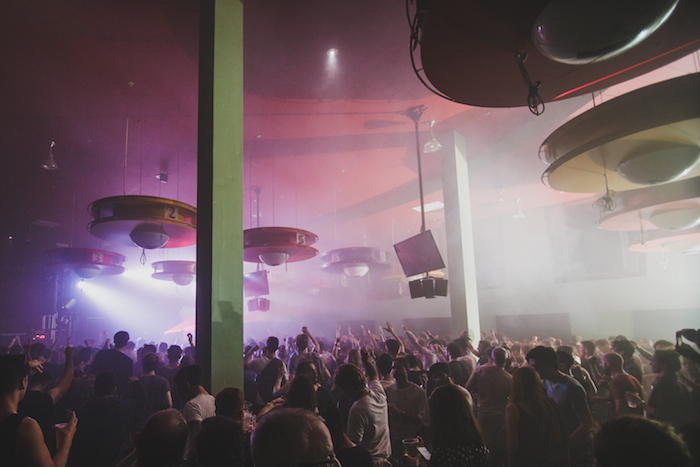
Bloc 2016 was hard and fast (just how we like it), though as usual ended far too quickly. Among the tear-out sets, the water slides, and the later-than-usual bedtimes, XLR8R pulled together five take-away points from the weekend.
Detroit stole the show, with two outstanding performances from the city’s best I’m putting it out there now: My two favourite sets from Bloc 2016 were Jeff Mills and Omar-S. While Bloc has a rich history in challenging and forward-thinking bookings, there’s a good reason why Jeff and Omar have had repeated appearances at the festival, and why they were asked to return for Bloc’s last ever weekender.
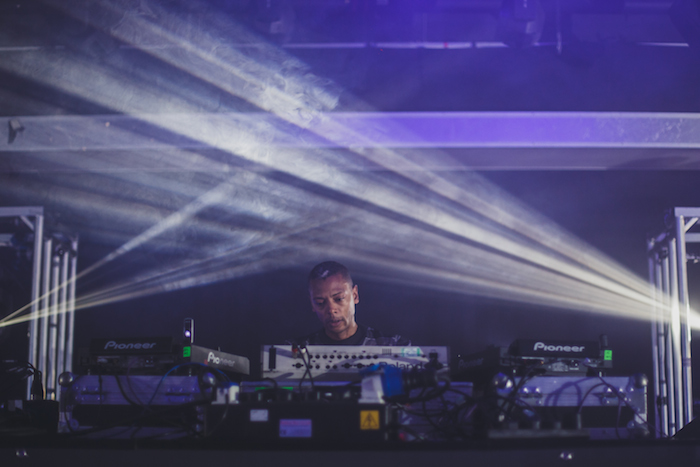
Catch Jeff Mills on a bad day, and you can be left a bit frustrated and disappointed, but catch him on a good day, and you can expect to have a truly mind-opening experience. Luckily his set on the Saturday night was the latter. On the whole, it was a lot less hectic than what he’s usually capable of, but in place of that there was a powerful sense of purpose and drive to it.
The set was pure, reductive and fluid. Never one to jump around the booth, there’s always an air of calm about him. His static figure would lean over the decks and TR-909 as he listened attentively to the mix, dropping in a new element, subtly EQ-ing, making fine calculated adjustments. Mills is a master of tension and release, and this performance was exemplary of what can really be accomplished in this setting. Highlights have to be the apocalyptic “Spider Formation,” and a live mix of “The Bells” with the drum machine at the end. “Will “The Bells” ever get old?” I heard numerous people ask out loud–the answer is, as it stands, no.
Omar-S delivered the perfect closing set to finish off the weekend, which was nothing short of a masterclass. He took the ever-so-slightly jaded dancefloor through a meandering mix of techno, house, and some excellent soul and disco selections. The core of his set included Omar classics,“S.E.X,” “Set it Out,” and “The Shit Baby,” to name just a few. Variety is largely what‘s missing in a lot of DJ sets these days, and it takes a lot of skill to pull it off, but Omar’s execution was flawless and guided the dancefloor with ease. He took things down with Moby’s “Mobility” and Red 7’s smouldering “I Lost My Shoes On Acid,” before working back up to peak-time selections such as Hawtin’s classic “Spastik” and Mike Dunn’s “God Made Me Phunky” (which caused a riot). Things could have easily carried on for several more hours, but the weekend soon came to a reluctant end as Bloc closed its doors for the last time.
“Lory fuckin’ D” Lory D is one of those cult figures in the underground world—as a legendary producer responsible for some of the most sought after wax in techno, he’s definitely been someone on my radar for a while now. Stumbling upon an event at which he was recently booked to headline called “The Genius of Lory D” did nothing to diminish my curiosity for the Italian.
The first half of his set was driven by jacking beats–heavy enough to not call it house, but enough hi-hats to make it playful. He alternated between more regular four-to-the-floor and stripped back loops, which were texturally lighter, but still packed a punch, before making it into more grinding acid fusions.
The audience was clearly made up of a majority of Lory D faithfuls, who frequently cheered when Lory would pull out a new dance move. At one point I suddenly heard the crowd chanting, “Lory D, Lory D, Lory Fuckin’ D” over and over; he was loving it, and initiated a breakdown so that the crowd’s acapella could be heard throughout the room. From then on, the “Lory fuckin’ D” chant became a recurring feature of the set. At times there was a rolling groove that served as a refreshing break from the more linear sets heard at other stages, though, by the end I grew a little frustrated by the lack of progression. Maybe I reached the end with unfulfilled expectations, but I definitely left the room with a smile on my face and a spring in my step.
Gender equality is slowly improving, but we (still) need more girl power Following a spate on Twitter regarding the lack of females on the 2015 Bloc lineup, the discussion about gender equality within dance culture has gained more traction, with several publications speaking out against discriminatory promoters. It was great to see a larger number of female DJs making it on to the line up this year, with many of them turning out some of the most memorable sets of the weekend. From what I saw of Dasha Rush, Helena Hauff, Tama Sumo, and Lakuti, they all smashed it–giving highly impressive performances both technically and musically. There were a number of other women populating the lineup also, but, as people mentioned throughout the weekend, many of them were given rather peripheral time slots.
Despite the late Friday finish, I managed to crawl my way over to the panel discussion on Saturday afternoon, which covered the topic of gender equality within the music industry. The panel was made up of a nicely balanced selection of backgrounds—Jane Fitz, Sunil Sharpe, Gabriel Szatan (editor at Boiler Room), Kate Hutchinson (editor at the Guardian), and Shesaid.so’s Sofia Ilyas chairing the discussion.
There were a few conflicts within the panel, with Hutchinson speaking out for the vitality of female support groups, while interestingly Fitz disagreed, arguing that if females desire equality in the industry, they simply need to be “absolutely brilliant” at what they do, and let their work speak for itself: “This isn’t a man’s world. This is an electronic music world.” The subject of positive discrimination was also a discussion point, with both Fitz and Hutchinson expressing their caution at the tokenisation of women. The variety of views just within the females of the group revealed just how problematic and complex the debate is, but also suggested that there may be a number of different ways of going about increasing gender equality.
The session took a few turns and covered a fair amount of ground, but ultimately concluded that firstly, electronic music (and its social and cultural practices) by its nature seems to be less accessible for females, though this isn’t to say that females have less creative ability than males; and second, that more discussions like these need to happen, both on a public platform as well as in living rooms, pubs and Facebook groups. Ultimately it is up to both men and women collectively to address this issue, and hopefully debates such as these will bring the issue of gender equality into a more public domain.
Dystopian Leisure Systems: the soundtrack to the future Two of the label showcases that stood out for me were the Dystopian takeover at the Carhartt stage, and Leisure System down at Crack. Sadly I’d missed what was apparently an amazingly deep set from Alex.Do, but made it down in time for UK experimental duo Demdike Stare. They played a live set made up of complex cross-rhythms and eerie soundscapes (a la ‘Rathe’). A highly enjoyable blend of noise, punk, broken beat, and bass, they warmed up the evening superbly. By this time the crowd were yearning for some 4/4 action, and ø [Phase] delivered on all fronts, notching things up nicely. Later, Vril laid down an exceptionally powerful performance, with his own “Thronwagen” and “V3” going down a storm, before ending on his emotional Forum classic, “Torus XXXII.”
There’s not much to say about Leisure System other than that they’re a solid and unbelievably consistent brand. This year was no different, with Helena Hauff opening up the stage at 8pm. Despite the fairly early start, she went straight in with her typical EBM-techno fair, working up the crowd with her heavy-handed selections. Her set was almost flawless, dropping some wicked selections like Cute Heels’ chugging “Silence Complot,” and finishing with Privacy’s “Apex Predator.” JoeFarr went in with more relentless techno, and despite a thinner crowd after Hauff had finished, had everyone moving. Later on in the evening, I witnessed a stunning set from Objekt, an effortless and, at times, risky blend of broken beat, breaks and rave, which occasionally flirted with becoming crass, but somehow still fit in convincingly. There were frequent jaunts into spacier territory and Drexciya-type stuff that allowed the crowd a few breathers. It was really great to hear the 2013 hit “Shuttered” on the system, as well as a lot more obscure, wonked-out selections. The set was outstanding for its progression and flow, and had a real sense of narrative to it. Hats off TJ.
There are a few festivals that do after hours parties, but very few do it as well as Bloc. I was still glowing from Andy Blake and Joe Hart’s World Unknown takeover from last year (one of those rare and coveted moments of enlightenment), and it was with great anticipation that I returned to Butlins’ infamous Hotshots venue for more afterhours goodness. Both sessions were steered by very capable hands, with London-based collective Gateway To Zen up first, and cult club night Body Hammer on Saturday.
GTZ contended for standout performance on Friday night, only to be rivaled by pretty slick performances from both Ben UFO and the other Ben (Klock). Opened by Nick Craddock, each of GTZ’s residents went one after the other, displaying an individual flair and flow that was impressive. There were some great selections throughout, with tracks like Pearson Sound’s “Freeze Cycle” amongst plenty of R&S style classics. Despite it being 9am, it was agonizing to tear myself away to go and get some sleep.
Body Hammer went in with a truly eclectic bag, oscillating frenetically between heads down techno (Basic Channel’s “Q1.1/1” comes to mind), disco, rave, and banging tech-house. The pair alternated through periods of light and dark, and dropped some big hitters to the tune of “Strings Of Life,” and Kenny Jason’s “Can U Dance.”
All good things must come to an end: There’s always a tinge of melancholy during the last few hours of a festival, as people come to the acceptance that the weekend’s fun is almost up. With the prospect of Monday, work, and reality just over the horizon, it was all the more depressing to think that Bloc would not be returning to Butlins for another weekend of excess and hedonism. As has been repeatedly preached, Butlins as a site for a four-day rave is simply perfect, and coupled with excellent music programming, has become over the years one of the most highly anticipated weekenders, not just in the UK but in Europe.
However, as this chapter draws to a close, the brand looks to the future, with Bloc founders Alex Benson and George Hull turning their sights on their London HQ. While there will be a gaping hole in the UK festival circuit, we can be sure to hear from Bloc soon, via their record label and new East London superclub venture.
Franco Caggese—the artist better known as Gomorra—has announced a new EP on Forza, the sub-label of Origami Sound. While this latest release is techno-focused, he released a vocal house-infused EP alongside Alma Negra member Dersu on Origami last year. This is his second EP on FORZA, a consecutive release.
Ahead of the its March 28 release, the EP can be streamed in full below.
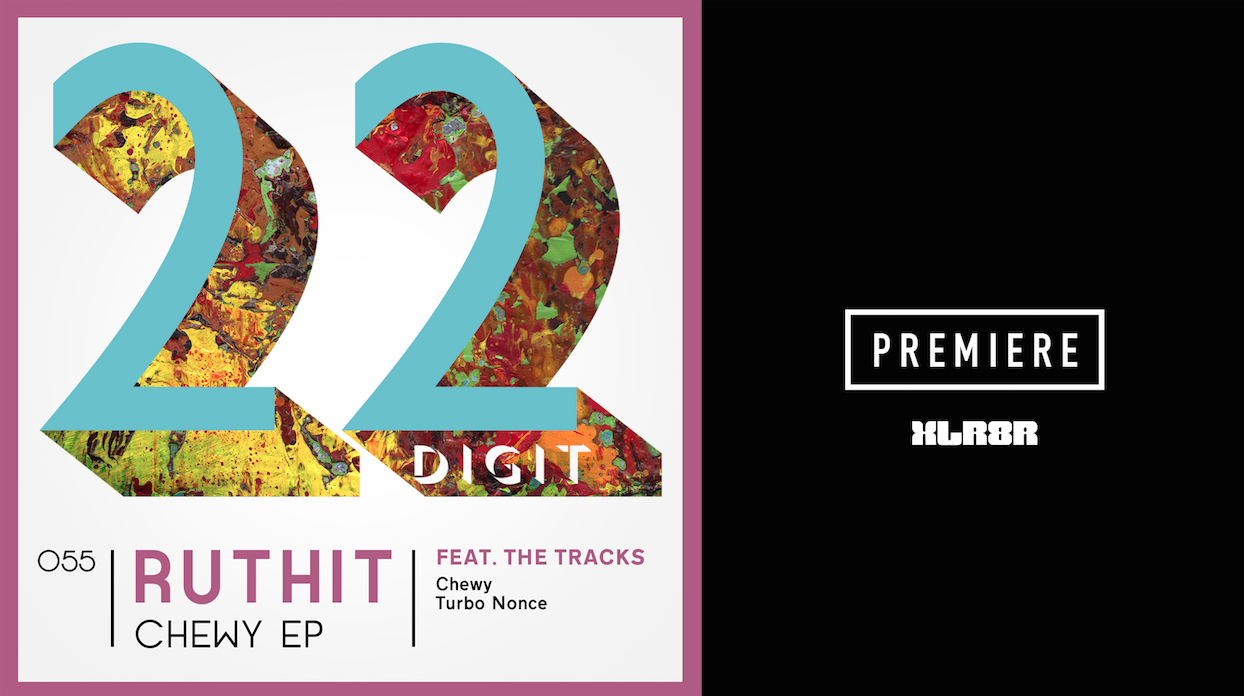
With a back catalogue that includes releases from Trus’me, YokoO, Moodymanc, Tom Ellis, and Matt Tolfrey, 22 Digit Records is building quite the resume. For its latest offering the Manchester imprint will welcome back Ruthit to the fold, who first appeared on the label when he was asked to remix Tom Ellis’ “Envelope.” Comprised of two deep and weird house-and-techno hybrids, it will be Ruthit’s first solo EP on 22 Digit, following on from releases on Murmur, Four:Twenty Recordings, and Jef K’s label Silver Network, among others.
As a precursor to the release, 22 Digit has offered up a full stream of “Chewy,” the trippy and rubbery title cut that brilliantly showcases Ruthit’s deft touch in producing quirky, atmospheric house. “Chewy” can be streamed in full via the player above, with the full EP arriving on March 28.
The willfully mysterious Marvin & Guy have always had an ineffable flair that set them apart from the pack. A half decade ago, the Italian duo hit the scene running with the Let’s Get Lost Vol. 14 two-tracker on Mule Musiq subsidiary Let’s Get Lost—and even in an era awash with disco edits, the EP’s two tracks, especially the pair’s hypnotic version of Minako Yoshida’s “Town,” hit hard. Releases on On the Prowl, their own eponymous label, Young Adults and Hivern Discs followed, with Marvin & Guy’s music slowly evolving from simple (though excellent) edits to full-on productions, and from highly functional club material to something more sophisticated and, at times, downright epic. Now, the team has taken it a step further with the Music for Race EP on Correspondant, a release that buffs the Marvin & Guy sound to a chrome-like finish.
“Targa (Long Drive),” as the name implies, is a cruising-in-your-car number—the propulsive rhythm, staccato synths runs, far-away vocal bits and dignified melody combine to give the tune a filmic, wistfully triumphant aura, like looking in the rear-view mirror as the past recedes and new adventures near. (Apparently the EP was inspired by countryside drives, and that influence is clearly evident.) The song’s perhaps a bit overcooked—it’s almost baroque in feel—but its epic appeal is hard to deny.
Marvin & Guy themselves have described the release’s flip, “Stratos,” as “krauty,” and it certainly does share its motorik-tinged rhythmic template with classic krautrock (as does the EP’s A-side). But the track is perhaps more South Florida ’80s (as in Miami Vice) than Cologne ’70s. A steady kick sets the pace; shimmering guitar chords, with just enough distortion to add gritty texture, sets the noirish mood; and when those percolating synths kick in, you’re on a late-night spin through the city’s thoroughfares, dimly lit with moonlight and neon. Digital bonus “Countach,” presumably named for the classic Lamborghini, is—as you might expect—a V12-engine version of of the sound, complete with the streamlined stylistic flourishes that Italian manufacturers (of both autos and music) seem to excel at. All three numbers come off as more fleshed-out, more overtly cinematic variations on the duo’s 2015 arpeggiated-synth winner “Egoísta”—and, as it happens, they are among Marvin & Guy’s best tunes yet.