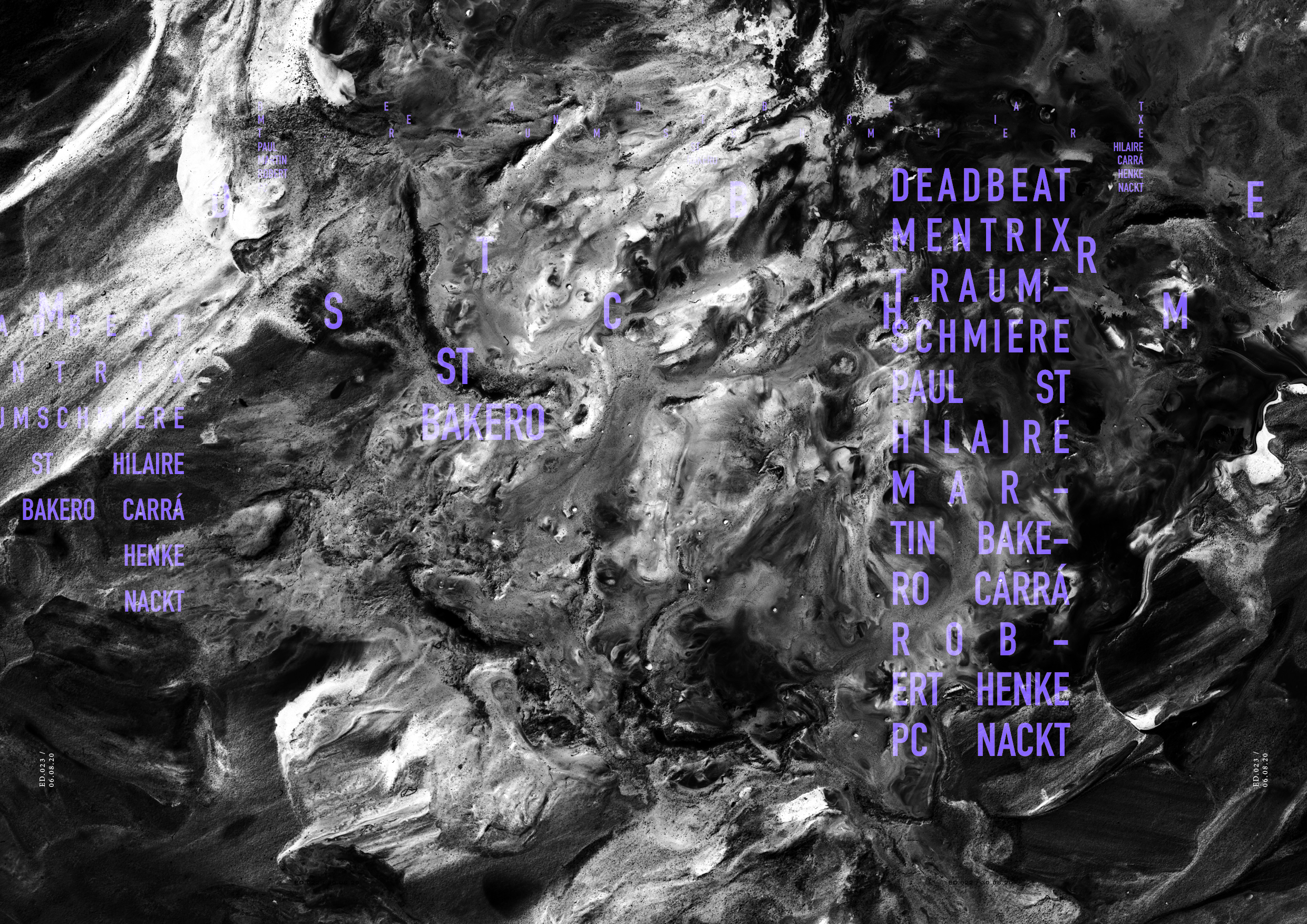
Welcome to the 23rd edition of XLR8R+.
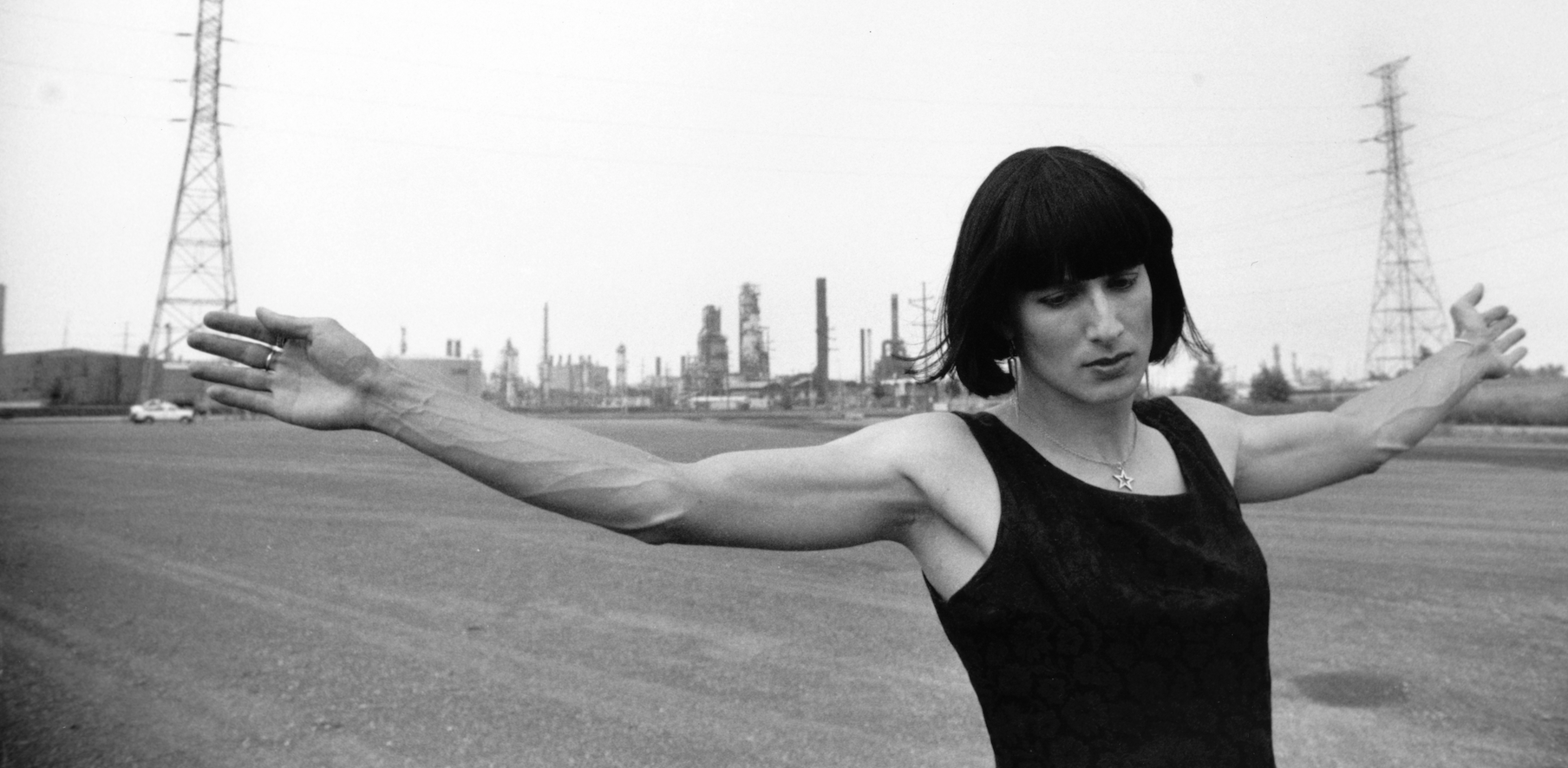
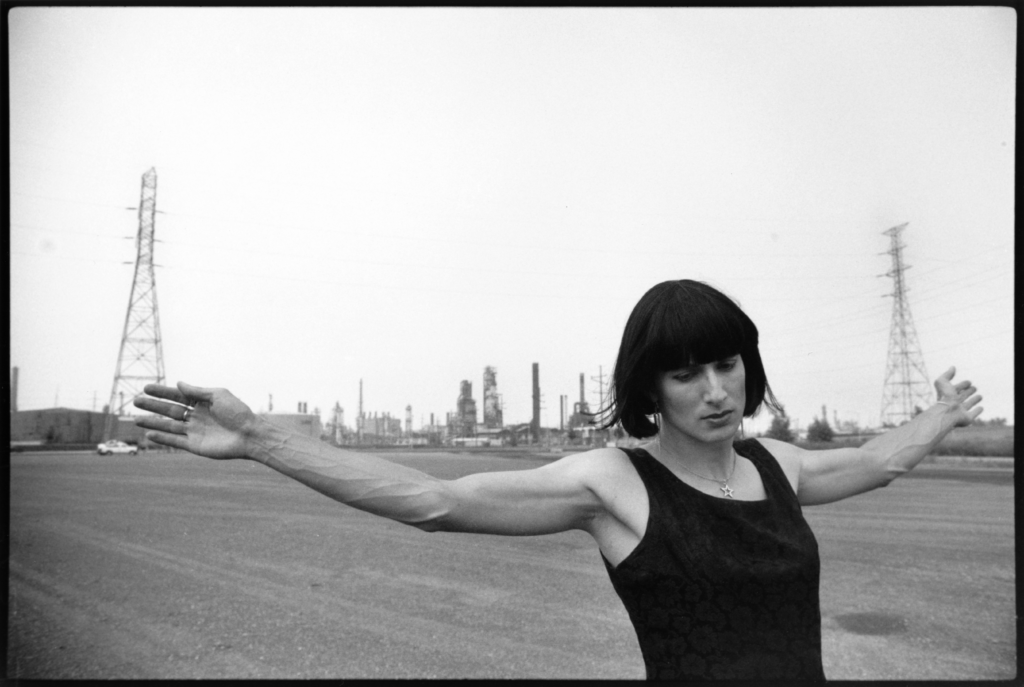
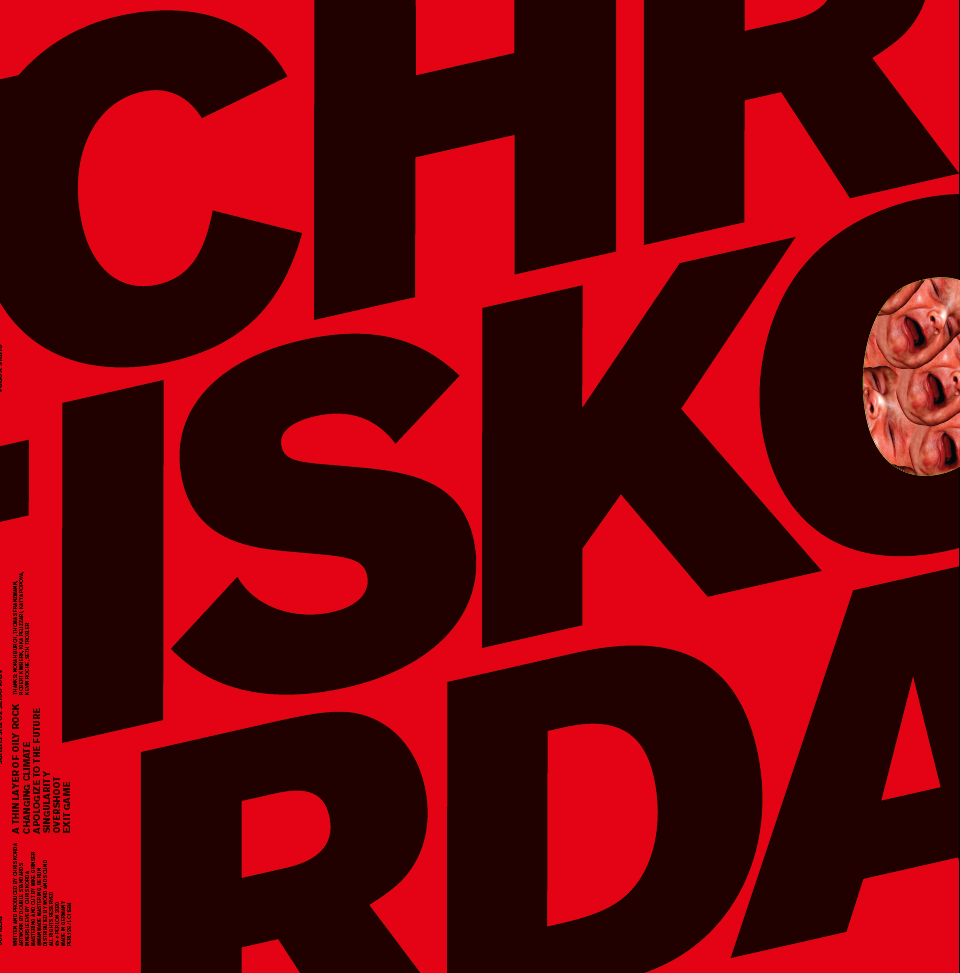
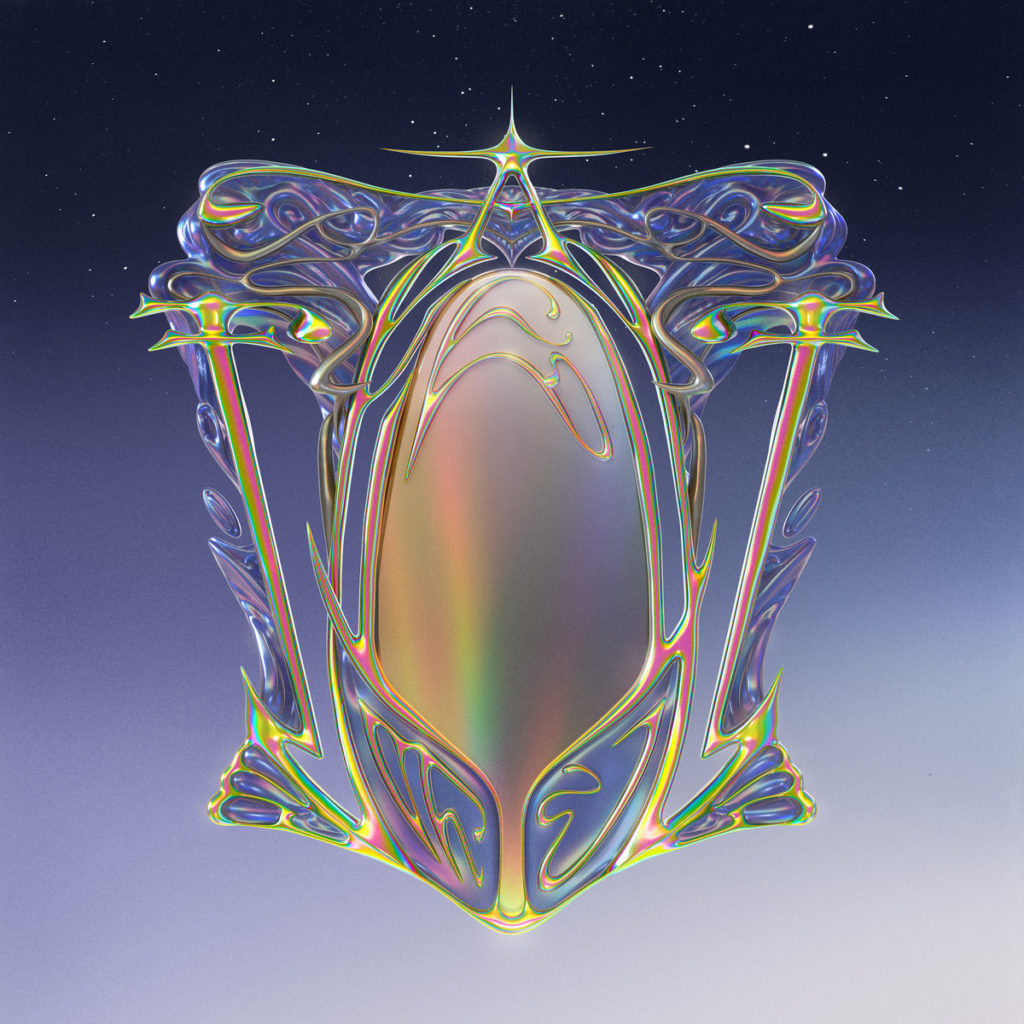
This month’s edition is curated by Deadbeat, the Canadian artist and dub archivist born Scott Monteith. As lockdown measures lighten throughout the world, Monteith has reflected on this period of uncertainty and presented music from friends who play a central role in his life as a professional musician in Berlin. Though he’s worked with many of these featured artists closely for over two decades, the most recent collaborations and conversations reflect his continuing desire for growth and new perspectives, above all else. As such, our 23rd edition is a celebration of community spirit in the truest sense, and testament to the power of close-knit collective action.
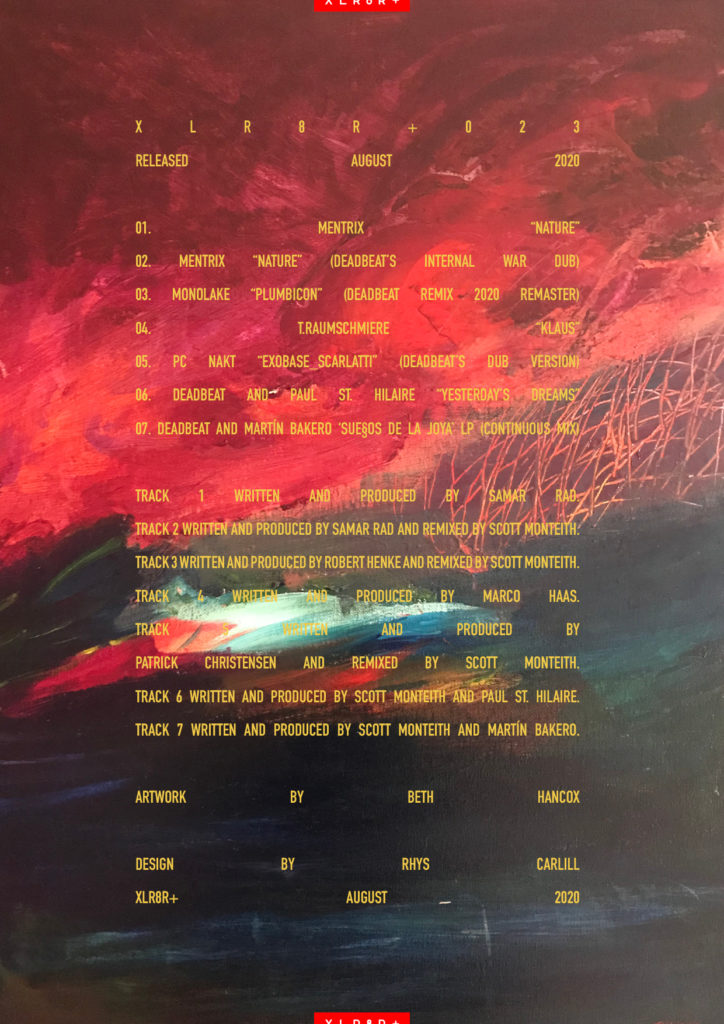
Although it comes from various artists, this collection of music has been sequenced so as to be listened to in one complete sitting, playing out like a concept album. We begin with “Nature,” from Mentrix, the Iranian artist born Samar Rad, which paves the way for Deadbeat’s dub treatment, which maintains the ritualistic nature while looping Rad’s vocals in a soup of delay. Deadbeat also delivers a long out-of-print remix of Monolake (a.k.a. Robert Henke) before T.Raumschmiere, Monteith’s friend and studio mate, cools things down with “Klaus. That’s about halfway.
Deadbeat continues with a dub version of “Exobase_Scarlotti,” from PC Nackt, who is the founder of Berlin’s Studio Chez Cherie. Incidentally, that’s where Deadbeat recorded ‘Sueños de la Joya,’ a full album collaboration with Chilean sound poet Martin Bakero Carrá that closes this edition. Here, for the first time, the album is available as a 58-minute continuous mix. The penultimate track is a Deadbeat collaboration with Paul St. Hilaire (a.k.a. Tikiman), which underlines the quality of a package dominated by dub business of the highest order from one of the game’s finest.
Please enjoy, and thank you for your continued support,
The XLR8R team
You can download the full package here.
Click here for the full design experience with the XLR8R+023 Zine.
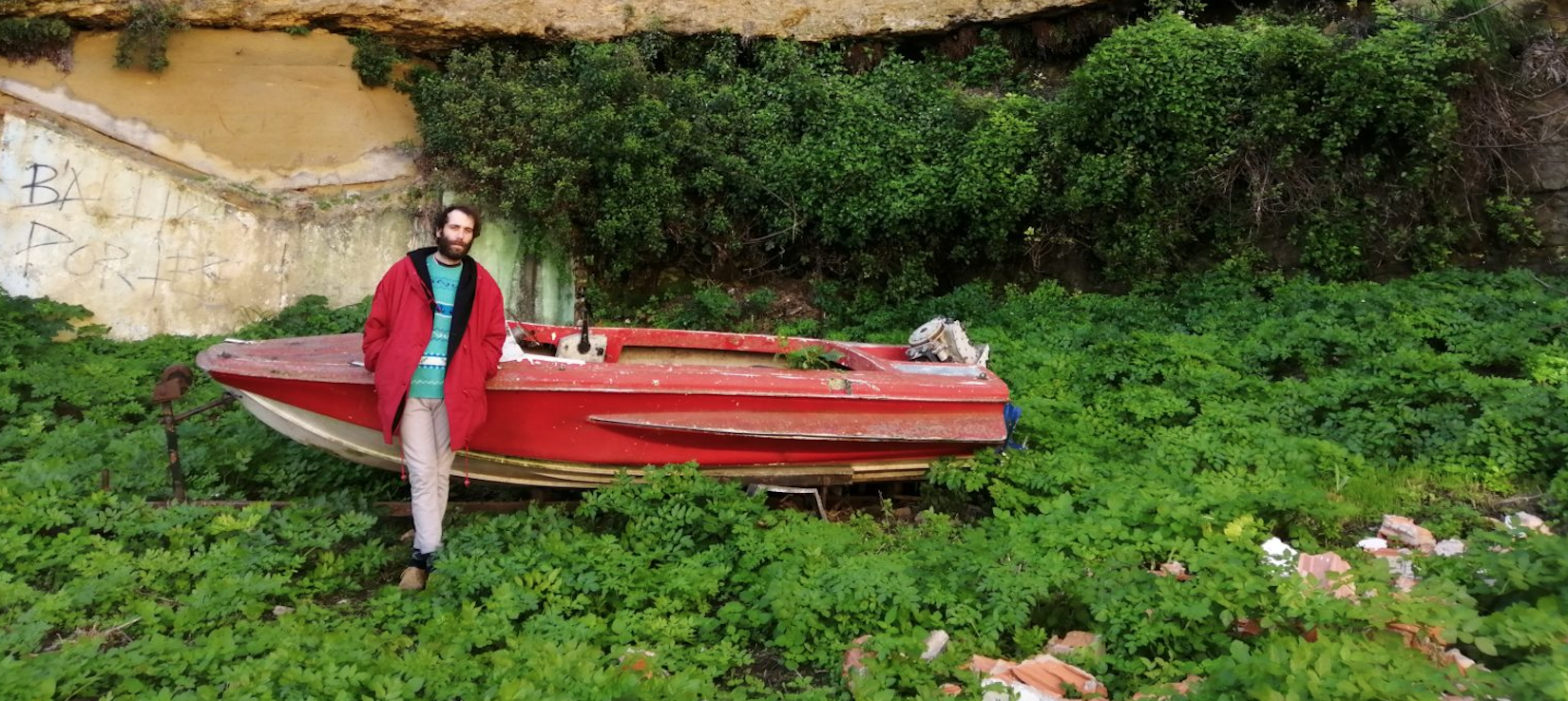
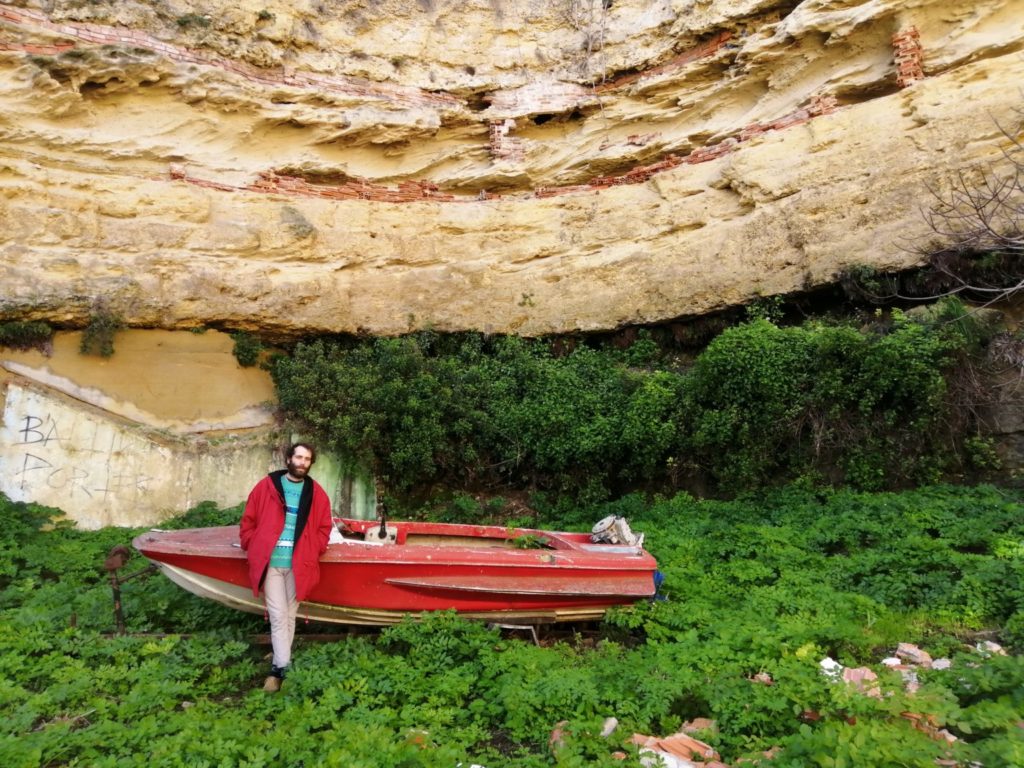
Deadbeat
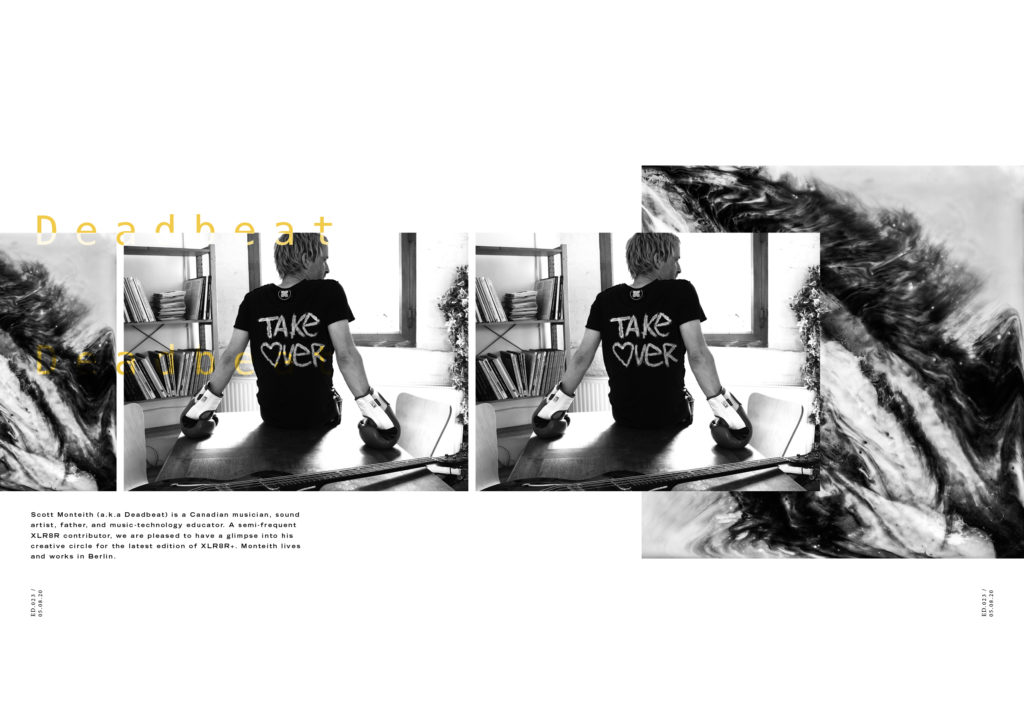
Scott Monteith (a.k.a Deadbeat) is a Canadian musician, sound artist, father, and music-technology educator. A semi-frequent XLR8R contributor, we are pleased to have a glimpse into his creative circle for the latest edition of XLR8R+. Monteith lives and works in Berlin.
A Letter from Deadbeat:
“What hath night to do with sleep?,” asked John Milton in ‘Paradise Lost,’ and I have over the last many years asked it myself with flippant disregard on countless Berlin mornings. But as the beating heart of 4/4 kick drums that permeate every nook and cranny of the city that truly never, ever sleeps have fallen silent over the last many months—as I listen to the nightingales come to sing behind my house at 3:34 a.m. on the dot each morning; as I listen to the trepidation in my very own heartbeat, the shortness of my own breathe, reactions to the reality of a haphazardly built career, in an industry proved as fragile as a spider’s web in a hurricane—I believe after 42 years alive and half of them a stone-cold raver, I just might be able to proffer a worthy response: release.
Release from the trials and tribulations of the world—which in the current climate are far too numerous to count. Release from how others may perceive us, be it bodily or with the words we choose to speak with all our personal projections, neuroses, and traumas so grossly highlighted by the light of day. Release from all of this shit. Period.
And much as we do with sleep, on our dancefloors in the dark, we release ourselves from all of these petty grievances and so much more.
The transmissions from studios across the world, be they the humblest of bedrooms, now have the power, with one small accident, to resonate like a thunderclap across the entire planet. We, as electronic music listeners and producers, are, in the truest sense, a global community. We did what punk couldn’t. They may not have been able to take over the world with a guitar and three chords but by God we’ve done it with a laptop—and we’ve sampled the fuckers out of spite.
The current climate, however, proposes a unique conundrum. What does a community, whose only capital is sharing music collectively, do when physical collectivism is impossible? We have made great efforts to recreate the experience using technology, but let’s talk turkey here: who the hell had a single great raving experience on any of the Orwellian streaming platforms in the last months? And if you did, who did you pay for it? The person providing the music, the streaming platform, or your drug dealer?
Every aspect of the electronic music infrastructure (promoters, club owners, booking agencies, management, travel agencies, etc.) has been brought to its financial knees in the last months. Yet, if you look at the personal Bandcamp pages of a great many artists whose work you love and listen to, you are likely to find a great deal of new music. If you don’t, you know where they stand. This crisis, if nothing else, will separate once and for all those with a vested interest from the opportunists; those who cannot bear the weight of the world if they do not create, and the tourists with expensive sunglasses.
Now more than ever, community is king. In my own little bubble, we have circled the wagons and continued to do what we love. As such, the interviews and music included in this edition are from my nearest and dearest, and it gives me unbelievable pleasure to share their sage advice and sounds, which have truly allowed me to persevere through these most uncertain times.
Should the sharing of them with the wider world make a single person feel less alone, we have succeeded.
And that is what community is all about.
Much love,
Deadbeat
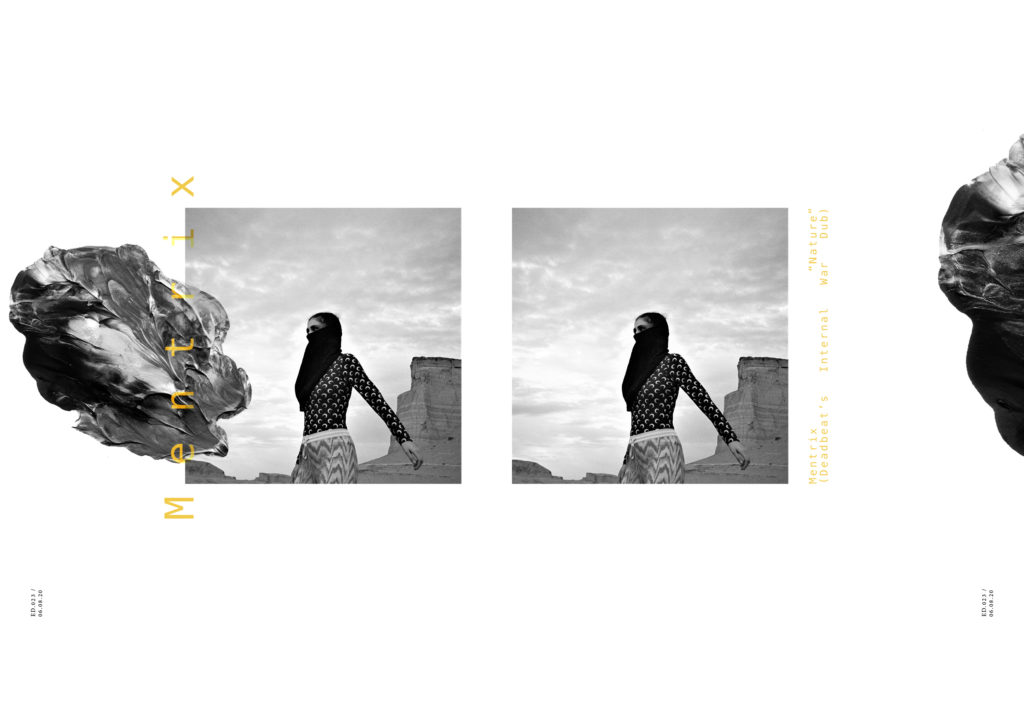
Mentrix
As Mentrix, Samar Rad fuses eastern and western sounds with songwriting, crisp drum machines, and propulsive traditional Iranian instruments, creating a bold and luminous brand of goth-pop. Her debut album, My Enemy, My Love, for which she also inaugurates her female-led record label, House Of Strength, came out in April.
Rad was born in Iran but moved to France aged eight, escaping the war in her home country. She returned home seven years later, and had to relearn her Farsi mother tongue almost from scratch, going from studying Latin and French literature to Arabic and the Qu’ran. She soon began writing songs, inspired by Persian traditional poetry and the teachings of Sufism, a form of Islam.
Rad began as a featured artist, lending her idiosyncratic vocal performances to a handful of close colleagues, before shifting her focus to recording original material of her own, intertwining her vocals with contemporary synthesizers and drum machines to form heady, trance-like pop songs. These sessions birthed Nature (2018) and Dreams (2019), Rad’s first two EPs as Mentrix, which launched her exploration into Middle-Eastern musical timbres and textures. The culmination of this vision came with My Enemy My Love, an album that reflects Rad’s relationship with “the contrasting worlds I lived in, with myself, and all my existential wanderings.”
For this XLR8R+ edition, Deadbeat has offered up an “Internal War” dub of “Nature,” the opener to My Enemy My Love, as well as the original version. Monteith’s version leaves the ritualistic nature of the original intact, looping Rad’s vocals in a soup of delay that runs wild over one of the most devastating, and exhilarating, basslines we’ve heard in quite some time. This is soundsystem music at its finest.
Ok, let’s talk about Mentrix history.
So we moved to Paris when I was eight, and then when I was 14 we came back to Iran. This was a very difficult time in my life and the shock was huge, just going back to that environment after having known all this freedom growing up in Paris. But it also reconnected me with my culture, relearning Farsi. I was there from 14 to 18, and ever since have been in the west, so to say.
But because of those formative years between 14 and 18, which reintroduced me to my own language and culture, I learned Arabic in school. I had a huge crush on the Koran and appropriately enough with its musicality. What they taught me in school just didn’t make sense to me, didn’t connect with me, but I was moved by hearing someone sing it, and when I moved back to Paris, this is when I started studying Sufism.
I did a record called Qawwali Quatsch some years ago, which was based, as the name suggests, on Qawwali [a form of Sufi Islamic devotional singing], after seeing a performance of Asif Ali Khan at the WasserMusik festival in Berlin, and diving down a deep rabbit hole afterwards. My research led me to learn that, if I’m not mistaken, Sufism and Qawwali were initially born in Persia, and as I understand it Sufism is kind of the branch of Islam devoted to pondering the gentle goodness of each living soul. Is that accurate?
Sufism would describe or define itself as the reality of religion. And religion is singular, there is only one truth to cognize, and that is the individual’s own true self, infinite and stable. All these “different religions” in truth teach the same thing. Sufism teaches about this unity and reminds us that there is no multiplicity; all the prophets, Adam, Abraham, even the Buddha, though he has a different name in the Koran, are venerated equally and I found that fascinating when I discovered it. These root stories—even Christian stories like those of John the Baptist—are documented in the Koran and I discovered this in Sufism and took so much away from it. In modern society, we search for these prophetic characters and messengers and idolize them, but in my experience, it is by studying the path of the humble ones that you can learn the most, and discover so much about yourself whilst doing so.
I think we’ve reached a stage where no one would question that ritual, be it daily, weekly, or in a larger-time context, provides psychological, spiritual, and emotional benefit to the peace of individuals. But the established book traditionalism, be it of Christianity, Islam, Hinduism, Judaism, Buddhism, or any other organized path has perhaps had its day, and that a new universal, more expansive framework is required to go forward for all of us. In the context of your record, I had this sense that it was conceived with the intention of providing something more universal or like-minded, as if you’re building ritual music for the many and not the few.
Well, thanks for saying that, that’s flattering. And I always say I got into making music through the teachings of Sufism and one of the things I’ve been very fortunate to learn on this path is when we engage too deeply in dogmatism, you lose the point.
That is prescient, and I think any Christian kid who had to go to church or any Muslim kid who had to go to Mosque every week, whether they wanted to or not, would agree with you. The accepted rituals of our elders become a hardship for the younger generations seeking truth within themselves.
They are repetitive. But as you get older and become aware of your ability to listen, to speak, to feel, and realize the power of all these basic faculties, as well as the deeper ones, of meditation, of prayer, or research, or whatever term you wish to name it by, this is all part of the great work we are all destined to do.
When I was doing research for my Qawwali Quatsch album, I discovered that there were many forms within the traditional Qawwali framework and the one I immediately gravitated toward were those termed as Ghazal, which on a surface level are drunken love songs but in fact are on a deeper level sung to the glory of God. I think there is a similarly “every woman/man” spirit with your record, as it is so ritualistic, but at the same time so inclusive. These are rituals for one and all.
Thank you for saying so. I think the track that you remixed, “Nature,” is a great example. There is this concept in Islam of “Nafs,” meaning different levels of nature in an embodied sense, different aspects of the self. If the individual’s action goes or tends toward its more root-animal nature, it is lesser, and if it tends toward its spiritual or more subtle or “angelic” nature, it is more than that. What I wanted to honor in this particular song, and throughout the album, is the teachings of Sufism that have inspired me and taught me about these notions that help understand and guide the individual on their journey to ultimately cognize the Life and Light within. I feel like we can all relate to that. As you spoke about the Qawwali forms with the Ghazal, we can all relate to that duality and complexity within ourselves.
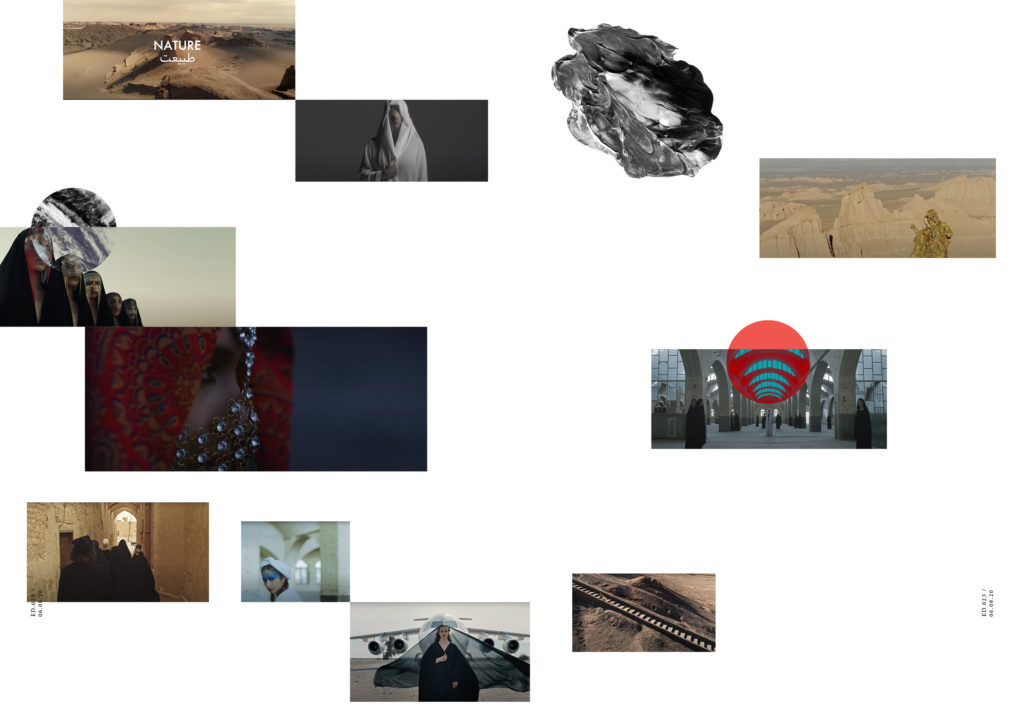
Let’s talk about the videos from the album because they’re crucial to your work. They provide a visual reference point to your roots in Iran. Can you talk about that?
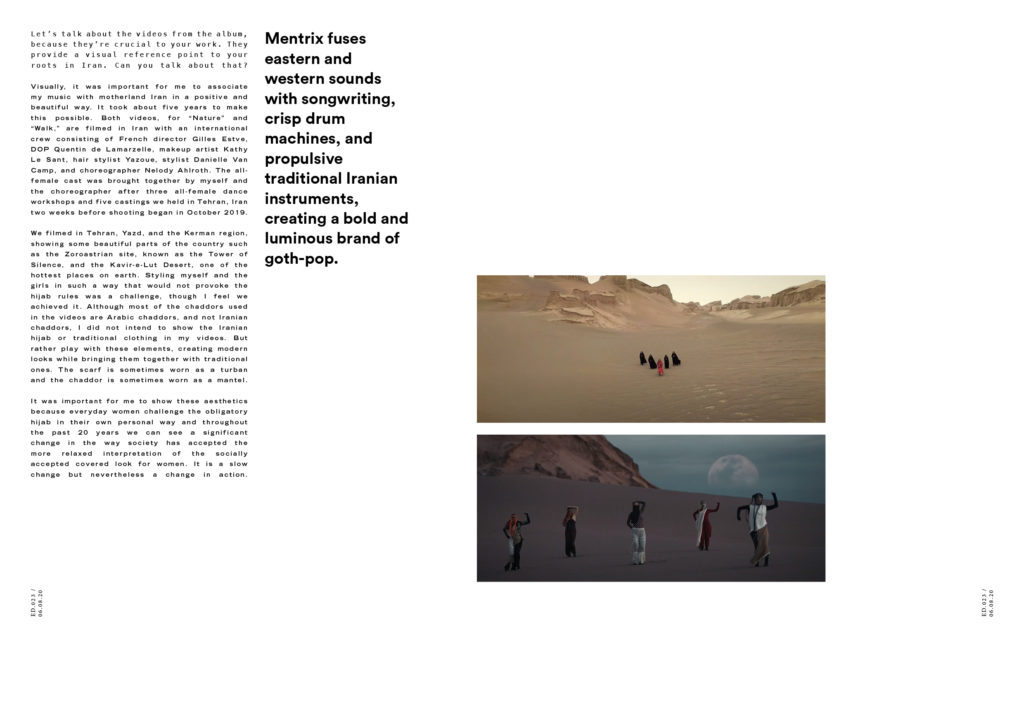
Visually, it was important for me to associate my music with motherland Iran in a positive and beautiful way. It took about five years to make this possible. Both videos, for “Nature” and “Walk,” are filmed in Iran with an international crew consisting of French director Gilles Estve, DOP Quentin de Lamarzelle, makeup artist Kathy Le Sant, hairstylist Yazoue, stylist Danielle Van Camp, and choreographer Nelody Ahlroth. The all-female cast was brought together by myself and the choreographer after three all-female dance workshops and five castings we held in Tehran, Iran two weeks before shooting began in October 2019.
We filmed in Tehran, Yazd, and the Kerman region, showing some beautiful parts of the country such as the Zoroastrian site, known as the Tower of Silence, and the Kavir-e-Lut Desert, one of the hottest places on earth. Styling myself and the girls in such a way that would not provoke the hijab rules was a challenge, though I feel we achieved it. Although most of the chaddors used in the videos are Arabic chaddors, and not Iranian chaddors, I did not intend to show the Iranian hijab or traditional clothing in my videos. But rather play with these elements, creating modern looks while bringing them together with traditional ones. The scarf is sometimes worn as a turban and the chaddor is sometimes worn as a mantel.
It was important for me to show these aesthetics because everyday women challenge the obligatory hijab in their own personal way and throughout the past 20 years we can see a significant change in the way society has accepted the more relaxed interpretation of the socially accepted covered look for women. It is a slow change but nevertheless a change in action.
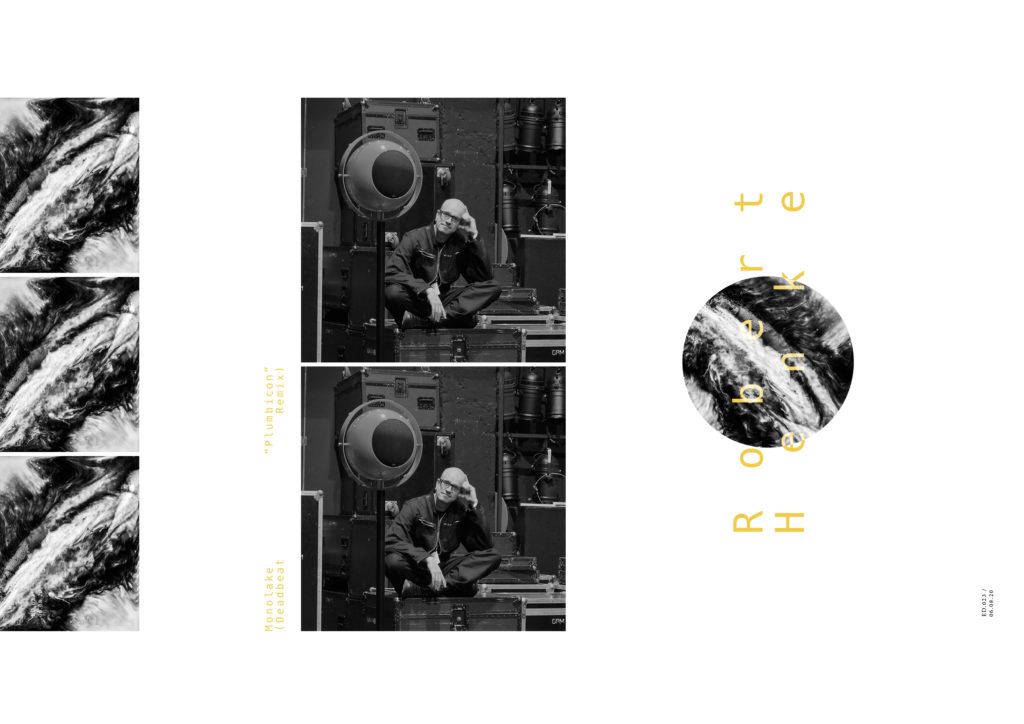
Robert Henke (a.k.a. Monolake)
Robert Henke is a composer, artist, and software developer, born 1969 in Munich, Germany. Even if you’re not familiar with his name, you’ll know his work: Henke is one of the main creators of Ableton Live, which, since its invention in 1999, has redefined the performance of electronic music. He also writes about sound and the creative use of computers, and has held teaching positions at Berlin University of the Arts, the Center for Computer Research in Music and Acoustics (CCRMA) at Stanford University, and the Institut de Recherche et Coordination Acoustique/Musique (IRCAM) in Paris.
Ableton is just one example of a bespoke set of tools created by Henke that have become publicly available. During his career as a multidisciplinary digital artist, Henke has also developed systems that he can apply to his visual installations, which commonly use laser technology and sound to create unique audiovisual experiences. They normally include elements of intentional uncertainty, resulting in not entirely predictable results, and endless variation.
Unsurprisingly, Henke’s music is based on machines and algorithms, and it has a particular focus on rhythm, timbre, and color. After founding Monolake in 1995 with Gerhard Behles, the project became an icon of a new electronic club culture emerging in Berlin after the fall of the Wall. Monolake is now perpetuated by Henke alone, leaving Behles to focus on Ableton. Henke’s most recent album, VLSI, came in 2016 on Imbalance Computer Music, home to much of Monolake’s work. Monolake’s earliest incarnations can be found on Chain Reaction.
Henke’s installations, performances and concerts have been presented at the Tate Modern in London, Unsound, CTM, and Sónar, and we’re happy to have him contribute to XLR8R+. On this edition, we’re offering a rare, long out-of-print Deadbeat remix of Monolake’s “Plumbicon,” originally released in 2006 and now remastered. The Deadbeat remix first appeared on the Plumbicon Versions II EP, and is a masterclass in melodic, dub-wise composition. Like much of Deadbeat’s catalog, the track is anchored by fierce bass pressure, with this particular cut leaning heavy on mid-frequency melody—and it’s all the more beautiful and alluring as a result.
One of the things that drew me to your work was the idea of space: Monolake tracks always seem like exercises in virtual architecture. In the current pandemic, shared space, be that in galleries, churches, or clubs, has been lost. How has the idea of space shaped your work historically?
Space for me has multiple aspects, not only in terms of reverb, 3D audio, and mixing, but I’m also interested in the experience of a room, and the social space it can create. Space and time are highly connected, and the experience of a night at Berghain sums up a lot of those interconnections: the sense of timelessness, the complexity of verbal and more so non-verbal social interaction, the sound of that industrial architecture, which nicely works with the type of music played, and the mix of large open space and small hidden rooms. In a way, such a venue is a composition in itself.
And the same applies to a classical concert hall, a museum, or even a whole city. My art is a reaction to those spatial conditions and a dialogue with them. When I work with lasers, or if I set up my computers in a venue, I aim for an experience that is not overriding a space but rather creating a dialogue with it. Hence, a concert for a streaming audience would require a completely different approach than one in a small underground club. Or when I work on installations, the final timing of events is defined after setting up everything in the museum or gallery. The perception of time so much depends on factors that are unique in every location. I find this fascinating and technology helps me postpone those decisions until I am right where it is going to finally happen and not at home or at some rehearsal space. And if you want to make a big stretch, Ableton Live’s Session View comes from the same type of thinking, historically.
Our conversations have veered into the political realms over the years, and I have always valued your insights in this domain. With this in mind, I wanted to discuss how the current climate might present an opportunity for us to make significant cultural change. Do you think it’s our chance to reboot the system?
I am pessimistic, because significant change would require giving up things we take for granted. And this is hard to do for an individual if we are surrounded by others who don’t make the same changes. For example, if I am the only artist refusing to travel by plane, because of its ecological impact, then I am the only one not playing at festival X and I’m getting all the Facebook posts from my artist friends who had a good time there, and I’m missing business opportunities and so on. So I make myself feel better by not using a plastic bag for my fruits at the supermarket that weekend, while ignoring the fact that the kerosene burned during the flight I may take the following weekend is equivalent to burning some several tens of thousands of plastic bags. Covid-19 has created a situation where we are suddenly all forced to stop doing things we liked to do. And because it is the same for all of us, I feel it is less painful than the above scenario. If no one is flying, no one is missing out. And this shows that the only way to achieve real change is through enforced state regulation. We need to create equal conditions for all, or it will not be accepted. This requires political stamina and it requires people electing representatives who act responsibly.
The idea of creating equal conditions is a difficult hurdle to overcome because classism is so deeply entrenched, even in societies otherwise thought to be progressive. How do you perceive we might overcome those challenges?
The class topic is a tricky one. It is easy to feel part of a global movement of open-minded forward-thinking artistic innovators, but that’s just not how it is. We touring artists, who are invited to play at one of those international festivals, or who can sit in our nice apartments in Berlin Kreuzberg writing stuff that will be published in magazines, are removed from the person cleaning up the venue whilst we get driven back to our five-star hotel. Of course, I also find it completely out of balance if a CEO is earning several million per year. But where does inequality begin? How much is too much? I have no valid answers here.
And this brings me back to the above about politics. Decisions that affect large groups of people and require giving up some privilege in order to gain a more even distribution of wealth can only be made in a political process. Hopefully, the framework in place allows these processes to be fruitful. But this is not the rule, more the exception, and it has to do with human nature and a precondition towards growth, which makes sense for each individual, but ultimately drives us toward hitting the proverbial wall collectively—big time. We once had a lot of hope concerning the positive aspects of information exchange. We were hoping that the internet could allow people to make better decisions based on far more complete access to information. We did not take into account that people will eventually only choose the channels that amplify their own beliefs. Or only play the music they know.
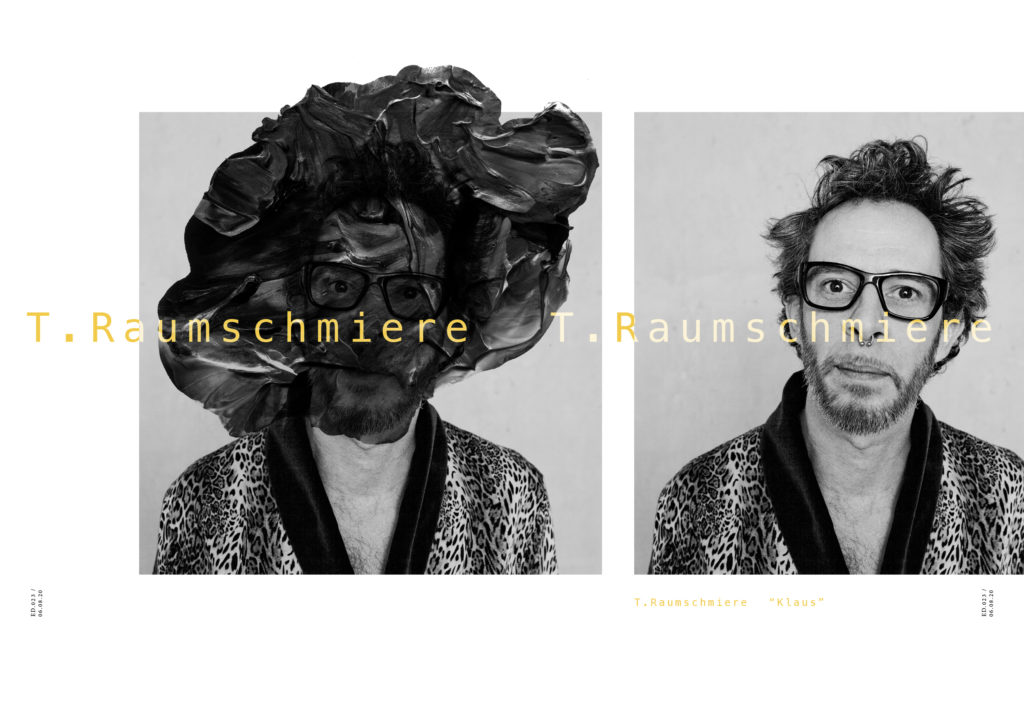
T.Raumschmiere
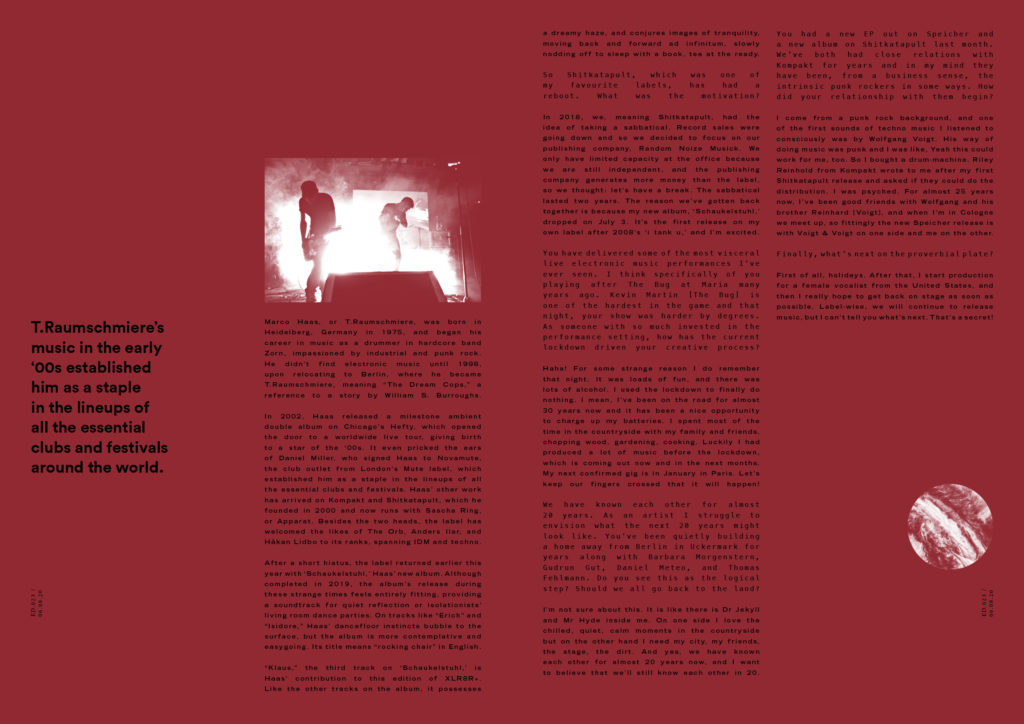
Marco Haas, or T.Raumschmiere, was born in Heidelberg, Germany in 1975, and began his career in music as a drummer in hardcore band Zorn, impassioned by industrial and punk rock. He didn’t find electronic music until 1998, upon relocating to Berlin, where he became T.Raumschmiere, meaning “The Dream Cops,” a reference to a story by William S. Burroughs.
In 2002, Haas released a milestone ambient double album on Chicago’s Hefty, which opened the door to a worldwide live tour, giving birth to a star of the ‘00s. It even pricked the ears of Daniel Miller, who signed Haas to Novamute, the club outlet from London’s Mute label, which established him as a staple in the lineups of all the essential clubs and festivals. Haas’ other work has arrived on Kompakt and Shitkatapult, which he founded in 2000 and now runs with Sascha Ring, or Apparat. Besides the two heads, the label has welcomed the likes of The Orb, Anders Ilar, and Håkan Lidbo to its ranks, spanning IDM and techno.
After a short hiatus, the label returned earlier this year with Schaukelstuhl, Haas’ new album. Although completed in 2019, the album’s release during these strange times feels entirely fitting, providing a soundtrack for quiet reflection or isolationists’ living room dance parties. On tracks like “Erich” and “Isidore,” Haas’ dancefloor instincts bubble to the surface, but the album is more contemplative and easygoing. Its title means “rocking chair” in English.
“Klaus,” the third track on Schaukelstuhl, is Haas’ contribution to this edition of XLR8R+. Like the other tracks on the album, it possesses a dreamy haze, and conjures images of tranquility, moving back and forward ad infinitum, slowly nodding off to sleep with a book, tea at the ready.
So Shitkatapult, which was one of my favorite labels, has had a reboot. What was the motivation?
In 2018, we, meaning Shitkatapult, had the idea of taking a sabbatical. Record sales were going down and so we decided to focus on our publishing company, Random Noize Musick. We only have limited capacity at the office because we are still independent, and the publishing company generates more money than the label, so we thought: let’s have a break. The sabbatical lasted two years. The reason we’ve gotten back together is that my new album, Schaukelstuhl, dropped on July 3. It’s the first release on my own label after 2008’s i tank u, and I’m excited.
You have delivered some of the most visceral live electronic music performances I’ve ever seen. I think specifically of you playing after The Bug at Maria many years ago. Kevin Martin [The Bug] is one of the hardest in the game and that night, your show was harder by degrees. As someone with so much invested in the performance setting, how has the current lockdown driven your creative process?
Haha! For some strange reason I do remember that night. It was loads of fun, and there was lots of alcohol. I used the lockdown to finally do nothing. I mean, I’ve been on the road for almost 30 years now and it has been a nice opportunity to charge up my batteries. I spent most of the time in the countryside with my family and friends, chopping wood, gardening, cooking. Luckily I had produced a lot of music before the lockdown, which is coming out now and in the next months. My next confirmed gig is in January in Paris. Let’s keep our fingers crossed that it will happen!
We have known each other for almost 20 years. As an artist, I struggle to envision what the next 20 years might look like. You’ve been quietly building a home away from Berlin in Uckermark for years along with Barbara Morgenstern, Gudrun Gut, Daniel Meteo, and Thomas Fehlmann. Do you see this as the logical step? Should we all go back to the land?
I’m not sure about this. It is like there is a Dr Jekyll and Mr. Hyde inside me. On one side, I love the chilled, quiet, calm moments in the countryside but on the other hand, I need my city, my friends, the stage, the dirt. And yes, we have known each other for almost 20 years now, and I want to believe that we’ll still know each other in another 20.
You had a new EP out on Speicher and a new album on Shitkatapult last month. We’ve both had close relations with Kompakt for years and in my mind they have been, from a business sense, the intrinsic punk rockers in some ways. How did your relationship with them begin?
I come from a punk rock background, and one of the first sounds of techno music I listened to consciously was by Wolfgang Voigt. His way of doing music was punk and I was like, Yeah this could work for me, too. So I bought a drum-machine. Riley Reinhold from Kompakt wrote to me after my first Shitkatapult release and asked if they could do the distribution. I was psyched. For almost 25 years now, I’ve been good friends with Wolfgang and his brother Reinhard [Voigt], and when I’m in Cologne we meet up, so fittingly the new Speicher release is with Voigt & Voigt on one side and me on the other.
Finally, what’s next on the proverbial plate?
First of all, holidays. After that, I start production for a female vocalist from the United States, and then I really hope to get back on stage as soon as possible. Label-wise, we will continue to release music, but I can’t tell you what’s next. That’s a secret!
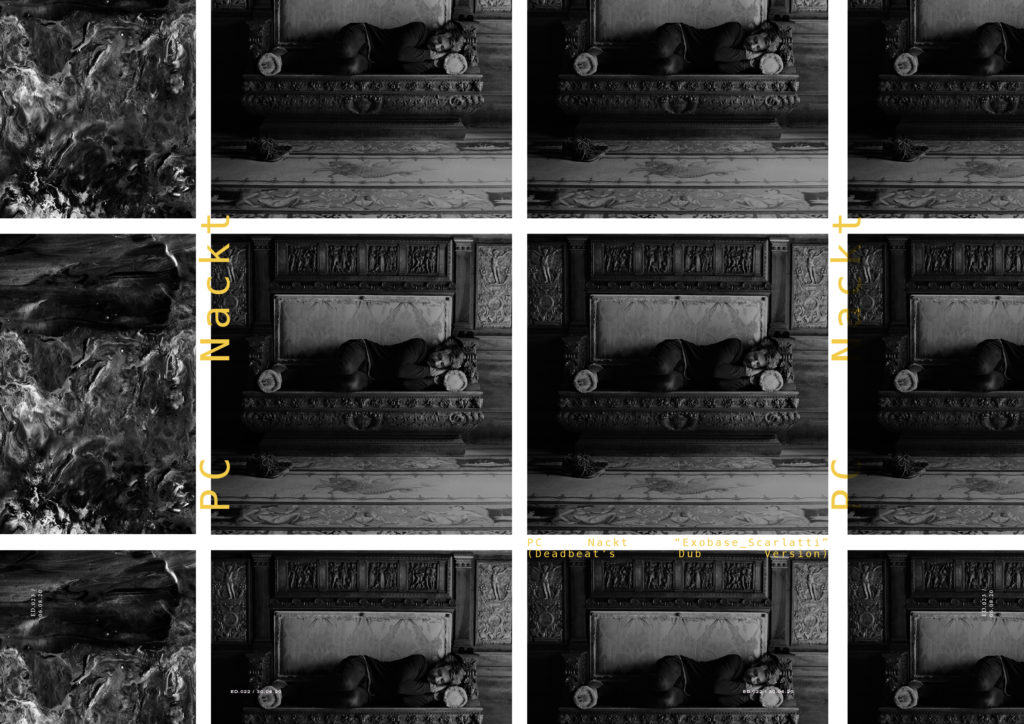
PC Nackt
Patrick Christensen, or PC Nackt, is one of the most versatile artists in German music. His career began at the University of Music and Dance in Cologne, after which he moved to Berlin, in 1999, where he began a deep dive into electronic music. In 2002, Christensen and his spouse founded electro-punk band Warren Suicide, which, with a blend of avant-garde, punk, and pop aesthetics, rendered Christensen a recognizable face across multiple scenes. He’s also the man behind Chez Chérie, a studio for music and arts in Neukölln, Berlin. Located in a former factory space, the studio has developed into an important hub for like-minded artists from across the world, including Deadbeat.
Meanwhile, Christensen’s String Theory, for which he’s been a musical director for over a decade, continues to tour globally, joined by the Göteborg String Theory Orchestra and singer-songwriter José González. Since 2011, Christensen has been co-producer and co-writer for Apparat, whom he joins on tour, and he also plays producer for electronic pop group Yello and Albanian singer Fatime Kosumi (a.k.a ANDRRA). Since 2016, PC Nackt has been collaborating with punk poet and director Schorsch Kamerun on a series of electro operas, which have been performed in various European cities.
The track in question here finds Deadbeat reworking “Exobase_Scarlatti,” a cut from PC Nackt’s most recent album, Plunderphonia, which dropped on 7K! on June 26. For this outing, Deadbeat burns off the tense atmosphere of the original while stripping things back to a handful of stoned-out elements that are expertly weighed against and dancing with each other in a billow of dubbed-out smoke.
You can listen to an audio interview with Deadbeat and PC Nackt here.
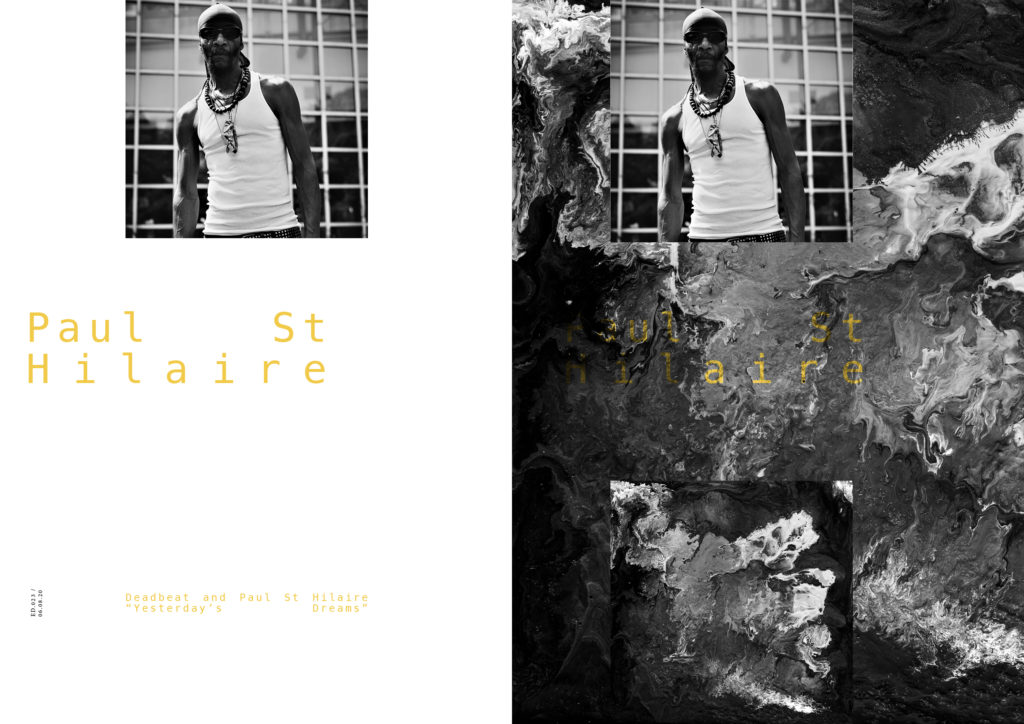
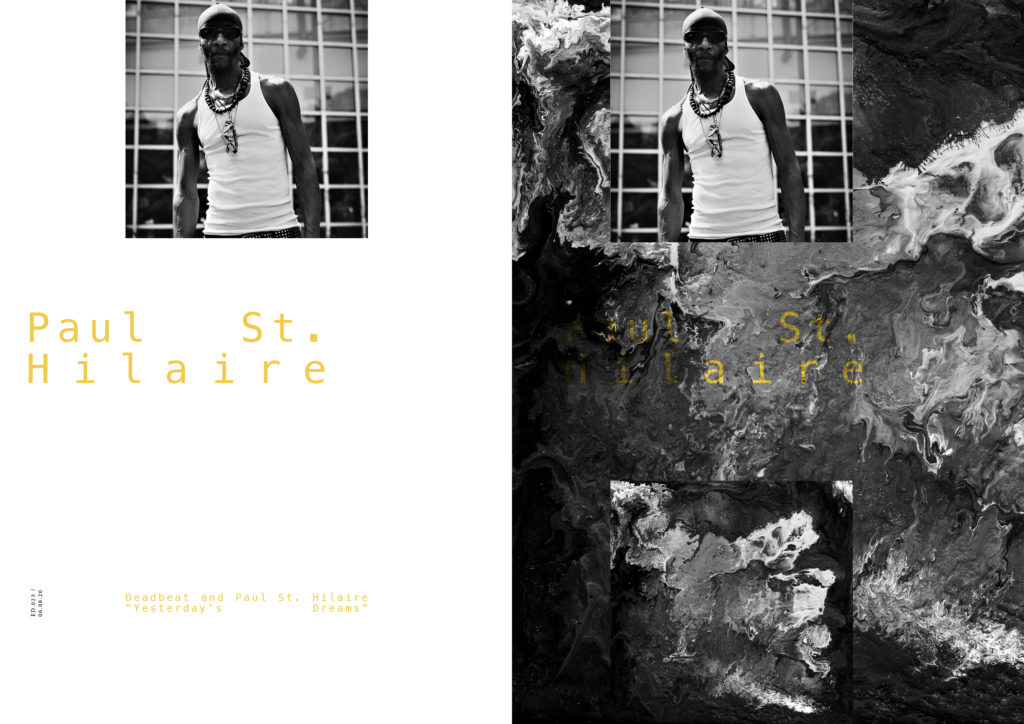
Paul St. Hilaire
Paul St. Hilaire is a singer, poet, and musician from Saint Patrick, Dominica. He began his career as Tikiman, but he had to drop this alias in 2003 following a legal dispute. Although he’s put out self-produced cuts on his own False Tuned, grounded in the reggae music that has inspired him, he’s better known for his work as a vocalist. The first taste of his soothing vocals came on “Never Tell You,” released in 1996 on Basic Channel’s Burial Mix subsidiary. And in the ensuing years, he’s become the voice of dub techno, a regular across the discography of Rhythm & Sound, a collaboration of Mark Ernestus and Moritz von Oswald. He’s done this while keeping his profile low, shunning interviews and being all but dismissive whenever he does speak on the record. He’s released two collaborative albums with Deadbeat, the latest, Four Quarters of Love and Modern Lash, arrived in June 2020.
Included on that release is “Yesterday’s Dreams,” which features St. Hilaire’s hypnotic voice over Deadbeat’s dub grooves. Deadbeat originally sketched out the release as a means of processing what he perceived as a “creeping darkness and sickness,” in both his own life and the world in general, and he reached out to St. Hilaire to add his own touch. “There was something in these latest pieces that hammered the proverbial nail clean through the wood,” Deadbeat explains. “They perfectly captured this sense of rising tension of a world that was getting almost psychedelically weirder and darker by the day, and both held a mirror up to this and offered some much-needed release.” Running for over 12 minutes, “Yesterday’s Dreams” encapsulates everything we love about dub-techno: deep and low basslines, desolate sound design, fractured chords, and St. Hilaire’s now-infamous affecting vocals.
First of all, how has your time been in Dominica? You’ve been down there for four months now.
Well, Dominica is my homeland, so being in Dominica with friends and family is always a plus.
Has the island been hit by the Covid 19 outbreak too?
Yes, we’ve had a few cases of the virus but they’re cleared internally. The new cases are from people trying to come home after working on cruise ships. They are detected and quarantined immediately.
Ever since we started working together, I’ve had these kind of psychic link-up moments where I will be working on new stuff, stumble on something that I think would be great to work on with you, and even if we haven’t spoken for some time you often call right around then.
The different frequency ranges in which we oscillate consciously and unconsciously on a daily basis and the accumulative effects are responsible for all this. Messages are conveyed and not devised.
As a black man living in Germany, and a touring musician who has traveled the world, you’ve no doubt experienced racism. With the current global upheaval surrounding the death of George Floyd, there seems to be the possibility that a critical mass of anger has been achieved that might in fact be able to effect real institutional change. Do you see this as a real possibility?
Racism? Real institutional change? Real possibility?
Well, to me, it’s pure confusion. Until people realize we’re all inmates here on earth, the status quo will persist. So many have tried only to end up in the blue. You know? Those in power now and those destined to be in future are all of the same strain—dogmatic and deceptive.
Prisons are made of shadows in our minds. The shadows are made of lies, pain, loss, and fear. These types of artificially created incidents are being forced upon the human race by the operators of the mind-control prison system. The prison guards will always promote and support oppressive or totalitarian activities of “PEOPLE.” Why not keep the inmates fighting between themselves? Why not empower madmen to run the governments?
The men who run the criminal governments mirror the commands given them by the covert thought-controllers. Those governments are manifesting precisely the same behaviour as those that exiled them to eternal imprisonment here.
They are the gruesome reminder of the ageless maxim that “people” will often manifest the treatment they have received from others. Kindness fosters kindness; cruelty begets cruelty.
One must be able and willing to use force tempered with intelligence to prevent harm to the innocent.
However, extraordinary understanding, self-discipline, and courage are required to effectively prevent brutality without being overwhelmed by the malice that motivated the brutality in the first place.
Shadow-boxing will be the game forever. As long as we remain oblivious to that fact.
We’re all inmates here.
Speaking as fathers now, how do you think we can lay a solid foundation for our children going forward in both a societal and personal sense?
Try to protect them if you can, and teach them sincerely.
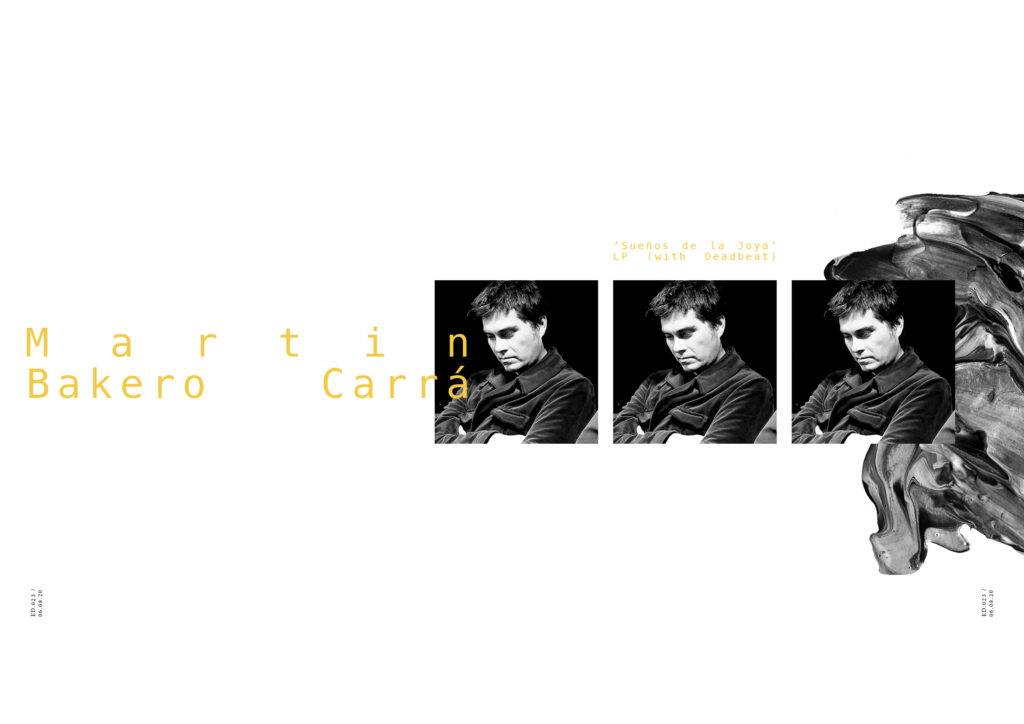
Martín Bakero
Martín Bakero keeps a low profile for a man who has presented performances, lectures, films, expositions, and installations across Europe and North, Central, and South America. Bakero, from Chile, studied electro-acoustic composition at the Paris municipal music conservatory and has a PHD in psychopathology, and works first and foremost as a sound poet, whereby the phonetic aspects of human speech are foregrounded over semantic and syntactic values. Outside of this, he works as a psychoanalyst with persons suffering with severe autism and other psychological disorders, helping them to find peace in their unique perceptions of reality.
Monteith met Bakero through his wife and they’ve since become “soulmates,’ Monteith says. “From the moment we met, it was clear we were going to work together.” And then earlier this year, they put aside a two-week period and headed to Monteith’s studio together. They spent all their time there, returning home only to sleep for a few hours. The result is four 15-minute tracks, the last featuring a reading by Bakero from the poem “Pequeño Mapa Audible de Chile” by Gabriela Mistral. Here, for the first time, the album is available as a 58-minute continuous mix, which, according to Monteith, was his original intention. Dense and psychedelic, each cut melts seamlessly into the next, almost inconceivably, creating a spellbinding piece of music that is engulfing, heady, and ultimately healing. (LISTEN HERE—we recommend headphones for this one.)
First of all, how has lockdown life in Paris been?
I was grateful that the societal progression stopped for a while: no more appointments, business plans, winners, or losers. Everybody was at home and I felt myself looking into the face of something that was ultimately superior to us; that truly brought human arrogance to its knees. We can finally have time to eat healthily, read wonderful books, and listen to the records that we’ve never had time for. I think viruses are intelligent and they come to help humanity by enforcing boundaries that we couldn’t put in place ourselves. Finally, for two months at least, the ecosystem and the planet, which has been trapped by human ambition, could recover. The “world” reasserted its place in the world.
It was beautiful to see Paris like that; without pollution, without planes, or motorboats. I think I prefer those confines. And now, as people consider a return to “normality,” although I hate that word, we have to recover the idea of collectivism and realize that we are a group and not singular, neoliberal cash cows.
I hope that confinement by viral epidemic teaches us to stop all this misery and exploitation of natural resources, unchecked mass tourism, heavy industry, weapons, pharmaceutical and financial speculations, etc. But maybe I’m too optimistic and human beings will continue with the same arrogance. Maybe if we wake up and realize that viruses are intelligent in their own right, perhaps even from another star, we could learn to be more humble and become more beautiful on a societal level. Anaxagoras, the philosopher, says that we don’t live on top of a solid earth; we live at the bottom of an ocean of air.
Maybe you could talk about your creative output in general, for those who aren’t familiar with your work. What are your motivations as an artist?
At a root level, I am a poet and I always start from poetry. But poetry for me is not only about writing a poem; it’s more a kind of vibration before sound and it’s intrinsically linked to music. And I have always preferred to study music over literature, because for me poetry is closer to music, because in music you don’t make any distinction between signifier and significance. What you hear is what you mean and not a reference to a semantic ideology or signification.
Making poetry is not difficult; the skill is to put yourself in the state to create, and that takes a little time. But once you are in the mood then poetry flows, like a river in the middle of the void. For that you have to train yourself in various kinds of disciplines and anti-disciplines. I do martial arts, cabalistic rituals, and phonetics experiences, all in order to open my spirit to something else.
I do try to abolish the borders between poetry and music and between theatre and dance. Now I’m making several films because in this medium you can utilize text, sound in spatialization, visions, feelings, smells, etc. I’m completely committed to living life in the moment. Like an antenna who can perceive some things coming from inner and outer space, and I try to transmit that to other people.
Your day job is working as a psychoanalyst with developmentally challenged individuals. How does that influence your artistic practice?
I work principally with psychotic and autistic people. For me they are like artists without artworks. I think real artists are like mad people but they make a step beyond. Very much like psychotics, they don’t repress their desires and don’t submit themselves to accepted normality. They express their own ideas creatively above all else. They construct a new kind of reality based exclusively on their own life experiences which might at times be difficult to absorb by a wider audience, but feel and appear perfectly sensical to them individually.
I guess for the rest of us, some ideas may, like tea, need to steep before they make sense.
Exactly. I work with them [the developmentally challenged] to connect them with that inventive part of the self to express something tangible, like an object outside of themselves to be appreciated by society as a whole. This, of course, raises an interesting point: although society cannot understand it, in some cases psychotic and autistic people are enjoying what they have constructed, and it is us who don’t understand. They are expelling objects from their psychic spaces, and they liberate themselves of too much energy stuck in their own realities. We could invent an entirely new kind of world listening to, following, and decrypting the visions and hallucinations of madness. Madness is a capitalism of the soul.
You were the personal secretary to Alejandro Jodorowsky, the Chilean-French artist, for many years. What did you take away from the experience?
It was fantastic to be close to a personality like that. He’s a wonderful poet and magician, and he received me into his life like a member of his family. He allowed me to recognize my originality, to not step back from my most original thoughts, and to not choose between my two paths of existence: being a therapist and a poet. That is why I call myself a TheraPoet. Working closely with him allowed me to learn a lot about the position of the artist in the world; just go out into the world, believe in beauty, and lay an egg.
Finally, what do you hope listeners will take away from our album?
Our personal conversations take in shamanism, poetry, music, psychic trips, nature, fears, death, etc. Our album puts the ear to the point of what’s possible when one hopes for new things from everything, even when it feels like all is lost. I feel like our “Sueños de la Joya” is like a sound poetry album that offers the listener and the soul a chance to discover a kind of sparkling joy in everything that we look or hear around us, as the fears as the pandemic amplifies, but also the intrinsic beauty of things, and hopefully to go beyond the constraints of human speculation completely.
It was fantastic to work with you, dear friend, someone with a really pure soul whom I so admire as a musician. I realized the day that we met each other, when we started to collaborate without even knowing it. You lent me your sound recorder to make one of my first sound poem albums! I felt that our collaboration was necessary to heal our own hurts and to heal the injuries of humanity and the multiverses. It brings to mind what Aristotle said about connecting the singular with the universal in art. I learned a lot from you and we share a wonderful friendship and so many special moments working and hanging out together. I hope that will continue forever.