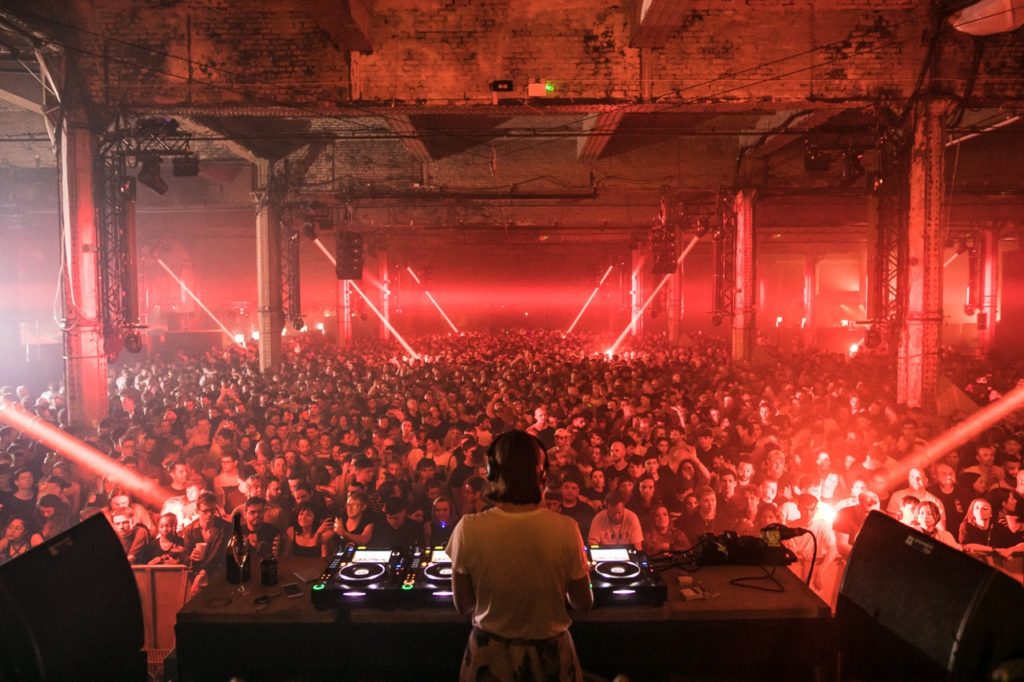
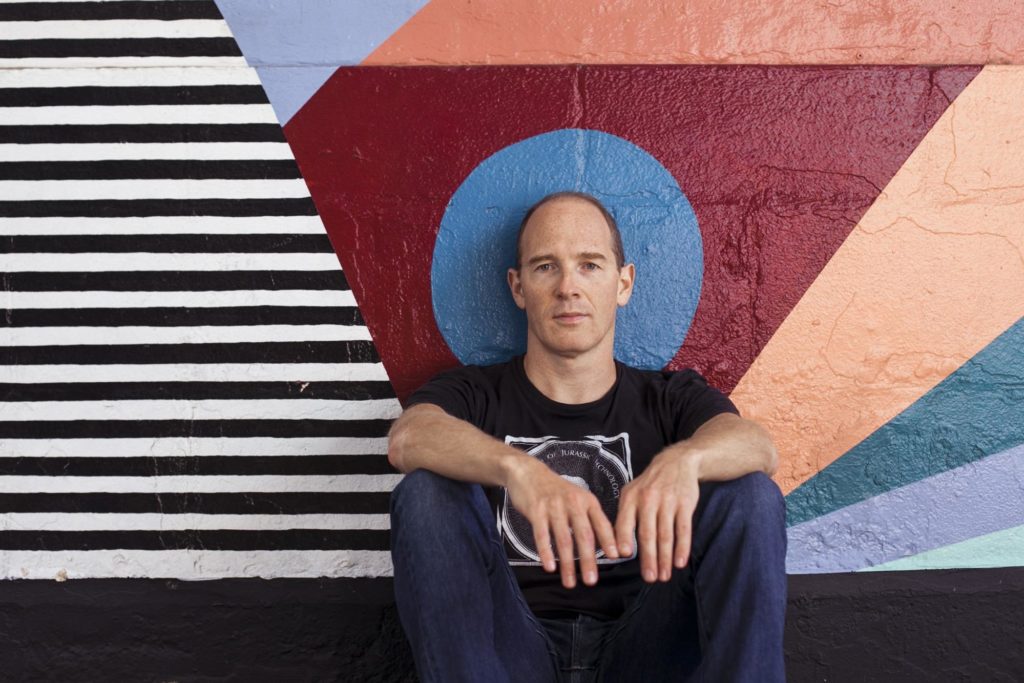
Apple: designer of beautiful technology products, maker of lifestyles, and one of the most valuable companies in the world. But how does its enormous power affect those artists who have been with it since it was the small guy on the block? Does it now wield too much power in our lives as musicians? Have we become too dependent on a single company? Alex Smoke gives his thoughts.
Recent events have meant that I’ve lost almost all trust in Apple’s motivations and ideals. I remember a time when the Mac was the fresh creative community to Windows’ corporate controlling ecosystem, but that has changed completely. As the company has continued to increase in value, the stakes have been raised and it has steadily become more corporate, prioritising shareholders’ demands for profit over the satisfaction of creative users, who are responsible for a dwindling portion of the company’s profits.
With the launch of its own credit card, content studio, and on-demand video channel, the company is moving ever further into mainstream consumer technology territory, and it’s clear that creative users such as myself are unlikely to have any considerable amount of thought directed their way in coming years. Its latest software, 10.15 Catalina, will delete iTunes from the applications folder of every mac making it harder for DJs to sync their playlists from iTunes to Serato, rekordbox, Traktor, VirtualDJ, and other DJ Software.
Even simple things, like finding outdated versions of software to work with older machines, has already become a hassle, which is surely a reflection of the company’s drive for profits by requiring us to shell out on the latest machines and software.
Speaking of which, Apple announced the new Mac Pro recently, with a starting price of US$5,999. There was a time when most of us creative professionals would have been waiting eagerly for this latest Pro machine, keen to see what new technologies were being made available, but this latest model showed me that we’re not as dependent on these new machines as we once were, primarily because the majority of us can now get by with the same computers that everyone else uses. Judging by the performance and the price-point of the Mac Pro, it’s aimed at large-scale content studios and professional facilities with deep pockets; it’s simply too expensive for almost everyone else. That’s not to say that many affluent music makers won’t buy the base model, but it represents remarkably poor value for money unless you’re able to max out its performance with your music, which is highly unlikely.
This all sounds like criticism, but it is not: Apple is fully entitled to shift its market and make such adjustments, but it leaves me with a question sure to be faced by many other musicians: as my current computers slow down, what am I going to replace them with?
I have three Macs that I use on a regular basis: one Mac Pro from 2008 and two Macbook Pros from 2011. The Mac Pro is my studio machine and plays host to DSP cards, and a large hard drive array for all the orchestral samples, while the two laptops are for playing live, one for audio and one for visuals. They’re all fundamental in my music-making processes, and all are in need of replacement after being pushed to their limits by the demands of software. The laptops are less of a problem, and are more affordable, but the desktop Pro is much more of a hassle. Even without factoring in any extra associated costs to do with the changes in ports and setup, I’m looking at a price of around $10,000, which is no laughing matter.
Of course, the obvious route is to cheapen the load by buying second hand, but the cost is still high and I know from experience that Apple won’t support these machines with operating software upgrades indefinitely, which gives only a few years at best until the machine is unsupported.
It is theoretically possible to stay on an old operating software (OS) for a long time, but the reality is that if I want to be able to stay up to date with my more high-end work then I need to be able to update my sample libraries and move with the technology. The majority of new sample libraries run in Kontakt, and they will not run in versions of Kontakt older than the one they were created in, so as time goes on it will become impossible to run new sample libraries. In orchestral sampling, in particular, the steady advances in realism from the improvements in scripting and software are of vital importance in creating a quality finished result, and that is why I’ll always have to be able to update the OS—and I doubt I’m alone on this. So, for the first time since I began using Apple back in 1998, I’m wondering whether my next purchase will come from Cupertino.
A Look Back
My two-decade-long love affair with Apple started when my family bought one of the colorful blobby iMacs. This was the first time I realized the true potential of a computer; the potential to create something that was in your head using the enormous power of this miraculous assistant to make possible what would have previously taken a team of 12 musicians and technicians. And this was even before a decent software synthesizer existed.
At that time, it seemed Apple was being run as a creative company, with a focus on innovation and a sense of enjoyment in the creative process. It appealed to creative users due to its aesthetics, its design, and its careful harvesting of many of the top creative applications. Many of their most important applications were bought in from other developers, such as Soundjam (which largely became iTunes), Emagic (which provided Logic Pro and Garageband), and the various music development startups that became Apple Music. While the design and usability of OSX made me use a Mac, it was the purchase of Logic that really locked me in.
When I first used a Mac, OS9 was vying with Windows ‘98 for computer users’ attentions, offering color, customizability, and a focus on creative applications. Windows 98, in contrast, was its greyer, corporate rival and guarded its resources under a largely impregnable shield.
The reason this mattered was that when you had problems with various drivers and control panels clashing, on a Mac it was easier to get into the guts and jiggle things around until they worked, to use the technical terminology! On Windows, firstly you were dealing with various components and drivers supplied by third parties; and secondly, when they didn’t work smoothly, it was often a real nightmare to solve the issues due to a lack of access to the internal workings of the operating software.
But this has changed so much that I now cannot even easily search my computer for the audio plugins I have installed, as Apple deems those folders too sensitive for general inspection! Many of the installers I download from smaller developers are disallowed unless I jump through several tiresome hoops to give them access, and there is an increasing trend towards an enclosed ecosystem with top-down control.
These are just small examples of the ways in which Apple increasingly aims to control its users’ behavior, the more serious being the tie-ins to its various services and its increasingly central App Store. For many users, this will be the main lockin, as they may well own an iPhone, an iPad, and use Apple Music, and be in daily contact with lifestyle apps that feel well-designed and comfortable to use, and the aggravation of losing all that holds some serious tie-in power.
“I’ve no doubt there will be lots of excellent benefits for people, but again the focus is on the mass consumer end of the market, where machines are used for everyday tasks such as watching videos, email, word processing, and web browsing, rather than professional creatives.”
— Alex Smoke
Another facet of Apple’s increasing shift of focus towards profit from mainstream consumers is the gradual hampering of its own products to make them physically more enclosed and harder to upgrade. In this regard, the newly developed T2 security chip has come in for particular criticism because it makes some third-party upgrades and repairs nigh-on impossible.
For those of you that don’t know, the T2 chip requires that certain replacement parts are subsequently scanned by a diagnostic software only available to Apple authorised personnel, rendering repairs by other service agents unusable. The T2 chip thus won’t allow the logic board, touch ID sensor, and other parts to be replaced by anyone except Apple. And considering that the SSD, graphics card chip, and RAM are now soldered to the logic board in their laptops, if you have a problem with any of these then you must go to Apple to have the whole logic board replaced at great expense. It’s madness! In the past, you could get brave independent repair people to replace these parts, as I have done myself in the past with a faulty graphics chip, but this puts an end to that.
The race to create bigger profits has also resulted in many more manufacturing problems and what seems to be a huge increase in major breakdowns and faults. There is never any official data from Apple regarding these things but you need only look at forums and sites to recognise the widespread nature of the problem. People who have spent thousands of dollars on a laptop are having their keyboards stop working due to dust or SSD and logic board failure (the two being hardwired together), or the T2 security chip causing all USB audio to be unusable. There are also many reported cases of the required Thunderbolt 3 adapters often not being compatible, and Apple’s more expensive offerings being the only supported option.
These are all warning signs for anyone wanting to continue to invest in Apple products as the backbone of their creative life.
And even if I do take the plunge, there are currently some fairly solid rumors of Apple’s imminent move towards using ARM processors instead of Intel as soon as 2020. This opens up all sorts of questions about the future of various software, and the direction of the company. The main reason for the move is apparently to gradually align MacOS with iOS, meaning that everything will be encapsulated in the all-knowing, all-powerful App Store. I’ve no doubt there will be lots of excellent benefits for people, but again the focus is on the mass consumer end of the market, where machines are used for everyday tasks such as watching videos, email, word processing, and web browsing, rather than professional creatives.
And what’s the lifespan of an Intel Mac Pro if Apple does make the switch to ARM processors? Not long I would bet, especially if I’m working on a second hand MacPro. I’ve already been on the receiving end of “bricked” hardware and software due to Apple and associated developers’ incessant march of progress (TC Powercore and Universal Audio UAD-1 were both stingers!), and that’s not to mention the many applications that never made the jump from PowerPC to Intel. I think I am perhaps the only person in the world who misses Block 4 Microcomputer!
One other factor of undoubted importance to music creators, the repercussions of which are still hard to predict, is Apple’s acquisition of Platoon, a music distribution company. It seems that the future of music on Apple will also increasingly target the distribution and promotion of music, and no doubt there will be enticing tie-ins for those people using an Apple computer to create that music. ‘Consumer’ and ‘professional’ are getting more and more blurred, and platforms that can support the artistic process from start to finish will hold enormous appeal for many people. Apple will be positioning itself to be indispensable to that process, and this may be a pro or a con for current users.
What else is there?
All this leaves me with an important question: what else is there?
There is Linux, but that runs a vastly smaller number of applications and certainly wouldn’t fit my purpose. So the obvious answer is a PC, but making this switch is a daunting prospect despite the ability to control the specifications and the considerably lower initial costs. And Microsoft still operates with a strong element of top-down control too, despite recent attempts to make it more appealing to users exiting the Apple ecosystem, with sleeker design and the visually appealing Surface 2 laptop.
But for me, and any other Logic Pro users, this requires a change in main music software because the program is for Mac only. I’ve been using Logic for nearly 20 years so this is not a decision to take lightly, and the thought of re-learning a new DAW is intimidating. The most obvious alternative is Cubase, especially since it also aligns perfectly with the scoring program I use, Dorico, and it seems to offer on paper everything that Logic does.
But after 20 years with a single program, it becomes a part of your workflow and a part of your creative process, to the point where a single missing feature can involve completely re-calibrating your working practices. That’s intimidating. It also means, of course, that I can’t open any of my old sessions, large-scale and long-term projects in progress, and any number of other things I haven’t thought of.
I’ve also used Ableton for playing live for 15 years, but I have never felt that I could move to it for my composition needs, so I know it’s not just me being precious or reluctant to move for the sake of it. Different applications suit people in different ways, and I’m always going to be a Logic guy.
Having said that, for Ableton users it seems that the move should be fairly straightforward because the programme seems identical across platforms, and the same goes for most other major audio applications that support both platforms.
However, the big adjustment common to all would be to the operating software, and the applications that we use every day; this is actually where a switch would be most noticeable. Once you’re in your main audio application, working away, you probably won’t find too many glaring inconsistencies between OSX and Windows, but in all the everyday tasks and dealing with the OS I imagine it might take a bit more getting used to. Microsoft has made an effort to beautify and streamline Windows but at its heart it is still very much run the same way, with a corporate attitude, even in comparison to Apple.
And, of course, let’s not forget that Windows is not free of problems: of the Windows users I’ve spoken with, it seems we all suffer many of the same frustrations with our computer overlords, and I’m not sure that Microsoft or Apple can really be said to be especially customer-focussed. The subject of enforced OS updates in Windows 10 is especially galling for many people, with Microsoft reserving the right to automatically update your software even if it results in the disabling of other software that you own, and with no option to opt-out. That is a serious red flag in my book.
Then there is also the question of future-proofing and upgradeability, and in this respect PC has the upper-hand, because every functional component is capable of being replaced or upgraded. Windows 10 is apparently a lot slicker than it used to be, and most applications are available equally across both platforms.
The one area where Windows is behind is in security and privacy, with Apple actually having a good track record regarding users’ private data, whereas Microsoft is a little more suspect, and that’s not to mention the problem of spyware, trojans, and other nasties that especially affect Windows.
Are we too dependent?
So, as musicians, are we too dependent on Apple?
We live in an age of incredible technical innovation, and the tools we now have at our disposal offer creative opportunities that our forebears couldn’t have imagined, so it is always worth remembering how lucky we are and not to be a total bunch of over-entitled bastards. But the extent to which these hugh corporate entities control our creative and daily lives is becoming increasingly alarming.
In the course of writing this, I’ve had constantly vacillating thoughts about the options, and I can’t shake the feeling that we’ve all become too dependent on Apple, locked in to their commercial trajectory.
But while I don’t want to leave Apple, I think I simply might need to.
I don’t view the new MacBook Pro as reliable or expandable enough for serious studio work, although some of you will, and then the outlay is a little bit more bearable. I can’t afford the new MacPro, nor shall I ever be able to probably, and the older black bin MacPro is at serious risk of being bricked by OSX or CPU upgrades in the next few years.
On the other hand, everything else about using Windows leaves me cold, and it also suffers from the modern ailment of enforced upgrades, keeping us all on the rat-wheel of endless “progress,” and risking the obsolescence of otherwise perfectly usable software and hardware. I like OSX, I like Logic Pro, and I like Apple design, and the painful truth is that I’ll put up with a lot because of that.
It seems to me my most likely course of action will be buying a second-hand old MacPro, upgrading one laptop to a second hand 2017 MacBookPro, and grinding the second laptop into the dust as it struggles on with running live visuals. The pace of enforced change has definitely increased since I bought my MacPro 11 years ago, so I don’t expect I’ll get another decade of use from my next machine, but hopefully in that time another option will present itself. I live in hope.