HTRK have released their soundtrack album to Jeremy Peixoto’s Scientology documentary “Over The Rainbow,” out today via Boomkat Editions.
The release is Melbourne duo Jonnine Standish and Nigel Yang’s first-ever soundtrack commission, and their first instrumental-only album; across 13 tracks, they strip away their signature vocals to fit the mood of Peixoto’s feature. It’s available in a limited-edition run of 500 copies only.
Earlier this year, HTRK released Venus In Leo, their first album in five years, via Ghostly International.
Tracklisting
01. Flower And Fruit 02. Over The Rainbow 03. Department Store 04. Unselving I And II 05. Unselving III 06. Pressed In Glass I 07. Pressed In Glass II 08. Wonders Of New Technology 09. Antitwilight I 10. Antitwilight II 11. Aboard The Apollo 12. Light 13. Bio
Over The Rainbow is available now here, with the title track below.
Next on City Slang is a new album from COMA, the collaborative project of Georg Conrad and Marius Bubat.
Conrad and Bubat may have their roots firmly in Cologne’s fabled club scene, but their effervescent, groove-tipped synth-pop blurs boundaries and strays outside the lines.
After releasing a steady stream of records that includes their 2013 album debut, In Technicolor, and 2015’s This Side of Paradise, both on Kompakt, Bubat and Conrad experienced a transformative time marked by a series of tragedies and milestones, including the loss of a parent and the birth of a child. For Conrad, getting back in the studio proved a potent form of therapy: “Making music is a kind of escapism, it puts you in a different world where you forget everything around you,” he says.
Voyage Voyage tells the story of these complicated times, “capturing life’s fleeting moments, moods, and adventures,” the label explains. Across 10 tracks, the pair meld piano, guitar, drums, synths, and electronic flourishes with futuristic vocal harmonies. We’re told that they’ve also upped their instrument game since their previous release, adding new synths, a Fender Mustang Bass, and a vintage drum kit to their arsenal, all of which “anchor Voyage Voyage in an analog-meets-digital universe informed by the haunted memories of their ‘90s childhoods.”
Voyage Voyage LP is out November 22, with “A Train” streaming below, and pre-order here.
Editor Note: A tracklisting will be added when it’s made available.
Lapalux (a.k.a Stuart Howard) will release his fourth album on Flying Lotus’ Brainfeeder next month.
Amnioverse revolves around notions of fluidity; the idea that birth, life, death, and rebirth is a never-ending continuum. Howard channels these ethereal ideas through a new and ever-expanding modular synth set-up, injecting human emotion, and layering recordings of weather, wind, rain and fire, lending an elemental, celestial feel to the composition.
While 2017’s Ruinism was about sonic wreckage and deconstruction, with Amnioverse, Howard took a different approach, basing each track around a snippet of spoken-word from “friends, lovers, and ex-partners,” and building the music around it.
He also reconnects with Icelandic vocalist JFDR (real name Jófríður Ákadóttir) as well as vocalist Lilia. “For me, the real focus was that the whole record flowed,” Howard says. ”I worked on each song sequentially and wouldn’t stop working on a session until they fitted together and told the story that I wanted to tell.”
Initial inspiration came from a photograph of James Turrell’s “Twilight Epiphany Skyspace” installation in Texas.
“I looked at it every day for three years whilst making this record,” Howard explains. “People are sitting in what looks like a waiting room lit in a purple hue, looking up at the dark night sky through a rectangular hole in the ceiling. The image has so much depth and means so much to me….it seems like we are all in that waiting room, waiting to be somewhere or go somewhere. That’s what I tried to encapsulate in this record.”
Inside Unsolved specifically looks to Canada’s dance music past for inspiration. The old records of labels such as Steel City and Map Music course through the lush synths of emotional roller “Pressure No Impact” and the light-footed swing of “Big Room Delusion.”
While standing on the dancefloor at MUTEK two years ago, Project Pablo, real name Patrick Holland, dreamt up “Pill” in all of its billowy, percussive charms. Lead track “The Solution” cooly kicks things off with the kinds of earworm synth-lines and effortless grooves now synonymous with the Project Pablo project.
Project Pablo’s previous work has come through 1080p, Magicwire, Technicolour, his own Verdicchio Music Publishing, and more.
Pressings are limited to just 300 worldwide.
Tracklisting
01. The Solution 02. Pill 03. Pressure No Impact 04. Big Room Delusion
Inside Unsolved is out November 1 via Spectral Sound, with “The Solution” streaming below, and pre-order here.
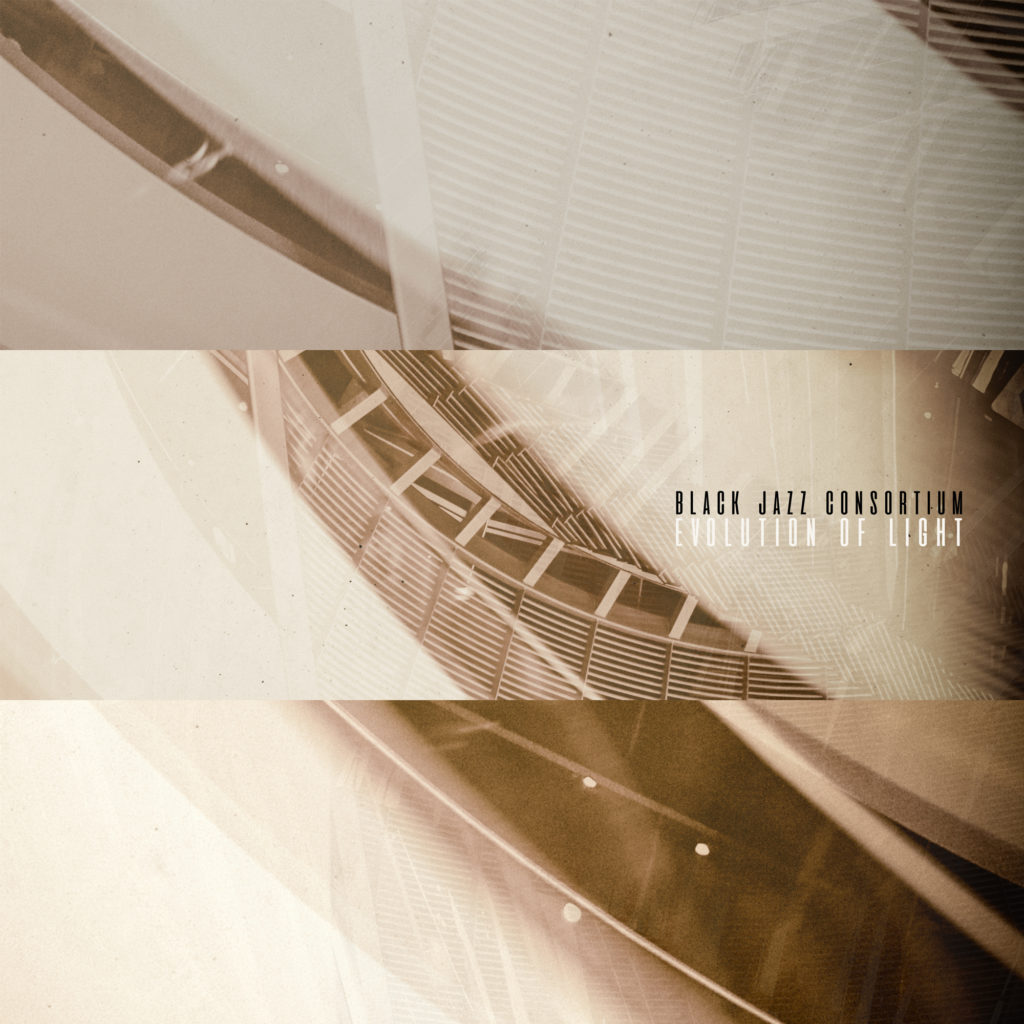
Fred P will release his fourth album as Black Jazz Consortium next month.
Evolution Of Light is the third release on Fred Peterkin’s new label, Perpetual Sound, and is a “direct response” to the American’s first album as Black Jazz Consortium, which arrived in 2007 on the defunct Soul People Music. It’s described as a “further development” of his “deeply enchanting style,” and finds him interpreting Latin and Brazilian music through his own unique lens.
In doing so, Peterkin works with a range of collaborators, aiming to “broaden the scope of Consortium in terms of the music, ideas, and sound.”
Tracks like “Sacred Sun,” “Salvador,” “More Blessings,” and “Another Path” feature Brazilian musicians, and they’re all permeated with “South American rhythms, lilting percussion, and sun-kissed moods,” the label explains
Peterkin’s last full-length of new music was 2013’s Codes And Metaphors as Black Jazz Consortium, which arrived in three parts via Soul People Music.
Tracklisting
01. More Blessings (Feat Leonardo Peretti Reibnitz & Trovao Rocha) 02. Another Path (Feat Trovao Rocha, Leonardo Peretti & Leo Vieira) 03. Sacred Sun (Feat Bruno Elisabetsky) 04. A Century Of Love 05. Soul People For Life (Feat Slikk Tim & Gal Aner) 06. Salvador (Feat Slikk Tim & Bruno Elisabetsky) 07. Brisbane (Feat Slikk Tim) 08. Energies Collide (Feat Ceri B) 09. Focus (Feat Reno Ka) 10. Love Alliance (Feat Gary Gritness) 11. Paradise Essential (Feat Slikk Tim) 12. Resonate (Feat Christina Wheeler)
Evolution Of Light‘ is out on November 8, with “Energies Collide” featuring Ceri B streaming over at Bandcamp.
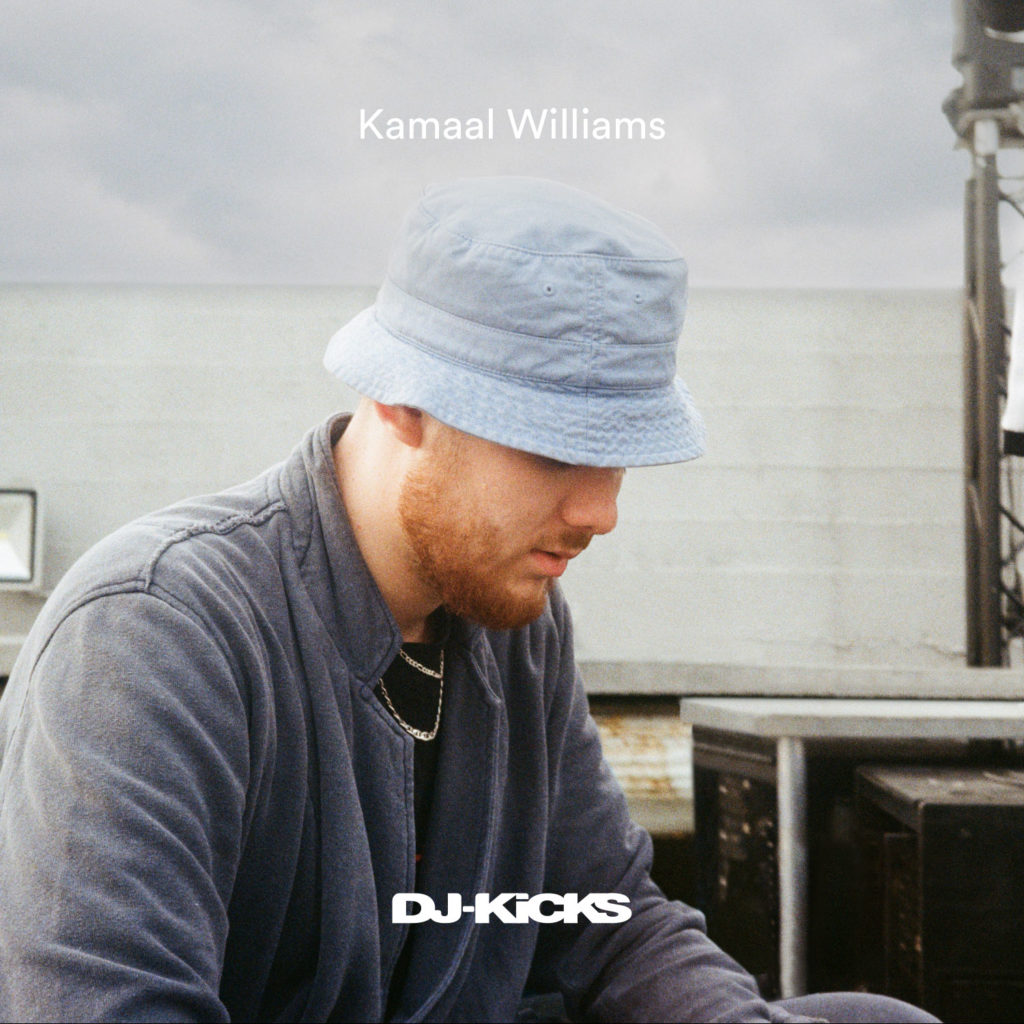
Kamaal Williams has mixed the 70th instalment of the DJ-Kicks series.
The London-based multi-instrumentalist, who also goes by Henry Wu, draws on four of his own exclusive tracks, and illuminates some of his influences.
The mix is said to encompass Karriem Riggins’ Detroit beat weirdness, Peven Everett’s funk-driven Chi house, and Max Graef/Ratgrave’s German future funk. “Beats scatter, swing, break, and shuffle in a multitude of different ways, mirroring both the protagonist’s dancing keys and his lesser-known background as a drummer,” !K7, the label, explains.
Although not traditionally mixed or predictably sequenced, the set is said to have a “high level of narrative and coherence,” linking styles “like a family tree,” with branches including jazz, funk, house, UK funky, broken, Dilla-schooled beats, wild jungle-esque drum patterns, nu soul, and general spiritual goodness.
Williams’ submission follows Peggy Gou’s instalment in the series.
Tracklistings
CD
** = exclusive
01. Budgie “Sometimes” 02. Kamaal Williams “Snitches Brew” (live in Atlanta) ** 03 Karriem Riggins “Summer Madness S.A.” 04 Lord Tusk “Space Invader” (Vocal Mix) 05. Seiji “Buggin’ Out” 06. Steve Spacek “Hey There” 07. Max Graef “Speed Metal Jesus” 08. Kaidi Tatham “Two Tens Madam” 09. Freeez “Southern Freeez” 10. Peven Everett “Stuck” (Original) 11. Hard House Banton “Sirens” 12. Diggs Duke “Cause I Love You” 13. DJ Harrison “MovingUp” 14. Ratgrave “Ein Kola Bitte!” 15. Wbeeza “He’s So Crazy” 16. Awanto 3 “Pregnant” 17. Henry Wu “117 Careplan” 18. Lone “Airglow Fires” 19. Henry Wu & Earl Jeffers “Projections” 20. City People “It’s All in the Groove” 21. Phil Asher “Peace and Love” 22. Tenderlonious “Song For My Father” 23. Yussef Kamaal “Lowrider” 24. Steven Julien “XL”(Original Mix) 25. Kamaal Williams “Shinjuku” (DJ-Kicks) ** 26. Henry Wu “Wivout U” ** 27. Dego “Nuts” 28. K15 “Time Humbles Us All” 29. Kamaal Williams “Strings”(ATL) **
DJ-Kicks: Kamaal Williams is out November 8, with “Wivout U” streaming below.
Sam Barker moved to Berlin, Germany, in 2007 while working as a booking agent at LittleBig. He grew up in Bedford, a city in Southern England, before studying Digital Music at Brighton University. Beginning his experiments with electronic production at the age of 13, he went on to connect with Brighton’s experimental music scene, known to be particularly progressive, and Berlin seemed the logical progression. Here he connected with Andreas Baumecker, then the booker for Berghain/Panorama Bar, and they began working together in 2010, the year of their debut on Ostgut Ton. The duo, now both focused on music full-time, have since released two albums, 2012’s Transsektoral and 2016’s Turns, exploring IDM, house, techno, and broken-beat from their collaborative studio, shared with fellow Ostgut Ton artist Nick Höppner.
Earlier this month, XLR8R reached out to Barker to discuss Utility, his debut solo album, with plentiful anticipation surrounding it. Fueling this weighty expectation was Debiasing, an EP that sounded completely different to anything he’d put out before. Over four tracks, Barker experimented with making dance music “while avoiding the deeply ingrained cues,” which, in this case, meant removing the kick-drum altogether.
It wasn’t an entirely new idea: artists like Lorenzo Senni, Objekt, and Jeff Mills have played with the idea before, but this particular release resonated deeply with its audience. It featured highly on End of Year lists and Resident Advisor credited it with a 4.4/5. Utility, behind which lay a similar concept and the same shimmering universes of trance-like melodies, was similarly brilliant; you’d be hard-pressed to find a more interesting and thought-provoking album of electronic music over the past 24 months.
The motivations and the methods behind this transition haven’t yet been revealed by Barker. Just how do you make people dance without percussion? Why have we become so dependent on the kick drum? What does this mean for electronic music more generally? Reflecting on the success of this “sincere experiment,” and, it would appear, still coming to terms with it, Barker sat down with William Ralston one afternoon to divulge a little of the thinking behind it.
It’s been a big 18 months for you. How are you feeling, now the album is out?
It’s definitely a relief. I’ve never felt like there was much expectation around my releases before. While Debiasing didn’t have a broad audience in my mind, it reached a lot of people, which is a nice surprise, but it meant there were some expectations with Utility. So I had to address that, and try to put it out of my mind, as it doesn’t help the creative process to think about it. But it’s also encouraging that something unconventional could receive as much attention as it did.
“The more I thought about it, the more I realised it might be an interesting thing to try to make dance music that doesn’t rely on percussion. After that, it became a more sincere experiment, and I focused much more of my attention on it.”
— Sam Barker
These records are different sonically to anything that you’ve done before. Where did it all start?
The first time I went to Asia, in 2013, I realised that a lot of what I had planned to play wasn’t going to work. It’s hot, humid, and people are generally more sober. I needed to find a sound that fits into these tropical environments.
Back in Berlin, I started making some simple synth-only tracks, essentially as a compliment to a lot of the stripped-down techno that was around at the time. I spent the next couple of years playing around with this—just experimenting, making stuff, and then testing it out in sets. These tracks were incomplete and without structure, but I could play them via a third turntable to fill in the middle frequencies. They were essentially ambient DJ tools that were a little bit more energetic rather than actual dance tracks. Some sounded good and I wanted to finish them somehow, but when I tried to add drums it was spoiling the ideas, and I didn’t want to finish the tracks as ambient listening music either.
Then, a few years later, I was back in Hong Kong with my friend Taku Hirayama. We were listening to Digital Justice It’s All Gone Pear Shaped, joking about playing a whole set that sounds like a breakdown and never “drops.” The more I thought about it, the more I realised it might be an interesting thing to try to make dance music that doesn’t rely on percussion. After that, it became a more sincere experiment, and I focused much more of my attention on it.
What exactly do you mean by “make dance music that doesn’t rely on percussion?”
I wanted to attempt making dance music while avoiding the deeply ingrained cues. We’ve developed a lot of rules for how to make people dance, like off-beat hi-hats or 4×4 kick drums, pulling things out and putting them back in again. It’s an explicit direction, and you respond almost automatically by moving your body. Perhaps this is rooted in human history and evolution, the heart-beat in the womb or whatever, but to me it feels more like holding up a cue card that says “Clap” or “Dance.” Training and context teaches us how to respond. We’re conditioned, a bit like Pavlov’s dogs—it’s behaviourism in its most formulaic form. You do this and people do that. Something about that I find really off-putting. I don’t want to dance just because there’s a kick-drum telling me to; that’s not exciting. So I asked myself: can you get the same results from different a stimulus, or is dancing to electronic music just a learned behaviour?
And what’s your conclusion?
Not sure really. Now there is a more general awareness of this idea, the response when I play things without kicks is more successful. So, you could say some priming has happened through the releases, and this helps. Then again, some things were working before that. I say working, but it’s not a fist-pumping response. I sometimes get the feeling that people are not sure how to behave but it doesn’t sound horrible enough to leave the floor. So I guess the stimulus can change, but it definitely helps when people are a bit exposed or aware already.
When did the aesthetic for Debiasing begin to form?
The first full track I was happy with was “Look How Hard I Tried.” I’d played it out in quite a few scenarios, and it was working well; it still felt like a long breakdown but people kept dancing. I was planning to release it on Leisure System, but Alex Samuels, who had just taken over from Jenus doing the A&Ring at Ostgut Ton, was asking me whether I had any plans to do some solo releases. I told him about these experiments I had been doing, sent him some tracks, and he said he wanted to do it on Ostgut.
Can you remember any breakthrough moments in finding this sound?
It was just this sort of feedback loop of trying things out at the weekend, and going back to the studio in the week with mental notes on what to change or what needs to happen. I don’t find that DJing and being in the studio complement each other usually, but in this case it was really productive. I’d play a track and then, looking at the response, try to work out whether it needs something; something on-the-beat, or some other familiar thing if people were looking a little lost. I’d try one or two tracks a set, and just see how people reacted. I’d always make sure I had the next track lined up, so I could mix out quickly if it didn’t work, which it often didn’t. That was just a little breakdown. Continue as you were!
Did the other tracks form more quickly after you had the first one, “Look How Hard I Tried,” completed?
More or less yes. I sent quite a few to Alex [Samuels] at first, and he picked four out, which became Debiasing. The album, Utility, is a little different: most of the tracks were done in the past year, but a few go back as far as 2006. I realised that I could open up older projects and just mute most of what I’d put in there, because I had a bad habit of adding more and more layers until there’s no space for anything else. So I went back to some of these old ideas and just muted the kick and other things, to try and strip them down to the good bits. Time away from tracks can really give you some objectivity back, and often the good ideas were just on one or two channels, and the rest was nonsense. It was great to re-discover old ideas and find potential in things I’d written off as junk.
Why do you think we’ve become so reliant on the kick-drum?
I think because it’s safe and familiar, which is also why it works. It’s mere-exposure effect: we develop a preference for things merely because we are familiar with them. It has this deeply ingrained signalling effect on a group of people dancing, but when you look at it objectively it’s actually hard to defend. If you think of it as a voice within the realm of music-making, it’s always the loudest, and it dominates over everything else. It’s also the least interesting because it’s making the same statement over and over. So if you detach from the idea of it being a necessary percussive element, then you cannot really say many good things about it.
A lot has been written about how electronic music has become stagnant. Do you feel that this backdrop has made the response to Debiasing and Utility all the more positive?
Maybe. I was surprised that it was accepted, so I cannot really say why that is.
But I do think that the current landscape for producers lends itself to new ideas. Because of streaming and such, there’s no longer any financial incentive in making any particular type of music, and no incentive for media to promote any particular sound, and I think that can be liberating. That’s one of the few encouraging things that might come as a result of the collapsing record industry. I think a lot of producers are perhaps still in this habit where they think they have to make dance music because that’s the way they can continue dreaming of living from their passion, by selling it to DJs or whatever, but none of that is true anymore. I think producers should feel like they can really do anything now; we’re under no obligation to make dance music, or to follows these rules DJs have established. People will likely still make dance music, me included, at least for now, but the only real reason to do it is because it can be fun.
“I think there is stuff being made that’s not following these rules, but it just hasn’t gotten so much attention in the past. And, in this industry, it’s been very difficult in the past to present unconventional ideas to people, which is strange because music is supposed to be about these ideals of individuality, self-expression, and innovation.”
— Sam Barker
Before Debiasing, did you feel limited in the feeling that you had to have a kick-drum, even if there isn’t a rule book?
Well, there almost is, in a way! I didn’t really feel limited, but it just didn’t occur to me that dance music can function without a kick. It was ingrained in me that I had to use these elements. You get really stuck because there’s only so much you can do with a sequencer. And it’s frustrating because you sit down with a 909 and try and do something surprising, and it’s impossible because wherever you put it it sounds like something you’ve heard before. I felt more limited by the patterns themselves, and how thoroughly explored they are.
Do you think electronic music has been held back by these “rules”?
Partly, although I think there is stuff being made that’s not following these rules, but it just hasn’t gotten so much attention in the past. And, in this industry, it’s been very difficult in the past to present unconventional ideas to people, which is strange because music is supposed to be about these ideals of individuality, self-expression, and innovation. The reality seems much more conformist.
None of this is to say that rules are intrinsically bad, and it was important for me to set some because there are so many choices when we make music. This is why we try to limit ourselves, usually by saying we’re going to make music for this genre or that, and each genre comes with a set of rules, putting limits on the choices available, so it becomes a more manageable task. Without these guidelines, it’s easy to become overwhelmed and lost.
Do you not consider what you’re doing to be new?
It’s new to me, but there’s actually loads of people who have taken a similar approach. Some of my favourites are from Voiski, Refracted, Anthony Linell, Stanislav Tolkachev, Lorenzo Senni, and Sunareht, and they all have their own methods. Actress “Ascending” is a literal example, where the kick has been muted, and the space it occupied is left silent. It doesn’t bang, but it’s great to play in techno sets!
Going back further, there’s things by John Beltran, Digital Justice, [“Theme from it’s All gone Pear-Shaped”], and Jeff Mills [“Spider Formation”]. Steven Brown has put beatless tracks on his records since the ‘90s, so he’s obviously thinking about this seriously too.
It’s also such a basic idea. I’m happy that TJ [Hertz; Objekt] put it into context in his Resident Advisor mix, and his Twitter thread beforehand dug up loads of great examples. There are so many ways to approach it, and I’m having loads of fun exploring them. But it’s not my idea, and I don’t want to be the only one having this fun.
Why do you think your work has received so much attention?
I don’t really know. I suppose it’s quite colourful music for somebody with my associations. But I think luck plays a big part. There’s a lot of great music that isn’t getting any attention. I had the context of Berghain and Ostgut, which seemed to confuse people, luckily for me in a good way!
Do you see Utility as a straight progression of Debiasing’s ideas?
It turned out that way in the end, but it went through a lot of different phases. The approach with Debiasing was to make huge layered drone chords with multiple poly-synths and open filters, squeeze as much energy into a chord pattern as possible, then make it spikey and percussive by dynamically processing it through the modular. I found some new experiments with Utility, like not using any sharp sounds at all, which became “Gradients of Bliss” and “Models of Wellbeing,” and that fed into other tracks like “Paradise Engineering,” where I tried to make more of this throbbing effect.
My main concern while making the record was that when you strip back much of the percussion, your sound palette is pretty much limited to melody and texture, and I was worried it would become too relentlessly melodic. Debiasing felt like the right length, at around 20 minutes, and if carried on in the same vein, the aesthetic could easily have got tiring, I think. So I wanted to make the record as broad and diverse as possible, while staying within the concept as much as possible.
I’d like to explore the production aspect of this. If you aren’t relying on percussion to make people dance, how do you do it?
Technically, the process for a lot of the music was fairly simple: basically, I first made a wall of sound, as thick as possible, using all the poly-synths and noise generators I have, and then I processed that dynamically with the modular using multiple envelopes controlling a stereo LPG [Low Pass Gate, somewhere between a filter and VCA]. I was using a lot of the poly-synths in the studio, sampling them, putting them in the Octatrack, and then playing that through the modular at home. That was the basic technique: making something as huge as possible and then reducing it down. Then you have enough energy behind the envelopes and the dynamic stuff that’s happening in the modular to really get a full, weighty feel. There weren’t that many modules used for much of the album, and there actually aren’t many crazy complex patches at all.
When the percussion isn’t providing the forward momentum, how did you find ways to replace it?
It’s interesting because when you’re mixing a track with a kick-drum, you have to be careful with the other elements because the kick usually takes up much of the space. There’s so much energy in the low end already, and everything else has to accommodate that. So when there’s no kick, everything else can go a little louder, so that’s one thing; and you also might find that, with the example of looking at old things that were made with a kick, there’s this new space in the low end, so you can push the bass a little more in certain other parts. Essentially, you’re finding ways to replace the energy of the kick in the other elements, and boosting the low end can bring some of that energy back. I still think it helps to have some kind of regular metronome in a track, to keep time and give a signal where the beat is, but it doesn’t need to be front and centre like a kick; it can just be a little tick in the background, barely noticeable. A lot of the time, that’s enough to keep the momentum up.
Are you able to give an example of this metronome, or this little tick, in one of the tracks that we can hear?
Sure. “Posmean” started as an attempt to make a track with no definitive “one.” This was somewhat inspired by another of TJ’s [Objekt] music folders, that he calls “where the fuck is the one?” It’s a nice idea to let people find their own grid, I think. So the basic structure of the chord changes was decided by feeling, but in the end it wasn’t working for me, and I wasn’t able to leave the track on its own in a mix. It just felt a bit random, as if my brain needed something to grab onto. So I added a little tick on the quarter beat, which helped to make the thing feel more comfortable without giving a definite first beat of the bar.
How do you get this feeling like the sound is sitting like three metres away from you?
I take a lot of care over EQ’ing, and have some tricks for expanding the stereo field without losing punch. Also, I have a plate reverb that I built that, at least subtly, is there on all the tracks. You feed it a sound from the mixing desk, and that vibrates the sheet through a surface mounted transducer, and then a microphone picks up the result. I record this in stereo, and it puts this kind of air into the sound. It’s barely distinguishable most of the time, but if you mute then it changes the sound space a lot.
Yes, it feels like you’re recording parts in a room with a microphone.
Well, that’s essentially what’s happening. Also, the plate reverb, which is a metal sheet in a metal frame, doubles up as a percussion instrument. I have these little solenoid beaters that I can control from MIDI, and that turns this plate reverb into a sort of strange drum machine in itself. It doesn’t have a good kick drum, but you get all kinds of taps and clangs.
How do these tools and techniques compare to your earlier work?
In terms of tools, I didn’t use too much that I’m not already familiar with. I think the biggest change was to treat the writing of harmonic and rhythmic parts separately. The separation was a consequence of the process, because I would first make all the melodic and harmonic decisions, and then work on the rhythmic side. It turned out to be quite helpful, because I could focus on each musical parameter in isolation. I’d never worked like this before, as you usually make both rhythm and pitch decisions at the same time when placing notes into a sequencer. So this way I’d absorb myself in harmony and find some interesting chord progressions, build up a kind of drone, and then put that to one side and think about the right rhythm for it. Treating these elements independently made it easier to make decisions without being too distracted by one thing or the other.
Reflecting on this recent work, are you having more fun now?
Yeah, totally. For years I was just learning skills, not really knowing why, other than it was enjoyable. But at some point that wore off. Finding purpose was the missing piece I think.
How do you see the project opening up moving forward?
There’s still a lot more I want to explore with the current framework. I am still finding a lot of inspiration and new approaches. But I also have lots of other music that doesn’t follow the same concept, and I am wary of getting to the point where I am the no-kick-drum guy!
I also have a bunch of tracks with only kick drums, where I was trying to do the opposite; it’s all punch and bass, trying to make the most versatile, elastic, multitasking kick-drum I can. It’s not as easy to do as the other way round, because it’s hard to make a kick-drum interesting no matter what you do to it.
I am also working on a live set that is kickless, which, if I can make work, I’d be really happy. Aside from that, there are tempos I’ve not messed with for years, above and below techno, that I’m keen to explore again. I find there’s some really exciting things happening at around 170bpm these days!
Ion Ludwig will release an album of “magical cinematic jams” with multi-instrumentalist Twan Sallaerts.
Entre-Acte comes via DeWalta’s Meander, and will form part of the label’s Horizon Pi series, which focuses on ambient works.
We can expect six tracks of “compassionately played and carefully recorded electroacoustic-ambience.” The album as a whole is described as “mysterious” and “beautifully vibrating.”
Entre-Acte LP is out October 11 on vinyl. The limited initial edition comes with 180gram transparent and full-cover artwork. The second edition comes with 180gram black vinyl. Meanwhile, you can stream “Entre-Acte” and “Epic Feelings” below.
For more information on Ludwig, read our profile here.
Blawan and Pariah will release their first album as Karenn next month.
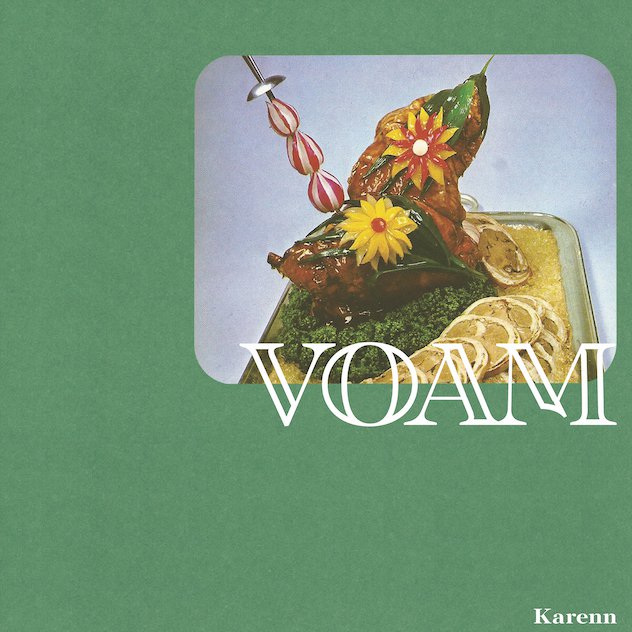
Jamie Roberts and Arthur Cayzer wrote and recorded Grapefruit Regret during an intense studio session in Berlin over the summer. The resulting eight tracks, “as exuberant and colourful as their titles,” we’re told, “serve to both compliment and contrast with their infamous live shows.” It’ll come through Voam, their join label, next month.
Roberts and Cayzer began writing as Karenn in 2011, and have released two EPs this year: Kind Of Green and Voam Club Archive 001, which launched Voam Club Archive, an archival sub-label.
Artwork and design is by Sean Bell.
Tracklisting
A1. Lemon Dribble A2. Strawbs B1. Peel Me Easy B2. Raz C1. Crush The Mushrooms C2. Cloy D1. Kumquat D2. Taste Yourself
Grapefruit Regret LP is out in November, with “Crush The Mushrooms”—a big hit at Dekmantel this year—streaming below.
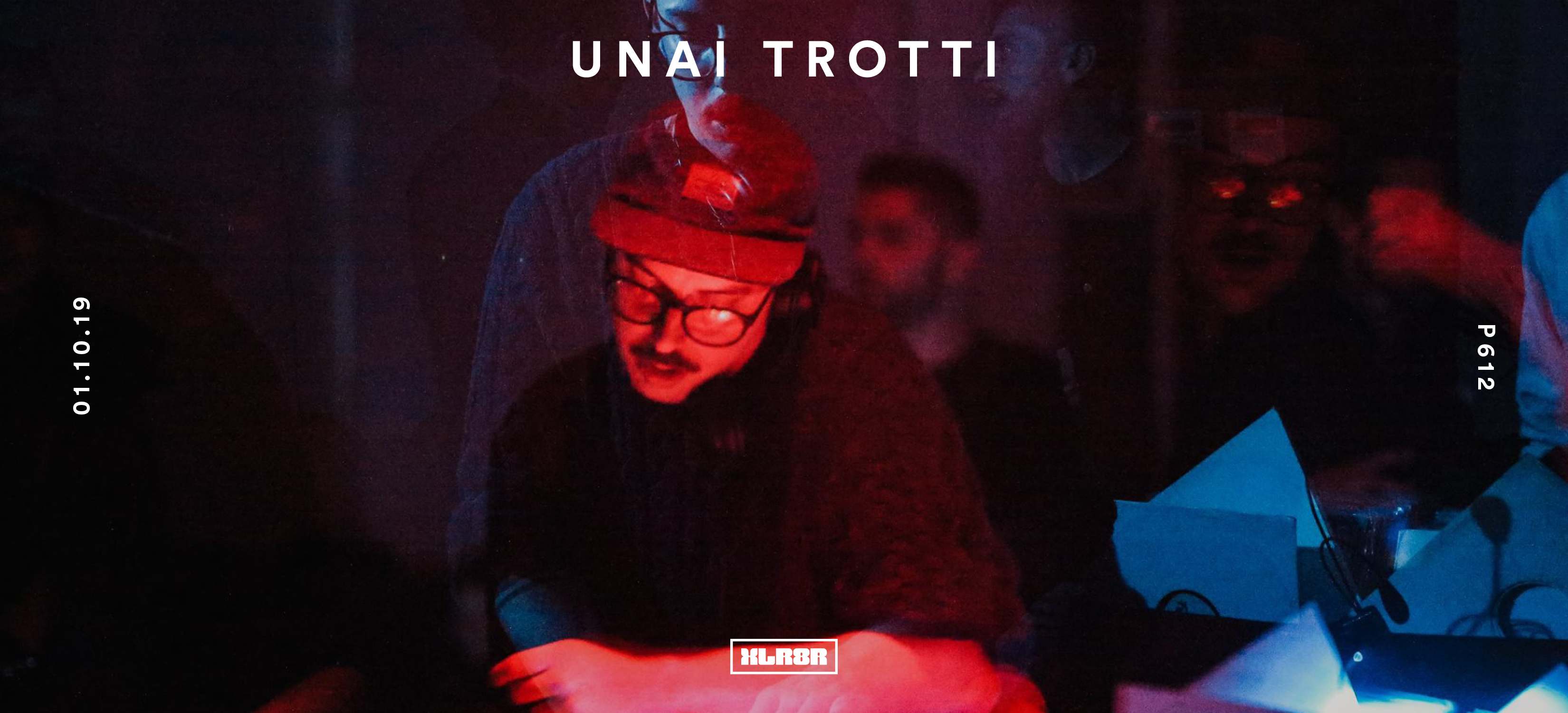
With nearly 10 years at the helm of Cartulis, one of London’s most popular underground electronic music events, Unai Trotti has made a name for himself across the UK capital. The Spanish DJ, born in Bilbao but raised in Madrid, launched the series in October 2009, just a year after relocating to the UK in search of work as a sound technician. With a penchant for DJing growing, he wished to give himself a platform to play records and also rediscover London’s warehouse party spirit, which he’d heard so much about. In his early 20s, and with a friend’s birthday on the horizon, there was no excuse not to. “We threw a party just to play records,” he says, “and that was really it.”
Trotti’s love for electronic music began early, much in thanks to a small record store in Móstoles, a small town in Madrid. With the store-owner forced to close, he gifted the turntables to Trotti, who, aged just 13, gleefully took them home and taught himself to mix. He began playing small private parties with friends, pushing what he deems a “hard techno” sound.
The London scene proved a catalyst in Trotti’s artistic growth. Outside of partying, where events like Lokee, Toi Toi, and Fabric exposed him to a vast array of labels and artists, he spent his time waiting tables at Café1001, where where he met Gabby Lopez & KID AM, who invited him to join Brickbeat, a collective of DJs, VJs, and free-thinkers recognized for bringing new talented artists and famous international guests to its parties.
Recognizing Trotti’s enthusiasm and taste for new music, they invited him to play some events at Café1001, and this proved integral in shaping his sound and technical abilities. Word quickly spread of Trotti’s burgeoning abilities, and he was being invited to London’s most prestigious venues, recognized as one of the city’s up-and-coming tastemakers. In line with this, his tours through Europe, North America, and South America, where his intergalactic rhythms have pricked the ears of the likes of Nicolas Lutz and DJ Koolt, are being increasingly frequent.
Cartulis’ growth has followed a similar trajectory, transforming from a one-off event into a much-loved party series that has booked some of the finest DJs in minimal house and techno; you don’t get to book Zip and Baby Ford unless you’re doing something right. With the 10-year anniversary just around the corner, with Koolt, Z@p, Laurine, and more on the bill, Trotti offered to compile a mix for the XLR8R podcast series—a taste of the records he’s playing now, his latest productions, and a glimpse into the bag that he keeps stored away for mixes such as this.
As with all Trotti’s sets, his XLR8R podcast is dynamic, groovy, and deep, compiled with records that you are, quite frankly, unlikely to hear again; it really is a sound like no other. It begins slowly, with some low-key dub rhythms, but the intensity picks up around the 20-minute mark, before dropping off and rising again. Place it next to the Nicolas Lutz and Melina Serser mixes for XLR8R; and, like those, it’s likely to be one that you come back to again and again.
What have you been up to recently?
Making music, looking for music, working on the label, and organizing Cartulis’ 10-year anniversary for this November.
Talk to me about your journey into music. How did you become a touring DJ?
I’m not sure how it happened. People tell me that finally, I’ve gotten what I deserve after many years of hard work, but I’ve never felt like it’s been hard or a job; I am doing this because I need it in my life. It’s my passion and it comes naturally to me. I love spending all day at the studio making music, and reaching the point where you have lost the sense of time and space; when you’re in this creative music trance. This is what people need to find in life, especially creative people. To become a touring DJ, money is something secondary.
You find some really obscure records. How do you go about record shopping?
Record shops, private collections, and mainly the internet, especially Discogs and Juno for the new stuff. I also share music with friends, if I am digging and I find a track that for example is Raphael Carrau sound, I send it to him, and he does the same to me. I love to share music with my friends.
When and where was this mix recorded?
I recorded it at my house in Hackney, London, on Sunday, August 25.
How did you select the tracks that you included?
I had some records on the side for a podcast, some records that I love, some Cartulis new releases, and one track that I have recently produced.
Is there a wider concept to it?
I just went with the flow. This mix is different because I usually get the records I want in the mix, and then I try to find an order. This time I said ok, let’s record it just in case, so I started to record it, and the structure is different and actually weird. I go from down to up, back down, and then up again. At the end of the mix, I open my record bag to the stuff I’m playing these days. I listened to it, and I liked it!
How does it compare to one of your club mixes?
With club mixing, you have a crowd in front of you, and that completely changes everything. You need to play for that situation and analyze what is in front of you. From a personal point of view, I play podcasts at home or with headphones when traveling, maybe before a night out or in an after-party at home. I personally think that this mix is cool before going out.
What’s next looking forward?
To keep growing up as an artist, and more importantly as a human, and, of course, to be surrounded by the people I love. And there’s also the Cartulis 10-year anniversary!
XLR8R has now joined Mixcloud Select, meaning that to download the podcast you will need to subscribe to our Select channel. The move to Mixcloud Select will ensure that all the producers with music featured in our mixes get paid. You can read more about it here.