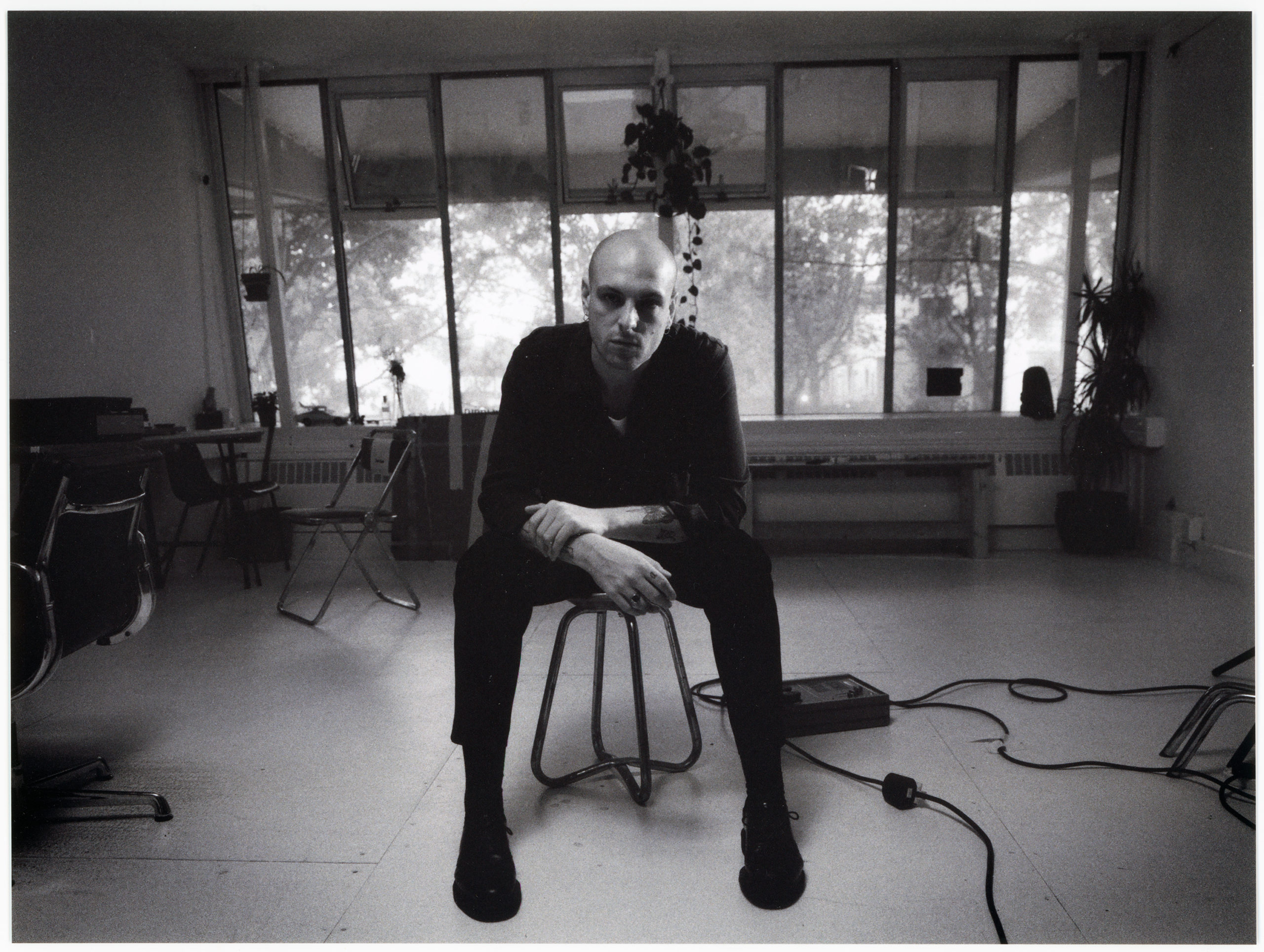
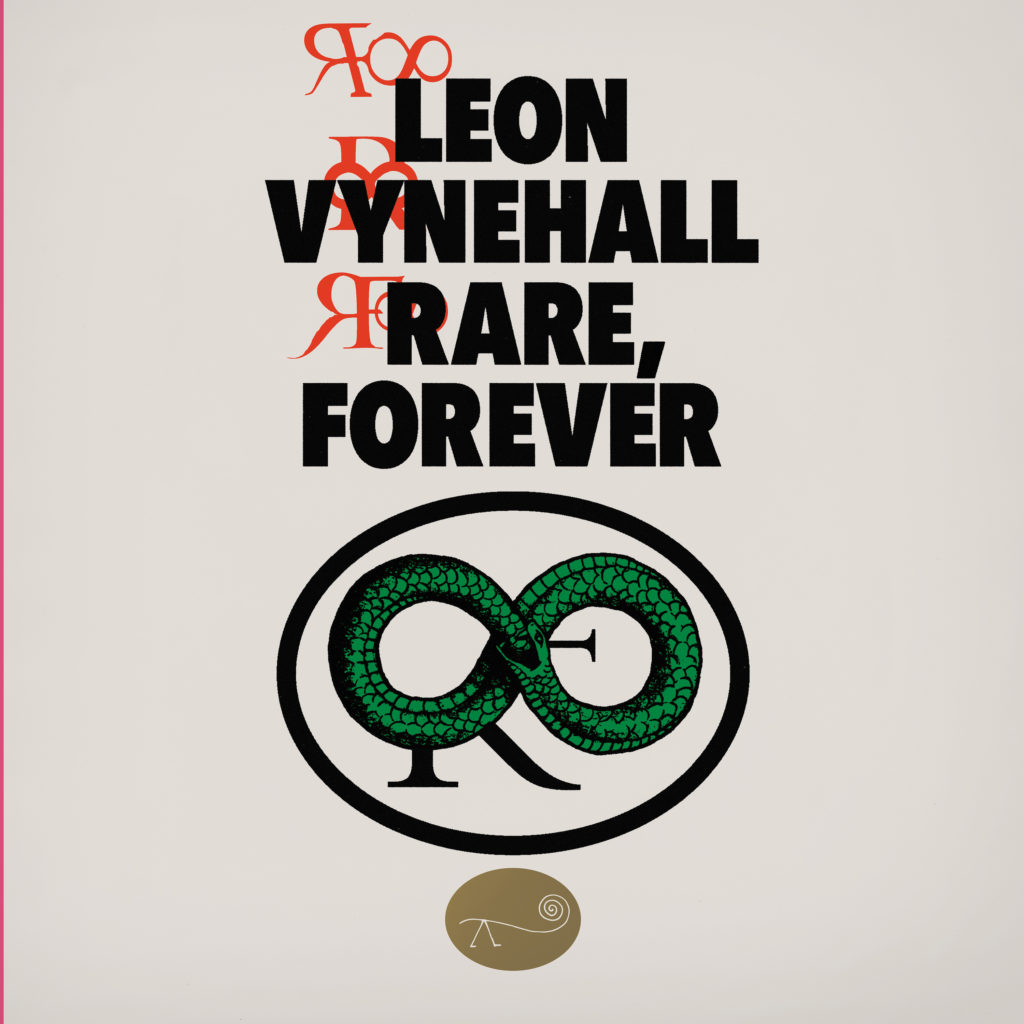
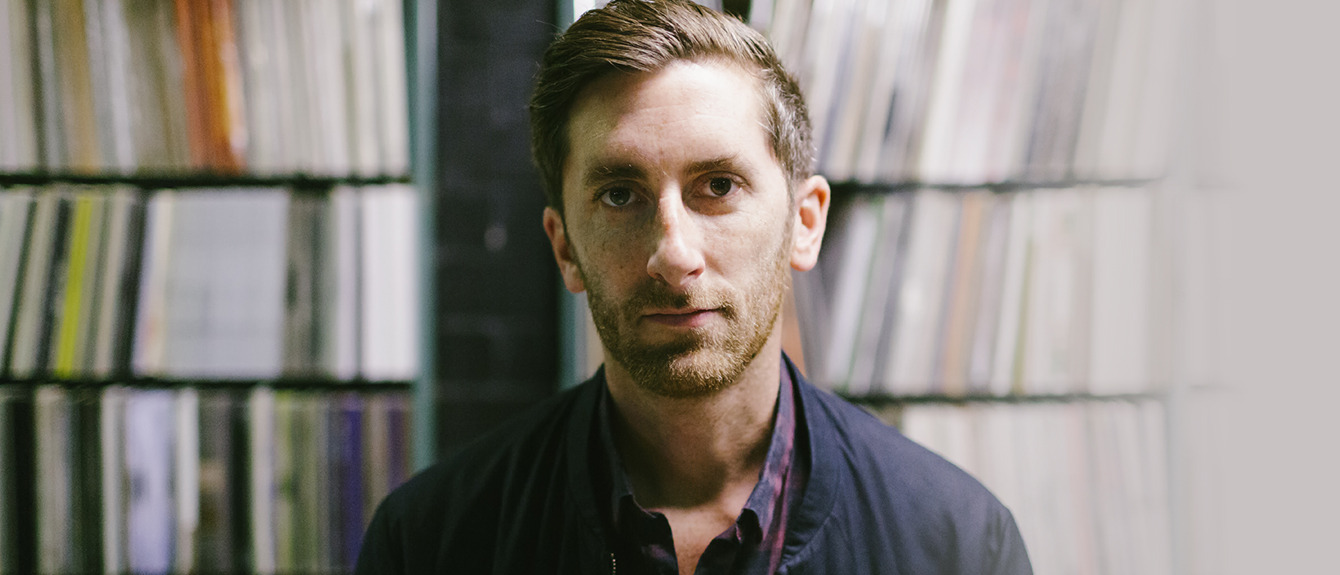
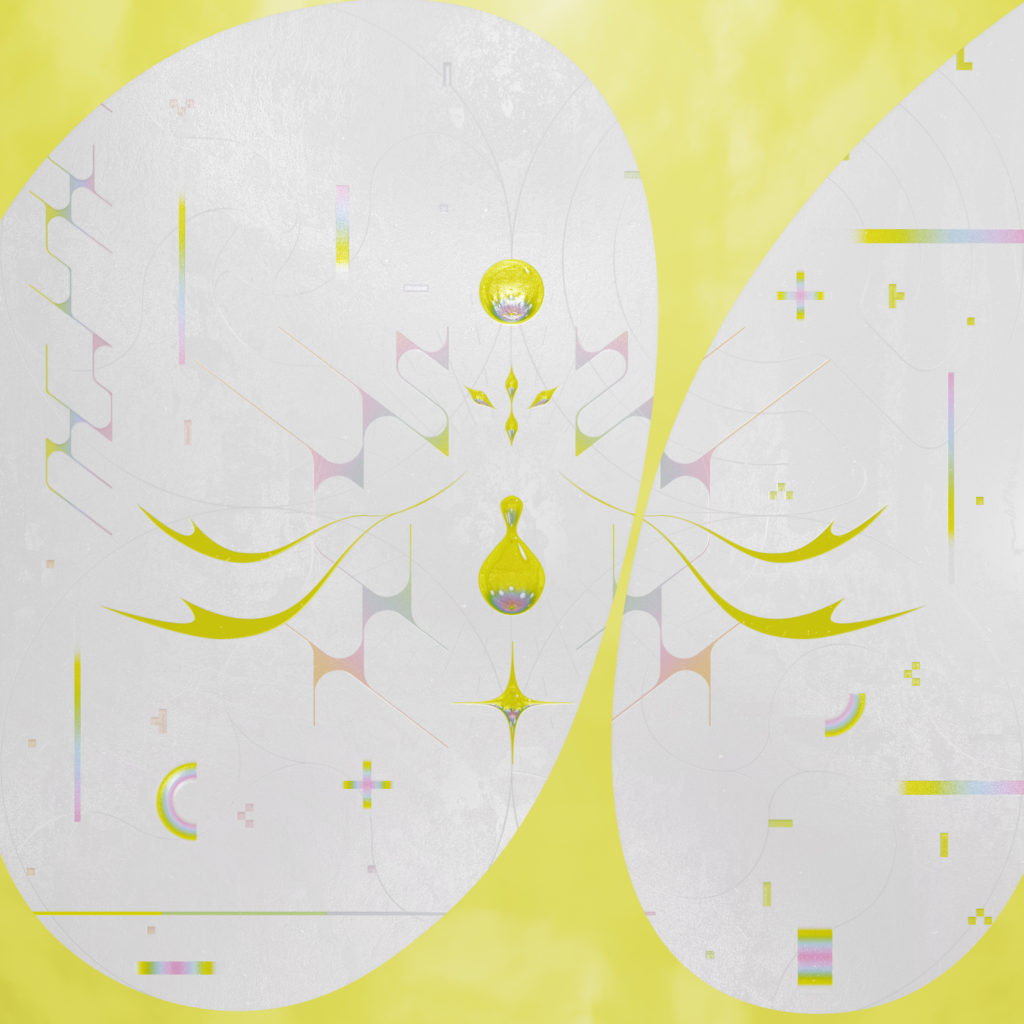
Rare, Forever follows the British DJ-producer’s Nothing Is Still, which XLR8R reviewed here. We’re told that it’s a “beautiful marriage” of everything he’s done so far but remains “genuinely progressive.” The end result sounds like Nothing Is Still but with the narrative toned down, and the dancefloor dialled up. It feels familiar for fans of Vynehall’s DJ-Kicks mix, his eclectic excursions on NTS, or his 2018 Resident Advisor podcast, while “simultaneously sounding unlike anything he’s ever done before,” Ninja Tune says.
“As much as there are dancefloor memories and moments, it’s not strictly a dance record—instead, Rare, Forever is the clearest representation of the broad spectrum of music he’s made to date, deftly weaving newer shades of post-punk, ambient, techno, and drone,” the UK label continues.
Upon turning 30 in Los Angeles, far from his London home, Vynehall found himself wondering about what he’s trying to say in life, where he’s trying to go, and thinking about his career to date. Whereas previous releases have looked back to discover who shaped Vynehall, Rare, Forever sees him investigating who he is as a person and artist in the very moment. “Here he showcases all the strings to his bow—creating music that’s borderless and unbound,” Ninja Tune continues.
The announcement comes alongside two new tracks, “Mothra” and “Ecce! Ego!,” which we’re streaming in full below.
Tracklisting
01. Ecce! Ego! 02. In>Pin 03. Mothra 04. Alichea Vella Amor 05. Snakeskin ∞ Has-Been 06. Worm (& Closer & Closer) 07. An Exhale 08. Dumbo 09. Farewell! Magnus Gabbro 10. All I See Is You, Velvet Brown
Rare, Forever LP is scheduled for April 30 release on Ninja Tune. Meanwhile, you can stream “Mothra” and “Ecce! Ego!” below, and pre-order here.
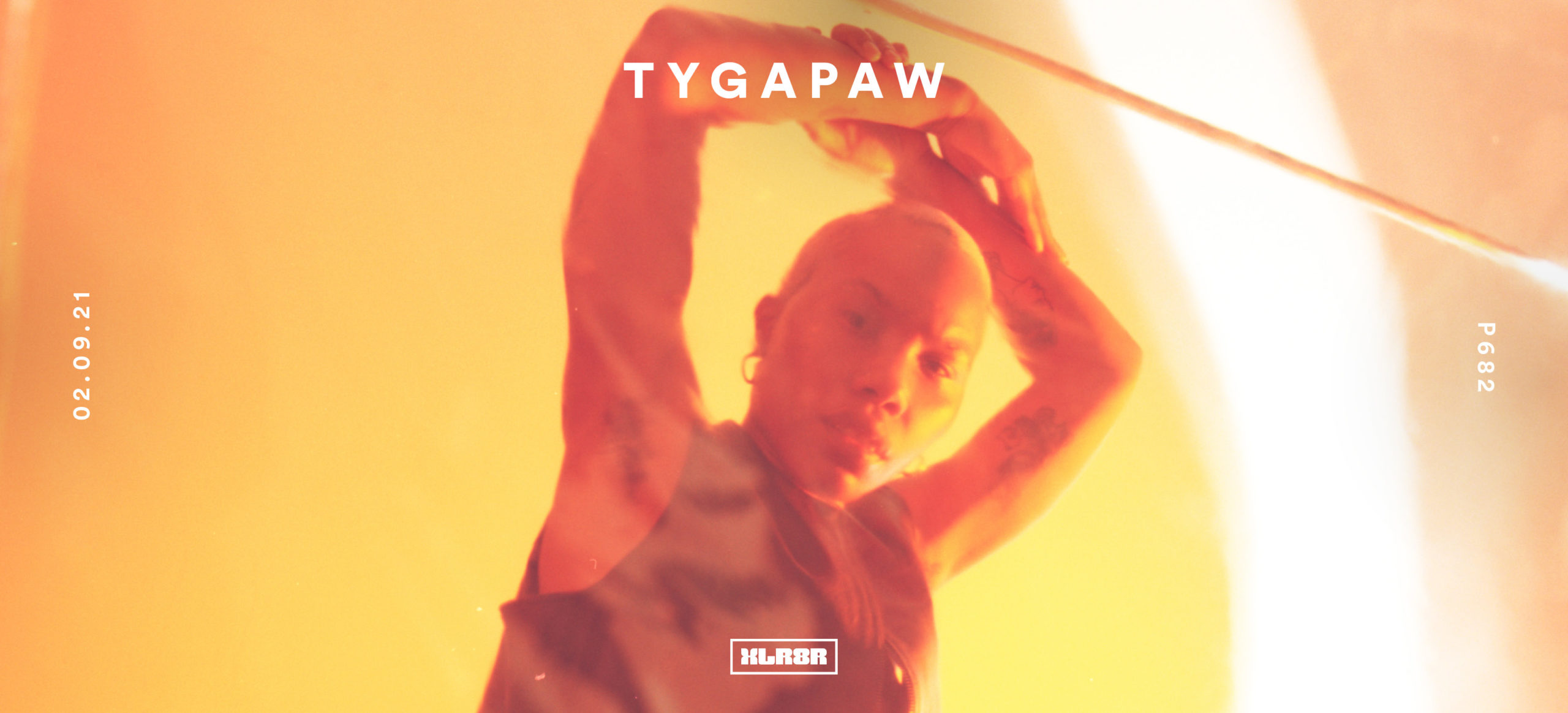
TYGAPAW is the work of Dion McKenzie, a multi-disciplined artist based in Crown Heights, Brooklyn. Born and raised in Jamaica, McKenzie leans on her Caribbean ancestry to create high energy, relentless club rhythms, shared through labels like New York’s Sweat Equity and their own Fake Accent. In November last year, they debuted on the esteemed N.A.A.F.I label with GET FREE, their first solo album. Across 11 tracks, McKenzie employed techno landscapes to explore the idea of personal freedom.
When McKenzie moved to New York from Mandeville, Jamaica in 2002 to attend Parsons School of Design, they didn’t intend to become so deeply entrenched in the city’s musical community. But their experience in two projects, namely a band named My M.O. and a rap duo called Kowabunga Tyga, appealed to them, and as they began to crave more creative control, they decided to familiarize themselves with Ableton.
As their skills developed, McKenzie began to make their own edits and then their own originals, and they wanted somewhere to play them out. As a black, queer female, they often found themselves dismissed and so they started Fake Accent, a monthly party inspired by their challenges as a queer Jamaican immigrant living in New York. Beyond the music that’s played, which spans dancehall, reggae, and ballroom, it’s a platform to promote queer and trans artists of color. In 2019, Fake Accent also became a label.
Fast forward to today, and McKenzie is recognized as a fearless and versatile DJ-producer, and an integral part of New York’s bubbling queer nightlife community. Speaking broadly, their DJ sets fuse dancehall’s raw energy with R&B motifs and pop ballads, and their XLR8R podcast is no different. There are some tracks you might know, but it’s also brimming with white-labels, Soundcloud rips, and edits of classics like Daft Punk and Moby. Listen carefully because you’ll probably never hear them again.
01. What have you been up to recently?
What I’ve been up to is trying to survive while being a Black artist in America during a pandemic. Surviving the hunger games basically. All while having to do a ton of mixes without pay!
02. How was your 2020 as you look back?
Definitely the same answer as the first question, but I also made my debut album while surviving in America during a pandemic.
03. What artists and or labels have pricked your ears recently?
In terms of artists, Russell E. L. Butler is amazing. Embaci, SUUTOO, Ase Manual, and FXWRK. In terms of labels, Mister Saturday Night, and my label, Fake Accent, because I can’t seem to find any other labels owned by black queer, trans, and non-binary people! Please enlighten me if there are?
04. What are your earliest memories of electronic music?
Black Box, I think, but I just took it as pop music because that’s how it was packaged at the time. Granted this is when I was growing up in Jamaica in the ’90s. Nine Inch Nails might’ve been that turning point for me, when I first heard “Closer,” then “The Perfect Drug.” Definitely with “The Perfect Drug” I was hooked on the faster tempo and the way the breaks create so much movement in the track.
05. Where and when did you record this mix?
My home studio in Crown Heights, Brooklyn, on January 11, 2021.
06. How did you go about choosing the tracks that you’ve included?
I did it the same way I prepare for all my DJ sets: I try to figure out what mood I’m in. I realize the way I pull tracks is by harmonic mixing, and I do it on a sub-conscious level, and so it really makes mixing the tracks together very enjoyable for me. I choose tracks based on whether they are in the right key, tone, and energy level to tell the story I feel like telling in the mix. In a nutshell, I choose tracks based on my blending style!
07. What can the listener expect?
Good vibes.
08. How does it compare to what we’d hear you play in a club?
I really keep the same energy across the board, but I definitely go a lot harder in a club setting if I feel the audience is up for the spiral.
09. What are your ambitions for 2021?
To get paid $40,000 for a virtual DJ set. That would be quite revolutionary actually. It would be quite revolutionary to get paid $40,000 for my art and labor even. Imagine that!
XLR8R has now joined Mixcloud Select, meaning that to hear the podcast offline you will need to subscribe to our Select channel to listen offline, or subscribe to XLR8R+ to download the file. The move to Mixcloud Select will ensure that all the producers with music featured in our mixes get paid. You can read more about it here.
Full XLR8R+ Members can download the podcast below.If you’re not an XLR8R+ member, you can read more about it and subscribe here.
Tracklisting
01. FXWRK “Come Back” (Unknown) 02. Cody Wong “The Ryhme” (Unknown) 03. LADRIN “What They Want” (Unknown) 04. SeanC “Moby Ruined” (Unknown) 05. jxck “Heavy On Ya Hip” (Reboot Records IRE) 06. blk “MFN Breakbeat” (Real Rotation Recordings) 07. X CLUB “Air Max 9000” (X CLUB) 08. Dean Casey “Pinged Pt. 1” (1229254 Records) 09. DJ PayPal “Come Back” (Unknown) 10. Peder Mannerfelt “Small Faces” (Sneaker Social Club) 11. Amal “Pyschopass” (HAUS of ALTR) 12. FFF & Tim Reaper “World Championships” (Future Retro London) 13. TRAX HAVEN “Rhymes” (Dom Peri Peri Edit) (TRAX HAVEN) 14. TRAX HAVEN “Rhythm n Gash” (Samurai Breaks Bootleg) (TRAX HAVEN) 15. Forest Drive West “Turtle Break” (Rupture London) 16. Digital “Robber VIP” (RuptureLDN) 17. Mr Sensi, Tim Reaper “Lost City” (Future Retro London) 18. Forest Drive West “Jungle Crack vs mich.” (420 W PADDY & NELLY) [TYGAPAW blend] (Unknown)
Ninja Tune has released the debut album of Black Country, New Road, an English post-rock band comprising Lewis Evans (saxophone), May Kershaw (keys), Charlie Wayne (drums), Luke Mark (guitar), Isaac Wood (vocals/guitar), Tyler Hyde (bass), and Georgia Ellery (violin).
It’s been a rapid rise for Black Country, New Road. They formed in London in 2018, and before their debut album, For the first time, they had released only two singles, “Athens, France” and “Sunglasses,” although these were impactful; the band were declared the “best band in the world” by The Quietus and were snapped up by Ninja Tune.
Recorded with Andy Savours—known for his work with My Bloody Valentine—during the early part of 2020 and finished at the end of the UK’s second nationwide lock-down, For the first time is the “perfect capturing of a new band and all the energy, ferocity and explosive charge that comes with that,” we’re told. It demonstrates a group who have “no interest in repetition, one-note approaches, or letting creative stagnation set in.”
“We think this record gives an honest representation of the way we sound when we come together and play music,” Black Country, New Road have said in a statement. “All of the good moments and some of the less good moments too. It’s a good start, we look forward to the music being available to people and in equal parts look forward to moving on from this music.”
Tracklisting
01. Instrumental 02. Athens, France 03. Science Fair 04. Sunglasses 05. Track X 06. Opus
For the first time LP is available now on Ninja Tune. You can order it here and stream it in full via the player below.
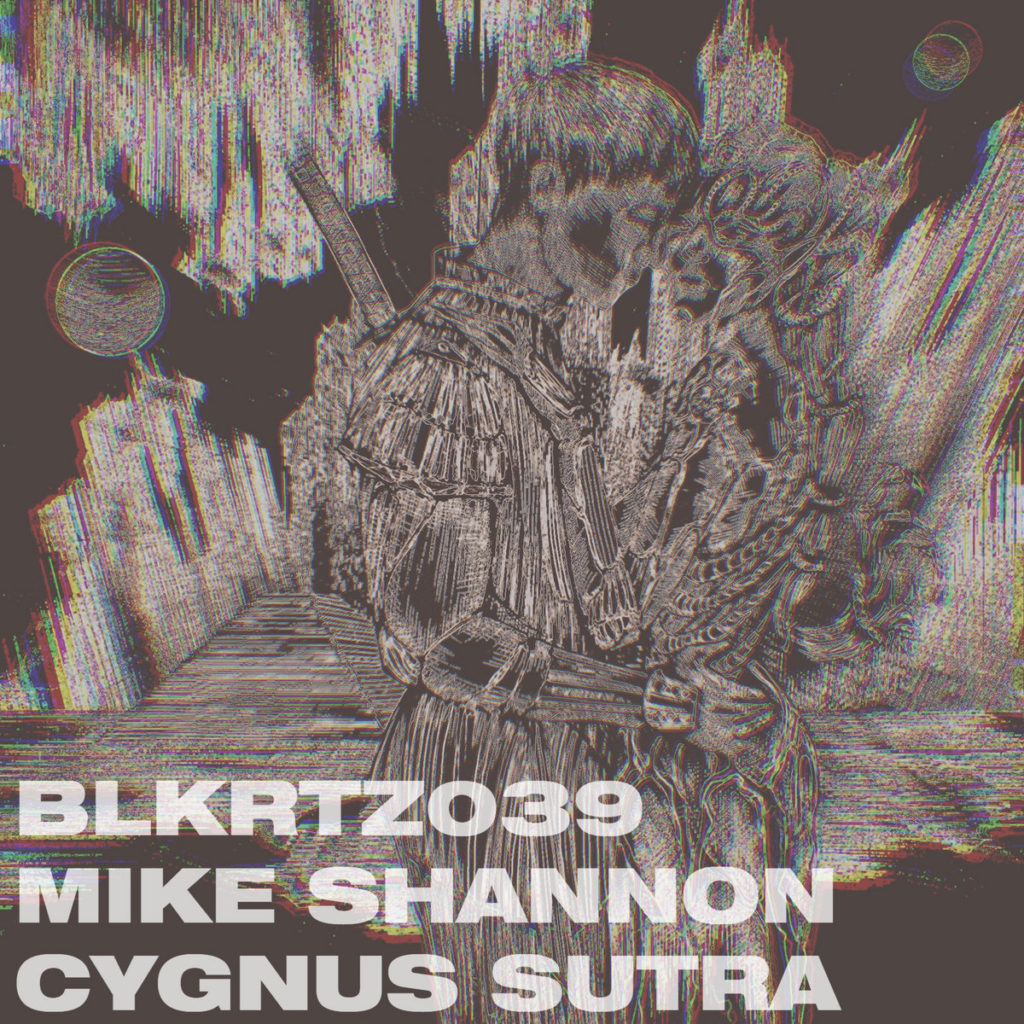
Mike Shannon has released Cygnus Sutra, his first solo album in 12 years.
Cygnus Sutra was conceived as a soundtrack to an unwritten sci-fi epic, and it sees the Berlin-based Canadian artist exploring some of the deepest, most contemplative musical canyons of his career, borrowing liberally from muted jazz, ambient, and cinematic exotica, we’re told. It features string arrangements from Godspeed You! Black Emperor’s Sophie Trudeau.
BLKRTZ, the label behind the release, describes Cygnus Sutra as Shannon’s “personal magnum opus,” and an” intimate glimpse into the inner musings of one of Canada’s most distinguished electronic music ambassadors.”
Alongside the album announcement, Deadbeat, the BLKRTZ label head, had this to say:
“There are a handful of people within the electronic music scene who occupy these unique positions of being both quietly background, and at the same time utterly essential, bar raising, and era defining. They’re like pillars which are essential to the temple’s structure but hidden unless you go looking for them. I would consider people like the late great Mike Huckaby in Detroit, the late great Andrew Weatherhall in London, and Zip from Perlon in Berlin as great examples of this sentiment, and from a Canadian perspective Mike certainly holds a similar position. These are all people who have forwarded the work of their friends and family and the community at large above any idea of personal reward. They have also all kept their solo outings musically to a minimum and as such when they do allow us a brief glimpse into their most personal musical reflections, it is a true gift and cause for celebration. This album is without a doubt one of those rare moments and it gives me enormous pride to be able to share it with the wider world.”
Shannon released his last solo album, Memory Tree, in 2008 on Plus 8 Records. In 2016, he teamed up with DeWalta for an album as DeWalta & Shannon.
Tracklisting
01. Ambush 02. Blindside 03. Rift (Ethereal Planes) 04. Black Domina 05. Nightmare Theme 06. Shadow Pursuit 07. Flight of the Incal 08. Rise 09. Her Everything 10. Anti-matter Trail 11. Vaults in the Deep 12. Delerium 13. Invision of Hope
Cygnus Sutra LP is available now on BLKRTZ. You can buy it here and stream it in full below.
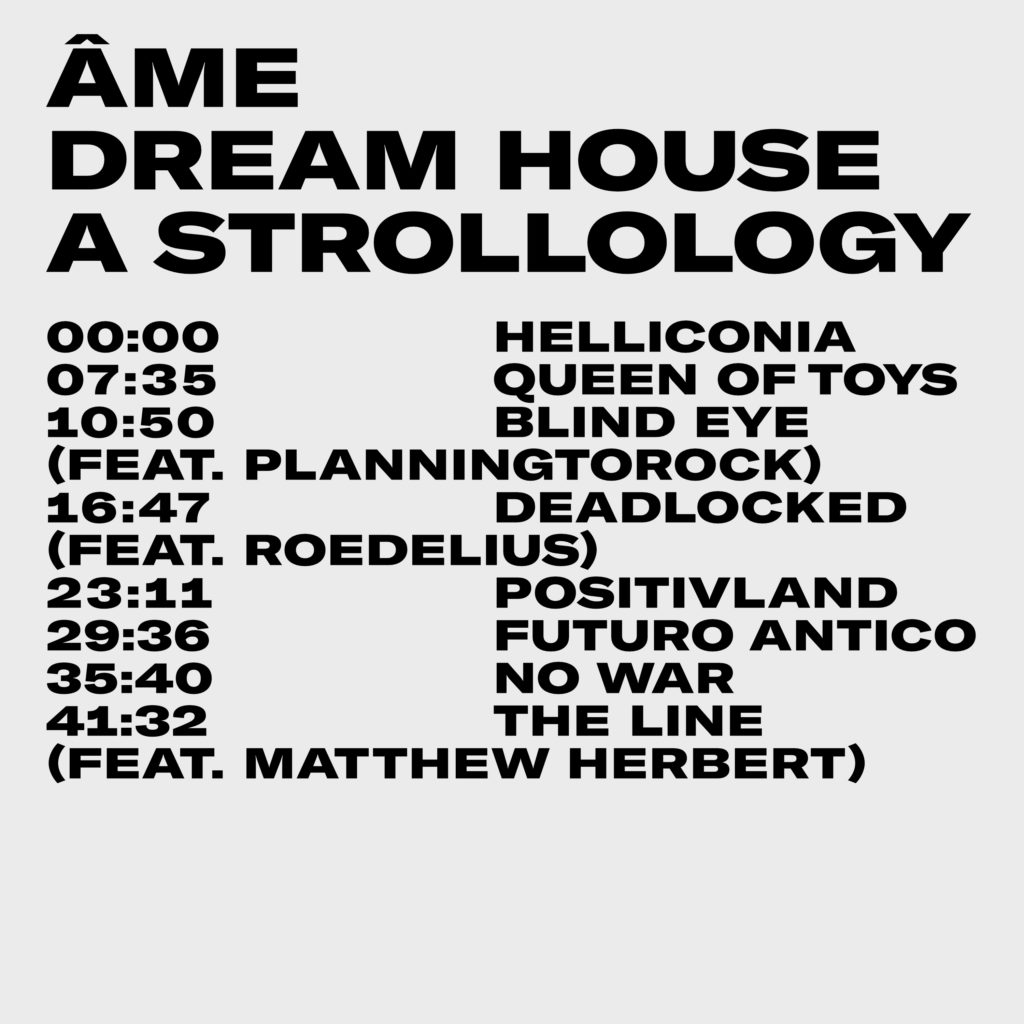
Initially released in 2018, the album features collaborations with Matthew Herbert, Planningtorock, and Roedelius. The new edition has been reworked into a continuous mix titled Dream House: A Strollology. With the addition of street recordings of their home city of Berlin, recorded by the duo themselves during the upheaval of 2020, the mix is available through Highsnobiety‘s digital-first landmark experiential project, “Berlin, Berlin.” The event features contributors from fashion, music, art, and design including Jonas Lindstroem and Little Sun.
“During the lockdown, quite a few friends mentioned how they had discovered our album, Dream House, and were really enjoying it with the peace and time to listen to it properly,” Wiedemann says. “When Highsnobiety approached us to ask if we could contribute music to their “Berlin, Berlin” project, we had the idea to reinterpret and mix our album with street recordings of the Berlin cityscape to give people a perfect soundtrack for strolling around the city.”
“Since the pandemic, the way people consume music has changed, and people are discovering and listening to music on strolls around their city and town rather than in clubs or at festivals and parties,” Beyer says. “We wanted to focus on how best to soundtrack that.”
Dream House: A Strollology is available now. You can download it here via Muting the Noise, Innervisions’ web-shop.
Iglooghost will release Lei Line Eon, his second album, in April.
Lei Line Eon is Iglooghost’s follow up to his breakthrough debut album, Neō Wax Bloom on Brainfeeder. The release is a product of the British artist, real name Seamus Malliagh, integrating his hometown of Dorset’s secretive tradition of Lei music, a mysterious sub-genre that “summons floating lifeforms,” he says.
The performance of Lei music has “extraordinary effects and while there is no clear explanation of why, some believe it could be related to a variety of properties unique to Dorset,” we’re told.
Alongside the announcement, Iglooghost has shared “Slyph Fossil,” the album’s second single. The track features glitch-heavy production as the foundation behind Iglooghost’s distorted vocals. It follows Eœ (Disk•Initiate), released last year alongside Iglooghost’s short film around Lei music.
Iglooghost is a UK artist who creates music, artwork, and puzzles that all gravitate around a fictional ecosystem of strange entities and tiny gods. Each of his releases expand on this universe through multimedia content, and Lei Line Eon is “sure to excite and intrigue listeners,” we’re told.
To learn more about Iglooghost’s working processes, check out his XLR8R feature here.
To learn more about Lei Music, head here to read research papers by Glyph Institute.
Tracklisting
01. Eœ (Disk•Initiate) 02. Pure Grey Circle 03. Slyph Fossil 04. Light Gutter (feat. LOLA) 05. Big Protector 06. UI Birth (feat. BABii) 07. Zones U Can’t See 08. Amu (Disk•Mod) 09. Soil Bolt 10. Yellow Umbra
Lei Line Eon LP is scheduled for April 3 release. Meanwhile, you can stream “Slyph Fossil” in full below and pre-order here.
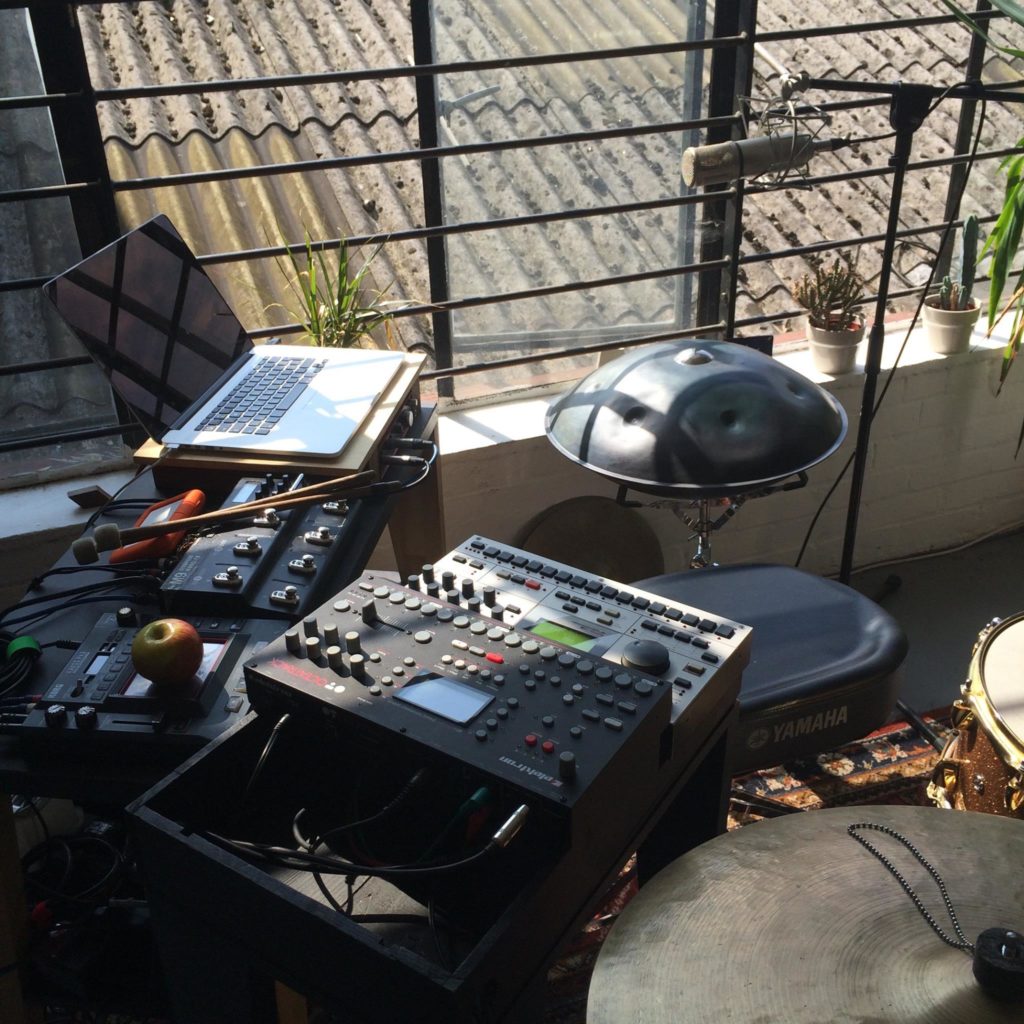
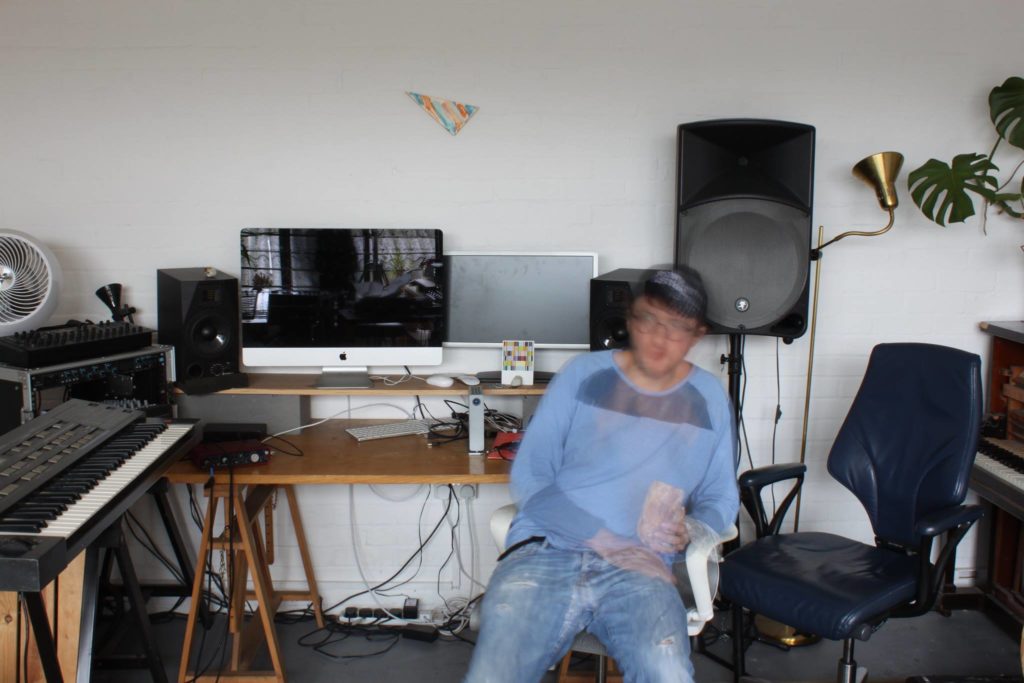
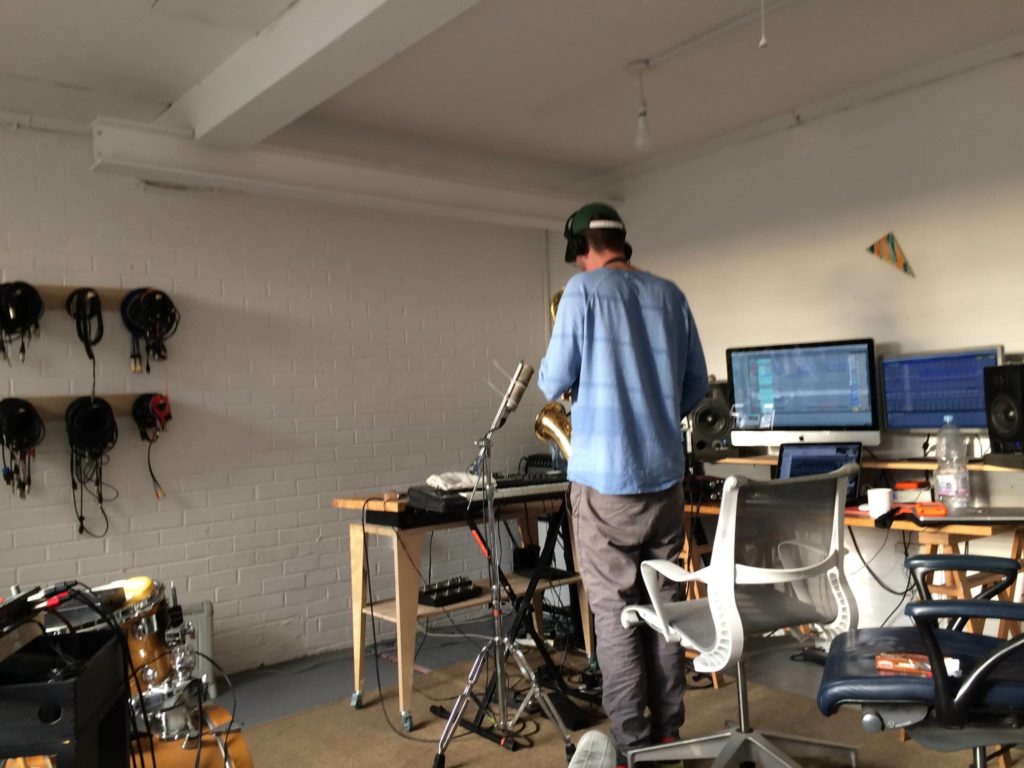
In October, Jack Wyllie released one of 2020’s standout if a little overlooked records. Working with mbalax percussionists Khadim Mbaye and Toms Sambe, the British multi-instrumentalist fused drone, jazz, and tribal drums into eight trance-inducing and propulsive compositions. Together, they comprise Paradise Cinema, an album inspired by Wyllie’s experiences of Senegal, where he relocated to record it. “I wanted to make something that connected to what I experienced in the seven months I was living there,” he explains, “something that was deeply connected to my experience.”
Wyllie grew up in Southampton, on England’s south coast, and learned music through his mother and father, who played the piano and guitar respectively. Aged 13, he began playing saxophone and he involved himself in various indie rock bands with his friends. The turning point came when he moved to London for university, where he met the other members of Portico Quartet, an experimental ensemble brought together in 2005. Three of the four made a name for themselves by busking outside the National Theatre on London’s Southbank, and they’ve since added a new member and compiled a healthy discography of forward-thinking, wide-screen jazz drawing on minimalism and electronic music. Alongside Luke Abbott and Laurence Pike, Wyllie also forms Szun Waves, an experimental jazz project rooted in improvisation. They released their second album, New Hymn To Freedom, in 2018.
In this edition of Artist Tips, Wyllie draws on his decade as a recording artist to outline a number of key practices that have come to define his work. Four of these are focused on listening—essentially creating distance from your music to allow you to develop it more efficiently and effectively—and the final tip considers how you can develop your toolkit to realize your ideas more readily. Each tip is easy to apply, so dig in and learn from one of the UK’s most progressive modern artists.
One of the most difficult things I find when making and producing music is separating myself from the music and hearing it as “objectively” as possible, almost as if I’m listening to it for the first time. For me, this “objective” listening is about being able to gain a clearer picture of what you’re making. I find it’s almost impossible for me to fairly or accurately assess what I’m working on when I’ve been listening to it over and over again, and I start to lose track of what I liked or didn’t like about something. This prevents me from making quick, robust decisions; I actually begin to doubt myself. It’s like I become so accustomed to the sound that I can no longer see the trees through the wood.
With representative visual art, there’s a well-known technique of looking at it in a mirror, which allows you to suddenly see what’s out of place, and if the proportions are wrong, etc. I’m not aware of anything that works quite as well for music, but I’ve found a few techniques that I feel come close. I’m going to outline a handful of them that I use on a regular basis. These are not specific to any genre, but I’ve written about them in relation to producing and composing the album Paradise Cinema, which I made in Dakar, Senegal with percussionists Khadim Mbaye and Tons Sambe over a period of six months.
Maintain Distance by Moving Between Tracks
I’ve learned that it’s important to manage my workflow and move quickly between projects. When I’m working on an album, I’ll limit myself to only a day, or two maximum, getting a draft track together, and moreover I’ll aim to complete 10 draft tracks over the course of a month or so. From that point onwards, I’ll work on each track for a half-day and I’ll keep them circling around. This ensures I have a decent break between working on each track.
“Essentially, it’s about keeping as much distance from each track as possible, and sometimes as an artist you have to create that distance.”
— Jack Wyllie
This really helps because each time you come back to a project that you haven’t worked on in a while you can hear it much more objectively, and this allows me to make faster decisions about whether I like the track or not; I can hear the inconsistencies much more easily. Essentially, it’s about keeping as much distance from each track as possible, and sometimes as an artist you have to create that distance. I use this technique until all the music has been composed and I can trust that I like it. Towards the end, I’ll spend longer on each tune, re-recording and mixing, going really deep into each one, and at this point it’s important that I don’t swap between tracks as often.
To give an example: when I was making the Paradise Cinema record, which ended up being seven tracks, I started by sketching 20 or so tunes over two months. I spent no more than a couple of days on each tune, and I wasn’t too concerned with them being the best thing in the world; I was more focused on getting a core vibe across. Then when I came back to the first thing I worked on, I could instantly tell if I liked it or not. I ditched about half of these sketches at this point, and I moved forward with the others because I thought they had enough to be expanded out into full tracks.
Through this, you can distill your work down to half of what it would have been had you just kept working on each track individually, and it can really help speed up your decision making! This technique is really easy to apply once you’re aware of it, but you have to be disciplined enough to step away from a project when you’re inside it.
Switch Your Environment For New Perspective
I think it’s extremely important to listen to my sketches in different environments. This can be as easy as taking your recordings and standing in a different room, or listening to them in the car when you’re driving, or through headphones on the train or bus. Something about this allows me to spot things that I wouldn’t spot in the studio; it’s like reading a document on a mobile device instead of a computer.
I also like to have the music just loud enough to be able to hear it. This helps me get an overall sense of the tone and feel of the tune. Because you can’t hear the intricacies anymore, you’re less concerned with the small details and I find it helps to make sense of how it makes you feel about the overall picture. Of course, you still need to go back and listen in more detail but if I like the vibe of it, it gives me more confidence to continue working on it.
Apply Your Sketches to Picture
Another more curious thing that has helped me is playing my music while watching a video, although you have to find the right visual! For some strange reason, something about being visually stimulated helps me to detach from the music, and I begin to notice different things instead of assessing every detail.
This is easy to do.
For the Paradise Cinema record, I played my music to slow motion contemporary dance and Koyaanisqatsi, which is a good all-rounder. I take a little break from the music beforehand and then pull up a YouTube video, put it on full screen and silent, and I have my DAW running the tune in the background. I find this works best when you’re nearing completion of the tracks. It’s a great way to just detach from the music a bit and take it all in in its entirety.
Watch Trusted FriendsListen to Your Music
I also try to play my music to friends before I release any of it, but only to people I trust, and not just for their thoughts. For some strange reason, I’ve kept a lot of my music to myself for a long time and it’s only more recently that I’ve come to realise that I can learn so much from watching other people listen to it.
This is a great resource. Because when it’s no longer just me and the music, I react to it very differently, almost as if I’m imagining I’m the other person hearing it. It’s strange. I must say that in these moments I can also become very critical of it, but I think this ultimately really helps, and you should be wary of this.
Speaking of Paradise Cinema, I remember playing some early tracks to friends and I really got the sense that they went on for way too long; it became clear that they just didn’t work at their current lengths. I had the idea of having them at around the 10-minute mark to mirror the hypnotic effect of hearing some of the saba drums in their traditional context, but my friends just weren’t engaging in the way I hoped they would at this length. This music couldn’t hold their attention for that long; or to put it another way, it didn’t have the same hypnotic effect as it can do when played live. So I cut the tracks down and began to focus on shifts in tone.
I also played it alot to my good friend Will, who even helped out with some of the mixes. Simply having that other pair of ears on it to let you know you’re not going mad can be so helpful and encouraging, and it can even challenge you to take it in a different direction.
“…it’s easy to become caught up in trying to be creative all the time, and while that’s great, there’s also craft in being able to fully realize these ideas.”
— Jack Wyllie
“Cover” Tracks to Develop Your Skills
I’d like to finish this feature by looking more broadly at how to “practice” composition and production. I think it’s easy to become caught up in trying to be creative all the time, and while that’s great, there’s also craft in being able to fully realize these ideas. I think this part is often overlooked, and it must be practiced and honed separately from your creative side. One of the great ways to progress the skills I need to be able to execute my ideas is to cover tracks I like.
So if I’m feeling a bit uninspired, I’ll spend time trying to re-create a bit of music I like. If there is a particular sound or style I’m into and want to find out how it works, I’ll find maybe an 8 bar loop and try and work out how it’s working. I’ll basically try to copy it! You learn a lot by really listening to something intensely and working out how to make something sound as similar as possible. You’ll find that your versions always sound a bit different and never as good, but you learn a lot along the way. Importantly, you can draw on that “sound” if you want to use it in something you’re making.
I generally do this with music where the parts are a bit easier to make sense of—because I’m never going to be able to get a proper 12-string guitar sound if I don’t have or can’t play a 12-string guitar! But, for instance, I’ll maybe look at some music with an 808 drum machine as I have decent 808 samples. And then I’ll look at copying the drum parts, looking out for the types of reverb, compression, EQ, etc. I’ll keep A/B ing them until it sounds close. This gives me a better instinct of how to make these types of parts and use these skills in the future.
I often do this when I’m not feeling creatively inspired, or when I’m not trying to answer meaningful personal questions with what I’m doing, which I think can be quite exhausting if you’re trying to make creative, thoughtful music. So in some ways it is just a nice and easy thing to get on with. It’s kind of like practicing scales / patterns on an instrument: you build up familiarity and skills within your craft that can be deployed creatively when needed.
So, as a very basic example, if we take the tune “Visioning Shared Tomorrows” by Kuedo. I can hear it’s essentially an 808. ‘’ll then pull up my 808 from Mars sample, and I then transcribe the drum pattern as MIDI data, then tweak the parameters on the 808, getting the right decay, filter etc. Then I can try and match the effects on them.
I’ll then get a synth that sounds similar, and work out the synth part by playing it on my keyboard. I think the synth is maybe a Prophet 5 or something similar. So I’ll use the soft synth VST from Arturia. You can be pretty loose with these things if you don’t have decent plug-ins. Then I’ll try and match the sound as much as possible and suddenly the track is falling into shape. You can go into as much detail as you want, but you get the picture.
Moreover, it can be especially useful to use these “copies” as jump off points for your own productions. Say, for instance, you like the drum sound: you could look at tweaking it a bit, changing the pattern and a few of the parts to make it sound more like your own, and use it as the basis for a new track!
In a similar way, I was experimenting a lot with effects on the saxophone and ways to play it that referenced Jon Hassell for the Paradise Cinema record. I would transcribe his work and really focus on the tone of the instrument and try to imitate it. He’s a trumpet player so it inevitably sounded quite different. But I also focused on his use of electronics and production with the instrument, taking phrases and playing around with similar ideas to his. I was then able to deploy this when making the album, although I think it sounds quite different as I developed the sound to try and make it my own. You can definitely hear the influence!
Elgo Blanco (a.k.a. Elgo Valkoinen) is the alias of a group of mysterious Italian producers. Over the last few years, the group have dropped releases on Cabinet Recordings, Nova Grooves, and Old Vibes, presenting a tough stripped-back style of house.
For Cinthie’s we_r house, they continue in a similar vein with four club-focused cuts that run the gamut from broken-beat grooves (“Arpo One”) to heads-down tribalistic rhythms (“Ota & Tine”).
In support of the EP, the group have offered up “Arpo Zero” as today’s XLR8R download, available to XLR8R+ subscribers below.
Closing out the release’s A-side, “Arpo Zero” is an upbeat slice of percussive house with a swinging groove and playful marimba-style melodies—a sure-fire dancefloor weapon.
Tracklisting:
01. Arpo One 02. Arpo Zero 03. Just In Case 04. Ota & Tine
Andy Graham (a.k.a. Sei A) has announced a new label and project, AG-Sounds.
The label will launch with Method One, Graham’s first release under his birth name, on February 12. The EP and the label will present a new focus for Graham, allowing him to explore ambient, classical electronic, techno, and soundtrack material free from any style constraints that may be held under the Sei A banner. Each release will be accompanied by a series of paintings by a Glasgow-based artist, and future releases will also feature collaborations with artist friends of Graham.
Method One will feature four tracks, including three originals as Andy Graham and a remix under his Sei A alias. Two of the tracks feature remotely recorded instrumentation by a cellist who has featured on the works of Jonny Greenwood, Aphex Twin, and Floating Points, we’re told.
Tracklisting
01. Flowing 02. Method One 03. Method One (Sei A)
Method One is set to arrive on February 12 and can be preordered here, with three of the cuts streaming in full below.
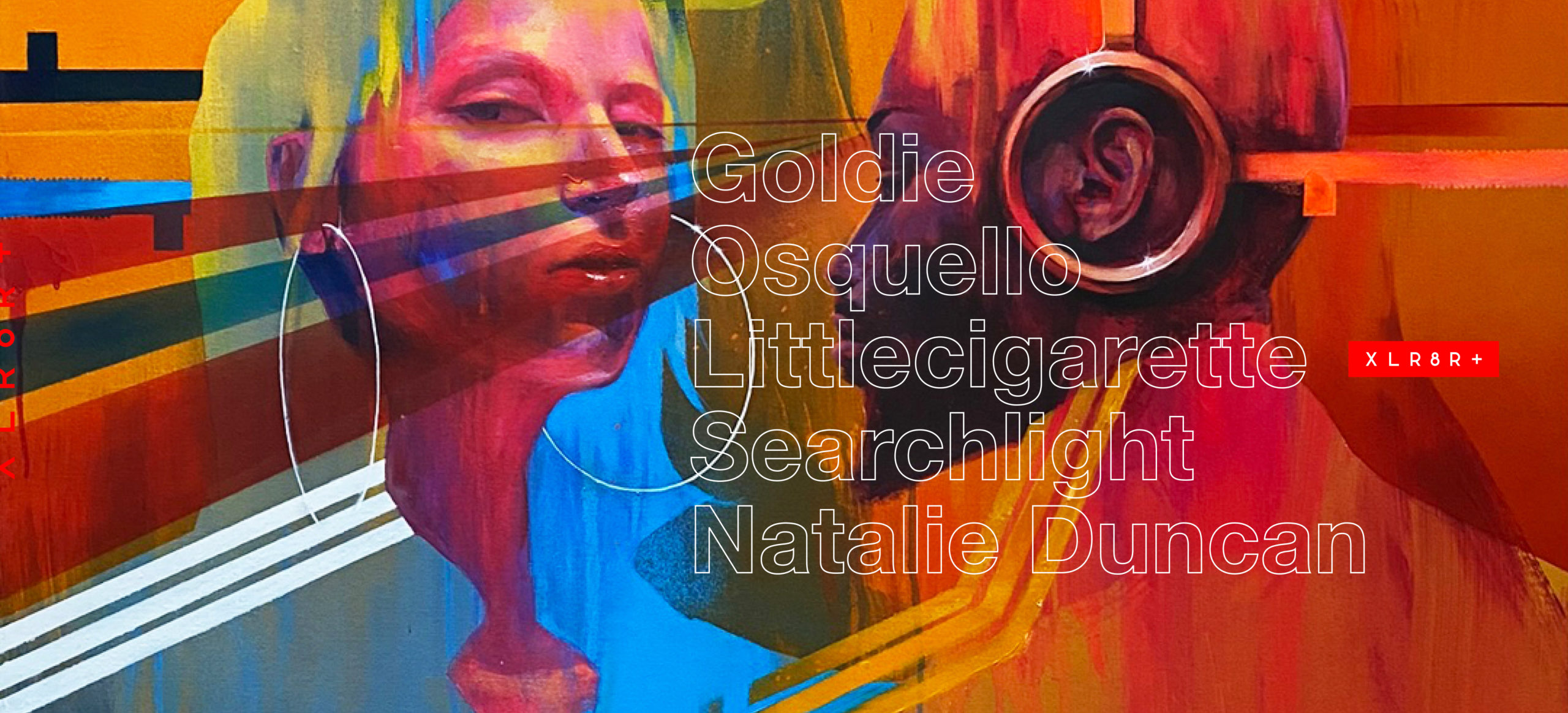
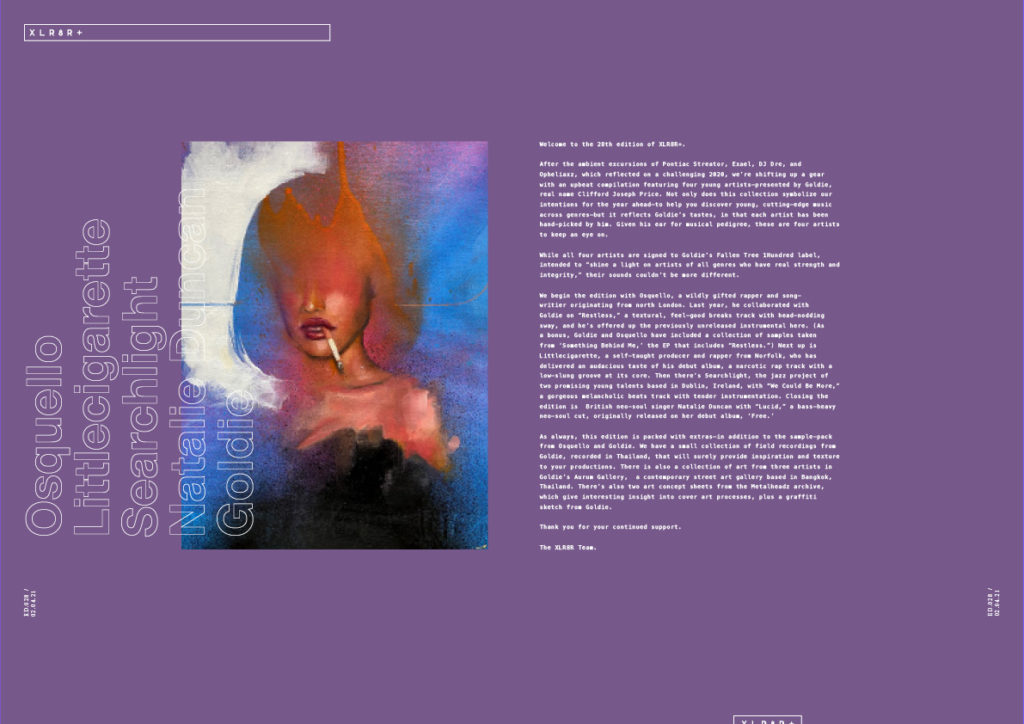
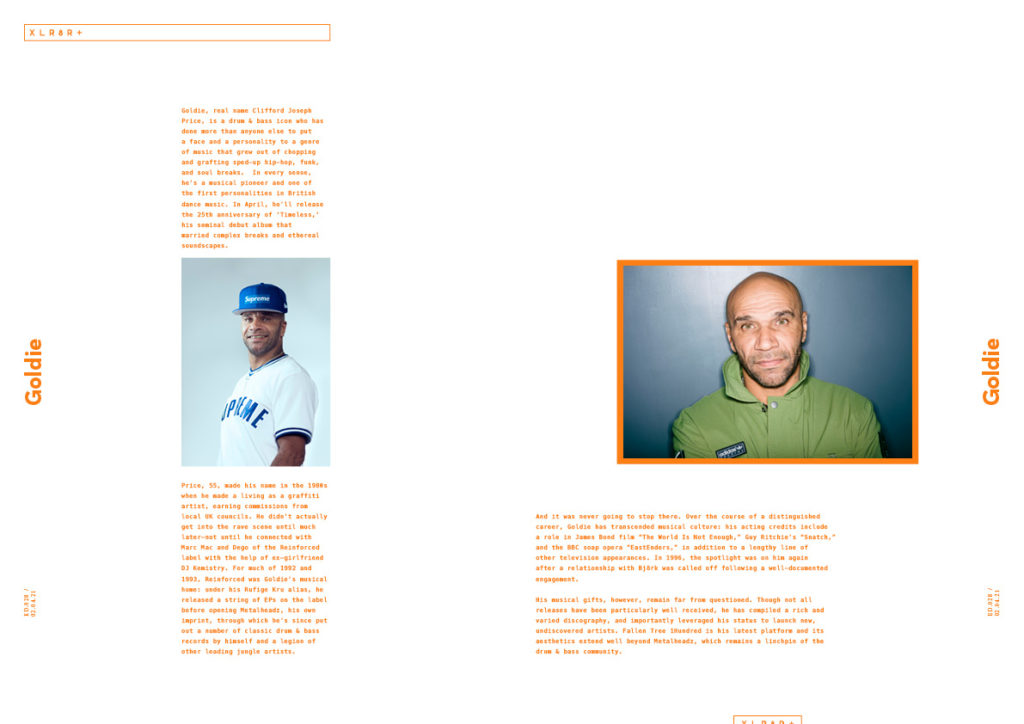
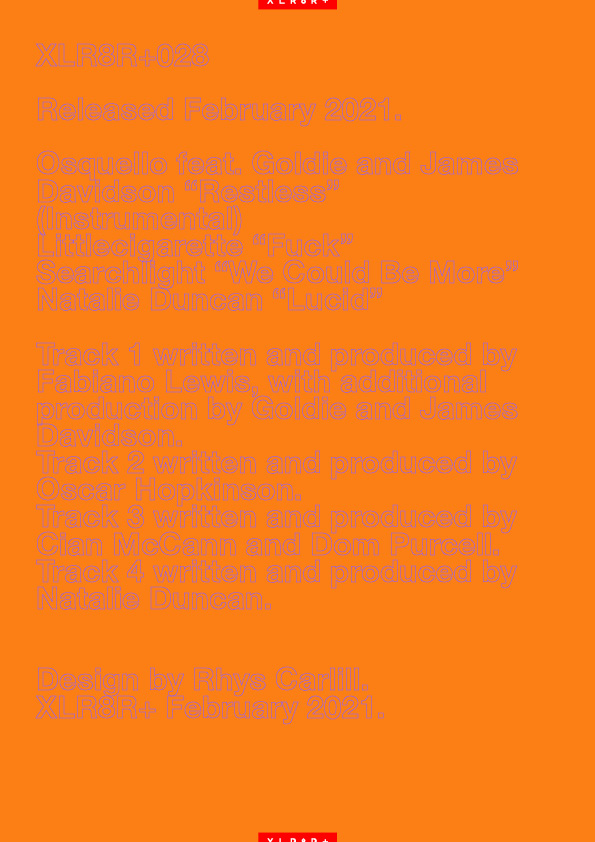
We’re excited to present the 28th edition of XLR8R+, curated by Goldie, real name Clifford Joseph Price.
After the ambient excursions of Pontiac Streator, Exael, DJ Dre, and Opheliaxz, which reflected on a challenging 2020, we decided to shift up a gear with an upbeat compilation featuring four young artists chosen by Goldie. Not only does this collection symbolize our intentions for the year ahead—to help you discover young, cutting-edge music across genres—but it reflects Goldie’s tastes, in that he’s hand-picked each artist. Given his ear for musical pedigree, these are four artists to keep an eye on.
While all four artists are signed to Goldie’s Fallen Tree 1Hundred label, intended to “shine a light on artists of all genres who have real strength and integrity,” their sounds couldn’t be more different.
We begin the edition with Osquello, a wildly gifted rapper and song-writer originating from north London. Last year, he collaborated with Goldie on “Restless,” a feel-good breaks track with head-nodding sway, and he’s offered up the previously unreleased instrumental here. (As a bonus, Goldie and Osquello have included a collection of samples taken from Something Behind Me, the EP that includes “Restless.”)
Next up is Littlecigarette, a self-taught producer and rapper from Norfolk, who has delivered an audacious taste of his debut album, a narcotic rap track with a low-slung groove at its core. Then there’s Searchlight, the jazz project of two promising young talents based in Dublin, Ireland, with “We Could Be More,” a gorgeous melancholic beats track with tender instrumentation. Closing the edition is British singer Natalie Duncan with “Lucid,” a bass-heavy neo-soul cut, originally released on her debut album, Free.
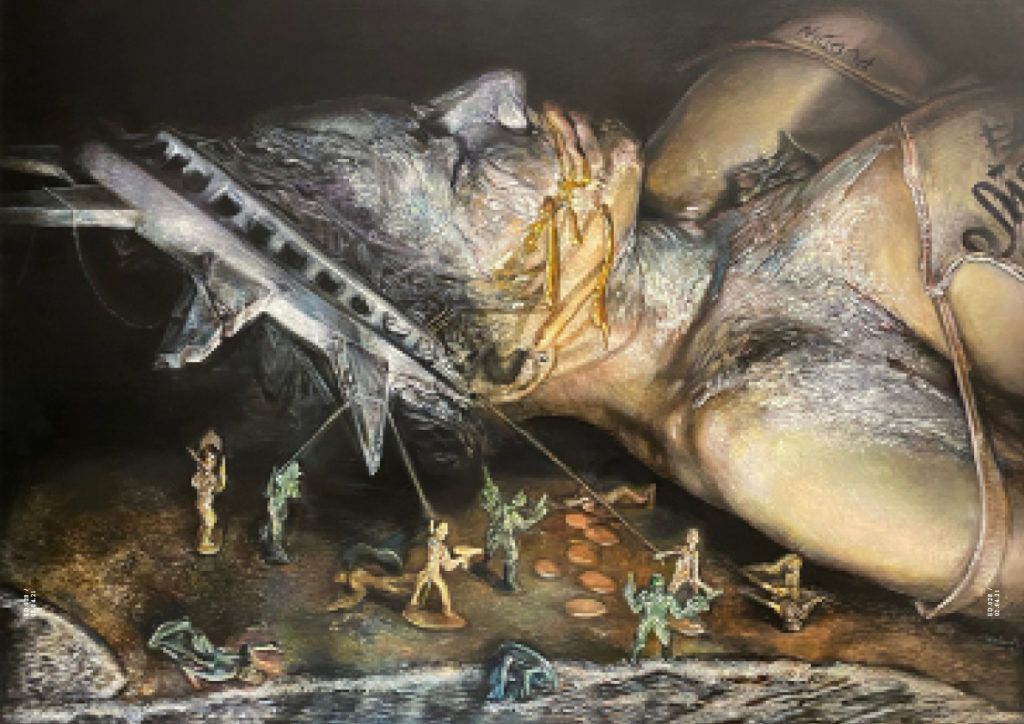
As always, this edition is packed with extras—in addition to the sample-pack from Osquello and Goldie. We have a small collection of field recordings from Goldie, recorded in Thailand, that will surely provide inspiration and texture to your productions. There is also a collection of art from three artists in Goldie’s Aurum Gallery, a contemporary street art gallery based in Bangkok, Thailand. There are also two art concept sheets from the Metalheadz archive, which give an interesting insight into cover art processes, plus a graffiti sketch from Goldie.
The music, PDF zine, sample packs, and wallpaper art can be downloaded once you SUBSCRIBE HERE. If you’re already a subscriber, you can download the package below.
Tracklisting
01. Osquello feat. Goldie and James Davidson “Restless” (Instrumental) 02. Littlecigarette “Fuck” 03. Searchlight “We Could Be More” 04. Natalie Duncan “Lucid”
Extras
01. Goldie’s Thailand Field Recordings 02. Goldie and Osquello Sample Pack 03. Arum Gallery Art Collection 04. Goldie Graffiti Sketch