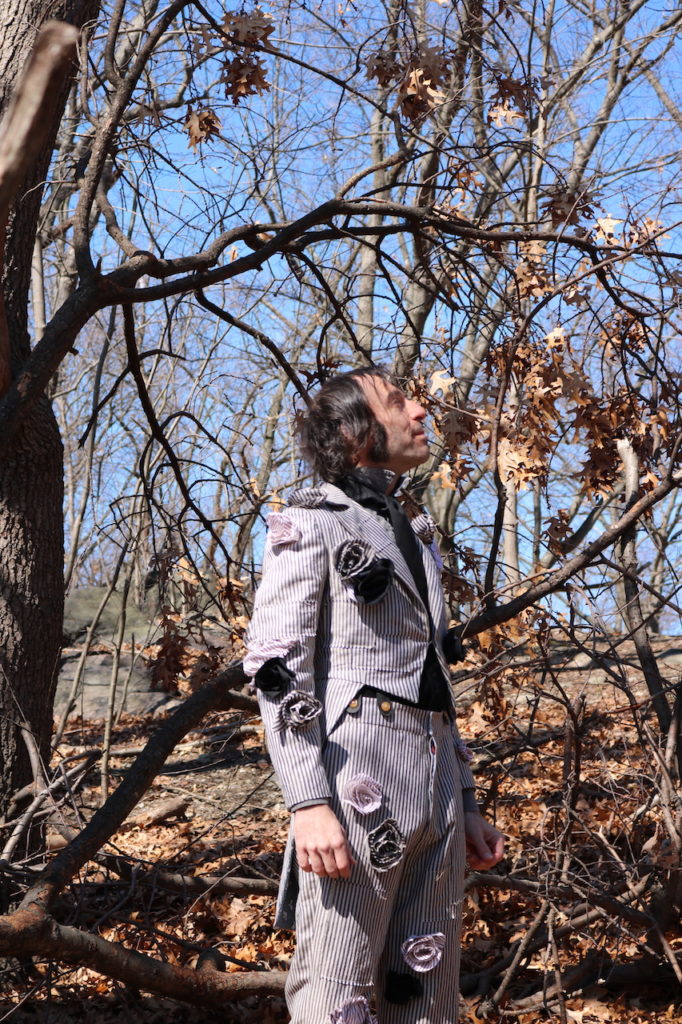
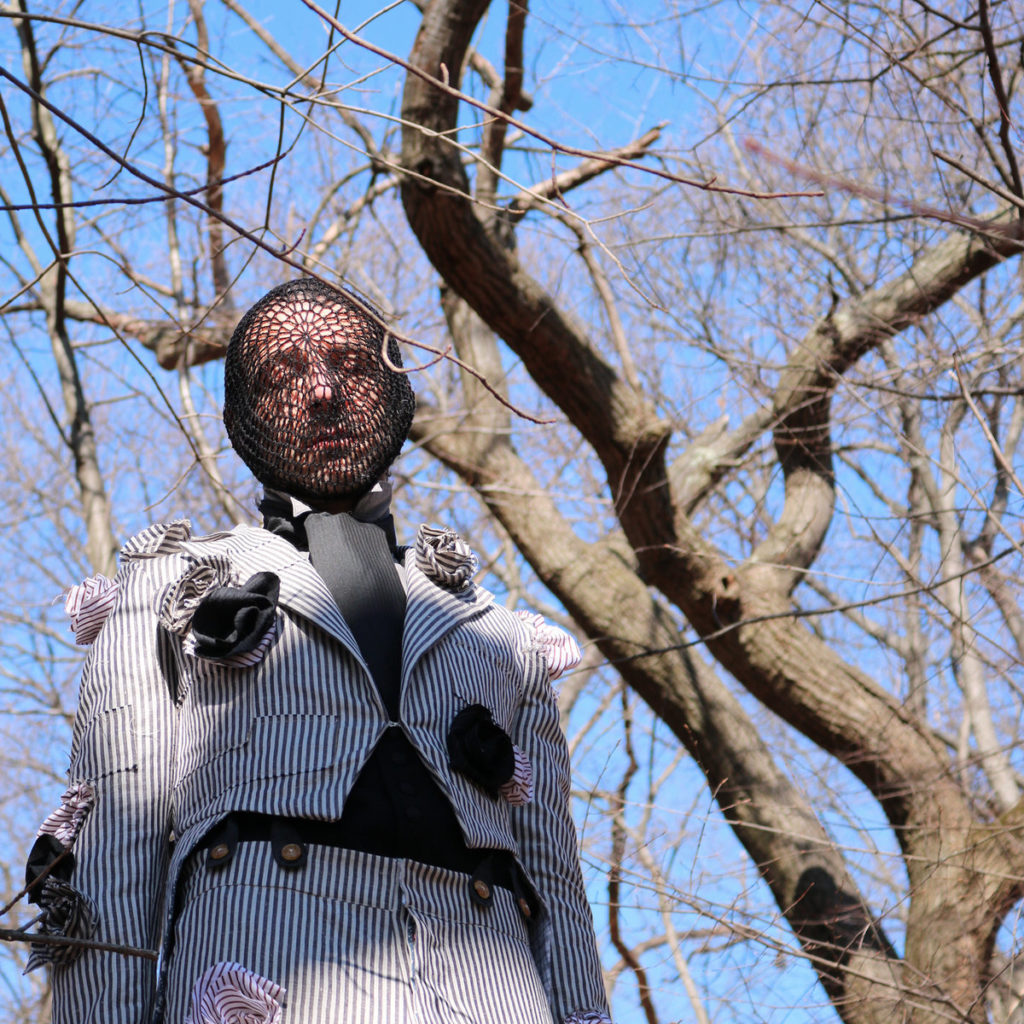
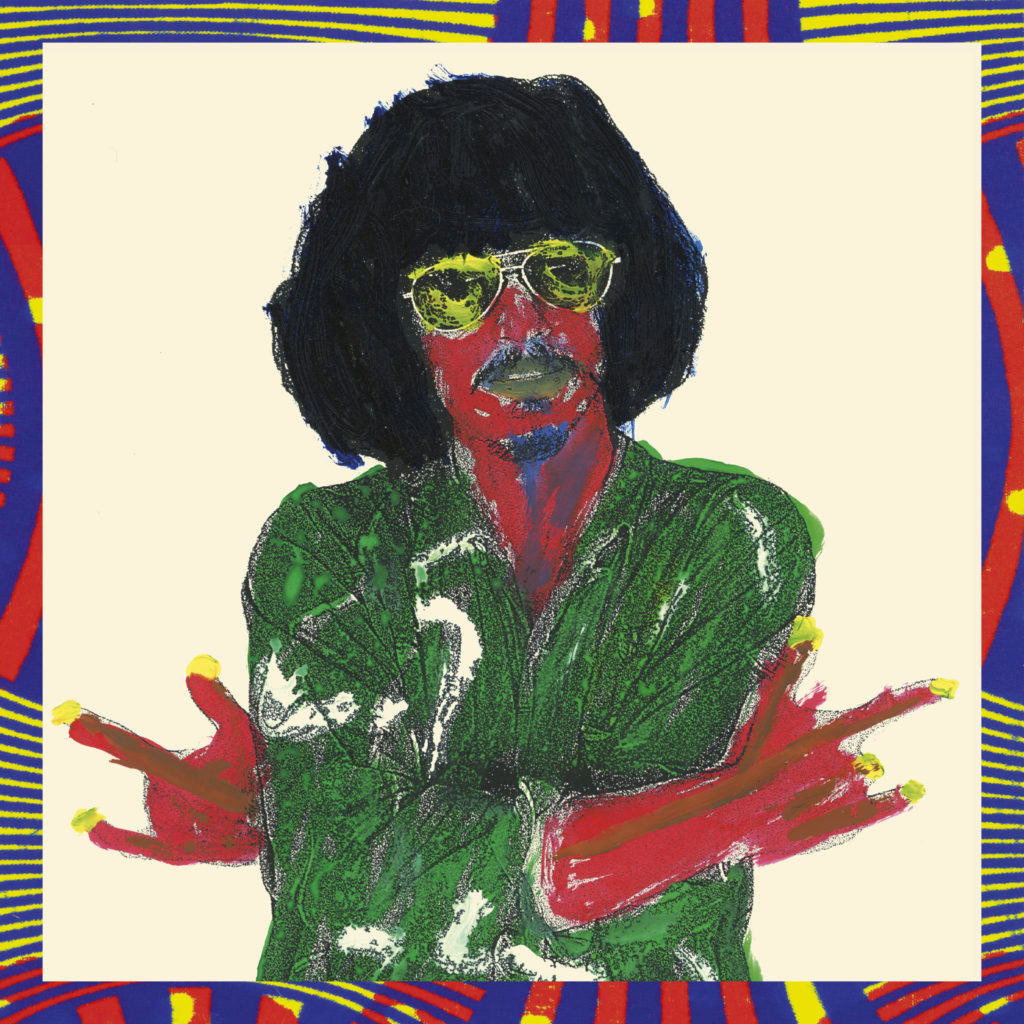
Daedelus has unveiled a new album, What Wands Won’t Break, launching on Dome of Doom across digital and cassette formats on May 8.
What Wands Won’t Break is Daedelus’ first work since joining the staff at Berklee College of Music as an Assistant Professor and Founding Faculty Member of EDI (Electronic Digital Instrument). It follows his previous album on Brainfeeder, The Bittereinders, released last year.
Tracks are “set in motion as bursts in time, hurdling through different passages of minimal harmonic components and toweringly ferocious rhythm and bass,” Dome of Doom explains. Every layer is “magnified and saturated,” and few tracks grace the two-minute mark.
In terms of process, Daedelus pushed Ableton to the edge, which is to say that signal paths were drastically altered, bringing out a sense of “frenetic energy,” the label explains.
He was inspired by Beat Lab Academy‘s short video series exploring sound hacks wherein they created a baseline from drum material using a few instances of Ableton’s Drum Buss. Across the album, Daedelus wanted to push less profuse sound sources to the brink with boosting plug-ins.
The album also nods to the late Ras G in seeking out extremes. “Every time we’d play, Ras would push each fader and every knob to the max even before hitting a 404 pad; he’d say it was ‘how it needed to sound,'” Daedelus recalls. “I’d be dubious because going ‘into the red’ induces distortion of the audio signal, it changes the harmonic content. As if amplification could ever be pristine? I’m grateful for their questioning of what we are intoning. This record is reaching for exultation and exclamation. Bass boosted. Transient inflated. Loud.”
Autechre have released a collection of live sets recorded between 2016 and 2018.
AE_LIVE 2016/2018 comprises seven digital-only recordings of live shows in Zagreb, Tallinn, Helsinki, Oslo, Nijmegen, Melbourne, and Dublin. They’re all available to stream, purchase, and download at Bleep, as a collection or individually.
The release come after a busy 2019 for the British duo, when they shared 19 live sets.
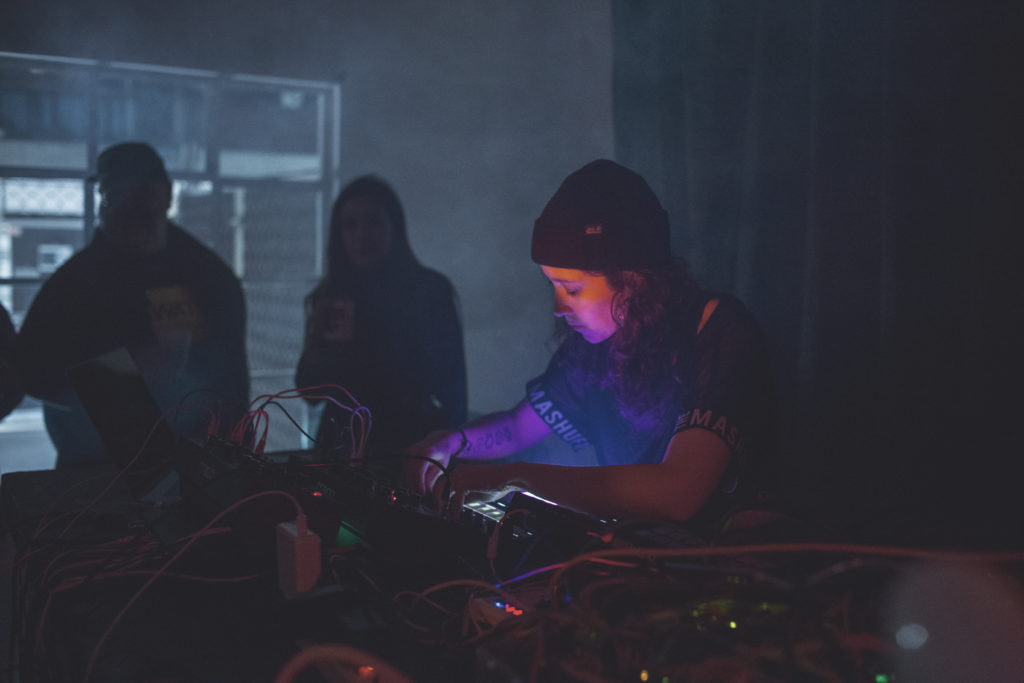
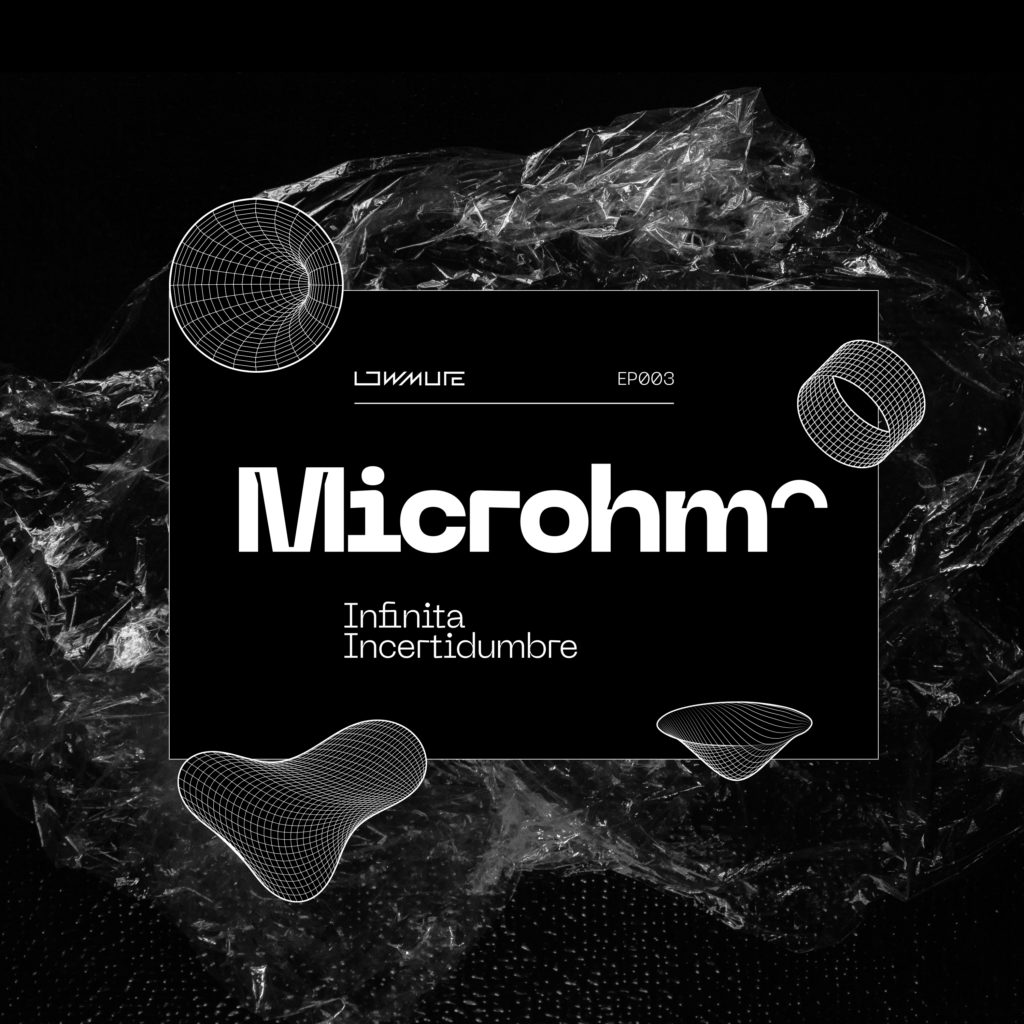
Microhm will debut on Lowmute with Infinita Incertidumbre, her first EP of the year.
Infinita Incertidumbre comprises four melancholic tracks that explore the “depths of simulation and memory in times of rupture.” She composed it earlier this year as a premonition of COVID-19, and what would come during the spring. It uses samples from Golden’s Hornet’s MXTX sound library, belonging to Mabe Fratti, Gibrana Cervantes, and Concepcion Huerta.
Microhm is an alias of Leslie García, an experimental sound artist associated with Static Discos, where she released her debut album, oscillating between noise, minimal wave, ambient, and techno. Raised in Tijuana, Mexico, she went on to study integral design, a strange hybrid of industrial and graphic design, but left the career early to begin working in the media arts domain. You can read more about her and listen to her XLR8R podcast here.
Tracklisting
01. Presente y Pasado 02. Dislocación del Tiempo 03. El Eco de Todas la Cosas 04. Infinita Incertidumbre
Infinita Incertidumbre EP is out on April 20 on digital and cassette tape. Pre-order is available here, where you can also hear the music.
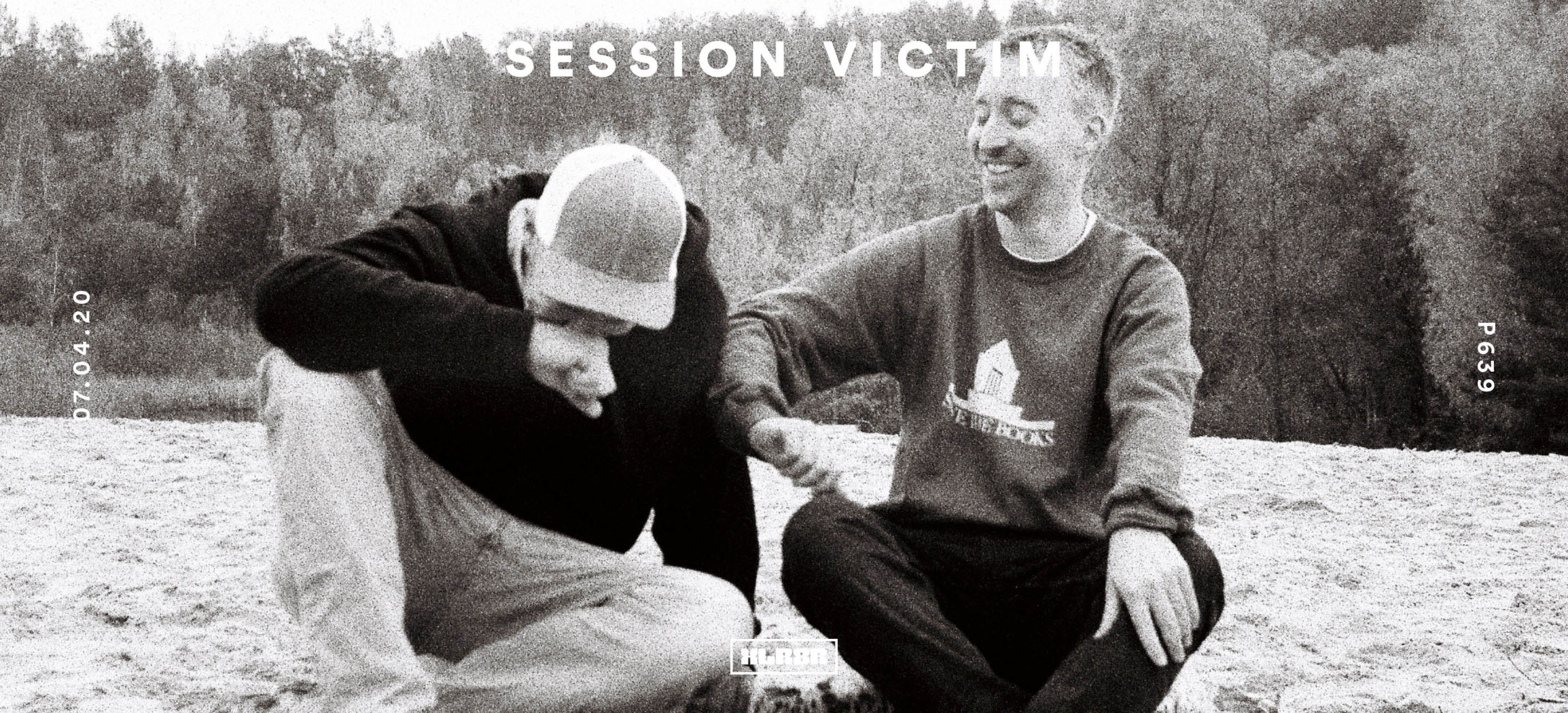
As the live music industry grinds to a standstill, Hauke Freer and Matthias Reiling released Needledrop, their fourth album as Session Victim. Available now via Night Time Stories, a sister label of Late Night Tales, the album takes inspiration from the lavishly textured and subtly layered jazz and soul compositions that found their way into late ’90 trip-hop, and its brimming with the organic groove and low-slung house that underpins the Session Victim catalog.
Freer and Reiling became close friends in the mid-’90s, growing up in Lüneburg, and small town in northern Germany, where they organized parties with a small crew of friends. Hanging out at the local record store and listening to every record that came in, they grew close and began DJing together around ’97—but they drifted after leaving Lüneburg in 2001, Freer to Berlin and Reiling to Hamburg. It wasn’t until New Year’s Eve in 2007 that they reconnected.
Filling that seven-year period were several musical excursions: outside of work at Resopal Schallware, Freer began producing the slick house that appealed to him; while Reiling, who has released two solo albums on Giegling, pursued hardcore metal with his Two Tribes band and discovered a knack for electronics and hip-hop. Come 2007, and the time felt right to hit the studio together—and, after working on two tracks, they met up in Berlin or Hamburg each weekend in the pursuit of new material. Their debut release, No Friends, came out in 2008 on London’s Real Soon, where Freer had released his debut solo record the previous year.
Releases have come thick and fast since then—including three albums on Delusions on Grandeur. Broadly speaking, the Session Victim records encompass the dusty, uplifting house of No Friends, doused in funk and soul to make them perfect for club play but fun enough for home-listening. Away from the studio, they curate the label Pen & Paper, launched in 2018, and perform as DJs and live, where they bring their live instrumentation and sample-based processes to stage.
Session Victim’s XLR8R podcast is a vinyl-only mix recorded in the duo’s studio in February. Whereas their club sets traverse a multitude of genres and tempos, this podcast is more direct, comprised of house records they’ve been playing out recently, all with the funk and groove that make Session Victim Session Victim. It’s wonderfully smooth and uplifting—press play and you may just forget these little difficult times for an hour.
What have you been up to recently?
HF: Been cooking and eating a lot. Sorted my records and worked with some people to get their music ready for mastering and cutting.
MR: I tried to come up with a good way of playing Tori Amos’ “Cornflake Girl” on guitar but failed pretty hard so far. Her stuff is ridiculously difficult to pull off, I think.
Talk us through the thinking behind the new album: how does it compare to earlier Session Victim music?
MR: With Needledrop, we wanted to make an album especially suited for home listening and we always knew that should be a one-piece vinyl record that you only have to flip over once. So, our main focus was to create a strong listening experience over anything else.
Where and when did you record the mix?
HF: The final mix was recorded at my place in early February using three Technics 1210, an Ecler mixer, and my new El Capistan delay which I bought myself for Christmas. I worked on the selection for about three weeks. The problem is, the longer I work on a mixtape the higher I’m aiming, suddenly considering three-deck mixes and stuff like that! This time I focused on a good flow and giving records more time instead of aiming for perfection.
How did you choose the tracks that you included?
HF: We aimed for a mix that represents what we have been playing in clubs. Matthias gave me a choice of records and I worked around that to create a good flow. We prefer longer sets, so we can play many genres and intensities, but here we focused more or less on house. It’s kind of rare for us to have the records play out FOR so long, and also for us to stick mainly to one style for 60 minutes.
How does it compare to what we’d hear you play in a club?
HF: We always play one record each, so every set is an improvisation— nothing is planned; we’re just trying to play the best possible record for the room. All of these records have been in our bags, so I would say this reflects what you might hear in the club from us—minus jumping needles, crazy style changes, and EQs at 3 am!
How are you finding the downtime at the moment?
MR: So and so, to be honest. I miss going out and playing music, of course, as that’s my favorite thing to do. On the other hand, I find myself reading more than usual and practicing bass and guitar a lot. Plus, we both get to play co-op video games with each other, which I highly enjoy.
HF: As a musician, it’s really hard to turn down shows and actually block off a holiday, in particular when you are a duo. Not having a choice to play any shows makes it easier to accept the time at home for me and making the most out of it.
What are your plans when COVID-19 passes?
MR: Well, go out and dance, play records to people, jam with friends. First thing I will do is get a haircut though!
XLR8R has now joined Mixcloud Select, meaning that to download the podcast you will need to subscribe to our Select channel. The move to Mixcloud Select will ensure that all the producers with music featured in our mixes get paid. You can read more about it here.
Tracklisting
01. A Vision of Panorama “Euphoria” (Mellophonia) 02. K-Lone “Cruisin” (Dr Banana) 03. Tom Ellis “Co-Create (Partly Printhaus)” (Good Ratio Music) 04. Alexander Albrecht “Schaefer Street” (Patrice Scott Remix) (Scissor and Thread) 05. Sports Casual “Trackin 101” (Exotic Robotics) 06. CZ Wang and Neo Image “Just Off Wave” (Mood Hut) 07. KX9000 “High Def” (Point Neuf Records) 08. The K-Scope Project “Organism” (Tribal America) 09. Universal Agents “West of Athens” (Ovum Recordings) 10. Groove Chronicles “Myron” (Groove Chronicles) 11. Mood II Swing “ooh” (Strictly Rhythm) 12. Robert Glasper “Enoch’s House” (DJ Kemit Remix) (white-label) 13. Julian Jabre “Deliverance” (Basic Recordings) 14. Session Victim “Needledrop” (Night Time Stories)
Elephant Wave is a slice of laid back, lo-fi indie funk recorded onto a multi-track tape recorder. A low slung drum machine groove underpins the track, with warm guitar solos and intriguing vocals running throughout.
“I wanted an intense beat. Because I wanted to sing while dancing,” recalls Wuddha. “At the time of the recording, I was laughing all the time. It’s a pleasure.”
Elephant Wave is the first single from Urban Brew, Wuddha’s first album, originally released on cassette tape last year and due to be released on May 15 on vinyl and digital via WotNot Music.
The single is available to purchase HERE, and you can stream it in full below. Meanwhile, you can read more about the album HERE.
Tracklisting
01. Feel 02. Elephant Wave 03. More 04. Something In Blue 05. Emerald 06. Shipping Love Beat 07. Ever about
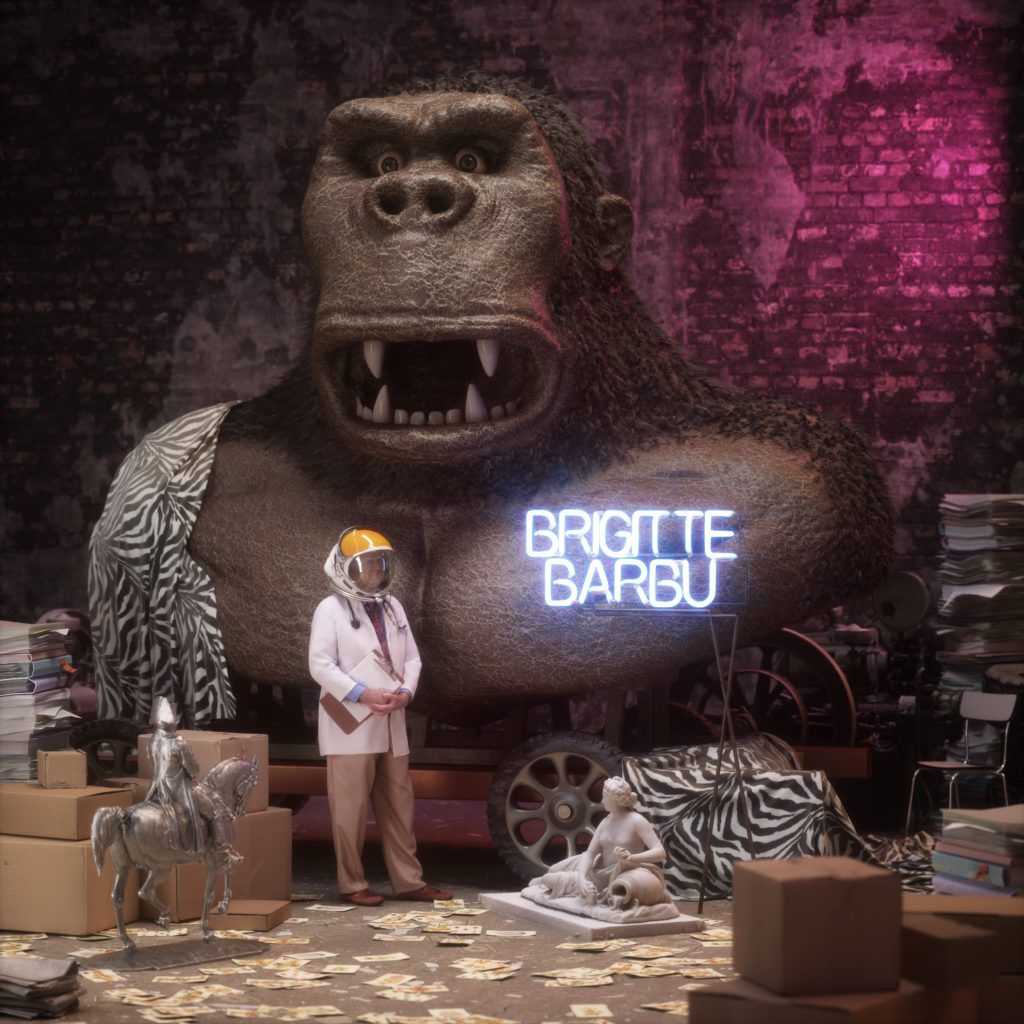
Uniting cosmic tones, unique sound collages, and electronic noises, Muzak pour Ascenseurs en Panne, meaning Muzak for Broken Lifts, is Auger’s first album as Brigitte Barbu. Across 11 tracks, we can expect “resonant guitar notes, odd sounds, electronic hallucinations, and unexpected warm synth layers,” the French label explains.
Auger recorded and mixed the album during a reclusive one-week residency in what he deems a “very special studio.”
“I wanted to compose an ethereal abstract hip-hop LP,” says Auger, “with guitar as a brainwashed instrument, mirroring machines and computers, even if surely far from being unplugged.”
Bradock’s most recent album came last year with What A Mess, his first in 21 years.
Tracklisting
01. Dae-Boj DeMoya 02. Trou Vert 1 03. Beau Zoo 04. Trou vert 2 05. Sainte Amante 06. Trou vert 3 07. Couvre chef en peau de taupe 08. Trou vert 4 09. Ray Z 10. Trou vert 5 11. Mistori
Muzak Pour Ascenseurs En Panne LP is out on June 12 on CD, vinyl, and digitally, with “Sainte Amante” streaming below, and pre-order here.
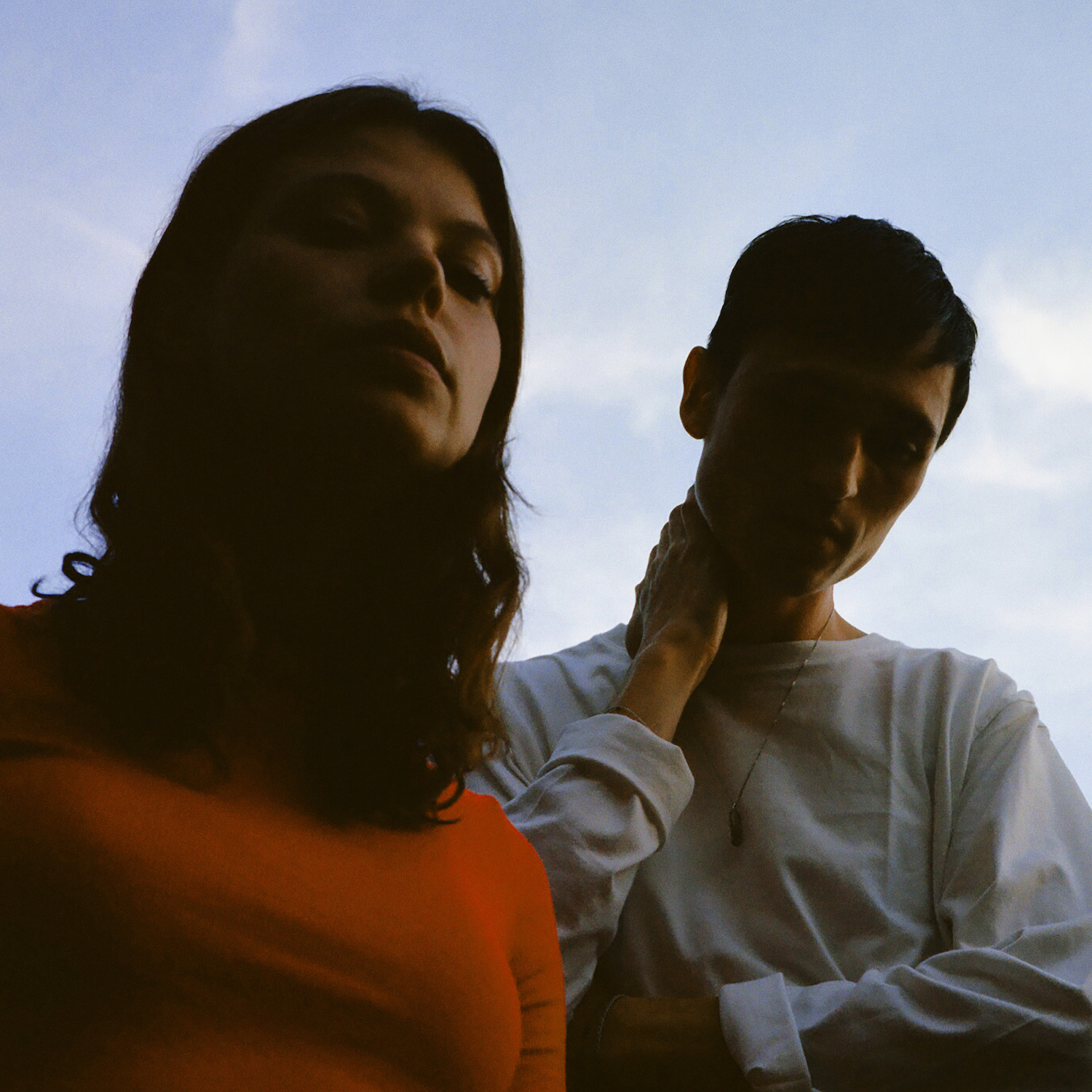
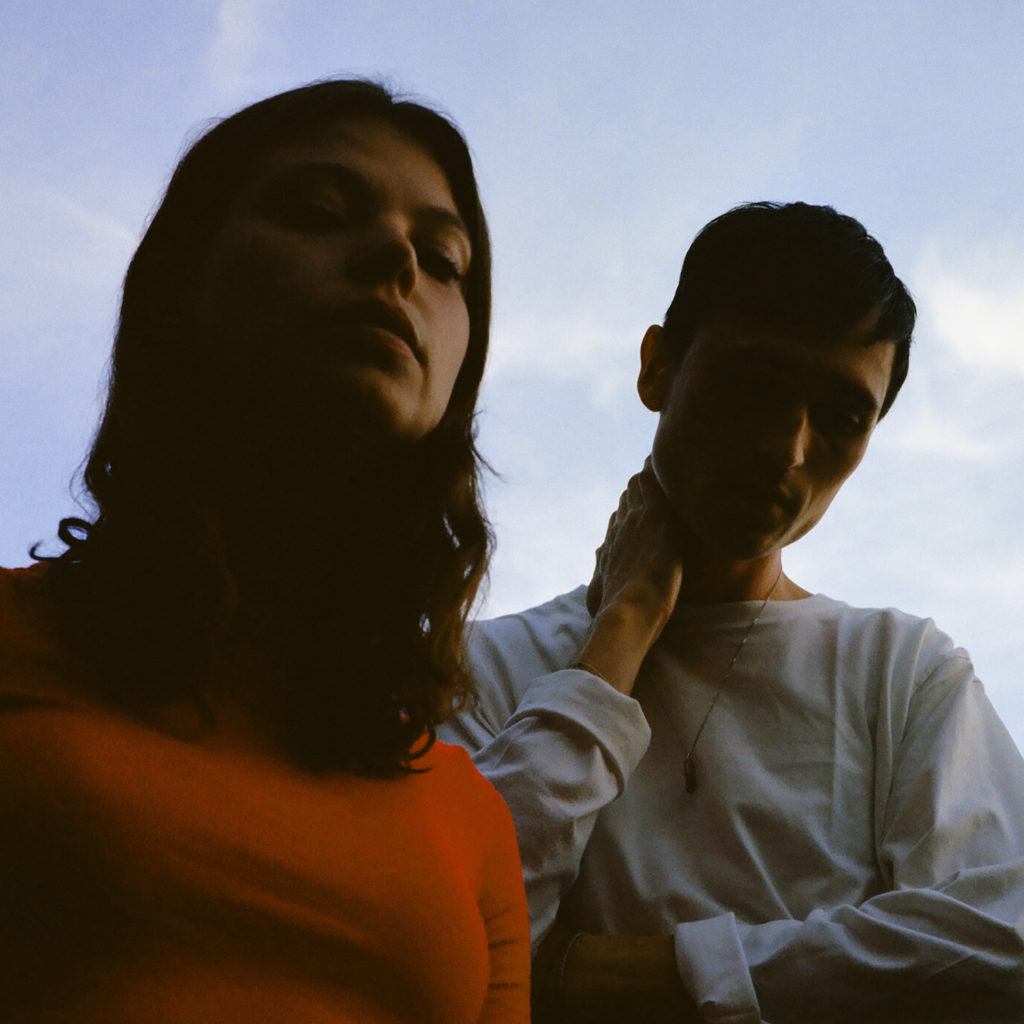
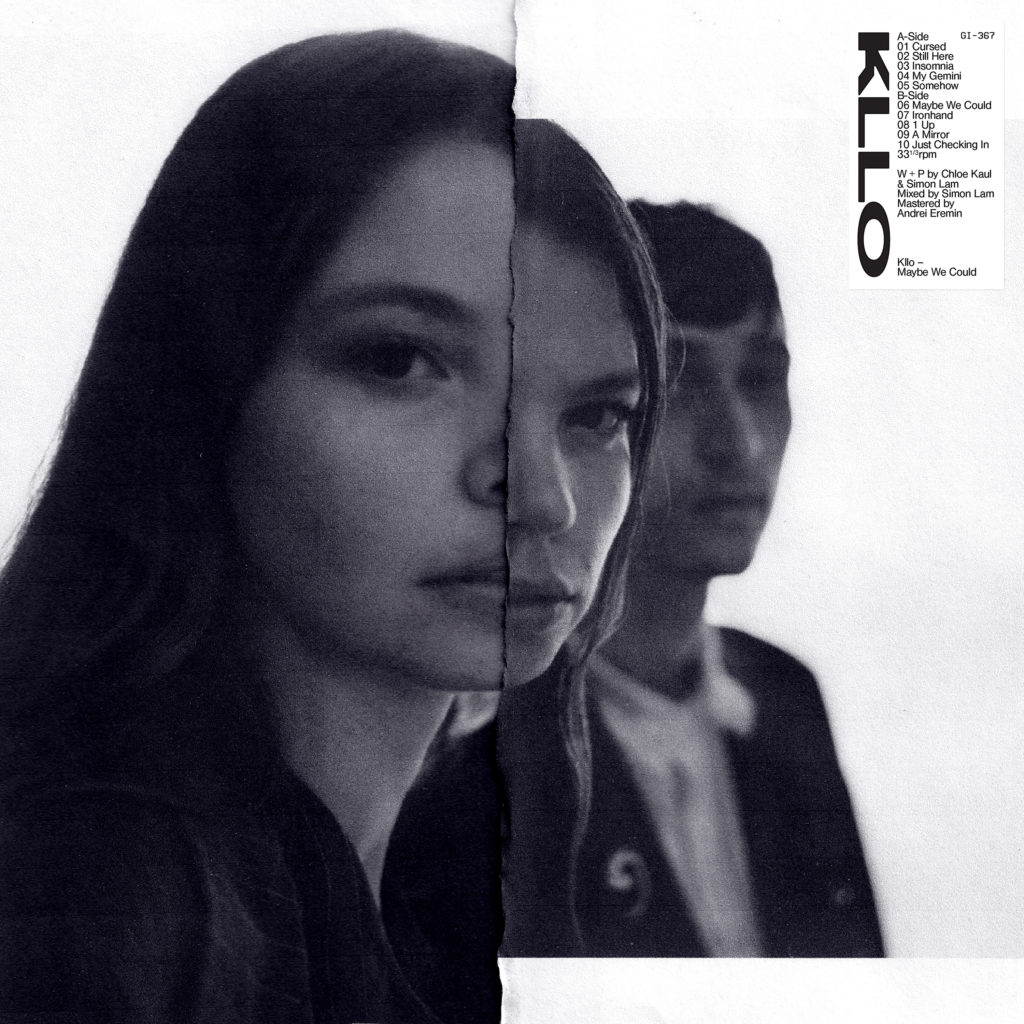
Kllo, the electronic pop collaboration of Melbourne cousins Chloe Kaul and Simon Lam, will release their new album, Maybe We Could, on July 17 on Ghostly International.
Maybe We Could follows the release of the pair’s debut full-length, Backwater, two years of global touring, and a handful of singles. It’s said to signal a “new start” for Kllo with 10 tracks that embrace a more subdued and nuanced tone than their previous work.
“In the past, we’ve tried to speed things up and push away from that, but now we’re sitting where it feels comfortable to us. Comfortable but also daring, because we know it’s not as polished in certain ways,” Kaul expands. “We’re doing us, we’re doing Kllo. We’re a bit older now. We aren’t compromising as much on this album. It’s a little bit classier and more tasteful this time around.”
Ahead of the release, the pair have shared lead track “Still Here,” an experiment in tempo that began as a piano ballad before they added ’90s rave-style drums. The track explores an emotionally suffocating relationship and a deep desire for understanding.
The accompanying video, directed by Matt Sav, was shot entirely on 16mm film. “The video uses visual metaphors to symbolise the struggle and perseverance through relationships by being trapped in plastic, sinking in water etc,” Lam says.
Sav adds: “I wanted the video to be a poetic depiction of two people staying in a relationship beyond its logical end. I explored the interplay between love, obsession, imagined futures, lived pasts, and the insanity that can be found in between. In our relationships, especially without good definitions around what love really means to us, we find the edges of freedom and responsibility blurring.”
Tracklisting
01. Cursed 02. Still Here 03. Insomnia 04. My Gemini 05. Somehow 06. Maybe We Could 07. Ironhand 08. Up 09. A Mirror 10. Just Checking In
Maybe We Could LP is out on July 17 via Ghostly. Meanwhile, you can stream “Still Here” in full below, and pre-order the album here.
Stuart Robinson has been DJing as ASOK for over 20 years. Born and still based in and around Liverpool, north west England, Robinson began his career as a drum & bass DJ after buying his first decks in 1995. He began playing out as a natural progression from the NWDNB (“north west drum & bass”) platform helped to create, a hub to service the drum & bass artists in the local region. ASOK was born in 1999, the name a reference to the Indian intern in the Dilbert comic strip that those in his workplace likened Robinson to.
During the late early 2000s, Robinson was heavily involved in the northern UK’s party scene, purveying drum & bass and then electro-funk and disco, and then breakdance and electro. His career took a change of course when he met Greg Wilson and started the Cosmic Boogie project around 2008, which took him all across Europe—but it also placed a limitation on what he could play, leading him to shut it down.
“I wanted to go back to darker music, so in around 2013 I came home after a gig in Montenegro and shut Cosmic Boogie down,” Robinson explains. “40 odd thousand likes, a million SoundCloud plays—I deleted it all overnight. It sounds stupid but it was incredibly cathartic!”
The next step was to formalize ASOK, and so he set up social media pages and taught himself how to make music. Importantly, it was an alias free of genre, open-ended in that it would allow him to play and produce electronic music of any form, all with ASOK’s breakbeat touch installed from his rave beginnings.
“I enjoy breakbeat more than anything as these were my formative rave years, but my tastes are eclectic,” he explains. “With the ASOK moniker, I am free to play whatever I want in whatever direction I want. I’m not suggesting its groundbreaking, but it is liberating.”
Since his first release in 2014, Robinson has released on Crème Organization—where he released his first album in 2016—Lobster Theremin, and DVS1’s Mistress Recordings. Aesthetically, the project feels like an amalgamation of all that has come before, embracing deep, emotive house, triangular breakbeat, and jacking, nostalgic techno with melody, texture, and soul—much like his DJ sets.
Now aged 42, Robinson is more settled than ever—”winding down and doing the things I love as and when I can.” Five years after he first released on Mistress, he returned to the label with Mistress 14, available now ahead of Robinson’s a busy schedule of gigs across Europe. To mark the occasion, he’s compiled an XLR8R podcast.
Typically eclectic and wide-reaching, Robinson’s XLR8R podcast is the product of 20 years of record collecting. It’s full of quick and punchy rhythm changes, keeping you on your toes, while echoing the reflective tone of his new record—built upon “things that I would enjoy listening to or dancing to that maybe other people will as well,” Robinson says. Rave on.
What have you been up to recently?
All the usual things I guess. I am playing in the few places I have residencies in the UK, messing about with Ableton, trying to get back into swimming, being a dad, contemplating the future. All the usual things.
How are you feeling about the new release on Mistress?
I’m really happy about it. It has been a long time in the making but good things take time to get right. Its probably the most reflective release I have ever put out there of what I am into—as in, a bit of everything. It’s great that Zak (Khutoretsky; DVS1) feels the same way, too. His tastes are more varied than mine, and I really do generally like everything. There are bass influences here, house music influences, techno influences—everything, all fudged together under an electronic music umbrella.
How did the release come about?
The very first release I did with Mistress was in 2015. Ever since then we have spoken about another but you know how it works—pressing plant times, other artist releases, things that are already coming out on other labels, etc. It just takes the stars to align to get a release out these days.
In the years since that first release, I’ve started to send Zak bits and bobs as we always keep in touch, and slowly but surely the release pieced together. We realized the window would come in 2020, so started to think about the flow and the overall vibe—and it worked out. It’s a really good thing to work with the little team they have at Mistress—I know the people well as colleagues and friends, and it’s never anything but working together to get things right.
Which artist or labels are really impressing you right now?
Ah, I’m no good at things like this. It depends every day, on the weather, on my mood, on whatever has happened good or bad that day. I couldn’t tell you artists or labels that impress me as I never look at things that individually anymore. I simply go for sounds I like and that could be anything or anyone at any given time. An artist might make one track I like and then all the others I don’t—I could therefore not stay that artist impresses me. But the track does. Same with labels; I just like whatever my brain enjoys.
When and where did you record the mix?
I recorded it at home. I’m in between equipment at the moment because it’s being serviced, so I borrowed the CDJs and a One 96 mixer from the club I’m resident at in Liverpool—24 Kitchen Street—and hooked everything up to my own technics turntables. Then, just to make sure all sounds sweet, I took it into Ableton and mastered it up a touch with some post-processing.
How did you choose the tracks that you included?
I wanted to get as wide a spectrum of what I like as possible, albeit maybe breakbeat-edged, so I started to rifle through various different folders and playlists from the last seven or eight years, same with records too, and trimmed it down to about 40 or 50 things I wanted to include. Then I just hit record and put it together. Nothing planned too much, the same way I make music really!
What’s the concept for the mix?
Things that I would enjoy listening to or dancing to that maybe other people will as well.
How does it compare to what you’d play in a club?
I would probably be a little more conventional in a club. I do like playing oddball stuff sometimes but I mostly find that I am not really a big fan of the whole journey thing when on a dancefloor. I like quick, punchy, exciting rhythm changes. This mix has some of that too, so it’s certainly reflective.
What are your wider plans for 2020?
I couldn’t even tell you what I am doing this evening, let alone this year. And even if I did, it would probably change one thousand times over. The wider plan is to never have one.
XLR8R has now joined Mixcloud Select, meaning that to download the podcast you will need to subscribe to our Select channel. The move to Mixcloud Select will ensure that all the producers with music featured in our mixes get paid. You can read more about it here.
Nihiloxica will release Kaloli, their debut full-length album, in June.
Recorded with Ross Halden at Hohm Studios directly after a concert supporting Aphex Twin, Kaloli captures the vitality of Nihiloxica’s show-stopping live performances and magnifies it with powerful production. The bulk of it was laid down in five days in September 2019.
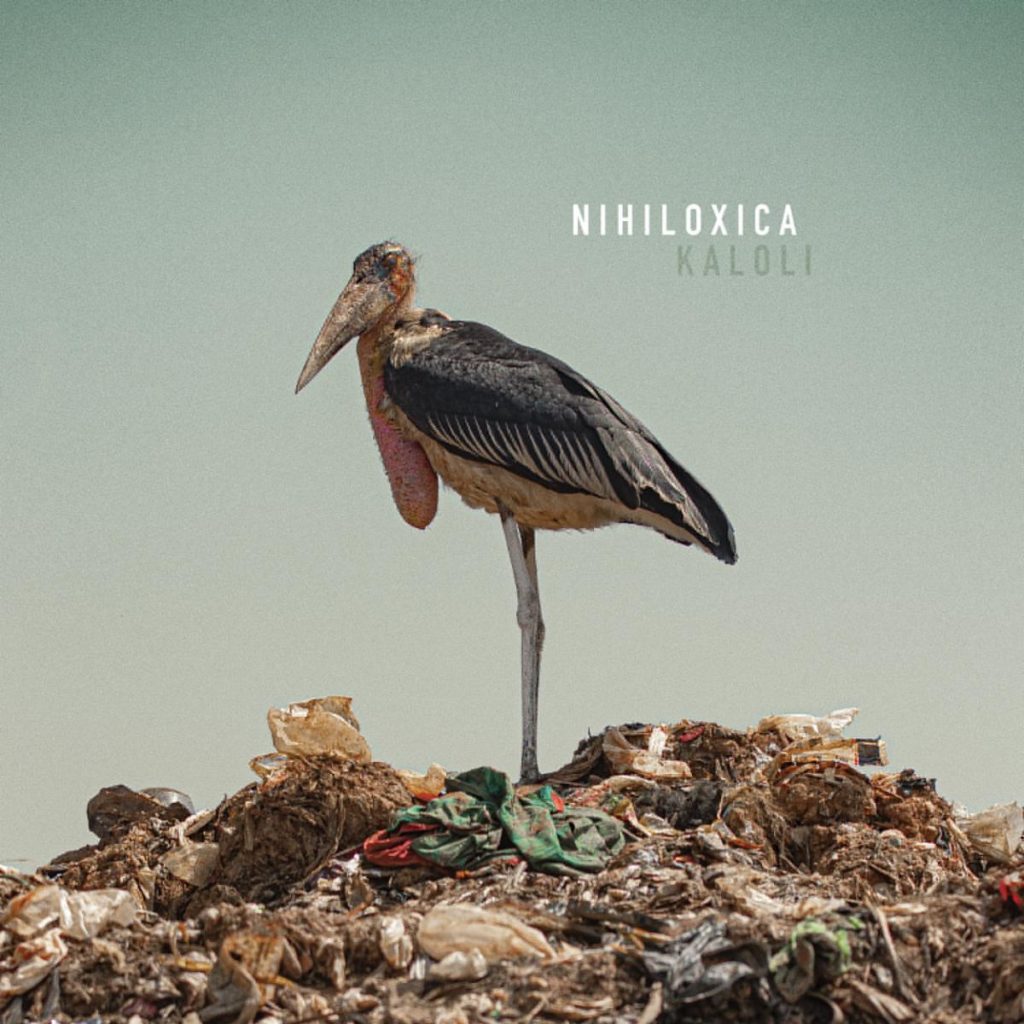
The album takes its name from the Luganda word for the Marabou stork. Kaloli are carrion birds that can be seen amassing in areas of festering waste around the country, particularly in Kampala, with its heightened levels of urban pollution.
Founded by two UK musicians, Spooky-J and pq, and four members of Kampala’s Nilotika Cultural ensemble, Nihiloxica marries powerful traditional percussion patterns with abstract analog synth lines. Since 2017, the band have honed their sound in residence at Nyege Nyege’s Boutiq Studio in Kampala, and their debut self-titled EP for the Ugandan label was an immediate success. After a year of road-testing material live on stage, the second EP, Biiri, showed the band communicating with each other more freely. The album arrives after three European tours.
Fans of downtempo electronica, dub, and trip-hop will be no strangers to Rob Garza’s productions. The US artist, hailing from Washington, DC, is widely known for his work with Thievery Corporation, formed in 1995 and today one of America’s most forward-thinking, politically conscious, and acclaimed duos. Over the course of 25 years, Garza and partner Eric Hilton have amassed an expansive discography featuring Grammy-nominated albums, as well as numerous remixes and EPs, much of it through their own Eighteenth Street Lounge Music label.
For his new project, GARZA, Garza has brought together a diverse collective of musicians, producers, visual artists, and videographers. The multidimensional output of this meeting of the minds is an aesthetic that’s different to his previous work, combining esoteric electronica and a pop sensibility, harking back to Garza’s love of ‘80s electronic music and indie synth-pop. GARZA’s first EP, ‘Where the Moon Hides,’ was released in November 2019 on his own Magnetic Moon imprint and features vocalists Seann Bowe and Emeline, as well as co-production with LA-based SMLE. The release capped off a busy 2019 for Garza, which included the inauguration of his Magnetic Moon label, a content portal working with young artists on music, as well as with technology. He also completed an original score for the King Tut virtual reality experience, “Tutankhamun: Enter the Tomb,” which is traveling worldwide through renowned museums, and he continued his work with Dr. Adam Gazzaley of UC San Francisco, creating music along with virtual reality video games designed to assist with neurological disorders.
Included on ‘Where the Moon Hides’ was “Floating Through My Bones,” a new track from GARZA, and as part of this month’s XLR8R+ package, Garza is releasing an exclusive remix of the track. We caught up with him to take a deep dive into the production methods, creative processes, and inspiration behind it—and he’s shared an Ableton Live Set download so you can see exactly what he did.
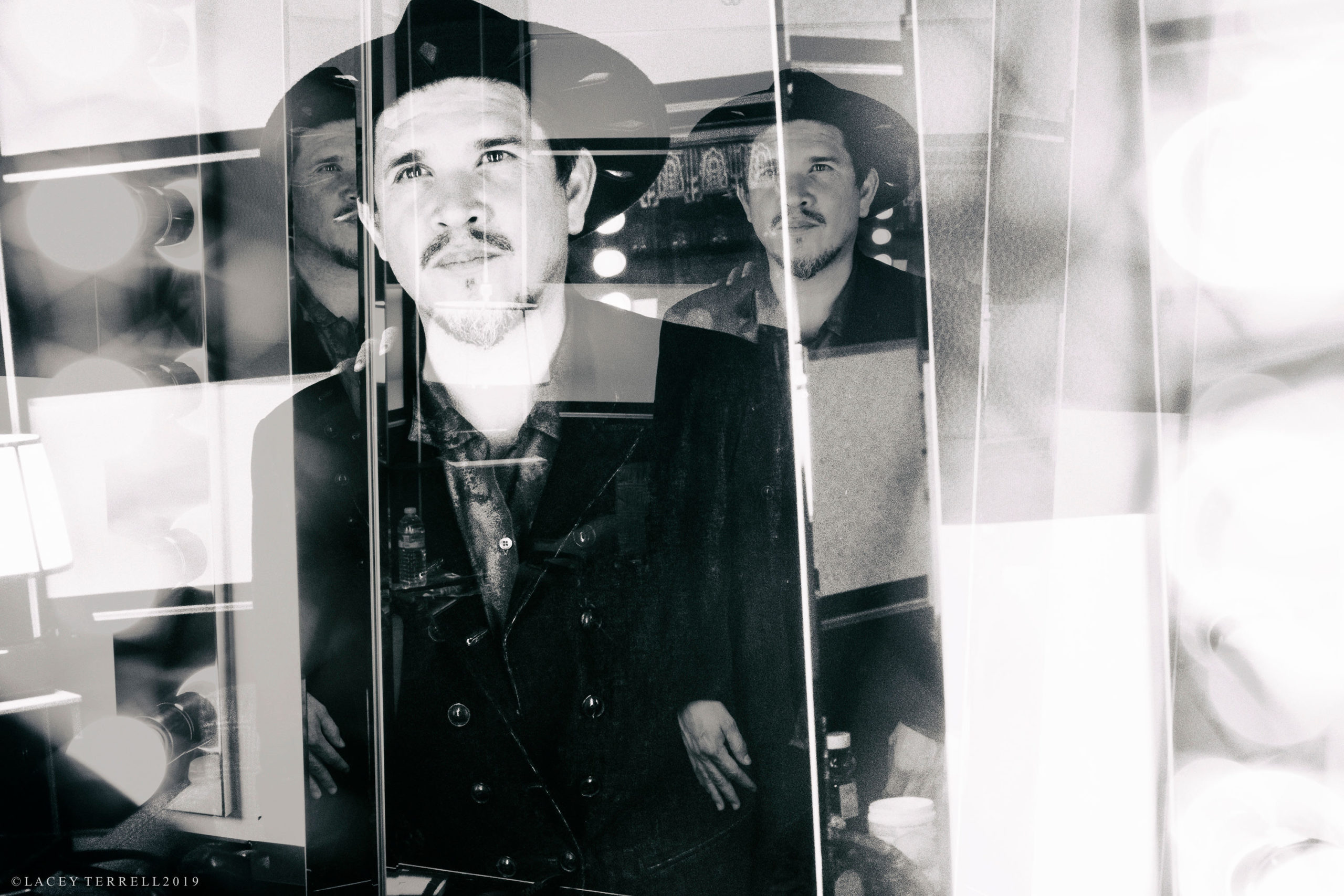
Photo: Lacey Terell
Download the Live Set to GARZA “Floating Inside My Bones” (Floating Breaks) here*.
*Requires Live 10 Suite license or the free trial.
Please note: this Live Set and included samples are for educational use only and cannot be used for any commercial purposes.
You can download GARZA’s “Floating Inside My Bones” (Floating Breaks Mix) now via XLR8R+ here.XLR8R+ is a curated subscription service and music community delivering exclusive music and content every month, plus access to the XLR8R+ member’s area, where you can submit your music to be showcased across XLR8R’s channels and to the XLR8R+ community.
To support artists and fans through Covid-19, until Thursday, April 9, XLR8R will be offering all new subscribers 60 days of XLR8R+ for free. Find out more here.
Rob, thank you for talking to us about your project. What’s the story behind this particular track?
This is a remix of a song I have on my first EP for the GARZA project. I made this with a talented singer and writer named Seann Bowe. I wanted this remix to have an old school, downtempo, and breaks kind of vibe. There’s a lot of sweeping pads and things like that.
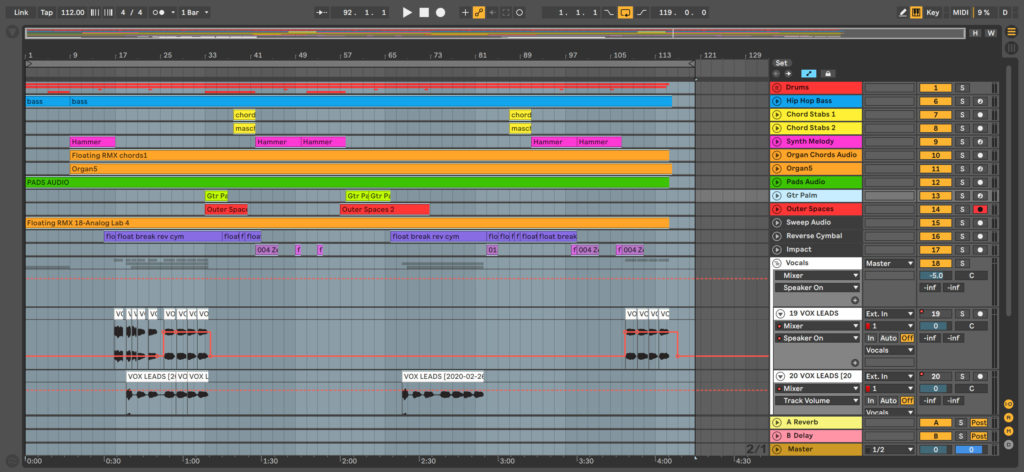
You are working entirely in Live’s Arrangement View on this project. Do you ever work in the Session View?
Sometimes I do both. It depends. If I’m sitting on an airplane I may work in the Session View, but a lot of the time I find I can keep moving in a certain way by working in the Arrangement View. So I tend to gravitate towards doing it this way.
GARZA – Floating Inside My Bones (Floating Breaks Mix) in Live’s Arrangement View
Track one in your project features a drum group. If we open that up then we see a break drum loop, a shaker, and some percussion hits and snaps. Was the main drum break a sample, or did you record it yourself?
For this, I used an Abbey Road kit inside of Native Instruments Maschine. I started working with different sounds, rhythms, and adding things myself. I then rendered that down to audio. I then added some different shakers, as I love the movement they give. The shaker in this track is probably taken off an old sample CD from the ‘90s. It’s likely to be on loads of records I’ve either done myself or with my partner Eric [Hilton] as Thievery Corporation.
You have some percussion hits going through a ‘70s Keyboard Delay effect rack, which contains Live’s Delay and Frequency Shifter devices. You’ve used this rack in other parts of the song, too. Is this a favorite of yours?
Yes, I really like the effect of this rack. It gives this lush, swimming-in-delay kind of feeling, and it helps to glue a lot of things together.
Are you looking for anything specific when adjusting the parameters across the Delay and Frequency Shifter devices in this rack?
I tend to twiddle some knobs and get it to a point where, if it sounds good, it is good; it’s like jazz musician Duke Ellington’s philosophy. I try not to get into a “splitting the atom” type of mentality with this kind of thing. I find this can hinder me from being as creative as I want to be.
You introduce some snaps at certain points in the drum arrangement. What is the thinking there?
This adds some randomness to the drum track and mixes things up a little bit, so as not to become too repetitive. A lot of times there’s no rhyme or reason to me having done these things; it’s more about intuition, I think.
Track six uses Live’s Hip-Hop Bass Instrument Rack. This rack hosts Operator, a synthesizer designed for combining classic analog sounds and frequency modulation. The synth’s signal then passes through Live’s EQ, Multiband Dynamics, and Saturator devices. Where did your inspiration come from when writing this bassline?
It’s like a dub meets downtempo, ‘Café del Mar’ type of sound. It really grounds things. This track is quite spacey, there’s a lot of delays and things like that, so I wanted a bass that is low but also quite soothing as well. This particular bass sound seemed to capture that.
On tracks seven and eight, you’ve introduced some chord stabs at bar 38. Where did these sounds originate?
I like the idea of randomness and sometimes I just scroll through the different sounds in the browser and play different chords until I hit upon something interesting. I don’t have any big issues using preset sounds, but I will often use effects to make them different. If you listen to a lot of old Thievery Corporation records, the bass sound might come from a standard preset on a Yamaha tone generator or something like that. On its own, it might sound generic but if you put other things around it, then it works. That’s what it’s about for me.
Track nine’s synth melody uses the Canadian Boards Instrument Rack in Live 10 Suite. This Rack hosts an instance of Analog, an instrument that emulates the circuitry of vintage analog synthesizers. Analog’s signal then passes through a series of Live’s effect devices including EQ 8, Redux, Chorus, and Phaser. The melody’s timbre seems to fit organically in the mix. Is there anything you can tell us about it?
I usually have a sense of the sounds I would like. In this case, I was going through some of the different synth keys in Live. I have used this particular sound before, so I had a feeling it might fit. The melody itself is just spontaneous inspiration. I find, if I just sit with the music and listen to it over and over, I eventually start to come up with these little ideas.
Live 10 Suite’s Canadian Boards Effect Rack
When jamming out these ideas, do you prefer to play keys or do you gravitate towards guitars or other instruments?
I play a little guitar, a little bass, some keyboards, and things like that. But I try not to limit myself. The only limit you really have making electronic music is your own imagination. If you can imagine things, you can create things. A lot of times for me, it’s about adding layers on top of layers. In this particular track, I tried not to go too crazy with adding 30 different layers of synths, but I do tend to do that in other projects!
You often use a “call and response” technique where your sounds play off of one another. In tracks 10 and 11, you have two organs with similar yet contrasting timbres. How do you go about finding sounds that work well together like this?
The first organ sound was made in u-he’s Diva Synthesizer. Then I found the Organ5 Vibrato Instrument Rack inside of Live. I wanted to create this ethereal sound, which, when layered with pads, gives a super lush vibe. A lot of it is about relying on your ear when finding the right sounds to play off of each other.
Track 12 features some lush, wide pads that cut really well through the mix. What was your approach to making this sound?
These pads were from the Arturia Jupiter 8V software synth. With this mix, I really wanted to do something that harkens back to the old days, when Thievery Corporation first started. At the time, I was listening to artists that inspired me, like Kruder & Dorfmeister, Fila Brazillia, and people like that. I wanted to create that kind of atmosphere and I think those pads really take you back to that time.
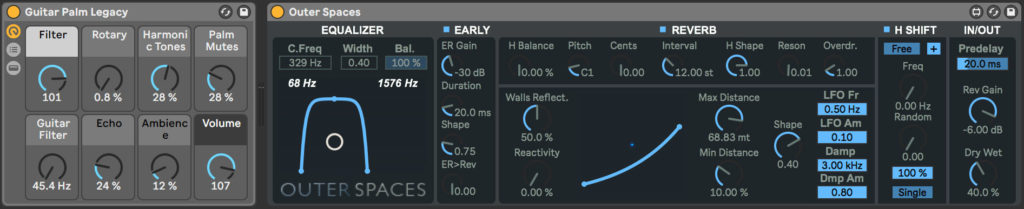
In track 13, you’ve introduced a plucked guitar melody at bar 33. Here you have used the Guitar Palm Legacy Instrument Rack in Live 10 Suite which holds two instances of Tension, Live’s physical modeling string synthesizer, along with a chain of effect devices. You’ve then added some additional processing with Amazing Noise’s Max for Live device Outer Spaces and recorded the effect’s signal into Track 14. Can you tell us a bit about why you did that?
Yes, I really love that effect because it gives a different quality of reverb and space, which adds a really cool atmosphere on top of what you already have. It really is a go-to for me.
Outer Spaces Max for Live device by Amazing Noises
On track 15, you have this “Sweep Audio” sound. Can you tell us about this one?
I was actually in the back of a tour van when I was making this sound. I used Arturia’s Modular V soft synth.
So did you work a lot on this remix while on the road?
Yes, I did, in the back of a van, using headphones! I also love making music on airplanes and trains, especially when traveling in Europe. Watching things go by and that feeling of motion is inspiring to me. Specifically, in airplanes, I feel like they are one of the places I am not bothered or distracted as much. Time just goes by so fast, it’s almost meditative; I become very at one with creating music and the next thing I know, they’re tapping me and telling me to put up my seat for landing!
Track 18 features a group of vocal tracks that have been layered with different effects processing. Where does the vocal come from?
The vocal comes from the original song on the EP, and the singer is Seann Bowe. I took pieces of the chorus which I found most inspiring and created a kind of dub vibe with them. A lot of it is about washing things in delay. I also used the Beat Repeat device on the backing vocal. It gives a stuttering tremolo effect which, when layered with the washed-out delays and reverbs, creates a really nice juxtaposition.
On the master channel, you’ve created a bandpass effect in the introduction, using some frequency automation with Live’s EQ8 device. Finally, you’ve also rolled off some low frequencies, applied the glue compressor, and added some limiting. Do you generally do these finalizing processes in Live before sending it to a mastering engineer, or do you leave the master channel unprocessed?
I would use those for a reference master, so I can roughly define the realm of where I want the master to be. I would then take those devices off so that the engineer has some bandwidth and headroom with which to do their magic.
What’s next for the GARZA project, and what areas do you hope to explore in contrast to the work you’ve done with Thievery Corporation?
I’ve been doing music for 25 years with Thievery Corporation and that is still going strong. We have a record called ‘Symphonik’ coming out in April that we’ve made with an orchestra from Prague. The next GARZA EP comes out in May.
The GARZA project really harks back to my love of ‘80s electronic music and indie synth-pop, and the new EP is built around that. GARZA is a very collaborative experience. I am working with a lot of other young producers, singers, and songwriters. On some of the tracks, there might be up to five songwriters, whereas with Thievery Corporation it would only be me, Eric, and one other singer. The GARZA project has almost a tinge of what I would consider pop; the music has this youthful vibrancy. With Thievery Corporation we can sometimes get quite politically conscious which I love as well, but this project is just stretching out in a different direction. It has a little bit more of an electronic edge in a way, drawing on my childhood inspirations like Blondie and The Cars.
GARZA “Floating Inside My Bones” (Floating Breaks) is now available on XLR8R+.