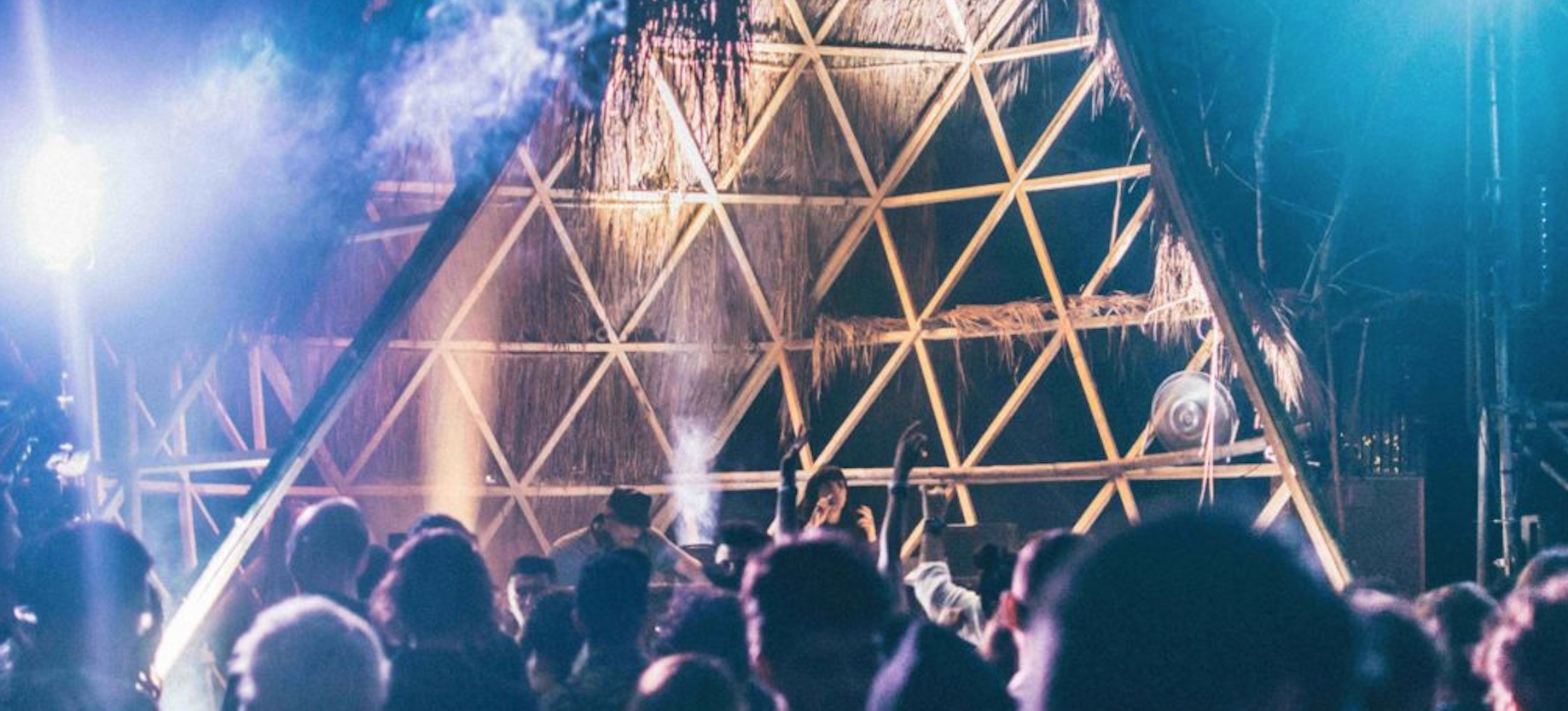
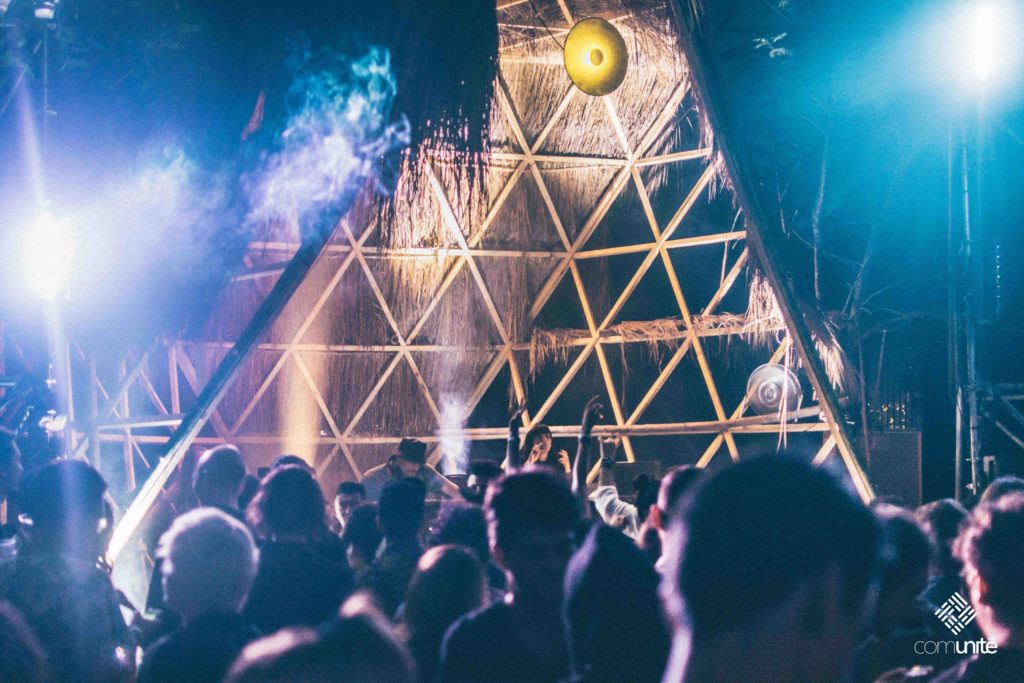
XLR8R is offering XLR8R+ subscribers free passes to the upcoming Comunité Festival taking place on the beautiful beaches of Puerto Escondido, Tulum, in Oaxaca, Mexico on Saturday, January 11.
Hailed as one of the best surf beaches in the world, Puerto Escondido is a paradise that’s managed to remain mostly under the mainstream tourist radar with plenty of amazing spots to stay and delicious food.
This year’s edition sees Comunité focus heavily on the bass-heavy sides of cutting-edge club music. With Yu Yu club as a collaborative partner, Mexico’s vital underground club scene is well represented. The NAAFI label will be there in full force, with Mexican Jihad and Fausto Bahia both on hand. After a performance an Mutek Mexico, Tomás Urquieta is a highlight to watch, while DJ Hotmale brings rowdy acid flair. Nico (f.k.a White Visitation) will also bring his uniquely gritty techno sound, joined by rising names MNTY and Phaedra.
Heading up the rest of the lineup are dubstep legend Mala and Hyperdub boss Kode 9. Madam X is on hand to represent younger strains of bass music, as well as Berlin’s Darwin. Miami’s Nick León brings his experimental flair to the beach, and Kiev’s Raw Unkut will provide a unique ravey, breaks-driven energy. The latest lineup can be found here.
Please note that tickets are limited so claim yours now.
For those who haven’t yet, just SUBSCRIBE HERE and email your full name with “Comunité 2020” as the subject to [email protected] to claim your FREE ticket. For those current subscribers, simply email your full name and “Comunité 2020” as the email subject.
The 17th edition of XLR8R+ is here, featuring tracks by DeWalta, Öona Dahl, and Alci. You can hear snippets of the tracks below.
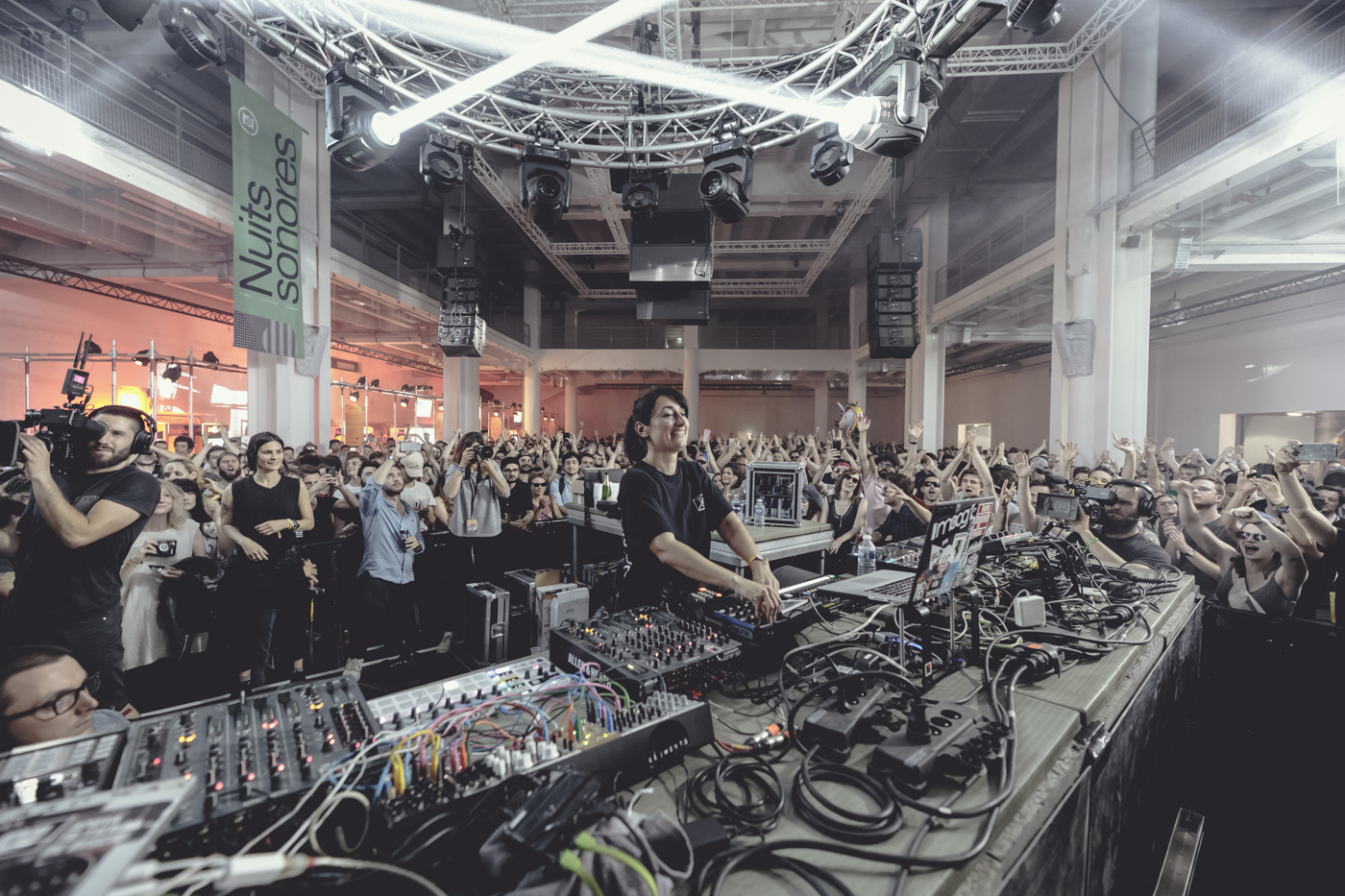
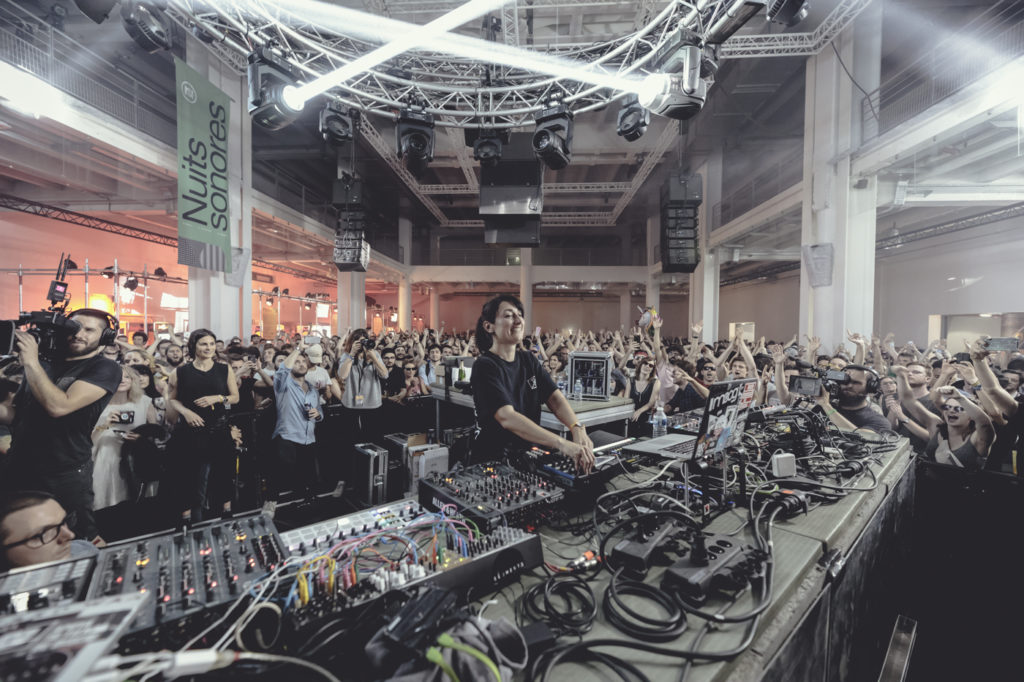
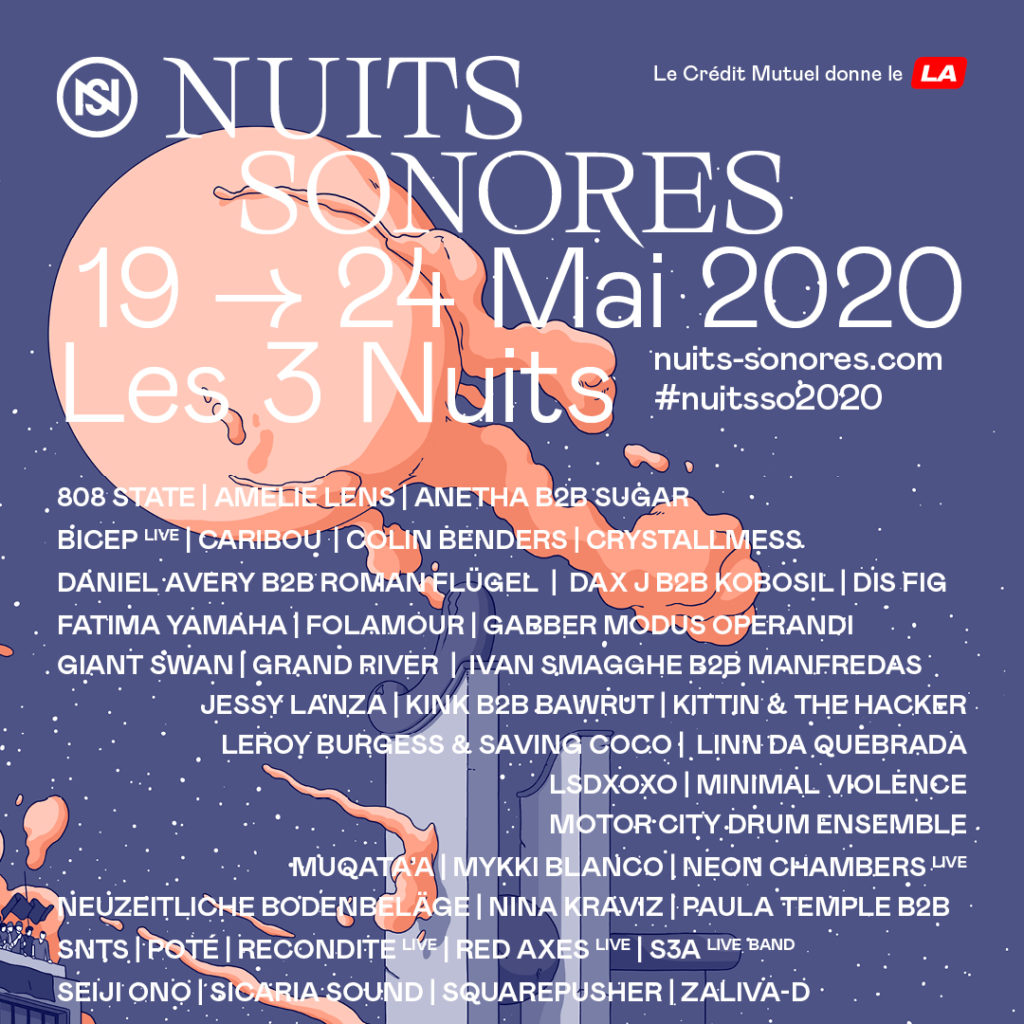
Helena Hauff, Jeff Mills, DJ Harvey, and Honey Dijon will curate the daytime schedule for Nuits Sonores 2020.
Since 2015, the annual event, based in Lyon, France, has left the control of the programming of its daytime program to personalities who “embody the artistic spirit of the festival,” the organisers explain. Each curator is given the reins for the day at La Sucrière, a vast former sugar factory with three stages, where they will perform themselves alongside the handful of artists they’ve chosen. Previous curators include Paula Temple, The Black Madonna, and Laurent Garnier.
At this year’s edition, the daytime proceedings will begin on Wednesday, May 20 with Jeff Mills. Up next on Thursday is DJ Harvey before Helena Hauff on Friday and Honey Dijon on Saturday. The lineups themselves will be announced on January 29.
This year’s Nuits Sonores will run from May 19 to 24 in Lyon, France. You can read more about the event here, including the night programme, which includes performances from Caribou, Daniel Avery b2b Roman Flügel, LSDXOXO, Squarepusher, and many more. In the meantime, read our review of the 2018 edition here.
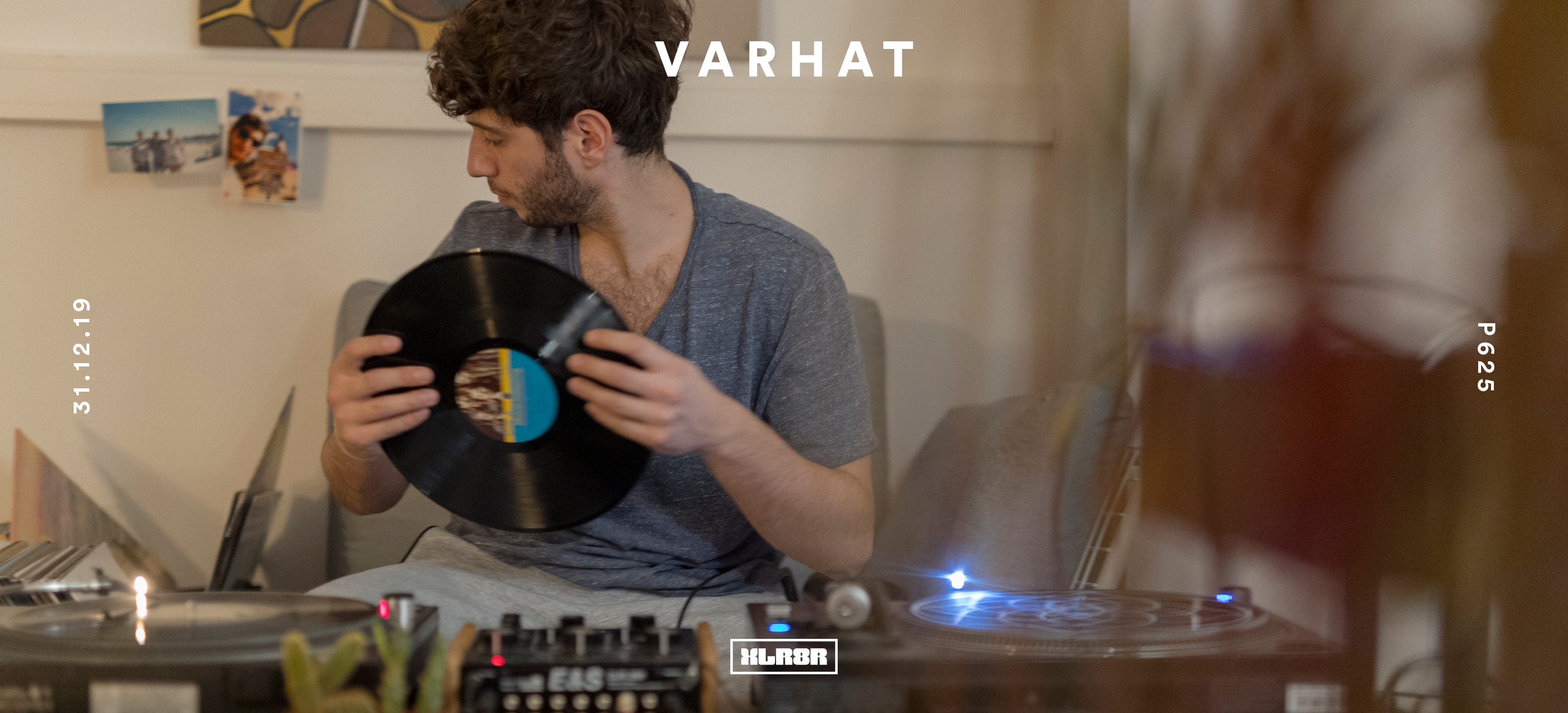
We kick off a new year and a new decade with a mix from Varhat, one of Vincent Lubelli’s many hats, and the one he uses to DJ. Besides his work as co-founder of Yoyaku, the Parisian record store, booking agency, and distributor, Lubelli also releases as Niwa Tatsui, Vincen, YYY, Volière, and Hostom, the mystical alias, not yet officially linked to Lubelli, with intermittent releases on the label of the same name. Each EP sells out in weeks. As Vincen, Lubelli is also the in-house mastering engineer for the plethora of labels that operate under the Yoyaku umbrella.
A lot has happened since XLR8R profiled Lubelli in 2016. At that point, Lubelli, then 24, was still residing in Strasbourg, located in the northeastern region of France, where he met Benjamin Belaga, with whom he runs Yoyaku, then a fledgling record store with big ambitions. His early releases as Hostom, which began in 2015 and were strongly linked to him, and several outings as Varhat at the beginning of 2016, saw his name and his work become a hot topic of conversation among the slick minimal techno parties that anchor his sound. His releases received international attention and proved especially popular down in Bucharest, Romania, then a global focal point for his aesthetics, yet nothing was known about him or the processes behind his work. He was then contemplating a move to Paris and only really beginning to tour; when we first met him, he’d just been booked to play his first set at Club der Visionaere, drawing a big crowd in the process, many popping in to see what all the fuss was all about.
Fast-forward to today, and Lubelli is now a seasoned artist and a spearhead in a rich time for French minimal house. The young boy we first met, who spoke only broken English and still appeared a little dumbfounded as to why so many people wanted to hear his music, has been replaced with an artist now confident in his success and with a much clearer artistic vision. While releases were once fast and frequent, they’re now much more considered, much of them aimed at building relationships with other artists. He now calls Paris home and has spent the last few years building his studio in the French capital, all the while touring each weekend through Europe. Yoyaku, meanwhile, has become a linchpin of the minimal house scene, now representing the likes of Maayan Nidam, Thomas Melchior, Audio Werner, and a contingent of Lubelli’s French friends.
Lubelli’s XLR8R podcast is filled with the sort of smooth and silky house he produces, and it may well be widely his music; he’s opted not to disclose the tracklisting. He recorded a set for us in his studio but opted instead to deliver an hour-long segment from the early hours of a recent all-night set at Fuse Brussels. It’s testament to his maturing skills as a DJ, as he begins with some easy listening groove before really kicking things off towards the end. He describes the night as a highlight of his 2018, and wanted to share a segment of it as we turn in the decade. Press play for one hour of laidback groove from Vincent Lubelli.
Varhat is playing this year’s Epizode Festival, taking place in Phu Quoc, Vietnam over the next week. More information on the annual event, also featuring Alci, Cabanne, Janeret, and more, can be found here.
What have you been up to recently?
The last two years I moved to Paris, France with my girlfriend, and I’ve been taking time to set up my new studio. Recently, I have been spending a lot of time also in our record store and hanging around with friends and our team in Paris.
How are you balancing life on the road with your studio-time?
Lately I haven’t had much time in the studio because of gigs and tours, but on the other hand, when you travel you meet a lot about people, inspiration comes from this as well.
Can we expect an album anytime soon?
I’ve been working on it since last year but I don’t want to hurry. Even if it takes several years to do it, I will take my time. It’s really important for me to be satisfied with the final result.
What’s going on with Hostom at the moment?
Too much melatonin.
Which new(ish) artist are impressing you with their productions at the moment?
At the moment, IWOU, Italian artists who are are making good music. I plan to release many of their tracks. They are productive and have a specific sound, and they are also nice guys, humble, and sensitive.
I also recently met in Berlin Omer (O.BEE). I was really touched by his personality. He sent me some great music, that he produced himself and upcoming releases on his label. The world pushes us to be strong, so I have more pleasure connecting with emotional people.
Name a record that you just cannot put down at the moment.
Ricardo Villalobos’ remix of DJ Pierre’s “What Is House Muzik” is probably a track that influences me in my productions at the moment. Last summer in Ibiza, Arno (a.k.a Einzelkind) played it at a chill out after party. I hadn’t listened to it for a while and we listened to the 32-minute track and it was a most beautiful journey. The place and the people around gave the best atmosphere for this music.
When and where did you record this mix?
It’s an hour cut of an all night long set I played at Fuse Brussels.
What’s on the horizon for 2020?
Personally, still working on making music. Now I feel better and better in my new studio. The are also different artists with whom I am getting closer and we expect to make different collaborations. With Yoyaku, I plan to continue working with our lovely and passionate team, and I will definitely buy an alarm clock to wake up Hostom!
XLR8R has now joined Mixcloud Select, meaning that to download the podcast you will need to subscribe to our Select channel. The move to Mixcloud Select will ensure that all the producers with music featured in our mixes get paid. You can read more about it here.
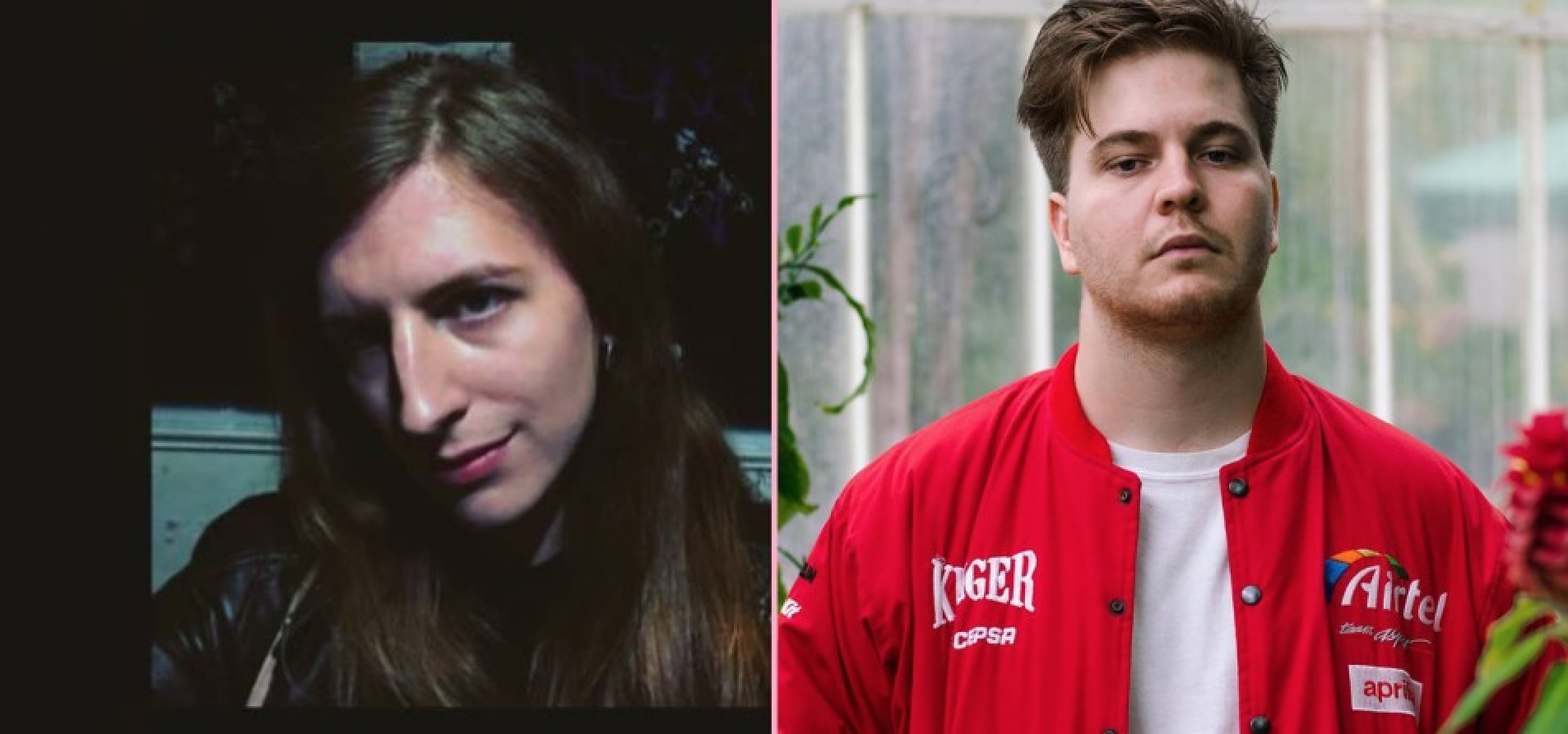
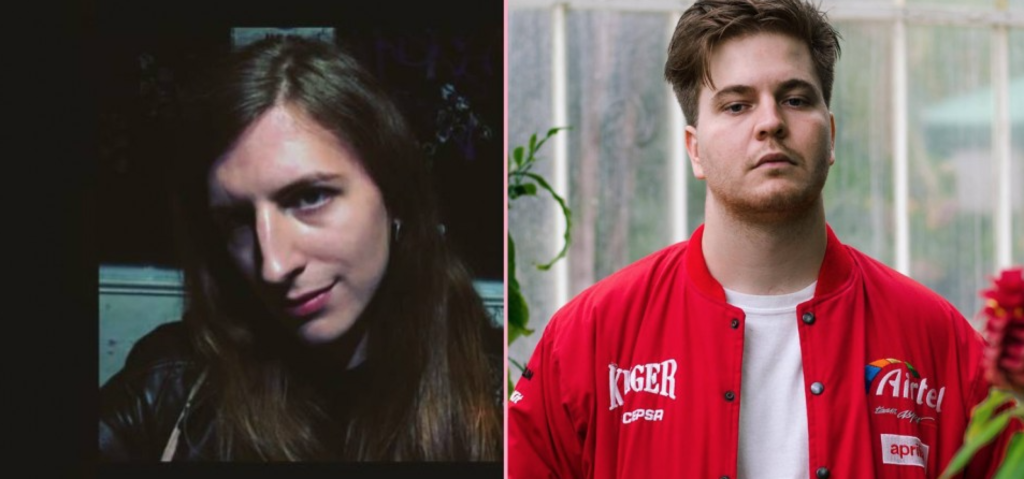
Julia Govor has teamed up with Barbara van Limburg-Stirum (a.k.a Barbara Ford) on a new 12″, titled The World Without Fears, out now on Anagram Records.
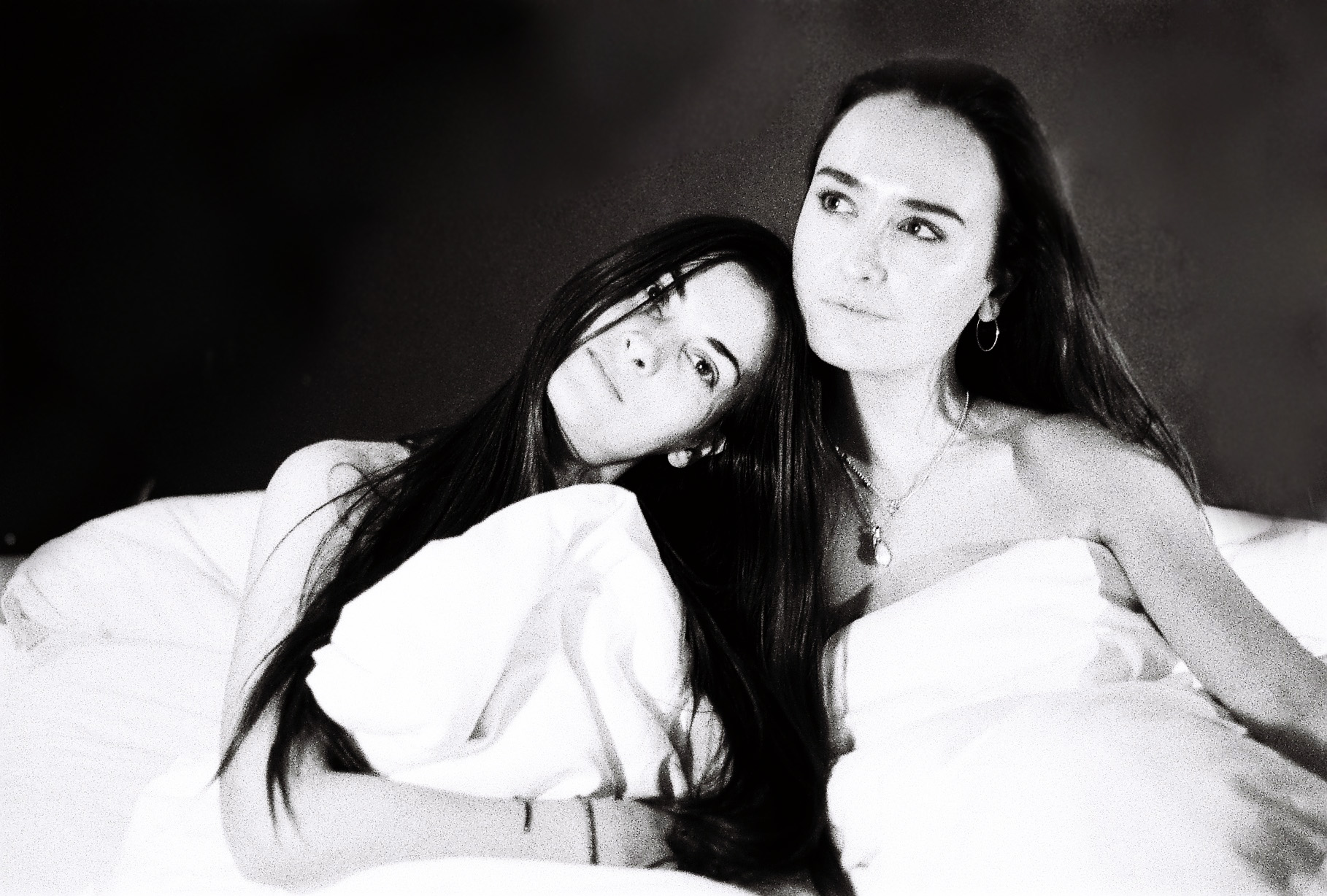
Govor and Ford, based in New York, United States and Amsterdam, the Netherlands respectively, connected last year while at Amsterdam Dance Event. Ford was familiar with Govor after she left a short review on the release sheet of The Sound of the Siren, Ford’s latest release on Anagram, but they first connected backstage one night. “I had a residency there [Sugarfactory] at the time and Julia happened to also play that night. We met, hugged, talked, laughed, exchanged our EPs, made a cheeky photo, and stayed in touch since,” Ford recalls.
“Our styles are quite similar and we both love to use our voices in our music, so we thought that would work really well together,” Govor adds.
The duo produced the EP remotely using modern technologies such as voice notes. “I received three different projects from Barbara, and took my favorite samples from each,” Govor recalls. “From there, I started to play around with my Nord Lead. Barbara already had a very crispy and clean mood there, but there was something missing. I think it’s wonderful that another producer left so much room to experiment. I recorded my voice, twisted it backwards and composed a melody, I was looking for something bright.”
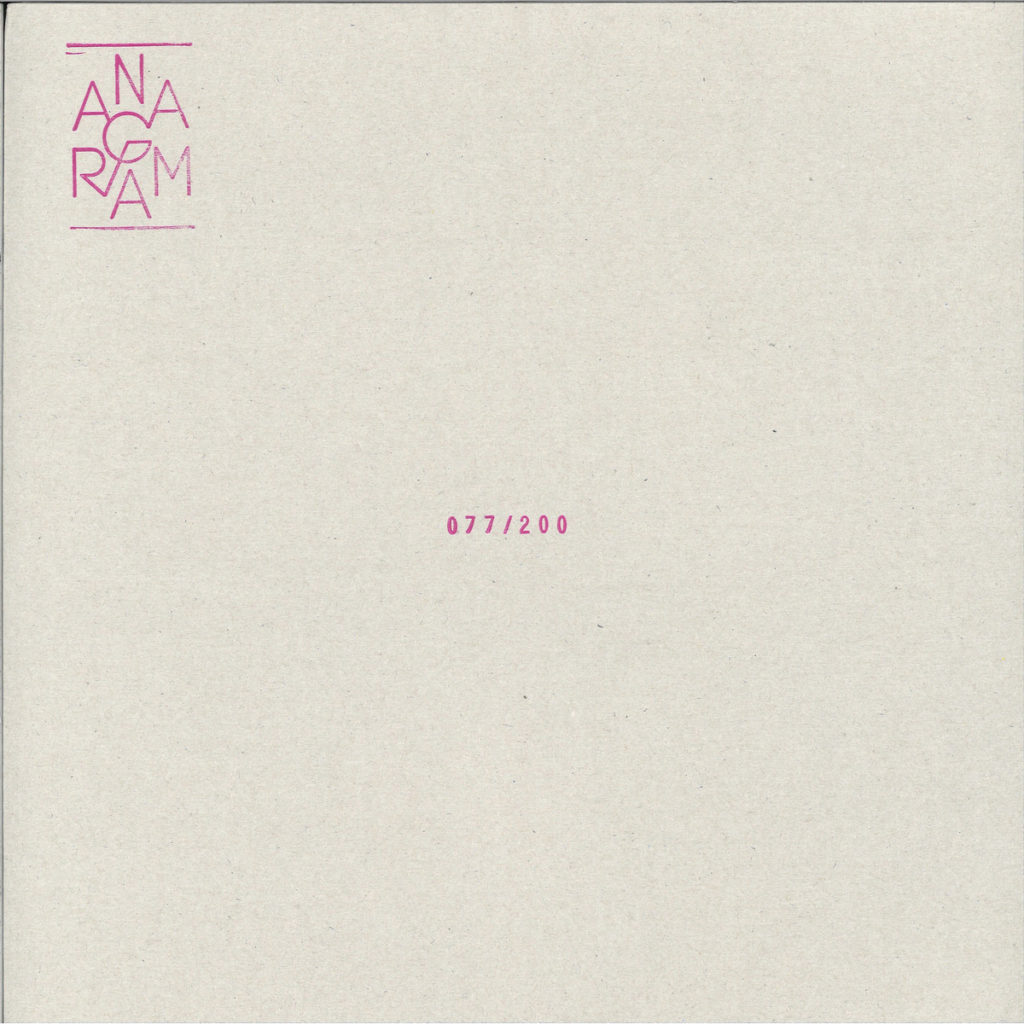
The record is limited to 200 copies on hand-stamped vinyl, and it forms the second part of Anagram’s vinyl-only series. Mixing comes Kamran Sadeghi.
Tracklisting
A1. The World Without Fears B1. Anything to Fill the Void B2. Intenseless
Julia Govor vs Barbara Ford’s The World Without Fears EP is available now. You can stream clips below, and purchase over here.
Jacktone Records and Lisbon, Portugal’s Naive have combined forces to bring a split EP featuring the jagged punk techno of San Francisco’s Gayphextwin and the melodic breaks and bass of Valencia’s Pépe.
The EP follows a stellar 2019 for the two labels, which saw Jacktone release EPs and albums from the likes of mukqs and label co-founder Doc Sleep, while Naive, the label of Violet, rose to international attention through releases from Overland, Almaty, and Photonz.
Across side A, Gayphextwin unleashes her in-your-face, grungy approach to electro and techno with furious drums and slicing acid bass. Pépe, meanwhile, takes side B to draw from the best of early ’90s rave influences. We’re told that “filtered breaks and classic drum machines support melodic echoes and bright grooves.”
The two artists also take advantage of the split EP format to remix each other.
Digital purchasers will also receive a pair of bonus tracks: an 11-minute industrial footwork jam from Gayphextwin and a Pépe breakbeat track that begins at mid-tempo and builds to jungle speed before returning to where it began.
Learn more about Gayphextwin in her XLR8R podcast here.
Tracklisting
Side 1
01. Gayphextwin “Where Is My Prairie Sun” 02. Gayphextwin “Saunter” 03. Gayphextwin “Spz1” 04. Gayphextwin “Spz1” (Pepe Hyperoxygenation remix)
Side 2
01. Pépe “Palinka Hammer” 02. Pépe “Its The Lights That Make You Pretty” 03. Pépe “Palinka Hammer” (Gayphextwin remix)
Digital Bonus 01: Gayphextwin “This Is How I Feel” Digital Bonus 02: Pépe “Bridging Mechanics”
Naive 009 / JKTN070 EP will be released in January. Pre-order it via Juno here. Meanwhile, you can hear clips below.
This is not a traditional best of list, we’d like to make this absolutely clear. What we mean to say is that by publishing this feature, we are not attempting to comprehensively rank the world’s DJs and live performers. However, we have given a list of the records that have stuck with us through a particularly turbulent 2019, and, in doing so, we’ve exposed some great music that would otherwise have been missed, and we’d also like to talk about the live performers that have impressed us, the XLR8R staff and contributors, over the past 12 months. It’s unrealistic to attend all the world’s musical events, but from the one’s we have, these are the DJs, live sets, and moments that have impressed us, in no particular order.
Fumiya Tanaka
Perlon favorite Fumiya Tanaka featured in our Best of 2019: Releases list with Right Moment, an LP full of minimal grooves of the highest order, and this unwavering dedication to quality not only emanates out of his studio but his entire artistic output. His DJ sets are as technically immaculate as his productions, however, it’s behind the turntables that Tanaka really shows how deep and wide he can go within his chosen framework—a framework focused on pure groove. XLR8R hosted Tanaka for a showcase event in Los Angeles back in February and he laid down four hours of beautifully paced tracks, flowing through cuts from the stable of producers on home label Perlon as well as old-school house classics from MD X-Press (“God Made Me Phunky”) and the late Kenny Hawkes (“Play The Game”). Fast forward to October’s Get Perlonized at Panorama Bar and the Japanese veteran continued his run of world-class form with an equally transfixing set, including tracks from Mathew Jonson (“Return of the Zombie Bikers”), 100 Hz (“Whisper”), and more than a record bag’s worth of unidentified bombs. Tanaka’s sets this year found a perfect balance between eclectic selections and precision mixing.
Caterina Barbieri
Caterina Barbieri delivered a new album via Editions Mego, and with it came a new live set, performed at Re-Textured in London, Dekmantel in Amsterdam, and MUTEK MX, hosted in Mexico City in November. Like the album, the set explores the psycho-physical effects of repetition and pattern-based operations in music by investigating the polyphonic and polyrhythmic potential of sequencers to draw severe, complex geometries in time and space—and her set in Mexico is something that sticks with us.
Barbieri began at around 1 am on the Friday night of the festival, and while those on the other stages were beginning to raise the intensity, she stripped things back, favoring hypnotic modular patterns and beautiful arpeggios over kick drums and bass. The Italian positions herself in a dance music scene but avoids the formulas, in the same way as artists like Barker, who incites an emotion in the listener without the kick drum. Her focus is on the deeper, emotional side of dance music, and by exploring these musical regions and emotions as well and as authentically as anyone, Barbieri forges a genuine connection with the listeners; something real. What’s important is that you can tell that Barbieri feels this, too: it’s not an act looking to capitalize on a gap in the market, and when an artist is honest in their musical expression then everyone can feel it and connect with it. Her show in Mexico was very touching.
Sugar Free
Sugar Free (a.k.a Alejandra Valmorisco) really burst onto the scene in 2019. Born and raised in Madrid, Valmorisco moved to Berlin in 2016, quit her job, and committed her life to music. She’s now established herself as a regular at Hoppetosse and Club der Visionaere, and also recently made her debut at Frankfurt’s Robert Johnson, capping off a year that’s seen her play all over the world. On two occasions she impressed us in London, firstly for Gene on Earth’s Limousine Dream night at Pickle Factory, an ideal spot for her to play with its intimate setting and well-crafted system. She opened proceedings and set the place alight with her timeless groovy gems, spanning house and garage. Following this, we invited her to play our XLR8R party at FOLD where she played before Quest and Onur Özer, again on warm-up duties, and delivering once again. A rising digger with an eclectic and broad range, Valmorisco can make you move like few others. Certainly one to watch.
AIDA
Iranian-born, Canadian-raised artist AIDA had a breakout year in 2019. In just a year, she went from relative obscurity to being one of dance music’s most exciting rising DJs via mixes for The Lot Radio and Redlight Radio, and a standout performance at Canada’s Bass Coast Festival, which Resident Advisor selected as one of five key performances—the mix of the latter has been on repeat in the XLR8R offices since its release. Up until last year, AIDA was mostly operating in the minimal scene, supporting artists such as Herodot, Shaun Reeves, Vinyl Speed Adjust, and Faster, but in 2019 came a noticeable shift, one that found her combining influences from her Iranian roots with a wide-reaching palette of house, techno, breaks, and electro. This shift in direction was brilliantly displayed on AIDA’s XLR8R podcast, released just last week, which presented a beguiling mix of world-music, synth-pop, and all manner of deep club styles.
DeWalta
One of the first times we witnessed DeWalta’s musical talents was when he played a live set with his partner Mike Shannon at Mutek in Montreal back in 2015, playing saxophone—he’s an accomplished jazz musician—and joined by Cobblestone Jazz’ Danuel Tate. Then, a year later, we caught him DJing at Berlin hotspot Heidegluehen, where he introduced us to his bouncy, groove-infused style of house, techno, and breaks, which then led us to book him for several of our parties in Los Angeles.
On every occasion, DeWalta has performed exceptionally well, but it was at this year’s XLR8R x Dialogue event that he really left an indelible mark. Across several hours, DeWalta, real name David Koch, flawlessly wove together genres old and new, breathing new life into timeless cuts such as Henrik Schwarz’s remix of “Yes Maam” (All Night Long) and Cobblestone Jazz’s “W,” while also dropping many unreleased bombs from his Berlin studio. His musical intuition of what to play and when to play a track is really up there with the best of them, and his sets are just getting better and better.
Earlier this year, DeWalta contributed a track (and a corresponding dub version) to XLR8R+ alongside Öona Dahl and Alci. Learn more about it here.
Identified Patient
One of the rising talents of the already overcrowded pool of Dutch DJs, Identified Patient enjoyed success after success through 2019. He continued to wow crowds during poignant daytime sets at Dekmantel and Dekmantel Selectors, but nothing was better than his slamming performance in De School’s dungeon-esque basement at Amsterdam Dance Event in October. While Identified Patient usually opts to gradually increase BPM throughout his sets, making his way from funky, acid-tinged slow rollers to harder and faster cuts, at the Het Weekend celebration he instead pushed tired Sunday ravers to their very edge via fast-moving, pulsing, and bubbly energetic cuts.
Club Toilet again solidified itself as one of the highlight parties during a Movement weekend that is as known for the quality of the after-parties as the festival itself. The party—which represents the best of American underground queer culture by bringing several vital communities together from across the country— featured top-notch DJs from the likes of Avalon Emerson, Massimiliano Pagliara, Lakuti, and more, but none stood out more than the quickly rising CCL. The Seattle-born, London-based DJ weaved through twisted electro, ravey breakbeat cuts, and energetic trance anthems with ease. Expect to see CCL on a lot more lineups this coming year.
Photo: Rob Jones
Circle of Live
Sebastian Mullaert’s Circle of Live project kicked things into overdrive this year. Mullaert launched Circle of Live last year to explore the untapped beauty in collaboration and live improvisation in electronic music. The Circle now comprises over 19 artists, all identified and selected by Mullaert, who perform in different constellations at each event.
This year, Mullaert and his team launched Circle of Live: In Dreams, a series of sleeping concerts at which a selection of artists perform live improvised ambient music all-night-long, as well as curating an edition of XLR8R+, a package which featured an exclusive live recording cut from the Circle’s Movement Festival performance in Detroit featuring Mullaert, Mathew Jonson, Amp Fiddler, and Vril, and four tracks and content from the aforementioned artists. This was in addition to an artist retreat in Sweden, and the Circle’s Concert series and regular performances—if you can call the best live acts in electronic music jamming together for hours “regular”—at which Mullaert hosted Âme, Matt Karmil, Dorisburg, Johanna Knutsson, Laurence Guy, and many others. When it comes to live electronic music, few do it better and with such unwavering dedication as Sebastian Mullaert and his band of cohorts.
Daedelus
On October 19 and 20, Secular Sabbath, a sonic sleepover, took place in Los Angeles. This particular edition was hosted in a Mystic Dharma Buddhist Temple and featured meticulously curated ambient and experimental music, plant-based food and drink, and other surprises that included Reiki readings, tea ceremonies, and facials for those who chose to fully indulge. The standout performance came from Alfred Darlington, better known as Daedelus, whose musical roots traverse jazz, rock, and ska bands, and labels such as Warp and Ninja Tune. Across two hours, Darlington delivered a musical adventure that we will remember for many years to come, positioning itself in the realm of moody experimental and super trippy ambient. With this performance, Darlington exposed a deeper side of his sonic universe and contributed to a very special evening enjoyed by all those in attendance.
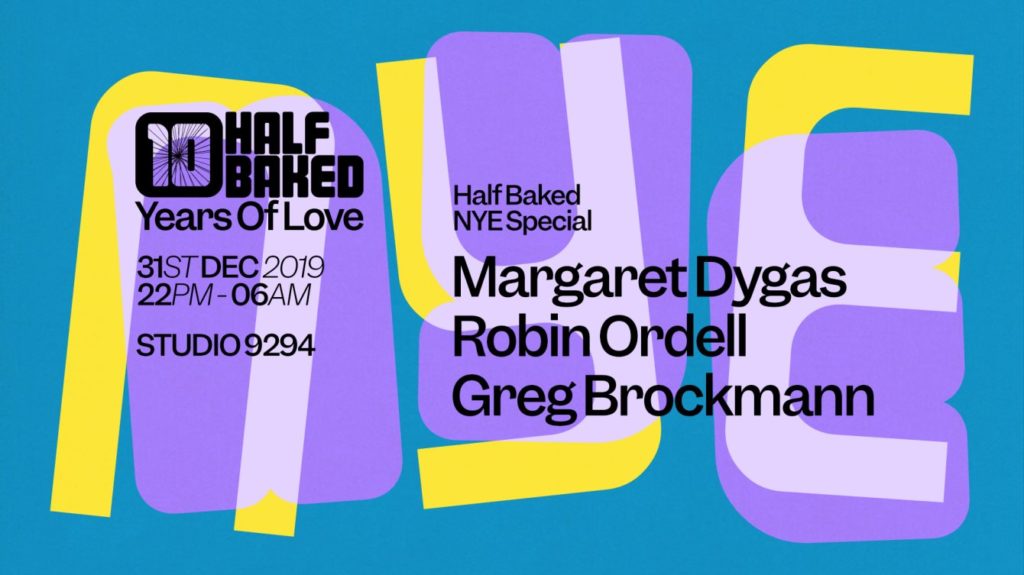
XLR8R is offering XLR8R+ subscribers free passes to the upcomingHalf Baked New Year’s Eve party, taking place at Studio 9294 in London, United Kingdom on Tuesday, December 31.
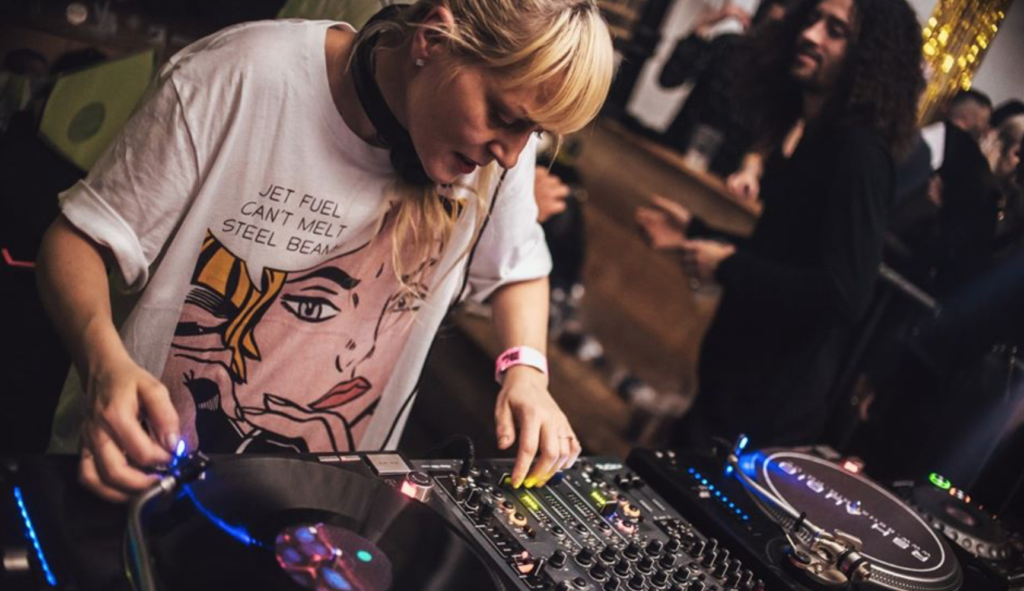
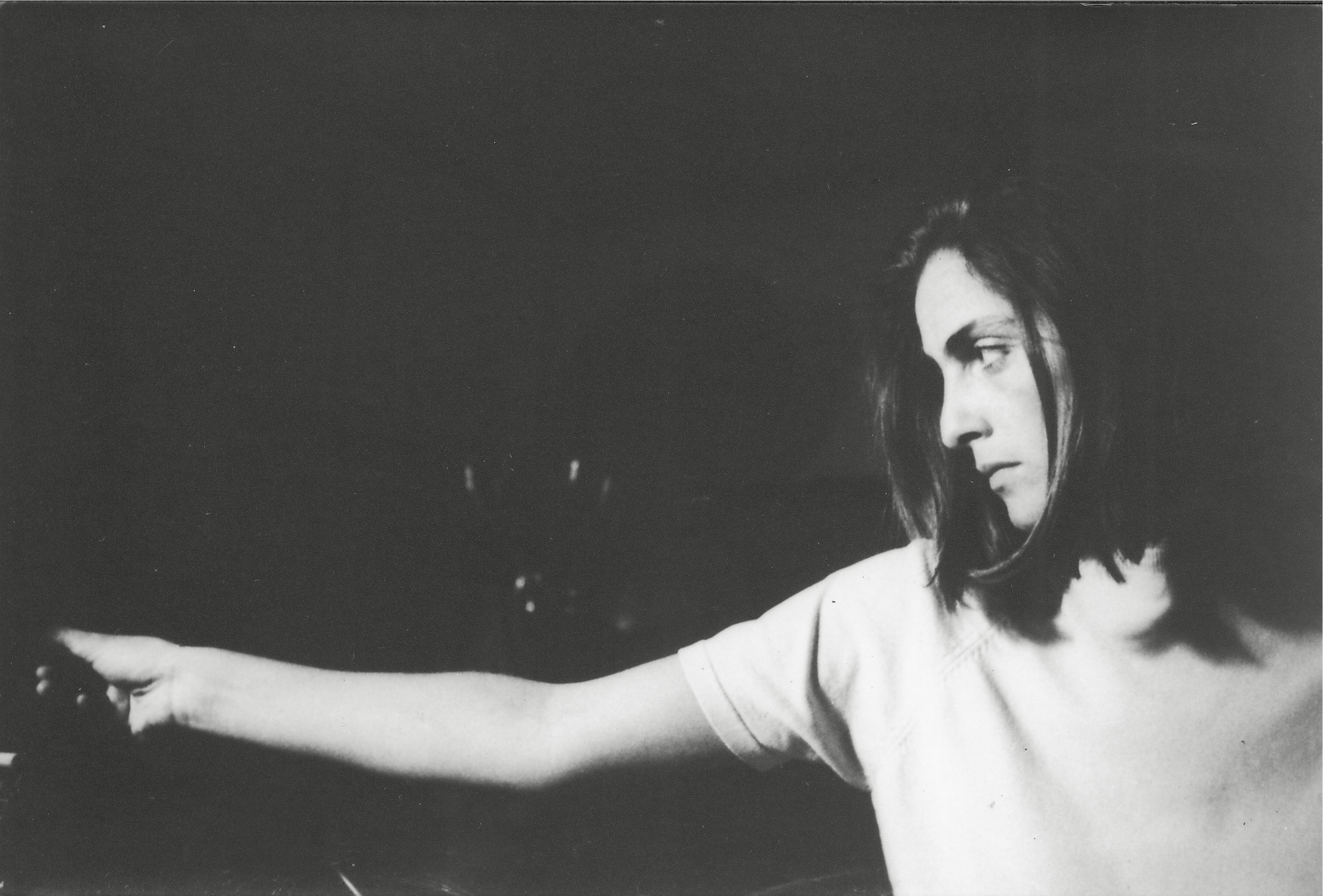
Half Baked, one of London’s most loved parties, is kicking off 2020 in style with Margaret Dygas. After working in the now-inoperative Eukatech record store in London, she relocated to Berlin, Germany in 2007 and earned herself a residency at Panorama Bar. She’s now a regular on the minimal house and techno circuit, recognised as one of the best in the business at controlling a dancefloor—it’s sure to be a special event. She’ll be backed up by Robin Ordell and Greg Brockmann.
Please note that tickets are limited so claim yours now.
For those who haven’t yet, just SUBSCRIBE HERE and email your full name with “Half Baked: Margaret Dygas” as the subject to [email protected] to claim your FREE ticket. For those current subscribers, simply email your full name and “Half Baked: Margaret Dygas” as the email subject.
The 17th edition of XLR8R+ is here, featuring tracks by DeWalta, Öona Dahl, and Alci. You can hear snippets of the tracks below.
Levl is the work of Dylan Brownsword (a.k.a DB1), Felix Krone (a.k.a Felix K), and Joe Baker (a.k.a Forest Drive West), three friends who first came together around Krone’s Hidden Hawaii. Founded in 2013, the Berlin label has since welcomed both DB1 and Forest Drive West, the latter in 2017 as he was just breaking through in the wake of an outing on Dnuos Ytivil, a sub-label of Livity Sound. Brownsword, meanwhile, has been a label staple: he’s put out his only album, Zwischenwelt,there in 2017, and he’s also collaborated with Krone on several occasions, exploring various strains of ambient, drum & bass, and techno. “It felt natural to start working on tracks together given we are all interested in the same types of sound,” Baker explains.
Working remotely via a shared Dropbox folder, the trio began sharing files and ideas with one another, and this resulted in their debut: LEVL#1, a bass- and breaks-heavy affair out via Warp Records’ own Arcola sub-label, and limited to just 500 copies. Just a few months later, out popped LEVL#2,this time via Krone’s Nullpunkt, parent to Hidden Hawaii, but once again with minimal fuss or fanfare. 20 white labels quickly disappeared in Hardwax, Berlin, enough to justify a full release in January.
Beyond the releases, Brownsword, Krone, and Baker are also beginning to DJ together, performing all-night-long back-to-back-to-back. They began at Corsica Studios earlier this summer and have several more dates in the pipeline. In the meantime, they’ve delivered an XLR8R podcast, aimed to showcase the Levl project and give a snapshot of what you can expect from one of their sets. Across the 70-minute playtime, you’ll hear much of the Levl catalog plus solo releases from its members. There are only a handful of tracks from outside of the trio, and they’re positioned to represent the music that inspired them to launch Levl.
What have you been up to recently?
Our first three-way back-to-back was at Rupture in June which we really enjoyed, it was great to be given a platform like the main room at Corsica Studios to really go wherever we wanted with complete creative freedom. Shortly after that, our first 12″ came out on Arcola, a sub-label of Warp. Our next 12″ will be out on Nullpunkt in the New Year.
What’s the story behind Levl—how did it come together?
The three of us have been good friends for a long time now, linking up around the Hidden Hawaii project. It felt natural to start working on tracks together given we are all interested in the same types of sound. We started a basic Dropbox to share ideas, and from that the first tracks came together really naturally and quickly. The collaboration works in completely different ways on each track, on some it is all three of us, on others it might be just be just one of us, but given how well we complement each other the output always feels coherent.
What can we expect with the Levl project?
It could be anything. Techno, beatless, drum & bass, whatever. The project certainly isn’t genre specific, being more built around our shared ideas and the crossover between our individual projects. Technically the three of use fairly different production approaches, so there is lots of scope for the sound to evolve.
When and where did you record this mix?
The mix was recorded separately across three locations: Deptford, United Kingdom; and Friedrichshain Plaistow in Berlin, Germany, through November 2019.
How did you choose the tracks that you included?
The mix showcases the first two Levl releases, along with recent tracks from our individual projects, other collaborations, and a few older tracks that have influenced us collectively.
What does the future hold for Levl?
Who knows. We all have busy individual projects going on, but when the time is right and given how well the whole project came together there will be more music for sure.
XLR8R has now joined Mixcloud Select, meaning that to download the podcast you will need to subscribe to our Select channel. The move to Mixcloud Select will ensure that all the producers with music featured in our mixes get paid. You can read more about it here.
Tracklisting
01. Babe Roots “Work Hard” (DB1 remix) (Echochord) 02. FLXK1 and DB1 “Transitions A2” (Hidden Hawaii) 03. DB1 “Late Night” (Molt) 04. LEVL “Arcola_#3” (Arcola) 05. LEVL “Nullpunkt_#4 (Nullpunkt) 06. DYL+DB1 “Uniformity of Nature” (Detach) 07. DYL+DB1 “Forma” (The Collection Artaud) 08. F&E “Thesis” (Nullpunkt) 09. F&E “Morast” (Nullpunkt) 10. LEVL “Nullpunkt #1” (Nullpunkt) 11. LEVL “Nullpunkt #3” (Nullpunkt) 12. Felix K “Deconstructor” (Nullpunkt) 13. Ed Rush & Nico “Neutron” (No U-Turn) 14. Jah Shaka “Real Dub” (Jah Shaka Music) 15. Forest Drive West “Num” (Nullpunkt) 16. Crossing Avenue “Santica” (Spazio Disponibile” 17. Double O “Straight 98 vip” (Rupture) 18. mM001 A “Unknown Amen” (Martianman Recordings) 19. Source Direct “The Cult” (Metalheadz) 20. Paradox “A Certain Sound” (Drumworkz VIP Mix Remix) (Renegade Hardware)
Ferreyra has played a hushed but critical role in the development of musique concrète since its early days, working with the Groupe de Recherches Musicales (GRM) directed by Pierre Schaeffer, with whom she collaborated during the writing of his Solfège de l’Objet Sonore. Echos+, one of only a few collections of her work available on vinyl, collects three of Ferreyra’s most affecting pieces, each of which explores questions of mortality and the afterlife.
“I’m not really sure when I first heard Beatriz Ferreyra’s music. My best guess would be in the early to mid 2000s when I was working alongside the curatorial team at Liquid Architecture. Given the focus of the festival at that time, GRM and musique concrète more generally was very much a point of focus,” English recalls. “That said, it wasn’t until this decade that her work was sharply in focus for me (and I am guessing a great many others).”
English connected with Ferreyra at Semibreve Festival 2017 and that’s how the release came about. Her work is “simultaneously complex and elegantly simple,” he explains.
Often drawing upon a singular object of focus, Ferreyra’s use of tape and other forms of manipulation radically reconfigure her chosen sound materials, opening them outward. “Echos,” for example, is sourced entirely from recordings of her niece who was killed in a car accident, and “The Other Shore,” composed as a response to “The Tibetan Book Of The Dead,” uses only percussion.
“Each of the works is deeply personal, but transcends that position, effortlessly welcoming us inside them,” English adds. “They collectively chart out a broad framework that not only defines her philosophical interests as a composer, but also marks out critical moments in her creative and technical approaches; shifting from her roots in tape music to more digital approaches.”
Tracklisting
01. Echos 02. L’autre … Ou Le Chant Des Marecages 03. L’autre Rive
Echos + LP is out March 27, with “Echos” streaming over at Bandcamp.
A little over a decade ago, The xx, a guitar band who had recently appeared on Jools Holland alongside The Cribs and Shakira, gave an interview to NME talking effusively about their love for dubstep. James Blake, a 21-year-old pianist, had just released his first EP and would soon become the poster boy for the post-dubstep sound. His American counterpart, an aspiring producer called Skrillex, was working on his own supersized dubstep interpretations.
All acolytes of London’s mid-’00s dubstep scene, these three acts stood at pop’s frontier at the decade’s end. The xx suggested a new model for the guitar band where drummers were replaced with computer-minded beatmakers. Blake was the prototype for the next generation of singer-songwriter. After 10 years dominated by indie rock, it seemed like the future might be electronic.
Most significant of all was Skrillex, whose music laid the foundation for a genre soon to be known as EDM. To some, the term still simply means electronic dance music, an umbrella grouping together techno, house, drum & bass, and the rest, but whatever your definition, EDM’s explosion was the first time electronic music has truly conquered the States, and, therefore, the world. It’s responsible for some of the era’s most unavoidable hits and has bred a new class of millionaire DJ. And though EDM blazed the trail, house and techno have ballooned in popularity this decade, too, with the biggest names now commanding six-figure fees for some gigs and festivals.
While pop acts have taken inspiration from electronic music for decades, this has been the first era in which electronic artists could themselves be considered pop stars. The promise of fame and money means aspiring musicians now want to be DJs as much as guitarists or singers. While some have clung to a stubborn belief in the underground, other electronic artists have used the mainstream for inspiration, producing commentaries on capitalism and commercialism through humorous, sometimes satirical takes on pop.
Remembering the decade in which electronic music went global, here is a timeline of the events that got us where we are today.
“nobody here” is Uploaded to YouTube (July 19, 2009)
“What a bunch of stupid bullshit this has all become,” said Minesweeper2000, a user commenting on the Discogs page for 2010 album Eccojams. Currently selling as a cassette tape for £1,540, Eccojams was made by Daniel Lopatin (a.k.a Oneohtrix Point Never). The album features “nobody here,” a two-minute track featuring a sample from Chris de Burgh’s 1986 ballad “The Lady in Red.” When Lopatin uploaded it to his YouTube channel, sunsetcorp, in 2009, it inadvertently started the internet micro-genre soon to be known as vaporwave, a hazy, chopped form of ambient music that placed slow-mo loops of ’80s pop songs together with emotional clips of The Simpsons.
Over the ensuing decade, vaporwave came and went, but its aesthetic (or a e s t h e t i c, as spaced-out fans styled it) said more about the era than perhaps any other genre. The ethical use of other people’s music—which vaporwave placed in stark reality through samples of anything from Marvin Gaye to shopping mall soundtracks—became an era-defining debate, in which classic albums were reappraised, the authenticity of emergent scenes was undermined, and the very practice of DJing was questioned.
“I’m uncomfortable with the idea that I’m an author of this stuff,” Lopatin was quoted as saying in Simon Reynolds’ “Retromania,” a book about 21st-century music’s addiction to repeating ideas from the past. As though tailor-made to suit Reynolds’s theory, vaporwave obliterated the linearity of history, placing temporally disparate moments absurdly side by side: take the album cover of Macintosh Plus’ genre touchstone Floral Shoppe, which depicts a Roman bust alongside a VHS image of New York. The music, meanwhile, centres on a skittish, scatterbrain tendency to flick between unmatching sounds, mirroring the attention span of a dazed millennial as they scroll through Twitter.
On JOECHILLWORLD, another proto-vaporwave record, rapper Devon Hendryx (now known as Jpegmafia) spits: “Rap my ass off and still have nothing to show for it / Gain a cult following, the pits of passion / Never clear my samples, get sued by Janet Jackson.” Such is the plight of an artist in the 2010s: bemoaning music’s measly financial return while using someone else’s work without giving them credit, albeit with the same post-ironic tone that now pulsates through online chat rooms, electronic music discourse, and indeed most of modern culture.
PC Music Launches on Soundcloud (June 23, 2013)
A. G. Cook’s internet record label PC Music went beyond even vaporwave in its embrace of technology and artificiality. When it began life by publishing GFOTY’s Bobby and a slew of subsequent releases to Soundcloud, the music world recoiled. Artists like GFOTY, easyFun, Hannah Diamond, and Princess Bambi seemed to come from a world where houses were made of sugar, where everyone smiled until their cheeks hurt, and where 3 of a Kind’s “Babycakes” was the most influential song ever made. Terms like “post-ringtone” and “bubblegum” became commonplace in describing the label. Fact’s Alex Macpherson called it “pure, contemptuous parody.”
In its hyper-digital, maximalist bombast, PC Music was everything you could want in a new sound, the like of which Simon Reynolds had argued was so dearly missing in contemporary pop. Its success and influence centre on the meteoric rise of SOPHIE, the Glaswegian producer and singer who started out producing tunes like QT’s “Hey QT” alongside PC boss Cook before later working with Charli XCX, Vince Staples, Lady Gaga, and Madonna. Like many a PC artist, SOPHIE’s music questions the very media through which it is transmitted, addressing through songs like “Faceshopping” and “Immaterial” the synthetic and superficial world in which we live. Her debut album, Oil of Every Pearl’s Un-Insides, is as defining a document of the zeitgeist as anything made this decade.
Grimes Plays Boiler Room (August 14, 2013)
As Resident Advisor’s Will Lynch recently pointed out, 2019 was the year of “business techno”—a term used variously by Reddit users, jealous producers, post-ironic commentators, and Drumcode customers to define a lucrative, identikit brand of 4/4. On global festival stages and in BBC documentaries, serious, straightforward techno has never been further from the underground. And with it has developed an insidious new clubland archetype: the techno purist, who listens to nothing but techno and condemns any deviation from the genre in the sets of his—and it is usually a him—favourite DJ. Thankfully, there has been a reaction, brought into the light by Grimes and her infamous Boiler Room DJ set in 2013.
This set had everything: a middle finger to the status quo; misogynistic remarks in the comments section; bangers upon bangers upon bangers. They weren’t typical 2013 Boiler Room bangers though, but rather Mariah Carey’s “All I Want for Christmas,” Daddy Yankee’s “Gasolina,” and the Venga Boys’ “We Like to Party.” Back then, playing cheesy pop songs in a serious mix series was so controversial that Boiler Room refused to even publish the set—and they still do, except in snippets.
As though modelled precisely on opposing the techno purists, a silly style of DJing has recently risen to prominence and it now makes Grimes’ Boiler Room seem pretty normal. That’s not to say they’re not skilled operators—far from it: spinners like Ross From Friends, Mama Snake, and DJ Bus Replacement Service have navigated between supposedly uncool sounds like gabber, heavy metal, and the most egregious of pop tunes with unerring ability in their sets.
Techno’s purity school remains strong though: Objekt was criticised for playing “bait EDM” after dropping SOPHIE’s “Immaterial” at Dekmantel in 2018, while Skee Mask was chastised on Twitter for not playing “only techno” at London’s FOLD in February this year.
Kelela’s Cut 4 Me Mixtape is Released (October 1, 2013)
When post-dubstep microgenre UK funky petered out towards the end of the 2000s, written off as little more than a novelty by various critics (to be fair, “Head, Shoulders, Kneez & Toez” was its biggest hit), some mourned its death as another British sound that had failed to reach its potential. But funky’s legacy lived on, kept alive by Kelela’s debut mixtape, Cut 4 Me, a transatlantic blend of R&B and rhythmically syncopated British bass music, released through London label Night Slugs.
Kelela used six different producers for the record, choosing between Brits (Bok Bok, Girl Unit, and Jam City) and Americans indebted to the British sounds of grime, funky, and dubstep (Kingdom, Morri$, Nguzunguzu). The pairing of Kelela’s smoky, magnetic voice with sparse club beats laid the foundation upon which singers like Mhysa and Erika de Casier would later build, while Cut 4 Me gave British bass a new lease of life. UK funky’s use of five snares in a bar—as heard on Kelela’s “Do It Again”—once made critics balk; such rhythms seem normal today, commonly deployed by producers like Sinjin Hawke, Murlo, Martyn Bootyspoon, and the many denizens of London’s hard drum scene.
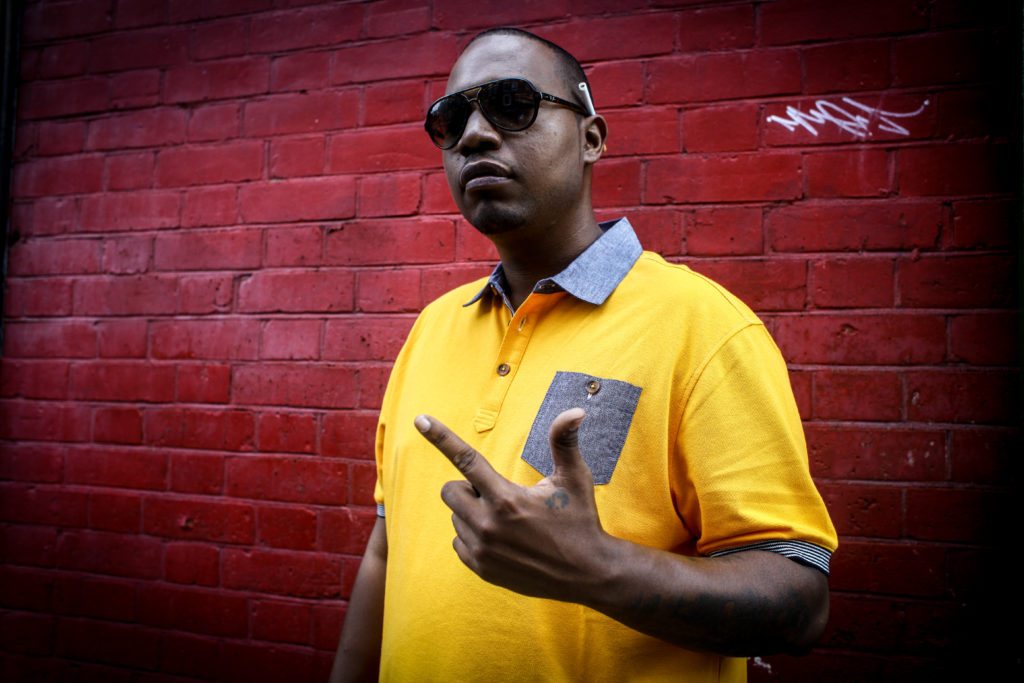
DJ Rashad Dies (April 26, 2014)
No more exciting sound was brought to worldwide consciousness this decade than footwork. While some strains of electronic music lapsed into armchair listening, footwork—which had actually started in Chicago in the ‘90s—was named after a dance. Though proudly functional, whether on headphones or in the club, the genre’s 160bpm mangle of house, soul, funk, trap, and hip-hop can be achingly affecting, beautiful even. Never more so than the footwork made by DJ Rashad, a figurehead of the sound who died from a drug overdose less than a year after the release of his debut album.
His death might have threatened to end what had begun the decade as a struggling, little-known scene. Instead, the outpouring of grief from around the world showed that footwork had finally reached beyond Chicago and become a global concern, something Rashad had strived for his whole career. It’s easy to imagine how pleased he would be now, to see the sound he helped define taking on new, increasingly inventive shapes, as interpreted by artists like Jlin, Rian Treanor, and his old friends RP Boo and DJ Spinn.
Mumdance & Novelist’s “Take Time” Single Drops (June 4, 2014)
At the close of the 2000s, it seemed like grime might be a busted flush. Some of its forefathers—Wiley, Dizzee, Tinchy—had achieved superstardom, but only by sacrificing some of the sound’s edge in favour of poppy radio tracks like “Wearing My Rolex” and “Dance Wiv Me.” When Skepta and JME’s “That’s Not Me” reached Number 21 on the UK Singles Chart, it was a victory for grime’s old school: serious bars, pirate radio beats, and tracksuits (“I used to wear Gucci, threw it all in the bin cos that’s not me”).
Yet just as crucial was the new school that was bubbling up at the same time, rappers like the 17-year-old Novelist, whose track “Take Time” dropped two months after “That’s Not Me.” The instrumental, made by experimental producer Mumdance, was a kick drum pattern, a crashing snare, and not much else. It was icy, minimal, and crystallised “weightless” as a new style of grime production.
Weightless Volumes 1 & 2 soon followed on Mumdance’s label, Different Circles, while contemporaries like Logos, Raime, Mr. Mitch, Rabit, and Proc Fiskal took the sound in floaty new directions. Even further afield, as largely instrumental takes on grime have emerged from Uganda and Shanghai, “Take Time” has always felt like a touchstone.
Discwoman Founded (September 20, 2014)
Emma Burgess-Olson (a.k.a Umfang), Christine McCharen-Tran, and Frankie Decaiza Hutchinson started Discwoman in 2014 as a way of promoting “cis women, trans women, and genderqueer talent in electronic music.” At the time, only 18% of electronic music labels had women signed to them. Since then, Umfang has played Berghain, Hutchinson has helped get New York’s antiquated anti-dance law repealed, and women in electronic music have become more visible than ever before, with DJs like Nina Kraviz, Helena Hauff, Dr. Rubinstein, and Courtesy rising to household name status in clubland.
There is still a long way to go: the equality of festival lineups remains inadequate, while support for the “subcategory” of women DJs can often feel tokenistic. But increased awareness means people are at least held accountable for sexism and misogyny. Collectives like Discwoman have played a vital role in providing role models for aspiring female artists and creating spaces in which people of all sexual identities feel safe.
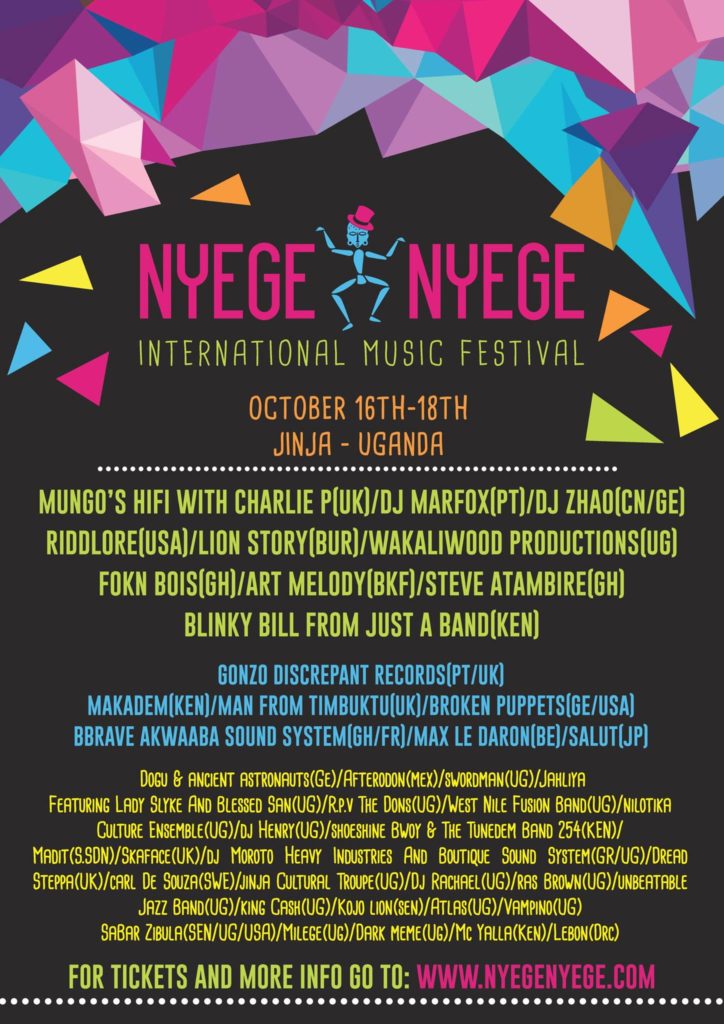
Nyege Nyege Hosts its First Festival (October 16-18, 2015)
Few would have predicted the enduring success of a spontaneous party thrown on the banks of the River Nile in Jinja, Uganda in 2015. Announced little more than a month in advance, the first Nyege Nyege festival featured artists from the United Kingdom, Ghana, Portugal, Burkina Faso, and Uganda, as indicated on its flyer (above). Within just a few years, writers were calling it the world’s best electronic music festival and it was being streamed live on Boiler Room.
Soon after its first event, the Nyege Nyege collective started a record label of the same name (and then another, which was equally good). The popularity of Afro-Caribbean rhythms in Western dance music has risen concurrently, thanks to like-minded labels like Príncipe, Fractal Fantasy, NAAFI, SVBKVLT, and Swing Ting, to name a few. Artists on these labels have riffed on kuduro, batida, gqom, kwaito, cumbia and many other styles—sounds primarily made either in ghettos (be they in Durban or Rio de Janeiro, Kingston or São Tomé) or by immigrants in Western cities forming bastard scenes through hybridisation with genres like grime and house. Many of these sounds have been bubbling for years, but it was in this decade that Western ears—perhaps due to a certain techno fatigue—lapped them up with glee.
Mica Levi by Daniel Bergeron.
Mica Levi Nominated for an Oscar (January 24, 2017)
Experimental music lost one of its shining lights in 2018 when Jóhann Jóhannsson passed away. After soundtracking a number of indie films through the 2000s, Jóhannsson’s scores for major motion pictures like “Prisoners,” “The Theory of Everything,” “Sicario,” and “Arrival” have defined the 2010s more than any other composer. As an experimental musician breaking into cinema, he paved the way for artists like Trent Reznor and Atticus Ross (of Nine Inch Nails), Ben Salisbury and Geoff Barrow (the latter of BEAK> and Portishead), Kyle Dixon and Michael Stein (of Emeralds), Jonny Greenwood, Thom Yorke (both of Radiohead), and Daniel Lopatin (a.k.a Oneohtrix Point Never).
Mica Levi, of Micachu & the Shapes, provided the era’s standout experimental soundtrack with her Under the Skin OST, a record which has appeared on many end-of-decade lists as an album in its own right. Her next score, for “Jackie,” a tense, claustrophobic thriller about John F. Kennedy’s widow, was nominated for an Oscar and ushered in a new era for experimental music in film scores. Despite this success, Levi has resisted the lure of blockbusters and continued to work on challenging, independent films, such as this year’s chilling “Monos.”
Aphex Twin Plays Field Day Festival, London (June 3, 2017)
Richard D. James hasn’t actually released a classic album since the ‘90s. Yet his familiar ginger face has grinned back at us on many a music website throughout the 2010s. Why? Partly because we still feel it’s necessary to remind you all how great Selected Ambient Works was, but also partly because of his increasingly ingenious marketing strategies. He announced his only album of this decade by flying a blimp over London. His last EP saw sightings of his logo on billboards around the world send social media into a frenzy. Even his occasional interviews have been marketed like Hollywood films.
His bonkers DJ set at Field Day Festival in 2017 was his first performance in the United Kingdom for five years—first announced via a handful of scratchcard-style flyers that were dispersed at a market in London. Paired with an incredible light show designed by elusive visual artist Weirdcore and staged in a huge, purpose-built aircraft-hangar-style venue, it was among the greatest shows in the history of electronic music.
His subsequent performances at Berlin’s Funkhaus and Coachella Festival were met with similar hysteria. But they also started debates about how much he was being paid to play other people’s music, and how much coverage he was getting in the press. For some, James epitomises the 21st century “legacy artist”: an established musical titan dining out on past success at the expense of emerging talent. Contrast Aphex’s enduring career with that of say, Deapmash, whose track “Ballad 002” (a collaboration with Aquarian) has been played by Aphex. One is defined by six-figure gig sums and drip-fed releases; the other “stays broke forever.”
“Mental health” has joined “music” in the same sentence with much more frequency over the past decade, a trend sparked by the death of pop star Amy Winehouse in 2011. However, it took the tragic suicide of Tim Bergling, the DJ-producer better known as Avicii, for the electronic community to really take notice, and since then the discussions of mental health in electronic music, and music more generally, have been commonplace on panels at conferences like Amsterdam Dance Event and Ibiza’s International Music Summit, where this year Bergling’s father, Klas, broke his silence and gave a passionate talk on the issue.
Within this past decade, Soundgarden’s Chris Cornell, Linkin Park’s Chester Bennington, Frightened Rabbit’s Scott Hutchison, South Korean singer Kim Jong-hyun, and The Prodigy’s Keith Flint have all taken their lives, and this is just the surface. Beneath these highest echelons you’ll also find artists who have lost their lives prematurely but accidentally, albeit wrapped up in anxiety and depression, and dependent on alcohol and drugs.
In November 2017, Lil Peep, real name Gustav Elijah Åhr overdosed on fentanyl and Xanax. Early last year, Icelandic composer Jóhann Jóhannsson was found dead in his Berlin apartment, the victim of heart failure after reportedly overdosing on cocaine. The mental and physical health of those in the music industry has been brought under a harsh spotlight this decade, but conversations like that started by Avicii’s death offer reasons for optimism.
NME Publishes its Final Issue (March 9, 2019)
Music media continues to suffer, but let’s not get into all that again. When NME announced in early 2018 that it would be ceasing operations as a print publication, it confirmed what many had suspected for years. Due to missteps like placing Stormzy on its cover against his will and adamantly sticking by the Arctic Monkeys through thick and thin, the magazine had largely faded from relevance long before the death of its physical incarnation.
Many other music zines bit the dust this decade, but the end of NME—for so long the definitive voice on British music—felt symbolic. With it went any remaining consensus about indie music being the best sound around, instead allowing previously alternative outlets to push other, infinitely more exciting sounds like hip-hop, grime, and yes, techno, to the forefront of the public consciousness. The artists broadly believed to have defined the ‘00s were mostly white, middle-class and toting guitars. This decade’s concluding lists offer a range of ethnicities, backgrounds, sexualities and—crucially—instrumentation.
Gaspar Noé Releases “Climax” (September 21, 2018)
French auteur Gaspar Noé’s films generally range from chilling (“Enter the Void”) to harrowing (“Irreversible”) and “Climax” sits somewhere on the same spectrum. It is, however, marginally more watchable than the rest of his oeuvre. The film tells the story of a young, talented dance troupe throwing a party after rehearsal one night in an empty school, getting drunk on sangria which, as it transpires, has been spiked with LSD.
The “Climax” narrative spins on a 10-minute dance sequence, a mesmeric centrepiece during which characters take turns ducking, dipping, and death-dropping for each other’s entertainment. The scene recalls 1990’s “Paris is Burning,” a seminal documentary about ballroom culture in 1980s New York—which was also the inspiration behind Frank Ocean’s recently launched queer club night, PrEP+.
In its pairing of vogue-style dancing with a soundtrack featuring Daft Punk, Aphex Twin, Giorgio Moroder, and Dopplereffekt, “Climax” reminds us that club music is a product of queer culture. The film symbolises the overdue recognition of electronic music’s LGBT community in the latter half of this decade, showcased at events like NYC Downlow at Glastonbury, WHOLE Festival, and the world’s most famous gay club, Berghain, and personified by artists like Arca, SOPHIE, Honey Dijon, and LSDXOXO.
And sountracking that hypnotic dance scene? Not just one song but a mix performed live by gay DJ Kiddy Smile, between his track “Dickmatized” and Thomas Bangalter’s “What to Do.”
Nina Kraviz Wears Cornrows (October 26, 2019)
When Nina Kraviz posted pictures of herself wearing cornrows in her hair to Instagram and Twitter this year, she was condemned by many for misappropriating African culture. Having been worn as far back as the slave trade, cornrows are a part of black identity, not a costume for celebrities to try on like fancy dress. Kraviz didn’t help herself in her response however, lashing out at her critics and accusing them of “reverse racism.”
While electronic music has diversified significantly this decade, with greater numbers of women and racial minorities rising to the top of the scene, the Kraviz incident reminded us that we still have some way to go. The uncomfortable truth that techno, a genre brought into the world by black musicians, is now overwhelmingly dominated by white artists, is hard to ignore every time a “World’s Top DJs” list is published. But techno, as well as house, rave, and all club culture, was founded upon core values of togetherness, diversity, and the acceptance—nay, the celebration of difference.
The incident also exposed “cancel culture,” one of the decade’s most popular terms, as a fallacy: though many called out Kraviz on Twitter, she was promptly named in several year-end lists and her career has seemingly continued as normal. Many other disagreements have been aired on social media this decade—over the misogyny of Giegling boss Konstantin, the sharing of DJ setlists, and Sherelle’s Boiler Room reload, to name a few—but rarely have discussions ended in resolution. The growing prominence of more useful methods for debate, like newsletters and panels, suggests a brighter future in which the dance music community exists outside of Twitter.
And now to the future…
So dance music is bigger than ever. The new dawn promised by Skrillex, James Blake, and The xx proved largely accurate, with the mainstream now sounding infinitely more electronic than it did a decade ago. So what of the next 10 years? Are we to expect that, just as grime and dubstep went global in the 2010s, the 2020s will see a mainstream invasion from footwork and gqom? Will techno fade from relevance, stuck in stubborn insistence on rigid formularity and refined to the patronage of aging fans? And will club music restore the image of diversity upon which it was founded? It’s a strange time to be alive, but as the world crumbles, music will be more important than ever.
Editor Note: XLR8R staff would like to apologise for using an incorrect image of DJ Rashad. This has now been updated.